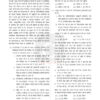
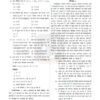



Drishti IAS CSAT Test Series 2025-26
About Drishti IAS CSAT Test Series
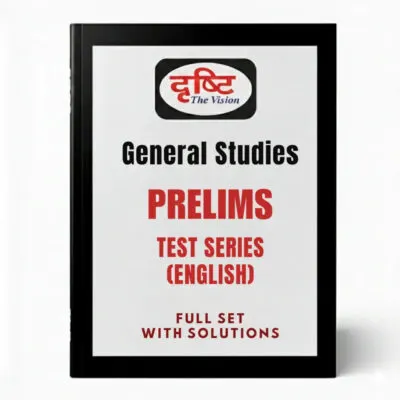
The Drishti IAS CSAT Test Series is a printed UPSC study material set sold by UPSC Store — India’s trusted source for genuine, latest-batch civil services preparation books. This page covers full booklet details, syllabus coverage, pricing, shipping, and frequently asked questions. Useful for UPSC CSE, BPSC, UPPSC, MPPSC, RAS and other state PSC examinations.
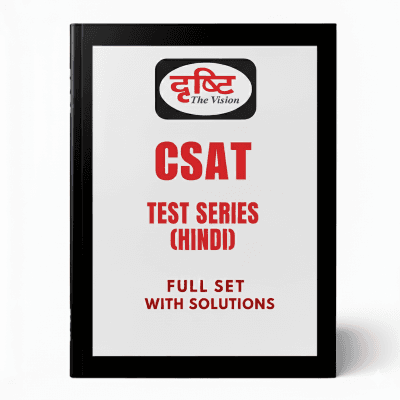
Drishti IAS CSAT Test Series 2025-26 — 20 Printed Hindi Medium Booklets for UPSC Paper II
Related: Drishti IAS notes · CSAT material · Test Series
Buy Drishti IAS CSAT Test Series printed booklets online — the complete 20-booklet set in Hindi medium for UPSC Prelims Paper II aptitude preparation. These carefully designed test series booklets deliver 200+ authentic CSAT questions with detailed solutions, structured across comprehension, logical reasoning, decision-making, and numerical ability. Whether you’re a Hindi-medium aspirant or prefer learning in your native language, buy these CSAT test series booklets to build exam-level confidence and master time management under real exam pressure.
Product Overview
| Feature | Details |
|---|---|
| Booklets Count | 20 Individual Printed Booklets — Complete CSAT Test Series with Solutions |
| Language | Hindi Medium (हिंदी माध्यम) |
| Publisher | Drishti IAS (CSAT Test Series) |
| Edition | 2025-26 — Latest Genuine Batch |
| Condition | Brand New, Unmarked, Fresh Stock |
| Format | High-Quality Printed Booklets — Spiral or Book Binding |
| Paper Quality | 75 GSM Ultra-White — Highlighter Safe, Zero Bleed-Through |
| Shipping | Pan India Delivery in 3-5 Business Days — Tracked |
| Also Useful For | BPSC, UPPSC, MPPSC, RAS, KPSC, JPSC, OPSC, and all State PSC Prelims |
Complete Booklet Catalog
Drishti IAS CSAT Test Series 2025-26 comprises 20 strategically structured test booklets designed specifically for Hindi-medium UPSC aspirants preparing for Paper II (aptitude and mental ability). Each test follows the exact UPSC CSAT pattern with timed constraints, allowing you to practice under realistic exam conditions and improve your scoring efficiency.
The entire series covers all core CSAT topics including reading comprehension, logical reasoning, analytical ability, decision-making scenarios, numerical problems, and general mental ability. By practicing all 20 tests sequentially, you’ll identify weak areas, refine time management, and build the speed and accuracy needed for Paper II success.
- Test Booklet 1: Reading Comprehension I (Foundations) — Passages covering general topics, newspaper excerpts, and opinion pieces; 8-10 questions per passage; practice identifying main ideas, inferences, and author’s tone; detailed answers with phrase-by-phrase Hindi explanations for non-English speakers.
- Test Booklet 2: Reading Comprehension II (Advanced) — Complex academic passages with legal, scientific, and philosophical content; multi-layered inference questions; Hindi annotations explaining vocabulary and conceptual nuances required for UPSC-level comprehension.
- Test Booklet 3: Logical Reasoning I (Basic Patterns) — Sequence completion, pattern recognition, analogies; 15-20 short questions per booklet; solutions with logic flow diagrams in Hindi explaining the reasoning behind each answer.
- Test Booklet 4: Logical Reasoning II (Complex Deductions) — Syllogisms, logical puzzles, statement-conclusion problems; practice spotting fallacies and valid deductions; Hindi medium explanations clarifying logical operators and semantic traps.
- Test Booklet 5: Analytical Reasoning I (Data Interpretation) — Tables, charts, and graphs; calculating percentages, ratios, and trends; 10-12 data-based questions; Hindi solution steps showing calculation methods and approximation techniques.
- Test Booklet 6: Analytical Reasoning II (Advanced Data Sets) — Multi-source data interpretation combining tables and pie charts; questions requiring cross-data analysis; Hindi explanations of data prioritization and inference extraction.
- Test Booklet 7: Decision-Making I (Administrative Scenarios) — Real-world bureaucratic dilemmas and ethical decision scenarios; 5-7 multi-part questions; Hindi descriptive solutions explaining stakeholder impact and administrative best practices.
- Test Booklet 8: Decision-Making II (Complex Situations) — Multifaceted problems with competing priorities and resource constraints; practice identifying core issues and optimal solutions; Hindi commentary on administrative principles underlying each decision.
- Test Booklet 9: Numerical Ability I (Basic Operations) — Arithmetic, percentages, ratios, averages, simple interest; 12-15 questions; Hindi step-by-step solutions showing shortcut methods and calculation tips for speed.
- Test Booklet 10: Numerical Ability II (Advanced Calculations) — Compound interest, geometry, time-work problems, profit-loss; moderate difficulty; Hindi solutions featuring alternative methods and time-saving tricks.
- Test Booklet 11: General Mental Ability I (Spatial & Visualization) — Shape rotation, 2D-3D conversion, pattern completion; visual puzzles; Hindi explanations with step-by-step visualization techniques for mental rotation.
- Test Booklet 12: General Mental Ability II (Abstract Reasoning) — Symbol patterns, coded sequences, non-verbal reasoning; 8-10 questions; Hindi guides mapping abstract symbols to logical structures.
- Test Booklet 13: Mixed Mock Test I (Full CSAT Simulation) — 80 questions across all five sections in strict 120-minute format; replicates actual Paper II timing and question distribution; comprehensive Hindi solutions with difficulty ratings.
- Test Booklet 14: Mixed Mock Test II (Full CSAT Simulation) — Second complete 80-question test; varied difficulty levels and topic combinations; Hindi answer key with performance benchmarking guidance.
- Test Booklet 15: Mixed Mock Test III (Full CSAT Simulation) — Third complete mock covering all sections; includes repeat pattern types to reinforce learning; Hindi solutions with comparative analysis against previous attempts.
- Test Booklet 16: Comprehension Intensive Practice I — Six long passages (800-1000 words each) with 12-15 questions per passage; advanced topics; Hindi vocabulary aids and contextual explanation for complex English terms.
- Test Booklet 17: Comprehension Intensive Practice II — Additional six passages with gradual difficulty increase; editorial pieces and academic texts; Hindi paraphrasing of key passages for better understanding.
- Test Booklet 18: High-Difficulty Mixed Test I — Advanced questions simulating top-scorer difficulty; tricky options and conceptual depth; Hindi detailed reasoning explaining why wrong options are attractive and how to avoid traps.
- Test Booklet 19: High-Difficulty Mixed Test II — Second challenging test for aspirants targeting 90+ percentile; compressed timing scenarios; Hindi performance analysis templates for self-assessment.
- Test Booklet 20: Final Revision Test & Quick Reference — Rapid-fire questions across all sections for final week revision; quick Hindi reference tables for formulas, logical operators, and decision-making frameworks; answer explanations optimized for last-minute clarity.
In-Depth Content Breakdown: Booklet by Booklet
Test Booklet 1: Reading Comprehension I (Foundations)
This foundational comprehension booklet is designed for Hindi-medium aspirants to develop core reading skills essential for UPSC Paper II. It features four passages of 500-700 words each covering diverse topics — current affairs, social policies, historical narratives, and scientific advancements — to build familiarity with varied subject matter. Each passage is followed by 8-10 multiple-choice questions testing literal comprehension, inference skills, and vocabulary understanding. The Hindi medium format ensures that complex English vocabulary is explained through Hindi synonyms and contextual clues, preventing language barriers from hindering learning. This booklet serves as the starting point for building reading speed and accuracy, with recommended target time of 12-15 minutes per passage.
The solutions provided in this booklet go beyond simple answer keys — they include phrase-by-phrase Hindi annotations explaining what each sentence communicates, why particular inferences are valid, and how to distinguish between explicitly stated information and implicit meaning. Special attention is given to identifying keyword markers (transition words, logical connectors) that signal answer locations within passages. Margin notes in Hindi highlight common reading comprehension traps such as misreading the scope of statements, confusing author opinion with fact, and falling for partially correct but imprecise options. This booklet establishes the foundation for progressing to advanced comprehension in subsequent booklets.
Test Booklet 2: Reading Comprehension II (Advanced)
Building on foundational skills, this advanced comprehension booklet features five longer passages (800-1000 words) covering sophisticated topics including philosophy, economics, international relations, and complex social issues — materials typically seen in real UPSC Paper II. The passages employ academic language, dense prose, and embedded arguments requiring aspirants to track multiple viewpoints simultaneously. With 10-12 questions per passage, this booklet increases cognitive demand and time pressure, simulating the challenge of reading complex material under exam stress. Hindi-medium preparation is enhanced through detailed vocabulary glosses explaining abstract terms and technical concepts in Hindi, ensuring comprehension is about meaning extraction rather than language decoding.
The answer section provides comprehensive explanation of correct and incorrect options, with particular emphasis on why seemingly plausible wrong answers are traps. Each answer includes a “Why Not This Option” section in Hindi that explains the logical flaw, scope mismatch, or misinterpretation that makes alternatives incorrect. Advanced inference questions include step-by-step reasoning maps showing how evidence in the passage supports the correct answer. Margin notes highlight rhetorical devices, author bias, and implicit assumptions — skills crucial for distinguishing between what is stated and what is reasonably inferred, a distinction often tested in harder UPSC questions.
Test Booklet 3: Logical Reasoning I (Basic Patterns)
This introductory logical reasoning booklet focuses on pattern recognition and sequence completion — fundamental abilities tested throughout Paper II. It contains 20-25 short, focused questions on analogy completion, series continuation, and simple logical relationships. Each question takes 2-3 minutes to solve, allowing aspirants to build speed and confidence before tackling complex reasoning. The booklet covers standard UPSC patterns including number series (arithmetic/geometric progressions), letter sequences, and conceptual analogies (part-to-whole, cause-effect, synonym relationships). Hindi medium explanations make the abstract logic concrete by relating reasoning patterns to everyday examples and Hindi linguistic structures where applicable.
Solutions in this booklet are pedagogically structured to teach pattern recognition methodology rather than just provide answers. Each solved question includes a “Pattern Identification” section highlighting the rule governing the sequence, visual diagrams showing the logical progression, and alternative representations of the same logic. For analogies, solutions explain the conceptual bridge between terms and test how deeply the relationship is understood. Quick reference charts in Hindi list common logical operators (and, or, if-then, negation) with examples, helping aspirants recognize logical structures in question stems. Practice tips suggest timing targets and shortcuts for recognizing pattern types quickly during actual exams.
Test Booklet 4: Logical Reasoning II (Complex Deductions)
This advanced booklet shifts focus to formal logic including syllogisms, logical statements, and deductive reasoning — areas where language precision directly impacts correct answers. It presents 15-20 moderately challenging questions involving statement analysis, conclusion evaluation, and identification of valid/invalid deductions. Questions require aspirants to parse complex logical statements, identify hidden assumptions, and evaluate whether conclusions necessarily follow from premises. The Hindi medium format is particularly valuable here, as it allows aspirants to understand logical structure independently of English grammar nuances. Each question is presented in clear Hindi with logical notation and natural English alongside, making the logical form transparent.
The solution methodology emphasizes training aspirants to map logical statements visually — using Venn diagrams, truth tables, and logical flow charts explained in Hindi. For each syllogism question, solutions show valid and invalid inference patterns, explaining why certain conclusions do not necessarily follow even when premises are true. Special sections address common logical fallacies (affirming the consequent, denying the antecedent, hasty generalization) with Hindi explanations and real-world examples. Margin notes flag “trick” statements where word order or subtle phrasing changes logical meaning, a common source of errors in real UPSC Paper II questions. By the end of this booklet, aspirants develop the precision required to avoid logic-based errors.
Test Booklet 5: Analytical Reasoning I (Data Interpretation)
Data interpretation is a critical component of UPSC Paper II, and this booklet introduces the skill systematically through 10-12 questions involving tables, bar charts, pie charts, and line graphs. Each question set provides a data source and asks aspirants to extract information, calculate ratios/percentages, compare values, and draw inferences from numbers. The difficulty is calibrated for intermediate learners, with calculations manageable in 4-5 minutes per question. Hindi annotations in charts and tables ensure clarity, while solutions explain the mathematical operations required (percentage changes, growth rates, comparative analysis) in step-by-step Hindi. This booklet builds the numerical literacy necessary for informed administrative decision-making.
Solutions go beyond providing final answers by teaching data reading techniques: identifying axes, understanding scale, spotting trends, and recognizing misleading representations. Each question includes a “Data Extraction Checklist” in Hindi that guides aspirants through the process of locating relevant information, filtering unnecessary data, and performing calculations efficiently. Margin notes highlight common data interpretation errors such as confusing absolute and percentage changes, misreading axis labels, and drawing unsupported inferences from incomplete data. Quick calculation shortcuts and approximation techniques are provided to improve speed without sacrificing accuracy. By completing this booklet, aspirants gain confidence in handling numerical information under exam pressure.
Test Booklet 6: Analytical Reasoning II (Advanced Data Sets)
This advanced data interpretation booklet raises the difficulty by presenting complex, multi-source datasets that require synthesizing information from multiple charts, tables, or graphs simultaneously. It features 8-10 questions where information from a table must be cross-referenced with a chart, or multiple data sources must be integrated to answer a single question. This mirrors real UPSC scenarios where decision-making requires holistic data analysis rather than isolated lookups. The booklet includes datasets with missing information, requiring aspirants to infer missing values or acknowledge data limitations — skills reflecting administrative realism. Hindi explanations ensure non-native English speakers can focus on quantitative reasoning rather than language decoding.
Solutions emphasize the strategic approach to multi-source data problems: identifying which data sources contain relevant information, establishing data linkages, and sequencing calculations logically. Each solution includes a “Data Navigation Map” in Hindi showing which sources answer which sub-questions and in what order. Advanced features include identifying inconsistencies in data presentation, spotting intentional misleading representations, and applying statistical reasoning (correlation vs. causation, sample size limitations) to draw sound conclusions. Margin notes in Hindi highlight real administrative contexts where similar data analysis informs policy decisions, helping aspirants appreciate the practical relevance of these skills. By the end of this booklet, aspirants can tackle integrated data problems with systematic confidence.
Test Booklet 7: Decision-Making I (Administrative Scenarios)
Decision-making is the most contextually complex component of Paper II, testing aspirants’ judgment in administrative and ethical situations. This foundational booklet presents 6-8 scenario-based questions, each describing a bureaucratic situation with competing interests, limited resources, or ethical dilemmas. Aspirants must identify the core issue, evaluate response options, and select the administratively sound decision. Scenarios cover common administrative contexts: policy implementation challenges, resource allocation conflicts, stakeholder management, and ethical boundary-setting. The Hindi medium format allows aspirants to focus on administrative reasoning rather than English comprehension. Each scenario includes contextual background in clear Hindi, ensuring aspirants understand the situation’s nuances before evaluating options.
Solutions in this booklet emphasize the administrative reasoning framework rather than subjective judgment. For each scenario, solutions explain the decision-making process: identifying the primary responsibility, considering stakeholder impact, checking alignment with constitutional values and administrative ethics, and evaluating consequences of each option. The “Best Answer Explanation” in Hindi details why the correct option represents the most administratively sound decision — often involving prioritization criteria (constitutional duty > stakeholder interest > administrative convenience). Importantly, solutions also explain why seemingly attractive alternatives are suboptimal, helping aspirants avoid common reasoning errors. Margin notes highlight administrative principles (impartiality, transparency, responsiveness) underlying correct decisions. This booklet establishes the principled approach to administrative decision-making tested in Paper II.
Test Booklet 8: Decision-Making II (Complex Situations)
This advanced decision-making booklet features scenarios of greater complexity involving multiple stakeholders, conflicting duties, and situations where no option is perfectly satisfactory. It contains 6-8 questions where aspirants must navigate nuanced administrative terrain — situations reflecting the gray-zone realities of governance. Scenarios involve policy conflicts, resource scarcity across multiple competing priorities, interpersonal conflicts within administration, and ethical compromises where every option involves trade-offs. The difficulty lies not in identifying obvious rights and wrongs, but in principled decision-making amid competing legitimate concerns. Hindi medium explanations help aspirants articulate their reasoning in terms of administrative values and constitutional principles rather than personal preferences.
Solutions emphasize the sophisticated decision-making process required for senior civil service roles. For complex scenarios, solutions include a “Stakeholder Impact Analysis” in Hindi mapping how each option affects different interest groups and whether impacts are justified by administrative necessity or constitutional duty. Advanced features include identifying hidden assumptions in scenarios, recognizing manipulative framing within question options, and applying nuanced ethical reasoning where technical compliance differs from substantive justice. Solutions also address scenarios where administrative duty and personal values conflict, explaining how impartiality and constitutional commitment should guide decisions. By the end of this booklet, aspirants develop the maturity of judgment expected from civil servants handling complex real-world situations.
Test Booklet 9: Numerical Ability I (Basic Operations)
Numerical ability in Paper II requires speed and accuracy with arithmetic operations, not advanced mathematics. This foundational booklet contains 15-18 questions covering percentages, ratios, averages, simple interest, basic geometry, and time-related calculations. Each question is solvable in 3-4 minutes without a calculator, testing mathematical literacy essential for administrative roles. Topics are presented in order of complexity, starting with percentage calculations (salary increases, population growth, inflation impact) commonly referenced in administrative contexts. Hindi explanations clarify mathematical concepts, formula applications, and common computational errors. This booklet builds the numerical confidence required to approach more complex questions without anxiety or time-wastage.
Solutions emphasize time-efficient calculation methods and mental math shortcuts. Each solution includes the direct calculation method alongside a “Quick Method” or “Approximation Technique” in Hindi that solves the same problem with fewer steps or simpler arithmetic. For example, percentage questions include ratio shortcuts; profit-loss problems feature formula alternatives; time-work questions use proportional reasoning shortcuts. Margin notes highlight common calculation errors (forgetting to include or exclude values, misunderstanding percentage direction, arithmetic slips) and techniques to prevent them. A “Formula Reference” section in Hindi consolidates all formulas used, organized by topic, for quick revision. Practice tips suggest timing targets (18 seconds per question is realistic) and recommendations for which question types to solve first during exams to maximize accuracy.
Test Booklet 10: Numerical Ability II (Advanced Calculations)
This advanced numerical booklet introduces moderately complex calculations including compound interest, advanced geometry, time-work-rate problems, profit-loss with multiple transactions, and data-based numerical reasoning. It contains 12-15 questions requiring careful setup and multi-step calculations, testing both conceptual understanding and computational accuracy. Unlike foundational numerical questions, these require choosing the optimal solution method among multiple possibilities, often involving equation setup or strategic thinking. The Hindi medium format helps aspirants verify their mathematical understanding isn’t obscured by English complexity. Questions reflect administrative contexts: pension calculations (compound interest), resource allocation (ratios), project management (time-work), and business-related decisions (profit-loss).
Solutions in this booklet teach strategic problem-solving — identifying which calculation path is most efficient, recognizing when approximation suffices versus when precision is necessary, and applying conceptual understanding to set up problems correctly. Each solution includes a “Solution Strategy” section in Hindi outlining the approach before calculations, helping aspirants replicate strategic thinking. Multiple solution methods are provided where they exist, allowing aspirants to choose approaches matching their strengths. Advanced features include identifying when problems contain redundant information (testing whether aspirants distinguish essential from extraneous data) and recognizing problem variations that apply identical concepts differently. By completing this booklet, aspirants develop the numerical reasoning confidence and calculation speed required for Paper II performance under time pressure.
Test Booklet 11: General Mental Ability I (Spatial & Visualization)
Spatial reasoning and visualization tests appear consistently in Paper II, assessing the ability to mentally manipulate shapes, understand 3D forms from 2D representations, and recognize spatial relationships. This foundational booklet contains 8-12 questions on shape rotation, 2D-to-3D conversions, mirror/water-reflection problems, and pattern completion involving spatial logic. Each question tests a specific visualization skill with moderate difficulty suitable for learners building spatial confidence. Questions are presented with clear diagrams in Hindi-labeled or number-coded forms, ensuring language doesn’t impede spatial reasoning. This booklet helps aspirants discover their spatial strengths and weaknesses, informing practice priorities for subsequent, more challenging spatial questions.
Solutions emphasize visualization techniques that improve spatial reasoning ability. For shape rotation questions, solutions explain step-by-step rotation logic, suggesting mental techniques (imagining physically rotating an object, tracing reference points) to build spatial intuition. For 2D-to-3D conversion problems, solutions include multiple perspective views and unfolding diagrams in Hindi-explained formats, helping aspirants internalize how 2D nets become 3D solids. Mirror and reflection problems include solution techniques showing how to correctly flip and position reflected images, with common errors highlighted. Margin notes in Hindi offer practice tips: “Trace reference points through rotation,” “Unfold the 3D shape mentally,” “Check orientation of all faces in sequence.” Quick reference diagrams consolidate solution strategies, allowing rapid review of techniques before attempting similar problems.
Test Booklet 12: General Mental Ability II (Abstract Reasoning)
Abstract reasoning and coded patterns represent the most challenging mental ability component of Paper II. This advanced booklet features 8-10 questions involving non-verbal symbol patterns, coded sequences, and abstract logic where patterns are not spatial but conceptual. Questions require identifying underlying rules governing symbol transformations, sequence progressions in abstract domains, and applying discovered rules to new situations. The difficulty lies in pattern abstraction rather than computation, testing the logical-reasoning abilities of high-performing aspirants. Hindi annotations help describe abstract patterns in natural language, making the logic explicit. This booklet is designed for aspirants targeting high percentiles and represents the frontier of Paper II difficulty.
Solutions in this booklet teach abstract pattern discovery — the process of observing multiple examples, generating hypotheses about underlying rules, and testing those hypotheses against all given examples. Each solution includes a “Pattern Rule Extraction” section in Hindi walking through how the underlying logic was identified from visual observation. Multiple correct answers sometimes emerge, and solutions explain how to distinguish the intended answer by examining the most elegant or consistent rule. Advanced features include recognizing red herring patterns (rules that fit some examples but break others) and understanding how abstract patterns often follow hierarchical or layered logic. By completing this booklet, aspirants develop the advanced reasoning abilities required to tackle the most complex non-verbal questions in real Paper II tests.
Test Booklet 13: Mixed Mock Test I (Full CSAT Simulation)
This is the first complete, timed CSAT simulation — 80 questions across all five domains (comprehension, logical reasoning, analytical reasoning, decision-making, numerical ability) in a strict 120-minute format mirroring actual Paper II timing. The test questions are a blend of all difficulty levels seen in previous booklets, including some easier questions for confidence and some harder ones for differentiation. The distribution approximates real Paper II: 25-30% comprehension, 15-20% logical reasoning, 15-20% analytical reasoning, 10-15% decision-making, 15-20% numerical ability. This test serves as a baseline assessment, revealing which sections require focused improvement and which are strengths to leverage during final preparation.
The comprehensive solution package includes not only answers but a full performance analytics section in Hindi. After completing the test, aspirants can score themselves and analyze results by section: average time per question, accuracy rates, and error patterns (conceptual misunderstanding vs. time pressure vs. careless mistakes). Solutions provide complete explanations for every question with particular attention to questions most aspirants missed, indicating conceptual gaps requiring additional practice. A comparative analysis section ranks difficulty levels and notes which questions are designed to differentiate top scorers, helping aspirants identify priority areas for improvement. This mock test serves as a diagnostic tool guiding targeted preparation strategy.
Test Booklet 14: Mixed Mock Test II (Full CSAT Simulation)
The second complete mock test provides another full 80-question Paper II simulation with a different question mix but similar difficulty profile. This test measures improvement since Mock Test I and provides additional exposure to varied question types within each section. The test includes different topic coverage within each domain — different reading passages, different logical patterns, different data sets, different scenarios — ensuring breadth of preparation. Importantly, this mock test includes questions slightly more challenging than Mock I, reflecting the progressive difficulty increase typically seen across real UPSC Paper II papers. Hindi medium presentation ensures that repeated exposure to the format doesn’t introduce language familiarity bias.
Solutions and analytics for Mock Test II include comparative performance analysis: How did you perform on Mock II relative to Mock I? Which sections improved, which stalled? Are errors consistent (suggesting conceptual gaps) or random (suggesting time pressure or carelessness)? The analysis includes detailed diagnostics on whether incorrect answers resulted from misreading questions, incorrect methodology application, or time-pressure errors. Each error is categorized, allowing aspirants to identify their primary challenge (understanding, technique application, or speed) and refine their preparation strategy. This mock test represents the mid-preparation checkpoint, validating preparation effectiveness and redirecting effort toward weak areas before the final push toward Paper II.
Test Booklet 15: Mixed Mock Test III (Full CSAT Simulation)
The third complete simulation represents the culmination of topical study, providing a final full-difficulty Paper II experience with 80 questions across all sections. This test includes the broadest range of variations within each domain: multiple passage types and styles in comprehension, diverse logical reasoning patterns, complex multi-source data sets, nuanced decision-making scenarios, and calculation-intensive numerical questions. The test is designed at full real-world difficulty — no easier warm-up section — testing whether aspirants can maintain focus and performance throughout the entire timed experience. Questions are deliberately less repetitive than previous mocks, testing genuine skill transfer rather than memorized patterns.
Solutions for Mock Test III include advanced performance analytics comparing across all three mocks: Has your trend been improving consistently? Are there persistent weak areas? What is your performance trajectory on high-difficulty questions? The solution package includes a “Readiness Assessment” section in Hindi evaluating whether your performance meets Paper II success criteria (typically 70+ percentile requires 55-60 questions correct). Solutions also highlight questions most likely to appear in real Paper II based on recent patterns (comprehension difficulty increasing, decision-making scenarios becoming more nuanced, data sets becoming more complex), helping aspirants anticipate the actual exam environment. By completing Mock Test III, aspirants have comprehensive understanding of their Paper II readiness level and targeted improvement areas for final week preparation.
Test Booklet 16: Comprehension Intensive Practice I
Recognizing that reading comprehension is the highest-value skill in Paper II (occupying 30%+ of questions), this specialized practice booklet provides six extended passages (800-1000 words each) with 12-15 questions per passage. Passages cover academically sophisticated content including philosophical arguments, policy analyses, economic theories, and social commentaries — the genre of comprehension typically seen in real UPSC Paper II. Questions test inference skills, argument structure understanding, and nuance detection rather than simple fact recall. With six full passages and 72-90 questions, this booklet enables focused comprehension practice building reading speed and accuracy on complex material. Hindi annotations ensure language difficulty doesn’t mask comprehension ability.
Solutions emphasize comprehension methodology: identifying passage structure, locating topic sentences, tracking argument development, and distinguishing stated facts from inferences. Each passage solution includes a “Passage Map” in Hindi showing the logical structure — introduction, main argument, supporting evidence, counter-arguments, conclusion — helping aspirants understand how complex texts are organized. For each question, solutions explain the reasoning path: which textual evidence supports the correct answer and why alternatives misinterpret the passage. Advanced features include identifying implicit assumptions underlying passages, recognizing author bias or rhetorical techniques, and understanding how subtle wording differences change meaning. Margin notes highlight commonly missed inferences and explain how to distinguish between “possibly true” (not answerable from passage) and “validly inferable” (supported by passage logic). By completing this booklet, aspirants develop the comprehension precision required to score highly on real Paper II tests.
Test Booklet 17: Comprehension Intensive Practice II
This second comprehension practice booklet provides another six extended passages with six different topic domains (to ensure breadth) and 12-15 questions per passage. The passages are calibrated at progressively increasing difficulty, mirroring how real UPSC Paper II typically sequences reading comprehension from moderate to advanced. Topics include interdisciplinary content — history-philosophy hybrids, science-policy intersections, cultural-economic analyses — requiring sophisticated reading to track multi-dimensional arguments. Questions include some requiring integration of information across passage sections and others testing whether specific details are stated or merely implied. With 72-90 additional comprehension questions, this booklet provides the volume of practice necessary to develop automaticity and confidence with complex reading.
Solutions in this booklet build on foundational methodologies introduced in Practice I by adding advanced comprehension techniques. Solutions include “Inference Validation Checks” in Hindi questioning whether inferences are validly supported by passage text or represent logical leaps. For passages with multiple perspectives or embedded arguments, solutions include a “Perspective Tracking Table” showing what each viewpoint claims, allowing aspirants to answer questions about specific viewpoints without confusion. Advanced inference questions include step-by-step reasoning showing how conclusion follows from evidence. Particularly valuable are the “Trick Question Analyses” explaining why certain options appeal to careless readers but fail under careful examination. By completing both comprehension practice booklets, aspirants have worked through 144-180 comprehension questions, providing sufficient practice volume to develop real expertise in this highest-value Paper II section.
Test Booklet 18: High-Difficulty Mixed Test I
This specialized test booklet is designed for aspirants targeting 90+ percentile scores in Paper II — the performance level expected of successful civil service candidates. Unlike standard mocks mixing difficulty levels, this test features predominantly difficult questions across all sections, representing the subset of Paper II questions that differentiate top scorers from strong performers. High-difficulty comprehension passages use dense academic prose; logical reasoning includes tricky deductions and fallacy identification; data interpretation requires multi-step synthesis; decision-making scenarios present ethically complex situations with no clearly optimal option; numerical questions require insight beyond mechanical calculation. The 80-question test under strict timing tests whether aspirants can maintain accuracy while working through challenging material under pressure.
Solutions for this high-difficulty test emphasize the sophisticated reasoning required for complex questions. Each solution includes a “Why This Is Difficult” section in Hindi explaining what makes the question challenging (conceptual depth, linguistic subtlety, trap options, multi-step reasoning required) and how to approach such questions systematically. For comprehension, solutions highlight how advanced passages use subtle language and embedded arguments requiring close reading. For logical reasoning, solutions expose the logical fallacies in trap answers. For data problems, solutions show how integrating multiple data sources is essential for the correct answer. For decision-making, solutions explain the administrative principles that must guide choices when all options involve trade-offs. By completing this test, aspirants gain experience with the upper difficulty range and develop confidence tackling genuinely challenging Paper II questions.
Test Booklet 19: High-Difficulty Mixed Test II
The second high-difficulty simulation provides another 80 challenging questions across all sections, building on the difficulty foundation established in High-Difficulty Test I. This test includes maximum difficulty questions with additional complexity through question compression (multiple scenarios asked in rapid sequence) and integration challenges (solving one problem requires results from earlier calculations). Questions deliberately avoid standard patterns, testing whether aspirants have developed genuine skill or merely memorized frequent question types. Decision-making scenarios in this test present genuinely ambiguous situations where multiple defensible answers exist, testing whether aspirants can articulate principled reasoning for their choice. This test represents the frontier of Paper II difficulty — if you can score 70+ questions correctly here, real Paper II success is highly probable.
Solutions include advanced performance analytics comparing your performance on High-Difficulty Tests I and II: Is your accuracy on genuine difficult questions stable or declining under continued pressure? Are speed and accuracy maintained on extended high-difficulty exposure? The solution package includes a “Percentile Projection” section in Hindi estimating your likely real Paper II percentile based on your high-difficulty performance, calibrated against historical score distributions. Solutions for each question emphasize why particular reasoning approaches work while others fail on challenging material. Particularly valuable are analyses of questions where multiple options appear defensible, showing how careful reading and precise reasoning eliminate alternatives. By completing both high-difficulty tests, aspirants verify their readiness for maximum difficulty Paper II scenarios.
Test Booklet 20: Final Revision Test & Quick Reference
This final booklet serves dual purposes: a rapid-fire revision test and a portable quick-reference resource for the exam day. The first component is a 60-question timed test (90 minutes) presenting questions from all sections at mixed difficulty levels, designed to be solved quickly through refined techniques and strong pattern recognition. Rather than new questions requiring deep thinking, this revision test features variations of patterns encountered throughout the series, testing whether learned techniques apply rapidly under time pressure. The test is deliberately shorter than full 80-question mocks, as it targets the final week revision phase when reinforcing learned skills matters more than tackling novel challenges. Questions are sequenced to test decision-making quickly, then numerical ability, then comprehension, then reasoning — the reverse of typical sequences, testing whether skill transfer works across different question orders.
The quick reference component provides essential formulas, decision-making frameworks, and logical operator definitions in Hindi, organized for rapid consultation. A laminate-friendly one-page summary includes percentage shortcuts, time-work formula, decision-making principles, logical inference rules, and data interpretation techniques — condensed to single-line summaries for last-minute review. Reference tables include common comprehension question patterns with strategies (inference vs. fact, author opinion vs. statement, explicit vs. implicit), logical fallacy categories with examples, and numerical problem-solving flowcharts. The closing section includes a “Exam Morning Checklist” in Hindi reminding aspirants of time management strategy (suggested pacing: 90 questions in 120 minutes = 80 seconds per question on average, 45 seconds for short questions, 90-120 seconds for complex questions). By completing this final booklet, aspirants complete their comprehensive CSAT preparation with confidence and organized last-minute revision resources.
Physical Construction and Quality Standards
Drishti IAS CSAT Test Series 2025-26 is manufactured to rigorous quality standards ensuring durability through extensive preparation cycles. These booklets are designed specifically for UPSC aspirants whose study patterns — repeated reading, highlighting, margin note-taking, and extended review sessions — demand superior paper and binding quality. Every component, from paper composition to ink formulation to binding method, is selected to withstand intensive study use while maintaining readability and marking capabilities essential for effective learning. The manufacturing process employs quality-controlled laser printing to ensure consistent, crisp output across all 20 booklets.
Paper Quality: 75 GSM Anti-Glare White Paper
The 75 GSM ultra-white paper used throughout this series is specifically selected for UPSC aspirants’ extended study sessions. The higher opacity (compared to standard 60 GSM paper) virtually eliminates show-through where text or ink from the reverse page becomes visible through the paper surface — a common frustration that impairs readability during intensive study. The anti-glare coating reduces eye strain during prolonged reading sessions, particularly important when reading comprehension passages requiring focused attention. The paper surface is optimized for highlighter use: multiple colors of gel-based and liquid highlighters glide smoothly without creating harsh marks or damaging the paper surface. The white tone (not yellowed or grayish) maintains visual contrast with printed text, ensuring crisp readability even on pages reviewed repeatedly. The paper weight and feel signal quality, creating a premium study experience that psychologically reinforces the seriousness of preparation.
Printing Technology: High-Resolution Laser Printing
High-resolution laser printing (1200 DPI resolution) ensures crisp, permanent output across all question text, diagrams, tables, and flowcharts. Text appears sharp and clear, eliminating the faded or slightly blurred appearance of lower-resolution printing that creates reading fatigue over extended study. Diagrams, particularly those for spatial reasoning and logical flowcharts, render with precision — edges are clean, shading gradients are distinct, making visual comprehension straightforward. The toner used is permanent and smudge-proof, resisting the gradual ink degradation that occurs with repeated page handling, annotation, and highlighting. Maps and data tables maintain clarity through the entire preparation cycle, never showing the deterioration seen with lower-quality printing. The printing consistency across all 20 booklets ensures uniform quality — no variation where some booklets appear printed more crisply than others, a detail reflecting professional manufacturing.
Binding and Durability
Each CSAT test booklet is offered in spiral binding or book binding, depending on your preference. Spiral binding allows complete 360-degree page opening, enabling aspirants to lay the booklet flat and write notes in side margins or on facing pages without applying awkward hand pressure that causes fatigue during extended study sessions. The spiral itself uses durable metal coils resisting kinking or deformation, and pages maintain alignment even after pages have been flipped thousands of times during preparation. Book binding uses 300 GSM card stock covers protecting interior pages from wear and creasing while maintaining a compact footprint for transportation. The binding method creates a crisp spine allowing easy page location and quick flipping to specific sections without forcing page corners. Both binding options are constructed to handle the intensive use pattern of serious UPSC aspirants — booklets are designed to remain intact and functional even after entire booklets have been studied multiple times during final revision phases.
Key Features and Study Design
Drishti IAS CSAT Test Series 2025-26 is specifically engineered for Hindi-medium UPSC aspirants, with every element — content selection, Hindi language, problem pacing, and solution structure — designed to maximize Paper II performance. The series combines authentic question design reflecting real UPSC patterns with pedagogical scaffolding helping aspirants progress from foundational skills to advanced problem-solving.
- Native Hindi Medium (Not Translated): Unlike many UPSC materials translated from English, Drishti IAS CSAT Test Series is written natively in Hindi by experienced educators fluent in both Hindi and UPSC testing. This ensures that explanations use natural Hindi phrasing, analogies reflecting Hindi-speaking contexts, and cultural examples relatable to Hindi-medium learners. Aspirants are not struggling to understand Hindi translations of English concepts but encountering naturally explained Hindi content — a significant advantage for comprehension clarity and learning efficiency.
- Authentic UPSC Pattern Simulation: Every test booklet strictly adheres to actual UPSC Paper II format: 80 questions in 120 minutes, five-domain distribution, question variety within sections, and difficulty sequencing matching real papers. The 20 tests collectively cover question type variations seen across years of real UPSC papers, ensuring aspirants encounter authentic scenarios. Question stems are phrased using UPSC’s characteristic language and framing, eliminating surprises on exam day when questions are phrased differently than practice materials.
- Progressive Difficulty Scaffolding: The 20 booklets are strategically sequenced: Booklets 1-12 build foundational skills in individual domains (comprehension, reasoning, data interpretation, decision-making, numerical ability), Booklets 13-15 provide full-test practice at graduated difficulty, Booklets 16-17 provide intensive drilling on highest-value comprehension section, and Booklets 18-19 provide challenge-level practice for top-scorer preparation. This pedagogical sequencing allows aspirants to build skills systematically rather than encountering full-difficulty questions before foundational skills are solid.
- Detailed Hindi Solutions with Methodology Teaching: Unlike answer keys providing only correct answers, Drishti IAS solutions are pedagogically structured to teach the reasoning methodology behind each answer. Every solution includes explanation of why the correct answer is right, why alternatives are incorrect, common reasoning errors to avoid, and time-efficient shortcuts for solving similar problems. Solutions in Hindi clarify not just what the answer is but how an expert thinks through the problem — essential for skill transfer to new questions in real Paper II.
- Performance Analytics and Self-Assessment Tools: The three complete mock tests (Booklets 13-15) include comprehensive performance analytics in Hindi: accuracy rates by section, time spent per question, error pattern analysis (conceptual vs. careless vs. time-pressure errors), and comparative analysis across mocks showing improvement trajectory. Aspirants can identify specific weak areas requiring additional focused practice rather than studying unfocused. The high-difficulty tests (Booklets 18-19) include percentile projections estimating real Paper II performance based on your test scores.
Shipping, Packaging and Delivery
When you buy Drishti IAS CSAT Test Series booklets online, each 20-booklet set is carefully packed to ensure zero transit damage. The complete set is shrink-wrapped as a unit, protecting against moisture and dust exposure during shipping. Individual booklets are stacked neatly with protective cardboard separators preventing inter-booklet friction and marking. The wrapped booklet set is placed in a corrugated cardboard box with 2-inch edge protectors in all corners, cushioning against impacts during transit. The box is sealed with heavy-duty packing tape and labeled with your address, order number, and handling instructions visible to couriers. This multi-layer packaging approach ensures your CSAT booklets arrive in pristine condition, unmarked and ready for immediate study — not worn from shipping, as sometimes happens with inadequately packaged study materials.
Drishti IAS CSAT Test Series 2025-26 is shipped via tracked couriers providing real-time delivery updates. Once your order is placed, you receive a tracking ID via SMS and email enabling you to monitor your shipment’s location continuously. Pan-India delivery is completed in 3-5 business days from order placement, reaching even tier-2 and tier-3 cities reliably. For metro cities, expedited delivery can be arranged. If your booklet set arrives with any missing booklets (rare but possible), contact our support team via WhatsApp (+91 70045 49563) with photos of the missing booklet, and a replacement booklet is dispatched within 48 hours at no additional cost. Our commitment is that you receive your complete CSAT Test Series in perfect condition ready for your preparation journey.
Frequently Asked Questions (FAQ)
A: Absolutely. Drishti IAS CSAT Test Series 2025-26 is specifically designed for Hindi-medium learners with native Hindi explanations, not translations. Each solution in Hindi clarifies reasoning methodology, common errors, and problem-solving shortcuts. The series includes 20 complete tests with 200+ authentic CSAT questions following exact Paper II format and difficulty. For Hindi-medium aspirants, this series is superior to translated materials because concepts are explained naturally in Hindi using relatable examples, eliminating the comprehension gap that often occurs with direct translations from English materials.
A: The 20 booklets contain approximately 200-220 CSAT questions total. The distribution is: Booklets 1-12 contain 15-25 questions each focused on specific sections (comprehension, reasoning, data interpretation, decision-making, numerical ability), providing 240+ focused practice questions. Booklets 13-15 contain 80 full tests each (240 questions) simulating complete Paper II. Booklets 16-17 provide intensive comprehension practice with 72-90 additional comprehension questions. Booklets 18-19 provide high-difficulty mixed practice. Booklet 20 includes a final 60-question revision test. Total across the series is 600+ questions providing comprehensive practice depth across all Paper II sections.
A: The difficulty level is carefully scaffolded from foundational to advanced. Booklets 1-12 build skills with moderate difficulty suitable for learning. Booklets 13-15 provide full-test difficulty matching real UPSC Paper II average. Booklets 16-19 increase difficulty for aspirants targeting 70+ percentile. Booklets 18-19 feature predominantly difficult questions representing questions that differentiate top scorers (90+ percentile). This progressive structure allows all aspirant levels to use the series effectively — beginners can master foundational skills while advanced learners are challenged appropriately. By completing the series, you’ll have experience with the full difficulty range seen in real Paper II.
A: Yes, comprehensive solutions are included for every question in all 20 booklets. Solutions are not just answer keys but pedagogical explanations including: correct answer reasoning, why alternative options are incorrect, common reasoning errors to avoid, Hindi clarifications of complex concepts, and problem-solving shortcuts for time efficiency. For the three mock tests (Booklets 13-15), solutions include section-wise performance analytics showing accuracy rates, time expenditure, and areas for improvement. Solutions are structured to teach methodology so you can apply similar reasoning to new questions in real Paper II — not just memorize answers to practiced questions.
A: Follow this study sequence for optimal results: (1) Study Booklets 1-12 sequentially, completing each booklet’s questions under timed conditions, then reviewing solutions thoroughly. (2) Once foundational skills are solid, take Mock Tests 1-3 (Booklets 13-15) under strict 120-minute conditions to assess overall readiness. (3) Review mock performance analytics identifying weak sections. (4) Study Booklets 16-17 for intensive comprehension drilling if comprehension is weak, or Booklets 18-19 for challenging mixed practice if all sections are strong. (5) One week before exam, study Booklet 20’s revision test and quick reference. Allocate 4-6 weeks for complete series study. Time-spend Booklet 1-2 questions: 3-4 weeks, Booklets 13-20 questions: 2-3 weeks. Prioritize quality review of solutions over rushing through questions.
A: The series comprehensively covers all UPSC Paper II (CSAT) domains: (1) Reading Comprehension — diverse passages (current affairs, philosophy, economics, policy) with inference and analysis questions. (2) Logical Reasoning — analogies, series completion, syllogisms, deductive logic, fallacy identification. (3) Analytical Reasoning & Data Interpretation — tables, charts, graphs, multi-source data synthesis, quantitative analysis. (4) Decision-Making — administrative scenarios, ethical dilemmas, stakeholder analysis, principled bureaucratic decision-making. (5) Numerical Ability — percentages, ratios, averages, interest calculations, time-work problems, geometry basics. All topics are covered multiple times across booklets with progressive difficulty, ensuring thorough mastery rather than superficial exposure. Every UPSC Paper II topic is represented authentically.
A: Yes, absolutely. The Drishti IAS CSAT Test Series 2025-26 is entirely usable for 2026 UPSC Prelims. Paper II (CSAT) questions test fundamental skills — reading comprehension, logical reasoning, quantitative ability, decision-making — that don’t change year-to-year or even across exam cycles. The UPSC CSAT format and syllabus have remained stable for years, so questions in this 2025-26 series authentically represent 2026 Paper II format. The content topics covered (current affairs examples, policy references) are from 2025 timeframe, but the underlying skills being tested are timeless. You can confidently use this series for 2026 preparation. The solutions methodology and problem-solving techniques taught apply directly to 2026 Paper II questions.
A: For serious UPSC preparation, printed booklet format offers significant advantages over online platforms: (1) Longer study sessions without screen fatigue — reading passages and solving questions on paper is sustainable for 3-4 hours, while screens cause eye strain limiting study duration. (2) Annotation capability — you can write margin notes, underline key ideas, mark difficult questions for review, creating a personalized study record. (3) No digital distractions — paper study eliminates notifications, app-switching, and internet temptations present in online learning. (4) Timed testing accuracy — solving printed questions under stopwatch pressure better simulates exam conditions than online platforms with variable responsiveness. (5) Retention enhancement — research shows that handwritten notes and paper-based learning improve memory retention compared to digital study. For Paper II, which requires focused reading and analytical thinking, printed booklet format provides superior learning conditions.
A: Reading comprehension typically requires the most practice because it occupies 30%+ of Paper II questions and demands nuanced understanding rather than mechanical problem-solving. However, which sections require your personal focus depends on your strengths. Use Mock Test 1 (Booklet 13) as a diagnostic: assess which sections have lower accuracy or consume excessive time. Most aspirants find: (1) Comprehension requires high volume practice (Booklets 16-17 provide intensive drilling). (2) Data interpretation requires conceptual clarity on problem-solving approaches (Booklets 5-6 provide systematic skill-building). (3) Decision-making requires understanding administrative principles (Booklets 7-8 provide thorough grounding). The Drishti series allows targeted drilling on weak sections without forcing entire series completion if some sections are already strong — use the booklet structure strategically.
A: Drishti IAS CSAT Test Series uses 75 GSM ultra-white paper — a higher quality than standard 60 GSM paper found in some competitors’ booklets. The 75 GSM weight provides superior opacity eliminating show-through where reverse-side text becomes visible through the paper surface. The anti-glare coating reduces eye strain during intensive reading sessions, particularly valuable when reading comprehension passages requiring focused attention for 10+ minutes. The paper surface accepts highlighters (gel and liquid colors) without bleed-through, enabling color-coded revision notes without damaging paper. The white tone (not yellowed or grayish) maintains high contrast with printed text, ensuring readability even on pages reviewed repeatedly. The premium paper quality reflects that these booklets are designed for sustained study use by serious UPSC aspirants, not casual reading materials.
A: A realistic timeline for completing all 20 booklets is 6-8 weeks with dedicated daily study. Suggested daily schedule: Study 2-3 booklets per week depending on your starting level. Weeks 1-4: Study Booklets 1-9 (foundational sections), 2-3 hours daily. Weeks 5-6: Study Booklets 10-12 (complete foundational coverage) + Mock Test 1 (Booklet 13), 3 hours daily. Weeks 7-8: Complete Mock Tests 2-3 (Booklets 14-15) and comprehensive review based on mock performance gaps. Weeks 9-10 (if time permits): Intensive practice on weak sections using specialized booklets. Final week: Study Booklet 20 for revision and last-minute confidence building. If preparing part-time, extend timeline to 10-12 weeks. The key is consistent daily practice rather than cramming — studying 1-2 hours daily for 3 months is more effective than 6 hours daily for 3 weeks, which causes fatigue and retention loss.
A: Significant improvement depends on your starting baseline and dedication to the series. Historical data suggests: Aspirants with weak Paper II foundation (currently scoring 35-45 questions) who complete all 20 booklets typically improve to 55-65 questions — a 20-question swing (10-15 percentile improvement). Aspirants with moderate foundation (scoring 50-60 questions) typically reach 65-75 questions with dedicated practice — another significant improvement. Aspirants already strong (scoring 65+ questions) may reach 75-80 questions, achieving top-tier performance. The improvement depends on how thoroughly you study solutions (not just practicing questions), how consistently you identify and address errors, and how realistically you time your practice attempts. Drishti IAS CSAT booklets provide the authentic questions and structured guidance — your commitment to deliberate practice determines the actual improvement you achieve.
Summary
| Specification | Value |
|---|---|
| Booklets | 20 Complete Printed Booklets |
| Total Questions | 600+ Authentic CSAT Questions |
| Language | Hindi Medium (Native, Not Translated) |
| Paper | 75 GSM Ultra-White, Anti-Glare |
| Binding | Spiral or Book Binding Options |
| Printing | 1200 DPI High-Resolution Laser |
| Mock Tests | 3 Complete 80-Question Simulations |
| Solutions | Detailed Hindi Solutions + Performance Analytics |
| Delivery | 3-5 Business Days Pan India |
| Also Useful For | BPSC Prelims, UPPSC Prelims, MPPSC Prelims, RAS Prelims, KPSC Prelims, JPSC Prelims, OPSC Prelims, and all State PSC Aptitude Papers |
Drishti IAS CSAT Test Series 2025-26 is available at UPSC Store, Mukherjee Nagar, Delhi. Order online now and receive your complete 20-booklet set with tracked delivery in 3-5 days. For questions or custom orders, contact +91 70045 49563 via WhatsApp.
Reference: UPSC official syllabus
Customer Reviews 243
Drishti ne kamaal ka content di hai, 12 booklets sab hi best hain.
CSAT ke liye best material mila. Booklets bilkul clear aur detailed hain.
Drishti's test series always delivers, yeh bhi same level ka hai.
Bahut accha material hai, questions bilkul relevant hain UPSC ke liye.
Bohot helpful hai yeh test series, definitely recommend karunga.
CSAT ke liye perfect test series hai. Quality booklets aur explanations bilkul on point hain.
Highly recommended!
Content itna detailed aur organized hai ki samajhne mein koi dikkat nahi aayi. Bahut accha material.
Aspirants Also Bought
More from the same category
About Drishti IAS CSAT Test Series 2025-26
Drishti IAS CSAT Test Series 2025-26 is a highly recommended UPSC study material from Drishti IAS, specially designed for CSAT preparation. Available in Hindi medium, this material is crafted to match the exact requirements of the UPSC Civil Services Examination syllabus — covering both Prelims and Mains comprehensively.
Product Details
- Institute: Drishti IAS
- Subject: CSAT
- Medium: Hindi
- Format: Printed
- Delivery: Pan-India delivery in 3–5 working days
- Format: Original printed material, verified authentic
Why Buy from UPSC Store?
- ✅ 100% Genuine Printed Material — Original printed notes, no photocopies or fake copies
- ✅ Fast Delivery — Ships within 24 hours, arrives in 3–5 days pan-India
- ✅ Secure Packaging — Bubble-wrapped and boxed to prevent damage in transit
- ✅ Trusted by 10,000+ Aspirants — India's most reliable UPSC material marketplace
- ✅ WhatsApp Support — Get expert guidance on material selection before ordering
Frequently Asked Questions
Yes, all products at UPSC Store are 100% genuine printed materials. We do not sell photocopies or fake copies.
Orders are dispatched within 24 hours and delivered across India in 3–5 working days via reputed courier partners.
Yes, we accept returns within 7 days if the product is damaged or incorrect. Check our refund policy for details.
We recommend pairing this with current affairs notes and a UPSC test series for comprehensive preparation. Browse more in CSAT, Drishti IAS, Test Series, UPSC.