

Drishti IAS Hindi Medium Complete GS Notes 2025-26
About Drishti IAS Hindi GS Notes
The Drishti IAS Hindi GS Notes is a printed UPSC study material set sold by UPSC Store — India’s trusted source for genuine, latest-batch civil services preparation books. This page covers full booklet details, syllabus coverage, pricing, shipping, and frequently asked questions. Useful for UPSC CSE, BPSC, UPPSC, MPPSC, RAS and other state PSC examinations.
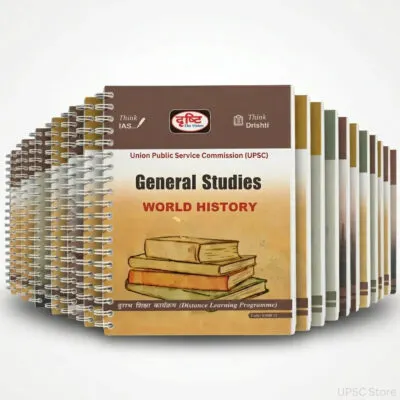
Drishti IAS Hindi Medium Complete GS Notes 2025-26 — 18 Printed Booklets for UPSC GS Paper I, II, III and IV
Related: Drishti IAS notes · General Studies notes
Product Overview
| Feature | Details |
|---|---|
| Booklets Count | 18 Individual Printed Booklets — Complete GS Paper I, II, III and IV Coverage |
| Language | Hindi Medium (हिंदी माध्यम) |
| Publisher | Drishti IAS (Distance Learning Programme — Think IAS, Think Drishti) |
| Edition | 2025-26 — Latest Genuine Batch |
| Condition | Brand New, Unmarked, Fresh Stock |
| Format | High-Quality Printed Booklets — Spiral or Book Binding |
| Paper Quality | 75 GSM Ultra-White — Highlighter Safe, Zero Bleed-Through |
| Shipping | Pan India Delivery in 3-5 Business Days — Tracked |
| Also Useful For | BPSC, UPPSC, MPPSC, RAS and All State PSC Examinations |
Complete Booklet Catalog
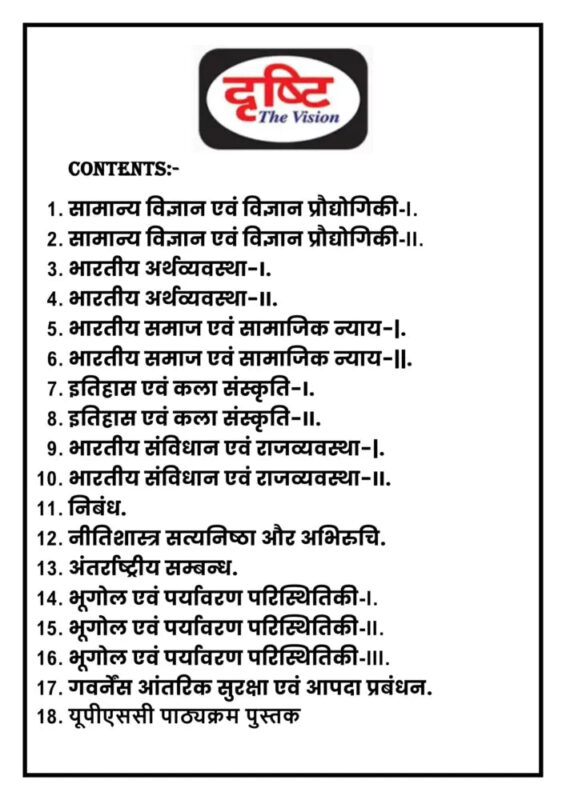
This 18-booklet set from Drishti IAS covers the entire UPSC सामान्य अध्ययन (Samanya Adhyayan) syllabus across GS Paper I, GS Paper II, GS Paper III and GS Paper IV — all written in naturally flowing Hindi, not machine-translated text. Designed for Hindi medium UPSC aspirants targeting Mains 2026, this set is the go-to printed resource for students who think, read and write in Hindi.
- Booklet 1: भारतीय इतिहास — प्राचीन एवं मध्यकालीन (Indian History — Ancient and Medieval) — Covers Indus Valley Civilisation, Vedic period, Maurya and Gupta empires, medieval Bhakti and Sufi movements, Mughal administration, regional kingdoms, cultural synthesis, art and architecture traditions relevant to UPSC GS Paper I Mains and Prelims syllabus.
- Booklet 2: भारतीय इतिहास — आधुनिक (Indian History — Modern) — Covers British expansion, 1857 revolt, rise of Indian nationalism, Congress history, Gandhian movements, Quit India, partition, constitutional development milestones, and significant social reform movements — all essential for UPSC GS Paper I Mains answers.
- Booklet 3: भारतीय राष्ट्रीय आंदोलन (Indian National Movement) — In-depth coverage of the freedom struggle, role of mass movements, tribal revolts, press and education under colonial rule, revolutionary nationalism, INA, and the final transfer of power — crucial for UPSC GS Paper I and essay paper.
- Booklet 4: भारत एवं विश्व भूगोल — भाग I (Indian and World Geography — Part I) — Physical geography of India and world: landforms, drainage systems, climate zones, monsoon mechanism, soil types, natural vegetation, ocean currents, and earthquake/volcano distribution — all mapped to UPSC GS Paper I prelims and mains geography section.
- Booklet 5: भारत एवं विश्व भूगोल — भाग II (Indian and World Geography — Part II) — Human and economic geography: population distribution, urbanisation trends, agriculture geography, industrial location theories, transport networks, resource distribution, and India’s regional development issues as per UPSC GS Paper I syllabus.
- Booklet 6: भारतीय समाज एवं सामाजिक मुद्दे (Indian Society and Social Issues) — Covers Indian society’s diversity, regionalism, communalism, secularism, women empowerment, caste system, tribal issues, social empowerment schemes, role of NGOs, and urbanisation — directly mapped to UPSC GS Paper I Mains social section.
- Booklet 7: भारतीय राजव्यवस्था — भाग I (Indian Polity — Part I) — Constitutional framework, Preamble, Fundamental Rights, Directive Principles, Fundamental Duties, amendment procedures, emergency provisions, federal structure, Centre-State relations — core UPSC GS Paper II Mains polity content in clear Hindi.
- Booklet 8: भारतीय राजव्यवस्था — भाग II (Indian Polity — Part II) — Parliament, President, Prime Minister, Cabinet, Supreme Court, High Courts, subordinate judiciary, constitutional bodies like UPSC, Election Commission, CAG, Finance Commission — complete GS Paper II coverage with flowcharts in Hindi.
- Booklet 9: शासन, सामाजिक न्याय एवं अंतर्राष्ट्रीय संबंध — भाग I (Governance, Social Justice and IR — Part I) — E-governance, RTI, citizens charter, transparency, accountability mechanisms, social sector schemes in health, education and poverty alleviation — aligned with UPSC GS Paper II governance and social justice segments.
- Booklet 10: शासन, सामाजिक न्याय एवं अंतर्राष्ट्रीय संबंध — भाग II (Governance, Social Justice and IR — Part II) — India’s foreign policy, neighbourhood policy, bilateral relations with USA, China, Russia, Europe, SAARC, ASEAN, UN and multilateral organisations — complete UPSC GS Paper II international relations content.
- Booklet 11: भारतीय अर्थव्यवस्था — भाग I (Indian Economy — Part I) — Economic planning history, NITI Aayog, national income concepts, poverty, inequality, unemployment, inclusive growth, budget concepts, fiscal policy, taxation system, GST structure — essential UPSC GS Paper III economy foundation content.
- Booklet 12: भारतीय अर्थव्यवस्था — भाग II (Indian Economy — Part II) — Banking sector, RBI monetary policy, capital markets, insurance, external sector, balance of payments, FDI, trade policy, WTO, infrastructure development, PPP models — advanced UPSC GS Paper III economy topics with data tables.
- Booklet 13: कृषि एवं संबद्ध क्षेत्र (Agriculture and Allied Sectors) — Indian agriculture overview, crop patterns, irrigation systems, agricultural reforms, MSP policy, food security schemes, PDS, animal husbandry, fisheries, cooperative movement — complete UPSC GS Paper III agriculture and food management content.
- Booklet 14: विज्ञान एवं प्रौद्योगिकी (Science and Technology) — Space technology (ISRO missions), defence technology, biotechnology, IT and AI developments, nuclear technology, nano-technology, IPR, cybersecurity, digital India, science and society linkages — all mapped to UPSC GS Paper III S&T section.
- Booklet 15: पर्यावरण एवं पारिस्थितिकी (Environment and Ecology) — Biodiversity, ecosystems, climate change, UNFCCC frameworks, Paris Agreement, pollution types and control, environmental laws, protected area networks, international environmental conventions — UPSC GS Paper III environment section with case studies.
- Booklet 16: आंतरिक सुरक्षा एवं आपदा प्रबंधन (Internal Security and Disaster Management) — Naxalism, terrorism, border management, cyber threats, money laundering, organised crime, NDMA framework, disaster risk reduction, Sendai Framework — complete UPSC GS Paper III internal security and disaster management topics.
- Booklet 17: नीतिशास्त्र, सत्यनिष्ठा एवं अभिरुचि — भाग I (Ethics, Integrity and Aptitude — Part I) — Foundations of ethics, moral philosophy, normative ethical theories, human values, attitude formation, emotional intelligence, civil service values — UPSC GS Paper IV theory section with Hindi terminology explained clearly.
- Booklet 18: नीतिशास्त्र, सत्यनिष्ठा एवं अभिरुचि — भाग II (Ethics, Integrity and Aptitude — Part II) — Case studies in public administration, probity in governance, conflict of interest, corruption issues, whistleblower protection, corporate governance, international ethics, applied ethics for civil servants — UPSC GS Paper IV practical content.
In-Depth Content Breakdown: Booklet by Booklet
Booklet 1: भारतीय इतिहास — प्राचीन एवं मध्यकालीन (Ancient and Medieval Indian History)
This booklet addresses the ancient and medieval history segment of UPSC GS Paper I — one of the most scoring sections in Mains if prepared well. Topics span Harappan civilisation features, Vedic society, Buddhist and Jain movements, Ashoka’s Dhamma, Gupta achievements in science and culture, post-Gupta regional kingdoms, Chola-Pallava-Rashtrakuta administration, and the Delhi Sultanate through to Mughal consolidation. Each topic is structured for Mains answer writing, with factual density kept high. This booklet also supports UPSC Prelims preparation for the art and culture component.
The booklet is structured around exam-ready sections — each major period opens with a timeline, followed by polity, economy, society, religion, art and architecture sub-heads, making it easy to write multi-dimensional UPSC Mains answers. Special boxes highlight UPSC previously asked questions for context. Hindi terminology is used authentically — words like “राजतन्त्र”, “सामन्त व्यवस्था”, and “भक्ति आंदोलन” are used naturally, giving Hindi medium aspirants the language fluency needed for answer writing in UPSC Mains.
Booklet 2: भारतीय इतिहास — आधुनिक (Modern Indian History)
Modern Indian History is central to UPSC GS Paper I and this booklet covers it with the depth Mains demands. British territorial expansion, economic exploitation policies (Drain Theory, De-industrialisation), 1857 revolt causes and consequences, rise of educated middle class, formation of Indian National Congress, extremist vs. moderate debates, Swadeshi movement, Gandhian era mass movements, Khilafat, Non-Cooperation, Civil Disobedience and Quit India — all are covered chapter-by-chapter with analytical angles suited for UPSC answer writing.
Each chapter ends with a “मुख्य परीक्षा की दृष्टि से” (From Mains Perspective) section that tells students which UPSC question angles to prepare. Constitutional milestones — Morley-Minto Reforms, Montagu-Chelmsford, Government of India Acts 1919 and 1935 — are covered with comparison tables. The booklet also covers partition historiography, communal politics, Ambedkar’s contributions, and princely state integration — all areas frequently tested in UPSC Mains GS Paper I answers.
Booklet 3: भारतीय राष्ट्रीय आंदोलन (Indian National Movement)
This dedicated booklet on the Indian National Movement goes beyond textbook narration to build the analytical depth UPSC Mains demands. Coverage includes regional peasant and tribal revolts (Santhal, Munda, Indigo), the evolution of mass political consciousness, role of women in the freedom struggle, press censorship and nationalist journalism, revolutionary nationalism (Bhagat Singh, Aurobindo), INA and Subhas Chandra Bose, and the political events of 1945-47 leading to independence and partition.
The booklet is particularly valuable because it connects freedom struggle events to contemporary governance philosophy — a linkage UPSC examiners reward in answers. Drishti IAS’s Hindi writing avoids awkward translation — phrases flow as natural Hindi prose, which helps aspirants write similarly natural Hindi in UPSC Mains answer scripts. Maps showing key movement centres, a timeline of major events, and chapter-end summary points make revision efficient for UPSC Mains and Prelims both.
Booklet 4: भारत एवं विश्व भूगोल — भाग I (Geography Part I — Physical)
Physical geography accounts for a significant portion of UPSC GS Paper I and this booklet tackles it systematically. It covers India’s physiographic divisions, Himalayan river systems vs. Peninsular rivers, monsoon mechanism (El Niño, La Niña, IOD effects), soil classification, natural vegetation zones, and India’s climate regions. World geography coverage includes landform formation processes, plate tectonics, earthquake and volcano belts, ocean currents and their climatic effects, and global wind systems — all standard UPSC Prelims and Mains geography topics.
Drishti IAS’s Geography booklet stands out for its labelled diagrams — cross-sections of Himalayan formation, river delta types, soil horizon diagrams — all printed clearly in this Hindi medium set. The naturally written Hindi (e.g., “पर्वतीय हिमनद”, “वर्षा छाया प्रदेश”) helps aspirants directly use these terms in UPSC Mains answers. Black-and-white maps with important locations marked supplement the text and train map-based question skills essential for UPSC Prelims.
Booklet 5: भारत एवं विश्व भूगोल — भाग II (Geography Part II — Human and Economic)
Human and economic geography for UPSC GS Paper I is covered in this second geography booklet. Topics include world population distribution and growth trends, migration theories, urbanisation and megacity issues, agricultural geography (types of farming, Green Revolution, food security geography), industrial location theories (Weber’s model), energy geography, mineral distribution globally and in India, transport geography, and India’s regional development disparities — all standard UPSC GS Paper I human geography content.
The booklet also addresses UPSC-relevant applied geography: disaster-prone zone mapping, river interlinking debates, land use change, and environmental geography overlaps. Data tables comparing India’s resource endowments with global benchmarks are included — these are directly usable in UPSC Mains answer enrichment. The Hindi medium framing uses precise geographic terminology consistently, building the vocabulary Hindi medium UPSC candidates need for Mains answer scripts.
Booklet 6: भारतीय समाज एवं सामाजिक मुद्दे (Indian Society and Social Issues)
The Indian Society section of UPSC GS Paper I is often underestimated but yields high Mains marks when prepared well. This booklet covers India’s unity in diversity framework, multiculturalism, linguistic diversity, caste system history and contemporary manifestations, gender issues, female literacy and workforce participation, minority rights, tribal communities and their rights, urbanisation challenges, communalism, regionalism, and the role of civil society in social empowerment — all within the UPSC syllabus framework.
The booklet integrates government scheme data — Beti Bachao Beti Padhao, POSHAN Abhiyan, Tribal Sub-Plan — with sociological analysis, enabling students to write value-added UPSC Mains answers. Drishti IAS’s social issues content is particularly strong for Hindi medium aspirants because social discourse in India happens in Hindi — the notes use vocabulary (e.g., “सामाजिक न्याय”, “वंचित वर्ग”, “सशक्तिकरण”) that directly translates into Mains answer writing without awkward English-to-Hindi translation struggles.
Booklet 7: भारतीय राजव्यवस्था — भाग I (Indian Polity — Part I)
Indian Polity is the backbone of UPSC GS Paper II and this first polity booklet builds the constitutional foundation. It covers the making of the Indian Constitution, Preamble significance, Fundamental Rights with relevant landmark Supreme Court judgments, Directive Principles and their justiciability debate, Fundamental Duties, constitutional amendments procedure, emergency provisions under Articles 352, 356 and 360, and the federal structure — Centre-State legislative, administrative and financial relations including GST Council’s constitutional basis.
Each constitutional article is explained with its UPSC examination relevance — which articles appear in Prelims MCQs, which demand Mains analytical answers. Landmark cases (Kesavananda Bharati, Maneka Gandhi, SR Bommai) are explained in simple Hindi without losing legal precision. Comparison tables — e.g., Fundamental Rights vs. DPSP — are formatted for quick revision. This booklet is foundational for UPSC GS Paper II and equally valuable for state PSC examinations like UPPSC and MPPSC where polity weightage is high.
Booklet 8: भारतीय राजव्यवस्था — भाग II (Indian Polity — Part II)
The second polity booklet covers the institutional architecture of Indian democracy — Parliament structure and functioning, Money Bill vs. Finance Bill distinction, President’s powers (real vs. nominal), Prime Minister and Cabinet conventions, Supreme Court original/appellate/advisory jurisdiction, High Courts, subordinate judiciary, and the complete set of constitutional bodies: Election Commission, UPSC, CAG, Finance Commission, National Commissions for SC/ST/Women/Minorities. Each body is covered with composition, functions, powers and current constitutional debates.
The booklet also covers quasi-judicial bodies, tribunals system, and recent constitutional amendments affecting polity — all current till the 2025-26 edition update. Drishti IAS formats this content with flowcharts showing the legislative process, comparison tables for constitutional bodies, and shaded boxes for “परीक्षा उपयोगी तथ्य” (Exam-Useful Facts) — a design feature that makes last-minute UPSC Mains revision fast and effective. Hindi medium aspirants preparing for UPSC 2026 will find this booklet particularly well-aligned to the Paper II marking scheme.
Booklet 9: शासन, सामाजिक न्याय एवं अंतर्राष्ट्रीय संबंध — भाग I (Governance and Social Justice)
Governance for UPSC GS Paper II demands both conceptual clarity and current affairs integration — this booklet provides both. Coverage includes e-governance models, Digital India, citizen-centric administration, RTI Act provisions and limitations, citizens’ charter, accountability frameworks, transparency mechanisms, role of civil society and media, self-help groups, decentralisation through Panchayati Raj (73rd Amendment) and Urban Local Bodies (74th Amendment), and the social sector — health policy, education policy, and poverty alleviation schemes.
Social justice coverage includes welfare schemes (PM-KISAN, MGNREGS, Ayushman Bharat, PM Awas Yojana), social security frameworks, food security law, and vulnerability-specific schemes for women, children, elderly and differently-abled citizens. Each scheme is presented in a structured format — objective, implementing ministry, beneficiaries, achievements and challenges — ideal for UPSC Mains answer writing. The Hindi medium framing uses governance vocabulary that helps aspirants articulate administrative concepts naturally in Hindi answer scripts.
Booklet 10: शासन, सामाजिक न्याय एवं अंतर्राष्ट्रीय संबंध — भाग II (International Relations)
International Relations for UPSC GS Paper II is dynamic and this 2025-26 edition booklet covers India’s strategic and diplomatic positions with current context. India’s foreign policy evolution — Non-Alignment to strategic autonomy — is explained before diving into bilateral relationships: India-USA (defence ties, tech cooperation), India-China (border disputes, trade imbalance), India-Russia (traditional partnership evolution), India-Europe, Neighbourhood First policy (Pakistan, Bangladesh, Nepal, Sri Lanka, Maldives, Myanmar), and ASEAN engagement.
Multilateral engagement is covered in depth — India’s role in UN, SCO, BRICS, G20 (India’s presidency context), QUAD, and WTO dispute positions. Nuclear policy, Missile Technology Control Regime (MTCR), and India’s space diplomacy are addressed in an IR context. The booklet uses current data points — bilateral trade figures, defence deal values, diplomatic incident timelines — that UPSC Mains examiners reward in answers. All IR content is written in Hindi with proper terminology for key concepts like “रणनीतिक स्वायत्तता” and “पड़ोसी प्रथम नीति”.
Booklet 11: भारतीय अर्थव्यवस्था — भाग I (Indian Economy — Part I)
Indian Economy is one of the most challenging sections of UPSC GS Paper III for Hindi medium aspirants, primarily because most economy resources are in English. This booklet addresses that gap directly — economic concepts are explained in Hindi without sacrificing analytical depth. Coverage includes national income accounting (GDP, GNP, NNP — concepts and limitations), economic planning history and NITI Aayog’s role, poverty measurement methodologies, unemployment types, inclusive growth frameworks, budget concepts, fiscal federalism, and India’s taxation structure including GST.
Each concept includes a “सरल भाषा में” (In Simple Language) box that breaks down complex terms before going into exam-depth analysis — a pedagogical feature that makes this booklet particularly effective for Hindi medium aspirants who encounter economy concepts for the first time in formal study. Data from Economic Survey and Union Budget (updated to 2025-26 edition) are integrated throughout. This booklet is equally useful for BPSC, UPPSC and MPPSC economy papers where the same foundational content is tested.
Booklet 12: भारतीय अर्थव्यवस्था — भाग II (Indian Economy — Part II)
The second economy booklet advances into financial and external sector topics critical for UPSC GS Paper III. Banking sector structure (scheduled commercial banks, RBI’s regulatory role, NPAs, banking reforms), monetary policy instruments (repo rate, CRR, SLR, OMOs), capital market structure (SEBI, stock exchanges, mutual funds, bond markets), insurance sector developments, and external sector topics — balance of payments, current account deficit, capital account, foreign exchange reserves, FDI policy, FPI flows, and India’s trade policy — are covered with current data.
WTO dispute settlement and India’s position on agricultural subsidies, RCEP withdrawal rationale, and bilateral Free Trade Agreements are addressed from UPSC Mains answer perspective. Infrastructure financing (National Infrastructure Pipeline, InvITs, REITs, sovereign green bonds) and PPP model evolution are also covered. The booklet uses structured comparison tables — e.g., FDI vs. FPI, NITI Aayog vs. Planning Commission — that serve as high-value revision tools before UPSC Mains. All complex financial terms are explained in Hindi first, then used in analysis.
Booklet 13: कृषि एवं संबद्ध क्षेत्र (Agriculture and Allied Sectors)
Agriculture consistently appears in UPSC GS Paper III and this dedicated booklet provides thorough coverage. Indian agriculture’s structural features (fragmented landholding, monsoon dependency, disguised unemployment), crop pattern analysis (Kharif, Rabi, Zaid), irrigation systems (canal, tank, groundwater), land reform history, agricultural marketing (APMC, eNAM), MSP mechanism and its limitations, contract farming, farm laws controversy and aftermath, PM-KISAN, Fasal Bima Yojana, and Soil Health Card scheme are all covered with analytical depth.
Food security architecture — National Food Security Act, PDS functioning, buffer stock policy, Food Corporation of India — is covered in detail. Allied sectors include animal husbandry (white revolution, Blue Revolution for fisheries), dairy cooperatives (Amul model), sericulture, horticulture, and organic farming promotion. The booklet is enriched with data tables showing state-wise agricultural productivity, irrigation coverage and crop production — data that Hindi medium UPSC aspirants can directly deploy in Mains answers to add specificity and score better.
Booklet 14: विज्ञान एवं प्रौद्योगिकी (Science and Technology)
Science and Technology for UPSC GS Paper III is dynamic and this 2025-18 Booklet reflects the latest developments. ISRO missions (Chandrayaan-3, Aditya-L1, Gaganyaan progress), defence technology (DRDO developments, missile systems, Make in India in defence), biotechnology (GMO crops debate, genome sequencing, mRNA vaccines), information technology (AI regulation debates, 5G rollout, cybersecurity architecture, IT Act amendments), space commercialisation, and nuclear energy policy are covered with UPSC answer angles clearly indicated.
The booklet also covers nanotechnology applications, quantum computing basics (at UPSC level), semiconductor policy (India’s chip manufacturing push), drone regulation framework, and Indigenous Technology Development schemes. Each technology domain connects back to governance and policy — how should India regulate AI? What is India’s space commercialisation policy? These policy-tech intersections are precisely what UPSC GS Paper III S&T questions demand. The Hindi medium treatment makes complex technology vocabulary accessible — terms like “कृत्रिम बुद्धिमत्ता” and “साइबर सुरक्षा” are used naturally throughout.
Booklet 15: पर्यावरण एवं पारिस्थितिकी (Environment and Ecology)
Environment and Ecology is the most dynamic section of UPSC GS Paper III and this booklet covers both the conceptual foundations and the current affairs dimensions. Ecological concepts — food chains, biomes, ecosystem services, biodiversity hotspots (India’s four hotspots), IUCN categories, CITES, CBD — are covered first. Climate change science (greenhouse gases, IPCC reports, tipping points) and international response (UNFCCC, Kyoto Protocol, Paris Agreement, COP outcomes through COP29) are then addressed with India’s NDC commitments and climate finance debates.
Environmental laws — Environment Protection Act, Forest Conservation Act, Wildlife Protection Act, Biological Diversity Act — and regulatory bodies (CPCB, SPCBs, NGT) are covered with recent landmark judgments and amendments. Environmental impact assessment (EIA) process, coastal regulation zones, wetland conservation, and India’s Protected Area Network (Tiger Reserves, Biosphere Reserves, Ramsar sites) are all included with updated lists. The booklet integrates case studies from India’s environmental governance — useful for both UPSC GS Paper III and UPSC Essay paper environment topics.
Booklet 16: आंतरिक सुरक्षा एवं आपदा प्रबंधन (Internal Security and Disaster Management)
Internal Security forms a distinct and often tricky segment of UPSC GS Paper III. This booklet covers the full spectrum: Left Wing Extremism (LWE) — causes, geographic spread, government strategy; insurgency in Northeast India — historical context and current peace process; Jammu and Kashmir security situation; cross-border terrorism; cyber warfare and cyber threats to critical infrastructure; money laundering and hawala networks; drug trafficking; human trafficking; and role of media in national security. The UPSC-relevant analytical frameworks (security-development nexus, smart policing, etc.) are woven into each topic.
Disaster Management coverage includes NDMA’s legal framework (DM Act 2005), National Disaster Management Plan, India’s vulnerability profile (seismic zones, flood-prone areas, cyclone-prone coasts, landslide zones), Sendai Framework for Disaster Risk Reduction 2015-2030 and India’s alignment, role of NDRF, SDRF, community-based disaster preparedness, and case studies from recent disasters (Uttarakhand floods, Odisha cyclone management, COVID as a biological disaster). The booklet provides a structured approach to UPSC Mains answers on security and disaster topics in Hindi.
Booklet 17: नीतिशास्त्र, सत्यनिष्ठा एवं अभिरुचि — भाग I (Ethics, Integrity and Aptitude — Part I)
UPSC GS Paper IV (Ethics) is unique in that it requires both philosophical depth and practical application — and Hindi medium aspirants sometimes struggle to find resources that handle this balance well in Hindi. This booklet covers the theoretical foundations: nature and scope of ethics, ethical frameworks (consequentialism, deontology, virtue ethics — explained in Hindi with Indian philosophical parallels), moral philosophy of Kant, Mill and Gandhian ethics, human values (सत्य, अहिंसा, करुणा, न्याय), attitude (attitude formation, components, attitude change), emotional intelligence (Goleman’s model in Hindi), and moral intuition.
Civil service values — integrity, impartiality, objectivity, compassion, tolerance — are treated both philosophically and practically with examples from administrative life. The booklet uses Indian philosophical sources (Gita, Buddhist ethics, Arthashastra) to enrich ethical analysis — something UPSC examiners reward. The Hindi medium treatment is authentic here because Indian ethics and philosophy are best expressed in Indian languages. Answer-writing guidance boxes (“इस विषय पर उत्तर कैसे लिखें”) are included throughout to guide UPSC Mains GS Paper IV preparation.
Booklet 18: नीतिशास्त्र, सत्यनिष्ठा एवं अभिरुचि — भाग II (Ethics — Applied and Case Studies)
The second Ethics booklet moves from theory to application — the area where UPSC GS Paper IV marks are won or lost. It covers probity in governance (financial and administrative probity), conflict of interest in public service (types and management), use and misuse of official discretion, corporate governance and ethics, whistleblower protection mechanisms, codes of conduct for civil servants, ethics in international relations, and role of family and society in value formation. Each topic is structured to enable direct UPSC Mains answer writing.
Case studies form the heart of this booklet — a substantial set of practice case studies covering ethical dilemmas in administration, including scenarios involving bribery, loyalty conflicts, disaster relief corruption, transfer postings, and public interest vs. official secrecy. Each case study is followed by a model answer framework in Hindi, showing how to identify stakeholders, map ethical issues, apply frameworks, and conclude with justified decisions — exactly the structure UPSC GS Paper IV case study answers require. This booklet alone makes the 18-booklet set invaluable for UPSC 2026 Hindi medium aspirants.
Physical Construction and Quality Standards
Every booklet in this Drishti IAS 18-booklet Hindi medium GS set is produced to a quality standard that matches serious UPSC preparation demands — built for months of intensive use without wear, page loss or print degradation during the preparation cycle.
Paper Quality: 75 GSM Anti-Glare White Paper
The 75 GSM ultra-white paper used across all 18 booklets is selected specifically for UPSC study use. High paper opacity ensures zero bleed-through when using multiple highlighter colors — yellow, orange, green, pink — and gel pens simultaneously, which is essential for color-coded revision systems. The anti-glare surface reduces eye strain during long study sessions of 8-10 hours, which UPSC aspirants routinely clock during peak preparation months. The paper weight provides a premium tactile experience while remaining light enough for the full 18-booklet set to be carried conveniently.
Printing Technology: High-Resolution Laser Printing
All 18 booklets use high-resolution laser printing technology, which ensures Hindi Devanagari script is reproduced with perfect clarity — critical for a Hindi medium set where readability of matras and conjunct consonants matters. Diagrams, maps, flowcharts and comparison tables are printed with sharp edge definition. Laser toner is permanent and smudge-proof — unaffected by hand moisture during prolonged reading or by water splashes. Text density is uniform across all pages, with no fading in page edges or corners — a common quality issue with photocopied alternatives that makes this printed set superior.
Binding and Durability
Each booklet features either spiral or book binding depending on booklet thickness. Spiral binding allows the booklet to open completely flat — a practical advantage when writing notes in the margin alongside study text, a common active learning technique for UPSC preparation. Book-bound booklets are compact for storage and resist page separation. All booklets feature 300 GSM thick covers with lamination — the covers resist moisture, corner damage and the wear of being repeatedly picked up and put down over a preparation year. Spine text is printed clearly for easy shelf identification across the 18-booklet set.
Key Features and Study Design
Drishti IAS has built this 18-booklet GS set specifically for Hindi medium UPSC aspirants — every design decision from language register to content structure reflects an understanding of how Hindi medium students study and write in UPSC Mains examinations.
- Naturally Written Hindi — Not Translated Text: Unlike competitors who translate English content into Hindi, Drishti IAS content is originally written in Hindi. This means sentences flow naturally, vocabulary is appropriate, and aspirants can directly reproduce the language register in UPSC Mains answer scripts without sounding like a translated document.
- Complete GS Coverage in One Set: All four UPSC GS Mains papers — Paper I (History, Geography, Society), Paper II (Polity, Governance, IR), Paper III (Economy, S&T, Environment, Security) and Paper IV (Ethics) — are covered across the 18 booklets, eliminating the need for multiple publishers and ensuring content consistency throughout preparation.
- Exam-Oriented Structure — Mains Answer Angles Built In: Every chapter ends with “मुख्य परीक्षा की दृष्टि से” sections that tell students which angles UPSC typically tests — analytical, evaluative, or descriptive. This trains aspirants to approach topics as UPSC examiners expect rather than as general readers, directly improving Mains answer quality.
- Current Affairs Integration — 2025-26 Edition Updates: The 2025-26 edition incorporates recent policy changes, scheme updates, international agreements, and current data points. UPSC Mains answers enriched with current examples score higher, and this updated set ensures Hindi medium aspirants are not working from outdated content.
- Visual Learning Aids — Tables, Flowcharts, Maps: Across all 18 booklets, complex relationships are visualised through comparison tables, administrative flowcharts, labelled maps and concept diagrams — all printed with laser clarity. Visual memory tools are proven aids for UPSC revision, and Hindi medium aspirants benefit from visuals that complement rather than replace text study.
Shipping, Packaging and Delivery
All 18 booklets are individually shrink-wrapped before being packed together into a reinforced corrugated cardboard shipping box rated for transit loads. The box features foam corner protectors at all eight corners to prevent compression damage in transit. The outer packaging is water-resistant treated — protecting contents from moisture exposure during monsoon-season deliveries. A checklist of all 18 booklets is included inside the package so you can immediately verify completeness on arrival. The package is sealed with tamper-evident tape — any tampering is visible before you open the shipment.
Orders are dispatched within 24 hours of confirmation from our Mukherjee Nagar, Delhi fulfilment centre. Pan India delivery takes 3-5 business days via tracked courier services — a tracking ID is shared on WhatsApp within 24 hours of dispatch. For any delivery queries, missing booklet reports, or damage claims, contact us directly on WhatsApp at +91 70045 49563. Any missing or damaged booklet is replaced within 48 hours of a verified complaint — we stand behind the completeness and condition of every order we ship.
Frequently Asked Questions (FAQ)
A: Yes — Drishti IAS Hindi medium notes are widely regarded as one of the strongest choices for Hindi medium UPSC aspirants. The content is originally written in Hindi (not translated), which gives it a natural language register that English-to-Hindi translated materials lack. The 2025-26 edition is updated to current syllabus requirements, scheme data and policy changes, making it directly relevant for UPSC 2026 Mains preparation across all four GS papers.
A: This set contains exactly 18 printed booklets covering the complete UPSC GS syllabus — GS Paper I (History, Geography, Society), GS Paper II (Polity, Governance, IR), GS Paper III (Economy, Agriculture, S&T, Environment, Security) and GS Paper IV (Ethics). Each booklet covers a distinct subject or sub-topic, and the full list is provided in the Complete Booklet Catalog section above. All 18 booklets are shipped together in one tracked package.
A: These booklets use 75 GSM ultra-white paper chosen for high opacity — multiple highlighter colors and gel pens work without bleed-through to the reverse side, ideal for color-coded revision. The anti-glare paper surface also reduces eye strain during long study sessions, and the paper weight ensures booklets remain crisp and do not soften or wrinkle with extended daily use through a full UPSC preparation cycle.
A: Yes — all four UPSC GS Mains papers are covered across the 18 booklets in this set. GS Paper I subjects (Modern and Ancient History, National Movement, Geography, Indian Society) occupy multiple booklets, as do Paper II (Polity Parts I and II, Governance, IR), Paper III (Economy Parts I and II, Agriculture, S&T, Environment, Internal Security) and Paper IV Ethics (Theory and Case Studies). The set is designed as a complete GS preparation resource for UPSC Mains 2026.
A: You can buy this Drishti IAS 18-booklet Hindi medium GS set directly from this product page — add to cart, complete the order, and receive your tracked shipment in 3-5 business days anywhere in India. No need to visit Drishti IAS coaching centre or arrange photocopies. This is the most convenient way to buy genuine, brand-new, printed Drishti IAS Hindi medium notes online without quality compromise.
A: Yes — Drishti IAS is specifically known for its Hindi medium UPSC study material. This 2025-26 edition set is their latest Distance Learning Programme (DLP) material in Hindi, covering the complete GS syllabus. The content is updated for UPSC 2026 preparation and is available to buy online through this store with pan India delivery, making it accessible to Hindi medium aspirants across Bihar, UP, MP, Rajasthan and all states.
A: Drishti IAS GS notes are primarily structured for UPSC Mains preparation — depth, analytical framing and answer-writing orientation dominate the content. However, the factual content covered also provides a strong Prelims base, particularly for History, Geography, Polity, and Economy. For Prelims, aspirants typically supplement these notes with dedicated MCQ practice resources. For Mains, these 18 booklets can serve as the primary study material across all four GS papers for Hindi medium UPSC candidates.
A: Both are strong Hindi medium UPSC study material options. Drishti IAS content is originally written in Hindi and has a strong following among Hindi heartland aspirants — the language register is natural and the organisation reflects how Hindi medium students think. Vision IAS material is also widely used and covers similar syllabus ground. Aspirants often choose based on coaching affiliation or language preference. Drishti IAS is particularly valued for its Hindi authenticity and its dedicated focus on Hindi medium UPSC preparation.
A: These are 100% genuine, brand-new, printed Drishti IAS Distance Learning Programme (DLP) booklets from the 2025-26 batch — not photocopies, not scanned PDFs printed at home, and not unauthorised reproductions. All booklets are supplied as unmarked fresh stock in original print quality. The 75 GSM paper, laser printing and proper binding are consistent with official Drishti IAS DLP material quality standards. Authenticity can be verified from the cover codes and print quality on arrival.
A: Yes — this Drishti IAS 18-booklet Hindi medium GS set is highly useful for UPPSC (UP), BPSC (Bihar), MPPSC (MP), RAS (Rajasthan) and other state PSC examinations that test GS content in Hindi medium. State PSC GS syllabi overlap substantially with UPSC GS — especially Polity, History, Geography, Economy, and Ethics. The Hindi medium framing makes this set particularly valuable for state PSC aspirants who appear for Hindi medium examinations in these states.
A: All 18 booklets are individually shrink-wrapped and packed in a reinforced corrugated box with foam corner protectors and water-resistant outer treatment. The package is sealed with tamper-evident tape, and a booklet checklist is included for immediate verification. A tracking ID is shared on WhatsApp within 24 hours of dispatch. Any booklet damaged or missing in transit is replaced within 48 hours of reporting to our WhatsApp number +91 70045 49563 — your order is fully protected.
A: Orders are dispatched from our Mukherjee Nagar, Delhi store within 24 hours of order confirmation. Pan India delivery takes 3-5 business days via tracked courier — most metro cities receive their order in 2-3 days, while Tier 2 and Tier 3 cities receive within 4-5 business days. You can track your shipment using the tracking ID shared on WhatsApp. If you need the set urgently for an upcoming UPSC preparation schedule, buy now to ensure timely delivery.
Summary
| Specification | Value |
|---|---|
| Booklets | 18 Printed Booklets |
| Language | Hindi Medium (हिंदी माध्यम) |
| Publisher | Drishti IAS — Distance Learning Programme (Think IAS, Think Drishti) |
| Edition | 2025-26 — Latest Genuine Batch |
| GS Coverage | GS Paper I, II, III and IV — Complete UPSC Mains Syllabus |
| Paper | 75 GSM Ultra-White — Highlighter Safe, Zero Bleed-Through |
| Binding | Spiral or Book Binding with 300 GSM Laminated Cover |
| Condition | Brand New, Unmarked, Fresh Stock |
| Delivery | 3-5 Business Days Pan India — Tracked |
| Also Useful For | BPSC, UPPSC, MPPSC, RAS and All State PSC Examinations |
Available from our UPSC Store in Mukherjee Nagar, Delhi — buy the Drishti IAS Hindi Medium Complete GS Notes 2025-26 online today and receive all 18 booklets at your doorstep with pan India delivery in 3-5 days.
Reference: UPSC official syllabus
Customer Reviews 132
Really comprehensive material yaar.
Mast
Material quality standard se upar hai. Hindi medium ke students ko zaroor lena chahiye.
Material se UPSC pattern samajh mein aaya. Hindi medium ke liye ye sab se badhiya option hai.
18 booklets organize karke padh sakta hoon. Hindi medium materials mein ye best hai.
UPSC ke liye ye notes bilkul perfect hain. Hindi mein explain hone se concepts samajhne mein aasani hui.
Content quality achhi hai lekin delivery mein delay tha. Notes themselves are useful though.
Drishti ke notes bilkul fantastic hain, har topic ka detailed explanation hai.
Aspirants Also Bought
More from the same category
About Drishti IAS Hindi Medium Complete GS Notes 2025-26
Drishti IAS Hindi Medium Complete GS Notes 2025-26 is a highly recommended UPSC study material from Drishti IAS, specially designed for General Studies preparation. Available in Hindi medium, this material is crafted to match the exact requirements of the UPSC Civil Services Examination syllabus — covering both Prelims and Mains comprehensively.
Product Details
- Institute: Drishti IAS
- Subject: General Studies
- Medium: Hindi
- Format: Printed
- Delivery: Pan-India delivery in 3–5 working days
- Format: Original printed material, verified authentic
Why Buy from UPSC Store?
- ✅ 100% Genuine Printed Material — Original printed notes, no photocopies or fake copies
- ✅ Fast Delivery — Ships within 24 hours, arrives in 3–5 days pan-India
- ✅ Secure Packaging — Bubble-wrapped and boxed to prevent damage in transit
- ✅ Trusted by 10,000+ Aspirants — India's most reliable UPSC material marketplace
- ✅ WhatsApp Support — Get expert guidance on material selection before ordering
Frequently Asked Questions
Yes, all products at UPSC Store are 100% genuine printed materials. We do not sell photocopies or fake copies.
Orders are dispatched within 24 hours and delivered across India in 3–5 working days via reputed courier partners.
Yes, we accept returns within 7 days if the product is damaged or incorrect. Check our refund policy for details.
We recommend pairing this with current affairs notes and a UPSC test series for comprehensive preparation. Browse more in Drishti IAS, General Studies, UPSC.