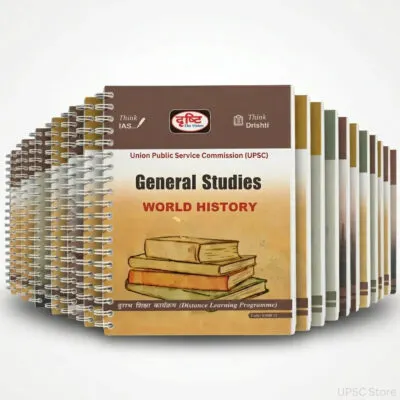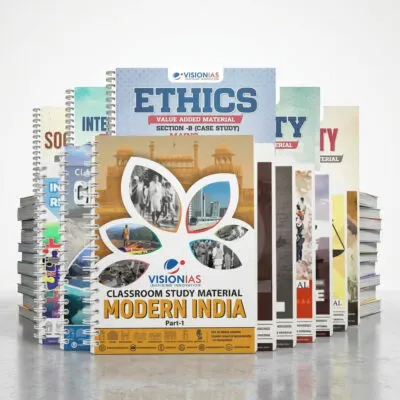

Drishti IAS Prelims Test Series 2026-27

35 Booklets | English Medium | UPSC Study Material

Key Highlights:
πŸ“˜ 35 Booklets
πŸ“š History, Geography, Indian Polity, Indian Economy, Environment & Ecology
πŸŽ“ Drishti IAS
🏷️ Printed
πŸ‡¬πŸ‡§ English Medium
β‚Ή899
πŸ“¦ 10-tests-set βœ“
πŸ“¦ 15-tests-set βœ“
πŸ“¦ 20-tests-set βœ“
πŸ“¦ 25-tests-set βœ“
πŸ“¦ 30-tests-set βœ“
πŸ“¦ 35-tests-set βœ“
Only 17 sets left
Selling fast (63 sold this week)
5% OFF Use UPSC5% (COD Available)
10% OFF Use UPI10 (UPI Only)
Secure Payment
Fast Delivery
Safe Packaging

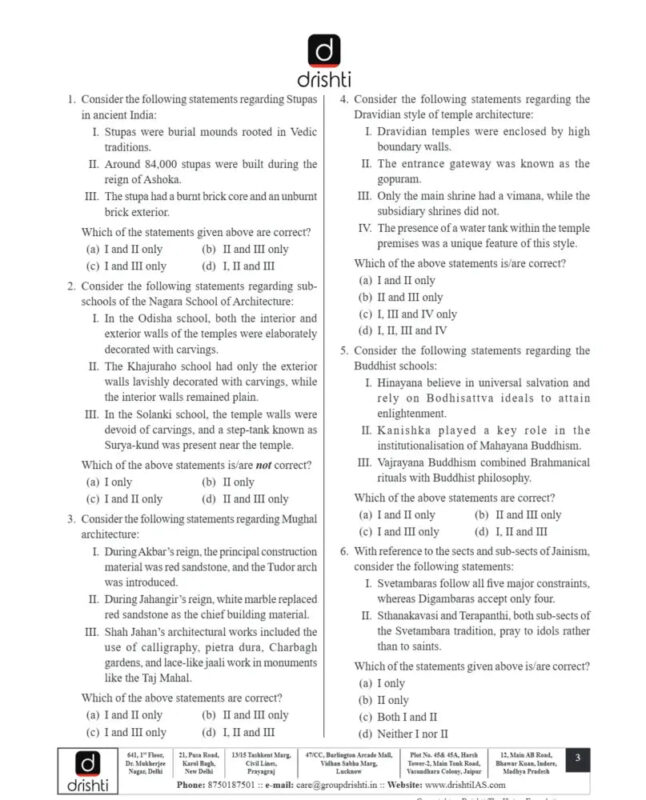
About Drishti IAS Prelims Test Series

The Drishti IAS Prelims Test Series is a printed UPSC study material set sold by UPSC Store β€” India’s trusted source for genuine, latest-batch civil services preparation books. This page covers full booklet details, syllabus coverage, pricing, shipping, and frequently asked questions. Useful for UPSC CSE, BPSC, UPPSC, MPPSC, RAS and other state PSC examinations.


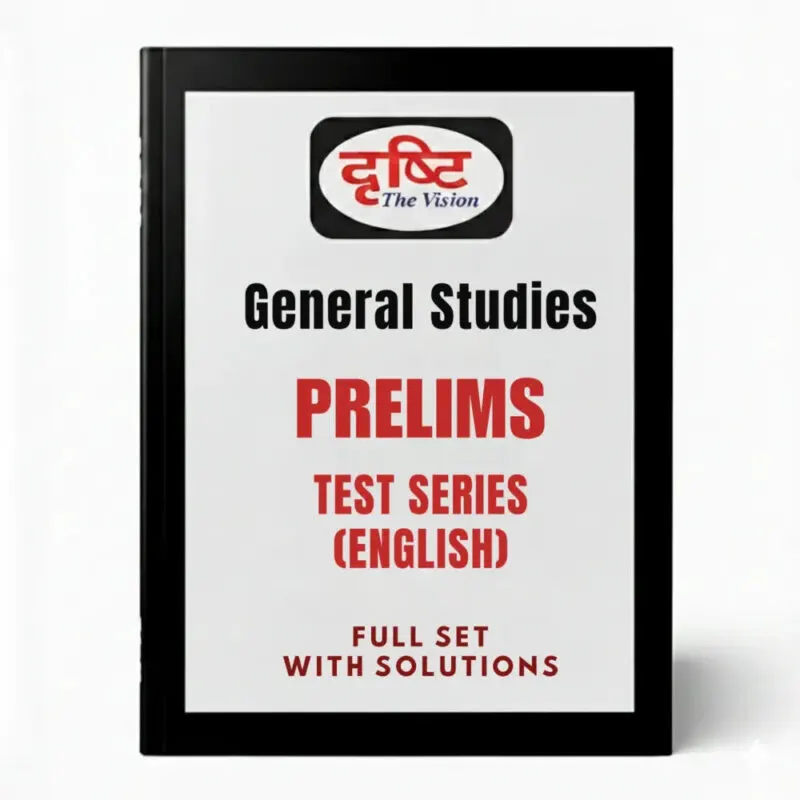
Drishti IAS Prelims Test Series 2026-27 | 35 Booklets | English Medium | UPSC Study Material
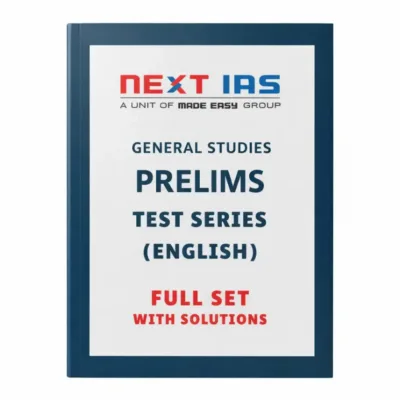
Drishti IAS Prelims Test Series 2026-27 | 35 Booklets | English Medium | UPSC Study Material
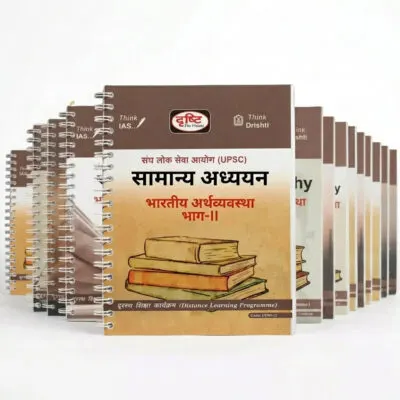
Related: Drishti IAS test series Β· Prelims test series

The Drishti IAS Prelims Test Series 2026-27 is a meticulously curated, comprehensive examination preparation package designed exclusively for aspirants targeting the Union Public Service Commission (UPSC) Civil Services Preliminary Examination. This flagship test series from one of India’s most trusted UPSC coaching institutions comes in a complete set of 35 booklets in English medium, offering unparalleled depth of coverage across all subjects mandated by the UPSC syllabus. Whether you are a first-time aspirant or a seasoned candidate refining your strategy, this series provides the structured practice environment necessary to excel in one of the world’s most competitive examinations.

Crafted by a team of seasoned educators, IAS officers, and subject matter experts at Drishti IAS, this test series is not merely a collection of question papers β€” it is a holistic preparation ecosystem. Each booklet is designed to simulate the actual UPSC Preliminary Examination environment, helping candidates develop time management skills, accuracy, and confidence. The series covers General Studies Paper I and CSAT Paper II comprehensively, ensuring that aspirants are fully equipped to tackle the prelims with precision and competence.


About Drishti IAS

Drishti IAS has been at the forefront of UPSC Civil Services examination preparation for over two decades. Founded with the mission of making quality IAS coaching accessible to every aspirant across India, Drishti IAS has produced thousands of successful civil servants over the years. The institution is renowned for its student-centric approach, regularly updated study materials, and a faculty team that combines academic brilliance with practical examination insight. The Drishti Prelims Test Series has consistently been among the most preferred test series by UPSC toppers, making it an essential investment for any serious aspirant.


Complete Booklet-Wise Coverage

The 35-booklet series is systematically organized to cover every dimension of the UPSC Preliminary Examination syllabus. Each booklet targets specific subject areas, ensuring focused practice without overlap. Below is an in-depth look at each booklet’s thematic focus, pedagogical design, and strategic importance for UPSC preparation.

Booklet 1: Indian History – Ancient and Medieval Period

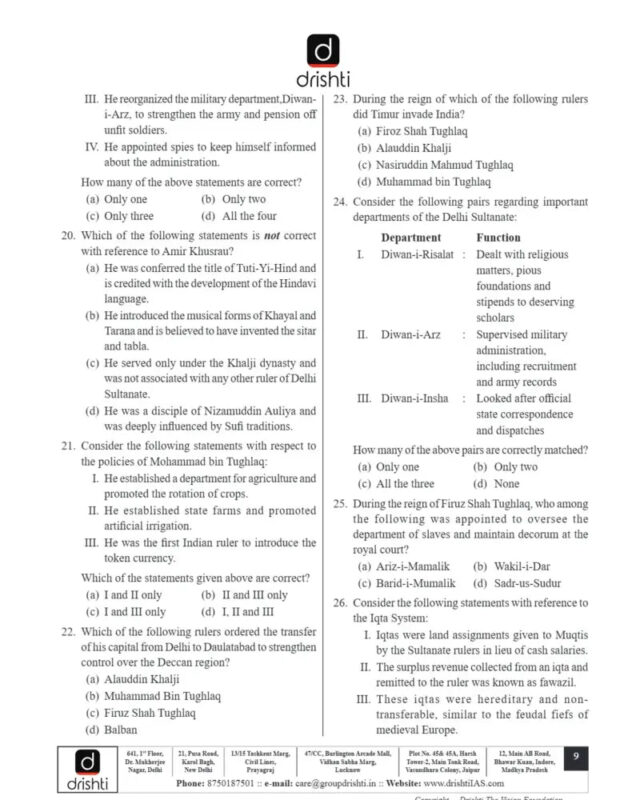
This foundational booklet delves deep into the ancient civilizations of the Indian subcontinent, including the Indus Valley Civilization, Vedic Period, Mahajanapadas, Mauryan Empire, Gupta Period, and the subsequent medieval kingdoms. Questions are framed to test not just factual recall but also conceptual understanding of socio-cultural, economic, and political dimensions of ancient Indian history. The booklet aligns strictly with NCERT sources and standard reference texts recommended for UPSC preparation.

The medieval period section covers the Delhi Sultanate, Vijayanagara Empire, Mughal administration, Bhakti and Sufi movements, and regional kingdoms that shaped the Indian cultural landscape. Special emphasis is placed on frequently asked themes such as architecture, administrative systems, religious movements, and trade routes. The questions are calibrated to match UPSC difficulty standards, with detailed explanations provided for every answer to facilitate deep learning and concept reinforcement.

Booklet 2: Indian History – Modern Period

Covering the colonial era from the arrival of European powers to Indian independence in 1947, this booklet is one of the most critical in the entire series. It includes questions on the East India Company’s rise, various revolts and uprisings, social reform movements, the Indian National Movement, constitutional developments under British rule, and the role of significant personalities like Gandhi, Nehru, Ambedkar, Tilak, and Bose. The questions are designed to test analytical thinking about cause-and-effect relationships in historical events.

The booklet also incorporates topics such as the partition of Bengal, Non-Cooperation Movement, Civil Disobedience Movement, Quit India Movement, and the constitutional history of India under British governance. Aspirants will find this booklet particularly valuable for its cross-referencing approach, where historical events are connected to their contemporary political implications. Answer explanations are rich with additional context, helping candidates build a nuanced understanding rather than relying on rote memorization.

Booklet 3: Indian Polity – Constitutional Framework

Indian Polity is one of the highest-scoring subjects in UPSC Prelims, and this booklet addresses the constitutional foundation of the Indian Republic comprehensively. Topics covered include the Preamble, Fundamental Rights, Fundamental Duties, Directive Principles of State Policy, constitutional amendments, and the structure of the Indian Parliament. Questions are crafted to test both textual knowledge and interpretive understanding of constitutional provisions as applied in real-world governance scenarios.

This booklet draws heavily from M. Laxmikanth’s Indian Polity and official government publications to ensure accuracy and currency of information. Landmark Supreme Court judgments that have shaped constitutional interpretation are also integrated into the question bank, making this booklet an excellent resource for understanding the living constitution of India. Each question is accompanied by a detailed solution that cites constitutional articles, amendments, and judicial precedents to provide aspirants with a complete learning experience.

Booklet 4: Indian Polity – Governance and Administration

This booklet transitions from constitutional theory to practical governance, examining the functioning of the executive, legislature, and judiciary at both central and state levels. Key topics include the role of the President and Governor, Council of Ministers, Parliamentary procedures, the federal structure, Centre-State relations, and the role of constitutional bodies such as the Election Commission, CAG, and UPSC. Questions challenge candidates to apply their understanding of institutional mechanisms to governance challenges.

Local government structures, Panchayati Raj institutions, urban local bodies, and the 73rd and 74th Constitutional Amendments are covered in substantial detail. The booklet also includes questions on contemporary governance issues, policy implementation challenges, and the role of civil society and media in a democratic framework. With India’s governance landscape evolving rapidly, this booklet incorporates the most recent constitutional and administrative developments, ensuring that aspirants are prepared for cutting-edge questions in the actual UPSC Prelims.

Booklet 5: Indian Economy – Basics and Planning

Economics has become an increasingly significant portion of the UPSC Preliminary Examination, and this booklet builds the foundational understanding required to answer economy-related questions with confidence. Topics include national income accounting, types of economies, planning in India, Five-Year Plans, NITI Aayog, and the transition from planned to market economy. Questions are designed to test both theoretical concepts and their practical applications in the Indian economic context.

The booklet covers important economic indicators such as GDP, GNP, NNP, per capita income, Human Development Index, and the various measures of poverty and inequality in India. Budget concepts, types of deficits, monetary policy, and fiscal policy are explained through carefully designed questions that progressively increase in complexity. This systematic approach helps aspirants build a strong conceptual base that is essential for answering the increasingly analytical economy questions seen in recent UPSC Prelims examinations.

Booklet 6: Indian Economy – Agriculture and Rural Development

Agriculture remains the backbone of the Indian economy and a perennial favorite topic in UPSC Prelims. This booklet comprehensively covers the structure of Indian agriculture, land reforms, Green Revolution, crop patterns, irrigation systems, agricultural finance, and government schemes related to rural development. Questions are formulated to test understanding of both macro-level agricultural policy and micro-level farming practices, ensuring a 360-degree perspective on India’s agricultural landscape.

Rural development programs, food security schemes, the Public Distribution System, MGNREGA, PM-KISAN, and other flagship agricultural initiatives are examined in depth. The booklet also addresses contemporary challenges such as farmer distress, agricultural productivity, climate change impact on farming, and emerging technologies in agriculture. Aspirants preparing for UPSC will find this booklet invaluable for its ability to connect traditional agricultural knowledge with current policy frameworks and socioeconomic realities of rural India.

Booklet 7: Indian Economy – Banking, Finance, and Industry

This booklet covers the Indian banking and financial system, including the structure of the Reserve Bank of India, commercial banking, cooperative banking, NBFC regulations, monetary policy tools, and financial sector reforms. Industry-related topics such as Make in India, industrial policy evolution, MSME sector, public sector undertakings, and foreign direct investment norms are also covered. Questions are drawn from both static knowledge bases and dynamic developments in India’s financial sector.

International economic institutions such as the IMF, World Bank, WTO, and their relevance to India’s economic policies are examined in this section. The booklet also covers stock markets, SEBI regulations, insurance sector reforms, and India’s external trade dynamics including balance of payments and foreign exchange management. Given the rapidly changing nature of India’s financial landscape, the question bank is regularly updated to include the most recent policy changes, making this booklet an indispensable resource for economy preparation.

Booklet 8: Indian and World Geography – Physical Geography

Physical Geography forms a substantial part of the UPSC Prelims syllabus, and this booklet provides exhaustive coverage of geomorphology, climatology, oceanography, and biogeography. Questions cover landforms, rock formations, river systems, tectonic activity, atmospheric phenomena, ocean currents, climate patterns, and soil types. The booklet uses a concept-first approach where every question is linked to a fundamental geographical principle, helping aspirants understand the ‘why’ behind geographical facts.

India’s physical geography receives dedicated attention, with questions on the Himalayan ranges, Indo-Gangetic plains, peninsular plateau, coastal plains, and island territories. The monsoon system, river systems including inter-linking proposals, and natural disasters are covered in the context of both theoretical understanding and practical implications for India’s environment and agriculture. Detailed maps and diagrammatic references in the explanatory sections make this booklet a visually enriched learning resource that significantly aids geographical comprehension.

Booklet 9: Indian and World Geography – Human and Economic Geography

Human and economic geography bridges the gap between physical geography and socioeconomic realities, and this booklet covers population geography, agricultural geography, industrial geography, transport networks, and urbanization patterns in both India and the world. Questions on demographic trends, census data, migration patterns, and human development indices are carefully crafted to test candidates’ understanding of how human societies interact with and transform their geographical environments.

World geography topics including major continents, oceans, international boundaries, strategic waterways, and global climate zones are covered in alignment with UPSC’s broad syllabus expectations. Economic geography questions focus on resource distribution, trade routes, energy resources, and the geography of global industries. The booklet also integrates current affairs relating to geographical significance, such as geopolitical disputes, natural disasters, and environmental changes, making it a dynamic and contemporary resource for geography preparation.

Booklet 10: Environment and Ecology

Environment and Ecology has emerged as one of the most dynamic and high-weightage sections in UPSC Prelims, and this dedicated booklet ensures comprehensive coverage of the subject. Topics include ecosystems, biodiversity, food chains, ecological pyramids, climate change, greenhouse effect, carbon cycle, ozone layer depletion, and environmental legislation in India. Questions are designed to be challenging and application-oriented, reflecting the analytical depth expected in recent UPSC examinations.

International environmental agreements, conventions, and protocols such as the Paris Agreement, CBD, CITES, Ramsar Convention, and UNFCCC are covered extensively, with questions testing both factual knowledge and India’s commitments under these frameworks. Protected areas, biosphere reserves, national parks, wildlife sanctuaries, and biodiversity hotspots in India receive detailed treatment. The booklet is regularly updated to reflect the latest environmental summits, policy changes, and scientific findings, ensuring aspirants are prepared for the most current ecology-related questions.

Booklet 11: Science and Technology – Basic Sciences

The Science and Technology section of UPSC Prelims demands a blend of fundamental scientific understanding and awareness of technological developments. This booklet covers basic physics, chemistry, and biology in the context of their applications and relevance to everyday life and governance. Questions on nuclear energy, space technology, biotechnology basics, and information technology are included to test candidates’ scientific literacy and their ability to understand technology-driven policy decisions.

Human physiology, diseases and their causes, nutrition, genetics, and environmental biology are covered from the perspective of UPSC’s requirement for applied scientific knowledge. The booklet avoids overly technical questions while maintaining the intellectual rigor expected in competitive examinations. Each explanation is written in accessible language that helps candidates without a science background grasp complex concepts effectively, while simultaneously challenging those with a science background to think beyond textbook definitions.

Booklet 12: Science and Technology – Current Developments

This booklet focuses on the rapidly evolving landscape of technology and its intersection with governance, society, and national security. Topics include India’s space program achievements (ISRO missions), defense technology, artificial intelligence, cybersecurity, blockchain, renewable energy technologies, and biotechnology applications in medicine and agriculture. Questions are framed to assess candidates’ awareness of how technological advancements are shaping India’s strategic and developmental priorities.

Recent technological initiatives under government programs such as Digital India, Startup India, National AI Mission, and semiconductor manufacturing policy are examined in detail. The booklet also covers international technology collaborations, India’s satellite programs, missile defense systems, and cyber warfare frameworks. Given that UPSC increasingly tests current technological awareness, this booklet is updated with the most recent developments up to the examination cycle, making it an invaluable companion for staying technologically informed during preparation.

Booklet 13: Art and Culture

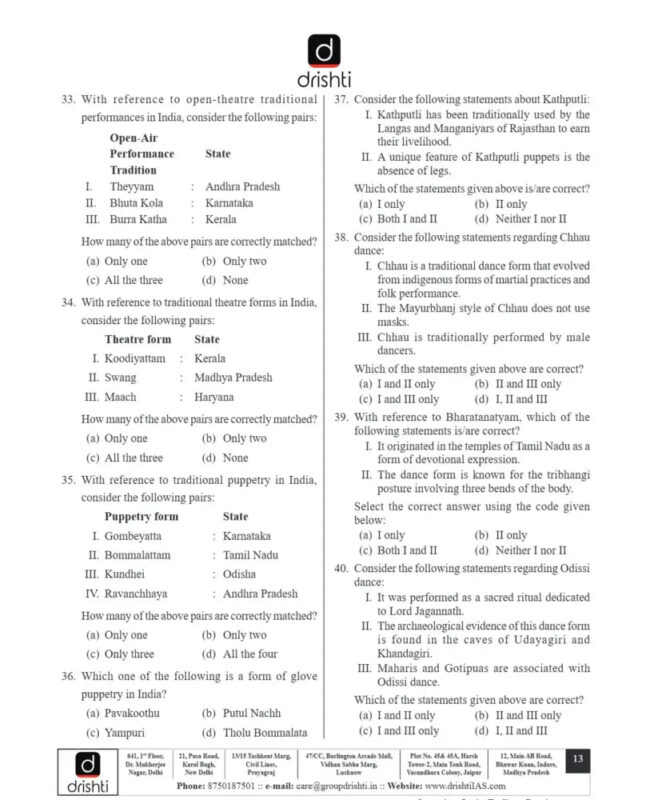
Indian Art and Culture is a rich and diverse subject that UPSC tests extensively in its Preliminary Examination. This booklet covers the entire spectrum of Indian cultural heritage, including classical dance forms, music traditions, painting styles, sculpture, architecture, literature, and performing arts. Questions are formulated to assess both breadth of awareness and depth of understanding, testing whether candidates can identify cultural artifacts, traditions, and their historical contexts accurately.

The booklet also covers the intangible cultural heritage of India, including folk traditions, tribal arts, UNESCO heritage sites in India, Geographical Indications for cultural products, and government schemes for cultural preservation. Festivals, religious traditions, philosophical schools, and their cultural manifestations are examined in the context of India’s composite and syncretic cultural identity. Regular updates incorporate recent UNESCO recognitions, new heritage designations, and cultural policy developments to keep the question bank current and relevant.

Booklet 14: Current Affairs – National Issues

Current affairs constitute a significant proportion of UPSC Prelims questions, and this booklet is specifically designed to cover national current affairs in a structured and examination-ready format. Government policies, legislative developments, judicial pronouncements, economic data releases, social welfare programs, and constitutional changes are all included. Questions are framed to test not just awareness of events but also their significance, implications, and connections to the broader governance framework of India.

The booklet follows a thematic organization of current affairs, grouping related developments together to help aspirants see patterns and connections between seemingly disparate events. Political developments, parliamentary sessions, committee reports, and major government initiatives are covered with appropriate analytical depth. Aspirants will find this booklet particularly effective for revision, as the question-answer format with detailed explanations helps consolidate current affairs knowledge in a way that is directly aligned with UPSC’s questioning style and expectations.

Booklet 15: Current Affairs – International Issues

International relations and global affairs are increasingly important in UPSC Prelims, and this booklet provides comprehensive coverage of India’s foreign policy, bilateral relations, multilateral engagements, and global geopolitical developments. Questions cover India’s relationships with neighboring countries, strategic partnerships with major powers, India’s role in international organizations, and significant geopolitical events that have implications for India’s national interest and foreign policy posture.

Global summits, international treaties, regional conflicts, economic alliances, and humanitarian crises are examined with a focus on their relevance to India. The booklet also covers the functioning of major international organizations such as the United Nations, its specialized agencies, G20, BRICS, SCO, and QUAD. Questions are designed to test candidates’ ability to situate India’s foreign policy decisions within the broader global context, a skill increasingly valued by UPSC in its assessment of aspirants’ understanding of international affairs.

Booklet 16: Indian Society and Social Issues

Indian Society is a multifaceted and dynamic subject that UPSC examines from sociological, demographic, and policy perspectives. This booklet covers the social structure of India including caste system, tribal communities, religious minorities, gender dynamics, and urbanization. Questions probe candidates’ understanding of social challenges such as poverty, inequality, social discrimination, communalism, regionalism, and the role of civil society in addressing these issues within the framework of India’s constitutional values.

Social welfare schemes, women empowerment programs, child protection policies, SC/ST rights, and minority welfare initiatives are covered comprehensively. The booklet also examines the sociological dimensions of development, including the impact of globalization on Indian society, migration patterns, and changing family structures. Recent social movements, demographic shifts revealed by census data, and new social policy initiatives are incorporated to ensure that the booklet reflects the current social realities that UPSC tests in its examinations.

Booklet 17: Disaster Management

Disaster Management has been accorded increasing prominence in UPSC Prelims given India’s vulnerability to a wide range of natural and man-made disasters. This booklet covers the types of disasters, the disaster management cycle (prevention, mitigation, preparedness, response, recovery), India’s National Disaster Management framework, the role of NDMA, SDMA, and NDRF, and international frameworks such as the Sendai Framework. Questions test both conceptual understanding and knowledge of institutional mechanisms.

Case studies of major disasters in India and internationally are used as the basis for application-oriented questions, helping aspirants understand how theoretical disaster management principles are applied in real situations. Climate-related disasters, their increasing frequency due to climate change, and India’s adaptive capacity are examined in detail. The booklet also covers the legislative framework for disaster management in India, funding mechanisms, and the role of technology in early warning systems and disaster response coordination.

Booklet 18: Internal Security

Internal Security is a critical component of General Studies Paper III in the UPSC Mains, but its basics are increasingly tested in Prelims as well. This booklet covers terrorism, insurgency, Left Wing Extremism, organized crime, cybersecurity threats, border security challenges, and India’s internal security apparatus. Questions assess candidates’ understanding of both the nature of security threats and the institutional and policy responses that India employs to address them effectively.

The booklet examines security forces, paramilitary organizations, intelligence agencies, and their respective mandates within India’s internal security framework. Legal provisions for national security, anti-terrorism laws, and their constitutional implications are covered in detail. Aspirants will also find coverage of social security dimensions including communal violence, ethnic conflicts, and the linkage between underdevelopment and security challenges. The booklet is regularly updated to reflect the most current internal security developments and policy responses.

Booklet 19: CSAT – Reading Comprehension

The Civil Services Aptitude Test (CSAT) Paper II, while qualifying in nature, requires a minimum score of 33%, and many aspirants struggle with it due to insufficient practice. This booklet is dedicated to Reading Comprehension, one of the highest-weightage components of CSAT. Passages are selected from diverse domains including science, social science, economics, literature, and philosophy, reflecting the variety seen in actual UPSC CSAT papers. Questions test the ability to comprehend, infer, and critically analyze textual information.

The booklet employs a graduated difficulty approach, starting with simpler passages and progressively moving to complex academic texts, preparing candidates for the most challenging reading comprehension scenarios. Detailed explanations for every question help candidates understand not just the correct answer but also the reasoning process required to arrive at it. Time management strategies specific to reading comprehension in CSAT are embedded in the instructions, helping aspirants optimize their performance within the strict time constraints of the actual examination.

Booklet 20: CSAT – Logical Reasoning and Analytical Ability

Logical Reasoning and Analytical Ability form a substantial portion of the CSAT paper, and this booklet provides extensive practice across all relevant question types. Topics include syllogisms, logical sequences, blood relations, direction sense, coding-decoding, seating arrangements, classification, and series completion. Questions are carefully graded to build problem-solving skills progressively, ensuring that candidates develop both speed and accuracy in tackling reasoning-based questions within the CSAT time frame.

The booklet also covers analytical reasoning questions that require candidates to draw logical conclusions from given sets of conditions and information. Puzzles, data interpretation sets, and decision-making scenarios are included to provide a comprehensive practice experience. Each question is accompanied by a step-by-step solution methodology that teaches candidates an efficient problem-solving approach, enabling them to handle even unfamiliar question types with confidence in the actual UPSC CSAT examination.

Booklet 21: CSAT – Quantitative Aptitude and Data Interpretation

Quantitative Aptitude and Data Interpretation are areas where many humanities background candidates find themselves at a disadvantage in CSAT. This booklet bridges that gap with carefully designed practice questions covering arithmetic, algebra, geometry, number theory, percentages, ratios and proportions, averages, time-speed-distance, and work-rate problems. The question difficulty is calibrated to match the actual CSAT examination, ensuring realistic and effective practice for all categories of aspirants.

Data Interpretation questions involving tables, bar graphs, pie charts, line graphs, and mixed data sets are included extensively, as this topic has featured prominently in recent CSAT papers. The booklet employs shortcut methods and calculation tricks in its solution explanations, helping candidates solve quantitative problems faster without compromising accuracy. Aspirants who invest adequate time in this booklet will find their CSAT scores improving significantly, eliminating the anxiety associated with the qualifying threshold of CSAT Paper II.

Booklet 22: Full-Length Mock Test 1 (GS Paper I)

The first full-length mock test booklet simulates the complete UPSC Preliminary Examination General Studies Paper I experience with 100 questions to be answered in 120 minutes. Questions span the entire GS syllabus including History, Geography, Polity, Economy, Environment, Science and Technology, and Current Affairs, mirroring the actual distribution pattern observed in recent UPSC Prelims. The mock test is designed to provide aspirants with a realistic examination experience that builds stamina, test temperament, and strategic question-selection skills.

Detailed solutions with full explanations are provided for all 100 questions, enabling comprehensive post-test analysis. Aspirants are encouraged to time themselves strictly during the mock test and to analyze their performance by subject area to identify strengths and weaknesses. Marking scheme guidance, negative marking strategy advice, and subject-wise time allocation suggestions are provided in the booklet to help candidates develop and refine their examination strategy. This mock test serves as a crucial diagnostic tool for calibrating preparation progress.

Booklet 23: Full-Length Mock Test 2 (GS Paper I)

The second full-length mock test continues the simulation experience with a fresh Set of 35 questions covering the GS syllabus with a different emphasis pattern compared to Mock Test 1. This variation ensures that aspirants practice handling different distributions of subject-wise questions, which is essential given that UPSC varies the subject-wise question distribution year by year. The questions in this mock test are slightly more challenging on average, designed to push candidates beyond their comfort zone and simulate the pressure of a highly competitive examination.

Post-test analysis tools included in the booklet allow candidates to track their performance across multiple attempts, monitor improvement trends, and identify persistent weak areas that require additional focus. The detailed answer key and explanations are formatted to facilitate quick review, enabling candidates to complete their post-mock analysis efficiently even during intensive preparation schedules. The booklet also includes a comparative analysis section that highlights common mistakes made by aspirants and strategies to avoid them in the actual examination.

Booklet 24: Full-Length Mock Test 3 (GS Paper I)

Mock Test 3 introduces advanced-level questions that reflect the increasing complexity trend observed in UPSC Prelims over recent years. This booklet challenges aspirants with questions that require multi-step reasoning, cross-domain knowledge integration, and the ability to apply known facts to unfamiliar contexts. The full-length format maintains examination realism while the elevated difficulty prepares candidates to handle the most challenging questions that might appear in the actual UPSC Prelims without losing composure or accuracy.

The solution booklet for Mock Test 3 features particularly detailed explanations for difficult questions, providing aspirants with learning opportunities even from questions they got wrong. Each explanation includes references to source materials, helping candidates identify gaps in their preparation that can be addressed through targeted revision. Performance benchmarking data based on aggregated candidate responses is provided to help aspirants understand where they stand relative to the competitive field, enabling more strategic preparation planning in the final phases before the examination.

Booklet 25: Full-Length Mock Test (CSAT Paper II)

This dedicated CSAT mock test booklet provides a complete 80-question, 120-minute simulation of UPSC CSAT Paper II, covering Reading Comprehension, Logical Reasoning, Analytical Ability, and Quantitative Aptitude. The question distribution mirrors the pattern of recent CSAT papers, ensuring that candidates get the most realistic practice experience possible. The booklet is designed to help aspirants not only clear the qualifying threshold but to do so comfortably and with time to spare for careful review of responses.

Time management strategies specific to CSAT are embedded in the booklet’s instructions, with recommended time allocations for each section based on typical question difficulty. Detailed solutions provide step-by-step methodologies for every question type, teaching candidates efficient problem-solving approaches that can be applied broadly. The booklet also includes a self-assessment framework that helps candidates diagnose their CSAT weaknesses and prioritize their remaining preparation time on the areas that will yield the greatest score improvement.

Booklets 26-30: Subject-Specific Sectional Tests

These five booklets provide focused sectional tests covering History, Geography, Polity, Economy, and Science & Environment respectively. Each sectional test contains 50 questions targeting the specific subject area with a time limit of 60 minutes, allowing aspirants to practice at the subject level before attempting full-length mock tests. The difficulty distribution within each sectional test is carefully calibrated to include easy, moderate, and difficult questions in proportions similar to their occurrence in the actual UPSC Prelims.

Sectional tests are particularly valuable for candidates who identify specific subject weaknesses through their full-length mock test performance. By concentrating practice on weak subjects, aspirants can significantly improve their subject-wise accuracy and confidence. Detailed solutions and subject-specific strategy guides are included in each booklet, providing candidates with both the knowledge reinforcement and the tactical guidance needed to maximize their performance in each subject area of the UPSC Preliminary Examination.

Booklets 31-33: Previous Year Question Papers with Analysis

These three booklets contain meticulously compiled previous year UPSC Preliminary Examination question papers with comprehensive analysis and detailed solutions. The question papers cover multiple examination years, allowing aspirants to identify recurring themes, evolving question styles, and important topic patterns. Each question is analyzed in the context of the UPSC syllabus, the source material from which it was drawn, and its level of difficulty relative to the broader paper.

Trend analysis sections in these booklets identify subject-wise question distribution patterns over years, helping aspirants understand how UPSC has been allocating marks across different syllabus areas. Topicwise classification of previous year questions allows for targeted revision of high-frequency topics. The comparative analysis across years reveals how UPSC has been increasing the complexity and analytical orientation of its questions, helping aspirants calibrate their preparation strategy accordingly and avoid the common mistake of preparing only for the question patterns of previous years.

Booklet 34: Current Affairs Compilation and Analysis

Current affairs can make or break a UPSC Prelims attempt, and this dedicated booklet provides a comprehensive, examination-oriented compilation of the year’s most important current developments. Organized thematically across domains including Polity and Governance, Economy, Environment, International Relations, Science and Technology, and Social Issues, this booklet presents current affairs not as isolated news items but as interconnected developments with broader significance for UPSC’s examination framework.

Each current affairs topic is presented with background context, recent developments, their significance, and potential examination angles, helping aspirants understand not just what happened but why it matters from an examination perspective. Practice questions based on current affairs are interspersed throughout the booklet, enabling aspirants to assess their current affairs readiness continuously. The booklet serves as both a study resource and a quick revision tool in the final days before the examination, making it one of the most heavily used booklets in the entire series.

Booklet 35: Comprehensive Revision and Strategy Guide

The final booklet in the series is a holistic revision and examination strategy resource designed to prepare candidates mentally, physically, and strategically for the UPSC Preliminary Examination. It contains concise subject-wise revision notes, high-frequency topic checklists, common mistake analyses, last-minute preparation tips, and examination day management strategies. The booklet synthesizes the entire preparation journey into a manageable revision framework that can be used effectively in the final weeks before the examination.

Examination strategy guidance covers topics such as how to approach different question types, when to skip and when to attempt doubtful questions, how to manage negative marking effectively, and how to maintain composure under examination pressure. Success stories and preparation insights from previous year toppers who used the Drishti Test Series are included to inspire and guide current aspirants. This booklet serves as the culminating resource of the entire 35-booklet series, tying together all the preparation done and channeling it toward peak examination performance.


Physical Quality of the Product

Paper Quality and Print Clarity

The Drishti IAS Prelims Test Series 2026-35 Booklets are printed on high-quality, 70 GSM offset paper that provides an excellent writing and reading surface. The paper is thick enough to prevent ink bleed-through, ensuring that text on both sides of each page remains clearly legible without any distraction. The off-white shade of the paper is deliberately chosen to reduce eye strain during extended study sessions, which is critical given the hundreds of hours aspirants spend with these booklets during their preparation period. The print quality is sharp and consistent throughout all 35 booklets, with clearly defined fonts and well-spaced text that facilitates comfortable reading and focused examination practice.

Binding and Durability

Each booklet in the series features robust saddle-stitch or perfect binding, depending on the page count, ensuring that the booklets withstand the rigors of intensive daily use throughout the preparation period. The binding is designed to allow booklets to lie flat when open, an important feature for taking notes and marking answers without the pages curling or closing. Spine reinforcement ensures that even after multiple reads and extensive use, the booklets do not fall apart or lose pages, maintaining their structural integrity from the first study session to the final revision before examination day. The durability of the binding reflects Drishti IAS’s commitment to providing value that matches the investment aspirants make in their preparation materials.

Cover Design and Organization

The cover of each booklet is printed on 250 GSM art card with a laminated finish that provides both aesthetic appeal and physical protection against everyday wear and tear. Each booklet’s cover clearly displays the booklet number, subject focus, edition year, and Drishti IAS branding, making it easy to identify and retrieve specific booklets from a collection of 35. The color-coding system used across different subject categories further enhances organizational efficiency, allowing aspirants to quickly locate subject-specific booklets without having to read through titles. The professional and clean design of the

Frequently Asked Questions

What is included in this test series?

35 English medium booklets covering sectional and full-length Prelims tests with solutions for 2026-27.

Are these original Drishti IAS materials?

Yes, sourced from the 2026-27 Drishti IAS English Prelims test series.

Is COD available?

Yes, Cash on Delivery is offered across India.

Can I purchase tests individually?

No, the test series is sold only as a complete 35 booklet bundle.

Useful for State PCS Prelims?

Yes, the practice papers also help State PCS Prelims aspirants.

When will it ship?

Within 2-3 working days of order confirmation.

What is the paper and binding?

70-75 GSM paper with spiral binding.

Reference: UPSC official syllabus

Customer Reviews 163

4.5
Based on 163 reviews
5β˜…
97
4β˜…
48
3β˜…
18
2β˜…
0
1β˜…
0
S
Sneha Iyer
25 Apr 2026
βœ“ Verified

Drishti IAS ka reputation sach mein sachi hai, material outstanding.

R
Ritika Bhat
25 Apr 2026
βœ“ Verified

Booklets well organized aur content bohot comprehensive hai.

V
Vikram Singh
25 Apr 2026
βœ“ Verified

Best test series for prelims. Booklets are well-structured and detailed.

P
Priya Sharma
23 Apr 2026
βœ“ Verified

Difficulty level matches actual UPSC pattern. Definitely worth the investment for prelims.

S
Sanjay Reddy
23 Apr 2026
βœ“ Verified

Booklets bahut detailed hain aur har topic properly explained hai. Printing quality bhi excellent, pages thick aur durable hain.

A
Arjun Verma
22 Apr 2026
βœ“ Verified

Booklets ka quality bahut acha hai, material bhi comprehensive.

M
Mira Rao
22 Apr 2026
βœ“ Verified

Bahut helpful series hai, regular revisions ke liye perfect.

R
Rajesh Kumar
21 Apr 2026
βœ“ Verified

Booklets are well-organized and questions are relevant. Really helpful for prelims prep.

πŸ›οΈ

Aspirants Also Bought

More from the same category

View All β†’

About Drishti IAS Prelims Test Series 2026-27

Drishti IAS Prelims Test Series 2026-27 is a highly recommended UPSC study material from Drishti IAS, specially designed for History, Geography, Indian Polity, Indian Economy, Environment & Ecology preparation. Available in English medium, this material is crafted to match the exact requirements of the UPSC Civil Services Examination syllabus β€” covering both Prelims and Mains comprehensively.

Product Details

  • Institute: Drishti IAS
  • Subject: History, Geography, Indian Polity, Indian Economy, Environment & Ecology
  • Medium: English
  • Format: Printed
  • Delivery: Pan-India delivery in 3–5 working days
  • Format: Original printed material, verified authentic

Why Buy from UPSC Store?

  • βœ… 100% Genuine Printed Material β€” Original printed notes, no photocopies or fake copies
  • βœ… Fast Delivery β€” Ships within 24 hours, arrives in 3–5 days pan-India
  • βœ… Secure Packaging β€” Bubble-wrapped and boxed to prevent damage in transit
  • βœ… Trusted by 10,000+ Aspirants β€” India's most reliable UPSC material marketplace
  • βœ… WhatsApp Support β€” Get expert guidance on material selection before ordering

Frequently Asked Questions

Is this product 100% original?

Yes, all products at UPSC Store are 100% genuine printed materials. We do not sell photocopies or fake copies.

How long does delivery take?

Orders are dispatched within 24 hours and delivered across India in 3–5 working days via reputed courier partners.

Can I return the product?

Yes, we accept returns within 7 days if the product is damaged or incorrect. Check our refund policy for details.

Which other study materials should I buy with this?

We recommend pairing this with current affairs notes and a UPSC test series for comprehensive preparation. Browse more in Drishti IAS, General Studies, Test Series, UPSC.