


Shubhra Ranjan PSIR Optional Handwritten Notes 2026-27
About Shubhra Ranjan IAS PSIR Handwritten
The Shubhra Ranjan IAS PSIR Handwritten is a printed UPSC study material set sold by UPSC Store β India’s trusted source for genuine, latest-batch civil services preparation books. This page covers full booklet details, syllabus coverage, pricing, shipping, and frequently asked questions. Useful for UPSC CSE, BPSC, UPPSC, MPPSC, RAS and other state PSC examinations.
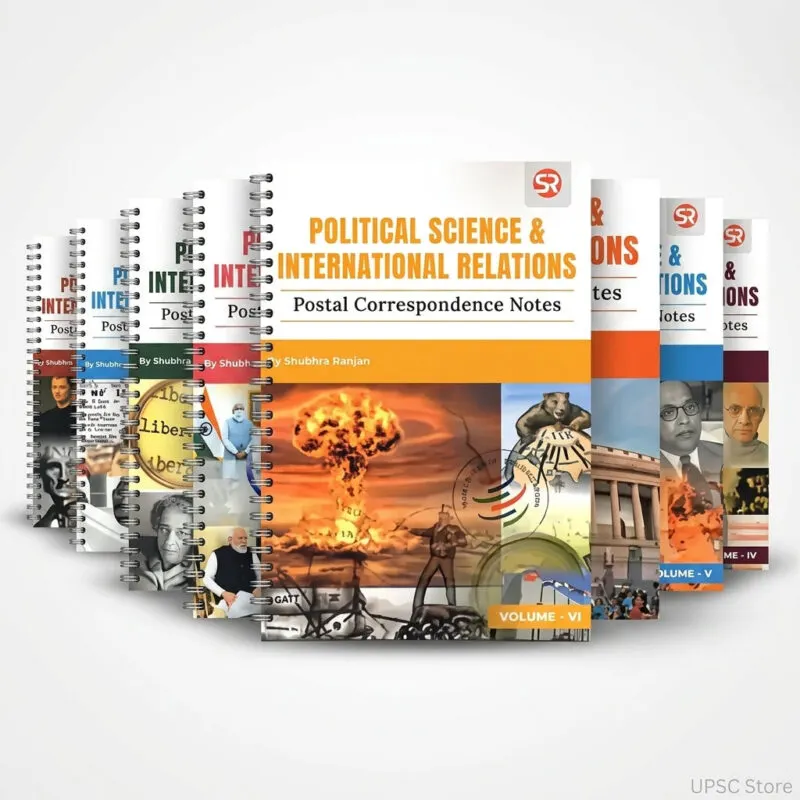
Shubhra Ranjan PSIR Optional Handwritten Notes 2026-27 β 11 English Medium Printed Booklets for UPSC Political Science & International Relations Optional
Related: Shubhra Ranjan IAS notes Β· PSIR Handwritten books
Product Overview
| Feature | Details |
|---|---|
| Booklets Count | 11 Individual Printed Booklets β Full PSIR Paper 1 & Paper 2 Syllabus Coverage |
| Language | English Medium |
| Publisher | Shubhra Ranjan IAS Study (SR Postal Correspondence Notes Series) |
| Edition | 2026-27 β Latest Genuine Batch |
| Condition | Brand New, Unmarked, Fresh Stock |
| Format | High-Quality Printed Booklets β Spiral or Book Binding |
| Paper Quality | 75 GSM Ultra-White β Highlighter Safe, Zero Bleed-Through |
| Shipping | Pan India Delivery in 3-5 Business Days β Tracked |
| Also Useful For | BPSC, UPPSC, MPPSC, RAS and All State PSC Political Science Optional |
Complete Booklet Catalog
This 11-booklet set by Shubhra Ranjan covers the entire UPSC PSIR optional syllabus across both Paper 1 and Paper 2, structured as the popular SR Postal Correspondence Notes series used by thousands of serious UPSC aspirants. Whether you are a first-time PSIR optional taker or a repeat candidate looking for sharper, exam-oriented notes in English medium, this set delivers organized, topic-by-topic coverage from political theory to international relations and foreign policy.
- Booklet 1: Political Theory β Foundations β Nature, scope and methods of Political Science; meaning of politics; relationship with other social sciences; key concepts including power, authority, legitimacy, and sovereignty; classical and modern debates on the purpose of the state and political authority.
- Booklet 2: Western Political Thought β Ancient and Medieval β Plato’s Republic and theory of justice; Aristotle’s classification of governments and concept of citizenship; medieval political thought including Aquinas; transition from ancient to early modern political philosophy; key thinkers and their contribution to the evolution of Western political ideas.
- Booklet 3: Western Political Thought β Modern β Machiavelli, Hobbes, Locke, Rousseau, Kant, Hegel, Marx, Mill, and Gramsci; social contract theory; liberalism and its critiques; Marxist political economy; theory of alienation; civil society; idealism versus materialism in political thought.
- Booklet 4: Political Ideologies β Liberalism, Neo-liberalism, Conservatism, Marxism, Socialism, Fascism, Feminism, Environmentalism, and Post-colonialism; ideological foundations of modern states; relationship between ideology and political practice; contemporary relevance of classical ideologies in global politics.
- Booklet 5: Indian Political Thought β Kautilya’s Arthashastra; Manu’s Dharmashastra; Buddhist political thought; Aurobindo, Tilak, Gandhi, Ambedkar, Nehru, M. N. Roy, and Lohia; colonial critique; nationalism, non-cooperation, and constitutional ideas; relevance of Indian political thought in post-independence politics.
- Booklet 6: Indian Government and Constitution β Part 1 β Making of the Indian Constitution; Preamble; Fundamental Rights and Duties; Directive Principles of State Policy; federal structure; Union-State relations; Centre-State financial relations; emergency provisions; constitutional amendments; role of constitutional bodies.
- Booklet 7: Indian Government and Constitution β Part 2 β Parliament and its functioning; President, Prime Minister, and Council of Ministers; Judiciary and judicial review; Supreme Court and High Courts; federalism in practice; Panchayati Raj institutions; local self-government; anti-defection law; electoral system and reforms.
- Booklet 8: Indian Government and Politics β Nature of Indian politics; party system and political parties; coalition politics; caste, religion, region, and ethnicity in Indian politics; pressure groups and interest groups; political participation; social movements and their political impact; governance challenges in a diverse democracy.
- Booklet 9: World Politics and International Relations β Theory β Evolution of the international system; Westphalian order; theories of IR β Realism, Liberalism, Neo-realism, Neo-liberalism, Constructivism, Marxist and Post-colonial approaches; concepts of national interest, balance of power, deterrence, interdependence, and hegemony.
- Booklet 10: International Relations and Foreign Policy β Part 1 β Cold War and its end; post-Cold War world order; US hegemony and unipolarity; rise of China; global governance and multilateralism; United Nations system; WTO, IMF, World Bank; nuclear proliferation and arms control; terrorism and transnational threats.
- Booklet 11: International Relations and Foreign Policy β Part 2 β India’s foreign policy β principles and evolution; Non-Alignment Movement; India-US, India-China, India-Pakistan, India-Russia relations; India and South Asia (SAARC); India’s nuclear doctrine; India’s role in international organizations; emerging global issues β climate change, energy security, and cyber security.
In-Depth Content Breakdown: Booklet by Booklet
Booklet 1: Political Theory β Foundations
This opening booklet establishes the conceptual groundwork that every PSIR optional student needs before engaging with specific thinkers or institutions. It covers the nature and scope of Political Science as a discipline, its relationship with sociology, economics, history, and law, and the key concepts that recur throughout the UPSC PSIR Paper 1 syllabus β power, authority, legitimacy, rights, liberty, equality, and justice. Understanding these foundational ideas is critical for scoring in theory-based UPSC Mains answers.
The booklet is structured with concept-first explanations followed by critical debates, which mirrors the way Shubhra Ranjan herself teaches in the SR classroom program. Key terms are highlighted, short definitions are boxed for quick revision, and contemporary examples are woven in to show how abstract political theory connects to current affairs β an approach that directly supports higher UPSC Mains answer writing scores.
Booklet 2: Western Political Thought β Ancient and Medieval
This booklet covers one of the most scoring sections of UPSC PSIR Paper 1 β the ancient Greek and medieval political thinkers. Plato’s theory of Forms, his ideal state, and his concept of justice get detailed treatment alongside Aristotle’s empirical approach, classification of constitutions, and idea of the polis. The medieval segment addresses Augustine, Aquinas, and the church-versus-state debate, which frequently appears in UPSC Mains questions on the development of Western political thought.
Shubhra Ranjan’s notes in this booklet are particularly valued by PSIR optional students because they present thinkers in a comparative framework β Plato versus Aristotle, medieval theocratic thought versus emerging secular ideas β which makes it straightforward to write structured, multi-dimensional UPSC Mains answers. Timelines and comparative tables are included to help retain sequences and distinctions essential for both 10-mark and 15-mark UPSC questions.
Booklet 3: Western Political Thought β Modern
Modern Western political thought from Machiavelli to Gramsci constitutes one of the heaviest weightage areas of UPSC PSIR Paper 1. This booklet covers each thinker with dedicated sections on their historical context, core arguments, key texts, and criticisms. The treatment of Hobbes’s Leviathan, Locke’s Two Treatises, and Rousseau’s General Will is sharp and exam-ready, while Marx’s materialist conception of history and Gramsci’s concept of hegemony receive nuanced coverage aligned with recent UPSC Mains question trends.
The SR approach in this booklet is to connect each thinker’s ideas to contemporary political realities β for instance, linking neo-liberalism back to classical liberal thought, or tracing Gramscian hegemony to modern media and cultural dominance. This makes the notes valuable not just for answering direct thinker-based questions but also for integrating political theory references into Paper 2 answers on Indian politics and international relations for UPSC Mains.
Booklet 4: Political Ideologies
Political ideologies form a recurring theme across both papers of UPSC PSIR optional. This booklet breaks down each major ideology β liberalism, Marxism, socialism, fascism, conservatism, feminism, environmentalism, and post-colonialism β with sections on their historical origins, core tenets, internal debates, and contemporary manifestations. The inclusion of newer ideologies like eco-feminism and post-colonial theory reflects the updated UPSC syllabus expectations for the 2026-27 exam cycle.
The structure is particularly useful for comparative questions that UPSC frequently sets β such as “compare liberal and Marxist concepts of freedom” or “critically examine the rise of right-wing conservatism in global politics.” Each ideology section ends with critical evaluation points and contemporary examples drawn from current global political developments, which enables students to write substantive, analytical UPSC Mains answers rather than merely descriptive ones.
Booklet 5: Indian Political Thought
Indian political thought is often underestimated by PSIR optional students, yet it regularly features in UPSC Mains questions worth 15-20 marks. This booklet covers ancient thought β Kautilya’s Arthashastra with its realist statecraft, Manu’s Dharmashastra and its critiques β and then transitions to modern Indian political thinkers. Gandhi’s political philosophy, including Satyagraha, trusteeship, and Swaraj, receives detailed treatment alongside Ambedkar’s constitutional vision and critique of caste, Nehru’s democratic socialism, and Lohia’s critique of Nehruvian development.
Shubhra Ranjan’s coverage of Indian political thought is especially strong on drawing comparisons between Indian thinkers and their Western counterparts β for instance, Gandhi’s civil disobedience versus Thoreau, or Ambedkar’s constitutionalism versus Rawlsian justice. These cross-referencing notes are invaluable for writing sophisticated UPSC Mains answers that demonstrate breadth of reading, which is one of the key differentiators between average and top-scoring PSIR optional candidates in the civil services examination.
Booklet 6: Indian Government and Constitution β Part 1
The Indian Constitution segment is the backbone of UPSC PSIR Paper 1 Section B and this booklet addresses it with the rigor the exam demands. The making of the Constitution β Constituent Assembly debates, key framers, and the influences of various constitutional models β is covered alongside the Preamble, Fundamental Rights (Articles 12-35), Directive Principles, and Fundamental Duties. Federal structure, including the Seventh Schedule and Articles 245-263 governing Union-State relations, is analyzed with landmark Supreme Court judgments.
What sets this SR booklet apart is the integration of constitutional provisions with political analysis β not just what the Constitution says, but how it has been interpreted and contested in Indian political practice. Emergency provisions under Articles 352, 356, and 360, their historical use and abuse, and constitutional amendments including the 42nd, 44th, and 101st Amendments are treated in detail, making this booklet directly useful for both UPSC PSIR optional and GS Paper 2 preparation.
Booklet 7: Indian Government and Constitution β Part 2
The second Constitution booklet shifts focus to the working of constitutional institutions. Parliament’s legislative process, privileges, and accountability mechanisms are covered in depth, followed by the President’s role in a parliamentary democracy, the Prime Minister’s office, and the Cabinet system. Judicial review, the basic structure doctrine (Kesavananda Bharati case), and the Supreme Court’s expanding role in Indian governance are given detailed analytical treatment relevant to UPSC PSIR optional Paper 1.
Federalism in practice β including the role of the Finance Commission, Governor’s discretionary powers, Inter-State Council, and recent debates on cooperative versus competitive federalism β is a major component of this booklet. Panchayati Raj institutions under the 73rd and 74th Amendments, electoral system design, and the anti-defection law under the Tenth Schedule are covered with both constitutional provisions and critical political analysis, ensuring complete UPSC Mains answer readiness.
Booklet 8: Indian Government and Politics
This booklet bridges constitutional theory and political reality β one of the most dynamic sections of UPSC PSIR Paper 1. It covers the evolution of India’s party system from Congress dominance to multiparty coalition politics, analyzing major national and regional parties, their ideological positions, and electoral strategies. The role of caste, religion, language, and ethnicity as political forces in Indian democracy is analyzed through specific state-level and national examples, with frameworks drawn from political scientists like Rajni Kothari and Yogendra Yadav.
Social movements β the farmers’ movements, women’s movements, Dalit movements, and environmental movements β and their interaction with formal political institutions are covered in this booklet. Governance challenges including corruption, criminalization of politics, federalism under strain, and the role of civil society are treated analytically. This content is directly applicable to UPSC Mains PSIR optional Paper 1 Section B as well as being useful background for GS Paper 2 governance questions.
Booklet 9: World Politics and International Relations β Theory
This booklet launches the UPSC PSIR Paper 2 content with a thorough grounding in International Relations theory β arguably the most intellectually demanding part of the PSIR optional syllabus. Realism (Morgenthau, Waltz), Liberalism (Kant, Keohane), Neo-realism, Neo-liberalism, Constructivism (Wendt), Critical Theory, Feminist IR, and Post-colonial approaches are each given dedicated sections with key arguments, major theorists, strengths, and limitations structured for UPSC Mains answer writing.
The theoretical frameworks are consistently applied to real historical and contemporary events β Realism is illustrated through Cold War bipolar competition, Constructivism through the end of the Cold War, Liberal Institutionalism through the UN system’s evolution. Shubhra Ranjan’s notes in this section are particularly effective because they present IR theory not as abstract academic content but as practical lenses for analyzing international events β which is exactly how UPSC examiners expect PSIR optional candidates to engage with Paper 2 questions.
Booklet 10: International Relations and Foreign Policy β Part 1
The first IR and Foreign Policy booklet covers the evolution of the post-World War II international order through the Cold War, dΓ©tente, and the post-Cold War era up to contemporary multipolarity. Key topics include the formation and evolution of the UN system, Bretton Woods institutions (IMF, World Bank, WTO), nuclear proliferation and arms control regimes (NPT, CTBT, START), terrorism as a transnational security challenge, and the rise of China as a systemic challenger to US-led liberal order.
The booklet is structured to enable students to answer both descriptive and analytical UPSC Mains questions on global politics. Each major topic includes a “UPSC angle” β pointing out which dimensions of the topic have appeared in previous PSIR optional question papers and what kind of analysis UPSC examiners reward. The treatment of US hegemony, unipolar versus multipolar debates, and the role of international institutions is particularly detailed and aligned with the 2026-27 UPSC exam syllabus requirements.
Booklet 11: International Relations and Foreign Policy β Part 2
The final booklet in this PSIR optional set focuses on India’s foreign policy β its philosophical underpinnings, historical evolution, and contemporary bilateral and multilateral relationships. India’s foreign policy principles (Non-Alignment, strategic autonomy, Panchsheel) are covered alongside detailed treatment of India’s relationships with the US, China, Russia, Pakistan, and neighboring South Asian states. India’s nuclear doctrine, its evolution from the 1998 tests to current no-first-use debates, is given sharp analytical coverage.
Emerging global challenges β climate change negotiations (UNFCCC, Paris Agreement), energy security, cyber security governance, and India’s role in forums like G20, BRICS, and SCO β are covered in this closing booklet, making it directly relevant to the most recent UPSC PSIR optional question paper trends. The booklet concludes with India’s aspirations for permanent UNSC membership and its broader vision for the global order β topics that consistently appear in UPSC Mains Paper 2 of the PSIR optional examination.
Physical Construction and Quality Standards
Every booklet in this Shubhra Ranjan PSIR optional set is produced to meet the demands of serious UPSC aspirants who study 8-12 hours daily. The physical materials are chosen to last through the full preparation cycle without deterioration.
Paper Quality: 75 GSM Anti-Glare White Paper
The 75 GSM ultra-white paper used across all 11 PSIR optional booklets offers a balance of weight and opacity that is specifically suited to long study sessions. The anti-glare surface reduces eye fatigue when reading under artificial light β a practical consideration for UPSC aspirants studying late into the night. High opacity means that even heavy gel pen annotations on one side do not bleed through to affect readability on the reverse, and all standard highlighter colors β yellow, green, orange, and pink β work cleanly without feathering or bleed-through, supporting color-coded revision systems.
Printing Technology: High-Resolution Laser Printing
All text, diagrams, flowcharts, tables, and maps in this Shubhra Ranjan PSIR optional set are printed using high-resolution laser technology. Laser printing ensures that every character β including small footnotes, table entries, and diagram labels β is rendered with razor-sharp clarity. Unlike inkjet printing, laser toner is permanently bonded to the paper and is fully smudge-proof, meaning that even repeated handling during intensive UPSC revision sessions does not degrade print quality. Flowcharts showing political theory frameworks and comparative ideology tables remain crisp throughout the preparation cycle.
Binding and Durability
Each booklet in this PSIR optional set uses either spiral binding or book binding depending on the volume of content. Spiral-bound booklets open completely flat on a study desk, allowing UPSC aspirants to write margin notes alongside the printed content without the booklet closing on itself β a practical feature during intensive answer-writing practice sessions. Thicker booklets use reinforced book binding with a 300 GSM laminated cover that resists moisture, bending, and spine cracking even under the pressure of being transported daily in a bag to the coaching institute or library.
Key Features and Study Design
These SR PSIR optional notes are designed specifically around the UPSC Mains examination pattern, answer-writing requirements, and the full Paper 1 and Paper 2 syllabus β making them one of the most sought-after printed study resources for political science optional candidates preparing for the civil services examination.
- Full PSIR Syllabus in One Set: All 11 booklets together cover 100% of the UPSC PSIR optional syllabus across Paper 1 (Political Theory, Western and Indian Political Thought, Indian Government and Politics) and Paper 2 (International Relations, World Politics, India’s Foreign Policy) β no additional source required for basic syllabus coverage.
- Postal Correspondence Series β Exam-Optimized Writing: These notes originate from Shubhra Ranjan’s SR Postal Correspondence program, which means they are structured for self-study β each topic is explained with enough context and depth for a student studying without classroom access, while remaining focused on UPSC Mains answer requirements.
- Comparative and Analytical Frameworks: Each major topic includes comparative tables, analytical frameworks, and critical evaluation points that enable UPSC aspirants to write multi-dimensional answers rather than descriptive ones β a key differentiator for scoring 130+ in PSIR optional Mains.
- Current Affairs Integration: Throughout the booklets, especially in IR and Indian Politics sections, contemporary examples from recent global and domestic political developments are integrated alongside theoretical content, supporting the UPSC requirement for current affairs application in optional paper answers.
- Revision-Ready Layout: Boxed definitions, bullet-point summaries at the end of each major section, highlighted key terms, and margin space for personal annotations make these booklets structured for multiple revision cycles β essential for UPSC Mains preparation where revision frequency directly impacts retention and answer quality.
Shipping, Packaging and Delivery
All 11 booklets of the Shubhra Ranjan PSIR optional set are packaged with care to ensure they arrive in brand-new, pristine condition. Each booklet is individually shrink-wrapped to protect covers and pages from moisture and handling damage during transit. The complete set is then placed in a rigid corrugated cardboard box with foam edge protectors at all corners to prevent bending or crushing. The box is sealed with heavy-duty brown tape and labeled with your delivery address prominently on all sides. This transit-safe packaging ensures that your UPSC PSIR optional notes arrive in exactly the same brand-new, unmarked condition in which they left our Mukherjee Nagar, Delhi dispatch center.
Orders are shipped within 24 hours of payment confirmation and typically reach anywhere in India within 3-5 business days via tracked courier. You will receive a tracking ID by WhatsApp and SMS as soon as your order is dispatched, allowing you to monitor delivery in real time. For any queries, damaged-in-transit booklets, or missing booklets from the set, contact our support team on WhatsApp at +91 70045 49563 β replacement booklets are dispatched within 48 hours of a verified complaint. We ship to all Indian states and union territories including remote areas served by courier partners.
Frequently Asked Questions (FAQ)
A: Shubhra Ranjan’s SR PSIR notes are widely regarded as one of the most complete single-source study materials for the PSIR optional in UPSC CSE. These 11 booklets cover the full Paper 1 and Paper 2 syllabus in depth. For most aspirants, supplementing these notes with standard reference texts (like Heywood for Political Theory or Puri/Verma for Indian Politics) and regular answer-writing practice gives sufficient preparation for scoring well above the UPSC optional average.
A: The 2026-27 edition of Shubhra Ranjan PSIR optional notes includes 11 printed booklets in English medium. The set covers Political Theory, Western Political Thought (Ancient, Medieval, and Modern), Political Ideologies, Indian Political Thought, Indian Government and Constitution (two booklets), Indian Government and Politics, World Politics and IR Theory, and International Relations and Foreign Policy (two booklets). All 11 booklets are dispatched together as a complete set.
A: Political Science and International Relations (PSIR) is consistently one of the most popular optional subjects in UPSC CSE for several strong reasons. It has significant overlap with GS Paper 2 (Polity, Governance, IR) and GS Paper 4 (Ethics β political philosophy), making preparation more efficient. The subject has a well-defined syllabus, good scoring potential with the right preparation strategy, and quality study material like Shubhra Ranjan’s notes is readily available, making PSIR a strategic choice for many civil services aspirants.
A: These 11 booklets cover the complete UPSC PSIR optional syllabus. Paper 1 coverage includes: Political Theory and its concepts, Western Political Thought (from Plato to Gramsci), Political Ideologies, Indian Political Thought (Kautilya to contemporary thinkers), Indian Government and Constitution, and Indian Government and Politics. Paper 2 coverage includes: Comparative Politics, International Relations theory, Evolution of the International System, World Politics, and India’s Foreign Policy. Every major topic from the official UPSC PSIR syllabus is addressed.
A: Yes, these are the genuine 2026-27 edition SR PSIR optional notes β the latest batch from Shubhra Ranjan’s postal correspondence program. The content reflects updated UPSC question paper trends including recent shifts toward more analytical and contemporary-application-based questions in PSIR optional. Sections on India’s foreign policy, global governance, and emerging international issues are updated to include recent geopolitical developments relevant to aspirants preparing for the 2026-27 UPSC Mains examination cycle.
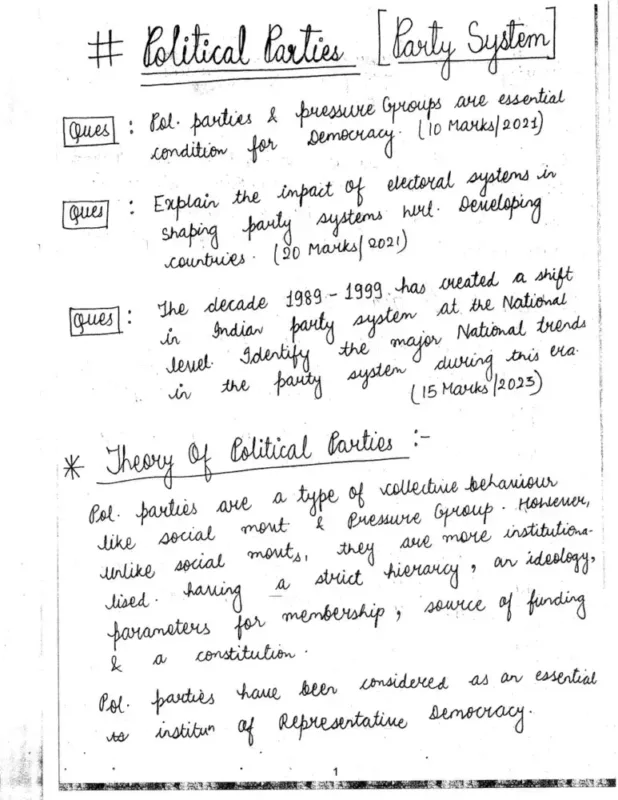
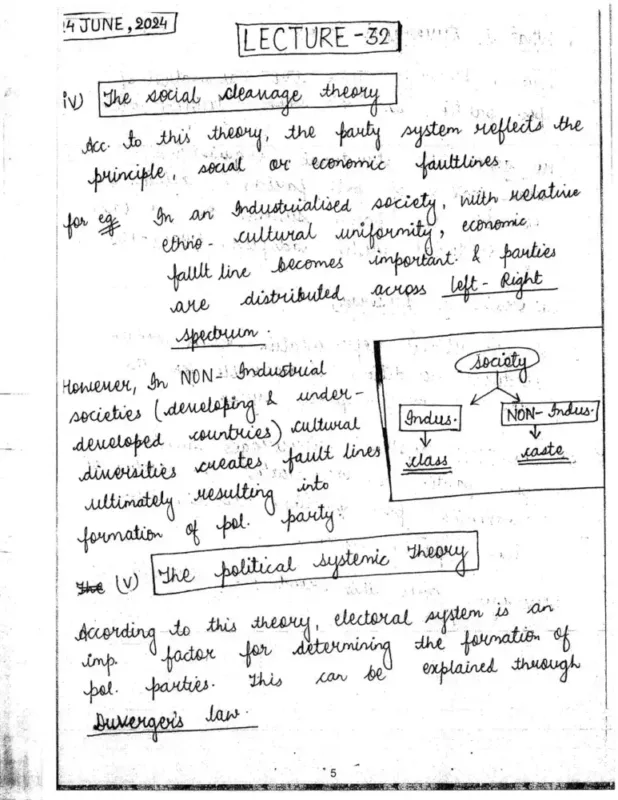
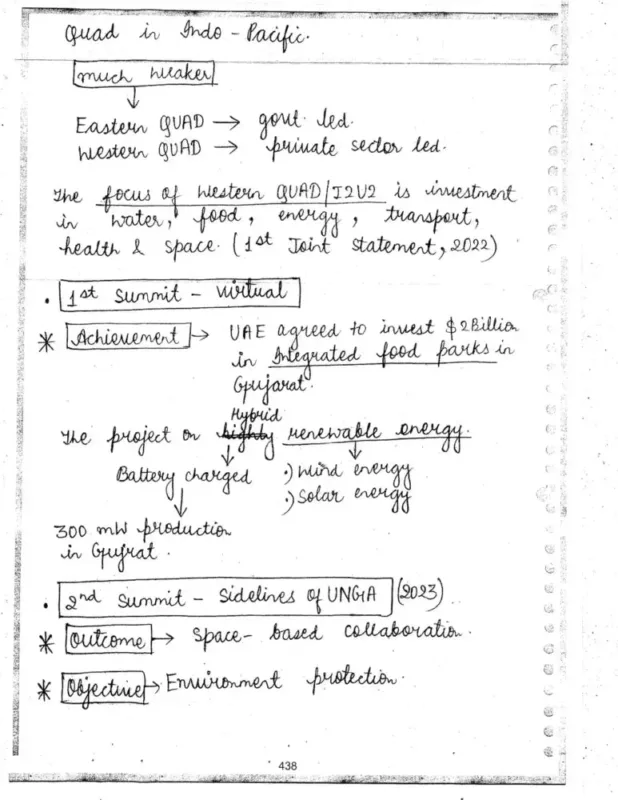
A: Shubhra Ranjan’s PSIR notes come in two formats. Handwritten notes (this product) are high-quality scanned and printed reproductions of actual handwritten classroom or postal notes β they retain the natural flow, diagrams, and emphasis markers of handwritten content while being printed for clarity and durability. Printed typed notes are formatted in a standard typed layout. Many UPSC aspirants prefer the handwritten format as it feels more personal and easier to annotate alongside, and the visual structure often aids memory during revision cycles.
A: Both Shubhra Ranjan SR notes and Vision IAS PSIR notes are high-quality resources used by successful UPSC PSIR optional candidates. Shubhra Ranjan’s notes are particularly valued for their depth in Political Theory and Indian Political Thought, analytical frameworks, and self-study suitability β the postal correspondence format ensures each concept is explained fully without assuming classroom instruction. Vision IAS notes tend to be more concise and point-based. Many serious PSIR optional aspirants buy Shubhra Ranjan notes as their primary resource and use Vision IAS as a quick revision supplement.
A: Yes, absolutely. This complete 11-booklet set covers both UPSC PSIR optional Paper 1 and Paper 2 in full. Booklets 1 through 8 cover the Paper 1 syllabus β Political Theory, Western and Indian Political Thought, Ideologies, and Indian Government and Politics. Booklets 9 through 11 cover Paper 2 β International Relations Theory, World Politics and Global Governance, and India’s Foreign Policy. Buying this single set gives you complete Paper 1 and Paper 2 coverage from one trusted source.
A: These booklets use 75 GSM ultra-white paper chosen for high opacity β multiple highlighter colors and gel pens work without bleed-through to the reverse side, ideal for color-coded revision. The anti-glare surface also reduces eye strain during long UPSC study sessions. The paper is thick enough to withstand repeated handling across multiple revision cycles without tearing at the edges or along binding lines.
A: You can buy Shubhra Ranjan PSIR optional notes 2026-27 directly from this product page by clicking “Add to Cart” and completing checkout. Orders are dispatched from our Mukherjee Nagar, Delhi store within 24 hours of payment confirmation. Pan India delivery takes 3-5 business days via tracked courier. You will receive a tracking ID on WhatsApp and SMS. For order queries or bulk purchases, WhatsApp us directly at +91 70045 49563 and our team responds within a few hours.
A: These are 100% genuine Shubhra Ranjan SR PSIR optional postal correspondence notes from the official 2026-27 batch β brand new, unmarked, and sourced directly from the authorized print run. They are not photocopied or pirated reproductions. Every booklet arrives in fresh stock condition with a clean, high-quality printed cover. If you ever receive a booklet that appears to be of substandard quality or not from the genuine SR series, contact us on WhatsApp at +91 70045 49563 and we will replace it immediately.
A: Yes. While these notes are primarily designed for UPSC CSE PSIR optional, the content is equally valuable for state PSC examinations that include Political Science as an optional subject β including BPSC, UPPSC, MPPSC, RAS, and other state-level civil services examinations. The coverage of Indian Constitution, Indian Government and Politics, Political Theory, and International Relations aligns with most state PSC political science optional syllabi. Candidates preparing for state PSCs alongside UPSC can buy this set as a single, efficient resource for both.
Summary
| Specification | Value |
|---|---|
| Booklets | 11 Printed Booklets |
| Language | English Medium |
| Paper | 75 GSM Ultra-White |
| Binding | Spiral or Book Binding |
| Delivery | 3-5 Business Days Pan India |
| Also Useful For | BPSC, UPPSC, MPPSC, RAS and All State PSC Political Science Optional |
Sold by UPSC Store β Mukherjee Nagar, Delhi. Buy Shubhra Ranjan PSIR optional notes 2026-27 online today and receive your complete 11-booklet set anywhere in India within 3-5 business days, fully tracked. For queries, WhatsApp +91 70045 49563.
Reference: Civil Services Examination
Customer Reviews 197
Investment bilkul sahi raha, notes se preparation better ho gayi.
Notes are comprehensive and easy to understand. Definitely recommend!
Shubhra Ranjan ka material bahut helpful nikla mere PSIR prep ke liye, printing quality bhi excellent hai.
Booklets bahut detailed hain, content cover kiya hai ache se. Mast padhai ke liye.
Bohot helpful notes hain, Shubhra Ranjan ki writing style samajhne mein easy hai.
Notes mein clarity acha hai aur organized hai. Bas packaging thoda improve kar sakte the lekin content top-notch hai.
Content itna detailed aur clear hai ki padhai kaafi smooth ho gayi.
Saara content ek jagah mil gaya, bohot time saving hai. Packaging bhi professional thi.
Aspirants Also Bought
More from the same category
About Shubhra Ranjan PSIR Optional Handwritten Notes 2026-27
Shubhra Ranjan PSIR Optional Handwritten Notes 2026-27 is a highly recommended UPSC study material from Shubhra Ranjan, specially designed for PSIR Optional preparation. Available in English medium, this material is crafted to match the exact requirements of the UPSC Civil Services Examination syllabus β covering both Prelims and Mains comprehensively.
Product Details
- Institute: Shubhra Ranjan
- Subject: PSIR Optional
- Medium: English
- Format: Handwritten Notes
- Delivery: Pan-India delivery in 3β5 working days
- Format: Original printed material, verified authentic
Why Buy from UPSC Store?
- β 100% Genuine Printed Material β Original printed notes, no photocopies or fake copies
- β Fast Delivery β Ships within 24 hours, arrives in 3β5 days pan-India
- β Secure Packaging β Bubble-wrapped and boxed to prevent damage in transit
- β Trusted by 10,000+ Aspirants β India's most reliable UPSC material marketplace
- β WhatsApp Support β Get expert guidance on material selection before ordering
Frequently Asked Questions
Yes, all products at UPSC Store are 100% genuine printed materials. We do not sell photocopies or fake copies.
Orders are dispatched within 24 hours and delivered across India in 3β5 working days via reputed courier partners.
Yes, we accept returns within 7 days if the product is damaged or incorrect. Check our refund policy for details.
We recommend pairing this with current affairs notes and a UPSC test series for comprehensive preparation. Browse more in Optional, Political Science, UPSC.