

Upkar Sanskrit Notes 2025-26
About Upkar Publications Sanskrit 2025-26 Notes
The Upkar Publications Sanskrit 2025-26 Notes is a printed UPSC study material set sold by UPSC Store — India’s trusted source for genuine, latest-batch civil services preparation books. This page covers full booklet details, syllabus coverage, pricing, shipping, and frequently asked questions. Useful for UPSC CSE, BPSC, UPPSC, MPPSC, RAS and other state PSC examinations.
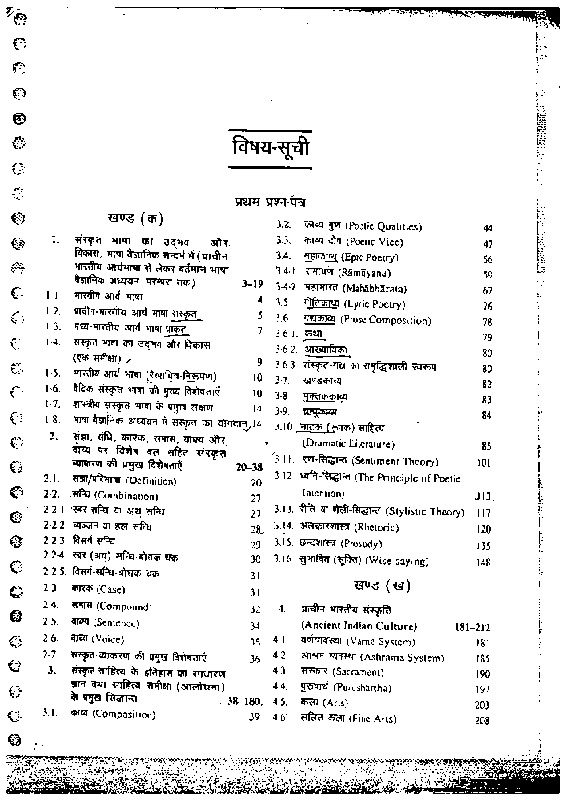
Upkar Sanskrit Notes 2025-26 — 6 Hindi Medium Printed Booklets for UPSC Mains Optional Subject
Related: Upkar Publications notes · Sanskrit books
Product Overview
| Feature | Details |
|---|---|
| Booklets Count | 6 Individual Printed Booklets — Full UPSC Sanskrit Optional Syllabus Coverage |
| Language | Hindi Medium (हिंदी माध्यम) |
| Publisher | Upkar Publication (UPSC Sanskrit Optional Series) |
| Edition | 2025-26 — Latest Genuine Batch |
| Condition | Brand New, Unmarked, Fresh Stock |
| Format | High-Quality Printed Booklets — Spiral or Book Binding |
| Paper Quality | 75 GSM Ultra-White — Highlighter Safe, Zero Bleed-Through |
| Shipping | Pan India Delivery in 3-5 Business Days — Tracked |
| Also Useful For | BPSC, UPPSC, MPPSC, RAS and all State PSC Sanskrit optional candidates |
Complete Booklet Catalog
These 6 printed booklets from Upkar Publication cover the entire UPSC Sanskrit optional syllabus for Paper I and Paper II, structured specifically for Hindi medium aspirants targeting UPSC Mains 2025-26. Each booklet is self-contained, allowing you to study individual units independently while maintaining logical progression across the full course of Sanskrit literature, grammar, and critical analysis.
- Booklet 1: Sanskrit Grammar — Vyakaran Foundations — Covers Paninian grammar system, Ashtadhyayi sutras and their interpretation, Sandhi rules, Samasa types (Tatpurusha, Bahuvrihi, Dvandva, Avyayibhava, Karmadharaya), Karaka theory, Vibhakti usage, Pratyayas, Dhatu forms, Lakaras (tenses and moods), and essential grammatical frameworks tested directly in UPSC Sanskrit optional Paper I.
- Booklet 2: Vedic Literature — Samhitas and Brahmanas — Detailed treatment of Rigveda, Samaveda, Yajurveda, Atharvaveda — their composition, themes, and literary significance; Brahmana texts including Shatapatha and Aitareya; Aranyakas and their philosophical transition; Upanishadic thought including Brihadaranyaka and Chandogya; hymns selected from UPSC optional syllabus with translated content and critical commentary in Hindi.
- Booklet 3: Classical Sanskrit Poetry — Mahakavya and Kavya — Raghuvamsha and Kumarasambhava of Kalidasa with sarga-wise analysis; Kiratarjuniya of Bharavi; Shishupala Vadha of Magha; Naishadhiya Charita of Shriharsha; poetic styles including Vaidarbhi, Gaudi, and Panchali riti; figures of speech (Alankaras) — Upama, Rupaka, Utpreksha, Yamaka; detailed character analysis and thematic notes for UPSC answer writing.
- Booklet 4: Sanskrit Drama — Nataka and Rupaka — Abhijnana Shakuntalam, Vikramorvasiyam, Malavikagnimitram of Kalidasa; Mricchakatika of Shudraka; Mudrarakshasa of Vishakhadatta; Ratnavali and Priyadarshika of Harsha; Natyashastra principles by Bharatamuni including Rasa theory, Bhavas, Vrittis, Pravrittis; plot construction, Nayaka-Nayika types; direct relevance to UPSC Paper II answer structure and analytical questions.
- Booklet 5: Sanskrit Prose and Narrative Literature — Kadambari and Harshacharita of Banabhatta; Dasakumaracharita of Dandin; Vasavadatta of Subandhu; Panchatantra and Hitopadesha narrative tradition; Rajatarangini of Kalhana as historical kavya; Arthashastra of Kautilya — political and administrative content; fable tradition and its literary evolution; prose style analysis with model answers tailored to UPSC Sanskrit optional examination pattern.
- Booklet 6: Sanskrit Philosophy, Shastra Literature and Answer Writing Practice — Darshana texts — Nyaya, Vaisheshika, Sankhya, Yoga, Mimamsa, and Vedanta foundations; Dharmashastra tradition — Manusmriti key provisions; Jyotisha and Shulbasutras; Subhashita tradition; previous years’ UPSC Sanskrit optional question analysis; model answers in Sanskrit and Hindi; structured answer-writing frameworks; important passages likely to be asked; revision tables, mnemonic aids, and quick-reference charts for final-stage UPSC preparation.
In-Depth Content Breakdown: Booklet by Booklet
Booklet 1: Sanskrit Grammar — Vyakaran Foundations
Sanskrit grammar forms the backbone of UPSC Sanskrit optional Paper I, and this booklet approaches it with the rigour demanded by the examination. The Paninian framework — built around the Ashtadhyayi — is explained with accessible Hindi commentary, making it approachable for aspirants who may not have studied Sanskrit at an advanced academic level. Sandhi (vowel and consonant combinations), Samasa (compound formation), and Karaka (case relations) are treated with worked examples drawn directly from classical texts. Vibhakti usage is cross-referenced with Nataka and Kavya passages appearing in other booklets, creating an integrated study experience for UPSC Mains preparation.
The second half of this booklet focuses on verbal morphology — Dhatu-based conjugation across all ten Lakaras, Parasmaipada and Atmanepada distinctions, Krit and Taddhita Pratyayas, and Upasarga usage. Each grammatical rule is illustrated through canonical examples from Rigveda hymns, Kalidasa’s verses, and other UPSC syllabus texts, reinforcing grammar in literary context. Special attention is given to translation-based questions that appear in UPSC Paper I — aspirants will find structured translation practice passages with grammatical annotation. A quick-reference grammar table at the booklet’s close aids last-week revision before the UPSC Mains examination.
Booklet 2: Vedic Literature — Samhitas and Brahmanas
The Vedic corpus represents the oldest layer of Sanskrit literature and carries significant weight in UPSC Sanskrit optional Paper I. This booklet opens with an orientation to the Vedic tradition — its oral transmission, metre (Chhandas), and the four Samhita divisions. Rigvedic hymns covering creation (Nasadiya Sukta), cosmology, social life, and deity praise are presented with transliteration, Hindi translation, and literary commentary. Samaveda’s musical dimension, Yajurveda’s ritual function, and Atharvaveda’s folk tradition are each treated as distinct literary bodies with their own themes and examination significance within the UPSC optional framework.
The Brahmana literature section — covering Shatapatha Brahmana and Aitareya Brahmana — explains their ritual-explanatory function and philosophical evolution toward the Aranyakas. The Upanishadic segment focuses on key passages from Brihadaranyaka, Chandogya, Taittiriya, Kena, and Isha Upanishads — each with philosophical commentary in Hindi and model analytical paragraphs for UPSC answer writing. A comparative chart of the four Vedas, their Brahmanas, Aranyakas, and associated Upanishads is included as a ready revision tool. This booklet alone addresses multiple predictable question clusters in UPSC Sanskrit optional Paper I.
Booklet 3: Classical Sanskrit Poetry — Mahakavya and Kavya
Classical Sanskrit poetry dominates UPSC Sanskrit optional Paper II, and this booklet handles the major Mahakavya texts with both textual depth and examination strategy. Kalidasa’s Raghuvamsha — tracing the Solar dynasty — is covered sarga by sarga with key verse selections, character sketches (Dilipa, Raghu, Rama, Agnivarna), thematic analysis, and noted passages for translation practice. Kumarasambhava’s treatment of Parvati’s penance and Shiva’s awakening is analysed for its poetic beauty and philosophical undertones. Both works are examined for their alankaras, rasa, and dhvani — critical evaluation dimensions tested directly in UPSC Mains optional papers.
Bharavi’s Kiratarjuniya and Magha’s Shishupala Vadha are treated as representatives of the ornate (Chitra) kavya style — their complex Yamaka, Shlesh, and Chitrakavya features are explained with examples. Shriharsha’s Naishadhiya Charita rounds out the Mahakavya coverage. A dedicated sub-section explains the three Riti schools — Vaidarbhi (grace), Gaudi (force), and Panchali (sweetness) — with textual examples from each Mahakavya. Thirty key Alankaras are catalogued with definitions and illustrations. This booklet directly equips aspirants for the “identify the figure of speech” and “comment on the poetic style” question types common in UPSC Sanskrit optional examinations.
Booklet 4: Sanskrit Drama — Nataka and Rupaka
Sanskrit drama holds a central place in UPSC Sanskrit optional Paper II, and this booklet covers it with the analytical depth the examination demands. Kalidasa’s three major plays — Abhijnana Shakuntalam, Vikramorvasiyam, and Malavikagnimitram — are covered with act-wise summaries, character analysis, rasa identification, and selected passages for translation. Abhijnana Shakuntalam receives the most detailed treatment given its consistent appearance in UPSC optional questions — Dushyanta’s curse-driven forgetfulness, Shakuntala’s character evolution, and the recognition scene are analysed as both literary events and rasa experiences with specific reference to Shringarasa and Karunarasa elements.
Shudraka’s Mricchakatika is treated as a socially realistic drama — its lower-class hero Charudatta, the courtesan Vasantasena, and the political subplot involving Aryaka are analysed in terms of character motivation and social commentary. Vishakhadatta’s Mudrarakshasa is examined for its political intrigue and Arthashastra-linked themes. Natyashastra theory — Rasa-Bhava system, the eight primary Rasas, Sthayi and Sanchari Bhavas, the four Vrittis (Bharati, Satvati, Arabhati, Kaisiki) — is presented with structured notes for direct application in UPSC answer writing. Play structure terminology (Sandhi, Artha-Prakritis, Nayaka types) is catalogued for quick reference.
Booklet 5: Sanskrit Prose and Narrative Literature
Sanskrit prose literature is one of the most intellectually rich areas of the UPSC Sanskrit optional syllabus and one where aspirants often lack structured notes. This booklet opens with Banabhatta — the undisputed master of Sanskrit prose — covering both Harshacharita (biographical narrative of Emperor Harsha) and Kadambari (the earliest Sanskrit prose romance) with style analysis, selected passages, Hindi translation, and commentary on Banabhatta’s celebrated complex sentence structures. Dandin’s Dasakumaracharita is treated as a narrative of worldly adventure, with its realism and storytelling technique contrasted against Banabhatta’s ornate style — a comparison question UPSC has tested in previous years.
Subandhu’s Vasavadatta is examined for its extreme alankara density and romantic narrative. The Panchatantra and Hitopadesha are analysed as didactic narrative traditions with their frame-story technique, animal fable convention, and Niti-Shastra content. Kalhana’s Rajatarangini is included as a unique historical kavya, combining poetic form with chronicle intent — its historicity and literary value are both addressed. Kautilya’s Arthashastra is covered selectively for its administrative and political theory dimensions that appear in UPSC optional questions. Model answers for prose-analysis questions are embedded throughout the booklet, giving aspirants a ready template for UPSC Mains answer writing.
Booklet 6: Sanskrit Philosophy, Shastra Literature and Answer Writing Practice
The sixth booklet serves as both a content resource for philosophical and Shastra literature and a dedicated UPSC answer-writing preparation module. The six classical Darshanas — Nyaya (logic), Vaisheshika (atomism), Sankhya (enumeration), Yoga (discipline), Mimamsa (exegesis), and Vedanta (non-dualism) — are introduced with their foundational texts, key philosophers, central doctrines, and points of mutual debate. These are treated at the level of detail tested in UPSC Sanskrit optional questions — not at a specialist philosophy level — making them accessible to aspirants coming from non-philosophy backgrounds who have chosen Sanskrit as their UPSC optional subject.
The Dharmashastra section covers Manusmriti’s key social and legal provisions as literary and cultural documents, while Jyotisha (Vedanga astronomy) and Shulbasutras (geometric ritual texts) are addressed as Vedanga traditions. The Subhashita tradition — epigrams from Chanakya, Bhartrhari’s Shataka trilogy (Nitishataka, Shringara Shataka, Vairagya Shataka) — is covered with selected verses and analysis. The booklet closes with a previous-years’ UPSC Sanskrit optional question bank (last 10 years, Paper I and Paper II), model answers in both Sanskrit and Hindi, a topic-wise revision checklist, and structured templates for 10-mark and 15-mark UPSC Mains answers. This is the booklet to buy before the final two months of UPSC preparation.
Physical Construction and Quality Standards
These Upkar Sanskrit optional notes are manufactured to withstand the intensive use patterns of UPSC aspirants — daily annotation, repeated revision cycles, and months of active study. Every physical element, from paper to cover board, is chosen to support sustained UPSC preparation without degradation.
Paper Quality: 75 GSM Anti-Glare White Paper
Each booklet is printed on 75 GSM ultra-white paper selected for its combination of opacity and surface quality. The paper’s high opacity ensures that content printed on the reverse side does not bleed through — critical when you are annotating Sanskrit verses on one side while referencing Hindi commentary printed on the other. Multiple highlighter colors — yellow, green, pink, orange — can be used simultaneously without bleed-through, allowing the color-coded revision systems popular among UPSC Sanskrit optional toppers. The anti-glare surface significantly reduces eye strain during the long daily study sessions typical of UPSC optional subject preparation.
Printing Technology: High-Resolution Laser Printing
All six booklets are printed using high-resolution laser printing technology, ensuring that Devanagari script — with its complex ligatures, matras, and diacritical marks — is rendered with complete clarity. Sanskrit text in particular demands precision printing because incorrect or blurred matras can change the meaning of words entirely; laser printing eliminates this risk. Flowcharts mapping grammatical categories, comparison tables for literary styles, and Rasa-Bhava diagrams are all reproduced with sharp resolution. The permanent toner bond means pages remain smudge-proof even after repeated handling, and the print quality does not fade over the months of UPSC preparation for which these booklets are intended.
Binding and Durability
The booklets are available in either spiral binding or book binding depending on batch availability. Spiral-bound copies open completely flat — a significant practical advantage when writing lengthy UPSC answers alongside the notes, or when you need to photograph a page for digital revision. Book-bound copies are more compact and stackable, preferable for aspirants who carry notes between study locations. Both binding formats use a 300 GSM laminated cover board that resists moisture, creasing, and the wear of daily handling. The cover lamination also protects printed cover text — faculty name, edition year, and subject title — from fading through the full duration of UPSC Mains preparation.
Key Features and Study Design
These Upkar Sanskrit optional notes are designed around the specific demands of UPSC Mains — where Sanskrit optional carries 500 marks across two papers and rewards aspirants who can combine textual knowledge with structured analytical writing.
- Full Syllabus Architecture: All six booklets together map precisely onto the official UPSC Sanskrit optional syllabus for both Paper I (Grammar and Vedic Literature) and Paper II (Classical Literature), ensuring no syllabus gap in your UPSC preparation and eliminating the need to supplement with multiple sources.
- Hindi Medium Throughout: Every explanation, commentary, translation, and model answer is written in Hindi, making these notes directly usable for aspirants writing their UPSC Mains answers in Hindi — the medium in which the majority of Sanskrit optional candidates appear for the examination.
- Embedded Model Answers: Rather than separating theory from answer writing, each booklet embeds model UPSC-style answers within the content — showing aspirants exactly how to convert textual knowledge into structured 10-mark and 15-mark Mains answers that earn full marks from UPSC evaluators.
- Textual Passages with Translation: Key Sanskrit passages from prescribed texts are reproduced with transliteration, word-by-word meaning in Hindi, and literary commentary — preparing aspirants directly for the translation and critical appreciation questions that appear in UPSC Sanskrit optional Paper I and Paper II every year.
- Previous Years’ Question Integration: Topic coverage in each booklet is calibrated against UPSC Sanskrit optional question papers from the last ten years — high-frequency topics receive greater depth, and questions that have been asked repeatedly are flagged with marginal markers so aspirants can prioritise their study time efficiently.
Shipping, Packaging and Delivery
Each order of Upkar Sanskrit optional notes is packaged through a multi-layer protection process before dispatch. The 2 Booklets are first individually shrink-wrapped to prevent moisture ingress and surface scuffing during transit. They are then assembled as a set, wrapped in bubble padding, and placed inside a corrugated cardboard shipping box with rigid edge protectors at each corner. The box is sealed with reinforced adhesive tape and labelled with both the delivery address and a fragile-handling indicator. This packaging protocol ensures that your UPSC study material arrives in the same pristine, brand-new condition in which it left our Mukherjee Nagar, Delhi dispatch centre.
Orders are dispatched within 24 hours of payment confirmation and delivered across India within 3-5 business days via tracked courier. A tracking ID is sent via WhatsApp to your registered number within 24 hours of dispatch — you can reach us directly on WhatsApp at +91 70045 49563 for any query about your order status. In the rare event that a booklet from your set arrives damaged or is missing, we replace it within 48 hours of your report at no additional cost. We ship to all pin codes across India — from metro cities to Tier 3 towns — making it easy for every UPSC aspirant to buy printed Sanskrit optional notes online regardless of their location.
Frequently Asked Questions (FAQ)
A: Upkar Sanskrit notes provide structured, syllabus-mapped coverage of both UPSC Sanskrit optional papers — grammar, Vedic literature, classical poetry, drama, prose, and philosophy — all in Hindi medium. For most aspirants, these 2 Booklets form a strong primary study resource. However, for deeper engagement with specific prescribed texts, supplementing with the original Sanskrit text editions of Kalidasa or Panini is advisable alongside these notes to strengthen your UPSC answer quality.
A: This product includes exactly 6 printed booklets covering the complete UPSC Sanskrit optional syllabus. The six booklets span Vyakaran (grammar), Vedic literature (Samhitas, Brahmanas, Upanishads), Mahakavya and Kavya, Sanskrit drama (Nataka), Sanskrit prose and narrative literature, and Sanskrit philosophy with Shastra literature plus an integrated answer-writing practice module. All 2 Booklets are dispatched together as a single set in one tracked shipment.
A: Sanskrit optional has several advantages for the right aspirant — it carries 500 marks in UPSC Mains, has a relatively stable and well-defined syllabus, low competition (fewer candidates means less score compression), and strong overlap with General Studies papers covering ancient Indian history, culture, and philosophy. Aspirants with a Sanskrit academic background or strong interest in classical literature consistently perform well. The subject rewards analytical writing over rote memorisation, which suits aspirants targeting high UPSC Mains scores.
A: Yes — these Upkar Sanskrit optional notes are entirely in Hindi medium (हिंदी माध्यम). All explanations, commentary on Sanskrit texts, grammatical analysis, philosophical content, and model answers are written in Hindi. Sanskrit passages are reproduced in Devanagari script with Hindi translation and word-by-word meaning. This makes these notes directly suitable for aspirants writing their UPSC Mains Sanskrit optional answers in Hindi, which is the most common medium chosen by Sanskrit optional candidates.
A: These booklets use 75 GSM ultra-white paper chosen for high opacity — multiple highlighter colors and gel pens work without bleed-through to the reverse side, ideal for color-coded revision. The anti-glare surface also reduces eye strain during extended daily study sessions, which is important during the intensive preparation phase before UPSC Mains. Both Devanagari script and Hindi commentary are printed with laser precision, ensuring that matras and diacritical marks — essential in Sanskrit — are perfectly legible even after annotation.
A: Yes — all six booklets together cover the full UPSC Sanskrit optional syllabus for both Paper I and Paper II as prescribed by the Union Public Service Commission. Paper I topics — Paninian grammar, Vedic literature (four Samhitas, Brahmanas, Aranyakas, Upanishads) — are covered in Booklets 1 and 2. Paper II topics — Mahakavya, Kavya, Drama, Prose, Narrative literature, Subhashita, Darshana, and Shastra literature — are covered in Booklets 3 through 6. No major syllabus area is left unaddressed.
A: For most UPSC aspirants, structured printed notes like these Upkar Sanskrit optional booklets are considerably more efficient than self-study from scratch using raw source texts. The UPSC Sanskrit optional syllabus spans 3,000 years of literature across multiple genres — organising this independently while managing GS preparation simultaneously is extremely time-consuming. These notes give you a pre-structured, examination-calibrated framework so you can focus your energy on understanding, annotating, and practicing answers rather than on content curation and organisation.
A: Yes — this is the 2025-26 edition, the latest genuine batch from Upkar Publication. The content reflects the current UPSC Sanskrit optional syllabus structure and incorporates recent question trends observed in UPSC Mains Sanskrit optional papers. The previous years’ question analysis in Booklet 6 covers questions up to the most recent UPSC examination cycle. The edition year 2025-26 on the cover confirms these are current batch prints — not old stock reprints — and are aligned with the UPSC Mains examination cycle you will be appearing in.
A: Yes — these Upkar Sanskrit notes are useful for aspirants preparing for State PSC examinations that offer Sanskrit as an optional subject, including BPSC, UPPSC, MPPSC, RAS, and other State PSC examinations conducted in Hindi medium. The foundational coverage of Sanskrit grammar, literature, and philosophy is relevant across these examinations. However, since these notes are structured around the UPSC Mains Sanskrit optional syllabus specifically, State PSC aspirants should cross-reference their specific examination syllabus to identify any additional or different topics required.
A: We deliver pan India in 3-5 business days via fully tracked courier service. Orders are dispatched from our Mukherjee Nagar, Delhi location within 24 hours of payment confirmation. A tracking ID is sent via WhatsApp at +91 70045 49563 within 24 hours of dispatch. We ship to all Indian pin codes — including Tier 2, Tier 3 cities, and remote locations. If you need an urgent delivery or have a specific requirement, contact us on WhatsApp before placing your order and we will advise you on the fastest available option.
A: Yes — we have a straightforward replacement policy for damaged or defective booklets. If any booklet in your set arrives with printing defects, missing pages, binding issues, or physical damage caused during transit, photograph the defect and send it to us on WhatsApp at +91 70045 49563 within 48 hours of delivery. We will dispatch a replacement copy within 48 hours of your report at no charge. We take full responsibility for the physical condition of every order we send — your investment in UPSC Sanskrit optional preparation should arrive perfectly usable.
A: You can buy Upkar Sanskrit optional notes 2025-26 directly from this page — add to cart and complete checkout for the fastest dispatch. These are brand-new, genuine 2025-26 edition printed booklets in Hindi medium, shipped from our UPSC Store in Mukherjee Nagar, Delhi. If you prefer to confirm availability or have questions before you buy, reach us on WhatsApp at +91 70045 49563. We are India’s trusted source for UPSC optional printed notes — thousands of aspirants across India buy their UPSC study material from us every year with complete confidence.
Summary
| Specification | Value |
|---|---|
| Booklets | 6 Printed Booklets |
| Language | Hindi Medium (हिंदी माध्यम) |
| Publisher | Upkar Publication |
| Edition | 2025-26 |
| Paper | 75 GSM Ultra-White |
| Binding | Spiral or Book Binding |
| Delivery | 3-5 Business Days Pan India |
| Condition | Brand New, Unmarked |
| Also Useful For | BPSC, UPPSC, MPPSC, RAS and all State PSC Sanskrit optional candidates |
Sold and dispatched by UPSC Store, Mukherjee Nagar, Delhi — India’s trusted destination for printed UPSC optional notes. Buy Upkar Sanskrit optional notes 2025-26 today and receive your complete 2-booklet set with pan India delivery in 3-5 days.
Reference: UPSC official syllabus
Customer Reviews 254
Sanskrit optional lene walo ke liye ye zaruri hai!
Padhne mein easy samajh aata hai, notes ekdum structured hain.
Content quality excellent hai aur booklets ka binding bhi strong hai. Bilkul worth it.
Quality bahut achhi hai, packing bhi proper tha.
Booklets structured well hain aur content relevant hai UPSC ke liye. Value for money mila.
Sab kuch expected tha, quality bilkul on point aur notes super helpful.
Material relevant hai UPSC ke liye but practice questions kaafi kam hain. Revision ke liye acha raha.
Exactly what every UPSC Sanskrit student needs.
Aspirants Also Bought
More from the same category
About Upkar Sanskrit Notes 2025-26
Upkar Sanskrit Notes 2025-26 is a highly recommended UPSC study material from Upkar Publications, specially designed for Sanskrit Optional preparation. Available in Sanskrit with Hindi/English Explanations medium, this material is crafted to match the exact requirements of the UPSC Civil Services Examination syllabus — covering both Prelims and Mains comprehensively.
Product Details
- Institute: Upkar Publications
- Subject: Sanskrit Optional
- Medium: Sanskrit with Hindi/English Explanations
- Format: Printed
- Delivery: Pan-India delivery in 3–5 working days
- Format: Original printed material, verified authentic
Why Buy from UPSC Store?
- ✅ 100% Genuine Printed Material — Original printed notes, no photocopies or fake copies
- ✅ Fast Delivery — Ships within 24 hours, arrives in 3–5 days pan-India
- ✅ Secure Packaging — Bubble-wrapped and boxed to prevent damage in transit
- ✅ Trusted by 10,000+ Aspirants — India's most reliable UPSC material marketplace
- ✅ WhatsApp Support — Get expert guidance on material selection before ordering
Frequently Asked Questions
Yes, all products at UPSC Store are 100% genuine printed materials. We do not sell photocopies or fake copies.
Orders are dispatched within 24 hours and delivered across India in 3–5 working days via reputed courier partners.
Yes, we accept returns within 7 days if the product is damaged or incorrect. Check our refund policy for details.
We recommend pairing this with current affairs notes and a UPSC test series for comprehensive preparation. Browse more in Optional, Sanskrit, UPSC.