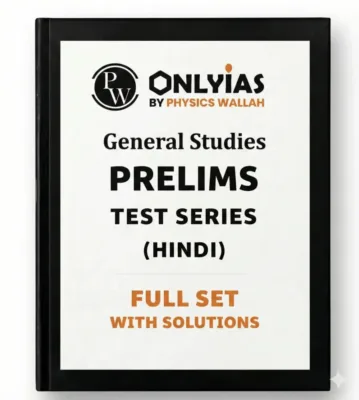
PW Udaan GS Notes 2025-26

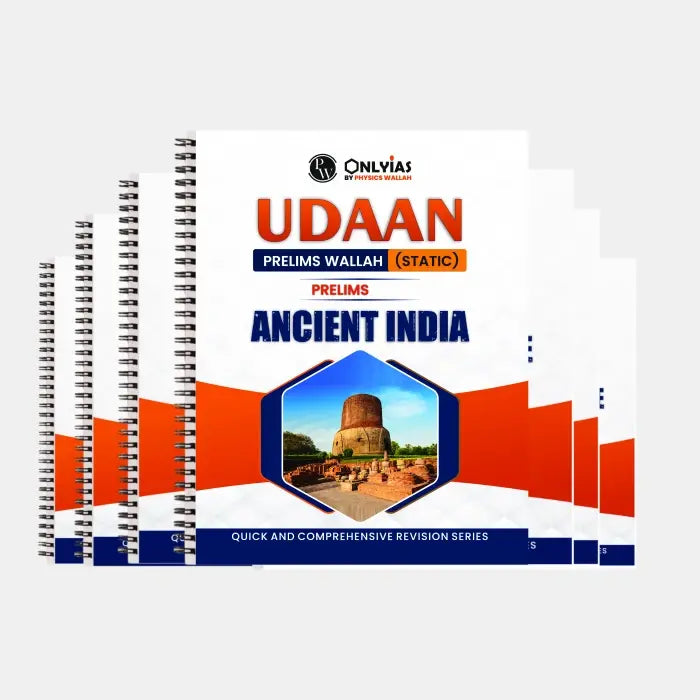
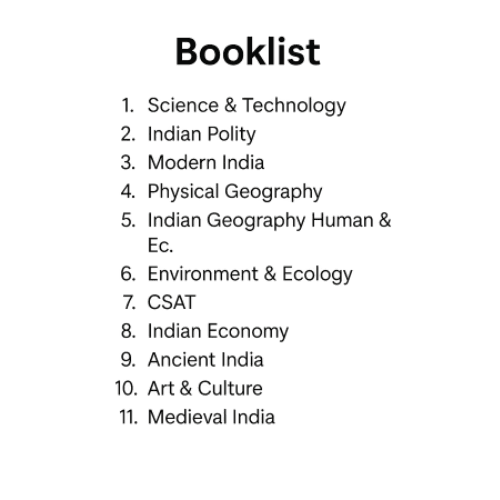
11 Booklets | English Medium | UPSC Study Material

Key Highlights:
πŸ“˜ 11 Booklets
πŸ“š GS
πŸŽ“ Physics Wallah (PW)
🏷️ Printed
πŸ‡¬πŸ‡§ English Medium
β‚Ή1,685
πŸŒ€ spiral βœ“
πŸ“˜ book-binding βœ“
Only 26 sets left
Selling fast (90 sold this week)
5% OFF Use UPSC5% (COD Available)
10% OFF Use UPI10 (UPI Only)
Secure Payment
Fast Delivery
Safe Packaging

About PW Udaan GS Notes 2025-26

The PW Udaan GS Notes 2025-26 is a printed UPSC study material set sold by UPSC Store β€” India’s trusted source for genuine, latest-batch civil services preparation books. This page covers full booklet details, syllabus coverage, pricing, shipping, and frequently asked questions. Useful for UPSC CSE, BPSC, UPPSC, MPPSC, RAS and other state PSC examinations.

PW Udaan GS Notes 2025-26 β€” 11 Booklets English Medium Printed Notes for UPSC GS Paper I Prelims and Mains

Related: PW Only IAS notes Β· GS notes

Product Overview

FeatureDetails
Booklets Count20 Individual Printed Booklets β€” Full GS Paper I Static Coverage Including Ancient India
LanguageEnglish Medium
PublisherOnlyIAS by Physics Wallah (Udaan Prelims Wallah β€” Quick and Comprehensive Revision Series)
Edition2025-26 β€” Latest Genuine Batch
ConditionBrand New, Unmarked, Fresh Stock
FormatHigh-Quality Printed Booklets β€” Spiral or Book Binding
Paper Quality75 GSM Ultra-White β€” Highlighter Safe, Zero Bleed-Through
ShippingPan India Delivery in 3-5 Business Days β€” Tracked
Also Useful ForBPSC, UPPSC, MPPSC, RAS and all State PSC Examinations

Complete Booklet Catalog

The PW Udaan GS Notes 2025-26 set spans 20 carefully structured printed booklets covering the entire static GS Paper I syllabus prescribed by UPSC, with special depth on Ancient India history, culture, art, architecture, and heritage. This set is designed for English-medium UPSC aspirants targeting Prelims 2025 and Mains 2026 who want a single, revision-ready printed resource that replaces multiple scattered sources.

  • Booklet 1: Ancient India β€” Sources and Early Civilisations β€” Archaeological and literary sources for ancient history; Palaeolithic, Mesolithic, and Neolithic cultures; Indus Valley Civilisation β€” town planning, seals, trade networks, decline theories; Vedic Age β€” early and later Vedic period, social structure, economy, religion, and transition from Rigvedic to later Vedic society.
  • Booklet 2: Ancient India β€” Mahajanapadas and Mauryan Empire β€” Rise of sixteen Mahajanapadas; Magadha’s ascendancy; Alexander’s invasion and its impact; Mauryan administration, Ashoka’s Dhamma, edicts, art and architecture, decline of Mauryan Empire and its historical significance for UPSC Prelims and Mains.
  • Booklet 3: Ancient India β€” Post-Mauryan Period and Gupta Age β€” Sungas, Kanvas, Satavahanas; Indo-Greeks, Shakas, Kushanas, and their cultural contributions; Gupta Empire β€” administration, economy, art, literature, science, and the concept of a “Golden Age” in Indian history with UPSC-relevant factual data.
  • Booklet 4: Ancient India β€” Art, Architecture and Culture β€” Rock-cut architecture, stupa evolution, temple styles (Nagara, Dravida, Vesara); sculpture schools β€” Gandhara, Mathura, Amaravati; cave paintings β€” Ajanta and Ellora; performing arts, classical dance forms, and their relevance to UPSC GS Paper I and Mains questions on culture.
  • Booklet 5: Ancient India β€” Religion and Philosophy β€” Origins and spread of Buddhism and Jainism; Theravada vs Mahayana; major Buddhist councils; Upanishadic thought; Bhakti and Shaiva-Vaishnava traditions in ancient context; six schools of Indian philosophy β€” Nyaya, Vaisheshika, Samkhya, Yoga, Mimamsa, Vedanta β€” relevant for UPSC GS Paper I.
  • Booklet 6: Medieval India β€” Delhi Sultanate β€” Slave dynasty, Khalji dynasty, Tughlaq dynasty, Sayyids and Lodis; administrative and revenue systems; architecture of the Sultanate period; Alauddin Khalji’s market reforms; Ibn Battuta and foreign accounts; UPSC Prelims MCQ-focused facts and Mains answer-writing material.
  • Booklet 7: Medieval India β€” Mughal Empire β€” Babur to Aurangzeb β€” political history, administrative structure, mansabdari system, land revenue, Ain-i-Akbari; Mughal art and architecture β€” Fatehpur Sikri, Taj Mahal, miniature painting; Mughal decline β€” internal and external factors; UPSC GS Paper I frequently asked topics covered in detail.
  • Booklet 8: Medieval India β€” Bhakti and Sufi Movements β€” Bhakti movement saints β€” Kabir, Mirabai, Tukaram, Chaitanya, Ramanuja, Ramananda; Sufi orders β€” Chishti, Suhrawardi, Qadiri, Naqshbandi; social reform dimensions; influence on Indian society and literature; significance for UPSC Mains answers on medieval social history and Indian culture.
  • Booklet 9: Medieval India β€” Vijayanagara and Bahmani Kingdoms β€” Rise and fall of Vijayanagara Empire; Krishnadevaraya’s administration and cultural contributions; Bahmani Sultanate and successor states; Deccan architecture; literary developments in Telugu, Kannada, and Tamil; administration and economy β€” UPSC-relevant factual and analytical content.
  • Booklet 10: Modern India β€” European Advent and British Expansion β€” Portuguese, Dutch, French, and British East India Company; Battle of Plassey and Buxar; Subsidiary Alliance and Doctrine of Lapse; Anglo-Mysore, Anglo-Maratha, and Anglo-Sikh Wars; consolidation of British power in India β€” key UPSC Prelims and Mains topics with dates and impact analysis.
  • Booklet 11: Modern India β€” 1857 Revolt and Social Reform Movements β€” Causes, course, and consequences of 1857 Revolt; major centres and leaders; post-1857 administrative changes; 19th-century social reform movements β€” Brahmo Samaj, Arya Samaj, Prarthana Samaj, Ramakrishna Mission; reformers β€” Raja Ram Mohan Roy, Vivekananda, Dayananda Saraswati; women’s education reforms.
  • Booklet 12: Modern India β€” Freedom Struggle Phase I β€” Formation of Indian National Congress; Moderate and Extremist phases; Partition of Bengal 1905; Swadeshi Movement; Morley-Minto Reforms; Home Rule League; Lucknow Pact; Montagu-Chelmsford Reforms β€” UPSC Prelims MCQ-dense content with analytical notes for Mains answers.
  • Booklet 13: Modern India β€” Gandhi Era and Mass Movements β€” Non-Cooperation Movement, Civil Disobedience Movement, Quit India Movement; Rowlatt Act; Jallianwala Bagh; Gandhi’s political philosophy; Simon Commission; Round Table Conferences; Poona Pact; Cripps Mission; Cabinet Mission Plan β€” high-yield UPSC topic coverage with chronological clarity.
  • Booklet 14: Modern India β€” Revolutionary Movements and Constitutional Developments β€” Bhagat Singh, Chandrashekhara Azad, Subhas Chandra Bose and INA; revolutionary organisations; Government of India Acts 1919 and 1935; Indian Independence Act 1947; Partition of India β€” causes and consequences; integration of princely states β€” UPSC Mains and Prelims focused notes.
  • Booklet 15: Indian Geography β€” Physical Features and Drainage System β€” Physiographic divisions of India; Himalayas β€” formation, ranges, passes; Northern Plains; Deccan Plateau; Coastal Plains and Islands; River systems β€” Himalayan and Peninsular rivers; drainage patterns; lakes and wetlands; significance for UPSC GS Paper I geography questions with labelled diagrams.
  • Booklet 16: Indian Geography β€” Climate, Soils and Natural Vegetation β€” Factors affecting India’s climate; monsoon β€” mechanism, onset, retreat; seasons; rainfall distribution; Koppen’s climate classification applied to India; types of soils β€” alluvial, black, red, laterite, arid; natural vegetation zones; forest types; UPSC-relevant maps and data tables included.
  • Booklet 17: Indian Geography β€” Agriculture, Resources and Industries β€” Cropping seasons β€” Kharif, Rabi, Zaid; major crops β€” rice, wheat, cotton, sugarcane, oilseeds; irrigation systems; Green Revolution; mineral resources β€” iron ore, coal, petroleum, mica, manganese; industrial regions; special economic zones; UPSC Prelims MCQ facts and Mains analytical content.
  • Booklet 18: Indian Society β€” Social Issues, Diversity and Governance β€” Features of Indian society; diversity β€” linguistic, religious, regional; communalism, regionalism, secularism; caste system and its evolution; tribal issues; women and society β€” gender inequality, empowerment schemes; poverty and social exclusion; UPSC GS Paper I Society syllabus covered with current policy linkages.
  • Booklet 19: World Geography β€” Physical and Human Geography Essentials β€” Interior of the Earth; rock types; earthquakes and volcanoes; ocean currents; atmosphere layers; global wind patterns; biomes; population distribution; urbanisation; migration; economic geography β€” agriculture, industries, trade; UPSC GS Paper I world geography questions addressed with maps and flowcharts.
  • Booklet 20: Art and Culture β€” Integrated Revision Booklet β€” Classical dance forms; Indian music traditions; martial arts; puppetry; folk art; UNESCO Intangible Cultural Heritage from India; architectural styles summary; major festivals; important museums and heritage sites; paintings schools; UPSC Prelims culture questions β€” facts, lists, maps, and quick-recall tables included.

In-Depth Content Breakdown: Booklet by Booklet

Booklet 1: Ancient India β€” Sources and Early Civilisations

This booklet opens the UPSC GS Paper I journey with a structured treatment of archaeological and literary sources used to reconstruct ancient Indian history. It covers the prehistoric cultures β€” Palaeolithic, Mesolithic, and Neolithic β€” before moving into the Chalcolithic cultures like Jorwe and Malwa. The Indus Valley Civilisation receives detailed attention: town planning at Mohenjodaro and Harappa, drainage systems, seals and scripts, trade with Mesopotamia, and the major theories of decline. This is a high-yield UPSC Prelims topic that appears repeatedly in both MCQ and short-answer formats.

The Vedic Age section is divided into early and later Vedic periods, with structured comparisons of social organisation, economic activities, political institutions, and religious practices across both phases. Key texts β€” Rigveda, Samaveda, Yajurveda, Atharvaveda, Brahmanas, Aranyakas, and Upanishads β€” are contextualised with exam-oriented facts. The booklet includes a timeline chart, a comparison table of Harappan vs Vedic society, and bullet-point summaries ideal for last-week revision before UPSC Prelims.

Booklet 2: Ancient India β€” Mahajanapadas and Mauryan Empire

The rise of the sixteen Mahajanapadas and Magadha’s emergence as the dominant power form the backbone of this booklet. It traces the political narrative from Haryanka and Shishunaga dynasties through the Nanda dynasty to Chandragupta Maurya’s revolution. Alexander’s invasion of northwest India β€” its route, battles at Hydaspes, and long-term cultural impact β€” is covered with UPSC Prelims MCQ precision. The Mauryan administrative system β€” central and provincial administration, Arthashastra’s framework, Megasthenes’s Indica β€” provides rich Mains material.

Ashoka’s Dhamma policy is treated as both a political and ethical system, with coverage of major and minor rock edicts, pillar edicts, and their geographical spread. The booklet includes a map of Ashokan edicts’ locations, a table of rock edict content, and analytical notes on why Ashoka’s Dhamma failed as a state policy β€” a popular UPSC Mains question. The causes of Mauryan decline β€” economic strain, Brahmanical reaction, weak successors β€” are presented in a structured cause-and-consequence format ideal for 150-word and 250-word UPSC answers.

Booklet 3: Ancient India β€” Post-Mauryan Period and Gupta Age

This booklet bridges the gap between Mauryan decline and Gupta glory by covering the politically fragmented post-Mauryan era. Sungas and their relationship with Brahmanical revival, Satavahanas as bridge-builders between north and south India, and the Indo-Greek contribution to numismatics and art are all examined. The Kushana Empire β€” especially Kanishka’s patronage of Buddhism, the fourth Buddhist council, and the Gandhara school of art β€” is a recurring UPSC theme covered with sufficient factual depth for both Prelims and Mains.

The Gupta Empire section focuses on political expansion under Chandragupta I, Samudragupta’s Allahabad Prasasti, Chandragupta II’s cultural peak, and the empire’s decline under Skandagupta. The “Golden Age” assessment is critically examined β€” achievements in literature (Kalidasa), science (Aryabhata, Varahamihira), mathematics, medicine, and metallurgy (Iron Pillar of Delhi) are systematically listed. A comparative table of Mauryan vs Gupta administration and economy helps UPSC aspirants write structured Mains answers distinguishing the two empires.

Booklet 4: Ancient India β€” Art, Architecture and Culture

UPSC GS Paper I and Prelims routinely test knowledge of Indian art and architecture, making this one of the most exam-critical booklets in the PW Udaan set. The evolution of stupa architecture β€” from Sanchi to Amaravati β€” is traced with structural details (anda, harmika, toranas, vedika) and iconographic progression. Rock-cut architecture is categorised by period and dynasty, covering Ajanta, Ellora, Elephanta, Karle, and Bhaja with key facts about their commissioners and content. Temple architecture evolution from Gupta-period flat-roofed shrines to mature Nagara and Dravida styles is diagrammatically presented.

The three sculpture schools β€” Gandhara (Hellenistic influence, grey schist), Mathura (indigenous, red sandstone), and Amaravati (narrative style, white marble) β€” are compared in a structured table, a perennial UPSC Prelims question source. Cave paintings at Ajanta (Jataka stories, Bodhisattva figures) and Bagh are described with stylistic analysis. Classical dance forms β€” Bharatanatyam, Kuchipudi, Odissi, Kathak, Manipuri, Mohiniyattam, Sattriya, and Kathakali β€” are listed with their origin states and style characteristics, enabling quick Prelims recall.

Booklet 5: Ancient India β€” Religion and Philosophy

This booklet addresses the rich intellectual and spiritual heritage of ancient India that forms a significant portion of UPSC GS Paper I culture and society questions. The origins of Buddhism β€” the Four Noble Truths, Eightfold Path, concept of Nirvana, Pratityasamutpada β€” and Jainism β€” Triratna, Anekantavada, Syadvada, Ahimsa β€” are covered with factual precision. The four Buddhist councils and their locations, presidents, and outcomes are presented in a ready-reference table. Theravada, Mahayana, and Vajrayana branches are differentiated with key texts and geographical spread mapped out.

The six orthodox schools of Indian philosophy (Shad Darshanas) β€” Nyaya, Vaisheshika, Samkhya, Yoga, Mimamsa, and Vedanta β€” are summarised with their founders, core texts, and central philosophical positions. Heterodox schools β€” Charvaka, Buddhism, Jainism, Ajivika β€” are contrasted with orthodox traditions. The evolution of Bhakti tradition in ancient India, Bhagavatism, and early Shaiva-Vaishnava movements receive attention as precursors to medieval Bhakti. For UPSC aspirants, this booklet is indispensable for handling both Prelims factual questions and Mains philosophical analysis questions.

Booklet 6: Medieval India β€” Delhi Sultanate

The Delhi Sultanate’s five dynasties are covered in a chronological yet thematic framework suited for UPSC GS Paper I. The Slave (Mamluk) dynasty β€” Qutub-ud-din Aibak, Iltutmish, Razia, Balban β€” is treated with emphasis on administrative innovations and the iqta system. The Khalji revolution under Alauddin Khalji β€” market reforms, price control, expansionist military campaigns in south India, and permanent army β€” is a high-frequency UPSC Mains topic presented with structured analytical content. Tughlaq administrative experiments, including token currency and capital transfer, are critically examined.

The architectural legacy of the Delhi Sultanate β€” Qutub complex, Alai Darwaza, Tughlaqabad Fort, Lodi Gardens β€” is documented with construction details and stylistic features distinguishing it from Mughal architecture. Ibn Battuta’s Rihla as a primary source for Sultanate India is referenced. Administrative concepts β€” diwan-i-wizarat, diwan-i-arz, diwan-i-insha, diwan-i-risalat β€” are explained with their functions and hierarchy, which are directly tested in UPSC Prelims MCQs. Revenue terms β€” kharaj, jizya, zakat, khams β€” are defined with contextual use across dynasties for comparative Mains answers.

Booklet 7: Medieval India β€” Mughal Empire

The Mughal Empire booklet covers political history from Babur’s victory at Panipat (1526) to Aurangzeb’s reign and the subsequent decline, structured for UPSC GS Paper I requirements. Babur’s military innovations, Humayun’s displacement and return, Sher Shah Suri’s administrative reforms, and Akbar’s consolidation and policy of Sulh-i-kul are treated with analytical depth. The mansabdari system β€” zat and sawar ranks, payment mechanisms, and its role in Mughal administration β€” is a frequently examined UPSC topic given detailed treatment with diagrams showing the administrative hierarchy.

Mughal art and architecture receive separate treatment: Babri mosque to Taj Mahal, evolution of Mughal garden design (chahar bagh), miniature painting schools, and the synthesis of Persian and Indian artistic traditions. Ain-i-Akbari and Akbarnama as primary sources are contextualised. Aurangzeb’s religious policies and their connection to Mughal decline are analytically presented, enabling UPSC Mains aspirants to write balanced answers. A timeline of the Mughal dynasty with key battles, treaties, and cultural milestones supports rapid Prelims revision.

Booklet 8: Medieval India β€” Bhakti and Sufi Movements

The Bhakti and Sufi movements booklet addresses a perennial UPSC GS Paper I topic that also appears in the Society and Culture sections. The Bhakti movement is traced from Alvar and Nayanar saints of South India through the northern Bhakti saints β€” Ramananda, Kabir, Tulsidas, Surdas, Mirabai, Chaitanya, Tukaram, Eknath, Namdev, and Guru Nanak. Each saint’s social message, language of composition, regional influence, and caste background is noted in a structured list format, making this directly usable for UPSC Mains answers on medieval social history.

Sufi orders (silsilas) β€” Chishti, Suhrawardi, Qadiri, and Naqshbandi β€” are covered with their key saints, khanqah practices, and relationship with the state. The Chishti order’s independence from political patronage versus the Suhrawardi order’s court connections is a nuanced distinction tested in UPSC. The social reform dimension of both movements β€” opposition to caste discrimination, emphasis on devotion over ritual, promotion of vernacular languages β€” is analysed for its impact on Indian composite culture, a theme central to UPSC Mains GS Paper I Society questions.

Booklet 9: Medieval India β€” Vijayanagara and Bahmani Kingdoms

This booklet provides focused coverage of the Deccan kingdoms that represent a significant regional thread in UPSC GS Paper I medieval history. The Vijayanagara Empire β€” founded by Harihara and Bukka, reaching its zenith under Krishnadevaraya β€” is examined through political, administrative, economic, and cultural lenses. Krishnadevaraya’s Amuktamalyada, his military campaigns, and his status as a Renaissance king of medieval India are well-documented. The Battle of Talikota (1565) and the empire’s decline are analysed for their long-term historical significance for the Deccan.

Vijayanagara architecture β€” the Hampi complex, Vitthala Temple, Hazara Rama Temple, and the distinctive pillared hall (mandapa) style β€” is covered with architectural terminology for UPSC Prelims recognition questions. The Bahmani Sultanate and its five successor states β€” Bidar, Ahmadnagar, Bijapur, Berar, Golconda β€” are summarised with their cultural contributions. Bijapur’s Gol Gumbaz (world’s second-largest dome) and Golconda’s fort complex are featured as architecture landmarks. A comparison table of Vijayanagara and Bahmani administrative systems aids structured Mains answer writing.

Booklet 10: Modern India β€” European Advent and British Expansion

This booklet initiates the Modern India section of the PW Udaan GS Notes set, starting with Vasco da Gama’s arrival in 1498 and the establishment of Portuguese, Dutch, French, and British trading posts. The rise of the British East India Company, its transition from trading body to territorial power, and the significance of the Battle of Plassey (1757) and Battle of Buxar (1764) are narrated with cause-and-effect clarity essential for UPSC Mains answers. Subsidiary Alliance as Wellesley’s tool of imperial expansion and Dalhousie’s Doctrine of Lapse are analysed with examples.

The major Anglo-Indian wars β€” four Anglo-Mysore Wars (Hyder Ali and Tipu Sultan), three Anglo-Maratha Wars, and two Anglo-Sikh Wars β€” are presented in a war-by-war table with dates, key battles, treaties, and outcomes. This format is extremely effective for UPSC Prelims MCQs where students must recall specific treaties like the Treaty of Salbai, Treaty of Seringapatam, or Treaty of Lahore. The Permanent Settlement, Ryotwari System, and Mahalwari System are compared with their regions, architects, and economic impact on peasant agriculture under British rule.

Booklet 11: Modern India β€” 1857 Revolt and Social Reform Movements

The 1857 Revolt β€” its multiple causative layers (political, economic, military, social, religious), immediate trigger (greased cartridges), major centres (Meerut, Delhi, Kanpur, Lucknow, Jhansi, Bareilly), and key leaders (Bahadur Shah Zafar, Rani Lakshmibai, Tantia Tope, Kunwar Singh) β€” is covered in a narrative-analytical blend suited for UPSC Mains 250-word answers. The post-1857 changes β€” Government of India Act 1858, end of Company rule, Queen’s Proclamation β€” and their significance are precisely documented.

The 19th-century social reform movements are presented movement-by-movement: Brahmo Samaj (Ram Mohan Roy), Arya Samaj (Dayananda Saraswati), Prarthana Samaj, Ramakrishna Mission (Vivekananda), Aligarh Movement (Syed Ahmed Khan), Theosophical Society, and Paramahansa Mandali. Each movement is summarised with its founding year, founder, headquarters, key ideas, and social reform agenda. Women’s education milestones β€” Jyotiba and Savitribai Phule, Pandita Ramabai, Begum Rokeya β€” are highlighted. This material directly serves UPSC Mains GS Paper I questions on social reform movements in modern India.

Booklet 12: Modern India β€” Freedom Struggle Phase I

This booklet systematically covers the early phase of the Indian freedom struggle for UPSC GS Paper I and Modern History sections. The founding of the Indian National Congress in 1885 (A.O. Hume, Dadabhai Naoroji, Dinshaw Wacha) and its early Moderate phase are documented with key demands, methods, and achievements. The Extremist phase β€” Bal Gangadhar Tilak, Bipin Chandra Pal, Lala Lajpat Rai β€” and the ideological rupture at the Surat Session of 1907 are analytically examined. The Swadeshi Movement triggered by Bengal’s Partition (1905) is treated as a political economy case study.

Constitutional developments in the pre-Gandhi era β€” Indian Councils Act 1892, Morley-Minto Reforms 1909 (communal electorate significance), Montagu-Chelmsford Reforms 1919 β€” are presented in a table comparing their provisions and shortcomings, a UPSC Prelims staple. The Home Rule Leagues of Tilak and Annie Besant, the Lucknow Pact of 1916 (Congress-Muslim League unity), and the Rowlatt Act (1919) leading into the Gandhi era are covered as a logical narrative bridge, equipping aspirants for both chronological and thematic UPSC Mains questions.

Booklet 13: Modern India β€” Gandhi Era and Mass Movements

Gandhi’s entry into Indian politics β€” South Africa background, Champaran, Kheda, and Ahmedabad Satyagrahas β€” is narrated before the major mass movements. The Non-Cooperation Movement (1920-22), Civil Disobedience Movement (1930-34), and Quit India Movement (1942) are each analysed for their causes, phases, popular participation, government response, and outcome β€” a standard UPSC Mains structure. The Jallianwala Bagh massacre, its Hunter Commission inquiry, and Tagore’s renunciation of his knighthood are documented as pivotal emotional catalysts in the freedom movement.

The Simon Commission boycott, three Round Table Conferences, Communal Award, and Poona Pact (Gandhi-Ambedkar agreement on separate electorates) are covered with precise facts needed for UPSC Prelims MCQs. The Cripps Mission (1942), Wavell Plan, Simla Conference, Cabinet Mission Plan (1946), Mountbatten Plan, and Indian Independence Act 1947 are presented in a fast-revision timeline format. Gandhi’s philosophical principles β€” Satyagraha, Ahimsa, Swaraj, Swadeshi, Sarvodaya β€” are summarised for UPSC Mains ethics and philosophy questions that draw on the Gandhian tradition.

Booklet 14: Modern India β€” Revolutionary Movements and Constitutional Developments

The revolutionary strand of India’s freedom movement β€” HSRA (Bhagat Singh, Sukhdev, Rajguru), Anushilan Samiti, Ghadar Party, Bengal revolutionaries (Aurobindo Ghosh, Khudiram Bose) β€” is documented with key incidents, trials, and their ideological contribution to freedom struggle historiography. Subhas Chandra Bose’s Forward Bloc, escape to Germany and Japan, founding of the Azad Hind Fauj (INA), INA trials, and their impact on British India’s civil-military morale are covered in UPSC-ready analytical depth. The UPSC Mains often asks aspirants to evaluate the revolutionary movements’ contribution to independence.

Constitutional evolution under British India β€” Government of India Act 1919 (dyarchy, provincial autonomy partial), Government of India Act 1935 (provincial autonomy full, federal structure, separate electorates) β€” is presented with provisions, limitations, and significance in constitutional development tables. The Indian Independence Act 1947, Partition of India (Radcliffe Line, refugee crisis, communal violence), and the integration of 562 princely states through Sardar Patel’s diplomacy (and police action in Hyderabad and Junagadh) complete this booklet’s UPSC Modern History coverage with factual precision and analytical framing.

Booklet 15: Indian Geography β€” Physical Features and Drainage System

The Physical Geography of India booklet covers the UPSC GS Paper I geography syllabus beginning with India’s physiographic divisions: the Great Himalayas, Trans-Himalayan ranges, Northern Plains, Peninsular Plateau, Coastal Plains, and Island Groups. The geological formation of the Himalayas (plate tectonics, Tethys Sea) and the Aravalli-Western Ghats-Eastern Ghats distinction are addressed. Major Himalayan passes β€” Nathu La, Banihal, Rohtang, Zoji La, Shipki La β€” and their strategic significance appear in a ready-reference table for UPSC Prelims and defence-related Mains questions.

India’s drainage system is classified into Himalayan (perennial, antecedent) and Peninsular (seasonal, consequent) rivers with detailed coverage of each river system β€” Indus, Ganga-Brahmaputra, Mahanadi, Godavari, Krishna, Kaveri, Narmada, Tapi β€” including origin, tributaries, length, and states crossed. Drainage patterns β€” dendritic, trellis, radial, centripetal β€” are explained with Indian examples. Important lakes (Chilika, Wular, Dal, Loktak, Sambhar) and their ecological significance, wetland designations under Ramsar Convention, and relevance to UPSC Environment-Geography crossover questions are systematically noted.

Booklet 16: Indian Geography β€” Climate, Soils and Natural Vegetation

India’s climate is shaped by its size, the Himalayas, and the monsoon system β€” all examined in depth in this booklet for UPSC GS Paper I. The South-West Monsoon’s mechanism β€” differential heating, ITCZ, Mascarene High, jet streams β€” and the North-East Monsoon’s significance for Tamil Nadu are explained with diagrams. The four seasons (pre-monsoon, monsoon, post-monsoon, winter) and their characteristics are documented. Rainfall distribution across India β€” from Cherrapunji’s record to Rajasthan’s drought belt β€” is mapped and explained with orographic and relief factors for UPSC comprehension-type questions.

India’s soil types are covered using the ICAR classification: alluvial (khadar vs bangar), black (regur), red and yellow, laterite, arid, saline, and peaty/marshy soils β€” each with their origin, composition, distribution states, and crop suitability noted in a table. The natural vegetation of India is classified into tropical evergreen, deciduous, thorny, montane, and littoral (mangrove) forests with species, rainfall requirements, and state distribution. The Indian Forest Act framework and Project Tiger / Biosphere Reserves are briefly noted as links to UPSC Environment GS Paper III crossover topics.

Booklet 17: Indian Geography β€” Agriculture, Resources and Industries

Indian agriculture β€” a core UPSC GS Paper I and Paper III topic β€” is addressed through cropping seasons (Kharif, Rabi, Zaid), major crops by category (food grains, commercial crops, horticulture), and their geographical distribution across states. Green Revolution β€” its causes, impact areas (Punjab, Haryana, western UP), HYV seeds, irrigation expansion, and second Green Revolution debates β€” is analytically presented for UPSC Mains 150-word answer writing. Irrigation systems β€” canals, tanks, tube wells β€” and major irrigation projects (Bhakra-Nangal, Nagarjuna Sagar, Hirakud) are tabulated with river, state, and purpose data.

India’s mineral resource distribution β€” iron ore (Jharkhand, Odisha, Chhattisgarh), coal (Jharia, Raniganj), petroleum (Bombay High, Assam), mica, manganese, bauxite, and copper β€” is mapped with producing states and quality distinctions needed for UPSC Prelims MCQs. Industrial regions β€” Mumbai-Pune, Hooghly, Chota Nagpur, Bangalore-Tamil Nadu β€” are described with their specialisations. Special Economic Zones and their EXIM Policy connection are briefly covered. A minerals distribution map and an industries-by-state reference table support quick visual revision for UPSC aspirants preparing both Prelims and Mains geography.

Booklet 18: Indian Society β€” Social Issues, Diversity and Governance

The Indian Society booklet tackles the UPSC GS Paper I Society syllabus β€” a section frequently underestimated by aspirants. Features of Indian society β€” unity in diversity, secularism, pluralism, and the constitutional framework β€” are introduced analytically. Caste system origins (varna vs jati), its constitutional abolition (Articles 15, 17), and its continued social reality are examined with evidence from the NSSO surveys and SECC data. Tribal issues β€” PESA Act, Forest Rights Act, displacement due to development projects, and mainstreaming vs isolation debate β€” are covered in a policy-analysis format for UPSC Mains.

Gender issues receive detailed treatment: female literacy, sex ratio, maternal mortality, political participation, and major government schemes (Beti Bachao Beti Padhao, PM Matru Vandana Yojana, SHG movement). Communalism, regionalism, and secularism are analysed as social fault lines with historical context and contemporary examples for UPSC essay and Mains GS answers. Poverty and social exclusion β€” measurement methodologies (Tendulkar, Rangarajan committees), multi-dimensional poverty index, and targeted welfare programmes β€” complete this booklet. Urbanisation trends, slum growth, and smart cities are covered as society-governance interface topics.

Booklet 19: World Geography β€” Physical and Human Geography Essentials

World Geography forms a significant sub-section of UPSC GS Paper I and is covered in this booklet with emphasis on topics most frequently tested. The internal structure of the Earth β€” core, mantle, crust β€” with associated seismic waves (P and S waves) and evidence-based understanding is explained. Types of rocks (igneous, sedimentary, metamorphic) and the rock cycle are covered with examples. Earthquakes (focus, epicentre, Richter and Mercalli scales, seismic zones in India) and volcanoes (types β€” shield, composite, caldera β€” and global distribution along Ring of Fire) are documented with UPSC Prelims-relevant factual detail.

Atmospheric layers, global wind patterns (trade winds, westerlies, polar easterlies), pressure belts, and their impact on climate zones are explained using the three-cell circulation model. Ocean currents (warm β€” Gulf Stream, Kuroshio; cold β€” Labrador, Benguela, Peru) and their influence on coastal climates, fishing, and navigation are covered with a world map reference. Human geography topics β€” population distribution factors, demographic transition model, world’s fastest urbanising regions, and globalisation’s geographic impact β€” round out this booklet. A topic-wise UPSC previous year question analysis panel guides aspirants on prioritisation.

Booklet 20: Art and Culture β€” Integrated Revision Booklet

The final booklet in the PW Udaan GS Notes set serves as an integrated rapid-revision resource for Indian Art and Culture β€” a topic that UPSC Prelims tests extensively through standalone MCQs and GS Paper I Mains tests through short analytical questions. Classical dance forms (eight Sangeet Natak Akademi recognised forms), their state of origin, key features, and prominent exponents are listed in a tabular format. Indian classical music β€” Hindustani and Carnatic traditions, key ragas, tala systems, and notable musicians β€” is summarised. Martial arts by state (Kalaripayattu, Silambam, Thang Ta, Gatka) are noted.

UNESCO’s Intangible Cultural Heritage list items from India β€” Yoga, Kumbh Mela, Nawrouz, Chhau dance, Vedic chanting, Kutiyattam, Ramman, Mudiyettu, Kalbelia, Sankirtana, traditional brass and copper craft of Thatheras β€” are listed with their inscription year for direct UPSC Prelims use. Painting schools (Pahari, Rajput, Mughal, Deccan, Kalighat, Warli, Madhubani, Pattachitra, Gond) are briefly characterised. A final quick-reference table covers major national museums, their locations, and collection specialisations. This booklet ensures UPSC aspirants enter the exam hall with culture topics firmly recalled.

Physical Construction and Quality Standards

Every booklet in the PW Udaan GS Notes 2025-26 set is manufactured to withstand the rigorous daily use of a UPSC aspirant’s 10-12 hour study schedule β€” from morning reading sessions to late-night revision cycles running over 12-18 months of preparation.

Paper Quality: 75 GSM Anti-Glare White Paper

The 75 GSM ultra-white paper used in these printed notes is selected for its high opacity, which means text and diagrams on one side do not bleed through or ghost onto the reverse side even when multiple highlighter passes are applied. UPSC aspirants who use colour-coded annotation systems β€” different colours for Prelims facts, Mains points, current affairs links β€” will find that yellow, green, pink, and orange highlighters all perform without page damage. The anti-glare surface finish reduces eye strain during extended study sessions, an important ergonomic consideration for aspirants studying 10 or more hours daily during UPSC preparation.

Printing Technology: High-Resolution Laser Printing

All 11 Booklets in the PW Udaan set are laser-printed at high resolution, ensuring that the fine lines of maps, the small text in data tables, and the intricate detail in architectural diagrams are rendered with complete clarity. Unlike inkjet printing, laser toner is heat-fused to the paper surface, making it permanently smudge-proof β€” resistant to sweat from hands during long study sessions and immune to moisture. Flow charts showing administrative hierarchies, comparison matrices, and geographic distribution maps all retain crisp legibility. This printing standard is essential for UPSC study material where map-based and diagram-based questions test visual recall.

Binding and Durability

Each booklet is available in either spiral binding or book (perfect) binding depending on the specific booklet in the set. Spiral-bound booklets open completely flat on a study desk, allowing the aspirant to write margin notes alongside the printed content without the spine resisting β€” a significant advantage for active annotation during UPSC preparation. Book-bound booklets are more compact and travel-friendly for reading during commutes or in library settings. All covers are 300 GSM laminated card β€” resistant to bending, moisture damage, and the general wear of being carried in a bag daily for months of UPSC study.

Key Features and Study Design

The PW Udaan GS Notes 2025-26 set is designed by OnlyIAS by Physics Wallah as a quick and thorough revision resource β€” structured to be equally effective at the start of preparation as a learning tool and at the end as a rapid-recall revision system for UPSC Prelims and Mains.

  • UPSC Syllabus-Mapped Structure: Every booklet and every chapter heading is directly mapped to the official UPSC GS Paper I syllabus β€” aspirants never have to guess whether a topic is exam-relevant. This eliminates wasted study time on out-of-syllabus content and ensures no UPSC topic is missed.
  • Prelims and Mains Dual Coverage: Facts, dates, and one-liners support Prelims MCQ preparation while analytical paragraphs, case studies, and multi-dimensional discussions support Mains 150-word and 250-word answer writing β€” both integrated within each booklet for seamless UPSC preparation without switching resources.
  • Visual Learning Aids: Timelines, comparison tables, flow charts, maps, and architecture diagrams are embedded throughout the 11 Booklets. Visual memory aids are critical for UPSC aspirants dealing with large volumes of Ancient India, medieval history, and geography data that must be recalled accurately under exam conditions.
  • Quick-Recall Revision Panels: Each booklet ends with bullet-point summaries, rapid-fire fact lists, and previous years’ question indicators β€” enabling aspirants to complete a full UPSC topic revision in a fraction of the time required to re-read full paragraphs, ideal for the final 30-day sprint before UPSC Prelims.
  • Current Affairs Integration: Where relevant β€” particularly in geography, society, and culture booklets β€” current government schemes, recent UNESCO designations, new policy frameworks, and updated census and survey data are integrated into the static content, bridging the gap between static UPSC preparation and dynamic current affairs.

Shipping, Packaging and Delivery

Your PW Udaan GS Notes 2025-26 set of 11 Booklets is packaged with the care appropriate for study materials that will serve you through months of UPSC preparation. Each order is individually shrink-wrapped as a complete set to keep all 11 Booklets together and dust-free. The shrink-wrapped set is placed inside a double-walled corrugated cardboard box sized to fit the booklets snugly β€” preventing internal movement during transit. Cardboard edge protectors are applied at all four corners of the box to absorb impact from drops or rough handling during courier transit across India. Fragile stickers and “This Side Up” markings are applied to every parcel before dispatch from our Mukherjee Nagar, Delhi store.

All orders are dispatched within 24-48 hours of payment confirmation and delivered pan India within 3-5 business days via reputed courier partners with end-to-end tracking. A tracking ID is shared via WhatsApp and email immediately upon dispatch. For any delivery concern, missing booklet, or damaged item, contact our team directly on WhatsApp at +91 70045 49563 β€” replacement booklets are dispatched within 48 hours of a verified complaint. We ship to all major UPSC preparation hubs β€” Delhi, Allahabad, Patna, Lucknow, Hyderabad, Jaipur, Bhopal, Bangalore β€” and to every pin code across India through our tracked courier network.

Frequently Asked Questions (FAQ)

Q1: Is PW Udaan GS Notes good for UPSC 2025-26 preparation?

A: Yes. PW Udaan GS Notes 2025-26 published by OnlyIAS by Physics Wallah is a UPSC GS Paper I-specific printed notes series designed as the Udaan Prelims Wallah Quick and Comprehensive Revision Series. It covers Ancient India, medieval history, modern history, Indian geography, Indian society, world geography, and art and culture across 20 structured booklets β€” making it a strong standalone resource for English-medium UPSC aspirants targeting the 2025 Prelims and 2026 Mains cycle.

Q2: How many booklets are included in the PW Udaan GS Notes set?

A: This complete set contains 20 individual printed booklets, each covering a distinct section of the UPSC GS Paper I syllabus. Topics range from Ancient India sources and civilisations through medieval kingdoms, freedom struggle phases, Indian physical and human geography, Indian society, world geography, and an integrated art and culture revision booklet. All 11 Booklets are shipped together as one tracked order and delivered pan India within 3-5 business days.

Q3: Are OnlyIAS Udaan notes available in English medium?

A: Yes. The PW Udaan GS Notes 2025-26 set available here is the English medium edition published by OnlyIAS by Physics Wallah. All 11 Booklets are entirely in English β€” content, headings, tables, maps, and diagrams. This makes the set suitable for English-medium UPSC aspirants across India as well as those preparing for state PSC exams like UPPSC, BPSC, MPPSC, and RAS where GS content in English medium is needed.

Q4: Does PW Udaan GS Paper I cover the complete Ancient India syllabus for UPSC?

A: Ancient India is covered across the first five booklets of the PW Udaan set β€” Sources and Early Civilisations, Mahajanapadas and Mauryan Empire, Post-Mauryan and Gupta Age, Art and Architecture, and Religion and Philosophy. Together these five booklets address the complete UPSC Ancient India syllabus: prehistoric cultures, Indus Valley Civilisation, Vedic Age, major empires, architectural traditions, philosophical schools, Buddhism, and Jainism with both Prelims MCQ facts and Mains analytical content.

Q5: How is PW Udaan GS Notes compared to Vision IAS or Vajiram notes?

A: PW Udaan GS Notes 2025-26 by OnlyIAS by Physics Wallah positions itself as a Quick and Comprehensive Revision Series β€” meaning it is designed for efficient, structured revision rather than purely reference-level depth. Vision IAS and Vajiram notes tend to be more elaborate and reference-dense. PW Udaan’s strength lies in clear formatting, visual aids, and dual Prelims-Mains orientation. For UPSC aspirants who prefer concise, well-organised printed booklets over thick volumes, PW Udaan offers an effective alternative worth considering.

Q6: Is PW Udaan 2025-26 notes updated with the latest UPSC syllabus?

A: Yes. The 2025-26 edition of PW Udaan GS Notes by OnlyIAS by Physics Wallah reflects the current UPSC GS Paper I syllabus. Geography booklets include updated government scheme data, society booklets reference recent survey findings, and the culture booklet includes the latest UNESCO Intangible Cultural Heritage additions from India. The 2025-26 edition is the most current genuine batch available, and the notes you receive are brand new, unmarked, and from fresh stock directly sourced from the publisher.

Q7: Can PW Udaan GS notes be used for both UPSC Prelims and Mains?

A: Yes. The PW Udaan GS Notes 2025-26 set is explicitly designed for dual use. Within each booklet, fact boxes, one-liners, and data tables serve Prelims MCQ preparation while analytical paragraphs, comparative discussions, and case study sections support Mains answer writing. The series title β€” “Quick and Comprehensive Revision Series” β€” reflects its intention to work as both an initial learning resource during Prelims preparation and a rapid revision tool in the final weeks before the UPSC Prelims and Mains examinations.

Q8: What is the paper quality? Can I use a highlighter?

A: These booklets use 75 GSM ultra-white paper chosen for high opacity β€” multiple highlighter colours and gel pens work without bleed-through to the reverse side, ideal for colour-coded revision. Yellow, green, pink, and orange highlighters all perform without damaging the pages, and the anti-glare surface reduces eye fatigue during extended UPSC study sessions that may run 10 or more hours per day during peak preparation periods.

Q9: Can these notes be used for state PSC exams like UPPSC, BPSC, MPPSC, or RAS?

A: Absolutely. Since the PW Udaan GS Notes cover Indian History, Indian Geography, Indian Society, World Geography, and Art and Culture β€” all of which form the GS Paper I backbone for state PSC examinations as well β€” aspirants preparing for UPPSC PCS, BPSC 70th, MPPSC State Service Exam, Rajasthan RAS, and other state-level civil services examinations will find these 11 Booklets directly relevant and useful alongside their state-specific supplementary materials.

Q10: How are the booklets shipped and packaged?

A: All 11 Booklets are shrink-wrapped as a complete set and packed in a double-walled corrugated box with corner edge protectors to prevent transit damage. Orders are dispatched within 24-48 hours from our Mukherjee Nagar, Delhi store and delivered pan India within 3-5 business days via tracked courier. A tracking ID is shared on WhatsApp and email at the time of dispatch. Contact us at +91 70045 49563 for any order or delivery enquiry.

Q11: Where can I buy PW Udaan GS Notes 2025-26 printed booklets online?

A: You can buy PW Udaan GS Notes 2025-26 printed booklets online directly from this product page. We are a UPSC study material store based in Mukherjee Nagar, Delhi β€” India’s largest UPSC preparation hub β€” and we ship pan India within 3-5 business days with tracking. Buy now to secure the latest 2025-26 edition in brand new condition. For bulk orders or coaching institute requirements, contact us via WhatsApp at +91 70045 49563 for special pricing.

Q12: What if a booklet is missing or damaged when I receive the order?

A: Every parcel is quality-checked and photographed before dispatch to ensure all 11 Booklets are included and undamaged. In the rare event that a booklet arrives damaged or is missing from your order, simply WhatsApp a photograph of the issue to +91 70045 49563 within 48 hours of delivery. We will dispatch the replacement booklet within 48 hours of complaint verification at no additional cost to you. Customer satisfaction and order accuracy are our top priorities for every UPSC aspirant who chooses to buy from our store.

Summary

SpecificationValue
Booklets20 Printed Booklets
LanguageEnglish Medium
Paper75 GSM Ultra-White
BindingSpiral or Book Binding
Delivery3-5 Business Days Pan India
Also Useful ForBPSC, UPPSC, MPPSC, RAS and all State PSC Examinations

Available at our UPSC store in Mukherjee Nagar, Delhi β€” and shipped pan India to every pin code within 3-5 business days. Buy PW Udaan GS Notes 2025-26 today and give your UPSC preparation the structured, printed, revision-ready foundation it deserves.

Reference: UPSC official syllabus

Customer Reviews 132

4.5
Based on 132 reviews
5β˜…
81
4β˜…
37
3β˜…
14
2β˜…
0
1β˜…
0
R
Rajesh Kumar
25 Apr 2026
βœ“ Verified

Notes are decent but printing could be clearer. Covers basics well though.

S
Sanjay Reddy
11 Apr 2026
βœ“ Verified

Notes bhi top quality aur packing bhi very professional tha.

P
Pooja Reddy
08 Apr 2026
βœ“ Verified

Notes bilkul structured hain, padhne mein maza aata hai.

R
Rahul Menon
04 Apr 2026
βœ“ Verified

Content relevant aur updated hai, bas kuch topics thoda advanced the.

S
Shruti Nayak
26 Mar 2026
βœ“ Verified

Material is average, kaafi time-consuming for revision bhi.

I
Ishita Joshi
24 Mar 2026
βœ“ Verified

Bilkul bakwas nahi hai par best bhi nahi. Decent for beginners though.

K
Karan Singh
21 Mar 2026
βœ“ Verified

Quality decent hai, but packaging could have been better honestly.

S
Sneha Desai
20 Mar 2026
βœ“ Verified

20 booklets ho gaye but depth kahin gumti si lagti hai.

πŸ›οΈ

Aspirants Also Bought

More from the same category

View All β†’

About PW Udaan GS Notes 2025-26

PW Udaan GS Notes 2025-26 is a highly recommended UPSC study material from Physics Wallah (PW), specially designed for GS preparation. Available in English medium, this material is crafted to match the exact requirements of the UPSC Civil Services Examination syllabus β€” covering both Prelims and Mains comprehensively.

Product Details

  • Institute: Physics Wallah (PW)
  • Subject: GS
  • Medium: English
  • Format: Printed
  • Delivery: Pan-India delivery in 3–5 working days
  • Format: Original printed material, verified authentic

Why Buy from UPSC Store?

  • βœ… 100% Genuine Printed Material β€” Original printed notes, no photocopies or fake copies
  • βœ… Fast Delivery β€” Ships within 24 hours, arrives in 3–5 days pan-India
  • βœ… Secure Packaging β€” Bubble-wrapped and boxed to prevent damage in transit
  • βœ… Trusted by 10,000+ Aspirants β€” India's most reliable UPSC material marketplace
  • βœ… WhatsApp Support β€” Get expert guidance on material selection before ordering

Frequently Asked Questions

Is this product 100% original?

Yes, all products at UPSC Store are 100% genuine printed materials. We do not sell photocopies or fake copies.

How long does delivery take?

Orders are dispatched within 24 hours and delivered across India in 3–5 working days via reputed courier partners.

Can I return the product?

Yes, we accept returns within 7 days if the product is damaged or incorrect. Check our refund policy for details.

Which other study materials should I buy with this?

We recommend pairing this with current affairs notes and a UPSC test series for comprehensive preparation. Browse more in General Studies, PW Only IAS, UPSC.