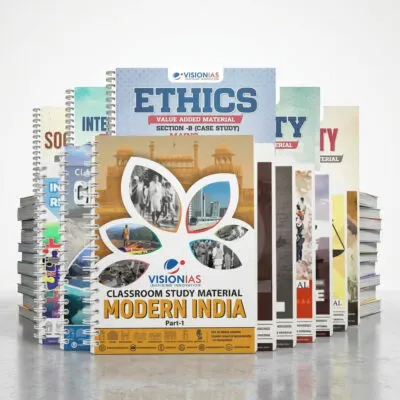
Vision IAS Polity & Constitution Notes

English Medium | 6 Booklets | UPSC Study Material
₹1,399
📘 book-binding
🌀 spiral
Only 33 sets left
Selling fast (87 sold this week)
5% OFF Use UPSC5% (COD Available)
10% OFF Use UPI10 (UPI Only)
Secure Payment
Fast Delivery
Safe Packaging

About Vision IAS Polity

The Vision IAS Polity is a printed UPSC study material set sold by UPSC Store — India’s trusted source for genuine, latest-batch civil services preparation books. This page covers full booklet details, syllabus coverage, pricing, shipping, and frequently asked questions. Useful for UPSC CSE, BPSC, UPPSC, MPPSC, RAS and other state PSC examinations.


Vision IAS Polity & Constitution Notes – Comprehensive General Studies Material for English Medium Aspirants

Related: Vision IAS notes · UPSC Polity material

Product Overview

Feature FieldProduct Specification
Booklets Count5 Comprehensive Printed Booklets
LanguageEnglish Medium (Formal Academic Grade)
PublisherVision IAS (Authorized Curriculum Print)
ConditionBrand New, Freshly Printed, Smudge-Free
FormatHigh-Quality Spiral Bound / Softcover Printed Edition
Paper Quality75 GSM Ultra-White Anti-Glare Paper
Ink TypeHigh-Definition Laser Black Ink (Non-Fading)

Complete Booklet Catalog

This bundle is the definitive physical collection for the UPSC Civil Services Examination. The set is meticulously divided into five distinct volumes, ensuring that the vast syllabus of Indian Polity and Governance is manageable and structurally organized. Each booklet is designed with a specific thematic focus, moving from the historical genesis of the Indian state to the intricate functional details of contemporary constitutional bodies.

  • Booklet 1: Historical Underpinnings and Constitutional Framework – Covers the evolution of the Constitution from 1773 to 1947, the Preamble, and the Union and its Territories.
  • Booklet 2: Citizenship, Fundamental Rights, and State Policy – A deep dive into Part III, IV, and IV-A of the Constitution, including the DPSP and Fundamental Duties.
  • Booklet 3: The Union Executive, Parliament, and Judiciary – Comprehensive documentation on the President, Prime Minister, Council of Ministers, Lok Sabha, Rajya Sabha, and the Supreme Court.
  • Booklet 4: State Government, Local Self-Government, and Special Provisions – Detailed analysis of State Legislatures, Governor, Panchayati Raj, Municipalities, and Scheduled/Tribal areas.
  • Booklet 5: Constitutional/Non-Constitutional Bodies and Governance – Exhaustive listings of the EC, UPSC, CAG, NITI Aayog, and current governance issues including various statutory acts.

Deep Dive: Physical Manufacturing and Aesthetic Standards

The Vision IAS Polity Notes provided here are not mere photocopies; they are high-fidelity printed reproductions designed for long-term rigorous use. The physical integrity of these notes is a primary consideration for any serious aspirant planning for a 12-to-18-month preparation cycle. We utilize 75 GSM (Grams per Square Meter) paper, which is significantly thicker than standard 50-60 GSM paper used in mass-market prints. This thickness ensures that when you use highlighters—be they water-based or alcohol-based—the ink does not bleed through to the reverse side of the page, maintaining the legibility of the subsequent text.

The printing is executed using industrial-grade laser printers. This results in “anti-glare” text. In bright study environments or under direct LED desk lamps, the matte finish of the ink prevents reflections, reducing eye strain during 8-10 hour study sessions. Furthermore, the binding is reinforced. Depending on the specific batch, we provide heavy-duty spiral binding with plastic protective covers or thermal-glued softcovers that allow the book to lay flat on a desk—a crucial feature for those who enjoy taking side-margin notes or using “sticky notes” to augment the provided content.

The margins are specifically engineered to be wide. Vision IAS notes leave approximately 1.5 inches of white space on the outer edge of every page. This is a deliberate design choice meant to accommodate the “Active Recall” and “Note-Addition” methods practiced by toppers. This physical space allows you to write down recent Supreme Court judgments or current affairs updates directly next to the relevant static portion of the text.

Booklet 1 Analysis: The Constitutional Genesis

Booklet 1 serves as the foundational pillar of the entire series. It begins with a comprehensive “Historical Background” section. This is not just a list of dates; the booklet utilizes a comparative table format to show the transition of power from the East India Company to the British Crown. The internal content includes detailed breakdowns of the Regulating Act of 1773, Pitt’s India Act of 1784, and the Charter Acts of 1813, 1833, and 1853. The text utilizes bold headings to distinguish between administrative changes and legislative changes introduced by each act.

A significant portion of the internal content is dedicated to the Government of India Act of 1935. The booklet provides a multi-page schematic diagram explaining the “Dyarchy” system and the proposed “All India Federation.” This visual representation helps the reader visualize the complex federal structure that eventually influenced the 1950 Constitution. Following the historical evolution, the booklet transitions into the “Making of the Constitution.” Here, the internal text lists every major committee, its chairman, and the specific role it played. This is formatted in a bulleted list for rapid memorization.

The “Preamble” section within Booklet 1 is uniquely structured. It deconstructs every single word—Sovereign, Socialist, Secular, Democratic, Republic, Justice, Liberty, Equality, and Fraternity. For each term, the booklet provides a “Contextual Definition” followed by “Supreme Court Interpretations.” This allows the student to see how the meaning of “Secularism” in India differs from Western concepts, all within a single, highly-structured page.

Booklet 2 Analysis: The Core Rights and Duties

Booklet 2 is arguably the most “content-dense” volume in the set, focusing on Fundamental Rights (Articles 12-35). The internal layout follows a “Clause-by-Clause” methodology. For instance, Article 19 is not just summarized; each of its six freedoms is broken down into its own sub-heading, followed by a list of “Reasonable Restrictions.” This allows the reader to understand the constitutional balance between individual liberty and state security.

The Drishti-Vision Special Features in this booklet include “Case Law Boxes.” Whenever a landmark judgment like Kesavananda Bharati, Minerva Mills, or Maneka Gandhi is relevant, the booklet inserts a grey-shaded box containing the core ratio of the judgment. This physical separation of case laws from the statutory text prevents confusion. The section on Directive Principles of State Policy (DPSP) utilizes a unique categorization: Socialistic Principles, Gandhian Principles, and Liberal-Intellectual Principles. This classification is presented in a tabular format, making it far easier to digest than the raw text of the Constitution.

Finally, the Fundamental Duties section includes the history of the Swaran Singh Committee. The booklet uses a numbered list format (1 to 11) with keywords underlined. This typographic emphasis helps in the “keyword-spotting” technique required for Prelims and helps in structuring answers for the GS Paper II Mains.

Booklet 3 Analysis: The Machinery of the Union

This booklet moves into the functional mechanics of the Indian state. The “Union Executive” section provides a side-by-side comparison of the election processes for the President and the Vice President. The internal charts detail the “Value of the Vote” formula for MLAs and MPs, ensuring the technical mathematical aspects of the election are clearly understood through printed examples.

The “Parliament” chapter is the largest section of Booklet 3. It contains highly detailed flowcharts depicting the “Passage of a Bill.” From the First Reading to the Presidential Assent, every stage is mapped out with arrows indicating the possible outcomes (Rejection, Return, or Passage). The internal text also includes a “Comparison Table of the Lok Sabha and Rajya Sabha,” highlighting their disparate powers regarding Money Bills and Constitutional Amendment Bills. This booklet specifically features a section on “Parliamentary Committees.” Each committee—be it the Public Accounts Committee or the Estimates Committee—is described in terms of its composition, term of office, and core functions, usually organized in a clean, vertical list format.

The Judiciary section within this booklet covers the Supreme Court’s jurisdiction (Original, Appellate, Advisory, and Writ). The print quality ensures that the hierarchical diagrams showing the relationship between the SC, High Courts, and Subordinate Courts are sharp and legible. Special attention is given to “Judicial Review” and “Judicial Activism,” where the booklet provides a philosophical overview balanced with contemporary examples of PILs (Public Interest Litigations).

Booklet 4 Analysis: Decentralization and State Dynamics

Booklet 4 addresses the State Government and the vital 73rd and 74th Amendment Acts. The internal structure begins with the Governor’s office, specifically focusing on the “Discretionary Powers” of the Governor, which is a frequent topic of debate and examination. The text compares the Governor’s pardon power with that of the President in a concise 2-column table.

The “Local Government” section is a masterclass in instructional design. It breaks down the Three-Tier Panchayati Raj system with a pyramid diagram. Each level—Gram Panchayat, Panchayat Samiti, and Zila Parishad—is analyzed for its membership, chairperson, and functions. The booklet includes a specialized “Compulsory vs. Voluntary Provisions” table for both Panchayats and Municipalities, which is a critical resource for solving high-difficulty Prelims questions. There is also a dedicated chapter on “Scheduled and Tribal Areas” (5th and 6th Schedules), which uses shaded maps (in grayscale) and lists to distinguish between the administrative frameworks applicable in different states.

Booklet 5 Analysis: Governance and Institutional Integrity

The final booklet focuses on the “Watchdogs of Democracy.” It lists every Constitutional Body (Election Commission, UPSC, SPSC, CAG, Finance Commission, National Commissions for SCs/STs) and Non-Constitutional Body (NITI Aayog, NHRC, CIC, CVC, Lokpal). Each body is described using a standardized template: Appointment, Tenure, Removal, Powers, and Functions. This uniformity in description allows the student to quickly compare the independence of the CAG versus the Attorney General.

The “Governance” section of this booklet is geared specifically toward the GS Paper II Mains. It covers concepts like “E-Governance,” “Citizen’s Charters,” and “The Role of Civil Services in a Democracy.” These chapters are less about articles and more about “Process Flow Diagrams.” For example, the RTI (Right to Information) section includes a step-by-step diagram of the appeal process. The booklet concludes with a section on “Recent Constitutional Amendments,” where the last 5-10 amendments are summarized with their objectives and impacts, ensuring the reader is up-to-date with the latest legislative changes.

The Vision IAS Advantage: Internal Pedagogical Tools

What sets these physical notes apart are the Internal Pedagogical Tools (IPT). Throughout the five booklets, the content is peppered with “Note for the Aspirant” bubbles. These are specific tips from the Vision IAS faculty that point out common traps in the UPSC Prelims or suggest how to frame a particular point in the Mains. The use of Italicization for key terms and Boldface for article numbers makes the notes highly “skimmable,” which is vital during the final week of revision before the exam.

Furthermore, the notes are designed with “Inter-connectivity” in mind. When discussing the President in Booklet 3, the text will frequently provide “See Booklet 4” references for a comparison with the Governor. This cross-referencing helps in building a holistic understanding of the Indian political system rather than viewing it in silos. The booklets also include “Practice Tables” at the end of key sections where the student can fill in details to test their memory of constitutional articles.

Technical Specification and Durability

Given the weight of the five booklets (approximately 1.8 to 2.2 kg), the packaging is reinforced with multiple layers of bubble wrap and moisture-proof plastic. This ensures that the booklets arrive at your doorstep without dog-eared corners or humidity-damaged pages. The ink used is “High-Fixation Carbon,” meaning that if your hands are slightly sweaty or if a drop of water falls on the page, the text will not immediately smudge or run, protecting your investment in your education.

The font used is typically a customized serif or sans-serif (like Arial or Times New Roman variant) at 10.5 or 11 pt size. This is the “Goldilocks” size—not too large to waste space, and not too small to be illegible. The line spacing is set to 1.15, providing enough “breathing room” for the eyes while maintaining high information density per page. Every booklet includes a detailed “Table of Contents” at the start, with page numbers corresponding accurately to the internal text—a feature often missing in low-quality pirated versions.

Frequently Asked Questions (FAQ)

1. Are these notes the latest edition for the upcoming UPSC attempt?
Yes, these Vision IAS Polity notes are the most current version available. They incorporate the latest constitutional amendments, including the 105th and 106th Amendments, and reflect the current administrative changes in the Union Territories of Jammu & Kashmir and Ladakh.

2. Does this set cover both Prelims and Mains requirements?
Absolutely. The notes are structured to provide factual data (Article numbers, dates, bodies) required for the Preliminary exam, as well as the analytical frameworks (issues in federalism, judicial activism, governance challenges) required for the GS Paper II Mains.

3. How is the print quality of the flowcharts and diagrams?
We use high-definition 600 DPI laser printing. This ensures that even the most complex flowcharts—such as the one detailing the “Removal of a Supreme Court Judge”—are perfectly sharp, with no pixelation or blurry lines.

4. Is the paper suitable for extensive highlighting?
Yes, the 75 GSM ultra-white paper is specifically chosen for students who use multiple colors of highlighters. It minimizes “ghosting” or bleed-through, allowing you to mark both sides of the page without losing legibility.

5. Are these notes sufficient on their own, or do I need M. Laxmikanth?
While Laxmikanth is a standard textbook, these Vision IAS notes are more “exam-centric.” They condense the same information into a more structured format with better visual aids, and they include “Governance” and “Mains-specific” topics that are not as deeply covered in traditional textbooks.

6. Is there enough space to add my own notes?
Each page features a wide margin (approx. 1.5 inches). This is specifically designed for “value addition,” allowing you to write down current affairs updates from newspapers like The Hindu or Indian Express next to the static content.

7. How are the booklets bound?
The set is bound using professional-grade spiral binding or reinforced thermal glue. This allows for a “flat-lay” experience, which is essential for long study hours where you need the book to stay open on its own.

8. Are the notes in color or black and white?
The notes are printed in high-contrast black and white. This choice is intentional to keep the price affordable for students while providing a “clean” canvas that is easier to highlight and annotate with colored pens.

9. How do I verify the authenticity of these Vision IAS notes?
Authentic notes feature the distinct Vision IAS formatting, specific font pairings used by the institute, and the comprehensive “IPT” (Internal Pedagogical Tools) like tips, warnings, and structured tables that are the hallmark of their curriculum.

10. What is the shipping and return policy for this product?
The booklets are shipped in heavy-duty, weather-resistant packaging. If you receive a set with printing errors (such as missing pages or ink blots), we offer a direct replacement. We ensure that the product reaches you in “Library-Ready” condition.

11. Can I use these notes for State PCS exams?
Yes, because the Indian Constitution is uniform across the country, these notes are 100% applicable for State Public Service Commission exams (like UPPCS, BPSC, RAS, etc.) in terms of the static Polity and Governance sections.

12. Are there any practice questions included inside the booklets?
Yes, most chapters conclude with a “Model Questions” section for both Prelims (MCQs) and Mains (Descriptive). These are based on the latest UPSC patterns to help you test your understanding of the booklet’s content immediately after reading.

Final Summary of Internal Content

In total, these five booklets comprise over 800+ pages of high-density information. The internal content is not just a collection of facts but a roadmap for understanding the DNA of the Indian State. From the “Basic Structure Doctrine” to the “Role of Pressure Groups,” every topic mentioned in the UPSC syllabus is covered with a level of granularity that eliminates the need for multiple reference books. The visual consistency, high-quality physical materials, and the expert-curated content make this “English Medium Polity Set” an indispensable tool for any serious aspirant.


Frequently Asked Questions

What does this Polity notes set cover?

It covers Indian Polity and Constitution as required for UPSC GS Paper II — including constitutional framework, governance, executive, legislature, judiciary and related themes.

Are these Vision IAS notes original?

Yes, they are freshly printed Vision IAS booklets in unmarked condition on 75 GSM ultra-white anti-glare paper.

Are these notes sufficient for UPSC Polity preparation?

The 6 booklets give thorough static and conceptual coverage. For full prep, pair with NCERTs, Laxmikanth and Vision IAS PT 365 Polity for current affairs.

Will these help with state PSC Polity papers?

Yes, the Polity content maps well to BPSC, UPPSC, MPPSC, RAS and other state PSC examinations.

Is COD available for this product?

Yes, COD is available across most Indian pin codes. Free shipping applies on orders above Rs.1999.

How long does shipping take?

Pan-India tracked delivery takes 3-5 business days from dispatch.

Reference: UPSC official syllabus

🛍️

Aspirants Also Bought

More from the same category

View All

About Vision IAS Polity & Constitution Notes

Vision IAS Polity & Constitution Notes is a highly recommended UPSC study material. This material is crafted to match the exact requirements of the UPSC Civil Services Examination syllabus — covering both Prelims and Mains comprehensively.

Why Buy from UPSC Store?

  • 100% Genuine Printed Material — Original printed notes, no photocopies or fake copies
  • Fast Delivery — Ships within 24 hours, arrives in 3–5 days pan-India
  • Secure Packaging — Bubble-wrapped and boxed to prevent damage in transit
  • Trusted by 10,000+ Aspirants — India's most reliable UPSC material marketplace
  • WhatsApp Support — Get expert guidance on material selection before ordering

Frequently Asked Questions

Is this product 100% original?

Yes, all products at UPSC Store are 100% genuine printed materials. We do not sell photocopies or fake copies.

How long does delivery take?

Orders are dispatched within 24 hours and delivered across India in 3–5 working days via reputed courier partners.

Can I return the product?

Yes, we accept returns within 7 days if the product is damaged or incorrect. Check our refund policy for details.

Which other study materials should I buy with this?

We recommend pairing this with current affairs notes and a UPSC test series for comprehensive preparation. Browse more in General Studies, Political Science, Polity & Governance, UPSC, Vision IAS.