



Drishti IAS UPPSC General Studies Notes 2025-26
About Drishti IAS UPPSC General Studies
The Drishti IAS UPPSC General Studies is a printed UPSC study material set sold by UPSC Store — India’s trusted source for genuine, latest-batch civil services preparation books. This page covers full booklet details, syllabus coverage, pricing, shipping, and frequently asked questions. Useful for UPSC CSE, BPSC, UPPSC, MPPSC, RAS and other state PSC examinations.
Drishti IAS UPPSC General Studies Notes 2025-26 — 20 Hindi Medium Printed Booklets for UPSC GS Paper I, II, III & IV
Related: Drishti IAS notes · UPPSC notes
Product Overview
| Feature | Details |
|---|---|
| Booklets Count | 20 Individual Printed Booklets — Full GS Coverage Across All Papers |
| Language | Hindi Medium (हिंदी माध्यम) |
| Publisher | Drishti IAS (UPPSC GS Series 2025-26) |
| Edition | 2025-26 — Latest Genuine Batch |
| Condition | Brand New, Unmarked, Fresh Stock |
| Format | High-Quality Printed Booklets — Spiral or Book Binding |
| Paper Quality | 75 GSM Ultra-White — Highlighter Safe, Zero Bleed-Through |
| Shipping | Pan India Delivery in 4-7 business days — Tracked |
| Also Useful For | BPSC, UPPSC, MPPSC, RAS and All State PSC Examinations |
Complete Booklet Catalog
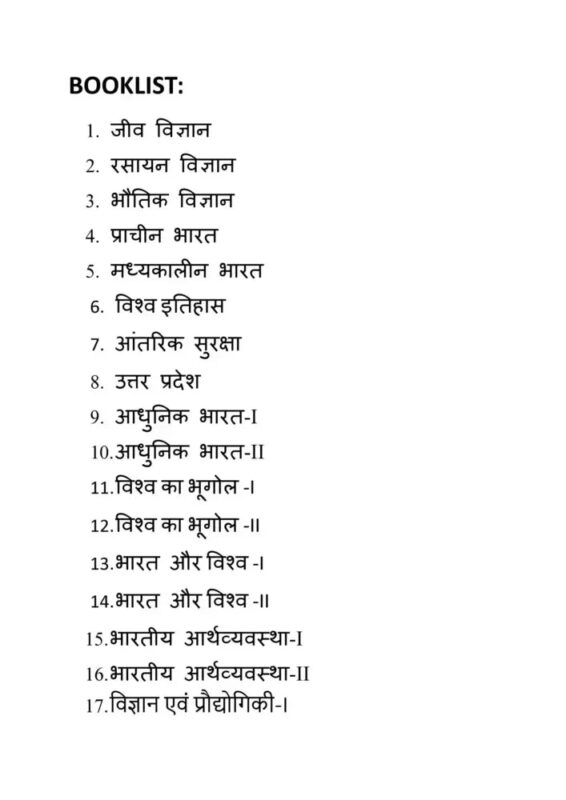
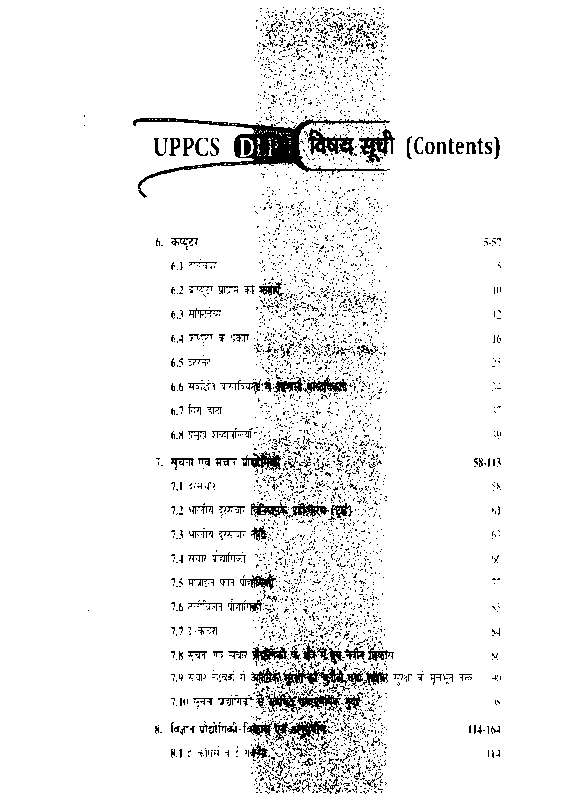
This 30-booklet set from Drishti IAS covers every major topic across the UPPSC and UPSC General Studies syllabus in naturally written Hindi — not translated text. Designed specifically for Hindi medium aspirants preparing for GS Paper I, II, III, and IV, this set is the most widely used printed study resource for UPPSC PCS Mains preparation.
- Booklet 1: Jeevan Vigyan (Life Science / Biology) — Cell biology, human physiology, plant biology, genetics, ecology, diseases, nutrition, biotechnology basics, and health-related topics frequently asked in UPPSC and UPSC Prelims and Mains science sections.
- Booklet 2: Rasayan Vigyan (Chemistry) — Fundamental chemistry concepts, acids, bases, salts, metals and non-metals, chemical reactions, everyday chemistry applications, environmental chemistry, and topics relevant to both UPPSC Prelims GS and UPSC CSE science questions.
- Booklet 3: Bhautik Vigyan (Physics) — Motion, force, energy, light, sound, electricity, magnetism, modern physics, space science, and application-based physics questions aligned with UPPSC GS Paper I and UPSC CSE Prelims science section.
- Booklet 4: Prachin Bharat (Ancient India) — Indus Valley Civilisation, Vedic Age, Mahajanapadas, Maurya Empire, Gupta period, South Indian kingdoms, religious movements including Buddhism and Jainism, art and architecture of ancient India relevant to UPSC GS Paper I.
- Booklet 5: Madhyakalin Bharat (Medieval India) — Delhi Sultanate, Vijayanagara Empire, Mughal dynasty, Bhakti and Sufi movements, medieval administration, economy, art, architecture, and literature covered as per the UPSC and UPPSC history syllabus.
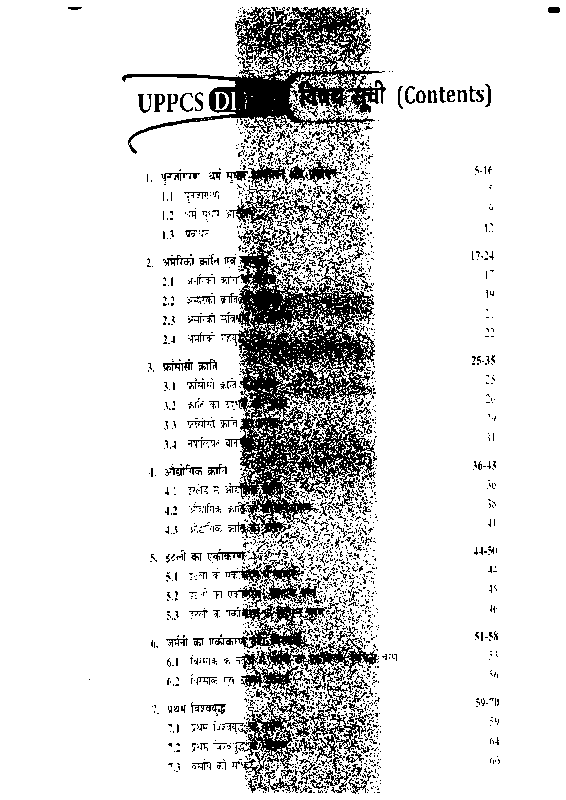
- Booklet 6: Vishwa Itihas (World History) — Renaissance, Industrial Revolution, French Revolution, World Wars I & II, Russian Revolution, decolonisation, Cold War, formation of the UN, and global geopolitical events for UPSC GS Paper I World History segment.
- Booklet 7: Aantarik Suraksha (Internal Security) — Left-wing extremism, insurgencies, border management, cyber security, money laundering, drug trafficking, role of media in internal security, CAPF and intelligence agencies, critical for UPSC GS Paper III.
- Booklet 8: Uttar Pradesh (State-Specific GK) — Geography, history, economy, culture, polity, government schemes, and current developments specific to Uttar Pradesh — a high-weight section unique to UPPSC PCS examination preparation.
- Booklet 9 & 10: Adhunik Bharat I & II (Modern India) — British colonial expansion, socio-religious reform movements, 1857 revolt, rise of nationalism, Congress sessions, freedom struggle phases, Partition, and post-independence consolidation for UPSC and UPPSC history.
- Booklet 11 & 12: Vishwa ka Bhugol I & II (World Geography) — Geomorphology, climatology, oceanography, natural regions, world resources, population geography, economic geography, and international issues with maps and diagrams for UPSC GS Paper I.
- Booklet 13 & 14: Bharat aur Vishwa I & II (India and the World / IR) — India’s foreign policy, bilateral relations, international organisations, UN agencies, regional groupings like SAARC and SCO, and India’s global strategic interests for UPSC GS Paper II.
- Booklet 15 & 16: Bharatiya Arthvyavastha I & II (Indian Economy) — National income, poverty, unemployment, agriculture, industry, infrastructure, fiscal policy, monetary policy, banking, budget, economic surveys, and schemes relevant to UPSC GS Paper III.
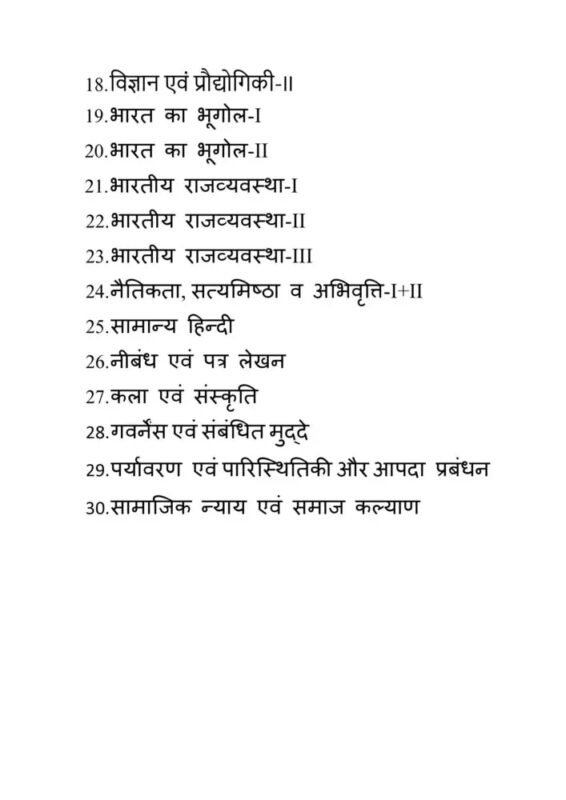
- Booklet 17 & 18: Vigyan evam Praudyogiki I & II (Science and Technology) — Space technology, defence technology, IT and AI, biotechnology, nanotechnology, nuclear energy, recent scientific developments, and government science missions for UPSC GS Paper III.
- Booklet 19: Bharat ka Bhugol I & II (Indian Geography) — Physical geography of India, drainage systems, climate, soils, natural vegetation, agriculture, minerals, industries, transport, and population geography for UPSC GS Paper I.
- Booklet 20: Bharatiya Rajvyavastha I/II/III (Indian Polity) — Constitution, fundamental rights, DPSP, Parliament, executive, judiciary, federalism, local self-government, constitutional bodies, emergency provisions, and recent amendments for UPSC GS Paper II.
- Additional Booklet: Naitikta, Satyamishtha va Abhivritti (Ethics, Integrity and Aptitude) — Ethical theories, foundational values, emotional intelligence, civil service values, case studies, attitude, moral thinkers, and aptitude-based questions for UPSC GS Paper IV.
- Additional Booklet: Samanya Hindi (General Hindi) — Grammar, comprehension, essay writing, letter writing, translation, and language skills required for UPPSC PCS Mains language paper in Hindi medium.
- Additional Booklet: Nibandh evam Patra Lekhan (Essay and Letter Writing) — Hindi essay writing techniques, important essay topics, format and structure of official and personal letters, scoring strategies for UPPSC and UPSC Essay paper.
- Additional Booklets: Kala evam Sanskriti, Governance, Paryavaran, Samajik Nyay (Art & Culture, Governance, Environment, Social Justice) — Indian art, classical dance forms, governance reforms, e-governance, biodiversity, climate change, social justice schemes, and welfare policies for UPSC GS Paper I, II, and III.
In-Depth Content Breakdown: Booklet by Booklet
Booklet 1: Jeevan Vigyan (Life Science / Biology)
Jeevan Vigyan covers the biological sciences section of the UPPSC and UPSC General Studies syllabus. Topics include cell structure and function, human organ systems, plant physiology, genetics and heredity, ecology and ecosystems, major diseases, vaccines, nutrition, and an introduction to biotechnology. This booklet is important for both Prelims and Mains as biology-related questions frequently appear across both examination stages in the science and technology section.
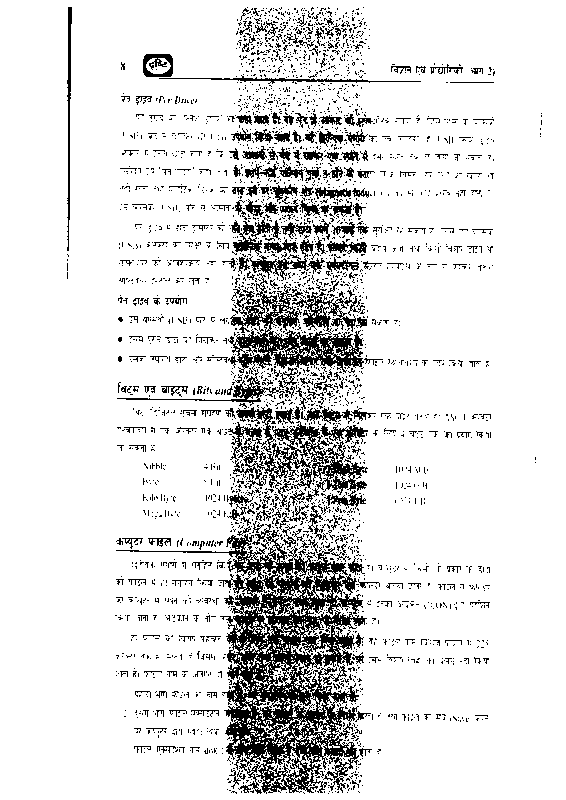
The booklet is structured with clearly labelled diagrams of biological systems, concise explanations of key processes, and summary tables comparing disease types and causative organisms. Important government health schemes are linked to relevant biology topics, making revision efficient. The naturally written Hindi language — a hallmark of Drishti IAS — ensures that concepts are understood intuitively rather than laboriously decoded from translated text.
Booklet 2: Rasayan Vigyan (Chemistry)
This booklet addresses chemistry topics relevant to UPPSC GS Paper I and UPSC Prelims, including atomic structure, chemical bonding, acids and bases, metals and non-metals, carbon compounds, and everyday chemistry. Environmental chemistry topics such as acid rain, ozone depletion, and water quality are covered with reference to current affairs linkages that frequently appear in both UPPSC and UPSC question papers, making this booklet useful beyond classroom theory.
Drishti IAS has structured this chemistry booklet to minimise rote memorisation by presenting chemical reactions and their applications in real-world Hindi context. Tables comparing properties of elements, flowcharts of industrial processes, and boxed summaries of important chemical compounds make complex topics accessible. The booklet avoids overly technical language and stays aligned with what the UPPSC and UPSC examination actually tests in terms of applied chemistry knowledge.
Booklet 3: Bhautik Vigyan (Physics)
Bhautik Vigyan covers physics concepts from basic mechanics to modern applications including space science. Topics covered include Newton’s laws, work, energy and power, thermodynamics, optics, sound, electricity, magnetism, semiconductors, and nuclear physics. Application-based questions from UPPSC Prelims and UPSC CSE Prelims are heavily drawn from this area, and Drishti IAS has curated only those physics topics that have direct examination relevance.
Each physics concept is explained using Hindi language analogies and real-world examples that make abstract principles concrete. Diagrams illustrating electromagnetic spectra, circuit diagrams, and optics ray paths are included in high resolution for visual clarity. The booklet also includes a section on India’s space programme — ISRO missions, satellite types, and launch vehicles — which is tested in both UPPSC GS and UPSC GS Paper III science and technology questions.
Booklet 4: Prachin Bharat (Ancient India)
This booklet covers the full arc of ancient Indian history as required by the UPSC and UPPSC syllabus, from the Stone Age and Indus Valley Civilisation through the Vedic period, Mahajanapadas, Mauryan Empire, post-Mauryan kingdoms, and the Gupta Age. Religious movements including Buddhism, Jainism, and the Bhakti precursors of this era are examined in depth. Ancient art, architecture, and literature are included as these are high-scoring areas in UPSC GS Paper I and UPPSC history sections.
The booklet uses timeline-based presentation to help aspirants build chronological clarity — a critical skill for UPSC history questions that often test sequencing. Comparative tables of dynasties, their capitals, notable rulers, and achievements are a standout feature. Sanskrit terms are explained in simple Hindi, removing the barrier that many aspirants face when studying ancient India from standard academic texts not written for examination preparation.
Booklet 5: Madhyakalin Bharat (Medieval India)
Medieval India is one of the most question-dense segments of UPSC GS Paper I, and this booklet addresses it thoroughly. Topics span the Arab invasions, Rajput kingdoms, Delhi Sultanate, Vijayanagara and Bahmani kingdoms, the Mughal Empire, Maratha confederacy, and the decline of Mughal power. The Bhakti and Sufi movements, which carry both historical and cultural significance for UPSC, are explained with individual saint biographies and their social reform contributions.
Administration, revenue systems like the zabti and ryotwari under Mughal and Sultanate periods, medieval trade networks, and the role of foreign travellers as historical sources are all covered. Architecture from the Qutb Minar to Mughal garden tombs is presented with descriptive analysis useful for UPSC Mains answer writing. The Hindi language presentation by Drishti IAS ensures that important Persian and Urdu-origin historical terms are explained clearly without confusing the reader.
Booklet 6: Vishwa Itihas (World History)
World History forms a distinct and often underestimated part of UPSC GS Paper I. This booklet covers the Renaissance and Reformation, Age of Exploration, Industrial Revolution, French Revolution and its global impact, American Independence, imperialism and colonialism, World War I, Russian Revolution, rise of fascism, World War II, Cold War, decolonisation movements, and the formation of multilateral institutions. These topics are mapped to actual UPSC question patterns from previous years.
A key strength of Drishti IAS’s World History booklet is the cause-and-effect framework used to explain historical events, which directly supports UPSC Mains answer writing that demands analytical depth. Each major event is summarised with its global consequences and relevance to present-day geopolitics. Maps showing colonial empires, theatre of wars, and post-war boundary changes are included to support visual learning. Previous years’ UPSC questions are referenced in margin notes throughout.
Booklet 7: Aantarik Suraksha (Internal Security)
Internal Security is a dedicated topic in UPSC GS Paper III and is tested with increasing frequency in UPPSC PCS Mains as well. This booklet covers the causes and management of left-wing extremism, insurgencies in the Northeast and J&K, border management challenges, cyber threats, organised crime, terrorism financing, human trafficking, and the role of para-military and intelligence agencies. The linkage between development deficits and security threats is explained as demanded by UPSC Mains question formats.
The booklet includes case study style analysis of specific security incidents and policy responses, which is directly usable in UPSC Mains answer writing. Government initiatives such as the SAMADHAN doctrine, Smart Fencing Project, and cyber security frameworks are explained with their implementation status. Media’s dual role in national security — as an enabler and as a vulnerability — is addressed in a dedicated section. Students preparing for UPSC CSE GS Paper III and UPPSC will find this booklet equally relevant.
Booklet 8: Uttar Pradesh (State-Specific General Knowledge)
This booklet is unique to the UPPSC PCS examination and provides state-specific knowledge that UPSC CSE does not test but UPPSC mandates. Topics include the geography of Uttar Pradesh — rivers, plains, climate, natural resources — the historical significance of cities like Ayodhya, Varanasi, Mathura, and Agra, UP’s economy including agriculture and industrial corridors, state government schemes, and UP’s cultural heritage. This booklet is the reason why this set is specifically designed for UPPSC aspirants.
The Uttar Pradesh booklet covers the state’s administrative structure, important government policies, recent infrastructure projects like the Expressway network and defence corridor, and UP’s demographic and social indicators. Cultural traditions, folk arts, classical music, cuisine, and religious festivals specific to UP are covered for the culture segment of the UPPSC paper. Current developments in UP politics and governance as of 2025-26 are incorporated to keep the content examination-ready.
Booklets 9 & 10: Adhunik Bharat I & II (Modern India)
Modern India history spans from the arrival of European trading companies through British consolidation, exploitation, and Indian resistance to independence. Volume I covers the economic critique of colonialism, peasant and tribal revolts, the 1857 uprising, early nationalism, formation of the Indian National Congress, and the socio-religious reform movements of the 19th century. These topics are fundamental to UPSC GS Paper I and appear with high frequency in UPPSC PCS Mains history questions.
Volume II covers the Gandhian era — Non-Cooperation, Civil Disobedience, Quit India movements — revolutionary nationalism, the role of women in the freedom struggle, Partition, and post-independence consolidation including integration of princely states. Drishti IAS structures these booklets chronologically and thematically to support both factual recall for Prelims and analytical answer writing for Mains. Important speeches, resolutions, and Congress session locations are compiled in quick-reference tables throughout both volumes.
Booklets 11 & 12: Vishwa ka Bhugol I & II (World Geography)
World Geography is a significant component of UPSC GS Paper I and appears in UPPSC as well. Volume I covers the interior of the Earth, rock cycle, geomorphic processes, landforms, atmosphere, insolation, temperature, pressure belts, winds, precipitation, and climate zones. Volume II covers oceanography, world biomes, natural regions, population distribution, migration, urbanisation, and world resource geography. Both volumes are enriched with labelled maps and diagrams.
A key feature of this two-volume set is the integration of India-specific comparisons with world geography concepts — for instance, monsoon systems explained in the global context of planetary wind systems. Economic geography topics such as world agricultural regions, mineral distribution, energy resources, and industrial regions are covered in the context of UPSC question trends. Questions from previous UPSC and UPPSC examinations are referenced to show how geographical theory translates into actual exam questions.
Booklets 13 & 14: Bharat aur Vishwa I & II (India and the World / International Relations)
International Relations and India’s foreign policy form a core part of UPSC GS Paper II. Volume I covers the evolution of India’s foreign policy, Panchsheel, Non-Alignment Movement, India’s bilateral relationships with major powers including the USA, Russia, China, and neighbouring nations. India’s approach to regional organisations — SAARC, BIMSTEC, SCO, and ASEAN — is analysed. The Look East and Act East policies, India’s neighbourhood first doctrine, and strategic partnerships are examined thoroughly.
Volume II covers multilateral institutions including the UN system, WTO, IMF, World Bank, and their relevance to Indian policy. India’s positions in global forums on climate, trade, and security are explained with reference to recent summits and agreements. The booklet also covers India’s diaspora policy, soft power projection, and issues like terrorism, nuclear doctrine, and maritime security that define India’s international standing. UPSC Mains answer writing frameworks are embedded throughout for practical preparation.
Booklets 15 & 16: Bharatiya Arthvyavastha I & II (Indian Economy)
Indian Economy is one of the highest-weightage topics in UPSC GS Paper III. Volume I covers the fundamentals of the Indian economy including national income concepts, planning, poverty and unemployment, agriculture sector, land reforms, green revolution, food security, and rural development programmes. The transition from a mixed economy to liberalisation post-1991 is covered in depth as it remains a recurrent theme in both UPSC CSE and UPPSC examinations.
Volume II addresses industry, infrastructure, fiscal policy, taxation, banking and financial sector reforms, capital markets, balance of payments, foreign trade, and economic surveys. Important government schemes like PM Kisan, MGNREGS, Startup India, and Make in India are explained with their objectives, coverage, and outcomes. The booklet includes budget highlights and key Economic Survey findings from the latest edition to keep content aligned with 2025-26 examination requirements for both UPSC and UPPSC.
Booklets 17 & 18: Vigyan evam Praudyogiki I & II (Science and Technology)
Science and Technology is a dynamic and growing segment of UPSC GS Paper III, and Drishti IAS has dedicated two full booklets to it. Volume I covers space technology including ISRO missions, satellite navigation systems, remote sensing, defence technology, missile systems, DRDO projects, and nuclear energy policy. Biotechnology advances including gene editing, GMO crops, vaccines, and India’s biosafety regulations are explained with their policy and ethical dimensions.
Volume II covers information technology, artificial intelligence, machine learning, blockchain, cybersecurity policy, nanotechnology, and clean energy technologies including solar, wind, and hydrogen. Each technology topic is placed in the context of India’s policy framework — Digital India, National AI Strategy, and National Cyber Security Policy. Recent developments such as India’s first quantum computing missions, semiconductor manufacturing push, and 5G rollout are included as they directly feed UPSC and UPPSC current affairs-based science questions.
Booklet 19: Bharat ka Bhugol I & II (Indian Geography)
Indian Geography is tested across both Prelims and Mains in UPSC and UPPSC examinations. This booklet covers the physiographic divisions of India, the Himalayan and Peninsular systems, major river systems, lakes, climate, monsoon mechanisms, soil types, natural vegetation, wildlife, and biodiversity hotspots. Agricultural geography including crop distribution, irrigation systems, and agro-climatic zones is covered in detail as it intersects directly with economy and environment topics in GS Paper III.
The second portion of this booklet covers population geography, urbanisation patterns, minerals and energy resources, industries and industrial regions, and transport infrastructure. Maps showing river basins, soil distribution, mineral belts, and crop zones are printed with clear labelling for visual memorisation — a proven technique for geography preparation. The booklet also integrates environmental geography concerns such as desertification, river pollution, and climate vulnerability mapping relevant to UPSC GS Paper III environment questions.
Booklet 20: Bharatiya Rajvyavastha I/II/III (Indian Polity)
Indian Polity is the highest-scoring section in UPSC GS Paper II and carries significant weight in UPPSC as well. These three-part notes within this booklet cover the historical background of the Indian Constitution, Preamble, Fundamental Rights, Fundamental Duties, Directive Principles of State Policy, Parliament — its structure and functioning, the executive at Union and state levels, the judiciary including Supreme Court and High Courts, federalism, and centre-state relations.
Constitutional bodies such as the Election Commission, CAG, UPSC, Finance Commission, and National Commissions are covered with their constitutional provisions and recent controversies. The booklet addresses local self-government under the 73rd and 74th Amendments, emergency provisions, constitutional amendments procedure, and important landmark Supreme Court judgments. Recent constitutional and legal developments including amendments made up to 2025 are incorporated. Drishti IAS’s polity notes are written in accessible Hindi and are widely recommended for UPPSC PCS and UPSC aspirants alike.
Additional Booklet: Naitikta, Satyamishtha va Abhivritti (Ethics, Integrity and Aptitude)
Ethics and Integrity for UPSC GS Paper IV is a subject where Hindi medium aspirants have historically struggled due to the Western philosophical bias of many standard texts. Drishti IAS addresses this by presenting ethical theories — consequentialism, deontology, virtue ethics — alongside Indian ethical traditions from the Ramayana, Mahabharata, Kautilya’s Arthashastra, and Gandhi’s philosophy. Civil service values, emotional intelligence, impartiality, and compassion are explained with examination-oriented definitions.
This booklet is structured around the actual UPSC GS Paper IV syllabus, covering human values, role of family and educational institutions, attitude formation, moral and political attitudes, social influence, persuasion, and aptitude. Case studies based on real civil service scenarios are presented with model answers in Hindi that demonstrate how to score well in UPSC Mains ethics answers. This is among the most differentiated features of the Drishti IAS set for Hindi medium aspirants targeting both UPSC CSE and UPPSC PCS Mains.
Additional Booklets: Samanya Hindi, Nibandh evam Patra Lekhan, Kala evam Sanskriti, Governance, Paryavaran, Samajik Nyay
Samanya Hindi covers grammar, comprehension passages, vocabulary, and language skills required for the UPPSC PCS Mains Hindi language paper — a compulsory component for all UPPSC candidates. Nibandh evam Patra Lekhan provides structured guidance on Hindi essay writing including paragraph development, thesis statements, use of quotations, and official letter formats. These two booklets directly address UPPSC-specific requirements that standard UPSC preparation material does not cover.
Kala evam Sanskriti covers Indian art forms, classical dance, music, sculpture, architecture, world heritage sites, intangible cultural heritage, and Indian philosophical schools relevant to UPSC GS Paper I. Governance covers e-governance, transparency, RTI, accountability mechanisms, and administrative reforms. Paryavaran covers biodiversity, climate change, international environmental agreements, disaster management, and India’s environmental policy. Samajik Nyay covers social justice legislation, welfare schemes for marginalised groups, and inclusive development — all tested in UPSC GS Paper II.
Physical Construction and Quality Standards
The Drishti IAS UPPSC General Studies 2025-26 set is manufactured to withstand daily intensive study — thick covers, strong binding, and high-grade paper ensure these booklets survive months of Mains preparation without deterioration in quality or readability.
Paper Quality: 75 GSM Anti-Glare White Paper
Each booklet uses 75 GSM ultra-white paper selected for its combination of high opacity and smooth surface texture. The paper’s high opacity prevents content from the reverse side showing through, even when multiple highlighter colours are applied simultaneously. This eliminates the frustration of colour-coded revision being undermined by bleed-through. The anti-glare finish significantly reduces eye strain during extended study sessions — critical for aspirants spending 6 to 8 hours daily with printed study material during UPSC and UPPSC Mains preparation.
Printing Technology: High-Resolution Laser Printing
All 30 Booklets are printed using high-resolution laser printing technology that produces crisp, sharp text at every font size — from the smallest footnote to the largest heading. Diagrams, maps, and flowcharts are reproduced with the precision necessary for geography and science booklets where visual accuracy matters for examination recall. Laser toner is permanent and smudge-proof under normal handling conditions, meaning the notes remain legible even after months of repeated handling. Complex political maps and economic data tables maintain their clarity throughout the life of the booklet.
Binding and Durability
The booklets are available in spiral binding or book binding depending on stock availability. Spiral binding allows pages to lie completely flat when opened, making it easy to write notes alongside printed content in the margins — a popular technique among UPSC and UPPSC Mains aspirants. Book binding provides a compact, shelf-friendly format suitable for storage and transport. Both binding types use reinforced covers made with 300 GSM cardstock that resists daily wear. The binding is stress-tested to ensure pages do not detach under the repeated opening and closing typical of intensive exam revision cycles.
Key Features and Study Design
The Drishti IAS UPPSC General Studies Notes 2025-26 set is designed around the specific demands of UPPSC PCS Mains and UPSC CSE preparation, with structural features that make self-study efficient, revision fast, and answer writing well-supported.
- Naturally Written Hindi — Not Translated: Drishti IAS is known for producing study material in genuine Hindi — language that reads naturally rather than being translated from English sources. This makes concepts easier to absorb, recall, and reproduce in UPPSC and UPSC Hindi medium answer scripts without awkward phrasing.
- UPPSC-Specific State Content Included: Unlike generic UPSC notes, this set includes a dedicated Uttar Pradesh booklet covering state geography, history, economy, schemes, and culture — directly addressing the UPPSC PCS Mains requirement for state-specific knowledge that no standard UPSC material provides.
- All GS Papers Covered in One Set: With 30 Booklets spanning GS Paper I, II, III, and IV plus language and essay papers, this set eliminates the need to buy multiple separate resources. This integrated approach supports connected learning where topics across papers are seen in relation to each other.
- Diagram and Map-Rich Content: Geography, science, and polity booklets include original diagrams, maps, and flowcharts drawn to examination standard. Visual aids are labelled in Hindi and designed to be replicable in UPSC and UPPSC answer sheets, supporting the map-based questions that frequently appear in GS Paper I geography sections.
- Current Affairs Integration in Static Topics: Drishti IAS integrates recent government schemes, Supreme Court judgments, international agreements, and policy changes into static topic booklets. This removes the gap between static preparation and current affairs, reducing the burden of separately connecting the two during the final revision phase before UPPSC and UPSC examinations.
Shipping, Packaging and Delivery
Every order of the Drishti IAS UPPSC General Studies Notes 2025-26 set is packaged with care to ensure all 30 Booklets arrive in perfect condition. The complete set is first wrapped in moisture-resistant shrink-wrap that protects against humidity during transit. The shrink-wrapped bundle is then placed inside a corrugated cardboard box with edge protectors and internal foam padding to prevent corner damage and page compression. The outer box is sealed with reinforced tape rated for cross-country transit. This packaging standard means that whether the order travels 50 kilometres or 2,000 kilometres across India, the booklets arrive flat, clean, and undamaged.
Orders are dispatched within 24 hours of payment confirmation on working days. Pan India delivery takes 4-7 business days via tracked courier. A tracking ID is sent via WhatsApp to the registered number upon dispatch. For any delivery queries, missing booklets, or damaged item reports, contact us on WhatsApp at +91 70045 49563 — missing or damaged booklets are replaced within 48 hours of a verified complaint. We deliver to all cities, towns, and PIN codes across India including tier-2 and tier-3 cities where UPPSC aspirants are located.
Frequently Asked Questions (FAQ)
A: Yes — Drishti IAS UPPSC notes are among the best available for Hindi medium aspirants because they are written in naturally flowing Hindi rather than being translated from English. This makes conceptual absorption significantly easier. Hindi medium UPSC and UPPSC aspirants consistently report that Drishti IAS’s language quality is the primary reason they prefer these notes over alternatives. The vocabulary used is examination-appropriate and aligned with how answers should be written in UPPSC PCS Mains and UPSC CSE Hindi medium scripts.
A: This set includes 20 printed booklets covering the complete UPPSC and UPSC General Studies syllabus. The set spans GS Paper I topics — History, Geography, Art and Culture — GS Paper II topics — Polity, Governance, International Relations — GS Paper III topics — Economy, Science and Technology, Internal Security, Environment — and GS Paper IV Ethics. Additionally, UPPSC-specific booklets on Uttar Pradesh, Samanya Hindi, and Essay Writing are included, making this a fully self-contained study package.
A: Drishti IAS UPPSC notes cover the static GS syllabus thoroughly and are considered sufficient as the primary study resource for UPPSC PCS Prelims and Mains. However, for optimal results, these notes should be supplemented with a daily newspaper for current affairs, the NCERT books for foundational clarity on specific topics, and UPPSC previous year question papers for practice. The Drishti IAS notes eliminate the need for multiple coaching institute materials and serve as a single-source static foundation for UPPSC PCS preparation.
A: The current price of the Drishti IAS UPPSC General Studies Notes 2025-26 Hindi medium 30-booklet set is listed on the product page of our store. The price includes all 30 Booklets, transit packaging, and pan India tracked delivery. For the most current price and any ongoing discounts, please check the product listing directly or contact us via WhatsApp at +91 70045 49563. Bulk orders for study groups or coaching institutes may be eligible for special pricing — enquire directly.
A: Yes, all four General Studies papers are covered in this 30-booklet set. GS Paper I is addressed through booklets on Ancient, Medieval, and Modern India, World History, Indian and World Geography, and Art and Culture. GS Paper II is covered through Indian Polity, Governance, and India and the World booklets. GS Paper III is covered through Indian Economy, Science and Technology, Internal Security, and Environment booklets. GS Paper IV Ethics and Integrity is covered through the dedicated Naitikta evam Satyamishtha booklet with case studies.
A: Yes, this is the 2025-26 edition of Drishti IAS UPPSC General Studies Notes, updated to reflect the current UPPSC PCS examination syllabus and the latest UPSC CSE GS syllabus. Content updates include recent government schemes, 2024-25 budget highlights, latest ISRO and DRDO developments, new Supreme Court judgments, international agreements signed up to 2025, and updated state-specific Uttar Pradesh data. When you buy this 2025-26 edition, you receive the most current printed study material available for UPPSC preparation.
A: Both Drishti IAS and Vision IAS produce high-quality study material for Hindi medium aspirants. Drishti IAS is often preferred for its more natural Hindi writing style and its specific UPPSC-oriented content including the dedicated Uttar Pradesh booklet and Samanya Hindi booklet, which Vision IAS does not typically provide. Vision IAS is strong for UPSC CSE-focused preparation. If your primary target is UPPSC PCS with UPSC as a secondary goal, Drishti IAS UPPSC notes are the more targeted choice to buy. If primary target is UPSC, both are equally valid options.
A: Yes, the majority of the Drishti IAS UPPSC GS Notes 2025-26 set is directly usable for UPSC CSE preparation because the core General Studies syllabus for UPSC and UPPSC overlaps substantially. Booklets on History, Geography, Polity, Economy, Science and Technology, Environment, Ethics, Governance, and International Relations are all relevant for UPSC CSE GS Papers I through IV. The UPPSC-specific booklets — Uttar Pradesh, Samanya Hindi — are additional content that does not interfere with UPSC preparation and can simply be used for optional benefit.
A: These booklets use 75 GSM ultra-white paper chosen for high opacity — multiple highlighter colours and gel pens work without bleed-through to the reverse side, ideal for colour-coded revision. The paper surface is smooth enough for clean writing and resistant to smudging. The anti-glare finish reduces eye strain during long study sessions. Students using these notes for UPPSC and UPSC preparation can confidently annotate, underline, and highlight throughout all 30 Booklets without worrying about damage to the content on adjacent pages.
A: While this set is specifically curated for UPPSC PCS aspirants, the General Studies content covering History, Geography, Polity, Economy, Science and Technology, Environment, Ethics, and Governance is equally useful for BPSC, MPPSC, RAS, and other State PSC examinations that follow a similar GS pattern. The Uttar Pradesh booklet is specific to UPPSC, but all other booklets in this 30-booklet set provide solid GS preparation applicable across State PSC examinations. Candidates preparing for multiple state PSCs can buy this set as their primary GS resource.
A: Orders are processed and dispatched within 24 hours of payment confirmation on working days. Pan India delivery takes 3 to 5 business days via tracked courier service. You will receive a tracking ID on WhatsApp after dispatch so you can monitor your shipment in real time. We deliver to all PIN codes across India including remote locations. If your order has not arrived within 5 business days, contact us on WhatsApp at +91 70045 49563 and we will resolve the issue — including replacement of any missing or damaged booklets within 48 hours.
A: You can buy Drishti IAS UPPSC General Studies Notes 2025-26 printed online directly from our UPSC Store, based in Mukherjee Nagar, Delhi — India’s largest UPSC preparation hub. Simply add the 30-booklet set to your cart and complete checkout. We are an authorised reseller of genuine Drishti IAS study material and stock only fresh, unmarked, brand new copies. Do not buy from unverified sellers who may supply photocopied or outdated editions — always buy from our store for guaranteed 2025-26 genuine printed notes with tracked delivery.
Summary
| Specification | Value |
|---|---|
| Booklets | 20 Printed Booklets |
| Language | Hindi Medium (हिंदी माध्यम) |
| Paper | 75 GSM Ultra-White |
| Binding | Spiral or Book Binding |
| Delivery | 4-7 business days Pan India |
| Also Useful For | BPSC, UPPSC, MPPSC, RAS and All State PSC Examinations |
Sold by UPSC Store, Mukherjee Nagar, Delhi — India’s most trusted source for printed UPSC and State PSC study material. Buy Drishti IAS UPPSC General Studies Notes 2025-26 online today and receive all 20 Hindi medium booklets at your doorstep anywhere in India with pan India delivery in 4-7 days.
Reference: UPSC official syllabus
Customer Reviews 257
Quality bohot badhiya hai aur booklets ka size bhi perfect hai. Mujhe bilkul pasand aaya.
Notes bilkul clear hain aur organize bhi bahut acche se hai. Padhne mein asani ho rahi hai.
Boht helpful
Hindi medium ke students ke liye best choice, comprehensive aur detailed.
Content reasonable hai lekin thoda outdated feel hua. Still worth reading for basics.
Best notes for UPPSC, padhne mein ekdum clear samajh aa jaata hai.
UPPSC aspirants ke liye ye material gold standard hai bhai.
Padhne mein easy hain aur important topics sab covered hain.
Aspirants Also Bought
More from the same category
Vision IAS GS Notes 2026-27: 57-Booklet Mastery Suite for UPSC Prelims & Mains
Mrunal Sir PCB 14 Economy Short Notes Complete Set | Pillar 1-6 | 2 Booklets | English Medium | UPSC Study Material
Vajiram & Ravi General Studies Notes 2026-27 | 27 Booklets | English Medium | UPSC Study Material
Vajiram & Ravi Internal Security Notes 2025-26 | 1 Booklet | English Medium | UPSC Study Material
Parmar Academy Indian Polity GK Hindi 4.0 Notes 2026-27 | 1 Booklet | Hindi Medium | UPSC Study Material
Next IAS Prelims Full Length CSAT Test 1-8 English 2026 | 8 Booklets | English Medium | UPSC Study Material
Next IAS Prelims Full Length CSAT Test 1-8 Hindi 2026 | 8 Booklets | Hindi Medium | UPSC Study Material
Vision IAS General Studies Notes 2025-26 | 46 Booklets | English Medium | UPSC Study Material
Vision IAS Social Justice Notes 2025-26 | 2 Booklets | Hindi Medium | UPSC Study Material
Next IAS General Studies Prelims Test Series 2026-27 | 45 Booklets | English Medium | UPSC Study Material
Hemant Jha History Optional Notes 2025-26 | 4 Booklets | Hindi Medium | UPSC Study Material
Next IAS Prelims GS Anubhav Test 1-4 English 2026 | 4 Booklets | English Medium | UPSC Study Material
About Drishti IAS UPPSC General Studies Notes 2025-26
Drishti IAS UPPSC General Studies Notes 2025-26 is a highly recommended UPSC study material from Drishti IAS, specially designed for General Studies preparation. Available in Hindi medium, this material is crafted to match the exact requirements of the UPSC Civil Services Examination syllabus — covering both Prelims and Mains comprehensively.
Product Details
- Institute: Drishti IAS
- Subject: General Studies
- Medium: Hindi
- Format: Printed
- Delivery: Pan-India delivery in 4–7 working days
- Format: Original printed material, verified authentic
Why Buy from UPSC Store?
- ✅ 100% Genuine Printed Material — Original printed notes, no photocopies or fake copies
- ✅ Fast Delivery — Ships within 24 hours, arrives in 4–7 days pan-India
- ✅ Secure Packaging — Bubble-wrapped and boxed to prevent damage in transit
- ✅ Trusted by 10,000+ Aspirants — India's most reliable UPSC material marketplace
- ✅ WhatsApp Support — Get expert guidance on material selection before ordering
Frequently Asked Questions
Yes, all products at UPSC Store are 100% genuine printed materials. We do not sell photocopies or fake copies.
Orders are dispatched within 24 hours and delivered across India in 4–7 working days via reputed courier partners.
Yes, we accept returns within 7 days if the product is damaged or incorrect. Check our refund policy for details.
We recommend pairing this with current affairs notes and a UPSC test series for comprehensive preparation. Browse more in Drishti IAS, General Studies, Geography, History, State PCS, UPPSC, UPSC.