


Vajiram & Ravi General Studies Notes 2026-27
About Vajiram General Studies Notes 2026-27
The Vajiram General Studies Notes 2026-27 is a printed UPSC study material set sold by UPSC Store — India’s trusted source for genuine, latest-batch civil services preparation books. This page covers full booklet details, syllabus coverage, pricing, shipping, and frequently asked questions. Useful for UPSC CSE, BPSC, UPPSC, MPPSC, RAS and other state PSC examinations.
Vajiram & Ravi General Studies Notes 2026-27 | 27 Booklets | English Medium
Related: Vajiram & Ravi notes · General Studies notes
Vajiram & Ravi General Studies Notes for 2026-27 represent the gold standard in UPSC Civil Services Examination preparation. Compiled by India’s most trusted and experienced faculty, these 27 meticulously crafted booklets cover the entire UPSC Prelims and Mains syllabus with unmatched depth, clarity, and relevance. Whether you are a first-time aspirant or a seasoned candidate, these notes provide the structured, comprehensive guidance needed to crack one of the world’s most competitive examinations. Every page reflects decades of teaching experience and a deep understanding of the evolving patterns of the UPSC examination.
The 2026-27 edition has been thoroughly updated to incorporate the latest developments in current affairs, government policies, constitutional amendments, scientific advancements, and international relations. The language used is precise, accessible, and examination-oriented, ensuring that aspirants can grasp complex topics with ease and reproduce them effectively in the examination hall. With Vajiram & Ravi’s trusted pedagogy embedded in every line, these notes are more than study material — they are a complete roadmap to success in the UPSC Civil Services Examination.
Complete Booklet-wise Coverage
Booklet 1: Indian Polity – Constitutional Framework and Governance
This foundational booklet begins with the making of the Indian Constitution, tracing the philosophical underpinnings, debates in the Constituent Assembly, and the borrowed features from global constitutions. It explains the Preamble in exhaustive detail, covering its historical context, key terms like justice, liberty, equality, and fraternity, and how courts have interpreted these over time. The Fundamental Rights chapter is particularly comprehensive, covering each right individually with relevant Supreme Court judgments, exceptions, and contemporary significance for UPSC aspirants.
The booklet also covers Directive Principles of State Policy and their evolving relationship with Fundamental Rights, as interpreted through landmark cases like Minerva Mills. The chapters on the Union and its territory, citizenship, and amendment procedures are explained with constitutional provisions and practical implications. Each topic is presented with a view to both Prelims objective questions and Mains analytical answers, making this booklet indispensable for building a solid constitutional foundation that supports performance across all General Studies papers.
Booklet 2: Indian Polity – Parliament, President, and Federal Structure
This booklet dives deep into the structure and functioning of India’s Parliament, covering the Lok Sabha and Rajya Sabha with detailed explanations of their powers, procedures, and privileges. The roles and powers of the President, Vice-President, Prime Minister, and Council of Ministers are explained with constitutional articles and real examples. Special attention is given to the anti-defection law, parliamentary committees, and the legislative process, all of which are highly relevant for both Prelims and GS Paper II of Mains.
The federal structure of India is examined through the lens of Centre-State relations, covering legislative, administrative, and financial relations with lucidity. Important topics like the Inter-State Council, Finance Commission, and Zonal Councils are explained in the context of cooperative federalism. The booklet also addresses emergency provisions, Governor’s discretionary powers, and the role of constitutional bodies like the Election Commission, UPSC, and CAG. Real-world controversies and judicial pronouncements are woven into the text to make governance topics come alive for aspirants.
Booklet 3: Indian Polity – Judiciary, Local Governance, and Constitutional Bodies
The judiciary chapter is one of the most detailed sections of the GS Notes, covering the structure of the Supreme Court and High Courts, appointment processes, judicial review, public interest litigation, and the ongoing debate over judicial independence versus accountability. The booklet includes comprehensive coverage of the collegium system, National Judicial Appointments Commission controversy, and recent landmark Supreme Court judgments that have shaped Indian constitutional law and are frequently referenced in UPSC Mains answers.
Local self-governance receives thorough treatment with coverage of the 73rd and 74th Constitutional Amendments, Panchayati Raj institutions, urban local bodies, and the challenges of devolution of power and finances. Constitutional and statutory bodies like the National Human Rights Commission, Central Information Commission, CBI, and various regulatory authorities are explained with their composition, functions, and limitations. The booklet concludes with a comparative analysis of Indian governance structures vis-à-vis other federal democracies, providing aspirants with the broader perspective needed for high-scoring Mains answers.
Booklet 4: Indian Economy – Macro Fundamentals and Planning
This booklet lays the groundwork for understanding the Indian economy by covering fundamental macroeconomic concepts like GDP, GNP, national income measurement, inflation, monetary policy, and fiscal policy. The evolution of India’s economic planning from Nehru’s socialist vision to the dismantling of the Planning Commission and establishment of NITI Aayog is narrated with analytical depth. Key economic indicators, budget terminology, and the Union Budget structure are explained in simple language suitable for aspirants from non-economics backgrounds.
The booklet covers India’s Five-Year Plans, their objectives, achievements, and shortcomings, before transitioning to the current era of competitive and cooperative federalism in economic policy. Topics like revenue and capital receipts, fiscal deficit, FRBM Act, and public debt management are explained with numerical examples and policy context. The treatment of planning in India is connected to contemporary debates on economic governance, making this booklet relevant not just for Prelims but also for GS Paper III Mains questions on Indian economy and development.
Booklet 5: Indian Economy – Agriculture, Food Security, and Rural Development
Agriculture remains the backbone of the Indian economy and a perennial favourite in the UPSC examination. This booklet covers everything from the structure of Indian agriculture, land reforms, and the Green Revolution to modern challenges like farmer distress, crop insurance, and agricultural marketing reforms. The food security architecture including PDS, FCI, buffer stocks, and the National Food Security Act is explained comprehensively with data, policy gaps, and reform suggestions that are invaluable for Mains answer writing.
Rural development schemes including PM-KISAN, MGNREGS, PMAY-G, and watershed development programmes are covered with their objectives, implementation mechanisms, and evaluation. The booklet also addresses irrigation policy, water use efficiency, organic farming, natural farming, and the role of technology in agriculture. The treatment of allied sectors like animal husbandry, fisheries, and horticulture ensures complete coverage of the GS III Agriculture syllabus. Each topic is connected to current policy debates and recent government initiatives, keeping the content examination-ready.
Booklet 6: Indian Economy – Industry, Infrastructure, and Trade
This booklet provides comprehensive coverage of India’s industrial policy evolution from the Industrial Policy Resolution of 1948 to the Make in India and Aatmanirbhar Bharat initiatives. The role of public sector undertakings, their disinvestment, and privatisation debates are covered with analytical rigour. Special Economic Zones, industrial corridors, and manufacturing hubs are explained with maps and policy context. The booklet also addresses the challenges of the MSME sector, labour law reforms, and ease of doing business reforms that are critical for UPSC Mains.
Infrastructure development covering roads, railways, ports, airports, and digital infrastructure is treated in detail with recent government initiatives and funding mechanisms like National Infrastructure Pipeline and PM Gati Shakti. India’s foreign trade policy, export promotion schemes, WTO obligations, and trade agreements are covered comprehensively. The booklet includes a dedicated section on logistics, supply chain, and the National Logistics Policy. Together, these sections provide aspirants with a thorough understanding of the economic engines driving India’s development story.
Booklet 7: Indian Economy – Banking, Finance, and Capital Markets
The banking and financial sector booklet covers the Reserve Bank of India’s functions, monetary policy transmission, banking regulation, and recent reforms in exhaustive detail. Topics like Non-Performing Assets, Insolvency and Bankruptcy Code, bank recapitalisation, and consolidation of public sector banks are explained with historical context and policy implications. The role of SEBI, capital markets, mutual funds, insurance sector, and pension reforms are covered with clarity and examination relevance for both Prelims and Mains aspirants.
Financial inclusion initiatives like Jan Dhan Yojana, digital payment ecosystem, fintech revolution, and the role of microfinance institutions receive dedicated coverage. The booklet also addresses external sector topics including Foreign Direct Investment, Foreign Portfolio Investment, External Commercial Borrowings, and the current account and capital account dynamics. Cryptocurrency regulation, central bank digital currencies, and green finance are emerging areas that have been incorporated in this updated edition, ensuring aspirants are prepared for questions on the cutting edge of economic policy.
Booklet 8: History of India – Ancient and Medieval Period
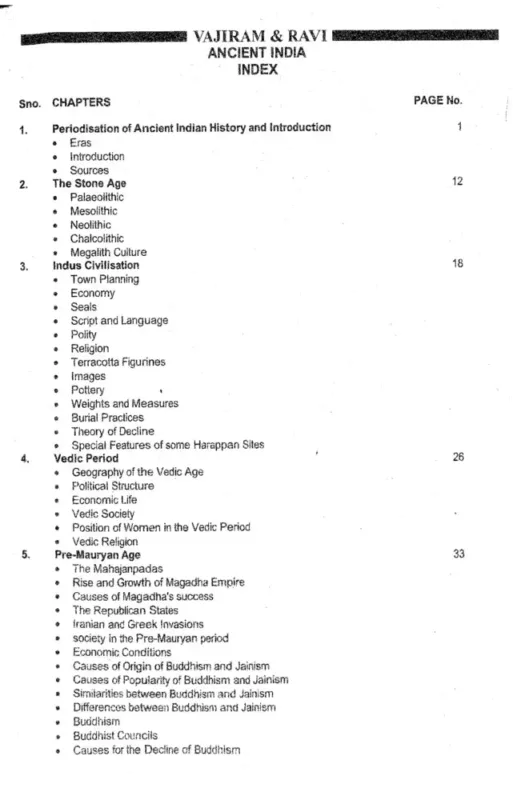
Ancient India is presented through a coherent narrative covering prehistoric cultures, Indus Valley Civilisation, Vedic Age, Mahajanapadas, and the rise of Buddhism and Jainism. The Mauryan Empire, Gupta Age, and subsequent regional kingdoms are covered with emphasis on administration, art, architecture, and cultural achievements. The booklet integrates art history seamlessly with political history, covering cave paintings, rock-cut architecture, temple styles, and sculptural traditions that frequently appear in Prelims questions on Indian culture and heritage.
Medieval India is covered from the early medieval period through Delhi Sultanate, Vijayanagara Empire, Bahmani Kingdom, and the Mughal Empire. The booklet emphasises administrative systems, revenue policies, trade networks, and cultural syncretism of the medieval period with particular attention to Bhakti and Sufi movements that shaped India’s composite culture. The decline of the Mughals and rise of Maratha power are treated analytically. Throughout, connections are drawn to art, architecture, literature, and religious philosophy to provide a holistic understanding of India’s rich historical heritage.
Booklet 9: Modern Indian History – Colonial Period and Freedom Struggle
This pivotal booklet covers the establishment of British rule in India, starting with the East India Company’s trading operations and culminating in the Crown’s direct administration after 1857. The economic impact of colonialism, including drain of wealth theory, deindustrialisation, and land revenue systems like Permanent Settlement and Ryotwari, is analysed with clarity. Socio-religious reform movements of the 19th century including contributions of Raja Ram Mohan Roy, Swami Vivekananda, and Jyotirao Phule are covered with their social and political implications.
The Indian National Congress’s formation, moderate phase, extremist phase, and the contributions of leaders like Bal Gangadhar Tilak, Bipin Chandra Pal, and Lala Lajpat Rai are thoroughly covered. Gandhian movements from Champaran Satyagraha to the Quit India Movement are analysed in terms of their objectives, methods, social base, and outcomes. The booklet also covers revolutionary nationalism, the role of women in the freedom struggle, and the partition of India. Constitutional developments and communal politics are woven into the freedom struggle narrative to provide a comprehensive picture of modern Indian history.
Booklet 10: World History – Industrial Revolution to Contemporary Era
World History as prescribed in the UPSC syllabus is systematically covered beginning with the Industrial Revolution, its technological innovations, social transformations, and global economic impact. The French Revolution, American Revolution, and their ideological legacies of liberty, nationalism, and democracy are explained with the analytical depth required for Mains answers. The rise of nationalism in Europe, unification of Germany and Italy, and the consequent shifts in European power dynamics set the stage for understanding 20th-century conflicts.
World War I, World War II, the Russian Revolution, and Cold War are covered with their causes, courses, consequences, and contemporary relevance. Decolonisation movements in Asia and Africa, the Non-Aligned Movement, formation of the United Nations, and post-Cold War international order are analysed. The booklet concludes with contemporary issues like the rise of China, US foreign policy shifts, regional conflicts, and the changing nature of multilateralism. The content is designed to help aspirants write balanced, well-structured Mains answers on world history topics.
Booklet 11: Indian Geography – Physical Geography and Climate
Physical geography of India is covered in outstanding detail, beginning with plate tectonics and geological history that shaped the Indian subcontinent. The Himalayan system, Northern Plains, Peninsular Plateau, Coastal Plains, and Island groups are described with their formation, features, and significance. River systems including Himalayan and Peninsular rivers, their drainage patterns, tributaries, and interlinking debates are covered comprehensively. The booklet’s treatment of physiographic divisions is enriched with map-based learning cues essential for Prelims.
Indian climate is explained through the mechanisms of the Indian monsoon, Western Disturbances, tropical cyclones, and climate variability. The booklet covers different climatic regions of India, their agricultural and ecological significance, and the impact of El Niño and La Niña on Indian rainfall. Natural disasters like floods, droughts, earthquakes, landslides, and heat waves are analysed with causes, vulnerable regions, and disaster management strategies. The connection between physical geography and human geography is consistently emphasised to help aspirants integrate knowledge across topics.
Booklet 12: Indian Geography – Economic Geography and Human Geography
Economic geography covers the spatial distribution of resources, agriculture, industries, and infrastructure across India. Topics like soil types and conservation, forest resources, mineral wealth, and water resources are covered with maps and data. The distribution of crops, agricultural regions, and the impact of irrigation on agricultural patterns are explained with examples from different states. Industrial regions, special economic zones, and the geography of urbanisation in India are analysed to provide a complete picture of India’s economic landscape.
Human geography covers population distribution, density, growth, and demographic dividend alongside migration patterns, urbanisation trends, and regional development disparities. The booklet addresses issues of human development, gender inequality, tribal geography, and scheduled areas. Census data and its implications for policy are integrated into the discussion. The geography of health, education, and infrastructure disparities between states is covered, providing a basis for GS Paper II and III answers on social justice, welfare, and inclusive development in the Indian context.
Booklet 13: World Geography – Physical and Economic
World physical geography is covered comprehensively, starting with the structure of the Earth, landforms, oceans, and atmospheric processes. Major world biomes, ocean currents, and their influence on climate are explained with clear diagrams referenced in the text. Mountain systems, river basins, deserts, and polar regions are described with geographical precision and examination relevance. The booklet integrates physical geography with environmental geography, explaining how natural systems interact and how human activities are altering these systems globally.
World economic geography covers the distribution of resources, agricultural systems, industrial regions, and trade routes globally. Topics like OPEC, mineral resource distribution, global food production, and energy geography are covered with recent data. The geography of international organisations, regional groupings, and geopolitical regions is explained with relevance to India’s foreign policy. The booklet also covers demographic trends, urbanisation challenges, refugee crises, and sustainable development goals from a geographical perspective, ensuring complete coverage of the world geography component of the UPSC syllabus.
Booklet 14: Environment and Ecology – Fundamentals and Biodiversity
Environment and Ecology has emerged as one of the most dynamic and high-scoring sections of the UPSC examination, and this booklet addresses it comprehensively. Ecosystem concepts, food chains, nutrient cycles, energy flow, and ecological succession are explained with scientific clarity and real-world examples. Biomes of the world, India’s major ecosystems including forests, wetlands, grasslands, and marine systems are covered in detail. The booklet integrates basic ecological science with applied environmental knowledge to help aspirants answer both conceptual and current affairs-based questions.
Biodiversity coverage includes the types of biodiversity, global hotspots, India’s biodiversity heritage, endemic species, and threatened species. Conservation strategies including in-situ and ex-situ conservation, biosphere reserves, national parks, wildlife sanctuaries, and Ramsar wetlands are explained with examples. International conventions like CBD, CITES, Ramsar Convention, and Bonn Convention are covered with India’s commitments and progress. The booklet also addresses invasive species, habitat destruction, and the economics of biodiversity, providing a multi-dimensional understanding of this critical examination topic.
Booklet 15: Environment and Ecology – Climate Change, Pollution, and Environmental Laws
Climate change is covered from its scientific foundations — greenhouse effect, global warming mechanisms, and the carbon cycle — to its wide-ranging impacts on sea levels, weather patterns, agriculture, health, and geopolitics. The IPCC reports, Paris Agreement, Conference of Parties (COP) milestones, and India’s Nationally Determined Contributions are explained in detail. The booklet addresses climate finance, loss and damage, technology transfer, and the principle of Common But Differentiated Responsibilities with nuance and analytical depth required for Mains essays and answers.
Environmental pollution — air, water, soil, noise, and light — is covered with causes, effects, standards, and remediation strategies. Plastic pollution, e-waste, hazardous waste, and ocean pollution receive dedicated treatment. India’s environmental laws including Environment Protection Act, Wildlife Protection Act, Forest Conservation Act, Air and Water Acts, and the National Green Tribunal are explained with their provisions, scope, and judicial interpretations. The booklet also covers environmental impact assessment, green rating systems, and the principle of sustainable development, equipping aspirants for all environment-related questions in the examination.
Booklet 16: Science and Technology – Basic Sciences and Space Technology
This booklet bridges the gap between basic science and cutting-edge technology with clear, accessible explanations suitable for aspirants from all academic backgrounds. Fundamental concepts in physics, chemistry, and biology are covered as they relate to technological applications and everyday governance challenges. Biotechnology including recombinant DNA technology, genetically modified organisms, stem cell research, gene editing with CRISPR, and biosafety regulations are explained with both scientific accuracy and policy relevance for UPSC aspirants.
India’s space programme is covered comprehensively, from the establishment of ISRO to landmark missions like Chandrayaan, Mangalyaan, and Gaganyaan. The commercial space sector, NSIL, IN-SPACe, and the new space policy framework are explained. Global space developments including NASA’s Artemis programme, SpaceX, and international space cooperation are covered. Applications of space technology in remote sensing, communication, navigation (NavIC), and disaster management are emphasised. The booklet also covers defence technology, missile systems, and dual-use technology debates that are relevant for GS Paper III.
Booklet 17: Science and Technology – Defence, Cyber, and Emerging Technologies
Defence technology coverage includes India’s missile programme, indigenisation efforts under Make in India Defence, and developments in unmanned systems, hypersonic vehicles, and directed energy weapons. The booklet explains the Defence Research and Development Organisation’s key programmes, India’s nuclear doctrine, and arms control agreements like NPT, CTBT, and MTCR with India’s position on each. The strategic implications of defence technology advancements are analysed in the context of India’s national security challenges and neighbourhood dynamics.
Emerging technologies including Artificial Intelligence, Machine Learning, Blockchain, Internet of Things, 5G networks, and quantum computing are explained with their governance implications, economic potential, and ethical challenges. Cybersecurity threats, India’s cyber policy framework, and international cyber norms are covered comprehensively. The booklet also addresses health technology including vaccines, diagnostics, telemedicine, and the regulatory framework for drugs and medical devices in India. The treatment of emerging technologies is uniquely oriented towards UPSC examination requirements, focusing on policy implications alongside technical understanding.
Booklet 18: International Relations – India’s Foreign Policy
India’s foreign policy is examined through the lens of its foundational principles — Panchsheel, Non-Alignment, and strategic autonomy — and how these have evolved in the post-Cold War and contemporary multipolar world. The booklet covers India’s bilateral relations with major powers including the United States, Russia, China, Japan, and European Union with analytical depth. Key agreements, defence partnerships, trade relations, and diplomatic tensions are explained to provide aspirants with a well-rounded understanding of India’s place in the global order.
India’s neighbourhood policy is covered with detailed treatment of relations with Pakistan, Bangladesh, Sri Lanka, Nepal, Bhutan, Myanmar, Afghanistan, and the Maldives. The Look East and Act East Policy, Indian Ocean strategy, and India’s approach to multilateral forums like BRICS, SCO, G20, and QUAD are explained in detail. The booklet addresses India’s approach to international trade, climate negotiations, UN Security Council reforms, and diaspora diplomacy. Each bilateral and multilateral relationship is contextualised within India’s broader strategic and developmental interests, making this booklet essential for GS Paper II Mains.
Booklet 19: International Relations – Global Institutions and Contemporary Issues
The United Nations system is covered comprehensively, including the Security Council, General Assembly, Secretariat, International Court of Justice, and key UN agencies like UNESCO, UNICEF, WHO, FAO, and UNHCR. Their mandates, India’s engagement, and reform debates are explained with currency and relevance. The booklet also covers the World Trade Organisation, International Monetary Fund, World Bank Group, and their roles in global economic governance, including critiques from developing countries and reform proposals that India has championed at international forums.
Contemporary global issues including terrorism and counter-terrorism frameworks, nuclear non-proliferation, refugee crisis, Arctic governance, cyber warfare, and pandemic preparedness are covered from an international relations perspective. The rise of China and its Belt and Road Initiative, US-China strategic competition, and the realignment of global power are analysed with implications for India. The booklet also addresses regional organisations like ASEAN, SAARC, African Union, Arab League, and the European Union, providing aspirants with the comprehensive international outlook required for high-quality Mains answers on global affairs.
Booklet 20: Social Issues – Society, Education, and Health
Indian society is examined through its diverse social structures, including caste, tribe, religion, language, and gender as axes of social organisation and inequality. The booklet covers social stratification, social mobility, and the persistence of discrimination despite constitutional safeguards. Salient features of Indian society including unity in diversity, secularism, and pluralism are explained alongside the challenges posed by communalism, regionalism, and caste-based politics. Sociological concepts are explained in accessible language without losing academic rigour.
Education policy is covered comprehensively, including the National Education Policy 2020, challenges in school education, higher education reforms, skill development, and digital education. Health policy coverage includes the National Health Policy, Ayushman Bharat, mental health, nutrition, maternal and child health, and the challenges of disease burden in India. Population policy, demographic dividend, and the challenges of an ageing population are addressed. The booklet also covers social welfare schemes for women, children, elderly, and persons with disabilities, ensuring complete coverage of GS Paper I and II social issues topics.
Booklet 21: Social Issues – Women, Vulnerable Sections, and Human Rights
Women’s issues receive comprehensive treatment covering constitutional provisions, legal framework for gender equality, gender-based violence, workplace discrimination, political representation, and feminist movements in India. The booklet addresses significant legislation like the POCSO Act, Domestic Violence Act, Maternity Benefits Act, and Sexual Harassment at Workplace Act with their provisions and implementation challenges. Gender indices, women’s economic participation, and the gendered impacts of poverty and climate change are discussed with data and policy analysis.
Vulnerable sections including Scheduled Castes, Scheduled Tribes, Other Backward Classes, minorities, persons with disabilities, elderly, and LGBTQ+ communities are covered with the constitutional provisions, policies, and challenges relevant to each group. Human rights frameworks, the National Human Rights Commission, state human rights commissions, and India’s international human rights obligations are explained. The booklet also covers child rights, child labour, bonded labour, trafficking, and juvenile justice with their legal frameworks and implementation challenges, providing a complete picture of India’s human rights landscape.
Booklet 22: Internal Security – Challenges and Management
Internal security is a critical component of GS Paper III, and this booklet provides exhaustive coverage of all dimensions. Linkages between development and the spread of extremism, left-wing extremism, insurgencies in the Northeast, and Jammu & Kashmir are analysed with historical context, current status, and government strategies. The booklet covers the security apparatus including armed forces, paramilitary forces, central police organisations, and intelligence agencies, explaining their roles, legal powers, and coordination mechanisms in managing internal security threats.
Terrorism, its ideologies, financing, and counter-terrorism strategies including the National Investigation Agency, UAPA, and international counter-terrorism cooperation are covered in detail. Cyber security threats, border management challenges, coastal security, and critical infrastructure protection are explained with recent incidents and policy responses. Money laundering, drug trafficking, and organised crime as security threats are addressed. The booklet also covers the role of media, civil society, and human rights considerations in internal security management, providing a balanced and comprehensive coverage of this complex topic.
Booklet 23: Ethics, Integrity, and Aptitude – Foundations and Applications
GS Paper IV is unique in the UPSC examination, requiring both theoretical knowledge and practical application, and this booklet addresses both dimensions masterfully. The philosophical foundations of ethics including deontology, consequentialism, virtue ethics, and applied ethics are explained clearly. Indian ethical thought from the Vedas, Upanishads, Bhagavad Gita, Buddhist ethics, and modern thinkers like Gandhi is presented alongside Western ethical philosophy. The concepts of moral intuition, moral reasoning, and ethical dilemmas are explained with examples relevant to civil service contexts.
Public service values, integrity, objectivity, impartiality, non-partisanship, and dedication to public service are elaborated in the context of constitutional provisions and service rules. Emotional intelligence, its components, and its relevance to effective governance and leadership are explained. The booklet covers attitude formation, persuasion, and social influence with relevance to public administration. Case studies relevant to civil services are discussed to help aspirants develop the capacity to analyse ethical situations and articulate well-reasoned responses in the examination.
Booklet 24: Ethics, Integrity, and Aptitude – Case Studies and Governance Ethics
Governance ethics covers probity in public life, codes of ethics, codes of conduct, citizen’s charter, work culture, quality of service delivery, and utilisation of public funds. The booklet addresses corruption, its causes, types, and anti-corruption measures including the Lokpal and Lokayukta, Central Vigilance Commission, and Right to Information Act. Whistleblower protection, conflict of interest, nepotism, and ethical leadership in public institutions are explained with real-world examples from Indian governance and global case studies relevant to the UPSC examination.
This booklet provides a structured approach to case study answers, one of the most challenging aspects of GS Paper IV. Frameworks for ethical decision-making in administrative contexts, balancing competing values, stakeholder analysis, and presenting reasoned justifications are taught through multiple illustrative examples. The booklet covers ethical issues in international relations, technology governance, environment, and healthcare. Contributions of moral thinkers and philosophers from both Indian and Western traditions are summarised for quick reference, making this booklet a complete guide to mastering the Ethics paper.
Booklet 25: Governance – Public Administration, E-Governance, and RTI
Public administration is covered from foundational concepts like bureaucracy, organisation theory, and administrative culture to contemporary challenges of e-governance and digital public services. The booklet explains the structure and functioning of the Indian administrative system, the role of the IAS and other central services, and the relationship between political executives and permanent bureaucracy. Decentralisation, citizen participation, participatory governance, and social audit mechanisms are covered with policy examples and reform debates relevant to GS Paper II Mains questions.
E-governance is covered comprehensively, including the National e-Governance Plan, Digital India initiatives, Aadhaar ecosystem, UMANG, DigiLocker, and GeM portal. The booklet addresses challenges of digital divide, data privacy, cybersecurity in governance, and algorithmic decision-making in public administration. The Right to Information Act is covered in detail with its provisions, implementation, challenges, and proposed amendments. Governance reforms including the Second Administrative Reforms Commission recommendations, outcome-based budgeting, and performance management systems are explained to provide aspirants with a thorough understanding of contemporary governance challenges.
Booklet 26: Disaster Management – Frameworks and Applications
Disaster management has become increasingly important in the UPSC examination due to the growing frequency and intensity of natural and man-made disasters. This booklet covers the Disaster Management Act 2005, National Disaster Management Authority, State Disaster Management Authorities, and the National Disaster Response Force in detail. The Sendai Framework for Disaster Risk Reduction, its four priorities and targets, and India’s implementation strategy are explained. The role of community-based disaster management and local governance in disaster preparedness and response is emphasised throughout the booklet.
Specific disaster types including cyclones, floods, earthquakes, landslides, droughts, tsunamis, chemical disasters, and nuclear accidents are covered with their causes, impacts, early warning systems, and management protocols. Climate change’s role in increasing disaster frequency and intensity is analysed with implications for disaster preparedness policy. The booklet covers disaster insurance, financing mechanisms, and the role of technology in disaster management including satellite-based monitoring, mobile alerts, and GIS-based vulnerability mapping. Post-disaster reconstruction, rehabilitation, and building back better principles complete this comprehensive treatment of disaster management.
Booklet 27: Current Affairs Compendium – 2025-26 Annual Update
The current affairs compendium is the most dynamic booklet in the series, updated right up to the latest significant developments relevant to the UPSC 2026-27 examination cycle. It covers major government schemes and policies announced during the year, constitutional and legislative changes, landmark Supreme Court judgments, and significant appointments to constitutional and statutory bodies. Economic developments including Budget highlights, RBI monetary policy decisions, and major economic indicators are summarised with examination-relevant analysis provided by Vajiram & Ravi’s expert faculty.
International events covered include major diplomatic developments, geopolitical shifts, regional conflicts, international agreements, and India’s role in global forums. Scientific and technological breakthroughs, space missions, defence acquisitions, and environmental conferences are documented with their significance for the examination. Social issues including major reports by government committees, international organisations like UNDP, WHO, and World Bank, along with their findings on India, are summarised. The compendium is designed to be read alongside the static booklets to provide the current affairs dimension that is essential for scoring well in both Prelims and Mains.
Frequently Asked Questions (FAQ)
Q1. Are Vajiram & Ravi GS Notes 2026-27 sufficient for both UPSC Prelims and Mains preparation?
Yes, the 27 booklets are designed to provide comprehensive coverage for both UPSC Prelims and General Studies Mains Papers I through IV. The notes cover static portions of the syllabus in depth while the Current Affairs compendium addresses dynamic content. However, aspirants are advised to supplement these notes with the NCERT textbooks for foundational understanding and a quality newspaper for daily current affairs to maximise their examination performance.
Frequently Asked Questions
Is this the latest 2026-27 GS set?
Yes, this listing is the most recent 2026-27 Vajiram & Ravi GS edition.
How many booklets are included?
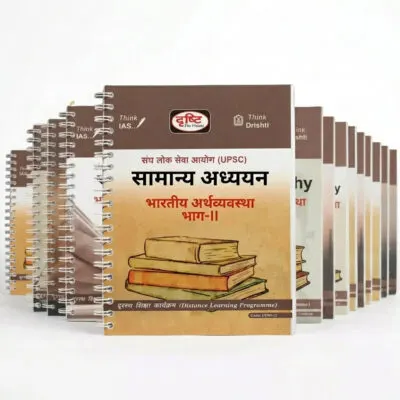
27 spiral-bound booklets covering GS-1, GS-2, GS-3 and GS-4.
Are these original Vajiram booklets?
Yes, reproduced from official Vajiram & Ravi 2026-27 material.
Is free shipping available?
Yes, free shipping applies as the order value exceeds Rs 1999.
Is COD available?
Yes, COD is supported pan-India for this set.
When will I receive my order?
Larger sets typically arrive in 6-10 working days based on location.
Reference: Civil Services Examination
Customer Reviews 70
27 booklets mein koi bhi compromise nahi. Pure value for money.
Notes ache hain par thoda heavy load pad raha hai, phir bhi recommended.
Kaafi comprehensive notes hain, packaging bhi secure tha.
Sach mein bahut helpful hai ye notes. Definitely recommend to all aspirants.
Sab topics cover ho gaye comprehensively, exactly what I needed for my revision phase.
Bohot helpful notes hai. Already using them daily for my studies.
The 27 booklets are perfectly organized and easy to follow.
Booklets ka arrangement perfect hai aur content bhi bahut relevant.
Aspirants Also Bought
More from the same category
About Vajiram & Ravi General Studies Notes 2026-27
Vajiram & Ravi General Studies Notes 2026-27 is a highly recommended UPSC study material from Vajiram & Ravi, specially designed for General Studies preparation. Available in English medium, this material is crafted to match the exact requirements of the UPSC Civil Services Examination syllabus — covering both Prelims and Mains comprehensively.
Product Details
- Institute: Vajiram & Ravi
- Subject: General Studies
- Medium: English
- Format: Printed
- Delivery: Pan-India delivery in 3–5 working days
- Format: Original printed material, verified authentic
Why Buy from UPSC Store?
- ✅ 100% Genuine Printed Material — Original printed notes, no photocopies or fake copies
- ✅ Fast Delivery — Ships within 24 hours, arrives in 3–5 days pan-India
- ✅ Secure Packaging — Bubble-wrapped and boxed to prevent damage in transit
- ✅ Trusted by 10,000+ Aspirants — India's most reliable UPSC material marketplace
- ✅ WhatsApp Support — Get expert guidance on material selection before ordering
Frequently Asked Questions
Yes, all products at UPSC Store are 100% genuine printed materials. We do not sell photocopies or fake copies.
Orders are dispatched within 24 hours and delivered across India in 3–5 working days via reputed courier partners.
Yes, we accept returns within 7 days if the product is damaged or incorrect. Check our refund policy for details.
We recommend pairing this with current affairs notes and a UPSC test series for comprehensive preparation. Browse more in General Studies, UPSC, Vajiram and Ravi.