





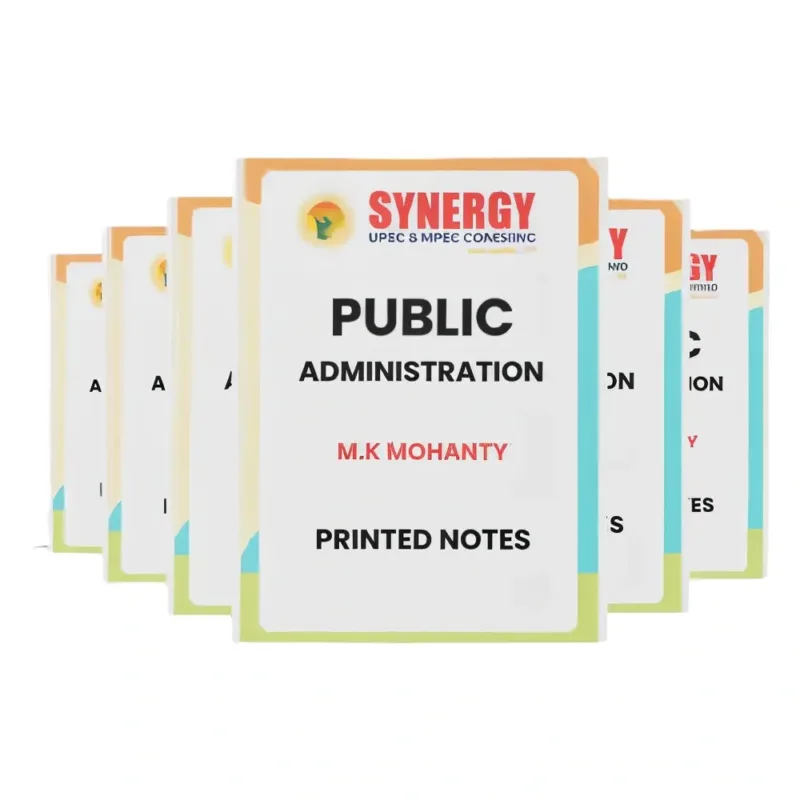

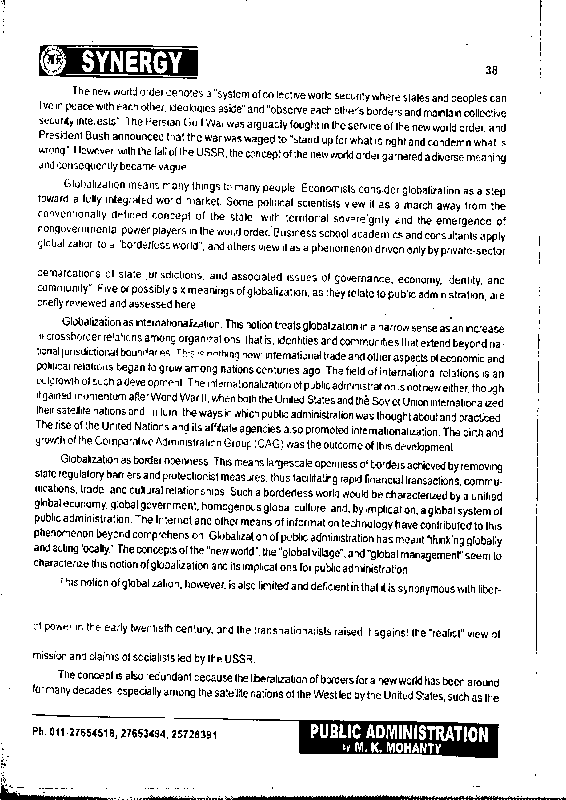


MK Mohanty Public Administration Notes 2025-26 | 6 Booklets | English Medium | UPSC Study Material
Binding Guide
Pick the binding that fits how you study.
Spiral Binding
- Lays completely flat
- 360° page rotation
- Great for note-taking
- Best for maths, science, reference
Without Spiral
- Compact & professional
- Sturdy glued/stitched spine
- Easy to stack & store
- Best for textbooks & long-term
About MK Mohanty Public Administration Notes
The MK Mohanty Public Administration Notes is a printed UPSC study material set sold by UPSC Store — India’s trusted source for genuine, latest-batch civil services preparation books. This page covers full booklet details, syllabus coverage, pricing, shipping, and frequently asked questions. Useful for UPSC CSE, BPSC, UPPSC, MPPSC, RAS and other state PSC examinations.
MK Mohanty Synergy IAS Public Administration Notes 2025-26 — 10 English Medium Printed Booklets for UPSC Optional (500 Marks)
Related: MK Mohanty notes · Public Administration optional
Product Overview
| Feature | Details |
|---|---|
| Booklets Count | 10 Individual Printed Booklets — Full UPSC Public Administration Optional Syllabus (Paper I + Paper II) |
| Language | English Medium |
| Publisher | Synergy IAS (MK Mohanty Public Administration Series) |
| Edition | 2025-26 — Latest Genuine Batch |
| Condition | Brand New, Unmarked, Fresh Stock |
| Format | High-Quality Printed Booklets — Spiral or Book Binding |
| Paper Quality | 75 GSM Ultra-White — Highlighter Safe, Zero Bleed-Through |
| Shipping | Pan India Delivery in 3-5 Business Days — Tracked |
| Also Useful For | BPSC, UPPSC, MPPSC, RAS and all State PSC Public Administration Optional candidates |
Complete Booklet Catalog
These 10 printed booklets by MK Mohanty of Synergy IAS cover the entire UPSC Public Administration optional syllabus across both Paper I and Paper II — written in clear, answer-oriented English for Mains preparation. Whether you are a first-attempt aspirant or a serious repeater building a stronger optional score, this set gives you structured, classroom-quality notes without stepping into a coaching centre.
- Booklet 1: Administrative Theory — Foundations and Evolution — Introduction to Public Administration as a discipline; evolution from traditional to New Public Administration; politics-administration dichotomy; Wilson, Weber, Taylor; scientific management; principles of organisation; POSDCORB; Fayol’s principles; ecology of administration; Riggsian models — prismatic and sala models; development administration; New Public Management concepts.
- Booklet 2: Administrative Thought and Thinkers — Classical theorists — Taylor, Fayol, Gulick and Urwick in depth; Human Relations School — Elton Mayo, Hawthorne experiments; Barnard’s cooperative system; Simon’s decision-making model; bounded rationality; Waldo’s political theory of administration; Dwight Waldo vs. Herbert Simon debate; contributions of McGregor (Theory X and Y); Maslow’s hierarchy of needs applied to organisations.
- Booklet 3: Organisation Theory and Behaviour — Formal and informal organisations; bureaucratic theory; Weber’s ideal type bureaucracy; post-Weberian critiques; systems approach; contingency theory; organisational culture and climate; organisational conflict; power and authority; leadership styles — transformational and transactional; motivation theories — Herzberg, Vroom; communication in organisations; organisational change and development.
- Booklet 4: Accountability and Control — Concept of accountability in public administration; legislative control — parliamentary committees, question hour, zero hour; executive control mechanisms; judicial review; ombudsman — Lokpal and Lokayukta; CAG and financial accountability; citizen charters; social audit; Right to Information Act 2005; e-governance and transparency; administrative ethics; whistleblower protection.
- Booklet 5: Administrative Behaviour and Personnel Administration — Decision-making — rational, incremental, mixed scanning models; Simon’s administrative behaviour; communication channels; morale and motivation in public services; personnel administration — recruitment, training, promotion; all-India services; civil service neutrality; generalist vs. specialist debate; position classification; service conditions; Central Pay Commission; lateral entry into civil services.
- Booklet 6: Financial Administration and Budgeting — Principles of public finance; Indian budget — structure, process, and calendar; types of budget — line-item, performance, programme, zero-based budgeting; budget cycle — preparation, legislation, execution, audit; FRBM Act; Finance Commission; Comptroller and Auditor General of India; internal and external audit; appropriation accounts; parliamentary financial committees — PAC, estimates committee, public undertakings committee.
- Booklet 7: Indian Administration — Constitutional and Historical Framework — Constitutional provisions and administrative framework; President, Prime Minister and Cabinet — roles and relationships; Council of Ministers; Cabinet Secretariat; Prime Minister’s Office; Planning Commission to NITI Aayog transition; constitutional bodies; Central-State administrative relations; Schedule VII distribution of powers; Inter-State Council; Zonal Councils; National Integration Council; colonial legacy of Indian administration.
- Booklet 8: State and District Administration in India — Governor’s role and discretionary powers; Chief Minister and State Cabinet; State Secretariat; Directorates and field agencies; district as basic unit of administration; District Collector — evolution, role and challenges; District Rural Development Agency; Sub-divisional and tehsil administration; revenue administration; land records; law and order administration; police administration; district planning; DPC and DISHA committees.
- Booklet 9: Local Self-Government and Rural Development — 73rd and 74th Constitutional Amendments in detail; Panchayati Raj Institutions — structure, functions, finances; gram sabha; three-tier structure; devolution of powers; urban local bodies — municipal corporations, councils, nagar panchayats; ward committees; State Finance Commissions; District Planning Committees; Metropolitan Planning Committees; rural development programmes — MGNREGS, PMAY-G, PMGSY; SHGs and decentralised governance.
- Booklet 10: Public Policy, Governance Reforms and Contemporary Issues — Public policy — meaning, types, models; policy cycle — agenda setting, formulation, implementation, evaluation; Dror’s model; implementation gap; good governance — World Bank and UNDP frameworks; e-governance — national e-governance plan, digital India; citizen-centric administration; administrative reforms in India — ARC I and II recommendations; core issues from recent ARC reports; disaster management administration; gender and administration; social justice and inclusive governance.
In-Depth Content Breakdown: Booklet by Booklet
Booklet 1: Administrative Theory — Foundations and Evolution
This booklet forms the theoretical backbone of UPSC Public Administration Paper I. It begins with Woodrow Wilson’s 1887 essay that first separated administration from politics, progressing through Max Weber’s bureaucratic model and Frederick Taylor’s scientific management principles. MK Mohanty’s treatment of Riggs’ prismatic-sala model is particularly valued by UPSC aspirants because questions on ecological and comparative administration appear repeatedly. The booklet closes with New Public Management — market-oriented reforms — giving you a historical arc from classical to contemporary administrative thought essential for 15-20 mark essay-type answers.
What distinguishes this booklet from standard textbook material is MK Mohanty’s answer-framing approach. Each concept is presented with a definition, its origin, critical evaluation, and a UPSC-style concluding line. Tables comparing Wilson vs. Weber vs. Taylor save precious revision time. The ecology of administration section includes Riggs’ models explained with Indian examples — a technique that helps aspirants convert theoretical constructs into relatable answers. Flowcharts on POSDCORB and Gulick-Urwick principles make this opening booklet both a primer and a quick revision tool for repeat readers.
Booklet 2: Administrative Thought and Thinkers
UPSC optional Paper I dedicates significant weight to administrative thinkers, and this booklet addresses every major name on the syllabus. The Human Relations School — led by Elton Mayo’s Hawthorne experiments — is treated with depth, covering the shift from mechanistic to humanistic management thinking. Chester Barnard’s cooperative system and zone of indifference receive focused treatment, as these appear often as short-answer starters. Herbert Simon’s decision-making model and the concept of bounded rationality are explained with clarity, making abstract ideas accessible without losing academic rigour required for UPSC Mains answers.
MK Mohanty structures this booklet to support direct answer writing. The famous Waldo-Simon debate — arguably the most important conceptual clash in the discipline — is presented as a point-counterpoint comparison ideal for both 10-mark and 20-mark questions. Douglas McGregor’s Theory X and Theory Y, Maslow’s needs hierarchy, and Herzberg’s two-factor theory are interconnected through thematic bridges. Each thinker section ends with a “UPSC relevance” note identifying the years and question patterns in which this thinker has been directly tested, giving aspirants strategic preparation intelligence embedded in the notes themselves.
Booklet 3: Organisation Theory and Behaviour
Organisation theory sits at the heart of Public Administration optional, and this booklet covers it from classical bureaucracy through to modern contingency and systems approaches. Weber’s ideal-type bureaucracy — and its post-Weberian critiques by Merton, Selznick, and Gouldner — are explained in a way that directly supports analytical answers. The systems approach (open vs. closed systems) and contingency theory (Lawrence and Lorsch, Burns and Stalker) are presented with real administrative examples. Organisational culture — a topic gaining increased UPSC attention — is treated with Schein’s model and its implications for public sector reform in India.
The second half of this booklet focuses on organisational behaviour: power, authority, conflict, and communication. Leadership theories — transformational vs. transactional leadership — are mapped against Indian civil service reform debates, making them immediately applicable in answers. Motivation theories from Booklet 2 are revisited here in the organisational context, reinforcing retention through spaced repetition across booklets. Synergy IAS has included flowcharts for communication channels and a comparative table of classical vs. neo-classical vs. modern organisation theories — a single-page revision tool that aspirants frequently photograph for last-week review before the Mains examination.
Booklet 4: Accountability and Control
Accountability is one of the highest-yield topics in UPSC Public Administration optional — it appears across both conceptual and India-specific sections. This booklet opens with the philosophical foundations of accountability in democratic governance, then systematically covers all control mechanisms: legislative (parliamentary committees, question hour, cut motions), executive (supervisory hierarchy, departmental enquiries), and judicial (judicial review, writs, PILs). The Lokpal and Lokayukta sections are updated to reflect the 2013 Act and subsequent amendments, essential for the current 2025-26 exam cycle.
MK Mohanty dedicates focused space to the Right to Information Act 2005 — its structure, exemptions, Central and State Information Commissions, and reform debates — because this is a direct syllabus item with consistent question history. Citizen Charters and social audit mechanisms are explained with Indian case studies. The section on CAG covers both constitutional provisions (Articles 148-151) and functional realities, a combination that supports both short definitional answers and analytical essays. E-governance as a transparency tool is introduced here with examples from Digital India initiatives, bridging accountability theory with contemporary governance practice.
Booklet 5: Administrative Behaviour and Personnel Administration
Decision-making models — rational-comprehensive, incremental (Lindblom’s muddling through), and Dror’s mixed scanning — are presented side by side in this booklet with a comparative table that makes the differences immediately clear for answer writing. Simon’s administrative behaviour theory receives extended treatment, as his concept of satisficing vs. optimising is central to multiple UPSC questions. Communication — formal vs. informal, upward vs. downward, grapevine — is covered with organisational examples. The morale and motivation segment connects directly back to thinkers from Booklet 2, reinforcing interconnections across the syllabus.
The personnel administration section is particularly strong for UPSC Public Administration Paper II preparation. Recruitment through UPSC and State PSCs, training at LBSNAA and other institutions, DPC-based promotions, and the generalist-specialist debate are all addressed with contemporary examples including recent lateral entry debates in the IAS. The All India Services section covers their constitutional basis (Article 312), functions, and reform pressures. Service conditions, central pay commissions (with a note on the 8th CPC), and the National Pension System are included — making this booklet highly relevant for both conceptual and current-affairs-linked optional questions.
Booklet 6: Financial Administration and Budgeting
Financial administration carries guaranteed questions in UPSC Public Administration optional and this booklet is built around answer-ready explanations of each budget type. Zero-Based Budgeting — introduced in India under Rajiv Gandhi’s government — is explained with its rationale, process, and critiques, a topic that appears almost every alternate year. Programme budgeting and performance budgeting are compared with the traditional line-item approach. The full budget calendar — from Ministry submissions in September to Parliament passage by March 31 — is laid out as a step-by-step flowchart, ideal for process-based questions.
The CAG of India section covers Articles 148 to 151 of the Constitution, the audit functions (compliance, performance, propriety), and the significance of Appropriation Accounts. Parliamentary financial committees — Public Accounts Committee, Estimates Committee, and Committee on Public Undertakings — are explained with their compositions, powers, and limitations. The FRBM Act and fiscal consolidation targets are included for contemporary relevance. MK Mohanty’s notes on Finance Commission (its composition, terms of reference, and the horizontal-vertical devolution formula) are particularly valued by aspirants who find standard textbooks overly technical without the interpretive clarity that Synergy IAS notes provide.
Booklet 7: Indian Administration — Constitutional and Historical Framework
This booklet opens UPSC Public Administration Paper II content with the constitutional-administrative architecture of India. The President’s roles — constitutional, ceremonial, discretionary — are mapped against real precedents. The Prime Minister-Cabinet relationship, collective responsibility, Cabinet committees, and the expanding role of the PMO in post-1991 governance are central themes. The transition from the Planning Commission to NITI Aayog is treated in detail — its rationale, structure, and changed relationship with states — a topic that bridges administrative theory with current affairs for maximum marks impact.
Colonial legacy receives dedicated treatment here: the ICS tradition, the permanence and neutrality norms it established, and how post-independence India adapted rather than overhauled the inherited administrative machine. Central-State relations are explained through Schedule VII (Union, State, and Concurrent Lists), finance relations, and administrative coordination mechanisms — Inter-State Council, Zonal Councils, and the National Integration Council. This historical-constitutional grounding is essential because UPSC examiners consistently test whether aspirants understand Indian administration as a product of both colonial inheritance and constitutional design — and MK Mohanty’s notes directly address this expectation.
Booklet 8: State and District Administration in India
District administration is the most India-specific and practically grounded section of the UPSC Public Administration optional syllabus, and this booklet treats it with the field-level detail examiners expect. The District Collector’s evolution from a revenue officer under the British to a multi-functional development administrator in independent India is traced chronologically. The collector’s contemporary role — as District Magistrate for law and order, as District Development Officer coordinating central schemes, and as the face of the state for citizens — is explained through the lens of administrative reform debates about whether the Collector’s role should be strengthened or decentralised away.
State administration — Governor’s discretionary powers, Chief Minister’s authority, and the State Secretariat’s organisation with its Principal Secretary-dominated structure — is covered with enough constitutional detail to answer both factual and analytical questions. Revenue administration and land records management (now linked to DILRMP under Digital India) are included as they appear in both traditional questions and current affairs-linked UPSC queries. The section on law-and-order administration covers police organisation, the Police Act reform debate (post-Prakash Singh judgment directives), and recent model police act proposals — making this booklet strong for contemporary policy-linked answers.
Booklet 9: Local Self-Government and Rural Development
The 73rd and 74th Constitutional Amendments are the legislative foundations of India’s decentralisation experiment, and this booklet covers them in exceptional detail — the mandatory provisions, discretionary provisions, the 29 functions in Schedule XI and 18 functions in Schedule XII, reservation for women and SCs/STs, and the State Finance Commission mechanism. Gram Sabha as the foundation of participatory democracy receives focused treatment, as UPSC has repeatedly tested this concept in the context of both theoretical decentralisation ideals and practical implementation failures at the ground level across Indian states.
Urban local bodies — municipal corporations under the 74th Amendment, ward committees, area sabhas, and the Metropolitan Planning Committee provisions — are covered with the same rigour as rural institutions. The section on rural development programmes is updated for 2025-26: MGNREGS (its design, fund flow, social audit, and reform debates), PMAY-Gramin, PMGSY, and DAY-NRLM are all included with implementation data. Self-Help Groups as instruments of women’s empowerment and financial inclusion are treated both theoretically and empirically. This booklet equips aspirants to write answers that connect constitutional provisions, administrative machinery, and ground-level development outcomes — the three layers UPSC examiners reward most.
Booklet 10: Public Policy, Governance Reforms and Contemporary Issues
Public policy is both a standalone UPSC syllabus topic and the conceptual umbrella over the entire optional subject — and this booklet positions it accordingly. The policy cycle (agenda setting, formulation, adoption, implementation, evaluation) is explained through Indian case examples. Implementation failure — the gap between policy intent and field outcomes — is treated through Pressman and Wildavsky’s framework applied to Indian scheme delivery, a combination that produces the kind of nuanced answers UPSC Paper II questions demand. Dror’s optimal model is contrasted with Lindblom’s incremental model to build comparative analytical capability.
Good governance — the World Bank’s six dimensions and UNDP’s eight characteristics — are mapped against India’s actual governance performance indicators. The Digital India and National e-Governance Plan sections cover key mission mode projects, the India Stack, and service delivery transformation with JAM Trinity analysis. Administrative Reforms Commission I (1966) and ARC II (2005-2009) recommendations are summarised chapter by chapter, covering ethics in governance, citizen-centric administration, crisis management, and local governance. This final booklet brings together all threads from the preceding nine — making it both a standalone policy booklet and a synthesis tool aspirants use in the final revision week before the UPSC Mains examination.
Physical Construction and Quality Standards
Every booklet in this MK Mohanty Synergy IAS Public Administration set is manufactured to endure the full UPSC preparation cycle — typically 6 to 12 months of daily use involving annotation, re-reading, and travel between study locations. The physical standards are chosen specifically for serious optional subject aspirants who invest heavily in their study material.
Paper Quality: 75 GSM Anti-Glare White Paper
The 75 GSM ultra-white paper used in these booklets is selected for its combination of weight, opacity, and surface texture. High opacity means text from the reverse side does not shadow through — critical when both sides of each leaf are printed. The anti-glare finish reduces eye strain during the extended reading sessions that Public Administration optional preparation demands. Multiple highlighter colours — yellow, green, pink, blue — and gel pens in multiple ink colours can be applied without any bleed-through to the reverse side, supporting the colour-coded revision techniques widely used by UPSC toppers who have taken Public Administration as their optional subject.
Printing Technology: High-Resolution Laser Printing
All 6 Booklets are printed using high-resolution laser technology, which produces crisp, consistent text at small font sizes without the ink smearing or fading that can occur with inkjet processes. Diagrams, flowcharts, tables, and conceptual maps — all of which appear frequently in MK Mohanty’s Public Administration notes — are rendered with clean lines and legible labels. Laser toner is permanently fused to the paper surface, meaning the print remains sharp even after repeated handling, finger contact on margins during note-taking, and storage under varying humidity conditions typical of student housing in Delhi and other preparation hubs.
Binding and Durability
These booklets are available in either spiral binding or book binding based on stock availability. Spiral-bound booklets open completely flat on a study desk — ideal for writing notes alongside printed content, a practice strongly recommended by MK Mohanty himself during classes. The spiral wire is galvanised to resist rusting during long storage periods. For book-bound copies, a strong PVA spine adhesive ensures pages do not detach under heavy use. Both formats use a 300 GSM laminated cover with a matte finish, protecting the booklet from surface scuffs and moisture damage during commuting between home, library, and coaching-centre study rooms.
Key Features and Study Design
These notes are not generic textbook reproductions — they are classroom teaching material converted into a structured printed format, preserving MK Mohanty’s answer-oriented approach that has helped Synergy IAS students build consistently strong Public Administration optional scores in recent UPSC Mains cycles.
- Syllabus-Mapped Structure: Every booklet is mapped directly to the official UPSC Public Administration optional syllabus for Paper I and Paper II. Each section heading corresponds to a syllabus item, making it easy for aspirants to track coverage and identify gaps without needing a separate syllabus document for cross-referencing during preparation.
- Answer-Frame Ready Content: MK Mohanty’s notes are written in paragraph structures that mirror UPSC Mains answer patterns — introduction, body with multiple dimensions, and a balanced conclusion. Aspirants can adapt the language and structure of these notes directly into 10-mark and 20-mark answers without needing significant reformatting during practice sessions.
- Thinker Comparison Tables: Side-by-side comparison tables for administrative thinkers — Taylor vs. Fayol, Simon vs. Waldo, Weber vs. Marx — are embedded throughout the theory booklets. These tables are consistently cited by aspirants as the most time-efficient revision tool in the entire set, condensing hours of reading into minutes of targeted review.
- Contemporary India Integration: Each theoretical concept in the notes is anchored with a recent Indian governance example — NITI Aayog replacing the Planning Commission, RTI implementation gaps, lateral entry debates in IAS, Digital India service delivery. This integration ensures answers demonstrate both theoretical grounding and current awareness, a combination UPSC examiners specifically reward.
- Inter-Booklet Cross-References: Concepts introduced in Booklet 1 are explicitly referenced when they reappear in Booklets 7-10 in the Indian administration context. This cross-referencing architecture helps aspirants build a connected understanding of Public Administration rather than treating theory and Indian administration as two separate subjects, which is the most common preparation mistake for this optional.
Shipping, Packaging and Delivery
Each order of MK Mohanty Synergy IAS Public Administration Notes 2025-26 is packed with dedicated care to ensure all 6 Booklets arrive in perfect, classroom-fresh condition. The complete set is first wrapped in protective shrink film, then placed inside a rigid corrugated cardboard box with a minimum wall thickness of 3mm. Foam edge protectors are fitted at all four corners of the box to absorb impact during courier transit. The outer box is sealed with reinforced adhesive tape and labelled with fragile-handling instructions on all six faces. This packaging protocol has been developed over hundreds of shipments to eliminate the dog-eared corners and spine damage that lower-quality dispatch operations produce routinely.
All orders are shipped pan India with a tracked courier service and deliver within 3 to 5 business days from the date of dispatch. A tracking ID is sent to your registered mobile number and email address on the day of dispatch so you can monitor your shipment in real time. For order-related queries, replacement requests, or delivery status updates, WhatsApp us at +91 85802 57424 — our team responds within business hours. If any booklet arrives with a printing defect, missing pages, or transit damage, we replace the affected booklet within 48 hours of you reporting the issue with a photograph — no questions asked, no return shipping required from your end.
Frequently Asked Questions (FAQ)
A: MK Mohanty’s Public Administration notes from Synergy IAS are widely regarded as among the most answer-oriented notes available for this optional subject. They cover the full UPSC syllabus across both Paper I and Paper II, use a structured paragraph format that mirrors Mains answer writing, and include comparison tables for thinkers and policies. Aspirants who have used these notes report strong marks in the 250-300 range out of 500 in recent UPSC Mains cycles. They work best when combined with previous years’ question practice and a standard textbook for cross-verification of key concepts.
A: The 2025-26 edition includes exactly 10 printed booklets. These cover the complete UPSC Public Administration optional syllabus — 6 Booklets focused on Paper I topics (Administrative Theory, Thinkers, Organisation Theory, Accountability, Personnel Administration, Financial Administration) and the remaining booklets covering Paper II topics (Indian administration, State and district administration, local self-government, rural development, and public policy with governance reforms). Every booklet is individually numbered and titled for easy identification during targeted revision sessions.
A: Yes. This specific product — MK Mohanty Synergy IAS Public Administration Notes 2025-26 — is entirely in English medium. All 6 Booklets are written, printed, and organised in English, making them suitable for aspirants writing UPSC Mains answers in English. The language used is formal academic English consistent with UPSC answer expectations — not simplified or colloquial. Aspirants writing in Hindi medium should look for the Hindi edition of these notes separately, as the two editions are not interchangeable in terms of language structure and answer framing.
A: These 6 Booklets cover the entire UPSC Public Administration optional syllabus. Paper I topics include Administrative Theory (Wilson, Weber, Taylor, Riggs), Administrative Thinkers (Simon, Barnard, Waldo), Organisation Theory and Behaviour, Accountability and Control mechanisms, Administrative Behaviour, Personnel Administration, and Financial Administration including budgeting. Paper II topics cover Indian Constitutional Administration, the PMO and Cabinet system, State and District Administration, Panchayati Raj and Urban Local Bodies, Rural Development programmes, and Public Policy with Governance Reforms including e-governance and ARC recommendations.
A: The price is listed on the product page and reflects the cost of 10 individually printed and bound booklets with 75 GSM paper quality, high-resolution laser printing, and tracked pan India shipping included. When evaluated against the cost of attending MK Mohanty’s classroom batches at Synergy IAS in person, or purchasing multiple standard textbooks to cover the same syllabus ground, these printed notes represent a significantly more economical option. The price is fixed — no hidden charges for packaging or delivery within India.
A: MK Mohanty’s Synergy IAS notes cover the full syllabus and are answer-frame ready — they are sufficient as your primary notes source for UPSC Public Administration optional. However, toppers consistently recommend supplementing any coaching notes with selective reading of standard texts (Mohit Bhattacharya, Laxmikant for Indian administration chapters) to deepen conceptual clarity on complex topics. The real differentiator in optional marks is answer-writing practice: aspirants who combine these notes with 60-80 previous-year question answers written under timed conditions consistently outperform those who only read without practising.
A: You can buy MK Mohanty Public Administration notes 2025-26 directly from this store — simply add to cart and place your order. We are based in Mukherjee Nagar, Delhi, the centre of UPSC coaching material supply in India, which means we stock genuine, latest-edition Synergy IAS printed notes. You can also reach us on WhatsApp at +91 85802 57424 to confirm stock availability before placing your order. We ship pan India with tracked delivery in 3-5 business days — no need to travel to Delhi to buy these notes in person.
A: The primary difference is the answer-oriented structure. Generic textbooks like Mohit Bhattacharya or Laxmikant present information encyclopedically, requiring aspirants to do the hard work of converting content into answer-ready points. MK Mohanty’s Synergy IAS notes are already structured in the paragraph and point format that UPSC Mains answers demand. Additionally, the thinker comparison tables, syllabus-mapped headings, and cross-references between Paper I theory and Paper II Indian administration give these notes a preparation efficiency that raw textbook reading cannot replicate, especially under the time pressure of a 10-12 month UPSC preparation cycle.
A: These booklets use 75 GSM ultra-white paper chosen for high opacity — multiple highlighter colors and gel pens work without bleed-through to the reverse side, ideal for color-coded revision. The anti-glare surface also reduces eye fatigue during extended study sessions. Yellow, green, pink, and blue highlighters all perform without ghosting or shadow on the back of the leaf, allowing aspirants to build a full colour-coded annotation system across all 6 Booklets for differentiated topic tagging during final revision weeks before UPSC Mains.
A: Yes, this is the genuine 2025-26 batch of MK Mohanty Synergy IAS Public Administration notes. The 2025-26 edition incorporates updated content relevant to the current UPSC exam cycle — including recent governance reforms, updated data on rural development programmes, revised ARC implementation status, and current affairs-linked examples in the policy and governance booklet. We stock only the latest batch and do not sell older editions alongside current ones. The cover of each booklet clearly prints the 2025-26 edition year for your verification on delivery.
A: Yes. While these notes are designed primarily for UPSC Public Administration optional, they are equally useful for BPSC, UPPSC, MPPSC, RAS, and other State PSC candidates who have chosen Public Administration as their optional subject. The Indian administration sections — covering district administration, Panchayati Raj, financial administration, and public policy — are directly relevant to State PSC syllabuses. Candidates appearing for multiple state-level exams alongside UPSC will find these notes cover the administrative theory and Indian administration content required across most state-level Public Administration optional syllabuses.
A: Start with Booklets 1-3 to build theoretical foundations before moving to Indian administration in Booklets 7-10. Read each booklet once for understanding, then revisit with a highlighter to mark key definitions and comparison points. After completing all 6 Booklets, begin writing previous-year UPSC questions on each topic — targeting one booklet per week in the second reading cycle. Use the thinker comparison tables and flowcharts in the final two weeks before Mains for rapid revision. Pairing this structured reading with test series answer evaluation is the most reliable pathway to scoring 280 or above in Public Administration optional.
Summary
| Specification | Value |
|---|---|
| Booklets | 10 Printed Booklets |
| Language | English Medium |
| Faculty | MK Mohanty |
| Institute | Synergy IAS |
| Edition | 2025-26 Latest Batch |
| Paper | 75 GSM Ultra-White |
| Binding | Spiral or Book Binding |
| Delivery | 3-5 Business Days Pan India |
| Also Useful For | BPSC, UPPSC, MPPSC, RAS and all State PSC |
Sourced directly from Mukherjee Nagar, Delhi — India’s largest UPSC coaching hub. Buy MK Mohanty Public Administration printed notes online today and receive your complete 6-booklet set at your doorstep with tracked pan India delivery in 3-5 days.
Reference: Civil Services Examination
Customer Reviews
No reviews yet
Be the first — bought this set? Tap “Write a Review” and tell other students how it arrived.
Only real buyers — we never post fake reviews.
Aspirants Also Bought
Same exam · bestsellers first

Vision IAS Prelims 2026-27 GS Test Series | 15–35 Tests | English Medium

Vajiram & Ravi General Studies Prelims Test Series 2026-27 | 10–30 Tests | English Medium | UPSC Study Material

Next IAS General Studies Prelims Test Series 2026-27 | 10–35 Tests | English Medium | UPSC Study Material

Drishti IAS Prelims Test Series 2026-27 | 10–35 Tests | English Medium | UPSC Study Material
Drishti IAS Hindi Medium Complete GS Notes 2025-26 | 18 Booklets | Hindi Medium | UPSC Study Material

PW Only IAS Prelims 2026-27 Hindi Test Series | 10–35 Tests | Hindi Medium | UPSC Study Material

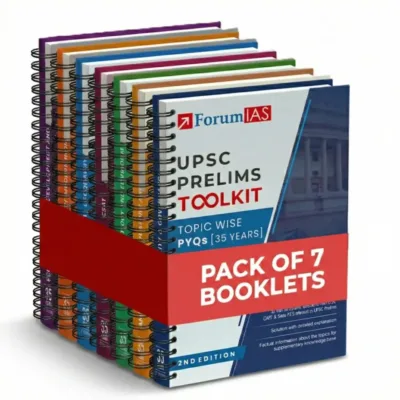
Forum IAS Prelims Topic-wise PYQs 1992-2025 | 7 Booklets | English Medium | UPSC Study Material

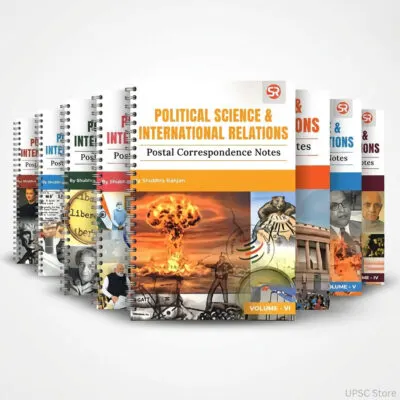
Shubhra Ranjan PSIR Optional Handwritten Notes 2026-27 | 11 Booklets | English Medium | UPSC Study Material
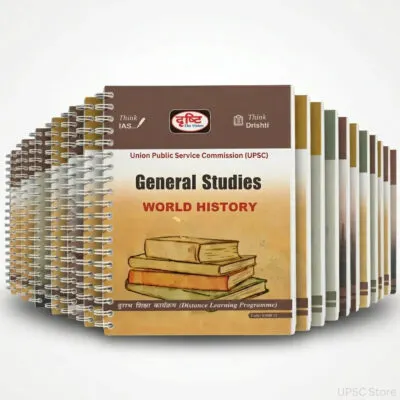
Drishti IAS GS Foundation Notes 2025-26 | 27 Booklets | English Medium | UPSC Study Material
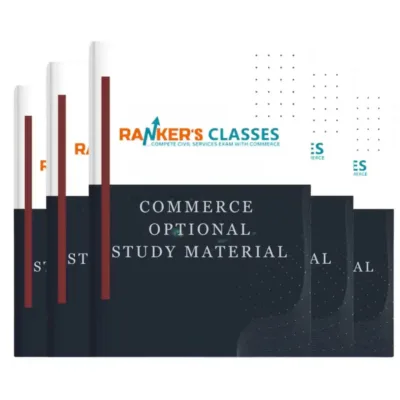
Ranker's Classes Commerce Optional Notes 2025-26 | 10 Booklets | English Medium | UPSC Study Material
About MK Mohanty Public Administration Notes 2025-26
MK Mohanty Public Administration Notes 2025-26 is an original printed study material set from Synergy IAS, covering Public Administration. Available in English medium, this set is counted booklet by booklet before dispatch — no photocopies, no missing booklets.
Product Details
- Institute: Synergy IAS
- Subject: Public Administration
- Medium: English
- Format: Printed
- Delivery: Pan-India delivery in 4–7 working days, free over ₹1,999
- Condition: New, original print — counted before dispatch
Why Buy from UPSC Store?
- ✓ Original Printed Notes — no photocopies, every booklet counted before it ships
- ✓ Fast Dispatch — ships within 24 hours from Delhi, arrives in 4–7 days pan-India
- ✓ Secure Packaging — bubble-wrapped and boxed to prevent damage in transit
- ✓ 180+ Orders Shipped — to 25 states across India
- ✓ WhatsApp Support — ask which set fits your optional and medium before ordering
Frequently Asked Questions
Original print — the same printed booklets the institute issues. Every set is counted booklet by booklet before dispatch.
Orders are dispatched within 24 hours from Delhi and delivered across India in 4–7 working days. Delivery is free over ₹1,999.
Returns are accepted only if the problem is from our side: wrong item, damaged or defective copy, or missing booklets or pages. Report it within 7 days of delivery and we arrange a free pickup and send a free replacement or a full refund. We do not accept change-of-mind returns, so please check the medium, edition and binding before ordering. WhatsApp us to start a return.