


Vajiram & Ravi Anthropology Optional Notes 2025-26
Vajiram & Ravi Anthropology Optional β UPSC Study Material
Related: Vajiram & Ravi notes Β· Anthropology Optional books
Buy Vajiram & Ravi Anthropology Optional printed booklets for UPSC Civil Services Examination preparation. This page lists complete details about Vajiram & Ravi Anthropology Optional including booklet count, language, syllabus coverage, pricing, and shipping.
Vajiram & Ravi Anthropology Optional Notes 2025-26 β 12 English Medium Printed Booklets for UPSC Mains Optional Paper
Product Overview
| Feature | Details |
|---|---|
| Booklets Count | 12 Individual Printed Booklets β Full UPSC Anthropology Optional Syllabus Coverage (Paper 1 + Paper 2) |
| Language | English Medium |
| Publisher | Vajiram & Ravi (Anthropology Optional Series 2025-26) |
| Edition | 2025-26 β Latest Genuine Batch |
| Condition | Brand New, Unmarked, Fresh Stock |
| Format | High-Quality Printed Booklets β Spiral or Book Binding |
| Paper Quality | 75 GSM Ultra-White β Highlighter Safe, Zero Bleed-Through |
| Shipping | Pan India Delivery in 3-5 Business Days β Tracked |
| Also Useful For | BPSC, UPPSC, MPPSC, RAS and all State PSC Anthropology Optional aspirants |
Complete Booklet Catalog
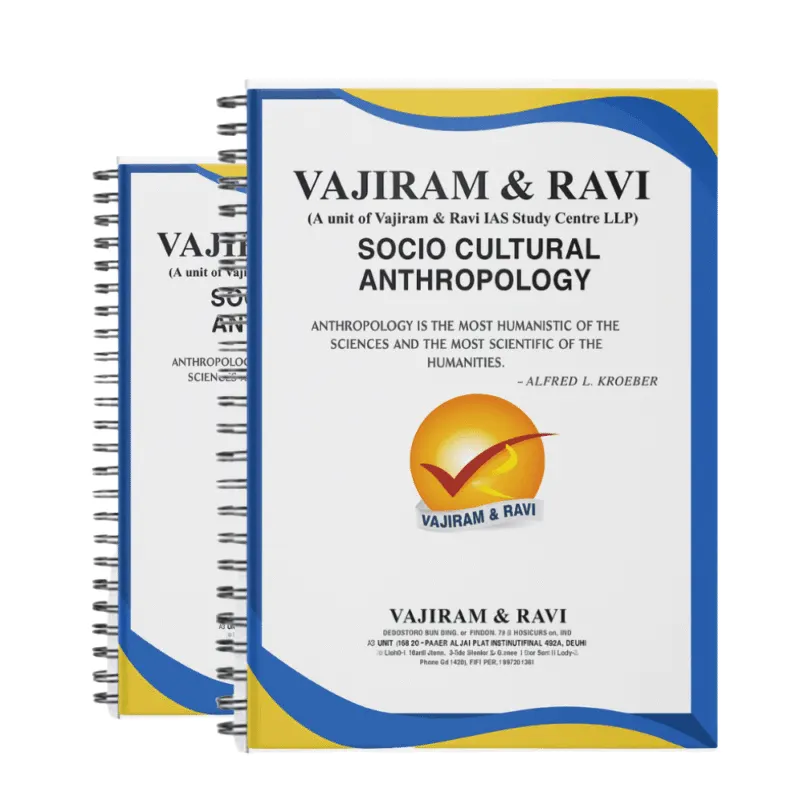
This 2-booklet set from Vajiram & Ravi covers the entire UPSC Anthropology Optional syllabus across both Paper 1 (Socio-Cultural Anthropology and Physical Anthropology) and Paper 2 (Indian Anthropology). Each booklet is structured for high-retention reading, crisp bullet-point delivery, and answer-ready content for UPSC Mains aspirants choosing Anthropology as their optional subject.
- Booklet 1: Introduction to Anthropology and Human Evolution β Meaning, scope and goals of anthropology; relationship with other sciences; emergence of the discipline; theories of evolution from Lamarck and Darwin to the modern evolutionary synthesis; natural selection; genetic drift; mutation as an evolutionary force; speciation and adaptation.
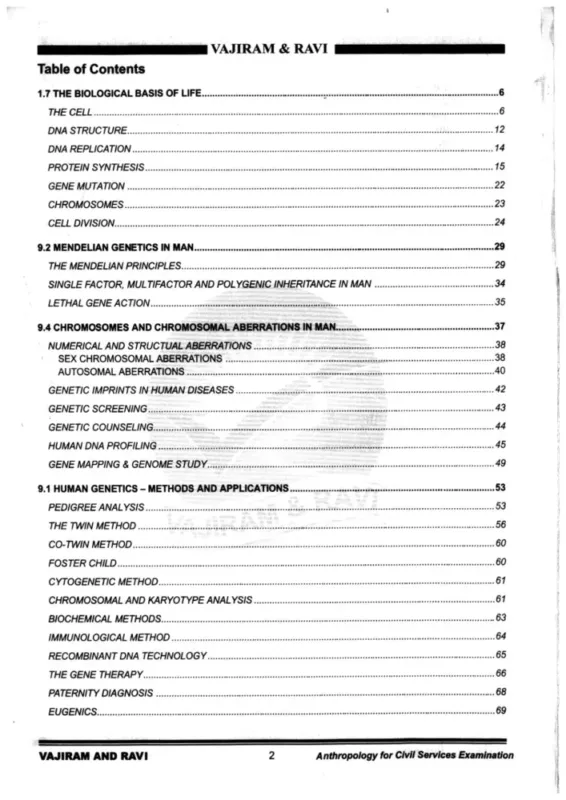
- Booklet 2: Physical Anthropology and Human Biology β Biological basis of life: cell structure, DNA, RNA; Mendelian inheritance; chromosomal theory; human genetics and blood group systems; genetic markers; race concept and racial classification; dermatoglyphics; growth and development; constitutional anthropology and somatology.
- Booklet 3: Primate Behaviour and Palaeontology β Order Primates: classification and taxonomy; comparative anatomy; primate behaviour; social organisation among primates; Australopithecus; Homo habilis; Homo erectus; Neanderthal Man; Cro-Magnon; fossil evidence from Africa, Asia and Europe; human migration and dispersal.
- Booklet 4: Archaeological Anthropology and Prehistoric Cultures β Concept of culture in anthropology; Old Stone Age, Middle Stone Age and New Stone Age; Chalcolithic and Iron Age cultures; Indian prehistoric sites; methods of archaeological excavation and dating; radiocarbon dating; stratigraphy; artefact analysis; megalithic cultures of India.
- Booklet 5: Socio-Cultural Anthropology β Foundations β Culture: meaning, characteristics and functions; cultural relativism; ethnocentrism; enculturation and acculturation; culture change; diffusion; independent invention; cultural ecology; subculture; counterculture; civilisation versus culture; linguistic anthropology and the Sapir-Whorf hypothesis.
- Booklet 6: Social Structure, Kinship and Marriage β Kinship: meaning, types and functions; descent theory: unilineal, bilateral and ambilineal; lineage, clan, phratry and moiety; kinship terminology systems; marriage: definition, types and functions; theories of marriage; incest taboo; endogamy and exogamy; hypergamy; cross-cousin marriage; levirate and sororate.
- Booklet 7: Family, Household and Domestic Groups β Family: nuclear, joint and extended; functions of family across cultures; changes in family structure with modernisation; household as a unit of analysis; domestic cycle; family and property; matrilineal and patrilineal societies in India; Nayar, Khasi and Garo kinship systems as UPSC case studies.
- Booklet 8: Economic Anthropology, Political Anthropology and Religion β Economic systems in tribal and peasant societies; reciprocity, redistribution and market exchange; gift economy; Mauss and Malinowski; political organisation: band, tribe, chiefdom and state; power and authority; witchcraft, sorcery and magic; religion and ritual; totemism; animism; shamanism; rites of passage.
- Booklet 9: Applied Anthropology and Social Change β Applied anthropology: definition and scope; development anthropology; action anthropology; anthropology and colonial administration; anthropology and public health; medical anthropology; social change theories: evolution, diffusion, acculturation; modernisation theory; globalisation and culture; ethnic identity and ethnicity in contemporary societies.
- Booklet 10: Indian Anthropology β Tribal India and Racial History β Racial and linguistic diversity of India; Negrito, Australoid, Mongoloid and Mediterranean elements; tribal populations of India; geographic distribution; demographic profile; tribal economies; PVTG (Particularly Vulnerable Tribal Groups); tribal movements; Fifth and Sixth Schedule provisions; constitutional safeguards for tribals.
- Booklet 11: Indian Villages, Caste System and Peasant Society β Village as a unit of social organisation; jajmani system; caste: origin theories, structure and functions; Varna and Jati; inter-caste relations; caste mobility; sanskritisation and westernisation; dominant caste concept; Srinivas and Dumont on caste; agrarian social structure; peasant movements; green revolution and its social impact.
- Booklet 12: Contemporary Issues β Tribes, Women, Development and Anthropology in India β Problems of tribal communities: land alienation, indebtedness, displacement; tribal identity and integration versus assimilation debate; women and gender in Indian society; women’s status among tribes; demographic profile of India; anthropological perspectives on poverty; development projects and tribal displacement; role of NGOs; ethnographic studies on Indian tribes.
In-Depth Content Breakdown: Booklet by Booklet
Booklet 1: Introduction to Anthropology and Human Evolution
This foundational booklet establishes the core conceptual framework of anthropology as a discipline for UPSC Mains Paper 1. It traces the intellectual history from early naturalists to the modern synthesis, covering Lamarckism, Darwinian natural selection, mutation theory and population genetics. The booklet situates anthropology within the broader social and natural sciences and clearly articulates the four subfields β physical, cultural, linguistic and archaeological β as demanded by the UPSC syllabus. Questions from this section appear reliably in Paper 1 and carry high marks when answered with precision.
Vajiram & Ravi structures this booklet with concept-definition boxes followed by crisp explanatory paragraphs, making it straightforward to build point-format answers for the 150-word and 250-word UPSC question types. Key evolutionary mechanisms β gene flow, genetic drift, the bottleneck effect and the founder effect β are each explained with diagrammatic support. The booklet includes a comparative table of evolutionary theories that candidates can reproduce in answers to show analytical depth. The content aligns precisely with the latest UPSC Anthropology optional syllabus without unnecessary tangential material.
Booklet 2: Physical Anthropology and Human Biology
Physical Anthropology is one of the highest-scoring segments of UPSC Anthropology Paper 1, and this booklet addresses it with the rigour and clarity expected from Vajiram & Ravi. It covers cell biology, the molecular basis of heredity, Mendelian genetics, chromosomal aberrations, blood group systems (ABO, Rh, MN) and their anthropological relevance. The booklet also addresses race as a biological and social concept, presenting critiques of racial typology alongside UNESCO statements β essential content for UPSC answer writing that demands a nuanced, multi-perspective approach.
The booklet is structured to ensure that Physical Anthropology topics connect with broader questions about human variation, adaptation and population studies. Dermatoglyphics, somatometry, and constitutional types are covered with labelled diagrams that candidates can use as memory anchors. Growth curves, secular trends, and nutritional anthropology content are included to handle the applied dimension of Physical Anthropology questions. The Vajiram format ensures each concept is presented as a standalone answer-ready unit, reducing the time needed to convert notes into full examination answers.
Booklet 3: Primate Behaviour and Palaeontology
This booklet is crucial for UPSC Anthropology Paper 1 questions on primate taxonomy and human fossil records. It presents a systematic classification of the Order Primates, moving from Prosimii to Anthropoidea, with detailed coverage of comparative anatomy that helps candidates answer questions on the evolution of bipedalism, brain expansion and hand dexterity. Social behaviour patterns among primates β dominance hierarchies, grooming, mother-infant bonding β are analysed with reference to landmark studies by Jane Goodall and other primatologists, giving UPSC answers the scholarly depth examiners reward.
The hominin fossil sequence β Australopithecus afarensis, Homo habilis, Homo erectus, archaic Homo sapiens, Neanderthals and anatomically modern humans β is presented as a clear chronological narrative supported by a timeline chart. Key fossil sites in Africa (Olduvai Gorge, Laetoli, Lake Turkana), Asia (Peking Man, Java Man) and Europe are mapped for quick recall. The Out of Africa versus Multiregional hypotheses are evaluated objectively, equipping UPSC aspirants to write balanced analytical answers on human origins β a topic that appears in almost every year’s question paper.
Booklet 4: Archaeological Anthropology and Prehistoric Cultures
Archaeological Anthropology is a relatively scoring area in UPSC Anthropology Paper 1 because it involves factual recall combined with contextual analysis. This booklet covers the Stone Age sequence β Lower, Middle and Upper Palaeolithic; Mesolithic; and Neolithic β with site-specific examples from both global and Indian contexts. Chalcolithic and Iron Age cultures are discussed in relation to the transition from food-gathering to food-production economies, which forms an important theoretical thread in the UPSC syllabus on cultural evolution and social complexity.
Indian prehistoric sites β Bhimbetka, Isampur, Sanghao, Langhnaj, Chirand β are listed with their cultural affiliations and significance, enabling candidates to use site-specific evidence in answers. Dating methods β radiocarbon, thermoluminescence, potassium-argon, dendrochronology β are explained with sufficient technical detail for Paper 1 questions. The booklet also addresses the megalithic tradition in South India, linking archaeological evidence to ethnographic parallels in contemporary tribal societies β a cross-referencing skill that UPSC examiners specifically reward in Anthropology optional answers.
Booklet 5: Socio-Cultural Anthropology β Foundations
This booklet forms the theoretical backbone of UPSC Anthropology Paper 1’s socio-cultural section. Culture as a concept is unpacked through definitions from Tylor, Kroeber, Kluckhohn and Geertz, giving candidates multiple scholarly authorities to cite in answers. The processes of cultural change β diffusion, invention, acculturation, cultural lag, assimilation and transculturation β are each explained with field examples that translate directly into high-quality UPSC Mains answer content. Cultural relativism and its contrast with ethnocentrism are treated as both theoretical positions and as ethical frameworks.
The Vajiram booklet format shines here with side-by-side comparison tables for related concepts β for example, acculturation versus assimilation, or enculturation versus socialisation β which UPSC candidates can use to distinguish concepts clearly in answers. The linguistic anthropology section, covering the Sapir-Whorf hypothesis and the relationship between language, culture and cognition, is presented concisely but with enough scholarly grounding to support 150-word answers. Cultural ecology and the contributions of Julian Steward are integrated with environmental determinism debates relevant to contemporary development anthropology discussions in Paper 2.
Booklet 6: Social Structure, Kinship and Marriage
Kinship and marriage consistently constitute a high-weightage portion of UPSC Anthropology Paper 1, and this booklet addresses the topic with the depth required for the optional examination. Descent theory β unilineal (patrilineal and matrilineal), double descent, bilateral and ambilineal β is explained with ethnographic examples from both Indian and global tribal societies. Kinship terminology systems (Sudanese, Omaha, Crow, Eskimo, Hawaiian and Iroquois) are presented with structural diagrams that make memorisation manageable. The booklet also covers the theoretical contributions of Morgan, Radcliffe-Brown, LΓ©vi-Strauss and Goody on kinship.
Marriage theories β including alliance theory, descent theory approaches, LΓ©vi-Strauss’s exchange model, and functionalist perspectives β are discussed with ethnographic evidence from societies where cross-cousin marriage, bride price, dowry and polyandry are practised. The incest taboo and its theoretical explanations (biological, sociological and psychological) are given attention as a perennial UPSC question topic. Forms of marriage β monogamy, polygyny, polyandry, group marriage β are illustrated with specific field examples, equipping candidates to build both comparative and analytical answers within UPSC’s word-limit constraints.
Booklet 7: Family, Household and Domestic Groups
This booklet addresses one of the most human and relatable sections of the UPSC Anthropology optional syllabus β the family as a universal yet culturally variable institution. Nuclear, joint and extended family forms are analysed functionally and structurally, with attention to how industrialisation and urbanisation are transforming family structures globally and in India. The booklet engages critically with Murdock’s functionalist claims about the nuclear family’s universality and the anthropological counter-evidence from matrilineal societies, giving candidates a genuinely analytical perspective for UPSC essay-format answers.
The Indian examples in this booklet are particularly valuable for UPSC Paper 2 preparation. The Nayar tharavad, the Khasi matrilineal clan system and the Garo A’chik society are described with structural clarity β residence patterns, property inheritance, authority structures, and marriage customs are each addressed. These Indian matrilineal systems are among the most frequently examined topics in UPSC Anthropology Paper 2, and the Vajiram treatment provides sufficient detail for both short-answer and long-answer question formats. The domestic cycle concept, introduced through Meyer Fortes’s framework, adds theoretical depth.
Booklet 8: Economic Anthropology, Political Anthropology and Religion
This booklet covers three major theoretical domains of UPSC Anthropology Paper 1 in an integrated manner that reflects how these systems interact in real societies. Economic anthropology draws on Malinowski’s Kula ring, Mauss’s gift theory, and Polanyi’s substantivist versus formalist debate to explain how non-Western economies function through reciprocity and redistribution rather than market principles. These theoretical frameworks are presented in a format designed for UPSC answer writing, with key scholar names, concepts and examples clearly flagged for quick recall during examination.
Political anthropology covers the spectrum from band societies to archaic states, drawing on Elman Service’s typology and Lucy Mair’s African political systems. The booklet addresses how power, legitimacy and social control function in stateless societies β highly relevant for UPSC questions on tribal governance and the Fifth Schedule. The religion section β covering animism (Tylor), mana and taboo, totemism (Durkheim, LΓ©vi-Strauss), shamanism, witchcraft (Evans-Pritchard) and rites of passage (Van Gennep) β is thorough enough to handle any question combination the UPSC examiner may construct from these interlinked topics.
Booklet 9: Applied Anthropology and Social Change
Applied Anthropology is an increasingly important area of the UPSC Anthropology optional syllabus, reflecting the examination’s emphasis on connecting academic concepts to real development and governance challenges. This booklet defines applied anthropology across its major domains β development anthropology, action anthropology, advocacy anthropology and medical anthropology β and traces the discipline’s evolution from its colonial administration roots to its contemporary role in health, disaster response and environmental policy. The linkage to UPSC General Studies themes on health, tribals and development makes this booklet doubly useful.
Social change theories β classical evolutionism, diffusionism, historical particularism, structural-functionalism, and conflict theory β are evaluated with reference to both Western and Indian contexts. The booklet addresses modernisation theory, dependency theory and globalisation’s cultural consequences in a balanced manner suitable for UPSC analytical questions. The coverage of ethnic identity, ethnicity and indigenous rights connects to contemporary current affairs, which UPSC Anthropology candidates are expected to integrate into their optional answers. Case studies from tribal rehabilitation, community health programmes and environmental anthropology add practical grounding to theoretical content.
Booklet 10: Indian Anthropology β Tribal India and Racial History
This booklet opens the UPSC Anthropology Paper 2 content with a survey of India’s racial and linguistic diversity β one of the richest anthropological tapestries in the world. The racial elements (Negrito, Proto-Australoid, Mongoloid, Mediterranean, Western Brachycephals and Nordic) identified by B.S. Guha are presented with a critical evaluation of the racial classification approach, which allows UPSC candidates to show analytical awareness rather than rote recall. India’s linguistic families β Indo-European, Dravidian, Austric and Sino-Tibetan β are mapped in relation to population distribution and tribal communities.
The tribal population of India is addressed with geographic precision β Northeast tribes, Central Indian tribes, Andaman and Nicobar tribes, and the Nilgiris communities are each profiled. PVTG (Particularly Vulnerable Tribal Groups) is addressed with the policy and administrative framework, including the Dhebar Commission and Lokur Committee recommendations, linking anthropological knowledge to UPSC General Studies Paper 2 governance content. Constitutional provisions under Articles 244, 338A, and the Fifth and Sixth Schedules are explained clearly, making this booklet directly useful for GS Paper 2 as well as the Anthropology optional.
Booklet 11: Indian Villages, Caste System and Peasant Society
Caste is arguably the most examined topic in UPSC Anthropology Paper 2, and this booklet addresses it with the theoretical depth and empirical richness the subject demands. The jajmani system β its structure, functions, and decline β is presented with M.N. Srinivas’s village study evidence. Caste theories from BouglΓ©, Dumont (Homo Hierarchicus), Ambedkar, Srinivas (dominant caste, sanskritisation) and Andre BΓ©teille are compared in a structured framework, equipping candidates to engage with competing scholarly perspectives in their UPSC Mains answers β a skill that distinguishes top scorers from average performers.
The peasant society section addresses India’s agrarian structure with reference to land tenure systems, tenancy relations, bonded labour and the impact of land reform legislation. The green revolution and its differential social outcomes β regional inequality, class differentiation among farmers, marginalisation of small cultivators β are analysed with anthropological evidence from village studies. Peasant movements, from the Tebhaga and Telangana movements to contemporary farmer agitations, are contextualised within the anthropological framework of resistance and social change. The booklet links village and caste studies to contemporary policy debates that appear in UPSC General Studies.
Booklet 12: Contemporary Issues β Tribes, Women, Development and Anthropology in India
This final booklet addresses the contemporary and applied dimensions of Indian Anthropology that have gained increasing weightage in recent UPSC Anthropology Paper 2 question papers. Land alienation, displacement by development projects (dams, mines, SEZs), indebtedness and forest rights are examined as structural problems facing tribal communities, with reference to the Forest Rights Act 2006, PESA 1996, and relevant Supreme Court judgements. The integration versus assimilation debate β a perennial UPSC question β is addressed through Verrier Elwin’s isolationist approach, Nehru’s tribal panchsheel, and the mainstreaming perspective.
Women’s status in tribal societies β including matrilineal systems, women’s economic roles, gendered division of labour and the impact of development programmes on tribal women β is addressed with ethnographic evidence from multiple regional contexts. The anthropological study of demographic processes β population growth, migration, urbanisation among tribal communities β is connected to India’s development challenges. The booklet closes with a review of major anthropologists who have worked in India β Elwin, Srinivas, Irawati Karve, S.C. Roy β providing candidates with a ready reference for scholarly citation in UPSC Anthropology Paper 2 answers.
Physical Construction and Quality Standards
Every booklet in this Vajiram & Ravi Anthropology Optional set is manufactured to withstand the demands of intensive UPSC preparation β repeated reading sessions, heavy annotation, and months of daily use before the Mains examination. The physical production standards match the academic quality of the content inside.
Paper Quality: 75 GSM Anti-Glare White Paper
The 75 GSM ultra-white paper used across all 2 Booklets is chosen specifically for UPSC study conditions β long hours under desk lamps and natural light alike. The paper’s high opacity means that content printed on one side does not shadow through to the reverse, maintaining clarity for dense anthropological diagrams, kinship charts and fossil timelines. Multiple highlighter colours β yellow, green, pink and orange β can be applied without bleed-through, enabling the colour-coded revision system that many UPSC toppers recommend for optional subject preparation. The slightly anti-glare surface reduces eye strain during extended reading sessions.
Printing Technology: High-Resolution Laser Printing
All 12 Vajiram & Ravi Anthropology Optional booklets are produced using high-resolution laser printing technology that renders text, diagrams and tables with consistent sharpness across every page. Kinship diagrams, primate classification trees, fossil chronology charts and racial distribution maps are printed with the precision detail needed for UPSC answer reproduction. Laser toner is permanent β it will not smudge when pages are turned rapidly or when wet fingers contact the page during humid examination preparation months. Flowcharts linking theoretical schools and their major scholars are reproduced with clear hierarchy lines that photograph well for digital revision notes.
Binding and Durability
The booklets are available in either spiral or book binding formats, both designed for sustained UPSC study use. Spiral binding allows each booklet to lie completely flat on a desk β essential when candidates are simultaneously writing notes alongside the printed content, a common technique for Anthropology optional preparation. The 300 GSM laminated cover provides rigidity and protects the booklet from damage at the corners and spine during transport in study bags. Book-bound volumes offer a compact, shelf-ready form that stores cleanly alongside other UPSC optional material. Both binding formats maintain page alignment throughout the booklet’s study life.
Key Features and Study Design
Vajiram & Ravi’s Anthropology Optional notes are specifically designed for the UPSC Mains examination format β structured to help candidates build point-format answers quickly, cite scholars accurately, and cover both Paper 1 and Paper 2 within a single integrated set of booklets.
- Scholar-Citation Framework: Every major theoretical position is presented with the associated scholar’s name and key publication clearly flagged β Dumont on caste, Malinowski on exchange, Evans-Pritchard on witchcraft β enabling UPSC candidates to demonstrate scholarly depth in answers without separate reference tracking.
- Comparison Tables for High-Density Topics: Kinship terminology systems, descent theories, marriage types and evolutionary mechanisms are each presented in side-by-side comparison tables that allow rapid differentiation β directly transferable to UPSC Mains answers where distinguish-between questions carry substantial marks.
- Indian Case Studies Throughout: Ethnographic field examples from Indian tribal societies β Todas, Nagas, Santhals, Bhils, Gonds, Nayars, Khasi β are woven into the content at relevant theoretical points, ensuring Paper 2 preparation is integrated rather than siloed from Paper 1 conceptual learning.
- Answer-Ready Bullet Format: Content is written in tight, information-dense bullet points aligned with the 150-word and 250-word answer formats of UPSC Mains. Each bullet functions as a standalone point that can be expanded or contracted depending on the word-limit requirement of any given examination question.
- UPSC Syllabus Alignment: The 2-booklet sequence follows the UPSC Anthropology optional syllabus structure precisely, with no significant deviation into non-examinable content. Topic headings correspond directly to the UPSC notification wording, making it straightforward for candidates to verify coverage and identify gaps in their preparation.
Shipping, Packaging and Delivery
All 12 Vajiram & Ravi Anthropology Optional booklets are shipped in a purpose-built corrugated cardboard box that provides rigid protection during transit. Each booklet is individually shrink-wrapped before being stacked in the dispatch box, protecting covers from moisture, dust and surface scuffing. Foam edge protectors are fitted at the box corners to absorb impact from courier handling. The outer box is sealed with reinforced tape and clearly labelled for priority fragile handling. This packaging protocol ensures that every booklet arrives in the same brand-new, unmarked condition in which it left our Mukherjee Nagar, Delhi dispatch centre β ready to use from the first day.
Orders are dispatched within 24 hours of payment confirmation and delivered pan India within 3-5 business days via tracked courier service. A shipment tracking ID is sent to your registered email and WhatsApp number immediately upon dispatch. If you have questions about your order status or need to buy additional booklets, contact our team directly on WhatsApp at +91 70045 49563 β responses are provided within business hours. In the unlikely event that any booklet in your set arrives damaged or a booklet is missing, a replacement is dispatched within 48 hours of your complaint. We want every UPSC aspirant to receive their study material in perfect condition and begin preparation without delay.
Frequently Asked Questions (FAQ)
A: Yes. Vajiram & Ravi is among the most established institutes for UPSC Anthropology optional preparation, and these 2025-26 printed booklets reflect that reputation. The content is structured for direct answer writing, covers both Paper 1 and Paper 2 in full, and includes the scholar citations and comparative frameworks that UPSC Mains examiners specifically reward. Candidates who engage seriously with all 2 Booklets will find the syllabus thoroughly addressed.
A: This set contains 12 individual printed booklets. The booklets collectively cover the entire UPSC Anthropology optional syllabus β from physical anthropology and primate studies through socio-cultural theory, kinship, marriage and family, to Indian anthropology including tribal India, caste system, village studies and contemporary development issues. You receive the complete 2-booklet set in a single shipment. There are no additional booklets to buy separately for this series.
A: This specific product listing is the English medium edition of the Vajiram & Ravi Anthropology Optional 2025-26 series β all 2 Booklets are written, printed and delivered in English. English medium is the dominant choice for UPSC Anthropology optional candidates because the primary scholarly literature, standard reference texts and most UPSC toppers’ answers in this subject are in English. If you need the Hindi medium version, please contact us on WhatsApp at +91 70045 49563 to check availability.
A: The socio-cultural anthropology booklets cover culture concepts and cultural processes; social structure and kinship systems; descent theory and kinship terminology; marriage forms and theories; family and domestic group structures; economic anthropology (reciprocity, redistribution, market exchange); political anthropology (band to state spectrum); religion, ritual and symbolism; and applied anthropology including development and medical anthropology. Indian ethnographic examples are woven throughout to support Paper 2 preparation alongside Paper 1 theory.
A: Vajiram & Ravi notes are characterised by high information density in a concise bullet-point format β each page delivers more examinable content per reading minute than most alternatives. The Vajiram approach emphasises scholar citations, concept definitions and comparative tables that translate directly into structured UPSC Mains answers. Unlike some institutes whose notes are lengthy and discursive, the Vajiram format suits candidates who prefer to build answers from clearly segmented content units rather than extracting points from running prose paragraphs.
A: Yes, the full 2-booklet set covers both UPSC Anthropology Paper 1 and Paper 2 completely. Booklets 1 through 9 address Paper 1 content β physical anthropology, human evolution, primatology, archaeological anthropology, socio-cultural theory, kinship, marriage, family, economic and political anthropology, religion and applied anthropology. Booklets 10 through 12 address Paper 2 content β Indian racial history, tribal communities, caste, village studies, peasant society and contemporary issues facing tribal India. Both papers are essential to buy as a complete set for balanced optional preparation.
A: The 2025-26 edition incorporates the current UPSC Anthropology optional syllabus as notified by UPSC for the relevant examination cycle. Vajiram & Ravi updates its optional materials each academic year to ensure alignment with syllabus requirements and to incorporate relevant contemporary examples β particularly in the applied anthropology, tribal policy and development sections of Paper 2, where current events and recent policy developments such as the Forest Rights Act, PESA and PVTG status updates are incorporated. Always verify your edition year against the batch label before study.
A: Vajiram & Ravi Anthropology Optional notes provide thorough syllabus coverage and are used by many successful UPSC candidates as their primary study resource. Most serious aspirants supplement these printed notes with standard reference texts β Ember & Ember for Physical Anthropology, Haviland for cultural theory, and Nadeem Hasnain for Indian Anthropology β for additional depth in complex theoretical areas. However, the Vajiram booklets are strong enough as a primary resource for candidates who engage with them actively through self-testing and answer practice alongside their reading.
A: These booklets use 75 GSM ultra-white paper chosen for high opacity β multiple highlighter colors and gel pens work without bleed-through to the reverse side, ideal for color-coded revision. Yellow, green, pink and orange highlighters all perform without shadowing. The paper’s anti-glare surface is also suited to extended reading sessions under both artificial and natural light. You can annotate freely in the margins with ballpoint, gel pen or fine-liner without worrying about ink transfer or paper degradation over months of study use.
A: Orders are dispatched from our Mukherjee Nagar, Delhi centre within 24 hours of payment confirmation and delivered pan India within 3-5 business days via a tracked courier service. A tracking ID is sent to your registered WhatsApp number and email immediately after dispatch. You can monitor your shipment in real time through the courier’s tracking portal. For queries about delivery status or to buy additional materials, contact us on WhatsApp at +91 70045 49563. Deliveries reach all major cities, district towns and pincode-serviceable addresses across India.
A: Yes. These Vajiram & Ravi Anthropology Optional booklets are directly useful for state PSC examinations that offer Anthropology as an optional subject, including BPSC, UPPSC, MPPSC, RAS and other state-level civil services examinations. The Indian Anthropology content in booklets 10, 11 and 12 β covering tribal communities, caste, village studies and contemporary development issues β is particularly relevant for state PSC candidates because many state examinations emphasise Indian and regional anthropological content alongside the standard Paper 1 theory syllabus.
A: In the rare event that a booklet is missing from your set or arrives with transit damage β torn pages, water damage or broken binding β contact us immediately on WhatsApp at +91 70045 49563 with a photograph of the issue. A replacement booklet will be dispatched within 48 hours of complaint verification, at no additional cost to you. We take packaging quality seriously and use shrink-wrapping, corrugated boxing and edge protectors to prevent damage in transit, but we stand fully behind every order we ship with this replacement guarantee.
Summary
| Specification | Value |
|---|---|
| Booklets | 12 Printed Booklets |
| Language | English Medium |
| Subject | Anthropology Optional (Paper 1 + Paper 2) |
| Institute | Vajiram & Ravi |
| Edition | 2025-26 |
| Paper | 75 GSM Ultra-White |
| Binding | Spiral or Book Binding |
| Delivery | 3-5 Business Days Pan India |
| Also Useful For | BPSC, UPPSC, MPPSC, RAS and all State PSC Anthropology Optional |
This product is dispatched from our store in Mukherjee Nagar, Delhi β India’s foremost UPSC preparation hub. Buy Vajiram & Ravi Anthropology Optional printed notes online today and receive your complete 2-booklet set with pan India delivery in 3-5 days.
Reference: UPSC official syllabus
Customer Reviews 244
Vajiram ke notes se mera confidence badh gaya. Definitely 5 stars.
Quality aur content both 10/10. Definitely recommend to all anthropology students.
Good quality notes.
Quality aur quantity dono mein satisfied hoon. Definitely recommend.
Notes theek thaak hain par depth missing hai kahin kahin.
Bohot useful hai exam ke liye, sirf ek do topics could be more detailed.
Print quality is nice aur booklets durable hain. Content helpful hai exam ke liye.
Vajiram ke booklets itne detailed hain, concept samajhne mein bahut madadh mili. Highly recommended for serious UPSC aspirants.
Aspirants Also Bought
More from the same category
About Vajiram & Ravi Anthropology Optional Notes 2025-26
Vajiram & Ravi Anthropology Optional Notes 2025-26 is a highly recommended UPSC study material from Vajiram & Ravi, specially designed for Anthropology Optional preparation. Available in English medium, this material is crafted to match the exact requirements of the UPSC Civil Services Examination syllabus β covering both Prelims and Mains comprehensively.
Product Details
- Institute: Vajiram & Ravi
- Subject: Anthropology Optional
- Medium: English
- Format: Printed
- Delivery: Pan-India delivery in 3β5 working days
- Format: Original printed material, verified authentic
Why Buy from UPSC Store?
- β 100% Genuine Printed Material β Original printed notes, no photocopies or fake copies
- β Fast Delivery β Ships within 24 hours, arrives in 3β5 days pan-India
- β Secure Packaging β Bubble-wrapped and boxed to prevent damage in transit
- β Trusted by 10,000+ Aspirants β India's most reliable UPSC material marketplace
- β WhatsApp Support β Get expert guidance on material selection before ordering
Frequently Asked Questions
Yes, all products at UPSC Store are 100% genuine printed materials. We do not sell photocopies or fake copies.
Orders are dispatched within 24 hours and delivered across India in 3β5 working days via reputed courier partners.
Yes, we accept returns within 7 days if the product is damaged or incorrect. Check our refund policy for details.
We recommend pairing this with current affairs notes and a UPSC test series for comprehensive preparation. Browse more in Anthropology, Optional, UPSC, Vajiram and Ravi.