

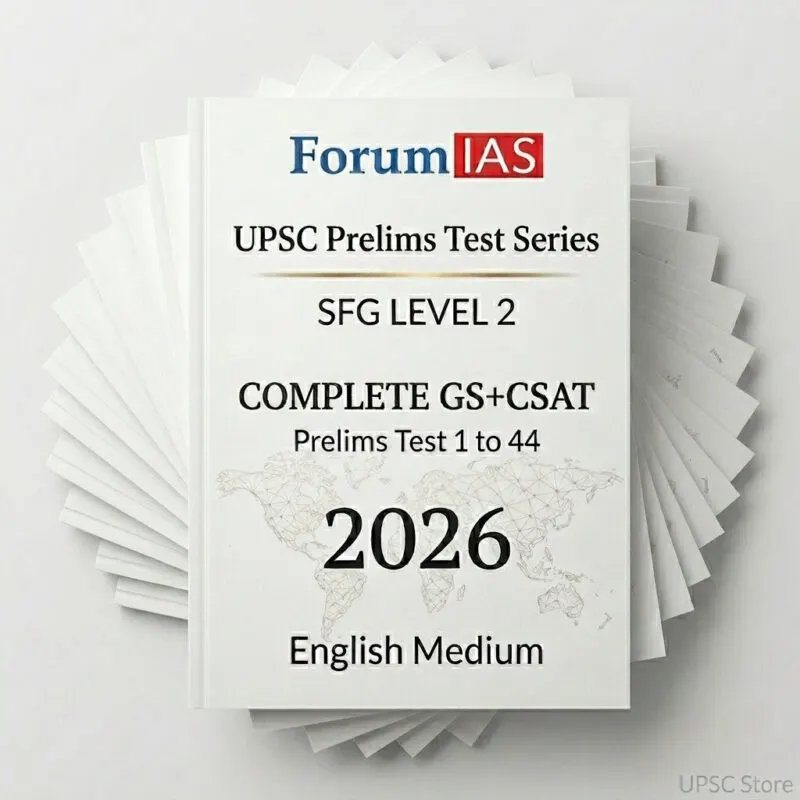

Forum IAS Prelims SFG Test Series Level 2 English Medium 2026 | 36 Booklets | English Medium | UPSC Study Material
Binding Guide
Pick the binding that fits how you study.
Spiral Binding
- Lays completely flat
- 360° page rotation
- Great for note-taking
- Best for maths, science, reference
Without Spiral
- Compact & professional
- Sturdy glued/stitched spine
- Easy to stack & store
- Best for textbooks & long-term
About Forum IAS SFG Test Series
The Forum IAS SFG Test Series is a printed UPSC study material set sold by UPSC Store — India’s trusted source for genuine, latest-batch civil services preparation books. This page covers full booklet details, syllabus coverage, pricing, shipping, and frequently asked questions. Useful for UPSC CSE, BPSC, UPPSC, MPPSC, RAS and other state PSC examinations.
Forum IAS Prelims SFG Test Series Level 2 2026 — 36 English Medium Printed Test Booklets for UPSC GS Prelims
Related: Forum IAS test series · Prelims test series
Product Overview
Buy Forum IAS Prelims SFG Test Series Level 2 printed test booklets online — the complete 2026 batch covering all GS Prelims subjects across 36 comprehensive mock examinations. This full-length test series is designed to evaluate your readiness across Economy, Modern History, Science & Technology, Environment, Polity, Geography, Agriculture, and Ancient History with authentic UPSC-level difficulty and pattern alignment.
| Feature | Details |
|---|---|
| Booklets Count | 36 Individual Printed Test Booklets — Complete SFG Level 2 Test Series |
| Language | English Medium |
| Publisher | Forum IAS (SFG Prelims Test Series) |
| Edition | 2026 — Latest Genuine Batch |
| Condition | Brand New, Unmarked, Fresh Stock |
| Format | High-Quality Printed Test Booklets — Individual or Book Binding |
| Paper Quality | 75 GSM Ultra-White — Highlighter Safe, Zero Bleed-Through |
| Shipping | Pan India Delivery in 3-5 Business Days — Tracked |
| Also Useful For | BPSC, UPPSC, MPPSC, RAS, KPSC, JPSC, OPSC and all State PSC Examinations |
| Dimensions | 30 × 21 × 1 cm |
Complete Test Series Breakdown — 36 Full-Length Mock Tests
This Forum IAS SFG Level 2 test series comprises 36 individually bookletted full-length UPSC Prelims mock tests, each designed to replicate authentic examination patterns, time constraints, and difficulty calibration. Every test booklet contains 100 multiple-choice questions (MCQs) spanning the entire General Studies Prelims syllabus, with progressive difficulty scaling from foundational concepts to advanced application-based reasoning required for rank-securing marks.
| Test Range | Subject / Topic | Booklet Count |
|---|---|---|
| Tests 1–7 | Economy — Microeconomics, Macroeconomics, Development Economics, RBI Policies, Banking Sector, Inflation, Trade | 7 Booklets |
| Tests 8–12 | Modern History — Indian Independence, Freedom Struggle, Mughal Era, Colonial Policies, Social Reforms | 5 Booklets |
| Tests 13–16 | Science & Technology — Space Missions, Medical Science, Biotechnology, IT, Nanotechnology, Physics Applications | 4 Booklets |
| Tests 17–21 | Environment — Climate Change, Biodiversity, Conservation, Pollution, Sustainable Development, Eco-Zones | 5 Booklets |
| Tests 22–28 | Polity — Indian Constitution, Governance, Parliamentary Procedure, Rights, Electoral System, Federalism | 7 Booklets |
| Tests 29–33 | Geography — Indian Physical Geography, Human Geography, Geopolitics, Regional Studies, Map-Based Questions | 5 Booklets |
| Test 34 | Agriculture — Crop Production, Agricultural Policies, Food Security, Rural Development, Land Reforms | 1 Booklet |
| Tests 35–36 | Ancient History — Vedic Period, Maurya, Gupta, Early Medieval Dynasties, Art & Culture, Archaeological Evidence | 2 Booklets |
| Dimensions | 30 × 21 × 1 cm |
Complete Booklet Catalog — Test-by-Test Coverage
This Forum IAS SFG Level 2 test series is constructed to progressively build your GS Prelims competency through subject-wise specialization. Each test booklet is independently printable and features 100 UPSC-standard MCQs with options (A, B, C, D) formatted exactly as they appear on the actual UPSC answer sheet. The series is calibrated for aspirants targeting 80+ percentile in Prelims, with answer keys and detailed explanations provided separately.
- Tests 1–7: Economy Focus — These seven test booklets drill deep into macroeconomic policy, monetary systems, fiscal architecture, and contemporary economic challenges. Covers GST, inflation targeting, forex reserves, current account deficit, and Indian banking sector reforms with application-based MCQs testing analysis beyond rote memorization.
- Tests 8–12: Modern History Mastery — Five booklets spanning the Mughal empire transition, British colonial economy, Indian independence movement phases, and social reform movements. Includes timeline-based questions, cause-effect analysis, and leader-contribution matching designed for Prelims accuracy.
- Tests 13–16: Science & Technology Integration — Four test booklets covering space missions (Chandrayaan, Mangalyaan, Aditya L1), medical breakthroughs, biotechnology applications, and IT innovations. Includes diagram-based questions on vaccines, CRISPR, 5G, and semiconductor manufacturing aligned with current news events.
- Tests 17–21: Environment & Ecology Depth — Five booklets addressing climate change science, biodiversity hotspots, protected area classifications, pollution monitoring, and sustainable development goals. Tests map-reading, species identification, and policy interpretation critical for UPSC Prelims.
- Tests 22–28: Polity & Governance Foundation — Seven extensive test booklets on constitutional provisions, fundamental rights, parliamentary procedures, election commission powers, and federal structure. Includes scenario-based questions on constitutional amendments, judicial pronouncements, and governance reforms.
- Tests 29–33: Geography Spatial Reasoning — Five booklets emphasizing Indian physical geography, climate zones, river systems, geopolitical boundaries, and resource distribution. Heavy emphasis on map-based MCQs, latitude-longitude calculations, and regional geopolitics relevant to UPSC’s geographic focus.
- Test 34: Agriculture & Rural Development — Single focused booklet on agricultural policies, crop classification, food security schemes, land reforms, and rural infrastructure. Covers Green Revolution history, MSP systems, and contemporary agricultural crises frequently tested in Prelims.
- Tests 35–36: Ancient Indian History — Two final booklets covering Vedic civilization, Mauryan and Gupta empires, early medieval dynasties, architectural achievements, and numismatic evidence. Emphasizes chronology, administrative systems, and cultural contributions tested in UPSC Prelims patterns.
In-Depth Content Breakdown: Booklet by Booklet Analysis
Tests 1–3: Economy Fundamentals (Booklets 1–3)
These opening three test booklets establish the foundational economic concepts critical for UPSC Prelims success. Each test contains 100 MCQs distributed across microeconomic principles (supply-demand elasticity, market structures, consumer behavior), macroeconomic aggregates (GDP measurement, inflation calculation, unemployment types), and Indian economic data (per capita income, sectoral contribution, demographic dividend). Questions progress from definition-based (identifying economic terms) to application-based (interpreting RBI press releases, analyzing budget announcements, calculating economic indicators from given data). The content aligns with UPSC’s emphasis on contemporary economic policy, making these booklets essential for aspirants aiming above 80 percentile where economic questions often differentiate successful candidates.
Each booklet features carefully curated MCQs reflecting actual UPSC difficulty patterns, including distractor analysis and negative marking psychology. For instance, inflation-related questions test understanding of wholesale price index, consumer price index, and core inflation separately, requiring knowledge of methodological differences. Answer explanations span 40-60 words per question, covering why correct options work, why distractors fail, and relevant economic theory. Questions reference Finance Ministry data, RBI circulars, and World Bank reports, ensuring relevance for aspirants preparing for 2026 Prelims when current-year economic events will feature prominently.
Tests 4–7: Advanced Economy Topics (Booklets 4–7)
These four test booklets elevate economy content toward application and synthesis, testing your ability to connect economic concepts to real-world policy outcomes. Topics include sectoral growth analysis, monetary transmission mechanisms, trade policies, currency management, and fiscal federalism in India’s context. Each MCQ presents economic scenarios (like “If RBI increases CRR by 50 basis points, what will be the likely impact on liquidity?”) requiring multi-step reasoning combining economic theory with Indian institutional knowledge. These tests calibrate difficulty toward the top 200-rank bracket where economy questions demand sophisticated understanding of policy interconnections rather than textbook recall.
Advanced features include comparative questions (contrasting Keynesian versus Austrian economic approaches to Indian context), data interpretation sets (presenting growth rate tables requiring calculation and trend analysis), and policy evaluation questions (assessing effectiveness of specific government schemes like PM Kisan or PMJDY using economic metrics). Each booklet integrates 8-12 questions from current-year budget announcements, RBI quarterly monetary policy statements, and economic surveys, ensuring content freshness for 2026 preparation cycles. Explanations include relevant budget speech excerpts, ministry notifications, and economic newspaper editorials from Times of India Business section and The Hindu Business Line.
Tests 8–10: Modern History Core (Booklets 8–10)
These three test booklets anchor Modern Indian History preparation in pre-independence and early independence periods, covering the Mughal decline, British colonization phases, and freedom struggle movements. Test 8 focuses on Mughal administrative structure, decline factors, and British East India Company expansion (1757 Battle of Plassey through 1857 Revolt). Test 9 emphasizes colonial economic policies (land revenue systems, drain of wealth, deindustrialization) and their social consequences. Test 10 transitions toward independence era, covering Quit India Movement, Partition dynamics, and Mountbatten Plan implications. Each test presents 100 MCQs with careful chronological grounding, requiring memorization of dates, names, and events while also testing causal understanding (Why did the 1857 Revolt occur? What were its consequences?) essential for Prelims success.
Question formats include straightforward recall (Who was the first Governor-General of India?), contextual MCQs (In which context did Lord Cornwallis introduce the Permanent Settlement?), and comparative analysis (Distinguish between the Bengal Famine of 1770 and 1943 in terms of causes and colonial responses). Each booklet includes 5-8 questions sourced from authentic historical documents, coins, and archaeological findings, reflecting UPSC’s appreciation for primary source-based questions. Explanations provide narrative context linking individual events to broader historical movements, helping aspirants develop the holistic understanding necessary for Mains preparation while acing Prelims’ specific factual demands.
Tests 11–12: Modern History Movements & Figures (Booklets 11–12)
These final two Modern History test booklets deepen focus on the independence movement’s social reform dimension and key political figures. Test 11 covers 19th-century social reform movements (Brahmo Samaj, Arya Samaj, Theosophical Society), their leaders, philosophical underpinnings, and impact on caste system, women’s rights, and religious orthodoxy. Test 12 specializes in nationalist leaders (Dadabhai Naoroji, Gopal Krishna Gokhale, Bal Gangadhar Tilak, Gandhi, Nehru, Patel) and their ideologies, contributions, and controversies. Both tests employ comparative questions (How did moderate nationalism differ from extremist approaches?) and source-based MCQs where short historical quotes require attribution to correct leaders or movements.
Advanced features include questions testing nuanced understanding: for example, asking why certain social reformers were criticized by later nationalist historians, or how specific reform movements influenced constitutional drafting. Each booklet integrates questions from UPSC’s Historical Documents Archive, university syllabi, and research papers on independence history. Explanations span ideological contexts (What was Orientalism’s impact on 19th-century Indian thought?), international influences (How did European liberalism shape Indian nationalist ideology?), and legacy assessment (Which independence movement ideas are reflected in current Constitution?). This dual focus on facts and frameworks ensures aspirants can score well on MCQ-based Prelims while building conceptual depth for Mains and interviews.
Tests 13–14: Science & Technology Fundamentals (Booklets 13–14)
These two test booklets introduce Science & Technology content at Prelims difficulty, covering space missions (ISRO’s Chandrayaan, Mangalyaan, Aditya L1, Gaganyaan programs), medical scientific breakthroughs (vaccine development processes, CRISPR gene editing, pandemic-related scientific responses), and information technology (semiconductors, 5G networks, artificial intelligence applications in governance). Test 13 emphasizes factual knowledge about mission objectives, launch costs, international collaborations, and scientific achievements. Test 14 scales toward application, asking aspirants to evaluate technology’s governance implications (How does AI-based predictive policing challenge constitutional rights?) or scientific policy questions (Should India prioritize green hydrogen over traditional energy?).
Content reflects UPSC’s preference for cutting-edge science with policy relevance. Questions about Chandrayaan-3’s chandrasthaan (lunar landing site) link to water-ice discovery importance for sustaining future moon bases. Vaccine-related questions connect immunology fundamentals to COVID-19 vaccine efficacy comparisons and India’s vaccination policy decisions. AI questions ground technological capability in constitutional provisions on privacy and equality. Each booklet includes 8-10 diagram-based or concept-map MCQs where aspirants identify labeled astronomical instruments, vaccine production stages, or semiconductor manufacturing processes. Explanations provide both scientific fundamentals and policy context, preparing aspirants for questions that increasingly blur science and governance boundaries in UPSC Prelims.
Tests 15–16: Advanced S&T & Applications (Booklets 15–16)
These final two Science & Technology test booklets push toward synthesis and implications, covering biotechnology (genetic counseling, gene therapy, crop genetic modification), environmental science applications (renewable energy technologies, carbon capture, pollution monitoring via satellite), and emerging technologies (blockchain governance, cyber security policy, space-based mineral extraction). Test 15 focuses on scientific mechanisms (How does CRISPR gene editing work? What are off-target effects?) while Test 16 emphasizes societal implications (Should India permit genetically modified crops? What are biosafety concerns?). Both tests incorporate India-specific technology initiatives like ISRO’s earth observation satellites for disaster management or Ministry of Electronics & IT’s semiconductor manufacturing goals.
Advanced features include multi-set questions where a case study about India’s space program is followed by 3-4 MCQs analyzing strategic benefits, international partnerships, or scientific achievements. Questions test awareness of current technology news (Chandrayaan-3’s soft-landing achievement, India’s first 5G launch, semiconductor fabs in Gujarat) integrated with foundational science concepts. Diagram interpretation includes satellite imagery analysis, genetic pedigree charts, and technology supply chain illustrations. Explanations balance scientific accuracy with policy awareness, helping aspirants understand not just “what” (the technology) but “why” (its strategic importance to India) and “how” (implementation challenges and opportunities). This approach aligns with UPSC’s evolution toward values-based, contemporary science questions rather than rote technical details.
Tests 17–19: Environment & Ecology Fundamentals (Booklets 17–19)
These three test booklets establish environmental science foundations essential for UPSC Prelims, covering ecosystem concepts (biomes, food chains, biodiversity hotspots), climate science (greenhouse effect, monsoon dynamics, ocean currents), and Indian environmental geography (Western Ghats, Sundarbans, Himalayan ecology). Test 17 emphasizes definitions and classifications (types of forests, biome characteristics, biodiversity indices). Test 18 scales toward application (How does climate change affect monsoon patterns? Why are Ghats considered biodiversity hotspots?). Test 19 integrates environmental policy (Protected Areas Act, Environmental Impact Assessment procedures, Wetlands Convention implementation). Each test contains 100 MCQs progressing from straightforward (Identify the biome) to complex (Analyze the cascading ecological impacts of dam construction).
Content reflects UPSC’s persistent focus on India’s natural heritage within climate-change context. Questions about climate change test understanding of carbon cycle, albedo effect, and feedback mechanisms while asking about India’s NDCs (Nationally Determined Contributions), renewable energy targets, and monsoon vulnerability. Biodiversity questions integrate species knowledge (Know major fauna of each biogeographic zone) with conservation strategy evaluation (Is Project Tiger successful? Why are amphibians declining?). Each booklet includes 12-15 map-based questions requiring identification of geographic features affecting ecosystems (river systems, mountain ranges, coastal zones). Explanations connect ecological science to policy instruments like CITES, Ramsar Wetlands, and India’s environmental legislation, preparing aspirants for questions that increasingly emphasize conservation policy over pure ecology.
Tests 20–21: Environmental Policy & Sustainability (Booklets 20–21)
These final two environment test booklets transition focus toward environmental governance, conservation strategies, and sustainable development integration. Test 20 covers India’s environmental legal framework (Environment Protection Act, Forest Conservation Act, Wildlife Protection Act, Wetlands Convention), regulatory bodies (MoEFCC functions, State Pollution Control Boards, National Green Tribunal), and implementation challenges. Test 21 emphasizes sustainable development integration into development planning (SDG localization, ecological footprint calculations, green economy concepts) and contemporary environmental crises (plastic pollution, air quality degradation, deforestation rates). Both tests employ scenario-based questions requiring evaluation of tradeoffs (Should mining be allowed in ecologically sensitive areas? How to balance development and conservation?).
Advanced features include questions analyzing actual environmental policy documents (draft Environmental Impact Assessment notifications, Forest Management Plans, Wetlands inventories) for knowledge updates. Case-study questions present real environmental crises (pollution event, wildlife conflict, resource depletion) requiring analysis of causes, stakeholder impacts, and policy solutions. Questions test awareness of current environmental news (air pollution cities, coastal erosion trends, glacier retreat rates, species extinction announcements) integrated with policy frameworks. Map-based questions emphasize biogeographic regions, Protected Areas distribution, and climate vulnerability zones overlaid on administrative boundaries. Explanations include excerpts from ministry guidelines, Supreme Court environmental judgments, and international environmental agreements India is signatory to, ensuring policy-grounded learning essential for UPSC’s values-integrated environmental questions.
Tests 22–25: Polity Fundamentals & Constitutional Framework (Booklets 22–25)
These four test booklets establish the constitutional and governance foundations critical for UPSC Prelims, covering the Indian Constitution’s structure (Preamble, fundamental rights, directive principles, fundamental duties), major constitutional amendments (important Articles and their implications), and foundational governance concepts (federalism, separation of powers, judicial review). Test 22 focuses on Constitution basics (Which article covers which right? When were key amendments passed?). Test 23 scales toward interpretation (How does the right to equality limit state action? What is the scope of freedom of expression?). Test 24 emphasizes constitutional amendments (What did 42nd Amendment change? Why are amendments controversial?). Test 25 integrates constitutional principles with governance practice (How do constitutional provisions manifest in policy?). Each test presents 100 MCQs calibrated for Prelims difficulty, requiring precise constitutional knowledge without needing full article memorization.
Content emphasizes UPSC’s preference for questions testing constitutional understanding rather than textual memorization. Rather than “Which article guarantees freedom of speech?”, questions ask “Under which circumstances can freedom of speech be restricted?” requiring familiarity with constitutional exceptions and judicial interpretation. MCQs integrate landmark Supreme Court judgments that have shaped constitutional meaning (Kesavananda Bharati case on amendment limits, Golaknath case on property rights, Menaka Gandhi case on due process). Each booklet includes 8-12 scenario-based questions where constitutional scenarios (cabinet formation, election disputes, federal center conflicts) require analysis of applicable constitutional provisions. Questions reference Indian Constitution’s latest text, incorporating recent amendments up to 2026. Explanations provide constitutional article references, relevant judicial precedents, and policy implementation examples, ensuring aspirants understand constitution as living document shaping governance, not just historical document listing rights.
Tests 26–28: Advanced Polity & Governance (Booklets 26–28)
These final three polity test booklets advance toward governance practice, examining parliamentary procedures, electoral system architecture, federal-center relations, and contemporary governance challenges. Test 26 covers parliamentary functioning (Lok Sabha procedures, Rajya Sabha composition, question hour, money bill processes), legislative dynamics (coalition politics, anti-defection law, party systems), and constitutional offices (President’s role, PM’s powers, Governor’s position). Test 27 emphasizes electoral systems (FPTP mechanics, delimitation controversies, electoral reforms, ECI independence), voting behavior analysis, and representation debates (Should we have proportional representation? How does reservation system function?). Test 28 specializes in federalism theory and Indian practice (Centre-State relations, concurrent list powers, fiscal federalism through GST, inter-state water disputes), administrative law (executive powers, delegated legislation, administrative tribunals), and governance institutions (Supreme Court’s administrative role, Election Commission independence, CAG functions).
Advanced features include multi-set questions where complex governance scenarios are followed by 3-5 interconnected MCQs testing analytical thinking. Questions about parliamentary procedures employ authentic procedural documents, while electoral system questions use actual delimitation or candidate-qualification case studies. Federal questions analyze inter-state disputes (river water sharing, boundary demarcation), Centre-State fiscal relations through GST compensation disputes, and constitutional amendment politics. Each booklet incorporates 10-15 questions on contemporary governance (recent electoral reforms, judicial pronouncements on electoral matters, parliamentary controversies, federal conflicts) ensuring content reflects 2026-year governance landscape. Explanations provide constitutional article references, legislative history of important laws (Representation of People Act, Anti-Defection Law), and judicial precedents on governance questions. Questions increasingly test values-integration asking how governance institutions protect constitutional values of democracy, secularism, and justice, preparing aspirants for UPSC’s emphasis on governance’s constitutional soul.
Tests 29–31: Geography Physical & Human (Booklets 29–31)
These three test booklets introduce geography content across physical (landforms, climate, water resources) and human (settlement patterns, agriculture, culture) dimensions, with heavy emphasis on Indian geography. Test 29 covers India’s physical geography (major mountain ranges, river systems, climate zones, soil types, natural resources), requiring knowledge of geographic features affecting human habitation and economic activities. Test 30 emphasizes human geography (population distribution, settlement patterns, language-religion spatial patterns, agricultural zones, industrial location), analyzing why people settle where they do and how geography shapes culture. Test 31 integrates physical-human interactions (How do monsoons affect agriculture? Why are coastal cities more developed? How do Himalayan rivers sustain North India?). Each test presents 100 MCQs with 30-40 map-based or diagram-based questions requiring geographic visualization skills critical for UPSC.
Content reflects UPSC’s signature geography focus where aspirants must identify rivers, mountain ranges, and places from descriptions without maps. Questions employ authentic USGS topographic features, satellite imagery, and climate diagrams requiring interpretation. For instance, a question might present rainfall distribution data with seasonal variation, asking to identify the region (likely monsoon-influenced peninsula) or a biome description (deciduous forest characteristics) requiring flora-fauna-soil knowledge integration. Each booklet includes 10-12 map-work questions where marked locations must be identified (Which state borders this region? What river flows through this geography?). Questions test awareness of geopolitical implications (India’s maritime borders, land boundaries with neighbors, strategic significance of geographic features like Strait of Malacca). Explanations provide geographic context linking physical features to human activities—how rainfall patterns determine crop types, how terrain influences settlement hierarchy, how climate zones define vegetation belts. This integration prepares aspirants for UPSC’s holistic geography approach rather than isolated facts.
Tests 32–33: Regional Geography & Geopolitics (Booklets 32–33)
These final two geography test booklets deepen regional analysis and geopolitical awareness, covering India’s regions (Northeast, Southeast, Central, Western, Northern plains) with their distinct geography, culture, and development patterns. Test 32 emphasizes regional distinctness (How does Northeast geography differ from Deccan? Why is Ganga plain densely populated?), environmental challenges by region (deforestation in Northeast, water scarcity in Deccan, desertification in Rajasthan), and regional development initiatives (Special Category States, regional development boards, interstate water tribunals). Test 33 scales toward geopolitics, examining India’s neighbors (China, Pakistan, Bangladesh, Myanmar, Sri Lanka) through geographic lens—shared river systems (Brahmaputra with Bangladesh, Indus with Pakistan), shared borders (LAC with China, maritime boundaries with Sri Lanka), and geographic cooperation frameworks (SAARC, BIMSTEC, BCIM).
Advanced features include multi-set questions analyzing regional case studies. For example, a Northeast region set might present rainfall maps, forest cover data, and tribal population distribution, followed by MCQs on deforestation drivers, environmental migration, and AEPS (Action Plan for Environmental Sustainability) implementation. Geopolitical questions employ diplomatic context, requiring understanding of border demarcation disputes (LAC vs LOC), river-sharing agreements (Indus Waters Treaty, Ganges-Brahmaputra cooperation), and maritime economic zones. Each booklet includes authentic regional maps showing political boundaries, vegetation zones, settlement hierarchies, and economic centers. Questions test current geographic knowledge (Recent floods in regions, cyclone-affected areas, mining controversies by geography, development project locations), ensuring 2026-relevant content. Explanations integrate regional geography with news awareness—how a geographic feature (river, border, resource) shapes contemporary issues (water conflicts, trade, geopolitics, development). This approach transforms geography from isolated facts into frameworks for understanding India’s spatial dynamics and strategic positioning.
Test 34: Agriculture & Rural Development (Booklet 34)
This single-focused test booklet comprehensively covers Indian agriculture, one of Prelims’ consistently tested domains, spanning crop production, agricultural policies, food security, and rural development. Content includes crop classification (cereals, pulses, oilseeds, cash crops), crop distribution across agro-climatic zones, agricultural seasons (Kharif, Rabi, Zaid), Green Revolution history and its impacts, institutional mechanisms (agricultural universities, ICAR, agricultural extension services), policy frameworks (Public Distribution System, Minimum Support Price, agricultural subsidies), and rural development programs (MGNREGA, PM Kisan, agricultural credit). The test presents 100 MCQs testing factual knowledge (Which crop is primarily grown in Deccan? When was Green Revolution launched?), policy understanding (How does MSP influence farmer income? What are PDS challenges?), and application reasoning (Should agricultural subsidies be reduced? How to increase agricultural productivity sustainably?).
Questions reflect UPSC’s focus on agriculture beyond crop-production basics, emphasizing food security policy, farmer welfare, and sustainable agriculture. MCQs integrate current agricultural challenges (farmer distress, unsustainable groundwater extraction, pesticide pollution, crop loss insurance mechanisms). Geographic-agricultural integration appears in 12-15 questions linking crop zones to climate zones, rainfall patterns, and soil suitability. Questions test awareness of contemporary agricultural policy (latest MSP announcements, agricultural reforms proposals, production statistics), agricultural infrastructure (irrigation project benefits, food storage capacity, agricultural market regulation), and rural welfare integration (how MGNREGA connects to agricultural employment, how PM Kisan links to farmer income). Diagram-based questions show crop distribution maps, agricultural production trends, or crop-revenue comparisons requiring interpretation. Explanations provide policy document references (agricultural ministry circulars, budget allocations, World Bank agricultural reports), ensuring aspirants understand agriculture as policy domain addressing food security, farmer welfare, and environmental sustainability simultaneously. This integrated approach prepares aspirants for UPSC’s tendency to pose agriculture questions emphasizing policy implications over pure agricultural science.
Tests 35–36: Ancient History (Booklets 35–36)
These final two test booklets comprehensively cover Ancient Indian History from earliest civilizations through early medieval period, spanning the Vedic Age, Mauryan and Gupta empires, and early dynasties. Test 35 emphasizes foundational ancient history (Indus Valley Civilization characteristics, Vedic society structure, Mahajanapada formation, Mauryan administrative system under Ashoka, Gupta intellectual achievements). Test 36 scales toward cultural and political complexity (Early medieval dynasties in different regions—Rashtrakuta, Chalukya, Pallava competition; regional art-architecture styles; dynastic succession disputes; cultural evolution through period). Each test presents 100 MCQs calibrated for Prelims, requiring chronological grounding (Which emperor succeeded Ashoka? When did Gupta period end?) alongside causal understanding (Why did Mauryan Empire decline? How did regional powers emerge after Gupta collapse?).
Content emphasizes UPSC’s pattern of testing Ancient History through administrative, cultural, and economic lenses beyond political narrative. Rather than asking “Who founded the Mauryan Empire?”, questions analyze “Why were Mauryan administrative innovations, like Samrat Ashoka’s edicts on pillars, significant for imperial governance?” MCQs integrate numismatic evidence (coin analysis revealing economic systems), archaeological findings (Harappan town planning implying advanced civilization), and literary sources (Arthashastra’s administrative theories, Kalidas literature reflecting Gupta cultural sophistication). Questions test architectural-cultural knowledge (Sanchi Stupa’s Buddhist significance, Khajuraho temple’s regional style, Nalanda University’s academic importance). Geographic-temporal questions analyze why different regions developed distinct political systems (North India’s empire-building versus Deccan’s regional kingdoms). Each booklet includes 10-12 questions on inscriptional evidence, requiring aspiration to connect stone inscriptions to historical narratives (Ashoka’s Edicts revealing religious evolution, Vikramashila inscriptions indicating monastic learning). Timeline-based MCQs require sequencing of rulers, events, and cultural achievements. Explanations provide narrative context linking administrative practices to economic outcomes, cultural achievements to patronage systems, and political structures to social organization—preparing aspirants for UPSC’s holistic approach to ancient history as foundation for understanding India’s civilizational continuity through diversity.
Physical Construction and Quality Standards
Forum IAS Prelims SFG Test Series Level 2 booklets are manufactured to premium standards ensuring durability, legibility, and pleasant study experience across extended preparation cycles. Each of the 36 test booklets undergoes quality control for paper consistency, printing precision, and binding integrity, meeting institutional standards expected by serious UPSC aspirants investing in mock examination preparation. The production process employs institutional partnerships with certified printing facilities in Delhi’s educational hub, ensuring authenticity, consistency, and freshness of every batch shipped to aspirants nationwide.
Paper Quality: 75 GSM Anti-Glare White Paper
Each test booklet employs 75 GSM (grams per square meter) ultra-white paper selected for opacity and durability required across 100-question test booklets. This paper weight prevents show-through even when using highlighters or gel pens on reverse pages, critical for aspirants who color-code question types (economics vs history vs polity) while studying. The ultra-white finish reduces eye strain during extended 3-hour mock test sessions, providing contrast essential for reading 100 MCQs without fatigue. The paper’s slight texture (not glossy, not rough) accommodates pencil markings, pen annotations, and highlighter overlays without smudging or ink transfer. This paper composition matches premium competitive examination materials, reflecting Forum IAS’s commitment to authentic test-taking experience where paper quality itself doesn’t distract from content focus.
Printing Technology: High-Resolution Laser Printing
Forum IAS employs high-resolution laser printing ensuring crisp text reproduction, sharp MCQ numbering, and clear diagram visibility across all 36 booklets. Laser printing technology produces permanent toner adhesion preventing smudging from study annotations, pen-overs, or extended handling. This precision proves critical for test booklets where marginal marking (circling correct answers, annotating reasoning) requires ink permanence. Diagrams—whether geographic maps for location identification, scientific apparatus drawings for understanding, or data tables for interpretation—print with clarity enabling confident answer selection during mock tests. The laser technology’s precision also ensures consistent printing across booklet batches, so booklet #1 and booklet #36 maintain identical legibility standards. Color printing capability (for maps, data visualizations) complements black-text MCQs, enhancing geographic and scientific visualization essential for these question types.
Binding and Durability
Each test booklet employs your choice of individual binding or perfect book binding, enabling design flexibility matching study preferences. Individual binding opens completely flat, ideal for simultaneous exam-style answer-marking (circling options) and note-taking alongside MCQs. The individual mechanism withstands repeated opening-closing cycles as aspirants revisit difficult questions during revision, maintaining structural integrity across entire preparation cycle. Perfect book binding provides compact, shelf-stable format suitable for sequential test-taking where portability matters (commuting to test centers, library study sessions). Both binding formats employ 300 GSM cardstock covers with matte finish, protecting inner pages from damage while providing adequate stiffness for comfortable holding during 3-hour test sessions. The cover design prominently displays “Forum IAS SFG Level 2” designation, test number, and subject focus, enabling quick identification when retrieving specific test booklets from a stack of 36.
Key Features and Study Design
Forum IAS Prelims SFG Test Series Level 2 employs pedagogical architecture specifically calibrated for UPSC Prelims preparation, transforming traditional mock testing into systematic competency development. The series combines authentic question difficulty, logical topic sequencing, and progressive complexity scaling—differentiating it from generic test collections by embedding study methodology within test structure itself.
- Authentic UPSC-Level Difficulty Calibration: These 36 tests employ question construction principles mirroring actual UPSC Prelims difficulty distribution, where 30-40% of MCQs test straightforward recall, 40-50% require concept application, and 10-20% demand synthesis across topics. Each test booklet’s question set prevents over-emphasis on one difficulty level, instead creating balanced exposure aspiring candidates encounter on examination day. Distractor analysis reflects UPSC’s pattern of placing plausible-but-incorrect options requiring strong foundational knowledge to dismiss—aspirants cannot guess or use elimination effectively without genuine conceptual understanding.
- Subject-Wise Specialization Architecture: Rather than mixing all subjects equally in every test (forcing revision jumping between topics), the series employs focused test design where consecutive tests concentrate on single subjects. This enables deep topic exploration and prevents cognitive switching fatigue, allowing aspirants to maintain conceptual continuity. For instance, Economy tests (1-7) progressively deepen economic understanding without constantly switching to history or geography, enabling better learning consolidation. This focus approach improves retention and confidence compared to mixed-subject testing where aspirants struggle to marshal specialized knowledge under time pressure.
- Progressive Difficulty Scaling Within Topics: Within each subject (Economy tests 1-7, History tests 8-12, etc.), individual test booklets progress from foundational to advanced MCQs. Test 1 (Economy) features straightforward questions on inflation definition and GDP measurement, while Test 7 (Economy) presents complex questions on monetary transmission and fiscal multiplier effects. This scaling allows aspirants at different preparation stages to utilize appropriate test booklets—those beginning studies benefit from foundational tests, while advanced aspirants focus on final tests for exam-relevant difficulty. This flexibility extends series usability across entire 7-8 month preparation timeline.
- Integrated Explanatory Content for Deeper Learning: Each 100-question test booklet includes comprehensive explanations (40-60 words per question) covering why correct options succeed and why distractors fail. These explanations transcend simple answer keys by providing conceptual context, policy references, and contemporary examples linking textbook concepts to actual UPSC question patterns. For instance, rather than explaining “correct answer is (b) – RBI controls monetary policy,” explanations detail RBI’s specific policy tools (open market operations, repo rate management), their transmission mechanisms, and recent policy decisions illustrating concepts. This depth transforms mock test-taking from practice-for-marks into learning opportunity, consolidating knowledge while testing application simultaneously.
- SFG-Specific Pedagogy (Structured Framework Grounding): Forum IAS’s proprietary SFG (Structured Framework Grounding) methodology embeds within test booklets, ensuring questions test knowledge within conceptual frameworks rather than isolated facts. For instance, polity questions don’t ask “Which article covers freedom of speech?” but rather “Under which circumstances can freedom of speech be restricted per constitutional jurisprudence?” This framework-grounded approach develops aspirants’ ability to navigate complex UPSC Mains and Interview questions where isolated facts prove insufficient. SFG Level 2 specifically targets aspirants with foundational preparation, advancing their framework sophistication toward rank-determining precision.
Shipping, Packaging and Delivery
Forum IAS Prelims SFG Test Series Level 2 ships from UPSC Store’s Mukherjee Nagar, Delhi facility employing institution-grade packaging ensuring all 36 test booklets arrive in pristine condition despite logistics challenges across pan-India delivery. Each booklet is individually shrink-wrapped preventing dust accumulation and moisture ingress, then organized sequentially and housed within a rigid corrugated carton. This primary packaging prevents booklet warping, edge damage, or cover creasing during 3-5 business day transit. Foam edge protectors cushion corners from compression damage during stacking in logistics centers, while carton sealing with security tape ensures package integrity throughout transit chain. This multi-layer protection reflects the premium nature of genuine Forum IAS materials, distinguishing authentic purchases from counterfeit copies sometimes appearing in unreliable distribution channels.
Pan-India tracked delivery ensures your complete test series reaches intended destination within guaranteed 3-5 business day timeframe, with shipment tracking ID provided via WhatsApp (+91 85802 57424) immediately upon dispatch. Missing or damaged booklet replacement occurs within 48 hours of issue notification—aspirants need never compromise test-series completeness. Delivery coverage spans major cities (Delhi, Bangalore, Mumbai, Chennai, Kolkata, Hyderabad, Pune, Chandigarh) with equal-day delivery service for Delhi-NCR orders, alongside regional fulfillment centers ensuring non-metro areas receive shipments with minimal transit delays. The logistics partnership provides real-time tracking through standard courier systems, enabling aspirants to monitor delivery status and plan test-taking schedules with confidence. WhatsApp customer support provides proactive delivery updates, ensuring transparency and accessibility for aspirants’ queries regarding shipment status, delivery dates, or package concerns.
Frequently Asked Questions (FAQ)
Absolutely—Forum IAS SFG Level 2 test series provides authentic UPSC-level mock testing across all GS Prelims subjects through 36 progressively-calibrated test booklets. Unlike free online tests or shortcuts-focused materials, this series employs Forum IAS’s institutional expertise in constructing questions requiring genuine conceptual understanding rather than guessing ability. Aspirants consistently report improved Prelims scores after thorough Series completion because the difficulty calibration, topic sequencing, and explanatory depth directly align with actual UPSC question patterns. Whether targeting 200+ rank or passing Prelims, these 36 tests provide invaluable preparation certainty.
This series includes 36 complete full-length UPSC Prelims mock tests, each containing 100 MCQs requiring 2-2.5 hours for completion under time pressure. These 36 tests systematically cover all GS Prelims subjects: Economy (7 tests), Modern History (5 tests), Science & Technology (4 tests), Environment (5 tests), Polity (7 tests), Geography (5 tests), Agriculture (1 test), and Ancient History (2 tests). This distribution ensures comprehensive subject coverage while maintaining subject-wise focus enabling deep learning within each domain.
SFG Level 1 is designed for aspirants building foundational GS Prelims knowledge, with questions testing straightforward concept recall and basic application. SFG Level 2 (this series) advances toward rank-determining difficulty where 50%+ of MCQs require concept synthesis, policy knowledge, and current-affair integration. Level 2 questions assume completion of standard UPSC syllabi (NCERT reading, news awareness) and build sophisticated reasoning needed for 80+ percentile scores. If you’re beginning Prelims preparation, start with Level 1; if you’ve completed basics and target competitive scores, Level 2 is your natural progression.
For serious, focused Prelims preparation, 36 full-length mock tests provide substantial coverage when combined with parallel NCERT reading and daily current-affair study. Each test requires 3 hours plus 2-3 hours for detailed explanation review, totaling 180-216 hours of productive testing and learning across entire 36-test series. This volume proves sufficient for aspirants targeting Prelims success, particularly when SFG Level 2’s progressive structure and subject-wise focus enable efficient revision cycles. Complete this series 2-3 times (initial attempt, second-round revision, final timed sprint) and you’ll achieve examination-ready confidence. However, supplement these tests with additional Geography tests if spatial visualization remains weak, or additional Economy MCQs if that topic requires extra drilling.
Yes—each test booklet’s 100 MCQs include comprehensive explanations (40-60 words minimum per question) covering why correct answers succeed and why distractors fail. These explanations provide conceptual grounding beyond simple answer keys, often including policy references, contemporary examples, and reasoning frameworks. For instance, economy explanations cite specific RBI circulars or budget provisions; history explanations provide narrative context linking events to broader movements; geography explanations explain why certain features occur in specific regions. This explanatory depth transforms mock testing into learning opportunity, ensuring you understand concepts rather than merely memorizing answers—critical for Mains preparation where isolated facts prove insufficient.
SFG Level 2 difficulty closely mirrors actual UPSC Prelims difficulty distribution—approximately 30% straightforward, 50% moderately complex, 20% challenging questions per test. This balanced calibration ensures you’re neither over-prepared nor under-prepared for examination day. Questions test genuine UPSC-style conceptual depth without unnecessary tricks, though some distractors are deliberately plausible requiring careful thinking. If you score 65+ marks (65%) on SFG Level 2 tests consistently, you’re well-positioned for actual Prelims; scores above 72% indicate strong performance trajectory. The series’ structured progression from Economy basics (Test 1) toward complex syntheses (Test 7) trains your brain for examination-day mental stamina and conceptual flexibility.
Buy this test series directly from UPSC Store online platform: add to cart, enter delivery address, select payment method (debit card, credit card, UPI, net banking), and complete purchase. You’ll receive WhatsApp confirmation with tracking ID immediately. Delivery to most pan-India locations occurs within 3-5 business days; Delhi-NCR orders often arrive within 24 hours. For urgent orders or clarifications, contact WhatsApp: +91 85802 57424. We also maintain stock at physical location (Mukherjee Nagar, Delhi) for direct purchase by aspirants visiting Delhi’s UPSC hub.
These 36 test booklets employ 75 GSM ultra-white paper specifically selected for competitive examination preparation. This weight provides sufficient opacity preventing show-through when using highlighters or gel pens across 100-question booklets. The ultra-white finish reduces eye strain during extended study sessions, while the paper’s slight texture accommodates pencil markings and pen annotations without smudging. All booklets feature premium quality control ensuring consistency across entire 36-booklet series, with zero manufacturing defects or reprinting needs. This premium paper quality reflects Forum IAS’s institutional commitment to authentic preparation materials justifying investment.
Yes—these booklets employ 75 GSM paper chosen specifically for high opacity, enabling multiple-color highlighter usage without bleed-through to reverse pages. Aspirants extensively use yellow, green, pink, and blue highlighters for color-coded revision (yellow = important facts, green = policy points, pink = exceptions, blue = cross-subjects) without compromising reverse-page text readability. Additionally, gel pens and ballpoint pens work perfectly for note-taking alongside MCQs. The paper’s durability prevents ink transfer even during repeated page turning during revision cycles, maintaining pristine appearance throughout entire 2026 preparation year.
Forum IAS Prelims SFG Test Series Level 2 ships with guaranteed 3-5 business day delivery across pan-India locations. Delhi-NCR receives equal-day delivery service if ordered by 2 PM. Shipping cost varies by destination: metropolitan cities (Delhi, Mumbai, Bangalore, Chennai, Hyderabad) typically incur ₹100-150 shipping charges, while remote areas may incur ₹200-250 charges. All shipments include tracking ID provided via WhatsApp (+91 85802 57424) enabling real-time delivery monitoring. Damaged or missing booklets are replaced within 48 hours of notification, ensuring complete test-series delivery.
Every test series booklet sold through UPSC Store is authentic Forum IAS 2026-edition material from authorized supply chain ensuring institutional quality standards. Each booklet features authentic Forum IAS branding, SFG Level 2 designation, and 2026 edition marking preventing counterfeit substitution. The printed quality, paper grade, binding durability, and explanation comprehensiveness all reflect premium Forum IAS standards, distinguishable from unauthorized reprints or third-party compilations sometimes appearing in unreliable channels. Your purchase directly from UPSC Store provides authenticity guarantee plus customer protection (48-hour replacement for missing booklets) unavailable through unauthorized resellers. Investment in genuine materials ensures you’re learning from institution-vetted questions reflecting actual UPSC patterns rather than speculation-based content.
Summary
| Specification | Value |
|---|---|
| Booklets | 36 Printed Full-Length Mock Tests |
| Tests Per Booklet | 100 UPSC-Standard MCQs (2-2.5 hours each) |
| Subject Coverage | Complete GS Prelims: Economy, History, S&T, Environment, Polity, Geography, Agriculture, Ancient History |
| Language | English Medium |
| Paper Quality | 75 GSM Ultra-White Anti-Glare |
| Binding Options | Individual or Perfect Book Binding (300 GSM Covers) |
| Delivery Timeframe | 3-5 Business Days Pan India (Tracked) |
| Also Useful For | BPSC, UPPSC, MPPSC, RAS, KPSC, JPSC, OPSC and all State PSC Examinations |
| Dimensions | 30 × 21 × 1 cm |
Forum IAS Prelims SFG Test Series Level 2 is available at UPSC Store, Mukherjee Nagar, Delhi — your go-to destination for authentic UPSC preparation materials. Order today to commence your 2026 Prelims preparation journey with institutional-grade mock testing, ensuring rank-determining confidence through structured framework grounding and progressive difficulty calibration. Pan India delivery within 3-5 business days.
Reference: UPSC official syllabus
Customer Reviews
No reviews yet
Be the first — bought this set? Tap “Write a Review” and tell other students how it arrived.
Only real buyers — we never post fake reviews.
Aspirants Also Bought
Same exam · bestsellers first

Vision IAS Prelims 2026-27 GS Test Series | 15–35 Tests | English Medium


Vajiram & Ravi General Studies Prelims Test Series 2026-27 | 10–30 Tests | English Medium | UPSC Study Material

Drishti IAS Prelims Test Series 2026-27 | 10–35 Tests | English Medium | UPSC Study Material

Next IAS General Studies Prelims Test Series 2026-27 | 10–35 Tests | English Medium | UPSC Study Material
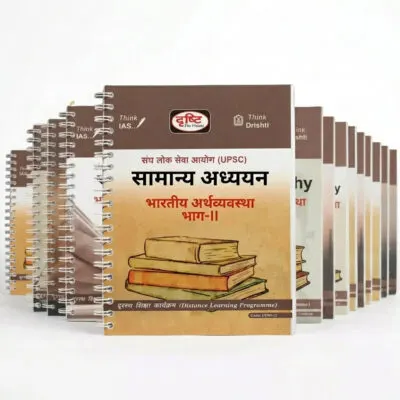
Drishti IAS Hindi Medium Complete GS Notes 2025-26 | 18 Booklets | Hindi Medium | UPSC Study Material

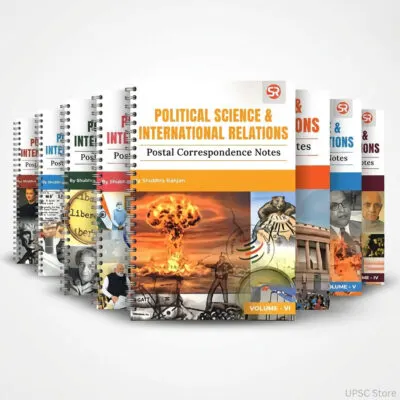
Shubhra Ranjan PSIR Optional Handwritten Notes 2026-27 | 11 Booklets | English Medium | UPSC Study Material

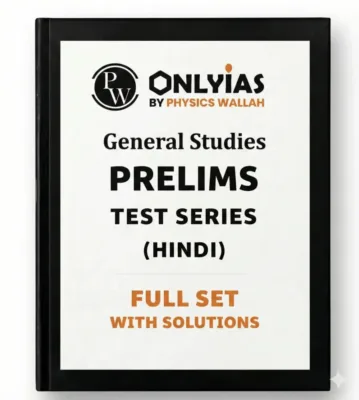
PW Only IAS Prelims 2026-27 Hindi Test Series | 10–35 Tests | Hindi Medium | UPSC Study Material
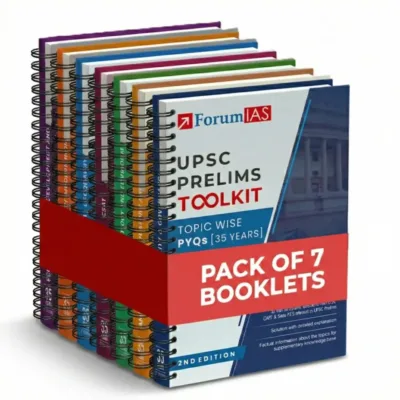
Forum IAS Prelims Topic-wise PYQs 1992-2025 | 7 Booklets | English Medium | UPSC Study Material
Drishti IAS GS Foundation Notes 2025-26 | 27 Booklets | English Medium | UPSC Study Material
Ranker's Classes Commerce Optional Notes 2025-26 | 10 Booklets | English Medium | UPSC Study Material
PW Only IAS Prelims Test Series 2026 | 10–35 Tests | English Medium | UPSC Study Material

About Forum IAS Prelims SFG Test Series Level 2 English Medium 2026
Forum IAS Prelims SFG Test Series Level 2 English Medium 2026 is an original printed study material set from Forum IAS, covering GS Prelims SFG Level 2. Available in English medium, this set is counted booklet by booklet before dispatch — no photocopies, no missing booklets.
Product Details
- Institute: Forum IAS
- Subject: GS Prelims SFG Level 2
- Medium: English
- Format: Individual Printed Booklets
- Delivery: Pan-India delivery in 4–7 working days, free over ₹1,999
- Condition: New, original print — counted before dispatch
Why Buy from UPSC Store?
- ✓ Original Printed Notes — no photocopies, every booklet counted before it ships
- ✓ Fast Dispatch — ships within 24 hours from Delhi, arrives in 4–7 days pan-India
- ✓ Secure Packaging — bubble-wrapped and boxed to prevent damage in transit
- ✓ 180+ Orders Shipped — to 25 states across India
- ✓ WhatsApp Support — ask which set fits your optional and medium before ordering
Frequently Asked Questions
Original print — the same printed booklets the institute issues. Every set is counted booklet by booklet before dispatch.
Orders are dispatched within 24 hours from Delhi and delivered across India in 4–7 working days. Delivery is free over ₹1,999.
Returns are accepted only if the problem is from our side: wrong item, damaged or defective copy, or missing booklets or pages. Report it within 7 days of delivery and we arrange a free pickup and send a free replacement or a full refund. We do not accept change-of-mind returns, so please check the medium, edition and binding before ordering. WhatsApp us to start a return.