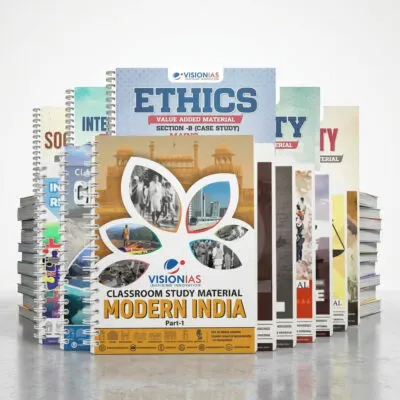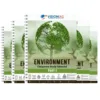

Vision IAS Environment Notes 2025-26

3 Booklets | English Medium | UPSC Study Material

Key Highlights:
📘 3 Booklets
📚 Environment
🎓 Vision IAS
🏷️ Printed
🇬🇧 English Medium
₹848
🌀 spiral
📘 book-binding
Only 12 sets left
Selling fast (69 sold this week)
5% OFF Use UPSC5% (COD Available)
10% OFF Use UPI10 (UPI Only)
Secure Payment
Fast Delivery
Safe Packaging

About Vision IAS Environment Notes English

The Vision IAS Environment Notes English is a printed UPSC study material set sold by UPSC Store — India’s trusted source for genuine, latest-batch civil services preparation books. This page covers full booklet details, syllabus coverage, pricing, shipping, and frequently asked questions. Useful for UPSC CSE, BPSC, UPPSC, MPPSC, RAS and other state PSC examinations.

Vision IAS Environment Notes 2025-26 — 3 English Medium Printed Booklets for UPSC GS Paper III

Related: Vision IAS notes · Environment notes

Product Overview

FeatureDetails
Booklets Count3 Individual Printed Booklets — Complete GS Paper III Environment Coverage
LanguageEnglish Medium
PublisherVision IAS (Classroom Study Material Series)
Edition2025-26 — Latest Genuine Batch
ConditionBrand New, Unmarked, Fresh Stock
FormatHigh-Quality Printed Booklets — Spiral or Book Binding
Paper Quality75 GSM Ultra-White — Highlighter Safe, Zero Bleed-Through
ShippingPan India Delivery in 3-5 Business Days — Tracked
Also Useful ForBPSC, UPPSC, MPPSC, RAS, MPSC and all State PSC examinations

Complete Booklet Catalog

This 3-booklet Vision IAS Environment set covers the complete UPSC GS Paper III environment and ecology syllabus for 2025-26, structured as classroom study material used in Vision IAS’s own coaching centres across Delhi, Lucknow, Jaipur, Hyderabad, Pune, Ahmedabad, Chandigarh, and Guwahati. Aspirants preparing for UPSC Prelims and Mains will find every critical environment topic organised in an exam-ready, answer-writing-friendly format.

  • Booklet 1: Ecology and Biodiversity — Covers foundational ecology concepts including ecosystems, food chains, food webs, energy flow, biogeochemical cycles, biomes, biodiversity types (genetic, species, ecosystem), hotspots, threats to biodiversity, IUCN Red List categories, endangered species of India, wildlife corridors, and India’s major national parks and wildlife sanctuaries with mapped coverage for UPSC Prelims fact-based questions.
  • Booklet 2: Environment and Pollution — Addresses air pollution (criteria pollutants, PM2.5, PM10, AQI, NCAP), water pollution (rivers, groundwater, industrial effluents), soil degradation, noise pollution, light pollution, e-waste management, solid waste management rules, plastic waste regulation, hazardous waste rules, and India-specific environmental legislation including EPA 1986, Water Act, Air Act, and Forest Conservation Act with recent amendments.
  • Booklet 3: Climate Change, International Conventions and Disaster Management — Covers greenhouse gases, global warming, IPCC reports, carbon budgets, Paris Agreement, UNFCCC COPs, Montreal Protocol, Convention on Biological Diversity (CBD), CITES, Ramsar Convention, Basel Convention, UNEP initiatives, National Action Plan on Climate Change (NAPCC), and disaster management framework including NDMA, NDRF, Sendai Framework, and India’s disaster risk reduction strategies.

In-Depth Content Breakdown: Booklet by Booklet

Booklet 1: Ecology and Biodiversity

Ecology and Biodiversity form the structural backbone of UPSC GS Paper III’s environment segment, and this booklet addresses that foundation in precise detail. It opens with ecosystem concepts — producers, consumers, decomposers, trophic levels, ecological pyramids, and energy flow — before moving into biogeochemical cycles including carbon, nitrogen, phosphorus, and sulphur cycles. India-specific biodiversity content includes the country’s 12 mega-biodiversity hotspots, Western Ghats and Eastern Himalayas coverage, Project Tiger, Project Elephant, and Project Dolphin updates. IUCN categories with recent Indian species listings are included for Prelims accuracy.

The biodiversity section of Booklet 1 is structured around UPSC question patterns, with frequently tested species, their habitats, and conservation status presented in ready-reference tables. Wildlife corridors, biosphere reserves (UNESCO-designated and national), and marine protected areas are mapped and listed for high-retention learning. The booklet also integrates current affairs additions — new species discoveries, new national parks notified, and any changes in protected area boundaries — making it relevant for both Prelims MCQ rounds and Mains 250-word answer writing on biodiversity conservation themes.

Booklet 2: Environment and Pollution

Environmental pollution is one of the highest-scoring and most consistently tested themes in UPSC GS Paper III, and this booklet delivers layered, multi-dimensional coverage of every pollution type. Air pollution content includes sources, pollutants (SOx, NOx, CO, VOCs, tropospheric ozone), health impacts, PM2.5 vs PM10 distinction, Air Quality Index methodology, the National Clean Air Programme (NCAP) with city-wise targets, and SAFAR monitoring system details. Water pollution covers river pollution indices, industrial effluent standards, thermal pollution, eutrophication, and groundwater contamination from arsenic and fluoride — topics regularly featured in UPSC Mains questions.

The legislation and regulatory framework sub-section is a standout feature of Booklet 2. Every major Indian environmental law — Environment Protection Act 1986, Water (Prevention and Control of Pollution) Act 1974, Air Act 1981, Forest Conservation Act 1980, Wildlife Protection Act 1972, and Biological Diversity Act 2002 — is explained with key provisions, recent amendments, and UPSC-relevant clauses. E-waste, solid waste, plastic waste, and biomedical waste management rules are covered with their latest revisions. This structured legal overview saves aspirants hours of separate research and integrates seamlessly into answer writing for GS Paper III Mains.

Booklet 3: Climate Change, International Conventions and Disaster Management

Climate change is the defining environmental challenge of our era and occupies significant real estate in UPSC GS Paper III. Booklet 3 opens with the science — greenhouse gas concentrations, radiative forcing, global warming potential (GWP), tipping points, feedback loops, sea level rise projections, and IPCC Assessment Report findings (AR6 highlights). The Paris Agreement architecture is explained in full: NDCs, ratchet mechanism, common but differentiated responsibilities (CBDR), carbon markets under Article 6, and India’s updated NDC targets. UNFCCC COP outcomes from recent years are summarised for current-affairs integration.

International conventions covered in this booklet span the full UPSC environment syllabus spectrum: the Convention on Biological Diversity (CBD) and Kunming-Montreal Global Biodiversity Framework, CITES Appendices I/II/III with recent Indian species listings, Ramsar Convention wetland designations (India’s latest Ramsar sites), Basel, Rotterdam, and Stockholm Conventions on hazardous substances, and Minamata Convention on mercury. The Disaster Management segment covers India’s DM Act 2005, NDMA guidelines, NDRF deployment structure, State Disaster Management Authorities, and the Sendai Framework for Disaster Risk Reduction 2015-2030 — with India-specific priority actions mapped to UPSC answer requirements.

Physical Construction and Quality Standards

These Vision IAS Environment Notes 2025-3 Booklets are produced to the same physical standards used in Vision IAS classroom centres, ensuring that the printed material you receive is identical in quality to what enrolled students study from during their UPSC preparation cycle.

Paper Quality: 75 GSM Anti-Glare White Paper

Every page in this 3-booklet environment set uses 75 GSM ultra-white, anti-glare paper selected specifically for long study sessions. The high opacity ensures that text or diagrams on one side do not bleed through or show as ghost images on the reverse side, allowing you to write margin notes, annotations, and use multiple highlighter colours without compromising readability. The matte finish reduces eye strain during the 4-6 hour daily study sessions typical of serious UPSC preparation, making these booklets ergonomically appropriate for sustained environment subject revision.

Printing Technology: High-Resolution Laser Printing

All three environment booklets are printed using high-resolution laser technology at minimum 600 DPI resolution. This ensures that ecology diagrams — food webs, nutrient cycles, climate change feedback loops, disaster management flowcharts — are reproduced with the crispness and line clarity required for accurate interpretation. Maps of biosphere reserves, biodiversity hotspots, and Ramsar wetland sites are printed with sufficient detail to support Prelims map-based questions. The permanent laser toner is smudge-proof even under palm contact during extended writing practice sessions, maintaining page cleanliness throughout your UPSC preparation period.

Binding and Durability

The booklets are bound either in lay-flat spiral binding or compact book binding, both designed for active UPSC study use. Spiral binding allows pages to open completely flat, letting you write notes alongside diagrams and refer to the booklet while simultaneously writing practice answers — an important feature when practising GS Paper III Mains answers under timed conditions. The 300 GSM laminated cover provides protection against moisture and daily handling wear. Book-bound copies are compact for storage in study bags and bookshelves. Both binding formats maintain structural integrity through multiple full revision cycles.

Key Features and Study Design

Vision IAS Environment Notes 2025-26 are structured specifically around the UPSC examination pattern — Prelims MCQ accuracy requirements and Mains 250-word analytical answer demands are both addressed within the same content framework across all three booklets.

  • Syllabus-Mapped Structure: Every chapter and sub-chapter is mapped directly to the UPSC GS Paper III official syllabus, ensuring zero time is spent on off-syllabus content. Prelims-specific facts are highlighted separately from Mains analytical content throughout all three environment booklets.
  • Current Affairs Integration: The 2025-26 edition incorporates the latest UPSC-relevant environment developments — new Ramsar site designations, IUCN Red List updates, recent CBD and UNFCCC COP decisions, and updated NDMA guidelines — so aspirants do not need separate current affairs sources for environment topics.
  • Diagram-Heavy Ecology Coverage: Complex ecology concepts — energy flow pyramids, biogeochemical cycle diagrams, food web structures, carbon cycle feedback loops — are explained through labelled diagrams that are easier to retain and reproduce in Mains answers than text-heavy explanations, directly improving answer quality.
  • International Convention Quick-Reference Tables: Every major international environment convention is presented in a structured table format covering year, objective, India’s status, and key provisions — the format most useful for both Prelims recall and Mains two-mark conventional comparisons, saving hours of individual convention research.
  • Disaster Management Framework Coverage: India’s disaster management architecture — DM Act 2005, NDMA, NDRF, SDMA, District DM authorities — is covered alongside international frameworks (Sendai, Hyogo), a pairing that directly addresses how UPSC integrates domestic and global DM content in GS Paper III Mains questions.

Shipping, Packaging and Delivery

All 3 booklets in the Vision IAS Environment Notes 2025-26 set are individually shrink-wrapped before being packed together in a rigid corrugated cardboard box with reinforced edge protectors on all corners. A waterproof outer layer safeguards the package against moisture during transit — a critical protection measure given that booklets often pass through multiple sorting facilities before reaching their destination. The packing process ensures that no booklet cover is bent, creased, or scratched during delivery, so you receive your environment study material in brand-new, classroom-fresh condition regardless of your location across India.

Once dispatched from our Mukherjee Nagar, Delhi fulfillment centre, all orders are delivered within 3-5 business days to any pin code across India via tracked courier. A tracking ID is shared via email and WhatsApp after dispatch, so you can monitor your order at every stage. For any queries — missing booklets, damaged covers, or delivery delays — contact us on WhatsApp at +91 70045 49563 and any issue is resolved within 48 hours. Replacement booklets for any missing or damaged item from your set are dispatched within 48 hours of complaint registration, at no additional cost to you.

Frequently Asked Questions (FAQ)

Q1: How many booklets are in the Vision IAS Environment Notes 2025-26 set?

A: The Vision IAS Environment Notes 2025-26 set contains 3 printed booklets. Together they cover the complete UPSC GS Paper III environment syllabus including ecology and biodiversity, environmental pollution and legislation, climate change, international environmental conventions, and India’s disaster management framework. All three booklets are included when you buy this set — no booklet is sold separately in this listing.

Q2: Is Vision IAS Environment Notes 2025-26 available in English medium?

A: Yes, this listing is specifically for the English medium edition of Vision IAS Environment Notes 2025-26. The entire 3-booklet set — all text, diagrams, tables, convention summaries, and disaster management content — is in English. This is the same material used in Vision IAS English-medium classroom batches at their centres in Delhi, Lucknow, Jaipur, Hyderabad, Pune, Ahmedabad, Chandigarh, and Guwahati.

Q3: What topics are covered in Vision IAS GS3 Environment Notes 2025-26?

A: The 3 booklets cover ecology fundamentals (ecosystems, food chains, energy flow, biogeochemical cycles), biodiversity (hotspots, IUCN categories, protected areas, conservation projects), environmental pollution (air, water, soil, noise, e-waste, solid waste, environmental laws), climate change (greenhouse gases, IPCC, Paris Agreement, UNFCCC COPs, India’s NDCs), international environmental conventions (CBD, CITES, Ramsar, Basel, Stockholm, Minamata), and disaster management (DM Act 2005, NDMA, NDRF, Sendai Framework). This aligns precisely with the UPSC GS Paper III official syllabus.

Q4: Are Vision IAS Environment Notes 2025-26 updated for the latest UPSC syllabus and current affairs?

A: Yes. The 2025-26 edition incorporates the latest UPSC-relevant developments including updated Ramsar site listings, recent IUCN Red List revisions, outcomes from recent UNFCCC and CBD COPs, India’s updated NDC targets, new NDMA guidelines, and recent amendments to Indian environmental legislation. Vision IAS updates its classroom study material each academic year, and this is the genuine 2025-26 batch — not a reprinted older edition. Always check the edition year on the cover before purchasing from any source.

Q5: Where can I buy Vision IAS Environment Notes 2025-26 online?

A: You can buy Vision IAS Environment Notes 2025-26 printed booklets directly from this listing. This is the official online store operated from Mukherjee Nagar, Delhi — the hub of UPSC preparation in India. You do not need to visit any physical coaching centre or wait for a local supplier. Simply place your order here and receive the complete 3-booklet environment set delivered to your door anywhere in India within 3-5 business days via tracked courier.

Q6: Is Vision IAS Environment Notes sufficient for UPSC Prelims and Mains both?

A: Vision IAS Environment Notes 2025-26 are designed to serve both UPSC Prelims and Mains preparation. Prelims-specific factual content — species names, convention years, hotspot locations, pollution standards, AQI categories — is clearly presented for MCQ-style retention. Mains-oriented analytical content — answer frameworks, issue-based discussions, policy critiques, international comparison — is developed across all three booklets. For Prelims, supplementing with Vision IAS Current Affairs magazine adds current ecology events. For Mains, these notes provide the core conceptual base from which 250-word answers can be directly structured.

Q7: What is the price of Vision IAS Environment Notes 2025-26 set of 3 booklets?

A: The price of the complete 3-booklet Vision IAS Environment Notes 2025-26 set is displayed on this product page and includes all three booklets shipped together. The price shown is the final price — there are no hidden charges for standard pan India delivery. Buying the full set here is significantly more cost-effective than sourcing individual booklets from local Mukherjee Nagar shops and arranging your own shipping, especially for aspirants outside Delhi.

Q8: How is Vision IAS Environment Notes different from Shankar IAS Environment book?

A: Vision IAS Environment Notes 2025-26 are classroom notes formatted for structured, syllabus-mapped reading in a multi-booklet format, updated annually for UPSC relevance. Shankar IAS Environment is a standalone reference book with broader coverage but less UPSC-examination-specific structuring. Vision IAS notes are organised around the GS Paper III answer-writing format with diagrams, tables, and current affairs integration. Many serious UPSC aspirants use both — Shankar IAS for detailed conceptual depth and Vision IAS notes for exam-pattern-aligned revision closer to the examination date.

Q9: What is the paper quality of Vision IAS Environment Notes? Can I use a highlighter?

A: These booklets use 75 GSM ultra-white paper chosen for high opacity — multiple highlighter colours and gel pens work without bleed-through to the reverse side, ideal for colour-coded revision. The matte anti-glare surface also reduces eye strain during long study sessions. You can annotate, underline, and highlight freely without worrying about ink showing through or pages becoming unreadable. The paper quality is consistent across all three environment booklets in the set.

Q10: Are these Vision IAS Environment Notes 2025-26 genuine printed copies or printouts?

A: These are genuine, professionally printed Vision IAS classroom study material booklets — not home printouts, photocopies, or PDF printouts. They are printed using high-resolution laser printing technology on 75 GSM paper with proper binding and 300 GSM laminated covers. The quality matches what Vision IAS distributes to enrolled classroom students. Every booklet in stock is sourced directly and stored carefully to ensure brand-new, unmarked condition. You can verify authenticity by the printed Vision IAS branding, contact numbers (8468022022, 9019066066), and location details on the cover.

Q11: Can these Vision IAS Environment Notes be used for State PSC examinations?

A: Yes. Vision IAS Environment Notes 2025-26 are highly useful for State PSC examinations including BPSC, UPPSC, MPPSC, RAS, MPSC, and other state-level civil services examinations that include environment and ecology in their General Studies papers. The coverage of environmental legislation, pollution, biodiversity, climate change, and disaster management is directly relevant to state PSC syllabi. Aspirants preparing simultaneously for UPSC and state PSCs will find this 3-booklet set efficiently serves both examination requirements from a single study resource.

Q12: How long does delivery take after I place an order? Is it tracked?

A: All orders are dispatched from our Mukherjee Nagar, Delhi fulfillment centre and delivered within 3-5 business days to any location in India via tracked courier. A tracking ID is sent to your registered email and WhatsApp number after dispatch. You can monitor your shipment in real time. For any delivery-related queries or issues, contact us on WhatsApp at +91 70045 49563 — we respond within a few hours and resolve any missing or damaged booklet situations within 48 hours of complaint, including free replacement dispatch.

Summary

SpecificationValue
Booklets3 Printed Booklets
LanguageEnglish Medium
Edition2025-26 (Latest Batch)
Paper75 GSM Ultra-White
BindingSpiral or Book Binding
PrintingHigh-Resolution Laser — Smudge-Proof
Delivery3-5 Business Days Pan India
TrackingYes — Courier Tracking ID Provided
ConditionBrand New, Unmarked, Fresh Stock
Also Useful ForBPSC, UPPSC, MPPSC, RAS, MPSC and all State PSC examinations

Sold and fulfilled by UPSC Store — Mukherjee Nagar, Delhi, the trusted source for genuine UPSC printed study material. Buy Vision IAS Environment Notes 2025-26 today and receive your complete 3-booklet set anywhere in India with pan India delivery in 3-5 days.

Reference: UPSC official syllabus

Customer Reviews 123

4.5
Based on 123 reviews
5★
73
4★
37
3★
13
2★
0
1★
0
A
Aditya Patel
24 Apr 2026
✓ Verified

Vision IAS ke notes hamesha best hote hain, yeh bhi bahut acche hain.

S
Sanjay Deshmukh
20 Apr 2026
✓ Verified

Vision IAS ka naam hi kaafi hai quality ke liye. Bohot helpful material hai.

S
Sanjay Kumar
06 Apr 2026
✓ Verified

Quality badiya hai but delivery thoda late tha. Overall satisfied though!

H
Harsh Yadav
04 Apr 2026
✓ Verified

Environment ke liye ye notes kaafi relevant hain. Well-organized content.

P
Priya Patel
04 Apr 2026
✓ Verified

Bilkul on point content, ekdum comprehensive.

K
Kavya Singh
03 Apr 2026
✓ Verified

Mast notes hain environment topic ke liye. Sab kuch organized hai.

V
Vikram Patel
23 Mar 2026
✓ Verified

Content theek hai lekin printing quality thoda average thi.

R
Rohit Yadav
22 Mar 2026
✓ Verified

Paisa bilkul barbaad nahi hua, notes ko padh ke confidence badh gaya.

🛍️

Aspirants Also Bought

More from the same category

View All

About Vision IAS Environment Notes 2025-26

Vision IAS Environment Notes 2025-26 is a highly recommended UPSC study material from Vision IAS, specially designed for Environment preparation. Available in English medium, this material is crafted to match the exact requirements of the UPSC Civil Services Examination syllabus — covering both Prelims and Mains comprehensively.

Product Details

  • Institute: Vision IAS
  • Subject: Environment
  • Medium: English
  • Format: Printed
  • Delivery: Pan-India delivery in 3–5 working days
  • Format: Original printed material, verified authentic

Why Buy from UPSC Store?

  • 100% Genuine Printed Material — Original printed notes, no photocopies or fake copies
  • Fast Delivery — Ships within 24 hours, arrives in 3–5 days pan-India
  • Secure Packaging — Bubble-wrapped and boxed to prevent damage in transit
  • Trusted by 10,000+ Aspirants — India's most reliable UPSC material marketplace
  • WhatsApp Support — Get expert guidance on material selection before ordering

Frequently Asked Questions

Is this product 100% original?

Yes, all products at UPSC Store are 100% genuine printed materials. We do not sell photocopies or fake copies.

How long does delivery take?

Orders are dispatched within 24 hours and delivered across India in 3–5 working days via reputed courier partners.

Can I return the product?

Yes, we accept returns within 7 days if the product is damaged or incorrect. Check our refund policy for details.

Which other study materials should I buy with this?

We recommend pairing this with current affairs notes and a UPSC test series for comprehensive preparation. Browse more in Environment & Ecology, General Studies, UPSC, Vision IAS.