
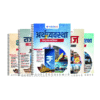
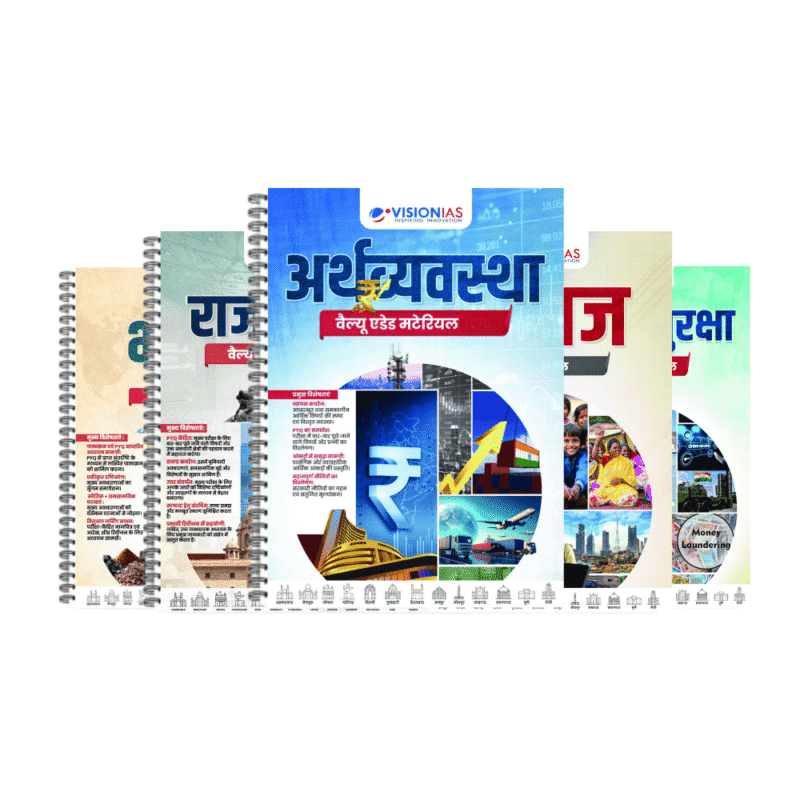
Vision IAS GS Value Added Material Hindi 2026-27
About Vision IAS GS VAM Hindi
The Vision IAS GS VAM Hindi is a printed UPSC study material set sold by UPSC Store — India’s trusted source for genuine, latest-batch civil services preparation books. This page covers full booklet details, syllabus coverage, pricing, shipping, and frequently asked questions. Useful for UPSC CSE, BPSC, UPPSC, MPPSC, RAS and other state PSC examinations.
Vision IAS GS Value Added Material (VAM) 2026-2027: The Definitive 9-Booklet Hindi Medium Resource for UPSC Civil Services Excellence
Related: Vision IAS Hindi material · General Studies notes
| Product Overview | |
|---|---|
| Booklets Count | 9 Individual Comprehensive Booklets |
| Language | Hindi (Standard Academic Hindi) |
| Publisher | Vision IAS Publication Division |
| Condition | Brand New, Freshly Printed for 2026-2027 Cycle |
| Format | Printed Paperback / Reinforced Spiral Binding Options |
| Target Examination | UPSC Civil Services (Mains & Prelims) 2026 & 2027 |
Complete Booklet Catalog
This meticulously curated set comprises nine distinct volumes, each focusing on the “Value Addition” aspects of the General Studies syllabus. Unlike standard textbooks, these materials are designed to bridge the gap between basic concepts and high-scoring Mains answers.
- Booklet 1: Indian Heritage and Culture (Bhartiya Virasat aur Sanskriti) – Comprehensive Value Addition for GS Paper 1.
- Booklet 2: Modern Indian History & Post-Independence (Adhunik Bharat ka Itihas aur Swatantrata ke Baad ka Bharat).
- Booklet 3: World Geography & Indian Physical Geography (Vishwa ka Bhugol evam Bharat ka Bhautik Bhugol).
- Booklet 4: Indian Polity, Governance, and Social Justice (Bhartiya Rajvyavastha, Shasan evam Samajik Nyay).
- Booklet 5: International Relations (Antarrashtriya Sambandh) – Focus on 2026-27 Geopolitical Dynamics.
- Booklet 6: Indian Economy & Infrastructure (Bhartiya Arthvyavastha evam Adhosanrachna).
- Booklet 7: Science and Technology (Vigyan evam Prodyogiki) – Emerging Trends and Static Core.
- Booklet 8: Environment, Biodiversity & Disaster Management (Paryavaran, Jaiv Vividhta evam Apada Prabandhan).
- Booklet 9: Internal Security & Ethics Case Study Value Addition (Antarik Suraksha evam Nitishastra Case Studies).
Physical Attributes and Manufacturing Standards
The physical quality of the Vision IAS GS Value Added Materials for the 2026-2027 session is engineered to withstand the rigorous, multi-year study cycles of a dedicated UPSC aspirant. Every booklet in this 9-set series adheres to the “Elite Production Protocol” to ensure durability, legibility, and comfort during extended reading sessions.
1. Paper Density and Tactile Experience
Each page is printed on premium 75 GSM (Grams per Square Meter) ultra-white paper. This specific density was selected to prevent “ink ghosting” or “bleed-through,” a common problem in lower-quality study materials. Whether you are using a standard ballpoint pen, a fountain pen, or a high-intensity neon highlighter, the marks will remain localized to the front of the page, keeping the reverse side clean and legible. The paper features a matte finish that reduces glare from overhead study lamps, significantly decreasing eye strain during late-night preparation sessions.
2. High-Contrast Printing and Ink Quality
The text is rendered using industrial-grade, anti-smudge black carbon ink. This ensures that the Hindi script—specifically the intricate “Matras” and “Samyukt Akshars”—is crisp and sharply defined. The diagrams and flowcharts within the booklets utilize grayscale shading and high-resolution line art to maintain clarity. Even the smallest labels on the historical maps or economic graphs are printed with high precision, ensuring no detail is lost to pixelation.
3. Reinforced Structural Binding
Understanding that these booklets will be flipped open thousands of times, the binding is reinforced with a heavy-duty thermal adhesive or industrial-grade spiral wiring (depending on the specific batch chosen). The covers are constructed from 250 GSM laminated cardstock, providing a semi-rigid barrier against moisture, dust, and corner-bending. The “Lay-Flat” design of the booklets allows the user to keep the material open on a desk without needing paperweights, facilitating an uninterrupted note-taking process.
Internal Content Deep-Dive: Volume by Volume
The “Value Added Material” (VAM) is not a mere repetition of basic NCERTs; it is a sophisticated layer of content meant to provide the “extra edge” in the UPSC Mains. Below is an exhaustive description of the internal structure of each booklet.
Booklet 1: Indian Heritage and Culture
This booklet is structured chronologically yet remains thematic. It opens with a “Master Index of Cultural Sites” which categorizes UNESCO World Heritage sites in India by state and architectural style. Inside, you will find high-quality black-and-white illustrations of temple architecture—Nagari, Dravida, and Vesara—with each part (Shikhara, Mandapa, Garbhagriha) clearly labeled in Hindi. The booklet includes “Comparison Tables” that contrast the Gandhara, Mathura, and Amravati schools of art, focusing on the physical features of the statues, the materials used, and the religious patronage behind them. Every chapter ends with a section titled “Samkaleen Sandarbh” (Contemporary Context), linking ancient traditions to modern cultural festivals or government initiatives like PRASHAD or HRIDAY.
Booklet 2: Modern History & Post-Independence
This volume moves away from simple storytelling to analytical frameworks. It features “Personality Matrices” where the contributions of leaders like Ambedkar, Gandhi, Nehru, and Bose are analyzed through their ideologies, literary works, and organizational affiliations. The post-independence section is particularly robust, containing maps of the linguistic reorganization of states and detailed timelines of India’s economic policy shifts from 1947 to the LPG reforms of 1991. The index is divided into “Phase-Wise Analysis,” such as the Moderate Phase, the Extremist Phase, and the Gandhian Era, providing distinct data points for each.
Booklet 3: World and Indian Geography
Geography in this VAM set is heavily visual. It includes “Schematic Diagrams” for atmospheric circulation, oceanic currents, and plate tectonics. The Indian Geography section features an extensive “River System Table” that details the source, length, tributaries (left and right bank separately), and the major dams associated with each river. A unique feature of this 2026-27 edition is the “Resource Mapping” section, which uses high-contrast shading to show the distribution of rare earth minerals and critical minerals in India, aligning with the latest exploration data provided by the Ministry of Mines.
Booklet 4: Indian Polity and Governance
This is perhaps the most “Value Added” of the set. Instead of just listing Articles, the booklet provides “Judicial Precedent Boxes.” For every significant concept—like Basic Structure or Right to Privacy—the booklet lists the relevant Supreme Court cases (Kesavananda Bharati, SR Bommai, Puttaswamy, etc.) and provides a 2-sentence summary of the verdict in Hindi. The governance section includes “Policy Flowcharts” that explain the implementation of schemes like Ayushman Bharat or PM-Kisan. It also features a “Comparative Constitution Table” that contrasts the Indian parliamentary system with the models of the UK, USA, and France.
Booklet 5: International Relations
Designed specifically for the 2026-2027 exam cycle, this booklet contains “Bilateral Relation Briefs” for India’s neighbors and major global powers. Each country profile is broken down into: Historical Background, Economic Ties, Strategic Challenges, and the Diaspora Factor. The internal layout includes “Global Body Snapshots” for the UN, G20, SCO, and BRICS+, detailing their latest summits and the “Delhi Declaration” or subsequent outcomes. There is a dedicated section on “Geopolitical Terminology” in Hindi, explaining concepts like String of Pearls, Neck of Diamonds, and Integrated Integrated Integrated Integrated Integrated (I2U2) in a simplified manner.
Booklet 6: Indian Economy
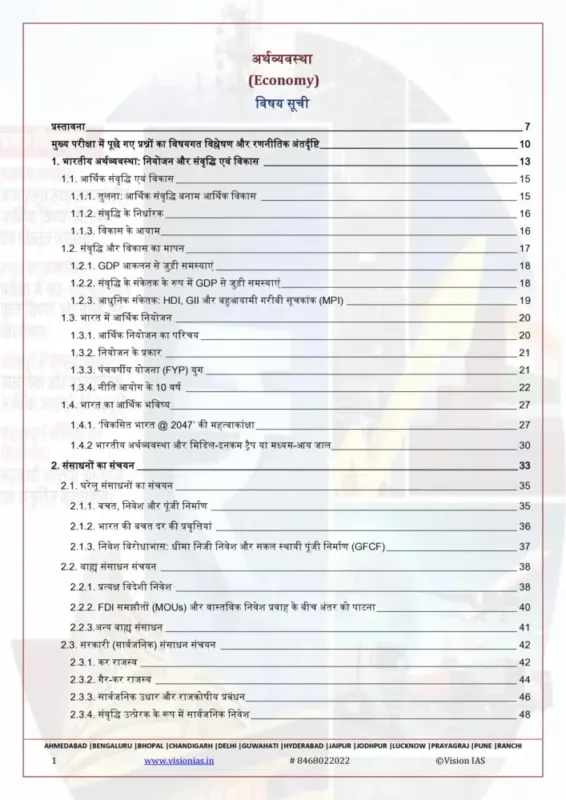
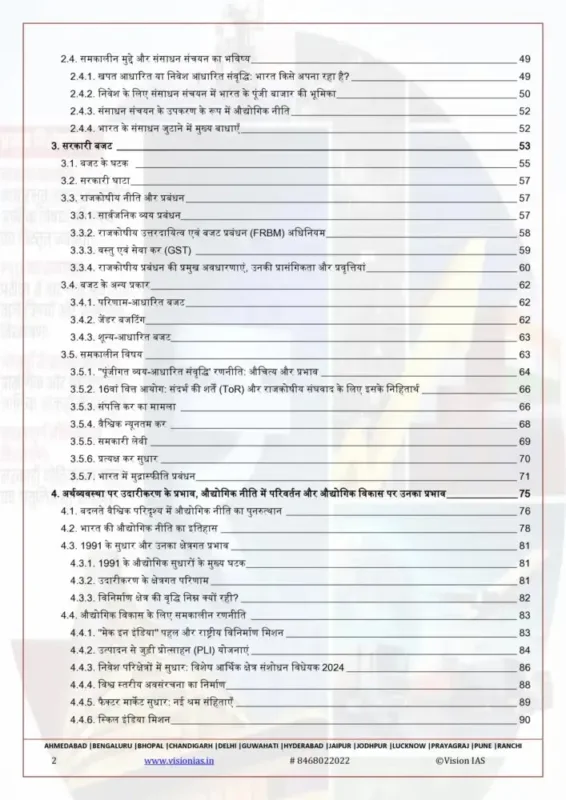
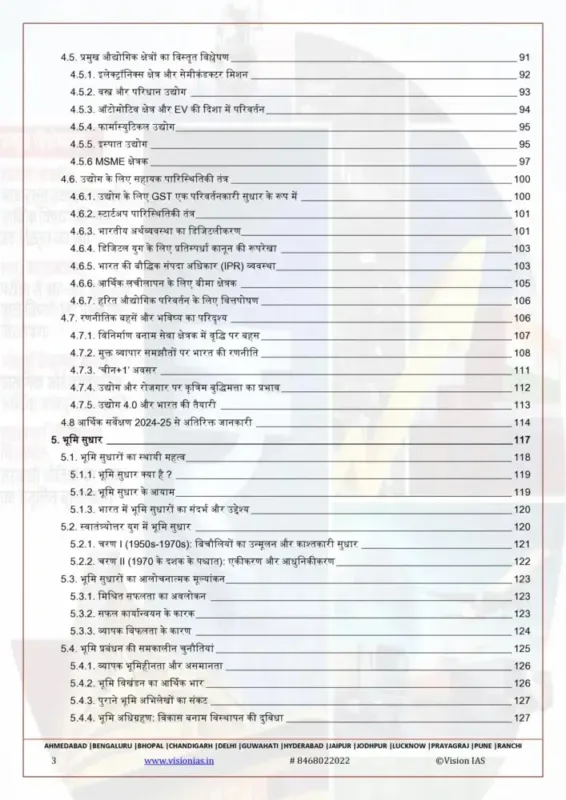
The Economy booklet is data-heavy and organized for quick fact-retrieval. It contains “Sectoral Snapshots” (Agriculture, Industry, Services) with the latest GDP contribution percentages. A significant portion of the booklet is dedicated to “Terminology Glossaries,” defining complex Hindi economic terms like ‘Rajkoshiya Ghata’ (Fiscal Deficit) and ‘Maudrik Niti’ (Monetary Policy) with their current implications. The “Infrastructure” chapter provides detailed descriptions of the PM Gati Shakti National Master Plan, including the seven engines of growth, visualized through an integrated logistics flowchart.
Booklet 7: Science and Technology
This booklet bridges the gap between basic biology/physics and cutting-edge application. It features “Tech-Trend Analysis” for topics like 5G/6G technology, Quantum Computing, Artificial Intelligence, and Gene Editing (CRISPR-Cas9). The Space Technology section includes a “Launch Vehicle Evolution Chart” from SLV-3 to LVM3 and the upcoming Gaganyaan mission parameters. Each chapter includes a “Mains perspective” box that discusses the ethical and social implications of these technologies, providing ready-made arguments for GS Paper 3 answers.
Booklet 8: Environment and Disaster Management
This volume is highly structured around “Conventions and Protocols.” It features a multi-page table of COP (Conference of Parties) meetings under the UNFCCC, highlighting the major breakthroughs from Paris to the most recent summits. The Disaster Management section uses “Cycle Diagrams” (Prevention, Mitigation, Response, Recovery) for specific disasters like Urban Flooding, Cyclones, and Earthquakes. It includes the latest data on India’s Forest Cover based on the biennial ISFR reports, presented in easy-to-memorize Hindi bullet points.
Booklet 9: Internal Security & Ethics VAM
The final booklet covers the sensitive and dynamic aspects of Internal Security—such as Naxalism, Insurgency in the North-East, and Cyber Security. It provides “Threat-Mapping” of India’s borders and the specific forces (BSF, ITBP, SSB) guarding them. The Ethics portion of this booklet is uniquely designed, containing “Value Definition Tables” and 50+ Case Study Templates. It provides a structured approach to solving case studies, offering a “Stakeholder Identification” framework for various ethical dilemmas, tailored for Hindi medium students who often struggle with the technical vocabulary of Ethics.
Optimization for the 2026-2027 Syllabus
The Vision IAS Hindi VAM set is not a static document; it is a dynamic resource. The 2026-2027 edition incorporates several updates that are crucial for the upcoming exam cycles:
- Updated Data Points: All economic and social statistics are updated with the latest Economic Survey and National Family Health Survey (NFHS) findings.
- Language Refinement: The Hindi translation has been overhauled to ensure that it isn’t just a literal translation of English material but follows the “Prashashnik Hindi” (Administrative Hindi) style required by UPSC evaluators.
- Integrated Current Affairs: Wherever a static topic (like the Governor’s powers) has been in the news, a “Vivad aur Samadhan” (Controversy and Solution) box has been added to provide the latest context.
- Margin Space: Every page is designed with a 1.5-inch outer margin, specifically intended for students to add their own current affairs updates or personal mnemonic notes.
Pedagogical Design: The Vision IAS Method
The layout of these booklets follows a proven pedagogical path. Each chapter begins with a “Prastavana” (Introduction) that sets the conceptual stage. This is followed by the “Mukhya Vishay-Vastu” (Core Content) which is broken down into numbered points rather than dense paragraphs. This design is intentional; it trains the student’s brain to store information in the same format they will use to write answers in the Mains exam. The use of “Nishkarsh” (Conclusion) templates at the end of each topic provides students with sophisticated ways to wrap up their answers, ensuring they leave a positive impression on the examiner.
Furthermore, the “Drishti/Vision Special” boxes scattered throughout the text provide high-yield facts (Tathya) that are useful for Prelims. This dual-purpose nature—Mains analysis with Prelims facts—makes the 9-booklet set the most efficient study material in the Hindi medium market.
Frequently Asked Questions (FAQ)
Below are the most common queries regarding the Vision IAS GS Value Added Materials Hindi Booklets for the 2026-2027 session.
These are “Value Added Materials.” While they cover the entire syllabus comprehensively and provide the high-level analysis required for Mains, they are best used alongside standard foundational notes or classes. They act as a “multiplier” for your basic knowledge, providing the data, diagrams, and case studies that earn extra marks.
The 2026-2027 edition includes updated economic data, the latest judicial rulings from 2024 and 2025, updated international relations profiles following major global elections, and refined maps. The Hindi terminology has also been updated to align with the evolving patterns of the UPSC Mains question papers.
The language used is “Shuddh Hindi” but it is “Sarthak” (Meaningful) and “Sugam” (Accessible). It avoids overly poetic language in favor of the administrative Hindi used in government reports and the UPSC exam itself. This helps students build the right vocabulary for their answers.
All maps are digitally rendered and printed in high resolution. They are specifically designed for the Hindi medium, with all labels and keys in Hindi. The diagrams use clear, bold lines that are easy to replicate in the exam hall under time pressure.
Yes, absolutely. Since State PSC syllabi are now largely aligned with the UPSC pattern, the deep-dive analysis on Polity, Economy, and History is highly beneficial for UPPCS, BPSC, RAS, and MPPSC aspirants as well.
The set is wrapped in a moisture-proof plastic layer, followed by multiple layers of bubble wrap. It is finally placed in a corrugated cardboard box to ensure the booklets arrive in pristine condition without any corner damage or moisture ingress.
Yes. The high-density 75 GSM paper is specifically chosen so that students can use various highlighters. Even dark colors will not bleed through to the other side, ensuring the longevity and cleanliness of your notes.
This specific listing is for the complete 9-booklet set. Purchasing the set ensures that you have a thematic continuity across all GS papers, as many topics (like Environment and Geography) are cross-referenced between booklets.
Yes, most booklets contain “Model Questions” (Mains Perspective) at the end of key chapters to help you apply the “Value Added” information you have just learned. These questions are designed in accordance with the latest UPSC trends.
Yes, this is the authentic, updated material from the Vision IAS publication stream, verified for the 2026-2027 academic cycle. It contains the official indices and structural formatting unique to Vision IAS pedagogy.
Conclusion on Physical Utility
For a UPSC aspirant, study material is a tool. The Vision IAS GS Value Added Materials in Hindi are tools of the highest caliber. From the choice of 75 GSM paper to the precision of the Hindi administrative vocabulary, every element is designed to reduce the friction between the student and the vast UPSC syllabus. By investing in this 9-booklet set, you are ensuring that your study hours are spent on high-quality content that is physically durable enough to last until you clear the final interview. The clarity of the print, the strength of the binding, and the depth of the “Value Addition” make this the gold standard for Hindi medium preparation in the 2026-2027 cycle.
Frequently Asked Questions
How many booklets are in this Hindi VAM set?
The set contains 9 individual comprehensive value-added booklets in Hindi.
Which edition is shipped?
You receive the freshly printed 2026-2027 Vision IAS Hindi edition.
What binding format is used?
Booklets are supplied in printed paperback or reinforced spiral binding based on availability.
Useful for both Mains and Prelims?
Yes, the VAM content supports both UPSC Mains and Prelims preparation for 2026 and 2027 cycles.
Is COD available?
Yes, COD is supported pan-India.
Useful for Hindi medium state PSC?
Yes, the booklets help BPSC, UPPSC, MPPSC and other Hindi medium state PSC aspirants.
Reference: UPSC official syllabus
Customer Reviews 89
9 booklets cover sab important topics, printing quality bhi acha hai.
Material bilkul authentic aur detailed, Vision IAS best hai.
Vision IAS ke booklets bilkul top-notch hain, concepts bilkul clear ho jaate hain.
Exactly what I needed for my preparation.
9 booklets mein poora GS cover ho gaya, bohot satisfied.
Vision IAS ka yeh material kaafi comprehensive hai. Har topic ko achche se cover kiya gaya hai.
Bilkul sahi purchase, Vision IAS kitaabein best hain preparation ke liye.
Everything is explained in such a clear manner. The Hindi medium makes it even better for us.
Aspirants Also Bought
More from the same category

Dias IAS Chemistry Optional Notes 2025-26 | 6 Booklets | English Medium | UPSC Study Material
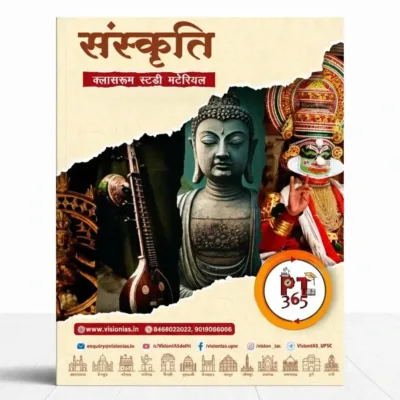
Vision IAS Culture PT 365 Notes 2025-26 | 1 Booklet | Hindi Medium | UPSC Study Material
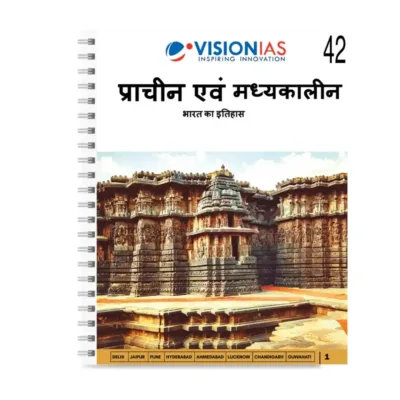
Vision IAS Ancient & Medieval History Notes 2025-26 | 1 Booklet | Hindi Medium | UPSC Study Material
Rajesh Mishra Political Science PSIR Hindi Notes 2025-26 | 3 Booklets | Hindi Medium | UPSC Study Material
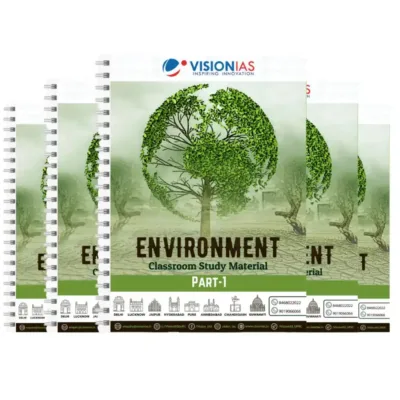
Vision IAS Environment Notes 2025-26 | 3 Booklets | English Medium | UPSC Study Material
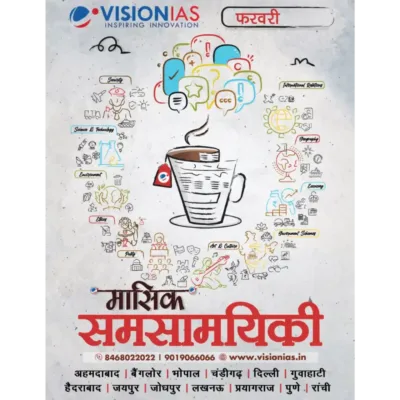
Vision IAS Monthly Current Affairs February 2025-26 | Hindi Medium | 1 Booklet | UPSC Study Material
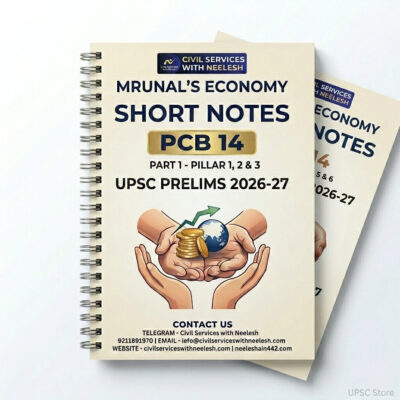
Mrunal Sir PCB 14 Economy Short Notes Complete Set | Pillar 1-6 | 2 Booklets | English Medium | UPSC Study Material
NK Vaid Anthropology Notes 2025-26 | 1 Booklet | English Medium | UPSC Study Material
Vajiram & Ravi CSAT Notes 2025-26 | 6 Booklets | English Medium | UPSC Study Material
Vision IAS Current Affairs Magazine August 2025-26 | 1 Booklet | English Medium | UPSC Study Material
Parmar SSC GK Geography 4.0 Notes 2026-27 | 1 Booklet | English Medium | UPSC Study Material
Upkar Sanskrit Notes 2025-26 | 2 Booklets | Hindi Medium | UPSC Study Material
About Vision IAS GS Value Added Material Hindi 2026-27
Vision IAS GS Value Added Material Hindi 2026-27 is a highly recommended UPSC study material from Vision IAS, specially designed for GS preparation. Available in Hindi medium, this material is crafted to match the exact requirements of the UPSC Civil Services Examination syllabus — covering both Prelims and Mains comprehensively.
Product Details
- Institute: Vision IAS
- Subject: GS
- Medium: Hindi
- Format: Printed
- Delivery: Pan-India delivery in 4–7 working days
- Format: Original printed material, verified authentic
Why Buy from UPSC Store?
- ✅ 100% Genuine Printed Material — Original printed notes, no photocopies or fake copies
- ✅ Fast Delivery — Ships within 24 hours, arrives in 4–7 days pan-India
- ✅ Secure Packaging — Bubble-wrapped and boxed to prevent damage in transit
- ✅ Trusted by 10,000+ Aspirants — India's most reliable UPSC material marketplace
- ✅ WhatsApp Support — Get expert guidance on material selection before ordering
Frequently Asked Questions
Yes, all products at UPSC Store are 100% genuine printed materials. We do not sell photocopies or fake copies.
Orders are dispatched within 24 hours and delivered across India in 4–7 working days via reputed courier partners.
Yes, we accept returns within 7 days if the product is damaged or incorrect. Check our refund policy for details.
We recommend pairing this with current affairs notes and a UPSC test series for comprehensive preparation. Browse more in General Studies, UPSC, Vision IAS.