
Vision IAS Art & Culture Notes 2025-26
About Vision IAS Art Culture Notes
The Vision IAS Art Culture Notes is a printed UPSC study material set sold by UPSC Store — India’s trusted source for genuine, latest-batch civil services preparation books. This page covers full booklet details, syllabus coverage, pricing, shipping, and frequently asked questions. Useful for UPSC CSE, BPSC, UPPSC, MPPSC, RAS and other state PSC examinations.
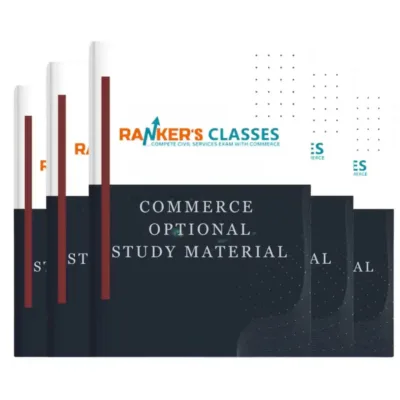
Vision IAS Art & Culture Notes 2025-26 — 3 Hindi Medium Printed Booklets for UPSC GS Paper I
Related: Vision IAS notes · Art and Culture material
Product Overview
Buy Vision IAS Art & Culture printed notes online — the complete 2025-26 set designed specifically for Hindi medium UPSC aspirants preparing for General Studies Paper I. These 3 meticulously structured booklets deliver comprehensive coverage of Indian art forms, cultural heritage, architectural styles, festivals, and traditions essential for Civil Services examinations. Whether you are a prelims candidate strengthening your GS foundation or a mains aspirant needing structured art and culture revision, this Hindi medium resource provides the depth and clarity needed to score high on GS Paper I.
| Feature | Details |
|---|---|
| Booklets Count | 3 Individual Printed Booklets — Art Forms & Classical Traditions, Cultural Heritage & Architecture, Contemporary Art & Festivals |
| Language | Hindi Medium (हिंदी माध्यम) |
| Publisher | Vision IAS (GS Paper I Series) |
| Edition | 2025-26 — Latest Genuine Batch |
| Condition | Brand New, Unmarked, Fresh Stock |
| Format | High-Quality Printed Booklets — Spiral or Book Binding |
| Paper Quality | 75 GSM Ultra-White — Highlighter Safe, Zero Bleed-Through |
| Shipping | Pan India Delivery in 3-5 Business Days — Tracked |
| Also Useful For | BPSC, UPPSC, MPPSC, RAS, KPSC, JPSC, OPSC and all State PSC examinations |
Complete Booklet Catalog
The Vision IAS Art & Culture 3-booklet set provides progressive, layered coverage of Indian artistic expressions, architectural masterpieces, and cultural practices spanning classical traditions to contemporary developments. Each booklet is designed for Hindi medium students who require detailed explanations in their native language without compromising on UPSC-level content accuracy and depth.
These 1 Booklet collectively address GS Paper I requirements: Indian art and culture including architecture, sculpture, painting, music and dance forms; India’s cultural heritage and UNESCO World Heritage Sites; festivals, fairs and traditions across regions; and evolving cultural expressions in modern India.
- Booklet 1: Art Forms & Classical Traditions — Detailed exploration of classical dance forms (Bharatanatyam, Odissi, Kathak, Kathakali, Kuchipudi, Manipuri, Mohiniyattam, Sattriya), classical music systems (Hindustani and Carnatic), instruments, ragas, talas, visual arts traditions, painting schools (Mughal, Rajasthani, Bengal School, Tanjore), sculpture evolution from ancient to medieval periods, and craft traditions.
- Booklet 2: Cultural Heritage & Architecture — Comprehensive study of Indian architectural styles (Nagara, Dravidian, Deccan, Indo-Islamic), temples, mosques, forts and palaces, UNESCO World Heritage Sites in India, heritage conservation policies, archaeological findings, ancient university systems like Nalanda and Takshashila, and cultural institution preservation.
- Booklet 3: Contemporary Art & Festivals — Modern developments in Indian art, contemporary artists and movements, Indian cinema and performing arts, major festivals of India (regional and national significance), religious fairs and pilgrimage traditions, folk art forms, craft revival initiatives, and cultural policies of independent India.
In-Depth Content Breakdown: Booklet by Booklet
Booklet 1: Art Forms & Classical Traditions
This opening booklet establishes the foundation of classical Indian art expressions that form the backbone of GS Paper I art and culture questions. The content systematically covers all eight major classical dance forms recognized by the Sangeet Natak Akademi, with detailed sections on their geographical origins (Bharatanatyam from Tamil Nadu, Kathakali from Kerala, Kathak from North India, Odissi from Odisha), historical evolution, unique mudras (hand gestures), footwork patterns, and contemporary practitioners. Special emphasis is placed on identifying these dance forms by their distinctive characteristics—essential for prelims MCQ questions. The musical systems section explains the fundamental differences between Hindustani and Carnatic traditions, major ragas with their seasonal significance, tala systems, and principal instruments like sitar, sarangi, veena, mridangam and tabala.
Visual art traditions are explored through detailed chronological narratives: from early rock paintings and sculpture of Ajanta-Ellora caves through Mauryan and Gupta period aesthetics, medieval Chola bronzes, Mughal miniature painting techniques, to Bengal School’s renaissance approach under Raja Ravi Varma and Abanindranath Tagore. Rajasthani miniature painting styles (Mewar, Marwar, Dhundhar), Pahari paintings, Tanjore paintings with gold foil application, and Warli tribal art forms are covered with specific visual characteristics that aid in identification without needing actual images. Craft traditions including handloom weaving (Banarasi silk, Chanderi cotton), pottery, metalwork, and stone carving are connected to their regional production centers and UNESCO recognition status.
Booklet 2: Cultural Heritage & Architecture
This booklet transforms abstract architectural concepts into understandable, testable knowledge through detailed visual descriptions in Hindi. Major architectural styles are explained through their defining characteristics: Nagara style identified by its beehive-shaped shikhara, elaborately carved walls, and sanctum positioning in North India; Dravidian style featuring tall gopurams (gateways), intricate carvings, water tanks and columned halls in South India; Deccan style blending elements of both; and Indo-Islamic architecture showcasing domes, arches, minarets and geometric patterns in mosques and tombs. Specific examples are provided—the Khajuraho temples exemplifying Nagara style with their erotic sculptures, Brihadeesvara Temple showcasing Dravidian granite construction and 216-foot raja gopuram, Taj Mahal representing Mughal architectural perfection with white marble inlay work and calligraphy.
The heritage preservation section details UNESCO World Heritage Sites in India (currently 42 sites including Konark Sun Temple, Hampi monuments, Kaziranga National Park, Sundarbans), their conservation challenges, and policies under the Cultural Properties Protection Act. Archaeological discoveries and their implications for understanding pre-Vedic and Vedic civilizations are discussed with recent findings from Harappa and Mohenjo-daro excavations. The role of ancient universities like Nalanda (which had over 10,000 students and 2,000 faculty) and Takshashila in disseminating knowledge across Asia is covered with their curriculum details. Heritage institutions like the Indian National Trust for Art and Cultural Heritage (INTACH) and archaeological survey’s preservation methodologies receive focused attention for interview-level depth.
Booklet 3: Contemporary Art & Festivals
This final booklet bridges classical traditions with modern India, covering contemporary artistic movements, cinema’s role in cultural expression, and the festival landscape that defines Indian society. Modern artists including M.F. Husain (abstract painter), Satish Gujral (multidisciplinary artist), and contemporary collectives are analyzed for their contribution to evolving Indian cultural identity. Indian cinema’s development from silent era through parallel cinema movement to current digital era is discussed with emphasis on how films like Pather Panchali and Lagaan have internationally represented Indian culture. Performing arts evolution is examined through the work of contemporary dancers who blend classical forms with modern choreography, addressing questions about cultural preservation versus artistic experimentation.
The festivals section provides encyclopedic coverage of major national celebrations: Diwali’s religious significance across Hindu, Sikh, Jain and Buddhist traditions; Holi’s historical roots in Holika Dahan and Krishna mythology; Durga Puja’s ritual structure and evolution in Bengal; Navratri’s regional variations (Garba in Gujarat, Dandiya Raas); Onam’s Kerala-specific agricultural significance; Baisakhi marking the harvest season in Punjab; Pongal in Tamil Nadu. Religious pilgrimage traditions like Char Dham, Kumbh Mela (largest gathering of humanity), and Amritsar’s Golden Temple are examined for their cultural and social importance. Folk art forms including Chhau dance from Jharkhand, Kathputli shadow puppet theater from Rajasthan, Kondapalli toy making from Andhra Pradesh, and Bankura terracotta horses from West Bengal are connected to their regional economies and UNESCO recognition. Government schemes for craft revival and the role of institutions like National Institute of Design in preserving traditional forms while enabling contemporary market access are covered for current affairs relevance.
Why Vision IAS Art & Culture Notes Excel for UPSC GS Paper I
Vision IAS has structured these Art & Culture booklets specifically for candidates who study in Hindi medium, recognizing that language accessibility should not compromise content quality or UPSC relevance. The approach integrates classical traditions with contemporary developments, ensuring comprehensive coverage of the entire GS Paper I syllabus. Unlike scattered online resources, these 3 printed booklets provide organized, verified, and exam-focused material with visual descriptions that enable learners to understand architectural features, sculpture styles, and art forms without relying solely on images.
These notes excel particularly in their coverage of architecture through detailed descriptive language—explaining how to identify Nagara temple characteristics by their pointed shikhara shape, Dravidian temples by their massive rectangular gopurams and columned halls, and Indo-Islamic structures by their dome formations and geometric calligraphy. This approach proves invaluable for prelims MCQ questions testing identification skills and mains essay questions requiring detailed explanations of cultural significance.
Physical Construction and Quality Standards
These Vision IAS Art & Culture booklets are manufactured to exacting standards ensuring durability through months of intensive UPSC preparation. The printing technology, paper selection, and binding construction are specifically optimized for aspirants who underline, highlight, and make marginal notes extensively during revision cycles.
Paper Quality: 75 GSM Anti-Glare White Paper
The 75 GSM ultra-white paper selected for these booklets delivers exceptional opacity that prevents show-through even when using multiple highlighter colors simultaneously. This premium weight ensures that gel pens, ballpoint pens, and highlighters in yellow, pink, green, and blue colors don’t bleed through to the reverse side—critical for maintaining clean notes during color-coded revision. The anti-glare finish reduces eye strain during extended study sessions, particularly important when reading Hindi text under fluorescent lighting. The paper’s brightness enhances readability of maps, charts, and tables that illustrate architectural styles, festival regions, and cultural timelines throughout the booklets.
Printing Technology: High-Resolution Laser Printing
Vision IAS uses advanced laser printing technology to reproduce diagrams, architectural sketches, temple gopuram illustrations, and festival photographs with crisp precision. The laser toner bonds permanently to the paper surface, creating smudge-proof text that withstands repeated page handling and doesn’t fade even after months of daily reference. Flowcharts showing dance form classifications (eight classical forms, 15+ folk varieties), genealogies of painting schools, and timeline diagrams of architectural evolution appear with exceptional clarity. Maps indicating UNESCO World Heritage Sites, regional festival locations, and cultural institution positions are rendered with sufficient detail for study reference without requiring supplementary atlases.
Binding and Durability
Two binding options accommodate different study preferences: spiral binding opens completely flat, enabling aspirants to write notes in margins or on adjacent blank pages—invaluable when developing personalized annotations alongside Vision IAS content. Book binding offers compact portability and professional appearance suitable for library storage or group study settings. Both options feature 300 GSM cardstock covers that protect interior pages from wear during transportation between coaching centers, libraries, and home study spaces. The binding supports the weight of all 1 Booklet stacked together without cracking, and pages remain securely attached even after intensive daily reference throughout preparation spanning six months or more.
Key Features and Study Design
Vision IAS Art & Culture notes are engineered specifically for GS Paper I preparation, integrating syllabus coverage with exam question patterns observed across multiple UPSC cycles. The 3-booklet structure enables progressive learning: foundational classical forms, architectural and heritage depth, then contemporary applications and current affairs connections.
- Comprehensive Classical Dance Coverage: All eight Sangeet Natak Akademi recognized classical dances detailed with geographical origins, signature mudras, foot patterns, and distinguishing characteristics enabling identification in MCQ and essay questions without requiring video references or visual aids.
- Architectural Identification Through Description: Detailed Hindi language descriptions of Nagara shikhara shapes, Dravidian gopuram proportions, Islamic dome structures, and decorative patterns train visual comprehension without relying on memorized images—particularly valuable for prelims when images aren’t provided.
- UNESCO World Heritage Site Integration: All 42 current UNESCO World Heritage Sites in India are documented with their architectural style, cultural significance, conservation status, and threat assessment—covering both static knowledge and dynamic current affairs aspects.
- Festival and Tradition Mapping: All major Indian festivals are linked to their regional distribution (which State/region celebrates which festival), religious significance, historical origins, and contemporary adaptations—essential for understanding India’s cultural diversity and answering questions on national integration and social practices.
- Contemporary Art and Cinema Connection: Modern movements, current artists, and cinema’s cultural role receive dedicated sections ensuring your preparation remains current beyond classical traditions and connects to contemporary affairs questions that frequently appear in GS Paper I.
Shipping, Packaging and Delivery
Your Vision IAS Art & Culture 3-booklet set is professionally packaged to reach you in pristine condition. Each complete set is first wrapped in protective shrink-wrap, then placed in custom-sized corrugated boxes with edge protectors on all corners and buffer padding around the booklet stack. This multi-layer protection ensures that even if the package experiences rough handling during transit—which is common in pan-India logistics—your booklets arrive without page damage, crease marks, or binding stress. The packaging is kept compact to minimize dimensional weight charges while maintaining adequate protection standards.
Pan India delivery is managed through tracked logistics partners, providing you with real-time shipping updates via SMS and WhatsApp at +91 70045 49563. Standard delivery timeline is 3-5 business days from order confirmation to your address, with priority handling for Delhi-NCR and metros. Tracking ID is provided immediately upon dispatch, allowing you to monitor package movement. If any booklet arrives damaged or missing from your 3-booklet set, replacement is processed within 48 hours at no additional cost—simply WhatsApp photos and your order number to our support team. This guarantee reflects Vision IAS’s commitment to ensuring every aspirant receives complete, quality study material essential for UPSC preparation.
Frequently Asked Questions (FAQ)
A: Yes, absolutely. Vision IAS Art & Culture notes are specifically designed for Hindi medium aspirants preparing for UPSC General Studies Paper I. The 3-booklet structure provides comprehensive coverage of classical art forms, architectural styles, cultural heritage, festivals, and contemporary developments—all essential GS Paper I components. The Hindi language explanations ensure clarity without compromising on UPSC-level content depth, making these notes particularly valuable for candidates whose primary study language is Hindi.
A: The Vision IAS Art & Culture 2025-26 set consists of 3 individual printed booklets: Booklet 1 covers Art Forms & Classical Traditions (dance, music, painting, sculpture, crafts); Booklet 2 covers Cultural Heritage & Architecture (architectural styles, UNESCO sites, ancient universities); Booklet 3 covers Contemporary Art & Festivals (modern developments, cinema, major festivals and their regional significance). This 3-booklet organization enables progressive learning from classical foundations to contemporary applications.
A: Vision IAS Art & Culture booklets cover all major GS Paper I art and culture components: Indian art forms (classical dance, music, painting, sculpture), Indian architecture (Nagara, Dravidian, Deccan, Indo-Islamic styles), cultural heritage and UNESCO sites, ancient learning centers, festivals and traditions, and contemporary cultural developments. These notes provide exam-focused, UPSC-relevant material that addresses typical GS Paper I questions. Many aspirants use Vision IAS as their primary resource, supplementing with current affairs updates on heritage conservation and cultural policy developments from newspapers and monthly magazines.
A: These booklets use 75 GSM ultra-white paper chosen for high opacity—multiple highlighter colors (yellow, pink, green, blue) and gel pens work without bleed-through to the reverse side, ideal for color-coded revision and margin note-taking during intensive study phases. The anti-glare finish also reduces eye strain during extended reading sessions, and the premium paper weight ensures durability through months of repeated reference and revision cycles.
A: The 3-booklet structure is strategically designed for comprehensive syllabus coverage: Booklet 1 provides detailed foundation in all eight classical dances, Hindustani and Carnatic music systems, painting schools, sculpture evolution, and craft traditions. Booklet 2 delivers in-depth architectural knowledge through detailed descriptions of different styles, UNESCO World Heritage documentation, and heritage preservation policies. Booklet 3 bridges classical knowledge with contemporary relevance, covering modern artists, cinema’s cultural role, all major Indian festivals with their regional variations, and current cultural policy developments. Together, they address the full breadth and depth of GS Paper I art and culture requirements.
A: Vision IAS provides these notes as high-quality printed booklets rather than downloadable PDFs. The printed format offers several advantages for UPSC preparation: tactile interaction enhances retention, reducing screen time protects eye health during months of preparation, the physical booklet can be easily carried to coaching centers or libraries, and printed pages facilitate margin annotations during revision. Buy online to receive the complete 3-booklet printed set with pan India delivery in 3-5 business days.
A: Vision IAS Art & Culture notes excel particularly in their descriptive approach to architecture, enabling students to identify temple styles through written descriptions of shikharas, gopurams, and decorative patterns—valuable when images aren’t available in exams. The 3-booklet structure provides organized progression from classical traditions through contemporary applications. While other institutes like Drishti IAS and Byju’s also publish art and culture material, Vision IAS’s specific strength lies in architecture explanation and festival-tradition mapping, making them a preferred choice among Hindi medium GS Paper I aspirants. Many candidates buy Vision IAS notes as their primary resource and supplement with current affairs coverage.
A: These printed booklets cover core static knowledge of art forms, architecture, heritage, and festivals that form the foundation of GS Paper I art and culture questions. For current affairs integration—such as new UNESCO World Heritage Site declarations, recent heritage conservation initiatives, contemporary artist developments, and cultural policy announcements—aspirants should supplement with monthly current affairs magazines and newspaper reading. The Vision IAS booklets provide the static knowledge backbone, which you then connect to current developments through regular news consumption and monthly compilation preparation.
A: Booklet 2 provides detailed coverage of all major Indian architectural styles: Nagara style from North India with characteristic beehive-shaped shikhara and elaborate wall carvings; Dravidian style from South India with tall rectangular gopurams and intricate interior carvings; Deccan style blending Northern and Southern elements; and Indo-Islamic architecture featuring domes, arches, minarets, and geometric patterns. Specific temples and monuments are used as examples—Khajuraho temples for Nagara style, Brihadeesvara Temple for Dravidian style, Taj Mahal for Mughal architecture. The detailed descriptive approach enables you to identify styles and explain their features in mains essays without relying solely on visual memory.
A: Booklet 1 details all eight classical dances with their unique characteristics: Bharatanatyam’s S-shaped body posture and diamond-shaped floor patterns from Tamil Nadu; Kathakali’s elaborate makeup and costumes from Kerala; Kathak’s rapid foot tapping and spinning movements from North India; Odissi’s graceful tribhanga stance and moon-shaped poses from Odisha; plus Kuchipudi, Manipuri, Mohiniyattam, and Sattriya. Each dance is documented with its geographical origin, signature mudras (hand gestures), footwork patterns, and regional characteristics. This detailed knowledge enables you to answer MCQ questions like “Which classical dance form is characterized by…” and “This dance form originated in which state” with confidence, and supports mains essay writing on cultural diversity and arts preservation.
A: Yes, the 2025-26 edition reflects the current UPSC GS Paper I syllabus and recent examination patterns. Content includes recently declared UNESCO World Heritage Sites, contemporary art movements, and current developments in heritage conservation policies. However, since UPSC art and culture questions also draw from breaking current affairs—such as new archaeological discoveries, heritage conservation announcements, or contemporary cultural events—aspirants should couple these static knowledge booklets with monthly current affairs magazines. The Vision IAS booklets provide the core knowledge framework; monthly news reading adds the dynamic current affairs dimension required for comprehensive GS preparation.
A: When you buy these Vision IAS Art & Culture notes online, the complete 3-booklet set is processed for pan India delivery within 3-5 business days from order confirmation. Your package is professionally packaged with shrink-wrap and protective corrugated boxing, then handed to tracked logistics partners who provide real-time tracking via SMS and WhatsApp at +91 70045 49563. A tracking ID is issued immediately upon dispatch, enabling you to monitor movement to your address. Standard delivery applies to all pan India locations including tier-2 and tier-3 cities. If any booklet arrives damaged or is missing from your order, replacement is processed within 48 hours at no additional cost. This ensures you receive your complete study material in perfect condition, ready for UPSC preparation.
Summary
| Specification | Value |
|---|---|
| Booklets | 3 Printed Booklets (Art Forms & Classical Traditions, Cultural Heritage & Architecture, Contemporary Art & Festivals) |
| Language | Hindi Medium (हिंदी माध्यम) |
| Publisher | Vision IAS (GS Paper I Series) |
| Edition | 2025-26 |
| Paper | 75 GSM Ultra-White Anti-Glare |
| Binding | Spiral or Book Binding — 300 GSM Cardstock Covers |
| Printing | High-Resolution Laser — Crisp Text, Maps, Diagrams |
| Delivery | Pan India 3-5 Business Days Tracked |
| Content | GS Paper I: Art Forms, Architecture, Heritage, Festivals, Contemporary Developments |
| Also Useful For | BPSC, UPPSC, MPPSC, RAS, KPSC, JPSC, OPSC and all State PSC examinations requiring General Studies preparation |
📍 Vision IAS Art & Culture Notes 2025-26 available exclusively through UPSC Store, Mukherjee Nagar, Delhi | Buy online with WhatsApp support at +91 70045 49563 | Pan India delivery 3-5 days.
Reference: Civil Services Examination
Customer Reviews 120
Bahut badhiya notes hain, concepts bilkul clear hote hain. Vision IAS ki quality always best hoti hai.
Hindi medium mein itne badhiya notes pehli baar dekhe. Superb!
Content achi hai, organized bhi acche se likhi hui hai.
Detailed and systematic approach, perfect for prelims and mains preparation.
The booklets are well-structured and cover all important topics comprehensively. Excellent purchase for Art & Culture preparation.
Exactly kya chahiye tha! Hindi medium mein sab clear hai.
Vision IAS always deliver quality, isme bhi same tradition.
Exactly what I needed for my preparation. Highly recommended!
Aspirants Also Bought
More from the same category
About Vision IAS Art & Culture Notes 2025-26
Vision IAS Art & Culture Notes 2025-26 is a highly recommended UPSC study material from Vision IAS, specially designed for Art & Culture preparation. Available in Hindi medium, this material is crafted to match the exact requirements of the UPSC Civil Services Examination syllabus — covering both Prelims and Mains comprehensively.
Product Details
- Institute: Vision IAS
- Subject: Art & Culture
- Medium: Hindi
- Format: Printed
- Delivery: Pan-India delivery in 3–5 working days
- Format: Original printed material, verified authentic
Why Buy from UPSC Store?
- ✅ 100% Genuine Printed Material — Original printed notes, no photocopies or fake copies
- ✅ Fast Delivery — Ships within 24 hours, arrives in 3–5 days pan-India
- ✅ Secure Packaging — Bubble-wrapped and boxed to prevent damage in transit
- ✅ Trusted by 10,000+ Aspirants — India's most reliable UPSC material marketplace
- ✅ WhatsApp Support — Get expert guidance on material selection before ordering
Frequently Asked Questions
Yes, all products at UPSC Store are 100% genuine printed materials. We do not sell photocopies or fake copies.
Orders are dispatched within 24 hours and delivered across India in 3–5 working days via reputed courier partners.
Yes, we accept returns within 7 days if the product is damaged or incorrect. Check our refund policy for details.
We recommend pairing this with current affairs notes and a UPSC test series for comprehensive preparation. Browse more in Art & Culture, General Studies, UPSC, Vision IAS.