Vision IAS Ancient & Medieval History Notes 2025-26
About Vision IAS Ancient Medieval History
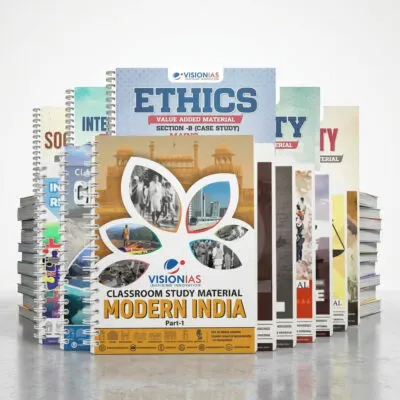
The Vision IAS Ancient Medieval History is a printed UPSC study material set sold by UPSC Store — India’s trusted source for genuine, latest-batch civil services preparation books. This page covers full booklet details, syllabus coverage, pricing, shipping, and frequently asked questions. Useful for UPSC CSE, BPSC, UPPSC, MPPSC, RAS and other state PSC examinations.
Vision IAS Ancient & Medieval History Notes 2025-26 — 1 Hindi Medium Printed Booklet for UPSC GS Paper I
Related: Vision IAS Hindi notes · History notes
Buy Vision IAS Ancient & Medieval History printed notes online — the complete 2025-26 edition in Hindi medium specifically designed for GS Paper I preparation. This single comprehensive booklet covers the entire UPSC syllabus for ancient and medieval Indian history, including the Indus Valley Civilization, Vedic Period, Mauryan Empire, Delhi Sultanate, Mughal Empire, and regional kingdoms. Whether you’re preparing for the UPSC Civil Services Examination or state PSCs, this booklet delivers expertly curated, structured content to help you master one of the most scoring yet challenging subjects in General Studies.
Product Overview
| Feature | Details |
|---|---|
| Booklets Count | 1 Individual Printed Booklet — Complete Ancient & Medieval History Syllabus Coverage |
| Language | Hindi Medium (हिंदी माध्यम) |
| Publisher | Vision IAS (GS Paper I Series) |
| Edition | 2025-26 — Latest Genuine Batch |
| Condition | Brand New, Unmarked, Fresh Stock |
| Format | High-Quality Printed Booklet — Spiral or Book Binding |
| Paper Quality | 75 GSM Ultra-White — Highlighter Safe, Zero Bleed-Through |
| Shipping | Pan India Delivery in 3-5 Business Days — Tracked |
| Also Useful For | BPSC, UPPSC, MPPSC, RAS, KPSC, JPSC, OPSC and all State PSCs |
Complete Booklet Catalog
This single Vision IAS booklet is a consolidated resource that combines both ancient and medieval Indian history into one well-organized, logically structured document. Designed specifically for UPSC GS Paper I, it caters to Hindi medium aspirants who require comprehensive yet concise notes that balance depth of content with revision-friendly formatting.
The booklet follows the official UPSC syllabus strictly, ensuring no topic is overlooked while eliminating superfluous information that wastes study time. Every section includes historical context, critical analysis, and connections to modern India.
- Booklet 1: Ancient & Medieval History Complete Syllabus — Comprehensive coverage of Indus Valley Civilization and its urban planning; Vedic Period including Rigveda, social structure, and Vedic gods; Mahajanapad Era and emergence of Buddhism and Jainism; Mauryan Empire under Ashoka, administration, and Dhamma; Post-Mauryan developments including Satavahanas and Kushans; Delhi Sultanate with its five dynasties (Slave, Khalji, Tughlaq, Sayyid, Lodi); Mughal Empire from Akbar to Aurangzeb with administrative systems; Regional kingdoms of South India; Socio-cultural developments in religion, art, and architecture; and the impact of colonialism on Indian society and economy.
In-Depth Content Breakdown: Booklet by Booklet
Booklet 1: Ancient & Medieval History Complete Syllabus
The ancient history section begins with the Indus Valley Civilization (2600-1900 BCE), exploring its sophisticated urban planning, undeciphered script, drainage systems, and trade networks. The notes explain why this civilization declined and transition to the Vedic Period, covering the four Vedas, the emergence of the varna system, early kingdoms, and the foundations of Hinduism. The Mahajanapad period (600-400 BCE) is thoroughly analyzed, highlighting the 16 major republics and monarchies, the rise of new philosophical movements including Buddhism (Buddha’s life, Four Noble Truths, Eightfold Path) and Jainism (Mahavira’s teachings), and their social impact. This section is crucial for GS Paper I as it forms the ideological basis of Indian civilization and appears frequently in UPSC mains essays and answer writing.
The Mauryan Empire section is structured around Chandragupta Maurya’s consolidation, Ashoka’s reign as the turning point, and the spread of Buddhism. Vision IAS notes provide detailed analysis of Ashoka’s edicts, the concept of Dhamma, and how Buddhist missions reached Central Asia and beyond. Post-Mauryan developments are covered through the Satavahana Empire (bridging North and South India through trade), Kushan contributions to Indo-Greek culture, and the emergence of art forms like Gandhara sculpture. Special emphasis is given to how these periods demonstrate India’s syncretism and adaptability — a theme frequently tested in UPSC ethics and history questions. Charts and timelines in this booklet help visualize the sequence of empires and dynasties, making revision rapid and effective.
Medieval history begins with the Delhi Sultanate, covering all five dynasties chronologically: the Slave Dynasty (Qutb-ud-din Aibak, Iltutmish), the Khalji Dynasty (Alauddin Khalji’s market reforms), the Tughlaq Dynasty (Muhammad bin Tughlaq’s experiments and Ibn Battuta’s accounts), the Sayyid Dynasty’s weakening rule, and the Lodi Dynasty’s final years. For each dynasty, Vision IAS provides key administrators, major battles, administrative innovations, and cultural contributions. The Mughal Empire section is equally detailed, starting with Babur’s invasion, Humayun’s struggles, and then focusing on the golden age under Akbar (administration, religious policy of sulh-i-kul), Jahangir (art patronage), Shah Jahan (architectural marvels), and Aurangzeb (expansion and fundamentalist policies). This section explicitly connects Mughal policies to modern communal and administrative debates, making it directly relevant to UPSC GS Paper IV (ethics and governance).
The regional kingdoms section highlights South Indian dynasties (Cholas, Pandyas, Chalukyas) and their contributions to art, architecture, and maritime trade. These topics often appear as source-based questions in UPSC mains, and Vision IAS provides enough context and specific examples (such as Chola bronze sculptures and temple architecture) to answer essay questions comprehensively. The socio-cultural developments section synthesizes religious evolution (Bhakti and Sufi movements), architectural styles (from Buddhist stupas to Mughal gardens), literary contributions (Sanskrit literature, Persian chronicles), and the role of women in medieval society. Finally, the section on colonialism’s impact explains how British policies disrupted traditional systems, exploited resources, and created the conditions for the independence movement — bridging ancient/medieval history to modern India for a holistic UPSC preparation. Each major topic includes maps (territorial boundaries, trade routes), diagrams (administrative hierarchies), and comparative tables (features of different empires), making this booklet a visual learning resource as well.
Physical Construction and Quality Standards
Vision IAS history booklets are manufactured to the highest standards expected by serious UPSC aspirants who study 8-12 hours daily. Every element — from paper selection to binding — is chosen to enhance focus, retention, and note-taking comfort during your preparation journey. The booklet is designed for intensive daily use without wear, tear, or degradation.
Paper Quality: 75 GSM Anti-Glare White Paper
The 75 GSM ultra-white paper used in this booklet is selected specifically for opacity and readability during long study sessions. Unlike standard 60-80 GSM paper that causes eye strain from light bleed-through, this premium grade has zero bleed-through even with highlighters, gel pens, and ballpoint annotations. The matte finish reduces glare from ceiling lights and screens, preventing headaches during 3-4 hour uninterrupted study blocks. Aspirants report that color-coded highlighting (yellow for definitions, green for chronology, pink for critical analysis) works flawlessly without feathering or soaking through. The paper’s neutral off-white tone further reduces eye fatigue compared to bright white alternatives.
Printing Technology: High-Resolution Laser Printing
Every page is printed using high-resolution laser technology that ensures crisp, permanent text and diagrams. Maps of the Mauryan Empire, medieval sultanate territories, and trade routes appear with perfect clarity — no fuzziness or ink smudging. The toner used is fade-proof, meaning your booklet remains readable even after 12 months of constant revision and storage. Flowcharts (e.g., the Mauryan administrative hierarchy), timelines (Mughal emperors’ reigns), and comparison tables (features distinguishing Khalji from Tughlaq policies) are printed with perfect line precision, making them ideal for visual learners. Unlike photocopies that degrade with repeated handling, laser-printed booklets maintain text sharpness through your entire UPSC preparation cycle.
Binding and Durability
This booklet comes in spiral or book binding options. Spiral binding allows the booklet to open completely flat — a critical feature when you’re writing 45-minute practice answers alongside the text or comparing different empire policies across pages. The spiral mechanism accommodates repeated opening/closing without wire deformation, and you can insert additional notes or photocopied resources between pages without damaging the spine. Book binding (perfect-bound with 300 GSM cover board) provides compact storage and portability for students who study in libraries or coaching centers. The cover card is sturdy enough to protect inner pages during transport in bags without bending. Both binding options ensure the booklet survives 9-12 months of daily preparation use, transport to and from exam centers, and post-exam retention for future reference or teaching purposes.
Key Features and Study Design
This Vision IAS booklet is built on three decades of UPSC coaching expertise, incorporating feedback from candidates who cleared the exam. Every feature is designed to solve a specific problem faced by Hindi medium aspirants preparing for GS Paper I history.
- UPSC Syllabus Alignment: Every topic in this booklet directly maps to the official UPSC GS Paper I syllabus for Indian history. No irrelevant information wastes your time. The notes explicitly mark which topics fall under “Ancient History,” “Medieval History,” and “Post-Medieval History,” helping you understand the UPSC scope. Chronological coverage runs from Indus Valley (2600 BCE) through Aurangzeb (1707 CE) and the early colonial period, exactly matching exam requirements.
- Hindi Medium Excellence: Unlike rushed translations, these notes are originally written in Hindi (हिंदी माध्यम) by historians fluent in both English and Hindi. Technical terms like “feudalism,” “sultanate,” and “jagirdari” are explained with Hindi context and examples, not just transliterated. Quotations from historical sources and Mughal-era Persian chronicles are provided in both English and Hindi transliteration, bridging language gaps. This is critical for Hindi medium students who often face confusion when encountering history notes originally written in English.
- Mains Answer Structure Guidance: History questions in UPSC mains require 7-minute answers (800-1000 words for long questions, 250-400 words for short questions) with proper examples, dates, and analysis. This booklet provides bullet points and organized facts that can be directly expanded into structured essay answers. Each section includes 2-3 sample answer frameworks showing how to structure a chronological response (e.g., Mauryan administration), compare two dynasties (e.g., Akbar vs. Aurangzeb’s religious policies), or analyze causation (e.g., why Mughal power declined). Aspirants can practice using these frameworks without reinventing answer structure every time.
- Visual Learning Through Maps and Diagrams: History heavily features geographical distribution of empires, trade routes, and territorial expansion — all illustrated with clear, labeled maps in this booklet. The Mauryan Empire map shows Ashoka’s rock edicts’ locations. Mughal maps display the extent of territories under each emperor. Medieval sultanate maps clarify how Delhi’s control fluctuated. Diagrams show administrative hierarchies (e.g., Mughal mansabdari system), philosophical evolution (how Buddhism, Jainism, and Hinduism coexisted and influenced each other), and socio-cultural timelines. These visuals are essential for aspirants with visual learning styles and provide quick revision cues during the final 40 days before the exam.
- Comparative Analysis Framework: UPSC often asks students to compare empires, rulers, or periods (e.g., “Compare the religious policies of Akbar and Aurangzeb and their impact on Indian society”). This booklet provides comparison tables side-by-side showing features like administrative systems, foreign policy, cultural patronage, and economic policies across different sultanates and Mughal emperors. These tables are designed for rapid revision and provide organized material for answer writing without forcing you to manually create notes.
Shipping, Packaging and Delivery
Your Vision IAS booklet is packaged with the same care used by premium educational publishers. The booklet arrives shrink-wrapped in protective plastic, then placed in a corrugated cardboard box with edge protectors and cushioning material (recycled kraft paper or bubble wrap) ensuring zero physical damage during transit. Whether you’re in Delhi, Mumbai, Bangalore, Chennai, or remote locations, the box is designed to withstand handling by courier services without tearing, crushing, or allowing moisture intrusion. The booklet remains pristine — pages unfolded, binding uncreased, cover unmarked — ready for your first study session immediately upon arrival.
Pan India delivery operates on a 3-5 business day timeline from order placement. You’ll receive a tracking ID via email and WhatsApp (+91 70045 49563) within 2 hours of order confirmation. Track your package in real-time through our logistics partner. If any booklet arrives damaged or missing, contact us immediately via WhatsApp with a photo, and we’ll send a replacement within 48 hours absolutely free. For orders from Mukherjee Nagar, Delhi, same-day pickup is available (contact +91 70045 49563). Our customer service team operates 9 AM to 9 PM, Monday through Saturday, to resolve any delivery or product quality concerns immediately.
Frequently Asked Questions (FAQ)
A: Yes, absolutely. Vision IAS has over 30 years of UPSC coaching experience and this booklet is specifically designed for Hindi medium aspirants. The content is originally written in Hindi (not translated), includes chronological coverage aligned with UPSC GS Paper I syllabus, and incorporates feedback from thousands of successful candidates. The 2025-26 edition reflects the latest UPSC question patterns and emphasis areas identified in recent mains exams.
A: While multiple institutes offer history notes, Vision IAS stands out for Hindi medium students because: (1) notes are originally composed in Hindi with proper terminology, not hasty translations; (2) content is curated by historians with UPSC exam experience; (3) the 75 GSM paper quality and printing precision support intense revision; (4) comparative analysis tables and maps directly address how UPSC frames mains questions; (5) the 2025-26 edition incorporates recent question trends. You can buy this booklet online with confidence knowing it’s trusted by thousands of aspirants annually.
A: This product includes 1 comprehensive printed booklet that covers the entire Ancient & Medieval History syllabus for UPSC GS Paper I. The single booklet consolidates both ancient and medieval content into a well-organized, logically sequenced resource rather than splitting into multiple booklets. This allows you to study the full historical continuum while reducing physical storage and carrying space. The booklet’s internal organization (with clear section headers, page numbers, and an index) makes navigation between ancient and medieval topics seamless.
A: These Vision IAS notes provide comprehensive UPSC-aligned content for the history portion of GS Paper I and are sufficient as your primary study material. However, for maximum scoring, supplement with: (1) specific historical documents from UPSC previous papers; (2) practice writing 7-minute answers using frameworks provided in these notes; (3) one additional source for regional history details (South Indian dynasties, regional sultanates) if you want exhaustive coverage; (4) watching 1-2 YouTube lectures on topics like Mughal administration to deepen conceptual clarity. The notes themselves are complete and well-researched; additional resources are for aspirants targeting 90+ marks.
A: Yes, you can buy this booklet online directly from our UPSC store. Place your order on our website, and delivery happens pan-India within 3-5 business days via tracked courier. You’ll receive a tracking ID via email and WhatsApp (+91 70045 49563) within 2 hours of order placement. The booklet arrives shrink-wrapped, in perfect condition, ready for immediate study. For express delivery within Delhi (Mukherjee Nagar area), same-day pickup is available.
A: These booklets use premium 75 GSM ultra-white paper specifically chosen for high opacity and zero bleed-through. You can safely use multiple colors of highlighters (yellow, green, pink), gel pens, ballpoint pens, and even aggressive pencil underlining without any ink seeping to the reverse page. The matte finish reduces glare during long study sessions, preventing eye strain. The paper’s quality ensures the booklet remains readable even after 12+ months of intensive revision and repeated page opening.
A: Follow this 4-phase approach: (1) First reading (2-3 weeks): Read chronologically from Indus Valley through colonialism, making 2-3 additional notes per topic as reminders. Don’t write everything. (2) Thematic analysis (2-3 weeks): Study the provided comparison tables and maps, identifying patterns (e.g., how religious policies differed across Mauryan and Mughal emperors). (3) Answer practice (3-4 weeks): Using frameworks in these notes, write 7-minute answers to previous year UPSC questions and model answers provided by coaching materials. (4) Rapid revision (final 30 days): Use only the timelines, maps, and bullet points in these notes for daily 30-minute speed revision. This approach balances depth with time efficiency.
A: Yes, the 2025-26 edition is specifically updated to reflect UPSC question patterns from 2023-2024 mains exams. Recent years have seen increased emphasis on: regional history (Chola, Chalukya contributions to maritime trade and temple architecture), comparative religious policies of Mughal emperors (especially relevant to GS Paper IV ethics), and colonialism’s economic impact (directly linked to modern India studies). This edition incorporates these areas more thoroughly than previous versions and removes outdated reference materials. Buying the 2025-26 edition ensures you’re studying current, relevant content aligned with recent exam trends.
A: Vision IAS is recognized as one of the top institutes for UPSC preparation, particularly for Hindi medium students. Their strengths include: original Hindi composition (not translations), 30+ years of exam-specific coaching, comprehensive yet concise content, high paper and printing quality for intensive study, and consistent feedback from successful aspirants. While other institutes (Vajiram & Ravi, Drishti IAS, IMS) also offer history materials, Vision IAS specifically excels at Hindi medium resources. You can confidently buy these notes knowing they’re from one of India’s most respected UPSC coaching institutes.
A: This specific product is in Hindi Medium (हिंदी माध्यम). Vision IAS does offer Ancient & Medieval History notes in English medium as a separate product if you need that version. However, if you’re comfortable studying in Hindi and want content originally composed in Hindi with proper terminology and contextual examples, this Hindi medium edition is your ideal choice. You can buy either version depending on your language preference and medium of study.
A: Free online materials often have these issues: (1) incomplete or outdated content; (2) translated hastily, causing confusion on technical terms; (3) no quality assurance or accuracy verification; (4) scattered across multiple documents (no cohesive study flow); (5) designed by non-specialists without UPSC exam experience; (6) cannot be annotated or highlighted safely on screens during long study sessions. When you buy Vision IAS printed notes, you get: expertly curated content by UPSC specialists, 75 GSM paper optimized for highlighter use and 8+ hour daily study, coherent organization supporting answer writing, and a tangible resource you can carry anywhere. The small investment in these notes pays dividends in time saved and improved retention compared to free but disorganized online sources.
A: This booklet is organized with a clear structure: (1) table of contents at the beginning listing all major topics and their page numbers; (2) chapters divided into Ancient History (Indus Valley through Mauryan) and Medieval History (Delhi Sultanate through Mughal); (3) each chapter has sub-sections with bold headers for quick navigation; (4) page numbers and running headers on every page showing the current topic; (5) an index at the end listing specific topics (e.g., “Ashoka’s Dhamma,” “Akbar’s Religious Policy”) with page references. This design allows you to quickly jump to any topic during revision without scrolling through irrelevant material, crucial when you’re revising 2-3 days before the exam and need to refresh specific concepts rapidly.
Summary
| Specification | Value |
|---|---|
| Booklets | 1 Printed Booklet — Complete Ancient & Medieval History |
| Language | Hindi Medium (हिंदी माध्यम) |
| Paper | 75 GSM Ultra-White Anti-Glare |
| Binding | Spiral or Book Binding (your choice) |
| Printing | High-Resolution Laser — Crisp Maps & Diagrams |
| Delivery | 3-5 Business Days Pan India |
| Coverage | UPSC GS Paper I Ancient & Medieval History |
| Edition | 2025-26 — Latest Updated |
| Also Useful For | BPSC, UPPSC, MPPSC, RAS, KPSC, JPSC, OPSC and all State PSCs |
Buy Vision IAS Ancient & Medieval History Notes 2025-26 in Hindi medium from our Mukherjee Nagar, Delhi store. Premium printed booklet, 75 GSM paper, UPSC-aligned content, pan India delivery 3-5 days. Contact +91 70045 49563 for queries. Fast, reliable, and trusted by thousands of UPSC aspirants annually.
Reference: Civil Services Examination
Customer Reviews 876
Mast booklets, bahut helpful for Ancient history. Recommend kar raha hoon sab ko.
Packing bhi achha tha, books bilkul new the. Maza aa gaya padhte hue.
Packaging bilkul secure tha, books intact aaye, quality mein koi compromise nahi.
Bilkul mast booklets hain, content bahut detailed aur clear hai. UPSC ke liye perfect resource.
Notes readable hain aur organized bhi. Kuch chapters thoda shallow feel dete hain though.
The notes are comprehensive and well-structured. Definitely helps in cracking UPSC.
Theek hai notes but kuch case studies aur examples add karne se better hota.
Mera revision ho gaya is notes se. Content reliable hai aur exam-oriented bhi.
Aspirants Also Bought
More from the same category
About Vision IAS Ancient & Medieval History Notes 2025-26
Vision IAS Ancient & Medieval History Notes 2025-26 is a highly recommended UPSC study material from Vision IAS, specially designed for Ancient and Medieval History preparation. Available in Hindi medium, this material is crafted to match the exact requirements of the UPSC Civil Services Examination syllabus — covering both Prelims and Mains comprehensively.
Product Details
- Institute: Vision IAS
- Subject: Ancient and Medieval History
- Medium: Hindi
- Format: Printed
- Delivery: Pan-India delivery in 3–5 working days
- Format: Original printed material, verified authentic
Why Buy from UPSC Store?
- ✅ 100% Genuine Printed Material — Original printed notes, no photocopies or fake copies
- ✅ Fast Delivery — Ships within 24 hours, arrives in 3–5 days pan-India
- ✅ Secure Packaging — Bubble-wrapped and boxed to prevent damage in transit
- ✅ Trusted by 10,000+ Aspirants — India's most reliable UPSC material marketplace
- ✅ WhatsApp Support — Get expert guidance on material selection before ordering
Frequently Asked Questions
Yes, all products at UPSC Store are 100% genuine printed materials. We do not sell photocopies or fake copies.
Orders are dispatched within 24 hours and delivered across India in 3–5 working days via reputed courier partners.
Yes, we accept returns within 7 days if the product is damaged or incorrect. Check our refund policy for details.
We recommend pairing this with current affairs notes and a UPSC test series for comprehensive preparation. Browse more in General Studies, History, UPSC, Vision IAS.