
Next IAS General Studies Notes 2025-26
About Next IAS General Studies Notes
The Next IAS General Studies Notes is a printed UPSC study material set sold by UPSC Store — India’s trusted source for genuine, latest-batch civil services preparation books. This page covers full booklet details, syllabus coverage, pricing, shipping, and frequently asked questions. Useful for UPSC CSE, BPSC, UPPSC, MPPSC, RAS and other state PSC examinations.
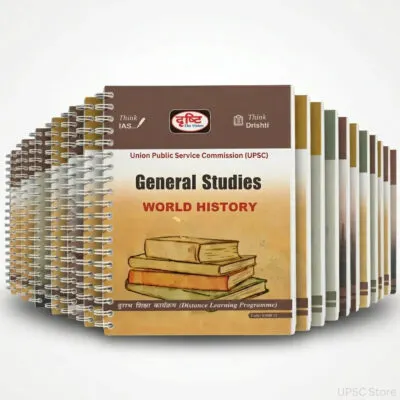
Next IAS General Studies Notes 2025-26 — 18 English Medium Printed Booklets for UPSC GS Paper IV Ethics, Integrity and Aptitude
Related: Next IAS notes · GS notes
Product Overview
| Feature | Details |
|---|---|
| Booklets Count | 18 Individual Printed Booklets — Full General Studies Coverage Including GS Paper IV Ethics, Integrity and Aptitude |
| Language | English Medium |
| Publisher | Next IAS (General Studies Series 2025-26) |
| Edition | 2025-26 — Latest Genuine Batch, Revised and Improved |
| Condition | Brand New, Unmarked, Fresh Stock |
| Format | High-Quality Printed Booklets — Spiral or Book Binding |
| Paper Quality | 75 GSM Ultra-White — Highlighter Safe, Zero Bleed-Through |
| Shipping | Pan India Delivery in 3-5 Business Days — Tracked |
| Also Useful For | BPSC, UPPSC, MPPSC, RAS and All State PSC Examinations |
Complete Booklet Catalog
The Next IAS General Studies Notes 2025-26 set spans all four GS papers plus Essay, providing 18 topic-focused printed booklets that map directly to the UPSC Civil Services Mains syllabus. This set is designed for English-medium aspirants who want structured, exam-ready printed study material covering History, Geography, Polity, Economy, Environment, Science and Technology, Ethics, Integrity and Aptitude, and Current Affairs integration.
- Booklet 1: Indian History — Ancient and Medieval — Covers Indus Valley Civilisation, Vedic period, Mauryan and Gupta empires, Bhakti and Sufi movements, Delhi Sultanate, Mughal administration, art and architecture, cultural heritage, and significant dynasties tested repeatedly in UPSC GS Paper I Mains.
- Booklet 2: Modern Indian History and Freedom Struggle — British expansion and consolidation, socio-religious reform movements, early nationalism, Indian National Congress, Gandhian era, partition and independence, revolutionary movements, and constitutional development from 1857 to 1947.
- Booklet 3: Indian Art, Culture and Heritage — Classical dance forms, music traditions, painting schools, sculpture styles, architecture through ages, intangible heritage, UNESCO World Heritage Sites in India, tribal art, festivals, and language diversity as per UPSC Mains GS Paper I syllabus.
- Booklet 4: Indian and World Geography — Physical — Geomorphology, climatology, oceanography, natural vegetation, soil types, disaster-prone regions, earthquake zones, cyclone corridors, river systems, physiographic divisions of India, and world physical geography high-yield topics for UPSC.
- Booklet 5: Indian and World Geography — Human and Economic — Population geography, urbanisation, migration, agricultural geography, industrial location theories, transport networks, world trade routes, energy resources, food security geopolitics, and India-specific regional development patterns.
- Booklet 6: Indian Polity and Constitution — Constitutional history, Preamble, Fundamental Rights, Directive Principles, Fundamental Duties, Parliament, President, Governor, federalism, judiciary independence, amendment procedure, emergency provisions, and constitutional bodies — the backbone of UPSC GS Paper II.
- Booklet 7: Governance, Social Justice and International Relations — Government schemes, e-governance, RTI, civil services reforms, welfare programmes, social justice for SC/ST/OBC/minorities/women, India’s foreign policy, bilateral relations, multilateral organisations, India-USA-China triangle, and neighbourhood-first policy.
- Booklet 8: Indian Economy — Basics and Planning — National income concepts, planning history, NITI Aayog, poverty measurement, inequality, employment, labour reforms, agriculture sector challenges, land reforms, food processing, MSP debate, and farm laws context for UPSC GS Paper III.
- Booklet 9: Indian Economy — Money, Banking and Fiscal Policy — RBI functions, monetary policy tools, inflation targeting, banking sector reforms, NPAs, NBFCs, government budget, fiscal deficit, GST, direct and indirect tax reforms, and capital market regulation relevant to UPSC Mains.
- Booklet 10: Indian Economy — Infrastructure and Industry — Infrastructure financing, PPP model, logistics, road-rail-port development, energy sector, renewable transition, space economy, manufacturing policy, industrial corridors, PLI scheme, and start-up ecosystem for UPSC GS Paper III.
- Booklet 11: Science and Technology — Space technology, nuclear programme, defence technology, biotechnology, nanotechnology, artificial intelligence, cybersecurity, IT Act, digital India, health technology, and emerging tech trends tested in UPSC Mains GS Paper III.
- Booklet 12: Environment, Ecology and Disaster Management — Biodiversity hotspots, ecosystem services, climate change science, UNFCCC, Paris Agreement, pollution types, environmental laws, EIA, protected areas, CITES, Ramsar sites, disaster risk reduction, NDMA framework, and sustainable development goals.
- Booklet 13: Internal Security and Challenges to India — Left-wing extremism, insurgencies, border management, cyber threats, money laundering, organised crime, radicalization, role of media and social media in security, security forces, and legislation related to internal security for UPSC GS Paper III.
- Booklet 14: Ethics and Human Interface — Nature and dimensions of ethics, determinants of ethics, moral philosophy from Eastern and Western traditions, human values, role of family and society, attitude formation, emotional intelligence, and social influence on ethical behaviour for UPSC GS Paper IV.
- Booklet 15: Integrity, Aptitude and Foundational Values in Civil Services — Foundational values for civil services, integrity, impartiality, non-partisanship, dedication to public service, empathy, tolerance, compassion, probity in public life, code of conduct, and ethical governance frameworks tested in UPSC GS Paper IV.
- Booklet 16: Ethics in Public Administration and Case Studies — Ethical dilemmas in administration, corruption and anti-corruption measures, corporate governance, international ethical standards, laws and regulations as ethical guidance, whistleblower protection, and structured case study practice with model answers for UPSC GS Paper IV.
- Booklet 17: Essay Writing — Concepts, Strategy and Practice — Essay structure and approach, philosophical essay writing, contemporary issues essays, socio-economic themes, governance themes, value-based essay writing techniques, UPSC Essay Paper strategy, and practice essays with evaluated model answers.
- Booklet 18: Current Affairs Integration and Revision Compilation — Integration of 2024-25 current events with static GS syllabus topics, important government schemes updated, international events mapped to GS papers, revision tables, quick-reference charts, and last-mile revision material for UPSC Mains 2025-26.
In-Depth Content Breakdown: Booklet by Booklet
Booklet 1: Indian History — Ancient and Medieval
This booklet anchors the UPSC GS Paper I History preparation, covering the complete arc from prehistoric cultures through the medieval period. Topics include the Indus Valley Civilisation and its urban planning, the evolution of the Vedic tradition, the rise of Buddhism and Jainism, the Mauryan polity under Chandragupta and Ashoka, the golden age of the Guptas, and the fragmented post-Gupta kingdoms. Each topic is presented with exam-relevant keywords, timelines, and comparative tables to speed up revision for UPSC Mains.
The medieval section covers the structural features of the Delhi Sultanate, the Vijayanagara Empire, the Maratha polity, and the administrative innovations of the Mughals. The booklet integrates art and architecture notes alongside political history, allowing aspirants to answer interdisciplinary UPSC questions. Diagrams illustrating architectural styles and maps of empire extents are included, making this a standalone revision resource. The content is presented in point-form and short paragraphs that allow fast reading during the final weeks before UPSC Mains.
Booklet 2: Modern Indian History and Freedom Struggle
This booklet covers the most heavily tested segment of UPSC GS Paper I — the British colonial period and India’s freedom movement. Starting with the establishment of the East India Company and moving through the Revolt of 1857, early nationalism, the Indian National Congress, and the mass movements led by Gandhi, Tilak, and Bose, every stage is mapped to the UPSC syllabus. Socio-religious reform movements — Brahmo Samaj, Arya Samaj, Aligarh Movement — are covered with their leaders and lasting impact.
The booklet dedicates significant space to the constitutional evolution from the Regulating Act 1773 to Independence in 1947, a topic that bridges GS Paper I and GS Paper II. The revolutionary movement, the role of women in the freedom struggle, and the partition of India are covered with nuanced analysis suitable for UPSC Mains answers. Important dates, personalities, and movement timelines are structured in tables, and model paragraph openings for 10-mark and 15-mark answers are embedded throughout this booklet.
Booklet 3: Indian Art, Culture and Heritage
Culture has emerged as one of the most scoring sections of UPSC GS Paper I and this booklet provides structured notes across all dimensions — performing arts, visual arts, architecture, and intangible heritage. Classical dance forms such as Bharatanatyam, Kathak, Kuchipudi, Manipuri, and Odissi are covered with their geographical origin, characteristics, and UPSC-relevant trivia. Classical music traditions — Hindustani and Carnatic — are mapped with prominent gharanas, instruments, and notable performers.
The architecture section uses visual descriptions to distinguish between Nagara, Dravida, and Vesara temple styles, Buddhist monuments, Indo-Islamic architecture, and colonial-era buildings. The booklet lists all UNESCO World Heritage Sites in India with the year of inscription — a high-yield table for UPSC Prelims and Mains both. Tribal art forms, folk traditions, and geographical indications linked to cultural products are also covered. This booklet makes Art and Culture fully manageable for an English-medium UPSC aspirant without needing a separate textbook.
Booklet 4: Indian and World Geography — Physical
Physical Geography is tested consistently across UPSC Prelims and Mains GS Paper I. This booklet covers geomorphology — landforms, weathering, erosion, and depositional features — alongside climatology fundamentals including pressure belts, wind systems, monsoon mechanism, ENSO, and climate classification. The oceanography section covers ocean currents, tides, El Niño impacts, and marine ecosystems. Earthquake zones, volcanic belts, and India’s seismic map are covered with the context needed for UPSC Mains disaster questions.
The India-specific physical geography section covers the Himalayan physiography, Indo-Gangetic Plain, peninsular plateau, coastal plains, and island territories in structured detail. River systems — both Himalayan and peninsular — are mapped with their tributaries, inter-linking proposals, and related current issues. The booklet uses labelled maps and diagrams to build spatial understanding, which is essential for UPSC Mains Map-based questions. This is a reference booklet aspirants will return to repeatedly through their preparation cycle.
Booklet 5: Indian and World Geography — Human and Economic
Human and Economic Geography is where static Geography intersects with current affairs for UPSC GS Paper I and Paper III both. This booklet covers population theories, demographic transition, India’s census data interpretation, urbanisation patterns, smart cities, and migration trends. Agricultural geography covers Green Revolution, second Green Revolution, organic farming, and challenges of Indian agriculture — all mapped to UPSC Mains question patterns of the last decade.
The world geography section focuses on strategic resources — rare earth minerals, energy geopolitics, water disputes, and food security — making it doubly useful for UPSC GS Paper II International Relations questions. Industrial location theories and India’s industrial corridors are explained with diagrams. Transport geography includes the India-Central Asia corridor, INSTC, and maritime routes relevant to UPSC 2025-26. The booklet closes with a revision table of world geographic facts — longest rivers, highest peaks, largest economies — formatted for quick last-day revision.
Booklet 6: Indian Polity and Constitution
This is the most critical booklet for UPSC GS Paper II preparation. It opens with the philosophical foundations of the Indian Constitution — Constituent Assembly debates, sources of constitutional provisions, and the Preamble’s evolution including the 42nd Amendment. Fundamental Rights are covered article-by-article with landmark Supreme Court judgments — Kesavananda Bharati, Maneka Gandhi, ADM Jabalpur — contextualized for UPSC Mains answer writing. The Directive Principles and their justiciability debate form an important analytical section.
Parliament, the President, Prime Minister, and Cabinet are covered with their constitutional powers, conventions, and recent controversies — essential for UPSC GS Paper II current-affairs-linked static questions. Federalism gets dedicated treatment: Centre-State relations, Inter-State Council, Finance Commission, and cooperative federalism debates. The judiciary section covers Supreme Court jurisdiction, judicial review, PIL, and judicial appointments controversy. Emergency provisions, Anti-defection law, and constitutional amendments are structured in tabular comparison format for rapid UPSC revision.
Booklet 7: Governance, Social Justice and International Relations
This booklet covers the entire UPSC GS Paper II beyond pure Polity. The governance section addresses civil services reforms, performance management, e-governance frameworks, RTI implementation challenges, and citizen-centric delivery models. Important government flagship schemes — PM Awas Yojana, Ayushman Bharat, Jal Jeevan Mission, and PM Gati Shakti — are explained with objectives, beneficiaries, and critical evaluation, the format UPSC Mains demands.
Social justice covers constitutional provisions for marginalized groups, SC/ST/OBC/women/LGBTQ+ rights, welfare programmes, and international human rights instruments India has ratified. The International Relations section maps India’s foreign policy evolution, bilateral partnerships with the USA, Russia, China, Japan, and Gulf nations, and India’s role in multilateral bodies — UN, WTO, SCO, BRICS, and G20. This booklet uses current-affairs integration heavily, making it the most future-proof booklet in the set for UPSC 2025-26.
Booklet 8: Indian Economy — Basics and Planning
UPSC GS Paper III Economy questions demand both conceptual clarity and current-affairs awareness. This booklet builds the conceptual foundation: national income accounting, GDP vs GNP vs NNP, economic survey terminology, and India’s economic planning history from five-year plans to NITI Aayog’s strategy documents. Poverty measurement methods — Tendulkar, Rangarajan, and multidimensional poverty — are compared with exam-relevant tables and UPSC Mains answer frameworks.
Agriculture sector content covers Green Revolution legacy, agricultural distress, crop insurance, minimum support price debates, and food security legislation. Land reforms history — Zamindari Abolition, Bhoodan Movement, and current land acquisition challenges — is structured for 10-mark UPSC Mains answers. Labour market reforms, including the four Labour Codes, gig economy regulation, and MGNREGS performance, are covered with data points and critical perspectives needed to write balanced UPSC answers that examiners reward with high marks.
Booklet 9: Indian Economy — Money, Banking and Fiscal Policy
This booklet covers the financial architecture of India — a consistently high-weightage area in UPSC GS Paper III. The monetary policy framework post-2016, RBI’s role as regulator, lender of last resort, and inflation targeter are explained conceptually and practically. Banking sector reforms — recapitalization, bad bank (NARCL), IBC framework, and digital banking — are covered with the critical analysis required for UPSC Mains 15-mark questions.
Fiscal policy content covers the Union Budget structure, fiscal deficit measurement, FRBM Act and its amendments, revenue vs capital expenditure debate, and GST architecture including the compensation cess controversy. Capital markets — SEBI regulation, foreign portfolio investment, sovereign bond debate — are covered with sufficient depth for UPSC questions. The booklet contains a dedicated section on cryptocurrencies, CBDC, and fintech regulation, which has been an emerging UPSC topic. All data tables use 2024-25 figures, making this booklet genuinely updated for UPSC 2025-26 cycle.
Booklet 10: Indian Economy — Infrastructure and Industry
Infrastructure is at the heart of India’s economic transformation narrative, and UPSC GS Paper III tests it heavily. This booklet covers infrastructure financing models — public investment, PPP, infrastructure bonds, and multilateral lending — alongside the NIP (National Infrastructure Pipeline) and PM Gati Shakti framework. Road, rail, port, and airport development are covered with project names, corridors, and policy frameworks that UPSC Mains questions often draw from directly.
Industrial policy covers Make in India, PLI schemes sector-by-sector, industrial corridors (DMIC, CBIC), SEZ policy, and the MSME sector’s challenges and reforms. Energy sector coverage includes thermal, hydro, nuclear, and the renewable energy transition — solar mission, wind energy, green hydrogen — with India’s commitments under the Paris Agreement contextualized. The space economy, semiconductors, and defence manufacturing under Atmanirbhar Bharat are emerging UPSC topics covered with current data and analytical frameworks in this booklet.
Booklet 11: Science and Technology
Science and Technology is one of the fastest-evolving sections of UPSC GS Paper III. This booklet covers India’s space programme — ISRO missions, Chandrayaan, Gaganyaan, and commercial space policy — alongside defence technology including DRDO programmes, missile systems, and indigenous defence production. Biotechnology content covers gene editing (CRISPR), GM crops debate, and biosafety regulations, all tested in recent UPSC Mains papers.
Artificial Intelligence, Machine Learning, and their governance implications are covered with India’s national AI strategy and ethical dimensions — a topic that bridges GS Paper III and GS Paper IV. Cybersecurity covers the IT Act, data protection legislation (DPDP Act), and India’s National Cybersecurity Strategy. The booklet also addresses nanotechnology, quantum computing, 5G rollout, and semiconductors policy in accessible language without requiring a science background, making it genuinely useful for arts-stream UPSC aspirants preparing in English medium.
Booklet 12: Environment, Ecology and Disaster Management
Environment is a guaranteed high-scorer in both UPSC Prelims and Mains GS Paper III. This booklet covers ecology fundamentals — ecosystem structure, energy flow, nutrient cycles, biomes, and biodiversity concepts — before moving to applied conservation topics. Biodiversity hotspots, protected area network, Project Tiger, Project Elephant, wetland conservation, and IUCN classifications are covered with India-specific data for UPSC Mains answer enrichment.
Climate change content covers the science of global warming, IPCC reports summary, UNFCCC framework, Paris Agreement NDCs, and India’s climate commitments. Pollution — air, water, soil, plastic, noise, and light — is covered with relevant legislation: Environment Protection Act, Water Act, Air Act, and Plastic Waste Management Rules. Disaster Management covers the Sendai Framework, NDMA guidelines, and India’s approach to cyclones, floods, earthquakes, and heatwaves — all tested in UPSC Mains. SDGs are mapped to relevant GS paper topics in a master table at the booklet’s end.
Booklet 13: Internal Security and Challenges to India
Internal Security is an important component of UPSC GS Paper III that many aspirants under-prepare. This booklet covers the landscape of security challenges facing India: Left-Wing Extremism (Naxalism) — its geographical spread, causes, government counter-strategy, and recent developments; Northeast insurgencies; cross-border terrorism from Pakistan and Bangladesh; and maritime security in the Indian Ocean Region. Each challenge is analyzed through causes, current status, and policy response — the three-part structure that UPSC examiners reward.
Cyber threats to critical infrastructure, social media-driven radicalization, and money laundering networks are covered as emerging security challenges. Legislation — UAPA, NSA, AFSPA, and their controversies — is explained with balanced perspectives for UPSC Mains answer writing. The role of central paramilitary forces, border management infrastructure, and coastal security post-26/11 are covered with current institutional arrangements. Intelligence agencies — RAW, IB, and their coordination with state police — complete this booklet’s coverage of India’s internal security architecture.
Booklet 14: Ethics and Human Interface
GS Paper IV Ethics, Integrity and Aptitude is the most unique paper in UPSC Mains — it tests values and reasoning rather than pure knowledge. This booklet opens the Ethics series within the 18-booklet set, covering the philosophical foundations: what is ethics, how ethics differs from law, the great ethical traditions — consequentialism (Bentham, Mill), deontology (Kant), virtue ethics (Aristotle), and their Indian equivalents in Dharmaśāstra, Buddhist ethics, and Gandhian thought. This dual coverage of Eastern and Western ethics is a hallmark of Next IAS notes that sets them apart.
Determinants of ethics — family, society, education, media, religion — are discussed with real-life examples suitable for UPSC GS Paper IV Section A answers. Human values — truth, compassion, justice, and integrity — are analyzed with their relevance to public administration. The attitude section covers components of attitude (cognitive, affective, conative), attitude change, persuasion theories, and the attitude-behaviour relationship, all of which appear regularly in UPSC GS Paper IV. Emotional intelligence — Goleman’s model, self-awareness, empathy, and social skills — is covered with application in civil services context.
Booklet 15: Integrity, Aptitude and Foundational Values in Civil Services
This booklet focuses on the civil services-specific content of UPSC GS Paper IV Section B. The foundational values — integrity, impartiality, non-partisanship, objectivity, dedication to public service, empathy, tolerance, and compassion — are explained not as abstract principles but as practical frameworks that a civil servant applies in field situations. Each value is illustrated with real administrative scenarios, making this booklet directly useful for UPSC GS Paper IV case study answers.
Probity in governance covers the concept of public trust, conflict of interest, transparency mechanisms, RTI as an ethical tool, and asset disclosure requirements. The civil services code of conduct is covered alongside the ARC (Administrative Reforms Commission) recommendations on ethics in governance. Aptitude content covers the qualities that distinguish a good civil servant — decisiveness, intellectual honesty, communication, leadership, and crisis management — contextualized for UPSC GS Paper IV Section B questions. This booklet alone could significantly improve scores in the Ethics paper for aspirants who engage deeply with its content.
Booklet 16: Ethics in Public Administration and Case Studies
This is the most practice-oriented booklet in the UPSC Ethics series within the 18-booklet set. It covers ethical dilemmas in public administration — when loyalty to the system conflicts with personal ethics, when political pressure clashes with professional integrity — and provides structured frameworks (stakeholder analysis, consequences analysis, and rights-based analysis) for resolving them in UPSC GS Paper IV answers. Corruption is analyzed at systemic, institutional, and individual levels with anti-corruption mechanisms.
Corporate governance, international ethical standards (UN Global Compact, OECD guidelines), and the ethics of whistleblowing are covered as the final knowledge segments. The bulk of this booklet, however, is dedicated to case study practice — 25+ case studies organized by theme (civil servant dilemmas, disaster situations, financial corruption, political pressure, social justice conflicts) with model answers demonstrating how to use ethical frameworks in UPSC GS Paper IV responses. This is the only booklet in many coaching sets that provides this level of case study scaffolding for UPSC aspirants.
Booklet 17: Essay Writing — Concepts, Strategy and Practice
The UPSC Essay Paper carries 250 marks and is often the differentiator between candidates who clear Mains and those who don’t. This booklet covers essay writing as a craft — structure (introduction, body, conclusion), transition between paragraphs, balancing multiple perspectives, and maintaining a consistent thread throughout a long essay. The booklet categorizes UPSC essay topics into philosophical, socio-economic, governance, and contemporary affairs types, with a different strategic approach recommended for each type.
Value-based and philosophical essay writing receives special attention, with frameworks for integrating Eastern philosophy, Western thinkers, Indian constitutional values, and contemporary data into a single coherent essay. Ten model essays on high-probability UPSC topics — ranging from technology ethics to federalism to gender justice — are included with examiner-perspective comments. Essay writing tips from high-scorers and a list of quotations organized by theme (justice, freedom, truth, governance) make this booklet a standalone resource for UPSC Essay Paper preparation without requiring additional books.
Booklet 18: Current Affairs Integration and Revision Compilation
Current affairs integration is what separates a good UPSC answer from an excellent one, and this final booklet bridges the gap between static notes and live current affairs. It maps significant events of 2024-25 — government policies, international agreements, Supreme Court judgments, economic developments, and scientific achievements — to the relevant GS paper syllabus topics covered in Booklets 1 through 17. This cross-referencing helps UPSC aspirants understand which current affairs item belongs in which GS Paper answer.
The revision compilation section provides condensed revision tables for all four GS papers and the Essay paper — one-page summaries of key facts, dates, personalities, schemes, and concepts. These tables are formatted for last-week UPSC Mains revision when aspirants need to rapidly refresh high-yield material. A final section covers frequently updated data: India’s economic indicators, environmental indices, human development rankings, and defence acquisitions — all updated to the 2025-26 edition. This makes Booklet 18 the first thing to revisit in the 48 hours before UPSC Mains begins.
Physical Construction and Quality Standards
Every booklet in the Next IAS General Studies Notes 2025-26 set is produced to standards that support 8 to 12 months of intensive UPSC preparation — frequent opening, underlining, margin notes, and repeated revision cycles — without physical deterioration. Quality begins at the paper stage and carries through to the final cover and binding.
Paper Quality: 75 GSM Anti-Glare White Paper
The 75 GSM ultra-white paper used in these booklets has been selected for high opacity — the paper prevents show-through even when text is printed on both sides, which is the standard for printed UPSC notes. The smooth surface accepts all types of highlighters (yellow, green, pink, orange) and gel pens without feathering or bleed-through to the reverse side. For aspirants studying 8 to 10 hours daily, the anti-glare finish significantly reduces eye strain compared to lower-quality paper used by budget printing operations. The paper weight also means booklets hold their shape over months of field use.
Printing Technology: High-Resolution Laser Printing
All 18 booklets are printed using high-resolution laser printing technology, which produces sharp, smudge-proof text and crisp diagram reproduction. Maps of India’s physical regions, flowcharts of constitutional processes, organisational charts of government bodies, and economic graphs are all reproduced with the clarity needed to read fine labels without a magnifying glass. Laser toner is permanently fused to the paper surface — it does not smear with sweaty hands during long study sessions, does not fade in sunlight when booklets are used near windows, and does not degrade in humid conditions common to aspirants studying in non-air-conditioned environments across India.
Binding and Durability
Booklets in this set are available in spiral binding or book binding depending on stock. Spiral-bound booklets open completely flat — a critical feature for aspirants who write notes alongside printed content or place booklets beside their answer-writing practice sheets. The 300 GSM laminated cover on each booklet protects internal pages from moisture and physical damage during transport in bags. Book-bound booklets offer a compact form factor suitable for shelf storage and reading while commuting. Both binding options are stress-tested to withstand hundreds of open-close cycles across the UPSC preparation period without spine breakage or page detachment.
Key Features and Study Design
The Next IAS General Studies Notes 2025-26 set is designed by an institute that has produced hundreds of UPSC selections — the content architecture reflects what actually gets tested in UPSC Mains, not just what appears in the syllabus on paper. Here is what makes these 18 booklets distinctively effective for English-medium UPSC preparation:
- Complete GS Coverage in One Set: All four GS papers plus Essay and Current Affairs integration are covered across 18 printed booklets, eliminating the need to buy multiple resources from different publishers. One consistent set, one consistent language, one consistent study system designed for UPSC Mains.
- UPSC Mains Answer-Writing Framework: Each topic section is structured with the 10-mark and 15-mark UPSC answer framework in mind — introduction, body with multiple dimensions, and balanced conclusion. Aspirants can directly model their answers on the structure of the notes rather than having to re-engineer content into answer format from textbook-style writing.
- Dedicated Ethics and Case Study Booklets: Three full booklets (14, 15, 16) are devoted to UPSC GS Paper IV Ethics, Integrity and Aptitude, including 25+ case studies with model answers. Most competitor note sets treat Ethics superficially; Next IAS dedicates the depth this high-scoring, high-difficulty paper deserves.
- Updated 2025-26 Edition with Current Affairs Integration: Booklet 18 maps 2024-25 current events to the static syllabus, and data tables throughout the set have been updated to reflect the latest available figures — Economic Survey 2024-25, Budget 2025-26, and key policy changes. This keeps the set genuinely useful for the UPSC 2026 Mains cycle.
- Visual Learning Aids Throughout: Labelled maps, process flowcharts, comparative tables, timeline diagrams, and concept-web illustrations appear throughout all 18 booklets. Visual aids accelerate retention for visual learners and provide quick-reference tools during UPSC revision, particularly for Geography and Polity topics where spatial and structural understanding matters.
Shipping, Packaging and Delivery
All 18 booklets are first individually shrink-wrapped in protective plastic film before being assembled as a complete set. The set is then packed in a double-walled corrugated cardboard box with foam edge protectors placed at all eight corners of the box. Additional bubble wrap is placed above and below the booklet stack to absorb transit shocks. The outer box is sealed with industrial-grade tape and labelled with fragile markings. This packaging protocol has been developed to ensure that booklets arrive with covers unmarked, pages uncreased, and bindings intact — even after multi-day transit to remote delivery addresses across India.
Orders are dispatched within 24 hours of payment confirmation. Pan India delivery takes 3-5 business days via tracked courier, and a tracking ID is shared via email and WhatsApp within 12 hours of dispatch. For order status, missing booklet replacement (dispatched within 48 hours of complaint), bulk institutional orders, or any product queries, contact the UPSC Store team on WhatsApp at +91 70045 49563. Bulk orders for coaching institutes and study groups are handled with priority dispatch. If any booklet arrives damaged in transit, it is replaced at no cost — just share a photo of the damage via WhatsApp.
Frequently Asked Questions (FAQ)
A: Yes. Next IAS is one of India’s established UPSC coaching institutes, and the 2025-26 General Studies Notes set is a revised and updated edition that covers all four GS papers plus Essay and Current Affairs across 18 structured booklets. The content is written in clear English, mapped directly to the UPSC Mains syllabus, and formatted for answer writing — not just passive reading. Hundreds of UPSC selections have used Next IAS study material, making these notes a reliable choice for serious aspirants in the 2025-26 preparation cycle.
A: The complete set includes 18 individual printed booklets. These cover Indian History (Ancient, Medieval, Modern), Art and Culture, Physical and Human Geography, Indian Polity and Constitution, Governance and International Relations, Indian Economy (three booklets), Science and Technology, Environment and Disaster Management, Internal Security, Ethics and Human Interface, Integrity and Civil Services Aptitude, Ethics Case Studies, Essay Writing, and Current Affairs Integration. Each booklet focuses on a distinct segment of the UPSC Mains General Studies syllabus.
A: Yes. The entire 18-booklet Next IAS General Studies Notes 2025-26 set, including the three dedicated Ethics, Integrity and Aptitude booklets (Booklets 14, 15, and 16), is in English medium. The Ethics content covers philosophical traditions, emotional intelligence, foundational values for civil services, probity in governance, and 25+ case studies with model answers — all written in accessible English suited to both arts-stream and science-stream UPSC aspirants preparing GS Paper IV.
A: The Ethics coverage across Booklets 14, 15, and 16 includes: nature of ethics and moral philosophy (Eastern and Western traditions), determinants and dimensions of ethics, human values, attitude and emotional intelligence, foundational values for civil services (integrity, impartiality, empathy, compassion), probity in governance, corruption and anti-corruption measures, corporate governance, international ethical standards, whistleblower protection, and structured case study practice with 25+ UPSC-style scenarios and model answers. This covers the entire UPSC GS Paper IV syllabus across three booklets.
A: All three are quality UPSC note sets from established institutes. Next IAS notes for 2025-26 are notable for dedicating three full booklets to Ethics (GS Paper IV) with extensive case study practice, and for including a dedicated Current Affairs Integration booklet that maps recent events to the static syllabus. The language is clear and direct, structured for UPSC Mains answer writing. Aspirants should buy the set from whichever institute’s classroom course they follow for maximum consistency between classroom learning and written notes.
A: Yes. This is the 2025-26 edition, revised and updated from the previous batch. Data tables throughout the set use Economic Survey 2024-25 and Budget 2025-26 figures. Policy updates including new government schemes, amendments, and international agreements signed through 2024-25 are incorporated into relevant booklets. Booklet 18 specifically integrates current affairs from the 2024-25 period with the static syllabus. The cover text states “New Edition | Revised and Improved,” confirming this is a freshly updated batch.
A: You can buy Next IAS General Studies Notes 2025-26 online directly from this UPSC Store page. This store is operated from Mukherjee Nagar, Delhi — India’s largest UPSC preparation hub — and stocks genuine, brand-new, unmarked Next IAS printed notes. Orders are dispatched within 24 hours and delivered pan India in 3-5 business days via tracked courier. You can also reach us on WhatsApp at +91 70045 49563 to confirm stock or place a bulk order before buying online.
A: The three Ethics booklets in this set (Booklets 14, 15, and 16) are sufficient as the primary structured notes resource for UPSC GS Paper IV. They cover the complete syllabus — ethics theory, civil services values, governance ethics, and case studies — with model answers. However, to maximize your GS Paper IV score, supplement the notes with daily case study practice and answer writing. Reading newspapers for real-life ethical dilemmas and relating them to the framework in these notes will further strengthen UPSC GS Paper IV preparation.
A: These booklets use 75 GSM ultra-white paper chosen for high opacity — multiple highlighter colors and gel pens work without bleed-through to the reverse side, ideal for color-coded UPSC revision. The smooth surface accepts ink from all types of pens cleanly. The anti-glare finish reduces eye strain during long study sessions. The paper weight is substantial enough to hold its shape across months of daily use — it will not tear at the edges or develop folds at corners under normal UPSC study conditions.
A: Yes. While these notes are primarily designed and structured for UPSC Civil Services Mains preparation, the General Studies content — covering Indian History, Geography, Polity, Economy, Environment, Science and Technology, and Ethics — is directly applicable to BPSC, UPPSC, MPPSC, RAS, and all other State PSC examinations. The Indian Polity, Economy, and Ethics booklets are especially useful for State PSC Mains papers that test these subjects at a comparable depth to UPSC. Aspirants preparing for both UPSC and State PSCs simultaneously will find significant value across all 18 booklets.
A: Orders placed before 3:00 PM are dispatched the same business day; orders placed after 3:00 PM are dispatched the next business day. Once dispatched, pan India delivery takes 3-5 business days via tracked courier service. A tracking ID is shared via WhatsApp and email within 12 hours of dispatch so you can monitor your shipment in real time. Delivery to metros (Delhi, Mumbai, Bengaluru, Chennai, Kolkata, Hyderabad) typically completes in 2-3 days; delivery to Tier 2 and Tier 3 cities and rural pin codes takes the full 3-5 days.
A: If any booklet is missing from your order or arrives with printing defects, binding damage, or physical damage from transit, contact the UPSC Store on WhatsApp at +91 70045 49563 with your order number and a photograph of the issue. A replacement booklet will be dispatched within 48 hours at no additional cost to you. Customer satisfaction is central to this store’s operations — every issue is resolved quickly, and no buyer who has purchased genuine stock from this store has been left without a resolution. Buy with full confidence from this UPSC Store.
Summary
| Specification | Value |
|---|---|
| Booklets | 18 Printed Booklets |
| Language | English Medium |
| Subject Coverage | GS Paper I, II, III, IV — Ethics, Integrity and Aptitude — Essay — Current Affairs |
| Edition | 2025-26 — Revised and Improved |
| Paper | 75 GSM Ultra-White |
| Binding | Spiral or Book Binding |
| Condition | Brand New, Unmarked |
| Delivery | 3-5 Business Days Pan India — Tracked |
| Also Useful For | BPSC, UPPSC, MPPSC, RAS and All State PSC Examinations |
This product is stocked and dispatched from our store in Mukherjee Nagar, Delhi — India’s most trusted hub for UPSC printed study material. Buy Next IAS General Studies Notes 2025-26 today and receive your complete 18-booklet set with pan India delivery in 3-5 days.
Reference: Civil Services Examination
Customer Reviews 236
Bilkul zaroori material hai har IAS aspirant ke liye.
Comprehensive coverage, well-organized. Highly recommend for serious aspirants.
Quality is okay, printing could be better. Some pages have blurry text which is frustrating.
Quality is good, but packaging could have been better.
Itni detailed notes nahi dekhe the, bilkul comprehensive hai.
Content bahut detailed hai aur organized bhi. Really helpful for preparation.
Helpful for board preparation but needs supplementary resources. Some topics could be more detailed.
Set of 18 bilkul complete hai. Mera preparation bahut improve ho gaya isse.
Aspirants Also Bought
More from the same category
About Next IAS General Studies Notes 2025-26
Next IAS General Studies Notes 2025-26 is a highly recommended UPSC study material from Next IAS, specially designed for General Studies preparation. Available in English medium, this material is crafted to match the exact requirements of the UPSC Civil Services Examination syllabus — covering both Prelims and Mains comprehensively.
Product Details
- Institute: Next IAS
- Subject: General Studies
- Medium: English
- Format: Printed
- Delivery: Pan-India delivery in 3–5 working days
- Format: Original printed material, verified authentic
Why Buy from UPSC Store?
- ✅ 100% Genuine Printed Material — Original printed notes, no photocopies or fake copies
- ✅ Fast Delivery — Ships within 24 hours, arrives in 3–5 days pan-India
- ✅ Secure Packaging — Bubble-wrapped and boxed to prevent damage in transit
- ✅ Trusted by 10,000+ Aspirants — India's most reliable UPSC material marketplace
- ✅ WhatsApp Support — Get expert guidance on material selection before ordering
Frequently Asked Questions
Yes, all products at UPSC Store are 100% genuine printed materials. We do not sell photocopies or fake copies.
Orders are dispatched within 24 hours and delivered across India in 3–5 working days via reputed courier partners.
Yes, we accept returns within 7 days if the product is damaged or incorrect. Check our refund policy for details.
We recommend pairing this with current affairs notes and a UPSC test series for comprehensive preparation. Browse more in General Studies, Next IAS, UPSC.