

Alok Ranjan Geography Optional Notes 2025-26
About Alok Ranjan Geography Notes 2025-26
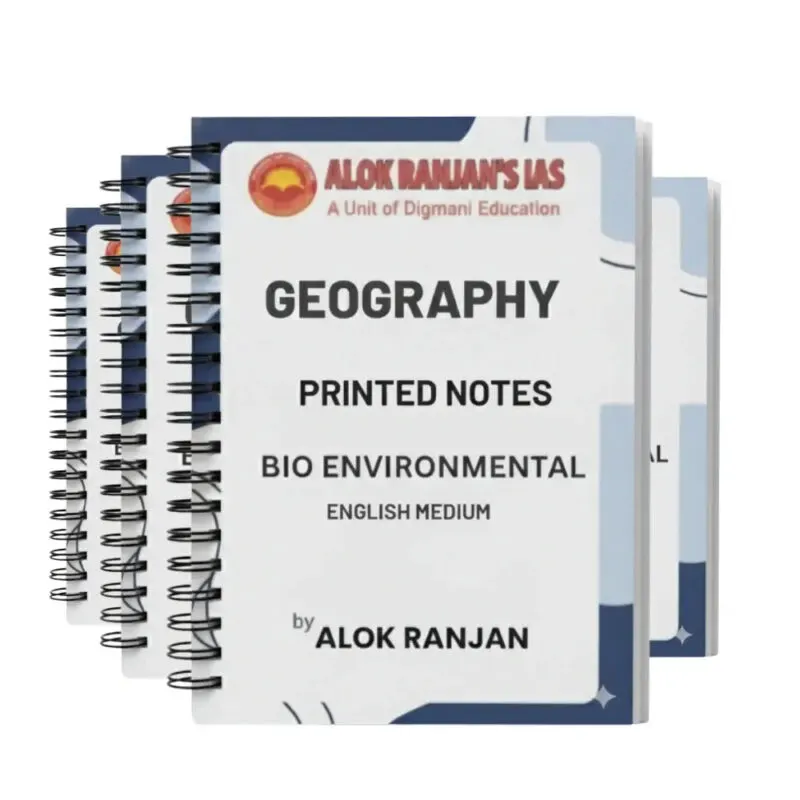
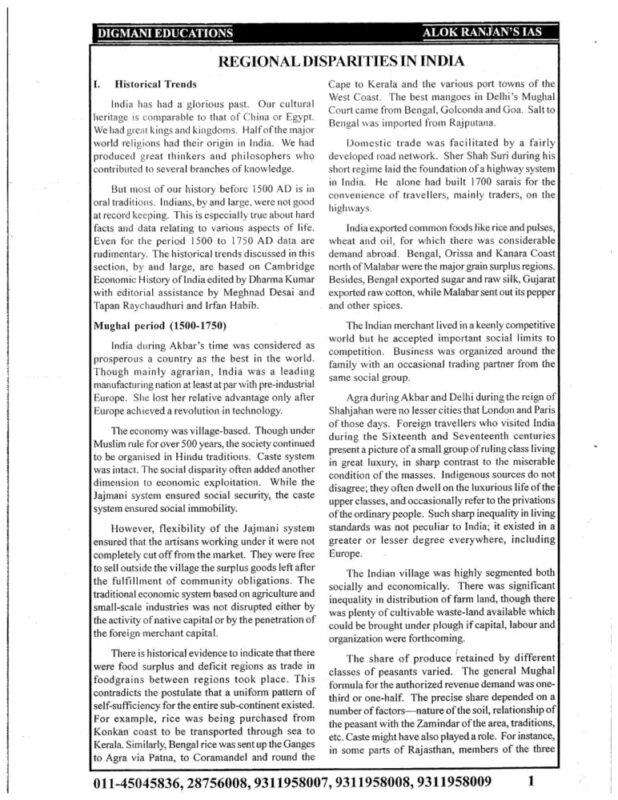
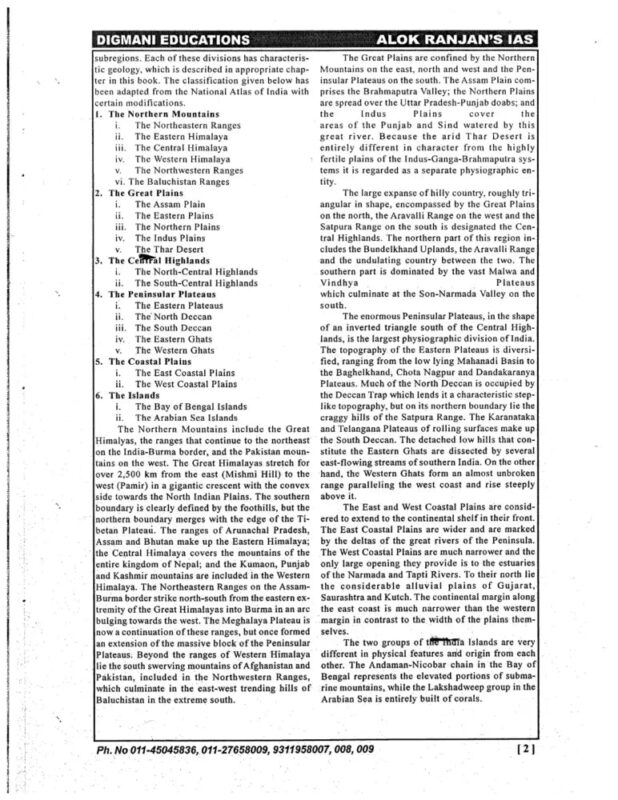
The Alok Ranjan Geography Notes 2025-26 is a printed UPSC study material set sold by UPSC Store β India’s trusted source for genuine, latest-batch civil services preparation books. This page covers full booklet details, syllabus coverage, pricing, shipping, and frequently asked questions. Useful for UPSC CSE, BPSC, UPPSC, MPPSC, RAS and other state PSC examinations.
Alok Ranjan Geography Optional Notes 2025-26 β 12 English Medium Printed Booklets for UPSC Mains Optional Paper
Related: Alok Ranjan notes Β· Geography optional
Product Overview
| Feature | Details |
|---|---|
| Booklets Count | 12 Individual Printed Booklets β Complete Paper 1 & Paper 2 UPSC Geography Optional Coverage |
| Language | English Medium |
| Publisher | Alok Ranjan’s IAS (Digmani Education) |
| Edition | 2025-26 β Latest Genuine Batch |
| Condition | Brand New, Unmarked, Fresh Stock |
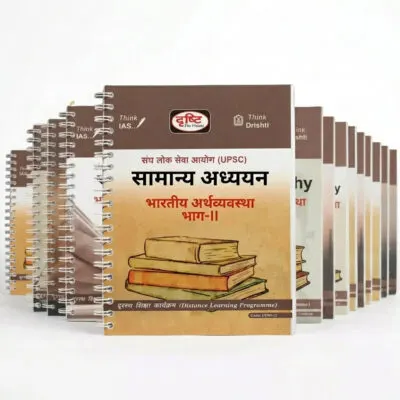
| Format | High-Quality Printed Booklets β Spiral or Book Binding |
| Paper Quality | 75 GSM Ultra-White β Highlighter Safe, Zero Bleed-Through |
| Shipping | Pan India Delivery in 3-5 Business Days β Tracked |
| Also Useful For | BPSC, UPPSC, MPPSC, RAS and all State PSC Geography Optional candidates |
Complete Booklet Catalog
This 21-booklet set by Alok Ranjan’s IAS (Digmani Education) covers the entire UPSC Geography Optional syllabus across both Paper 1 and Paper 2, spanning Physical Geography, Human Geography, Bio-Environmental Geography, and India-specific geography topics. Designed for UPSC Mains aspirants choosing Geography as their optional subject, this series is structured to help candidates build conceptual clarity and answer-writing precision across all UPSC Geography Optional paper segments.
- Booklet 1: Geomorphology β Origin of the Earth, interior structure of the Earth, continental drift, plate tectonics and sea floor spreading, major landforms β mountains, plateaus, plains β weathering, erosion, depositional landforms, cycle of erosion, drainage patterns, and geomorphic processes relevant to UPSC Geography Paper 1 Physical Geography section.
- Booklet 2: Climatology β Composition and structure of the atmosphere, temperature and pressure belts, winds and jet streams, monsoons, cyclones and anticyclones, air masses and fronts, climate classification β Koppen and Thornthwaite β global warming and climate change implications as tested in UPSC Geography Optional Paper 1.
- Booklet 3: Oceanography β Ocean floor relief, ocean deposits and sediments, temperature and salinity of oceans, ocean currents β Atlantic, Pacific, and Indian Ocean β tides, waves, coral reefs, El Nino and La Nina, marine resources, and ENSO phenomena as required under UPSC Geography Optional Physical Geography segment.
- Booklet 4: Biogeography and Ecology β Biomes of the world, ecosystem concepts, food chains, energy flow, soil formation and classification, major soil types globally, vegetation zones, biodiversity conservation, wildlife habitats, and the bio-environmental approach that defines Alok Ranjan’s treatment of Physical Geography for UPSC Mains optional preparation.
- Booklet 5: Perspectives in Human Geography β Evolution of geographical thought, determinism and possibilism, stop-and-go determinism, quantitative revolution, behavioural geography, welfare approach, radical geography, humanistic geography, and postmodern perspectives as outlined in UPSC Geography Optional Paper 1 Human Geography section.
- Booklet 6: Economic Geography β World agricultural systems, types of farming, Green Revolution and food security, industrial location theories β Weber, Losch β mineral and energy resources, world trade patterns, transport and communication geography, and globalisation impacts as covered in UPSC Geography Optional Paper 1 economic geography topics.
- Booklet 7: Population and Settlement Geography β World population distribution and growth, demographic transition theory, migration theories and types, rural and urban settlements, urbanisation trends, urban hierarchy and functional classification of cities, social geography concepts, and population geography themes tested in UPSC Geography Optional Mains paper.
- Booklet 8: Regional Planning and Political Geography β Concept of region, regional development theories, growth poles, core-periphery models, state concept in political geography, boundaries and frontiers, geopolitics, federalism, electoral geography, environmental geography, and sustainable development β all key UPSC Geography Optional syllabus areas.
- Booklet 9: Physical Setting of India β Physiographic divisions of India, drainage systems, soils of India, natural vegetation, climate of India β monsoon system, rainfall distribution β Indian Ocean significance, Himalayan and Peninsular rivers, and the complete physical geography of India as required in UPSC Geography Optional Paper 2.
- Booklet 10: Resources and Industries in India β Land use, water resources, mineral and energy resources, industries β location and distribution β agricultural types and patterns in India, irrigation systems, food grain production, agricultural reforms, and industrial policy as covered in UPSC Geography Optional Paper 2 human and economic geography of India.
- Booklet 11: Transport, Trade and Population of India β Road, rail, water, and air transport networks in India, trade patterns, port geography, population distribution and growth in India, demographic challenges, migration within India, urbanisation, smart cities, regional disparities, and developmental issues in UPSC Geography Optional Paper 2 India-specific topics.
- Booklet 12: Regional Development and Planning in India β Five-Year Plans and regional development, river valley projects, multi-level planning, border area development, tribal area development, island territories, North-East India development, environmental issues, disaster management geography, and current affairs integration for UPSC Geography Optional Paper 2 final segment.
In-Depth Content Breakdown: Booklet by Booklet
Booklet 1: Geomorphology
Geomorphology forms the foundation of UPSC Geography Optional Paper 1 and is among the highest-scoring segments if approached correctly. This booklet by Alok Ranjan’s IAS covers the complete syllabus β origin of the Earth, internal structure, isostasy, continental drift, plate tectonics, types of plate boundaries, sea floor spreading, and major endogenetic and exogenetic forces. Landform-forming processes including weathering (physical, chemical, biological), mass wasting, and the work of rivers, wind, glaciers, and waves are all addressed with UPSC answer-writing orientation throughout the booklet.
What sets this booklet apart for UPSC Geography Optional preparation is its integration of cycle of erosion theories by Davis, Penck, and King alongside practical diagram-based explanations. The drainage patterns section β dendritic, trellis, radial, centripetal β is mapped to PYQ (Previous Year Questions) patterns. Flowcharts summarising landform sequences and labeled diagrams of landforms like alluvial fans, meanders, drumlins, and sand dunes make revision faster. The content is structured for 10-mark and 20-mark UPSC Mains answers, with suggested answer frameworks at key points.
Booklet 2: Climatology
Climatology is a frequently examined area in UPSC Geography Optional Paper 1, and this booklet addresses every syllabus point with precision. Topics include the structure and composition of the atmosphere, insolation and heat budget, temperature distribution, atmospheric pressure belts and wind systems, jet streams and their influence on Indian monsoon, cyclones and anticyclones, air masses, fronts, and precipitation types. Climate classification systems β Koppen’s and Thornthwaite’s β are covered with comparative tables. The section on global warming, greenhouse effect, and climate change connects to contemporary UPSC General Studies topics, making this booklet doubly useful.
Alok Ranjan’s treatment of Climatology is notable for its diagrammatic clarity β planetary wind diagrams, ITCZ migration charts, and monsoon onset/withdrawal maps are printed clearly for direct use in UPSC Mains answer sheets. The booklet also includes a focused section on Indian monsoon mechanisms β onset, withdrawal, break monsoon, and monsoon variability β that bridges Paper 1 concepts to Paper 2 India-specific content. PYQ references embedded in the margins guide aspirants on which sub-topics have historically carried the most marks in UPSC Geography Optional Mains exams.
Booklet 3: Oceanography
This booklet covers the complete Oceanography syllabus for UPSC Geography Optional Paper 1. Ocean floor relief β continental shelf, slope, rise, abyssal plains, mid-oceanic ridges, trenches β is explained with labeled cross-section diagrams. Ocean temperature and salinity distribution, thermocline, halocline, and pycnocline are covered in depth. The booklet gives detailed treatment to ocean currents β Gulf Stream, Labrador, Kuroshio, Humboldt, and Indian Ocean currents β and their influence on climate, fisheries, and navigation, which are high-value UPSC answer areas. Tides, waves, and their coastal impacts are also covered.
The Oceanography booklet includes a dedicated section on El Nino, La Nina, and ENSO phenomena with their global and Indian climate linkages β a topic that appears with remarkable frequency in recent UPSC Geography Optional papers and General Studies papers simultaneously. Marine resources β petroleum, polymetallic nodules, gas hydrates β and their geopolitical significance are addressed from an UPSC Mains perspective. Coral reef formation (fringing, barrier, atoll) is diagrammatically explained. The booklet’s structure allows seamless integration with physical geography answer writing, making it an important buy for any UPSC Geography Optional candidate.
Booklet 4: Biogeography and Ecology
Biogeography and Ecology form the bio-environmental pillar of UPSC Geography Optional β a section where Alok Ranjan’s IAS has particular strength given the institute’s specialisation in bio-environmental geography. This booklet covers world biomes β tropical rainforest, savanna, Mediterranean, temperate grassland, boreal forest, tundra β and their climatic correlates. Ecosystem structure, energy flow, biogeochemical cycles, and ecological succession are explained clearly. Soil formation processes, soil profiles, and major soil orders of the world are mapped to climate regions for better retention and UPSC answer integration.
The ecology section builds into conservation geography β biodiversity hotspots, endemic species, IUCN categories, protected areas, and international conventions like CBD and Ramsar. Vegetation-climate-soil interrelationships are presented as integrated flowcharts that help aspirants write multi-dimensional UPSC Geography Optional answers. Zoogeographical regions and their significance are covered. The booklet concludes with human impacts on the natural environment β deforestation, desertification, soil erosion, and habitat fragmentation β tying Physical Geography to contemporary environmental issues that frequently appear in both UPSC Geography Optional and GS Paper 3 questions.
Booklet 5: Perspectives in Human Geography
The history and philosophy of geographical thought is a conceptually demanding section of UPSC Geography Optional Paper 1, and this booklet navigates it with structured clarity. From classical Greek and Roman geography to the emergence of modern geography through Humboldt, Ritter, and Ratzel, the evolution of the discipline is traced systematically. Determinism, possibilism, and stop-and-go determinism are explained with examples for UPSC answer use. The quantitative revolution, systems approach, and the emergence of applied geography are covered with sufficient depth for 20-mark UPSC Geography Optional theory questions.
The booklet’s second half covers contemporary perspectives β behavioural geography, welfare approach, radical geography, humanistic geography, and postmodern geography β each explained with key proponents, core arguments, and UPSC application examples. Feminist geography and time geography are also addressed. The content is organised in a compare-and-contrast format that is ideal for UPSC Mains answers asking candidates to distinguish between geographical approaches. Alok Ranjan’s note style integrates philosophical perspective with practical answer-writing strategy, helping UPSC aspirants avoid the common mistake of writing theoretical answers without real-world geographic application.
Booklet 6: Economic Geography
Economic Geography is one of the most scoring segments of UPSC Geography Optional Paper 1 and this booklet addresses its full syllabus. World agricultural systems β subsistence, commercial, plantation, mixed β are covered alongside agricultural regions of the world. Industrial location theories β Weber’s least cost theory, Losch’s profit maximisation, and growth pole theory β are explained with diagrams and UPSC answer frameworks. Mineral and energy resources β types, global distribution, and geopolitical significance β are covered with data tables. World trade patterns, WTO, and regional trading blocs are included for current relevance.
Transport geography β modes, significance, and chokepoints β is covered in the context of global trade and connectivity. The booklet includes a dedicated section on economic globalisation, multinational corporations, and their geographic impacts, which connects Economic Geography theory to UPSC General Studies current affairs. Special Economic Zones, industrial clusters, and knowledge-based economies are also addressed. The content is structured so that UPSC Geography Optional aspirants can write high-scoring integrated answers that blend spatial analysis with economic reasoning β a skill rewarded by UPSC examiners in recent Geography Optional Mains papers.
Booklet 7: Population and Settlement Geography
Population and Settlement Geography is a high-weightage section of UPSC Geography Optional Paper 1 that this booklet covers completely. World population distribution maps, density patterns, and growth trends across continents are explained with analysis. Malthusian theory, optimum population theory, and demographic transition theory are discussed with critical evaluation for UPSC answer writing. Migration types and theories β push-pull, Ravenstein’s laws, Lee’s model β are explained with global and Indian examples. Age-sex pyramids, dependency ratios, and population policies across regions are covered in structured tables.
Rural settlement patterns β clustered, dispersed, semi-clustered β and their geographic determinants are covered alongside urban settlements β site, situation, and function. Urban hierarchy, central place theory (Christaller), urban morphology, and urban problems are addressed for UPSC Geography Optional Paper 1. Urbanisation trends globally and in the developing world, including gentrification, suburbanisation, and counter-urbanisation, are discussed. The booklet integrates population geography with social geography β ethnicity, religion, language as spatial phenomena β giving aspirants a richer framework for answering complex UPSC Geography Optional Mains questions on human geography.
Booklet 8: Regional Planning and Political Geography
This booklet covers two important intersecting areas of UPSC Geography Optional Paper 1 β Regional Planning and Political Geography. The concept of a region β formal, functional, vernacular β and regional classification methods are explained. Regional development theories β growth pole theory (Perroux), core-periphery model (Friedmann), cumulative causation (Myrdal) β are covered with diagrams and UPSC-oriented commentary. Multi-level planning approaches and the geography of development disparity are addressed in context of both global and Indian examples, making this booklet particularly useful for bridging Paper 1 theory with Paper 2 India content in UPSC Geography Optional answers.
The Political Geography section covers the concept of the state, its spatial attributes, boundaries and frontiers β types and significance β geopolitics and geostrategy, heartland and rimland theories, electoral geography, and federalism as a spatial system. Nation-building, secessionism, and boundary disputes are covered with relevant global examples. Environmental Geography β pollution, resource depletion, sustainable development, Agenda 21, SDGs β forms the closing section, tying human geography to contemporary UPSC themes. This integration makes this booklet essential reading for UPSC Geography Optional aspirants targeting cross-paper synergy in their Mains preparation.
Booklet 9: Physical Setting of India
UPSC Geography Optional Paper 2 begins with the physical setting of India, and this booklet covers it thoroughly. The physiographic divisions of India β Himalayan ranges, Northern Plains, Peninsular Plateau, Coastal Plains, and Islands β are explained with labeled outline maps and formation processes. The drainage system of India β Himalayan rivers, Peninsular rivers, river regimes, watersheds, and inter-basin transfer β is covered in detail. Climate of India, including the southwest monsoon mechanism, northeast monsoon, retreating monsoon, Western Disturbances, and regional rainfall patterns, is addressed comprehensively with supporting diagrams for UPSC Geography Optional Paper 2.
Soils of India β their types (alluvial, black, red, laterite, desert, mountain) distribution, formation, and agricultural significance β are mapped region-by-region. Natural vegetation of India β tropical evergreen, deciduous, thorny scrub, mangroves, and alpine vegetation β is covered alongside forest policies and conservation challenges. The booklet integrates physical geography with economic and human geography wherever relevant for UPSC Mains answer enrichment. Importantly, all maps in this booklet are printed with clear topographic detail and labeled correctly, giving aspirants ready-to-revise visual aids for the physical geography of India section of UPSC Geography Optional Paper 2.
Booklet 10: Resources and Industries in India
This booklet covers the resource geography and industrial geography of India as required in UPSC Geography Optional Paper 2. Land resources β land use pattern, land degradation, land reforms β are covered alongside water resources β surface water, groundwater, irrigation systems, water scarcity, and interlinking of rivers. Mineral resources of India β coal, iron ore, manganese, bauxite, copper, petroleum, and natural gas β are mapped to their producing regions with data tables. Energy resources β conventional and non-conventional β solar, wind, tidal, biogas β are covered with India’s current policy context for UPSC relevance.
Industries in India β iron and steel, textiles, petrochemicals, automobile, IT, pharmaceutical β are covered with locational analysis tying back to Weber’s theory introduced in Paper 1. Agricultural regions and farming systems in India, Green Revolution impacts, and food security challenges are addressed. Special Economic Zones, industrial corridors β Delhi-Mumbai, Chennai-Bengaluru, Amritabad β and their geographic rationale are discussed for UPSC Mains contemporary relevance. This booklet is particularly important for UPSC Geography Optional aspirants seeking to write data-rich, analytically structured 20-mark answers on India’s resource and industrial geography in Paper 2.
Booklet 11: Transport, Trade and Population of India
Transport geography of India β road network (NH classification), railway zones and electrification, inland waterways, major ports and their hinterlands, air transport and international connectivity β is covered with spatial analysis approach in this UPSC Geography Optional Paper 21 Booklet. Trade patterns of India β major exports and imports, trading partners, balance of trade, and the role of geography in trade orientation β are addressed with current data integration. Port geography β classification of ports, their significance, and SAGARMALA project β links transport geography to India’s economic geography for UPSC Mains answers.
Population geography of India covers distribution and density patterns by state, population growth trends, age-sex structure, sex ratio, literacy, and language-religion spatial patterns. Internal migration in India β rural-urban, inter-state, seasonal β is addressed with causes and consequences. Urbanisation in India β levels, patterns, smart cities mission, urban poverty, and slums β forms an important sub-section. Regional disparities in development β between states, between rural and urban areas, and between social groups β are discussed with policy implications. This booklet creates strong integration between population geography and India’s planning narrative needed for UPSC Geography Optional Paper 2 high-scoring answers.
Booklet 12: Regional Development and Planning in India
This final booklet of the Alok Ranjan Geography Optional series addresses regional development and planning in India for UPSC Geography Optional Paper 2. Five-Year Plans and their regional development emphasis, NITI Aayog and planning transition, and multi-level planning β national, state, district, block, grassroots β are explained. River valley projects and their geographic, economic, and social impacts are covered for major projects like Bhakra Nangal, Damodar, Hirakud, and Tehri. Border area development programmes, tribal area development, and aspirational districts programme are addressed with UPSC Geography Optional answer-writing perspective.
Special focus is given to North-East India β its geographic setting, developmental challenges, connectivity issues, and policy interventions β a region that appears frequently in recent UPSC Geography Optional and General Studies papers. Island territories β Andaman and Nicobar, Lakshadweep β their geographic significance, EEZ resources, and development issues are covered. Environmental geography of India β air, water, soil pollution, environmental degradation, disaster management geography, and climate change vulnerability β closes the booklet series. This booklet also integrates current affairs into geographic analysis, helping UPSC Geography Optional aspirants write contemporary, well-rounded Paper 2 answers in the Mains examination.
Physical Construction and Quality Standards
These 12 printed booklets are manufactured to withstand the demands of daily UPSC Geography Optional study β repeated handling, heavy annotation, and long revision sessions. Every element of physical production has been selected to support serious UPSC aspirants who use their study materials intensively over multiple revision cycles across the 2025-26 preparation season.
Paper Quality: 75 GSM Anti-Glare White Paper
Each booklet uses 75 GSM ultra-white paper selected for its high opacity β text on the reverse side does not show through under normal reading or highlighting conditions. The anti-glare surface reduces eye strain during the extended study sessions that UPSC Geography Optional preparation demands, particularly when working through densely mapped or diagram-heavy sections. Multiple highlighter colours β yellow, green, pink, orange β and gel pens work cleanly without feathering or bleed-through, making colour-coded revision of Geography topics like landform classification, climate types, and population zones significantly easier and more effective.
Printing Technology: High-Resolution Laser Printing
All 21 Booklets are printed using high-resolution laser technology that delivers crisp, sharp text and clean diagram lines even for complex cartographic content. Geography Optional study materials are particularly dependent on print quality β outline maps with state boundaries, drainage basin diagrams, climate charts, and cross-sectional landform diagrams must be legible at small print sizes. Laser toner is permanent, smudge-proof, and unaffected by moisture, ensuring that maps and flowcharts in these UPSC Geography Optional booklets remain clear and usable throughout the entire preparation and revision cycle without any degradation in quality.
Binding and Durability
The booklets are available in spiral or book binding formats. Spiral binding allows each booklet to open completely flat on a study desk β particularly important when working alongside maps, drawing diagrams, or writing notes in the margins of these UPSC Geography Optional printed materials. A 300 GSM laminated cover provides rigidity and protects the booklet during transport in bags and during storage. Book binding offers a compact, shelf-ready format for aspirants who prefer a neat study setup. Reinforced inner stapling and binding glue ensure that pages do not detach even with intensive daily use across the 2025-26 preparation timeline.
Key Features and Study Design
These Alok Ranjan Geography Optional notes are designed specifically for UPSC Mains optional paper preparation, combining syllabus-mapped content, answer-writing frameworks, and high-quality physical production to give Geography Optional aspirants a structured, reliable study resource for the 2025-26 UPSC cycle.
- Complete Syllabus Coverage Across Both Papers: All 21 Booklets together cover the full UPSC Geography Optional syllabus β Physical Geography (Paper 1), Human Geography (Paper 1), and Geography of India (Paper 2) β ensuring no syllabus gap remains unaddressed when aspirants buy this complete set for UPSC Mains preparation.
- Bio-Environmental Geography Specialisation: Alok Ranjan’s IAS and Digmani Education are specifically known for their bio-environmental approach to Geography teaching, and this expertise is reflected in the depth of ecology, biogeography, and environmental geography content in these UPSC Geography Optional printed booklets, giving aspirants a richer analytical framework.
- Answer-Writing Orientation: Content across all 21 Booklets is structured with UPSC Mains answer writing in mind β key points are formatted for 10-mark and 20-mark answers, introductions and conclusions are modelled, and comparative tables help aspirants construct structured analytical Geography Optional answers quickly under exam time pressure.
- Diagram-Rich Content for Geography: Geography Optional success depends heavily on diagram quality in UPSC Mains answers. These booklets include labeled maps, cross-sections, flow diagrams, and climate charts printed clearly enough to serve as direct models for aspirants to replicate in their own UPSC Geography Optional answer sheets during the Mains examination.
- Current Affairs Integration: Geography Optional answers in recent UPSC Mains papers have been rewarded for connecting static geography with contemporary developments. These booklets integrate current policy β SAGARMALA, Smart Cities, Industrial Corridors, Climate NDCs β into the relevant geographic context, helping aspirants write contemporary and high-scoring UPSC Geography Optional Mains answers.
Shipping, Packaging and Delivery
Every order of Alok Ranjan Geography Optional Notes 2025-26 is packaged with care designed to ensure all 21 Booklets arrive in perfect condition. The set is first grouped and shrink-wrapped together to keep the booklets aligned and prevent individual movement during transit. The shrink-wrapped bundle is then placed inside a five-layer corrugated cardboard box with foam edge protectors at all corners. Rigid cardboard sheet inserts protect the covers from bending. Fragile stickers and moisture-resistant outer tape complete the outer packaging, ensuring these UPSC Geography Optional printed materials reach you in the same brand-new condition they leave our warehouse.
All orders are dispatched within 24-48 hours of payment confirmation and delivered across India in 3-5 business days via trusted tracked courier partners. A tracking ID is sent to your registered mobile number and email on the day of dispatch. For order queries, booklet damage claims, or missing booklet replacements, WhatsApp our team at +91 70045 49563 β missing or damaged booklets are replaced within 48 hours of a valid claim. We deliver to all pin codes across India including remote areas, ensuring that UPSC Geography Optional aspirants everywhere can buy these printed notes without access limitations.
Frequently Asked Questions (FAQ)
A: Yes. Alok Ranjan’s IAS (Digmani Education) has built a strong track record in Geography Optional coaching, particularly known for its bio-environmental geography approach. These 12 printed booklets cover the complete UPSC Geography Optional syllabus across Paper 1 and Paper 2, with answer-writing frameworks, labeled diagrams, and current affairs integration that make them a reliable study resource for UPSC Mains Geography Optional preparation in the 2025-26 cycle.
A: This product includes 12 individual printed booklets covering the full UPSC Geography Optional syllabus. The set spans Physical Geography β Geomorphology, Climatology, Oceanography, Biogeography β Human Geography β Perspectives, Economic, Population, Regional and Political Geography β and India-specific geography β Physical Setting, Resources, Transport, Population, and Regional Planning β across Paper 1 and Paper 2 of the UPSC Geography Optional subject.
A: Yes, this complete 21-booklet set is published entirely in English medium by Alok Ranjan’s IAS, a unit of Digmani Education. The notes are written in clear, examination-appropriate English suitable for UPSC Mains answer writing. Aspirants preparing for UPSC Geography Optional in English medium can buy this printed set with confidence that all content β text, diagrams, maps, and tables β is fully in English.
A: The 21 Booklets cover: Geomorphology, Climatology, Oceanography, Biogeography and Ecology, Perspectives in Human Geography, Economic Geography, Population and Settlement Geography, Regional Planning and Political Geography (Paper 1), and Physical Setting of India, Resources and Industries in India, Transport Trade and Population of India, and Regional Development and Planning in India (Paper 2) β forming a complete UPSC Geography Optional study set.
A: Alok Ranjan’s IAS (Digmani Education) specialises in bio-environmental geography β an approach that integrates ecology, biogeography, and environmental geography more deeply than standard coaching notes. The content is structured for UPSC answer writing with explicit 10-mark and 20-mark answer frameworks, PYQ references, and strong diagram quality. This approach is particularly useful for Geography Optional aspirants looking for integrated content that bridges Physical, Human, and India geography chapters in a connected narrative for UPSC Mains.
A: Yes. This is the genuine 2025-26 edition batch from Alok Ranjan’s IAS (Digmani Education). The content has been updated to reflect recent UPSC Geography Optional paper trends, current policy developments β SAGARMALA, Smart Cities Mission, Industrial Corridors, India’s climate NDCs β and the latest geographic data relevant to Paper 2 India topics. All 21 Booklets you receive are from the current fresh 2025-26 stock, brand new and unmarked.
A: These booklets use 75 GSM ultra-white paper chosen for high opacity β multiple highlighter colors and gel pens work without bleed-through to the reverse side, ideal for color-coded revision. The anti-glare surface reduces eye strain during long study sessions. The paper quality is well-suited to the map-heavy and diagram-rich content of UPSC Geography Optional notes, ensuring that labelled diagrams, climate charts, and drainage maps remain clearly legible even after repeated handling.
A: These 21 Booklets cover the complete UPSC Geography Optional syllabus with sufficient depth for self-study aspirants. The content is structured with answer-writing frameworks, so candidates who are self-studying without formal coaching can use them as their primary Geography Optional resource. However, for answer-writing practice and evaluation, complementing these notes with test series or a mentor review is advisable. Many self-study UPSC aspirants buy these printed notes as their core Geography Optional foundation material.
A: Yes. While primarily designed for UPSC Geography Optional Mains preparation, these 21 Booklets are also useful for candidates appearing in State PSC examinations that offer Geography Optional β including BPSC, UPPSC, MPPSC, RAS, and other State PSCs. The content on India’s physical geography, resources, industries, population, transport, and regional planning is directly applicable to State PSC Geography Optional syllabuses, making this set a multi-purpose buy for serious state-level optional geography candidates.
A: Orders are dispatched from our Mukherjee Nagar, Delhi warehouse within 24-48 hours of payment confirmation. Delivery across India takes 3-5 business days via tracked courier. You will receive a tracking ID on your registered mobile number and email on the day of dispatch. For any delivery query, you can WhatsApp our team at +91 70045 49563. We deliver to all pin codes across India including tier-2 and tier-3 cities and remote areas.
A: Every order is individually quality-checked and shrink-wrapped before dispatch. In the rare event that a booklet is missing or arrives damaged, WhatsApp our support team at +91 70045 49563 with a photo of the received package within 48 hours of delivery. We will arrange a replacement booklet dispatched within 48 hours of your valid claim at no additional cost. Customer satisfaction for every UPSC Geography Optional study material purchase is our priority.
A: You can buy Alok Ranjan Geography Optional printed notes online directly from this page. This is the official UPSC store listing for the genuine 2025-26 edition of Alok Ranjan’s IAS (Digmani Education) Geography Optional 21-booklet set in English medium. Simply add to cart and complete checkout β your order will be dispatched from Mukherjee Nagar, Delhi within 24-48 hours and delivered pan India in 3-5 business days with full tracking. No PDF β these are physical printed notes shipped to your door.
Summary
| Specification | Value |
|---|---|
| Booklets | 12 Printed Booklets |
| Language | English Medium |
| Publisher | Alok Ranjan’s IAS (Digmani Education) |
| Edition | 2025-26 β Latest Genuine Batch |
| Paper | 75 GSM Ultra-White |
| Binding | Spiral or Book Binding |
| Delivery | 3-5 Business Days Pan India |
| Also Useful For | BPSC, UPPSC, MPPSC, RAS and all State PSC Geography Optional |
Fulfilled by our UPSC store in Mukherjee Nagar, Delhi β the hub of India’s top UPSC coaching institutes. Buy Alok Ranjan Geography Optional Notes 2025-26 today and receive your complete 21-booklet printed set anywhere in India within 3-5 days.
Reference: Civil Services Examination
Customer Reviews 108
Bilkul perfect hai, sab important topics cover hain.
Booklets properly bound and content is relevant for current UPSC syllabus.
Perfect notes for UPSC preparation.
Super notes hain yaar. Packing bhi acha tha.
Booklets well-organized hain lekin thoda jaldi delivery ho sakti thi.
Theek taak material hai, quality bhi thik hai. But expected something more comprehensive.
Booklets bahut well-structured hain. Geography ke liye yahi sab chahiye tha.
Alok sir ke notes padhke geography clear ho gaya. Definitely worth buying.
Aspirants Also Bought
More from the same category
About Alok Ranjan Geography Optional Notes 2025-26
Alok Ranjan Geography Optional Notes 2025-26 is a highly recommended UPSC study material from Alok Ranjan IAS, specially designed for Geography Optional preparation. Available in English medium, this material is crafted to match the exact requirements of the UPSC Civil Services Examination syllabus β covering both Prelims and Mains comprehensively.
Product Details
- Institute: Alok Ranjan IAS
- Subject: Geography Optional
- Medium: English
- Format: Printed
- Delivery: Pan-India delivery in 3β5 working days
- Format: Original printed material, verified authentic
Why Buy from UPSC Store?
- β 100% Genuine Printed Material β Original printed notes, no photocopies or fake copies
- β Fast Delivery β Ships within 24 hours, arrives in 3β5 days pan-India
- β Secure Packaging β Bubble-wrapped and boxed to prevent damage in transit
- β Trusted by 10,000+ Aspirants β India's most reliable UPSC material marketplace
- β WhatsApp Support β Get expert guidance on material selection before ordering
Frequently Asked Questions
Yes, all products at UPSC Store are 100% genuine printed materials. We do not sell photocopies or fake copies.
Orders are dispatched within 24 hours and delivered across India in 3β5 working days via reputed courier partners.
Yes, we accept returns within 7 days if the product is damaged or incorrect. Check our refund policy for details.
We recommend pairing this with current affairs notes and a UPSC test series for comprehensive preparation. Browse more in Geography, Optional, UPSC.