




S. Chitranjan Anthropology Notes 2022 | 2 Booklets | English Medium | UPSC Study Material
Binding Guide
Pick the binding that fits how you study.
Spiral Binding
- Lays completely flat
- 360° page rotation
- Great for note-taking
- Best for maths, science, reference
Without Spiral
- Compact & professional
- Sturdy glued/stitched spine
- Easy to stack & store
- Best for textbooks & long-term
About Buy S Chitranjan Anthropology 2022
The Buy S Chitranjan Anthropology 2022 is a printed UPSC study material set sold by UPSC Store — India’s trusted source for genuine, latest-batch civil services preparation books. This page covers full booklet details, syllabus coverage, pricing, shipping, and frequently asked questions. Useful for UPSC CSE, BPSC, UPPSC, MPPSC, RAS and other state PSC examinations.
S. Chitranjan Anthropology Notes 2022 — 12 English Medium Printed Booklets for UPSC Mains Optional Paper 1 & Paper 2
Related: S Chitranjan notes · Anthropology books
Product Overview
| Feature | Details |
|---|---|
| Booklets Count | 12 Individual Printed Booklets — Full Coverage of Anthropology Paper 1 & Paper 2 |
| Language | English Medium |
| Publisher | S. Chitranjan (IAS-Selected Handwritten Notes Series) |
| Edition | 2022 — Latest Genuine Batch |
| Condition | Brand New, Unmarked, Fresh Stock |
| Format | High-Quality Printed Booklets — Spiral or Book Binding |
| Paper Quality | 75 GSM Ultra-White — Highlighter Safe, Zero Bleed-Through |
| Shipping | Pan India Delivery in 3-5 Business Days — Tracked |
| Also Useful For | BPSC, UPPSC, MPPSC, RAS and all State PSC Anthropology Optional candidates |
Complete Booklet Catalog
This 2-booklet set by S. Chitranjan — an IAS-selected officer — covers the entire UPSC Anthropology optional syllabus across Paper 1 and Paper 2, structured for fast revision and deep concept clarity.
- Booklet 1: Meaning, Scope and Development of Anthropology — Covers the definition and branches of Anthropology including physical, social-cultural, archaeological and linguistic; relationship with other social sciences; history of anthropological thought from early evolutionism to modern applied perspectives; scope in Indian context and relevance to UPSC optional paper preparation.
- Booklet 2: Human Evolution and Biological Diversity — Detailed treatment of primate evolution, fossil record, Australopithecus to Homo sapiens sapiens; theories of human origin including Out of Africa and Multi-Regional hypotheses; biological basis of race; genetic diversity and its anthropological significance; ABO blood group systems and sickle-cell anaemia as population-level examples.
- Booklet 3: Fundamentals of Social and Cultural Anthropology — Marriage, family and kinship systems across cultures; descent theories — unilineal, double and bilateral; types of family from nuclear to joint; cross-cousin marriage and preferential marriage rules; levirate, sororate; endogamy and exogamy with tribal examples directly relevant to UPSC Paper 1 Section B.
- Booklet 4: Economic and Political Organisation — Modes of production in pre-industrial societies; reciprocity, redistribution and market exchange as Polanyi’s categories; band, tribe, chiefdom and state as levels of political organisation; conflict, law and social control in tribal societies; power, authority and legitimacy from Weberian and anthropological perspectives.
- Booklet 5: Religion, Magic and Ritual — Tylor’s animism, Frazer’s magic, Durkheim’s sacred-profane dichotomy, Weber on religion and social change; totemism and taboo; myth, ritual and symbol in structural and functional frameworks; anthropology of witchcraft, shamanism and healing; pilgrimage and rites of passage including Van Gennep’s three-stage model.
- Booklet 6: Anthropological Theories — Part 1 — Evolutionism (Tylor, Morgan, Spencer); diffusionism (British, German-Austrian, American schools); historical particularism (Boas); functionalism (Malinowski, Radcliffe-Brown); structural-functionalism; culture and personality school; neo-evolutionism (White, Steward); cultural ecology and multi-linear evolution — all mapped to UPSC question patterns.
- Booklet 7: Anthropological Theories — Part 2 — Structuralism (Lévi-Strauss); cultural materialism (Harris); symbolic and interpretive anthropology (Turner, Geertz); post-modernism and post-structuralism in Anthropology; feminist anthropology; political economy approach; practice theory (Bourdieu); reflexivity and crisis of representation — recent theoretical shifts examined for UPSC Mains answer writing.
- Booklet 8: Indian Anthropology — Tribal India — Classification and distribution of Indian tribes; problems of tribal identity and integration vs. isolation debate; tribal movements — Santhal, Munda, Bhil, Gond, Naga; Fifth and Sixth Schedule provisions; tribal sub-plan, PESA 1996, Forest Rights Act 2006; tribal welfare policies and their anthropological critique.
- Booklet 9: Indian Village, Caste and Peasant Society — Village as a unit of study; jajmani system; caste structure and hierarchy; Ghurye, Srinivas and Béteille on caste; Sanskritisation and Westernisation; dominant caste concept; green revolution and agrarian change; land reforms; peasant movements; urbanisation and its impact on village society — directly relevant to UPSC Paper 2.
- Booklet 10: Social Change and Development in India — Concept of social change; modernisation and development in Indian context; impact of Buddhism, Islam and colonial rule; constitutional provisions for weaker sections; Panchayati Raj institutions; women and development; child labour; bonded labour; disability; ageing population — policy-linked anthropological analysis for UPSC answer enrichment.
- Booklet 11: Applied Anthropology and Research Methods — Scope and relevance of applied anthropology; action anthropology; development anthropology; medical anthropology; nutritional anthropology; demographic anthropology; fieldwork tradition; methods — participant observation, interview, genealogical method, life history; quantitative vs qualitative research; ethics in anthropological research — essential for UPSC Paper 1 methodology section.
- Booklet 12: Human Genetics, Population Studies and Contemporary Issues — Mendelian genetics and its anthropological application; population genetics; Hardy-Weinberg equilibrium; genetic drift, gene flow and natural selection; demographic transition theory; census data and its use in anthropology; contemporary issues — HIV/AIDS, ageing, disability, refugeeism, ethnicity and nationalism; environmental anthropology and indigenous knowledge systems.
In-Depth Content Breakdown: Booklet by Booklet
Booklet 1: Meaning, Scope and Development of Anthropology
This opening booklet establishes the conceptual foundation every UPSC Anthropology optional aspirant needs before tackling the detailed syllabus. It covers the four major sub-fields — physical, socio-cultural, archaeological and linguistic Anthropology — and their interrelationships. The booklet traces the intellectual history of the discipline from 18th-century evolutionary thinking through 20th-century fieldwork traditions, contextualising Anthropology’s emergence as a formal academic subject. For UPSC Paper 1 Section A, questions on scope and development of Anthropology are asked almost every year, making this booklet a non-negotiable starting point.
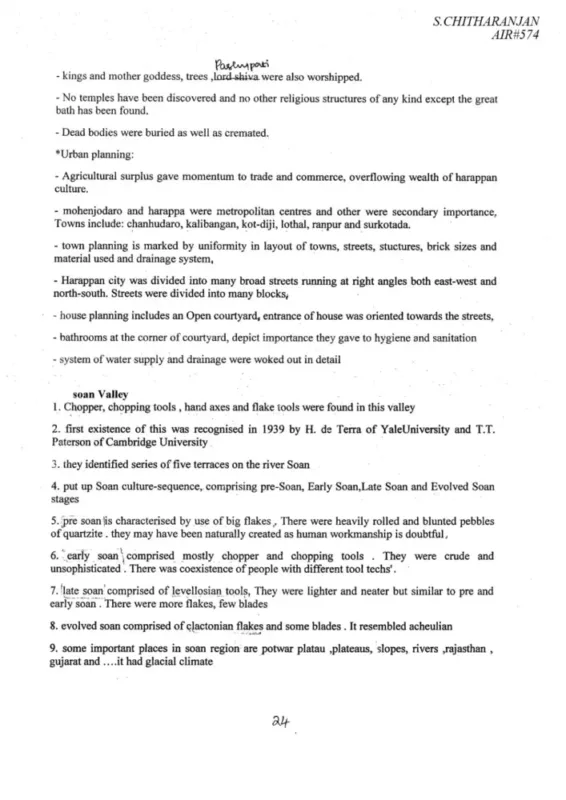
S. Chitranjan’s handwritten style, reproduced in this printed format, uses clear headings and margin notes that help aspirants quickly locate key definitions during last-minute revision. Tabular comparisons of sub-fields, timelines of theoretical development and relationship diagrams with allied sciences like Sociology, Psychology and Biology make abstract concepts concrete. The booklet ends with an India-specific perspective on applied Anthropology, preparing candidates for the overlap between Paper 1 and Paper 2 that frequently appears in UPSC Mains questions.
Booklet 2: Human Evolution and Biological Diversity
Human evolution is one of the highest-scoring yet most feared areas of UPSC Anthropology Paper 1. This booklet navigates the entire fossil record — from Dryopithecus and Ramapithecus through Australopithecus africanus, Homo habilis, Homo erectus and Neanderthals to anatomically modern Homo sapiens. The Out of Africa and Multi-Regional continuity hypotheses are compared with diagrammatic timelines. Biological basis of racial classification, UNESCO statements on race and the ABO, Rh and MN blood group systems are covered with population-level data tables that are directly quotable in UPSC answers.
A dedicated section on genetic markers, mitochondrial DNA studies and their role in tracing human migration makes this booklet particularly relevant for recent UPSC question trends that blend physical Anthropology with molecular genetics. Diagrams of cranial capacities, dental formulae and skeletal morphology are cleanly reproduced in this printed format so candidates can annotate and revise without struggling over low-resolution digital images. Sickle-cell anaemia as a balanced polymorphism example, colour blindness as a sex-linked trait and haemoglobin variants in Indian tribes round off this booklet’s biological diversity content.
Booklet 3: Fundamentals of Social and Cultural Anthropology
Kinship, marriage and family form the backbone of UPSC Anthropology Paper 1 Section B, and this booklet covers every concept examiners have tested over the past decade. The full range of marriage types — monogamy, polygyny, polyandry, group marriage — is explained with ethnographic examples from Indian and global tribal societies. Descent systems receive extended treatment: patrilineal, matrilineal, double descent and cognatic descent are illustrated with diagrams of kin charts that aspirants can redraw in their UPSC answer sheets. Residence rules — patrilocal, matrilocal, neolocal, avunculocal — are linked to their functional significance.
The kinship terminology section covers Morgan’s classificatory vs. descriptive distinction, Crow, Omaha, Hawaiian, Eskimo and Iroquois systems with clear comparative tables — a favourite area for UPSC examiners. Preferential marriage rules including cross-cousin marriage among South Indian tribes and levirate-sororate practices are discussed with ethnographic specificity. The booklet closes with an analysis of changing family structure in urban India, providing ready content for Part B questions that connect classical Anthropology theory with contemporary Indian social reality, a trend strongly visible in recent UPSC Mains papers.
Booklet 4: Economic and Political Organisation
Economic Anthropology and political Anthropology together constitute a significant portion of UPSC Paper 1 Section B. This booklet opens with Polanyi’s substantivist vs. formalist debate and covers the three modes of exchange — reciprocity, redistribution and market — with tribal ethnographic examples like the Kula ring (Malinowski’s Trobriand Islands), potlatch (Northwest Coast North America) and jajmani system (Indian villages). The treatment of subsistence economies — hunting-gathering, pastoralism, horticulture and agriculture — is mapped directly to UPSC syllabus points with relevant case studies.
Political organisation is covered through Service’s band-tribe-chiefdom-state evolutionary framework and its critiques. Concepts of power, authority, legitimacy and law in stateless societies are explained through classic ethnographies. Dispute resolution mechanisms — moot, oracle, feud and warfare — are compared across cultures. The booklet also covers anthropological perspectives on colonialism’s impact on indigenous political systems, preparing candidates for UPSC questions that blend political Anthropology theory with Indian tribal governance issues including Fifth Schedule administration and PESA, creating a strong bridge to Paper 2 content.
Booklet 5: Religion, Magic and Ritual
Religion is one of the most intellectually rich areas of the UPSC Anthropology optional, and this booklet brings together every major theoretical tradition. It opens with the definitional debate — substantive vs. functional definitions of religion — before moving through Tylor’s animism and animatism, Frazer’s sympathetic and contagious magic, Marett’s mana concept and Durkheim’s sacred-profane analysis. Weber’s comparative religion framework and his thesis on religion’s role in social change are covered with reference to Protestantism and the spirit of capitalism, a recurring UPSC theme.
Ritual theory receives extended treatment: Van Gennep’s three-stage rites of passage model, Turner’s liminality and communitas, and Geertz’s interpretive approach to religion as a cultural system are all explained with fieldwork examples. Totemism is covered through Frazer, Durkheim and Lévi-Strauss in comparative perspective. A section on witchcraft, sorcery and shamanism includes Evans-Pritchard’s classic Azande material alongside Indian tribal examples of healing and spirit possession. The booklet closes with contemporary religious movements in India, making it directly useful for UPSC Paper 2 Section B questions on religious practices among scheduled tribes.
Booklet 6: Anthropological Theories — Part 1
Theoretical Anthropology is the area where most UPSC aspirants either build a decisive advantage or lose marks through vague, general answers. This booklet covers the classical theoretical schools with sufficient depth to construct well-argued 250-word answers. Evolutionism (Tylor’s cultural evolution, Morgan’s three stages, Spencer’s social Darwinism) is presented with its critiques. British and German-Austrian diffusionism are contrasted. Boas’s historical particularism and its critique of comparative method are explained with reference to his fieldwork and student tradition. Malinowski’s functionalism and Radcliffe-Brown’s structural-functionalism are compared in a side-by-side table format.
Culture and personality school (Benedict, Mead, Kardiner) receives dedicated coverage relevant to UPSC questions on psychological Anthropology and national character. Neo-evolutionism is treated through Leslie White’s culturology and energy theory alongside Julian Steward’s cultural ecology and multi-linear evolution — two approaches frequently confused by aspirants. Each theory is presented with founding thinkers, core concepts, key works, Indian applications and standard criticisms, providing a ready-made answer framework that can be adapted to multiple UPSC Mains question formats including 10-mark, 15-mark and 20-mark questions.
Booklet 7: Anthropological Theories — Part 2
This booklet picks up where Booklet 6 ends, covering the more recent and often more challenging theoretical developments that UPSC examiners increasingly test. Lévi-Strauss’s structuralism — myth analysis, binary oppositions, langue vs. parole applied to culture — is explained with examples from kinship and mythology. Cultural materialism (Marvin Harris, Harris’s sacred cow and pig taboo analyses) is covered as a materialist response to idealist approaches. Symbolic Anthropology through Turner’s symbols and Geertz’s thick description gives candidates ready content for interpretation-focused UPSC questions.
Post-modernism’s critique of ethnographic authority, Clifford and Marcus’s Writing Culture debates, and the crisis of representation in Anthropology are covered at a level appropriate for UPSC Paper 1 without excessive jargon. Feminist Anthropology — Rosaldo, Ortner and Moore — provides content for gender-focused UPSC questions. Bourdieu’s practice theory concepts of habitus, field and capital are explained with Indian social mobility examples. The booklet concludes with political economy approaches (Wolf, Mintz) and reflexivity, giving aspirants a complete theoretical toolkit spanning from 19th-century evolutionism through contemporary critical perspectives.
Booklet 8: Indian Anthropology — Tribal India
Paper 2 of UPSC Anthropology optional is almost entirely India-focused, and this booklet forms the core resource for its tribal content. It opens with the classification of Indian tribes by region, language family and economy type, followed by Risley, Ghurye and Elwin’s differing positions on the tribal question — assimilation vs. isolation vs. integration — which remains a standard UPSC question topic. The historical tribal movements — Santhal Hul 1855, Birsa Munda’s Ulgulan, Tana Bhagat movement, Rampa rebellion — are covered with dates, causes and outcomes for both UPSC Anthropology and GS Paper 1 overlap utility.
Constitutional provisions for tribal welfare — Fifth Schedule, Sixth Schedule, Article 244 — are explained with their administrative significance. PESA 1996 and its key provisions for self-governance are covered in detail alongside the Forest Rights Act 2006 and its anthropological implications for land rights and identity. Tribal sub-plan, Van Dhan Vikas Kendras, Eklavya schools and other current government schemes are listed with their policy objectives. This booklet gives UPSC aspirants both the historical depth and the contemporary policy awareness needed to write high-scoring answers in UPSC Anthropology Paper 2 Section A.
Booklet 9: Indian Village, Caste and Peasant Society
Village studies tradition in Indian Anthropology — from Srinivas’s Rampura to S.C. Dube’s Shamirpet — is the entry point for this booklet. The jajmani system’s structure, function and decline under market forces are explained using Wiser’s original formulation and later critiques. Caste as studied by Indian anthropologists is covered through Ghurye’s six-point definition, Srinivas’s field-view, Béteille’s social inequality perspective and Dumont’s homo hierarchicus — a comparison frequently tested in UPSC Mains. Dominant caste concept, vote-bank politics and caste mobility through Sanskritisation are analysed with contemporary relevance.
Peasant studies receive dedicated coverage: Wolf’s peasant typology, Scott’s moral economy vs. Popkin’s rational peasant debate, agrarian change under green revolution and its differential impact on marginal farmers and tribal communities. Land reforms in India — zamindari abolition, tenancy reforms, land ceiling — are assessed from an anthropological perspective. The booklet closes with urbanisation’s impact on village social structure, migration patterns and changing kinship obligations in urban slums — all fertile ground for UPSC Paper 2 questions that require connecting field-based anthropological evidence to policy-level analysis.
Booklet 10: Social Change and Development in India
UPSC Anthropology Paper 2 places heavy emphasis on development-related anthropological perspectives, and this booklet addresses every sub-theme the syllabus specifies. It opens with a theoretical framework for social change — evolutionary, cyclical and conflict models — before moving to India-specific change agents: constitutional provisions for weaker sections (SCs, STs and OBCs), Panchayati Raj institutions post-73rd and 74th Constitutional Amendments, and the role of civil society organisations in tribal areas. The impact of major historical forces — Buddhism’s egalitarian challenge to Brahminic hierarchy, Islamic influence on north Indian social structure and British colonial restructuring — are covered with ethnographic examples.
Special attention is given to women and development, covering feminist movements in India, Self-Help Group models, MGNREGA’s gender outcomes and the anthropology of domestic violence and maternal health. Child labour, bonded labour and trafficking are analysed through an anthropological lens with data from tribal-concentration states. Ageing population as an emerging social issue in India and the anthropology of disability as a culturally mediated experience round off this booklet. Aspirants will find this booklet particularly valuable for crafting integrated UPSC answers that demonstrate awareness of both theoretical frameworks and ground-level social realities in India.
Booklet 11: Applied Anthropology and Research Methods
Research methodology and applied Anthropology together are tested in UPSC Paper 1 and Paper 2, and this booklet provides complete coverage of both. The scope of applied Anthropology is traced from colonial administration’s use of ethnography to post-colonial development anthropology and contemporary medical anthropology. Action Anthropology (Sol Tax), advocacy anthropology and participatory rural appraisal methods are covered as distinct approaches. The ethnographic fieldwork tradition — from Malinowski’s Trobriand model to contemporary multi-sited fieldwork — is explained with reference to classic Indian fieldwork studies for UPSC contextualisation.
Research methods receive systematic coverage: participant observation as the hallmark method, open and structured interviewing, genealogical method, life history method, case study approach, network analysis and survey methods. The epistemological debate between positivist and interpretive traditions in Anthropological research is explained without excessive philosophy — at a practical UPSC answer-writing level. Ethics in Anthropological research — informed consent, do-no-harm principle, protection of vulnerable communities, researcher reflexivity — are covered with reference to international codes. A final section on nutritional and demographic anthropology provides additional content for UPSC questions on development and health.
Booklet 12: Human Genetics, Population Studies and Contemporary Issues
The final booklet in this set covers two areas that are increasingly prominent in UPSC Anthropology: human genetics applied to population studies, and contemporary global issues analysed through an anthropological lens. Mendelian genetics principles — dominance, recessiveness, codominance, linkage — are explained at an accessible level before moving to population genetics concepts: gene pool, allele frequency, Hardy-Weinberg equilibrium conditions and deviations. The four evolutionary forces — mutation, genetic drift, gene flow and natural selection — are each given dedicated treatment with human population examples from Indian tribal groups studied by anthropologists.
Demographic transition theory is covered with its three-stage model and implications for developing societies. Census methodology and its utility in anthropological research are explained with Indian examples. The contemporary issues section covers HIV/AIDS as an anthropological problem (stigma, cultural responses, health-seeking behaviour), ageing in India, internal migration and displacement, ethnic conflict and the anthropology of nationalism. Environmental Anthropology and indigenous ecological knowledge systems close this booklet, connecting tribal communities’ traditional knowledge to contemporary debates on biodiversity conservation — a theme appearing with increasing frequency in recent UPSC Anthropology optional papers.
Physical Construction and Quality Standards
Every booklet in this 12-piece S. Chitranjan Anthropology printed set is produced to withstand the intense daily use that UPSC aspirants subject their study material to — multiple reads, heavy highlighting, margin annotations and transport between study spaces across months of preparation.
Paper Quality: 75 GSM Anti-Glare White Paper
The 75 GSM ultra-white paper used across all 2 Booklets is specifically chosen for high opacity, ensuring that text and diagrams on one side do not bleed through or ghost onto the reverse side. This makes multiple-colour highlighting — a common and effective UPSC revision technique — fully viable without wasting pages. The anti-glare surface reduces eye fatigue during extended reading sessions of three to five hours, which are routine for serious Anthropology optional aspirants. Gel pens, ballpoint pens and permanent markers all write cleanly on this paper surface without smearing or tearing.
Printing Technology: High-Resolution Laser Printing
All 2 Booklets are printed using high-resolution laser technology, which ensures that S. Chitranjan’s original handwritten diagrams — evolutionary trees, kinship charts, theoretical flow diagrams and regional maps of tribal distributions — are reproduced with the sharpness needed to read every label and annotation clearly. Laser toner is permanent and smudge-proof under normal handling conditions, so even sweaty hands during summer study sessions will not degrade print quality. Text remains crisp and legible at standard reading distance, with no pixelation or ink spread that commonly degrades lower-quality inkjet-printed UPSC study materials available elsewhere online.
Binding and Durability
Each booklet is available in either spiral binding or book binding depending on batch availability at dispatch. Spiral-bound booklets open completely flat on a desk, allowing aspirants to write margin notes directly alongside printed content without fighting the binding — an important ergonomic advantage during active study. Book-bound booklets offer a more compact form factor suited to carrying in bags and storing on shelves without the spiral catching on other materials. Both binding types use a 300 GSM laminated cover with spot-UV title printing, providing protection against moisture, dust and the regular handling that 12 individual booklets accumulate over a full UPSC preparation cycle of six to twelve months.
Key Features and Study Design
These 2 Booklets are designed around how UPSC Anthropology optional toppers actually study — with clear structure, visual reinforcement and answer-framework thinking built into every chapter rather than added as an afterthought.
- IAS-Selected Author Credibility: S. Chitranjan is an IAS-selected officer whose notes reflect both the academic rigour of Anthropology and the practical understanding of what UPSC examiners reward in Paper 1 and Paper 2 answers — making these notes a rare combination of scholarly depth and exam intelligence that generic textbooks do not offer.
- Paper 1 and Paper 2 Integration: The 2-booklet structure maintains a clear separation between Paper 1 theoretical content (Booklets 1–7 and 11–12) and Paper 2 India-focused content (Booklets 8–10), while also highlighting conceptual overlaps — helping aspirants build integrated answers that use Paper 1 theory to strengthen Paper 2 arguments, a technique that consistently earns higher UPSC marks.
- Diagram-Forward Layout: Kinship diagrams, evolutionary timelines, theoretical comparison charts, tribal distribution maps and developmental flowcharts are embedded throughout the booklets at the exact points where the accompanying text introduces the concept — reinforcing visual memory and reducing the time needed to locate diagrams during UPSC revision sprints in the final weeks before the exam.
- Answer-Framework Architecture: Key UPSC question types — definition questions, compare-and-contrast questions, critical analysis questions and case-study-supported questions — are anticipated within each booklet’s content structure. Important definitions are boxed, theoretical positions are bulleted and ethnographic examples are indented, allowing aspirants to directly map booklet content onto UPSC answer templates without extensive reorganisation.
- Syllabus-Point Mapping: Every major section opens with its corresponding UPSC Anthropology syllabus reference, so aspirants always know exactly which exam requirement they are addressing. This prevents the common mistake of studying interesting but off-syllabus content and ensures that time invested in reading these booklets translates directly into marks in the UPSC Mains Anthropology optional paper.
Shipping, Packaging and Delivery
All 2 Booklets are individually shrink-wrapped in clear polythene before being packed together as a single set. The set is then placed inside a rigid corrugated cardboard box with foam edge-protectors on all six faces to prevent corner damage during transit. The outer box is further sealed with reinforced tape and labelled with fragile handling instructions. This multi-layer protective packaging ensures that your S. Chitranjan Anthropology printed notes arrive at your doorstep in the same brand-new, unmarked condition in which they left our Mukherjee Nagar dispatch centre — regardless of whether you are ordering from Delhi, Mumbai, Chennai, Kolkata, Patna, Lucknow or any smaller town or city across India.
Orders are dispatched within one business day of payment confirmation and reach most Indian addresses within 3–5 business days via our tracked courier partner network. A tracking ID is sent to your registered mobile number and email address immediately upon dispatch. For any questions about your order — including tracking updates, address corrections or delivery date queries — WhatsApp our support team directly at +91 85802 57424. In the rare event of a missing or damaged booklet on delivery, a replacement booklet is dispatched within 48 hours of your report at no additional charge. We are committed to ensuring every UPSC aspirant who buys from our store receives complete, study-ready material without delays or defects.
Frequently Asked Questions (FAQ)
A: Yes — S. Chitranjan is an IAS-selected officer, which means these notes are written from the perspective of someone who has cleared the same exam you are preparing for. The notes cover both Paper 1 and Paper 2 of the UPSC Anthropology optional syllabus in a structured, answer-framework style.
A: This set contains exactly 12 individual printed booklets covering the complete UPSC Anthropology optional syllabus. The 2 Booklets are distributed across Paper 1 topics (meaning, scope, human evolution, social-cultural Anthropology, theories, research methods, human genetics) and Paper 2 topics (tribal India, village studies, caste, social change and development), giving you dedicated booklets for every major UPSC syllabus section rather than cramming everything into one or two volumes.
A: Yes, this set is entirely in English medium. All 2 Booklets — including theoretical content, Indian Anthropology sections, diagrams, tables and margin notes — are in English. Technical anthropological terms are explained in English with clear definitions. These notes are suitable for aspirants who intend to write their UPSC Mains Anthropology optional answers in English and are looking for printed English-medium study material they can use for both content acquisition and revision.
A: The 2 Booklets cover: meaning, scope and development of Anthropology; human evolution and biological diversity; social-cultural Anthropology fundamentals (kinship, marriage, family); economic and political organisation; religion, magic and ritual; anthropological theories Part 1 (evolutionism to neo-evolutionism); anthropological theories Part 2 (structuralism to post-modernism); Indian tribal Anthropology; Indian village, caste and peasant society; social change and development; applied Anthropology and research methods; and human genetics with population studies and contemporary issues.
A: These 2 Booklets provide strong coverage of the core UPSC Anthropology optional syllabus and are a solid primary resource. For maximum marks in UPSC Mains, most toppers supplement notes like these with standard reference books — Ember and Ember for cultural Anthropology, P. Nath for Indian Anthropology and NCERT Anthropology texts for basics. The booklets are particularly effective for structuring answers and revising before UPSC Mains, while reference books add depth for 20-mark analytical questions.
A: Both are handwritten printed notes produced by UPSC-selected officers or experienced faculty and are popular choices among Anthropology optional aspirants. S. Chitranjan’s notes are known for clear theoretical organisation and structured answer frameworks, while Vishaal Bhardwaj’s notes are appreciated for their diagrams and Indian Anthropology depth. Many serious aspirants use both sets at different stages of preparation — one as the primary reading source and the other for revision and comparison of coverage. The best choice depends on your learning style; buy whichever suits your structured revision needs.
A: The 2022 edition of S. Chitranjan Anthropology notes is aligned with the current UPSC Anthropology optional syllabus as it stands — the syllabus for this optional has remained stable without major revisions in recent years. The notes cover all syllabus sections for both Paper 1 and Paper 2. For current affairs integration in Paper 2 (recent government schemes, current tribal issues, new policy developments), aspirants should supplement these notes with news sources and UPSC-focused current affairs material for the most recent year of their preparation.
A: You can buy S. Chitranjan Anthropology printed notes online directly from our store. We stock the genuine 2022 edition 2-booklet set in brand-new, unmarked condition with pan India delivery in 3–5 business days. To buy, simply add the set to your cart and complete checkout. For queries before you buy, WhatsApp us at +91 85802 57424. We are based in Mukherjee Nagar, Delhi — the hub of UPSC preparation — and ship to every Indian address including Tier-2 and Tier-3 cities and towns.
A: These booklets use 75 GSM ultra-white paper chosen for high opacity — multiple highlighter colours and gel pens work without bleed-through to the reverse side, ideal for colour-coded revision. The anti-glare surface is comfortable for long study sessions. Both fluorescent highlighters (yellow, green, pink, orange) and standard ballpoint pens write cleanly on every page. The paper weight strikes the right balance between thickness for durability and lightness for keeping the total booklet weight manageable across all 12 volumes.
A: Yes — these 2 Booklets are useful for BPSC, UPPSC, MPPSC, RAS and other State PSC examinations that offer Anthropology as an optional subject, since most State PSC Anthropology syllabi closely mirror the UPSC Anthropology optional syllabus. The Indian Anthropology booklets (Booklets 8, 9 and 10) are especially relevant for State PSC candidates who need strong content on tribal communities, caste, village society and social change in India. State PSC aspirants will find these printed notes a cost-effective alternative to expensive coaching material.
A: All 2 Booklets are individually shrink-wrapped in clear polythene and packed together in a rigid corrugated cardboard box with foam edge-protectors on all faces to prevent corner damage in transit. The outer box is sealed with reinforced tape and marked fragile. This packaging ensures that your printed notes arrive in brand-new condition regardless of transit handling. We have dispatched thousands of UPSC study material orders across India and take packaging quality seriously to protect your investment in study material.
A: If any booklet from the 2-booklet set is missing or arrives damaged, contact us immediately on WhatsApp at +91 85802 57424 with a photo of the received package. We will dispatch the replacement booklet within 48 hours of your report at zero additional cost. Our after-sales support is available seven days a week for all order-related issues. We want every UPSC aspirant who buys S. Chitranjan Anthropology printed notes from our store to have a completely smooth purchase and delivery experience without any stress over damaged or missing study material.
Summary
| Specification | Value |
|---|---|
| Booklets | 12 Printed Booklets |
| Language | English Medium |
| Paper | 75 GSM Ultra-White |
| Binding | Spiral or Book Binding |
| Delivery | 3-5 Business Days Pan India |
| Also Useful For | BPSC, UPPSC, MPPSC, RAS and all State PSC Anthropology Optional |
Sold by UPSC Store, Mukherjee Nagar, Delhi — India’s largest UPSC printed notes hub. Order today and receive your complete S. Chitranjan Anthropology 2-booklet set with pan India delivery in 3–5 business days. Questions? WhatsApp +91 85802 57424.
Reference: Civil Services Examination
Customer Reviews
No reviews yet
Be the first — bought this set? Tap “Write a Review” and tell other students how it arrived.
Only real buyers — we never post fake reviews.
Aspirants Also Bought
Same exam · bestsellers first


Vision IAS Prelims 2026-27 GS Test Series | 15–35 Tests | English Medium


Vajiram & Ravi General Studies Prelims Test Series 2026-27 | 10–30 Tests | English Medium | UPSC Study Material

Drishti IAS Prelims Test Series 2026-27 | 10–35 Tests | English Medium | UPSC Study Material
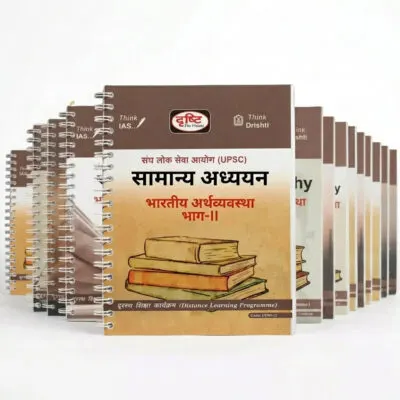
Drishti IAS Hindi Medium Complete GS Notes 2025-26 | 18 Booklets | Hindi Medium | UPSC Study Material


Next IAS General Studies Prelims Test Series 2026-27 | 10–35 Tests | English Medium | UPSC Study Material

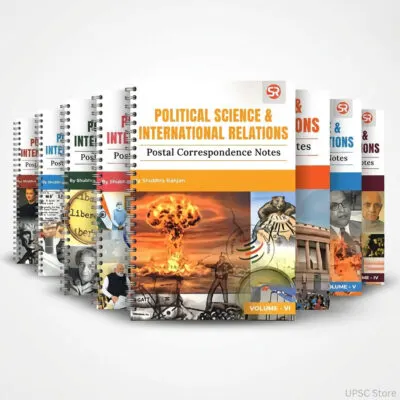
Shubhra Ranjan PSIR Optional Handwritten Notes 2026-27 | 11 Booklets | English Medium | UPSC Study Material


PW Only IAS Prelims 2026-27 Hindi Test Series | 10–35 Tests | Hindi Medium | UPSC Study Material


Forum IAS Prelims Topic-wise PYQs 1992-2025 | 7 Booklets | English Medium | UPSC Study Material
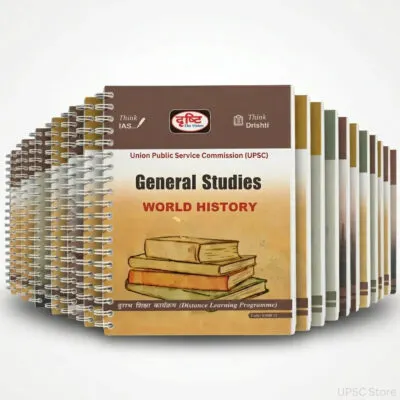
Drishti IAS GS Foundation Notes 2025-26 | 27 Booklets | English Medium | UPSC Study Material

Rahul IAS Law Notes 2025-26 | 30 Booklets | English Medium | UPSC Study Material

About S. Chitranjan Anthropology Notes 2022
S. Chitranjan Anthropology Notes 2022 is an original printed study material set from S. Chitranjan, covering Anthropology. Available in English medium, this set is counted booklet by booklet before dispatch — no photocopies, no missing booklets.
Product Details
- Institute: S. Chitranjan
- Subject: Anthropology
- Medium: English
- Format: Printed
- Delivery: Pan-India delivery in 4–7 working days, free over ₹1,999
- Condition: New, original print — counted before dispatch
Why Buy from UPSC Store?
- ✓ Original Printed Notes — no photocopies, every booklet counted before it ships
- ✓ Fast Dispatch — ships within 24 hours from Delhi, arrives in 4–7 days pan-India
- ✓ Secure Packaging — bubble-wrapped and boxed to prevent damage in transit
- ✓ 180+ Orders Shipped — to 25 states across India
- ✓ WhatsApp Support — ask which set fits your optional and medium before ordering
Frequently Asked Questions
Original print — the same printed booklets the institute issues. Every set is counted booklet by booklet before dispatch.
Orders are dispatched within 24 hours from Delhi and delivered across India in 4–7 working days. Delivery is free over ₹1,999.
Returns are accepted only if the problem is from our side: wrong item, damaged or defective copy, or missing booklets or pages. Report it within 7 days of delivery and we arrange a free pickup and send a free replacement or a full refund. We do not accept change-of-mind returns, so please check the medium, edition and binding before ordering. WhatsApp us to start a return.