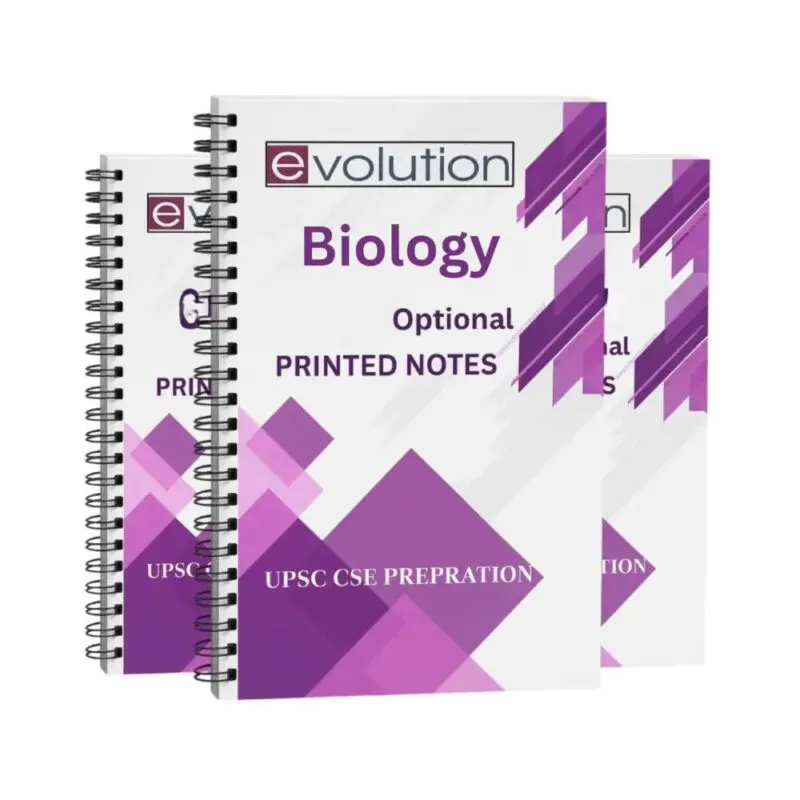
Evolution Botany Optional Notes 2025-26

21 Booklets | English Medium | UPSC Study Material

Key Highlights:
πŸ“˜ 21 Booklets
πŸ“š Botany Optional
πŸŽ“ Evolution IAS
🏷️ Printed
πŸ‡¬πŸ‡§ English Medium
β‚Ή2,299
πŸŒ€ spiral βœ“
πŸ“˜ book-binding βœ“
Only 24 sets left
Selling fast (92 sold this week)
5% OFF Use UPSC5% (COD Available)
10% OFF Use UPI10 (UPI Only)
Secure Payment
Fast Delivery
Safe Packaging

About Evolution Botany Optional Notes 2025-26

The Evolution Botany Optional Notes 2025-26 is a printed UPSC study material set sold by UPSC Store β€” India’s trusted source for genuine, latest-batch civil services preparation books. This page covers full booklet details, syllabus coverage, pricing, shipping, and frequently asked questions. Useful for UPSC CSE, BPSC, UPPSC, MPPSC, RAS and other state PSC examinations.

Evolution Botany Optional Notes 2025-26 β€” 8 English Medium Printed Booklets for UPSC Mains Optional Subject

Related: Evolution IAS notes Β· Botany optional

Product Overview

FeatureDetails
Booklets Count8 Individual Printed Booklets β€” Full UPSC Botany Optional Syllabus (Paper I + Paper II)
LanguageEnglish Medium
PublisherEvolution (Evolution Educare Pvt. Ltd.)
Edition2025-26 β€” Latest Genuine Batch
ConditionBrand New, Unmarked, Fresh Stock
FormatHigh-Quality Printed Booklets β€” Spiral or Book Binding
Paper Quality75 GSM Ultra-White β€” Highlighter Safe, Zero Bleed-Through
ShippingPan India Delivery in 3-5 Business Days β€” Tracked
Also Useful ForBPSC, UPPSC, MPPSC, RAS and all State PSC candidates with Botany optional

Complete Booklet Catalog

This 21-booklet set from Evolution Educare Pvt. Ltd. covers the entire UPSC Botany optional syllabus across both Paper I and Paper II, structured for systematic and time-efficient preparation. It is designed for science graduates and biology enthusiasts aiming to score high in the 500-mark optional paper at UPSC Civil Services Mains.

  • Booklet 1: Microbiology and Plant Pathology β€” Covers viruses, bacteria, fungi, algae, and mycoplasma with special emphasis on plant diseases, causal organisms, disease cycles, epidemiology, and control measures. Includes economic importance of pathogens and standard UPSC previous year question patterns related to microbial plant pathogens and biocontrol agents.
  • Booklet 2: Cryptogams β€” Algae, Fungi, Bryophyta and Pteridophyta β€” Detailed treatment of classification, morphology, anatomy, and reproduction in all major groups of cryptogams. Covers thallus organisation, alternation of generations, evolutionary trends in plant kingdom, and significance of each group as addressed in past UPSC Botany optional papers.
  • Booklet 3: Gymnospermae and Palaeobotany β€” Covers classification, morphology, anatomy, and reproduction of gymnosperm groups including Cycadales, Coniferales, and Gnetales. Includes palaeobotany fundamentals β€” fossilisation, geological time scale, significant fossil plants, and evolution of vascular plants as demanded by the UPSC optional syllabus.
  • Booklet 4: Angiosperm Anatomy, Embryology and Taxonomy β€” In-depth coverage of secondary growth, vascular tissue organisation, wood anatomy, pollination biology, fertilisation, endosperm development, polyembryony, apomixis, and seed structure. Taxonomic systems of Bentham & Hooker, Engler & Prantl, and APG classification are covered with comparative tables.
  • Booklet 5: Cell Biology and Genetics β€” Covers cell structure, cell cycle, mitosis, meiosis, chromosomal theory of inheritance, Mendelism, linkage and crossing over, mutation, polyploidy, sex determination, extrachromosomal inheritance, and molecular basis of heredity including DNA replication, transcription, and translation relevant to UPSC Botany optional Paper I.
  • Booklet 6: Plant Physiology and Biochemistry β€” Covers water relations, mineral nutrition, photosynthesis (light and dark reactions, C3, C4, CAM pathways), respiration, nitrogen metabolism, phytohormones, photoperiodism, vernalisation, seed dormancy, and biochemistry including carbohydrates, proteins, lipids, and enzymes as required for UPSC Botany optional preparation.
  • Booklet 7: Ecology and Plant Geography β€” Covers ecological concepts β€” ecosystem structure and function, energy flow, biogeochemical cycles, succession, vegetation types of India, phytogeography, plant adaptation to extreme environments, pollution ecology, and conservation biology with biodiversity hotspots relevant to UPSC Mains Botany optional Paper II.
  • Booklet 8: Economic Botany, Biotechnology and Plant Breeding β€” Covers plants of economic importance (food, fibre, oil, medicinal, timber), tissue culture techniques, recombinant DNA technology, transgenic plants, biofertilisers, bioinsecticides, plant breeding methods including hybridisation, mutation breeding, polyploidy breeding, and biotechnology applications directly asked in UPSC Botany optional Paper II.

In-Depth Content Breakdown: Booklet by Booklet

Booklet 1: Microbiology and Plant Pathology

Microbiology and Plant Pathology form a foundational section of UPSC Botany optional Paper I. This booklet covers the general characteristics, reproduction, and classification of viruses, bacteria, fungi, algae, and mycoplasma in the context of plant disease causation. Important topics include Koch’s postulates, mode of infection, host-pathogen interaction, and the concept of disease triangle β€” all of which have been repeatedly tested in UPSC Mains Botany optional over the past decade. Evolution Educare’s notes present these mechanisms in clear, point-based formats that are easy to reproduce under exam conditions.

The second half of this booklet addresses specific plant diseases of economic importance β€” including late blight of potato, rust and smut of wheat, citrus canker, and brown spot of rice β€” with complete details of causal organisms, symptoms, disease cycles, and management strategies. Biocontrol agents, chemical control, and integrated disease management are presented in tabular formats ideal for quick revision. Special emphasis is placed on linking microbiology concepts with broader ecology and biotechnology topics covered in later booklets, providing a connected understanding of the UPSC Botany optional syllabus.

Booklet 2: Cryptogams β€” Algae, Fungi, Bryophyta and Pteridophyta

Cryptogams represent a significant and frequently tested portion of UPSC Botany optional Paper I. This booklet provides systematic coverage of algae (Chlorophyta, Phaeophyta, Rhodophyta), fungi (Phycomycetes, Ascomycetes, Basidiomycetes, Deuteromycetes), bryophytes (Liverworts, Hornworts, Mosses), and pteridophytes (Psilopsida, Lycopsida, Sphenopsida, Pteropsida). Classification systems, salient features, economic importance, and evolutionary significance of each group are addressed. Life cycles are presented with clean diagrams indicating alternation of generations β€” a topic highly valued by UPSC examiners for its analytical depth.

Each group is treated with attention to morphology, anatomy, reproduction (vegetative, asexual, and sexual), and ecological roles. The booklet includes comparative tables contrasting gametophyte and sporophyte dominance across plant groups, helping aspirants answer evolutionary trend-based UPSC Botany optional questions with precision. Special attention is given to heterospory and seed habit as evolutionary milestones, which frequently appear in UPSC Mains long-answer questions. Diagrams of representative genera like Fucus, Marchantia, Selaginella, and Equisetum are included to support visual memory during revision.

Booklet 3: Gymnospermae and Palaeobotany

Gymnosperms and Palaeobotany together constitute a moderately weighted but conceptually rich section of UPSC Botany optional. This booklet opens with the general characteristics and classification of gymnosperms, followed by detailed treatment of representative genera including Cycas, Pinus, Ephedra, and Gnetum. Morphology, anatomy (including secondary growth), microsporogenesis, megasporogenesis, pollination, fertilisation, and seed structure are covered in full detail. The evolutionary position of gymnosperms between pteridophytes and angiosperms is treated analytically, a perspective that frequently appears in UPSC Mains Botany optional answer-writing scenarios.

The palaeobotany section covers fossilisation processes, types of fossils, geological time scale, and the significance of major fossil plants including Rhynia, Lepidodendron, Calamites, Glossopteris, and Williamsonia. Evolution of vascular plants from Devonian to present is presented as a timeline, making it simple to recall stratigraphic relationships under exam conditions. The economic uses of gymnosperms β€” including resin, timber, edible seeds, and pharmaceutical applications β€” are noted alongside relevant UPSC syllabus points to ensure no examinable topic is missed in this Evolution Educare Botany optional booklet.

Booklet 4: Angiosperm Anatomy, Embryology and Taxonomy

This booklet addresses three interconnected and heavily tested areas of UPSC Botany optional Paper I. The anatomy section covers primary and secondary growth in dicot roots, stems, and leaves, including anomalous secondary growth, wood anatomy, and commercial timber identification β€” areas where UPSC examiners frequently set application-based questions. Embryology topics include microsporogenesis, megasporogenesis, types of ovules, fertilisation (syngamy and triple fusion), types of endosperm development, embryo development, polyembryony, and apomixis, all illustrated with labelled diagrams drawn to UPSC answer-booklet standards.

The taxonomy section covers principles of plant taxonomy, binomial nomenclature, ICBN rules, and a comparative analysis of classical classification systems β€” Bentham and Hooker, Engler and Prantl, Hutchinson, and the modern APG (Angiosperm Phylogeny Group) system. Important angiosperm families including Fabaceae, Solanaceae, Asteraceae, Poaceae, Liliaceae, Malvaceae, and Brassicaceae are covered with floral formulae, floral diagrams, and economic importance. Taxonomic keys and cladistic approaches are introduced to help aspirants answer contemporary UPSC Botany optional questions that test awareness of modern plant systematics.

Booklet 5: Cell Biology and Genetics

Cell Biology and Genetics form the scientific backbone of UPSC Botany optional Paper I, and this booklet covers both areas with the depth expected at the postgraduate level. Cell biology topics include the ultrastructure of prokaryotic and eukaryotic cells, cell organelles (mitochondria, chloroplasts, ER, Golgi, ribosomes, nucleus), cell membrane structure and transport, cell cycle regulation, mitosis, and meiosis with their significance. These topics are presented with diagrams and are connected to their downstream relevance in genetics, biotechnology, and evolution β€” exactly the kind of integrated understanding that earns high marks in UPSC Mains Botany optional.

The genetics section covers Mendelian inheritance, incomplete dominance, codominance, multiple allelism, epistasis, linkage, crossing over and recombination, chromosomal mapping, sex-linked inheritance, extranuclear inheritance (plastid and mitochondrial genes), mutation (gene and chromosomal), polyploidy, and numerical chromosomal aberrations. Molecular genetics topics include DNA structure and replication, transcription, translation, genetic code, and gene regulation (lac operon and trp operon models). Previous year UPSC Botany optional questions on genetics are referenced within the booklet to help aspirants understand the expected answer depth and format.

Booklet 6: Plant Physiology and Biochemistry

Plant Physiology is one of the highest-scoring sections of UPSC Botany optional Paper II when prepared with the right depth and clarity. This booklet covers water potential, osmosis, plasmolysis, absorption and transport of water (apoplast and symplast pathways, transpiration, stomatal mechanism), mineral nutrition (macro and micronutrients, deficiency symptoms, active and passive absorption), and nitrogen fixation (biological and industrial). Photosynthesis is covered in full β€” from the Z-scheme of light reactions and photophosphorylation to the Calvin cycle, Hatch-Slack pathway for C4 plants, and CAM metabolism β€” with diagrams appropriate for UPSC Mains answer writing.

Respiration topics include glycolysis, Krebs cycle, electron transport chain, oxidative phosphorylation, fermentation, and the respiratory quotient. Phytohormones β€” auxins, gibberellins, cytokinins, ABA, and ethylene β€” are covered with their biosynthesis, mode of action, and physiological roles. Photoperiodism, vernalisation, seed dormancy, and senescence round off the physiology component. The biochemistry section covers structure and function of carbohydrates, proteins (primary to quaternary structure), lipids, nucleic acids, and enzyme kinetics including Michaelis-Menten equation and inhibitor types β€” presented with worked-out conceptual explanations suited to UPSC Botany optional preparation.

Booklet 7: Ecology and Plant Geography

Ecology is a dynamic and expanding section of UPSC Botany optional Paper II, with increasing relevance to contemporary environmental policy questions in UPSC Mains General Studies as well. This booklet covers ecological levels of organisation, ecosystem structure (biotic and abiotic components), food chains and food webs, ecological pyramids, energy flow (Lindeman’s trophic efficiency), productivity (gross and net primary productivity), and detailed biogeochemical cycles for carbon, nitrogen, phosphorus, and sulphur. Ecological succession β€” both primary and secondary β€” is covered with examples from Indian vegetation, providing local context valued by UPSC examiners.

Plant geography topics include the major phytogeographical regions of the world, floristic kingdoms, and the distribution of Indian vegetation types β€” tropical evergreen, tropical deciduous, mangrove, alpine, desert, and grassland ecosystems. Plant adaptations to xerophytic, hydrophytic, halophytic, and epiphytic environments are covered with structural and physiological modifications. Biodiversity conservation, biodiversity hotspots in India, threats to plant diversity (habitat loss, invasive species, climate change), ex-situ and in-situ conservation strategies, and India’s relevant legislation (Wildlife Protection Act, Forest Rights Act) are included as high-value UPSC Botany optional scoring areas.

Booklet 8: Economic Botany, Biotechnology and Plant Breeding

Economic Botany, Biotechnology, and Plant Breeding form the applied section of UPSC Botany optional Paper II and are among the most scoring areas due to their direct current-affairs linkages. This booklet covers plants of economic importance grouped by use β€” cereals (wheat, rice, maize), pulses, oilseeds (groundnut, mustard, soybean), sugar crops, fibre crops (cotton, jute, hemp), timber species, rubber, spices, beverages, medicinal plants, and poisonous plants. Each commodity plant is covered with botanical name, family, origin, cultivation, and uses β€” as required for UPSC Mains Botany optional answer writing.

Biotechnology topics include plant tissue culture (callus culture, cell suspension culture, protoplast isolation and fusion, somatic hybridisation, embryo rescue, anther culture), recombinant DNA technology (restriction enzymes, vectors, gene cloning, PCR, southern blotting, RFLP, RAPD, SSR molecular markers), transgenic plant development, Bt crops, biofertilisers (Rhizobium, Azotobacter, mycorrhiza), and bioinsecticides. Plant breeding methods β€” introduction, selection, hybridisation, mutation breeding, polyploidy breeding, heterosis and hybrid seed production, and marker-assisted selection β€” are covered to complete the UPSC Botany optional Paper II syllabus in this final Evolution Educare booklet.

Physical Construction and Quality Standards

These Evolution Botany optional printed notes are manufactured to withstand months of intensive UPSC preparation β€” daily reading, annotation, multiple revision rounds, and transport to and from study locations without pages loosening or print degrading.

Paper Quality: 75 GSM Anti-Glare White Paper

Each booklet in this Evolution Botany optional set uses 75 GSM ultra-white paper chosen specifically for high opacity β€” text and diagrams on the reverse side do not bleed through when you annotate with highlighters, gel pens, or ballpoint pens. The anti-glare finish reduces eye strain during extended study sessions of 8–10 hours, which are common during peak UPSC Mains optional preparation phases. The paper handles multiple colours of highlighters simultaneously without smudging, making colour-coded revision of topics like plant physiology, genetics, and taxonomy practical and effective.

Printing Technology: High-Resolution Laser Printing

All text, diagrams, tables, and flowcharts in these Evolution Educare Botany optional booklets are produced using high-resolution laser printing technology. Laser toner is permanently fused to the paper surface, ensuring smudge-proof, water-resistant output that does not fade with repeated handling. Botanical diagrams β€” including life cycles of cryptogams, embryological development stages, anatomical cross-sections, metabolic pathways, and genetic maps β€” are printed with crisp line definition that makes every label readable even in complex multi-layered illustrations. This level of clarity is essential for Botany optional preparation, where diagram accuracy directly impacts UPSC examiner evaluation.

Binding and Durability

Each of the 21 Booklets in this Evolution Botany optional set is individually bound for ease of use. Spiral-bound booklets lie completely flat when open, allowing you to write notes in the margins alongside printed content without the book closing β€” particularly useful for cell biology and genetics diagrams that require side annotations. The cover pages are printed on 300 GSM card stock, providing rigidity that protects the internal pages during daily commutes between home, library, and coaching centre. Alternatively, book-bound versions offer a compact, shelf-stable format that stacks cleanly with other UPSC optional material for organised storage throughout a full preparation cycle.

Key Features and Study Design

These Evolution Educare Botany optional notes are purpose-built for UPSC Mains optional preparation β€” every design decision, from topic sequencing to diagram style, is driven by what UPSC examiners reward and what aspirants need under timed exam conditions.

  • Syllabus-Aligned Topic Sequencing: All 21 Booklets follow the exact sequence of the official UPSC Botany optional syllabus for Paper I and Paper II, eliminating the need to cross-reference multiple sources and ensuring no examinable topic is missed during preparation or revision cycles.
  • Diagram-Heavy Presentation: Botany optional rewards aspirants who reproduce accurate, labelled diagrams in the UPSC answer booklet. Life cycles, anatomical cross-sections, metabolic pathways, and genetic maps are included throughout with clear labels designed to be recreated from memory in the examination hall.
  • Point-Based Answer Frameworks: Key answers are structured in numbered points with sub-headings, mirroring the format that UPSC examiners prefer for optional subject answers. This format trains aspirants to write time-efficient, organised responses during the 3-hour Botany optional papers.
  • Integrated Current Affairs Linkages: Topics in ecology, biotechnology, and economic botany are periodically linked to recent developments β€” GM crop approvals, biodiversity convention updates, and biofertiliser policy β€” helping aspirants add contemporary dimensions to UPSC Botany optional answers for higher marks.
  • Previous Year Question Orientation: High-frequency UPSC Botany optional previous year question themes are highlighted within relevant topic sections, enabling aspirants to recognise which concepts require deeper understanding versus surface-level recall when allocating study time across the 500-mark optional paper.

Shipping, Packaging and Delivery

Every order of Evolution Botany optional notes 2025-26 is packed with care to ensure all 8 printed booklets arrive in brand-new, unmarked condition. Each set is first individually shrink-wrapped to prevent moisture entry, then placed inside a double-walled corrugated cardboard box with edge protectors at all corners. Additional bubble wrap cushioning is used for sets shipped to distant states. The outer box is sealed with tamper-evident tape and labelled clearly with a tracked courier number. Packaging is designed to withstand standard courier handling without any booklet sustaining crease, water, or pressure damage during transit.

Orders are dispatched within 24 hours of payment confirmation on business days. Pan India delivery is completed within 3–5 business days, with a tracking ID sent to your registered WhatsApp number or email. For order-related support, stock availability queries, or bulk institute orders, contact our team on WhatsApp at +91 70045 49563. In the rare event that any booklet from the 21-booklet set is found damaged, missing, or misprinted on delivery, a replacement booklet will be dispatched within 48 hours at no additional cost. Buy with confidence knowing every order is backed by our delivery guarantee.

Frequently Asked Questions (FAQ)

Q1: Is Evolution a good institute for Botany optional UPSC preparation?

A: Evolution Educare Pvt. Ltd. is a respected name among UPSC Botany optional aspirants, known for structured, syllabus-aligned printed notes that cover both Paper I and Paper II in depth. Their material is widely used by self-study candidates and classroom students alike. The 21-booklet 2025-26 set reflects updated content with diagram-heavy presentation and point-based answer frameworks suited to UPSC Mains evaluation standards, making it a strong choice for optional preparation.

Q2: How many booklets are included in Evolution Botany optional notes 2025-26?

A: The Evolution Botany optional notes 2025-26 set includes 8 individual printed booklets covering the complete UPSC Botany optional syllabus. The booklets span Microbiology and Plant Pathology, Cryptogams, Gymnosperms and Palaeobotany, Angiosperm Anatomy and Taxonomy, Cell Biology and Genetics, Plant Physiology and Biochemistry, Ecology and Plant Geography, and Economic Botany with Biotechnology and Plant Breeding β€” fully covering UPSC Botany optional Paper I and Paper II.

Q3: Are Evolution Botany optional notes available in Hindi medium?

A: The set available on this page is the English medium edition of Evolution Botany optional notes 2025-26, containing all 21 Booklets in English. At present, this listing is specifically for English medium aspirants. If you require Hindi medium Botany optional material or wish to confirm whether a Hindi edition is available for the 2025-26 batch, please contact our team on WhatsApp at +91 70045 49563 for updated stock information.

Q4: What topics are covered in Evolution Botany optional notes for UPSC?

A: These 21 Booklets cover the complete UPSC Botany optional syllabus across both papers. Paper I topics include Microbiology, Plant Pathology, Algae, Fungi, Bryophyta, Pteridophyta, Gymnosperms, Palaeobotany, Angiosperm Anatomy, Embryology, Taxonomy, Cell Biology, and Genetics. Paper II topics include Plant Physiology, Biochemistry, Ecology, Plant Geography, Economic Botany, Plant Biotechnology, and Plant Breeding β€” all aligning precisely with the official UPSC optional subject syllabus requirements.

Q5: What is the paper quality? Can I use a highlighter?

A: These booklets use 75 GSM ultra-white paper chosen for high opacity β€” multiple highlighter colours and gel pens work without bleed-through to the reverse side, ideal for colour-coded revision. The anti-glare surface also reduces eye strain during long Botany optional study sessions, making daily 8–10 hour reading sessions more comfortable. The paper is compatible with ballpoint pens, felt-tip markers, and standard correction fluid without warping or feathering.

Q6: Are these notes sufficient to clear UPSC Botany optional without coaching?

A: Many successful UPSC Botany optional candidates have used Evolution Educare printed notes as their primary self-study resource without attending classroom coaching. The 21-booklet set covers the full UPSC optional syllabus with diagrams, point-based answers, and topic sequencing aligned to UPSC previous year questions. Supplementing with standard reference texts like Pandey and Chadha for Plant Physiology and Singh, Pande, and Jain for Cryptogams is advisable for complete depth, but these notes provide a very strong structured foundation for self-study aspirants.

Q7: What is the difference between Evolution Botany notes and classroom notes?

A: Evolution Educare printed notes are professionally typeset, printed, and bound editions of the course material, unlike hand-written classroom notes which vary in completeness, legibility, and diagram quality depending on individual note-taking speed. The printed booklets ensure every aspirant β€” whether attending classes or studying independently β€” receives the same structured, diagram-rich, syllabus-aligned content. They are also easier to annotate, highlight, and revise compared to unstructured handwritten notes accumulated over months of classroom attendance.

Q8: Are Evolution Botany optional notes updated for the latest UPSC syllabus?

A: Yes, these are the 2025-26 edition notes from Evolution Educare, reflecting the latest genuine batch content. The UPSC Botany optional syllabus has remained relatively stable, but the 2025-26 edition incorporates updated examples in biotechnology, ecology, and economic botany sections to reflect recent scientific developments and current-affairs-linked topics that UPSC examiners increasingly reward. Always check that you are buying the 2025-26 edition rather than older stock when purchasing from any source.

Q9: How long does delivery take and where do you deliver?

A: We deliver pan India β€” from metro cities like Delhi, Mumbai, Bengaluru, and Chennai to tier-2 and tier-3 towns across all states. Standard delivery time is 3–5 business days from dispatch, which happens within 24 hours of payment confirmation. A tracking ID is shared via WhatsApp or email upon dispatch. For urgent requirements near exam dates, contact us on WhatsApp at +91 70045 49563 to check express delivery availability in your pincode.

Q10: Can I buy individual booklets from this set, or only the complete 21-booklet set?

A: This listing is for the complete 21-booklet Evolution Botany optional notes 2025-26 set. Buying the full set ensures coverage of the entire UPSC Botany optional syllabus across Paper I and Paper II without gaps. If you need specific individual booklets β€” for example, only the Ecology or Genetics booklet β€” please contact our team on WhatsApp at +91 70045 49563 to check whether individual booklet availability is possible for the 2025-26 batch.

Q11: Are these notes also useful for state PSC Botany optional candidates?

A: Yes. While these notes are primarily designed for UPSC Civil Services Mains Botany optional, the content is equally relevant for candidates appearing for BPSC, UPPSC, MPPSC, RAS, and other state PSC examinations that offer Botany as an optional subject. State PSC Botany optional syllabi largely overlap with the UPSC syllabus in core areas like plant physiology, genetics, ecology, and economic botany, making this 21-booklet Evolution Educare set a useful investment for state-level optional preparation as well.

Q12: How does the Botany optional contribute to UPSC Mains total marks?

A: UPSC Botany optional accounts for 500 marks in the Civil Services Mains examination β€” two papers of 250 marks each. This makes it the single largest scoring opportunity in the entire UPSC Mains process, surpassing any individual General Studies paper. A well-prepared Botany optional can be the deciding factor between a top-50 and top-500 rank. Investing in structured, complete printed study material like these Evolution Educare 21-booklet notes for 2025-26 is therefore one of the highest-return decisions an aspirant can make.

Summary

SpecificationValue
Booklets8 Printed Booklets
LanguageEnglish Medium
PublisherEvolution (Evolution Educare Pvt. Ltd.) β€” 2025-26 Edition
Paper75 GSM Ultra-White Anti-Glare
BindingSpiral or Book Binding with 300 GSM Cover
Delivery3-5 Business Days Pan India β€” Tracked Courier
ConditionBrand New, Unmarked, Fresh Stock
Also Useful ForBPSC, UPPSC, MPPSC, RAS and all State PSC Botany optional candidates

Sold by UPSC Store β€” Mukherjee Nagar, Delhi’s trusted source for printed optional notes. Buy Evolution Botany optional notes 2025-26 online today and receive your complete 21-booklet set with pan India delivery in 3-5 days.

Reference: Civil Services Examination

Customer Reviews 242

4.5
Based on 242 reviews
5β˜…
145
4β˜…
72
3β˜…
25
2β˜…
0
1β˜…
0
V
Vaishali Singh
23 Apr 2026
βœ“ Verified

Mast content.

P
Priya Deshmukh
21 Apr 2026
βœ“ Verified

Quality mast hai, packing bhi secure tha. Already started studying from it.

H
Harsh Mishra
18 Apr 2026
βœ“ Verified

Meri preparation completely change ho gayi inse.

K
Karan Malhotra
17 Apr 2026
βœ“ Verified

Bohot detailed aur relevant content, exam ke liye perfect preparation material.

S
Sneha Kapoor
15 Apr 2026
βœ“ Verified

Really helpful for optional. Notes are crisp and to the point.

P
Priya Sharma
12 Apr 2026
βœ“ Verified

Quality material, meri preparation level badh gaya definitely. Recommend kar sakti hoon.

N
Nikhil Joshi
12 Apr 2026
βœ“ Verified

Mock test ke baad ye notes padhke confidence boost ho gaya.

A
Aditya Saxena
10 Apr 2026
βœ“ Verified

Notes exactly as described, content quality phenomenal.

πŸ›οΈ

Aspirants Also Bought

More from the same category

View All β†’

About Evolution Botany Optional Notes 2025-26

Evolution Botany Optional Notes 2025-26 is a highly recommended UPSC study material from Evolution IAS, specially designed for Botany Optional preparation. Available in English medium, this material is crafted to match the exact requirements of the UPSC Civil Services Examination syllabus β€” covering both Prelims and Mains comprehensively.

Product Details

  • Institute: Evolution IAS
  • Subject: Botany Optional
  • Medium: English
  • Format: Printed
  • Delivery: Pan-India delivery in 3–5 working days
  • Format: Original printed material, verified authentic

Why Buy from UPSC Store?

  • βœ… 100% Genuine Printed Material β€” Original printed notes, no photocopies or fake copies
  • βœ… Fast Delivery β€” Ships within 24 hours, arrives in 3–5 days pan-India
  • βœ… Secure Packaging β€” Bubble-wrapped and boxed to prevent damage in transit
  • βœ… Trusted by 10,000+ Aspirants β€” India's most reliable UPSC material marketplace
  • βœ… WhatsApp Support β€” Get expert guidance on material selection before ordering

Frequently Asked Questions

Is this product 100% original?

Yes, all products at UPSC Store are 100% genuine printed materials. We do not sell photocopies or fake copies.

How long does delivery take?

Orders are dispatched within 24 hours and delivered across India in 3–5 working days via reputed courier partners.

Can I return the product?

Yes, we accept returns within 7 days if the product is damaged or incorrect. Check our refund policy for details.

Which other study materials should I buy with this?

We recommend pairing this with current affairs notes and a UPSC test series for comprehensive preparation. Browse more in Agriculture, Botany, Optional, UPSC.