

Vision IAS General Studies Notes 2025-26
About Vision IAS GS Notes 2025-26
The Vision IAS GS Notes 2025-26 is a printed UPSC study material set sold by UPSC Store β India’s trusted source for genuine, latest-batch civil services preparation books. This page covers full booklet details, syllabus coverage, pricing, shipping, and frequently asked questions. Useful for UPSC CSE, BPSC, UPPSC, MPPSC, RAS and other state PSC examinations.
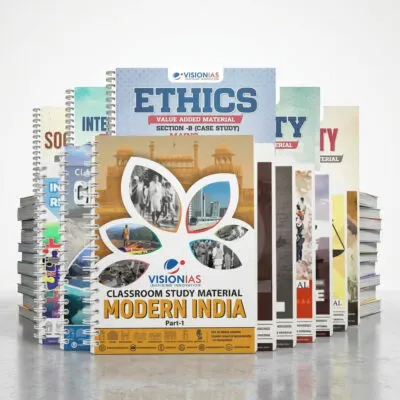
Vision IAS General Studies 2025-26 | Set of 46 English Booklets | UPSC Study Material
Related: Vision IAS bundle Β· General Studies notes
The Vision IAS General Studies 2025-26 Set of 46 English Booklets is the most comprehensive and meticulously curated UPSC preparation material available in the market today. Designed specifically for aspirants targeting the Civil Services Examination conducted by the Union Public Service Commission, this exhaustive set covers every dimension of the General Studies syllabus with unparalleled depth and clarity. Whether you are a first-time aspirant or a seasoned candidate appearing for the examination for the second or third time, this booklet set serves as the definitive companion throughout your preparation journey. The content has been developed by Vision IAS β India’s most trusted and result-oriented IAS coaching institute β whose alumni regularly feature among the top rankers in the final merit list.
Each booklet in this premium set has been crafted after extensive research, continuous faculty reviews, and alignment with the latest UPSC trends and previous year question analysis. The language is precise, accessible, and examination-oriented, ensuring that aspirants not only understand complex concepts but are also able to articulate them effectively in the Mains examination. From Indian Polity and Governance to Science and Technology, from Ancient History to Contemporary International Relations, every topic is covered with the right balance of depth and brevity. This set is ideal for both Prelims and Mains preparation, making it a one-stop solution for all General Studies needs.
Complete Booklet-wise Coverage
Booklet 1: Indian History β Ancient India
This booklet provides a thorough exploration of Ancient Indian civilization, tracing its roots from the prehistoric period to the decline of classical empires. It covers the Indus Valley Civilization, Vedic Age, Mahajanapadas, Mauryan and Gupta Empires, and the contributions of various dynasties to art, culture, religion, and administration. The content is aligned with UPSC Prelims and Mains requirements, offering factual accuracy alongside analytical perspectives that help candidates build strong foundations for answering both objective and descriptive questions.
The booklet incorporates carefully selected maps, timelines, and comparative analyses that make understanding dynastic succession and cultural evolution far more intuitive. Special emphasis has been placed on frequently tested topics such as Ashoka’s edicts, the evolution of Buddhist art, Sangam literature, and the socio-religious movements of the ancient period. Candidates will find this booklet especially useful for linking ancient historical context with modern governance and cultural heritage questions that frequently appear in Mains General Studies Paper 1. Previous year questions and trend analysis have been integrated throughout to maximize examination relevance.
Booklet 2: Indian History β Medieval India
The Medieval India booklet covers the period from the early medieval kingdoms through the Mughal Empire, including the Delhi Sultanate, Bhakti and Sufi movements, Vijayanagara Empire, Maratha consolidation, and the decline of Mughal authority. It provides a nuanced understanding of administrative systems, revenue policies, art and architecture, and the socio-cultural synthesis that characterized medieval Indian society. The content is crafted to help aspirants develop a balanced analytical approach, which is critical for writing high-scoring answers in General Studies Paper 1 of the UPSC Mains examination.
Special attention has been given to the interplay between religion, politics, and culture during the medieval period β an area that is frequently tested in UPSC examinations. The booklet includes detailed sections on the architecture of the Mughals, the Sufi silsilas, the regional kingdoms of South India, and the administrative innovations introduced by Sher Shah Suri. Aspirants preparing for Mains will benefit from model answers, key phrases, and structured frameworks embedded within the content. The booklet also connects medieval historical events with contemporary issues in Indian society and governance, adding significant depth to the overall preparation.
Booklet 3: Indian History β Modern India
Modern India is perhaps the most critical segment of the History syllabus for UPSC aspirants. This booklet covers the advent of European powers, the rise and consolidation of British rule, social reform movements, the Indian National Movement, and the attainment of independence in 1947. It presents a comprehensive yet focused account of key personalities, events, and ideological currents that shaped modern India. The booklet is designed to help candidates understand the historical roots of India’s constitutional framework, democratic institutions, and development policies β all of which remain relevant to contemporary GS questions.
The booklet pays special attention to the contributions of leaders such as Mahatma Gandhi, Jawaharlal Nehru, Subhas Chandra Bose, B.R. Ambedkar, and Bal Gangadhar Tilak, offering analytical perspectives alongside biographical details. Important events like the Revolt of 1857, the formation of the Indian National Congress, the Non-Cooperation Movement, Civil Disobedience Movement, and Quit India Movement are explained with their causes, course, and consequences. The content also covers the partition of India and its socio-political ramifications, providing aspirants with a complete picture of the modern Indian historical narrative as required for UPSC success.
Booklet 4: Indian Art and Culture
Art and Culture is an increasingly important section of the UPSC General Studies syllabus, with questions appearing regularly in both Prelims and Mains. This booklet offers a systematic and detailed treatment of India’s rich cultural heritage, including classical dance forms, music traditions, painting styles, sculpture, architecture, folk arts, and intangible cultural heritage. Each art form is described with its regional origin, distinctive features, notable exponents, and UNESCO recognition status where applicable, providing aspirants with a ready reference for examination purposes.
Beyond the traditional coverage of art forms, this booklet delves into India’s philosophical and literary traditions, covering major texts from the Vedas and Upanishads to medieval devotional poetry and modern Indian literature. It also addresses the government’s initiatives for cultural preservation, including the role of organizations such as the Sangeet Natak Akademi, Sahitya Akademi, and the Archaeological Survey of India. Candidates will find dedicated sections on temple architecture styles β Nagara, Dravidian, and Vesara β as well as detailed notes on festivals, fairs, and religious traditions that form an important part of the UPSC Prelims examination.
Booklet 5: World History
The World History booklet addresses the UPSC syllabus requirement for understanding global historical events and their impact on India and the contemporary world order. It covers major themes including the Industrial Revolution, World Wars I and II, the Russian Revolution, decolonization movements in Asia and Africa, the Cold War, and the emergence of the modern nation-state system. The content is presented in a thematic and chronological manner, helping aspirants build a coherent understanding of how historical forces shaped today’s geopolitical landscape.
This booklet is particularly valuable for aspirants who find World History challenging due to its vast scope. Vision IAS has distilled the most examination-relevant content, focusing on topics that have been repeatedly tested in UPSC Mains General Studies Paper 1. Comparative analyses between different revolutions, the rise of ideologies such as Fascism, Nazism, and Communism, and the formation of international organizations like the United Nations are covered in sufficient depth. The booklet also connects world historical events with India’s foreign policy, international relations, and contemporary global challenges, enhancing its utility for multiple GS papers.
Booklet 6: Indian Geography β Physical Geography
Physical Geography forms the backbone of the Geography section in UPSC General Studies. This booklet covers the geomorphology of the Indian subcontinent, including the formation of the Himalayas, the Indo-Gangetic Plains, the Deccan Plateau, and the coastal regions. It addresses climate systems, monsoon dynamics, river systems, soils, natural vegetation, and biodiversity hotspots with the precision and detail required for UPSC examinations. The content is supported by carefully drawn maps and diagrams that aid visual learning and retention of complex geographical concepts.
The booklet also explores the geological history of the Indian subcontinent and its relevance to natural resource distribution, seismic activity, and landform evolution. Aspirants will find comprehensive notes on India’s drainage systems, including peninsular and Himalayan rivers, their catchment areas, tributaries, and significance for agriculture and water security. The connection between physical geography and environmental issues such as desertification, glacier retreat, and coastal erosion is explored in context with current affairs, making this booklet highly relevant for both the Prelims and GS Paper 1 of the Mains examination.
Booklet 7: Indian Geography β Human and Economic Geography
Human and Economic Geography explores the relationship between people, resources, and economic activities across the Indian landscape. This booklet covers population distribution, demographic trends, urbanization, migration patterns, and their socio-economic implications. It also addresses India’s agricultural geography, industrial distribution, mineral resources, energy resources, and transportation networks, providing aspirants with a comprehensive understanding of the spatial dimensions of India’s economic development as required by the UPSC syllabus.
The booklet includes detailed sections on regional economic disparities, the geography of poverty and development, and the spatial distribution of major industries such as textiles, steel, and IT. Special emphasis is placed on India’s trade geography, including major ports, trade routes, and export-import patterns. Aspirants preparing for Mains will benefit from the analytical frameworks provided for answering questions on regional development, resource geography, and the role of geography in shaping India’s developmental challenges. The content is continuously updated to reflect the latest Census data and economic surveys.
Booklet 8: World Geography
World Geography is an integral part of the UPSC General Studies syllabus, and this booklet provides comprehensive coverage of global geographical concepts and their real-world applications. It covers the physical geography of continents, major mountain ranges, river systems, deserts, and oceanic features. The booklet also addresses climatology, oceanography, plate tectonics, and natural disasters, providing aspirants with the conceptual toolkit needed to answer both factual and analytical questions in the Prelims and Mains examinations.
The economic and political geography of the world is addressed with equal rigor, covering topics such as global resource distribution, maritime boundaries, geopolitical hotspots, and the geography of international trade. The booklet includes detailed maps highlighting critical geographical locations that frequently appear in UPSC questions. Special sections on the geography of regions such as the Middle East, Central Asia, the Arctic, and the Indo-Pacific are included, reflecting the growing importance of geopolitical geography in the UPSC Mains General Studies and Essay papers.
Booklet 9: Indian Polity β Constitutional Framework
Indian Polity is one of the highest-scoring sections of the UPSC General Studies syllabus, and this booklet provides a thorough grounding in India’s constitutional framework. It covers the making of the Constitution, the Preamble, Fundamental Rights, Directive Principles of State Policy, Fundamental Duties, and the Amendment process. The content is enriched with landmark Supreme Court judgments, Constitutional Assembly debates, and comparative perspectives that add analytical depth to the aspirant’s understanding of India’s supreme legal document.
The booklet is structured to help aspirants understand not just the provisions of the Constitution but also the philosophy and intent behind each article. Special emphasis is placed on frequently tested topics such as the basic structure doctrine, judicial review, constitutional morality, and the relationship between Fundamental Rights and DPSPs. Case studies of landmark verdicts such as Kesavananda Bharati, Maneka Gandhi, and Vishaka are discussed in detail. Aspirants will find this booklet invaluable for both Prelims objective questions and Mains essay-type answers on constitutional governance.
Booklet 10: Indian Polity β Governance and Institutions
This booklet extends the constitutional coverage to the practical dimensions of governance in India, including the structure and functioning of the Parliament, Executive, Judiciary, and federalism. It covers the roles and responsibilities of constitutional bodies such as the Election Commission, CAG, UPSC, Finance Commission, and National Commissions for various groups. The content is aligned with the UPSC Mains GS Paper 2 syllabus and provides aspirants with both theoretical frameworks and contemporary examples for constructing well-rounded answers.
Federalism in India is explored through the lens of Centre-State relations, including legislative, administrative, and financial dimensions. The booklet addresses issues of cooperative and competitive federalism, the role of the Inter-State Council, and the implications of GST on federal finance. Local self-governance through Panchayati Raj Institutions and Urban Local Bodies is covered comprehensively, including the 73rd and 74th Constitutional Amendments. Aspirants will also find detailed notes on parliamentary procedures, legislative process, and the role of parliamentary committees in ensuring executive accountability.
Booklet 11: Indian Polity β Social Justice and Rights
Social Justice is a crucial dimension of UPSC General Studies Paper 2, and this booklet provides comprehensive coverage of government welfare policies, social sector schemes, poverty alleviation programs, and rights-based legislation. It covers the National Food Security Act, MGNREGA, Right to Education Act, and various flagship schemes under the current government, providing aspirants with the factual knowledge and analytical perspective needed to address social justice questions in the Mains examination.
The booklet also addresses issues of gender justice, minority rights, rights of persons with disabilities, tribal rights, and the challenges of social inclusion in a diverse democracy like India. Key policies such as the reservation system, affirmative action, and their judicial interpretation are discussed in detail. Aspirants will benefit from structured notes on the role of civil society, NGOs, and constitutional bodies in advancing social justice. The content is regularly updated to reflect the latest government schemes, Supreme Court judgments, and policy developments relevant to social justice in India.
Booklet 12: International Relations
International Relations is a dynamic and increasingly important component of the UPSC General Studies Paper 2 syllabus. This booklet covers India’s foreign policy, bilateral relations with major powers, regional groupings such as SAARC, BIMSTEC, and SCO, and India’s engagement with multilateral institutions like the United Nations, WTO, and IMF. The content is presented in a structured manner that helps aspirants understand both the historical evolution and current priorities of India’s foreign policy in a rapidly changing global order.
Special sections are dedicated to India’s relations with neighboring countries β Pakistan, China, Bangladesh, Sri Lanka, Nepal, Bhutan, and Myanmar β with a focus on key issues, recent developments, and their strategic implications. The booklet also covers India’s relations with major powers such as the United States, Russia, Japan, France, and the European Union. Topics such as nuclear diplomacy, maritime security, climate diplomacy, and economic partnerships are addressed with the depth required for Mains answers. Current affairs integration ensures that the content remains relevant for the examination cycle.
Booklet 13: Indian Economy β Fundamentals
A strong grasp of economic fundamentals is essential for success in UPSC General Studies, and this booklet provides a comprehensive introduction to macroeconomic concepts, national income accounting, monetary policy, fiscal policy, and the structure of the Indian economy. Concepts such as GDP, GNP, inflation, interest rates, balance of payments, and exchange rates are explained with clarity and precision, supplemented by real-world examples from the Indian economic context that make abstract concepts more accessible and examination-relevant.
The booklet covers the evolution of India’s economic planning, from the five-year plans to the NITI Aayog’s strategic vision documents. It addresses India’s economic reforms since 1991, including liberalization, privatization, and globalization, and their long-term impact on growth, inequality, and development. Key economic indicators such as the fiscal deficit, revenue deficit, current account deficit, and foreign exchange reserves are explained in detail. Aspirants will find model answers and analytical frameworks that help them construct compelling Mains responses on economic policy, challenges, and reforms.
Booklet 14: Indian Economy β Agriculture and Rural Development
Agriculture remains the backbone of the Indian economy, employing nearly half of the workforce and accounting for a significant share of GDP. This booklet provides detailed coverage of Indian agricultural systems, crop patterns, irrigation, agricultural finance, marketing, and the challenges facing the farming community. It addresses key issues such as farm income distress, crop insurance, minimum support prices, and the role of technology in transforming Indian agriculture, all of which are frequently examined topics in UPSC General Studies Paper 3.
Rural development policies and programs are covered comprehensively, including schemes such as PM-KISAN, Pradhan Mantri Fasal Bima Yojana, the National Agricultural Market (eNAM), and the Soil Health Card scheme. The booklet also addresses food security concerns, the functioning of the Public Distribution System, and the role of cooperatives in rural economic development. Land reforms, agricultural diversification, horticulture, and animal husbandry are covered with equal attention. Aspirants will find this booklet particularly useful for developing nuanced perspectives on the agrarian crisis and government policy responses.
Booklet 15: Indian Economy β Industry and Infrastructure
Industrial development and infrastructure creation are critical drivers of India’s economic growth, and this booklet provides a comprehensive analysis of India’s industrial policy evolution, the Make in India initiative, the role of MSMEs, and key sectors such as manufacturing, mining, and services. It covers infrastructure development in transportation, energy, telecommunications, and urban sectors, highlighting both achievements and persistent challenges in accelerating infrastructure-led growth across the country.
The booklet addresses the role of public-private partnerships in infrastructure development, the functioning of regulatory bodies, and the challenges of land acquisition, environmental clearances, and project financing. Special sections cover India’s digital infrastructure, including the National Digital Communications Policy, BharatNet, and the growth of the fintech sector. Industrial corridors, special economic zones, and smart cities are discussed with reference to their potential for transforming India’s economic geography. The content is integrated with relevant current affairs and data from economic surveys and government reports.
Booklet 16: Indian Economy β Banking and Finance
The banking and financial sector is central to India’s economic development, and this booklet provides aspirants with a thorough understanding of India’s banking structure, RBI’s role as the central bank, monetary policy transmission, credit creation, and financial inclusion. It covers the functioning of commercial banks, cooperative banks, regional rural banks, and non-banking financial companies, providing a comprehensive picture of the financial intermediation system that underpins India’s economic activity.
Key contemporary issues such as non-performing assets (NPAs), bank recapitalization, insolvency and bankruptcy reforms, and the consolidation of public sector banks are addressed with analytical depth. The booklet covers financial markets, including the functioning of capital markets, bond markets, and derivatives, along with the role of SEBI as the capital market regulator. Financial inclusion initiatives such as the Jan Dhan Yojana, Pradhan Mantri Mudra Yojana, and India Stack are explained in detail. Aspirants will find this booklet essential for tackling the increasingly important economic governance questions in GS Paper 3.
Booklet 17: Science and Technology β Fundamentals
Science and Technology is one of the most dynamic sections of the UPSC General Studies syllabus, reflecting the rapid pace of technological change and its implications for society, governance, and national security. This booklet covers the fundamental concepts of physics, chemistry, biology, and space science in an accessible manner, focusing specifically on the aspects most relevant to UPSC examinations. The content bridges basic scientific literacy with contemporary technological developments, helping aspirants build the conceptual foundation needed for this section.
Special attention is given to India’s achievements in space technology, including ISRO’s missions such as Chandrayaan, Mangalyaan, and the PSLV and GSLV launch vehicle programs. Nuclear technology, its peaceful applications, and India’s nuclear doctrine are covered in detail. Biotechnology, nanotechnology, and artificial intelligence are addressed from both a scientific and policy perspective, highlighting their potential benefits and associated risks. The booklet is updated to include the latest developments in India’s science and technology ecosystem, including recent policy initiatives and international collaborations.
Booklet 18: Science and Technology β Emerging Technologies
Emerging technologies are reshaping every aspect of human civilization, and this booklet addresses the most significant technological developments of the current era and their implications for governance, economy, and society. Topics such as Artificial Intelligence, Machine Learning, the Internet of Things, Blockchain, 5G telecommunications, quantum computing, and gene editing technologies are covered with a focus on their applications, potential risks, and policy implications β all of which are increasingly examined in the UPSC Civil Services Examination.
The booklet addresses India’s national strategies for leveraging emerging technologies, including the National AI Strategy, the Digital India program, and the National Quantum Mission. Cybersecurity challenges, data privacy concerns, and the governance of emerging technologies are discussed in detail, reflecting the growing importance of these issues in both domestic and international policy discourse. Aspirants will find comparative analyses of global technology governance frameworks, including the European Union’s approach to AI regulation and the United States’ technology competition with China, providing valuable context for essay and analytical questions.
Booklet 19: Environment and Ecology
Environment and Ecology is a high-priority section in the UPSC General Studies syllabus, with questions increasingly reflecting the urgency of global and national environmental challenges. This booklet provides comprehensive coverage of ecological concepts, biodiversity, environmental legislation, climate change, pollution, and sustainable development. The content is structured to help aspirants understand both the scientific dimensions of environmental issues and the governance responses at national and international levels, providing a strong foundation for GS Paper 3 and the Essay paper.
Detailed coverage is provided on India’s protected area network, including national parks, wildlife sanctuaries, biosphere reserves, and Ramsar wetlands. International environmental agreements such as the Paris Agreement, Convention on Biological Diversity, CITES, and the Kigali Amendment are explained with their significance for India’s environmental commitments. The booklet addresses contemporary issues such as plastic pollution, air quality management, water stress, and the green hydrogen economy. Special sections on environmental impact assessment, the functioning of the National Green Tribunal, and India’s climate action commitments make this booklet comprehensive and examination-ready.
Booklet 20: Disaster Management
Disaster Management has emerged as a critical area of study in the UPSC General Studies syllabus, particularly in the context of increasing frequency and intensity of natural disasters due to climate change. This booklet covers the framework of disaster management in India, including the Disaster Management Act 2005, the National Disaster Management Authority, State Disaster Management Authorities, and the National Disaster Response Force. The content provides a comprehensive understanding of the disaster management cycle β mitigation, preparedness, response, and recovery β with Indian and global case studies.
The booklet addresses specific disaster types including floods, droughts, cyclones, earthquakes, tsunamis, and landslides, covering their causes, regional vulnerability, and management strategies. India’s disaster management architecture is evaluated in the context of major disaster events, providing analytical perspectives on the gaps and reforms needed for a more resilient system. International frameworks such as the Sendai Framework for Disaster Risk Reduction are covered in detail. Aspirants will find this booklet useful for GS Paper 3 questions as well as the general analytical approach to crisis management questions in the Mains examination.
Booklets 21-46: Additional Comprehensive Coverage
The remaining 46 Booklets in this comprehensive set cover a wide range of additional topics essential for complete UPSC General Studies preparation. These include Internal Security, Ethics and Integrity, Essay Writing Skills, Government Schemes and Initiatives, Public Administration, Social Issues, Welfare Schemes, Role of Civil Society, E-Governance, the Indian Judicial System, Parliamentary Practices, and comprehensive current affairs compilations organized by theme and relevance to the GS syllabus. Each booklet follows the same high standard of content quality and examination orientation that characterizes the entire Vision IAS series.
The additional booklets also include specialized content on GS Paper 4 β Ethics, Integrity, and Aptitude β covering topics such as ethical theories, moral philosophy, emotional intelligence, attitude formation, civil service values, and case studies drawn from real governance situations. Dedicated booklets on Essay preparation provide structural frameworks, vocabulary enhancement, and model essays across diverse themes. Current affairs booklets compile monthly developments across all GS domains, ensuring that aspirants remain updated with the latest events and can effectively integrate contemporary examples into their examination answers throughout the preparation cycle.
Frequently Asked Questions (FAQ)
Q1: Is the Vision IAS General Studies 2025-26 Set of 46 Booklets sufficient for complete UPSC preparation?
The Vision IAS 2025-26 set of 46 booklets provides comprehensive coverage of the entire UPSC General Studies syllabus for both Prelims and Mains. The content has been carefully curated by experienced faculty to ensure that aspirants have access to all the essential information needed for competitive examination success. While the booklets form an excellent primary resource, aspirants are also advised to supplement their preparation with NCERT textbooks for foundational concepts, a reliable newspaper for daily current affairs, and regular practice of previous year question papers to consolidate their preparation effectively.
Q2: How is the 2025-26 edition different from the previous year’s edition?
The 2025-26 edition has been significantly updated to reflect the latest developments in all subject areas of the UPSC General Studies syllabus. Major updates include revised economic data from the latest Budget and Economic Survey, updated information on government schemes and their implementation status, recent Supreme Court judgments on constitutional matters, new developments in India’s foreign policy and international relations, the latest science and technology achievements, and environmental policy updates including India’s revised NDC targets. The edition also incorporates analysis of UPSC question trends from the most recent Prelims and Mains examinations to ensure maximum alignment with current examination patterns.
Q3: Are these booklets suitable for UPSC Prelims preparation as well as Mains?
Yes, the Vision IAS 2025-46 Booklets are designed to serve the preparation needs of aspirants for both the Preliminary and Main examinations. For Prelims, the booklets provide factual information, key dates, important statistics, and conceptual clarity needed for objective-type questions. For Mains, they provide analytical frameworks, balanced perspectives, case studies, and structured content that helps aspirants construct comprehensive, well-argued answers. Many booklets include both Prelims-focused fact boxes and Mains-oriented analytical sections, making them versatile tools that can be used at different stages of UPSC preparation throughout the examination cycle.
Q4: What is the language and readability level of these booklets?
All 46 booklets in this set are written in clear, precise, and accessible English that caters to aspirants with varying levels of prior subject knowledge. The language is formal yet readable, balancing technical accuracy with comprehension-friendly explanations. Complex concepts are broken down using analogies, examples, and structured presentations including bullet points, tables, and diagrams where appropriate. Aspirants who are more comfortable with English as their medium of preparation will find the language level ideal for building both content knowledge and the kind of sophisticated vocabulary that is rewarded in UPSC Mains answer writing.
Q5: How should aspirants plan their study schedule using these 46 booklets?
Vision IAS recommends a systematic approach to using these booklets based on the UPSC examination calendar. Aspirants should begin with foundational booklets on Polity, History, and Geography before moving to Economy, Science and Technology, and Environment. A typical preparation schedule involves reading one booklet every 3-5 days, followed by revision and practice of relevant previous year questions. The current affairs booklets should be incorporated into the daily study routine throughout the preparation period. Aspirants are advised to create concise notes alongside reading the booklets to facilitate faster revision in the weeks leading up to the examination.
Q6: Do these booklets cover the Optional Subject for UPSC Mains?
The Vision IAS General Studies 2025-26 set of 46 booklets is specifically designed for the General Studies papers (GS1, GS2, GS3, and GS4) and the Preliminary examination. They do not cover Optional Subject preparation, which is a separate component of the UPSC Mains examination. However, for aspirants who have chosen Optional Subjects with significant overlap with General Studies β such as Public Administration, Geography, Sociology, History, or Political Science β the content in these booklets will provide substantial supplementary coverage that can strengthen their Optional Subject preparation as well.
Q7: Are there any practice questions or mock tests included in the booklets?
Several booklets in the set include previous year UPSC questions at the end of chapters along with model answers and analytical frameworks to guide aspirants in structuring their responses. Some booklets also include practice questions designed by Vision IAS faculty to test conceptual understanding and application. However, these booklets are primarily content-based study material rather than comprehensive test series books. Aspirants are encouraged to complement their study of these booklets with Vision IAS’s dedicated test series programs, which offer extensive practice questions, mock tests, and answer evaluation services designed specifically for UPSC aspirants.
Q8: How frequently is the content in these booklets updated?
Vision IAS follows a rigorous content review process, updating the booklets on an annual basis to ensure alignment with the latest UPSC syllabus, examination trends, and current developments across all GS domains. The 2025-26 edition incorporates all major developments up to the publication date, including the Union Budget 2025-26, Economic Survey 2024-25, important Supreme Court judgments, new government policies and scheme modifications, and developments in international relations and science and technology. Vision IAS also provides supplementary current affairs materials throughout the year to fill any gaps between the publication date and the actual examination, ensuring aspirants have access to the most current information.
Q9: Is this set appropriate for beginners who are just starting their UPSC preparation?
The Vision IAS General Studies booklets are designed to be accessible to aspirants at all stages of their UPSC preparation journey, including complete beginners. For those who are just starting out, it is recommended to first build a foundational understanding through NCERT textbooks for subjects such as History, Geography, Polity, and Economics, and then use the Vision IAS booklets to deepen and expand their knowledge. The booklets build upon basic concepts and add the examination-oriented analytical depth needed for UPSC success. Beginners will find the structured presentation, clear language, and logical sequencing of topics particularly helpful for navigating the vast UPSC syllabus systematically.
Q10: What makes Vision IAS booklets superior to other available UPSC study materials?
Vision IAS booklets stand out from competing UPSC study materials due to several distinctive qualities. First, the content is prepared by a team of highly experienced educators, many of whom are IAS officers themselves, ensuring both academic rigor and practical examination relevance. Second, the booklets are updated annually based on systematic analysis of UPSC question trends, making the content highly targeted and examination-oriented. Third, the presentation quality β including maps, diagrams, tables, and structured notes β is superior to most competing publications. Finally, Vision IAS’s track record of producing top-ranked Civil Services candidates provides aspirants with confidence in the quality and reliability of the study material throughout their preparation.
Q11: Can these booklets be used for State PSC examinations as well?
Yes, the Vision IAS General Studies 2025-46 Booklets are highly useful for aspirants preparing for State Public Service Commission (PSC) examinations in addition to the UPSC Civil Services Examination. The content on subjects such as Indian History, Geography, Polity, Economy, Science and Technology, and Environment is relevant to virtually all State PSC examinations conducted across India. While State PSC syllabi include state-specific content that is not covered in these booklets, the General Studies components of most State PSCs closely mirror the UPSC syllabus. Aspirants targeting both UPSC and State PSC examinations will find significant value in this comprehensive booklet set.
Q12: How should aspirants approach revision using these booklets close to the examination?
Effective revision using the Vision IAS booklets requires a structured approach that prioritizes high-yield topics and weak areas identified during the preparation phase. In the final two to three months before the examination, aspirants should focus on reading summary sections, key facts boxes, and tables rather than reading every booklet cover to cover. It is strongly recommended to prepare personalized revision notes or mind maps from each booklet during the initial reading phase, as these become invaluable during the intensive revision period. Regular self-testing using previous year questions and the practice questions within the booklets helps consolidate memory and identify areas that
Frequently Asked Questions
How many booklets are in this 2025-26 GS bundle?
A complete set of 46 English booklets covering the General Studies syllabus.
Is the bundle suitable for first-time aspirants?
Yes, it is curated for both first-time aspirants and candidates appearing again, covering depth and clarity for UPSC CSE.
Are these booklets original Vision IAS?
Yes, the booklets are original Vision IAS publications from the latest 2025-26 batch.
Is COD available?
Yes, COD is supported across India and free shipping applies on orders over Rs 1999.
Can I purchase individual subjects?
Yes, individual subject sets such as Polity, History or Geography are also listed separately on the store.
How long does shipping take?
Large bundles ship in 24-72 hours and reach within 3-7 business days pan-India.
Reference: Civil Services Examination
Customer Reviews 102
Vision IAS notes ne mere concepts ko solid banaya. Explanations bahut clear aur logical hain, time-saving bhi.
Helpful for quick revision but needs additional reference books. Packaging could be better.
Notes are comprehensive and exam-oriented. Great value for money.
Exactly what I needed. Best investment for my preparation.
Vision IAS ki reputation isi se maintain rehti hai, loved it.
Preparation ke liye kaafi comprehensive aur easy to understand.
Quality is top-notch. Better than expensive coaching notes.
Sach kahu to best investment hai UPSC ke liye.
Aspirants Also Bought
More from the same category
About Vision IAS General Studies Notes 2025-26
Vision IAS General Studies Notes 2025-26 is a highly recommended UPSC study material from Vision IAS, specially designed for General Studies preparation. Available in English medium, this material is crafted to match the exact requirements of the UPSC Civil Services Examination syllabus β covering both Prelims and Mains comprehensively.
Product Details
- Institute: Vision IAS
- Subject: General Studies
- Medium: English
- Format: Printed
- Delivery: Pan-India delivery in 3β5 working days
- Format: Original printed material, verified authentic
Why Buy from UPSC Store?
- β 100% Genuine Printed Material β Original printed notes, no photocopies or fake copies
- β Fast Delivery β Ships within 24 hours, arrives in 3β5 days pan-India
- β Secure Packaging β Bubble-wrapped and boxed to prevent damage in transit
- β Trusted by 10,000+ Aspirants β India's most reliable UPSC material marketplace
- β WhatsApp Support β Get expert guidance on material selection before ordering
Frequently Asked Questions
Yes, all products at UPSC Store are 100% genuine printed materials. We do not sell photocopies or fake copies.
Orders are dispatched within 24 hours and delivered across India in 3β5 working days via reputed courier partners.
Yes, we accept returns within 7 days if the product is damaged or incorrect. Check our refund policy for details.
We recommend pairing this with current affairs notes and a UPSC test series for comprehensive preparation. Browse more in General Studies, UPSC, Vision IAS.