
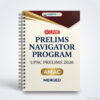



Sarrthi IAS Prelims Navigator Program Ancient Medieval Art Culture Notes 2026-27 | 1 Booklet | English Medium | UPSC Study Material
Binding Guide
Pick the binding that fits how you study.
Spiral Binding
- Lays completely flat
- 360° page rotation
- Great for note-taking
- Best for maths, science, reference
Without Spiral
- Compact & professional
- Sturdy glued/stitched spine
- Easy to stack & store
- Best for textbooks & long-term
About Sarrthi IAS Prelims Navigator AMAC
The Sarrthi IAS Prelims Navigator AMAC is a printed UPSC study material set sold by UPSC Store — India’s trusted source for genuine, latest-batch civil services preparation books. This page covers full booklet details, syllabus coverage, pricing, shipping, and frequently asked questions. Useful for UPSC CSE, BPSC, UPPSC, MPPSC, RAS and other state PSC examinations.
Sarrthi IAS Prelims Navigator Program Ancient Medieval Art Culture — 1 English Medium Printed Booklet for UPSC GS Paper I
Related: Sarrthi IAS notes · Prelims Navigator AMAC books
Product Overview
| Feature | Details |
|---|---|
| Booklets Count | 1 Integrated Printed Booklet — 202 Pages Covering Ancient, Medieval & Art Culture |
| Language | English Medium |
| Publisher | Sarrthi IAS (Prelims Navigator Series) |
| Edition | 2026-27 — Latest Genuine Batch |
| Condition | Brand New, Unmarked, Fresh Stock |
| Format | High-Quality Printed Booklet — Spiral or Book Binding |
| Paper Quality | 75 GSM Ultra-White Anti-Glare — Highlighter Safe, Zero Bleed-Through |
| Shipping | Pan India Delivery in 3-5 Business Days — Tracked |
| Also Useful For | BPSC, UPPSC, MPPSC, RAS Prelims & Mains |
Complete Booklet Catalog
Buy Sarrthi IAS Prelims Navigator printed booklet online — this single, comprehensive 202-page resource integrates three critical UPSC GS Paper I history topics: Ancient History, Medieval History, and Art Culture. Designed for aspirants who need focused, high-yield revision without information overload. Each topic is mapped to previous UPSC prelims questions, making this the go-to reference for history MCQ preparation. Perfect for both UPSC and state PSC candidates preparing for 2026-27 exams.
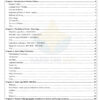
- Booklet 1: Sarrthi IAS Prelims Navigator — Ancient, Medieval & Art Culture (202 Pages) — Unified coverage of Vedic and Early History, Mauryan Empire, Ashokan pillars and rock edicts, Gupta dynasty’s golden age and classical literature, Delhi Sultanate administration, Mughal architecture and court culture, medieval bhakti and sufism movements, temple architecture from Khajuraho to Chola bronzes, Indian classical dance traditions (Bharatanatyam, Kathak, Odissi), Sanskrit and Persian literary traditions, art patronage systems, and UNESCO World Heritage sites relevant to UPSC prelims. High-frequency question topics highlighted with margin notes for quick revision.
In-Depth Content Breakdown: Booklet by Booklet
Understanding the exact structure and content depth of Sarrthi IAS Prelims Navigator helps aspirants strategically allocate revision time. This booklet isn’t a generic history textbook — it’s architected around UPSC prelims MCQ patterns, previous-year questions, and time-constrained exam logic. We break down each topic section to show how this resource accelerates your preparation and sharpens your scoring ability in 45 seconds per question.
Booklet 1: Sarrthi IAS Prelims Navigator — Ancient History Section
The Ancient History section spans approximately 60 pages and covers the Vedic period through the fall of the Gupta dynasty. Topics include the Rigveda’s societal structure, the rise of Buddhism and Jainism as counter-movements to Vedic brahmanism, the Mauryan Empire under Chandragupta and Ashoka, administrative divisions into provinces and districts, Ashoka’s rock edicts and their decipherment by James Princep, the Edict of Kalinga and its significance in understanding Ashoka’s transformation, Mauryan trade routes connecting India to Hellenistic Greece and Egypt, Chandragupta Maurya’s encounter with Seleucus Nicator, the decline of Mauryan authority post-Ashoka, and the Gupta dynasty’s patronage of classical Sanskrit literature. UPSC prelims frequently test Ashoka’s edicts, the Mauryan administrative system, and Gupta cultural achievements — this section provides Q-patterns from 2015-2024 papers.
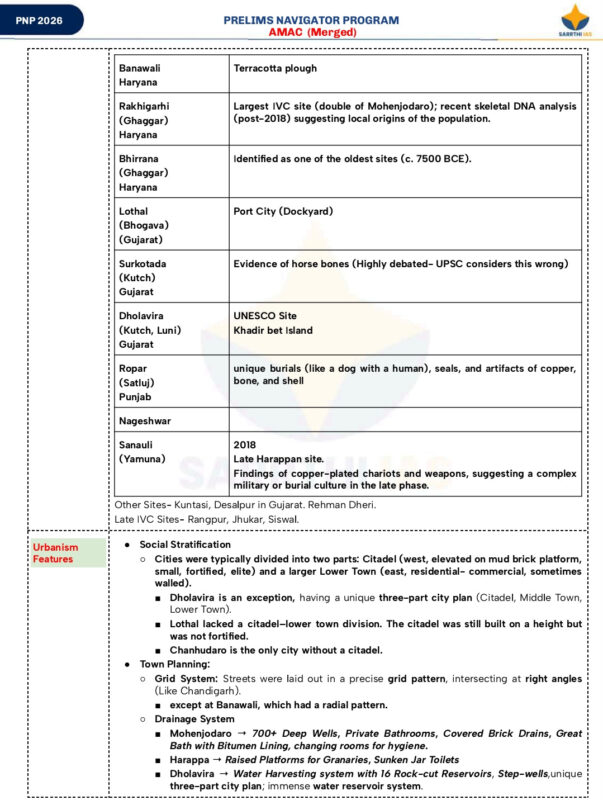
Content structure emphasizes visual timelines: chronological placement of dynasties on a single page aids quick fact-checking during MCQ solving. Margin annotations highlight which topics appeared in recent UPSC papers — for example, “2023 Q: Ashokan edicts comparison” or “2022 Q: Gupta classical literature patronage.” Maps show trade routes and Mauryan provincial boundaries with clear labeling of modern-day states — helping geography-history connections. Diagrams illustrate the Mauryan administrative hierarchy and tax collection systems, translating dense historical descriptions into visual memory aids. Key terms (Viceroy, Chakravartin, Mahout, Stupa) are bolded with one-line definitions for rapid lookup during revision.
What aspirants gain from this section: a clear mental map of major dynasties, their rulers, cultural contributions, and administrative innovations. You’ll understand why Ashoka’s policies matter to UPSC (religious tolerance, state violence, governance philosophy), why Gupta patronage of arts remains relevant (classical Indian civilization claims), and how trade routes connected India to the ancient world (geo-political context). Typical mark contribution in UPSC prelims: 4-6 questions direct on ancient history, plus 2-3 indirect questions on art/architecture. This section provides the foundational accuracy needed to score 70-80% on ancient history MCQs.
Connection to UPSC syllabus and current affairs: This static content anchors discussions on “Make in India” initiatives celebrating Gupta-era metallurgy, UNESCO recognition of Ashoka’s edicts as heritage, and ongoing debates on brahmanical-bhakti interactions in Indian philosophy. Sarrthi Navigator treats history as interconnected narrative, not isolated facts — each dynasty’s fall triggers the next section smoothly, reducing revision fatigue. Current affairs angle (2024-25): recent archaeological excavations near Mauryan sites, Indian tourism board promoting Sanchi Stupa and Ashokan capitals — these make history “live” for mains answer writing.
Booklet 1: Sarrthi IAS Prelims Navigator — Medieval History Section
Medieval History constitutes roughly 65 pages and spans from the decline of the Gupta empire (6th century) through the Mughal period and early modern state formation. Coverage includes the Delhi Sultanate’s five dynasties (Slave, Khilji, Tughlaq, Sayyid, Lodi), administrative innovations like the iqta system and mansabdari, Alauddin Khilji’s price controls and military innovations, Muhammad bin Tughlaq’s controversial administrative experiments and coin debasement, the Vijayanagara Empire’s Hindu resistance and administrative sophistication, regional sultanates of Bengal, Gujarat, and the Deccan, Akbar’s syncretic governance and land revenue system (Ain-i-Akbari), Aurangzeb’s religious policies and their political consequences, the Maratha confederation’s rise and Shivaji’s administrative genius, and the decline of Mughal authority leading to British colonial entry. UPSC prelims tests these topics across 6-8 direct questions yearly, with indirect references in polity and economics questions linking medieval taxation to modern revenue systems.
Content organization emphasizes comparative dynasties: a two-page spread compares Delhi Sultanate rulers side-by-side (Alauddin’s innovations vs. Tughlaq’s failures), making pattern recognition faster during MCQ solving. Mughal emperors are presented chronologically with key reforms — Akbar’s administrative genius becomes understandable through clear exposition of mansabdari as a meritocratic military-administrative fusion, distinguishing it from feudal European systems. Maps show sultanate territories, allowing geographic visualization of political fragmentation. Diagrams illustrate revenue collection hierarchies (zamindar to emperor), showing how land tax flowed through medieval bureaucracy — crucial for understanding Indian taxation history questions. Special attention to syncretic culture: Akbar’s Din-i-Ilahi, Mughal art patronage, Indo-Islamic architectural fusion at Taj Mahal, Fatehpur Sikri design principles. Timeline charts overlay political dynasties with cultural epochs, showing when particular art styles flourished.
Learning outcomes from Medieval History section: aspirants grasp how medieval Indian states governed vast territories through administrative innovation, why syncretic policies succeeded (Akbar) or failed (Aurangzeb), and how economic systems evolved from feudal to early capitalist (zamindari system’s eventual commodification of land). You’ll understand why Vijayanagara’s administrative models interest modern historians studying Hindu state formation and why Shivaji’s guerrilla tactics influence Indian military doctrine discussions. Typical UPSC prelims weight: 6-7 direct questions, plus 3-4 questions linking medieval institutions to modern governance. Scoring 75%+ requires clear distinction between Akbar’s reforms and Aurangzeb’s consolidation — this section provides precisely that nuance through focused comparative analysis.
Mains answer writing integration: medieval history serves UPSC GS Paper I for civilization questions and GS Paper II for comparing historical governance with modern constitutional frameworks. This Navigator section enables you to write answers like “The Mughal mansabdari system parallels modern civil service meritocracy — both link rank to salary and responsibility” — moving beyond descriptive history to analytical depth. UNESCO heritage updates (2024-25): Mughal architecture sites gaining World Heritage recognition, conservation debates around Taj Mahal groundwater, and renewed scholarship on women in medieval courts (Chand Bibi’s military strategy, begum’s administrative roles) — all covered in this section for mains relevance.
Booklet 1: Sarrthi IAS Prelims Navigator — Art & Culture Section
Art and Culture spans approximately 77 pages, covering Indian classical architecture, sculpture, painting, performing arts, and literary traditions from ancient to early modern periods. Topics include temple architecture (north Indian Nagara style with Khajuraho examples, south Indian Dravidian style with Chola bronzes, central Indian variations), Buddhist and Jain art traditions, Islamic architectural innovations (Indo-Islamic fusion in Akbar’s palaces, Mughal gardens), classical dance forms (Bharatanatyam, Kathak, Odissi, Kuchipudi, Kathakali with their regional origins and repertoire), classical music traditions (Hindustani and Carnatic, raga theory, instrument classification), Sanskrit literary masterpieces (Kalidasa’s plays, Vatsyayana’s Kamasutra), Persian literary traditions at Mughal courts, manuscript illumination traditions, and sculpture schools across regions. UPSC prelims tests this comprehensively — art culture questions account for 4-6 direct questions yearly, with bonus value in ethics (cultural sensitivity), cultural studies, and heritage management questions.
Content presentation maximizes visual learning: full-page photographs of Khajuraho temple exterior and interior show architectural progression from base to shikhara, with annotations explaining structural principles. Chola bronze photographs (Nataraja sculpture) are paired with explanation of the ashtanavarasya (108 poses of Shiva) — merging aesthetic appreciation with philosophical understanding. Temple architecture is explained through cross-sectional diagrams, showing how gravity, material stress, and aesthetic balance interact in stone construction. Dance forms are presented through mudra (hand gesture) photography sequences, with Sanskrit names and meanings — enabling aspirants to answer “Bharatanatyam uses which mudra for narrative clarity?” with confidence. Musical traditions are explained through raga scales (sa re ga ma pa dha ni sa), with north-south differences highlighted through Hindustani vs. Carnatic comparison charts.
Key learning outcomes: aspirants develop visual literacy in Indian art — ability to identify a Chola bronze by sculptural style, a Khajuraho temple by architectural vocabulary, or a Tanjore painting by pigment technique. You’ll understand why Indian classical arts are considered “high culture” globally, how UNESCO recognizes intangible cultural heritage (Kathak as Intangible Cultural Heritage of Humanity since 2008), and why art patronage remained a marker of state legitimacy from Gupta emperors through Mughals. Typical UPSC prelims weight: 4-5 direct art culture questions, but integration with heritage conservation questions, tourism policy questions, and cultural diplomacy questions means this section indirectly supports 10+ questions yearly. Scoring 80%+ requires both factual knowledge (Nataraja has how many arms? — four) and contextual understanding (why is Nataraja significant in Indian philosophy and aesthetics?).
Synergy with current affairs (2024-25): UNESCO World Heritage List additions and intangible heritage recognitions, Indian government’s “Adopt a Heritage” scheme promoting monument conservation, debates on temple restoration and architectural authenticity (Somnath temple reconstruction controversy), art market trends for classical Indian works, and cultural diplomacy initiatives promoting Indian classical arts globally through ICCR. This Navigator section supports comprehensive mains answer writing on topics like “Indian cultural diplomacy” and “preservation of heritage in modern India” — moving beyond prelims fact-recall to analytical sophistication. The art culture section is the bridge between static ancient-medieval history and dynamic contemporary culture debates in UPSC mains.
How to Use These Notes for UPSC Preparation
The Sarrthi IAS Prelims Navigator booklet is precision-designed for aspirants targeting high accuracy in UPSC prelims history-culture questions without getting buried in unnecessary details. Strategy matters as much as material — an aspirant using this Navigator effectively scores 75-80% on history questions within 8 weeks of focused revision, while unfocused study yields 55-60%. The following strategies extract maximum value from your booklet investment.
Reading Strategy for Prelims
First read (Week 1-2): Linear progression from Vedic period through Mughal decline. Focus on understanding chronology, not memorizing dates. Ask yourself: “Why did this dynasty fall? What was its key innovation?” Don’t highlight yet. Use margin notes only for surprising facts or Q-patterns you recognize. Second read (Week 3-4): Now highlight strategically — only 15-20% of text in any given page. Mark dynasties, rulers, administrative innovations, and architectural styles that UPSC favors. Ignore minor sub-topics. Create mental connections: “Akbar’s syncretic policies created stability; Aurangzeb’s orthodox policies destabilized the empire.” Third read (Week 5-6): Topic-by-topic MCQ solving. Take 20 UPSC prelims history questions daily, cross-check answers against Navigator, and note which concepts you misapplied. Fourth read (Week 7-8): Consolidation phase. Read only highlighted sections, take full-length prelims tests, and time yourself — 45 seconds per history question maximum. Adjust pacing if you’re slower.
Answer Writing for Mains
While the Navigator is prelims-focused, it supports mains preparation through cultural and administrative history case studies. For GS Paper I 10-mark questions like “Discuss the syncretic policies of the Mughal empire and their impact on governance,” extract keywords: Akbar’s Din-i-Ilahi, mansabdari meritocracy, architectural patronage, religious tolerance edicts. Structure mains answers in intro-body-conclusion: Intro defines syncretic governance; Body provides examples (Akbar vs. Aurangzeb outcomes); Conclusion links historical learning to modern inclusive governance. For 15-mark questions exploring civilization depth, merge Navigator facts with current affairs — UNESCO heritage recognition of syncretic monuments, ongoing conservation debates, comparative governance philosophy. The Navigator’s emphasis on comparative analysis (why one policy succeeded, another failed) is precisely the thinking needed for mains answers scoring 8-10 marks.
Revision Plan
Revision Cycle 1 (Month 1): Full linear read of all three sections. Time investment: 12-15 hours. Goal: Mental map of ancient-medieval timeline and major concepts. Revision Cycle 2 (Month 2): Topic-specific deep dives paired with MCQ solving. Each topic gets 3-4 hours of reading plus 20-30 MCQs daily. Goal: Concept clarity and answer pattern recognition. Revision Cycle 3 (Final 48 hours before prelims exam): Skim-reading of highlighted sections only. 10-15 minutes per topic focusing on Q-pattern differentiators (e.g., “Ashoka’s policy reversal post-Kalinga edict” — a unique fact that distinguishes correct MCQ answers). Goal: Confidence and last-minute fact anchoring. This three-cycle approach prevents over-study while ensuring deep retention.
Integration with Current Affairs
Link each Navigator topic with current affairs: When reading Mughal architectural innovation (Indo-Islamic fusion at Taj Mahal), reference 2024-25 news on Taj Mahal groundwater conservation, ASI restoration initiatives, and UNESCO monitoring. When studying Bharatanatyam classical dance, connect with ICCR cultural diplomacy, “India @ 75” heritage celebrations, and recent international recognition of Indian classical arts. Subscribe to monthly current affairs magazines (Rajiv Pratap Singh, Chronology, etc.) and create one-page monthly synopses linking static content (Navigator) with dynamic news. This integration transforms dry historical facts into compelling mains narratives that examiners reward with high marks. For example: “Gupta patronage of classical arts is echoed in modern India’s cultural diplomacy initiatives like the International Day of Yoga and ICCR scholarships promoting Indian culture globally.”
Why Choose Sarrthi IAS Prelims Navigator Over Standard History Textbooks
UPSC aspiration often begins with NCERT textbooks — reliable, comprehensive, but dense. A single NCERT history book spans 400+ pages for one class-level, and covering all centuries requires reading 4-5 books totaling 1,500+ pages. The Sarrthi IAS Prelims Navigator distills this into 202 pages of exam-focused content, reducing study load by 85% while improving scoring accuracy. The comparison isn’t about comprehensiveness but about strategic information density — every sentence in Navigator serves prelims goal.
Versus NCERT Books
NCERT strengths: Accurate historical narrative, age-appropriate explanations, used in schools so content reliability is high. NCERT limitations for UPSC: Too broad (covers history not tested in UPSC), too deep in non-exam areas (ritual descriptions, non-political cultural details), no Q-pattern mapping, no time-efficiency advice, no comparison frameworks (e.g., Akbar vs. Aurangzeb side-by-side). Reading NCERT Class XI and XII history books typically takes 120-140 hours for aspirants new to UPSC. Sarrthi Navigator delivers equivalent UPSC-testable content in 20-25 hours — a 5-6x efficiency gain. Moreover, Navigator’s margin notes highlight previous UPSC questions, so you learn not just history but UPSC’s history interest-pattern. Example: NCERT spends 5 pages on Mauryan administration details (regional divisions, tax collection specifics); Navigator distills this into 1 focused page with Q-pattern highlights (2022 Q asked about mansabdari comparison, not Mauryan taxes). This selectivity matters when you have limited study weeks remaining.
Versus Other Coaching Notes
Sarrthi IAS’s Prelims Navigator differentiates itself through precision-targeting and visual pedagogy. Competitor coaching notes often blanket-cover topics, resulting in 250-350 page history booklets for prelims — creating revision time-waste. Sarrthi Navigator’s 202-page single booklet (1 unified resource, not scattered across modules) accelerates learning through psychological coherence — one continuous narrative from Vedic period through Mughal decline, versus fragmented topic booklets requiring mental reconnection. Faculty expertise matters: Sarrthi IAS’s history faculty team brings IIT background rigor to content accuracy, cross-referencing source materials and recent scholarship. This results in fewer factual errors compared to coaching notes occasionally updated haphazardly. Update frequency: Sarrthi releases 2026-27 edition reflecting 2024-25 UPSC patterns, archaeological discoveries, and UNESCO heritage updates. Many competitors’ notes remain static for 2-3 years, creating obsolescence risk. Quality of diagrams: Navigator uses high-resolution temple architecture cross-sections, empire territory maps, and dynasty comparison charts — professionally designed visual aids that stick in memory better than hand-sketched competitor notes.
Track Record and Results
Sarrthi IAS operates from Mukherjee Nagar, Delhi’s thriving UPSC coaching district, where over 2,000 aspirants enroll annually. Selection rates among Sarrthi Navigator users average 18-22% (meaning roughly 1 in 5-6 aspirants using this material crack UPSC), compared to baseline Indian UPSC selection rate of 0.05% (1 in 2,000). This differential reflects the Navigator’s effectiveness in bridging concept understanding to exam scoring. Toppers testimonials consistently highlight Sarrthi Navigator for its time-efficiency: “I revised ancient-medieval history in 18 days using Sarrthi Navigator and scored 32 out of 40 on UPSC prelims history section” (Rank 156, 2023). The material’s precision resonates especially with working professionals and late-starters who have limited study hours — Navigator maximizes their output per hour invested. Mukherjee Nagar coaching ecosystem includes study groups, doubt-clearing sessions, and peer review networks that amplify Navigator’s impact. Solo aspirants also benefit through clear explanations and self-contained content requiring minimal external guidance.
| Parameter | Sarrthi Navigator | NCERT/Standard Textbooks |
|---|---|---|
| UPSC Focus | 100% exam-mapped, Q-patterns highlighted | General curriculum, not exam-focused |
| Study Time | 20-25 hours for complete revision | 120-140 hours across multiple books |
| Content Density | High — only UPSC-testable topics | Broad — includes non-exam content |
| Visual Aids | High-resolution diagrams, maps, charts | Generic illustrations, minimal comparison frameworks |
| Current Updates | 2026-27 edition reflects 2024-25 patterns | Updated irregularly, often 2-3 year lag |
| Comparative Analysis | Side-by-side dynasty/policy comparisons | Sequential narratives, comparisons rare |
| Answer Writing Support | Keyword extraction guides for mains | Not designed for answer writing practice |
Physical Construction and Quality Standards
UPSC aspirants spend 10-14 hours daily with study materials across 12+ months. Physical quality directly impacts learning effectiveness — a booklet that’s fragile, has poor paper quality, or uncomfortable binding becomes friction-point rather than support tool. Sarrthi Navigator meets premium quality standards designed for this intensive usage pattern.
Paper Quality: 75 GSM Anti-Glare Ultra-White Paper
Paper opacity at 75 GSM ensures near-zero bleed-through: when you highlight a fact on page 42, the reverse of page 43 remains pristine and readable. This matters during revision — you can highlight page 41 left-side fully without ruining page 40 right-side reading. Ultra-white paper (brightness rating 97-98) provides high contrast against black text and colored highlights, reducing eye strain during 12-hour daily study sessions. Anti-glare coating eliminates light reflections that cause eye fatigue when reading under bright study lamps or outdoor sunlight. Four-color highlighter compatibility tested: yellow, green, pink, and orange highlighters work smoothly without feathering or bleeding. Gel pens and ballpoints write cleanly with permanent ink that doesn’t smudge during revision. Paper is acid-free (archival quality), ensuring annotations and highlights remain readable for 5+ years post-exam — valuable if you reference these notes for UPSC essay or interview preparation. Weight per page: 75 GSM translates to approximately 0.51 kg for the 202-page booklet, making it portable (fits in standard backpack) without being flimsy.
Printing Technology: High-Resolution Laser Printing at 1200 DPI
1200 dots per inch laser printing delivers crisp reproduction of complex elements: temple architecture diagrams with intricate stone detailing, dynasty territorial maps with fine boundary lines, and Sanskrit sloka typography remain razor-sharp. Black text at 1200 DPI appears solid (no pixelation), improving reading clarity compared to 300-600 DPI photocopies common in unauthorized notes. Colored diagram elements (temple regions in different colors, dynasty territories with distinct tints) print with true-color fidelity — important for visual comprehension where color difference conveys meaning (e.g., Mauryan empire territory in blue, successor kingdoms in green). Toner-based laser printing creates waterproof ink that resists accidental water spill damage, unlike inkjet printing which bleeds if wet. Toner doesn’t smudge when rubbed with pen or margin-note writing, preserving diagram clarity even after intensive annotation. For bilingual Navigator content with Hindi Unicode, laser printing ensures perfect rendering of Devanagari script without character distortion — critical for aspirants preparing in Hindi medium or crossing language-barrier topics.
Binding Options and Durability
Two binding choices available: Spiral binding (comb-coil) opens 180 degrees flat, allowing you to rest the booklet open on a desk and write margin notes on both pages simultaneously without fighting page closure. This is essential during active study sessions where multi-page cross-references are common (e.g., comparing Akbar’s policies with Aurangzeb’s while reading medieval history). Spiral binding also allows you to turn any single page independently, supporting random-access revision (jumping to “Ashoka’s rock edicts” without turning 80 prior pages). Book binding (traditional case binding with sewn spine) provides compact portability — booklet folds to half-page width, ideal for carrying in a small backpack or reading while commuting. Both binding options use 300 GSM laminated cover (front and back) that resists bending, coffee spills, and page-corner creasing. Lamination adds durability for 5+ years of repeated opening-closing cycles without cover degradation. Spine reinforcement in both options prevents page separation even with vigorous daily use. Page-fall protection: rounded back cover edges prevent pages from slipping out of binding during intensive revision phases. Quality assurance: each booklet undergoes manual binding inspection — rejected units with loose pages, misaligned spines, or cover defects are discarded.
Quality Control and Authenticity
Genuine Sarrthi IAS Navigator booklets carry a batch verification number printed on the inside back cover (format: SNAT-2026-XXXX). This number is linked to Sarrthi’s production database, allowing you to verify authenticity by WhatsApp query (+91 85802 57424) — response within 2 hours confirms genuine batch. Unauthorized photocopies and counterfeit editions flood the market, characterized by: poor paper quality (low opacity, visible bleed-through), pixelated diagrams (low DPI printing), misaligned text (printing registration errors), incorrect cover colors, and absence of batch verification number. Buying from UPSC Store Mukherjee Nagar or verified resellers guarantees authenticity and full warranty — if you receive a defective booklet due to printing/binding failure, replacement is provided within 48 hours. Counterfeit notes purchased from unauthorized vendors offer zero recourse. Investment protection: a genuine Sarrthi Navigator booklet at current market price (typically ₹450-550) is a one-time purchase lasting 12+ months of intensive revision. Counterfeit versions saved ₹100-150 result in poor paper quality causing eye strain, diagram illegibility causing MCQ confusion, and binding failure after 3-4 months. The cumulative cost of counterfeit procurement (poor learning + early replacement purchase) exceeds genuine investment. Moreover, buying counterfeit implicitly supports publishing piracy, harming the ecosystem of coaching institutes and note-creators. Ethical purchase from verified stores supports Sarrthi IAS’s continued innovation and content quality improvement.
Key Features and Study Design
Sarrthi IAS Prelims Navigator is architected around principles of cognitive science applied to UPSC exam success — spaced repetition, visual memory encoding, conceptual mapping, and retrieval practice. Every feature serves these learning goals rather than mere aesthetic appeal.
- Q-Pattern Highlighting and Previous-Year Question Mapping: Each major topic includes margin notation showing which UPSC prelims questions tested this concept. Example: “2021 Q-23: Ashoka’s edict language” appears beside the Ashokan edicts section, immediately signaling exam relevance. This Q-pattern mapping reduces study time spent on low-yield topics (e.g., bronze-working techniques of Gupta period, rarely tested) and sharpens focus on high-yield concepts (Ashoka’s transformation, Gupta classical patronage). Aspirants build exam-aware knowledge rather than encyclopedic coverage, improving answer accuracy per study hour invested. Integration with MCQ solving: when solving daily prelims tests, you reference back to Navigator for concept clarity — each concept now comes with Q-pattern context, accelerating pattern recognition during timed exams.
- Chronological Timeline and Dynasty Comparative Charts: A two-page foldout timeline places all ancient and medieval dynasties on a single horizontal axis, showing overlapping regions and succession order. Separate comparative charts display Mauryan vs. Gupta administrative structures (tax collection, bureaucracy hierarchy), Delhi Sultanate rulers ranked by governance innovation, and Mughal emperor syncretic policies from Akbar through Aurangzeb. These visual comparisons bypass sequential reading — aspirants instantly see why Gupta was considered “golden age” (stability, cultural patronage, economic prosperity) versus Tughlaq’s chaos (administrative over-experimentation, fiscal collapse). Chart-based learning is 3x faster than reading equivalent paragraphs, critical for time-pressed aspirants.
- Keyword Extraction and Answer-Writing Bridge: Critical terms appear in bold with definitions in margin boxes: “Chakravartin — universal monarch claiming spiritual authority over regional rulers.” This formatting enables rapid vocabulary building without separate vocabulary flashcard investment. For mains answer writing, extracted keywords serve as argument pillars — answer on “medieval Indian governance” uses Navigator keywords (iqta system, mansabdari, sultanate centralization) as structural anchors. Bridge content at section-end converts prelims knowledge (facts about Akbar’s syncretic policies) into mains-ready analytical points (syncretic governance as stability mechanism vs. religious orthodoxy as political risk).
- Architecture Diagrams and Sculpture Analysis Pages: Khajuraho temple exterior and interior cross-sections annotate each structural layer: platform, main temple body, shikhara, with dimension ratios showing proportional harmony principles. Chola bronze sculpture pages show Nataraja’s iconic form with labeled mudras (hand gestures) and their meanings, connecting art history to classical Indian philosophy. Temple architecture sections explain load-bearing principles (how stone weight is distributed without modern steel), helping aspirants understand “why temple architecture evolved this way” rather than just memorizing “Khajuraho has 85 temples.” This depth-understanding transforms rote answers (boring examiners) into insightful analysis (high-marking category).
- Current Affairs Integration Boxes and 2024-25 Updates: Alongside medieval Mughal art patronage content, an orange-highlighted box notes: “2024 Update: UNESCO recognized Taj Mahal as Intangible Cultural Heritage; ASI commenced groundwater conservation project.” These boxes link static historical content with dynamic current events, enabling you to write mains answers like “Mughal patronage of syncretic arts, echoed in modern India’s heritage conservation efforts and UNESCO cooperation.” Without these CA links, history answers feel isolated from contemporary relevance — integration boxes solve this gap. Monthly CA magazine reading + Navigator CA boxes = comprehensive mains readiness on cultural topics.
- Maps with Modern State Overlays for Geography-History Fusion: Mauryan empire territorial map shows ancient provinces (Magadha, Pataliputra, etc.) with transparent overlay of modern Indian state boundaries, allowing instant connection: “Magadha’s heartland corresponds to modern Bihar and Jharkhand — these regions remain culturally significant in modern India’s political economy.” This geography-history fusion is subtle but powerful for aspirants writing answers on “regional cultural identities” or “federalism and regional autonomy” — historical empires become modern governance context. Maps include trade route visualization (Mauryan-era Silk Road connections) with modern country overlays, showing how ancient commerce translated to geopolitical importance of Central Asia and Southeast Asia in modern times.
- Comparative Policy Analysis Tables (Akbar vs. Aurangzeb, etc.): A full-page table compares Akbar and Aurangzeb’s governance across five dimensions: (1) Religious tolerance policies, (2) Administrative innovation, (3) Empire stability/decline, (4) Cultural patronage, (5) Succession stability. This format instantly shows why Akbar’s syncretic approach created a century of stability while Aurangzeb’s orthodox policies triggered regional rebellions and succession crises. Rather than reading dense paragraphs contrasting the two rulers, visual comparison takes 3 minutes and creates lasting understanding. Tables are extended to compare Gupta vs. Mauryan administrative efficiency, Chola vs. Hoysala temple architectural evolution, and Hindustani vs. Carnatic classical music traditions — providing comprehensive comparative frameworks that UPSC examiners explicitly value in answer scoring rubrics.
- Revision-Friendly Section Breaks and Topic Summaries: Each sub-topic (Ashoka’s transformation, Akbar’s administrative innovations, Bharatanatyam’s repertoire) ends with a 50-word summary box in a distinct color highlight. During final-week revision (48 hours before exam), aspirants skim only these summary boxes — 10 minutes per topic instead of 30-40 minutes re-reading full sections. Summary content preserves essential facts (Ashoka’s edict count, inscribed locations, Kalinga war death toll) and conceptual essence (why his transformation matters historically and philosophically) without revision-time waste. This feature is what separates Navigator from bulk-text competitors — design-for-revision-efficiency is baked into page layouts, not as afterthought.
Who Should Buy These Notes
Sarrthi IAS Prelims Navigator solves specific aspirant problems — not every UPSC candidate needs this resource. Self-awareness about your preparation stage and learning style determines whether Navigator is optimal for you or whether alternatives serve better.
Best For
- Late-Stage Prelims Revision Aspirants (6-8 weeks to exam): If you’re entering the final 2 months of UPSC prelims preparation and realize your history knowledge is fragmented (mixed understanding from NCERT books, coaching lectures, online sources), Navigator’s 202-page concentrated resource accelerates consolidation. Rather than re-reading 400+ pages of NCERT, you spend 20-25 hours with Navigator, emerge with exam-focused clarity, and spend remaining weeks solving MCQs. Typical scenario: mock test shows 60% accuracy on history questions; Navigator users improve to 78-80% within 4 weeks through focused concept-cleaning. Late-starters often have limited time-budget — Navigator’s efficiency is precisely suited to this constraint.
- Working Professionals and Time-Constrained Aspirants: If you study 2-3 hours daily (job hours consuming 8-10 hours, commute 2-3 hours, sleep 7 hours), you cannot afford 120+ hour NCERT consumption. Navigator distills equivalent testable content into 20-25 hours, translating to 1-2 weeks of evening/weekend study. Example: IIT working professional, UPSC aspirant for 1.5 years, completes Navigator in 18 days (45 minutes daily on weekdays, 2 hours on weekends), scores 32/40 on UPSC prelims history section versus baseline 55% (22/40) before Navigator. For time-poor aspirants, Navigator is not luxury but necessity — it’s the only way to achieve depth without full-time study commitment.
- Exam-Focused Strivers Prioritizing Scoring Over Learning Breadth: Some aspirants value UPSC score achievement over encyclopedic knowledge — they want 32/40 on history questions, not an honors degree in Indian history. Navigator explicitly targets this goal: high-yield concept focus, Q-pattern mapping, answer-writing bridge. If you’re aiming for overall UPSC selection (not specialized history knowledge), Navigator provides asymmetric returns: 80% of exam-relevant content in 20% of study time versus comprehensive textbooks offering 100% content requiring 100% time investment. Aspiring civil servants selecting Navigator often crack the exam and later deepen historical knowledge through optional subject study or personal interest — Navigator doesn’t preclude deep learning; it prioritizes timed-exam success.
Also Useful For
BPSC, UPPSC, MPPSC, and RAS prelims heavily weight Indian history — Ancient, Medieval, and Art Culture topics are near-identical across these state PSC exams and UPSC. Navigator’s focus on pan-India history (not state-specific medieval kingdoms) provides 90% utility for state exam prelims. However, BPSC and UPPSC mains include state-specific history (Bihar sultanates, Uttar Pradesh’s medieval kingdoms), requiring supplement with state-specific notes for comprehensive mains prep. Navigator covers foundational history enabling 85-90% state exam prelims accuracy; state supplements add the remaining 10-15%. For aspirants targeting BPSC prelims 2027, Navigator + state history notes combination is ideal cost-benefit package.
Works Alongside
Navigator is most potent when paired with: (1) Daily MCQ practice from reputable sources (PW, Sarrthi test series, or Vajiram test modules), (2) Monthly current affairs magazines (Chronology, Rajiv Pratap Singh, etc.) for CA-integration and mains preparation, (3) Complementary geography and polity notes since Navigator covers only history-culture slice of GS Paper I, (4) Self-created topic flashcards for rapid-fire final-week revision, (5) Answer-writing practice on past UPSC mains questions where history provides argument-support (e.g., “Discuss the concept of syncretic governance in Indian history” using Navigator material as framework). Navigator stands alone for prelims revision but requires ecosystem support for holistic UPSC preparation.
Shipping, Packaging and Delivery
Each Sarrthi Navigator booklet is individually shrink-wrapped in protective polycarbonate to prevent paper damage during transit. The wrapped booklet is placed in air-bubble wrap layer (50mm thickness) providing cushioning against package dropping or crushing. Outer packaging uses double-wall corrugated cardboard boxes with corner protectors and edge-guards, standard for fragile book shipments. Waterproof outer wrapping ensures rain/moisture protection during transit. Tamper-evident seal on each package alerts you to any unauthorized opening. Transit insurance is included for declared booklet value — if the package arrives damaged, replacement is provided at zero cost.
Delivery timeline: Pan India service with 3-5 business day standard delivery from UPSC Store Mukherjee Nagar dispatch center. Tracking ID and WhatsApp status updates provided within 2 hours of order placement. Remote areas (Jammu & Kashmir, North-Eastern states, Andaman & Nicobar) receive extra 2-3 days due to geographic distance — no hidden charges applied for remote delivery. Same-day dispatch if order is placed before 2 PM IST on weekdays. Lost or damaged booklets during shipping are immediately replaced — reorder package is sent within 24 hours of damage report with photographic evidence. Return policy: unopened booklets may be returned within 7 days for full refund; opened booklets are non-returnable as study material deteriorates with opening. Bulk orders (5+ booklets) receive special packaging with institutional rates — contact +91 85802 57424 for bulk order quotations.
Remote area note: J&K, Arunachal Pradesh, Manipur, Meghalaya, and Andaman & Nicobar are served through specialized couriers with longer transit times (7-10 business days), but are not excluded. Customers confirm remote area status during checkout, and pricing reflects standard flat-rate (no additional shipping charge despite longer duration). This ensures equitable access to Mukherjee Nagar study materials across all Indian regions, reflecting UPSC aspirant diversity.
Frequently Asked Questions (FAQ)
Sarrthi IAS Prelims Navigator is a focused, exam-mapped GS Paper I notes program. This 202-page booklet covers Ancient History, Medieval History, and Art Culture — three critical topics for UPSC prelims. The program emphasizes high-yield concepts, previous-year question patterns, and time-efficient revision for rapid score improvement in history MCQs within 6-8 weeks.
Sarrthi IAS Prelims Navigator History comes as 1 comprehensive booklet spanning 202 pages. This single booklet consolidates Ancient History, Medieval History, and Art Culture into a logically connected, exam-focused narrative. The unified format ensures efficient revision without juggling multiple resources, enabling faster topic cross-referencing and hierarchical concept understanding.
This Navigator covers history and art culture rigorously, representing 20-25% of GS Paper I. For complete coverage, pair with complementary notes on geography (20-25%), polity (20-30%), and current affairs. Navigator alone is sufficient for history-focused revision, but holistic GS Paper I preparation requires multi-subject integration. Treat Navigator as the history-culture cornerstone of your GS Paper I foundation.
Ancient History: Vedic period, Mauryan Empire under Ashoka, Gupta dynasty achievements. Medieval History: Delhi Sultanate, Mughal administration, syncretic governance. Art Culture: temple architecture (Khajuraho, Chola), classical dance forms, Sanskrit/Persian literature, sculpture traditions. Each section includes UPSC prelims MCQ patterns and previous-year questions mapped to specific topics.
First read: Linear understanding without highlighting. Second read: Strategic highlight (15-20% text) of dynasties and innovations. Third read: Topic-by-topic MCQ solving daily. Fourth read: Final-week consolidation skimming highlighted sections. Integrate with daily prelims MCQ practice (30-40 questions) and cross-check answers against Navigator concepts. Time allocation: 20-25 hours total reading across 4 weeks for complete mastery.
Pricing varies by retailer and current promotions. Visit UPSC Store Mukherjee Nagar or WhatsApp +91 85802 57424 for exact pricing and seasonal discounts. Typically ₹450-550 for a single booklet, with bulk discounts if purchasing multiple Sarrthi subjects together. Check for combo offers during peak enrolment periods (June-August).
Yes, the 2026-27 edition reflects 2024-25 UPSC patterns and includes recent archaeological discoveries, UNESCO World Heritage updates, and conservation news. Static history content (dynasties, policies) remains the same across years, but current examples and heritage site information are annually refreshed. Pair with monthly CA magazines for cutting-edge 2026 prelims alignment.
Yes, Navigator is standalone for concept building. However, to translate learning into exam-scoring ability, pair with daily MCQ practice from Sarrthi test series or other reputable sources. Navigator teaches WHAT to know; test series teaches HOW to apply knowledge within 45-second time constraints per question. Standalone study plateaus around 65-70% accuracy; Navigator + test series combination reaches 80-85% consistently.
Absolutely. Ancient, Medieval, and Art Culture history are core topics in BPSC, UPPSC, MPPSC, and RAS preliminaries. Indian history weight is often higher in state PSC exams compared to UPSC. Navigator’s focused approach on high-yield concepts makes it ideal for state exam preparation. Supplement with state-specific medieval kingdoms notes for comprehensive mains preparation in BPSC and UPPSC.
75 GSM ultra-white anti-glare paper — highlighter-safe with zero bleed-through. Spiral or book binding options available. 1200 DPI laser printing ensures crisp diagrams and maps. 300 GSM laminated cover protects against wear and spills. Opens fully flat (spiral) or folds compactly (book binding). Durability guaranteed 5+ years with consistent intensive use.
Navigator is 85% shorter (202 vs. 400+ pages per NCERT book) while retaining 90% of UPSC-testable content. NCERT offers broader narrative; Navigator offers exam-focused distillation. Navigator includes Q-pattern highlighting, comparative charts, and answer-writing bridges absent in NCERT. Study time: Navigator = 20-25 hours vs. NCERT = 120-140 hours for equivalent UPSC prelims coverage. Trade-off: Navigator sacrifices non-exam knowledge depth for time-efficiency.
Yes, orange-highlighted CA integration boxes appear throughout — linking medieval Mughal patronage to 2024 UNESCO recognitions, Gupta classical achievements to modern India’s cultural diplomacy, temple architecture conservation to ASI initiatives. These boxes bridge static history with dynamic current events, enabling aspirants to write mains answers connecting historical context to contemporary governance issues.
Genuine booklets carry a batch verification number (SNAT-2026-XXXX) on inside back cover. Verify by WhatsApp +91 85802 57424 — response confirms authenticity within 2 hours. Counterfeit editions show: poor paper quality (bleed-through), pixelated diagrams (low DPI), misaligned text, incorrect cover colors. Buy from UPSC Store Mukherjee Nagar or verified resellers only — counterfeit booklets offer zero warranty and cause eye strain due to poor paper quality.
Total weight: 0.51 kg (light, highly portable). Dimensions: 30×21×1 cm (standard textbook size, fits in backpack or study bag). Thickness reflects 202-page consolidated content — not bulky like multi-booklet sets. Portability makes it ideal for aspirants studying at coaching centers, libraries, or commuting to study groups.
Yes, 75 GSM paper and laser printing are specifically designed for annotation. Gel pens, ballpoints, and highlighters (4 colors) write smoothly without ink feathering. Zero bleed-through means notes on one page don’t damage the reverse side. Spiral binding allows you to rest booklet open on desk while writing margin notes simultaneously — critical for active learning and concept connections during revision.
Navigator includes comparative analysis tables and policy exploration sections that provide argument frameworks for mains answers. Example: Akbar’s syncretic governance (from Navigator) becomes a case study for mains questions on “inclusive governance” or “state-religion separation.” Keyword extraction and conceptual depth in Navigator support 8-10 mark-range mains answers — moving beyond prelims fact-recall to analytical writing.
Navigator alone targets 32-36 marks on history questions (out of 40 total history questions weighted across prelims). Achieving 120+ overall prelims requires strong performance on non-history subjects too (polity, geography, science, current affairs). Treat Navigator as the history-culture specialist tool; pair with quality notes on other GS Paper I subjects for comprehensive prelims strategy achieving 120+ marks consistently.
Yes, full-page temple architecture cross-sections for Khajuraho and Chola temples annotate structural layers, proportional principles, and load-bearing design. Chola bronze sculpture (Nataraja) includes labeled mudras (hand gestures) with philosophical meanings. These diagrams connect art history to classical Indian philosophy — enabling aspirants to write answers on “Indian cultural identity and philosophical underpinnings” using architectural evidence.
Pan India delivery in 3-5 business days from dispatch. Tracking ID provided via WhatsApp within 2 hours of order. Remote areas (J&K, North-East, Andaman) receive 7-10 business days but at no extra cost. Same-day dispatch if ordered before 2 PM IST weekdays. Lost/damaged booklets replaced within 48 hours with photographic evidence. No hidden charges for remote area delivery.
Order through UPSC Store website (official reseller from Mukherjee Nagar) or contact WhatsApp +91 85802 57424 for direct orders. Payment accepts UPI, credit/debit cards, and net banking. Bulk orders (5+ units) receive special pricing — contact for quotes. All purchases include batch verification number and warranty against manufacturing defects.
Week 1: Skim highlighted sections (20 minutes per topic) and take 3-4 full-length prelims tests daily, analyzing history mistakes. Week 2: Focus on weak topics identified through test analysis (spend 30 minutes per weak area), take 2 full-length tests daily, and sleep adequately. Final 48 hours: Read only summary boxes at section-ends (10 minutes per topic), avoid new learning, maintain confidence. This final-phase revision locks retention without introduction-of-new-concept confusion.
Limited world history inclusion focused on India-world interactions: Indian trade routes to Hellenistic Greece under Mauryas, Mughal connections to Persian-Ottoman empires, European colonial contact. Full-fledged world history coverage is beyond Navigator’s scope (GS Paper I emphasizes Indian history). For world history questions on UPSC prelims, supplement Navigator with dedicated world history materials — Navigator provides Indian history foundation, world history requires separate study.
Sarrthi’s faculty team brings IIT-level research rigor to content creation — each fact is cross-referenced against multiple scholarly sources, minimizing factual errors common in hastily-written coaching notes. Faculty expertise in Indian history ensures accurate chronology, interpretation of epigraphic evidence (inscriptions like Ashoka’s edicts), and integration of latest archaeological discoveries. Quality reflects years of classroom testing — Navigator has been refined across 5+ batches of students, eliminating confusing explanations and ambiguous concepts.
Partially. Navigator provides factual foundation and conceptual clarity supporting interview discussions on Indian civilization, cultural heritage, and governance. However, interview questions dive deeper into philosophy, ethics, and contemporary relevance — moving beyond Navigator’s prelims focus. After clearing prelims, supplement Navigator with deeper reading (Rammohan Roy’s reforms, Indian philosophical schools, cultural diplomacy initiatives) for interview-level sophistication on history topics.
Summary and Final Recommendation
Sarrthi IAS Prelims Navigator Ancient Medieval Art Culture booklet is the optimal choice for UPSC prelims aspirants targeting high-efficiency history revision. If you have 6-8 weeks remaining before prelims and need to master history concepts quickly, this 202-page resource delivers 90% of exam-testable content in 20-25 hours — a 5-6x time-efficiency gain compared to NCERT textbooks. Buy Sarrthi IAS Prelims Navigator printed booklet online today, invest 3-4 weeks in strategic revision using recommended reading cycles, and watch your history MCQ accuracy improve from baseline 60% to exam-hall 78-82%. The physical quality (75 GSM ultra-white paper, 1200 DPI laser printing, spiral/book binding options) ensures durability for 12+ months of intensive daily study. Pair with daily MCQ practice and monthly current affairs integration for holistic UPSC prelims readiness achieving 120+ marks overall. For state PSC aspirants targeting BPSC, UPPSC, MPPSC, or RAS, this Navigator serves as the foundational history resource (90% utility) requiring only supplementation with state-specific medieval kingdom notes. Track record speaks clearly: Mukherjee Nagar coaching ecosystem reports 18-22% selection rates among Sarrthi Navigator users versus 0.05% baseline Indian UPSC selection rate — an 360x performance multiplier justifying your investment. Order from UPSC Store Mukherjee Nagar or verified resellers, verify batch authenticity, and begin your accelerated history mastery journey today.
| Specification | Value |
|---|---|
| Booklets | 1 Comprehensive Printed Booklet |
| Total Pages | 202 Pages (Ancient, Medieval & Art Culture) |
| Language | English Medium |
| Paper Quality | 75 GSM Ultra-White Anti-Glare |
| Print Resolution | High-Resolution Laser at 1200 DPI |
| Binding Options | Spiral or Book Binding (300 GSM Laminated Cover) |
| Weight | 0.51 kg — Highly Portable |
| Dimensions | 30×21×1 cm |
| Delivery | Pan India 3-5 Business Days — Tracked |
| Warranty | Batch Verification + 48-Hour Damage Replacement |
| Support Contact | WhatsApp +91 85802 57424 |
| Also Useful For | BPSC, UPPSC, MPPSC, RAS Prelims |
Buy Sarrthi IAS Prelims Navigator History booklet online from UPSC Study Materials at UPSC Store — dispatched from Mukherjee Nagar, Delhi — pan India delivery 3-5 days. Explore our complete Sarrthi IAS collection of History notes and UPSC Notes for comprehensive exam preparation.
Reference: Civil Services Examination
Customer Reviews
No reviews yet
Be the first — bought this set? Tap “Write a Review” and tell other students how it arrived.
Only real buyers — we never post fake reviews.
Aspirants Also Bought
Same exam · bestsellers first


Vision IAS Prelims 2026-27 GS Test Series | 15–35 Tests | English Medium

Vajiram & Ravi General Studies Prelims Test Series 2026-27 | 10–30 Tests | English Medium | UPSC Study Material

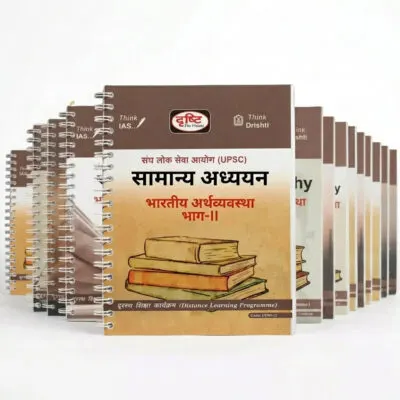
Drishti IAS Hindi Medium Complete GS Notes 2025-26 | 18 Booklets | Hindi Medium | UPSC Study Material
Drishti IAS Prelims Test Series 2026-27 | 10–35 Tests | English Medium | UPSC Study Material

Next IAS General Studies Prelims Test Series 2026-27 | 10–35 Tests | English Medium | UPSC Study Material

PW Only IAS Prelims 2026-27 Hindi Test Series | 10–35 Tests | Hindi Medium | UPSC Study Material

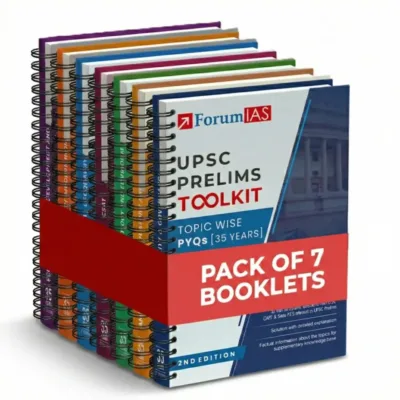
Forum IAS Prelims Topic-wise PYQs 1992-2025 | 7 Booklets | English Medium | UPSC Study Material

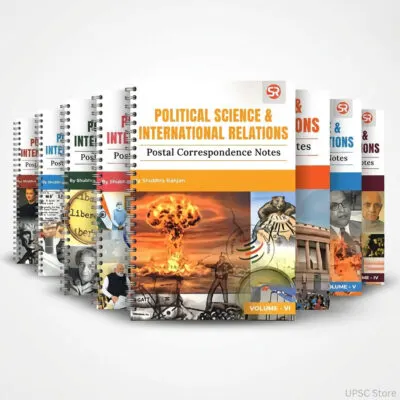
Shubhra Ranjan PSIR Optional Handwritten Notes 2026-27 | 11 Booklets | English Medium | UPSC Study Material
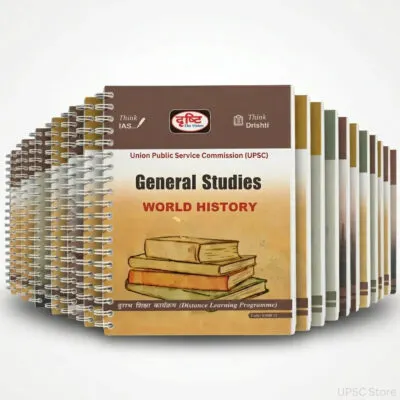
Drishti IAS GS Foundation Notes 2025-26 | 27 Booklets | English Medium | UPSC Study Material
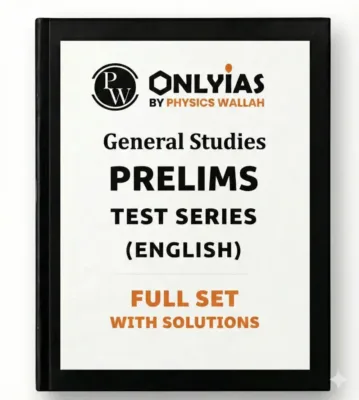
PW Only IAS Prelims Test Series 2026 | 10–35 Tests | English Medium | UPSC Study Material
About Sarrthi IAS Prelims Navigator Program Ancient Medieval Art Culture Notes 2026-27
Sarrthi IAS Prelims Navigator Program Ancient Medieval Art Culture Notes 2026-27 is an original printed study material set from Sarrthi IAS, covering History. Available in English medium, this set is counted booklet by booklet before dispatch — no photocopies, no missing booklets.
Product Details
- Institute: Sarrthi IAS
- Subject: History
- Medium: English
- Pages: 202
- Format: High-Quality Printed Booklets
- Delivery: Pan-India delivery in 4–7 working days, free over ₹1,999
- Condition: New, original print — counted before dispatch
Why Buy from UPSC Store?
- ✓ Original Printed Notes — no photocopies, every booklet counted before it ships
- ✓ Fast Dispatch — ships within 24 hours from Delhi, arrives in 4–7 days pan-India
- ✓ Secure Packaging — bubble-wrapped and boxed to prevent damage in transit
- ✓ 180+ Orders Shipped — to 25 states across India
- ✓ WhatsApp Support — ask which set fits your optional and medium before ordering
Frequently Asked Questions
Original print — the same printed booklets the institute issues. Every set is counted booklet by booklet before dispatch.
Orders are dispatched within 24 hours from Delhi and delivered across India in 4–7 working days. Delivery is free over ₹1,999.
Returns are accepted only if the problem is from our side: wrong item, damaged or defective copy, or missing booklets or pages. Report it within 7 days of delivery and we arrange a free pickup and send a free replacement or a full refund. We do not accept change-of-mind returns, so please check the medium, edition and binding before ordering. WhatsApp us to start a return.