
Vision IAS GS 2026-27

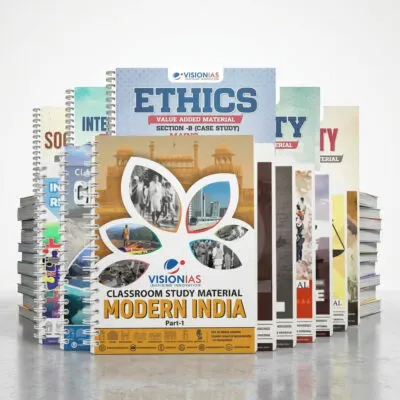
56 Booklets | UPSC Notes Study Material
₹6,599
📘 book-binding
🌀 spiral
Only 16 sets left
Selling fast (92 sold this week)
5% OFF Use UPSC5% (COD Available)
10% OFF Use UPI10 (UPI Only)
Secure Payment
Fast Delivery
Safe Packaging

About Vision IAS GS

The Vision IAS GS is a printed UPSC study material set sold by UPSC Store — India’s trusted source for genuine, latest-batch civil services preparation books. This page covers full booklet details, syllabus coverage, pricing, shipping, and frequently asked questions. Useful for UPSC CSE, BPSC, UPPSC, MPPSC, RAS and other state PSC examinations.


VISION IAS COMPLETE GS FOUNDATION 2026-27: THE ULTIMATE 56-BOOKLET ELITE SCHOLAR’S PRINTED COLLECTION

Related: Vision IAS notes · UPSC General Studies material

Product Overview

FeatureSpecification
Total Booklet Count56 Individual High-Yield Booklets
Target ExaminationUPSC Civil Services (Mains + Prelims) 2026-2027
LanguageEnglish Medium (Professional Academic Grade)
PublisherVision IAS Technical Publications Division
ConditionBrand New, Latest 2026-27 Revised Edition
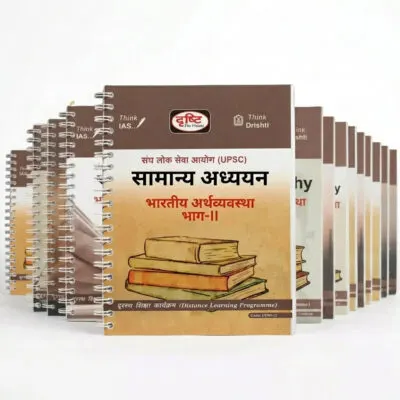
FormatHigh-Quality Printed Spiral/Perfect Bound Softcover
Paper QualityPremium 75 GSM Anti-Glare White Paper

Complete Booklet Catalog: The Master List

This 56-booklet set is categorized into General Studies Paper I, II, III, IV, and the prestigious Value Added Material (VAM) series. Below is the itemized inventory included in this package:

  • Booklet 1-4: Ancient India, Medieval India, Modern India (Part 1 & 2)
  • Booklet 5: Post-Independence India
  • Booklet 6-7: Art and Culture (Ancient to Medieval, Modern Trends)
  • Booklet 8-9: World History (Industrial Revolution to Cold War)
  • Booklet 10-13: Physical Geography, Indian Geography, World Regional Geography, Human & Economic Geography
  • Booklet 14-15: Indian Society and Social Issues
  • Booklet 16-20: Indian Constitution & Polity (The Five-Part Comprehensive Series)
  • Booklet 21-22: Governance & Public Policy
  • Booklet 23-25: International Relations (Theory, Bilateral, Global Groupings)
  • Booklet 26-27: Social Justice & Welfare Schemes
  • Booklet 28-32: Indian Economy (Macro, Sectoral Analysis, Banking, External Sector, Budgeting)
  • Booklet 33-35: Environment, Ecology & Biodiversity (3-Part Series)
  • Booklet 36-38: Science & Technology (Space, Bio-Tech, IT, Nuclear, Defense)
  • Booklet 39-40: Disaster Management & Internal Security
  • Booklet 41-43: Ethics, Integrity, and Aptitude (Lexicon & Core Theory)
  • Booklet 44-45: Ethics Case Studies Masterclass
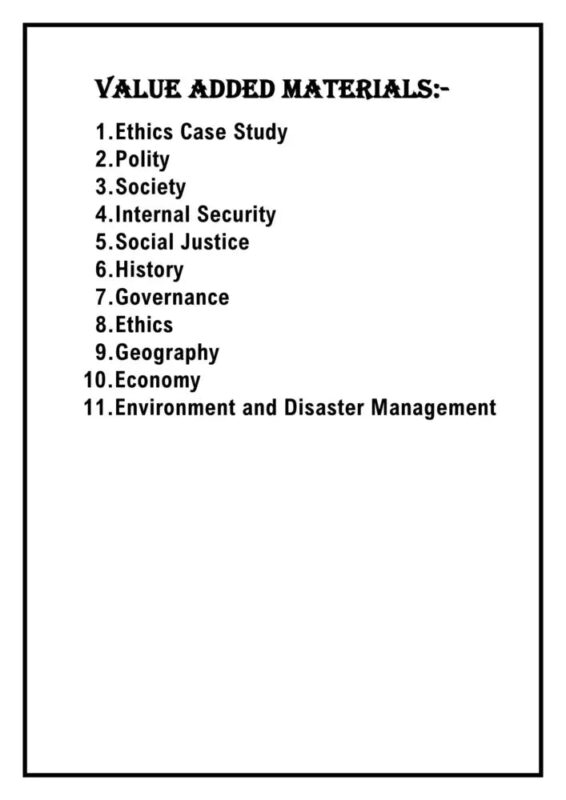
  • Booklet 46-56: Value Added Materials (VAM) – Exclusive updates on Ethics, Environment, International Relations, and Socio-Economic issues curated for the 2026-27 cycle.

Deep-Dive: Inside the 56-Booklet Ecosystem

1. The History and Culture Omnibus (Booklets 1-9)

The history booklets within this Vision IAS set are structured chronologically, ensuring that the transition from the Harappan Civilization to the Modern Digital Era is seamless. Each booklet features a “Quick Revision Table” at the end of chapters. The Modern History booklets (Part 1 & 2) are specifically curated to match the high-frequency themes of the UPSC syllabus. They include detailed maps of the 1857 revolt sites and the administrative boundaries of the British Presidencies. The Value Added Material for History provides a unique “Historiography” perspective, looking at how different historians interpret the Indian National Movement—a crucial skill for Mains answer writing.

The Art and Culture booklets focus on the architectural evolution of temples, the intricacies of classical dance forms, and the nuances of Indian philosophy. Unlike standard textbooks, these booklets contain high-contrast black-and-white diagrams and sketches of stupas, temple plans (Nagara, Dravida, Vesara), and mural locations, making visual memorization significantly easier for students.

2. Geography and Environment (Booklets 10-13 & 33-35)

Geography is handled with a dual approach: conceptual clarity and spatial data. The Physical Geography booklet utilizes simplified diagrams for atmospheric circulation, plate tectonics, and geomorphic processes. The Indian Geography booklet is particularly rich in data, providing the latest forest cover statistics, mineral production rankings, and river system overlays. In the Environment series, Vision IAS has integrated the latest COP (Conference of Parties) outcomes and updated lists of Ramsar Sites and Biosphere Reserves. The 75 GSM paper quality ensures that when you use highlighters on the complex climate maps, the ink does not bleed through to the other side, preserving the readability of the text.

3. The Polity and Governance Framework (Booklets 16-22)

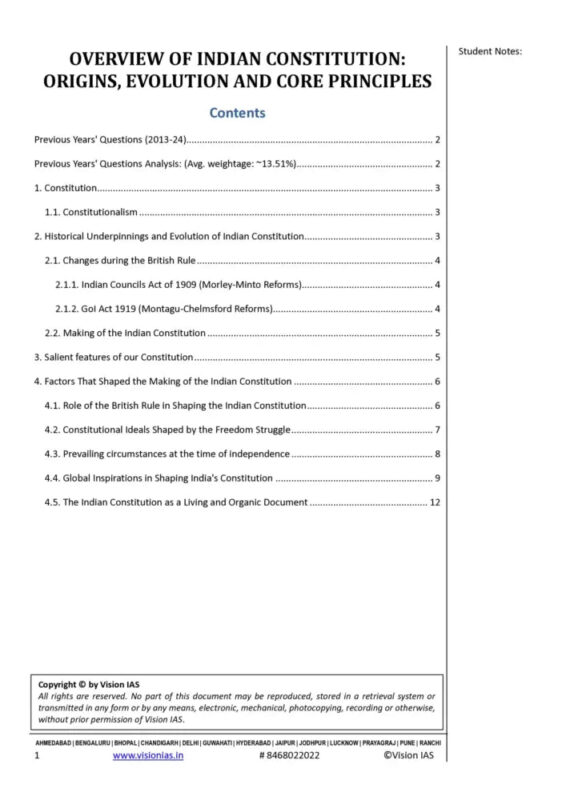
The 2026-27 Polity booklets are a masterclass in legislative documentation. They don’t just list articles; they explain the “Doctrine of Proportionality,” “Basic Structure,” and “Constitutional Morality” through the lens of recent Supreme Court judgments up to 2025. Each booklet includes a “Comparative Constitution” section, where the Indian system is juxtaposed with the US, UK, and French models—a recurring theme in GS Paper II. The Governance booklets cover the intricacies of e-governance, the Role of Civil Services, and Citizen’s Charters, utilizing flowcharts to describe administrative hierarchies and feedback loops.

4. Indian Economy: Dynamic & Structural Analysis (Booklets 28-32)

Economy is often the most feared subject due to its fluidity. Vision IAS solves this by dividing the content into “Static Concepts” and “Dynamic Trends.” The Macroeconomics booklet explains inflation, GDP, and fiscal deficits using real-world data points. The booklets on the Banking and External Sector incorporate the latest changes in UPI architecture, CBDC (Central Bank Digital Currency), and India’s evolving Trade Policy. The inclusion of Value Added Material here ensures that the student is aware of the “Economic Survey” highlights and “Union Budget” themes relevant for the 2026 and 2027 attempts.

5. Ethics, Integrity, and Aptitude: The GS 4 Powerhouse (Booklets 41-45)

The GS 4 materials are perhaps the most unique part of this 56-booklet set. While other publishers focus on definitions, Vision IAS provides “Application Frameworks.” The booklets contain a curated list of “Moral Thinkers and Philosophers,” spanning from Socrates and Kant to Gandhi and Ambedkar. What makes these booklets stand out are the “Ethics Case Study Workbooks.” These provide a template for solving case studies: Identifying Stakeholders, Ethical Dilemmas, Options Available, and the Final Course of Action. This structured approach is essential for scoring 100+ marks in Paper IV.

6. The Value Added Material (VAM) Advantage (Booklets 46-56)

The “VAM” booklets are the “Elite” addition to this 2026-27 package. These are not standard textbooks but supplementary modules designed to give students an edge in the Mains examination. They cover:

  • Current Affairs Integration: How to link static topics to the news.
  • Case Studies in Social Issues: Real-world examples of successful NGOs and Government schemes.
  • Diagram and Flowchart Compendium: A specific booklet dedicated to visual aids for all four GS papers.
  • International Relations Maps: Strategic locations, choke points, and geopolitical flashpoints curated for the 2026-27 global landscape.

Physical Product Specifications: Built for Rigorous Study

The “Vision IAS GS 2026-27” 56-booklet set is engineered to withstand the 12-18 months of intensive preparation required for the UPSC. We understand that a student will flip through these pages thousands of times. Therefore, the physical build follows these premium standards:

  • Paper Grade: Every booklet is printed on 75 GSM (Grams per Square Meter) “Ultra-White” paper. This provides a crisp contrast against the black ink, reducing eye strain during late-night study sessions. The paper is thick enough to allow for heavy underlining and the use of multi-colored highlighters without “ghosting.”
  • Ink Technology: We utilize high-grade pigment-based anti-glare ink. This ensures that the text remains sharp and smudge-proof even in humid conditions. The diagrams are rendered in high-resolution grayscale to ensure that every contour on a map or every label on a flowchart is legible.
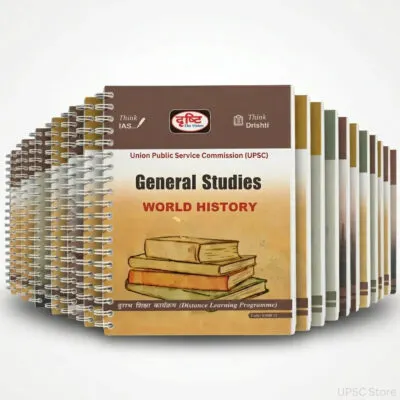
  • Binding Durability: The 56 booklets are available in a reinforced spiral-bound format or a high-quality softcover perfect-bound format. The spiral binding is preferred by many aspirants as it allows the booklet to lie perfectly flat on a desk, which is ideal for taking notes or scanning pages into digital formats.
  • Cover Protection: Each booklet features a 250-300 GSM matte-finish laminated cardstock cover. This protects the internal pages from spills, dust, and corner-tearing, ensuring the set remains in pristine condition throughout your 2026-27 attempt.
  • Portability: By dividing the massive GS syllabus into 56 modular booklets rather than 4 massive volumes, Vision IAS allows you to carry only the specific topic you are studying for the day. This modularity reduces the weight of your study bag and makes focused learning more manageable.

Internal Booklet Architecture: The Vision IAS Design Language

Each of the 56 booklets follows a standardized pedagogical structure designed to move the student from “Information” to “Analysis” to “Retention.” Here is how a typical chapter inside these booklets is organized:

The Learning Objectives (The Roadmap)

Every chapter begins with a set of learning objectives that align with the UPSC Previous Year Questions (PYQs). It tells the student exactly what to focus on—whether it is a conceptual understanding or a factual memorization of data.

Integrated Boxes and Sidebars

Inside the booklets, you will find “Vision Special” boxes. These are categorized as:

  • “Did You Know?”: Factual nuggets for Prelims.
  • “Mains Connect”: Theoretical links that help in GS Paper 1, 2, and 3 synthesis.
  • “Case Study”: Real-life examples to bolster arguments in Mains answers.
  • “Key Terms”: Bolded definitions that must be used in the exam to gain professional marks.

Visual Data and Mapping

Vision IAS is renowned for its use of “Thematic Maps.” In the Geography and International Relations booklets, you won’t just see a map of the world; you will see a map specifically highlighting “Major Oil Pipelines,” “Arctic Trade Routes,” or “Conflict Zones in the Sahel Region.” These are custom-drawn and updated for the 2026-27 session.

Summary and Glossary

At the end of each booklet, a “Master Glossary” provides definitions for every technical term used within the text. This is followed by a “Quick Revision Section” which summarizes a 20-page chapter into a 1-page bulleted list, perfect for the week before the exam.

How to Navigate the 56-Booklet Set for 2026-27

Owning 56 booklets can be overwhelming. The Vision IAS strategy recommends a “Modular Learning Path.” Students should start with the “Foundation Booklets” (Ancient History, Physical Geography, and Basic Polity) before moving to the “Advanced Modules” (Internal Security, Governance, and Ethics). The Value Added Materials should be introduced during the second reading of each subject to add layers of contemporary relevance to the static knowledge already acquired.

The “Drishti/Vision” approach emphasizes that these booklets are the primary source, meaning you do not need to supplement them with standard textbooks like NCERTs or Laxmikanth, as the core essence of those books is already distilled, updated, and integrated into these modules. The 2026-27 edition specifically accounts for the “Interdisciplinary” nature of recent UPSC papers, where Geography questions often require an understanding of Economics, and History questions require an understanding of Society.

Frequently Asked Questions (FAQ)

1. Are these 56 booklets sufficient for both UPSC Prelims and Mains?
Yes, this is the comprehensive GS Foundation set. It covers the factual depth required for the Preliminary Examination and the analytical depth needed for the Mains. The set includes GS Papers I, II, III, and IV in their entirety.

2. Is this the latest 2026-2027 edition? How does it differ from the 2024 edition?
Absolutely. This is the 2026-27 Revised Edition. It contains updated data on the Indian Economy (post-2024 Budget), updated Environmental laws, and recent International Relations developments like the expanding BRICS+ and G20 outcomes. The VAM (Value Added Material) is also refreshed for the upcoming cycle.

3. What is the paper quality, and can I use highlighters on it?
The booklets are printed on high-grade 75 GSM white paper. It is specifically selected for UPSC aspirants who use heavy highlighting. The ink will not bleed, and the paper remains crisp even after months of use.

4. How is the 56-booklet set packaged to prevent damage during shipping?
We use a multi-layer packaging system. The booklets are first bundled into subject groups and shrink-wrapped. They are then placed in a heavy-duty corrugated cardboard box with corner protectors and “Handle with Care” labeling to ensure they reach you without bent corners or water damage.

5. Do these booklets include Previous Year Questions (PYQs)?
While these are core content booklets, they feature “Integrated PYQ Analysis” sidebars. This means that throughout the chapters, Vision IAS points out which topics were asked in which year, helping you understand the “weightage” of different sections.

6. Are the booklets in Color or Black and White?
The text and diagrams are printed in professional high-contrast Black and White. This is the industry standard for study materials to ensure clarity and focus, and it mimics the format of the actual UPSC question papers.

7. How do I verify the authenticity of this Vision IAS set?
Each booklet contains the official Vision IAS technical publication stamp and specific formatting styles unique to the 2026-27 cycle. The “Value Added Materials” are specifically watermarked and formatted with the current year’s intellectual property markings.

8. Is the language easy to understand for beginners?
Vision IAS is known for its “Academic Simplicity.” The language is professional and suitable for the UPSC exam, but it avoids unnecessary jargon. Difficult concepts are broken down into bullet points and flowcharts.

9. Does this set cover CSAT or Optional subjects?
No, this specific 56-booklet set is dedicated exclusively to General Studies (GS) for the Foundation course. CSAT (Paper II Prelims) and Optional materials are sold as separate specialized sets.

10. Why are there 56 booklets? Other sets only have 30.
The “Elite 56” set includes the specialized Value Added Material (VAM) and modular breakdowns of subjects like Social Justice, World History, and Disaster Management which are often bundled together in smaller sets. This 56-booklet version provides more granular detail and specific “Topic-wise” focus, which is essential for the increasing difficulty of the UPSC exam.

11. How should I use the Value Added Material (VAM)?
The VAM should be used as a “Mains Enrichment” tool. Once you have finished a core booklet (e.g., International Relations), you should read the corresponding VAM booklet to learn how to write complex, high-scoring answers using the latest contemporary examples and case studies.

*Note: This is a premium physical product. The 56 booklets represent the culmination of years of research by the Vision IAS Content Team. This 2026-27 edition is the most comprehensive tool available for the UPSC Civil Services Examination.*


Reference: Civil Services Examination

🛍️

Aspirants Also Bought

More from the same category

View All

About Vision IAS GS 2026-27

Vision IAS GS 2026-27 is a highly recommended UPSC study material. This material is crafted to match the exact requirements of the UPSC Civil Services Examination syllabus — covering both Prelims and Mains comprehensively.

Why Buy from UPSC Store?

  • 100% Genuine Printed Material — Original printed notes, no photocopies or fake copies
  • Fast Delivery — Ships within 24 hours, arrives in 3–5 days pan-India
  • Secure Packaging — Bubble-wrapped and boxed to prevent damage in transit
  • Trusted by 10,000+ Aspirants — India's most reliable UPSC material marketplace
  • WhatsApp Support — Get expert guidance on material selection before ordering

Frequently Asked Questions

Is this product 100% original?

Yes, all products at UPSC Store are 100% genuine printed materials. We do not sell photocopies or fake copies.

How long does delivery take?

Orders are dispatched within 24 hours and delivered across India in 3–5 working days via reputed courier partners.

Can I return the product?

Yes, we accept returns within 7 days if the product is damaged or incorrect. Check our refund policy for details.

Which other study materials should I buy with this?

We recommend pairing this with current affairs notes and a UPSC test series for comprehensive preparation. Browse more in General Studies, UPSC, Vision IAS.