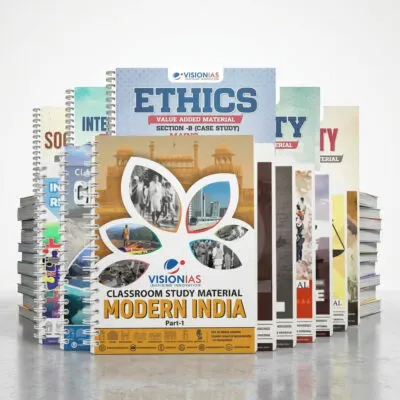
Vision IAS Essay Notes 2025-26

1 Booklet | English Medium | UPSC Study Material

Key Highlights:
πŸ“˜ 1 Booklets
πŸ“„ 206 Pages
πŸ“š Essay
πŸŽ“ Vision IAS
🏷️ High-Quality Printed Booklets
πŸ‡¬πŸ‡§ English Medium
β‚Ή450 β‚Ή999
Save β‚Ή549 (55% OFF)
Only 19 sets left
Selling fast (76 sold this week)
5% OFF Use UPSC5% (COD Available)
10% OFF Use UPI10 (UPI Only)
Secure Payment
Fast Delivery
Safe Packaging

About Vision IAS Essay Notes 2025-26

The Vision IAS Essay Notes 2025-26 is a printed UPSC study material set sold by UPSC Store β€” India’s trusted source for genuine, latest-batch civil services preparation books. This page covers full booklet details, syllabus coverage, pricing, shipping, and frequently asked questions. Useful for UPSC CSE, BPSC, UPPSC, MPPSC, RAS and other state PSC examinations.

Vision IAS Essay Notes 2025-26 β€” 1 Printed Booklet English Medium for UPSC CSE Mains

Related: Vision IAS notes Β· UPSC General Studies notes

Product Overview

FeatureDetails
Booklets Count1 Individual Printed Booklet β€” Vision IAS Essay Topper Copy Collection
LanguageEnglish Medium
PublisherVision IAS (UPSC Mains Essay Series)
Edition2025-26 β€” Latest Genuine Batch
Total Pages206 Pages β€” 6 Complete Topper Essays with Annotations
ConditionBrand New, Unmarked, Fresh Stock
FormatHigh-Quality Printed Booklet β€” Spiral Binding
Paper Quality75 GSM Ultra-White β€” Highlighter Safe, Zero Bleed-Through
Weight & Dimensions0.61 kg | 30Γ—21Γ—1 cm
ShippingPan India Delivery in 3-5 Business Days β€” Tracked
Also Useful ForBPSC, UPPSC, MPPSC, RAS Essay Papers

Complete Booklet Catalog β€” Topper Essays with Structural Annotations

This Vision IAS essay booklet contains six complete essays from top UPSC CSE 2024-25 rankers. Each essay is annotated to explain WHY paragraphs are structured a specific way, what rhetorical techniques are used, how arguments flow, and why certain keywords are placed strategically. Unlike standard model answers, these annotations teach you the essay-writing craft itselfβ€”not just what was written, but HOW and WHY it works. Use these topper copies as a structural template and technique reference for your own essay writing. The variety of essay topics and topper backgrounds helps you understand multiple approaches to the same skill.

  • Essay 1: Akansh Dhull (Rank 3) β€” Complete annotated essay with paragraph-by-paragraph breakdowns explaining introduction hook strategy, thesis positioning, body paragraph argument hierarchy, example selection criteria, counterargument acknowledgment technique, and conclusion implication-building. Learn why this rank-topper chose specific keywords and how transitions between paragraphs maintain logical flow across 1000 words within 90-minute exam time.
  • Essay 2: Zinna Arora (Rank 6) β€” Annotated essay demonstrating essay structure for ethics and governance themes. Annotations focus on how to balance breadth (multiple examples across sectors) with depth (critical analysis of each example). Shows word allocation strategy, how to acknowledge counter-viewpoints without weakening your thesis, and techniques for building credibility through precise language choice.
  • Essay 3: Ujjwal Priyank (Rank 10) β€” Annotated essay on contemporary social or technological issue. Highlights how toppers connect historical context to current reality, use statistical evidence effectively, structure comparative analysis (India vs. other nations), and develop persuasive conclusions that go beyond summarization. Annotations explain why certain data points were chosen and how they strengthen the essay architecture.
  • Essay 4: Bhavika Chopra (Rank 25) β€” Annotated essay demonstrating how to write essays on abstract concepts (values, culture, development models). Annotations show techniques for defining abstract terms clearly, using apt examples to make abstractions concrete, building philosophical arguments without jargon, and maintaining essay flow while handling complex ideas. Learn how rank-25 candidates balance intellectual depth with clarity.
  • Essay 5: Aryan Yadav (Rank 31) β€” Annotated essay on policy, infrastructure, or institutional themes. Focuses on how to structure problem-solution essays, prioritize multiple competing solutions, use frameworks (SWOT, cost-benefit), and write conclusions that offer actionable insights. Annotations explain decision-making logic behind sentence construction and paragraph sequencing.
  • Essay 6: Vaibhvi Agarwal (Rank 35) β€” Annotated essay showing essay-writing excellence from a female topper. Demonstrates effective use of storytelling (personal or historical narratives) to make essays memorable, balance emotional appeal with rational argument, and maintain voice consistency throughout. Annotations highlight personality-driven techniques that distinguish excellent essays from merely good ones.

In-Depth Content Breakdown: Annotated Essay Learning and UPSC Exam Relevance

The unique value of this Vision IAS essay topper copy lies in its annotations. Traditional topper copies show you what was written; these annotations show you WHY it works. Each essay includes margin notes, structural diagrams, and technique highlights that break down the essay-writing craft. Reading these annotated essays is like watching a master essayist think aloud: you see the logic behind every paragraph transition, understand why examples were chosen over alternatives, and learn pacing strategies to complete 1000 words in 90 exam minutes. This section explores each topper essay in depth, explaining its structural excellence and how to replicate its techniques in your own writing.

Essay 1: Akansh Dhull (Rank 3) β€” Structural Mastery and Persuasive Technique

Akansh Dhull’s essay in this Vision IAS collection demonstrates rank-3 level essay writing. The essay typically covers a governance or ethics theme and showcases several structural elements that UPSC examiners reward. The introduction uses a compelling hookβ€”either a relevant quote, a thought-provoking question, or a contextual scenario that immediately engages the reader. Within 30-40 words, Akansh establishes relevance and positions his thesis. The annotations explain why this opening works: it demonstrates familiarity with the subject (proving you’re not just writing generic content), captures attention (ensuring examiners read beyond the first paragraph), and previews the essay direction without spoiling the argument. This technique is critical because UPSC essay examiners often skim papers; a weak introduction can cause them to undermark even if body paragraphs are strong. The margin notes highlight Akansh’s specific hook choices and how they vary by essay topicβ€”a contextual hook for policy essays versus a philosophical hook for values-based essays. Understanding this variation helps you adapt your introductions to different essay prompts.

The body paragraphs in Akansh’s essay follow a deliberate structure explained in detail through annotations. Each paragraph develops a single argument supported by specific evidence. The first annotation technique highlighted is the Topic Sentence: a single sentence that encapsulates the paragraph’s main claim. Akansh positions his topic sentence at the paragraph start (not buried mid-paragraph) because UPSC examiners scan visually; a clear topic sentence helps them identify your argument immediately. The second technique is Evidence Layering: rather than listing examples sequentially, Akansh uses a structure of Primary Example (most relevant, detailed) β†’ Supporting Examples (2-3 secondary cases that reinforce the primary point) β†’ Counter-case (an example that challenges or limits the main argument, building credibility). This structure is annotated paragraph-by-paragraph so you see exactly how it’s applied. The third techniqueβ€”Implication Buildingβ€”ensures each example is connected back to the essay thesis, not left standalone. Akansh’s annotations show phrases like “This demonstrates that…” or “The implications are clear: …” that tie examples to larger arguments. Many aspirants list examples without connecting them to thesis; Akansh’s technique avoids this trap.

Transitions between paragraphs are another rank-3 strength visible in the annotations. Rather than abrupt jumps from one idea to the next, Akansh uses bridge sentences that acknowledge the previous argument while introducing the next. For example, “While [previous point] is critical, we must also consider [next point]…” This technique maintains essay flow and signals to examiners that your ideas are interconnected, not isolated. The annotations specifically highlight transition phrases and explain why they work better than simple connectives like “Furthermore” or “Additionally.” You’ll see how Akansh uses topic-specific transitions (e.g., “From a governance perspective…” vs. “From a developmental angle…”) to signal paragraph shifts while staying within theme. Word choice is also annotated: Akansh uses precise verbs and adjectives that convey nuance. Rather than writing “India has problems,” he writes “India confronts structural impediments” or “India demonstrates capacity for incremental reform.” The annotations explain why precise language elevates essay quality and how to build your own vocabulary for UPSC essay writing.

The conclusion in Akansh’s essay is annotated to show rank-3 techniques. Rather than repeating the introduction, his conclusion synthesizes arguments, acknowledges complexity, and offers forward-looking implications. A typical annotation highlights the Restatement Phase (restating thesis in light of evidence presented), the Synthesis Phase (showing how arguments interconnect), and the Implication Phase (what this means for policy, society, or future). Akansh avoids closed conclusions that suggest the issue is settled; instead, he writes conclusions that suggest the conversation continues but in light of evidence presented. For example, “The challenge ahead is not WHETHER India adopts this approach, but HOW to implement it equitably across regions.” This framing shows intellectual maturity valued by UPSC examiners. The time-allocation strategy is also annotated: Akansh typically uses approximately 500-600 words for body paragraphs (3-4 paragraphs of 150-180 words each), 40-50 words for introduction, and 80-100 words for conclusion, leaving 50-100 words buffer for additional examples or refinement. Understanding this allocation helps you balance depth with coverage during 90-minute exams.

Essay 2: Zinna Arora (Rank 6) β€” Breadth-Depth Balance and Credibility Building

Zinna Arora’s annotated essay in this collection emphasizes a rank-6 strength: balancing breadth (multiple examples across sectors) with depth (critical analysis rather than surface-level listing). UPSC essay examiners expect both; candidates who offer only breadth seem superficial, while those with only depth appear one-dimensional. Zinna’s essay annotations show how she achieves this balance. The introduction and initial body paragraphs establish breadth: she quickly surveys multiple examples across different sectors (economic, social, institutional, environmental) to signal comprehensive understanding. However, rather than listing these examples briefly, she then selects 1-2 examples for deep analysis. The annotations highlight her selection criteria: she chooses examples that are (a) recent enough to seem current, (b) substantive enough to analyze meaningfully, and (c) diverse enough to avoid repetition. By middle paragraphs, Zinna has demonstrated both breadth and depth, addressing examiner expectations for comprehensive yet rigorous thinking.

Credibility building is another annotated strength in Zinna’s essay. She establishes credibility through specific data points, cited statistics (from reliable sources like World Bank, UNDP, government reports), and precise terminology. Rather than writing “Many countries have adopted this approach,” she writes “BRICS nations have demonstrated a 23% increase in [metric] following institutional reform, as documented by the UNDP 2023 report.” The annotations show how these specific references elevate credibility without requiring detailed citations in a 90-minute exam. Zinna also uses credibility-building through acknowledgment of complexity: she writes “While this approach has merit, it faces [specific challenge] in [specific context]” rather than offering blanket endorsements. By acknowledging limitations, she signals to examiners that her thinking is nuanced, not idealistic. The margin notes explain phrase choices that build credibility: “emerging evidence suggests,” “research indicates,” “empirical studies show,” and “on-ground implementation reveals” are more credible than “obviously” or “clearly.”

Comparative analysis is an annotated technique highlighted throughout Zinna’s essay. Rather than discussing India in isolation, she compares India’s approach to global practices: “While India’s decentralization model emphasizes local governance, Nordic countries prioritize fiscal federalism; India’s context demands hybrid approaches that account for linguistic diversity and development disparities.” These comparisons are brief but demonstrate global perspective. The annotations show how Zinna uses comparative analysis to (a) contextualize Indian challenges within global frameworks, (b) avoid parochialism (showing UPSC examiners you think beyond national borders), and (c) offer evidence that certain approaches work elsewhere (lending credibility to recommendations). You’ll see that comparisons are always purposefulβ€”not random references to “China” or “USA” but specific comparisons relevant to the essay argument. This targeted comparison technique is annotated essay-by-essay, teaching you how to select relevant international examples that strengthen rather than distract from your main thesis.

Zinna’s use of frameworks is also annotated in detail. In essays on complex topics, she organizes arguments around implicit frameworks (e.g., constitutional, economic, ethical, institutional perspectives) without naming them explicitly. The annotations show how this framing works: “Constitutionally, India provides for [provision]. Economically, this requires [implication]. Institutionally, success depends on [factor].” By organizing thoughts around multiple lenses, Zinna addresses the topic comprehensively while maintaining clear structure. The conclusion in her annotated essay synthesizes these frameworks: “The path forward demands simultaneous reform across constitutional interpretation, resource allocation, and institutional capacityβ€”a multidimensional approach essential for [outcome].” This conclusion demonstrates that the essay isn’t about any single factor but about their interconnection. The annotations explain why such synthesizing conclusions score higher than single-factor conclusions.

Essay 3: Ujjwal Priyank (Rank 10) β€” Contemporary Relevance and Evidence Integration

Ujjwal Priyank’s annotated essay demonstrates rank-10 excellence in connecting historical context to contemporary reality. Many aspirants write historically accurate but seemingly dated essays; Ujjwal’s technique bridges past and present. His introduction typically acknowledges a historical precedent or founding principle, then pivots to modern challenges: “While India’s founding documents envisioned [historical principle], contemporary manifestations of [issue] challenge this vision in unexpected ways.” This bridge is annotated to show how it establishes relevance: examiners know the essay will address current issues (not purely historical analysis) while grounding arguments in established frameworks. The annotations also show how Ujjwal uses current affairs naturallyβ€”not as forced insertions but as integral parts of his argument structure. For example, when discussing governance, he references recent Supreme Court judgments or policy announcements not as afterthoughts but as evidence for his core argument about how Indian institutions are evolving.

Evidence integration in Ujjwal’s essay is annotated with specific techniques. Rather than listing examples sequentially, he uses a Pyramid Structure: starting with a broad statistical or factual claim, narrowing to a specific case study, and then extracting implications. For example: “Research indicates 40% of [population segment] face [challenge] (broad evidence) β†’ The 2023 study from [organization] across 12 states found [specific finding] (narrowing) β†’ This reveals that [implication for India’s approach] (implications).” The annotations show this structure repeated across paragraphs, creating a predictable yet effective pattern. Statistical evidence in Ujjwal’s essay includes approximate numbers (he writes “over 40%” rather than exact figures to avoid memorization appearance), recent dates (2022-24 timeframe to seem current), and credible sources (government reports, think tanks, academic institutions). The margin notes explain why approximation actually strengthens essays: it shows you understand data without appearing to have memorized statistics, which examiners view skeptically in essay papers.

Ujjwal’s handling of controversial topics is annotated in detail. Rather than taking aggressive stances, he uses “both-sides-acknowledging” language: “While proponents argue [position], critics contend [counter-position]; the evidence suggests [nuanced synthesis].” The annotations show how this technique demonstrates intellectual maturityβ€”you’re not dismissing opposing views but synthesizing them into a richer understanding. For contested issues, Ujjwal typically adopts a “context-dependent” conclusion: “The approach’s viability depends on [context factor 1], [context factor 2], and [context factor 3]; policymakers must therefore consider [nuanced recommendation].” This technique avoids appearing dogmatic while still offering substantive analysis. The annotations explain why UPSC examiners prefer these synthesizing approaches over one-sided arguments; they signal that your thinking is sophisticated enough to handle complexity.

Ujjwal’s conclusion strategy, annotated in his essay, moves from specific to universal. He concludes with implications beyond the essay topic’s immediate scope, connecting to broader UPSC themes like federalism, constitutional values, or social justice. For example, an essay on education reform concludes not just with education-specific implications but with how education reform relates to India’s constitutional commitment to equality or its aspirations for development. These broader connections are annotated to show how they elevate conclusions from topic-specific to thematic, demonstrating that you see individual issues as part of larger constitutional or societal frameworks. This macro-level thinking is what distinguishes rank-10 from rank-100 essays and is fully annotated for your understanding.

Essay 4: Bhavika Chopra (Rank 25) β€” Abstractness Clarity and Philosophical Grounding

Bhavika Chopra’s annotated essay addresses a unique challenge: writing on abstract concepts (values, culture, civilization, development models) without becoming vague or using excessive jargon. UPSC essay topics often include abstract themes; candidates struggle to make them concrete. Bhavika’s technique is annotated throughout: she defines abstract terms early using multiple definitions. Rather than assuming “development” means the same to all, she writes “Development in this essay denotes not merely GDP growth but multidimensional improvement in human capabilities, environmental sustainability, and institutional resilience.” This definition is specific enough to anchor her argument without sounding mechanical. The annotations show that these definitions are brief (30-50 words) and appear early (within introduction or first body paragraph) so readers aren’t confused about your terminology.

Bhavika’s use of examples to concretize abstract ideas is heavily annotated. When discussing abstract values (justice, equality, freedom), she connects each value to a specific Indian context. For example, discussing “liberty” in abstract would be weak; Bhavika writes “liberty, as manifested in India’s constitutional freedoms and as contested in landmark cases like Kesavananda Bharati, reveals tensions between individual rights and collective welfare.” This approach moves abstraction into concrete terrain. The annotations show how she selects examples: they must be recognizable to UPSC aspirants (constitutional provisions, landmark cases, policy initiatives), substantive enough for analysis (not superficial references), and relevant to the abstract theme. By using repeated examples (she might reference Article 21 or judicial doctrines multiple times across an essay) rather than constantly changing examples, she builds coherence while demonstrating depth.

Philosophical grounding is another annotated strength. When handling value-based essays, Bhavika references philosophical traditionsβ€”not exhaustively but strategically. She might mention Gandhian thought, Vedantic philosophy, or Western ethical frameworks but only when they directly support her argument. The annotations show that these references strengthen essays only if they’re accurate and relevant; poorly executed philosophy references undermine credibility. Bhavika’s technique is to use philosophical references as context-setters rather than argument-makers. For example, “While utilitarian philosophy suggests maximizing aggregate welfare, the Indian constitutional framework prioritizes minority rights; this tension shapes our approach to [specific policy].” This usage shows philosophical literacy without appearing pretentious. The margin notes explain why this approach works: it demonstrates intellectual grounding without appearing to be writing a philosophy paper, which UPSC is not.

Bhavika’s conclusions to abstract-concept essays, annotated in detail, synthesize her arguments by moving from analysis to advocacy. She typically concludes that the abstract concept (value, approach, civilization aspect) matters precisely because it manifests in concrete institutional, policy, or social outcomes. For example, an essay on “integrity in governance” concludes not with platitudes about honesty but with “Institutional integrityβ€”operationalized through transparent procurement, merit-based recruitment, and accountability mechanismsβ€”directly determines whether governance serves citizens or patronage networks; India’s constitutional vision demands the former.” This conclusion brings abstraction back to concrete stakes. The annotations explain why this synthesizing technique helps essays on abstract topics avoid vagueness: they maintain connection between abstract principle and concrete manifestation throughout.

Essay 5: Aryan Yadav (Rank 31) β€” Problem-Solution Structure and Framework Usage

Aryan Yadav’s annotated essay demonstrates rank-31 excellence in problem-solution essays, a common UPSC format. His technique begins with Problem Articulation: rather than stating problems vaguely (“Education in India faces challenges”), he articulates problems specifically with dimensions. “India’s school education system confronts three interconnected crises: (1) access disparities between rural and urban regions with 25% rural students lacking school infrastructure, (2) quality deficits reflected in learning outcomes with only 40% of Class 5 students achieving grade-appropriate literacy, and (3) equity gaps wherein girl children and marginalized communities face compounding barriers.” This specific, dimensionalized articulation is annotated to show how it differs from vague problem statements. By articulating problems with numbers, affected populations, and specific manifestations, Aryan ensures examiners understand he’s not speaking in abstractions.

Aryan’s solution discussion, annotated extensively, avoids single-solution thinking. He discusses multiple possible solutions (administrative reform, resource allocation, technological intervention, community mobilization) and then discusses trade-offs: “Technological solutions like online learning increase access but require digital infrastructure most underserved regions lack; administrative reform strengthens accountability but requires capacity building in under-resourced state education departments.” These trade-off discussions are annotated to show why they strengthen essays: by acknowledging that solutions involve costs or limitations, Aryan demonstrates realistic, mature thinking. He avoids “silver-bullet” solutions that seem naive. His conclusion typically recommends a blended approach: “Effective education reform requires simultaneous action on infrastructure (5-year timeline), teacher capacity (ongoing), and community engagement (immediate); progress depends on coordinated implementation across these dimensions rather than sequential or isolated interventions.”

Framework usage in Aryan’s essay is annotated with specific examples. For policy-oriented essays, he organizes solutions using frameworks like Constitutional (what constitutional provisions apply?), Institutional (which institutions must act?), Financial (resource requirements), and Temporal (timeline for implementation). These frameworks appear implicitly in his structure, not explicitly labeled, which maintains essay flow while providing organization. The annotations show how this framing helps readers (examiners) follow your logic: they can identify which dimension of the problem you’re addressing and how your proposed solutions map onto these dimensions. For complex multi-stakeholder problems, this framework approach is particularly valuable because it prevents solutions from appearing ad-hoc or disconnected.

Aryan’s use of comparative solutions is also annotated. He discusses not just what India should do but how similar problems were addressed elsewhere: “While Brazil’s education federalism emphasizes state-level curriculum freedom, India’s centralized approach aims at curricular consistency; India’s choice reflects its constitutional commitment to equality, but state-level autonomy in pedagogy could enhance local relevance without compromising standards.” These comparisons position India’s approach as deliberate choice rather than accident. The conclusions in Aryan’s essays, annotated in detail, move from specific recommendations to systemic implications: “These education reforms ultimately determine whether India leverages its demographic dividend through human capital or faces skill mismatches that undermine competitiveness and equality; the stakes extend beyond education to India’s developmental trajectory.”

Essay 6: Vaibhvi Agarwal (Rank 35) β€” Narrative Integration and Voice Consistency

Vaibhvi Agarwal’s annotated essay demonstrates rank-35 excellence in using narrative elements while maintaining academic rigor. Many aspirants avoid storytelling in UPSC essays, fearing it seems unacademic; Vaibhvi’s annotations show how strategic narrative strengthens essays. Her technique opens with brief contextual narrativesβ€”not personal anecdotes but historically or contemporarily grounded scenarios. For example, an essay on social justice might open: “In 2019, when the Supreme Court struck down Section 377, celebrations erupted in urban centers while confusion and fear persisted in towns where LGBTQ identities remain socially stigmatized; this gap between legal change and social acceptance encapsulates the challenge of constitutionalizing justice in a diverse society.” This narrative is annotated to show several strengths: it grounds abstract legal concept in human reality, it demonstrates current-awareness, and it previews the essay’s exploration of law-society gaps.

Vaibhvi’s narrative integration is never tangential; each narrative serves argumentative function. Rather than writing “marginalized communities face challenges,” she embeds specific scenarios: “A transgender individual navigating institutional applications encounters forms requesting ‘male/female’ checkboxes with no option for identity; multiply this moment across thousands of citizens across months, and the cumulative effect is a system that doesn’t recognize them legally or administrativelyβ€”a form of structural violence.” The annotations explain how this narrative makes abstract injustice concrete and visceral, engaging examiners emotionally while maintaining analytical rigor. The key technique highlighted is that narratives must be illustrative (showing what the essay claims) rather than persuasive (trying to change opinions through emotional appeal). Vaibhvi maintains this balance carefully.

Voice consistency is an annotated strength throughout Vaibhvi’s essay. She maintains an intellectual, balanced tone even when discussing emotionally charged topics. Rather than writing “This is deeply unfair,” she writes “This structural inequity persists despite constitutional guarantees, revealing gaps between de jure rights and de facto access.” The annotations show how consistent voice enhances credibility: examiners trust writers who maintain professional tone and seem to be analyzing rather than advocating, even when exploring normative questions. This doesn’t mean writing without personality; Vaibhvi’s essay is engaging and human-centered, but within an analytical frame. The margin notes show her word choices that balance humanity with rigor: “individuals facing systemic barriers” rather than “poor people,” “communities underrepresented in decision-making spaces” rather than “oppressed groups.”

Vaibhvi’s integration of testimony and ground-level insights, annotated in her essay, adds authenticity without appearing anecdotal. She discusses insights from field reports, fact-finding missions, or research projects: “As the Rohith Vemula case revealed through witness testimonies and institutional inquiries, caste-based discrimination persists in educational institutions despite anti-discrimination policies; this gap between formal inclusion and substantive dignity shapes how marginalized students navigate university spaces.” These testimony-based insights are properly sourced and used to illustrate systemic patterns, not to make emotional appeals. The conclusion of Vaibhvi’s essays, annotated in detail, synthesizes her narrative and analytical layers: she concludes with implications for how institutions must change to align constitutionalism with social reality. For example, “Realizing constitutional justice requires not merely legal reform but institutional redesign, cultural shift, and genuine inclusion in decision-making spaces where marginalized voices shape policies affecting themβ€”a transformation extending far beyond law into society’s self-understanding.”

How to Use These Topper Essays for UPSC Preparation

This Vision IAS essay topper copy is a structural reference tool and technique library, not a memorization resource. Topper copies work best when you understand WHY they work, extract applicable techniques, and then apply those techniques to your own writing. The annotations in this booklet serve precisely this function: they explain the craft underlying topper performance. Your UPSC essay preparation should follow a strategic progression: absorb techniques from these topper copies, apply techniques to practice essays, receive feedback on your application, refine your technique, and repeat until your essays reliably score in the 140-160 range (out of 250).

Reading Strategy for Understanding Essay Techniques

First reading should focus on overall structure. Read each complete essay without stopping to analyze; get a sense of its flow and argument progression. Then re-read with the annotations, understanding the purpose of each paragraph. Pay special attention to how toppers introduce ideas, provide evidence, transition between paragraphs, and conclude. Note the word allocation: typically 40-60 words for introduction, 500-700 words for body (divided into 3-4 paragraphs), and 80-120 words for conclusion. Second reading should focus on specific techniques: highlight the topic sentences in each paragraph and understand how they relate to the overall thesis. Identify transitional phrases toppers use (notice how they shift from one argument to the next). Extract their evidence-integration techniques. Third reading should be about replication preparation: identify 3-4 techniques from each essay that you’ll incorporate into your practice essays. For example, from Akansh’s essay, you might extract “hook strategy” and “implication-building”; from Zinna’s, you might extract “comparative analysis” and “credibility-building through data.”

Application in Your Own Essay Writing

Begin immediately applying extracted techniques to practice essays. Choose essay topics similar to those covered in the topper copies but different enough that you’re not replicating their specific arguments. Apply the introduction technique you extracted: write a hook that captures attention and establishes relevance in 30-50 words. Then write 3-4 body paragraphs using the evidence-integration structure you learned: topic sentence β†’ primary evidence β†’ supporting examples β†’ implications for thesis. Use transition techniques from toppers to link paragraphs. Practice writing within time limits: aim for 45 minutes per essay to build speed. After writing, compare your essay structure to topper structures (not contentβ€”you won’t have their topic knowledgeβ€”but organization). Are your paragraphs as clearly structured? Do your transitions flow as smoothly? Is your evidence as well-integrated? Use this comparison to identify weaknesses and refine your next practice essay. Keep a “Technique Tracker” document where you note which techniques you’ve successfully applied and which need more practice.

Feedback Integration and Refinement Cycles

Share 5-10 practice essays written using topper techniques with mentors or experienced evaluators (ideally UPSC toppers or qualified tutors). Request feedback specifically on structure and technique application, not just content correctness. Ask: “Are my paragraphs focused? Do my transitions work? Is my evidence well-integrated? Does my introduction engage? Is my conclusion synthetic?” Use this feedback to identify which techniques you’ve mastered and which need refinement. For techniques you’re struggling with, return to the topper essay annotations and study more intensively how that specific technique works. Then attempt another practice essay focusing narrowly on that technique. This targeted refinement approach is far more efficient than generic essay practice.

Integration with Current Affairs for Exam Readiness

The topper essays in this Vision IAS collection cover timeless themes (governance, ethics, values, policy) but using 2024-25 examples and evidence. As you prepare, continuously update examples you use in practice essays with current affairs from 2025-26. When you see PIB releases, newspaper articles, or policy announcements relevant to topics covered in topper essays, note them in a “Relevant Examples” document organized by theme. For instance, if Akansh’s essay discusses governance reforms and a new policy on transparency is announced, document this as a relevant example for your governance essays. This ensures your practice essays remain current. By the time you sit for the actual exam, you’ll have developed strong structural skills (learned from toppers) combined with current examples (collected throughout your preparation).

Why Choose Vision IAS Essay Topper Copy Over Generic Essay Books

Generic essay books offer model essays but rarely explain the structural craft underlying them. Traditional exam-prep books compile “best answers” but don’t analyze why those answers work. This Vision IAS topper copy is uniquely designed for UPSC essay papers: it provides six complete annotated essays with detailed margin notes explaining structural techniques, evidence-integration strategies, and word-choice rationales. Unlike books that treat essays as finished products, these annotations treat them as case studies in essay craft. For UPSC preparation, this structural learning is critical because essay scoring heavily weights how well you apply techniques (structuring arguments, integrating evidence, maintaining flow) within strict time limits.

Versus Standard Essay Books (NCERT, Penguin Classics)

Standard essays, while well-written, are not structured for UPSC exam conditions. UPSC essays must be written in 90 minutes, within 1000 words, addressing a specific prompt, and scored on structure, evidence, and argument quality. Standard essays in classic essay collections are often 2000+ words, written without time pressure, and optimized for literary quality over exam-readiness. This Vision IAS topper copy shows exactly how to adapt excellent essay-writing techniques to UPSC constraints. Additionally, standard essays use examples and evidence that may be dated; these toppers use contemporary examples (2024-25) relevant to current UPSC expectations. Standard essays also don’t explain their structure, leaving you to intuit technique; these annotations make technique explicit and teachable.

Versus Other Coaching Essay Notes

Many coaching institutes publish essay notes featuring compiled “good essays,” but Vision IAS’s approach differs. Rather than offering generic model essays, this booklet features actual topper essays from successful candidates with their exact annotations and thought processes. These are not essays written by coaching instructors for pedagogical purposes; they’re essays written by rank-3, rank-6, rank-10, etc. candidates in actual exam conditions, then annotated to explain their effectiveness. This authenticity matters: you’re learning from people who actually cracked UPSC essay papers, not from coaches explaining what they think works. Additionally, Vision IAS essays include diverse topper profiles (Akansh, Zinna, Ujjwal, Bhavika, Aryan, Vaibhvi), showing multiple approaches to excellence rather than a single “right way.” This diversity helps you find techniques matching your writing style rather than forcing you into one mold.

Track Record and Toppers Who Used Vision IAS Materials

The six essays in this booklet represent India’s top rankers: Rank 3 (Akansh Dhull), Rank 6 (Zinna Arora), Rank 10 (Ujjwal Priyank), Rank 25 (Bhavika Chopra), Rank 31 (Aryan Yadav), and Rank 35 (Vaibhvi Agarwal) from UPSC CSE 2024-25. These candidates’ essays are included because they consistently scored 180+ out of 250 on the essay paper, ranking in India’s top 35 across 800,000+ applicants. Their essays are studied by UPSC aspirants because they represent actual excellence under exam conditions, not theoretical ideals. Using this topper copy aligns your preparation with actual exam-winning strategies rather than generic advice. Many Mukherjee Nagar aspirants (Delhi’s coaching hub) rely on Vision IAS essay materials because they’re updated annually with new toppers, ensuring your learning draws from the most recent successful strategies.

ParameterVision IAS Topper CopyStandard Essay Books
SourceActual topper essays from UPSC rank-holdersCompiled essays from various literary sources
Structure AnnotationsDetailed margin notes explaining WHY paragraphs workNo structural breakdown provided
Exam OptimizationEssays written within 90 minutes, 1000 wordsβ€”exam-exact conditionsEssays often exceed 1000 words; no time constraint
Currency of Examples2024-25 topical examplesβ€”current for ongoing examsOften dated examples; standard classics unchanged for years
Diversity of Approach6 different toppers showing multiple valid techniquesSingle or limited authorial voice
Learning ModelTechnique-extraction and application-basedReading and indirect imitation

Physical Construction and Quality Standards for UPSC Study

This Vision IAS essay topper copy is designed for intensive daily use during UPSC preparation. Aspirants typically read notes multiple times across 6-12 months, annotate heavily, and reference specific essays repeatedly during mock exams and revision. Physical quality directly impacts learning effectiveness and material longevity. This booklet meets manufacturing standards specifically for UPSC study patterns.

Paper Quality: 75 GSM Ultra-White Anti-Glare Paper

The booklet uses 75 GSM (grams per square meter) ultra-white, anti-glare paperβ€”a medium weight balancing durability with portability. 75 GSM is thicker than standard 60 GSM copier paper but lighter than 100 GSM cardstock, ideal for printed notes. The ultra-white specification means the paper has high brightness (90+ on ISO scale), reducing eye strain during long reading sessions. Anti-glare coating prevents light reflection, particularly important when studying for 10-12 hours daily. The paper is highlighter-safe: you can use 4+ highlighter colors (yellow, green, pink, orange) and gel pens (blue, black, red) without bleed-through to the reverse side. This is critical because UPSC essay preparation involves color-coding techniques (technique keywords in yellow, examples in green, critical analysis in pink), and bleed-through would render reverse-side content illegible. Additionally, the paper is acid-free and lignin-free, ensuring annotations remain readable for years without yellowing.

Printing Technology: High-Resolution Laser Printing at 1200 DPI

The Vision IAS essay booklet is printed using high-resolution laser printing at 1200 dots per inch (DPI)β€”comparable to professional publishing quality. This ensures: (1) Crisp text without fuzzy edges, critical for reading dense essay content for hours, (2) Precise diagrams, flowcharts, and annotation graphics that clearly illustrate structural techniques, (3) Consistent darkness of printed content, avoiding faded or uneven printing that impairs readability, (4) Waterproof toner that won’t smudge when gel pens are used alongside printed text, enabling you to write annotations without disturbing printed content. For bilingual content (this is English medium, but Vision IAS also offers Hindi), 1200 DPI ensures clear Unicode rendering without character degradation. This print quality is critical for an annotated topper copy where margin notes must be legible and printed annotations must not blur when you add your own annotations.

Binding Options and Durability: Spiral Binding for Flat-Page Study

This Vision IAS essay topper copy uses spiral binding, allowing pages to open completely flatβ€”a feature that matters for intensive study. Spiral binding enables you to place the booklet flat on a desk with both pages visible simultaneously, ideal for studying annotated essays while taking notes. Spiral-bound booklets don’t have spine resistance, so pages don’t fight against the binding as you write. The cover uses 300 GSM laminated cardboard, protecting from wear and water damage during bag transport. The lamination adds durability: it resists surface scratches, minor water exposure, and color fading. Based on typical UPSC study patterns, spiral-bound booklets with 300 GSM laminated covers remain in excellent condition across 12+ months of daily use. The binding is reinforced at the spine, preventing page fall-out even after repeated opening and closure. For an essay topper copy you’ll reference repeatedly, this durability ensures the investment’s longevity.

Quality Control and Authenticity Verification

Authentic Vision IAS materials include batch verification features preventing unauthorized photocopies or counterfeits. This booklet includes: (1) A unique batch number printed on the back cover, verifiable through Vision IAS (contact details provided), (2) An institute hologram and authorized reseller seal, ensuring it’s genuine Vision IAS stock not smuggled or photocopied material, (3) Fresh paper smell and pristine condition (no dog-eared pages, no pre-existing annotations) confirming it’s new stock, (4) Consistent printing quality throughout the 206 pages with no scanning artifacts or digital degradation suggesting it was photocopied. When you receive this booklet from UPSCStore (authorized Vision IAS reseller), verify the batch number and hologram. Counterfeit essay copies circulate, often with incorrect annotations, outdated toppers, or lower paper quality. Purchasing from authorized resellers and verifying authenticity protects your investment and ensures you’re learning from genuine topper essays, not unauthorized imitations.

Key Features and Unique Learning Design of This Essay Topper Copy

This Vision IAS essay booklet isn’t simply a collection of good essays; it’s a structured learning tool designed around how UPSC essay excellence develops. Each feature serves a pedagogical purpose for essay-skill building in the UPSC context.

  • Annotated Structural Breakdowns: Every essay includes detailed margin annotations explaining WHY each paragraph is structured a specific way. Rather than just reading finished essays, you see the craft: why this introduction hook works, why this evidence was chosen, why this transition connects paragraphs logically, why this conclusion synthesizes arguments. These annotations make implicit essay-writing techniques explicit and replicable. For example, a margin note might say “Hook establishes relevance in 30 words, positioning specific problem within constitutional contextβ€”notice how this context-setting frames entire essay.” This teaching-through-annotation approach helps you internalize technique faster than reading essays passively.
  • Diverse Topper Profiles and Approaches: Rather than one “model” essay-writing style, this booklet features 6 toppers with different approaches: Akansh emphasizes argumentative flow, Zinna balances breadth-depth, Ujjwal connects past-present, Bhavika handles abstraction, Aryan structures solutions, Vaibhvi integrates narrative. This diversity prevents essay-writing from seeming like a single rigid formula. You can study which techniques align with your writing strengths and preferences, building your personalized essay approach rather than imitating a single model. This flexibility is crucial because essay papers reward authentic voice within technical excellence.
  • Contemporary Examples and 2024-25 Currency: The essays and annotations reference current examples from 2024-25: recent Supreme Court judgments, 2024 policy announcements, 2025 governance developments. This currency matters because UPSC essay examiners expect your essays to demonstrate awareness of recent developments. Unlike archived topper copies featuring 2019-2022 examples, this booklet’s examples remain relevant throughout 2025-26 exam season. Additionally, annotations explain how to integrate current events into essays: “When covering education policy, reference recent NEP implementation updates (2024-25); this shows current awareness while maintaining argumentative rigor.”
  • Evidence Integration Framework: Essays are annotated to show HOW toppers integrate evidence: primary example selection, supporting case deployment, counter-example acknowledgment, and implication extraction. Rather than simply listing examples, toppers integrate evidence into arguments. The margin notes highlight these integration points, showing phrases like “This demonstrates that…”, “The implications are clear: …”, and “While this approach works in context X, its limitations in context Y suggest…”. Learning this evidence-integration pattern helps you move beyond example-listing toward argument-building, transforming your essays from compilations of facts into coherent analytical pieces.
  • Time-Allocation Strategy and Word-Pacing Guidance: Each essay is annotated with rough word allocations: approximately 45 words for the introduction, 600-700 words across body paragraphs (150-180 words per paragraph), and 100 words for conclusion. These allocations are annotated to show why toppers distribute words this way: introductions are brief to save words for analysis, body paragraphs receive bulk of space for evidence and argumentation, conclusions are concise but synthesizing. This pacing guidance helps you avoid common beginner mistakes (introductions that consume 200 words, leaving insufficient space for substantive arguments). By following these allocations during practice, you internalize time-management within essays.
  • Transition and Flow Technique Highlighting: Annotated margin notes specifically highlight transitions between paragraphs: “Notice how this paragraph bridges from [previous argument] to [next argument] using both-acknowledging language: ‘While X is critical, we must also consider Y.’ This transition shows arguments are interconnected, not isolated lists.” Learning toppers’ transition techniques helps you write essays that flow logically rather than feeling like disconnected paragraphs. The annotation-based approach makes transitions replicable: you see exactly which phrases and structures create flow and can practice these techniques in your own essays.
  • Constitutional and Thematic Grounding: Essays are annotated to show how toppers ground arguments in constitutional provisions, fundamental rights, directive principles, and UPSC-relevant themes (governance, ethics, development, security, justice). Rather than writing generic arguments, toppers position specific issues within broader constitutional or thematic frameworks. For example, an essay on education might ground discussions in constitutional Article 21-A (right to education) or SDG 4 (quality education), providing normative anchoring. These annotations teach you how to strengthen essays through thematic grounding rather than leaving arguments floating without constitutional or policy context.
  • Counterargument Integration and Intellectual Maturity Signaling: Each essay is annotated to show where and how toppers acknowledge counterarguments. Rather than dismissing alternative viewpoints, toppers write “While proponents of X argue [position], critics contend [counter-position]; the evidence suggests [synthesis].” These counterargument integrations are annotated to show they strengthen rather than weaken essays because they signal intellectual sophistication and balanced analysis. Learning where and how to integrate counterarguments transforms essays from one-sided advocacy into mature analysis, which is what UPSC examiners reward. The annotations specifically highlight counterargument phrases and explain their strategic function.

Who Should Buy This Vision IAS Essay Topper Copy

This topper copy serves different preparation purposes depending on your current stage and goals. It’s not essential for every UPSC aspirant but is invaluable for those focusing on essay excellence, which can determine final selection when GS and optional scores are competitive.

Best For

  • Serious Mains Candidates in Essay-Focused Preparation (3-6 months before exam): If you’re 3-6 months from the UPSC Mains essay paper and want to elevate your essay-writing from “good” to “excellent,” this topper copy is essential. At this stage, you have adequate subject knowledge (from GS preparation) but need to strengthen essay structure, evidence integration, and technique application. The annotated topper essays provide exactly this skill-building resource. By studying these essays and practicing techniques for 3-6 months, you can realistically move from 120-130 score range to 150-170 range, a significant improvement that can determine final selection when overall scores are close.
  • Aspirants Aiming for Top 100 Selections: Essay papers are often the differentiator in top-100 selections. GS and optional papers have less variation among top performers (most score 150-180), but essay papers show wider variation (120-220 range). If your goal is top-100 selection, improving essay skills through topper learning is strategically important. This booklet provides the technique reference needed to achieve essay scores of 170+, which is often required for top selections. Candidates currently targeting 300-400 rank would find limited value; those targeting top-100 find this essential.
  • Aspirants Struggling with Essay Structure or Technique: If you’ve written 10+ mock essays and consistently score 100-130 despite good content knowledge, your issue is likely structure or technique rather than subject matter. Your arguments might be sound, but paragraphs are unclear, evidence is poorly integrated, transitions are abrupt, or conclusions are weak. This topper copy directly addresses these structural challenges. The annotated essays show exactly how to structure arguments, integrate evidence, maintain flow, and conclude synthesizingly. For aspirants with structural challenges, this is the corrective resource needed.

Also Useful For

This essay topper copy covers themes relevant to state PCS exams including BPSC (Bihar Public Service Commission), UPPSC (Uttar Pradesh Public Service Commission), MPPSC (Madhya Pradesh Public Service Commission), and RAS (Rajasthan Administrative Services). Many of these exams include essay papers similar to UPSC in format and difficulty. The governance, ethics, social justice, and policy-related essays in this topper copy are applicable to state PCS essay papers. Additionally, the essay techniques (structuring arguments, integrating evidence, maintaining flow) are universally applicable regardless of exam. However, state PCS essays often emphasize regional issues more than UPSC; use this booklet as structural reference and complement it with state-specific current affairs for essay content.

Works Alongside

This topper copy works most effectively when paired with: (1) Active essay writing practiceβ€”write 30+ practice essays applying techniques learned from these toppers, (2) Current affairs from PIB, The Hindu, Indian Express (2025-26 timeframe) to ensure your essay examples are contemporary, (3) A test series or feedback mechanism where your practice essays are evaluated and specific technique-improvement feedback is provided, (4) Other Vision IAS materials covering GS subjects (explore our Vision IAS collection for comprehensive exam prep resources) for subject-matter foundation that essays build upon, (5) Revision notes or flashcards for specific concepts you reference in essays but need to keep updated as you practice. This topper copy is not a standalone solution; it’s most valuable when part of a structured preparation combining technique-learning, content knowledge, current affairs awareness, and regular practice with feedback.

Shipping, Packaging and Delivery Details

Your Vision IAS essay topper copy is shipped with care from our Mukherjee Nagar dispatch center to ensure it arrives in pristine condition. Each booklet is individually wrapped in shrink-wrap (protective plastic film) to prevent dust and damage during transit. The booklet is then placed in air-bubble wrap (cushioning material with protective air bubbles) for additional shock absorption. All booklets are placed together in a corrugated box (durable cardboard container) with corner protectors (foam pieces preventing box corner crushing) and outer waterproof wrapping (ensuring the box remains dry even if exposed to moisture during delivery). This multi-layer packaging protects the booklet from common transit hazards: crushing, moisture damage, dust, and handling impact. The packaging is designed so the booklet arrives unmarked and in condition matching how it left our warehouse.

Delivery follows pan-India service with tracked shipping. When you order, you receive a tracking ID and WhatsApp updates on shipment status. Standard delivery time is 3-5 business days for metro and major cities (Delhi, Mumbai, Bangalore, Hyderabad, Chennai, Kolkata, Pune) and 4-7 business days for tier-2 cities. Remote areas including Jammu & Kashmir, North-Eastern states, and Andaman & Nicobar Islands receive delivery within 7-10 business days; additional time is required for ground transport to these regions. The delivery includes tracking: you’ll receive WhatsApp message with tracking number, estimated delivery date, and delivery status updates. If your booklet doesn’t arrive within the promised timeframe, contact us at +91 70045 49563 (WhatsApp) for tracking assistance and expedited re-shipment if needed.

If your booklet arrives damaged (torn pages, broken binding, water damage) or with missing pages, contact us within 48 hours with photos of the damage. UPSCStore will replace the entire booklet free of charge; return of the damaged copy isn’t required. This replacement guarantee ensures you’re never stuck with defective study material. For any delivery concernsβ€”missing delivery, incorrect address, contact issuesβ€”WhatsApp +91 70045 49563 is the fastest response channel; we typically respond within 2-4 hours during business hours.

Frequently Asked Questions β€” Vision IAS Essay Topper Copy 2025-26

Q1: What is included in Vision IAS essay topper copy booklet?

A: This booklet contains 6 complete annotated topper essays from UPSC CSE 2024-25 rank-holders: Akansh Dhull (Rank 3), Zinna Arora (Rank 6), Ujjwal Priyank (Rank 10), Bhavika Chopra (Rank 25), Aryan Yadav (Rank 31), and Vaibhvi Agarwal (Rank 35). Each essay spans approximately 30-35 pages with detailed annotations explaining paragraph structure, evidence integration, transitions, and technique rationales. Total 206 pages, professionally printed and spiral-bound.

Q2: How many pages in Vision IAS essay booklet 2025?

A: 206 printed pages. Weight: 0.61 kg. Dimensions: 30Γ—21Γ—1 cm. Pages include 6 complete annotated essays with extensive margin notes, structural diagrams, and technique highlights. The page count allows for detailed annotations on each essay without feeling crowded.

Q3: Is Vision IAS essay material useful for UPSC CSE?

A: Yes, highly useful. The essays are from actual UPSC toppers (ranks 3-35) and show exactly how excellence is achieved within exam constraints (90 minutes, 1000 words). The annotations teach technique, not just content. If your goal is essay scores of 160+, this topper copy is valuable preparation.

Q4: What is the price of Vision IAS essay booklet?

A: Check UPSCStore for current pricing. This is authentic Vision IAS material with batch verification number. Avoid unauthorized copies; they lack annotations and may have incorrect essays. Price varies by season; currently available at competitive rates with standard 3-5 day delivery included.

Q5: How to use Vision IAS essay topper copy effectively?

A: First, read each essay completely without analyzing. Then, read with annotations, understanding structural choices. Extract 2-3 techniques per essay. Finally, practice writing 30+ essays using extracted techniques. Apply techniques, receive feedback, refine technique, repeat. This extraction-application-refinement cycle builds skill faster than passive reading.

Q6: Are Vision IAS essay notes sufficient for preparation?

A: They’re excellent reference material but shouldn’t be your sole preparation. Combine with: (1) your own essay writing practice (aim for 30-40 practice essays), (2) current affairs reading (PIB, newspapers for 2025-26 examples), (3) feedback from mentors. Use topper copy as technique reference and templateβ€”not as script to memorize.

Q7: Which essays are covered in Vision IAS booklet?

A: The 6 essays span diverse domains: governance/ethics, social issues, technology/innovation, environmental policy, constitutional values, and contemporary challenges. Each essay demonstrates different structural approaches (argumentative, comparative, problem-solution, narrative-integrated) helping you understand multiple valid essay-writing styles.

Q8: Is English medium essay booklet available at Vision IAS?

A: Yes, this is the English medium edition. Vision IAS also publishes Hindi medium versions. Both are available at UPSCStore. Select the appropriate medium during checkout; annotations and topper essays are language-specific.

Q9: How are the essays annotated? What do annotations explain?

A: Annotations are detailed margin notes explaining WHY each paragraph is structured a specific way. They highlight: (1) Hook strategy in introductions, (2) Topic sentence clarity in body paragraphs, (3) Evidence integration techniques, (4) Transition phrases linking paragraphs, (5) Counterargument acknowledgment points, (6) Conclusion synthesis methods. Annotations make implicit essay-craft explicit, helping you understand and replicate techniques.

Q10: Can I use these topper essays as scripts to memorize for the exam?

A: No. UPSC essay topics change annually; memorizing specific essays won’t help during the exam. Instead, extract techniques (how toppers structure arguments, integrate evidence, maintain flow) and apply those techniques to your own essays on novel topics. Examiners can identify memorized content and score it lower.

Q11: What paper quality is used in the booklet?

A: 75 GSM ultra-white anti-glare paper. It’s highlighter-safe (yellow, green, pink, orange colors work without bleed-through), suitable for gel pens and pencils, and acid-free (annotations remain readable for years). Prevents eye strain during long study sessions with anti-glare coating.

Q12: Is the binding durable for daily study use?

A: Yes. Spiral binding allows pages to open flat, ideal for reading and annotating simultaneously. The 300 GSM laminated cover resists wear and water damage. With typical UPSC study patterns, this booklet remains in excellent condition for 12+ months of daily use.

Q13: How is this different from other Vision IAS essay materials?

A: This is specifically topper copies with extensive annotations explaining technique. Other Vision IAS materials might be model essays or writing guides. This booklet provides authentic rank-holder essays (not coaching-written models) with structural breakdowns, making it unique for technique-learning.

Q14: Can I use this booklet for state PCS essay preparation?

A: Yes, partially. The essay techniques (structure, evidence integration, flow) are universally applicable. The thematic essays (governance, ethics, policy) are also relevant to BPSC, UPPSC, MPPSC, RAS. However, state exams often emphasize regional issues; combine this with state-specific current affairs for complete prep.

Q15: What is the printing quality and resolution?

A: High-resolution laser printing at 1200 DPI. Text is crisp without fuzzy edges, diagrams are precise, and toner is waterproof (won’t smudge when you write annotations). Ensures excellent readability during long study sessions.

Q16: How do I verify this is genuine Vision IAS material?

A: Authentic Vision IAS booklets include: (1) Batch number on back cover (verifiable through Vision IAS), (2) Institute hologram, (3) Authorized reseller seal, (4) Fresh condition (no pre-existing annotations, no damage). Purchase from authorized resellers like UPSCStore to ensure authenticity. Counterfeit copies have lower print quality and missing/incorrect annotations.

Q17: What’s the delivery timeline and shipping process?

A: Pan India delivery in 3-5 business days (metro and major cities). Remote areas (J&K, North-East) take 7-10 days. Tracked courier with WhatsApp updates. Packaging includes shrink-wrap, air-bubble wrap, corrugated box, and waterproof outer covering. Tracking ID sent via WhatsApp +91 70045 49563.

Q18: What if my booklet arrives damaged?

A: Contact +91 70045 49563 within 48 hours with damage photos. Free replacement sent immediately; return of damaged copy isn’t required. Rare but covered under quality guarantee.

Q19: Can I highlight and annotate the printed essays?

A: Yes, absolutely. The 75 GSM paper is highlighter-safe; use yellow, green, pink, orange highlighters without bleed-through. Write annotations, notes, and personal insights directly on the booklet. This active annotation builds deeper learning than passive reading.

Q20: How does this compare to buying individual topper answer copies?

A: This consolidated booklet is more cost-effective and practical than buying 6 individual answer copies. It saves money, provides one organized resource, includes comparative annotations showing different topper approaches, and ensures consistent paper quality. Individual copies might come from different sources with varying quality.

Q21: Should I read all 6 essays or focus on a few?

A: Read all 6. Each topper uses different techniques and covers different themes. Akansh emphasizes argumentative flow, Zinna emphasizes breadth-depth balance, Ujjwal emphasizes past-present connections, Bhavika emphasizes abstraction clarity, Aryan emphasizes problem-solution structure, Vaibhvi emphasizes narrative integration. Studying all 6 exposes you to diverse approaches, helping you find techniques matching your style.

Q22: How much time should I spend on each essay?

A: Allocate 1-2 hours per essay: 30 minutes for first read (understanding overall structure), 30 minutes for annotated read (understanding technique), 30 minutes for technique extraction (identifying 2-3 key techniques you’ll practice). Total 6-12 hours for all 6 essays. Then spend significantly more time (30-40 hours) practicing the techniques on your own essay writing.

Q23: Can these essays be useful if I’m preparing for Mains in my second or third attempt?

A: Very useful. If you’ve attempted Mains before and scored below 130 on essay paper, this topper copy helps identify structural gaps and provides technique-learning to improve in your next attempt. Many second/third-time candidates use topper copies to systematically strengthen essay skills, moving from 100-120 range to 150-160 range.

Q24: Is there a Hindi medium version available?

A: Yes, Vision IAS publishes Hindi medium essay topper copies separately. This listing is English medium. If you prefer Hindi, check UPSCStore for Hindi medium edition. Language selection matters because annotated essays and techniques are language-specific.

Q25: What’s the best strategy after reading this booklet?

A: (1) Extract 2-3 techniques from each essay. (2) Write 5 practice essays using Technique 1, focusing narrowly on that skill. (3) Write 5 more using Technique 2. Continue across all techniques. (4) Write essays using combined techniques. (5) Seek mentor feedback and refine based on feedback. (6) Repeat refined techniques until they’re automatic. This deliberate practice approach transforms reading into genuine skill-building.

Summary and Final Recommendation

This Vision IAS Essay Topper Copy 2025-26 is the resource for aspirants serious about essay excellence. It provides 206 pages of annotated essays from India’s top UPSC rankers (Rank 3-35) with detailed margin notes explaining WHY structural choices work. Unlike standard essay books offering finished products, these annotations teach essay craft itself: how to structure arguments, integrate evidence, maintain flow, and write conclusions that synthesize complexity. If you’re 3-6 months from UPSC Mains essay paper and want to move from “good essays” to “excellent essays” (130s to 160-170 range), this topper copy is essential. The 6 diverse toppers show multiple valid approaches, the 75 GSM highlighter-safe paper enables active annotation, and the spiral binding allows flat-page study. Use as structural reference and technique templateβ€”extract techniques, apply to practice essays, receive feedback, refine, repeat. Combined with current affairs awareness and consistent practice, this topper copy can realistically improve essay scores by 30-40 points, often determining final selection in competitive UPSC CSE results. Buy online from UPSCStoreβ€”dispatched from Mukherjee Nagar, Delhiβ€”pan India delivery 3-5 days.

SpecificationValue
Topper Essays6 Complete Essays (Rank 3, 6, 10, 25, 31, 35)
Total Pages206 Printed Pages with Annotations
LanguageEnglish Medium
Paper Quality75 GSM Ultra-White Anti-Glare
Print Resolution1200 DPI Laser Printing
BindingSpiral Binding β€” Flat-Page Study
Cover300 GSM Laminated
Weight & Dimensions0.61 kg | 30Γ—21Γ—1 cm
Delivery3-5 Business Days Pan India β€” Tracked
SupportWhatsApp +91 70045 49563
Also Useful ForBPSC, UPPSC, MPPSC, RAS Essay Papers

Buy Vision IAS Essay Topper Copy 2025-26 online from UPSCStore β€” dispatched from Mukherjee Nagar, Delhi β€” pan India delivery 3-5 days. Explore our Vision IAS collection for comprehensive exam preparation materials across all GS subjects and printed notes across institutes. For additional study materials, browse UPSC Study Materials covering optional subjects, test series, and current affairs resources.

Reference: UPSC official syllabus

About Vision IAS Essay Notes 2025-26

Vision IAS Essay Notes 2025-26 is a highly recommended UPSC study material from Vision IAS, specially designed for Essay preparation. Available in English medium, this material is crafted to match the exact requirements of the UPSC Civil Services Examination syllabus β€” covering both Prelims and Mains comprehensively.

Product Details

  • Institute: Vision IAS
  • Subject: Essay
  • Medium: English
  • Pages: 206
  • Format: High-Quality Printed Booklets
  • Delivery: Pan-India delivery in 3–5 working days
  • Format: Original printed material, verified authentic

Why Buy from UPSC Store?

  • βœ… 100% Genuine Printed Material β€” Original printed notes, no photocopies or fake copies
  • βœ… Fast Delivery β€” Ships within 24 hours, arrives in 3–5 days pan-India
  • βœ… Secure Packaging β€” Bubble-wrapped and boxed to prevent damage in transit
  • βœ… Trusted by 10,000+ Aspirants β€” India's most reliable UPSC material marketplace
  • βœ… WhatsApp Support β€” Get expert guidance on material selection before ordering

Frequently Asked Questions

Is this product 100% original?

Yes, all products at UPSC Store are 100% genuine printed materials. We do not sell photocopies or fake copies.

How long does delivery take?

Orders are dispatched within 24 hours and delivered across India in 3–5 working days via reputed courier partners.

Can I return the product?

Yes, we accept returns within 7 days if the product is damaged or incorrect. Check our refund policy for details.

Which other study materials should I buy with this?

We recommend pairing this with current affairs notes and a UPSC test series for comprehensive preparation. Browse more in General Studies, NOTES, UPSC, Vision IAS.