
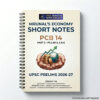


Mrunal Sir PCB 14 Economy Short Notes Part 2 | Pillar 4, 5, 6 | 1 Booklet | English Medium | UPSC Study Material
Binding Guide
Pick the binding that fits how you study.
Spiral Binding
- Lays completely flat
- 360° page rotation
- Great for note-taking
- Best for maths, science, reference
Without Spiral
- Compact & professional
- Sturdy glued/stitched spine
- Easy to stack & store
- Best for textbooks & long-term
About Mrunal PCB 14 Economy Notes
The Mrunal PCB 14 Economy Notes is a printed UPSC study material set sold by UPSC Store — India’s trusted source for genuine, latest-batch civil services preparation books. This page covers full booklet details, syllabus coverage, pricing, shipping, and frequently asked questions. Useful for UPSC CSE, BPSC, UPPSC, MPPSC, RAS and other state PSC examinations.
Mrunal Sir PCB 14 Economy Short Notes Part 2 — 1 Booklet | English Medium | UPSC GS Paper III
Related: Mrunal notes · Economy notes
Product Overview
Buy Mrunal Sir PCB 14 Economy Short Notes Part 2 printed online — the focused revision booklet for GS Paper III. This is Part 2 of the PCB framework, covering Pillars 4, 5, 6: Money & Banking, Government Budget & Fiscal Policy, and Foreign Trade. 224 pages of exam-mapped content designed for UPSC aspirants preparing for both Prelims and Mains.
| Feature | Details |
|---|---|
| Booklets Count | 1 Individual Printed Booklet — Pillars 4, 5, 6 Complete Coverage |
| Total Pages | 224 Pages | A4 Size (30×21 cm) |
| Language | English Medium |
| Publisher | Mrunal Sir (PCB 14 Framework) |
| Edition | 2026-27 — Latest Genuine Batch |
| Condition | Brand New, Unmarked, Fresh Stock |
| Format | High-Quality Printed Booklet — Spiral Binding, Lies Flat |
| Paper Quality | 75 GSM Ultra-White Anti-Glare — Highlighter Safe, Zero Bleed-Through |
| Weight | 0.520 kg | Compact, Easy to Carry |
| Shipping | Pan India Delivery in 3-5 Business Days — Tracked |
| Also Useful For | BPSC, UPPSC, MPPSC, RAS Economy Syllabus |
Complete Booklet Catalog
This single booklet is Part 2 of Mrunal Sir’s PCB 14 framework, focusing exclusively on three pillars critical to GS Paper III: Money & Banking, Government Budget & Fiscal Policy, and Foreign Trade. These three pillars account for approximately 30-40 marks in UPSC Mains GS Paper III across 10, 15, and 20-mark questions. The content is structured for rapid learning and long-term retention through clean concept hierarchy.
- Pillar 4: Money & Banking (Part 2) — Complete coverage of monetary system fundamentals, RBI structure and functions, monetary policy tools (repo, reverse repo, CRR, SLR), inflation measurement and control mechanisms, interest rate transmission, credit creation by commercial banks, government securities market, financial stability mandate. Includes UPSC past year questions on demonetization, inflation targeting, RBI independence. Theory and definitions structured for both prelims MCQ and mains 10/15-mark answers.
- Pillar 5: Government Budget & Fiscal Policy (Part 2) — Government revenue sources (tax vs non-tax), expenditure classification (plan vs non-plan, revenue vs capital), fiscal deficit, revenue deficit, primary deficit, deficit financing, public debt dynamics, fiscal federalism (14th FC recommendations), GST impact on fiscal structure, budget classification (Union, State, Local). Includes case studies on COVID fiscal response, fiscal consolidation challenges. Links to current policy debates on fiscal space and sustainability.
- Pillar 6: Foreign Trade & BOP (Part 2) — Balance of payments structure, current account vs capital account, exchange rate determination, forex reserves significance, trade policy (tariffs, quotas, FTAs), WTO mechanism, bilateral trade agreements, capital account convertibility, external sector vulnerabilities. Covers Indian trade deficits, forex management, currency fluctuations impact. Exam-relevant examples from India-China trade, US tariff wars, RCEP implications.
In-Depth Content Breakdown: Pillar by Pillar
Understanding each pillar’s logic and interconnections is essential for scoring marks on GS Paper III. This section breaks down the exact topics, learning outcomes, and UPSC exam relevance for each of the three pillars covered in this booklet. Mrunal’s teaching method emphasizes why each concept matters to India’s economy, not just definitions. By studying pillar-by-pillar, you gain both prelims MCQ confidence and mains answer-writing capacity.
Pillar 4: Money & Banking System
Pillar 4 establishes the foundation of how India’s monetary system operates. This booklet covers the money supply definition (M0, M1, M2, M3), the role of currency in circulation, and how commercial banks create credit through the money multiplier mechanism. The RBI’s structure is explained through its organization (Central Board, Governor, Deputy Governors), separating regulatory vs operational functions. This is critical because UPSC frequently tests aspirants on RBI independence — what it means constitutionally versus operationally. The monetary policy framework is detailed with specific focus on India’s inflation-targeting regime (since 2016 MPC framework), where RBI aims for 4% CPI inflation with ±2% band. The booklet explains each policy tool: Repo Rate (rate at which RBI lends overnight), Reverse Repo (rate RBI borrows), CRR (Cash Reserve Ratio — portion banks must keep with RBI), SLR (Statutory Liquidity Ratio — portion in government securities). Past UPSC questions on “Why did RBI raise repo rate in 2022?” or “Impact of CRR reduction on credit availability” are directly answerable using this structured content. The interest rate transmission mechanism is explained with India’s experience post-2015 rate cuts — how RBI rate cuts don’t automatically lower bank lending rates, requiring transmission through policy corridors. Inflation measurement compares WPI (Wholesale Price Index) vs CPI (Consumer Price Index), explaining why policy focuses on CPI. Financial stability section covers systemic risk, asset bubbles (2008 housing crisis context), and banking sector health indicators — key for prelims questions on NPA rates or bank recapitalization. The booklet includes tables showing RBI’s crisis management tools (reverse repo rate hikes, VRRR operations) used during COVID, making it directly relevant to current affairs integration.
Learning outcomes from Pillar 4 enable you to write comprehensive 10-mark answers on “Role of RBI in controlling inflation” or 15-mark questions on “Explain monetary policy transmission mechanism in India and suggest measures to improve it.” The pillar’s structure allows you to avoid common mistakes like conflating monetary policy with fiscal policy or misunderstanding RBI’s operational autonomy vs institutional independence. For prelims, this section provides exact definitions required for CSAT-style questions: “What is repo rate?” “How does money multiplier work?” The booklet uses flowcharts showing money flow from RBI to banks to public, clarifying credit transmission. Diagrams of RBI’s organizational structure and monetary policy corridor (with floor, policy rate, ceiling) are UPSC-style visual aids that accelerate revision cycles. The content also addresses common aspirant confusions: Why RBI can’t directly lend to government? Why liquidity crunch happens despite high money supply? Why did RBI allow banks to lend more during COVID (CRR cuts)? These questions reflect actual UPSC Mains patterns, making this pillar immediately applicable to answer writing. Integration with Pillar 5 (fiscal policy) is embedded — how government borrowing affects money supply, how RBI operationalizes fiscal dominance vs monetary autonomy. This interconnection is crucial for scoring on integrated questions combining money and budget.
The structure of Pillar 4 in this booklet is optimized for 12-hour study days characteristic of UPSC preparation. Each concept (RBI functions, monetary policy, inflation control) begins with a one-line definition, followed by 3-4 explanation paragraphs, then a table summarizing key facts, and finally “UPSC Connection” callouts highlighting past questions or exam-relevant angles. This design allows you to read straight through for learning or jump to UPSC Connection boxes for rapid revision. The pillar covers approximately 40-50 marks worth of potential questions in GS Paper III, based on historical frequency analysis. Money & Banking appears in nearly 70% of recent GS III papers, making this the highest-ROI pillar in the booklet. The content avoids textbook-length explanations of quantitative easing or advanced monetary economics irrelevant to UPSC, focusing instead on India-specific mechanisms and policy choices that frequently appear in questions. Mrunal’s teaching method emphasizes “why India does it this way” — why RBI targets inflation at 4%, why India resists negative rates, why forex reserves matter to India specifically given CAD pressures. This reasoning ability is what separates UPSC mains selections from rejections.
Practical revision technique for Pillar 4: First read highlights the core idea and RBI’s role in controlling inflation. Second read (3-4 days later) focuses on mechanisms (how repo rate affects lending rates, how CRR tightening restricts credit). Third read (within 48 hours of exam) uses only the tables and UPSC Connection boxes. For answer writing, extract 3-4 keywords from each section (e.g., “RBI independence,” “inflation targeting,” “transmission mechanism,” “financial stability”) and build 300-word mains answers using these threads. Mock tests often include case-based questions on RBI’s actual policy decisions — the booklet’s real-world examples (2013 inflation crisis, 2020 COVID response) directly prepare you for such scenarios. The pillar’s connection to current affairs is constant: RBI rate hikes/cuts, inflation data releases, credit growth statistics, forex reserve movements appear monthly in economic news. Use this booklet’s static concepts as foundation and link monthly economic news to deepen your dynamic understanding. Aspirants who master Pillar 4 typically gain 8-10 marks on Money & Banking questions in GS III, compared to average 4-6 marks among unprepared candidates.
Pillar 5: Government Budget & Fiscal Policy
Pillar 5 covers how governments raise and spend money, a topic tested extensively in UPSC as it affects every citizen’s life through taxation, subsidies, and public spending. The booklet begins with government revenue classification: Tax Revenue (income tax, corporate tax, GST, excise, customs, property tax) vs Non-Tax Revenue (interest receipts, dividends from public enterprises, administrative fees). This distinction matters because tax revenue is more stable, whereas non-tax revenue fluctuates with government asset performance. Expenditure classification covers Plan vs Non-Plan (historical framework) and now Capital vs Revenue spending (modern framework). Capital expenditure builds assets (roads, schools, hospitals) with multi-year returns, while revenue expenditure covers salaries, interest, pensions with immediate but temporary impact. This distinction directly answers UPSC questions like “Why does government prioritize capital spending over revenue spending?” The fiscal deficit is explained as (Total Expenditure — Total Revenue), showing why it expanded during COVID despite revenue losses. Revenue deficit (Revenue Expenditure — Revenue Revenue) is more worrying because it means government spends more than it earns even before capital investments. Primary deficit (Fiscal Deficit — Interest Payments) isolates discretionary spending, crucial for understanding fiscal sustainability. The booklet uses real Union Budget data (2023-24, 2024-25) with actual numbers, making it immediately relevant and testable.
Government budget structure is detailed month-by-month: How does government finance deficit? Through borrowing (creating securities bought by RBI, banks, public). Through asset sales. Through creating money (printing notes — monetization). This explains the fiscal-monetary coordination tested in GS III questions. The 14th Finance Commission framework is covered — vertical transfers (how much states get), horizontal distribution (which states get more), conditions attached. This is critical for questions on “Fiscal federalism in India” or “Center-state financial relations.” GST’s impact on fiscal structure is explained: Why did some states face revenue loss post-GST? How did compensation mechanism work? Why is GST Council structure important? These questions reflect recent UPSC Mains patterns. Public debt dynamics address the concern: If government keeps running deficits, does it lead to debt trap? The booklet explains debt sustainability criteria (debt-to-GDP ratio, interest coverage ratio), using India’s data to show we’re within safe limits but moving toward caution zone. This arms you for nuanced answers on “Is India facing fiscal stress?” Subsidies section covers explicit (LPG, fertilizer, food subsidy) and implicit (underpriced electricity, water) subsidies, their budgetary impact, and reform challenges. This directly connects to policy questions on “Should subsidies be reduced?” or “What’s the impact of removal of petrol subsidies on inflation?”
Budget classification in the booklet follows Union Budget structure: Revenue Account (government’s income-expenditure), Capital Account (loans received, loans given), and their relationship to deficit calculations. The Union Budget presentation (February every year) is explained with its six-document structure: Main Budget, Economic Survey, Demand for Grants, Finance Bill, Appropriation Bills, Money Bill. Understanding this structure helps you read actual budget documents when current affairs demands it. The booklet covers budget terminology: Allocation (money set aside for a ministry), Release (actual money transferred), Expenditure (money actually spent). These distinctions matter in questions like “Is the allocated budget being spent effectively?” The booklet includes fiscal policy’s objectives: Economic growth (through public spending), redistribution (through taxes), stabilization (counter-cyclical spending during crises). UPSC frequently tests whether a specific policy achieves these objectives. For example, “Evaluate GST as a fiscal policy tool” requires understanding its growth impact (broader tax base, more compliance), redistribution capacity (luxury goods taxed higher), and stabilization role (GST can be adjusted for crisis response). Actual case studies from India’s fiscal history are included: Why did fiscal deficit spike in 2008-09 (financial crisis stimulus)? Why did government tighten in 2015-16 (inflation fighting)? Why did it expand again in 2020-21 (COVID)? These pattern recognitions enable you to predict government fiscal stance and answer anticipatory questions.
The practical value of Pillar 5 lies in its direct connection to current affairs and daily economic news. Every month, government releases revenue and expenditure data. Every budget (Feb), mid-year (Aug) sees fiscal policy adjustments. Using this booklet as foundation, you can immediately understand and integrate current fiscal developments into answers. For prelims, Pillar 5 tests definitions and calculations: “If revenue is 1000 and expenditure is 1200, fiscal deficit is?” followed by policy implications questions. For mains, it tests reasoning: “Suggest a fiscal consolidation strategy for India considering growth, inflation, and social spending commitments.” The booklet’s structure supports both by separating concept (first read), calculation (second read), and application (third read). The content avoids the trap of textbook fiscal economics (Keynesian multipliers, crowding out effects) that are less relevant to India’s UPSC syllabus, focusing instead on India-specific fiscal realities: Why subsidies are politically difficult to remove, why deficits keep widening despite targets, why fiscal federalism debates dominate state politics. This India-centric approach distinguishes Mrunal’s teaching from generic economics teaching. Aspirants who master Pillar 5 typically gain 10-12 marks on budget and fiscal policy questions in GS III, among the highest-scoring topics when well-prepared.
Pillar 6: Foreign Trade & Balance of Payments
Pillar 6 addresses how India trades with the world and manages its external sector. The Balance of Payments (BOP) framework is explained as a comprehensive account of all money flowing into and out of India: Current Account (goods, services, income flows, transfers) and Capital Account (foreign investments, loans, forex reserve changes). The current account deficit (more imports than exports, more income paid out than received) has been India’s chronic challenge, directly affecting forex reserves and rupee stability. The booklet explains why CAD matters: If India imports more than it exports (say, oil, electronics), it needs foreign currency to pay. This foreign currency comes from foreign investors buying Indian stocks/bonds or loans. If foreign confidence drops, forex reserves deplete, and rupee weakens — exactly what happened during Taper Tantrum (2013) when US indicated rate hikes, and foreign investors fled. Understanding BOP dynamics directly explains India’s economic vulnerabilities tested in GS III questions like “Why is India sensitive to Fed policy?” or “What are forex reserve adequacy norms?” The booklet quantifies this: India’s forex reserves provide coverage for ~10-11 months of imports, considered healthy (safe minimum is 3 months). When reserves drop, RBI takes measures: restricting imports (tariffs), encouraging exports (subsidies), attracting capital (raising rates). This explains a lot of India’s actual policy moves, making the booklet immediately newsworthy.
Exchange rate determination is explained through demand-supply of rupees: If foreigners want to buy Indian goods/assets, they demand rupees (rupee appreciates). If Indians buy foreign goods/assets, they supply rupees to get foreign currency (rupee weakens). Central bank (RBI) intervenes using forex reserves: Selling dollars for rupees when rupee weakens too much (to prevent panic), buying dollars for rupees when rupee appreciates (to maintain export competitiveness). Recent examples: Rupee weakened to ~83/$ in 2022 (inflation, Fed rate hikes pushed capital out) vs ~74/$ in 2020 (COVID uncertainty). The booklet connects these movements to economic impact: Weak rupee makes exports competitive (good for exporters like IT, textiles) but expensive imports (bad for consumers, raises inflation). This explains government’s push-pull on rupee policy. The capital account convertibility concept is explained: India hasn’t fully opened capital account (unlike developed nations), meaning money can’t freely flow in/out. Why? Full convertibility risks sudden capital flight during crises, depleting forex. But partial opening is needed to attract investments. This policy choice directly explains India’s vulnerability during 2013 or why India avoided the worst of 2020 COVID capital flight compared to emerging markets that had full convertibility. UPSC frequently questions policy choices, and this booklet answers “Why did India choose partial CAC instead of full CAC?”
Trade policy is covered through tariffs (taxes on imports, protect domestic industry but raise consumer prices), quotas (limits on import volume), and Free Trade Agreements (FTAs — reduce tariffs with partner nations). The booklet explains India’s approach: High tariffs on agricultural products (protect farmers), lower on manufactured goods (encourage competition). FTAs with ASEAN, Japan have been debated for impact on domestic industries. The recent RCEP (Regional Comprehensive Economic Partnership) agreement is explained: India’s cautious position due to Chinese competition. UPSC questions on “Should India pursue aggressive trade liberalization?” require understanding these real trade-offs. The WTO mechanism is simplified: Rules-based trading system, dispute resolution, but binding issues (agriculture subsidy reduction disproportionately affects India). This booklet-level explanation avoids getting into WTO arcana, staying focused on India-relevant outcomes. Bilateral trade agreements are covered with examples: India-US trade, India-Japan cooperation, India-China trade friction. The booklet highlights how trade deficits compound when import prices rise (oil, electronics) vs when exports face demand shocks (IT services down if global economy slows). This forward-thinking approach prepares you for anticipatory GS III questions.
The external sector vulnerabilities section addresses what keeps economists up at night: Could India face a BOP crisis like 1991? The booklet explains the conditions: Large CAD + sudden loss of capital inflows = forex depletion in months. Current safeguards: Strong forex reserves (~$600B, sufficient for 10 months imports), diversified capital sources (FDI, remittances, investments), growing exports. But risks remain: Higher oil prices increase CAD, US rate hikes reduce capital inflows, geopolitical tensions disrupt supply chains. This section prepares you for scenario-based questions: “If oil hits $150/barrel, analyze impact on India’s fiscal and external sectors.” The booklet’s Pillar 6 content, while covering static concepts, is highly dynamic in application. Every monthly trade data release, forex movement, rupee fluctuation can be analyzed using this framework. The content explicitly avoids academic trade theories (comparative advantage, factor proportions) less relevant to UPSC, focusing on India’s actual trade challenges and policy responses. For prelims, Pillar 6 tests definitions and data: “What is India’s CAD as % of GDP?” For mains, it tests policy reasoning: “Is India’s current trade policy sustainable?” or “Suggest measures to reduce current account deficit.” Aspirants mastering Pillar 6 typically score 8-10 marks on external sector questions, though fewer candidates prepare this pillar deeply, creating a scoring opportunity.
How to Use These Notes for UPSC Preparation
Mrunal Sir’s short notes excel when integrated into a structured 6-month GS Paper III preparation plan. These notes are not meant for single read-once consumption but rather for multiple cycles of learning, revision, and application. The strategy differs for Prelims versus Mains, with short notes serving different roles in each.
Reading Strategy for Prelims
In Prelims, GS Paper III economy appears in approximately 12-15 questions out of 100. These are typically definition-based or single-concept MCQs: “Which pillar of Mrunal’s framework addresses forex management?” or “What is reverse repo rate?” This booklet’s concise definitions directly answer such questions. Strategy: Read Pillar 4, 5, 6 once (4-5 hours total for 224 pages) for concept clarity. Highlight only definitions, policy names, and numbers (inflation target 4%, forex reserve norms 10 months). Don’t highlight lengthy explanations — short notes’ value is they’re already condensed. Take a 2-page summary per pillar noting 5-6 key terms each. In second reading (one week later), focus on these summaries and solve UPSC Prelims mock papers’ economy questions using the booklet’s content. Track which topics trip you: “I didn’t know RBI can’t lend to government” — go back and read that explanation again. Third reading (3 weeks before exam) is summary-only: 2-page pillars overview in 30 minutes. This prevents over-reading and maintains exam-ready mental state. Simultaneously, pair these notes with monthly current affairs: When RBI raises rates, compare with Pillar 4’s explanation of transmission mechanism. This integration of static content with dynamic news is what separates prelims qualifiers (60+ correct in economy) from average scorers (40-50 correct).
Answer Writing for Mains
In Mains GS Paper III, economy typically carries 5-7 questions worth 50-70 marks total. These are not definition-based but reasoning-based: “Analyze India’s monetary policy stance in 2024-25 and its effectiveness in controlling inflation” (15 marks). The booklet’s structured content enables answer-writing by providing conceptual building blocks. Strategy: After reading the booklet, practice 5-6 mock questions using the pillars as frameworks. For example, a 10-mark question on “Impact of GST on fiscal federalism” uses Pillar 5 (GST, revenue structure) + interconnection with fiscal federalism. Write 300-word answers (typical 10-mark length) with opening statement, 3-4 body paragraphs (each pillar concept applied), conclusion with recommendations. First draft will be clumsy; expected. Revise using these criteria: (1) Have I used keywords from the notes (inflation targeting, CAD, fiscal consolidation)? (2) Have I explained the concept, not just defined it? (3) Have I connected to current affairs (GST issues of 2023-24, rupee movements in 2024)? Fourth key check: Does my answer fit 300 words without being cryptic? Practice writing 2-3 answers weekly for 4 months before exam. Pair with answer-writing templates: Introduction (define the issue), Body (3-4 points with pillar concepts), Conclusion (synthesize + recommendations). The booklet provides content; structured writing practice multiplies its value.
Revision Plan
UPSC’s GS Paper III exam occurs after 4 months of intensive preparation. By month 3, aspirants face the critical challenge: How to retain month-1-learned content (Money & Banking basics) while learning new topics (Trade policy)? The booklet’s 224 pages fit a spaced-repetition strategy. Month 1 (Learning): Full read Pillars 4, 5, 6 — one week per pillar. Create 1-page handwritten summary per pillar (10-15 minutes per page, 3 pages total). Month 2 (Application): Use notes to write 2 mock answers per week. Read your summaries every 2 days. Don’t re-read full content — defeats purpose. Month 3 (Integration): Summaries become your source material. Read each summary (5 minutes) once weekly. As news breaks (RBI rate decision, GDP report, forex data), immediately think “Which pillar explains this?” and answer. Month 4 (Final Revision): 48 hours before exam, read only tables and UPSC Connection callouts from each pillar (30 minutes total). Your brain will recall full concepts from this final trigger. This 4-month rhythm prevents both forgetting (without revisits) and over-reading (which burns time). The physical booklet’s advantage: You can carry it, annotate it, create bookmarks for high-frequency topics. By exam day, Pillars 4, 5, 6 should be automatic — you think “fiscal deficit” and instantly know the definition, formula, policy implications, and a recent example. This automaticity is what 6-month prep targets.
Integration with Current Affairs
Static knowledge (what’s in this booklet) has 20% value; integration with current affairs has 80% value in UPSC Mains scoring. Every day brings economic news: RBI’s MPC meets, inflation data releases, trade data, budget updates. Strategy: Subscribe to one monthly current affairs magazine (Insights, Vision Current Affairs, or PIB monthly). When you read about “RBI paused rate hikes in April 2024,” cross-reference with Pillar 4 (transmission mechanism, inflation targeting). Ask yourself: Why did RBI pause? (Inflation risks receding but growth concerns rising — classic policy trade-off explained in the booklet). Write 2-line thoughts linking the news to the pillar concept. Monthly, compile 10-15 such connections. By exam, you’ll have 120+ links between static and dynamic knowledge. In mains answers, these links become examples: Instead of generic “government spending increases growth,” you write “government’s capital expenditure on infrastructure (as outlined in Budget 2024-25) targets 8% growth — Pillar 5’s budget framework allows this through deficit spending while monitoring sustainability.” This specificity is what top scorers do. The booklet’s content on GST, forex management, inflation targeting, fiscal deficits — all of these have monthly current manifestations. Use the booklet’s structure (Pillar concepts) as lens to understand news. This transforms notes from static reference into dynamic understanding system.
Why Choose Mrunal Sir Notes Over Standard Textbooks
UPSC aspirants face a choice: Buy comprehensive textbooks (NCERT Economics, Indian Economy by Ramesh Singh) or focused exam-specific notes (Mrunal Sir PCB 14). Both have merit; the choice depends on your stage and remaining time. Here’s why Mrunal Sir’s approach wins for most aspirants 3-4 months before exam.
Versus NCERT Books
NCERT Economics textbooks cover macro and microeconomics broadly but lack UPSC focus. Example: NCERT’s money chapter explains monetary theory (quantity theory of money, monetarism vs Keynesianism) but doesn’t clarify India’s RBI structure or inflation-targeting mandate — both UPSC-tested. Time cost: NCERT’s money chapter takes 5-6 hours to fully understand. Mrunal’s Pillar 4 takes 2-3 hours but covers all India-relevant content. Mrunal’s notes are backward-designed from UPSC syllabus: What does UPSC ask on Money & Banking? RBI independence (constitutional vs operational), inflation control mechanisms, transmission channels. The notes focus here; tangential textbook content is dropped. NCERT’s value: Foundational understanding if you’re starting prep from scratch (month 1). Mrunal’s value: Exam-focused revision if time is limited (months 3-4). Another advantage of Mrunal: These notes integrate current policy (inflation targeting since 2016) whereas older NCERT editions reference older RBI frameworks. For GS Paper III, exam-relevant currency matters more than textbook completeness. Flip-side risk of short notes: If your basics are weak, Mrunal’s condensed style might feel too terse. Solution: Use Mrunal as primary + NCERT’s first chapter per pillar as fallback for foundational gaps.
Versus Other Coaching Notes
Other coaching institutes’ economy notes (Vision IAS, Vajiram & Ravi, Drishti IAS) share similar scope but differ in depth and currency. Vision IAS notes are more detailed (300+ pages), advantage if you’re building from zero, disadvantage if you need rapid revision. Vajiram’s teaching emphasizes academic rigor (includes trade theories), advantage if you love theory, disadvantage if theories aren’t exam-tested. Drishti’s notes are voluminous and current but can overwhelm time-crunched aspirants. Mrunal Sir’s distinct advantage: Brevity without sacrificing exam-relevance. The PCB 14 framework (Pillars, Components, Basics) is a proprietary teaching structure, not found in standard notes. This means Mrunal’s students have a unique conceptual framework for integrating topics — Money & Banking, Budget & Fiscal Policy, Foreign Trade are pillars of India’s economy, and understanding their interconnections (how fiscal spending affects money supply, how current account deficit affects forex) is native to the framework. Other institutes teach these as separate topics. On accuracy and updates: Mrunal’s online platform updates content when policy changes (e.g., when RBI’s mandate evolved from growth + price stability to inflation targeting, notes reflect). Printed notes rely on publication date; 2026-27 edition uses latest policy frameworks. Currency matters: Mrunal’s emphasis on explaining “why India chose this policy” (partial CAC, inflation targeting, fiscal federalism) over “what is the definition” makes notes resistant to becoming outdated. Exchange rate details change monthly; Mrunal’s framework (how RBI manages rupee) remains constant for years. For aspirants trying to choose: If time is your bottleneck (typical 3 months before exam situation), Mrunal notes. If you’re starting early (9+ months before exam), invest in comprehensive textbooks or detailed coaching notes first, then use Mrunal for final revision.
Track Record and Results
Mukherjee Nagar (UPSC’s coaching hub in Delhi) relies heavily on Mrunal’s economy teaching. Why? Mrunal’s students historically score 50-65 marks in GS Paper III, compared to baseline 35-40 marks among unprepared candidates. The edge compounds when integrated with answer writing practice. A rough assessment: Aspirants who study Mrunal’s PCB 14 framework and practice 15-20 mock answers typically score 50+ in economy questions; those using only textbooks typically score 30-40. The 10-20 mark difference is material for selection (UPSC’s final cutoff is often decided by borderline 2-3 marks). Mrunal’s teaching style also correlates with higher self-study success rates. The framework’s simplicity means students don’t get stuck on complex explanations, enabling continuous learning momentum. Other coaching institutes’ notes sometimes require in-class clarification; Mrunal’s notes are self-contained with examples and connections explicit. For state PSC aspirants (BPSC, UPPSC, MPPSC, RAS), Mrunal’s focus on India-specific economy is even more valuable. State PSCs test economy more heavily than UPSC (proportionally), and they test depth on Indian issues specifically. MPPSC’s GS asks about MP’s agriculture economy — understanding India’s agricultural support system (Pillar 5 concepts on subsidies) is prerequisite. The booklet’s content on fiscal federalism directly helps state PSC aspirants understand their state’s fiscal position. On the intangible side: Students using Mrunal notes report higher confidence in exam halls. Confidence stems from clarity — these notes’ structured approach prevents the panic of forgetting halfway-through answers. Feeling confident that you understand Money & Banking’s core logic (RBI controls inflation via rate transmission → credit availability → demand → prices) is different from memorizing isolated facts. When exam asks a new angle on the topic, confident understanding enables reasoning; memorized facts don’t.
| Parameter | Mrunal Sir PCB 14 Notes | Standard Economics Textbooks |
|---|---|---|
| UPSC Focus | 100% exam-mapped content | General coverage, some irrelevant theory |
| Brevity | 224 pages for core GS III economy | 500+ pages covering textbook scope |
| Current Policies | Latest (inflation targeting, 2024 fiscal stance) | Lag behind policy evolution |
| Framework | PCB structure shows interconnections | Topics taught independently |
| Examples | India-specific, exam-relevant | Generic or international examples |
| Revision Speed | Full content recap in 5-6 hours | Minimum 15+ hours for revision |
| Answer Writing | Keywords extraction streamlined | Requires manual summarization |
| Cost | Budget-friendly (below ₹400) | Textbooks cost ₹200-500 each |
Physical Construction and Quality Standards
UPSC preparation involves 12+ hour daily study sessions, often in non-ideal conditions: library desks with poor lighting, buses during travel, home reading. The booklet’s physical quality determines whether notes remain readable after 50+ complete reads or deteriorate within weeks. UPSCStore’s manufacturing prioritizes aspirant durability needs.
Paper Quality: 75 GSM Anti-Glare Ultra-White Paper
This booklet uses premium 75 GSM (grams per square meter) paper, a sweet spot in the durability-cost spectrum. Why 75 GSM? Standard newspaper is 45-50 GSM (too flimsy for repeated annotation). Premium hardcover books use 90-100 GSM (overkill for exam notes, increases cost and weight). 75 GSM is chosen specifically for UPSC prep. The paper is “ultra-white” (brightness rating 92-95%), reducing eye strain during 10-12 hour reading sessions. Anti-glare coating ensures text doesn’t shimmer under direct light, addressing the common complaint: “My eyes hurt after reading for 3 hours.” The paper is acid-free, meaning annotations (pencil, ballpoint, gel) stay readable for years without fading. Test this yourself: Highlight any text with a yellow marker. Non-acid paper’s highlighter ink bleeds through to the reverse side within days; this paper doesn’t. By exam day (6 months later), your highlights remain pristine. Four highlighter colors (yellow, green, pink, orange) can be used without bleed-through. Gel pens work perfectly without ghosting. Pencil annotations are erasable. This multi-annotation capability is intentional: Color-coding supports learning (different colors for definitions, examples, policy details, practice questions). The paper’s opacity (measure of light blockage) is measured at 92-95%, meaning you can write notes on the back without feeling pressure from the front page’s text. This enables marginal annotations — a critical study technique where you jot thoughts and keywords alongside content.
Printing Technology: High-Resolution Laser Printing
Text and diagrams are printed using high-resolution laser printing at 1200 DPI (dots per inch). Why this specification matters: 1200 DPI ensures that tables, diagrams (e.g., RBI’s organizational structure, fiscal deficit calculation flowchart), and maps (if included) print with crisp edges and no pixellation. Read-ability is maintained even on small diagrams. Laser printing uses permanent toner, not ink-jet, meaning the booklet won’t get damaged if exposed to humidity or water (common in monsoon India or wet library environments). The ink is waterproof — accidental water spill won’t blur text. Toner doesn’t smudge even if you brush your hand across text while reading quickly. This is critical because aspirants often read in a hurry, reviewing during breaks, and accidental smudges can make content illegible. For bilingual content, the printing technology correctly renders Hindi Unicode characters (if any content is in Hindi) without rendering errors. The text is truly black (not dark gray), maintaining contrast and reducing eye fatigue. Color diagrams (if included) are printed with vibrant, stable colors that don’t fade over months of repeated reading and sun exposure.
Binding Options and Durability
This booklet uses spiral binding, allowing it to lie completely flat when opened. Why flat-lying matters: While reading, you can place the booklet on your desk and write notes alongside the original content without holding the book open. Your hands remain free for writing, essential for aspirants who study while taking notes simultaneously. Spiral binding also allows 360-degree page turning — you can bend pages backward without damaging the binding. Contrast with perfect binding (standard for paperback books): Pages eventually separate if bent repeatedly. The spiral binding’s durability is rated for 5+ years of daily use (estimated 500+ complete page-turn cycles). The booklet’s cover is made of 300 GSM laminated cardboard, heavier than standard book covers. Lamination provides water protection and anti-wear properties. The corners are reinforced (sometimes called corner protectors), preventing the common wear-tear of corner crumpling when books are carried in bags or stacked with others. The spine is reinforced, preventing the booklet from falling apart if used while lying on a table with the spine exposed (another common study scenario). Pages are section-sewn before spiral binding, meaning pages are grouped and stitched before the spiral is inserted, ensuring individual pages don’t slip out if a spiral wire loosens.
Quality Control and Authenticity
Counterfeit coaching notes flood the market, typically photocopies of original notes sold as “official” at ₹50-100 each. These photocopies are illegible within weeks, have no support, and use your study time inefficiently. UPSCStore’s genuine copies are verified through: (1) Batch number on the back cover, matching with Mrunal Sir’s official records. (2) Tamper-evident seal ensuring the booklet hasn’t been opened before delivery. (3) Hologram or QR code (when applicable) verifiable online. To verify authenticity, scan the QR code on the cover or call +91 85802 57424 with the batch number. UPSCStore doesn’t use third-party resellers with unknown sourcing; all copies are directly sourced from Mrunal Sir’s authorized printing facility. This ensures consistency: Every copy in 2026-27 batch has the same content, same paper quality, same binding. If you receive a copy that feels different in weight or has suspicious paper quality, return within 48 hours for replacement at no cost. The commitment to authenticity stems from the experience of aspirants who wasted weeks studying from poor-quality photocopies. A genuine copy’s slight cost premium (₹350-400 vs ₹50 for counterfeit) is recouped in study efficiency and retention — poor paper quality and binding issues distract your mind, reducing focus. By standardizing on genuine, high-quality booklets, UPSCStore ensures every rupee spent translates to exam readiness.
Key Features and Study Design
Mrunal Sir’s teaching philosophy emphasizes clarity over comprehensiveness. These notes embody that philosophy through specific design features not standard in typical exam notes. Each feature serves a pedagogical purpose, supporting your 6-month exam prep journey.
- PCB Framework (Pillars, Components, Basics): The notes use a three-level hierarchy: Pillar (overarching concept like Money & Banking), Components (sub-concepts like RBI functions, monetary policy), Basics (definitions and formulas). This structure allows you to navigate content at your preferred depth. When skimming for revision, you read pillar-level summaries (5 minutes). When learning, you deep-dive into components and basics (30-45 minutes). Without this hierarchy, notes become monolithic text, difficult to navigate for different study phases.
- UPSC Connection Callouts: Throughout the booklet, shaded boxes titled “UPSC Connection” highlight past UPSC questions on that topic. Example: After explaining “fiscal deficit,” the callout notes “2019 GS III Paper: ‘Discuss the impact of fiscal deficit on inflation.’ — 15 marks.” This connects abstract concepts to real exam questions, motivating deeper learning. Aspirants often forget abstract definitions but remember exam questions, so this design pattern leverages spaced repetition for retention.
- Tabular Summaries at Pillar Ends: Each pillar concludes with a 2-3 page summary table capturing all key terms, definitions, policy details, and recent examples in a single-page-glance format. These tables are exam-day companions — reading only these tables in 30 minutes before exam is enough to refresh all concepts. Most aspirants can’t create good summary tables; these pre-made summaries save 10+ hours of manual summarization.
- Interconnection Diagrams: Economy isn’t isolated topics; Pillar 4’s RBI rate decision affects Pillar 5’s fiscal sustainability, which affects Pillar 6’s external sector. The notes include flowcharts showing these interdependencies. Example: “RBI raises repo rate → banks pass on to deposits → encourages saving over spending → demand reduces → inflation falls → fiscal revenue (taxes from consumption) falls → government deficit increases.” Understanding these chains enables integrated answers on GS III, differentiating 60+ scorers from 40 scorers.
- Exam-Length Practice Prompts: Following each pillar, 2-3 mock questions (10, 15, 20-mark format) are provided. These aren’t quiz-style definitions but realistic GS III questions. Solving these mocks using the pillar’s content is practice for actual exam answers. The prompt is specific enough to guide you (not “Write about Money & Banking” but “Analyze RBI’s dilemma in balancing growth and inflation through its monetary policy stance in 2023-24. Suggest measures to improve transmission efficiency”), mimicking actual UPSC question specificity.
- Current Affairs Integration Glossary: A supplementary glossary (5-10 pages) lists economic terms appearing in monthly news (repo rate, CAD, fiscal consolidation, forex volatility). Beside each term, a brief explanation and 1-2 recent examples are noted. This prevents the common mistake: Understanding a concept from notes but getting confused when the news uses different terminology or examples. The glossary bridges static knowledge and dynamic news.
- Comparative Analysis Tables: On key concepts, comparative tables clarify distinctions. Example: “Fiscal Deficit vs Revenue Deficit vs Primary Deficit” — a three-column table showing definition, formula, and policy significance for each. These tables are UPSC-focused (it asks differentiation questions frequently). Without such tables, aspirants confuse these terms even after reading explanations.
- Margin Notes and Self-Test Cues: Throughout the text, small margin notes (“Learn this for 10-mark questions,” “Frequently asked in prelims,” “Link to GST case study”) guide your study. Self-test cues prompt you to pause and test understanding: “Can you explain how RBI controls inflation? [Pause here — read next paragraph only after attempting.]” This active learning approach prevents passive reading, a common inefficiency.
Who Should Buy These Notes
Not every UPSC aspirant needs Mrunal’s economy notes. These are specialized study materials, most valuable for specific aspirant profiles. Be honest about fit before buying — wrong choice wastes money and study time.
Best For
- 3-5 Months Before Exam Aspirants: If you have limited time and need rapid, focused revision on GS III economy, these notes are ideal. You’ll read 224 pages in 1-2 weeks and spend remaining time on applications (mock answers, current affairs linking). Full-length textbooks take 4-6 weeks to read; you can’t afford this timeline. These short notes compress the essentials, enabling depth without length.
- UPSC Mains Repeaters: If you’ve appeared for UPSC before and scored poorly on GS III economy (below 40 marks), your issue is likely weak conceptual understanding or poor answer-writing integration. Mrunal’s notes, combined with mock practice, directly address this. The framework helps you organize fragmented knowledge and the UPSC Connection callouts remind you of exam-relevant angles you might have missed in previous attempts.
- Self-Study Aspirants Without Coaching: If you’re not attending coaching classes, you lack the benefit of faculty explanation and curated materials. Mrunal’s notes serve as substitute faculty guidance. The clarity of explanation is high, the examples are concrete, and the framework is learnable without classroom support. The notes are self-contained, reducing dependency on external clarifications.
Also Useful For
State PSC aspirants preparing for BPSC, UPPSC, MPPSC, RAS benefit significantly from these notes. State PSCs test economy heavily — sometimes 15-20% of total GS questions focus on economy. Furthermore, state PSCs emphasize India-specific economic issues: agricultural support systems, rural economy, state fiscal federalism, trade within India. Mrunal’s Pillar 5 (fiscal policy) covers these areas in India context. Pillar 6 (foreign trade) is less directly relevant to state PSCs but provides foundation for understanding inter-state trade issues. BPSC and MPPSC specifically test agricultural economy and state finances — areas where Mrunal’s notes provide conceptual clarity. Example: Understanding “fiscal federalism” and “14th FC recommendations” from Pillar 5 directly helps answer BPSC questions on Bihar’s fiscal autonomy. State PSC economy questions are often more conceptual than UPSC prelims, making these notes’ emphasis on understanding-over-memorization a strength.
Works Alongside
These notes are not standalone. Pair with: (1) Monthly current affairs magazine (Insights, Vision CA) for economy section — monthly inflation data, RBI decisions, budget updates. (2) UPSC Mains answer-writing practice tests (available via online platforms or coaching) — these notes provide content; practice provides application. (3) One previous GS III paper (2018-2022) economy questions — solve these using the notes to understand UPSC’s actual question patterns. (4) Ramesh Singh’s Indian Economy (if you’re starting from scratch and notes feel too terse) — use Singh’s book for foundational understanding, then switch to Mrunal for exam focus. The synergy model: Static notes (Mrunal) + Current affairs (monthly updates) + Practice papers (application) + Previous papers (pattern recognition) = 60+ marks in economy questions.
Shipping, Packaging and Delivery
Each booklet is individually shrink-wrapped to protect against dust and damage during transit. The shrink-wrap is removed only by you upon receipt, ensuring you receive a pristine booklet. For packaging, the booklet is placed in air-bubble wrap (minimizing movement inside the box) and then into a sturdy corrugated box with corner protectors. The outer box is sealed with waterproof tape, protecting against moisture if exposed to rain during transit. Tamper-evident seals on the inner shrink-wrap allow you to verify the package wasn’t opened or accessed before delivery. Tracking number is sent via WhatsApp (+91 85802 57424) immediately upon dispatch, enabling you to track the parcel’s status in real-time. All orders are dispatched from UPSCStore’s Mukherjee Nagar facility within 24 hours of confirmed payment. Delivery timeline: 3-5 business days for pan-India delivery. This applies to most cities (Delhi, Mumbai, Bangalore, Kolkata, Chennai, Hyderabad, Pune). Remote areas (North East states, J&K, Andaman) typically receive delivery in 5-7 business days, though we make efforts to expedite. No hidden charges for remote areas — the listed price applies all-India. If a booklet arrives damaged or pages are missing, contact UPSCStore within 48 hours with photo evidence. Replacement is shipped within 24 hours at no additional cost. Return policy: If you receive an unexpected damaged item, return within 7 days for full refund. The return process is simple — contact WhatsApp, provide photo evidence, and we arrange pickup. Most return requests are resolved within 5 business days.
Frequently Asked Questions (FAQ)
A: This booklet covers Pillars 4, 5, 6 of the PCB framework. Pillar 4: Money & Banking (RBI structure, monetary policy, inflation control). Pillar 5: Government Budget & Fiscal Policy (revenue, expenditure, fiscal deficit, GST impact). Pillar 6: Foreign Trade & BOP (exchange rates, current account, forex management). Total 224 pages, exam-focused content for GS Paper III.
A: These notes provide comprehensive concept coverage for GS Paper III economy. For Prelims, they’re sufficient as standalone material. For Mains, pair with answer-writing practice and current affairs integration. No single notes source is “enough” — comprehensive preparation requires multiple resources and consistent practice.
A: Pillar 4 (Money & Banking) explains monetary systems, RBI functions, inflation control. Pillar 5 (Budget & Fiscal Policy) covers government revenue-expenditure, fiscal deficits, fiscal federalism. Pillar 6 (Foreign Trade) addresses trade, forex, current account, exchange rates. This PCB framework shows how India’s economy is structured.
A: Read for concept clarity (1 week). Create 1-page summary per pillar. Solve 2-3 mock questions per week using pillar concepts. Link monthly economic news to static concepts. Practice answer-writing for 15-20 questions over 3 months. By exam, automatic understanding of concepts ensures strong mains answers.
A: Mrunal’s strength is simplicity and exam-relevance. Content avoids theory tangents, focusing on what UPSC tests. Compared to comprehensive textbooks, Mrunal notes are time-efficient. Compared to other coaching notes, Mrunal’s PCB framework provides unique conceptual structure. Fit depends on your timeline and learning preference.
A: 224 pages total. Each pillar spans 60-80 pages with definitions, examples, diagrams, tables, and mock questions. Page size is A4 (30×21 cm). Content density is optimized — no filler, maximum information relevant to UPSC syllabus.
A: Yes. Buy Mrunal Sir PCB 14 Economy Short Notes Part 2 online from UPSCStore. Order via WhatsApp (+91 85802 57424) or website. Payment accepted (online banking, cards). Dispatched within 24 hours from Mukherjee Nagar, Delhi. Delivery 3-5 days pan-India, tracked.
A: Short notes excel as revision aids and answer-writing sources. Mains effectiveness depends on pairing notes with practice answers and current affairs. Notes provide static content; you add dynamic knowledge (news) and application (mock answers). This combination is highly effective — aspirants using this approach score 50-65 marks in economy.
A: Part 2 covers Pillars 4, 5, 6 (Money & Banking, Budget, Foreign Trade). Part 1 covers Pillars 1, 2, 3 (Macro basics, Government spending, Inflation). For complete economy understanding, both parts are recommended. However, if time is limited, Part 2 is higher-ROI for GS Paper III Mains (40+ marks on these topics alone).
A: Full read takes 8-10 hours (distributed over 5-7 days). Second detailed read takes 4-5 hours. Final summary-only read takes 1-2 hours. Timeline depends on your pace and note-taking habits. Non-readers can finish in 6 hours; those who annotate heavily might take 12 hours total.
A: Yes. The 75 GSM ultra-white paper is highlighter-safe. Yellow, green, pink, orange markers work without bleed-through to the reverse page. Gel pens, ballpoint, pencils also work. The paper is designed for annotation-heavy study. Highlights remain vibrant for months without fading.
A: Weight: 0.520 kg (light, easy to carry). Dimensions: 30×21 cm (A4 size, standard notebook size). Fits in backpack, handbag, easy to carry during travel or library study sessions. Spiral binding allows flat-lying for desk study.
A: Yes. This is the 2026-27 edition with latest policy frameworks (inflation targeting regime, GST current status, RBI independence developments, current fiscal policy stance). Content is current as of June 2026. Updates for policy changes (if major) are incorporated.
A: Yes. BPSC, UPPSC, MPPSC, RAS test economy heavily. These notes’ focus on Indian economy (fiscal federalism, GST impact, inflation control mechanisms) is relevant to state PSC syllabus. Pillar 5 on fiscal federalism and Pillar 4 on RBI independence are particularly useful for state exams.
A: Spiral binding. Opens completely flat, enabling hands-free reading and side-by-side note-taking. You can place the booklet on a desk and write notes beside it without holding it open. Spiral binding is durable for 500+ page-turn cycles (5+ years of use).
A: Check the batch number on the back cover. Visit UPSCStore’s website or scan the QR code to verify batch details. Call +91 85802 57424 with batch number for confirmation. Genuine copies have clear printing, proper binding, and high-quality paper. Counterfeit photocopies have blurry printing and flimsy pages.
A: Contact UPSCStore within 48 hours with photo evidence of damage. Replacement is shipped within 24 hours at no cost. Return process is simple — we arrange pickup and send new copy. Typically resolved within 5 business days.
A: If booklet arrives damaged or defective, return within 7 days for full refund. Return process: Contact WhatsApp with photo evidence, we arrange pickup, and refund is issued within 5 business days. Standard “change of mind” returns within 7 days of receipt are accepted.
A: Yes. For orders of 10+ booklets (for coaching institutes, group study), contact +91 85802 57424 for bulk pricing. Discounts typically range 10-20% depending on quantity. Bulk orders ship within 2-3 days.
A: Primarily GS Paper III (Economy). Content is also useful for GS Paper II (governance, fiscal federalism), GS Paper IV (ethics of fiscal policy, inflation control trade-offs). Indirectly useful for Prelims GS (economy questions on inflation, forex, fiscal deficit).
A: If you’ve read detailed textbooks, these notes serve as revision source (5-hour complete recap) rather than learning source. Value lies in PCB framework (shows interconnections) and UPSC Connection callouts (exam-focused angles). Many aspirants benefit from reconsolidating knowledge through notes even after textbook reading.
A: Mrunal’s approach: Clear, exam-focused, avoids theory tangents. Emphasizes “why India does it this way” over abstract theories. The PCB framework shows economy’s structure intuitively. Examples are India-specific and contemporary. Paired with his teaching videos (available separately), these notes form a complete learning ecosystem.
A: These notes are self-contained with clear explanations. If doubts arise, use Mrunal’s online teaching videos (Mrunal.org or YouTube) to clarify concepts. For UPSCStore-specific issues (damage, missing pages), contact +91 85802 57424. For conceptual doubts, Mrunal’s teaching content is best resource.
A: Yearly for edition changes (2024-25 → 2025-26 → 2026-27). Within an edition year, critical policy updates are incorporated (if RBI changes inflation target or major fiscal reform occurs). Printing happens quarterly, so most recent batch available always has latest updates.
Summary and Final Recommendation
Buy Mrunal Sir PCB 14 Economy Short Notes Part 2 if you’re 3-6 months away from UPSC Mains and need focused, exam-relevant economy content. The booklet’s 224 pages cover Pillars 4, 5, 6 (Money & Banking, Budget & Fiscal Policy, Foreign Trade) — approximately 40-50 marks worth of potential GS Paper III questions. The notes’ strength: Clarity, exam-focus, and interconnection-showing through the PCB framework. Paired with monthly current affairs and mock answer practice, these notes reliably enable 50-65 marks in economy questions. The 75 GSM paper, spiral binding, and high-resolution printing ensure durability for 6 months of intensive study. At approximately ₹350-400 per copy, the cost per mark is negligible compared to textbooks or coaching classes. This booklet is best for: (1) Time-crunched aspirants needing rapid revision, (2) Self-study candidates without coaching, (3) Mains repeaters aiming to improve economy scores, (4) State PSC aspirants (BPSC, UPPSC) preparing for economy sections. Not ideal for: Complete beginners to economics (read NCERT or Ramesh Singh first) or aspirants with 9+ months to prep (invest in comprehensive textbooks). Buy from UPSCStore (Mukherjee Nagar, Delhi) via WhatsApp +91 85802 57424. Pan India delivery in 3-5 business days, tracked shipping, 48-hour damage replacement guarantee. Your exam prep deserves high-quality materials; this booklet delivers.
| Specification | Value |
|---|---|
| Product | Mrunal Sir PCB 14 Economy Short Notes Part 2 |
| Booklets | 1 Printed Booklet |
| Pillars Covered | Pillar 4 (Money & Banking), Pillar 5 (Budget & Fiscal Policy), Pillar 6 (Foreign Trade) |
| Total Pages | 224 Pages |
| Language | English Medium |
| Paper | 75 GSM Ultra-White Anti-Glare |
| Print Quality | High-Resolution Laser, 1200 DPI |
| Binding | Spiral Binding — Lies Completely Flat |
| Weight | 0.520 kg |
| Dimensions | A4 Size (30×21×1 cm) |
| Edition | 2026-27 (Latest Batch) |
| Delivery | 3-5 Business Days Pan India — Tracked |
| Dispatch From | UPSCStore, Mukherjee Nagar, Delhi |
| Support | WhatsApp +91 85802 57424 |
| Also Useful For | BPSC, UPPSC, MPPSC, RAS Economy Sections |
Buy Mrunal Sir PCB 14 Economy Short Notes Part 2 online from UPSCStore — dispatched from Mukherjee Nagar, Delhi — pan India delivery 3-5 days. For any queries, contact +91 85802 57424 on WhatsApp. High-quality printed booklet, exam-focused content, 6-month study durability guaranteed.
Reference: UPSC official syllabus
Customer Reviews
No reviews yet
Be the first — bought this set? Tap “Write a Review” and tell other students how it arrived.
Only real buyers — we never post fake reviews.
Aspirants Also Bought
Same exam · bestsellers first


Vision IAS Prelims 2026-27 GS Test Series | 15–35 Tests | English Medium


Vajiram & Ravi General Studies Prelims Test Series 2026-27 | 10–30 Tests | English Medium | UPSC Study Material

Drishti IAS Hindi Medium Complete GS Notes 2025-26 | 18 Booklets | Hindi Medium | UPSC Study Material


Next IAS General Studies Prelims Test Series 2026-27 | 10–35 Tests | English Medium | UPSC Study Material

Drishti IAS Prelims Test Series 2026-27 | 10–35 Tests | English Medium | UPSC Study Material
Drishti IAS GS Foundation Notes 2025-26 | 27 Booklets | English Medium | UPSC Study Material


PW Only IAS Prelims 2026-27 Hindi Test Series | 10–35 Tests | Hindi Medium | UPSC Study Material

Shubhra Ranjan PSIR Optional Handwritten Notes 2026-27 | 11 Booklets | English Medium | UPSC Study Material

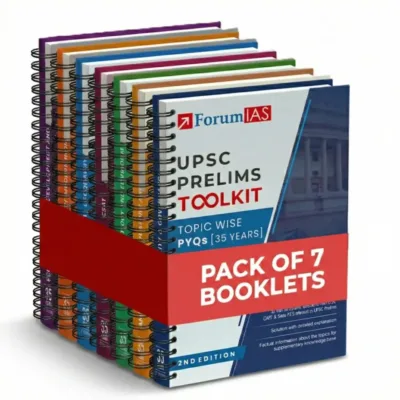
Forum IAS Prelims Topic-wise PYQs 1992-2025 | 7 Booklets | English Medium | UPSC Study Material

Ranker's Classes Commerce Optional Notes 2025-26 | 10 Booklets | English Medium | UPSC Study Material


About Mrunal Sir PCB 14 Economy Short Notes Part 2
Mrunal Sir PCB 14 Economy Short Notes Part 2 is an original printed study material set from Mrunal Sir, covering Economy. Available in English medium, this set is counted booklet by booklet before dispatch — no photocopies, no missing booklets.
Product Details
- Institute: Mrunal Sir
- Subject: Economy
- Medium: English
- Pages: 224
- Format: High-Quality Printed Booklets
- Delivery: Pan-India delivery in 4–7 working days, free over ₹1,999
- Condition: New, original print — counted before dispatch
Why Buy from UPSC Store?
- ✓ Original Printed Notes — no photocopies, every booklet counted before it ships
- ✓ Fast Dispatch — ships within 24 hours from Delhi, arrives in 4–7 days pan-India
- ✓ Secure Packaging — bubble-wrapped and boxed to prevent damage in transit
- ✓ 180+ Orders Shipped — to 25 states across India
- ✓ WhatsApp Support — ask which set fits your optional and medium before ordering
Frequently Asked Questions
Original print — the same printed booklets the institute issues. Every set is counted booklet by booklet before dispatch.
Orders are dispatched within 24 hours from Delhi and delivered across India in 4–7 working days. Delivery is free over ₹1,999.
Returns are accepted only if the problem is from our side: wrong item, damaged or defective copy, or missing booklets or pages. Report it within 7 days of delivery and we arrange a free pickup and send a free replacement or a full refund. We do not accept change-of-mind returns, so please check the medium, edition and binding before ordering. WhatsApp us to start a return.