




Mahapatra Sir Vajiram & Ravi Sociology Notes 2025-26
About Mahapatra Vajiram Sociology Notes 2025-26
The Mahapatra Vajiram Sociology Notes 2025-26 is a printed UPSC study material set sold by UPSC Store β India’s trusted source for genuine, latest-batch civil services preparation books. This page covers full booklet details, syllabus coverage, pricing, shipping, and frequently asked questions. Useful for UPSC CSE, BPSC, UPPSC, MPPSC, RAS and other state PSC examinations.
Mahapatra Sir Vajiram & Ravi Sociology Notes 2025-26 β 6 English Medium Printed Booklets for UPSC Sociology Optional
Related: Vajiram & Ravi notes Β· Sociology optional
Product Overview
| Feature | Details |
|---|---|
| Booklets Count | 6 Individual Printed Booklets β Full UPSC Sociology Optional Syllabus: Paper 1 and Paper 2 |
| Language | English Medium |
| Publisher | Vajiram & Ravi (Mahapatra Sir Sociology Optional Series) |
| Edition | 2025-26 β Latest Genuine Batch |
| Condition | Brand New, Unmarked, Fresh Stock |
| Format | High-Quality Printed Booklets β Spiral or Book Binding |
| Paper Quality | 75 GSM Ultra-White β Highlighter Safe, Zero Bleed-Through |
| Shipping | Pan India Delivery in 3-5 Business Days β Tracked |
| Also Useful For | BPSC, UPPSC, MPPSC, RAS and all State PSC Sociology Optional |
Complete Booklet Catalog
This 6-booklet set by Mahapatra Sir at Vajiram & Ravi covers the entire UPSC Sociology optional syllabus across both Paper 1 and Paper 2, making it one of the most structured printed note sets available for aspirants targeting this optional. Each booklet is self-contained, logically sequenced, and designed to support both first-read understanding and rapid revision cycles before UPSC Mains.
- Booklet 1: Sociology β The Discipline and Sociological Thinkers β Covers the emergence of sociology as a science, its relationship with other social sciences, and the foundational contributions of Auguste Comte, Herbert Spencer, Emile Durkheim, Max Weber, and Karl Marx. Includes key theories such as positivism, social facts, ideal types, alienation, and Protestant ethic with structured notes and conceptual flowcharts ideal for UPSC answer writing.
- Booklet 2: Research Methods, Stratification, and Mobility β Covers sociological research methods including scientific method, positivism versus interpretivism, research design, sampling, fieldwork, and data analysis. Also includes social stratification theories β class, caste, gender, race β and social mobility patterns with reference to both global and Indian society for UPSC Paper 1.
- Booklet 3: Work, Economy, Politics, Religion, and Kinship β Addresses formal and informal work structures, industrial and post-industrial sociology, power elite theory, political sociology, religion and secularization, religious movements, and kinship systems including marriage, family, and household. Covers syllabus units on work and economic life and religion and society thoroughly.
- Booklet 4: Indian Society β Structure, Institutions, and Social Change β Covers the sociological perspective on Indian society, caste system and varna, tribal communities, agrarian and industrial class structures, family and kinship in India, and the role of religion β Hinduism, Islam, Christianity, Sikhism β in shaping Indian social institutions. Aligned precisely with UPSC Paper 2 Unit 1 syllabus requirements.
- Booklet 5: Social Change, Movements, and Challenges in India β Covers modernization, colonialism and social change, Dalit movements, women’s movements, OBC movements, environmental movements, peasant movements, and working-class movements in India. Also addresses issues of communalism, ethnic conflict, regionalism, secularism, and the role of civil society in Indian social transformation.
- Booklet 6: Population Dynamics, Development Issues, and Contemporary Social Problems β Covers population policy, demographic transition, urbanization, migration, poverty and inequality, gender discrimination, child labour, crimes against women, and social problems such as drug abuse and AIDS. Also includes vision statements on inclusive development and rural development relevant to UPSC Mains Paper 2 answer expectations.
In-Depth Content Breakdown: Booklet by Booklet
Booklet 1: Sociology β The Discipline and Sociological Thinkers
This booklet forms the conceptual backbone of UPSC Sociology Paper 1. Mahapatra Sir’s notes begin with the emergence of sociology as a distinct discipline, tracing its intellectual roots in European Enlightenment thinking. The relationship between sociology and allied social sciences β history, economics, political science, psychology, and anthropology β is clearly mapped. The scope and importance of sociological theory for UPSC Mains answers is established in the opening sections, setting the student’s orientation before moving into the classical thinkers who dominate the syllabus.
The thinker-wise sections are the heart of this booklet. Durkheim’s social facts, mechanical and organic solidarity, anomie, and suicide theory are presented in point format with exam-ready definitions. Weber’s ideal type, bureaucracy, social action classification, and rationalization thesis are covered alongside his verstehen methodology. Marx’s contributions on alienation, historical materialism, class struggle, and mode of production are explained with clear linkages to contemporary India. Flowcharts comparing thinkers help students write high-scoring analytical answers in UPSC Mains.
Booklet 2: Research Methods, Stratification, and Mobility
Sociological research methodology is one of the most scoring yet underestimated segments of UPSC Sociology Paper 1. This booklet covers the logic of scientific inquiry, the positivism versus interpretivism debate, and the structuring of sociological research design with clarity that is rarely found in standard textbooks. Key concepts such as variables, hypothesis, sampling techniques β including random, stratified, and snowball sampling β are explained with examples directly applicable to Indian sociological contexts tested in UPSC Mains.
The stratification section covers Marxist class theory, Weberian status and party distinctions, functionalist views on inequality, and the feminist critique of stratification systems. Caste stratification receives dedicated treatment aligned with the UPSC syllabus emphasis on Indian society. Social mobility β horizontal versus vertical, intergenerational versus intragenerational β is analyzed through both global and Indian case studies. Mahapatra Sir’s notes in this booklet are particularly valued for their crisp definitions and structured comparison tables that help candidates produce clear UPSC answer scripts.
Booklet 3: Work, Economy, Politics, Religion, and Kinship
This booklet addresses several thematically distinct but equally important units of UPSC Sociology Paper 1. Work and economic life covers the division of labour, formal and informal economy, labour markets, and the impact of globalization on work structures. Political sociology addresses the nature of power, authority, and legitimacy using Weberian and Marxist frameworks, and covers concepts such as the power elite, democracy, civil society, and political parties within the sociological lens required for UPSC optional answers.
The religion section β covering Durkheim’s sacred and profane, Weber’s Protestant ethic, Marx on religion as ideology, and contemporary secularization debates β is structured to enable students to write nuanced answers connecting religion to social change, a frequent UPSC Mains question pattern. The kinship section covers marriage types, family structures, lineage and descent systems, and changes in family patterns in modern societies. Mahapatra Sir’s treatment of these units weaves theory with examples, ensuring UPSC aspirants can apply concepts beyond simple definition-level responses.
Booklet 4: Indian Society β Structure, Institutions, and Social Change
Booklet 4 pivots to UPSC Sociology Paper 2, beginning with the distinctive features of Indian society as seen through the sociological lens. The caste system is covered in depth β its varna-jati distinction, Brahmanical versus non-Brahmanical perspectives, Ambedkar and Gandhi on caste, the changing nature of caste in post-independence India, and its intersection with class and gender. Tribal communities receive focused treatment including their land rights, forest rights, displacement issues, and integration debates β all highly relevant for UPSC Mains answer writing in recent years.
The agrarian class structure section covers landlordism, the green revolution’s social impact, agricultural labourers, and the emerging rural middle class. Industrial class structures covering capitalists, the working class, and the middle class are addressed alongside their UPSC-relevant debates around liberalization and inequality. The family and kinship section focuses on patrilineal and matrilineal systems in different Indian communities, with special attention to regional variations tested in UPSC Paper 2. Mahapatra Sir’s contextual examples rooted in Indian fieldwork studies make this booklet especially valuable.
Booklet 5: Social Change, Movements, and Challenges in India
Social change in India is one of the highest-frequency themes in UPSC Sociology Mains, and this booklet addresses it with both theoretical grounding and factual density. Modernization theory, dependency theory, and post-colonial critiques of development are discussed in the context of Indian society. Colonialism’s dual impact β disrupting traditional structures while creating new class formations β is covered with reference to British land revenue systems, de-industrialization, and the emergence of the Indian intelligentsia, all of which frequently appear in UPSC Mains question papers.
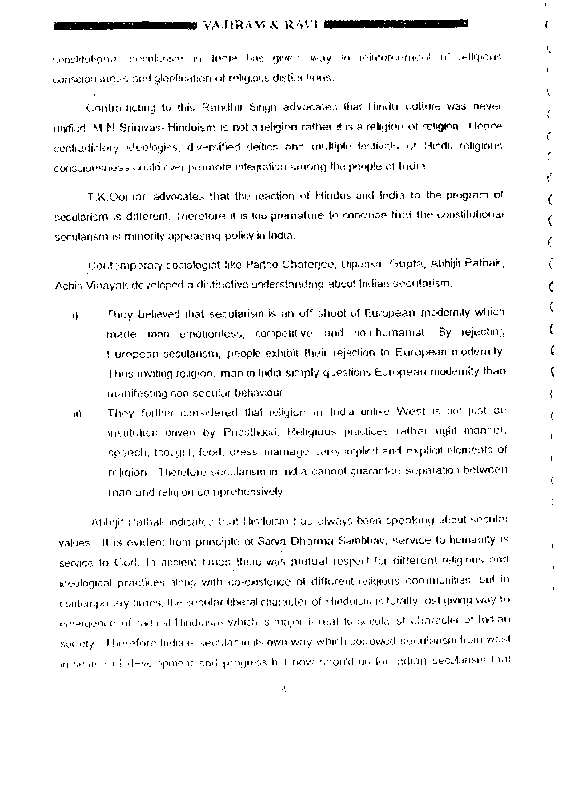
The social movements section is among the most UPSC-relevant portions of the entire set. Dalit movements from Ambedkar to contemporary Dalit assertion, women’s movements across colonial and post-independence phases, OBC mobilization and Mandal politics, peasant and working-class movements, and environmental movements such as Chipko and Narmada Bachao Andolan are all covered with key leaders, demands, and sociological significance. Communalism, regionalism, secularism, and ethnic conflicts β recurring UPSC Paper 2 question themes β are analyzed using sociological frameworks rather than purely political narratives.
Booklet 6: Population Dynamics, Development Issues, and Contemporary Social Problems
The final booklet addresses the applied dimensions of Indian sociology tested in UPSC Paper 2. Population policy evolution β from the early five-year plans through the National Population Policy 2000 β is covered alongside demographic transition theory and its Indian applicability. Urbanization patterns, push-pull migration factors, slum formation, and urban poverty are addressed with data points and sociological frameworks. The UPSC examination consistently tests candidates on inclusive development, and this booklet provides the theoretical vocabulary required for high-scoring answers on poverty, inequality, and marginalization.
Contemporary social problems receive structured treatment across the final portions of this booklet. Gender discrimination β including female foeticide, domestic violence, sexual harassment, and women’s property rights β is covered from both legal and sociological perspectives. Child labour, bonded labour, crimes against women, and communal violence are analyzed as structural rather than purely individual phenomena. Drug abuse, AIDS, and displacement-related social vulnerabilities are included as per the latest UPSC syllabus. Mahapatra Sir’s notes in this booklet consistently highlight answer-writing angles that help students connect social problems to policy responses β a critical skill for UPSC Mains scoring.
Physical Construction and Quality Standards
These printed booklets are manufactured to meet the demanding daily-use requirements of serious UPSC aspirants who study 10-12 hours a day. Every aspect of the physical production β from paper selection to binding method β is chosen to support sustained, intensive study sessions across months of UPSC Mains preparation.
Paper Quality: 75 GSM Anti-Glare White Paper
Each page of these Mahapatra Sir Vajiram & Ravi Sociology notes is printed on 75 GSM ultra-white, anti-glare paper chosen specifically for extended study sessions. The high opacity of 75 GSM stock ensures that text printed on one side remains completely invisible from the reverse, eliminating the bleed-through that plagues lower-GSM photocopied notes. UPSC aspirants who use color-coded highlighting systems β different colors for thinkers, definitions, examples, and UPSC answer points β will find that every highlighter shade and gel pen works cleanly without ghosting or tearing. The anti-glare surface reduces eye strain during long evening study sessions under artificial light.
Printing Technology: High-Resolution Laser Printing
All six booklets are produced using high-resolution laser printing technology that delivers sharp, smudge-proof text and diagrams across every page. Sociological flowcharts comparing thinkers, tables contrasting theoretical perspectives, and structured bullet points β all of which are central to Mahapatra Sir’s teaching style β are reproduced with the precision required for clear reading. Laser toner bonding to paper is permanent, meaning pages will not smear when touched with damp hands during revision marathons or accidentally wet during travel. Diagrams of social stratification hierarchies and kinship charts retain full clarity even at small print sizes essential for UPSC notes formats.
Binding and Durability
The booklets in this set are available in spiral or book-binding format depending on current production batch. Spiral-bound booklets open completely flat on a study desk, allowing UPSC aspirants to write margin annotations, add sticky flags, and make notes alongside the printed text without the book fighting back β a significant practical advantage during intensive UPSC Mains preparation. The 300 GSM laminated cover on each booklet protects against daily bag-to-desk transit damage, corner wear, and moisture exposure. Book-bound versions are compact and lightweight for carrying between library, home, and test centers during the long months of UPSC preparation.
Key Features and Study Design
Mahapatra Sir’s Vajiram & Ravi Sociology notes are structured around the specific demands of UPSC Mains answer writing β combining theoretical depth with factual precision in a format optimized for quick recall under exam conditions.
- Thinker-Centric Organisation: Each classical and contemporary sociological thinker β Durkheim, Marx, Weber, Parsons, Merton, and others β gets dedicated structured coverage with key concepts, criticisms, and UPSC answer-writing angles clearly separated, making revision efficient and targeted for the optional paper.
- Paper 1 and Paper 2 Integration: The 6-booklet structure maps directly to both UPSC Sociology optional papers, ensuring no syllabus unit is missed. Candidates can progress linearly through the set from Booklet 1 to Booklet 6 and cover the entire 2025-26 UPSC optional syllabus systematically.
- Crisp Bullet-Point Format: Consistent with Vajiram & Ravi’s teaching philosophy, content is presented in dense bullet points and short paragraphs that are faster to read during UPSC revision than long prose passages β ideal for last-month rapid cycling through the optional syllabus before Mains.
- Indian Context Integration: Throughout both papers, abstract sociological theory is grounded in Indian examples β caste field studies, tribal displacement data, women’s movement chronology β giving UPSC aspirants the illustrative material needed to write analytical answers rather than purely theoretical ones.
- Answer-Writing Ready Structure: Key definitions, comparison tables, and concluding thought-lines are positioned in the notes to mirror the structure of high-scoring UPSC Mains answers β introduction, body with theory plus example, and contemporary relevance β reducing the gap between notes and actual exam performance.
Shipping, Packaging and Delivery
Every order of Mahapatra Sir Vajiram & Ravi Sociology Notes 2025-26 is packed using a multi-layer protective system designed to ensure all 6 booklets arrive in perfect, classroom-fresh condition. Each booklet is individually shrink-wrapped to prevent page moisture and surface abrasion. The complete set is then placed inside a rigid corrugated cardboard box with foam-cushioned corner protectors that absorb courier transit shocks. The outer box is sealed with tamper-evident tape and labelled clearly with handling instructions. This packaging method has been field-tested across thousands of UPSC notes orders shipped from our Mukherjee Nagar, Delhi dispatch center to every corner of India.
Orders are dispatched within 24 hours of payment confirmation on business days and typically reach customers anywhere in India within 3-5 business days via tracked courier services. Every shipment includes a tracking ID sent directly to your registered email and phone number so you can monitor your package in real time. For any queries β delayed delivery, damaged booklet on arrival, or missing booklet from the set β reach our customer support team on WhatsApp at +91 70045 49563. Any missing or damaged booklet is replaced and re-dispatched within 48 hours of your complaint being registered. We want every UPSC aspirant to be able to buy with complete confidence.
Frequently Asked Questions (FAQ)
A: Yes β Mahapatra Sir’s Sociology notes at Vajiram & Ravi are among the most respected printed notes for UPSC Sociology optional in India. They cover the full Paper 1 and Paper 2 syllabus with thinker-wise structured coverage, Indian sociological context, and answer-writing ready bullet-point formatting. Many UPSC Mains qualifiers who chose Sociology optional have relied on these notes as their primary study material, supplemented by standard textbooks for deeper reading on specific topics.
A: This set includes exactly 6 printed booklets covering the complete UPSC Sociology optional syllabus. The booklets span both Paper 1 topics β sociological theory, thinkers, research methods, stratification, kinship, religion, work, and politics β and Paper 2 topics β Indian society, social change, social movements, population dynamics, and contemporary social problems. Each booklet is individually bound and clearly titled so you can study one unit at a time or carry a single booklet to the library.
A: Yes β this specific 2025-26 edition by Mahapatra Sir is entirely in English medium. All theory explanations, thinker notes, case studies, and answer-writing frameworks are written in clear academic English aligned with the language expected in UPSC Mains answer scripts. If you are an English medium UPSC aspirant preparing Sociology optional, these notes are directly usable without any translation or supplementary language reference.
A: The 6 booklets cover the complete UPSC Sociology optional syllabus: Paper 1 includes sociological theory and thinkers (Durkheim, Marx, Weber, Parsons, Merton), research methods, social stratification, kinship, marriage, family, religion, polity, work, and economic life. Paper 2 covers Indian society structure, caste system, tribal society, agrarian and industrial class, social change, modernization, Dalit and women’s movements, communalism, population policy, urbanization, poverty, and contemporary social problems.
A: Yes β this is the genuine 2025-26 batch edition as printed and distributed by Vajiram & Ravi for their current Sociology optional course. The content reflects the latest UPSC Sociology optional syllabus and incorporates recent sociological debates and contemporary Indian examples relevant to the current examination cycle. When you buy online from our store, you receive the actual 2025-26 printed batch β not an older edition repackaged or relabelled.
A: Mahapatra Sir’s teaching approach at Vajiram & Ravi emphasises conceptual clarity combined with high fact density β a style that produces notes where every paragraph contains multiple UPSC-usable points rather than extended descriptive passages. The notes are particularly strong on thinker comparisons, Indian sociological examples, and answer-writing structural cues. Compared to generic UPSC sociology guides or photocopied notes, Mahapatra Sir’s printed booklets offer a more organised, classroom-tested framework built specifically for UPSC Mains optional performance.
A: Absolutely. These printed booklets are designed to be self-sufficient study material. The notes are structured so clearly β with definitions, thinker summaries, topic-wise segmentation, and Indian examples β that self-study candidates who buy online can use them as their primary preparation resource without attending Vajiram & Ravi classroom sessions. Many successful UPSC Sociology optional candidates across India study entirely from printed notes with self-directed reading. Pair these notes with standard reference texts and previous year UPSC question practice for best results.
A: These 6 booklets cover the full syllabus of both UPSC Sociology optional papers and serve as an excellent core preparation resource. For most topics β especially thinkers, Indian society, social movements, and contemporary social problems β the notes provide everything needed for a competitive UPSC Mains answer. For deeper academic understanding of a few niche Paper 1 areas, aspirants occasionally supplement with standard texts like Haralambos or Anthony Giddens. But for structured UPSC-oriented revision and answer preparation, Mahapatra Sir’s notes are widely considered sufficient as the primary material.
A: These booklets use 75 GSM ultra-white paper chosen for high opacity β multiple highlighter colors and gel pens work without bleed-through to the reverse side, ideal for color-coded revision. Whether you use yellow for definitions, blue for thinker names, green for Indian examples, or pink for UPSC answer-writing cues, the paper handles all highlighter types cleanly. The anti-glare surface also reduces eye fatigue during long evening and night study sessions common in UPSC preparation schedules.
A: Orders are dispatched from our Mukherjee Nagar, Delhi center within 24 hours of payment confirmation on business days. Delivery to most cities and towns across India takes 3-5 business days via tracked courier. You receive a tracking ID via SMS and email immediately after dispatch so you can monitor your package in real time. Remote pin codes may occasionally take 1-2 additional days. For any delivery queries, contact our team on WhatsApp at +91 70045 49563 and we will assist you immediately.
A: Yes β the UPSC Sociology optional syllabus overlaps substantially with State PSC Sociology optional syllabi across most states. Candidates preparing Sociology optional for BPSC, UPPSC, MPPSC, RAS, and other State PSCs will find that these notes cover the foundational theory, thinkers, Indian society, and social change topics that appear across all these examinations. The notes’ emphasis on Indian sociological context and social movements makes them especially relevant for State PSC examinations that test applied Indian sociology knowledge in their Mains papers.
A: We have a zero-hassle replacement policy. If any of the 6 booklets is missing from your package or arrives damaged due to transit, simply WhatsApp us at +91 70045 49563 with your order details and a photo of the package condition. We will dispatch the replacement booklet within 48 hours of your complaint at absolutely no additional cost to you. Our packaging is designed to prevent transit damage, but in the rare event that it occurs, your replacement is guaranteed promptly so your UPSC preparation is not disrupted.
Summary
| Specification | Value |
|---|---|
| Booklets | 6 Printed Booklets β Full UPSC Sociology Optional Syllabus |
| Faculty | Mahapatra Sir, Vajiram & Ravi |
| Language | English Medium |
| Edition | 2025-26 Genuine Batch |
| Paper | 75 GSM Ultra-White, Anti-Glare, Highlighter Safe |
| Binding | Spiral or Book Binding with 300 GSM Laminated Cover |
| Delivery | 3-5 Business Days Pan India β Tracked Shipment |
| Also Useful For | BPSC, UPPSC, MPPSC, RAS and all State PSC Sociology Optional |
| Contact | WhatsApp: +91 70045 49563 |
Dispatched from our store in Mukherjee Nagar, Delhi β India’s largest UPSC coaching hub. Buy Mahapatra Sir Vajiram & Ravi Sociology Notes 2025-26 online today and receive your complete 6-booklet set at your doorstep with pan India delivery in 3-5 days.
Reference: UPSC official syllabus
Customer Reviews 384
Mahapatra Sir's notes are simply outstanding! Crystal clear concepts for sociology optional.
Yeh notes mujhe final revision ke liye bahut helpful rahe. Strongly recommend kartha hoon.
Content mein depth hai, bilkul isse expect kar rahe the.
Notes ekdum clear aur organized hai, padne mein bahut easy lag raha hai.
Printing quality superb hai aur content bilkul accurate. Vajiram & Ravi trust kar sakte hain.
For the price, material is quite decent. Printing quality is fine but packaging could be better.
Bilkul perfect booklets, content quality top-notch.
Mahapatra Sir's booklets are really comprehensive. Perfect for sociology optional preparation.
Aspirants Also Bought
More from the same category
About Mahapatra Sir Vajiram & Ravi Sociology Notes 2025-26
Mahapatra Sir Vajiram & Ravi Sociology Notes 2025-26 is a highly recommended UPSC study material from Mahapatra Sir, specially designed for Sociology Optional preparation. Available in English medium, this material is crafted to match the exact requirements of the UPSC Civil Services Examination syllabus β covering both Prelims and Mains comprehensively.
Product Details
- Institute: Mahapatra Sir
- Subject: Sociology Optional
- Medium: English
- Format: Printed
- Delivery: Pan-India delivery in 3β5 working days
- Format: Original printed material, verified authentic
Why Buy from UPSC Store?
- β 100% Genuine Printed Material β Original printed notes, no photocopies or fake copies
- β Fast Delivery β Ships within 24 hours, arrives in 3β5 days pan-India
- β Secure Packaging β Bubble-wrapped and boxed to prevent damage in transit
- β Trusted by 10,000+ Aspirants β India's most reliable UPSC material marketplace
- β WhatsApp Support β Get expert guidance on material selection before ordering
Frequently Asked Questions
Yes, all products at UPSC Store are 100% genuine printed materials. We do not sell photocopies or fake copies.
Orders are dispatched within 24 hours and delivered across India in 3β5 working days via reputed courier partners.
Yes, we accept returns within 7 days if the product is damaged or incorrect. Check our refund policy for details.
We recommend pairing this with current affairs notes and a UPSC test series for comprehensive preparation. Browse more in Optional, Sociology, UPSC, Vajiram and Ravi.