

Rahul IAS Law Notes 2025-26
About Rahul IAS Law Notes 2025-26
The Rahul IAS Law Notes 2025-26 is a printed UPSC study material set sold by UPSC Store β India’s trusted source for genuine, latest-batch civil services preparation books. This page covers full booklet details, syllabus coverage, pricing, shipping, and frequently asked questions. Useful for UPSC CSE, BPSC, UPPSC, MPPSC, RAS and other state PSC examinations.
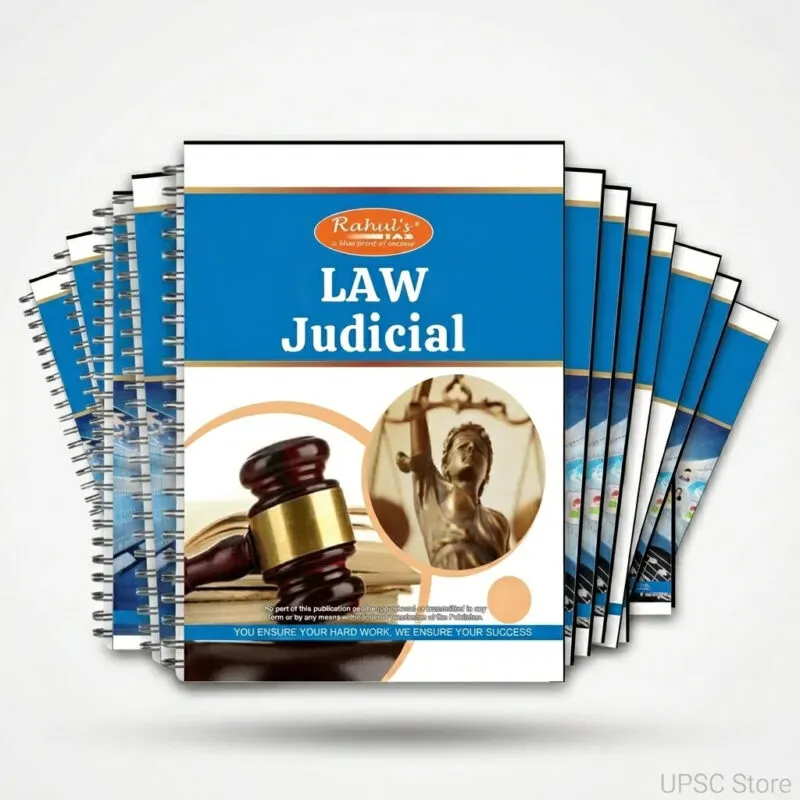
Rahul IAS Law Notes 2025-26 β 30 Booklets English Medium Printed Notes for UPSC Law Optional
Related: Rahul IAS notes Β· Law optional
Product Overview
| Feature | Details |
|---|---|
| Booklets Count | 24 Individual Printed Booklets β Full UPSC Law Optional Syllabus: Constitutional Law, IPC, CPC, IEA, Transfer of Property, Public International Law, and more |
| Language | English Medium |
| Publisher | Rahul IAS (Law Optional Series 2025-26) |
| Edition | 2025-26 β Latest Genuine Batch |
| Condition | Brand New, Unmarked, Fresh Stock |
| Format | High-Quality Printed Booklets β Spiral or Book Binding |
| Paper Quality | 75 GSM Ultra-White β Highlighter Safe, Zero Bleed-Through |
| Shipping | Pan India Delivery in 3-5 Business Days β Tracked |
| Also Useful For | BPSC, UPPSC, MPPSC, RAS, and all State PSC Law exams and Judicial Service Examinations |
Complete Booklet Catalog
This 30-booklet set from Rahul IAS covers the entire UPSC Law Optional syllabus for UPSC Mains 2025-26, structured topic by topic across both Paper I and Paper II. Designed for serious UPSC law optional aspirants who want printed, ready-to-revise material without relying solely on coaching classroom notes.
- Booklet 1: Jurisprudence β Nature and Sources of Law β Nature, definition and scope of law; schools of jurisprudence including natural law, positivism, historical and sociological schools; sources of law β legislation, precedent, custom; relationship between law and morality; Salmond, Austin, Kelsen, Hart, and Dworkin’s theories explained with UPSC answer-writing focus.
- Booklet 2: Constitutional Law of India β Part I β Historical background of Indian Constitution; Preamble, Fundamental Rights under Articles 12β35; right to equality, right to freedom, right against exploitation, religious freedoms, cultural and educational rights; constitutional amendments; landmark Supreme Court judgments relevant to UPSC law optional Paper I.
- Booklet 3: Constitutional Law of India β Part II β Directive Principles of State Policy; Fundamental Duties; Parliament and State Legislatures β powers, functions, privileges; Union and State Executive; emergency provisions under Articles 352, 356, 360; constitutional bodies β Election Commission, CAG, Finance Commission; federalism and centre-state relations.
- Booklet 4: Law of Contracts β Indian Contract Act 1872 β Essentials of a valid contract; offer and acceptance; consideration; capacity to contract; free consent β coercion, undue influence, fraud, misrepresentation, mistake; void and voidable agreements; discharge of contract; breach and remedies; quasi-contracts; indemnity, guarantee, bailment, pledge, agency.
- Booklet 5: Law of Torts β Nature and definition of tort; general conditions of liability β damnum sine injuria, injuria sine damno; general defences; specific torts β negligence, defamation, nuisance, trespass, malicious prosecution; vicarious liability; strict and absolute liability β Rylands v Fletcher, Oleum Gas Leak case; consumer protection linkages.
- Booklet 6: Indian Penal Code 1860 β General Principles β Introduction and application of IPC; general exceptions under Chapter IV β mistake of fact, judicial acts, consent, private defence; joint liability; abetment; criminal conspiracy; attempt to commit offences; mens rea and actus reus doctrine; important Supreme Court rulings on IPC provisions tested in UPSC Mains.
- Booklet 7: Indian Penal Code 1860 β Specific Offences β Offences against the State and public tranquility; offences against human body β murder, culpable homicide, hurt, grievous hurt, wrongful confinement, kidnapping, rape; theft, extortion, dacoity, cheating, criminal breach of trust; offences relating to documents; criminal intimidation; UPSC question trends on IPC.
- Booklet 8: Code of Criminal Procedure 1973 (CrPC) β Constitution and powers of criminal courts; police powers of arrest, search and seizure; FIR and investigation; charge-sheet and cognizance; trial procedures β warrant case, summons case, summary trial; bail provisions; plea bargaining; sentences and execution; appeal, revision and reference; zero FIR and recent amendments.
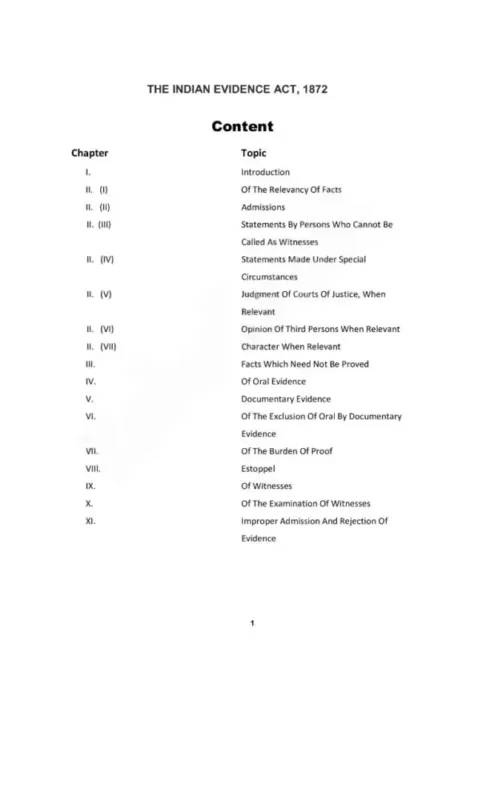
- Booklet 9: Law of Evidence β Indian Evidence Act 1872 β Relevancy of facts β Sections 5β55; admissions and confessions; statements by persons who cannot be called as witnesses; dying declaration; documentary evidence; secondary evidence; burden of proof; estoppel; examination of witnesses; leading questions; impeaching credit; accomplice evidence; UPSC evidence law questions.
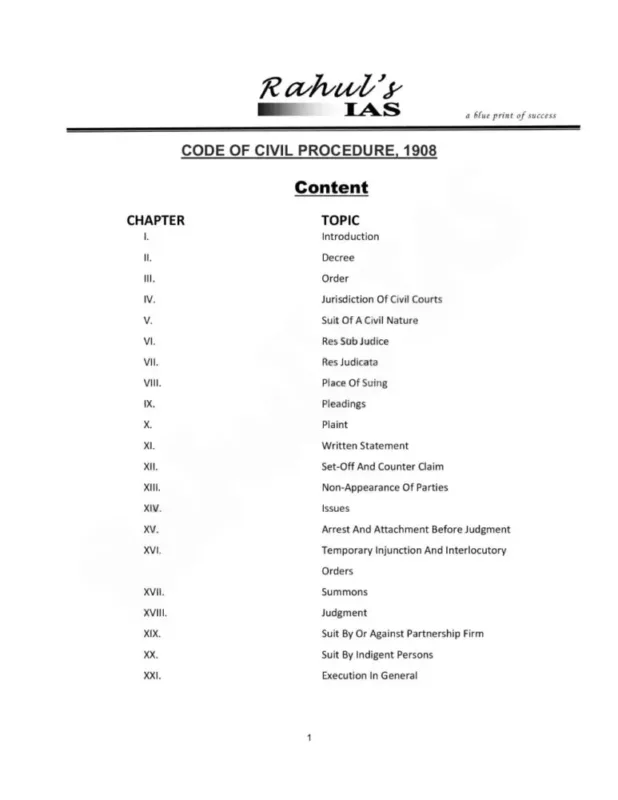
- Booklet 10: Code of Civil Procedure 1908 (CPC) β Part I β Suits β place of suing, institution and transfer; parties to a suit; summons; pleadings β plaint and written statement; first hearing and examination of parties; discovery and inspection; production of documents; admissions; issues; temporary injunctions; appointment of receiver; CPC amendments and UPSC relevance.
- Booklet 11: Code of Civil Procedure 1908 (CPC) β Part II β Trial procedure; judgment and decree; execution of decrees and orders; appeals β first appeal, second appeal, Letters Patent Appeal; reference, review and revision; suits by or against government; suits relating to public nuisance; limitation; Order I to Order XLVII mapped to UPSC law optional syllabus.
- Booklet 12: Transfer of Property Act 1882 β General principles of transfer; movable and immovable property; conditions restraining transfer; vested and contingent interests; doctrine of election, lis pendens, part performance; specific transfers β sale, mortgage, charge, lease, exchange, gift; actionable claims; important amendments and case laws for UPSC Mains answers.
- Booklet 13: Specific Relief Act 1963 (Amended 2018) β Specific performance of contracts β when granted and refused; who can obtain and against whom; substituted performance; mandatory injunctions; rectification and cancellation of instruments; declaratory decrees; preventive relief β temporary and perpetual injunctions; 2018 Amendment Act changes and their UPSC significance.
- Booklet 14: Family Law I β Hindu Law β Sources of Hindu law β ancient and modern; Hindu Marriage Act 1955 β conditions, void and voidable marriages, restitution, judicial separation, divorce; Hindu Succession Act 1956 β mitakshara and dayabhaga; Hindu Minority and Guardianship Act; Hindu Adoption and Maintenance Act; landmark judgments including Vineeta Sharma case.
- Booklet 15: Family Law II β Muslim and Christian Law β Sources of Muslim law β Quran, Hadis, Ijma, Qiyas; schools β Hanafi, Maliki, Shafii, Hanbali; Muslim marriage β nikah, mehr, dissolution; divorce forms β talaq, ila, zihar, khula, mubarat; maintenance; Muslim Personal Law (Shariat) Application Act; Christian marriage and divorce; Special Marriage Act 1954.
- Booklet 16: Property Law and Easements β Indian Easements Act 1882 β nature and kinds of easements; acquisition, extinction and suspension of easements; licenses; Government Grants Act; Benami Transactions Prohibition Act; Registration Act 1908 β documents requiring and not requiring registration; effect of non-registration; UPSC property law questions and answer frameworks.
- Booklet 17: Administrative Law β Growth and importance of administrative law; rule of law and separation of powers; administrative discretion and its control; delegated legislation β types and judicial control; natural justice β audi alteram partem, nemo judex; administrative tribunals; judicial review; ombudsman β Lokpal and Lokayukta; RTI Act; recent UPSC administrative law trends.
- Booklet 18: Public International Law β Part I β Nature, basis and sources of international law; relationship between international law and municipal law; states β recognition, succession, sovereign immunity; nationality and statelessness; extradition and asylum; law of the sea β UNCLOS; airspace and outer space law; international rivers; UPSC PIL answer writing techniques.
- Booklet 19: Public International Law β Part II β Diplomatic and consular relations; treaties β formation, validity, interpretation, termination; Vienna Convention 1969; state responsibility; peaceful settlement of disputes β arbitration, ICJ; use of force β UN Charter Article 2(4), self-defence; humanitarian intervention; international organisations β UN, WTO, ICC; UPSC Mains PIL questions.
- Booklet 20: Human Rights Law β Development of international human rights framework; UDHR; ICCPR and ICESCR; regional human rights systems; Protection of Human Rights Act 1993; NHRC and SHRCs; rights of vulnerable groups β women, children, minorities, disabled persons; POSCO Act; domestic violence act; right to education; UPSC human rights answer writing.
- Booklet 21: Environmental Law β Constitutional provisions β Articles 21, 48A, 51A(g); Stockholm and Rio declarations; Environment Protection Act 1986; Water Act 1974; Air Act 1981; Forest Conservation Act; Wildlife Protection Act; National Green Tribunal Act; polluter pays principle; precautionary principle; public trust doctrine; landmark NGT and Supreme Court orders.
- Booklet 22: Labour and Industrial Law β Industrial Disputes Act 1947; Trade Unions Act 1926; Factories Act 1948; Minimum Wages Act; Payment of Wages Act; Workmen’s Compensation Act; Maternity Benefit Act; Equal Remuneration Act; Contract Labour (Regulation and Abolition) Act; Labour Codes 2020 β Code on Wages, Industrial Relations Code, Social Security Code, Occupational Safety Code.
- Booklet 23: Company Law and Intellectual Property Rights β Companies Act 2013 β formation, memorandum, articles, shares, debentures, directors, meetings, winding up; corporate social responsibility; insolvency and Bankruptcy Code 2016; Intellectual Property Rights β Patents Act 1970, Copyright Act 1957, Trade Marks Act 1999, Geographical Indications; TRIPS agreement; UPSC IPR question trends.
- Booklet 24: Constitutional Amendments, Recent Legislation and Answer Writing β Major constitutional amendments β 42nd, 44th, 73rd, 74th, 86th, 101st, 103rd; recent Acts β CAA 2019, UAPA amendments, NDPS Act, Prevention of Corruption Act; UPSC law optional previous year questions (PYQs) analysis 2018β2024; model answers; introduction and conclusion frameworks; 10-mark and 15-mark answer structures.
In-Depth Content Breakdown: Booklet by Booklet
Booklet 1: Jurisprudence β Nature and Sources of Law
Jurisprudence forms the theoretical backbone of UPSC Law Optional Paper I. This booklet opens the Rahul IAS 2025-26 series by establishing the conceptual foundation that every law optional aspirant must master before tackling substantive law topics. It covers the nature and definition of law across major schools of thought β natural law, legal positivism, historical school, sociological school, and realist school. Each school is explained with key thinkers, their core arguments, and counter-arguments, making it easy to structure balanced UPSC Mains answers. The relationship between law and morality receives dedicated treatment because questions on this theme recur frequently in UPSC Mains.
The second part of this booklet maps the sources of law β legislation, judicial precedent, custom, and juristic writings β with clarity suited to both 10-mark and 15-mark UPSC answers. Each source is explained with examples from Indian law and international legal systems. The booklet includes a comparison table of Austin’s command theory versus Hart’s concept of law and Dworkin’s rights thesis, enabling aspirants to write analytically differentiated answers. Flowcharts on the hierarchy of sources and boxed summaries of landmark theories make this booklet a go-to revision tool in the final weeks before UPSC Mains.
Booklet 2: Constitutional Law of India β Part I
Constitutional Law is the single most important topic in UPSC Law Optional, and this booklet addresses Paper I’s constitutional provisions with the precision and depth that UPSC examiners reward. Starting from the historical background of the Indian Constitution β the Cabinet Mission Plan, Constituent Assembly debates, and key framers’ intentions β it moves systematically through the Preamble and Fundamental Rights under Articles 12 to 35. Each Fundamental Right is explained with the constitutional text, key exceptions, parliamentary amendment history, and the five to seven most important Supreme Court judgments that UPSC aspirants must cite in answers.
What sets this Rahul IAS booklet apart is the case-law integration throughout the narrative. Rather than listing judgments separately, each doctrine is taught through cases β the basic structure doctrine through Kesavananda Bharati, freedom of speech through Romesh Thappar and Shreya Singhal, right to privacy through Justice K.S. Puttaswamy. UPSC-specific answer frameworks for constitutional law questions are embedded at the end of each section, showing aspirants precisely how to open an answer, which cases to cite, and how to conclude with a constitutional perspective. This structured approach directly improves Mains scores.
Booklet 3: Constitutional Law of India β Part II
This booklet continues the constitutional law coverage, addressing Directive Principles of State Policy (DPSP), Fundamental Duties, and the structure of Parliament and State Legislatures β topics that together generate a significant share of UPSC Law Optional questions every year. DPSPs are explained with their socialist, Gandhian, and liberal intellectual categories, their non-justiciable nature, and the evolving judicial trend of harmonising them with Fundamental Rights. The booklet covers Parliament’s powers, parliamentary privileges, anti-defection law under the Tenth Schedule, and the constitutional status of the Speaker’s decisions.
Emergency provisions under Articles 352, 356, and 360 are treated in detail with their safeguards, the 44th Amendment Act changes, and case laws like S.R. Bommai, which UPSC examiners expect aspirants to analyse critically. The Union and State Executive sections cover presidential and gubernatorial discretion, council of ministers, and collective responsibility. Constitutional bodies β Election Commission, Comptroller and Auditor General, Finance Commission, UPSC itself β are mapped to their constitutional articles. A comparative federalism section ties together centre-state relations for both law optional and GS Paper II relevance, adding cross-subject value.
Booklet 4: Law of Contracts β Indian Contract Act 1872
The Indian Contract Act 1872 is foundational to both UPSC Law Optional Paper I and judicial service examinations. This booklet builds the topic from the ground up β starting with the definition and essentials of a valid contract, moving through offer and acceptance rules, consideration doctrine, and the capacity of parties. Each element is illustrated with classic English and Indian cases that UPSC examiners recognise: Carlill v Carbolic Smoke Ball for offer, Balfour v Balfour for consideration, and Mohori Bibee v Dharmodas Ghose for minor’s contracts.
The second half of this booklet addresses free consent in detail β coercion, undue influence, fraud, misrepresentation, and mistake β with careful distinctions between concepts that UPSC aspirants often conflate. Discharge of contracts, breach and remedies including specific performance, liquidated and unliquidated damages, and the doctrine of frustration under Section 56 are explained with post-COVID judicial developments. Special contracts β indemnity, guarantee, bailment, pledge, and agency β are covered in a structured manner with comparison tables that make revision fast and effective. This booklet is equally valuable for aspirants preparing for BPSC, UPPSC, and other State PSC judicial examinations.
Booklet 5: Law of Torts
Law of Torts appears with regularity in UPSC Law Optional Paper I, yet many aspirants underestimate its weight. This Rahul IAS booklet opens with the fundamental distinction between tort, crime, and breach of contract β a comparison that forms an easy but high-scoring UPSC question. It then covers general conditions of tortious liability, the maxims damnum sine injuria and injuria sine damno with illustrative examples, and the wide range of general defences β volenti non fit injuria, act of God, inevitable accident, statutory authority β each explained with leading cases.
Specific torts receive individual attention: negligence with the Donoghue v Stevenson neighbour principle and the Bolam test for professional negligence; defamation distinguishing libel and slander; nuisance differentiating public and private nuisance; trespass to person and land; malicious prosecution. The strict liability rule from Rylands v Fletcher and its evolution into absolute liability under the Indian Supreme Court’s decision in the Oleum Gas Leak (M.C. Mehta) case is explained with the policy reasoning behind the absolute liability standard, which UPSC examiners specifically test. Vicarious liability and employer-employee relationships close this booklet.
Booklet 6: Indian Penal Code 1860 β General Principles
IPC is tested extensively across UPSC Law Optional Paper I, and Rahul IAS has wisely split the code into two dedicated booklets. This first booklet tackles the general principles β the foundational doctrines that govern criminal liability throughout the code. The introduction covers the IPC’s historical background, its territorial application, and definitions under Section 2 to 52A. The mens rea and actus reus doctrine is explained within the Indian codified framework, where the mental element is expressed through words like “intention,” “knowledge,” “reason to believe,” and “negligence.”
Chapter IV’s general exceptions are treated thoroughly β mistake of fact, judicial and executive acts, consent, communication in good faith, acts under compulsion, acts of children and persons of unsound mind, private defence of body and property. Joint liability under Section 34 and 149 is contrasted with a clarity that helps aspirants answer comparison questions precisely. Abetment, criminal conspiracy under Section 120A and 120B, and attempt under Section 511 are explained with the key cases UPSC examiners expect to see cited. This booklet includes a mental map of general exceptions that doubles as a last-day revision sheet.
Booklet 7: Indian Penal Code 1860 β Specific Offences
Building on general principles, this booklet moves through the specific offences in the IPC that are directly examined in UPSC Law Optional Paper I. Offences against the State under Chapter VI β sedition under Section 124A, waging war under Sections 121β123 β are covered with the latest constitutional developments, including the Supreme Court’s stay on Section 124A proceedings and the government’s reconsideration of the provision. Offences against public tranquility including unlawful assembly and rioting under Sections 141β160 are explained with the essential ingredients that UPSC answer writing requires.
Offences against the human body receive the most detailed treatment in this booklet: the distinction between murder under Section 300 and culpable homicide not amounting to murder under Section 299 is explained through the five clauses and the famous “thigh-bone” illustration. Hurt, grievous hurt, wrongful confinement, kidnapping versus abduction, and rape under the post-2013 amended provisions are covered with the Criminal Law Amendment Act 2013 changes. Property offences β theft, extortion, robbery, dacoity, cheating, criminal breach of trust β are mapped to their essential ingredients. A PYQ analysis table closes the booklet.
Booklet 8: Code of Criminal Procedure 1973 (CrPC)
The Code of Criminal Procedure 1973 governs the procedural machinery of criminal justice and is tested directly in UPSC Law Optional Paper I. This booklet opens with the classification and hierarchy of criminal courts β Supreme Court, High Courts, Sessions Courts, Magistrate Courts β and their respective jurisdictions and powers. Police powers under the CrPC β arrest with and without warrant under Section 41 and 41A, search, seizure, and the Arnesh Kumar guidelines β are covered with the post-2023 Bharatiya Nagarik Suraksha Sanhita (BNSS) transition notes included as supplementary boxes.
FIR registration, investigation procedure, charge-sheet filing under Section 173, and cognizance by magistrates are explained step by step. Trial procedures for warrant cases, summons cases, and summary trials are mapped in a flowchart that makes revision quick. Bail provisions under Sections 436, 437, and 439, anticipatory bail under Section 438, and the concept of default bail under Section 167(2) are explained with landmark Supreme Court decisions. Plea bargaining, sentencing, execution of sentences, and appellate procedure under Sections 372β394 complete the booklet. Zero FIR and victim compensation provisions add contemporary relevance.
Booklet 9: Law of Evidence β Indian Evidence Act 1872
The Indian Evidence Act 1872 is one of the most conceptually challenging topics in UPSC Law Optional, and this Rahul IAS booklet addresses it with structured clarity. The booklet opens with the foundational concepts β facts in issue, relevant facts, and facts forming part of the same transaction under Section 6 (res gestae). Sections 5 to 55 covering relevancy are mapped thematically β admissions and confessions under Sections 17β31 with the crucial distinction between the two; statements by persons who cannot be called as witnesses under Section 32, including the dying declaration provisions tested frequently in UPSC.
Documentary evidence under Sections 61β90A is explained with the primary-secondary evidence distinction, the conditions for admitting secondary evidence, and the presumptions regarding documents β including electronic records under Section 65A and 65B and the landmark Arjun Panditrao Khotkar judgment. Burden of proof under Sections 101β114A, estoppel under Sections 115β117, and examination of witnesses under Sections 135β166 are all covered in answer-ready format. The booklet includes a comparison table of admission versus confession and a quick-reference chart of presumptions under the Evidence Act, both valuable for last-minute UPSC revision.
Booklet 10: Code of Civil Procedure 1908 (CPC) β Part I
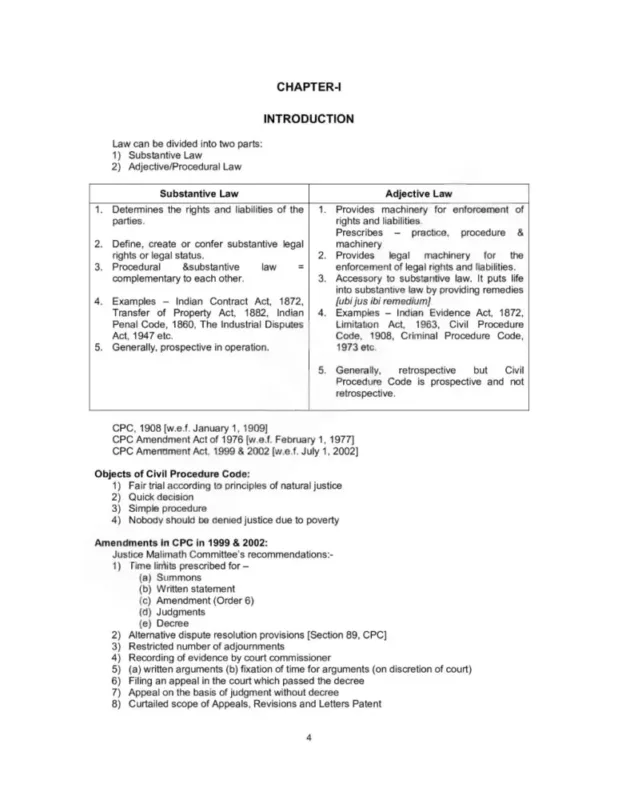
The Code of Civil Procedure 1908 governs civil litigation in India and occupies significant space in UPSC Law Optional Paper I. This first CPC booklet covers the foundational aspects of civil suits β jurisdiction of courts including territorial, pecuniary, and subject-matter jurisdiction; place of suing under Sections 15β20; institution of suits; res judicata under Section 11 and its essential conditions; res sub judice under Section 10. Parties to a suit β joinder, misjoinder, and non-joinder β are explained clearly with the representative suit provisions and class action concepts.
Pleadings β the plaint under Order VII and written statement under Order VIII β are covered with the rules of pleading and the consequences of non-compliance. Discovery and inspection under Order XI, production of documents under Order XII, and admissions under Order XII Rule 6 are explained. Temporary injunctions under Order XXXIX and the three requirements β prima facie case, balance of convenience, irreparable injury β are treated with cases like American Cyanamid and Dalpat Kumar. Appointment of receivers under Order XL closes Part I. Each procedural rule is linked to UPSC question patterns from the past seven years of law optional papers.
Booklet 11: Code of Civil Procedure 1908 (CPC) β Part II
This booklet continues CPC coverage from trial procedure through to final execution and appellate remedies. The trial procedure under Order XVIII β examination of witnesses, documentary evidence marking, and judgment delivery β is explained alongside the provisions for judgment and decree under Section 2(2). Execution of decrees under Sections 36β74 and Orders XXI is covered with the types of execution, attachment and sale of property, and arrest and detention in civil prison. The booklet maps the entire execution procedure in a flowchart for fast UPSC revision.
Appeals β first appeal under Section 96, second appeal under Section 100 with the substantial question of law requirement, and Letters Patent Appeals β are explained with landmark precedents. Reference under Section 113, review under Section 114, and revision under Section 115 are distinguished in a comparison table that regularly generates UPSC questions. Suits by and against the government and public officers under Sections 79β82, suits relating to public nuisances, and Section 91 and 92 suits for public charities are covered. The Limitation Act integration with CPC, and the Commercial Courts Act 2015 amendments to CPC, provide updated 2025-26 content.
Booklet 12: Transfer of Property Act 1882
The Transfer of Property Act 1882 is a core component of UPSC Law Optional Paper I. This booklet opens with the general principles of property law β movable versus immovable property, the definition of transfer, and persons competent to transfer. Fundamental doctrines receive clear, case-law-grounded treatment: the rule against restraints on transfer under Section 10, vested versus contingent interests under Sections 19 and 21, the doctrine of election under Section 35, the doctrine of lis pendens under Section 52, and the doctrine of part performance under Section 53A β an equity-based provision that UPSC examiners frequently ask about.
Specific transfers form the bulk of this booklet: sale under Sections 54β57 with rights and liabilities of buyer and seller; mortgage under Sections 58β104 with all six forms of mortgage β simple, conditional sale, usufructuary, English, equitable, anomalous β explained with comparison charts; charge under Section 100; lease under Sections 105β117 with rights and liabilities of lessor and lessee; exchange and gift under Sections 118β129; actionable claims under Sections 130β137. Leading cases including Hemraj v Rustomji, R.K. Mohammed Ubaidullah, and Bank of Bihar v Dr. Damodar Prasad are integrated throughout.
Booklet 13: Specific Relief Act 1963 (Amended 2018)
The Specific Relief Act 1963 as amended by the Specific Relief (Amendment) Act 2018 is a focused but high-scoring topic in UPSC Law Optional. This booklet covers the two main forms of specific relief β specific performance of contracts and injunctions β with the precision required for UPSC Mains answers. Specific performance under Sections 10β25 is explained with the circumstances where courts grant it (when monetary compensation is inadequate), who can obtain it (parties and their representatives), and the discretion of courts β now significantly curtailed by the 2018 Amendment, which made specific performance a general remedy for infrastructure contracts.
The 2018 Amendment Act changes are highlighted throughout this booklet: the introduction of substituted performance under Section 20, the amendment to Section 10 removing court discretion as the general rule, and the establishment of Special Courts for infrastructure contracts. Rectification of instruments under Section 26, cancellation under Sections 27β30, and declaratory decrees under Sections 34β35 are covered. Preventive relief β temporary and perpetual injunctions under Sections 36β42 β is explained with the rules for granting and refusing injunctions, including mandatory injunctions, with leading Indian cases to strengthen UPSC answer quality.
Booklet 14: Family Law I β Hindu Law
Hindu law is one of the highest-scoring areas in UPSC Law Optional Paper I for aspirants who invest time in understanding both its traditional and modern statutory framework. This booklet covers the ancient sources of Hindu law β Shruti, Smriti, Digest, Custom β and their relative authority, before transitioning to the modern codified Hindu law statutes. The Hindu Marriage Act 1955 is treated in full: conditions for a valid Hindu marriage under Section 5, void marriages under Section 11, voidable marriages under Section 12, restitution of conjugal rights, judicial separation, and divorce grounds under Section 13 including the fault theory and irretrievable breakdown discussions.
The Hindu Succession Act 1956 as amended in 2005 receives detailed treatment, with the Mitakshara and Dayabhaga schools explained alongside the post-2005 position of daughters as coparceners. The landmark Vineeta Sharma v Rakesh Sharma (2020) Supreme Court judgment β which gave daughters retrospective coparcenary rights β is explained with its full reasoning and UPSC answer implications. Hindu Minority and Guardianship Act 1956 and Hindu Adoption and Maintenance Act 1956 complete the booklet. A comparative table of Hindu law provisions before and after the 2005 Amendment provides a useful revision tool for UPSC law optional aspirants.
Booklet 15: Family Law II β Muslim and Christian Law
Muslim personal law and Christian family law together form the second major component of family law in UPSC Law Optional. This booklet begins with the sources and schools of Muslim law β the four Sunni schools (Hanafi, Maliki, Shafii, Hanbali) and Shia school β and their geographical relevance in India. Muslim marriage (nikah) is explained as a civil contract, covering capacity, offer and acceptance, consideration (mehr), void and irregular marriages with the Hanafi-Shia distinctions. The booklet addresses the constitutionally sensitive topic of triple talaq in light of the Muslim Women (Protection of Rights on Marriage) Act 2019 (Triple Talaq Act).
Other forms of dissolution of Muslim marriage β talaq-ul-sunnat, talaq-ul-bidaat (now prohibited), ila, zihar, khula, mubarat β are explained with their conditions and legal effects. Maintenance under Section 125 CrPC versus Muslim Women (Protection of Rights on Divorce) Act 1986, post the Shah Bano and Shayara Bano judgments, is a recurring UPSC exam topic covered in answer-writing format. Christian marriage and divorce under the Indian Christian Marriage Act 1872 and Divorce Act 1869 as amended are also covered. The Special Marriage Act 1954 as a secular option applicable to all communities closes this booklet with inter-faith marriage provisions.
Booklet 16: Property Law and Easements
The Indian Easements Act 1882 governs rights over others’ property and is a focused topic within UPSC Law Optional Paper I. This booklet opens with the definition and nature of an easement β a right to use another’s immovable property for the benefit of one’s own property β and distinguishes it from licences, profits Γ prendre, and customary rights. Kinds of easements β continuous, discontinuous, apparent, non-apparent β are explained with examples. Methods of acquisition β grant, prescription, necessity, quasi-easement β are covered with the 20-year prescription rule and relevant cases.
Extinction, suspension, and revival of easements under Sections 37β49 are covered with the conditions for each mode. The distinction between a licence under the Easements Act and a licence under contract law, and the Transfer of Property Act, is addressed β a distinction that UPSC examiners have tested. The Registration Act 1908 β documents compulsorily registrable under Section 17, documents optionally registrable under Section 18, and the consequence of non-registration under Section 49 β is explained with practical examples. The Benami Transactions (Prohibition) Amendment Act 2016 and its UPSC significance are addressed in a dedicated section with Supreme Court rulings on benami property.
Booklet 17: Administrative Law
Administrative Law is a dynamic and high-weightage topic in UPSC Law Optional Paper I. This booklet opens with the growth of administrative law in the welfare state context and the historical debate between Dicey’s rule of law and the French droit administratif system. The rule of law β its three Diceyan meanings and the Indian constitutional manifestation through Articles 13, 14, 21 β is explained with the developments from A.V. Dicey to modern substantive due process interpretations by Indian courts. Separation of powers as modified in the Indian context and its relationship with administrative power is treated analytically.
Administrative discretion, its scope, and judicial control through grounds of review β illegality, irrationality (Wednesbury unreasonableness), procedural impropriety β are mapped to Indian landmark cases. Delegated legislation β its types, necessity, and judicial and parliamentary controls through the doctrine of ultra vires and laying procedures β is a recurring UPSC question area covered in full. Natural justice principles β audi alteram partem and nemo judex in sua causa β are explained with their exceptions and the shift from procedural to legitimate expectation doctrine. Administrative tribunals, the Lokpal Act 2013, Lokayuktas, and the RTI Act 2005 complete this booklet.
Booklet 18: Public International Law β Part I
Public International Law (PIL) forms Paper II of UPSC Law Optional and is one of the most conceptually rich yet scoring areas when prepared systematically. This first PIL booklet covers the foundational issues β the nature and basis of international law (whether it is truly “law” under the Austinian command theory perspective and the rebuttal from international legal practice), its sources under Article 38(1) of the ICJ Statute (treaties, custom, general principles, judicial decisions, and publicists’ writings), and the relationship between international law and municipal law through monist and dualist theories with Indian constitutional practice.
Statehood β the Montevideo criteria, recognition of states (constitutive vs declaratory theory), de jure vs de facto recognition, and state succession β is covered with examples from the breakup of USSR and Yugoslavia. Sovereign immunity β absolute versus restrictive theory β and its Indian practice through the Foreign Sovereign Immunity doctrine is included. Nationality, statelessness, and double nationality under international law, extradition including its principles and India’s extradition treaties, and the right of asylum β territorial and diplomatic β are covered with the relevant UN instruments and ICJ cases that UPSC expects in law optional answers.
Booklet 19: Public International Law β Part II
This booklet advances PIL coverage into the areas directly examined in UPSC Law Optional Paper II: diplomatic and consular relations under the Vienna Conventions of 1961 and 1963 β including diplomatic immunity, its absolute nature, and expulsion of diplomats; the law of treaties under the Vienna Convention on the Law of Treaties 1969 β formation, validity, interpretation (Articles 31β33), and termination including the rebus sic stantibus doctrine. These treaty law provisions generate direct UPSC questions and are explained with model answer frameworks embedded in the text.
State responsibility β conditions for attribution of state acts, circumstances precluding wrongfulness, countermeasures β is covered with the ILC Articles on State Responsibility 2001. Peaceful settlement of disputes through negotiation, mediation, inquiry, conciliation, arbitration, and adjudication before the ICJ is mapped with the ICJ’s jurisdiction, advisory opinion power, and notable India-related cases. The prohibition on use of force under Article 2(4) of the UN Charter, self-defence under Article 51, and the contested doctrines of humanitarian intervention and Responsibility to Protect (R2P) close the PIL section. ICC jurisdiction, WTO dispute resolution, and ISDS are also addressed.
Booklet 20: Human Rights Law
Human Rights Law has grown into a significant area of UPSC Law Optional Paper II, reflecting both the Constitutional mandate and India’s international obligations. This booklet traces the philosophical development of human rights β from natural rights theory through positive law formulations to the post-World War II international human rights framework. The Universal Declaration of Human Rights 1948, its legal status, and its influence on Indian constitutional rights interpretation is treated as a foundation. The twin Covenants β ICCPR and ICESCR β and India’s reservations and reporting obligations are covered with the Optional Protocol mechanism.
The Protection of Human Rights Act 1993 β establishment, composition, powers and functions of NHRC and SHRCs, and their relationship to courts β is explained with UPSC answer examples. Rights of vulnerable groups receive dedicated treatment: women’s rights under CEDAW and domestic violence legislation; children’s rights under the CRC and POCSO Act 2012; rights of minorities under Article 29β30 and international standards; rights of persons with disabilities under the RPWD Act 2016 and CRPD. The right to education under Article 21A and the RTE Act 2009, and housing rights under Article 21 interpretation, close the booklet with judicial activism on socio-economic rights.
Booklet 21: Environmental Law
Environmental Law is an increasingly tested area in UPSC Law Optional Paper II, reflecting the global climate crisis and India’s evolving environmental jurisprudence. This booklet opens with the constitutional framework β the right to a healthy environment as part of Article 21, the state duty under Article 48A (DPSP), and the citizen’s fundamental duty under Article 51A(g). The Stockholm Declaration 1972 and Rio Declaration 1992 β including Principles 1, 2, and 15 (precautionary principle) β and India’s implementation obligations are explained with UPSC answer relevance.
Major environmental statutes β Environment Protection Act 1986 as the umbrella legislation, Water Act 1974, Air Act 1981, Forest Conservation Act 1980, Wildlife Protection Act 1972 and its 2022 Amendment, Biological Diversity Act 2002 β are covered with their enforcement mechanisms. The National Green Tribunal Act 2010, NGT jurisdiction, powers, and landmark orders are addressed. Three foundational principles of environmental law β polluter pays, precautionary principle, and public trust doctrine β are explained with Indian Supreme Court cases: M.C. Mehta series, Vellore Citizens, and A.P. Pollution Control Board. Climate change litigation and India’s NDC commitments are covered as emerging UPSC topics.
Booklet 22: Labour and Industrial Law
Labour law has been transformed by the four Labour Codes of 2020, making updated study material critical for UPSC Law Optional Paper II. This booklet begins with the traditional framework β Industrial Disputes Act 1947 covering definitions, authorities, dispute resolution machinery, strikes, lockouts, layoff, retrenchment, and closure provisions; Trade Unions Act 1926 on registration, rights, and immunities of trade unions. The Factories Act 1948 covering health, safety, welfare, and working hours, and the Minimum Wages Act 1948, form the core of individual labour law coverage that UPSC has historically tested.
The 2020 Labour Codes β Code on Wages, Industrial Relations Code, Code on Social Security, and Occupational Safety Health and Working Conditions Code β are explained in a dedicated section highlighting which provisions from the old Acts are retained, modified, or introduced afresh. The standing orders concept, works committees, labour courts, industrial tribunals, and the National Industrial Tribunal are mapped under the new Industrial Relations Code. Maternity Benefit Act as amended in 2017, Equal Remuneration Act, Contract Labour (Regulation and Abolition) Act, and Child Labour (Prohibition and Regulation) Act are covered. This booklet’s Labour Code treatment gives Rahul IAS 2025-26 material a clear edge over older study resources.
Booklet 23: Company Law and Intellectual Property Rights
This booklet covers two distinct but equally tested areas of UPSC Law Optional Paper II. Company Law under the Companies Act 2013 is treated systematically: formation of a company, the memorandum and articles of association, shares and debentures, directors β appointment, powers, duties, and disqualification β board meetings and shareholders’ meetings, majority rule versus minority rights (Foss v Harbottle and exceptions), corporate social responsibility under Section 135, and winding up β voluntary and compulsory. The Insolvency and Bankruptcy Code 2016 β the corporate insolvency resolution process (CIRP) and its interaction with the Companies Act β is covered as a frequently examined UPSC contemporary law topic.
Intellectual Property Rights form the second half of this booklet: Patents under the Patents Act 1970 as amended β patentability criteria, Section 3(d) and the Novartis Glivec judgment, compulsory licensing; Copyright under the Copyright Act 1957 β originality, authorship, duration, infringement, fair dealing; Trade Marks under the Trade Marks Act 1999 β registrability, passing off, well-known marks; Geographical Indications under the GI Act 1999 with India’s key GI registrations. The TRIPS Agreement β its minimum standards and flexibilities for developing countries β and the Doha Declaration on TRIPS and Public Health are covered as UPSC law optional and international law intersection points.
Booklet 24: Constitutional Amendments, Recent Legislation and Answer Writing
The final booklet in this 30-booklet Rahul IAS 2025-26 Law Optional set serves as both a current affairs update and a strategic answer-writing guide β a combination that makes it uniquely valuable in the final two months before UPSC Mains. Major constitutional amendments are covered: the 42nd Amendment (mini-Constitution), 44th Amendment (post-Emergency corrections), 73rd and 74th Amendments (Panchayati Raj and urban local bodies), 86th Amendment (right to education), 101st Amendment (GST), and 103rd Amendment (EWS reservation). Each amendment is explained with its constitutional and political context.
Recent legislation updates β CAA 2019, UAPA Amendment 2019, Bharatiya Nyaya Sanhita (BNS) replacing IPC, Bharatiya Nagarik Suraksha Sanhita (BNSS) replacing CrPC, Bharatiya Sakshya Adhiniyam (BSA) replacing the Evidence Act β are covered with comparison tables showing key changes. The answer-writing section analyses UPSC Law Optional PYQs from 2018 to 2024, identifying high-frequency themes and examiner preferences. Model introductions, conclusion frameworks, case-law citation formats, and 10-mark versus 15-mark answer structure templates are provided. This strategic booklet is the aspirant’s companion for converting knowledge into UPSC Mains marks.
Physical Construction and Quality Standards
Rahul IAS Law Notes 2025-26 are manufactured to withstand the rigours of daily UPSC preparation β long study sessions, intensive annotation, and repeated revision cycles across months of preparation for one of India’s most demanding examinations.
Paper Quality: 75 GSM Anti-Glare White Paper
Each of the 30 Booklets uses 75 GSM ultra-white, anti-glare paper chosen specifically for extended study sessions. The high GSM ensures complete opacity β text on the reverse side does not show through, eliminating distraction during intensive law optional reading. Four or more highlighter colours can be used simultaneously without any bleed-through to the opposite face, enabling the colour-coded revision systems popular among UPSC law optional toppers. The anti-glare surface reduces eye strain during the long daily reading hours that law optional preparation demands, particularly during night study sessions.
Printing Technology: High-Resolution Laser Printing
All 30 Booklets are printed using high-resolution laser printing technology that produces sharp, consistently dark text even on the densely worded pages typical of law optional material. Legal provisions, section numbers, case names, and comparative tables are reproduced with pin-sharp precision. Flowcharts showing procedural sequences β CPC trial procedure, CrPC investigation flow, PIL dispute resolution mechanisms β are rendered with crisp lines and clear labels. The laser toner is heat-fused to the paper, making it permanently smudge-proof and water-resistant β essential for booklets that will be handled daily for months of UPSC preparation.
Binding and Durability
The binding format β spiral or book binding depending on booklet size and content density β is selected to ensure the notes lie completely flat when opened, allowing aspirants to write annotations, case citations, and margin notes directly alongside the printed text without the spine pushing the pages closed. The 300 GSM laminated cover on each booklet provides rigid protection against daily handling, bag compression, and accidental spills. Spiral-bound booklets allow individual pages to be turned fully back for maximum desk space efficiency. Book-bound booklets provide compact, shelf-storable form for the complete 30-booklet set.
Key Features and Study Design
Rahul IAS Law Optional Notes 2025-26 are designed around the specific demands of UPSC Law Optional β a 500-mark optional subject where precision, case law depth, and structured answer writing determine the final rank.
- Complete Syllabus Coverage in 30 Booklets: Every topic in the official UPSC Law Optional syllabus β Paper I and Paper II β is covered across 30 Booklets, eliminating the need to buy supplementary material. Aspirants preparing for UPSC Mains can rely on this single set for full optional subject preparation without switching between multiple sources.
- Case Law Integration Throughout: Leading Supreme Court and High Court judgments are woven into the explanation of every doctrine β not listed separately at the end. This mirrors how UPSC toppers write answers and helps aspirants naturally incorporate case citations into their UPSC Mains responses for higher examiner scores.
- Updated for 2025-26 Including New Criminal Laws: The three new criminal laws β BNS replacing IPC, BNSS replacing CrPC, and BSA replacing Indian Evidence Act β are addressed with comparison tables. This 2025-26 update ensures aspirants have legally current material that matches the evolving UPSC examination environment.
- UPSC Answer-Writing Frameworks Embedded: Each section closes with structured UPSC answer templates β introduction lines, key points to cover, cases to cite, and conclusion angles β for both 10-mark and 15-mark questions. These frameworks translate knowledge directly into marks and reflect years of Rahul IAS faculty experience with UPSC law optional evaluation.
- Revision-Optimised Layout: Boxed summaries, comparison tables, flowcharts, and section-wise quick-reference charts are placed throughout each booklet. These visual elements allow UPSC aspirants to complete rapid revision rounds in the weeks before Mains without re-reading entire booklets, maximising efficiency in the preparation’s final phase.
Shipping, Packaging and Delivery
All 30 Booklets in the Rahul IAS Law Notes 2025-26 set are individually shrink-wrapped in groups before being packed together in a double-walled corrugated cardboard shipping box reinforced with corner edge protectors. This multi-layer packaging system ensures that the printed booklets arrive in brand-new, unmarked condition regardless of transit handling. Fragile stickers and “Do Not Bend” labels are applied externally to alert courier handlers. The complete 30-booklet set is consolidated in a single shipment so all booklets arrive together, ready for immediate use. No booklets are dispatched separately unless specifically requested.
Pan India delivery is completed within 3-5 business days from the date of order confirmation, with full tracking provided via a shipment ID sent to the registered mobile number. For order support, tracking updates, or questions about your Rahul IAS Law Notes 2025-26 purchase, WhatsApp our team at +91 70045 49563. If any booklet is found missing or damaged on delivery, a replacement booklet is dispatched within 48 hours of your WhatsApp report β no questions asked. Orders are processed Monday through Saturday from our Mukherjee Nagar, Delhi store location, where the stock is physically verified before dispatch.
Frequently Asked Questions (FAQ)
A: Yes β Rahul IAS Law Notes 2025-26 are prepared specifically for UPSC Law Optional aspirants and cover the complete Paper I and Paper II syllabus across 30 Booklets. The notes integrate case laws, answer-writing frameworks, and UPSC PYQ analysis, making them one of the most structured printed resources available for law optional. Thousands of aspirants use Rahul IAS material as their primary preparation source for the 500-mark law optional subject.
A: This set includes exactly 24 individual printed booklets covering the entire UPSC Law Optional syllabus β from Jurisprudence and Constitutional Law through IPC, CrPC, Evidence, CPC, Transfer of Property, Family Law, Administrative Law, Public International Law, Human Rights, Environmental Law, Labour Law, Company Law, and Intellectual Property Rights, closing with a strategic answer-writing and recent legislation booklet.
A: These booklets use 75 GSM ultra-white paper chosen for high opacity β multiple highlighter colours and gel pens work without bleed-through to the reverse side, ideal for colour-coded revision. The anti-glare surface also reduces eye strain during the extended reading sessions that UPSC law optional preparation requires. The paper is thick enough for permanent marker use in margin annotations without affecting the opposite page.
A: Yes β this 30-booklet set is entirely in English medium. All legal provisions, case laws, doctrines, and answer-writing frameworks are written in clear academic English suitable for UPSC Mains answers. The language used mirrors the standard expected in UPSC Law Optional answer scripts, helping aspirants acclimatise to the appropriate register and terminology well before the actual examination date.
A: These 30 Booklets cover the complete UPSC Law Optional syllabus with case laws, doctrines, comparative tables, flowcharts, and answer frameworks. Many self-study aspirants have cleared UPSC Mains law optional using printed notes as their primary material, supplementing with bare acts for Section-level precision. However, combining these notes with test series practice and PYQ answer writing will maximise your score in the 500-mark law optional paper.
A: The 30 Booklets cover: Jurisprudence, Constitutional Law (Parts I & II), Contract Law, Torts, IPC (General Principles and Specific Offences), CrPC, Evidence Act, CPC (Parts I & II), Transfer of Property, Specific Relief Act, Family Law (Hindu Law and Muslim/Christian Law), Easements and Registration, Administrative Law, Public International Law (Parts I & II), Human Rights, Environmental Law, Labour Law, Company Law and IPR, and a final booklet on recent legislation and answer writing.
A: Rahul IAS Law Optional Notes stand out for their UPSC-specific answer-writing frameworks embedded within each topic, their case law integration throughout the text (rather than listed separately), and their updated 2025-26 coverage including the new criminal laws (BNS, BNSS, BSA). The 30-booklet structure allows topic-specific focused study, unlike single-volume references that can feel overwhelming during revision phases close to UPSC Mains.
A: Yes β the 2025-26 edition includes updates on the Bharatiya Nyaya Sanhita (BNS), Bharatiya Nagarik Suraksha Sanhita (BNSS), and Bharatiya Sakshya Adhiniyam (BSA) β the three new criminal laws replacing IPC, CrPC, and the Evidence Act respectively. The 2018 Specific Relief Act amendments, Labour Codes 2020, Companies Act latest amendments, and post-2023 Supreme Court judgments relevant to UPSC law optional are all incorporated in this latest batch.
A: Absolutely. While designed for UPSC Law Optional, the depth of coverage β IPC, CrPC, CPC, Evidence Act, Transfer of Property, Contract Law, Family Law β directly maps to the syllabi of BPSC, UPPSC, MPPSC, RAS, and other State PSC judicial service examinations. Aspirants appearing for High Court subordinate judicial service exams (Civil Judge and Judicial Magistrate) also find this set highly relevant for substantive law preparation.
A: Pan India delivery is completed in 3-5 business days from order confirmation. A tracking ID is sent to your registered mobile number after dispatch. The complete 30-booklet set is shipped in a single consolidated package from our Mukherjee Nagar, Delhi store. We deliver to all Indian states and union territories including remote PIN codes. WhatsApp +91 70045 49563 for delivery confirmation or if you need expedited shipping options for urgent UPSC preparation needs.
A: Yes β every set of Rahul IAS Law Notes 2025-26 sold through our store is brand new, fresh stock from the latest 2025-26 print batch. All 30 Booklets are unmarked with no highlighting, annotations, or stamps from previous owners. The booklets are shrink-wrapped individually and consolidated in a sealed corrugated shipping box. If you receive a booklet that appears used or marked, photograph it and WhatsApp +91 70045 49563 β we will replace it within 48 hours at no cost.
A: You can buy Rahul IAS Law Notes 2025-26 directly through this product page β click “Add to Cart” or “Buy Now” to place your order. We are the authorised online reseller offering genuine 2025-26 edition printed booklets with pan India tracked delivery. You can also buy in-person from our physical store at Mukherjee Nagar, Delhi, or reach us on WhatsApp at +91 70045 49563 for bulk orders, institutional purchases, or any pre-purchase queries about the 30-booklet law optional set.
Summary
| Specification | Value |
|---|---|
| Booklets | 24 Printed Booklets |
| Language | English Medium |
| Paper | 75 GSM Ultra-White |
| Binding | Spiral or Book Binding |
| Delivery | 3-5 Business Days Pan India |
| Also Useful For | BPSC, UPPSC, MPPSC, RAS, and all State PSC Law and Judicial Service Examinations |
Sold by UPSC Store, Mukherjee Nagar, Delhi β your trusted source for genuine printed UPSC optional subject notes. Buy Rahul IAS Law Notes 2025-26 online today and receive your complete 30-booklet set with pan India delivery in 3-5 days.
Reference: Civil Services Examination
Customer Reviews 515
Mast notes! Best quality booklets.
Booklets mein content toh hai but zyada depth nahi. Delivery bilkul on time tha.
Sab kuch organize properly rakha hai. Bohot helpful for preparation.
Comprehensive aur well-organized. Mera confidence boost ho gaya padhke.
Quality of content and organization bilkul perfect hai.
Paper quality thoda weak hai aur binding mein kam quality. Notes content wise decent hai par presentation fail.
Har topic properly covered, mujhe syllabus smajh aa gaya.
Really helpful for judiciary preparation.
Aspirants Also Bought
More from the same category
About Rahul IAS Law Notes 2025-26
Rahul IAS Law Notes 2025-26 is a highly recommended UPSC study material from Rahul IAS, specially designed for Judiciary & UPSC Law Optional preparation. Available in English medium, this material is crafted to match the exact requirements of the UPSC Civil Services Examination syllabus β covering both Prelims and Mains comprehensively.
Product Details
- Institute: Rahul IAS
- Subject: Judiciary & UPSC Law Optional
- Medium: English
- Format: Printed
- Delivery: Pan-India delivery in 3β5 working days
- Format: Original printed material, verified authentic
Why Buy from UPSC Store?
- β 100% Genuine Printed Material β Original printed notes, no photocopies or fake copies
- β Fast Delivery β Ships within 24 hours, arrives in 3β5 days pan-India
- β Secure Packaging β Bubble-wrapped and boxed to prevent damage in transit
- β Trusted by 10,000+ Aspirants β India's most reliable UPSC material marketplace
- β WhatsApp Support β Get expert guidance on material selection before ordering
Frequently Asked Questions
Yes, all products at UPSC Store are 100% genuine printed materials. We do not sell photocopies or fake copies.
Orders are dispatched within 24 hours and delivered across India in 3β5 working days via reputed courier partners.
Yes, we accept returns within 7 days if the product is damaged or incorrect. Check our refund policy for details.
We recommend pairing this with current affairs notes and a UPSC test series for comprehensive preparation. Browse more in Law, Optional, UPSC.