

Manikant Sir History Complete Notes 2025-26
About Manikant Sir History Complete Notes
The Manikant Sir History Complete Notes is a printed UPSC study material set sold by UPSC Store — India’s trusted source for genuine, latest-batch civil services preparation books. This page covers full booklet details, syllabus coverage, pricing, shipping, and frequently asked questions. Useful for UPSC CSE, BPSC, UPPSC, MPPSC, RAS and other state PSC examinations.
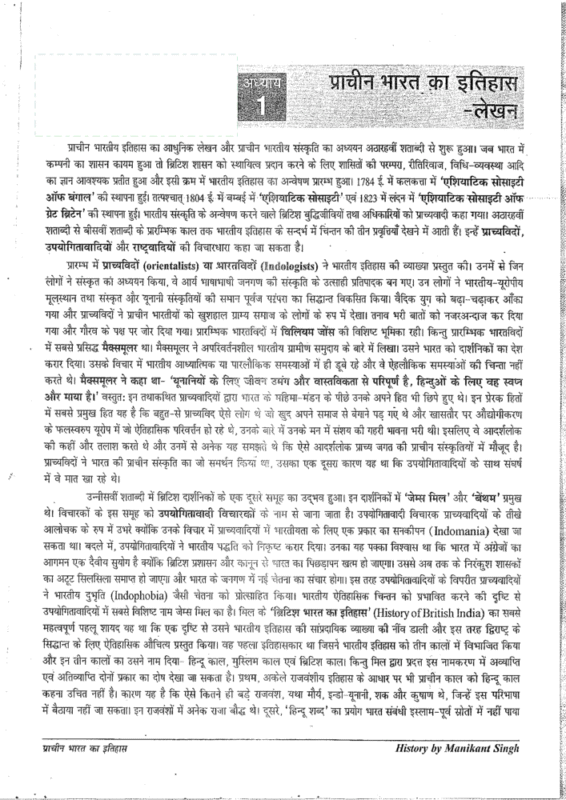
Manikant Sir History Complete Notes 2025-26 — 14 Hindi Medium Printed Booklets for UPSC GS Paper I
Related: History optional notes · Hindi medium UPSC notes
Product Overview
| Feature | Details |
|---|---|
| Booklets Count | 14 Individual Printed Booklets — Ancient Indian History, Medieval Indian History, Modern Indian History, World History, Art & Culture, and Post-Independence India |
| Language | Hindi Medium (हिंदी माध्यम) |
| Publisher | Manikant Singh — The Study Institute for IAS (History Series 2025-26) |
| Edition | 2025-26 — Latest Genuine Batch |
| Condition | Brand New, Unmarked, Fresh Stock |
| Format | High-Quality Printed Booklets — Spiral or Book Binding |
| Paper Quality | 75 GSM Ultra-White — Highlighter Safe, Zero Bleed-Through |
| Shipping | Pan India Delivery in 3-5 Business Days — Tracked |
| Also Useful For | BPSC, UPPSC, MPPSC, RAS, and all State PSC Examinations |
Complete Booklet Catalog
This 7-booklet set by Manikant Sir of The Study Institute for IAS covers the entire History syllabus for UPSC GS Paper I — from the Indus Valley Civilisation to post-Cold War world order — written in clear, exam-ready Hindi. Designed specifically for Hindi medium aspirants targeting UPSC Mains and Prelims, these notes translate dense historical content into structured, point-based language that is easy to revise and reproduce in the exam hall.
- Booklet 1: प्राचीन भारत — भाग 1 (Ancient India Part 1) — Prehistoric India, the Indus Valley Civilisation, Vedic Age (Rigvedic and Later Vedic), religious movements including Buddhism and Jainism, Mahajanapadas, the Nanda Empire, and the emergence of the Mauryan state under Chandragupta Maurya. Key UPSC themes on social structure, economy, and polity are covered in detail.
- Booklet 2: प्राचीन भारत — भाग 2 (Ancient India Part 2) — Mauryan Empire under Ashoka, Ashokan edicts, post-Mauryan kingdoms (Shungas, Kushanas, Satavahanas), Gupta Age, science and literature during the Gupta period, Sangam Age of South India, land grants, feudalism in early India, and decline of the Gupta Empire.
- Booklet 3: प्राचीन भारत — भाग 3 (Ancient India Part 3) — Post-Gupta political fragmentation, Harsha and his era, early medieval kingdoms of the Deccan and South India (Pallavas, Chalukyas, Rashtrakutas), the Chola Empire, temple architecture evolution, trade routes, and religious synthesis in early medieval India.
- Booklet 4: कला एवं संस्कृति — भाग 1 (Art & Culture Part 1) — Indian architecture from the Indus period to the medieval era, rock-cut caves, stupa construction, temple styles (Nagara, Dravida, Vesara), sculpture traditions, painting schools (Ajanta, Bagh, Ellora), classical dance forms, music traditions, and their connections to UPSC Prelims and Mains questions.
- Booklet 5: कला एवं संस्कृति — भाग 2 (Art & Culture Part 2) — Indo-Islamic architecture, the Mughal school of painting, regional folk arts, classical literature in Sanskrit and regional languages, philosophical schools (Nyaya, Vaisheshika, Samkhya, Vedanta), the Bhakti and Sufi movements as cultural phenomena, and their lasting impact on Indian civilisation.
- Booklet 6: मध्यकालीन भारत — भाग 1 (Medieval India Part 1) — Arab and Ghaznavid invasions, the Ghurid conquest, establishment of the Delhi Sultanate, all five dynasties of the Sultanate era, administrative and revenue systems, the Iqta system, urban growth, and the cultural synthesis that defined this transformative period of Indian history.
- Booklet 7: मध्यकालीन भारत — भाग 2 (Medieval India Part 2) — The Mughal Empire from Babur to Aurangzeb, Mughal administrative structures (Mansabdari, Jagirdari), agrarian relations, Maratha rise under Shivaji, Sikh expansion, regional kingdoms (Vijayanagara, Bahmani), decline of the Mughal Empire, and emergence of successor states in the 18th century.
- Booklet 8: आधुनिक भारत — भाग 1 (Modern India Part 1) — European arrival in India, the East India Company’s establishment and territorial expansion, the Battle of Plassey and Buxar, Regulating Act of 1773 to the Government of India Act 1858, early resistance movements, socio-religious reform movements of the 19th century, and the impact of British economic policies on Indian society.
- Booklet 9: आधुनिक भारत — भाग 2 (Modern India Part 2) — The revolt of 1857, rise of Indian nationalism, formation of the Indian National Congress, the moderate and extremist phases, the Swadeshi Movement, Bal-Pal-Lal and their contributions, revolutionary nationalism, growth of communal and caste-based politics, Morley-Minto and Montagu-Chelmsford reforms.
- Booklet 10: आधुनिक भारत — भाग 3 (Modern India Part 3) — Gandhian era in Indian politics, Non-Cooperation Movement, Civil Disobedience Movement, Quit India Movement, the role of women and peasants in the freedom struggle, INA and Subhas Chandra Bose, Cabinet Mission Plan, Mountbatten Plan, Independence and Partition of India in 1947.
- Booklet 11: स्वतंत्रता के बाद का भारत (Post-Independence India) — Integration of princely states, Sardar Patel’s role, linguistic reorganisation of states, five-year plans and economic development, Nehru’s foreign policy and Panchsheel, the Green Revolution, Emergency of 1975-77, coalition politics, economic liberalisation of 1991, and India’s journey to becoming a global democracy.
- Booklet 12: विश्व इतिहास — भाग 1 (World History Part 1) — The Renaissance, Reformation, and Age of Enlightenment; the American Revolution; the French Revolution and its global impact; the Industrial Revolution and its social consequences; 19th-century nationalism and unification movements in Europe (Italy and Germany); imperialism and colonialism; the causes and course of World War I.
- Booklet 13: विश्व इतिहास — भाग 2 (World History Part 2) — The Russian Revolution of 1917, rise of totalitarianism in Europe, fascism and Nazism, Great Depression, causes and course of World War II, the Holocaust, the nuclear age, decolonisation of Asia and Africa, Chinese Revolution, and the founding of the United Nations and other post-war international institutions.
- Booklet 14: विश्व इतिहास — भाग 3 (World History Part 3) — The Cold War and its phases, Korean and Vietnam Wars, Cuban Missile Crisis, Non-Aligned Movement, Arab-Israeli conflict, oil crises, détente, the collapse of the Soviet Union, end of the Cold War, globalisation, Gulf Wars, rise of terrorism, and the post-Cold War unipolar world order as seen through the UPSC GS Paper I lens.
In-Depth Content Breakdown: Booklet by Booklet
Booklet 1: प्राचीन भारत — भाग 1 (Ancient India Part 1)
This booklet opens the UPSC history journey by covering prehistoric India, the Harappan Civilisation, and the Vedic Age — topics that consistently appear in both UPSC Prelims MCQs and Mains GS Paper I descriptive questions. Manikant Sir’s structured approach breaks down the economic and social features of the Indus Valley in table format, making revision fast and answer-writing crisp. The religious reform movements of Jainism and Buddhism are covered with their social context, which is essential for 200-word UPSC Mains answers.
What sets this booklet apart for Hindi medium aspirants is the use of precise Hindi terminology alongside the corresponding English terms, eliminating the confusion that often arises when switching between study materials. Key facts — dates of Ashokan edicts, the Four Noble Truths, the Eightfold Path — are highlighted for rapid Prelims revision. Flowcharts show the rise and decline of Mahajanapadas, and a comparative table of Jainism vs. Buddhism helps aspirants write balanced answers in UPSC Mains with clarity and structure.
Booklet 2: प्राचीन भारत — भाग 2 (Ancient India Part 2)
This booklet focuses on the Mauryan Empire — one of the most heavily tested dynasties in UPSC history — and covers Chandragupta’s administrative machinery, Kautilya’s Arthashastra, and Ashoka’s Dhamma in depth. The post-Mauryan era is treated with equal rigour, covering Kushanas, Satavahanas, and their roles in the spread of trade and Buddhism along the Silk Route. The Gupta Age content is structured around UPSC questions on the “Golden Age of India,” including contributions to science, mathematics, literature, and temple building.
Manikant Sir’s notes in this booklet use structured bullet points and margin annotations that function as self-contained revision cues — ideal for the week before the UPSC Mains exam. The Sangam Age of Tamil Nadu, which is a frequently missed topic by many aspirants, receives dedicated coverage here with details of the three Sangams, key Sangam literature, and socio-economic life in ancient South India. Maps showing Gupta territorial extent make the geographic dimension of history accessible for Hindi medium students who may not have access to expensive atlas resources.
Booklet 3: प्राचीन भारत — भाग 3 (Ancient India Part 3)
The transition from the Gupta Empire to early medieval India is often poorly covered in standard UPSC materials, but this booklet dedicates full coverage to Harsha’s era, the tripartite struggle, and the southern kingdoms that shaped Indian civilisation from the 6th to 12th centuries. The Pallavas, Chalukyas, and Rashtrakutas are covered with attention to their administrative innovations, artistic achievements, and inter-dynastic conflicts — all key themes for UPSC GS Paper I Mains questions on medieval Indian polity.
The Chola Empire receives special attention in this booklet, covering the village assembly (Nadu) system, naval expeditions, temple towns as economic centres, and the Chola bronze sculpture tradition. Manikant Sir contextualises these southern kingdoms within the broader UPSC narrative of cultural continuity and regional identity — making this booklet invaluable for aspirants who tend to focus exclusively on north Indian dynasties. Trade connections with Southeast Asia are discussed with facts that directly feed into UPSC questions on ancient India’s global influence.
Booklet 4: कला एवं संस्कृति — भाग 1 (Art & Culture Part 1)
Art and Culture is a high-scoring segment for UPSC Prelims (approximately 4-6 questions per year) and this booklet ensures Hindi medium aspirants are not left behind due to language barriers. Temple architecture is explained through labelled diagrams differentiating Nagara (North Indian), Dravida (South Indian), and Vesara (mixed) styles — a topic directly repeated in UPSC Prelims 2022, 2023, and 2024. Rock-cut architecture from Ajanta and Ellora is covered chronologically with dynasty-wise attribution.
Classical dance forms — Bharatanatyam, Kathak, Odissi, Kuchipudi, Manipuri, Mohiniyattam, Sattriya, and Kathakali — are listed with their state of origin, key features, and famous exponents. Music traditions (Hindustani and Carnatic) are covered with their gharanas and notable artists. Manikant Sir’s notes in this booklet use a consistent format: heading → origin → features → UPSC connection, which makes studying Art and Culture structured rather than rote-based. This format is particularly beneficial for aspirants who find cultural topics disconnected from history.
Booklet 5: कला एवं संस्कृति — भाग 2 (Art & Culture Part 2)
This booklet covers the cultural synthesis of the medieval period — Indo-Islamic architecture (from the Qutb Minar to the Taj Mahal), the Mughal miniature painting tradition, and the regional folk arts that emerged in different parts of India. The Bhakti and Sufi movements are treated not just as religious phenomena but as cultural revolutions that democratised knowledge, challenged caste hierarchies, and created new literary traditions in regional languages — a perspective that enriches UPSC Mains answers significantly.
Philosophical schools of Indian thought (Nyaya, Vaisheshika, Samkhya, Yoga, Mimamsa, and Vedanta) are summarised in a comparative table — a topic that appears in UPSC Prelims as well as in the History Optional syllabus. Classical Sanskrit literature, regional bhasha literature, and the development of Urdu poetry are covered. Manikant Sir connects each cultural element to a potential UPSC question angle, which is a distinguishing feature of The Study Institute for IAS notes that makes this booklet especially useful for answer-writing practice.
Booklet 6: मध्यकालीन भारत — भाग 1 (Medieval India Part 1)
Medieval India is a mandatory section of UPSC GS Paper I, and this booklet covers the Delhi Sultanate period from the Ghurids to the Lodis with the analytical depth required for high-scoring Mains answers. The Iqta system, the administrative machinery of the Sultanate, agrarian conditions, the condition of women, and urban development during this era are all covered with facts and analysis. The booklet also covers the Mongol invasions and how successive Sultans managed this existential threat to the Delhi Sultanate.
Manikant Sir’s treatment of the Sultanate period is notable for its balanced approach — the notes present both the achievements (administrative systems, trade expansion, cultural fusion) and the contradictions (religious intolerance, peasant exploitation) of this era, which is the kind of nuanced understanding that earns marks in UPSC Mains. Key administrative terms (Diwan-i-Arz, Diwan-i-Risalat, Wazir, etc.) are explained in Hindi with clarity, making this booklet valuable for Hindi medium aspirants who struggle with Persian/Arabic terminology in standard textbooks.
Booklet 7: मध्यकालीन भारत — भाग 2 (Medieval India Part 2)
This booklet is the centrepiece of the medieval section, covering the Mughal Empire in complete detail — from Babur’s conquest at Panipat in 1526 to the death of Aurangzeb in 1707 and the subsequent fragmentation of Mughal authority. The Mansabdari and Jagirdari systems, Akbar’s administrative reforms, Din-i-Ilahi, Akbar’s relations with Rajputs, Aurangzeb’s religious policies and their consequences — all are covered with the analytical rigour that UPSC Mains demands.
The Maratha Empire under Shivaji receives dedicated coverage — his revenue system (Chauth and Sardeshmukhi), military innovations (Guerrilla warfare), and administrative contributions are explained in a way that connects to UPSC questions on decentralisation and regional assertion. The Vijayanagara Empire and its cultural legacy in South India are also covered. Manikant Sir’s notes include a detailed timeline of Mughal decline — succession wars, jagirdari crisis, rise of the Sikhs, Marathas, and regional powers — giving aspirants a clear chronological framework for answer-writing.
Booklet 8: आधुनिक भारत — भाग 1 (Modern India Part 1)
Modern Indian History begins with the arrival of European trading companies and this booklet traces the gradual transformation of the East India Company from a trading body to a territorial power. The Battles of Plassey (1757) and Buxar (1764) are covered with their political consequences, and the subsequent British administrative reforms from the Regulating Act to the Charter Acts are explained in a structure that directly maps to UPSC question patterns. British economic policies — Drain of Wealth, de-industrialisation, land revenue systems — are analysed with data and their social impact.
The 19th-century socio-religious reform movements — Raja Ram Mohan Roy and Brahmo Samaj, Dayananda Saraswati and Arya Samaj, Vivekananda and Ramakrishna Mission, Jyotiba Phule, Sir Syed Ahmed Khan — are covered in the depth required for UPSC Mains 15-mark questions. Manikant Sir’s notes explain each reformer’s ideology, social context, and lasting impact on Indian nationalism. The booklet also covers early resistance movements including tribal uprisings and peasant revolts that preceded the 1857 revolt, providing a wider context for understanding colonial resistance.
Booklet 9: आधुनिक भारत — भाग 2 (Modern India Part 2)
The 1857 revolt — its causes, nature (rebellion vs. first war of independence), course, and consequences — is treated as a foundational event in modern Indian history. The booklet then charts the rise of Indian nationalism through the Indian National Congress’s moderate phase (economic critique of colonialism, petition politics) and the extremist phase (Tilak, Lajpat Rai, Bipin Chandra Pal). The Swadeshi Movement of 1905-08 is covered in detail — its causes, methods, participation, and long-term impact on Indian political consciousness.
Revolutionary nationalism — Bhagat Singh, Chandrashekhar Azad, the Hindustan Socialist Republican Association — receives dedicated coverage with Manikant Sir connecting this strand of Indian nationalism to UPSC questions on the methods and ideology of the freedom struggle. Constitutional developments through the Morley-Minto reforms (1909) and Montagu-Chelmsford reforms (1919) are explained with their implications for communal representation. This booklet is essential for Hindi medium aspirants targeting the constitutional and political history questions in UPSC Mains GS Paper I.
Booklet 10: आधुनिक भारत — भाग 3 (Modern India Part 3)
The Gandhian era is the most extensively tested period in UPSC Modern History, and this booklet covers it with the precision needed for both Prelims MCQs and Mains essay-style answers. The Non-Cooperation Movement (1920-22), the Civil Disobedience Movement (1930-34), and the Quit India Movement (1942) are covered with their causes, methods, social participation, significance, and withdrawal. Manikant Sir’s analysis of why each movement was suspended is particularly useful for UPSC Mains answer-writing, as this is a recurring question pattern.
INA and Subhas Chandra Bose, the role of women in the freedom movement (Sarojini Naidu, Kasturba Gandhi, Aruna Asaf Ali), the peasant and labour movements, and the constitutional negotiations from the Simon Commission to the Mountbatten Plan are all covered. The Partition of India — its causes, communal politics, and human cost — is treated with historical sensitivity. The booklet concludes with India’s independence on 15 August 1947, providing a satisfying narrative arc that helps aspirants contextualise their entire Modern History preparation for UPSC.
Booklet 11: स्वतंत्रता के बाद का भारत (Post-Independence India)
Post-independence India is a relatively newer addition to the UPSC GS Paper I syllabus and is often under-prepared by aspirants. This booklet covers the integration of princely states under Sardar Patel, the reorganisation of states on linguistic lines (States Reorganisation Act 1956), Nehru’s Panchsheel and Non-Aligned Movement, planning and economic development through the Five-Year Plans, and the social policies of the early republic. Green Revolution, White Revolution, and their impact on rural India are also covered.
The Emergency period of 1975-77 — its causes, consequences, press censorship, 42nd Amendment, and long-term impact on Indian democracy — is covered analytically, as it appears both in GS Paper I and in essays. The economic liberalisation of 1991, its background, and its transformation of Indian society are explained with clarity. Manikant Sir contextualises post-independence India within the broader narrative of nation-building, making this booklet valuable not just for GS Paper I but also for Essays and GS Paper II on governance and polity.
Booklet 12: विश्व इतिहास — भाग 1 (World History Part 1)
World History is a directly specified component of the UPSC GS Paper I syllabus and this booklet begins with the intellectual revolutions of the Renaissance and Reformation before moving to the political revolutions in America (1776) and France (1789). The French Revolution is covered in exceptional depth — causes (financial crisis, Estates system, Enlightenment ideas), phases (Constitutional Monarchy to Terror to Napoleon), and its global ideological export of liberty, equality, and fraternity. The Industrial Revolution and its consequences for labour, society, and empire are analysed.
19th-century nationalism and the unification of Italy and Germany under Cavour/Garibaldi and Bismarck respectively are covered with UPSC-relevant analytical frameworks around the role of nationalism in reshaping the European order. Imperialism and colonialism — their economic drivers, justifications, and resistance from colonised peoples — receive coverage that connects directly to India’s own colonial experience. The causes and consequences of World War I — alliance systems, assassination of Archduke Franz Ferdinand, trench warfare, and the Treaty of Versailles — conclude this booklet with an essential foundation for understanding 20th-century world history.
Booklet 13: विश्व इतिहास — भाग 2 (World History Part 2)
The Russian Revolution of 1917 — both the February Revolution (overthrow of the Tsar) and the October Revolution (Bolshevik seizure of power under Lenin) — is covered with the ideological depth required for UPSC Mains. The inter-war period sees the rise of totalitarianism in Italy (Mussolini’s fascism), Germany (Hitler’s Nazism), and Japan (militarism), all analysed through their economic causes in the Great Depression and their eventual convergence in the Axis alliance. The booklet explains how World War II emerged from the failures of the Versailles settlement and the policy of appeasement.
World War II — its theatres (European, Pacific, North African), key turning points (Stalingrad, D-Day, Hiroshima), and human cost (Holocaust, civilian casualties) — is covered in a way that prepares aspirants for UPSC questions on the causes of large-scale conflicts and their impact on international relations. The decolonisation of Asia and Africa is analysed as both a consequence of WWII and a result of growing nationalist movements. The founding of the United Nations and the Bretton Woods institutions provides the bridge to the post-war world covered in Booklet 14.
Booklet 14: विश्व इतिहास — भाग 3 (World History Part 3)
The Cold War — its origins in the ideological divide between the USA and USSR, the Truman Doctrine, Marshall Plan, NATO vs. Warsaw Pact, the Korean War, Cuban Missile Crisis, Vietnam War, and the Non-Aligned Movement — is covered with a depth that makes this booklet a standalone resource for the World History component of UPSC GS Paper I. Manikant Sir’s notes contextualise India’s role in the NAM and Cold War, making this directly relevant to multiple UPSC paper sections simultaneously.
The collapse of the Soviet Union (1991), the end of the Cold War, globalisation, the Gulf Wars (1991 and 2003), the rise of Islamic terrorism and the post-9/11 world order, and the emergence of China as a global power are all covered with UPSC answer-writing frameworks. This final booklet in the set ensures that aspirants have a complete timeline from the Renaissance to the contemporary world — covering every theme listed under World History in the UPSC GS Paper I syllabus. When you buy this complete 7-booklet set, you get one of the most thorough Hindi medium history resources available for UPSC preparation.
Physical Construction and Quality Standards
Every booklet in this Manikant Sir History 2025-26 set is manufactured to the standard expected by serious UPSC aspirants who use their study materials daily for extended periods. From paper selection to binding, each production decision is made for study durability and comfort.
Paper Quality: 75 GSM Anti-Glare White Paper
The 75 GSM ultra-white paper used in these booklets is selected specifically for UPSC aspirants who study for 8-10 hours daily. The paper’s high opacity means that text on the reverse side does not bleed through or create visual noise when reading. Multiple highlighter colours — yellow, green, orange, pink — and gel pens can be used without any bleed-through to the opposite side. The anti-glare surface reduces eye fatigue during long study sessions under artificial light, which is particularly important for aspirants who study in the evening or at night in coaching hostel rooms.
Printing Technology: High-Resolution Laser Printing
All 7 Booklets are printed using high-resolution laser printing technology that ensures every character, diagram, map, and table is rendered with sharp, precise edges. Unlike inkjet printing, laser toner is heat-fused to the paper surface, making it completely smudge-proof even when pages are turned rapidly or when the booklet is used in humid conditions. Flowcharts, timelines, and comparative tables — which Manikant Sir uses extensively throughout these notes — are printed with the clarity needed to read every label without straining. Black-and-white maps are crisp and clearly labelled for quick identification.
Binding and Durability
Each booklet is available in either spiral binding or book binding depending on the batch. Spiral-bound booklets open completely flat on a desk, allowing aspirants to write notes alongside the printed text without the spine fighting back — a practical advantage during answer-writing practice sessions. Book-bound booklets have a compact profile that stores easily and a 300 GSM laminated cover that resists scratches, moisture, and the wear of daily handling. The spine is reinforced so that pages do not fall out even after months of repeated opening, flipping, and marking. These booklets are built to last through your entire UPSC preparation cycle.
Key Features and Study Design
These 14 printed booklets by Manikant Sir of The Study Institute for IAS are designed around the specific needs of Hindi medium UPSC aspirants — structured for both rapid Prelims revision and deep Mains answer-writing practice across all history sections of GS Paper I.
- Complete UPSC GS Paper I History Coverage: All five history segments — Ancient India, Medieval India, Modern India, Post-Independence India, and World History — are covered across 7 Booklets, eliminating the need to buy multiple resources from different sources for UPSC history preparation.
- Hindi Medium Precision: Written entirely in Hindi with key technical, Persian, and English terms provided alongside their Hindi equivalents, these notes resolve the language gap that Hindi medium aspirants face when studying from English-only UPSC resources or NCERTs without guided translation.
- Exam-Mapped Structure: Every booklet chapter includes a reference to which UPSC Prelims or Mains question has been asked from that topic — helping aspirants prioritise high-yield content during the final months before the UPSC exam and making revision targeted rather than generic.
- Tables, Timelines, and Comparative Charts: Manikant Sir’s notes feature structured tables for dynasty comparisons, administrative systems, and key events — alongside timelines that provide chronological clarity for World History and Modern India, which are the sections most prone to date-confusion in UPSC answers.
- Answer-Writing Ready Format: Each topic section ends with 2-3 model answer pointers structured in the UPSC Mains format (introduction → body with sub-headings → conclusion), helping Hindi medium aspirants develop the habit of structured answer-writing that examiners reward with high marks.
Shipping, Packaging and Delivery
Your order of Manikant Sir History Complete Notes 2025-26 is packaged with the protection that 14 printed booklets require. Each set is first shrink-wrapped together to keep all 7 Booklets in a single protected bundle. The bundle is then placed inside a corrugated cardboard box with edge protectors at all four corners to absorb any impact during transit. The outer box is sealed with strong adhesive tape and labelled with a tracked shipping label. This multi-layer packaging ensures that your booklets arrive with covers intact, pages uncreased, and bindings undamaged — ready for immediate study use.
Orders are dispatched within 1 business day and delivered pan India within 3-5 business days via tracked courier. A tracking ID is shared via SMS and email at the time of dispatch so you can monitor your order’s progress in real time. For any queries — including questions about your order, missing booklets, or damaged delivery — WhatsApp our support team at +91 70045 49563. If any booklet is missing or damaged on arrival, we guarantee a replacement dispatch within 48 hours at no additional cost. We deliver to all cities, towns, and postal addresses across India — from Mukherjee Nagar, Delhi, to the remotest pin codes.
Frequently Asked Questions (FAQ)
A: These 7 Booklets cover every history topic listed in the UPSC GS Paper I syllabus — Ancient India, Medieval India, Modern India, Post-Independence India, and World History — making them a strong standalone resource. For Prelims, supplementing with NCERT MCQ practice is recommended. For Mains, these notes provide the conceptual depth and analytical frameworks needed to write high-scoring 150-250 word answers without needing additional coaching material for the history section.
A: This set includes exactly 14 printed booklets. The coverage spans: 7 Booklets on Ancient India, 7 Booklets on Art and Culture, 7 Booklets on Medieval India, 7 Booklets on Modern India, 7 Booklet on Post-Independence India, and 7 Booklets on World History. Each booklet is dedicated to a clearly defined portion of the UPSC GS Paper I history syllabus. The complete catalog with booklet-by-booklet topic details is listed in the product description above — you can buy with confidence knowing every syllabus area is covered.
A: The Study Institute for IAS and Manikant Sir have been among the most trusted names in Hindi medium UPSC preparation for years. These notes are written in clear, exam-appropriate Hindi with key terminology provided in both Hindi and English. For aspirants who think, plan, and write in Hindi, these booklets provide a significant advantage over translated English materials — the explanations are original Hindi formulations, not awkward translations, which makes answer-writing more natural and fluent.
A: Yes. This 7-booklet set covers the complete UPSC history syllabus including both Ancient Indian History (3 dedicated booklets covering prehistoric India through the early medieval period) and World History (3 dedicated booklets covering the Renaissance through the post-Cold War era). Art and Culture, Medieval India, Modern India, and Post-Independence India are also fully covered. When you buy this set, you get complete GS Paper I history coverage in a single purchase without needing to source additional materials.
A: These booklets use 75 GSM ultra-white paper chosen for high opacity — multiple highlighter colors and gel pens work without bleed-through to the reverse side, ideal for color-coded revision. The paper’s anti-glare surface reduces eye strain during extended study sessions. The 75 GSM weight ensures the pages are substantial enough to resist tearing during repeated use while remaining light enough for the full 7-booklet set to be transported easily to your study room or library.
A: Yes, these notes serve dual purpose for UPSC preparation. For Prelims, the notes contain highlighted key facts, dates, dynasty summaries, and comparative tables that are ideal for rapid fact-based revision across Ancient, Medieval, and Modern Indian History as well as World History. For Mains, the structured analytical content, model answer pointers, and multi-dimensional treatment of each topic provides the depth needed for 150-250 word GS Paper I descriptive answers. Many UPSC aspirants use these booklets throughout their entire preparation cycle from Day 1 to Mains exam day.
A: Manikant Sir’s notes from The Study Institute for IAS are specifically written for Hindi medium aspirants from the ground up, whereas some competitor materials are translations of English-medium content. The Study Institute notes are known for their analytical depth in Hindi, particularly in World History and Modern India — areas where many Hindi medium resources remain superficial. The 7-booklet structure also provides greater topic-by-topic organisation compared to consolidated notes formats. The best way to judge is to read the detailed booklet descriptions above and compare the topic depth to what you need for your UPSC preparation stage.
A: For UPSC GS Paper I history, these 7 Booklets are designed to be a primary standalone resource covering the full syllabus. However, UPSC toppers generally recommend reading NCERT textbooks (Class 6-12 History) once before or alongside coaching notes for foundational understanding. For UPSC Prelims, practising previous year question papers alongside these notes is strongly advised. For aspirants also preparing History Optional, additional specialised optional notes would be needed — these 7 Booklets are optimised for GS Paper I coverage and depth.
A: Yes. This is the genuine 2025-26 edition of Manikant Sir’s History Complete Notes from The Study Institute for IAS. The content has been updated to reflect the current UPSC GS Paper I syllabus, including post-independence India topics that have become increasingly important in recent UPSC Mains examinations. When you buy from our store, you receive the latest batch stock — not old editions repackaged. Every set is dispatched fresh from our Mukherjee Nagar inventory and verified before shipping.
A: Yes. These 7 Booklets are extensively used by aspirants preparing for BPSC (Bihar PSC), UPPSC (Uttar Pradesh PSC), MPPSC (Madhya Pradesh PSC), RAS (Rajasthan Administrative Service), and other state PSC examinations that have Hindi medium history as a major component. The content on Ancient India, Medieval India, and Modern India is particularly relevant for State PSC history sections. The Hindi medium format is a natural advantage for state PSC aspirants compared to English-only materials. Buy this set and use it across multiple examinations.
A: You can buy Manikant Sir History Complete Notes 2025-26 directly through this product page by clicking “Add to Cart” and completing the checkout process. Orders are dispatched within 1 business day from our Mukherjee Nagar, Delhi store. Pan India delivery takes 3-5 business days via tracked courier. You will receive a tracking ID via SMS and email at dispatch. For order queries or to place orders via WhatsApp, contact us at +91 70045 49563. We deliver to all cities, towns, and pin codes across India.
A: We take packaging quality seriously — every 7-booklet set is shrink-wrapped and packed in a corrugated box with corner protection before dispatch. However, if any booklet arrives missing or damaged, contact us immediately on WhatsApp at +91 70045 49563 with a photo of the received package. We guarantee a replacement booklet dispatch within 48 hours at absolutely no additional cost to you. Your complete 7-booklet set is our responsibility until it is safely in your hands and ready to use for your UPSC preparation.
Summary
| Specification | Value |
|---|---|
| Product Title | Manikant Sir History Complete Notes 2025-26 |
| Institute | The Study Institute for IAS (Manikant Singh) |
| Booklets | 14 Printed Booklets |
| Language | Hindi Medium (हिंदी माध्यम) |
| Subject Coverage | Ancient India, Medieval India, Modern India, Post-Independence India, Art & Culture, World History |
| UPSC Paper | GS Paper I (History) |
| Edition | 2025-26 (Latest) |
| Paper | 75 GSM Ultra-White, Anti-Glare, Highlighter Safe |
| Printing | High-Resolution Laser Print — Smudge-Proof |
| Binding | Spiral or Book Binding with 300 GSM Cover |
| Condition | Brand New, Unmarked, Fresh Stock |
| Delivery | 3-5 Business Days Pan India — Tracked |
| Also Useful For | BPSC, UPPSC, MPPSC, RAS, and all State PSC Examinations |
| Support | WhatsApp +91 70045 49563 |
Sold by UPSC Store — Mukherjee Nagar, Delhi’s trusted source for printed UPSC study material. Buy Manikant Sir History Complete Notes 2025-26 online today and receive your 7-booklet set with pan India delivery in 3-5 days.
Reference: UPSC official syllabus
Customer Reviews 340
Best history notes.
14 booklets sab relevant hain aur diagrams bhi bahut helpful hain preparation ke liye.
Mera history concept clear ho gaya. Ek do booklets mein printing quality thodi average thi.
Agar aap beginner ho to ye notes acche hain, but advanced preparation ke liye aur material chahiye.
Notes bilkul clear hain aur organized bhi. Manikant Sir ke explanations samajh mein aa jaate hain.
Best notes for UPSC history preparation.
Crystal clear explanations aur bohot helpful examples diye hain. Meri IAS preparation ke liye game changer raha.
Best investment for UPSC.
Aspirants Also Bought
More from the same category
About Manikant Sir History Complete Notes 2025-26
Manikant Sir History Complete Notes 2025-26 is a highly recommended UPSC study material from Manikant Sir, specially designed for History preparation. Available in Hindi medium, this material is crafted to match the exact requirements of the UPSC Civil Services Examination syllabus — covering both Prelims and Mains comprehensively.
Product Details
- Institute: Manikant Sir
- Subject: History
- Medium: Hindi
- Format: Printed
- Delivery: Pan-India delivery in 3–5 working days
- Format: Original printed material, verified authentic
Why Buy from UPSC Store?
- ✅ 100% Genuine Printed Material — Original printed notes, no photocopies or fake copies
- ✅ Fast Delivery — Ships within 24 hours, arrives in 3–5 days pan-India
- ✅ Secure Packaging — Bubble-wrapped and boxed to prevent damage in transit
- ✅ Trusted by 10,000+ Aspirants — India's most reliable UPSC material marketplace
- ✅ WhatsApp Support — Get expert guidance on material selection before ordering
Frequently Asked Questions
Yes, all products at UPSC Store are 100% genuine printed materials. We do not sell photocopies or fake copies.
Orders are dispatched within 24 hours and delivered across India in 3–5 working days via reputed courier partners.
Yes, we accept returns within 7 days if the product is damaged or incorrect. Check our refund policy for details.
We recommend pairing this with current affairs notes and a UPSC test series for comprehensive preparation. Browse more in History, Optional, UPSC.