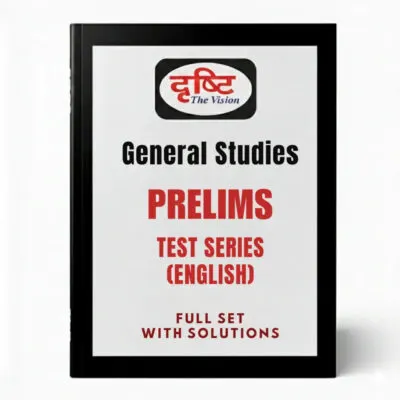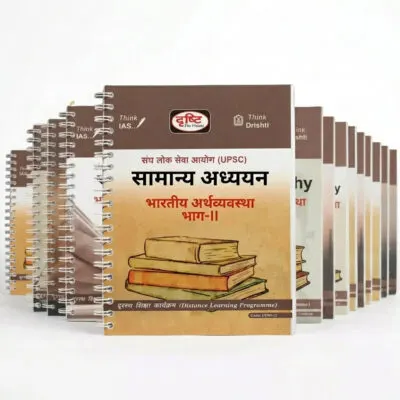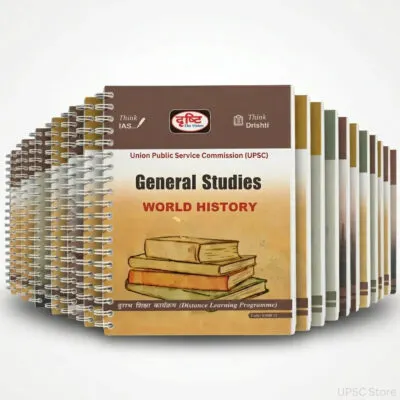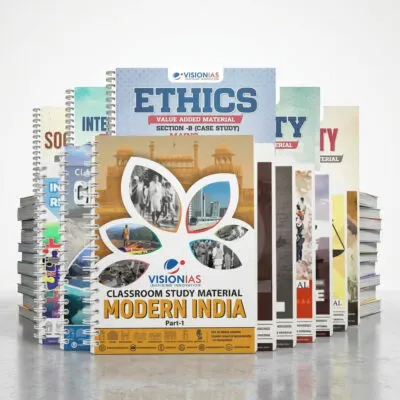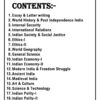
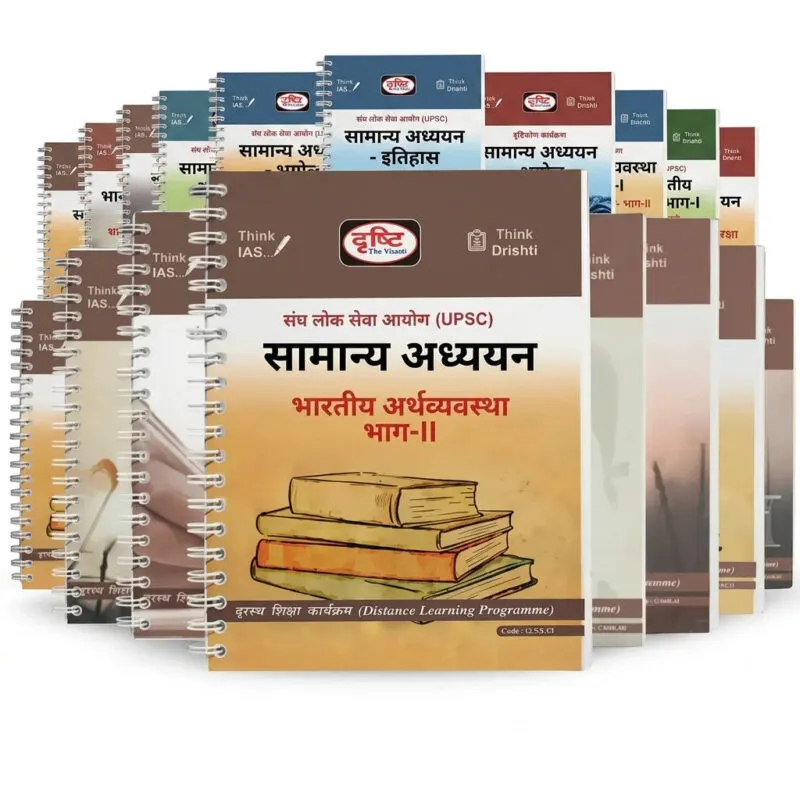

Drishti IAS General Studies & CSAT Notes 2025-26

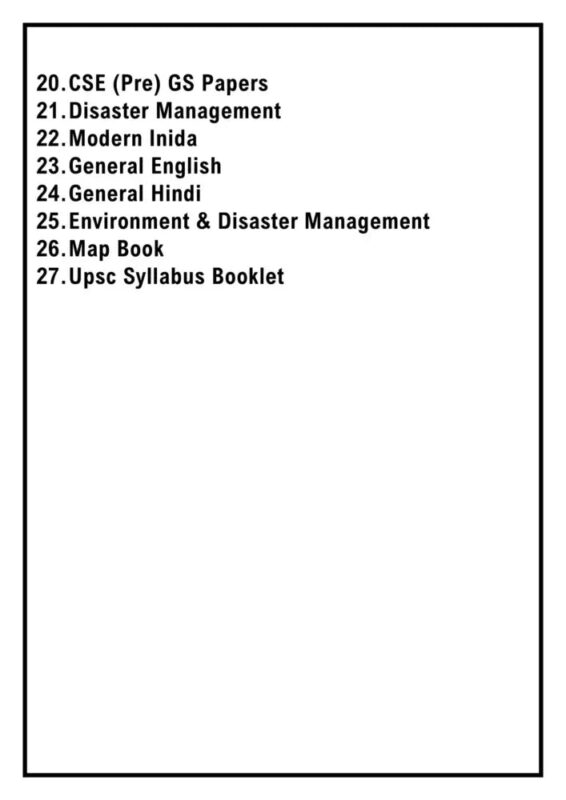
27 Booklets | English Medium | UPSC Study Material

Key Highlights:
πŸ“˜ 27 Booklets
πŸ“š General Studies & CSAT
πŸŽ“ Drishti IAS
🏷️ Printed
πŸ‡¬πŸ‡§ English Medium
β‚Ή4,999
πŸŒ€ spiral βœ“
πŸ“˜ book-binding βœ“
Only 19 sets left
Selling fast (66 sold this week)
5% OFF Use UPSC5% (COD Available)
10% OFF Use UPI10 (UPI Only)
Secure Payment
Fast Delivery
Safe Packaging

Drishti IAS GS & CSAT β€” UPSC Study Material

Related: Drishti IAS notes Β· CSAT material

Buy Drishti IAS GS & CSAT printed booklets for UPSC Civil Services Examination preparation. This page lists complete details about Drishti IAS GS & CSAT including booklet count, language, syllabus coverage, pricing, and shipping.

Drishti IAS General Studies & CSAT 2025-26 | English Medium | 27 Booklets

The Drishti IAS General Studies & CSAT 2025-26 complete study material package is one of the most comprehensive and meticulously curated resources available for UPSC Civil Services Examination aspirants. Comprising 32 carefully designed booklets in English medium, this package covers the entire UPSC Prelims syllabus with exceptional depth and clarity. Whether you are a first-time aspirant or a seasoned candidate looking to refine your preparation, this package provides a structured and systematic approach to mastering all subjects tested in the UPSC Preliminary Examination.

Designed by the expert faculty at Drishti IAS β€” one of India’s most trusted civil services coaching institutions β€” these booklets integrate current affairs, static knowledge, analytical frameworks, and practice-oriented content to ensure holistic preparation. The language is precise, accessible, and exam-oriented, ensuring that every hour of study translates directly into performance improvement. From History and Polity to Environment, Economy, Science & Technology, and CSAT, every dimension of the UPSC Prelims syllabus finds thorough and well-structured coverage in this package.


Complete Booklet-Wise Description

Booklet 1: Ancient & Medieval Indian History

This booklet offers an exhaustive coverage of Ancient Indian History, spanning the Indus Valley Civilization, Vedic Age, Mahajanapadas, Mauryan Empire, Gupta Period, and post-Gupta developments. Each era is presented with key political, economic, cultural, and religious dimensions that are frequently tested in UPSC Prelims. Special attention is given to art, architecture, and literary sources of each period. Chronological tables, maps, and comparison charts further aid retention. The content is aligned with the NCERT foundation while going significantly beyond it to meet the demands of competitive examination standards.

The Medieval History section covers the Delhi Sultanate, Mughal Empire, Vijayanagara Kingdom, Bhakti and Sufi movements, regional powers, and the socio-economic fabric of medieval India. Each chapter integrates fact-based information with analytical commentary, helping aspirants understand cause-and-effect relationships that are crucial for framing answers in Prelims MCQs. Important dynasties, rulers, battles, and administrative systems are highlighted with mnemonic-friendly summaries. Architecturally significant monuments and their historical contexts are discussed in detail, making this booklet a one-stop resource for the entire Ancient and Medieval History segment.

Booklet 2: Modern Indian History

Modern Indian History is one of the highest-yielding topics in UPSC Prelims, and this booklet ensures comprehensive coverage from the advent of European traders in India to the Independence of 1947. Key events such as the Battle of Plassey, the Revolt of 1857, the rise of Indian nationalism, the formation of the Indian National Congress, and the various mass movements led by Mahatma Gandhi are discussed with precision and analytical depth. The booklet also covers lesser-known but frequently asked events such as tribal uprisings, press acts, and social reform movements of the 19th and early 20th centuries.

The role of revolutionary movements, constitutional developments, and partition-related events leading to independence receives dedicated chapters with timelines and comparative analyses. Important personalities of the freedom struggle, their ideologies, and their contributions to nation-building are profiled with sufficient detail for MCQ-based examination. The booklet integrates previous year UPSC questions at chapter-ends to help aspirants understand the pattern and depth of questions asked. Attention is paid to regional histories and lesser-covered aspects that UPSC has increasingly focused on in recent years, making this an indispensable component of the complete package.

Booklet 3: Art & Culture

Art and Culture is a topic that demands breadth of knowledge across classical arts, folk traditions, architecture, literature, music, dance, and intangible heritage. This booklet presents a panoramic view of Indian cultural heritage from the prehistoric rock paintings of Bhimbetka to the classical temple architecture of South India, from Hindustani music traditions to the Carnatic classical system. Each art form is described with its geographical origins, key practitioners, distinctive features, and UNESCO recognition status wherever applicable. The structured presentation enables aspirants to differentiate between similar art forms β€” a key skill for tackling MCQs on culture.

The booklet also dedicates substantial sections to Indian philosophy, major religious traditions, festivals, fairs, martial arts, and traditional crafts and textiles. UNESCO Intangible Cultural Heritage listings from India are covered comprehensively, alongside India’s World Heritage Sites with their historical and cultural significance. Performing arts such as Bharatanatyam, Kathak, Kuchipudi, and their regional variations are explained clearly with distinguishing features. This booklet is invaluable not just for Prelims but also lays strong conceptual groundwork for the Culture component of UPSC Mains General Studies Paper 1.

Booklet 4: Indian Geography – Physical

Physical Geography of India is foundational for understanding environmental, agricultural, and developmental issues that permeate the UPSC syllabus. This booklet covers India’s physiographic divisions β€” the Himalayas, Northern Plains, Peninsular Plateau, Coastal Plains, and Islands β€” with detailed examination of their formation, features, and significance. River systems, including their tributaries, drainage patterns, and watersheds, are covered with precise geographical detail. Climate, monsoon systems, cyclones, and weather phenomena over the Indian subcontinent are explained with scientific accuracy. Soil types, their distribution, and agricultural suitability form another critical chapter in this booklet.

Natural vegetation zones, wildlife habitats, biodiversity hotspots, and biosphere reserves are mapped against India’s geographical regions to provide an integrated understanding of physical and ecological geography. The booklet uses color-coded maps and diagrammatic representations of physiographic features to enhance spatial understanding. Questions from previous UPSC papers related to Physical Geography are woven into the text as examples, guiding aspirants on how to apply geographical knowledge in an exam setting. This booklet is designed to be used alongside an atlas for maximum comprehension and retention of India’s complex physical geography.

Booklet 5: Indian Geography – Human & Economic

Human and Economic Geography of India examines the distribution of population, urbanization trends, agricultural patterns, industrial corridors, transportation networks, and resource distribution across the country. Chapters on agriculture cover major crops, their cultivation seasons, agro-climatic zones, and government policies related to food security and agricultural reform. Industrial geography covers the location of key industries, Special Economic Zones, industrial policy evolution, and emerging manufacturing hubs. The booklet integrates census data and economic survey findings to provide up-to-date statistical grounding.

Topics such as energy resources β€” conventional and renewable β€” mineral distribution, port infrastructure, national highways, inland waterways, and digital connectivity corridors are covered with maps and comparative tables. The booklet also addresses issues of regional development disparities, demographic dividend, migration patterns, and urban-rural interface changes. Every chapter is written with a dual focus on static knowledge and current developments, ensuring that aspirants can connect geographical data points with contemporary policy discussions. This approach is particularly useful for integrated question types that UPSC frequently employs to test applied geographical understanding.

Booklet 6: World Geography

World Geography is a broad domain that includes physical features of continents, ocean systems, climate zones, natural resources, and geopolitical geography. This booklet provides systematic coverage of major mountain ranges, river basins, deserts, plateaus, and grasslands across the world. Climate classification systems β€” including Koppen’s classification β€” are explained with examples of regions falling under each category. Ocean currents, their causes and effects on regional climates and fishing industries, are discussed with diagrams. Volcanic and seismic zones, tectonic plate boundaries, and associated natural hazards are covered with reference to recent global events.

The geopolitical dimension of World Geography β€” including important straits, international boundaries, contested regions, and strategic sea lanes β€” receives dedicated attention in this booklet. Resource geography covering oil and gas reserves, freshwater availability, rare earth minerals, and agricultural powerhouse regions helps aspirants connect geography with international relations and economics. The booklet also covers important global organizations with geographical mandates such as UNCLOS, Arctic Council, and Antarctic Treaty System. Maps, infographics, and fact boxes are interspersed throughout to make the content visually engaging and examination-ready.

Booklet 7: Indian Polity – Constitutional Framework

Indian Polity is arguably the most important subject for UPSC Prelims, and this booklet provides foundational coverage of India’s Constitutional framework. Beginning with the Constituent Assembly debates and the philosophical underpinnings of the Constitution, it moves methodically through the Preamble, Fundamental Rights, Directive Principles, Fundamental Duties, and the federal structure of India. Each constitutional article is explained with its historical background, Supreme Court interpretations, and practical implications. The booklet bridges the gap between bare constitutional text and the analytical understanding required for UPSC-level questions.

Landmark constitutional amendments β€” from the 1st Amendment to recent ones β€” are tabulated with their year, purpose, and impact on governance. The booklet also covers the structure, powers, and functions of Parliament, the President, the Vice President, the Prime Minister, and the Council of Ministers. Emergency provisions, anti-defection law, and constitutional bodies such as Election Commission and Finance Commission are explained with clarity and precision. Diagrams showing the hierarchical relationship between constitutional institutions and flowcharts of legislative processes help visual learners internalize complex procedural knowledge effectively.

Booklet 8: Indian Polity – Governance & Political Dynamics

This booklet extends constitutional knowledge into the practical domains of governance, federalism, local self-government, and political institutions. State governments, their legislative assemblies, the role of Governors, and centre-state relations under Schedule VII are covered with analysis of landmark disputes and judicial pronouncements. The booklet extensively covers the 73rd and 74th Constitutional Amendments, Panchayati Raj institutions, urban local bodies, and their evolving role in decentralized governance. Special category states, interstate water disputes, and cooperative federalism mechanisms such as the GST Council are analyzed.

The judicial system β€” Supreme Court, High Courts, subordinate courts, and the system of tribunals β€” is covered with their jurisdictions, powers, and recent landmark judgments. Statutory bodies, constitutional bodies, and quasi-judicial bodies are differentiated and described. The booklet also addresses RTI, whistleblower protection, citizen’s charters, and e-governance initiatives as part of good governance discourse. Electoral reforms, political party financing, Model Code of Conduct, and EVM controversies are discussed from a governance perspective. This booklet prepares aspirants to handle both straightforward factual questions and higher-order analytical questions on Indian governance.

Booklet 9: Indian Economy – Fundamentals & Macro

Understanding the Indian Economy is essential for cracking UPSC Prelims, and this booklet builds strong foundations in macroeconomic concepts before applying them to the Indian context. Topics covered include GDP measurement, national income accounting, types of inflation, monetary policy instruments, fiscal policy, and budget-making processes. The Reserve Bank of India’s structure, functions, and monetary transmission mechanisms are explained with diagrams. Banking system evolution, types of banks, NBFCs, and financial sector reforms are covered with reference to major policy changes of the past decade.

Concepts such as balance of payments, current account deficit, capital account convertibility, foreign exchange reserves, and India’s external sector performance are explained accessibly. Trade policy, WTO negotiations, and India’s participation in regional trade agreements receive dedicated coverage. The booklet also covers major economic indicators β€” CPI, WPI, IIP, PMI β€” and how they are computed and interpreted. Economic Planning in India, NITI Aayog’s role, and major flagship economic programs are discussed as part of development policy. Diagrams, flow charts, and data tables from Economic Survey and Union Budget are incorporated to provide current statistical context.

Booklet 10: Indian Economy – Agriculture, Industry & Services

This booklet examines the three pillars of the Indian economy β€” agriculture, industry, and services β€” in depth. The agriculture section covers land reforms, green revolution, second green revolution, crop insurance schemes, MSP policy, agricultural marketing reforms, organic farming initiatives, and precision agriculture. Allied sectors including animal husbandry, fisheries, and horticulture are covered with relevant government schemes. Food security legislation, public distribution system reforms, and nutrition security programs form an important sub-section. The challenges facing Indian agriculture β€” fragmented landholdings, water stress, soil degradation, and climate vulnerability β€” are analyzed with policy solutions.

Industrial policy evolution from License Raj to Make in India, Atmanirbhar Bharat, and PLI schemes is traced comprehensively. Key industries β€” textiles, automobiles, pharmaceuticals, defence manufacturing, electronics, and steel β€” are profiled with their geographic concentration, global competitiveness, and policy environment. The services sector, contributing over 55% of India’s GDP, is covered across IT/ITeS, financial services, tourism, healthcare, and education. Special attention is given to the startup ecosystem, unicorn economy, fintech revolution, and digital public infrastructure as transformative forces reshaping India’s service economy. Data-rich tables and infographics make this booklet particularly exam-relevant.

Booklet 11: Environment & Ecology – Part 1

Environment and Ecology has emerged as one of the most dynamic and frequently tested sections of UPSC Prelims. This booklet covers foundational ecological concepts β€” ecosystem structure and function, food webs, energy flow, biogeochemical cycles, ecological succession, and biodiversity at genetic, species, and ecosystem levels. India’s biodiversity β€” its hotspots, endemic species, flagship species, and threatened species β€” is covered with reference to IUCN Red List categories. Protected area network including National Parks, Wildlife Sanctuaries, Biosphere Reserves, Ramsar Wetlands, and Tiger Reserves is comprehensively mapped.

Wildlife conservation legislation β€” Wildlife Protection Act, Forest Conservation Act, Environment Protection Act, and Biological Diversity Act β€” is explained with their key provisions and recent amendments. International conventions such as CBD, CITES, CMS, and Ramsar Convention are covered with India’s commitments and performance. The booklet also addresses invasive species, habitat fragmentation, man-animal conflict, and community-based conservation models. Environmental impact assessment processes, coastal regulation zones, and eco-sensitive zones are explained in the context of development versus conservation debates. This first part of the Environment series lays essential groundwork for the more complex topics covered in subsequent booklets.

Booklet 12: Environment & Ecology – Part 2

Building on Part 1, this booklet dives into climate change science, global warming mechanisms, greenhouse gas inventory, carbon markets, and climate finance architecture. The IPCC assessment reports, their key findings, and implications for India are summarized with clarity. India’s Nationally Determined Contributions (NDCs), National Action Plan on Climate Change and its eight missions, and India’s net-zero pledge are covered in detail. International climate negotiations β€” from Kyoto Protocol to Paris Agreement, Glasgow COP26, and subsequent COP summits β€” are tracked with India’s position and commitments.

Pollution β€” air, water, soil, noise, and light β€” is covered with causes, measurement standards, health impacts, and regulatory frameworks. Solid waste management, e-waste, plastic pollution, and biomedical waste management regulations are described with reference to Swachh Bharat Mission and related schemes. Renewable energy transition, energy efficiency initiatives, Green Hydrogen Mission, and solar and wind energy targets form a significant chapter. The booklet also covers natural disasters β€” earthquakes, tsunamis, cyclones, floods, and droughts β€” their causes, India’s vulnerability, early warning systems, and the National Disaster Management Framework. This booklet directly addresses the intersection of environment, policy, and current affairs.

Booklet 13: Science & Technology – Part 1

Science and Technology has grown significantly in importance in UPSC Prelims over the past several years, with questions increasingly focusing on cutting-edge developments rather than textbook concepts alone. This booklet covers fundamental concepts in Physics, Chemistry, and Biology as they appear in the UPSC syllabus, with emphasis on applications rather than theoretical depth. Nuclear technology β€” fission, fusion, nuclear reactors, India’s three-stage nuclear programme, and nuclear policy β€” is explained comprehensively. Space technology covers ISRO’s missions including Chandrayaan, Mangalyaan, Aditya-L1, Gaganyaan, and commercial space ventures.

Defence technology including missile systems (Agni, Prithvi, BrahMos, Akash), combat aircraft, naval technology, and India’s defence manufacturing ecosystem under Atmanirbhar Bharat is covered with updated information. Information technology β€” semiconductors, quantum computing, artificial intelligence, machine learning, blockchain, Internet of Things, and cybersecurity β€” receives detailed treatment in a rapidly evolving field. Biotechnology applications in agriculture, medicine, and industrial processes are discussed with examples. The booklet adopts a question-centric approach, frequently illustrating how concepts translate into MCQ formats, making it highly effective for exam preparation in this dynamic subject area.

Booklet 14: Science & Technology – Part 2

This booklet extends S&T coverage to emerging and niche areas that are increasingly featuring in UPSC Prelims question papers. Nanotechnology, its applications in medicine, materials science, and electronics, and India’s National Nanotechnology Mission are covered. Robotics, drones, and autonomous systems β€” including their defence and civilian applications and India’s drone policy β€” form a dedicated section. Green technology, including carbon capture, biofuels, hydrogen fuel cells, and energy storage technologies, connects S&T with environmental sustainability themes important to the overall UPSC syllabus.

Medical science developments β€” gene editing with CRISPR-Cas9, mRNA vaccines, organ-on-chip technology, telemedicine, and India’s pharmaceutical innovations β€” are explained with accessible language for non-science background aspirants. Astronomy and astrophysics developments β€” exoplanet discoveries, gravitational waves, black hole imaging, and India’s astronomical observatories β€” are covered with UPSC relevance. The booklet concludes with coverage of India’s science policy architecture, major national laboratories, and science and technology funding mechanisms. Current year science and technology achievements by India and globally are integrated throughout, ensuring the content remains fresh and highly relevant to the examination year.

Booklet 15: Current Affairs – Part 1 (April–September)

Current Affairs is the dynamic spine of UPSC Prelims preparation, and this booklet provides systematic coverage of important national and international events from April to September of the examination cycle year. Unlike conventional news compilations, this booklet presents current affairs through the lens of UPSC relevance β€” categorizing events under GS Paper 1 themes such as Polity, Economy, Environment, Science, and International Relations. Each event is contextualized with background knowledge, policy implications, and likely question angles. Important government schemes launched, bills passed, Supreme Court verdicts, and regulatory changes are covered in structured formats.

International events including bilateral summits, multilateral negotiations, geopolitical developments, and economic agreements are analyzed with India’s perspective and national interest dimensions. Key appointments to constitutional and statutory bodies, new entrants to UNESCO lists, changes in India’s rank in global indices, and first-of-a-kind achievements are compiled in easy-reference tables. The booklet employs a topic-wise organization rather than a chronological one, enabling aspirants to integrate current affairs with static knowledge more effectively. Practice questions based on current events are included at the end of each chapter to test comprehension and examination application.

Booklet 16: Current Affairs – Part 2 (October–March)

Continuing the current affairs coverage, this booklet addresses events from October to March β€” the period closest to the UPSC Preliminary Examination, making it particularly critical for last-minute preparation. Union Budget highlights, Economic Survey key findings, key policy announcements, electoral developments, and diplomatic events of this period are covered comprehensively. Annual reports of major ministries, NITI Aayog documents, and government white papers released during this period are summarized with their exam-relevant findings. Science and technology breakthroughs, environmental agreements, and cultural milestones of this six-month period are documented.

This booklet also covers important global events β€” UN General Assembly resolutions, World Bank and IMF reports, WEF Global Risk Report, IPCC updates, and major international summits β€” that fall within this period. Special spotlight sections are dedicated to India’s foreign policy developments, including engagement with major powers, neighbourhood diplomacy, and multilateral forum participation. Important ranking indices such as Human Development Index, Global Hunger Index, Press Freedom Index, and Ease of Doing Business are covered with India’s performance analysis. The booklet concludes with a rapid revision section listing the year’s most important facts in condensed, examination-friendly formats.

Booklet 17: Indian Polity – Previous Year Questions Analysis

This dedicated practice booklet presents a decade-long compilation of UPSC Prelims questions from Indian Polity, organized thematically rather than year-wise. Each question is accompanied by a detailed explanation of the correct answer and the reasons for elimination of incorrect options β€” a methodology that builds both answer accuracy and MCQ-solving strategy. Trend analysis at the beginning of each chapter helps aspirants understand which sub-topics have received maximum question frequency and what types of questions are likely in the upcoming examination. This data-driven approach to preparation significantly enhances exam readiness.

The booklet identifies recurring concepts β€” such as landmark constitutional judgments, Schedule provisions, constitutional bodies’ powers β€” and provides consolidated notes on these high-frequency areas. Mock questions crafted on the pattern of recent UPSC Prelims are provided at chapter-ends to simulate examination conditions. Common misconceptions in Polity β€” such as confusion between similar-sounding constitutional provisions or overlapping mandates of institutions β€” are directly addressed with clarificatory explanations. This booklet is best used after completing the conceptual booklets and serves as a powerful bridge between knowledge acquisition and examination performance optimization.

Booklet 18: Economy – Previous Year Questions Analysis

Following the same rigorous analytical methodology as the Polity PYQ booklet, this resource covers a comprehensive collection of Economy-related UPSC Prelims questions from the past decade. The questions are organized under macro-economy, banking and finance, agriculture, industry, services, international trade, and government schemes β€” enabling targeted practice in specific areas. Explanations go beyond stating the correct answer to explaining the underlying economic concept, helping aspirants build the conceptual framework needed to tackle new and unfamiliar question types with confidence.

Special sections identify the most commonly tested economic concepts and programs, allowing aspirants to prioritize their revision strategically. Questions related to government flagship programs β€” PM-KISAN, MGNREGS, PMGSY, Ayushman Bharat, Make in India, and others β€” are compiled and explained with scheme details. The booklet highlights the growing trend of UPSC asking application-based economic questions rather than simple definitional ones, and provides strategies for approaching such questions. Topic-wise difficulty analysis helps aspirants allocate preparation time proportionally and approach the Economy section of UPSC Prelims with systematic confidence.

Booklet 19: Geography – Previous Year Questions Analysis

Geography questions in UPSC Prelims span physical geography, human geography, world geography, and map-based questions β€” all of which are addressed in this dedicated practice booklet. A decade’s worth of Prelims Geography questions are analyzed with explanations that connect factual data points with geographical concepts. Map-related questions are particularly emphasized, with reference maps provided for major geographical features, rivers, mountain ranges, and geopolitical boundaries. The booklet identifies how UPSC combines geography with current affairs β€” such as questions on cyclone names, earthquake zones, or international river disputes β€” and provides preparation strategies for such hybrid questions.

The booklet also covers frequently tested geographical lists β€” longest rivers, highest peaks, deepest lakes, largest deltas, important straits and bays β€” in table format for rapid revision. Climate and oceanography questions, which require conceptual understanding rather than rote memorization, are approached with concept maps and cause-effect diagrams. India-specific geography questions β€” National Parks, Tiger Reserves, Ramsar sites, biosphere reserves β€” are given special treatment with updated lists as per the year of examination. Practice question sets at chapter-ends help aspirants consolidate their learning and build speed and accuracy in this important GS Paper 1 topic area.

Booklet 20: History – Previous Year Questions Analysis

History β€” spanning Ancient, Medieval, and Modern periods along with Art and Culture β€” generates a consistently high number of questions in UPSC Prelims. This booklet systematically analyses PYQs across all historical periods, providing detailed explanations that reveal UPSC’s preference for conceptual understanding over chronological memorization. Questions on cultural and religious developments, administrative systems, economic history, and social structures are given equal attention alongside the more commonly studied political history. The booklet reveals patterns in UPSC’s approach to History, such as the increasing focus on cultural and intellectual history in recent years.

Modern History questions β€” particularly on the freedom struggle, constitutional reforms, and social reform movements β€” are analyzed with special attention to personality-based questions and event sequencing questions that frequently appear in Prelims. The booklet integrates Art and Culture PYQs alongside History, reflecting how UPSC often intertwines these two areas. Commonly confused historical facts, similar-sounding dynasties or leaders, and overlapping events are specifically addressed with comparative tables. Mock questions at chapter-ends replicate UPSC Prelims difficulty and style, ensuring aspirants are fully prepared for the History and Culture section of GS Paper 1.

Booklet 21: Environment – Previous Year Questions Analysis

Environment and Ecology PYQ analysis is particularly valuable given the rapidly evolving nature of this subject in UPSC Prelims. This booklet covers all environment and ecology questions from the past decade, demonstrating how UPSC tests both static ecological knowledge and current environmental developments. Questions on biodiversity, conservation legislation, international conventions, climate change policy, and pollution regulations are analyzed with updated information reflecting recent developments. The booklet helps aspirants navigate the fine distinction between similar-sounding protected area designations and environmental acts β€” an area where many aspirants lose marks.

COP summit outcomes, new Ramsar site notifications, UNESCO designations, IUCN status changes, and India-specific conservation success stories generate questions each year, and this booklet ensures aspirants are prepared for all such current-static hybrid questions. The explanations frequently cross-reference Environment questions with Geography and Science & Technology topics, reflecting the interdisciplinary nature of UPSC questioning in recent years. Updated lists of Tiger Reserves, Ramsar sites, biosphere reserves, and UNESCO Natural World Heritage Sites in India are provided in tabular form. Practice questions incorporating the latest environmental developments complete this comprehensive practice resource.

Booklet 22: Science & Technology – Previous Year Questions Analysis

Science and Technology questions in UPSC Prelims have become increasingly sophisticated, testing current developments rather than classical textbook knowledge. This booklet analyses S&T PYQs with detailed explanations that connect emerging technologies with their policy and strategic implications for India. Space technology, defence systems, biotechnology, information technology, and renewable energy questions are organized thematically with concept-building explanations. The booklet demonstrates how UPSC frames S&T questions to test practical understanding and current awareness rather than theoretical depth, providing aspirants with the right approach for tackling this section.

Recent additions to S&T topics in UPSC β€” quantum computing, artificial intelligence governance, semiconductor policy, genome sequencing, and cybersecurity β€” are addressed with foundational concept explanations followed by PYQ analysis and mock questions. ISRO mission-based questions are covered with comprehensive mission details and scientific objectives. The booklet provides cheat sheets for major technologies, their applications, India’s progress, and global leaders in each domain β€” making revision efficient and targeted. Aspirants from non-science backgrounds particularly benefit from this booklet’s accessible yet thorough treatment of complex scientific topics in an examination context.

Booklet 23: CSAT – Reading Comprehension & Verbal Ability

CSAT Paper 2 (General Studies Paper 2 for Prelims) carries qualifying status but requires a minimum of 33% marks β€” a threshold that demands serious preparation from aspirants who are not from English-medium backgrounds. This booklet focuses on the Reading Comprehension component, which typically constitutes the largest portion of the CSAT paper. It provides a systematic methodology for approaching complex comprehension passages β€” understanding the central theme, identifying the author’s tone, distinguishing between factual and inferential questions, and eliminating wrong answer choices. A variety of practice passages covering philosophy, science, economics, and social issues are included with annotated solutions.

Verbal ability questions β€” sentence correction, vocabulary in context, para-jumbles, and logical completion of sentences β€” are covered with strategy-based approaches rather than rote learning of grammar rules. The booklet identifies the most commonly tested verbal ability question types in UPSC CSAT and provides targeted practice for each. Speed reading techniques, active reading strategies, and time management approaches specific to CSAT comprehension are explained with practical exercises. Multiple sets of full-length comprehension exercises with detailed answer explanations help aspirants develop the consistent accuracy needed to clear the CSAT qualifying threshold with minimal time investment during examination preparation.

Booklet 24: CSAT – Logical Reasoning & Analytical Ability

Logical Reasoning and Analytical Ability questions test an aspirant’s ability to identify patterns, draw valid inferences, analyze arguments, and solve problems using structured thinking. This booklet provides comprehensive coverage of all logical reasoning question types found in UPSC CSAT β€” blood relations, direction sense, seating arrangements, syllogisms, statements and conclusions, statements and assumptions, course of action questions, and critical reasoning. Each question type is explained with a step-by-step approach that builds from basic concepts to examination-level complexity. Worked examples precede each practice exercise set, ensuring aspirants understand the methodology before attempting problems independently.

Data interpretation questions β€” based on tables, bar charts, line graphs, pie charts, and caselets β€” are treated with dedicated chapters covering both the mathematical interpretation and the logical analysis aspects. Decision-making questions, which test judgment in administrative and ethical situations, are covered with frameworks for systematic evaluation. The booklet includes timed practice sessions with answer keys to help aspirants build both accuracy and speed. Common reasoning traps and logical fallacies that are deliberately embedded in UPSC CSAT options are identified and explained, giving aspirants a significant edge in eliminating incorrect options and selecting the most logically sound answers.

Booklet 25: CSAT – Quantitative Aptitude Part 1

Quantitative Aptitude in CSAT tests mathematical ability across arithmetic, algebra, geometry, and data analysis. This booklet covers foundational arithmetic topics β€” number systems, fractions and decimals, percentages, profit and loss, simple and compound interest, ratio and proportion, averages, and time-speed-distance β€” with UPSC-specific shortcut methods and approach strategies. Each concept is explained with the minimum mathematical notation necessary, making the content accessible to aspirants from non-mathematics backgrounds. The booklet emphasizes understanding over mechanical calculation, with frequent use of intuitive explanations and visual representations of mathematical relationships.

A significant portion of this booklet is dedicated to practice problems arranged in increasing order of difficulty, from straightforward application questions to complex multi-step problems that test deeper understanding. UPSC CSAT past year quantitative questions are analyzed with multiple solution approaches, demonstrating how different methods β€” algebra, substitution, back-calculation β€” can be applied to the same problem. Time management strategies for the Quantitative section are discussed, including guidance on which types of problems to attempt first based on individual strengths and the overall examination time constraint. Regular revision exercises and chapter-end assessments help consolidate the quantitative skills developed through this booklet.

Booklet 26: CSAT – Quantitative Aptitude Part 2

Building on Part 1, this booklet covers advanced quantitative topics β€” permutations and combinations, probability, geometry and mensuration, coordinate geometry, and basic statistics. These topics require a higher level of mathematical comfort but are approached with the same aspirant-friendly methodology as Part 1. Step-by-step solution approaches, formula derivations explained intuitively, and application-focused examples make even complex topics accessible. Special attention is given to geometry and mensuration β€” a notoriously challenging area for CSAT β€” with diagrams and visual solution strategies for different geometric problem types.

The booklet also covers Work and Time, Pipes and Cisterns, Mixtures and Alligation β€” topics that appear with notable frequency in recent CSAT papers. Set theory questions, Venn diagram problems, and simple algebraic equations are covered with systematic solution frameworks. Data Sufficiency questions, which test mathematical reasoning rather than computational ability, are given dedicated treatment. The booklet concludes with four full-length CSAT Practice Papers that integrate all quantitative, logical reasoning, and

Frequently Asked Questions

Is CSAT included in this set?

Yes, CSAT booklets are included along with General Studies for the full Prelims syllabus.

How many booklets are in the package?

The set contains 27 individual printed booklets in English medium.

Are these original Drishti IAS notes?

Yes, all booklets are sourced from the Drishti IAS 2025-26 batch as genuine printed material.

Are these useful for first-time aspirants?

Yes, the booklets work for both first-time aspirants and those revisiting the syllabus.

Is COD supported on this set?

Yes, Cash on Delivery is available on most pin codes across India.

How is the package shipped?

Booklets are bubble wrapped and packed in a corrugated carton with tracked courier service.

Reference: Civil Services Examination

Customer Reviews 133

4.5
Based on 133 reviews
5β˜…
79
4β˜…
39
3β˜…
15
2β˜…
0
1β˜…
0
V
Vikram Singh
23 Apr 2026
βœ“ Verified

Material is theek but competitive nahi hai. Better options available in market.

V
Vikram Singh
23 Apr 2026
βœ“ Verified

Superb quality, content bilkul on point for mains preparation.

N
Neha Gupta
21 Apr 2026
βœ“ Verified

Very helpful notes aur printing quality bhi top-notch.

P
Priya Sharma
13 Apr 2026
βœ“ Verified

Booklets cover basics nicely but need supplementary material for advanced topics.

A
Anjali Patel
11 Apr 2026
βœ“ Verified

Very helpful booklets for CSAT preparation.

D
Divya Rao
24 Mar 2026
βœ“ Verified

Booklets bohot informative hain, quality also excellent. Couldn't ask for better.

A
Arjun Patel
22 Mar 2026
βœ“ Verified

27 booklets mein sab kuch hai. Packaging bhi excellent tha.

A
Aditya Mishra
13 Mar 2026
βœ“ Verified

Drishti ka standard ache se maintain hai, highly recommend for serious aspirants.

πŸ›οΈ

Aspirants Also Bought

More from the same category

View All β†’

About Drishti IAS General Studies & CSAT Notes 2025-26

Drishti IAS General Studies & CSAT Notes 2025-26 is a highly recommended UPSC study material from Drishti IAS, specially designed for General Studies & CSAT preparation. Available in English medium, this material is crafted to match the exact requirements of the UPSC Civil Services Examination syllabus β€” covering both Prelims and Mains comprehensively.

Product Details

  • Institute: Drishti IAS
  • Subject: General Studies & CSAT
  • Medium: English
  • Format: Printed
  • Delivery: Pan-India delivery in 3–5 working days
  • Format: Original printed material, verified authentic

Why Buy from UPSC Store?

  • βœ… 100% Genuine Printed Material β€” Original printed notes, no photocopies or fake copies
  • βœ… Fast Delivery β€” Ships within 24 hours, arrives in 3–5 days pan-India
  • βœ… Secure Packaging β€” Bubble-wrapped and boxed to prevent damage in transit
  • βœ… Trusted by 10,000+ Aspirants β€” India's most reliable UPSC material marketplace
  • βœ… WhatsApp Support β€” Get expert guidance on material selection before ordering

Frequently Asked Questions

Is this product 100% original?

Yes, all products at UPSC Store are 100% genuine printed materials. We do not sell photocopies or fake copies.

How long does delivery take?

Orders are dispatched within 24 hours and delivered across India in 3–5 working days via reputed courier partners.

Can I return the product?

Yes, we accept returns within 7 days if the product is damaged or incorrect. Check our refund policy for details.

Which other study materials should I buy with this?

We recommend pairing this with current affairs notes and a UPSC test series for comprehensive preparation. Browse more in CSAT, Drishti IAS, General Studies, UPSC.