


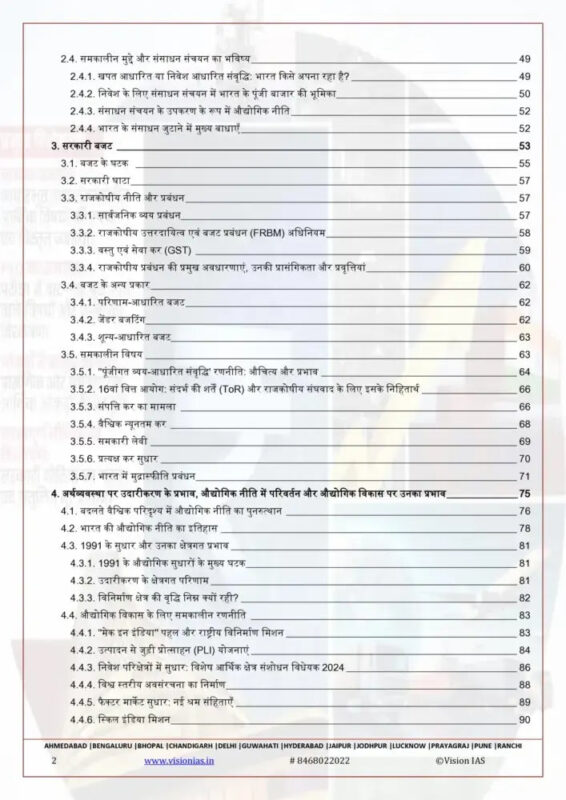


Vision IAS GS Value Added Materials 2026-2027 | Hindi | Set of 9 Booklets
Binding Guide
Pick the binding that fits how you study.
Spiral Binding
- Lays completely flat
- 360° page rotation
- Great for note-taking
- Best for maths, science, reference
Without Spiral
- Compact & professional
- Sturdy glued/stitched spine
- Easy to stack & store
- Best for textbooks & long-term
.UPSC Store-article{font-size:16.5px;line-height:1.75;color:#23282d;max-width:100%;overflow-wrap:break-word;}.UPSC Store-article h2{font-size:1.45em;margin:1.5em 0 .5em;padding-bottom:.3em;border-bottom:2px solid #e8514f;color:#1a1a2e;}.UPSC Store-article h3{font-size:1.15em;margin:1.2em 0 .4em;color:#2b2d42;}.UPSC Store-article p{margin:0 0 1.05em;}.UPSC Store-article ul,.UPSC Store-article ol{margin:0 0 1.15em 1.2em;}.UPSC Store-article li{margin:.35em 0;}.UPSC Store-article a{color:#c0392b;text-decoration:underline;font-weight:600;}.UPSC Store-article table{width:100%;border-collapse:collapse;margin:0 0 1.4em;font-size:15px;box-shadow:0 1px 4px rgba(0,0,0,.08);border-radius:8px;overflow:hidden;}.UPSC Store-article thead th{background:#1a1a2e;color:#fff;text-align:left;padding:11px 14px;}.UPSC Store-article td{padding:10px 14px;border:1px solid #e6e8ec;white-space:normal;}.UPSC Store-article tbody tr:nth-child(even){background:#f6f8fb;}@media(max-width:600px){.UPSC Store-article{font-size:16px;}.UPSC Store-article table,.UPSC Store-article thead,.UPSC Store-article tbody,.UPSC Store-article tr,.UPSC Store-article th,.UPSC Store-article td{display:block!important;width:100%!important;box-sizing:border-box!important;}.UPSC Store-article thead{display:none!important;}.UPSC Store-article tr{margin:0 0 14px!important;border:1px solid #e4e7ec!important;border-radius:12px;overflow:hidden;background:#fff!important;}.UPSC Store-article td{border:0!important;border-bottom:1px solid #eef0f3!important;text-align:left!important;}.UPSC Store-article td:first-child{background:#1a1a2e!important;color:#fff!important;font-weight:700;}}
Vision IAS Value Added Material 2026-27 Hindi GS Booklets Overview
The Vision IAS value added material in this set gives Hindi-medium UPSC aspirants nine printed booklets across GS 1, 2 and 3. Moreover, every booklet links current affairs to the static syllabus. Therefore, you study high-yield topics in your preferred language without juggling scattered notes.
First, Vision IAS curates each booklet to mirror the latest UPSC pattern. Next, the 2026-27 edition adds fresh examples and data. As a result, you revise faster and write sharper answers.
Why Choose Vision IAS for Value Added Material
Vision IAS remains one of India’s most trusted UPSC publishers. Furthermore, its content team tracks the syllabus closely. Consequently, the booklets stay relevant for both Prelims and Mains.
- Expert curation: Subject specialists prepare each Vision IAS value added material booklet.
- Hindi medium: The set serves Hindi-speaking aspirants directly, so complex GS topics feel simpler.
- Current-affairs linkage: Each topic connects static theory with recent developments.
- Trusted ecosystem: The booklets fit neatly beside the wider Vision IAS notes series.
What’s Included in This Vision IAS Value Added Material Set
This set contains exactly 9 Hindi booklets. Moreover, each booklet covers one core GS subject. Therefore, here is every booklet listed individually.
- Polity
- Economy
- Geography
- Society
- Internal Security
- Social Justice
- Governance
- History
- Environment and Disaster Management
For the full GS foundation, you can pair this set with the Vision IAS 2026-27 Complete GS Notes (57 booklets). As a result, you cover both depth and breadth.
What This Vision IAS Value Added Material Covers
The booklets span the entire General Studies canvas. First, Polity and Governance explain the Constitution, institutions and recent reforms. Next, Economy and Geography decode core concepts with current data. Then, Society, Social Justice and Internal Security add the issue-based depth that Mains demands.
Besides these, History traces the themes UPSC repeats often. Similarly, Environment and Disaster Management ties ecology with policy. Consequently, you build a syllabus-wise, exam-ready base in Hindi.
Moreover, each booklet keeps language simple and direct. Therefore, you grasp tough concepts quickly. In addition, the curated format saves revision time before both Prelims and Mains.
How Vision IAS Value Added Material Boosts Your Score
First, the booklets fill the gaps that standard textbooks leave. Next, they connect static topics with current developments. Therefore, your answers gain the depth that examiners reward.
Furthermore, the printed format lets you highlight and annotate freely. Consequently, your revision becomes faster and more personal. In short, this set turns scattered study into a structured plan.
Specifications at a Glance
| Feature | Details |
|---|---|
| Brand | Vision IAS |
| Booklets / Modules count | 9 |
| Subjects | Polity, Economy, Geography, Society, Internal Security, Social Justice, Governance, History, Environment & Disaster Management |
| Medium | Hindi |
| Edition | 2025-2026 (2026-27 cycle) |
| Exam / Level | UPSC GS (Prelims + Mains) |
| Format | Printed Booklets |
| Condition | New |
| Delivery | Pay online (10% off) or book with ₹99, rest on delivery |
Who Should Buy This Vision IAS Value Added Material in Hindi
This set suits Hindi-medium aspirants who want supplementary depth beyond textbooks. Moreover, it fits students in their second or third preparation year. Therefore, serious GS candidates gain the most.
- Hindi-medium UPSC aspirants preparing GS 1, 2 and 3.
- Students strengthening their foundation with curated, exam-relevant content.
- Aspirants already following the Vision IAS Hindi ecosystem.
For monthly current affairs in Hindi, you can also add the Vision IAS Government Schemes PT 365 (Hindi) magazine. In addition, the Vision IAS Social Issues Mains 365 (Hindi) booklet deepens your answer writing.
How to Use These Booklets Effectively
First, fix a daily reading slot for one subject. Next, annotate key points directly on the printed pages. Then, link each topic to recent news for richer answers.
- Read one booklet section, then summarise it in your own words.
- Discuss tricky topics with fellow aspirants for clarity.
- Attempt practice questions after every subject.
- Revise regularly so the content stays fresh.
Buying and Delivery Across India
UPSC Store delivers this Vision IAS value added material pan-India. UPSC Store delivers across India. Pay online and get 10% off, or book with ₹99 and pay the rest in cash on delivery. Therefore, you can buy with confidence from any city or town.
UPSC Store delivers across India. Pay online and get 10% off, or book with ₹99 and pay the rest in cash on delivery. You can also browse more titles in the UPSC study material category.
Customer Reviews
No reviews yet
Be the first — bought this set? Tap “Write a Review” and tell other students how it arrived.
Only real buyers — we never post fake reviews.
Aspirants Also Bought
Same exam · bestsellers first
Vision IAS Prelims 2026-27 GS Test Series | 15–35 Tests | English Medium

Vajiram & Ravi General Studies Prelims Test Series 2026-27 | 10–30 Tests | English Medium | UPSC Study Material
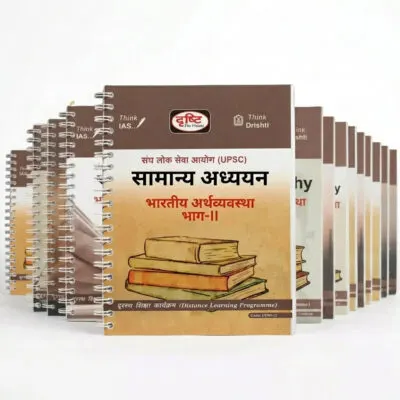
Drishti IAS Hindi Medium Complete GS Notes 2025-26 | 18 Booklets | Hindi Medium | UPSC Study Material
Drishti IAS Prelims Test Series 2026-27 | 10–35 Tests | English Medium | UPSC Study Material

Next IAS General Studies Prelims Test Series 2026-27 | 10–35 Tests | English Medium | UPSC Study Material

PW Only IAS Prelims 2026-27 Hindi Test Series | 10–35 Tests | Hindi Medium | UPSC Study Material

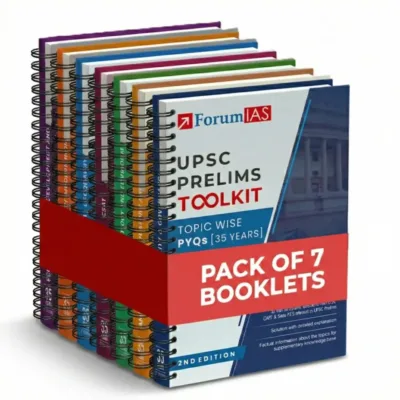
Forum IAS Prelims Topic-wise PYQs 1992-2025 | 7 Booklets | English Medium | UPSC Study Material
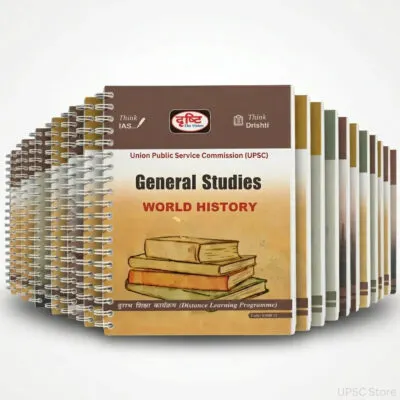
Drishti IAS GS Foundation Notes 2025-26 | 27 Booklets | English Medium | UPSC Study Material

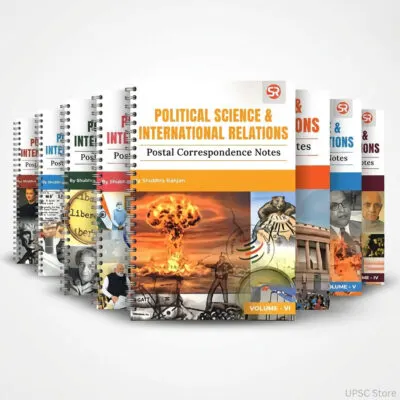
Shubhra Ranjan PSIR Optional Handwritten Notes 2026-27 | 11 Booklets | English Medium | UPSC Study Material
PW Only IAS Prelims Test Series 2026 | 10–35 Tests | English Medium | UPSC Study Material
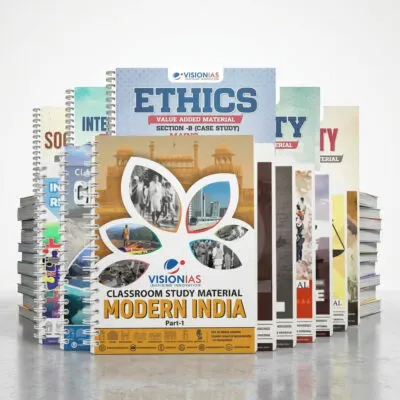
Vision IAS General Studies Notes 2026-27 | 56 Booklets | English Medium | UPSC Study Material
About Vision IAS GS Value Added Materials 2026-2027
Vision IAS GS Value Added Materials 2026-2027 is an original printed study material set, covering General Studies. Available in Hindi medium, this set is counted booklet by booklet before dispatch — no photocopies, no missing booklets.
Product Details
- Subject: General Studies
- Medium: Hindi
- Format: Printed Booklets
- Delivery: Pan-India delivery in 4–7 working days, free over ₹1,999
- Condition: New, original print — counted before dispatch
Why Buy from UPSC Store?
- ✓ Original Printed Notes — no photocopies, every booklet counted before it ships
- ✓ Fast Dispatch — ships within 24 hours from Delhi, arrives in 4–7 days pan-India
- ✓ Secure Packaging — bubble-wrapped and boxed to prevent damage in transit
- ✓ 180+ Orders Shipped — to 25 states across India
- ✓ WhatsApp Support — ask which set fits your optional and medium before ordering
Frequently Asked Questions
This set contains 9 Hindi booklets. Furthermore, each one covers a single GS subject, from Polity to Environment and Disaster Management.
This edition is entirely in Hindi medium. However, an English VAM edition exists separately for English-medium aspirants.
Yes, it helps both stages. Moreover, it works best as a supplement alongside your primary notes rather than as standalone crash material.
This set adds depth on high-yield topics. In contrast, the complete GS Notes series gives the full syllabus coverage. Therefore, many aspirants use both together.
It covers Polity, Economy, Geography, Society, Internal Security, Social Justice, Governance, History and Environment. As a result, you get a syllabus-wide GS base in Hindi.
Yes. Book with ₹99 online and pay the rest in cash on delivery, or pay in full online and get 10% off.