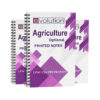


Evolution Agriculture Optional Notes 2025-26
About Evolution Agriculture Optional Notes 2025-26
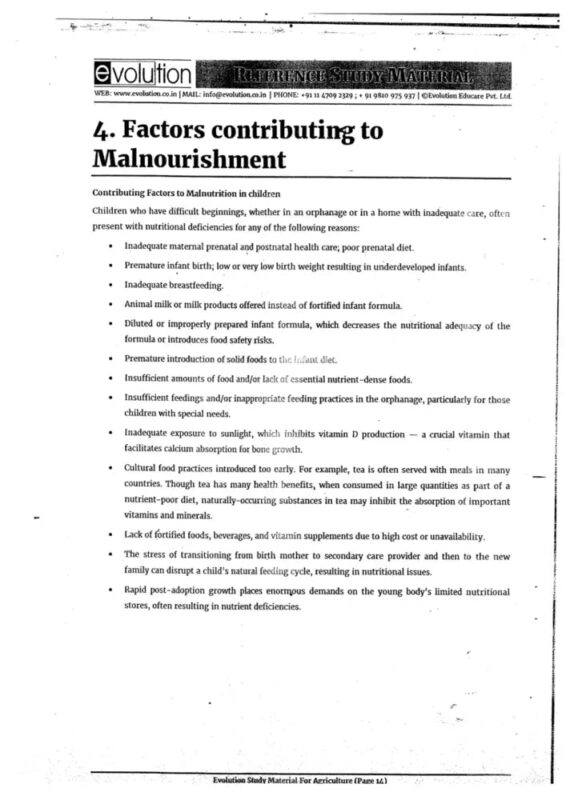
The Evolution Agriculture Optional Notes 2025-26 is a printed UPSC study material set sold by UPSC Store β India’s trusted source for genuine, latest-batch civil services preparation books. This page covers full booklet details, syllabus coverage, pricing, shipping, and frequently asked questions. Useful for UPSC CSE, BPSC, UPPSC, MPPSC, RAS and other state PSC examinations.
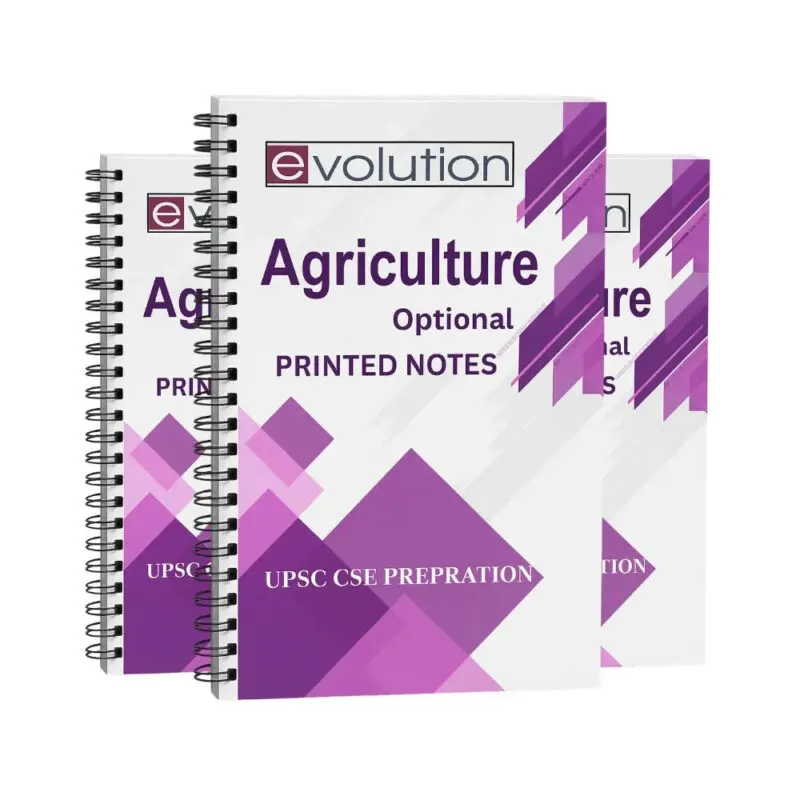
Evolution Agriculture Optional Notes 2025-26 β 12 English Medium Printed Booklets for UPSC Mains Optional Paper
Related: Evolution IAS notes Β· Agriculture optional
Product Overview
| Feature | Details |
|---|---|
| Booklets Count | 12 Individual Printed Booklets β Complete Paper 1 and Paper 2 Coverage |
| Language | English Medium |
| Publisher | Evolution (Evolution Educare Pvt. Ltd.) |
| Edition | 2025-26 β Latest Genuine Batch |
| Condition | Brand New, Unmarked, Fresh Stock |
| Format | High-Quality Printed Booklets β Spiral or Book Binding |
| Paper Quality | 75 GSM Ultra-White β Highlighter Safe, Zero Bleed-Through |
| Shipping | Pan India Delivery in 3-5 Business Days β Tracked |
| Also Useful For | BPSC, UPPSC, MPPSC, RAS and all State PSC Agriculture Optional Papers |
Complete Booklet Catalog
This 11-booklet set from Evolution Educare Pvt. Ltd. covers the entire UPSC Agriculture Optional syllabus across both Paper 1 and Paper 2 in structured, exam-focused English medium printed notes. Designed for serious UPSC Mains aspirants who want organised, point-wise, answer-writing-ready material for the 500-mark optional subject.
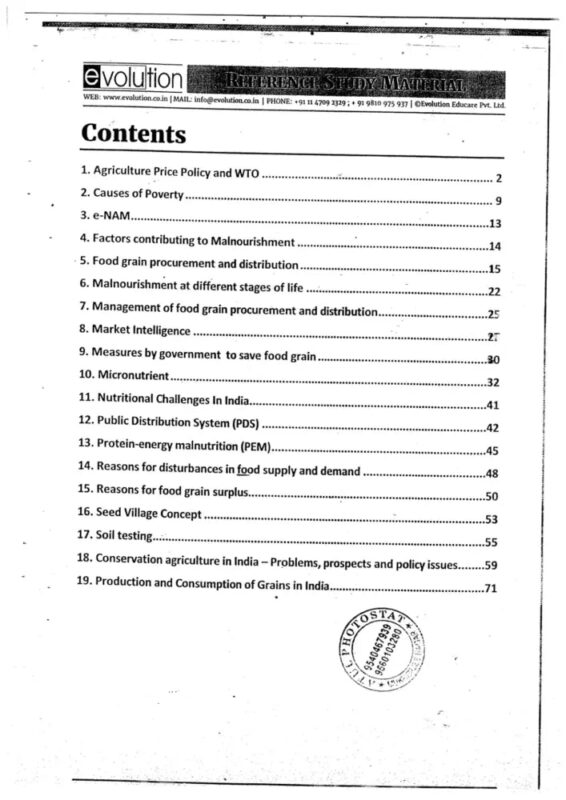
- Booklet 1: Ecology and Its Relevance to Agriculture β Concepts of ecology, ecosystem dynamics, nutrient cycling, energy flow, agroecosystems, man-environment interaction, ecological imbalances including floods, droughts, and desertification, their relevance to sustainable agricultural practices and UPSC Paper 1 syllabus coverage.
- Booklet 2: Genetics, Plant Breeding and Crop Improvement β Cell division, chromosomal theory of inheritance, Mendelian genetics, polyploidy, mutation, cytoplasmic inheritance, dominant and recessive traits, quantitative inheritance, pure line selection, hybridisation methods, heterosis, male sterility, and seed certification procedures.
- Booklet 3: Crop Physiology and Biochemistry β Seed germination, photosynthesis pathways (C3, C4, CAM), photorespiration, transpiration, nutrient absorption mechanisms, hormonal regulation of plant growth, crop growth analysis, photosensitivity, thermos-sensitivity, dormancy, and yield physiology concepts.
- Booklet 4: Agronomy and Crop Production β Principles of agronomy, tillage systems, sowing methods, crop rotation, intercropping, mixed cropping, weed management, dryland farming, rainfed agriculture, water use efficiency, and crop production technologies relevant to Indian agroclimatic zones and UPSC Paper 1.
- Booklet 5: Soil Science and Soil Fertility β Soil formation, classification, physico-chemical properties, soil colloids, cation exchange capacity, soil reaction, soil-water-plant relations, major and micronutrient deficiencies, integrated nutrient management, organic matter, composting, biofertilisers, and soil health indicators.
- Booklet 6: Horticulture β Fruits, Vegetables and Plantation Crops β Orchard establishment, propagation methods, cultural practices, plant protection in fruits and vegetables, important varieties of mango, banana, citrus, tomato, potato, and major plantation crops including tea, coffee, rubber, and spices of commercial importance.
- Booklet 7: Plant Pathology and Entomology β Principles of plant pathology, disease classification, disease cycle, important fungal, bacterial, and viral diseases of major crops, symptoms and management; economic entomology, pest classification, life cycles of major crop pests, IPM strategies, and biological control methods.
- Booklet 8: Agricultural Microbiology and Biotechnology β Role of microorganisms in soil fertility and crop production, nitrogen fixation (symbiotic and non-symbiotic), mycorrhizae, plant tissue culture, somaclonal variation, genetic engineering applications in agriculture, transgenic crops, biosafety protocols, and biotechnology policy context for UPSC.
- Booklet 9: Agricultural Engineering and Irrigation β Farm machinery and implements, irrigation methods and water management, groundwater development, watershed management, drainage, land reclamation, command area development, micro-irrigation systems like drip and sprinkler, and precision farming techniques relevant to Paper 2.
- Booklet 10: Animal Husbandry, Dairy and Poultry Science β Livestock breeds and improvement, animal nutrition, animal health and diseases, dairy technology, milk processing, poultry production systems, aquaculture basics, integrated farming systems, livestock policy in India, and their interrelationship with agricultural production for UPSC Paper 2.
- Booklet 11: Agricultural Economics, Marketing and Policy β Farm management principles, cost concepts in agriculture, agricultural credit and cooperative institutions, price policy, MSP mechanism, agricultural marketing infrastructure, regulated markets, supply chains, WTO implications on Indian agriculture, food security, and important government schemes.
- Booklet 12: Agricultural Extension, Current Developments and Previous Year Questions β Principles and methods of agricultural extension, technology transfer, Krishi Vigyan Kendras, e-agriculture initiatives, recent national and international developments in agriculture, UPSC previous year question trends in agriculture optional, answer-writing frameworks and model answers.
In-Depth Content Breakdown: Booklet by Booklet
Booklet 1: Ecology and Its Relevance to Agriculture
Ecology forms the foundational unit of UPSC Agriculture Optional Paper 1. This booklet covers ecosystem structure and function, nutrient cycling (nitrogen, phosphorus, sulphur cycles), energy flow through trophic levels, agroecosystem characteristics, biodiversity conservation, and the causes and consequences of ecological imbalances such as soil erosion, floods, and desertification. Each topic is framed in the context of agricultural production and sustainability, which is precisely the angle UPSC examiners expect in well-scoring answers.
The booklet is structured with concept-explanation followed by bullet-point summaries, making it ideal for both first-time reading and rapid revision. Diagrams of food chains, food webs, and biogeochemical cycles are printed with high clarity. Important ecology-agriculture linkages β such as the role of pollinators, soil biota, and natural pest regulators β are highlighted separately so aspirants can integrate these points directly into their UPSC Mains answer scripts.
Booklet 2: Genetics, Plant Breeding and Crop Improvement
Genetics and plant breeding is one of the highest-scoring units in Agriculture Optional Paper 1, and this booklet tackles every topic directly on the UPSC syllabus. From cell structure, mitosis, and meiosis to chromosomal theory, linkage, crossing over, sex determination, and mutations β the genetic principles are explained with precision. Mendelian ratios, epistasis, pleiotropy, multiple alleles, and polyploidy are covered with solved examples that mirror UPSC question patterns from the last ten years.
The plant breeding section covers selection methods (pure line, mass, progeny), hybridisation techniques, heterosis and its exploitation, male sterility systems (CMS), and the seed production chain including seed certification. Biotechnology applications in plant breeding β tissue culture, somatic hybridisation, and marker-assisted selection β are covered in a dedicated sub-section. Tables comparing breeding methods and their suitability for different crops are printed as ready reference material for answer enrichment.
Booklet 3: Crop Physiology and Biochemistry
Crop physiology is a theoretically demanding section that rewards aspirants who understand processes at the biochemical level. This booklet explains seed structure, germination physiology, imbibition, and dormancy mechanisms in clear, sequential steps. Photosynthesis β including the light reactions, Calvin cycle, C4 pathway (Hatch-Slack), and CAM β is presented with labelled diagrams. Photorespiration and its agricultural significance (lower yield in C3 crops) is explained and contextualised for UPSC answer writing.
Transpiration and mineral nutrient transport are covered with attention to root absorption mechanisms, active and passive transport, and the role of mycorrhizae. Plant growth regulators β auxins, gibberellins, cytokinins, ABA, and ethylene β are explained with their physiological effects and agricultural applications. Crop growth analysis concepts (LAI, CGR, NAR) are presented with worked numerical examples to prepare aspirants for both descriptive and analytical questions in UPSC Mains Agriculture Optional.
Booklet 4: Agronomy and Crop Production
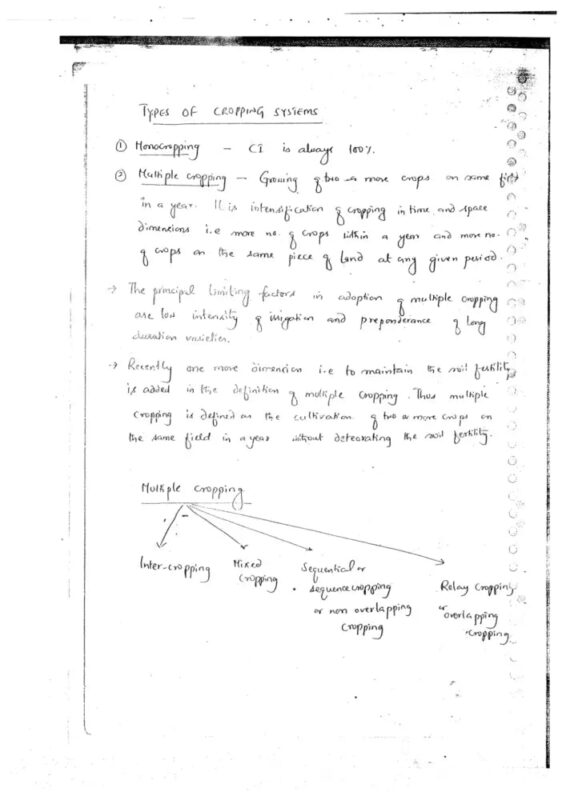
Agronomy is the backbone of UPSC Agriculture Optional, and this booklet covers it with the depth and breadth the exam demands. Tillage principles β primary, secondary, minimum, and zero tillage β are explained with their soil health implications. Sowing methods, seed rate determination, cropping systems (crop rotation, intercropping, mixed cropping, relay cropping), and their advantages in Indian conditions are presented with state-wise examples. Weed classification, weed-crop competition, and integrated weed management strategies are covered in detail.
Dryland farming and rainfed agriculture receive focused treatment, including moisture conservation techniques, contingency planning for aberrant weather, and in-situ moisture conservation. Water use efficiency concepts and irrigation scheduling are introduced here, bridging into Booklet 9. Major field crops β rice, wheat, maize, sorghum, bajra, pulses, and oilseeds β are covered with their agroclimatic requirements, critical growth stages, and recommended production technologies for different Indian agroclimatic zones as defined by ICAR.
Booklet 5: Soil Science and Soil Fertility
Soil science questions frequently appear in both Paper 1 and Paper 2 of UPSC Agriculture Optional, and this booklet prepares aspirants to answer them at every level of complexity. Soil formation (pedogenesis), weathering processes, and soil profile characteristics are covered first. Major soil orders under USDA Soil Taxonomy and their Indian equivalents β Vertisols, Entisols, Alfisols, Aridisols, Inceptisols β are mapped to Indian regions with cultivation implications. Soil texture, structure, consistency, and colour are explained with field identification methods.
Soil chemistry topics include cation exchange capacity, base saturation, soil pH and its effects on nutrient availability, and soil buffering capacity. Macro and micronutrient functions, deficiency symptoms, and soil test-based fertiliser recommendations are tabulated for quick revision. Integrated nutrient management β combining chemical fertilisers, organic manures, biofertilisers (Rhizobium, Azotobacter, PSB, VAM), and green manures β is covered with UPSC answer-writing language. Soil pollution, heavy metal contamination, and remediation strategies are included as current affairs-linked content.
Booklet 6: Horticulture β Fruits, Vegetables and Plantation Crops
Horticulture contributes substantially to UPSC Agriculture Optional Paper 1 and is an area where well-prepared aspirants can score decisively. This booklet covers orchard establishment (site selection, layout, soil preparation, planting system), propagation methods (seed, cutting, budding, grafting, layering), and post-planting management including training, pruning, and canopy management. Important fruit crops β mango, banana, citrus, guava, papaya, grapes, apple β are covered with their varieties, agroclimatic requirements, and cultural practices.
The vegetable crops section covers tomato, potato, onion, brinjal, chilli, and cucurbits with variety selection, nutrition management, and common production constraints. Plantation crops β tea, coffee, rubber, coconut, arecanut, cashew, and black pepper β are treated with their specific agronomy and economic significance. Protected cultivation, floriculture basics, and post-harvest management of horticultural produce are included as high-value topics with increasing UPSC question frequency in recent years.
Booklet 7: Plant Pathology and Entomology
Plant pathology and entomology are practical-science units where UPSC questions often ask aspirants to identify diseases, describe disease cycles, or explain management strategies. This booklet covers Koch’s postulates, disease classification by causal organism (fungi, bacteria, viruses, nematodes, phytoplasma), the disease triangle concept, and principles of plant disease management. Important diseases β blast and blight of rice and wheat, downy mildew, powdery mildew, smuts, rusts, wilts β are covered with symptoms, causal agents, and control measures.
The entomology section covers insect morphology, classification, and life cycles (complete and incomplete metamorphosis). Major pests of important crops β stem borers, leaf hoppers, aphids, whiteflies, bollworms, fruit flies β are covered with their economic threshold levels and management options. Integrated Pest Management (IPM) β combining cultural, mechanical, biological, and chemical methods β is presented as the central framework for pest management in UPSC answer writing. Biological control agents and their applications are listed with examples.
Booklet 8: Agricultural Microbiology and Biotechnology
Agricultural microbiology has gained prominence in UPSC Agriculture Optional as examiners increasingly test aspirants on the science behind soil health and crop improvement. This booklet covers the classification and role of soil microorganisms β bacteria, fungi, actinomycetes, algae, and protozoa. Nitrogen fixation mechanisms β both symbiotic (Rhizobium-legume) and non-symbiotic (Azotobacter, Azospirillum, BGA) β are explained with the biochemistry of nitrogenase enzyme and its agricultural significance. Composting microbiology and vermicompost production are detailed.
The biotechnology section covers plant tissue culture techniques β callus culture, shoot tip culture, anther culture (haploid production), embryo rescue, and somatic hybridisation (protoplast fusion). Recombinant DNA technology, gene cloning, and transgenic crop development (Bt cotton, herbicide-tolerant crops, Golden Rice) are explained with biosafety regulatory framework (Cartagena Protocol, GEAC in India). The booklet includes policy context for GMO regulation in India, making it a high-value resource for connecting science to governance in UPSC Agriculture Optional answers.
Booklet 9: Agricultural Engineering and Irrigation
Agricultural engineering and irrigation management constitute a major segment of UPSC Agriculture Optional Paper 2. This booklet covers farm power sources β human, animal, mechanical, and solar β and the major categories of farm machinery including tillage implements, seed drills, planters, harvesters, and threshers. Tractor operation basics, maintenance principles, and the economics of farm mechanisation are covered in the context of Indian smallholder farming. Post-harvest machinery for threshing, drying, milling, and storage is included.
The irrigation section covers water resources of India, irrigation potential created and utilised, irrigation methods (surface, sprinkler, drip), water application efficiency, and irrigation scheduling using IW:CPE ratio and other approaches. Groundwater development β dug wells, tube wells, pumping systems β is covered alongside watershed management and rainwater harvesting. Command area development, waterlogging and drainage, and land reclamation techniques for waterlogged, saline, and sodic soils are treated as high-priority UPSC topics with relevant government scheme integration.
Booklet 10: Animal Husbandry, Dairy and Poultry Science
Animal husbandry contributes significantly to UPSC Agriculture Optional Paper 2 and is often underestimated by aspirants. This booklet covers important Indian and exotic breeds of cattle, buffaloes, sheep, goat, pig, and horse, with their productive and reproductive characteristics. Animal nutrition β feeds, fodders, nutritive value, feeding standards, and rationing β is covered with practical examples. Animal reproduction, breeding methods (natural and artificial insemination), and livestock improvement programmes are explained in detail.
Dairy technology covers milk composition, milk processing (pasteurisation, homogenisation, sterilisation), and dairy product manufacture (butter, ghee, cheese, curd, ice cream). Common livestock and poultry diseases β FMD, anthrax, rinderpest, PPR, ND, IBD β are listed with vaccination schedules and government control programmes. Poultry production systems, broiler vs. layer management, hatchery operations, and egg grading are covered. Aquaculture basics β inland fisheries, coastal aquaculture, major cultivated species β round off this booklet for UPSC Paper 2.
Booklet 11: Agricultural Economics, Marketing and Policy
Agricultural economics is where science meets policy, and UPSC examiners frequently test this intersection in Agriculture Optional Paper 2. This booklet covers farm management principles, resource allocation, cost concepts (fixed, variable, total, marginal cost), farm planning and budgeting, and resource use efficiency. Agricultural credit β formal and informal sources, NABARD, cooperative credit societies, Kisan Credit Card β is covered with institutional context. Price policy β price support, procurement, buffer stock, and MSP determination β is explained in depth.
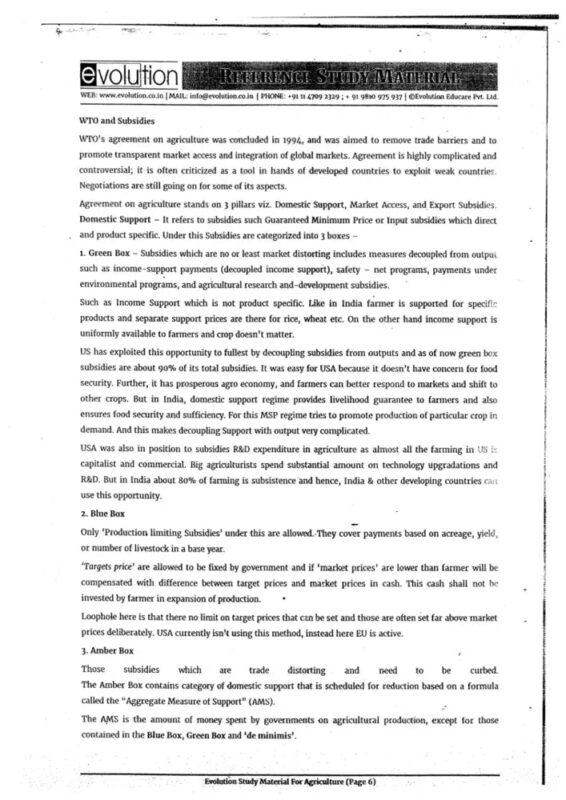
Agricultural marketing infrastructure β mandis, regulated markets, APMC Act and its reforms, e-NAM, Gramin Haats, FPOs β is covered with current policy developments. WTO Agreement on Agriculture, Aggregate Measurement of Support (AMS), Green Box and Blue Box subsidies, and their implications for India are presented clearly. Important government schemes β PM-KISAN, PMFBY, RKVY, PKVY, Paramparagat Krishi Vikas Yojana, SHM β are listed with their objectives and budget allocation, making this booklet essential for linking Agriculture Optional answers to current governance.
Booklet 12: Agricultural Extension, Current Developments and Previous Year Questions
Agricultural extension is the final unit in UPSC Agriculture Optional and one that connects the technical content of the entire syllabus to on-ground implementation and policy delivery. This booklet covers the philosophy and principles of extension education, methods of technology transfer (individual, group, and mass contact methods), Krishi Vigyan Kendras (KVKs), the ATMA framework, and farmer producer organisations. ICT in agriculture β e-Choupal, mKisan, Kisan Suvidha app, digital advisory services β is covered as a high-relevance current topic for UPSC.
The current developments section covers recent policy announcements, budget allocations for agriculture, natural farming and agroecology developments, climate-resilient agriculture, and India’s international commitments in food and agriculture. The previous year questions (PYQ) section analyses question trends in UPSC Agriculture Optional from the last five years, categorises questions by topic, and provides model answer frameworks. This makes Booklet 12 the bridge between content knowledge and exam performance β essential for any aspirant who wants to buy Evolution Agriculture Optional notes and translate that knowledge into high scores.
Physical Construction and Quality Standards
Every Evolution Educare Agriculture Optional booklet in this 2025-26 set is produced to standards that match the demands of daily UPSC study β multiple hours of reading, annotation, and revision across months of preparation without any degradation in material quality.
Paper Quality: 75 GSM Anti-Glare White Paper
These booklets use 75 GSM ultra-white paper selected specifically for UPSC aspirants who study for six to ten hours a day. The high opacity of 75 GSM paper means printed text and diagrams on the reverse side do not bleed through or show ghost images when you are reading or annotating. The anti-glare white surface significantly reduces eye strain during extended study sessions under LED lighting β a critical factor for Agriculture Optional aspirants covering 11 Booklets over months of preparation. Multiple highlighter colours β yellow, green, orange, pink β and gel pens work cleanly on this paper without smearing or bleed-through.
Printing Technology: High-Resolution Laser Printing
All 11 Booklets in this Evolution Agriculture Optional 2025-26 set are printed using high-resolution laser printing technology. The laser toner is bonded permanently to the paper fibres, producing text and diagrams that are completely smudge-proof and do not fade over years of use. Agricultural diagrams β plant structures, soil profiles, irrigation layouts, crop growth curves, pest life cycles β are reproduced with sharp detail and fine line clarity that is essential for understanding and redrawing in UPSC answer sheets. Flowcharts, comparative tables, and process diagrams are crisp and easy to follow even at reduced font sizes.
Binding and Durability
These Evolution Agriculture Optional notes are available in spiral or book binding depending on stock. Spiral-bound booklets open completely flat β a significant advantage when you are reading and writing notes side by side on a desk during intensive study sessions. The flat-opening format also means you can photocopy specific pages without damaging the binding. Book-bound editions feature a 300 GSM thick front and back cover that protects the internal pages from moisture, folding, and wear during daily transport between hostel, library, and coaching centre. Both binding types are built to survive a full UPSC preparation cycle.
Key Features and Study Design
These Evolution Educare Agriculture Optional 2025-26 printed notes are structured specifically for UPSC Mains answer writing β not just reading β with design features that directly support scoring in the 500-mark optional paper.
- Full Syllabus Mapping: Every booklet maps directly to the official UPSC Agriculture Optional syllabus for Paper 1 and Paper 2, ensuring no topic is missed and no time is wasted on off-syllabus content during your UPSC Mains preparation cycle.
- Answer-Writing Ready Format: Content is structured in point-wise, paragraph-ready language that mirrors the format UPSC examiners expect. Key definitions, processes, and comparisons are pre-formatted so aspirants can lift the structure directly into their answer scripts.
- Diagrams and Tables Throughout: Important agricultural diagrams β crop growth curves, soil profiles, irrigation layouts, nutrient cycles, pest life cycles, breeding flowcharts β are printed in every booklet to support both understanding and answer enrichment in UPSC Agriculture Optional.
- Current Affairs Integration: Government schemes (PM-KISAN, PMFBY, RKVY, e-NAM), recent policy changes, WTO implications, and budget allocations are woven into relevant booklets so answers automatically reflect current developments that UPSC rewards.
- Previous Year Question Analysis: Booklet 12 provides a topic-wise analysis of UPSC Agriculture Optional previous year questions with answer frameworks, helping aspirants understand examiner expectations and prioritise revision effort in the weeks before UPSC Mains.
Shipping, Packaging and Delivery
All 12 Evolution Agriculture Optional booklets are individually shrink-wrapped to protect against moisture and surface scuffing during transit. The full set is then packed in a rigid corrugated cardboard box with foam edge protectors and internal bubble wrap padding. This multi-layer packaging system is designed specifically for transit across India’s diverse delivery conditions β whether your order is going to a metro city or a Tier 3 town, every booklet arrives in the same brand-new, unmarked condition it left our Mukherjee Nagar warehouse in. No bent covers, no water damage, no loose pages.
Orders are dispatched within 24 hours of payment confirmation and delivered pan India within 3-5 business days via tracked courier services. A tracking ID is shared with you by WhatsApp on the same day as dispatch β reach us at +91 70045 49563 for any query about your order status. If any booklet from your 11-booklet Evolution Agriculture Optional set arrives damaged or is missing, we replace it within 48 hours at zero cost to you. We serve UPSC aspirants across India β Delhi, Mumbai, Chennai, Patna, Lucknow, Bhopal, Jaipur, Hyderabad, Bengaluru, and every pin code in between.
Frequently Asked Questions (FAQ)
A: Evolution Educare Agriculture Optional notes cover the complete UPSC syllabus for both Paper 1 and Paper 2 in structured, answer-writing-ready format. For most aspirants, these 11 Booklets serve as the core study material. Supplementing with NCERT Agriculture textbooks for foundational concepts and standard reference books like Chadha’s Horticulture or Gupta’s Soil Science for deep-dive topics is advisable for aspirants targeting top ranks. These notes are strong enough to form the primary resource for your Agriculture Optional preparation.
A: The 2025-26 edition of Evolution Educare Agriculture Optional printed notes includes exactly 12 individual printed booklets. These 11 Booklets together cover the full UPSC Agriculture Optional syllabus β Ecology, Genetics, Crop Physiology, Agronomy, Soil Science, Horticulture, Plant Pathology, Microbiology and Biotechnology, Agricultural Engineering, Animal Husbandry, Agricultural Economics and Policy, and Agricultural Extension with Previous Year Questions. Every booklet is printed on 75 GSM paper and delivered as a complete set.
A: Yes. The Evolution Agriculture Optional notes 2025-26 set listed here is specifically the English medium edition. All 11 Booklets β including the theory, diagrams, tables, flowcharts, scheme summaries, and previous year question analysis β are entirely in English. This makes the set suitable for aspirants across India who are attempting UPSC Agriculture Optional in English medium, regardless of their home state or mother tongue.
A: The price of this 11-booklet Evolution Agriculture Optional 2025-26 printed notes set is listed on the product page. Our store offers competitive pricing for genuine, brand-new Evolution Educare printed notes delivered pan India. For current pricing, bulk order discounts for coaching institutes, or any special requests, you can reach us directly on WhatsApp at +91 70045 49563. All orders include tracked shipping at no extra cost for standard delivery.
A: Yes. This is the 2025-26 edition β the latest genuine batch from Evolution Educare Pvt. Ltd. The content has been updated to reflect current UPSC Agriculture Optional syllabus requirements, recent policy developments, updated government schemes (PM-KISAN, PMFBY, e-NAM, RKVY revisions), and question trend analysis based on recent UPSC Mains Agriculture Optional papers. When you buy this set, you are getting the most current Evolution printed notes available, not an older batch.
A: Evolution Educare is one of the recognised names for Agriculture Optional UPSC preparation. Their printed notes are structured for answer writing rather than just content delivery β a key differentiator. The 11-booklet format ensures adequate depth per topic without overloading a single booklet. Diagrams, tables, and scheme summaries integrated throughout the text are features that aspirants using other institutes’ materials often have to build themselves from external sources. The 2025-26 edition also incorporates current affairs linkages that many competing materials lack.
A: Evolution Agriculture Optional notes are structured to cover the complete UPSC syllabus and are sufficient as the primary study resource for most aspirants. However, for sections requiring deep reference β particularly Genetics, Soil Science, and Agricultural Economics β consulting standard textbooks (Singh’s Plant Breeding, Brady’s Soil Science, Johl’s Agricultural Economics) for 10-15% of your preparation adds significant depth. The notes are designed so that 85-90% of your Agriculture Optional preparation can be built directly on this 11-booklet Evolution set.
A: Yes, absolutely. All 11 Booklets together cover both UPSC Agriculture Optional Paper 1 and Paper 2 in full. Booklets 1 through 8 primarily address Paper 1 topics β Ecology, Genetics, Crop Physiology, Agronomy, Soil Science, Horticulture, Plant Pathology, and Microbiology/Biotechnology. Booklets 9 through 12 cover Paper 2 topics β Agricultural Engineering, Animal Husbandry, Agricultural Economics and Policy, and Agricultural Extension. Booklet 12 also includes previous year questions from both papers for integrated revision.
A: These booklets use 75 GSM ultra-white paper chosen for high opacity β multiple highlighter colors and gel pens work without bleed-through to the reverse side, ideal for color-coded revision. Yellow, green, orange, and pink highlighters all perform cleanly on this paper. The anti-glare surface also reduces eye strain during long study sessions of 6-10 hours, which is a daily reality for UPSC Agriculture Optional aspirants working through this 11-booklet set.
A: All orders are dispatched within 24 hours of payment confirmation and delivered pan India within 3-5 business days via tracked courier. A tracking ID is sent to you via WhatsApp on the day of dispatch. You can message us anytime at +91 70045 49563 for order updates. We serve every pin code across India β metros and Tier 3 towns alike. If any booklet in your 11-booklet Evolution Agriculture Optional set arrives damaged, we replace it within 48 hours at no additional charge.
A: Yes. The Evolution Agriculture Optional 2025-26 notes are useful beyond UPSC β aspirants preparing for Agriculture Optional papers in BPSC, UPPSC, MPPSC, RAS, and other State PSC examinations will find these booklets highly relevant. The syllabus overlap between UPSC Agriculture Optional and most State PSC agriculture papers is significant. Soil science, agronomy, horticulture, plant pathology, and agricultural economics topics are almost identical. These printed notes are a strong investment for any state-level aspirant as well.
A: You can buy Evolution Agriculture Optional printed notes 2025-26 directly from this product page. We are a UPSC study materials store based in Mukherjee Nagar, Delhi β India’s largest UPSC preparation hub. Our store stocks genuine, brand-new Evolution Educare printed notes and delivers them pan India within 3-5 business days with full tracking. For bulk orders, institute procurement, or WhatsApp-based ordering, contact us at +91 70045 49563. Buy online now and have your complete 11-booklet Agriculture Optional set at your door within the week.
Summary
| Specification | Value |
|---|---|
| Booklets | 12 Printed Booklets |
| Language | English Medium |
| Paper | 75 GSM Ultra-White |
| Binding | Spiral or Book Binding |
| Delivery | 3-5 Business Days Pan India |
| Also Useful For | BPSC, UPPSC, MPPSC, RAS and all State PSC Agriculture Optional Papers |
Sold by your trusted UPSC notes store in Mukherjee Nagar, Delhi β the heart of UPSC preparation in India. Order today and receive your complete 11-booklet Evolution Agriculture Optional 2025-26 set with pan India delivery in 3-5 days.
Reference: UPSC official syllabus
Customer Reviews 260
Booklets mein proper diagrams aur explanations hain. Kafi detailed content.
Crystal clear notes, perfectly organized booklets. Must have for agriculture optional!
Content covers all important topics. Packaging was also fine.
Content covers evolution comprehensively. Paper quality is decent enough.
Booklets ka quality bahut achha hai. Content is relevant for 2025-26 exam.
12 booklets mein sab kuch cover hai. Bilkul dhang ka material.
Content is relevant but packaging could be better. Overall satisfied with the purchase.
Very well organized and comprehensive notes. Highly recommended for UPSC aspirants.
Aspirants Also Bought
More from the same category
About Evolution Agriculture Optional Notes 2025-26
Evolution Agriculture Optional Notes 2025-26 is a highly recommended UPSC study material from Evolution Excellence, specially designed for Agriculture Optional preparation. Available in English medium, this material is crafted to match the exact requirements of the UPSC Civil Services Examination syllabus β covering both Prelims and Mains comprehensively.
Product Details
- Institute: Evolution Excellence
- Subject: Agriculture Optional
- Medium: English
- Format: Printed
- Delivery: Pan-India delivery in 3β5 working days
- Format: Original printed material, verified authentic
Why Buy from UPSC Store?
- β 100% Genuine Printed Material β Original printed notes, no photocopies or fake copies
- β Fast Delivery β Ships within 24 hours, arrives in 3β5 days pan-India
- β Secure Packaging β Bubble-wrapped and boxed to prevent damage in transit
- β Trusted by 10,000+ Aspirants β India's most reliable UPSC material marketplace
- β WhatsApp Support β Get expert guidance on material selection before ordering
Frequently Asked Questions
Yes, all products at UPSC Store are 100% genuine printed materials. We do not sell photocopies or fake copies.
Orders are dispatched within 24 hours and delivered across India in 3β5 working days via reputed courier partners.
Yes, we accept returns within 7 days if the product is damaged or incorrect. Check our refund policy for details.
We recommend pairing this with current affairs notes and a UPSC test series for comprehensive preparation. Browse more in Agriculture, Optional, UPSC.