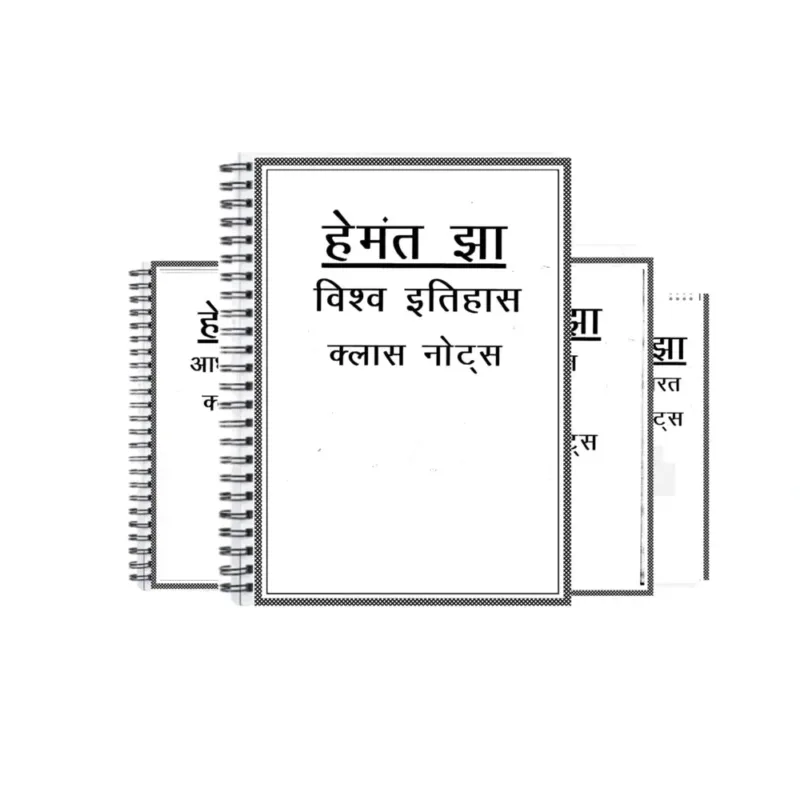
Hemant Jha History Optional Notes 2025-26

4 Booklets | Hindi Medium | UPSC Study Material

Key Highlights:
📘 4 Booklets
📚 History Optional
🎓 Hemant Jha
🏷️ Printed
🇬🇧 Hindi Medium
₹1,088
🌀 spiral
📘 book-binding
Only 24 sets left
Selling fast (91 sold this week)
5% OFF Use UPSC5% (COD Available)
10% OFF Use UPI10 (UPI Only)
Secure Payment
Fast Delivery
Safe Packaging

About Hemant Jha History Notes 2025-26

The Hemant Jha History Notes 2025-26 is a printed UPSC study material set sold by UPSC Store — India’s trusted source for genuine, latest-batch civil services preparation books. This page covers full booklet details, syllabus coverage, pricing, shipping, and frequently asked questions. Useful for UPSC CSE, BPSC, UPPSC, MPPSC, RAS and other state PSC examinations.

Hemant Jha History Optional Notes 2025-26 — 12 Hindi Medium Printed Booklets for UPSC History Optional

Related: Hemant Jha History notes · Hindi medium notes

Product Overview

FeatureDetails
Booklets Count12 Individual Printed Booklets — Full UPSC History Optional Syllabus (Paper I & Paper II)
LanguageHindi Medium (हिंदी माध्यम)
PublisherHemant Jha (History Optional Series)
Edition2025-26 — Latest Genuine Batch
ConditionBrand New, Unmarked, Fresh Stock
FormatHigh-Quality Printed Booklets — Spiral or Book Binding
Paper Quality75 GSM Ultra-White — Highlighter Safe, Zero Bleed-Through
ShippingPan India Delivery in 3-5 Business Days — Tracked
Also Useful ForBPSC, UPPSC, MPPSC, RAS and all State PSC History Optional candidates

Complete Booklet Catalog

This 4-booklet set by Hemant Jha covers the entire UPSC History Optional syllabus in Hindi medium — from Prehistoric India and Indus Valley Civilisation through the Mughal era, colonial rule, India’s freedom struggle, and World History. These notes are designed specifically for Hindi-medium UPSC aspirants who want well-structured, exam-oriented content covering both Paper I and Paper II of the History Optional.

  • Booklet 1: प्रागैतिहासिक भारत एवं सिंधु घाटी सभ्यता (Prehistoric India and Indus Valley Civilisation) — Covers Paleolithic, Mesolithic, and Neolithic cultures; Harappan urban planning, economy, trade, script, religion, and decline; comparison with contemporary civilisations; UPSC-level analytical discussion of archaeological sources and their historical significance for Paper I.
  • Booklet 2: वैदिक काल एवं महाजनपद युग (Vedic Age and Mahajanapada Era) — Rigvedic and Later Vedic society, economy and polity; evolution of varna system; Upanishadic thought; rise of Jainism and Buddhism; Mahajanapada republics and monarchies; Nanda dynasty; Persian and Macedonian invasions and their impact on northwest India.
  • Booklet 3: मौर्य साम्राज्य एवं उत्तर-मौर्य काल (Mauryan Empire and Post-Mauryan Period) — Chandragupta Maurya, Bindusara, Ashoka; Arthashastra and Dhamma; Mauryan administration, economy, and art; post-Mauryan kingdoms — Shungas, Satavahanas, Kushanas, Indo-Greeks; Gandhara and Mathura art schools; silk route trade; Sangam literature and South India.
  • Booklet 4: गुप्त काल एवं वर्धन वंश (Gupta Period and Vardhana Dynasty) — Gupta administration, land grants, and feudalism; golden age of science, literature, and art; Nalanda university; Vakataka alliance; Hunas invasions; Harshavardhana — Bana’s Harshacharita, Xuanzang’s account; regional kingdoms of the post-Gupta period; decline of classical order.
  • Booklet 5: प्रारंभिक मध्यकालीन भारत (Early Medieval India) — Tripartite struggle among Palas, Pratiharas, Rashtrakutas; Chola administration and naval power; Rajput polity and society; Arab and Turkish invasions; Mahmud of Ghazni and Muhammad Ghori; temple architecture styles — Nagara, Vesara, Dravida; bhakti and Sufi movements in early phase.
  • Booklet 6: दिल्ली सल्तनत (Delhi Sultanate) — Slave dynasty, Khalji revolution, Tughlaq administrative experiments, Sayyid and Lodi decline; iqta system and agrarian structure; architecture — Qutb Minar, Alai Darwaza; Ibn Battuta’s account; religious policy; market reforms of Alauddin; Timur’s invasion and its consequences for the Sultanate period.
  • Booklet 7: मुगल साम्राज्य (Mughal Empire) — Babur to Aurangzeb — political and military history; Mansabdari and Jagirdari systems; Akbar’s Sulh-e-Kul and Din-i-Ilahi; revenue system of Todarmal; Mughal painting, architecture, and literature; Maratha rise under Shivaji; Mughal decline — causes and consequences; regional successor states in the 18th century.
  • Booklet 8: आधुनिक भारत का उदय एवं ब्रिटिश विस्तार (Rise of Modern India and British Expansion) — European trading companies; Plassey and Buxar; Subsidiary Alliance and Doctrine of Lapse; administrative, judicial, and revenue reforms; economic impact of British rule — de-industrialisation, drain of wealth; social reform movements; 1857 uprising — causes, nature, consequences, and significance.
  • Booklet 9: भारतीय राष्ट्रीय आंदोलन — प्रारंभिक चरण (Indian National Movement — Early Phase) — Formation of Indian National Congress; Moderate and Extremist phases; Swadeshi movement; revolutionary nationalism; Muslim League formation and communal politics; Morley-Minto and Montague-Chelmsford reforms; Rowlatt Act; role of press and literature in nationalism; emergence of Gandhi on Indian political scene.
  • Booklet 10: गांधीवादी युग एवं स्वतंत्रता संग्राम (Gandhian Era and Freedom Struggle) — Non-Cooperation Movement, Civil Disobedience Movement, Quit India Movement; constitutional developments — Simon Commission, Round Table Conferences, Government of India Act 1935; Subhas Chandra Bose and INA; Cabinet Mission; partition and Independence; integration of princely states; critical evaluation of Gandhian methods and ideology.
  • Booklet 11: विश्व इतिहास — भाग 1 (World History — Part 1) — Renaissance and Reformation; American Revolution and French Revolution; Industrial Revolution and its social consequences; rise of nationalism in Europe; unification of Italy and Germany; imperialism and colonialism in Asia and Africa; First World War — causes, events, consequences; Russian Revolution 1917; League of Nations and its limitations.
  • Booklet 12: विश्व इतिहास — भाग 2 (World History — Part 2) — Rise of fascism and Nazism; Second World War — causes, major theatres, consequences; United Nations formation; Cold War — phases, proxy conflicts, arms race; decolonisation movements in Asia and Africa; Korean War, Vietnam War; Non-Aligned Movement; end of Cold War; disintegration of USSR; post-Cold War world order and globalisation.

In-Depth Content Breakdown: Booklet by Booklet

Booklet 1: प्रागैतिहासिक भारत एवं सिंधु घाटी सभ्यता

This booklet forms the foundation for UPSC History Optional Paper I. It covers Stone Age cultures across India — Paleolithic tools, Mesolithic microlithic industries, and Neolithic settlements. The Harappan or Indus Valley Civilisation receives detailed treatment: urban planning at Mohenjo-Daro and Harappa, granary architecture, standardised weights, Harappan script controversy, trade networks reaching Mesopotamia, and the multiple theories of decline. This content directly maps to UPSC History Optional Paper I, Section A topics and carries high scoring potential.

Hemant Jha’s notes present this material in crisp, exam-ready Hindi — avoiding textbook verbosity while retaining analytical depth. Archaeological sites such as Lothal, Dholavira, Rakhigarhi, and Kalibangan are covered with map-based references. Comparative tables contrast Harappan civilisation with Mesopotamian and Egyptian civilisations — a recurring UPSC question type. Students preparing for UPSC 2025-26 exams will find this booklet structured to help write 150-word and 250-word answers with accuracy.

Booklet 2: वैदिक काल एवं महाजनपद युग

This booklet covers two crucial segments of UPSC History Optional Paper I — the Vedic Age and the age of Mahajanapadas. Rigvedic society, economy, and religion are contrasted with the Later Vedic transformation toward caste hierarchy and settled agriculture. The philosophical revolution represented by the Upanishads, and the heterodox movements of Buddhism and Jainism, are analysed with attention to their social context. Republican polities like Vajji and Licchavi are covered alongside monarchical Mahajanapadas such as Magadha.

The booklet explains the rise of Magadha through geographic, economic, and political factors — a popular UPSC essay question. Persian Achaemenid contacts and Alexander’s campaigns in the northwest are discussed with their impact on Indian polity and culture. Hemant Jha’s Hindi-medium treatment makes complex philosophical concepts — Anatman, Ahimsa, Karma — accessible without oversimplification. UPSC aspirants will find answer-writing frameworks and point-wise breakdowns throughout this booklet, supporting quick revision before the UPSC Mains examination.

Booklet 3: मौर्य साम्राज्य एवं उत्तर-मौर्य काल

Mauryan history is one of the highest-scoring areas of UPSC History Optional Paper I, and this booklet treats it with the depth that the exam demands. Kautilya’s Arthashastra — its political economy, espionage system, and administrative theory — is discussed in detail alongside the actual Mauryan governance structure. Ashoka’s Dhamma, his edicts, and the debate over whether Dhamma was a political or religious policy receive careful analytical treatment relevant to UPSC answer writing.

The post-Mauryan period covers the fragmentation of empire and the cultural flowering it enabled: Gandhara’s Hellenistic Buddhist art, Mathura’s indigenous tradition, Kushana patronage of Buddhism, and Satavahana cultural contributions in the Deccan. The Sangam age and early Tamil society receive dedicated coverage, making this booklet valuable for questions on South Indian history. Timeline charts and dynasty comparison tables make revision before UPSC Mains efficient and structured for Hindi-medium aspirants.

Booklet 4: गुप्त काल एवं वर्धन वंश

The Gupta period — frequently called India’s classical golden age — occupies a significant portion of UPSC History Optional Paper I. This booklet covers Gupta political history alongside cultural achievements in science (Aryabhata, Varahamihira), literature (Kalidasa, Vishakhadatta), and art (Ajanta murals, Sarnath Buddha). Administrative decentralisation, the growth of land grants, and proto-feudal tendencies are analysed critically — a perspective that UPSC examiners reward in answers.

Harshavardhana’s reign bridges the Gupta decline and early medieval India. This booklet uses Bana’s Harshacharita and Xuanzang’s travel account as primary sources, teaching aspirants how to use source-based analysis in UPSC answers. The Hunas invasions and their civilisational impact, the Vakataka alliance through marital diplomacy, and the post-Gupta fragmentation are all covered. Hemant Jha’s Hindi explanation of these nuanced transitions helps UPSC History Optional candidates frame answers that go beyond factual recall to analytical reasoning.

Booklet 5: प्रारंभिक मध्यकालीन भारत

Early medieval India presents a complex political landscape that UPSC History Optional Paper I tests extensively. This booklet maps the tripartite struggle for Kanauj — Palas of Bengal, Pratiharas of Rajputana, and Rashtrakutas of the Deccan — with causes, turning points, and long-term consequences. The Chola empire’s administrative efficiency, village self-governance through Ur and Nadu systems, and remarkable naval expansion into Southeast Asia are covered in analytical depth suitable for 250-word UPSC answers.

Religious movements receive dedicated space: the Bhakti movement’s early Tamil roots through Alvars and Nayanmars, and the growth of Sufi orders as Islam arrived in India. Temple architecture styles — Nagara (North), Dravida (South), and Vesara (Deccan) — are explained with identifiable examples. Rajput social structure and the debate over Rajput origins complete this booklet. Hemant Jha’s structured Hindi notes provide ready-made analytical frameworks that Hindi-medium UPSC aspirants can directly apply in UPSC Mains answer sheets.

Booklet 6: दिल्ली सल्तनत

The Delhi Sultanate segment of UPSC History Optional Paper I demands both political chronology and socio-economic analysis. This booklet covers all five dynasties with clarity, focusing on key reforms: Iltutmish’s consolidation, Balban’s blood-and-iron policy, Alauddin Khalji’s market and military reforms, Muhammad bin Tughlaq’s ambitious experiments, and the Lodi dynasty’s Afghani model. Each reign is assessed for its administrative innovations and failures — the type of critical analysis UPSC rewards.

The iqta system’s role in agrarian administration and its evolution across dynasties is covered with comparison tables. Sultanate architecture — Qutb complex, Alai Darwaza, Tughlaqabad — is presented alongside the Indo-Islamic cultural synthesis in music, literature, and art. Ibn Battuta’s and Amir Khusrau’s literary accounts are used as primary source references. Hemant Jha’s notes highlight UPSC-relevant debates: Was Alauddin’s reform economic or military? Was Firuz Tughlaq’s welfare state genuine? These analytical angles are essential for scoring well in UPSC History Optional.

Booklet 7: मुगल साम्राज्य

Mughal history is central to UPSC History Optional Paper I and one of the most extensively tested segments. This booklet covers Babur’s Timurid legacy, Humayun’s struggles, Akbar’s empire-building, Jahangir’s cultural patronage, Shah Jahan’s architectural perfection, and Aurangzeb’s controversial legacy — all with UPSC-focused analytical treatment. Akbar’s administrative genius — Mansabdari system, Zabt revenue settlement, Sulh-e-Kul — receives detailed coverage with cause-and-effect analysis.

The Mughal decline section is among the strongest in this booklet, covering Jagirdari crisis, Aurangzeb’s Deccan quagmire, rise of the Marathas under Shivaji and the Peshwas, and regional successor states such as Hyderabad, Awadh, and Bengal. Mughal art — miniature painting schools, garden architecture, inlay work — is covered with examples for art history questions. The booklet contains structured notes on 18th-century debates between nationalist and Marxist historians — critical for writing analytical answers in UPSC History Optional Paper I.

Booklet 8: आधुनिक भारत का उदय एवं ब्रिटिश विस्तार

The transition to UPSC History Optional Paper II begins with this booklet on the rise of British power in India. European trading companies’ competition, the Battle of Plassey (1757) and Buxar (1764), and the establishment of British paramountcy are covered with political and economic analysis. Subsidiary Alliance under Wellesley and Doctrine of Lapse under Dalhousie are explained with their ideological basis and territorial consequences — high-frequency UPSC topics.

The economic critique of British rule — Dadabhai Naoroji’s Drain Theory, de-industrialisation of Indian textiles, permanent settlement’s impact on agrarian society — forms a strong analytical section. Social reform movements of the 19th century — Ram Mohan Roy, Dayananda Saraswati, Jyotiba Phule — are placed in their historical context. The 1857 uprising receives detailed treatment covering causes (economic, political, military, social), key events, regional variations, and historical interpretations ranging from Savarkar to Metcalf. Essential for UPSC Mains Paper II answers.

Booklet 9: भारतीय राष्ट्रीय आंदोलन — प्रारंभिक चरण

This booklet covers the emergence and early evolution of Indian nationalism — a core section of UPSC History Optional Paper II. The founding of the Indian National Congress, its early Moderate phase under Gokhale and Dadabhai Naoroji, and the Extremist challenge from Tilak, Lal-Bal-Pal are analysed with ideological distinctions that UPSC frequently tests. The Swadeshi movement of 1905 — triggered by Bengal Partition — is covered as an economic, cultural, and political phenomenon.

Revolutionary nationalism (Bhagat Singh, Surya Sen, Aurobindo), the formation of the Muslim League, and communal politics are covered critically. Constitutional reforms — Morley-Minto 1909, Montague-Chelmsford 1919 — are analysed for what they conceded and what they withheld. The Rowlatt Act’s role in transforming Gandhi into a mass nationalist leader is explained in narrative form. Hemant Jha’s structured Hindi notes give aspirants clear answer-writing templates for UPSC Mains, covering both factual recall and the analytical frameworks that distinguish average from high-scoring answers.

Booklet 10: गांधीवादी युग एवं स्वतंत्रता संग्राम

The Gandhian phase of the Indian National Movement — Non-Cooperation (1920-22), Civil Disobedience (1930-34), and Quit India (1942) — is covered in full analytical detail in this booklet for UPSC History Optional Paper II. Each mass movement’s causes, programme, social composition, achievements, and limitations are presented in a structure ideal for 250-word UPSC answers. The constitutional development timeline — Simon Commission, Round Table Conferences, Government of India Act 1935 — is mapped against nationalist responses.

Subhas Chandra Bose’s alternative nationalism and the Indian National Army’s role are covered alongside Gandhi’s strategy — enabling comparative analysis in UPSC answers. Partition, its causes, and competing historical interpretations (Cambridge School, Nationalist School, Communalist School) are discussed to prepare aspirants for evaluation-type questions. The integration of princely states under Sardar Patel and the ideological debates in Constituent Assembly debates round off this booklet. A must-study section for Hindi-medium UPSC aspirants aiming at the History Optional.

Booklet 11: विश्व इतिहास — भाग 1

World History forms Paper II, Section B of UPSC History Optional, and this booklet addresses the first half of the UPSC World History syllabus. The Renaissance and Reformation are covered as intellectual and religious revolutions that remade Europe. The American Revolution’s democratic ideals and the French Revolution’s radical social transformation are analysed with their global impact. The Industrial Revolution — technological change, factory system, urbanisation, class formation — receives strong coverage for UPSC answer writing.

European nationalism and the unification of Italy (Cavour, Garibaldi, Mazzini) and Germany (Bismarck’s Realpolitik) are explained with cause-and-effect chains. Imperialism in Asia and Africa — its economic rationale, ideological justification, and resistance movements — is covered in depth. The First World War’s origins in the alliance system, the war’s conduct, and the Versailles settlement’s flaws are discussed critically. The Russian Revolution of 1917 — February and October phases — and the League of Nations’ structural weaknesses complete this booklet’s UPSC History Optional World History coverage.

Booklet 12: विश्व इतिहास — भाग 2

This final booklet completes the UPSC History Optional World History syllabus by covering the turbulent mid-to-late 20th century. The interwar rise of fascism in Italy and Nazism in Germany — their ideological roots, mass appeal, and expansionist programmes — is analysed with the historiographical debates that UPSC examiners appreciate. The Second World War’s causes, major theatres (European, Pacific, North African), and consequences including the Holocaust and atomic bombings are covered factually and analytically.

The Cold War section is one of the strongest in this booklet: Truman Doctrine, Marshall Plan, NATO, Warsaw Pact, Berlin Crisis, Cuban Missile Crisis, Korean War, and Vietnam War are all covered with geopolitical analysis. Decolonisation in Asia and Africa, the Non-Aligned Movement’s philosophy and India’s role, and détente are presented as interconnected processes. The USSR’s disintegration, German reunification, and the emergence of a unipolar world order close the UPSC History Optional syllabus. Hemant Jha’s Hindi-medium notes make these global processes accessible and exam-ready for UPSC 2025-26 aspirants.

Physical Construction and Quality Standards

Every set of Hemant Jha History Optional Hindi notes dispatched from our store is produced to the physical standards that serious UPSC aspirants require — durable enough to survive months of intensive daily study, with print quality that does not degrade under heavy use.

Paper Quality: 75 GSM Anti-Glare White Paper

These booklets are printed on 75 GSM ultra-white paper chosen specifically for UPSC study conditions. The high opacity ensures that text and diagrams on the reverse side do not show through, eliminating visual interference during reading. Multiple highlighter colours — yellow, green, pink, orange — and gel pens can be used freely without any bleed-through to the back side. The paper’s anti-glare surface significantly reduces eye strain during extended study sessions of four to six hours, which is standard for UPSC History Optional preparation at the Mains stage.

Printing Technology: High-Resolution Laser Printing

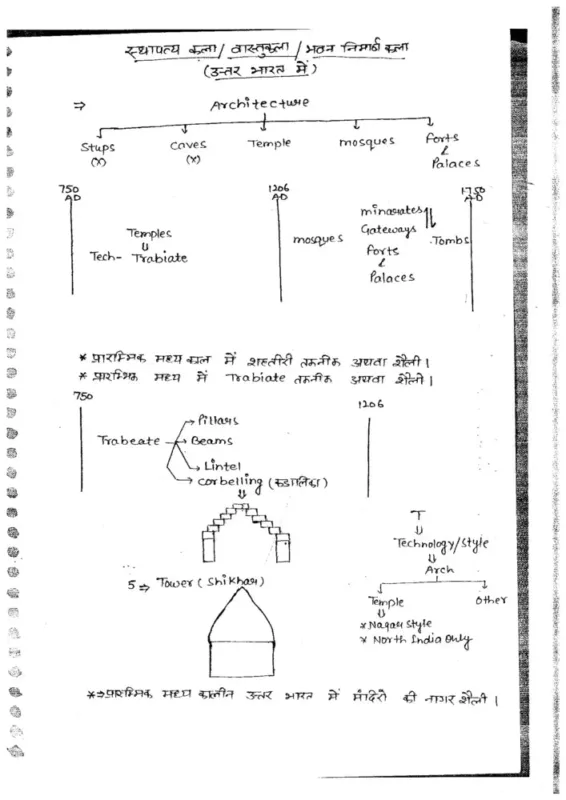
All 4 Booklets in this Hemant Jha History Optional Hindi notes set are produced using high-resolution laser printing technology. Laser toner is permanently fused to the paper surface — unlike inkjet printing, it does not smear when pages are turned rapidly or when hands are slightly damp. Historical maps, dynasty timelines, architectural diagrams, and flowcharts of political events print with sharp edges and clear legibility at any font size. Devanagari script characters are rendered with the precision required for Hindi-medium UPSC study material, ensuring readability across all lighting conditions.

Binding and Durability

Depending on booklet thickness, binding is either spiral or perfect-book binding — both selected for UPSC study durability. Spiral-bound booklets open completely flat on a desk, allowing students to write notes in the margins alongside printed content without the spine forcing pages closed — essential during active UPSC revision. Perfect-bound booklets feature a 300 GSM laminated cover that protects pages from moisture, folding, and daily bag wear. Spine labelling on each booklet allows quick identification on a shelf or study stack, saving time during UPSC Mains revision sessions.

Key Features and Study Design

Hemant Jha History Optional Hindi notes 2025-26 are designed around the specific demands of UPSC History Optional — structured for answer writing, analytical depth, and efficient revision rather than passive reading.

  • Full Hindi Medium Coverage: Every booklet is written in clear, exam-standard Hindi (हिंदी माध्यम), making these notes the natural choice for UPSC aspirants who think, study, and write answers in Hindi. Technical historical terms include bracketed English equivalents where needed, supporting bilingual recall during UPSC Mains.
  • Both Papers, Full Syllabus: The 4-booklet set covers UPSC History Optional Paper I (Ancient, Medieval, Modern India) and Paper II (Post-Independence India and World History) in their entirety. No supplementary notes are needed — this set alone maps to the complete official UPSC History Optional syllabus as prescribed by UPSC.
  • Answer-Writing Framework Built In: Each topic is presented with introduction paragraphs, analytical body points, and conclusion pointers — directly replicable in UPSC Mains answer sheets. This structural approach is specifically designed to help Hindi-medium aspirants write high-scoring 150-word and 250-word History Optional answers.
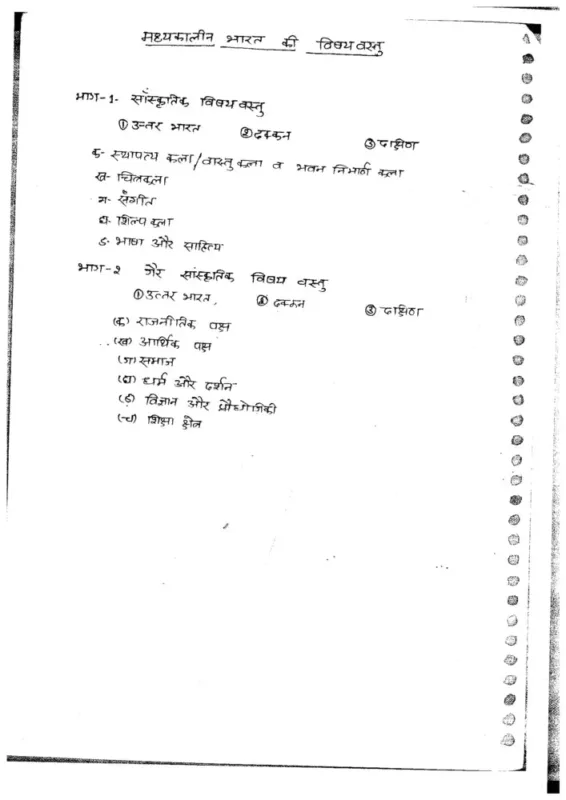
  • Visual Aids — Maps, Timelines, Tables: Dynasty timelines, territorial maps of empires, comparative tables of administrative systems, and flowcharts of historical causation are integrated throughout all 4 Booklets. These visual elements accelerate retention and are particularly useful for quick UPSC revision in the weeks before Mains examination.
  • 2025-26 Edition — Updated Content: This is the current 2025-26 batch of Hemant Jha notes, updated to reflect recent UPSC History Optional question trends, newly excavated archaeological findings such as Rakhigarhi DNA studies, and revised perspectives on 20th-century World History events that UPSC has tested in recent years.

Shipping, Packaging and Delivery

All 4 Booklets of the Hemant Jha History Optional Hindi notes 2025-26 set are individually shrink-wrapped before being packed as a complete unit. The entire set is then placed in a corrugated cardboard box with a minimum 3-ply construction, providing crush resistance during transit. Foam-padded edge protectors prevent corner damage to covers during the journey. The outer box is sealed with industrial-grade packing tape and labelled with your delivery address and order ID. Every order is packed to survive rough handling at courier hubs without any booklet arriving bent, damp, or torn.

We dispatch all orders within 24 hours of payment confirmation. Pan India tracked delivery takes 3-5 business days — covering all metros, Tier 2 cities, and pin codes across India including remote areas. Your tracking ID is shared via WhatsApp immediately after dispatch. For any query about your order — tracking, missing booklet, or damaged item — contact us directly on WhatsApp at +91 70045 49563. Any missing or damaged booklet is replaced within 48 hours of your report, no questions asked. Buy with confidence — your complete set arrives safely or we make it right.

Frequently Asked Questions (FAQ)

Q1: Are Hemant Jha History Optional notes good for UPSC 2025-26?

A: Yes. Hemant Jha History Optional Hindi notes are structured specifically around the UPSC History Optional syllabus with answer-writing frameworks built into each topic. The 2025-26 edition reflects updated content and recent UPSC question trends across both Paper I and Paper II. Hindi-medium aspirants particularly benefit from the clear Devanagari presentation that makes complex historical analysis accessible without losing the depth that UPSC examiners expect in optional answers.

Q2: How many booklets are included in the Hemant Jha History Optional notes set?

A: This set contains exactly 12 individual printed booklets. The booklets are distributed across UPSC History Optional Paper I — covering Ancient India, Medieval India, and Modern India — and Paper II — covering post-Independence India and World History in two dedicated booklets. All 4 Booklets are shipped together as a complete set in a single tracked package. No additional booklets need to be purchased separately for the full UPSC History Optional syllabus coverage.

Q3: Is Hemant Jha History Optional notes available in Hindi medium?

A: Yes, these are 100% Hindi medium (हिंदी माध्यम) notes. All 4 Booklets are written entirely in Hindi, making them ideal for UPSC aspirants who opt for Hindi as their medium of examination. Technical historical terms are given with bracketed English equivalents where needed to support bilingual recall during UPSC Mains. These are among the most structured Hindi-medium History Optional notes available for UPSC 2025-26 preparation.

Q4: What topics are covered in the Hemant Jha History Optional 4 Booklets?

A: The 4 Booklets cover the complete UPSC History Optional syllabus: Prehistoric India, Indus Valley Civilisation, Vedic Age, Mahajanapadas, Mauryan and post-Mauryan periods, Gupta age, Early Medieval India, Delhi Sultanate, Mughal Empire, rise of British power, Indian National Movement (early and Gandhian phases), and World History across two dedicated booklets covering the 18th through late 20th century. Every section of the official UPSC History Optional syllabus is included.

Q5: What is the paper quality? Can I use a highlighter?

A: These booklets use 75 GSM ultra-white paper chosen for high opacity — multiple highlighter colours and gel pens work without bleed-through to the reverse side, ideal for colour-coded revision. The anti-glare surface reduces eye strain during long study sessions. Laser-printed toner is permanently fused and does not smear. The paper quality is specifically selected for UPSC study use where aspirants mark, annotate, and revise the same pages multiple times over months of preparation.

Q6: Are these notes sufficient for UPSC History Optional without coaching?

A: These notes are self-sufficient for covering the UPSC History Optional syllabus as a standalone resource for aspirants studying independently. The answer-writing frameworks, analytical breakdowns, and topic-by-topic coverage eliminate the need for separate coaching for syllabus content. However, aspirants are advised to supplement with past UPSC question paper practice and answer-writing sessions. For factual verification, standard reference books like Bipin Chandra (Modern History) and R.S. Sharma (Ancient History) can be used alongside these notes.

Q7: What is the difference between Hemant Jha notes and other History Optional notes available?

A: Hemant Jha History Optional Hindi notes are specifically structured for Hindi-medium UPSC aspirants with answer-writing templates, visual aids, and analytical frameworks integrated throughout. Unlike some competing notes that present only factual content, these booklets build in the type of critical analysis and multi-perspective evaluation that UPSC History Optional examiners reward. The 2025-26 edition also incorporates updated archaeological findings and revised historical debates that have appeared in recent UPSC History Optional questions.

Q8: Do Hemant Jha History Optional notes cover both ancient and modern history?

A: Yes, all periods are covered across the 4 Booklets. Ancient History (Prehistoric India through the Gupta period) is covered in Booklets 1-4. Medieval History (Early Medieval India, Delhi Sultanate, Mughal Empire) is in Booklets 5-7. Modern Indian History and the National Movement are in Booklets 8-10. World History — covering the period from the Renaissance through the post-Cold War world — is in Booklets 11 and 12. The complete UPSC History Optional Paper I and Paper II syllabus is covered without any gaps.

Q9: How long does delivery take and how can I track my order?

A: Orders are dispatched within 24 hours of payment confirmation. Pan India delivery takes 3-5 business days via tracked courier service. Your tracking ID is shared on WhatsApp (+91 70045 49563) immediately after dispatch. Delivery covers all metros, Tier 2 and Tier 3 cities, and most pin codes across India. If you are in a remote area and want to confirm deliverability before placing your order, contact us on WhatsApp and we will verify your pin code promptly.

Q10: Are these the 2025-26 edition notes or an older batch?

A: These are genuine 2025-26 edition notes — the current and most recent batch of Hemant Jha History Optional Hindi notes. Our store sells only fresh, current-year stock. We do not sell older batches repackaged as new. The 2025-26 edition contains updated content reflecting recent UPSC History Optional question trends, latest archaeological research updates such as Rakhigarhi DNA studies, and revised World History perspectives that align with current UPSC examination patterns.

Q11: Can I buy just specific booklets from this set instead of all 12?

A: Currently this product is listed and sold as a complete 4-booklet set covering the full UPSC History Optional syllabus. If you require specific individual booklets — for example, only the World History booklets or only the Modern History booklets — please contact us directly on WhatsApp at +91 70045 49563 before placing your order. We will confirm availability of individual booklet purchases and provide pricing accordingly based on current stock.

Q12: Are these notes useful for State PSC History Optional candidates as well?

A: Yes. Beyond UPSC, these Hindi-medium History Optional notes are highly useful for State PSC examinations that include History Optional — particularly BPSC, UPPSC, MPPSC, and RAS (Rajasthan PSC). The ancient, medieval, and modern Indian history coverage maps closely to the History Optional syllabus of these state-level examinations. The Hindi-medium format is an additional advantage for candidates appearing in these state examinations, where Hindi is the predominant medium of answer writing.

Summary

SpecificationValue
Booklets12 Printed Booklets
LanguageHindi Medium (हिंदी माध्यम)
SubjectHistory Optional — Paper I & Paper II
Edition2025-26 Latest Batch
Paper75 GSM Ultra-White
BindingSpiral or Book Binding
Delivery3-5 Business Days Pan India
Also Useful ForBPSC, UPPSC, MPPSC, RAS and all State PSC History Optional

Sold by UPSC Store, Mukherjee Nagar, Delhi — India’s trusted source for printed UPSC optional notes. Buy Hemant Jha History Optional Hindi notes online and receive your complete 4-booklet set with pan India delivery in 3-5 days.

Reference: UPSC official syllabus

Customer Reviews 146

4.5
Based on 146 reviews
5★
87
4★
43
3★
16
2★
0
1★
0
P
Pooja Nair
21 Apr 2026
✓ Verified

Notes itne well-organized hain ki padh-padh ke samajh bhi aa jati hai aur memory mein bhi reh jati hai.

D
Deepika Nair
16 Apr 2026
✓ Verified

Notes samajhne mein aasan hain aur structured bhi hai. Kaafi kaam ka material hai UPSC ke liye.

N
Nikhil Sharma
11 Apr 2026
✓ Verified

Material is quite comprehensive and helpful for History Optional preparation overall.

M
Meera Nair
10 Apr 2026
✓ Verified

Notes bahut clarity dete hain har topic mein.

N
Nikhil Desai
09 Apr 2026
✓ Verified

Booklets nicely printed, content very organized and covers all important topics.

M
Manish Tiwari
07 Apr 2026
✓ Verified

Bohot ache se explain kiya gaya hai sab kuch.

R
Rajesh Kumar Mishra
07 Apr 2026
✓ Verified

Hemant Jha ke notes bahut ache hain, bohot detailed hai sab kuch.

A
Anjali Verma
07 Apr 2026
✓ Verified

Bohot helpful for history optional, content organized hai aur padhne mein easy bhi. Ekdum sahi material.

About Hemant Jha History Optional Notes 2025-26

Hemant Jha History Optional Notes 2025-26 is a highly recommended UPSC study material from Hemant Jha, specially designed for History Optional preparation. Available in Hindi medium, this material is crafted to match the exact requirements of the UPSC Civil Services Examination syllabus — covering both Prelims and Mains comprehensively.

Product Details

  • Institute: Hemant Jha
  • Subject: History Optional
  • Medium: Hindi
  • Format: Printed
  • Delivery: Pan-India delivery in 3–5 working days
  • Format: Original printed material, verified authentic

Why Buy from UPSC Store?

  • 100% Genuine Printed Material — Original printed notes, no photocopies or fake copies
  • Fast Delivery — Ships within 24 hours, arrives in 3–5 days pan-India
  • Secure Packaging — Bubble-wrapped and boxed to prevent damage in transit
  • Trusted by 10,000+ Aspirants — India's most reliable UPSC material marketplace
  • WhatsApp Support — Get expert guidance on material selection before ordering

Frequently Asked Questions

Is this product 100% original?

Yes, all products at UPSC Store are 100% genuine printed materials. We do not sell photocopies or fake copies.

How long does delivery take?

Orders are dispatched within 24 hours and delivered across India in 3–5 working days via reputed courier partners.

Can I return the product?

Yes, we accept returns within 7 days if the product is damaged or incorrect. Check our refund policy for details.

Which other study materials should I buy with this?

We recommend pairing this with current affairs notes and a UPSC test series for comprehensive preparation. Browse more in History, Optional, UPSC.