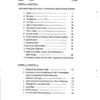


Sosin Anthropology Notes 2025-26
About Sosin Anthropology Notes 2025-26 Print
The Sosin Anthropology Notes 2025-26 Print is a printed UPSC study material set sold by UPSC Store — India’s trusted source for genuine, latest-batch civil services preparation books. This page covers full booklet details, syllabus coverage, pricing, shipping, and frequently asked questions. Useful for UPSC CSE, BPSC, UPPSC, MPPSC, RAS and other state PSC examinations.
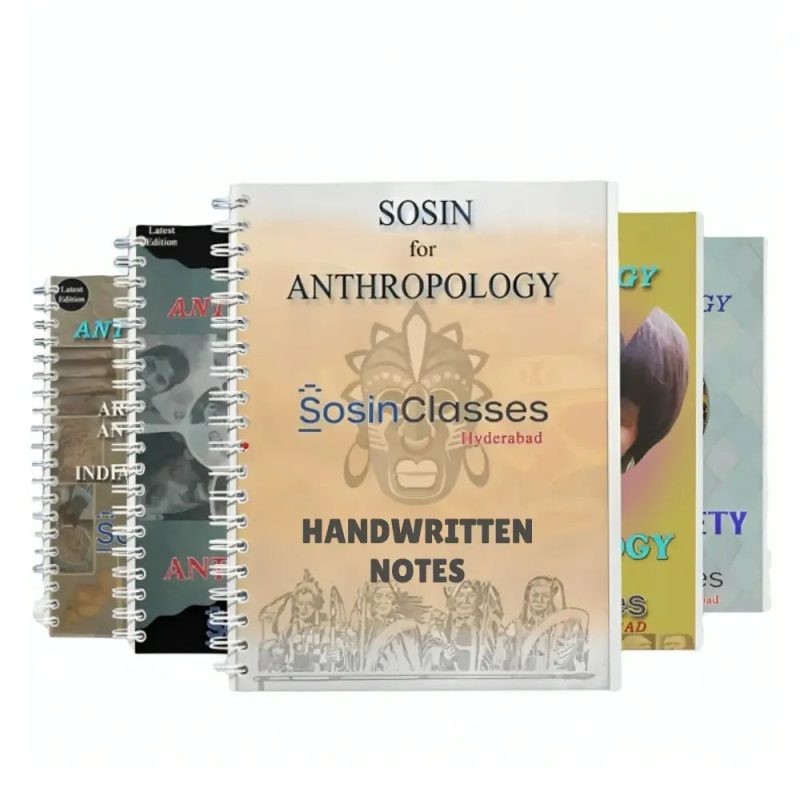
Sosin Classes Anthropology Optional Notes 2025-26 — 12 English Medium Printed Booklets for UPSC Optional (Tribal Anthropology Included)
Related: Sosin notes · Anthropology books
Product Overview
| Feature | Details |
|---|---|
| Booklets Count | 12 Individual Printed Booklets — Full UPSC Anthropology Optional Syllabus (Paper I + Paper II including Tribal Anthropology) |
| Language | English Medium |
| Publisher | Sosin Classes, Hyderabad (Sosin for Anthropology Series) |
| Edition | 2025-26 — Latest Genuine Batch |
| Condition | Brand New, Unmarked, Fresh Stock |
| Format | High-Quality Printed Booklets — Spiral or Book Binding |
| Paper Quality | 75 GSM Ultra-White — Highlighter Safe, Zero Bleed-Through |
| Shipping | Pan India Delivery in 3-5 Business Days — Tracked |
| Also Useful For | BPSC, UPPSC, MPPSC, RAS and all State PSC candidates with Anthropology as optional |
Complete Booklet Catalog
The Sosin Classes Anthropology Optional Notes 2025-26 span 12 printed booklets covering every major unit of the UPSC Anthropology optional syllabus — from foundational physical and biological anthropology in Paper I to applied tribal anthropology and India-specific ethnographic content in Paper II. This set is built for English-medium aspirants who want structured, exam-ready printed notes without relying solely on scattered PDF sources.
- Booklet 1: Meaning, Scope and Development of Anthropology — Nature and definition of anthropology, its branches (physical, cultural, social, archaeological, linguistic), relationship with other social sciences including sociology, psychology, history and biology, development of anthropology as a discipline, key schools of thought and paradigm shifts that shaped modern anthropological inquiry for UPSC Paper I.
- Booklet 2: Human Evolution and Biological Basis of Life — Organic evolution versus cultural evolution, Darwin’s theory of natural selection, synthetic theory of evolution, human place in the animal kingdom, genetic basis of inheritance, Mendel’s laws, chromosomal theory, DNA structure and replication, mutation types, genetic drift, gene flow and natural selection as microevolutionary forces relevant to UPSC Anthropology Paper I biological section.
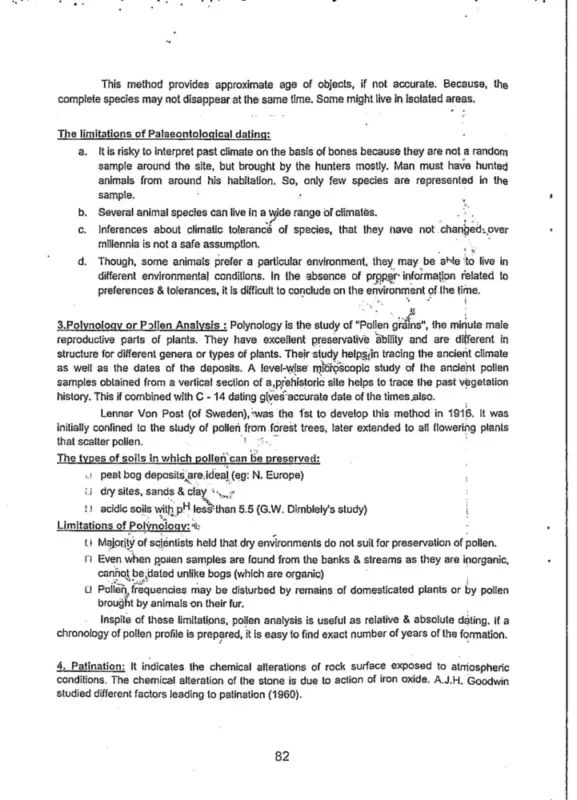
- Booklet 3: Fossil Record and Primate Evolution — Order Primates classification, comparative anatomy of primates, bipedalism, primate social behaviour, Dryopithecus, Ramapithecus, Australopithecus, Homo habilis, Homo erectus, Neanderthal Man and Homo sapiens sapiens — chronological fossil evidence, dating techniques including radiocarbon, potassium-argon and dendrochronology for UPSC Mains Anthropology optional.
- Booklet 4: Concept of Race, Racism and Human Variation — Biological basis of racial classification, historical racial typologies, concept of biological race, UNESCO statements on race, racism and ethnocentrism, physiological variation in skin colour, hair texture, blood groups, ABO system, Rh factor, sickle cell anaemia as a case of balanced polymorphism, population genetics and human adaptability in varied ecological zones.
- Booklet 5: Growth, Development and Applied Human Biology — Human growth phases from foetal to senescence, factors affecting growth — genetic, hormonal, nutritional and environmental, constitutional types, somatotyping (Sheldon), anthropometry, ergonomics, nutritional anthropology, concept of human adaptability, WHO growth standards and their application to public health and UPSC optional Anthropology Paper I applied section.
- Booklet 6: Marriage, Family and Kinship — Definitions and universality of marriage, rules of marriage (endogamy, exogamy, hypergamy, hypogamy), forms of marriage, functions of family, types of family, descent systems — patrilineal, matrilineal, double descent and cognatic descent, kinship terminology systems (Eskimo, Hawaiian, Iroquois, Crow, Omaha, Sudanese), Alliance theory versus Descent theory, key theorists and UPSC optional relevance.
- Booklet 7: Economic Organisation, Political Organisation and Social Control — Subsistence economies — hunting-gathering, pastoralism, horticulture and agriculture, modes of exchange (reciprocity, redistribution, market), band, tribe, chiefdom and state typologies, mechanisms of social control — law, taboo, ritual, feud and warfare, theories of state origin, age grade systems, secret societies and their anthropological significance for UPSC Mains.
- Booklet 8: Religion, Magic and Ideology — Anthropological approaches to religion — Tylor’s animism, Marett’s animatism, Frazer’s magic, Durkheim’s sacred-profane dichotomy, Malinowski’s functionalist view, Turner’s ritual symbolism, Geertz’s interpretive approach, shamanism, totemism, taboo, pilgrimage, myth and cosmology, rituals of passage — Van Gennep’s framework, cargo cults and millenarian movements relevant to UPSC Paper I.
- Booklet 9: Culture, Language and Communication — Concept of culture, cultural relativism, ethnocentrism, enculturation and acculturation, diffusionism, independent invention, culture change theories, concept of sub-culture and counter-culture, sapir-whorf hypothesis, language and culture relationship, ethnolinguistics, non-verbal communication, gestures and proxemics, writing systems and their anthropological significance for UPSC optional examination.
- Booklet 10: Tribal Anthropology — Indian Ethnography and Scheduled Tribes — Definition of tribe in Indian context, criteria of scheduled tribe listing, geographic distribution of major tribal groups across India — Northeast, Central India, Andaman and Nicobar, Lakshadweep, tribal demography, linguistic classification of tribal languages, racial elements among Indian tribes, tribal ecology and habitat, major ethnographic studies of Indian tribes for UPSC Paper II.
- Booklet 11: Tribal Development, Integration and Welfare Policies — Constitutional provisions for tribes — Fifth Schedule, Sixth Schedule, Article 244, PESA Act 1996, Forest Rights Act 2006, tribal sub-plan, shifting cultivation (jhum), deforestation and displacement issues, tribal unrest and movements — Santhal rebellion, Munda rebellion, Naxalism, government schemes — Van Dhan Yojana, TRIFED, integration versus isolation debate and Verrier Elwin versus G.S. Ghurye controversy.
- Booklet 12: Applied Anthropology, Research Methods and Contemporary Issues — Applied anthropology — development, health, education and forensic applications, methods in anthropological fieldwork — participant observation, interview, case study, genealogical method, life history, PRA, fieldwork ethics, tribal health problems, nutrition and disease burden among STs, gender issues in tribal society, impact of globalisation on tribal culture, contemporary debates in Indian anthropology relevant to UPSC Mains Paper II.
In-Depth Content Breakdown: Booklet by Booklet
Booklet 1: Meaning, Scope and Development of Anthropology
This opening booklet establishes the conceptual foundation required for UPSC Anthropology optional Paper I. It covers the meaning and scope of anthropology with precision, differentiating it clearly from adjacent disciplines such as sociology, history and biology. The booklet traces the intellectual history of the subject — from 19th-century evolutionary anthropology through functionalism, structuralism and post-modernism — giving aspirants a strong theoretical timeline that examiners expect in introductory UPSC Mains answers. Key thinkers and their contributions are presented in a concise, answer-ready format suitable for 10-mark and 15-mark questions.
The second section of this booklet focuses on the sub-disciplines of anthropology — physical, cultural, social, archaeological and applied — and their interrelationships. Sosin Classes structures this material using comparative tables that highlight similarities and distinctions between each branch, making it easy to reproduce in UPSC Mains answers. Diagrams showing the tree of anthropological disciplines and timelines of major theoretical shifts are included to support visual learners. The booklet closes with the growing relevance of anthropology in development policy and governance, connecting theory to current affairs for high-scoring UPSC answers.
Booklet 2: Human Evolution and Biological Basis of Life
Booklet 2 addresses the biological foundations of anthropology — a dense and frequently tested area in UPSC Anthropology Paper I. The content begins with Lamarckism and Darwinism and progresses to the Modern Synthetic Theory, carefully explaining natural selection, genetic variation and fitness in a way accessible to non-science graduates. Mendel’s laws, chromosomal theory and the molecular biology of DNA are explained with labelled diagrams that make abstract concepts tangible. Microevolutionary forces — mutation, genetic drift, gene flow and natural selection — are discussed with examples drawn from actual human populations, which is the level of specificity UPSC examiners reward.
The booklet includes neatly drawn diagrams of DNA replication, meiosis and the Hardy-Weinberg principle with worked numerical examples. Sosin Classes adds margin notes flagging which concepts have appeared in previous years’ UPSC Mains question papers, helping aspirants prioritise revision. A dedicated section on human adaptability — cold adaptation in Arctic populations, high-altitude adaptation in Andean and Tibetan communities — ties biological content to ecological anthropology. This interdisciplinary bridging is a hallmark of Sosin Classes notes and particularly valuable for securing marks in UPSC Paper I Section B.
Booklet 3: Fossil Record and Primate Evolution
This booklet covers one of the most visually intensive sections of the UPSC Anthropology optional syllabus — primate classification and the human fossil record. The Order Primates is classified systematically, with anatomical features distinguishing prosimians from anthropoids, and Old World from New World monkeys. Comparative anatomy tables — dental formula, limb structure, brain size — are presented clearly so aspirants can reproduce them in answers. Bipedalism is analysed as both an anatomical and behavioural adaptation with evidence from the fossil record, giving aspirants material for both descriptive and analytical UPSC answers.
The fossil record section follows a chronological sequence from Dryopithecus to Homo sapiens sapiens, with key morphological features, discovery sites, geological dating and significance of each hominid form. A timeline diagram illustrates human evolution visually, which is ideal for reproducing in UPSC Mains answer booklets. Dating techniques — radiocarbon, potassium-argon, thermoluminescence and dendrochronology — are explained with their principles and limitations. Sosin Classes ensures each fossil form is linked to its analytical importance rather than just listing facts, which elevates answer quality in UPSC optional examinations significantly.
Booklet 4: Concept of Race, Racism and Human Variation
Race and racism form a philosophically and scientifically important part of the UPSC Anthropology optional Paper I, and this booklet handles both dimensions with care. Historical racial classifications — Blumenbach, Deniker, Hooton — are presented alongside their scientific critiques. The UNESCO statements on race (1950, 1951, 1964, 1967) are summarised with key propositions that frequently appear in UPSC Mains answers. Biological variation in human populations — ABO blood groups, Rh factor, skin colour genetics, hair form — is discussed with population-level data and maps, grounding the theoretical content in empirical evidence that UPSC examiners value highly.
The booklet dedicates a section to population genetics, explaining allele frequency variation across human groups and the concept of genetic polymorphism. Sickle cell anaemia as a case of balanced polymorphism — its higher frequency in malaria-endemic regions of Africa and India — is treated as a model example of gene-environment interaction. Ethnocentrism, cultural racism and institutional racism are also discussed to bring the section current. Sosin Classes includes previous years’ UPSC questions on race alongside model answers at the end of this booklet, making it immediately useful for both initial learning and final revision.
Booklet 5: Growth, Development and Applied Human Biology
Human growth and development is a high-yield section for UPSC Anthropology Paper I, and this booklet covers it systematically from foetal development through senescence. Growth phases — infancy, childhood, juvenile, adolescence and adulthood — are described with hormonal correlates. Factors affecting growth — nutrition, socioeconomic status, altitude, disease burden and genetics — are discussed with real population studies. Constitutional typologies including Sheldon’s somatotyping (ectomorph, mesomorph, endomorph) and their criticisms are presented alongside the anthropometric methods used in physical anthropology fieldwork and their applications in ergonomics and forensic science.
The applied dimensions of this booklet are particularly useful for UPSC Paper II linkages. Nutritional anthropology — protein-energy malnutrition, micronutrient deficiencies, food taboos and their health consequences among tribal and marginal communities — connects biological anthropology to development policy. WHO growth standards and their limitations in Indian contexts are discussed critically. Sosin Classes includes data tables from NFHS-5 and ICMR studies to give answers a contemporary, evidence-based quality that UPSC examiners reward in higher-scoring scripts. This booklet serves as a bridge between theoretical biology and applied anthropological intervention.
Booklet 6: Marriage, Family and Kinship
Kinship is the structural backbone of social anthropology and among the most asked topics in UPSC Anthropology optional Paper I. This booklet opens with universality debates around marriage and family before systematically covering rules of marriage — endogamy, exogamy, hypergamy, hypogamy, levirate, sororate and cross-cousin marriage — with ethnographic examples from Indian and global societies. Family types — nuclear, joint, extended, consanguine and conjugal — are contrasted using Morgan’s and Murdock’s frameworks. The treatment is thorough enough to support both 10-mark and 20-mark UPSC Mains answers without needing supplementary sources.
Descent theory — unilineal, double and cognatic — is contrasted with Alliance theory through the works of Radcliffe-Brown, Evans-Pritchard, Lévi-Strauss and Fortes. Kinship terminological systems — Eskimo, Hawaiian, Iroquois, Crow, Omaha and Sudanese — are presented in tabular format with accompanying diagrams showing generational equations, making this one of the clearest treatments of kinship terminology available in printed UPSC notes. Sosin Classes adds ethnographic case studies from Indian tribes — the Nayars of Kerala, the Khasi of Meghalaya — that tie abstract kinship theory directly to UPSC Paper II tribal content, reinforcing learning across both papers.
Booklet 7: Economic Organisation, Political Organisation and Social Control
This booklet covers the political economy of anthropology — a section that has seen increasing UPSC Mains questions in recent years. Economic organisation begins with subsistence strategies — hunting-gathering, pastoralism, horticulture and shifting cultivation — with ecological correlates and specific tribal examples from India. Exchange systems — Mauss’s theory of reciprocity, redistribution mechanisms and market economies — are explained with ethnographic illustrations including Kula ring and Potlatch. Sahlins’s concept of the “original affluent society” and its critique are included to add analytical depth that differentiates high-scoring UPSC answers from average ones.
Political organisation typologies — band, tribe, chiefdom and state — follow Service and Sahlins, with transitional forms and evolutionary debates. Social control mechanisms — informal (taboo, gossip, witchcraft accusation, ostracism) and formal (legal codes, councils) — are presented with cross-cultural examples. Theories of state origin — conquest theory, hydraulic theory, trade route theory and internal conflict theory — are compared in a table format. Sosin Classes links this section to Indian tribal governance through PESA, Gram Sabha and customary law practices, directly connecting abstract anthropological theory to current UPSC Paper II content and policy-relevant answers.
Booklet 8: Religion, Magic and Ideology
Religion and ritual form one of the most intellectually rich sections of the UPSC Anthropology optional, and this booklet handles it with the theoretical depth examiners expect. Tylor’s animism, Marett’s animatism, Frazer’s sympathetic magic framework (contagious and imitative magic), Durkheim’s sacred-profane dichotomy and Malinowski’s anxiety-reduction theory of magic are all presented with their critiques. Turner’s concept of liminality and communitas from Van Gennep’s rites of passage framework is explained using Indian tribal ritual examples — particularly from Gondi, Munda and Naga ceremonial cycles — which directly supports UPSC Paper II answers.
Geertz’s interpretive/symbolic approach to religion and its distinction from functionalist approaches is a topic many aspirants struggle with, and Sosin Classes clarifies it through a structured comparison table. Shamanism, totemism (Durkheim and Lévi-Strauss compared), taboo, pilgrimage and myth are treated in dedicated sub-sections. Cargo cults and millenarian movements among Pacific and Indian tribal communities add a contemporary dimension. UPSC questions frequently ask for examples from Indian tribal settings, and this booklet’s consistent grounding in Indian ethnographic data — rather than purely Western examples — makes it particularly valuable for Paper II crossover answers.
Booklet 9: Culture, Language and Communication
Culture theory is central to both UPSC Anthropology papers, and this booklet builds from Tylor’s classic definition through contemporary debates on cultural relativism and postmodern critiques. Enculturation, acculturation, assimilation and syncretism are defined clearly with examples from tribal India — particularly the impact of urbanisation and migration on tribal cultural identity — making this directly relevant to UPSC Paper II. Diffusionism (Boas, Graebner, Smith) and its debates with independent invention and convergence are presented through comparative evidence from material culture studies.
Language and culture form the second half of this booklet, anchored around the Sapir-Whorf hypothesis of linguistic relativity and its strong and weak versions. Ethnolinguistics, sociolinguistics and language families of Indian tribal communities — Dravidian, Austro-Asiatic (Munda), Tibeto-Burman and Andamanese isolates — are mapped and explained. Non-verbal communication, proxemics, kinesics and gesture studies are introduced as sub-fields of communication anthropology. Sosin Classes includes a section on endangered tribal languages and their documentation, tying linguistic anthropology to contemporary Indian policy debates that can provide strong examples in UPSC Mains answers.
Booklet 10: Tribal Anthropology — Indian Ethnography and Scheduled Tribes
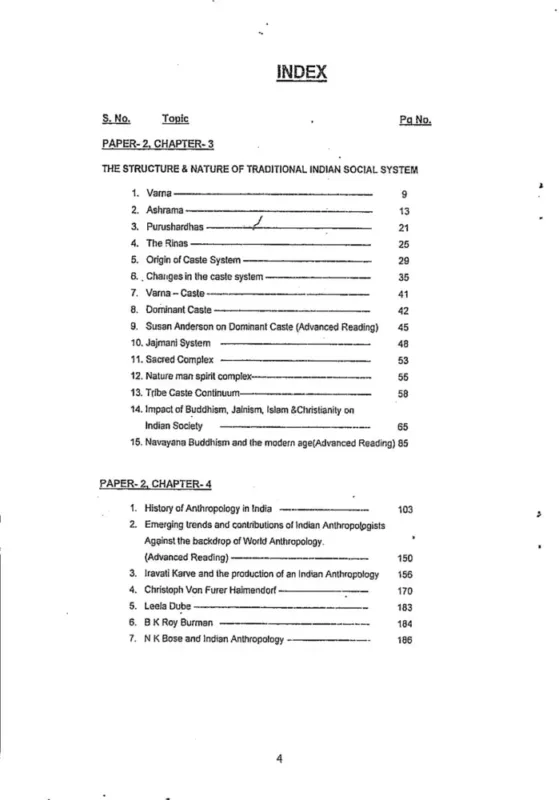
This booklet marks the transition into UPSC Anthropology Paper II and is one of the most content-rich in the entire set. It opens with the definitional debate around “tribe” in India — colonial origins of the term, Risley’s racial approach, Ghurye’s sociological critique, D.N. Majumdar’s criteria and the current constitutional-administrative definition of Scheduled Tribes. Geographic distribution of major tribal groups is mapped region by region — Northeast India (Naga, Mizo, Bodo), Central India (Gond, Baiga, Korku, Oraon), South India (Toda, Irula, Chenchu) and island territories — with demographic data from SECC and Census 2011.
Racial elements among Indian tribes are classified using Guha’s racial classification — Negrito, Proto-Australoid, Mongoloid, Mediterranean — with physical anthropology evidence. Linguistic classification follows Grierson’s framework updated with modern ethnolinguistic surveys. Major ethnographic studies — Elwin on Maria Gond, Srinivas on Coorgs, Bailey on Bisipara Oriyas, Bose on tribes of India — are summarised with key findings formatted for direct use in UPSC Paper II answers. Sosin Classes presents this material in an India-centric format that maps precisely to the UPSC optional syllabus, avoiding the over-reliance on Western ethnographic examples that weakens many competing note sets.
Booklet 11: Tribal Development, Integration and Welfare Policies
This is arguably the most policy-intensive booklet in the set and directly addresses the highest-scoring sections of UPSC Anthropology Paper II. Constitutional provisions for Scheduled Tribes — Fifth Schedule areas and their administration, Sixth Schedule autonomous district councils in Northeast India, Article 244, Article 275(1), Article 339 and Article 46 — are explained with jurisdictional clarity. The PESA Act 1996 and Forest Rights Act 2006 are analysed in depth — provisions, implementation gaps, gram sabha powers and judicial interpretations — providing material for 20-mark analytical UPSC questions. Shifting cultivation (jhum), its ecological impact and alternatives are covered thoroughly.
The integration versus isolation debate — Ghurye’s nationalist integration position versus Elwin’s protectionist “National Park” and later “Inner Line” arguments — is one of the most consistently asked UPSC Anthropology topics and receives dedicated treatment here. Tribal unrest and social movements — Santhal Hul 1855, Munda Ulgulan, Birsa Munda, Rampa rebellion — are covered historically and analytically. Contemporary government schemes — Van Dhan Vikas Kendras, TRIFED, Eklavya Model Residential Schools, PM JANMAN scheme — are updated to the 2025-26 policy landscape. Sosin Classes ensures this booklet can stand alone as a revision resource for the tribal policy section of UPSC optional Paper II.
Booklet 12: Applied Anthropology, Research Methods and Contemporary Issues
The final booklet in the Sosin Classes Anthropology 2025-26 set covers applied anthropology and research methodology — sections that reward methodologically literate UPSC answers. Applied anthropology is examined across four domains: development anthropology (community participation, PRA, RRA tools), medical/health anthropology (disease ecology among tribals, ethno-medicine, tribal health infrastructure gaps), educational anthropology (ashram schools, residential schools, language-of-instruction debates) and forensic anthropology (skeletal age estimation, sex determination, stature reconstruction from long bones). Each domain is supported with Indian case studies that translate directly into UPSC Mains examples.
Research methods receive detailed treatment — participant observation (Malinowski’s legacy), structured and unstructured interviews, genealogical method, life history, case study, schedule versus questionnaire distinctions and ethical principles in anthropological fieldwork are all covered. Contemporary issues addressed include: impact of globalisation and market economy on tribal livelihoods, gender inequality in tribal societies, displacement due to mining and dam projects with specific Indian examples (Narmada, Vedanta Niyamgiri), tribal health indicators from NFHS-5, digital technology access among tribal communities and climate change vulnerability. Buy this complete 5-booklet set to secure thorough preparation across all dimensions of UPSC Anthropology optional.
Physical Construction and Quality Standards
Every booklet in the Sosin Classes Anthropology 2025-26 set is produced to a physical standard suitable for intensive daily use across a 12–18 month UPSC preparation cycle — built to survive repeated readings, annotation and travel between home, library and test centre without degrading in quality.
Paper Quality: 75 GSM Anti-Glare White Paper
All 5 Booklets use 75 GSM ultra-white paper selected specifically for high opacity during extended study sessions. The paper’s anti-glare surface reduces eye fatigue during 6–8 hour reading sessions — critical for UPSC aspirants covering dense anthropological theory. Multiple highlighter colours — yellow, pink, green, orange — can be applied simultaneously without any ink bleed-through to the reverse side, supporting the colour-coded revision systems used by toppers. Gel pens, ballpoint pens and marker annotations all hold cleanly on this paper without smearing, making the booklets fully functional as active study tools.
Printing Technology: High-Resolution Laser Printing
The text, diagrams, maps, tables and flowcharts across all 12 Sosin Anthropology booklets are produced using high-resolution laser printing at 1200 DPI. This ensures that kinship diagrams, human evolution timelines, fossil morphology illustrations and tribal distribution maps retain clarity at all zoom levels — critical since anthropology notes contain far more visual content than most other UPSC optional subjects. Laser toner printing is permanent and smudge-proof even when pages are handled repeatedly, unlike inkjet-printed alternatives that fade and smear with moisture. Every page remains fully legible through the entire preparation cycle.
Binding and Durability
The Sosin Anthropology 2025-5 Booklets are available in spiral binding — which allows each booklet to lie completely flat on a desk, enabling aspirants to write notes in the margins and reference diagrams while simultaneously writing practice answers without the booklet closing. The 300 GSM laminated cover on each booklet protects the content pages from damage during commuting and storage. For aspirants who prefer a compact format, book-bound editions are also available. Either binding format maintains full structural integrity through repeated use, which is essential for notes that will be revised multiple times during UPSC Mains preparation.
Key Features and Study Design
The Sosin Classes Anthropology Notes 2025-26 are structured around the specific demands of UPSC Mains answer writing — not just content coverage — making them more immediately useful than generic anthropology textbooks or unstructured PDF notes for UPSC optional preparation.
- India-Centric Tribal Examples Throughout: Unlike most anthropology notes that rely heavily on Western ethnographic examples, Sosin Classes consistently anchors theory — kinship, religion, political organisation, economic systems — in Indian tribal ethnography, directly matching the UPSC examiner’s expectation for India-relevant answers in both Paper I and Paper II.
- Previous Year UPSC Questions Integrated: PYQ references are embedded at the end of each major section across the 5 Booklets, allowing aspirants to immediately test their understanding against actual UPSC Mains questions without switching between materials. This saves significant preparation time and helps calibrate answer length and depth to UPSC standards.
- Visual Learning Tools — Diagrams, Timelines and Tables: Anthropology is a heavily visual subject with evolution timelines, kinship diagrams, racial classification charts and tribal distribution maps. Sosin Classes includes hand-drawn and printed diagrams throughout — formatted to be reproducible in UPSC answer booklets within the time constraints of a 3-hour Mains paper.
- Policy-Updated Content for UPSC 2025-26: Booklet 11 in particular is updated with the latest tribal welfare schemes, PESA amendments, Forest Rights Act judicial orders and NFHS-5 data — ensuring aspirants are not penalised for outdated policy references in UPSC Mains 2025 answers. Contemporary issues in Booklet 12 are similarly updated to reflect current developments.
- Paper I and Paper II Cross-Referencing: Sosin Classes includes explicit cross-references between theoretical concepts in Paper I and their applied manifestations in Paper II tribal content. For example, kinship theory in Booklet 6 cross-references Nayar and Khasi case studies in Booklet 10, and religion theory in Booklet 8 cross-references tribal ritual practices in Booklet 11, reinforcing integrated UPSC answer writing skills.
Shipping, Packaging and Delivery
All 5 Booklets in the Sosin Anthropology 2025-26 set are individually shrink-wrapped before being placed together in a double-walled corrugated cardboard box with foam edge protectors at all corners. The outer box is sealed with reinforced adhesive tape rated for transit stress. A waterproof inner poly-bag protects the booklets from moisture during delivery. The packaging is specifically designed to absorb the shocks and drops that occur in standard courier transit across India, ensuring that all 5 Booklets arrive in the same brand-new, unmarked condition in which they were dispatched from our Mukherjee Nagar, Delhi facility.
Orders are dispatched within 24 hours of payment confirmation on business days and are delivered pan India within 3-5 business days via tracked courier. A tracking ID is shared via WhatsApp and email immediately upon dispatch. For any delivery queries, missing booklet reports or damaged goods claims, contact us directly on WhatsApp at +91 70045 49563 — replacement of any missing or damaged booklet is processed within 48 hours of a verified claim. We currently ship to every pin code serviceable by major national couriers including remote locations in Northeast India and island territories.
Frequently Asked Questions (FAQ)
A: Sosin Classes, based in Hyderabad, has built a strong reputation specifically for Anthropology optional UPSC preparation. The notes are structured around the UPSC syllabus and integrate previous year questions, Indian tribal ethnographic examples and policy-updated content. Many aspirants with anthropology as their UPSC optional use these printed notes as their primary study material, supplementing with standard references like Ember and Ember for Paper I theoretical depth.
A: The Sosin Classes Anthropology Optional Notes 2025-26 set contains exactly 12 individual printed booklets. These 5 Booklets together cover the complete UPSC Anthropology optional syllabus — both Paper I (physical anthropology, biological anthropology, social-cultural anthropology) and Paper II (Indian ethnography, tribal anthropology, tribal development and applied anthropology). Every booklet is individually bound with a laminated cover and printed on 75 GSM paper.
A: Yes, the Sosin Classes Anthropology Optional Notes 2025-26 set available here is entirely in English medium. All 5 Booklets — covering topics from human evolution and fossil record in Paper I to tribal welfare policies and applied anthropology in Paper II — are written, printed and structured in English. This makes the set suitable for English-medium UPSC aspirants across India who are taking anthropology as their optional subject.
A: The tribal anthropology content spans primarily Booklets 10, 11 and 12. Booklet 10 covers Indian ethnography — tribal classification, geographic distribution, racial and linguistic elements and major ethnographic studies. Booklet 11 addresses tribal development — Fifth and Sixth Schedules, PESA, Forest Rights Act, integration versus isolation debate and government schemes. Booklet 12 covers applied anthropology, research methods and contemporary tribal issues including displacement, gender, health indicators and globalisation impact.
A: These 12 printed booklets provide syllabus-wide coverage of UPSC Anthropology optional and are designed for self-study. The integrated PYQ references, structured answer frameworks and Indian tribal case studies reduce dependence on classroom coaching. However, for physical anthropology Paper I sections (genetics, fossil record), supplementing with one standard textbook such as Ember and Ember or P. Nath’s Physical Anthropology is advisable. For Paper II, the Sosin notes are widely considered self-sufficient by aspirants who buy and use them seriously.
A: Sosin Classes notes are particularly strong on Indian tribal ethnography and the Paper II policy sections — an area where many competing note sets are thin. Vivek Bhatt’s notes are also widely used and focus heavily on Paper I theory. The key differentiator for Sosin is the consistent India-centric framing and the updated tribal welfare policy content in the 2025-26 edition. Many serious UPSC optional aspirants buy Sosin as their primary printed set and cross-reference Vivek Bhatt for additional Paper I depth.
A: Yes, the 2025-26 edition of Sosin Classes Anthropology notes is updated to reflect the current UPSC Anthropology optional syllabus. Booklet 11 includes the latest tribal welfare schemes — PM JANMAN, Van Dhan Vikas Kendras, updated TRIFED programs — and references NFHS-5 health data. Booklet 12 incorporates contemporary issues including climate vulnerability of tribal communities and digital divide in tribal areas. The 2025-26 batch is the latest genuine stock and is stocked fresh at our Mukherjee Nagar store.
A: These booklets use 75 GSM ultra-white paper chosen for high opacity — multiple highlighter colors and gel pens work without bleed-through to the reverse side, ideal for color-coded revision.
A: Yes. The Sosin Classes Anthropology 2025-26 notes are useful for State PSC candidates who have anthropology as an optional in their examination. Candidates preparing for BPSC, UPPSC, MPPSC and RAS who have chosen anthropology optional will find the tribal anthropology, Indian ethnography and tribal development policy content in Booklets 10, 11 and 12 directly relevant to state-level optional papers, which closely follow the UPSC Anthropology syllabus structure.
A: You can buy the Sosin Anthropology 2025-26 notes directly through this product page by clicking the Add to Cart button. Orders are dispatched within 24 hours of payment confirmation from our Mukherjee Nagar, Delhi store. Pan India delivery takes 3-5 business days via tracked courier. A tracking ID is shared on WhatsApp and email upon dispatch. For queries before purchasing, you can reach us on WhatsApp at +91 70045 49563 for immediate assistance.
A: All 5 Booklets dispatched are brand new, unmarked and from the genuine 2025-26 fresh stock batch — not photocopies or second-hand materials. Each set is shrink-wrapped and inspected before dispatch. In the unlikely event that a booklet is missing from your delivered set, contact us on WhatsApp at +91 70045 49563 with a photo of the received package. Replacement of any missing booklet is dispatched within 48 hours of claim verification at no additional cost to you.
A: Anthropology is considered one of the most scoring UPSC optionals when prepared strategically — the syllabus is bounded, overlap with GS Paper I (society, culture, tribal issues) and GS Paper IV is significant, and the examiner pool rewards structured answers with good examples. Use Sosin Booklets 1–9 to build Paper I foundations in the first two months, then shift to Booklets 10–12 for Paper II. Integrate PYQ practice from Week 3 onwards. Buy this set early to allow adequate revision cycles before UPSC Mains.
Summary
| Specification | Value |
|---|---|
| Booklets | 12 Printed Booklets |
| Language | English Medium |
| Paper | 75 GSM Ultra-White |
| Binding | Spiral or Book Binding |
| Delivery | 3-5 Business Days Pan India |
| Also Useful For | BPSC, UPPSC, MPPSC, RAS and all State PSC candidates with Anthropology optional |
Sourced and dispatched from our store in Mukherjee Nagar, Delhi — India’s largest UPSC preparation hub. Order the Sosin Classes Anthropology 2025-26 complete 5-booklet set today and receive it anywhere in India within 3-5 days.
Reference: UPSC official syllabus
Customer Reviews 250
Ekdum perfect notes.
Bilkul sahi product hai.
Really impressed with the content and structure.
Notes pretty useful hain daily revision ke liye. Clarity thodi kam hai kuch chapters mein.
Matalab notes bilkul clear hain aur structure bhi achha hai. Padhne mein koi problem nahi.
Mast hai! Bohot kuch seekha inn booklets se. UPSC ke liye essential.
Material bilkul professional level ka hai. Content comprehensive aur study format bahut clear hai.
Anthropology ko aasan banaya hai yeh booklets ne. Recommended for all UPSC aspirants.
Aspirants Also Bought
More from the same category
About Sosin Anthropology Notes 2025-26
Sosin Anthropology Notes 2025-26 is a highly recommended UPSC study material from Sosin Anthropology Academy, specially designed for Anthropology preparation. Available in English medium, this material is crafted to match the exact requirements of the UPSC Civil Services Examination syllabus — covering both Prelims and Mains comprehensively.
Product Details
- Institute: Sosin Anthropology Academy
- Subject: Anthropology
- Medium: English
- Format: Printed
- Delivery: Pan-India delivery in 3–5 working days
- Format: Original printed material, verified authentic
Why Buy from UPSC Store?
- ✅ 100% Genuine Printed Material — Original printed notes, no photocopies or fake copies
- ✅ Fast Delivery — Ships within 24 hours, arrives in 3–5 days pan-India
- ✅ Secure Packaging — Bubble-wrapped and boxed to prevent damage in transit
- ✅ Trusted by 10,000+ Aspirants — India's most reliable UPSC material marketplace
- ✅ WhatsApp Support — Get expert guidance on material selection before ordering
Frequently Asked Questions
Yes, all products at UPSC Store are 100% genuine printed materials. We do not sell photocopies or fake copies.
Orders are dispatched within 24 hours and delivered across India in 3–5 working days via reputed courier partners.
Yes, we accept returns within 7 days if the product is damaged or incorrect. Check our refund policy for details.
We recommend pairing this with current affairs notes and a UPSC test series for comprehensive preparation. Browse more in Anthropology, Optional, UPSC.