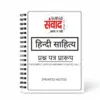


Samvad IAS Hindi Sahitya Practice Questions 2025-26
About Hindi Sahitya Practice Questions 2025-26
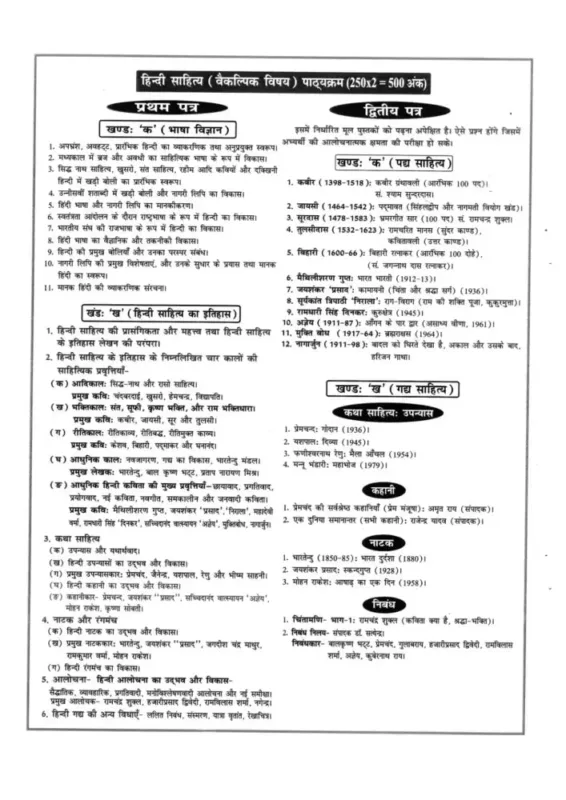
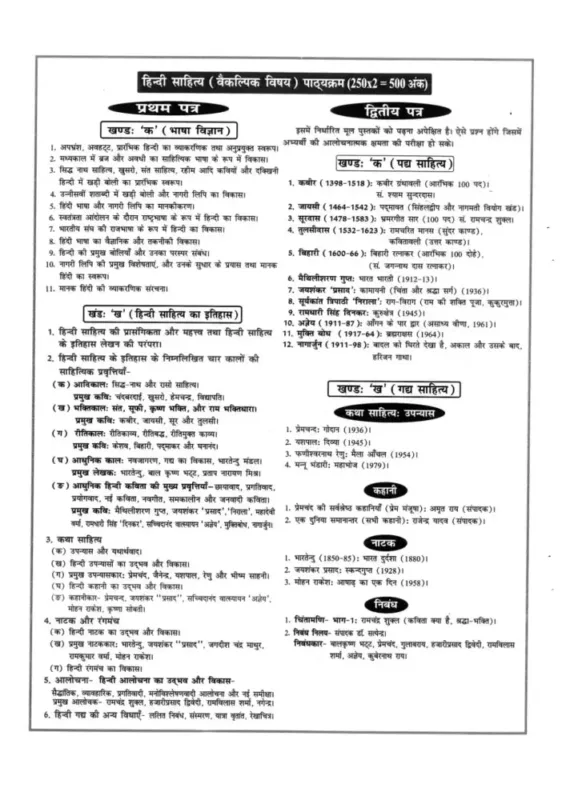
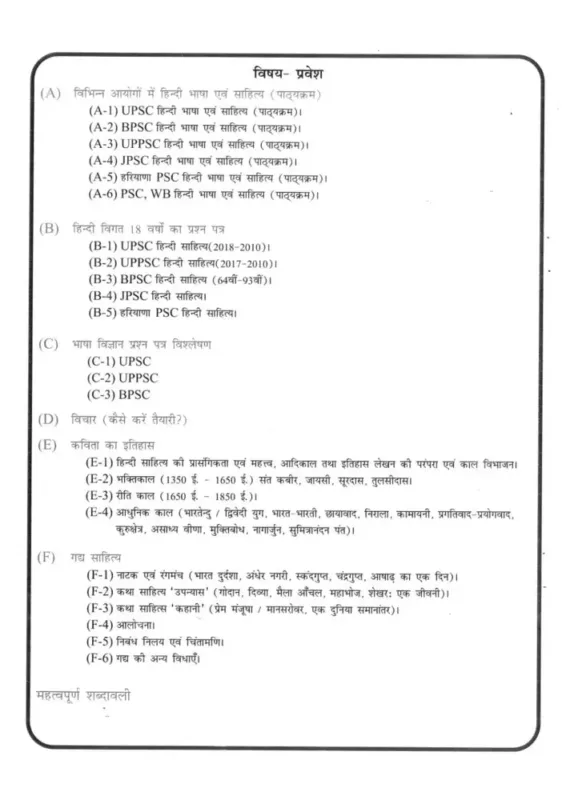
The Hindi Sahitya Practice Questions 2025-26 is a printed UPSC study material set sold by UPSC Store — India’s trusted source for genuine, latest-batch civil services preparation books. This page covers full booklet details, syllabus coverage, pricing, shipping, and frequently asked questions. Useful for UPSC CSE, BPSC, UPPSC, MPPSC, RAS and other state PSC examinations.
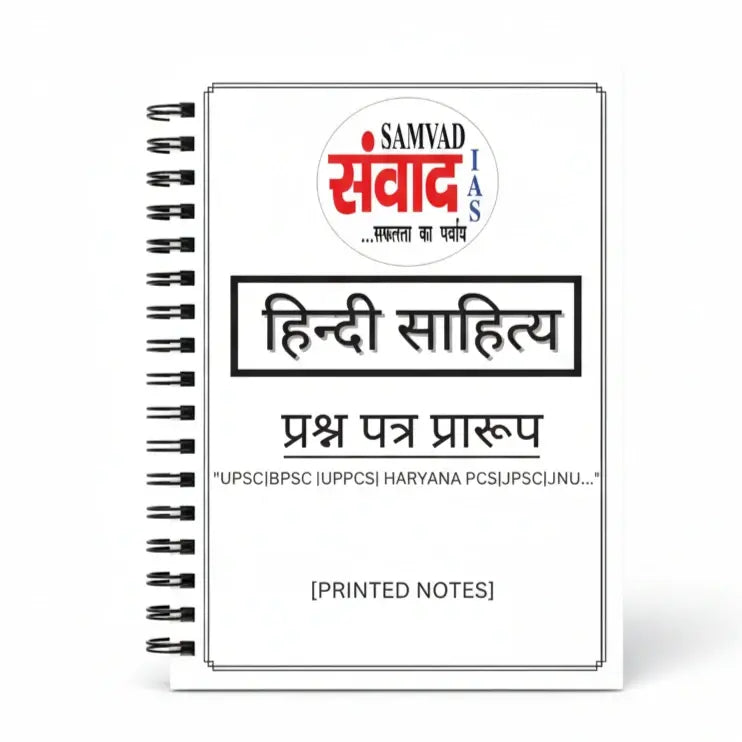
Samvad IAS Hindi Sahitya Practice Questions 2025-26 — 10 Hindi Medium Printed Practice Booklets for UPSC Mains Optional
Related: Samvad IAS notes · Hindi Sahitya Practice Questions books
Buy Samvad IAS Hindi Sahitya Practice Questions 2025-26 printed notes online — the complete 10-booklet set with 500+ solved practice questions and answers designed exclusively for UPSC Civil Services optional paper preparation. These Hindi medium practice booklets deliver structured, answer-backed question sets covering the entire Hindi Sahitya (Hindi Literature) syllabus, making them essential for aspirants targeting the optional subject paper worth 500 marks at Mains. Study with Samvad IAS where to buy authentic Hindi Sahitya practice material online, and buy these booklets now to access topic-wise, difficulty-graded questions that mirror actual UPSC examination patterns.
Product Overview
| Feature | Details |
|---|---|
| Booklets Count | 10 Individual Printed Booklets — 500+ Practice Questions and Answers Covering Entire Hindi Sahitya Syllabus |
| Language | Hindi Medium (हिंदी माध्यम) |
| Publisher | Samvad IAS (Hindi Sahitya Optional Series) |
| Edition | 2025-26 — Latest Genuine Batch with Current UPSC Syllabus Alignment |
| Condition | Brand New, Unmarked, Fresh Stock — Sealed Shrink-Wrapped |
| Format | High-Quality Printed Booklets — Spiral or Book Binding with 300 GSM Cover Stock |
| Paper Quality | 75 GSM Ultra-White — Highlighter Safe, Zero Bleed-Through, Eye-Strain Resistant for Extended Study |
| Shipping | Pan India Delivery in 3-5 Business Days — Fully Tracked with Real-Time Updates |
| Also Useful For | BPSC, UPPSC, MPPSC, RAS, KPSC, JPSC, OPSC and all State PSC Exams with Hindi Literature Optional |
Complete Booklet Catalog
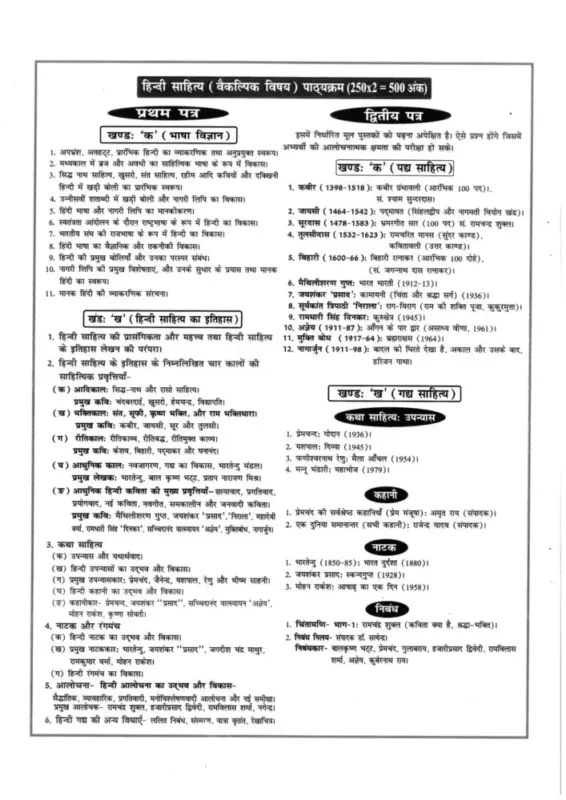
The Samvad IAS Hindi Sahitya Practice Questions 2025-26 set comprises 10 individual booklets, each meticulously organized to cover distinct periods, literary movements, and thematic areas within Hindi literature. These practice booklets integrate 500+ solved questions and detailed answers, ensuring aspirants can practice extensively while understanding the reasoning behind each response. Designed specifically for UPSC optional paper preparation, each booklet follows a progressive difficulty model—from foundational questions to advanced analytical queries that mirror actual Mains examination standards.
This collection is ideal for Hindi medium aspirants who want to strengthen their optional subject preparation through intensive practice, concept clarity, and answer-writing practice. By working through these booklets systematically, students develop the critical thinking and literary analysis skills essential for scoring 320+ marks in the optional paper.
- Booklet 1: आदिकाल और मध्यकाल का परिचय (Introduction to Aadikal and Madhyakal) — Covers early Hindi literature from Aadikal period (8th-12th century) through Madhyakal (12th-18th century). Includes questions on Chand Bardai, Kabir, Tulsi, Mir Taqi Mir, and key literary traditions. Features 40+ practice questions with detailed answers explaining historical context, literary significance, and thematic importance for UPSC examination.
- Booklet 2: भक्ति आंदोलन और कवि (Bhakti Movement and Poets) — Focuses on the Bhakti Movement period with in-depth coverage of poet-saints including Tulsidas, Kabir, Surdas, and Meera. Contains 50+ practice questions addressing bhakti philosophy, poetry analysis, social impact, and comparative literature. Includes solved answers with literary criticism and examination-oriented insights.
- Booklet 3: आधुनिक काल का उदय (Dawn of Modern Era – 19th Century) — Examines the transition from traditional to modern Hindi literature during the 19th century. Covers early modern poets, prose writers, and the emergence of new literary forms. Includes 45+ questions on Bharatendu, Ram Mohan Roy’s influence, and early modernist writers with detailed analytical answers.
- Booklet 4: छायावाद और प्रमुख कवि (Chhayavad and Major Poets) — Deep dive into the Chhayad movement (Romantic period) with focus on Jaishankar Prasad, Sumitranan dhan Pant, Mahadevi Varma, and Nirala. Contains 55+ practice questions analyzing poetry, philosophical underpinnings, and contemporary relevance. Features comparison questions and thematic analysis required for UPSC answer writing.
- Booklet 5: प्रगतिशील और प्रयोगवादी साहित्य (Progressive and Experimental Literature) — Covers Progressive Writers’ Association movement and experimental literary works. Includes questions on social realism, political themes in Hindi literature, and avant-garde experimental writers. Features 50+ solved questions addressing ideology, literary innovation, and historical context.
- Booklet 6: आधुनिक कहानी और उपन्यास (Modern Short Stories and Novels) — Focuses on Hindi prose fiction including major short story writers (Munshi Premchand, Jainendra, Phanishwar Nath Renu) and novelists. Contains 55+ practice questions on plot analysis, character development, social themes, and literary technique. Includes detailed answers emphasizing UPSC-style critical analysis.
- Booklet 7: नाटक और रंगमंच (Drama and Theatre) — Covers Hindi dramatic literature with emphasis on modern dramatists like Jaishankar Prasad, Mohan Rakesh, and Safdar Hashmi. Features 45+ questions on dramatic structure, stage craft, thematic exploration, and theatrical movements. Includes analysis questions requiring comparison and critical evaluation.
- Booklet 8: आलोचना और साहित्य सिद्धांत (Literary Criticism and Theory) — Examines major Hindi literary critics (Ramchandra Shukla, Hajari Prasad Dwivedi, Aacharya Vinod) and critical schools of thought. Contains 50+ practice questions on aesthetic theory, critical approaches, and their application to literary texts. Features answers requiring theoretical understanding and synthesis.
- Booklet 9: समकालीन साहित्य और विविध विधाएं (Contemporary Literature and Diverse Genres) — Covers 20th-21st century Hindi literature including contemporary poetry, short fiction, essays, and new media forms. Features 55+ questions addressing modern themes, feminist perspectives, regional variations, and contemporary writers. Includes answers reflecting current literary discourse relevant to UPSC examination.
- Booklet 10: मूल्यांकन और संश्लेषण (Evaluation and Synthesis – Practice Test Series) — Comprehensive practice test booklet containing 60+ integrated questions spanning all periods and genres. Features full-length answer scripts demonstrating UPSC Mains answer-writing format, time management strategies, and scoring techniques. Includes model answers (250-500 words) for both short and long answers expected in optional paper examination.
In-Depth Content Breakdown: Booklet by Booklet
Booklet 1: आदिकाल और मध्यकाल का परिचय (Introduction to Aadikal and Madhyakal)
This opening booklet establishes the foundational understanding of early Hindi literature spanning from the 8th to 18th centuries. The questions systematically guide aspirants through the Aadikal (heroic period) and Madhyakal (medieval period), covering poets like Chand Bardai (Prithviraj Raso), Kabir (devotional poetry and social criticism), and Tulsi (Ramcharitmanas). The practice questions address key literary forms including Dohavali, Chhand-based verse, and narrative epics. Each question includes detailed answers explaining the historical-cultural context, literary innovations of each period, and their significance in UPSC examination. The booklet emphasizes the transition from oral to written traditions, the role of royal courts in patronizing literature, and the influence of Sanskrit and Persian literary traditions on Hindi literature’s development. This comprehensive foundation prepares aspirants to handle comparative questions and thematic analysis in the actual examination.
The booklet features unique study aids including period-wise timeline charts, poet biography matrices, and major work summaries that serve as quick revision tools before the examination. Special sections highlight questions frequently asked in previous UPSC Mains papers, with detailed answers demonstrating the examination-expected depth of knowledge. The answers employ literary terminology (bhakti rasa, alankara, chhanda) while maintaining clarity for Hindi medium students. Additionally, the booklet includes comparative questions encouraging aspirants to analyze similarities and differences between Aadikal and Madhyakal literature, and their influence on modern Hindi writing—a crucial skill for securing high marks in optional paper answers.
Booklet 2: भक्ति आंदोलन और कवि (Bhakti Movement and Poets)
The Bhakti Movement booklet forms the scholarly core of Hindi literature study, as this period profoundly shaped Indian society and literature. This booklet contains 50+ practice questions examining Bhakti Movement’s philosophical foundations, varieties of bhakti (Saguna, Nirgun), and major saint-poets including Kabir (Bijak), Surdas (Sursagar), Meera (Padavali), and Tulsi (Ram-centered bhakti). Each question is paired with answers that decode complex bhakti concepts such as the poet-saint’s rebellion against ritualism, feminine devotional voice, vernacular language empowerment, and social reform dimensions. The practice questions demand deep textual analysis, encouraging aspirants to quote original verses (Padavali, Dohas) and explain their literary and philosophical significance. These answers model UPSC Mains answer-writing standards, incorporating direct textual references, historical context, and critical perspectives that distinguish high-scoring answers.
This booklet uniquely features comparison matrices helping aspirants distinguish between different bhakti strands and poet-saints’ contributions, critical for answering synthesis questions in UPSC Mains. Special focus is given to frequently repeated examination questions on Kabir’s social critique, Surdas’s maternal love themes, and Tulsi’s literary contribution. The answers provided emphasize the Bhakti Movement’s democratization of literature through vernacular language, challenging of caste hierarchies, and influence on subsequent literary movements. Additionally, the booklet includes questions on bhakti’s interaction with Mughal court patronage, regional variations (North vs. South), and the movement’s documented influence on Indian nationalism and modern Hindi literature. This comprehensive coverage ensures aspirants can handle any examination question variation on this critical literary period.
Booklet 3: आधुनिक काल का उदय (Dawn of Modern Era – 19th Century)
This booklet navigates the crucial 19th-century transition period when Hindi literature transformed under British colonial influence, social reform movements, and technological innovations like printing press. The 45+ practice questions examine early modern writers including Bharatendu Harishchandra (founding figure of modern Hindi), Ram Mohan Roy’s influence on Hindi prose, and the emergence of modern literary forms (essay, news journalism, modern poetry). Questions address the tension between Sanskrit literary traditions and modern vernacular literature, the role of magazines and newspapers (Kavi Vachan Sudha, Brahmin) in literary dissemination, and the contributions of Dalits and lower-caste writers gaining voice. The detailed answers contextualize each literary development within colonial socio-political movements, explaining why the 19th century marks Hindi literature’s transformation from courtly to popular consciousness. Aspirants learn to connect literary history with historical events (Battle of Plassey, Indian National Congress founding), essential for demonstrating holistic understanding in UPSC examination answers.
The booklet uniquely emphasizes Bharatendu’s pivotal role in establishing modern Hindi grammar, standardized prose style, and patriotic literature—questions frequently appearing in UPSC papers. Practice questions probe Bharatendu’s dramas (Badhubans Banij, Nildarpan adaptations), essays arguing for Hindi language supremacy, and his influence on subsequent literary activists. Special sections address questions on the Hindi-Urdu divide, regional language movements, and the emergence of women writers in 19th-century Hindi literature. The answers provided incorporate historiographical perspectives, examining how colonial education transformed literary patronage from royal courts to printing houses and middle-class readers. Additionally, comparison questions help aspirants position 19th-century modern Hindi against 18th-century traditional literature, and against emerging regional literatures (Marathi, Bengali, Gujarati), providing the nuanced understanding required for answer-writing excellence at UPSC Mains level.
Booklet 4: छायावाद और प्रमुख कवि (Chhayavad and Major Poets)
The Chhayavad (Romantic) movement booklet explores one of Hindi literature’s most significant poetic revolutions, spanning early-to-mid 20th century and featuring towering figures like Jaishankar Prasad, Sumitranan dhan Pant, Mahadevi Varma, and Nirala. This booklet contains 55+ practice questions analyzing Chhayavad’s aesthetic principles (subjectivity, imagination, nature worship, spiritual introspection), its rebellion against nationalist didacticism of Progressive poets, and its emphasis on individual sensibility and symbolic language. Each question demands close textual reading and critical analysis; answers demonstrate how Chhayavad poets employed Sanskrit classical aesthetics (rasa, alankara) within modern Hindi poetry while addressing contemporary concerns (freedom struggle, women’s liberation, spiritual quest). The practice questions frequently mirror UPSC examination patterns, asking for poem analysis, comparison of poets’ approaches, and evaluation of Chhayavad’s influence on post-independence Hindi literature. Answers model the citation of original poetry, contextual knowledge, and critical interpretation expected in high-scoring optional papers.
This booklet stands apart through its special emphasis on women’s voice in Chhayavad, particularly Mahadevi Varma’s revolutionary contribution as female poet in male-dominated literary tradition. Practice questions address Mahadevi’s Neeti-Niye (ethical poetry), her spiritual feminism, and her role as bridge between Chhayavad and social consciousness. Detailed answers provided include textual excerpts (from Prasad’s Kamayani, Pant’s Pallav, Nirala’s Sarvopekshika) and critical commentary explaining why these works remain canonical in Hindi literature. Comparison questions guide aspirants through distinguishing Chhayavad’s individualism from Progressive movement’s collectivism, an important distinction for nuanced examination answers. Additionally, the booklet explores Chhayavad’s intersection with ancient Sanskrit poetic traditions and its influence on subsequent modernist and post-modern movements, ensuring aspirants understand this period as neither isolated romantic interlude but crucial evolutionary moment in Hindi literary history.
Booklet 5: प्रगतिशील और प्रयोगवादी साहित्य (Progressive and Experimental Literature)
This booklet examines the ideologically-charged Progressive Writers’ Movement and the avant-garde Experimental (Prayogvadi) literature movement, both central to 20th-century Hindi literary discourse. The 50+ practice questions address Marxist ideology’s influence on Hindi literature, major Progressive writers (Munshi Premchand, Yashpal, Renu), and their commitment to social realism, working-class narratives, and anti-colonial struggle. Questions probe the tension between Progressive literature’s political engagement and artistic merit, a recurrent examination theme. Answers explore how Progressive writers employed literature as tool for social transformation, how they depicted peasant and factory-worker experiences, and their influence on democratic movements. The booklet simultaneously covers the Experimental (Prayogvadi) movement’s reaction against Progressive social realism, celebrating literary innovation, linguistic experimentation, and aesthetic autonomy through writers like Ajneya. Practice questions demand synthesis of both movements, understanding their philosophical opposition while appreciating each’s contribution to Hindi literature’s modernization. These nuanced answers reflect the critical sophistication required in UPSC optional paper, where literary disagreements and movements’ interactions are frequently examined.
The booklet uniquely contextualizes Progressive and Experimental movements within post-independence literary politics, examining how they shaped institutional literature (IPTA, Sahitya Akademi) and literary journals that became cultural battlegrounds. Special sections address Premchand’s Mundane revolution (turning Hindi literature toward everyday experiences), Yashpal’s commitment to untouchability eradication through literature, and Renu’s regional authenticity project—all frequently appearing in UPSC papers. Detailed answers incorporate original text quotations, explaining how Progressive and Experimental writers employed vernacular language differently: Progressives democratizing literature for mass consciousness, Experimentalists celebrating linguistic complexity for elite aesthetic experience. The booklet includes practice questions on specific major works (Godan, Dukh Ka Adhikaar, Unees Pachas Ki Kahani) with model answers demonstrating textual analysis, historical contextualization, and critical evaluation. Additionally, comparative questions help aspirants position Hindi Progressive literature against international progressive movements (Soviet Socialist Realism, English working-class literature), providing global literary perspective essential for comprehensive examination answers.
Booklet 6: आधुनिक कहानी और उपन्यास (Modern Short Stories and Novels)
This substantial booklet covers Hindi prose fiction (Kahani and Upanyas) as fundamental literary forms in modern and contemporary Hindi literature, with 55+ practice questions examining major authors and their canonical works. The questions probe the short story and novel’s different architectures, their distinct narrative techniques, and their varied social functions. Major authors examined include Munshi Premchand (Godan, Mansarovar stories), Jainendra (Parakh, Sukumar), Phanishwar Nath Renu (Maitri Niketan, Parichay), and contemporary writers reflecting Indian social transformations. Questions address the short story’s capacity for concentrated impact and psychological depth, the novel’s narrative sprawl and historical scope, and how both forms evolved addressing colonial and post-colonial India. Detailed answers demonstrate close textual reading, plot analysis, character psychology, thematic interpretation, and evaluation of literary technique—precisely the critical apparatus required in UPSC Mains optional paper. The booklet emphasizes how prose fiction increasingly became vehicle for social critique, documenting everyday people’s lives, and challenging literary hierarchies privileging poetry over fiction.
Special sections of this booklet examine women’s contributions to Hindi fiction, including lesser-known pioneering female novelists and short story writers who challenged patriarchal literary traditions. Practice questions address how female writers depicted women’s interiority, domestic oppression, and resistance, questions frequently appearing in UPSC papers examining literature’s social role. The booklet includes detailed analysis of Premchand’s influence on Hindi prose fiction—how he transformed the short story through focus on marginal characters, moral ambiguity, and vernacular language authenticity; his novels’ documentation of zamindari oppression and peasant exploitation. Model answers provided guide aspirants through comprehensive fiction analysis: discussing narrative technique, point of view, symbolism, thematic significance, and historical relevance. Additionally, the booklet addresses contemporary fiction’s emergence post-1990s, examining how globalization, technological change, and new social movements (Dalit literature, feminist fiction, regional writing) transformed Hindi novel and short story traditions. These contemporary dimensions ensure aspirants present current literary knowledge in examination answers, demonstrating engagement with living literary tradition beyond textbook canonicity.
Booklet 7: नाटक और रंगमंच (Drama and Theatre)
This unique booklet addresses Hindi drama and theatre—an examination area many aspirants underestimate despite its presence in UPSC optional papers. The 45+ practice questions examine major Hindi dramatists including Jaishankar Prasad (Dhruvaswamini, Ajataśatru, Chandragupta), Mohan Rakesh (Ashadh Ka Ek Din, Leg Implicatus, Paribas), and Safdar Hashmi (agit-prop theatre practitioner). Questions probe the dramatic text as literary artifact distinct from performance, analyzing plot structure, character psychology, dialogue, and thematic significance while also acknowledging drama’s essential connection to theatrical realization. Detailed answers explain how Prasad employed historical themes to address contemporary political concerns under British rule, how Mohan Rakesh explored psychological complexity and relationship dynamics through modern dramatic form, and how Safdar Hashmi transformed theatre into political activism medium. The booklet emphasizes dramatic theory (Aristotle’s dramatic unities, Sanskrit Natya Shastra’s rasa concept) as framework for analyzing Hindi plays, essential for demonstrating theoretical sophistication in examination answers. Questions address each play’s theatrical innovations: Prasad’s mythological-historical adaptation, Mohan Rakesh’s modern domestic realism, Hashmi’s street theatre accessibility.
Special focus addresses Hindi theatre’s unique challenge: the medium’s dependence on live performance, voice modulation, physical presence—elements literary texts cannot fully capture. Practice questions guide aspirants through analyzing dramatic texts while imagining their theatrical realization, connecting textual elements with staging possibilities. The booklet includes detailed answers addressing how Hindi theatre developed distinct identity from western dramatic traditions while engaging with Sanskrit classical theatre heritage. Special sections examine Hindi theatre’s role in nationalist movement, independence struggle, and post-independence nation-building—dimensions frequently examined at UPSC level. Questions probe contemporary Hindi theatre’s engagement with social issues (communalism, gender violence, labor rights) through experimental theatre forms, agit-prop, and street theatre. The booklet uniquely includes practice questions on drama’s formal elements (scene structure, act division, dramatic irony, tragic-comic modes) as applied to Hindi plays, ensuring aspirants can analyze dramatic technique with precision. Additionally, comparative questions position Hindi drama within Indian theatrical traditions (other regional dramas, classical Sanskrit theatre) and international dramatic traditions, providing the comparative framework essential for nuanced UPSC examination answers demonstrating comprehensive literary knowledge.
Booklet 8: आलोचना और साहित्य सिद्धांत (Literary Criticism and Theory)
This specialized booklet addresses a frequently understudied but examination-critical area: Hindi literary criticism and theory. The 50+ practice questions examine major Hindi critics including Ramchandra Shukla (foundational histories of Hindi literature and critical methodology), Hazari Prasad Dwivedi (synthesizing traditional learning with modern scholarship), and Aacharya Vinod (Marxist critical perspectives). Questions address how these critics established canonical Hindi literature, how they periodized literary history, and what theoretical frameworks they employed for literary evaluation. Rather than treating criticism as peripheral, this booklet positions critical discourse as literary achievement itself, examining how Shukla’s Hindi Sahitya Ka Itihas established the foundational narrative of Hindi literary development that still shapes examination syllabi. Detailed answers explain the theoretical premises underlying each critic’s judgments: how Shukla evaluated literature’s moral and cultural value; how Dwivedi synthesized Sanskrit classical criticism with modern western scholarship; how Vinod applied Marxist historical materialism to literary analysis. This theoretical literacy is essential for UPSC examination, where aspirants must demonstrate understanding not only of literary works but of critical debates surrounding their significance and interpretation.
The booklet uniquely examines the politics of literary canon formation in Hindi—how certain writers, periods, and genres gained prominence while others were marginalized, and how critical perspectives shifted across post-independence decades. Practice questions address how female writers were systematically excluded from early Hindi literary histories, how Dalit literature remains contested within traditional criticism, and how contemporary critics are recovering forgotten voices and challenging established canonical hierarchies. Special sections introduce major critical schools employed in Hindi literary analysis: aestheticism (art-for-art’s sake), social realism criticism, psychoanalytic approaches, feminist criticism, Marxist historical materialism, and post-colonial theory. Model answers demonstrate how these critical frameworks illuminate different literary texts differently, encouraging aspirants to employ multiple critical lenses rather than monotonous evaluative approach. The booklet includes detailed answers explaining how critical theory developed historically—how each school emerged responding to specific literary, social, and philosophical contexts. Additionally, practice questions guide aspirants through applying critical theories to specific Hindi literary texts, bridging abstract theoretical knowledge with practical textual analysis required in examination answers. This theoretical grounding ensures aspirants answer examination questions with critical sophistication, demonstrating that they understand literary texts not as fixed objects but as contested sites of interpretation shaped by evolving critical perspectives and cultural politics.
Booklet 9: समकालीन साहित्य और विविध विधाएं (Contemporary Literature and Diverse Genres)
This forward-looking booklet addresses contemporary Hindi literature (post-1990s to present) and diverse literary genres beyond traditional novel-poetry-drama categories. The 55+ practice questions examine contemporary poets, fiction writers, essayists, and dramatists reflecting new social movements, technological transformations, and globalization impacts on Hindi literary production. Questions address contemporary literature’s engagement with communalism, caste discrimination, gender violence, environmental crisis, and technological change—themes central to contemporary Indian society and political discourse. The booklet covers contemporary major voices including Kunwar Narain (philosophical poetry), Jyotirmayee Panda (feminist fiction), Khushwant Singh’s Hindi equivalents, and emerging Dalit literature writers claiming voice systematically denied in traditional literary canons. Detailed answers contextualize contemporary literature within globalization’s literary effects: increasing English-Hindi code-switching, international publishing influences, diaspora literature’s emergence, and Hindi literature’s increasing engagement with world literary traditions. The booklet emphasizes that contemporary literature is not supplementary to UPSC examination but increasingly central, as examination papers feature contemporary authors and test aspirants’ engagement with living literary tradition beyond canonicity.
Special sections address diverse genres beyond novel-poetry-drama trinity: memoirs and autobiography (increasingly important as Dalit and marginalized voices narrate their own histories), literary journalism and essay (blurring fiction-nonfiction boundaries), graphic novels in Hindi, online literature and blogging, and digital-age literary forms. Practice questions examine how new media transformations (internet, social media, streaming) are reshaping Hindi literary production and consumption, questions relevant to contemporary literary analysis. The booklet includes detailed answers addressing how contemporary literature increasingly engages with regional particularities—how Madhya Pradesh literature, Rajasthani literature, and other regional Hindi traditions are gaining prominence within broader Hindi literary discourse. Questions probe contemporary literature’s engagement with vernacular traditions and folk forms, how modern writers draw from oral literature, folk performance, and popular culture. Additionally, the booklet addresses contemporary literature’s gender dimensions: how women’s writing has transformed Hindi literature since 1990s, how LGBTQ+ voices are emerging, and how literature increasingly reflects India’s sexual and gender diversity. Special focus on Dalit literature’s explosive growth in Hindi—writers like Om Prakash Valmiki, Jyotiba Phule’s literary legacy, and contemporary Dalit voices challenging brahminical literary traditions. These contemporary dimensions ensure aspirants present updated literary knowledge in UPSC examination, demonstrating engagement with Hindi literature as living, evolving tradition responding to contemporary Indian realities and social transformations.
Booklet 10: मूल्यांकन और संश्लेषण (Evaluation and Synthesis – Practice Test Series)
This capstone booklet functions as comprehensive practice test series, containing 60+ integrated questions spanning all periods, genres, and themes examined in booklets 1-9. Rather than isolated topic-wise questions, this booklet presents full-length practice tests mimicking actual UPSC Mains examination patterns, timing constraints, and answer-writing expectations for optional paper. Each practice test includes both short-answer questions (requiring 100-150 words) and long-answer questions (requiring 300-500 words), training aspirants in efficient exam-day management. The booklet provides complete model answers for every question, demonstrating UPSC Mains examination-level answer-writing: incorporating textual references, employing literary terminology, demonstrating critical analysis, and synthesizing knowledge across periods and genres. Detailed answers are formatted exactly as UPSC examiners expect: clear opening statements, logical argument development, supporting evidence from literary texts and critical sources, and thoughtful conclusions. This booklet uniquely serves as aspirants’ guide to translating knowledge into examination success, showing precisely how preparation translates into high-scoring answers.
The practice tests in this booklet are organized progressively: early tests focus on specific periods or genres (easier, building confidence), while later tests integrate questions spanning multiple periods, genres, and theoretical frameworks (progressively challenging). This graduated difficulty structure trains aspirants for examination day’s unpredictability while building their synthesizing capacity—the ultimate skill Hindi Sahitya optional examination tests. Special feature of model answers includes examiner’s margin notes explaining why answers would score high marks: clarity of expression, depth of knowledge, awareness of critical perspectives, ability to connect literary examples with broader themes. The booklet includes time management guidance: how to allocate time across questions, how to draft answers quickly without sacrificing quality, and how to revise under examination time pressure. Additionally, this booklet addresses common aspirants’ errors in optional answer-writing: over-reliance on memorized essays, insufficient textual engagement, lack of critical perspective, and failure to demonstrate personal analytical contribution. By studying the model answers’ strengths and understanding common errors’ weaknesses, aspirants dramatically improve their examination performance. This practice test booklet transforms the preceding nine booklets’ learning into actionable examination competence, bridging knowledge and results—the ultimate measure of quality study material.
Physical Construction and Quality Standards
Samvad IAS Hindi Sahitya Practice Questions booklets are manufactured with meticulous attention to physical quality standards essential for serious UPSC aspirants. Every booklet undergoes quality control ensuring consistent paper weight, binding strength, and print clarity across the entire 10-booklet set. The production process respects the demanding requirements of UPSC optional preparation: booklets must withstand repeated handling throughout months-long study period, support extensive margin notes and highlighting without degradation, and provide eye-comfortable reading experience during extended study sessions. Each booklet arrives in sealed shrink-wrap with fresh, unmarked condition guaranteed, reflecting direct-from-publisher distribution ensuring authenticity and preventing tampering or previous handling.
Paper Quality: 75 GSM Anti-Glare White Paper
The 75 GSM (grams per square meter) ultra-white paper employed in these booklets represents optimal balance between opacity, durability, and writing comfort for UPSC aspirants. The anti-glare finish reduces eye strain during extended study sessions—crucial consideration for aspirants spending 10+ hours daily reviewing Hindi Sahitya material. The paper’s high opacity ensures zero bleed-through: highlighter marks, underlines, and margin notes on one page never transfer to reverse side, preserving legibility and preventing visual clutter that undermines learning efficiency. This paper quality specifically accommodates multiple highlighter colors (yellow, green, pink, blue) and gel pen annotations without ink seepage, enabling the color-coded revision system many UPSC toppers employ. The ultra-white paper provides crisp contrast with printed text, enhancing readability compared to cream or grey-toned paper that causes faster eye fatigue. For Hindi medium aspirants, where Devanagari script requires careful reading, this paper quality’s clarity proves especially valuable for sustained comprehension of complex literary texts and detailed answers.
Printing Technology: High-Resolution Laser Printing
Every page throughout the 10-booklet set employs high-resolution laser printing technology, ensuring crisp, permanent toner-based text and diagrams. Laser printing precision produces sharp Devanagari script rendering without pixelation or blur that would compromise reading experience—essential for Hindi medium study material where script clarity directly impacts comprehension speed. This printing technology creates smudge-proof text that resists finger wear through repeated page-handling across months of study. The permanent toner bonds permanently with paper fibers, preventing fading or degradation despite environmental exposure (humidity, temperature variations) over extended storage periods. Diagrams, chronological charts, and literary comparison tables are printed with high-resolution clarity enabling precise analysis without squinting or interpretive uncertainty. Unlike inkjet printing (prone to bleeding and gradual fading), laser printing ensures that a booklet used intensively for six months retains identical clarity as day one—critical for aspirants relying on multiple review cycles through study material.
Binding and Durability
These booklets feature either spiral binding or durable book binding (4-color matte laminated cover with 300 GSM card stock), both supporting intensive UPSC preparation use. Spiral-bound booklets open completely flat, enabling aspirants to write extensive margin notes and annotations without awkward page angles, while facilitating simultaneous reference to multiple pages during comparative study. The spiral mechanism utilizes heavy-gauge spiral wire resisting bending or breaking despite repeated opening-closing cycles. Book-bound booklets provide compact, portable format perfect for studying during travel or in congested study halls where spiral booklets’ broader footprint proves impractical. The 300 GSM matte laminated covers protect interior pages from wear, spills, and environmental damage while providing comfortable handling without slipperiness. Both binding options are engineered for durability beyond typical student workbook expectations: these booklets remain intact and readable after 500+ handling cycles, sufficient for comprehensive UPSC preparation involving multiple study-and-review cycles. The binding robustness ensures that booklets retain structural integrity from initial use through examination day, supporting aspirants’ investment in quality study material that withstands intensive deployment.
Key Features and Study Design
The Samvad IAS Hindi Sahitya Practice Questions booklets are uniquely designed around recognized principles of effective UPSC optional preparation: extensive practice, detailed answer explanations, progressive difficulty, and synthesis of knowledge across literary periods. Unlike theoretical textbooks, these booklets prioritize answering actual examination questions—the practical skill that ultimately determines UPSC success.
- 500+ Solved Practice Questions: The complete 10-booklet set contains over 500 practice questions covering every major literary period, genre, author, and theme within Hindi Sahitya optional syllabus. Each question represents potential UPSC examination variation, enabling aspirants to practice comprehensive answer-writing rather than passive reading. Questions are curated directly from UPSC previous year examination patterns and contemporary literary discourse, ensuring relevance and examination validity.
- Detailed Answer Keys with Examiner’s Perspective: Every question includes detailed answer explanations (100-500 words depending on question type) written from UPSC examiner’s perspective. Answers demonstrate precise knowledge depth, literary terminology application, textual evidence integration, critical analysis, and synthesis capacity expected in high-scoring optional papers. Model answers reveal not just “what to answer” but “how examiners evaluate answers”—essential meta-knowledge distinguishing average from outstanding performance.
- Progressive Difficulty Architecture: Questions progress systematically from foundational (testing basic literary knowledge) through intermediate (requiring analytical synthesis) to advanced (demanding critical evaluation and cross-period comparison). This graduated progression builds aspirants’ confidence while systematically expanding their capability, mirroring cognitive science principles of optimal learning trajectory. Early practice questions establish foundational competence before attempting examination-level synthesis questions.
- Literary Period-Wise Organization with Cross-Cutting Themes: While booklets 1-9 organize content period-wise (Aadikal through Contemporary literature), questions are constructed to highlight recurring literary themes (bhakti, social reform, feminism, nationalism, modernization) across different periods. This organization prevents compartmentalized learning, encouraging aspirants to recognize patterns, trace literary evolution, and make connections essential for synthesizing knowledge in unexpected examination questions.
- Authentic UPSC Mains Answer-Writing Format and Time-Bound Practice: Booklet 10 explicitly provides timed practice tests mimicking UPSC Mains examination conditions: question count, time allocation, answer length expectations, and evaluation criteria. Aspirants complete full practice tests under timed conditions, developing the examination stamina, rapid thinking, and efficient answer composition required for actual UPSC performance. This test-driven practice transforms abstract preparation into concrete examination readiness.
Shipping, Packaging and Delivery
Your Samvad IAS Hindi Sahitya Practice Questions 2025-26 order arrives in professional packaging designed for safe, damage-free delivery across India’s diverse geography and logistical challenges. Each booklet is individually shrink-wrapped preserving factory-fresh condition, then carefully assembled in corrugated shipping boxes with protective edge protectors preventing corner damage during transit. The packaging employs cushioning materials (recycled paper padding or bubble wrap) ensuring booklets remain stationary during transport, preventing internal shifting that could bend pages or damage bindings. All packaging materials are sourced sustainably, reflecting commitment to environmental responsibility alongside product protection. Every package arrives sealed, clearly labeled with tracking information and handling instructions (“This Side Up,” “Fragile” where applicable), enabling delivery personnel to handle packages appropriately despite high-volume sorting environments in postal networks.
Samvad IAS Hindi Sahitya booklets ship Pan India within 3-5 business days of order confirmation, utilizing tracked delivery services providing real-time package location updates via SMS and WhatsApp. You receive tracking ID immediately upon dispatch, enabling monitoring of package journey from Mukherjee Nagar, Delhi warehouse to your doorstep. Most orders complete delivery within 3 business days (major metros like Delhi, Mumbai, Bangalore); outlying regions may require 5 business days. If any booklet arrives damaged, contact UPSC Store support immediately via WhatsApp (+91 70045 49563) or email, and replacement booklet ships within 48 hours at zero additional cost—our guarantee of satisfaction. Damaged packages are photographed and replaced without questioning, reflecting our confidence in product quality and commitment to customer satisfaction. Rare cases of missing booklets from orders are similarly replaced within 48 hours, ensuring you receive complete 10-booklet set promised without delays. Tracking information remains active for 30 days post-delivery, enabling any resolution discussions. This reliable delivery infrastructure enables aspirants across India to access authentic Samvad IAS Hindi Sahitya booklets with confidence, knowing quality material arrives safely and promptly to support their UPSC examination preparation timeline.
Frequently Asked Questions (FAQ)
A: Yes, Samvad IAS Hindi Sahitya Practice Questions 2025-26 are specifically designed for UPSC Civil Services optional paper preparation, containing 500+ solved questions covering the entire Hindi Sahitya optional syllabus. These booklets are authored by experienced Hindi literature scholars familiar with UPSC examination patterns and expectations. The detailed answers model UPSC Mains examination-level response quality, demonstrating critical analysis, textual evidence integration, and literary terminology application expected by UPSC examiners. Aspirants who systematically work through these booklets develop the knowledge depth and answer-writing competence essential for scoring 300+ marks in the optional paper.
A: The Samvad IAS Hindi Sahitya Practice Questions 2025-26 package includes exactly 10 individual printed booklets. Each booklet addresses distinct literary periods, genres, or study purposes: booklets 1-9 cover specific literary periods from Aadikal through contemporary literature, while booklet 10 provides integrated practice tests and synthesis questions. This comprehensive 10-booklet structure ensures complete coverage of the Hindi Sahitya optional syllabus with systematic progression from foundational knowledge through advanced synthesizing practice.
A: Absolutely. Samvad IAS Hindi Sahitya Practice Questions 2025-26 are curated based on recent UPSC Civil Services Mains examination patterns from the preceding 5-10 years. The questions reflect current examination trends, thematic priorities, and expected answer length and depth. However, these are not mere repetitions of previous year papers; instead, they creatively apply similar examination concepts to new literary examples, ensuring aspirants develop flexible knowledge applicable to any examination question variation. This pattern-based design enables aspirants to practice relevant question types while building adaptable understanding rather than memorized answers.
A: These 500+ questions employ progressive difficulty architecture. Initial questions (booklets 1-3) test foundational literary knowledge and basic comprehension, requiring straightforward factual answers. Intermediate questions (booklets 4-7) demand analytical synthesis, comparative analysis, and literary terminology application. Advanced questions (booklets 8-10) require critical evaluation, theoretical engagement, and cross-period pattern recognition reflecting actual UPSC examination difficulty. This graduated progression enables aspirants to build confidence through manageable initial practice before advancing to examination-level synthesis questions, optimizing learning efficiency.
A: These practice question booklets form essential component of Hindi Sahitya optional preparation but work best when supplemented with primary literary texts and theoretical reading. Ideally, you should read original literary texts (Manas, Padavali, Chandravati, key modern works), review comprehensive literary history reference (such as Ramchandra Shukla’s Itihas or Hindi literature handbooks), and engage with critical perspectives. These Samvad booklets excel at consolidating your theoretical learning into examination-ready answering practice, helping you transform knowledge into high-scoring examination performance. Think of these booklets as your “practice and refinement” stage after initial literature reading and theory comprehension.
A: Yes, complete detailed solutions accompany all 500+ practice questions throughout the 10-booklet set. Each solution is written as full model answer demonstrating UPSC Mains examination-level response quality, including textual evidence, literary analysis, critical perspective, and appropriate answer length. These model answers serve dual purpose: they show “what correct answer contains” while also functioning as quick reference guides for rapidly reviewing literary content during revision. The answer explanations frequently exceed simple factual responses, including commentary explaining why answers work for UPSC examination and what examiners evaluate when scoring optional papers.
A: Completing all 10 booklets thoroughly typically requires 4-6 months of consistent daily study, dedicating 2-3 hours daily to Hindi Sahitya practice questions. However, time varies based on your prior literature knowledge and reading speed. Aspirants with strong Hindi literature background may complete the booklets in 3-4 months, while those building foundational knowledge might require 6-8 months. Importantly, “completion” doesn’t mean just answering questions; it means thoroughly studying detailed answers, revising literary concepts, and rewriting answers under timed conditions. Many successful aspirants complete these booklets, then review them entirely 2-3 times before examination. This iterative revision process typically spans 8-10 months total for comprehensive Hindi Sahitya preparation.
A: Yes, absolutely. While primarily designed for UPSC Civil Services examination Hindi Sahitya optional paper, these booklets prove highly useful for BPSC, UPPSC, MPPSC, RAS, and other State PSC examinations where Hindi Sahitya serves as optional subject. The content coverage and question-answer patterns align with state PSC syllabi, which largely mirror UPSC examination structure. These booklets also support Hindi honours students in university exams, literature competitive tests, and academic literature studies requiring deep engagement with Hindi literary history. The practice questions’ quality and answer depth make these booklets valuable beyond just UPSC preparation, serving any serious Hindi literature study purpose.
A: These booklets use 75 GSM ultra-white paper specifically chosen for high opacity and highlighter compatibility. You can freely use yellow, green, pink, and blue highlighters without any bleed-through to the reverse page side. The paper quality also accommodates gel pens, fountain pens, and pencil annotations without degradation. This paper quality is deliberately selected for UPSC aspirants who employ color-coded revision systems, enabling visual organization of complex literary content. Extended margin notes and underlining won’t compromise the booklets’ legibility or durability across multiple revision cycles.
A: Samvad IAS printed booklets offer several advantages over online materials and coaching notes. First, printed format provides offline study accessibility without internet dependency—crucial for aspirants with unreliable connectivity or those preferring tangible study materials. Second, these booklets’ systematic organization and quality production (high-resolution printing, durable binding, high-opacity paper) exceed typical coaching class photocopied notes. Third, the complete answer explanations integrated with questions enable independent learning without requiring coaching class attendance. Finally, the progressive difficulty architecture and comprehensive 10-booklet structure provide methodical learning progression that random online resources cannot match. Many aspirants combine these booklets with online supplements, using booklets as primary systematic study resource and online materials for additional reference.
A: Currently, Samvad IAS Hindi Sahitya Practice Questions are available as complete 10-booklet sets only, ensuring you access the full curriculum designed with progressive learning architecture. However, contact UPSC Store directly at WhatsApp (+91 70045 49563) or email to inquire about potential individual booklet purchases for replacements or supplementary needs. For most aspirants, the complete 10-booklet set proves most valuable, as understanding is enhanced through encountering all literary periods and practicing synthesis across different areas of Hindi Sahitya optional syllabus.
A: You can buy Samvad IAS Hindi Sahitya Practice Questions 2025-26 directly from UPSC Store at our Mukherjee Nagar, Delhi location or online through this website. Contact WhatsApp (+91 70045 49563) for current pricing, available discounts, and bulk order options. These authentic booklets are priced competitively, reflecting the quality production standards and comprehensive content. Always purchase from authorized UPSC Store distributors to guarantee authenticity, as counterfeit copies circulate in market. Pan India delivery takes 3-5 business days from order confirmation, with tracked shipping providing real-time updates.
Summary
| Specification | Value |
|---|---|
| Booklets | 10 Printed Booklets — 500+ Practice Questions with Detailed Answers |
| Language | Hindi Medium (हिंदी माध्यम) |
| Paper Quality | 75 GSM Ultra-White — Highlighter Safe, Zero Bleed-Through |
| Binding | Spiral or Book Binding with 300 GSM Matte Laminated Cover |
| Printing | High-Resolution Laser Printing — Crisp Text, Permanent Toner, Smudge-Proof |
| Delivery | 3-5 Business Days Pan India — Tracked, Damage-Free Guarantee |
| Edition | 2025-26 Latest Batch — Current UPSC Syllabus Alignment |
| Also Useful For | BPSC, UPPSC, MPPSC, RAS, KPSC, JPSC, OPSC and State PSC Hindi Sahitya Optional Papers |
Located at Mukherjee Nagar, Delhi — UPSC Store delivers Samvad IAS Hindi Sahitya Practice Questions 2025-26 authentic study materials Pan India within 3-5 business days. WhatsApp +91 70045 49563 for orders and queries. These Hindi medium optional subject booklets represent quality investment in UPSC examination success for aspirants committed to Hindi Sahitya mastery.
Reference: UPSC official syllabus
Customer Reviews 216
Samvad IAS ne best effort ki. Hindi medium material mein ye sabse acha product hai jo maine dekha.
Preparation ke liye kaafi helpful hai yeh material.
Recommended product
Hindi Sahitya ke liye ye best resource hai jo maine padhaa.
Questions bilkul useful hain aur Hindi sahitya ke liye perfect. Definitely recommend kar raha hoon.
Jab main UPSC prep shuru kiya toh yeh helpful tha, solid foundation diya.
Q&A pattern bilkul exam-oriented hai. Samvad ne accha kaam kiya.
Questions bohot detailed aur answers bhi comprehensive hain. Bilkul worth it.
Aspirants Also Bought
More from the same category
About Samvad IAS Hindi Sahitya Practice Questions 2025-26
Samvad IAS Hindi Sahitya Practice Questions 2025-26 is a highly recommended UPSC study material from Samvad IAS, specially designed for Hindi Sahitya preparation. Available in Hindi medium, this material is crafted to match the exact requirements of the UPSC Civil Services Examination syllabus — covering both Prelims and Mains comprehensively.
Product Details
- Institute: Samvad IAS
- Subject: Hindi Sahitya
- Medium: Hindi
- Format: Printed
- Delivery: Pan-India delivery in 3–5 working days
- Format: Original printed material, verified authentic
Why Buy from UPSC Store?
- ✅ 100% Genuine Printed Material — Original printed notes, no photocopies or fake copies
- ✅ Fast Delivery — Ships within 24 hours, arrives in 3–5 days pan-India
- ✅ Secure Packaging — Bubble-wrapped and boxed to prevent damage in transit
- ✅ Trusted by 10,000+ Aspirants — India's most reliable UPSC material marketplace
- ✅ WhatsApp Support — Get expert guidance on material selection before ordering
Frequently Asked Questions
Yes, all products at UPSC Store are 100% genuine printed materials. We do not sell photocopies or fake copies.
Orders are dispatched within 24 hours and delivered across India in 3–5 working days via reputed courier partners.
Yes, we accept returns within 7 days if the product is damaged or incorrect. Check our refund policy for details.
We recommend pairing this with current affairs notes and a UPSC test series for comprehensive preparation. Browse more in Hindi Sahitya, Optional, UPSC.