



Akhil Murti Sanskriti IAS History Optional Notes 2025-26 | 2 Booklets | English Medium | UPSC Study Material
Binding Guide
Pick the binding that fits how you study.
Spiral Binding
- Lays completely flat
- 360° page rotation
- Great for note-taking
- Best for maths, science, reference
Without Spiral
- Compact & professional
- Sturdy glued/stitched spine
- Easy to stack & store
- Best for textbooks & long-term
About Akhil Murti Sanskriti IAS History
The Akhil Murti Sanskriti IAS History is a printed UPSC study material set sold by UPSC Store — India’s trusted source for genuine, latest-batch civil services preparation books. This page covers full booklet details, syllabus coverage, pricing, shipping, and frequently asked questions. Useful for UPSC CSE, BPSC, UPPSC, MPPSC, RAS and other state PSC examinations.
Akhil Murti Sanskriti IAS History Optional Notes 2025-26 — 10 English Medium Printed Booklets for UPSC History Optional (Paper I & Paper II)
Related: Sanskriti IAS notes · History optional
Product Overview
| Feature | Details |
|---|---|
| Booklets Count | 10 Individual Printed Booklets — Full UPSC History Optional Syllabus (Paper I & Paper II) |
| Language | English Medium |
| Publisher | Sanskriti IAS (Akhil Murti History Optional Series) |
| Edition | 2025-26 — Latest Genuine Batch |
| Condition | Brand New, Unmarked, Fresh Stock |
| Format | High-Quality Printed Booklets — Spiral or Book Binding |
| Paper Quality | 75 GSM Ultra-White — Highlighter Safe, Zero Bleed-Through |
| Shipping | Pan India Delivery in 3-5 Business Days — Tracked |
| Also Useful For | BPSC, UPPSC, MPPSC, RAS and all State PSC History Optional candidates |
Complete Booklet Catalog
This 2-booklet set by Akhil Murti of Sanskriti IAS covers the entire UPSC History Optional syllabus across both Paper I and Paper II, structured in a logical sequence that mirrors the UPSC examination pattern. Designed for serious UPSC Mains aspirants who want printed, exam-ready material that is concise, factually precise, and answer-oriented.
- Booklet 1: Sources and Prehistoric India (Paper I) — Archaeological sources, literary sources, epigraphy, numismatics, Palaeolithic, Mesolithic, Neolithic cultures, Chalcolithic cultures, Harappan Civilisation — town planning, economy, society, religion, script, trade networks, decline theories, and transition to the Vedic Age. Detailed timelines and culture maps included.
- Booklet 2: Vedic Age and Early States (Paper I) — Early Vedic and Later Vedic society, Rig Vedic polity, Jana and Janapada, caste origins, Brahmanism, heterodox sects, Jainism and Buddhism — their doctrines and social impact, rise of Mahajanapadas, republics, and the political landscape before Mauryas.
- Booklet 3: Mauryan Empire and Post-Mauryan Period (Paper I) — Chandragupta Maurya, Kautilya’s Arthashastra, Ashoka and Dhamma, Mauryan administration, economy and art. Post-Mauryan kingdoms — Sungas, Kushanas, Satavahanas, Sangam Age polity and society, Indo-Greek contacts, early trade routes, and Buddhist expansion in Asia.
- Booklet 4: Gupta Period and Early Medieval India (Paper I) — Gupta polity, administration, and economy; cultural achievements in literature, science, mathematics, and art; decline of Guptas; Harsha and his age; Chalukyas, Pallavas, Rashtrakutas — polity, society and cultural contributions; land grants and feudalism debate; Bhakti and Tantrism origins.
- Booklet 5: Themes in Indian History — Economy, Society and Culture (Paper I) — Agrarian structure, trade guilds, urban centres, position of women across periods, caste evolution, temple architecture styles (Nagara, Dravida, Vesara), regional languages and literature, science and technology, and philosophical traditions from ancient to early medieval India.
- Booklet 6: Medieval India — Delhi Sultanate and Vijayanagara (Paper I) — Arab conquest of Sind, Ghaznavid invasions, Ghurid conquest, establishment of Delhi Sultanate; administrative innovations of Iltutmish, Balban, Alauddin Khalji, Muhammad bin Tughluq; agrarian reforms; Bhakti-Sufi movements; Vijayanagara Empire — polity, economy, society and cultural achievements.
- Booklet 7: Mughal Empire and Regional Kingdoms (Paper I) — Babur to Aurangzeb — polity, military organisation, revenue administration (Todar Mal), Mansabdari system, religious policy, art and architecture. Regional kingdoms — Marathas under Shivaji, Rajput policy, Sikh movement origins. Decline of Mughal authority and rise of successor states.
- Booklet 8: Modern India — British Conquest to 1857 (Paper II) — East India Company’s rise, Plassey to Buxar, Subsidiary Alliance, Doctrine of Lapse; administrative and economic changes under British rule; land revenue settlements — Permanent, Ryotwari, Mahalwari; de-industrialisation and drain of wealth; social reform movements; Revolt of 1857 — causes, nature and significance.
- Booklet 9: Indian National Movement — 1858 to 1947 (Paper II) — Birth of Indian National Congress, Moderate and Extremist phases, Swadeshi Movement, Home Rule League, Gandhian era — Non-Cooperation, Civil Disobedience, Quit India; revolutionary nationalism; Muslim League and communal politics; Cabinet Mission to Independence and Partition — causes and consequences.
- Booklet 10: World History — 18th to 20th Century (Paper II) — American Revolution, French Revolution and its global impact; Industrial Revolution and capitalism; colonialism and imperialism; World War I — causes and consequences; Russian Revolution; Rise of fascism and Nazism; World War II; Cold War, decolonisation in Asia and Africa; United Nations and post-war world order.
In-Depth Content Breakdown: Booklet by Booklet
Booklet 1: Sources and Prehistoric India (Paper I)
This opening booklet lays the epistemological foundation of UPSC History Optional Paper I by addressing the nature and types of historical sources — archaeological, literary, epigraphic and numismatic. It then moves into prehistoric India with precise coverage of Palaeolithic, Mesolithic and Neolithic cultures, followed by the Chalcolithic phase and a thorough treatment of the Harappan Civilisation. For UPSC Mains, questions on Harappa frequently appear, making this booklet a high-yield investment for any serious history optional candidate preparing for the 2025-26 examination cycle.
The booklet presents the Harappan section with structured notes on town planning features, drainage systems, standardised weights, trade with Mesopotamia, and the controversial script. Decline theories — climate change, Aryan invasion, tectonic shifts — are compared in a concise tabular format ideal for answer writing. Cultural maps showing the geographical spread of Harappan sites (Mohenjo-daro, Lothal, Dholavira, Rakhigarhi) and a timeline of pre-Vedic cultures are included to make revision faster and more visual during the final months before UPSC Mains.
Booklet 2: Vedic Age and Early States (Paper I)
Booklet 2 addresses one of the most frequently tested zones of UPSC History Optional Paper I — the Vedic Age and the political geography of pre-Mauryan India. The early Vedic period is covered through the prism of the Rig Veda — tribal polity, Sabha and Samiti, position of women, and pastoral economy. The Later Vedic period shifts the analysis to settled agriculture, varna consolidation, and ritual Brahmanism. Rise of heterodox sects — Jainism under Mahavira and Buddhism under Gautama Buddha — are treated as social reform responses to Vedic orthodoxy, an angle UPSC Mains examiners reward.
The booklet includes a comparative table of Buddhist and Jain doctrines — anatta vs. anekantavada, ahimsa, monastic orders — which is directly useful for 15-mark questions in Paper I. The second half covers the sixteen Mahajanapadas with their territorial extent and political character, with special attention to Magadha’s rise through the Haryanka, Shishunaga and Nanda dynasties. Republican states like Vajji and Licchavi are discussed in the context of early democratic traditions, which frequently appear in UPSC Mains questions on ancient Indian polity and governance.
Booklet 3: Mauryan Empire and Post-Mauryan Period (Paper I)
The Mauryan Empire segment of this booklet is among the most answer-writing-friendly sections in the entire 2-booklet set. Chandragupta’s rise, Kautilya’s Arthashastra as a source and governance manual, provincial administration, the role of the Mahamatyas, espionage system, and economy are covered with point-form precision. Ashoka’s Dhamma — its content, motivation, and historiographical debate over whether it was genuine religious policy or political strategy — is presented with key edicts and their locations. This is critical material for UPSC aspirants targeting high scores in 20-mark analytical questions.
The post-Mauryan section covers the Sungas, Kanvas, Kushanas (with special focus on Kanishka and Mahayana Buddhism), and Satavahanas. The Sangam Age polity, the three Tamil kingdoms — Cheras, Cholas, Pandyas — their social structure and overseas trade, are handled with reference to Sangam literature as a historical source. Indo-Greek interactions and the cultural synthesis they produced (Gandhara art, Greek coinage influence) are covered in a way that prepares candidates for cross-period linkage questions, which are increasingly common in recent UPSC Mains History Optional papers.
Booklet 4: Gupta Period and Early Medieval India (Paper I)
The Gupta Age section of Booklet 4 is constructed around the idea that UPSC examiners frequently test both factual recall and interpretive depth on this period. Administrative decentralisation, the revenue system, guild economy, and the status of women and untouchables during the Gupta period are covered alongside the golden age narrative of cultural achievement. Literature (Kalidasa, Vishakadatta), mathematics and astronomy (Aryabhata, Varahamihira), Ajanta cave paintings, and Gupta temple architecture are treated as interconnected phenomena, not isolated facts — an approach that builds the analytical answer-writing skill UPSC demands.
Early medieval India is covered through the triangular rivalry of Chalukyas, Pallavas, and Rashtrakutas — their administrative systems, military campaigns, and patronage of art. The booklet dedicates focused notes to the Mahabalipuram monuments, Aihole inscriptions, and Ellora caves as markers of cultural history. The feudalism debate — Kosambi vs. Sharma vs. Kulke — is presented in a structured format so that UPSC History Optional students can use historiographical perspectives in their answers, a technique that consistently earns higher marks from UPSC examiners evaluating Paper I responses.
Booklet 5: Themes in Indian History — Economy, Society and Culture (Paper I)
This thematic booklet addresses the cross-cutting topics that UPSC History Optional Paper I tests under its final section — agrarian structures, trade, urban centres, women’s position, caste, architecture, and science. Rather than repeating dynasty-by-dynasty content, Akhil Murti’s notes here adopt a thematic lens that trains aspirants to write across periods. The agrarian section covers land grants (Brahmadeya, Agrahara), peasant conditions, and irrigation systems from Mauryan to Mughal periods in a comparative chart that is extremely revision-friendly during the last weeks before UPSC Mains.
The architecture section maps the evolution of temple styles — from the flat-roofed Sanchi Stupa to the towering Shikhara of Nagara temples and the Gopuram-dominated Dravida style — with labelled diagrams and key examples. The science and technology section covers metallurgy (Iron Pillar of Delhi, wootz steel), shipbuilding, surgery (Sushruta), and the decimal number system — topics that appear in both History Optional and General Studies Paper I of UPSC Mains. The philosophical traditions section connects Samkhya, Yoga, Nyaya, Vaisheshika, Mimamsa, and Vedanta to their historical contexts, rounding out the thematic coverage of this booklet.
Booklet 6: Medieval India — Delhi Sultanate and Vijayanagara (Paper I)
Booklet 6 opens the medieval segment of UPSC History Optional Paper I with a chronological and analytical sweep from the Arab conquest of Sind (712 CE) through the consolidation of the Delhi Sultanate under five dynasties. The administrative innovations of the Sultanate period — the Iqta system, market reforms of Alauddin Khalji, Muhammad bin Tughluq’s currency experiments and administrative experiments — are covered in a way that highlights their significance as governance experiments studied by UPSC examiners as markers of medieval statecraft and economic policy evolution.
The Bhakti-Sufi section is given proportional depth: Ramanuja, Madhva, Kabir, Mirabai, Tukaram, Chaitanya, Guru Nanak, and the Sufi silsilas (Chishti, Suhrawardi, Qadiri, Naqshbandi) are covered with their social and religious messages and their unifying role in a fragmented polity. The Vijayanagara Empire section covers Krishnadevaraya’s administration, the Ashtadiggajas, Hampi’s architecture, and the agrarian-commercial economy of the Deccan. This booklet ensures UPSC aspirants can write both factual and thematic answers across the medieval history segment of Paper I.
Booklet 7: Mughal Empire and Regional Kingdoms (Paper I)
The Mughal segment of Paper I is one of the highest-scoring zones if approached correctly, and this booklet structures the content exactly as UPSC marks demand. Babur’s military innovations (artillery, Tulughma tactics), Humayun’s displacement and return, Akbar’s Sulh-i-Kul and religious policy, the Mansabdari and Jagirdari systems, Todar Mal’s Zabti system, and Shah Jahan’s architectural patronage are covered with factual precision and analytical commentary. Aurangzeb’s religious policy and the resulting political crisis are presented through multiple historiographical perspectives — nationalist, Marxist, and revisionist — essential for high-scoring Paper I answers.
The regional kingdoms section covers Shivaji’s military system (Ashtapradhan, Mavali infantry, guerrilla tactics), the nature of the Maratha polity, and the Peshwa era. Rajput clans and their relationship with Mughal authority are discussed in the context of Akbar’s matrimonial policy. The origins of the Sikh movement — from Guru Nanak’s teachings to Guru Gobind Singh’s Khalsa — are covered as a socio-religious phenomenon. The booklet closes with the decline of the Mughal Empire, covering internal and external factors, and the rise of successor states like Hyderabad, Bengal, and Awadh — essential context for Paper II’s modern India section.
Booklet 8: Modern India — British Conquest to 1857 (Paper II)
Booklet 8 transitions into UPSC History Optional Paper II with a well-sequenced account of British expansion — from Plassey (1757) through the annexation policies of Dalhousie. The economic impact of British rule is covered in depth: drain of wealth (Dadabhai Naoroji’s drain theory), de-industrialisation of the textile sector, railway construction and its dual impact, land revenue settlements and their regional variations (Cornwallis’s Permanent Settlement in Bengal, Munro’s Ryotwari in Madras, Mackenzie’s Mahalwari in NW Provinces). These economic themes are high-frequency topics in UPSC History Optional Paper II.
Social reform movements — Raja Ram Mohan Roy and Brahmo Samaj, Ishwar Chandra Vidyasagar, Swami Dayananda Saraswati and Arya Samaj, Aligarh Movement — are covered as responses to colonial modernity. The Revolt of 1857 receives detailed treatment: its causes (Doctrine of Lapse, economic grievances, religious fears, sepoy grievances), regional spread and leadership (Nana Sahib, Lakshmi Bai, Tantia Tope, Bahadur Shah Zafar), military course, and the historiographical debate — V D Savarkar’s nationalist interpretation vs. colonial narrative vs. Marxist class-struggle reading. This section directly addresses some of the most commonly appearing 20-mark questions in recent UPSC History Optional papers.
Booklet 9: Indian National Movement — 1858 to 1947 (Paper II)
This booklet covers the spine of UPSC History Optional Paper II — the Indian National Movement from the aftermath of 1857 to Independence and Partition. The birth of the Indian National Congress (1885), the Moderate phase and its economic critique of colonialism, the Extremist challenge (Bal Gangadhar Tilak, Lal-Bal-Pal), the Swadeshi Movement of 1905-08, the Lucknow Pact, and the Home Rule League are covered in a chronological framework with analytical notes on each phase’s significance to the broader nationalist discourse that UPSC examiners test in Paper II.
Gandhi’s entry into Indian politics and the transformation of the national movement into a mass movement is covered through Non-Cooperation (1920-22), Civil Disobedience (1930-31), and Quit India (1942) — with the causes, programme, social composition, and reasons for withdrawal of each movement analysed separately. Revolutionary nationalism (Bhagat Singh, HSRA, Surya Sen’s Chittagong Armoury Raid) is given separate coverage. The communal politics of the Muslim League, the Lahore Resolution (1940), Cabinet Mission Plan, and the Mountbatten Plan leading to Partition are handled sensitively and analytically — a critical area for UPSC Mains answer writing on Paper II.
Booklet 10: World History — 18th to 20th Century (Paper II)
The final booklet covers UPSC History Optional Paper II’s world history segment — one that many aspirants under-prepare, leaving significant marks on the table. The American Revolution (1776) and French Revolution (1789) are covered as political and ideological turning points, with the French Revolution’s Reign of Terror, Thermidorian Reaction, and Napoleonic legacy given full treatment. The Industrial Revolution in Britain — its causes, phases, social consequences (urbanisation, labour movement, Chartism), and its spread to Europe and America — is covered with the analytical depth that UPSC 20-mark questions on world history demand.
The 20th-century section covers World War I (alliance systems, Sarajevo assassination, trench warfare, Treaty of Versailles and its consequences), the Russian Revolution (February and October 1917, Lenin’s April Theses, Bolshevik consolidation), the rise of fascism in Italy and Nazism in Germany, and World War II (causes, theatres of war, Holocaust, atomic bombings). The Cold War, decolonisation in Asia (India, Indonesia, Vietnam) and Africa (Kenya, Congo, South Africa), and the formation and early functioning of the United Nations are covered in the final pages, completing the UPSC History Optional syllabus in a single, structured Set of 2 printed booklets.
Physical Construction and Quality Standards
These printed booklets are produced to standards that support daily UPSC study use — heavy revision cycles, underlining, highlighting, margin notes, and travel. Every aspect of the physical construction is chosen to hold up through 12-18 months of intensive UPSC History Optional preparation without degradation in readability or structural integrity.
Paper Quality: 75 GSM Anti-Glare White Paper
The 75 GSM ultra-white paper used in these booklets is selected specifically for UPSC aspirants who spend 6-8 hours daily reading and annotating study material. The high opacity of 75 GSM paper ensures that text printed on one side does not bleed or ghost through to the reverse side, even when multiple highlighter passes are applied. Anti-glare surface coating reduces eye fatigue during prolonged study sessions under artificial light — a key consideration for students who study late into the night. Gel pens, ballpoint pens, fluorescent highlighters, and felt-tip markers all perform cleanly on this paper grade.
Printing Technology: High-Resolution Laser Printing
Every booklet in this Akhil Murti Sanskriti IAS History Optional set is produced using high-resolution laser printing technology, which delivers sharp, uniform text at all font sizes — including the smaller fonts used in tables, timelines, and footnotes. Laser toner is heat-fused to the paper surface, making it permanently smudge-proof even when hands are damp during summer study sessions. Historical maps showing empire extents, trade routes, and cultural zones are printed with enough resolution to read boundary labels clearly. Flowcharts comparing administrative systems and cause-effect diagrams for historical events retain their legibility across all 2 Booklets.
Binding and Durability
Booklets are available in spiral binding or book binding depending on the batch dispatched. Spiral-bound booklets open completely flat on a study desk — a critical advantage when writing UPSC Mains practice answers alongside the notes, as the booklet does not close or shift. The spiral coil is made from reinforced metal that resists deformation even after repeated full-open bending. Book-bound booklets use a 300 GSM laminated cover for rigid spine protection and compact storage in a bookshelf or bag. Both binding formats are designed to survive the full UPSC preparation cycle — approximately 12-18 months of daily use before the Mains examination.
Key Features and Study Design
Akhil Murti’s Sanskriti IAS History Optional notes are structured around the specific demands of UPSC Mains answer writing — not general reading. Every design decision, from topic sequencing to content density, is calibrated for the UPSC examiner’s expectations in Paper I and Paper II.
- UPSC Syllabus-Mapped Structure: Each booklet’s internal organisation follows the UPSC History Optional syllabus sequence exactly, allowing aspirants to align their reading schedule with their UPSC Mains preparation timeline without reorganising content or cross-referencing multiple sources.
- Historiographical Perspectives Included: Key debates — feudalism, nature of the 1857 revolt, Drain of Wealth theory, Partition causation — are presented through multiple scholarly viewpoints (nationalist, Marxist, subaltern, revisionist), equipping UPSC aspirants to write the multi-perspective answers that examiners reward with high marks.
- Answer-Writing Ready Format: Subtopics are structured with clear headings, cause-effect breakdowns, significance points, and linkage notes to contemporary relevance — exactly the structure UPSC Mains answers require for maximum examiner impact in both 10-mark and 20-mark questions.
- Maps, Timelines, and Comparative Tables: Historical maps for empire extents, trade routes, and cultural zones; period timelines; and comparative tables for administrative systems and social structures are integrated throughout, reducing the need for aspirants to consult separate Atlas or reference books during revision.
- Both Paper I and Paper II Covered: The 2-booklet design ensures seamless progression from ancient and medieval history (Paper I) to modern Indian history and world history (Paper II), eliminating the need to buy separately sourced material for the two papers of the UPSC History Optional examination.
Shipping, Packaging and Delivery
Each order of the Akhil Murti Sanskriti IAS History Optional Notes 2025-26 set is packed with care to ensure all 2 Booklets reach you in perfect, unmarked condition. The booklets are first individually shrink-wrapped to protect covers from moisture and handling marks during transit. The full set is then placed inside a rigid double-walled corrugated cardboard box with foam edge protectors at each corner to absorb courier handling impacts. A “Do Not Bend” label is affixed to the outer packaging. The complete pack is sealed with tamper-evident security tape, so you can verify at delivery that your package has not been opened in transit.
Orders are dispatched from our Mukherjee Nagar, Delhi warehouse within 1-2 business days of payment confirmation and delivered across pan India within 3-5 business days via tracked courier. A tracking ID is sent to your registered mobile number and email address as soon as your order ships. For queries, updates, or assistance, WhatsApp us at +91 85802 57424 — our team responds within 2 business hours on working days. In the rare event of a missing booklet or transit damage, a replacement booklet is dispatched within 48 hours of your complaint being registered.
Frequently Asked Questions (FAQ)
A: Akhil Murti’s Sanskriti IAS History Optional notes are widely used by UPSC History Optional candidates for their structured, syllabus-aligned coverage of both Paper I and Paper II. The notes incorporate historiographical perspectives, answer-writing frameworks, and visual aids like maps and tables — features that directly support high-scoring responses in UPSC Mains. For the 2025-26 examination cycle, this updated edition reflects current UPSC trends and is considered reliable preparation material by students across coaching and self-study tracks.
A: This set includes exactly 10 printed booklets covering the complete UPSC History Optional syllabus. Booklets 1 through 7 cover Paper I — from prehistoric India and the Vedic Age through the Mughal Empire and regional kingdoms. Booklets 8, 9, and 10 cover Paper II — British conquest, Indian National Movement, and World History from the 18th to the 20th century. All 2 Booklets are dispatched together in a single tracked package, delivered pan India in 3-5 business days.
A: Yes, this specific listing is the English medium edition of Akhil Murti Sanskriti IAS History Optional Notes 2025-26. All 2 Booklets are written, printed, and structured entirely in English. This makes them suitable for UPSC aspirants who intend to appear in the History Optional examination with English as their answer-writing medium. UPSC History Optional Paper I and Paper II can both be attempted in English, and these notes are calibrated for that purpose.
A: The 2 Booklets together cover the full UPSC History Optional syllabus: prehistoric India, Harappan Civilisation, Vedic Age, Mahajanapadas, Mauryan and post-Mauryan periods, Gupta Age, early medieval India, Delhi Sultanate, Vijayanagara, Mughal Empire, regional kingdoms like Marathas, British conquest and economic impact, Indian National Movement (1858-1947), and World History including the French Revolution, Industrial Revolution, World Wars, Russian Revolution, Cold War, and decolonisation.
A: These booklets use 75 GSM ultra-white paper chosen for high opacity — multiple highlighter colors and gel pens work without bleed-through to the reverse side, ideal for color-coded revision. The anti-glare surface reduces eye strain during long UPSC study sessions. Fluorescent highlighters (yellow, green, pink, orange), ballpoint pens, and felt-tip markers all perform cleanly on this paper grade without smearing or ghosting, making it safe to annotate freely throughout your UPSC History Optional preparation period.
A: Many self-study UPSC aspirants use Akhil Murti’s Sanskriti IAS printed notes as their primary material for History Optional without attending classroom coaching. The notes are structured to be self-explanatory, with clear explanations, historiographical angles, and answer-writing cues built in. However, aspirants are advised to supplement with UPSC previous years’ questions, at least one standard reference text per paper, and regular answer writing practice to maximise score potential in the UPSC History Optional examination.
A: Akhil Murti’s Sanskriti IAS notes are distinguished by their inclusion of multiple historiographical perspectives on contested historical questions — feudalism debate, nature of the 1857 revolt, Gandhi’s strategy, Partition causation — which is a differentiator from purely factual coaching notes. The notes also integrate maps, comparative tables, and cause-effect diagrams directly within the text flow, reducing the need for separate reference materials. The 2-booklet structure mirrors the UPSC examination pattern more closely than single-volume compilations.
A: Yes, the complete 2-booklet set covers both UPSC History Optional Paper I and Paper II in full. Booklets 1-7 are dedicated to Paper I (sources, prehistoric India, ancient history, medieval history), and Booklets 8-10 cover Paper II (modern Indian history and world history). Both papers of the UPSC History Optional examination are addressed, so aspirants do not need to purchase additional material to complete their syllabus coverage with this set.
A: Yes, this listing is specifically for the 2025-26 edition of Akhil Murti Sanskriti IAS History Optional Notes — the latest batch available. Each booklet carries the 2025-26 edition marking on its cover. Stock dispatched from our Mukherjee Nagar warehouse is sourced directly and verified as genuine before packing. If you receive a booklet with an earlier edition date or any discrepancy, contact us on WhatsApp at +91 85802 57424 and we will resolve the issue within 48 hours.
A: This listing is for the complete 2-booklet set, which is the recommended purchase as the booklets are sequentially structured and build on each other across the UPSC History Optional syllabus. However, if you need specific individual booklets as replacements or supplements, please contact our team on WhatsApp at +91 85802 57424 to check availability of individual titles. Full-set purchases receive priority dispatch and consolidated packaging, reducing delivery time compared to individual booklet orders.
A: Yes, these notes are directly useful for BPSC, UPPSC, MPPSC, RAS, and other State PSC examinations that offer History as an optional subject. The coverage of ancient, medieval, and modern Indian history aligns closely with state-level syllabi, and the world history booklet is relevant for state PSCs that include it. The notes’ structured, analytical format also helps state PSC aspirants develop the answer-writing discipline required for competitive examinations beyond UPSC.
A: You can buy this set directly through this product page by clicking the Add to Cart button. Orders are confirmed upon payment and dispatched from our Mukherjee Nagar, Delhi store within 1-2 business days. Pan India delivery takes 3-5 business days via tracked courier. A tracking ID is sent to your mobile and email upon dispatch. For WhatsApp order assistance or bulk order enquiries, contact us at +91 85802 57424. All 2 Booklets are shipped together in a single, tamper-evident, damage-proof package.
Summary
| Specification | Value |
|---|---|
| Booklets | 10 Printed Booklets |
| Language | English Medium |
| Subject | History Optional (Paper I & Paper II) |
| Faculty | Akhil Murti, Sanskriti IAS |
| Edition | 2025-26 Latest Batch |
| Paper | 75 GSM Ultra-White |
| Binding | Spiral or Book Binding |
| Delivery | 3-5 Business Days Pan India |
| Also Useful For | BPSC, UPPSC, MPPSC, RAS and all State PSC History Optional candidates |
Sold by UPSC Store — Mukherjee Nagar, Delhi’s trusted destination for printed UPSC optional notes. Buy Akhil Murti Sanskriti IAS History Optional Notes 2025-26 online today and receive your complete 2-booklet set with pan India delivery in 3-5 days.
Reference: Civil Services Examination
Customer Reviews
No reviews yet
Be the first — bought this set? Tap “Write a Review” and tell other students how it arrived.
Only real buyers — we never post fake reviews.
Aspirants Also Bought
Same exam · bestsellers first

Vision IAS Prelims 2026-27 GS Test Series | 15–35 Tests | English Medium

Vajiram & Ravi General Studies Prelims Test Series 2026-27 | 10–30 Tests | English Medium | UPSC Study Material

Drishti IAS Hindi Medium Complete GS Notes 2025-26 | 18 Booklets | Hindi Medium | UPSC Study Material

Next IAS General Studies Prelims Test Series 2026-27 | 10–35 Tests | English Medium | UPSC Study Material
Drishti IAS Prelims Test Series 2026-27 | 10–35 Tests | English Medium | UPSC Study Material

Shubhra Ranjan PSIR Optional Handwritten Notes 2026-27 | 11 Booklets | English Medium | UPSC Study Material
Drishti IAS GS Foundation Notes 2025-26 | 27 Booklets | English Medium | UPSC Study Material

PW Only IAS Prelims 2026-27 Hindi Test Series | 10–35 Tests | Hindi Medium | UPSC Study Material

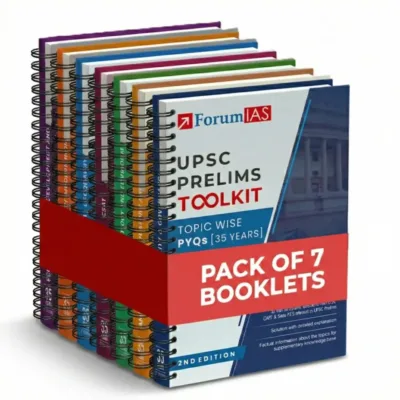
Forum IAS Prelims Topic-wise PYQs 1992-2025 | 7 Booklets | English Medium | UPSC Study Material
Ranker's Classes Commerce Optional Notes 2025-26 | 10 Booklets | English Medium | UPSC Study Material
About Akhil Murti Sanskriti IAS History Optional Notes 2025-26
Akhil Murti Sanskriti IAS History Optional Notes 2025-26 is an original printed study material set from Exclusive Classroom Printed Notes Distribution, covering History Optional. Available in English medium, this set is counted booklet by booklet before dispatch — no photocopies, no missing booklets.
Product Details
- Institute: Exclusive Classroom Printed Notes Distribution
- Subject: History Optional
- Medium: English
- Format: Printed
- Delivery: Pan-India delivery in 4–7 working days, free over ₹1,999
- Condition: New, original print — counted before dispatch
Why Buy from UPSC Store?
- ✓ Original Printed Notes — no photocopies, every booklet counted before it ships
- ✓ Fast Dispatch — ships within 24 hours from Delhi, arrives in 4–7 days pan-India
- ✓ Secure Packaging — bubble-wrapped and boxed to prevent damage in transit
- ✓ 180+ Orders Shipped — to 25 states across India
- ✓ WhatsApp Support — ask which set fits your optional and medium before ordering
Frequently Asked Questions
Original print — the same printed booklets the institute issues. Every set is counted booklet by booklet before dispatch.
Orders are dispatched within 24 hours from Delhi and delivered across India in 4–7 working days. Delivery is free over ₹1,999.
Returns are accepted only if the problem is from our side: wrong item, damaged or defective copy, or missing booklets or pages. Report it within 7 days of delivery and we arrange a free pickup and send a free replacement or a full refund. We do not accept change-of-mind returns, so please check the medium, edition and binding before ordering. WhatsApp us to start a return.