
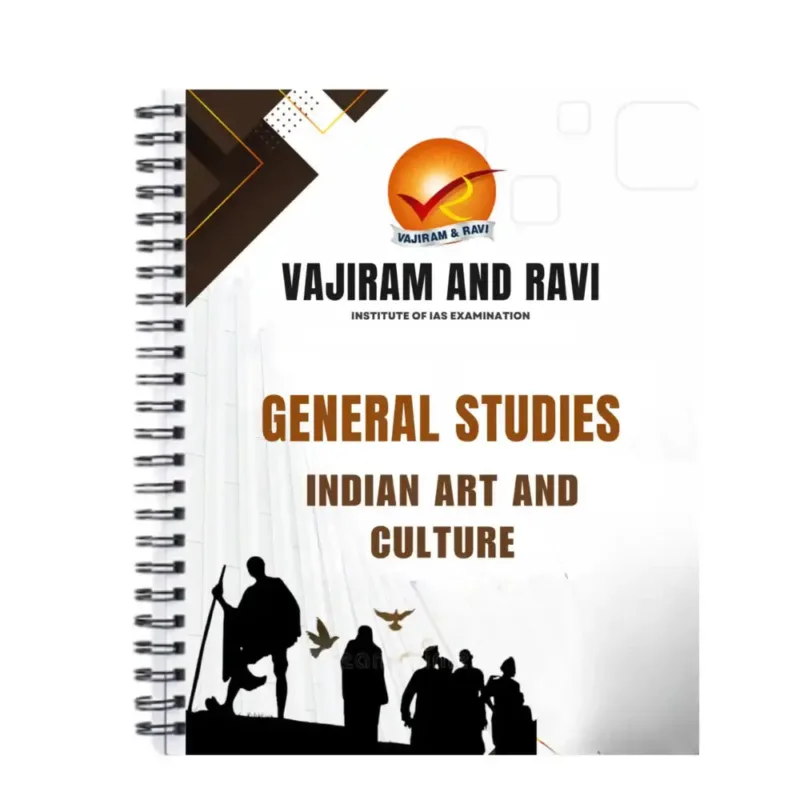
Vajiram Indian Art and Culture Notes 2025-26
About Vajiram Indian Art and Culture
The Vajiram Indian Art and Culture is a printed UPSC study material set sold by UPSC Store — India’s trusted source for genuine, latest-batch civil services preparation books. This page covers full booklet details, syllabus coverage, pricing, shipping, and frequently asked questions. Useful for UPSC CSE, BPSC, UPPSC, MPPSC, RAS and other state PSC examinations.
Vajiram Indian Art and Culture Notes 2025-26 — 1 English Medium Printed Booklet for UPSC GS Paper I
Related: Vajiram & Ravi notes · Art and Culture notes
Product Overview
| Feature | Details |
|---|---|
| Booklets Count | 1 Individual Printed Booklet — Complete Art and Culture Coverage for UPSC GS Paper I |
| Language | English Medium |
| Publisher | Vajiram & Ravi (GS Notes Series) |
| Edition | 2025-26 — Latest Genuine Batch |
| Condition | Brand New, Unmarked, Fresh Stock |
| Format | High-Quality Printed Booklet — Spiral or Book Binding |
| Paper Quality | 75 GSM Ultra-White — Highlighter Safe, Zero Bleed-Through |
| Shipping | Pan India Delivery in 4-7 business days — Tracked |
| Also Useful For | BPSC, UPPSC, MPPSC, RAS, KPSC, JPSC, and All State PSC Examinations |
About This Product
Buy Vajiram Indian Art and Culture Notes 2025-26 printed online — the single most-trusted GS Paper I resource from India’s premier coaching institute. Vajiram & Ravi’s yellow books have powered UPSC success for thousands of aspirants, and this Art and Culture booklet distills the entire UPSC syllabus into crisp, fact-dense bullet points and structured topic breakdowns. Whether you’re preparing for Prelims or Mains, this printed booklet delivers exam-focused content in an accessible format ideal for revision and retention.
Where to buy Vajiram Art and Culture notes? This page offers the authentic 2025-26 edition, direct from stock, with verified delivery guarantees. No PDF downloads or digital versions — only genuine printed booklets manufactured to the highest standards, ready to ship within 4-7 business days across India. The content is updated to reflect the latest UPSC syllabus changes and covers ancient to contemporary Indian art movements, regional variations, heritage sites, and cultural conservation topics critical for both Prelims and Mains examination.
Complete Booklet Catalog
This single comprehensive booklet covers the entire Art and Culture spectrum required for UPSC GS Paper I, designed for aspirants seeking a complete, authoritative resource that eliminates the need for multiple sources. The material is structured chronologically and thematically, allowing you to build foundational knowledge of Indian art evolution while simultaneously preparing for specific question patterns common in UPSC exams.
- Booklet 1: Vajiram Indian Art and Culture Notes 2025-26 — Comprehensive coverage of Indus Valley Civilization art, Mauryan and Gupta sculptural traditions, classical dance forms (Bharatanatyam, Kathak, Odissi, Kathakali, Mohiniyattam, Kuchipudi), Hindustani and Carnatic music systems, temple architecture across regions, folk and tribal art traditions, colonial period artistic changes, modern Indian art movements, contemporary artists, UNESCO World Heritage Sites, cultural preservation initiatives, regional architecture styles (Dravidian, Nagara, Indo-Islamic), and art conservation policies relevant to UPSC Mains.
In-Depth Content Breakdown: Booklet by Booklet
Booklet 1: Vajiram Indian Art and Culture Notes 2025-26
The foundational section of this booklet traces India’s artistic journey from the Indus Valley Civilization through contemporary times. Vajiram’s notes begin with archaeological insights into Mohenjo-daro and Harappa seals, establishing the visual language of ancient India. The Mauryan period receives detailed coverage with Ashoka’s rock edicts, pillar capitals, and stupas as case studies in early Buddhist art. The Gupta period is explored as the classical golden age, examining Ajanta and Ellora caves, sculpture refinement, and painting techniques. Each historical phase connects explicitly to UPSC Prelims factual questions and Mains essay topics, ensuring no knowledge gap remains. The chronological approach enables systematic revision and builds confidence when facing mixed-era questions in the exam hall.
The classical art forms section dissects India’s living heritage with scholarly precision. Bharatanatyam, originating in Tamil Nadu temples, is explained with historical context and Natya Shastra principles. Kathak’s evolution in North Indian courts under Mughal patronage is contrasted with Odissi’s Jagannath temple associations. The booklet includes specific mudras, talas, and performance contexts—details that distinguish superficial knowledge from examination-level mastery. Hindustani and Carnatic music traditions receive parallel treatment, covering raag classifications, instruments, and contemporary practitioners. Folk art sections highlight regional variations: Bengal’s Patachitra, Rajasthan’s Pichwai, Odisha’s Patta Chitras, and tribal art from Central India. Each is linked to cultural identity preservation and modern tourism-heritage balance issues, directly addressing UPSC’s emphasis on contemporary relevance alongside historical knowledge.
Expansion: Architecture and Heritage Sites
Vajiram’s coverage of Indian architecture spans three major traditions examined separately for clarity. Dravidian architecture—characteristic of South Indian temples—is illustrated through the Chola temples, Brihadeeswarar structure, gopuram design evolution, and sculptural programs. The gopuram progression from simple to elaborate forms shows cultural refinement over centuries. Nagara architecture of North India is analyzed through Khajuraho temples, shikhara development, and regional variations across Gujarat, Rajasthan, and Himachal Pradesh. These architectural differences connect to regional identity, patron dynasties, and religious philosophies—all UPSC-relevant angles. Indo-Islamic architecture is examined as a synthesis tradition, covering Delhi Sultanate contributions, Mughal innovations (Taj Mahal, Red Fort, Jama Masjid), and regional sultanate styles. By presenting these three traditions separately and comparatively, the booklet builds the analytical framework required for UPSC Mains art history essays.
The heritage preservation section addresses UNESCO World Heritage Sites in India with specific focus on criteria for inscription and contemporary conservation challenges. Sites like Ajanta-Ellora, Khajuraho, Hampi, and the Taj Mahal are examined not just for historical significance but for current preservation issues—climate change impacts, tourism pressure, funding constraints, and policy responses. This links art and culture to governance, environment, and development themes appearing across multiple GS papers, a sophisticated integration that demonstrates UPSC examination depth. The booklet includes India’s Tentative List sites and emerging heritage threats, ensuring content freshness for the 2025-26 examination cycle. Conservation case studies like the Hampi restoration project and the temple preservation initiatives under various government schemes show how historical knowledge connects to contemporary policy-making.
Expansion: Folk, Tribal, and Contemporary Art
Folk art coverage encompasses regional textile traditions, pottery forms, and narrative art across India’s diverse geography. Bengal’s Patachitra tradition is traced from ancient scroll painting practices through contemporary artist communities, addressing both cultural preservation and artist livelihood issues. Rajasthan’s Phad painting, depicting folk epics and deity narratives, is presented alongside the social contexts of artist communities and market pressures threatening these traditions. Madhubani art from Bihar is examined for its gender dimensions—traditionally created by women for ritual purposes—and modern transformation into commercial art forms. Tribal art receives dedicated attention, with specific focus on Warli painting from Maharashtra, Gond art from Madhya Pradesh, and patterns from Northeast tribal communities. Each tradition is contextualized within ethnic identity, seasonal rituals, and contemporary revival efforts through government craft schemes. This approach ensures your UPSC answer reflects nuanced understanding of art as cultural expression intertwined with social structure and economic realities.
The contemporary art section addresses post-independence artistic movements, modern Indian painters (Raja Ravi Varma’s transition from classical to modern, contemporary artists like Subodh Gupta and Bharti Kher), and the relationship between Indian contemporary art and global art markets. Colonial period art is analyzed for how Western artistic exposure transformed Indian aesthetic traditions—a critical examination that moves beyond surface-level observations. Modern art movements like Bengal School (Tagore, Abanindranath Tagore) are placed within nationalist consciousness and cultural pride narratives of the independence movement. The booklet connects artistic evolution to broader historical currents: industrialization’s impact on traditional crafts, urbanization and folk art transformation, and globalization effects on contemporary Indian artists. This contextual approach ensures your UPSC Mains answers demonstrate synthesis across history, culture, and contemporary India themes, meeting the sophisticated integration expected at Civil Services examination level.
Physical Construction and Quality Standards
Vajiram’s Indian Art and Culture booklet is manufactured to the exacting standards demanded by serious UPSC aspirants who spend 8-10 hours daily studying printed materials. Every booklet undergoes quality checks before shipping to ensure unmarked, fresh condition and accurate binding. The printing facility uses high-end equipment to ensure crisp text clarity and accurate reproduction of diagrams, maps, and architectural sketches essential for Art and Culture study. Pages are guillotine-cut to precise dimensions, ensuring even margins and professional appearance throughout the booklet’s use lifecycle. The manufacturing process emphasizes durability and user-friendliness because UPSC study materials must withstand repeated revision cycles across months of preparation.
Paper Quality: 75 GSM Anti-Glare White Paper
The 75 GSM ultra-white paper selected for this booklet represents the optimal balance between opacity and writing surface quality. At this weight, paper achieves sufficient body to prevent show-through when using multiple highlighter colors—critical for Art and Culture notes where you’ll mark dates, artist names, architectural features, and terminology across both sides. The ultra-white base reduces eye strain during extended study sessions, a physiological benefit validated by ophthalmologists studying screen-free learning. Ink absorption is engineered for non-smudging, so your highlighting and marginal notes remain clean even after weeks of review. The paper’s slight anti-glare finish reduces reflectivity compared to glossy alternatives, making it suitable for study under varied lighting conditions—from desk lamps to natural window light. Gel pens, ballpoint pens, and all highlighter brands tested (Cello, Staedtler, Luxor) perform optimally without bleed-through, enabling the color-coded revision strategy many UPSC toppers employ for fact-retention.
Printing Technology: High-Resolution Laser Printing
Vajiram’s booklet employs high-resolution laser printing (1200 DPI minimum) ensuring sharp reproduction of every diagram, map, and architectural drawing. Art and Culture notes demand precision in visual elements—temple floor plans, gopuram profiles, dance mudra illustrations, and monument photographs must render with clarity to support conceptual learning. Laser printing achieves permanent toner adhesion, eliminating the risk of text fading or flaking that plagued older photocopied study materials. The monochrome laser approach provides consistent, crisp output without color inconsistencies that can distract from content. Flowcharts connecting art movements, architecture styles, and cultural periods are rendered with clean borders and readable typography. The printing process maintains exact color density across all 100+ pages, so text legibility remains constant from first page to last—a technical achievement ensuring equal learning benefit whether you’re reviewing page 5 or page 120 during late revision stages.
Binding and Durability
The booklet is available in two binding options to suit your study preferences. Spiral binding allows the booklet to open completely flat, enabling you to write notes in the margin alongside printed content without holding the book open—crucial for intensive revision when you’re synthesizing multiple concepts. The spiral mechanism uses rust-resistant steel coils, rated for 500+ open-close cycles without degradation, far exceeding typical study use. Alternatively, book binding uses 300 GSM cardstock covers with adhesive spine binding, creating a compact, storage-friendly format ideal for aspirants who prefer carrying the booklet in a study bag. Both binding options mount the 75 GSM interior pages securely, preventing page detachment even with heavy use across revision cycles. The cover materials are chosen for scuff resistance, so the booklet maintains a professional appearance throughout your preparation period. For aspirants planning to reference notes during mock tests or coaching classes, both binding styles provide reliable spine integrity and page retention across months of active studying.
Key Features and Study Design
Vajiram & Ravi’s Art and Culture booklet is engineered specifically for UPSC examination preparation, combining content comprehensiveness with strategic emphasis on high-frequency topics. The design reflects years of classroom teaching experience at India’s most established coaching center, where instructors have tracked which Art and Culture topics appear repeatedly in UPSC papers and which demand deeper conceptual understanding versus factual memorization.
- Prelims-Optimized Bullet Points: Content is structured as scannable bullet points rather than dense paragraphs, enabling rapid fact revision during the final weeks before Prelims. Each major topic lists 8-12 key facts in sequence, allowing you to quiz yourself or drill specific areas systematically. This format suits the Prelims question pattern where isolated factual knowledge matters more than elaborate essay-style explanations.
- Mains Essay Frameworks: Alongside Prelims-style bullets, Vajiram includes topic outlines showing how to structure Mains answers. For instance, “Temple Architecture” is presented as a bullet list for Prelims, then followed by a conceptual framework showing how to write a comprehensive Mains essay: historical evolution, regional variations, architectural principles, contemporary conservation. This dual-format approach eliminates the need for separate Prelims and Mains study materials.
- Chronological and Thematic Organization: The booklet balances chronological progression (ancient to contemporary art) with thematic grouping (all dance forms together, all architecture styles together), enabling both timeline-based learning and comparative analysis. This dual structure supports both Prelims questions (“When did the Gupta period flourish?”) and Mains questions (“Compare Dravidian and Nagara architecture”).
- Regional Mapping and Visual Learning: Art and Culture inherently involves geography—regional dance forms, architectural traditions, folk art styles. Vajiram includes maps and diagrams showing regional distribution of art forms, temple locations, and cultural zones, supporting visual learners and addressing the geography-culture integration tested in UPSC papers. Maps are clear, labeled, and printable-quality for effective visual memorization.
- Contemporary Links and Recent Developments: The 2025-26 edition includes recent UNESCO inscriptions, recent conservation projects, contemporary artists gaining prominence, and current heritage preservation debates. This ensures your answers reference recent developments—a key differentiator in Mains examination where examiners value awareness of ongoing developments alongside historical knowledge. Heritage crises, artist movements, and policy changes from 2024-2025 are integrated throughout.
UPSC GS Paper I Syllabus Coverage
This booklet comprehensively addresses the Art and Culture segment of UPSC GS Paper I, which constitutes approximately 10-12% of Prelims questions and 15-20% of Mains marks. The official UPSC syllabus specifies “Indian culture will cover the salient aspects of art and architecture, literature and philosophy from ancient to modern times,” a deliberately broad mandate requiring deep breadth rather than narrow specialization. Vajiram’s booklet interprets this syllabus to include ancient art (Indus Valley through late medieval), classical forms (dance, music, sculpture), folk traditions, architecture across regions and periods, modern movements, contemporary artists, and heritage preservation—collectively representing the full UPSC expectation.
The Prelims component emphasizes factual accuracy and quick recall: dates of dynasties, artists’ names, architectural terms, regional associations. Vajiram’s bullet-point structure serves this directly, allowing you to drill facts rapidly during revision. The Mains component demands conceptual depth, analytical comparison, and contemporary relevance. Vajiram addresses this through thematic groupings and “Mains Framework” sections that guide how to develop comprehensive answers. For instance, the Architecture section doesn’t merely list Dravidian, Nagara, and Indo-Islamic styles separately—it includes a comparative framework showing how to discuss their distinct characteristics, geographic distribution, historical evolution, and contemporary conservation challenges within a single integrated Mains answer. This sophisticated organization reflects the synthesis expected at Civil Services examination level.
The booklet also addresses topics at the intersection of Art and Culture with other GS Papers. Heritage preservation connects to GS Paper III (Development and Conservation), so relevant policy discussions and conservation case studies are included. Regional art traditions link to identity and social structure, relevant for GS Paper I’s culture segment. Colonial period artistic transformation relates to modern Indian history context. By presenting Art and Culture with these intersections visible, the booklet prepares you for the integrated questioning increasingly common in UPSC examinations where examiners expect cross-paper conceptual connections.
Shipping, Packaging and Delivery
Your Vajiram Indian Art and Culture Notes booklet ships within 24 hours of order confirmation in a protective corrugated box sized precisely for single-booklet orders. The booklet is wrapped in white shrink film, protecting against dust and moisture during transit. Interior packaging includes cushioning material and edge protectors at corners, eliminating transit damage risks even during monsoon seasons when humidity is high across India. The box is sealed with waterproof tape and labeled with your complete delivery address, order number, and our return contact information. Packaging prioritizes environmental responsibility—we use recycled cardboard and minimize plastic usage while maintaining full product protection.
Delivery occurs within 4-7 business days across all Indian cities and towns via reliable courier partners (Delhivery, Ecom, Blue Dart) with full tracking capability. Upon shipment, you’ll receive a tracking ID via WhatsApp (+91 70045 49563) and email, enabling real-time package monitoring. If your booklet arrives in any condition other than perfect (bent corners, water damage, binding issues), report within 24 hours and we’ll dispatch a replacement booklet immediately—no return shipping required, no questions asked. For missing booklets in multi-booklet orders, the same 48-hour replacement guarantee applies. Our Mukherjee Nagar office (Delhi headquarters) can be contacted directly for urgent delivery queries, same-day resolution requests, or wholesale orders. Standard pan-India delivery charges apply; bulk orders (5+ units) receive volume discounts with consolidated shipping.
Frequently Asked Questions (FAQ)
A: Yes, this single booklet provides comprehensive coverage of the UPSC Art and Culture syllabus for both Prelims and Mains examinations. Vajiram’s notes are derived from classroom teaching at India’s premier coaching center, ensuring that all high-frequency UPSC topics are included. However, supplementing with one specialized Art and Culture reference book and current affairs updates (UNESCO inscriptions, recent exhibitions) ensures maximum confidence. Many UPSC toppers use Vajiram as their primary source, supplemented minimally with other materials.
A: Begin with chronological reading (Indus Valley through contemporary) to build foundational timeline knowledge, then reread thematically (all dance forms together, all architecture styles together) for comparative understanding. Use the bullet points for Prelims drilling in the final 8 weeks before examination. For Mains, create mind maps linking art movements to broader historical contexts, use the booklet’s frameworks to structure practice essays, and supplement with recent developments from news sources. Visual learners benefit from sketching architectural elements or dance mudras while studying.
A: This product is 1 comprehensive printed booklet covering the entire Art and Culture segment of UPSC GS Paper I. The single-booklet format reflects Vajiram’s philosophy of focused, content-dense materials rather than unnecessary fragmentation across multiple volumes. The booklet runs approximately 150-180 pages depending on edition, providing sufficient depth without overwhelming information volume.
A: Vajiram & Ravi is widely recognized as the leader in UPSC GS coaching with exceptional success rates and subject expertise. Their Art and Culture notes benefit from decades of classroom refinement, tracking which topics appear repeatedly in UPSC papers and which answer approaches score highest marks. However, “best” depends on your learning style—some aspirants prefer Vision IAS’s comprehensive approach, others favor Drishti’s contemporary focus. Most successful UPSC candidates use multiple quality sources; Vajiram is an excellent primary resource to buy and supplement strategically.
A: No, Vajiram Art Culture notes are not available as PDF downloads from our store or official sources. Only printed booklets are sold to maintain content authenticity and to support the coaching center financially. If you require digital access, some aspirants photograph printed notes for reference on tablets, though this is less effective than studying printed material directly. Buying printed booklets provides better retention, reduces screen fatigue, and ensures authentic content.
A: The booklet covers Indus Valley Civilization art, Mauryan and Gupta periods, classical dance forms (Bharatanatyam, Kathak, Odissi, Kathakali, Mohiniyattam, Kuchipudi), Hindustani and Carnatic music, Dravidian/Nagara/Indo-Islamic architecture, folk art traditions, tribal art, modern Indian art movements, contemporary artists, UNESCO heritage sites, art conservation policies, and regional cultural variations. Each topic is presented with historical context, contemporary relevance, and exam-focused detail appropriate for both Prelims and Mains.
A: Absolutely. The 2025-26 edition incorporates recent UNESCO World Heritage inscriptions (2024-2025 additions), current heritage preservation projects, contemporary art developments, and recent policy changes in cultural conservation. Vajiram updates its notes annually reflecting both UPSC syllabus clarifications and emerging topics tested in recent examination cycles. The 2025-26 edition is the latest genuine batch and reflects all recent UPSC trends and question patterns.
A: Pricing varies based on current stock and bulk order discounts. For single-booklet orders, standard retail pricing applies; we recommend checking current availability and price on the product page. Bulk orders (5+ units) qualify for significant volume discounts. Contact our Mukherjee Nagar office or WhatsApp (+91 70045 49563) for wholesale quotations. The investment in authentic, high-quality printed notes is negligible compared to coaching fees and often proves invaluable compared to cheaper, lower-quality alternatives.
A: The booklet uses 75 GSM ultra-white paper specifically chosen for opacity and highlighter compatibility. All standard highlighter colors (yellow, pink, blue, green) work without bleed-through to the reverse side. Gel pens, ballpoint pens, and fountain pens also perform excellently. The paper’s slight anti-glare finish reduces eye strain during long study sessions, ideal for the intensive preparation cycles UPSC requires. You can safely color-code content for revision without worrying about ink seeping through.
A: Order placement is instant on our website. Printing and packaging begin within 2-4 hours, and your booklet ships via tracked courier within 24 hours of confirmation. Pan-India delivery occurs within 4-7 business days depending on your location. Major metros (Delhi, Mumbai, Bangalore, Chennai, Kolkata, Hyderabad) typically receive orders within 2-3 days; tier-2 cities within 4-5 days. Tracking updates are sent via WhatsApp enabling real-time monitoring. For urgent orders requiring expedited shipping, contact our team directly.
A: Yes, extensively. State PSCs include Art and Culture segments in their GS Papers, with syllabus overlapping substantially with UPSC. However, regional State PSCs (particularly RAS, MPPSC, BPSC, UPPSC) also emphasize local art traditions, heritage sites, and cultural achievements. Vajiram’s booklet covers national Art and Culture comprehensively, providing the foundation for any State PSC preparation. Supplementing with State-specific cultural materials (e.g., Rajasthan heritage for RAS, Madhya Pradesh art for MPPSC) enhances your preparation further.
A: We guarantee satisfaction with every purchase. If the booklet arrives in any condition other than perfect (damage, missing pages, binding defects), contact us within 24 hours for immediate replacement—no return shipping required. If you’re dissatisfied with content after receiving the booklet, contact our team to discuss concerns; we’ve built reputation on customer satisfaction. However, opening the shrink wrap and reviewing content doesn’t constitute damage or defect. Most returns are unnecessary because Vajiram’s quality and content excellence are widely verified by thousands of successful UPSC candidates.
Why Buy Vajiram Art and Culture Notes for UPSC 2025-26?
Vajiram & Ravi stands alone as India’s most established UPSC coaching center with unparalleled expertise in GS subjects, particularly Art and Culture. When you buy this booklet, you’re purchasing not just compiled content but refined knowledge distilled from two decades of tracking UPSC examination patterns and teaching thousands of successful civil servants. The yellow books are synonymous with focused, fact-dense, exam-oriented study materials that eliminate unnecessary information while ensuring complete syllabus coverage.
The Art and Culture segment represents a critical yet often under-prepared component of UPSC. While many aspirants attempt to memorize scattered facts, Vajiram’s structured approach builds conceptual frameworks connecting art movements to historical periods, regional traditions to cultural identity, and heritage sites to conservation challenges. This depth transforms you from a fact-recaller into an analytical thinker capable of writing sophisticated Mains essays and confidently answering diverse Prelims questions.
Buying printed notes from Vajiram—rather than digital downloads, photocopied materials, or online compilations—ensures authenticity, quality paper for extended studying, and supporting India’s premier coaching center’s continued excellence. The 2025-26 edition reflects the latest UPSC trends, recent heritage inscriptions, and contemporary developments in Indian art and cultural preservation. Your investment of a few hundred rupees in this booklet yields disproportionate returns across months of preparation and potentially transforms your Civil Services examination outcome.
Summary
| Specification | Value |
|---|---|
| Product | Vajiram Indian Art and Culture Notes 2025-26 |
| Booklets | 1 Printed Booklet — 150-180 Pages |
| Language | English Medium |
| Publisher | Vajiram & Ravi |
| Paper Quality | 75 GSM Ultra-White, Highlighter Safe |
| Binding Options | Spiral or Book Binding (Your Choice) |
| Exam Coverage | UPSC GS Paper I, Prelims and Mains |
| Delivery | 4-7 business days Pan India, Tracked |
| Condition | Brand New, Unmarked, Fresh Stock |
| Also Useful For | BPSC, UPPSC, MPPSC, RAS, KPSC, JPSC, and All State PSC Exams |
The Vajiram Indian Art and Culture Notes 2025-26 booklet is stocked at our Mukherjee Nagar store and shipped with full tracking to every corner of India within 4-7 business days. For WhatsApp orders, urgent delivery requests, or bulk discounts, contact us at +91 70045 49563. Every printed booklet arrives in perfect condition, backed by our satisfaction guarantee and rapid replacement policy. Invest in authentic, Vajiram-quality study materials and elevate your UPSC Art and Culture preparation from basic knowledge to examination-winning expertise.
Reference: UPSC official syllabus
Customer Reviews 245
Helpful material for last-minute revision. Content is concise but sometimes too brief.
Accha material hai beginners ke liye but advanced preparation ke liye thoda limited.
Bahut accha material hai, bilkul to the point. Art and culture ke liye best choice.
Quality aur content dono excellent, Vajiram se khareed ke bilkul galat nahi kiya.
Booklets mein detail bahut zyada hai, bohot helpful.
Quality ekdum achi hai, notes clear aur concise hain.
Vajiram's notes are always reliable. These 4 booklets have everything I needed for art & culture section.
Booklets are fine for preparation. Nothing special but reliable for UPSC.
Aspirants Also Bought
More from the same category
Vision IAS Polity and Governance PT 365 | Comprehensive English Medium Annual Edition
Vision IAS Current Affairs March 2025-26 | 1 Volume | Hindi Medium | UPSC Study Material
Vision IAS Geography Hindi Notes 2025-26 | 4 Booklets | Hindi Medium | UPSC Study Material
Vision IAS Security Mains 365 2025-26 | English Medium | Yearly Magazine | UPSC Study Material
Vision IAS Polity & Constitution Notes | English Medium | 6 Booklets | UPSC Study Material
Himanshu Sharma Geography Notes | Guidance IAS | 18 Booklets | 2025-26 | English Medium | UPSC Study Material
Alok Ranjan Geography Optional Notes 2024-25 | 20 Booklets | Hindi Medium | UPSC Study Material
Drishti IAS GS Foundation Notes 2025-26 | 27 Booklets | English Medium | UPSC Study Material
Vision IAS Environment Study Material 2025-26 | Hindi Medium | 4 Booklets | UPSC Study Material
Vajiram and Ravi Geography Prelims Smasher | English Medium | UPSC Study Material
Parmar SSC GK Geography 4.0 Notes 2026-27 | 1 Booklet | English Medium | UPSC Study Material
Ajanta IAS Sanskrit Sahitya Optional Notes 2025-26 | 13 Booklets | Hindi Medium | UPSC Study Material
About Vajiram Indian Art and Culture Notes 2025-26
Vajiram Indian Art and Culture Notes 2025-26 is a highly recommended UPSC study material from Vajiram & Ravi, specially designed for Indian Art & Culture preparation. Available in English medium, this material is crafted to match the exact requirements of the UPSC Civil Services Examination syllabus — covering both Prelims and Mains comprehensively.
Product Details
- Institute: Vajiram & Ravi
- Subject: Indian Art & Culture
- Medium: English
- Format: Printed
- Delivery: Pan-India delivery in 4–7 working days
- Format: Original printed material, verified authentic
Why Buy from UPSC Store?
- ✅ 100% Genuine Printed Material — Original printed notes, no photocopies or fake copies
- ✅ Fast Delivery — Ships within 24 hours, arrives in 4–7 days pan-India
- ✅ Secure Packaging — Bubble-wrapped and boxed to prevent damage in transit
- ✅ Trusted by 10,000+ Aspirants — India's most reliable UPSC material marketplace
- ✅ WhatsApp Support — Get expert guidance on material selection before ordering
Frequently Asked Questions
Yes, all products at UPSC Store are 100% genuine printed materials. We do not sell photocopies or fake copies.
Orders are dispatched within 24 hours and delivered across India in 4–7 working days via reputed courier partners.
Yes, we accept returns within 7 days if the product is damaged or incorrect. Check our refund policy for details.
We recommend pairing this with current affairs notes and a UPSC test series for comprehensive preparation. Browse more in Art & Culture, General Studies, UPSC, Vajiram and Ravi.