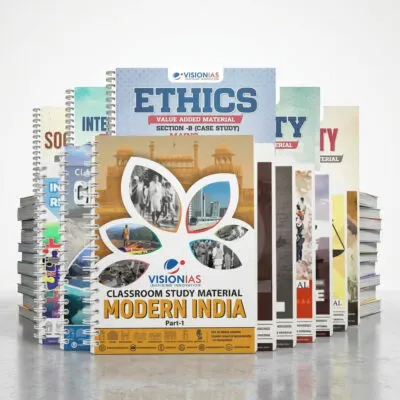
Vision IAS Post Independence India Notes 2025-26

1 Booklet | Hindi Medium | UPSC Study Material
Key Highlights:
📘 1 Booklets
📚 Post Independence Indian History
🎓 Vision IAS
🏷️ Printed
🇬🇧 Hindi Medium
₹488
🌀 spiral
📘 book-binding
Only 15 sets left
Selling fast (92 sold this week)
5% OFF Use UPSC5% (COD Available)
10% OFF Use UPI10 (UPI Only)
Secure Payment
Fast Delivery
Safe Packaging

About Vision IAS Post Independence India

The Vision IAS Post Independence India is a printed UPSC study material set sold by UPSC Store — India’s trusted source for genuine, latest-batch civil services preparation books. This page covers full booklet details, syllabus coverage, pricing, shipping, and frequently asked questions. Useful for UPSC CSE, BPSC, UPPSC, MPPSC, RAS and other state PSC examinations.

Vision IAS Post Independence India Notes 2025-26 — 1 Hindi Medium Printed Booklet for UPSC GS Paper 2

Related: Vision IAS Hindi notes · UPSC History material

Product Overview

Buy Vision IAS Post Independence India printed notes online — the complete 2025-26 Hindi medium edition designed specifically for UPSC General Studies Paper 2 preparation. This single-booklet masterclass covers all pivotal events, political developments, social movements, economic policies, and cultural transformations that have shaped modern India from 1947 onwards. Whether you’re preparing for UPSC Prelims, Mains, or both, buy these meticulously organized notes to build a chronological and thematic understanding of Post-Independence India that examiners expect.

FeatureDetails
Booklets Count1 Individual Printed Booklet — Complete Post-Independence India Coverage (1947 to Present)
LanguageHindi Medium (हिंदी माध्यम)
PublisherVision IAS (General Studies Series)
Edition2025-26 — Latest Genuine Batch
ConditionBrand New, Unmarked, Fresh Stock
FormatHigh-Quality Printed Booklet — Spiral or Book Binding
Paper Quality75 GSM Ultra-White — Highlighter Safe, Zero Bleed-Through
ShippingPan India Delivery in 3-5 Business Days — Tracked
Also Useful ForBPSC, UPPSC, MPPSC, RAS, KPSC, JPSC, OPSC and all State PSC Examinations

Complete Booklet Catalog

The Vision IAS Post Independence India Notes is a single consolidated booklet that functions as your complete reference guide for understanding modern Indian history from 1947 to the present day. It is structured thematically and chronologically to help UPSC aspirants grasp the interconnected nature of political, social, economic, and cultural developments that define contemporary India.

This booklet is ideal for students preparing for UPSC General Studies Paper 2, covering the Indian Constitution, governance structures, social movements, economic policies, India’s foreign relations, and cultural contributions—all essential components of the Civil Services Examination syllabus.

  • Booklet 1: Vision IAS Post Independence India — Complete GS Paper 2 Coverage (1947–Present) — Comprehensive coverage of India’s political journey post-independence, including the framing and adoption of the Constitution, major political parties and their ideologies, landmark elections, and constitutional amendments. Detailed analysis of social transformations: women’s movements, caste-based social justice, linguistic reorganization, religious pluralism, and integration of princely states. Economic policies section explores the planned economy era, Green Revolution, economic liberalization (1991), subsequent reforms, poverty alleviation programs, and welfare schemes. Cultural section covers Indian cinema, literature renaissance, art movements, sports development, and India’s soft power. Foreign policy subsection includes India-Pakistan relations, Indo-US ties, SAARC partnerships, and India’s role in global affairs.

In-Depth Content Breakdown: Booklet by Booklet

Booklet 1: Vision IAS Post Independence India — Complete GS Paper 2 Coverage (1947–Present)

Political Developments and Governance: This section begins with India’s independence on August 15, 1947, and traces the immediate political challenges: partition and its aftermath, integration of princely states under Sardar Vallabhbhai Patel’s leadership, and the drafting of the Indian Constitution under Dr. Ambedkar’s chairmanship. Students will study the structure and salient features of the Constitution, the establishment of a democratic republic, and the evolution of Indian federalism. The notes cover major political movements—from the early Congress dominance under Nehru to the emergence of regional parties, communism’s role in Indian politics, and the rise of coalition governments. Important constitutional amendments, landmark Supreme Court judgments (like on federalism, fundamental rights, and emergency provisions), and the role of various political institutions are thoroughly explained with exam-focused precision.

Social Transformations and Cultural Renaissance: This portion examines India’s social fabric post-independence. Coverage includes the abolition of zamindari systems, land reforms, the women’s movement from early activism to contemporary feminism, and the role of education in social mobility. Dalit movements, the Ambedkarite philosophy, and caste-based social justice initiatives are analyzed with historical context. The section explores India’s linguistic reorganization—the Three-Language Formula, official language policy, and regional language movements. Religious pluralism, communal harmony initiatives, and the role of secular institutions in a diverse society form a key part of this discussion. Additionally, the cultural renaissance is detailed: the role of Indian classical and contemporary arts, cinema as a vehicle for social commentary, literature’s contribution to nation-building (writers like Mulk Raj Anand, Arundhati Roy), and sports as a nationalist endeavor.

Economic Policies and Development Strategies: From Nehru’s planned economy model based on Soviet-style five-year plans to the Green Revolution led by M.S. Swaminathan, this section traces India’s economic journey. Students will understand import-substitution industrialization, state control of key sectors, and the Public Sector Undertakings (PSUs) role in nation-building. The notes provide detailed coverage of the 1991 economic liberalization—its causes, implementation, and outcomes including inflation, privatization, FDI inflows, and sectoral reforms. Subsequent economic policies, GST implementation, Make in India, Digital India, and Atmanirbhar Bharat Abhiyaan are discussed. Social welfare schemes (MGNREGA, PDS, health insurance), poverty eradication programs, and the transition from a license-raj economy to a market-driven system are explained with statistical precision for mains answer writing.

Foreign Relations and India’s Global Role: This section maps India’s evolution as a global player. Coverage includes the Non-Aligned Movement (NAM) under Nehru and Indira Gandhi, India’s relations with superpowers during the Cold War, and post-Cold War geopolitical shifts. India-Pakistan relations, wars (1965, 1971), partition-related issues, and contemporary security challenges are detailed. Indo-US relations, Indo-China border disputes and the 1962 war, India’s response to nuclear proliferation (Pokharan tests), and contemporary strategic partnerships (QUAD, BRICS) are explained. Regional relations within South Asia, India’s role in SAARC, and its engagement with Southeast Asia, Africa, and the Middle East demonstrate India’s diplomatic evolution. The notes also cover India’s participation in international organizations, humanitarian interventions, and its articulation as a voice for the Global South.

Study Design and UPSC Alignment: The entire booklet is structured with UPSC Mains answer-writing in mind. Each major topic includes factual anchors (dates, names, events), thematic connections (how events relate to India’s nation-building), and analytical depth (causation, consequences, and comparative perspectives). Visual aids—timelines of key events, maps showing India’s territorial evolution and regional movements, charts displaying economic data, and infographics on constitutional structure—enhance retention and visual learning. The language throughout is precise, avoiding jargon while maintaining academic rigor. Topics are organized to allow both linear reading (for comprehensive understanding) and quick reference (for revision before exams). Case studies of significant events (e.g., the Emergency of 1975, the Mandal Commission agitation, the 2002 Gujarat riots, and India’s economic reforms) are embedded to help students understand historical processes and develop nuanced viewpoints for ethics and mains papers.

Physical Construction and Quality Standards

The Vision IAS Post Independence India Notes booklet is manufactured to withstand intensive UPSC exam preparation cycles. From the moment you buy online, you receive a product built for long-term study sessions, page-turning references, and annotation. Every physical element—from paper to binding—is selected to maximize readability, durability, and study effectiveness for serious aspirants targeting the Civil Services Examination.

Paper Quality: 75 GSM Anti-Glare White Paper

The booklet is printed on premium 75 GSM ultra-white paper, chosen specifically for UPSC preparation environments. This weight strikes the perfect balance: thick enough to prevent ink bleed-through (so your highlighted passages and marginal notes remain visible on the reverse side), yet light enough to keep the booklet compact and portable. The ultra-white shade reduces eye strain during extended study sessions—critical for aspirants spending 4-6 hours daily reviewing notes. The paper’s opacity ensures that diagrams, maps, and text on the reverse page do not show as ghostly shadows, maintaining clarity for visual learners. Multiple highlighter colors (yellow, pink, blue, green) and gel pens write smoothly without smudging, and the paper accepts pencil annotations for quick side-notes without tearing.

Printing Technology: High-Resolution Laser Printing

This booklet uses high-resolution laser printing technology that ensures crisp, sharp text and diagrams. Every historical timeline, political map (showing India’s territorial evolution, regional boundaries), economic chart, and constitutional flowchart is rendered with precision. The toner used is permanent and fade-resistant, ensuring that even after multiple read-throughs and highlighting, the content remains legible for years. Fine print (footnotes, references, smaller font size for supplementary information) is rendered at optical clarity, allowing students to access detailed information without eyestrain. Black ink density is optimized so that photocopies of specific pages (if needed for group study) remain high-quality. This printing fidelity is essential for visual learning of maps—India’s borders, states, Union Territories, and historical territorial changes must be crystal clear.

Binding and Durability

The booklet is available in two binding options: spiral binding or book binding. Spiral binding allows the booklet to open flat (180 degrees), making it ideal for note-taking—you can write alongside the printed content without struggling with page closure. The plastic or metal spiral is durable and won’t pinch or break after 6-8 months of daily use. Book binding (perfect binding with a 300 GSM cover) keeps the booklet compact, suitable for carrying in a bag or backpack. Both binding types ensure that pages don’t fall out or get dog-eared even with intensive use. The cover is printed on heavier cardstock (300 GSM) with a satin or matte finish, protecting the inner pages from moisture, dust, and wear. Whether in a library, your study room, or coaching classes, this booklet maintains its structural integrity throughout the preparation period.

Key Features and Study Design

The Vision IAS Post Independence India Notes has been specifically engineered for UPSC General Studies Paper 2 preparation. The following features make this booklet an essential resource for any aspirant targeting the Civil Services Examination:

  • Chronological and Thematic Dual Organization: The notes are structured both chronologically (1947 onwards) and thematically (political, social, economic, cultural). This dual approach allows you to understand historical causation and interconnection—essential for UPSC Mains answers that demand analytical depth. You can read linearly to build comprehensive understanding or jump to thematic sections for specific paper preparation.
  • Constitutional Framework Emphasis: Heavy focus on the Indian Constitution’s structure, features, and evolution ensures you grasp the foundational document for all UPSC GS Paper 2 questions. From the Preamble to constitutional amendments, from Fundamental Rights to Directive Principles, the notes provide the institutional backbone upon which modern India is built.
  • Visual Learning Aids (Maps, Timelines, Charts): Each major section includes visual representations—political maps showing India’s territorial organization, timelines of constitutional milestones, charts of economic indicators, and infographics on social movements. These visual anchors help memory retention and are especially useful for revision, allowing you to recall complex information quickly during exam conditions.
  • Case Study Integration: Significant historical events (the Emergency, the Mandal Commission, economic liberalization, communal riots, terrorist attacks) are presented as case studies with context, outcomes, and lessons. This approach helps you develop the analytical thinking and nuanced perspectives required for Ethics paper answers and Mains essay writing.
  • Exam-Focused Precision: Every fact, date, and statistic is vetted for relevance to UPSC syllabi. There’s no fluff—only content that has historically appeared in UPSC papers or directly addresses current affairs tied to post-independence developments. Names of key figures, important legislation, landmark judgments, and policy dates are highlighted for easy reference during answer revision.
  • Hindi Medium for Clarity: For Hindi-medium aspirants, notes in your mother tongue ensure conceptual clarity without language barriers. Complex political and historical terminology is presented in Hindi with English equivalents, allowing seamless transition to English-language exam answers while maintaining intellectual precision.
  • Interconnected Topic Links: The notes explicitly link post-independence developments to constitutional provisions, current affairs, and India’s international standing. For example, discussions of federalism are connected to the ongoing Center-State debates; economic liberalization is linked to contemporary inequality; and foreign policy is tied to India’s UNSC role aspirations.

Shipping, Packaging and Delivery

When you buy Vision IAS Post Independence India Notes online from our store, every booklet is packaged with care to ensure it arrives in pristine condition. The booklet is wrapped in a protective shrink-wrap layer, then placed in a padded corrugated box with edge protectors and cushioning material. This multi-layer packaging shields the booklet from moisture, dust, and physical damage during transit. The corrugated box is sealed securely and labeled with your delivery address and order tracking information. We use courier partners with proven track records for handling educational materials, ensuring your investment in UPSC preparation arrives safely.

Pan India delivery is completed within 3-5 business days from the order date. You’ll receive a tracking ID via WhatsApp (+91 70045 49563) immediately upon dispatch, allowing you to monitor your package in real-time. If any booklet is damaged or missing upon arrival (rare, given our packaging standards), contact us within 48 hours and we’ll replace it without questions. Our customer support team is available during business hours to answer questions about your order, clarify content, or assist with bulk purchases for coaching institutes. For orders from remote areas, delivery may take 6-7 days—we’ll communicate this upfront.

Frequently Asked Questions (FAQ)

Q1: Are Vision IAS Post Independence India notes available in Hindi medium?

Yes, absolutely. This 2025-26 edition of Vision IAS Post Independence India Notes is specifically published in Hindi medium (हिंदी माध्यम) for aspirants who prefer studying in their native language. The notes maintain the same rigor and depth as the English version while using clear, precise Hindi terminology. Where English technical terms are essential (e.g., “federalism,” “secular”), they’re presented alongside Hindi equivalents, ensuring you can transition smoothly to English answer-writing in the actual UPSC exam.

Q2: What specific topics are covered in Vision IAS Post Independence India notes?

The booklet covers India’s political journey post-1947: Constitution framing, governance structures, political parties, major elections, and constitutional amendments. Social transformations include women’s movements, caste-based justice, linguistic reorganization, and communal harmony initiatives. Economic policies span the planned economy era, Green Revolution, 1991 liberalization, and contemporary reforms. Cultural section explores cinema, literature, art, and sports. Foreign relations include India-Pakistan ties, Indo-US relations, Cold War diplomacy, and contemporary strategic partnerships. All topics are aligned with UPSC General Studies Paper 2 syllabus.

Q3: How many booklets are there in Vision IAS Post Independence India Hindi notes?

This is a single consolidated booklet that comprehensively covers all aspects of Post-Independence India from 1947 onwards. Rather than being split across multiple booklets, all content—political, social, economic, cultural, and foreign policy dimensions—is organized within this one booklet in a way that allows both linear reading and thematic jumps. This single-booklet format makes it easier to carry, store, and reference without managing multiple volumes.

Q4: Is the 2025-26 edition of Vision IAS Post Independence notes better than previous years?

Yes, the 2025-26 edition incorporates the latest changes in UPSC exam patterns, recent constitutional amendments, newly released government policies, and contemporary developments in India’s foreign relations. Content has been updated to reflect recent elections, economic policy changes (GST, Direct Tax Code amendments), and India’s evolving global role. The 2025-26 edition also reflects feedback from previous cohorts of successful UPSC candidates, ensuring the notes address common question patterns and provide deeper analytical frameworks.

Q5: Can I buy Vision IAS Post Independence India Hindi notes online?

Yes, you can buy these notes online directly from our UPSC store at Mukherjee Nagar, Delhi. Simply place your order through our platform, and the booklet will be dispatched within 24 hours with a tracked delivery system. Pan India delivery takes 3-5 business days. You’ll receive an order confirmation and tracking ID via WhatsApp (+91 70045 49563). Payment options include all major digital payment methods, making the purchase process quick and secure.

Q6: What is the paper quality used in Vision IAS Post Independence notes?

These booklets are printed on 75 GSM ultra-white paper, a premium grade chosen specifically for UPSC aspirant use. The 75 GSM weight ensures zero bleed-through—when you highlight a passage or underline text, it won’t show as a ghost image on the reverse side. The ultra-white shade reduces eye strain during long study sessions. Highlighter markers (yellow, pink, blue, green) and gel pens write smoothly without smudging, and the paper accepts pencil annotations for side-notes without tearing. This quality level is ideal for intensive preparation spanning 6-12 months.

Q7: Are Vision IAS Post Independence notes sufficient for UPSC GS Paper 2?

These notes provide a robust foundation for UPSC GS Paper 2, covering all syllabus components: the Constitution, governance, social issues, economic policies, and India’s role in the world. However, UPSC exam success requires supplementation with current affairs integration (newspapers, monthly magazines), case studies (to practice mains answer-writing), and previous year question analysis. Buy these notes as your core text, then layer in current affairs, case studies, and practice answers. Many successful candidates use Vision IAS notes as their base and complement them with ongoing current affairs tracking.

Q8: How do Vision IAS Post Independence notes compare with other coaching institutes?

Vision IAS notes are known for conceptual clarity, structured organization, and alignment with recent UPSC question patterns. Compared to competitors like Vajiram & Ravi or Shankar IAS, Vision IAS typically emphasizes interconnected learning (linking Constitution to contemporary issues) and provides more visual aids (maps, timelines, charts). The Hindi medium edition is equally rigorous as the English version. However, every coaching institute has strengths—we recommend checking sample content or purchasing a booklet to assess if the style matches your learning preference. Many successful candidates use notes from multiple institutes for diverse perspectives.

Q9: Is this 2025-26 edition a completely new revision, or just reprinted content?

The 2025-26 edition includes significant content updates beyond a simple reprint. New topics have been added to reflect recent constitutional amendments, changes in India’s foreign policy stance, new economic policies (like recent GST or direct tax amendments), and contemporary social movements. Outdated statistics and references have been refreshed with latest data. The notes have been reorganized in response to recent UPSC question patterns—if particular topics have gained prominence in recent papers, they receive expanded coverage. So while the foundational structure remains, the 2025-26 edition is a meaningful update for current exam conditions.

Q10: Can I use these notes for State PSC examinations as well?

Yes, absolutely. Post-Independence India is a common topic across UPSC and State PSC examinations (BPSC, UPPSC, MPPSC, RAS, KPSC, JPSC, OPSC). While State PSCs may emphasize regional dimensions more heavily, the foundational knowledge in these notes is universally applicable. For State-specific aspects (regional movements, state-level political leaders, regional economic policies), you’ll need supplementary materials focused on your state. But buy these notes confident they serve as an excellent base for both UPSC and State PSC General Studies papers.

Q11: What’s the best way to use these notes for Mains answer-writing practice?

Read the notes section-by-section to build foundational understanding. Then, for each major topic (e.g., “Economic Liberalization” or “Women’s Movements”), attempt to write a 7-10 minute UPSC Mains-style answer (300-400 words) using only the notes as reference. Check your answer against the key points in the notes. This active learning approach—reading, then writing, then reviewing—ensures content retention and develops the writing fluency required in the Mains exam. Group study sessions where you discuss these notes with peers also deepen comprehension and expose you to diverse interpretations of the same events.

Q12: How should I integrate these notes with current affairs reading?

Use these Post Independence India notes as your foundational text for understanding historical context and thematic threads. Then, when you read current news (newspapers, magazines), explicitly link current events to their historical antecedents. For example, if reading about India-China border tensions, refer to the 1962 war section in these notes to understand the historical roots. This integrated approach—historical foundation + current affairs linking—creates the sophisticated understanding that scores high marks in UPSC Mains and Interview. Buy these notes and commit to reading at least 2-3 newspapers daily while periodically revisiting relevant sections of these notes.

Summary

SpecificationValue
Booklets1 Printed Booklet — Complete Post-Independence India (1947–Present)
LanguageHindi Medium (हिंदी माध्यम)
Paper Quality75 GSM Ultra-White — Highlighter Safe, Zero Bleed-Through
Binding OptionsSpiral or Book Binding — 300 GSM Cover
Edition2025-26 — Latest Genuine Batch
DeliveryPan India 3-5 Business Days — Tracked
Also Useful ForBPSC, UPPSC, MPPSC, RAS, KPSC, JPSC, OPSC and all State PSC Exams
Contact SupportWhatsApp +91 70045 49563 — Mukherjee Nagar, Delhi

Buy Vision IAS Post Independence India Notes from our store at Mukherjee Nagar, Delhi — your gateway to mastering modern Indian history for UPSC General Studies Paper 2. Pan India delivery in 3-5 days.

Reference: Civil Services Examination

Customer Reviews 117

4.5
Based on 117 reviews
5★
70
4★
35
3★
12
2★
0
1★
0
A
Anjali Gupta
25 Apr 2026
✓ Verified

Itni detailed notes mujhe kahi nahi mili. Packaging bhi very secure tha.

H
Harsh Negi
22 Apr 2026
✓ Verified

Quality booklet hai, notes bohot informative hain. UPSC ke liye must-have.

V
Vikram Singh
22 Apr 2026
✓ Verified

Vision IAS ka naam hi kaafi tha, par notes dekh ke confirm ho gaya ki sahi choice ki.

S
Sanjay Iyer
21 Apr 2026
✓ Verified

Post Independence India ke liye isse acha material nahi dekha. Highly recommend.

P
Priya Sharma
20 Apr 2026
✓ Verified

Bilkul sahi material, bohot detailed aur comprehensive.

D
Divya Prabhakar
15 Apr 2026
✓ Verified

Printing quality bhi badiya hai, notes bilkul readable aur easy to understand.

P
Priya Sharma
10 Apr 2026
✓ Verified

Notes are well-organized and comprehensive for Post Independence India. Really helpful for my UPSC prep.

A
Aditya Malhotra
09 Apr 2026
✓ Verified

Very informative aur well-structured

🛍️

Aspirants Also Bought

More from the same category

View All

About Vision IAS Post Independence India Notes 2025-26

Vision IAS Post Independence India Notes 2025-26 is a highly recommended UPSC study material from Vision IAS, specially designed for Post Independence Indian History preparation. Available in Hindi medium, this material is crafted to match the exact requirements of the UPSC Civil Services Examination syllabus — covering both Prelims and Mains comprehensively.

Product Details

  • Institute: Vision IAS
  • Subject: Post Independence Indian History
  • Medium: Hindi
  • Format: Printed
  • Delivery: Pan-India delivery in 3–5 working days
  • Format: Original printed material, verified authentic

Why Buy from UPSC Store?

  • 100% Genuine Printed Material — Original printed notes, no photocopies or fake copies
  • Fast Delivery — Ships within 24 hours, arrives in 3–5 days pan-India
  • Secure Packaging — Bubble-wrapped and boxed to prevent damage in transit
  • Trusted by 10,000+ Aspirants — India's most reliable UPSC material marketplace
  • WhatsApp Support — Get expert guidance on material selection before ordering

Frequently Asked Questions

Is this product 100% original?

Yes, all products at UPSC Store are 100% genuine printed materials. We do not sell photocopies or fake copies.

How long does delivery take?

Orders are dispatched within 24 hours and delivered across India in 3–5 working days via reputed courier partners.

Can I return the product?

Yes, we accept returns within 7 days if the product is damaged or incorrect. Check our refund policy for details.

Which other study materials should I buy with this?

We recommend pairing this with current affairs notes and a UPSC test series for comprehensive preparation. Browse more in General Studies, UPSC, Vision IAS.