
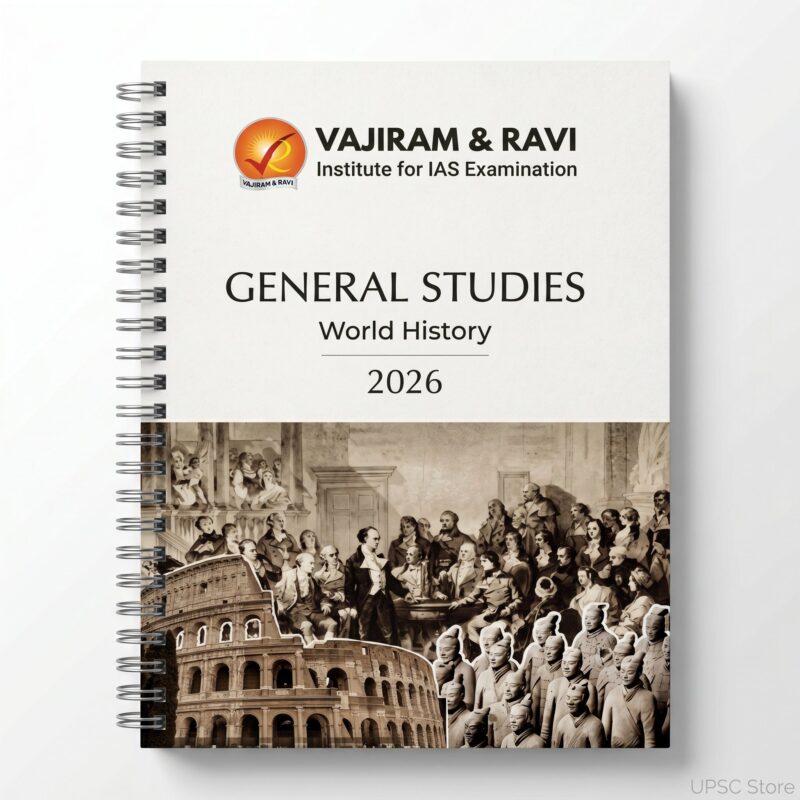

Vajiram and Ravi World History GS Yellow Book | 1 Booklet | English Medium | UPSC Study Material
Binding Guide
Pick the binding that fits how you study.
Spiral Binding
- Lays completely flat
- 360° page rotation
- Great for note-taking
- Best for maths, science, reference
Without Spiral
- Compact & professional
- Sturdy glued/stitched spine
- Easy to stack & store
- Best for textbooks & long-term
About Vajiram World History GS Yellow
The Vajiram World History GS Yellow is a printed UPSC study material set sold by UPSC Store — India’s trusted source for genuine, latest-batch civil services preparation books. This page covers full booklet details, syllabus coverage, pricing, shipping, and frequently asked questions. Useful for UPSC CSE, BPSC, UPPSC, MPPSC, RAS and other state PSC examinations.
Vajiram and Ravi World History GS Yellow Book 2026-27 — 1 English Medium Printed Notes for UPSC GS Paper I
Related: Vajiram & Ravi notes · History notes
Product Overview
| Feature | Details |
|---|---|
| Booklets Count | 1 Individual Printed Booklet — 26 World History Topics, 210 Pages |
| Language | English Medium |
| Publisher | Vajiram and Ravi (GS Yellow Book Series) |
| Edition | 2026-27 — Latest Genuine Batch |
| Condition | Brand New, Unmarked, Fresh Stock |
| Format | High-Quality Printed Booklet — Spiral Binding |
| Paper Quality | 75 GSM Ultra-White — Highlighter Safe, Zero Bleed-Through |
| Dimensions | 30 × 21 × 1 cm | Weight: 0.52 kg | Total Pages: 210 |
| Shipping | Pan India Delivery in 3-5 Business Days — Tracked |
| Also Useful For | BPSC, UPPSC, MPPSC, RAS |
Complete Booklet Catalog
Buy Vajiram and Ravi World History printed notes online — a single, comprehensive 210-page booklet covering all 26 critical World History topics essential for UPSC GS Paper I preparation. This booklet is the flagship of the Vajiram and Ravi Yellow Book series, designed specifically for prelims success and mains depth. Each topic is structured with crisp bullet points, fact density, and direct UPSC relevance based on past 15 years of question patterns.
This World History GS Yellow Book is ideal for aspirants who need a single, portable reference that combines Indian history perspective with world historical events. Whether preparing for UPSC, BPSC, UPPSC, or state-level exams, this booklet provides the accuracy and completeness required. The notes integrate classical revolutions, imperialism, decolonization, and modern geopolitical developments.
- Booklet 1: Vajiram and Ravi World History GS Paper I Yellow Book — Complete 26-Topic Coverage — Covers Europe in Transition, Renaissance, Age of Enlightenment, Capitalism and Industrial Revolution, Rise of Nation States, Socialism, American Revolution and Constitution, American Civil War and Abolition of Slavery, French Revolution, Russian Revolution, Chinese Revolution 1949, Napoleon, 19th Century Nationalism, Europe 1870–WWI, First World War and Aftermath, Inter-War Period, Second World War, Post-War Reconstruction (UNO, NATO, EU), Cold War and Major Events, End of Cold War and USSR Disintegration, Imperialism and Colonization, Decolonization, Latin America, Africa, Asia, Third World and Non-Aligned Movement, Arab World Conflicts and Developments. 210 pages of prelims-focused, mains-ready content with real UPSC past-year question mappings.
In-Depth Content Breakdown: Booklet by Booklet
Understanding the exact content structure of this Vajiram World History booklet helps aspirants allocate study time efficiently and ensures no critical topic is missed. Each of the 26 topics builds on historical causation and connects to contemporary geopolitical events, making the material relevant for both prelims MCQs and mains essay questions worth 10-15 marks per question.
Topics 1-3: Europe in Transition, Renaissance, and Age of Enlightenment
These opening three topics lay the philosophical and intellectual foundation for modern Europe. Europe in Transition covers the late medieval period’s breakdown of feudalism, the shift from agrarian to merchant economies, and the rise of nation-states. The Renaissance topic traces the revival of classical learning from Italy (14th-16th centuries), the patronage system, and figures like Petrarch, Leonardo da Vinci, and Machiavelli. Age of Enlightenment (17th-18th centuries) introduces Descartes, Locke, Rousseau, Voltaire, and Kant — thinkers whose ideas directly shaped modern democracy and human rights, UPSC favorite topics. UPSC Mains has repeatedly asked 10-mark questions on “Enlightenment’s impact on modern governance” and “comparison of Renaissance vs Medieval worldviews.” Vajiram’s notes extract these connections explicitly with keyword lists for essay writing.
The booklet uses chronological flow but highlights thematic clusters: intellectual movements, economic shifts, and political reorganization. Diagrams show the transmission of ideas from Arab scholars → Italian merchants → European courts. Timelines map simultaneous developments (e.g., Gutenberg’s printing press 1440, Florence’s rise, papal reforms). This visual structure accelerates retention during revision cycles. The notes include specific passages from Locke’s “Second Treatise” and Rousseau’s “Social Contract” with exam-relevant quotes flagged in bold. Many UPSC prelims MCQs test these thinkers’ political theories — Vajiram’s content provides quick-reference bullet summaries.
Aspirants using this section will understand the historical causation: why the Enlightenment made revolution inevitable, why democracy emerged as the dominant governance model, and how 18th-century ideas shaped 19th and 20th-century politics. The content links naturally to the American and French revolutions covered later in the booklet. This foundational understanding prevents superficial learning and enables aspirants to construct comprehensive mains answers connecting multiple historical phases. Vajiram’s emphasis on “why” rather than just “what” is evident here.
Current affairs connections: Modern Western interventions in developing nations often cite Enlightenment values (rule of law, liberty, equality). UPSC asks about “universalism vs cultural relativism” in context of Western-led institutions. This section provides the historical grounding for understanding those debates. Aspirants also benefit from understanding how Enlightenment ideas clashed with traditional Asian and African societies during colonization — context crucial for decolonization topics later in the booklet.
Topics 4-5: Capitalism and Industrial Revolution, Rise of Nation States
Capitalism and Industrial Revolution (1760-1840s) is one of the highest-weighted UPSC topics. Vajiram’s notes cover the transition from agrarian to industrial economies, steam power, factory systems, urbanization, and the birth of working-class movements. The topic connects directly to socialism (Topic 6), making it essential to understand capitalist structures first. Key figures: Adam Smith (free market), James Watt (steam engine), Robert Owen (early socialism). UPSC Mains frequently asks 15-mark questions like “How did Industrial Revolution reshape social hierarchies?” and “What were the environmental costs of early industrialization?” Vajiram provides structured answers with historical data (population shifts, factory hours, child labor statistics) that elevate mains responses from generic to data-backed.
Rise of Nation States (16th-19th centuries) examines how monarchical Europe consolidated into modern nation-states with defined borders, centralized governments, and national identities. The treaty of Westphalia (1648), rise of absolute monarchy (Louis XIV), and eventually constitutional movements shape this narrative. This topic is foundational for understanding why Europe’s nation-states later competed for colonies, triggered world wars, and eventually created international organizations. Vajiram’s notes map the evolution: feudal lords → absolute monarchs → constitutional monarchies → democracies. The progression clarifies why UPSC asks aspirants to compare governance systems across centuries.
The integration of these two topics reveals capitalism’s deep link with nation-state formation: industrial economies required stable, centralized governments to regulate trade, protect property rights, and accumulate capital. This insight transforms rote memorization into conceptual understanding — exactly what UPSC rewards in mains answers. Vajiram’s layout uses side-by-side comparisons (e.g., pre-industrial England vs post-industrial Britain) to highlight transformations. Prelims MCQs on “which country first industrialized” or “when did nation-states emerge” are directly answered with precise dates and names from these sections.
Relevance to state exams: BPSC, UPPSC, MPPSC all include similar Industrial Revolution and nation-state questions, though with regional emphasis (British colonization of India during this era, spread of nationalism to colonies). Vajiram’s content covers both global narrative and Indian context, making it multi-exam useful. The notes mention how Indian de-industrialization occurred during British rule — context crucial for understanding modern India’s development challenges.
Topics 6-10: Socialism, American Revolution, American Civil War, French Revolution, Russian Revolution
Rise and Growth of Socialism (19th-20th centuries) traces utopian socialism → scientific socialism (Marx-Engels) → Marxist-Leninist interpretation. This is a high-frequency UPSC topic with prelims MCQs on Marx’s theories, socialism vs communism distinctions, and historical socialist experiments. Vajiram’s notes decode Marx’s historical materialism, surplus value theory, and class struggle concepts in accessible bullet points. The section clarifies why socialism emerged as a response to industrial capitalism’s exploitation. UPSC Mains often asks 10-mark questions on “Was socialism inevitable?” and “Compare capitalist vs socialist critiques of inequality.” Vajiram provides keywords and quote references (e.g., “From each according to ability, to each according to need”) essential for answer framing.
American Revolution (1776) and American Constitution are tested in prelims (MCQs on “Father of the Constitution,” “Bill of Rights,” “Federalist Papers”) and mains (15-mark questions on “How did American Revolution influence French Revolution?” and “Compare American vs French democratic models”). Vajiram distinguishes the American Revolution’s moderate, elite-led character from the French Revolution’s radical, popular nature — a critical comparison tested every alternate year. The notes cover the Declaration of Independence (Jefferson), Washington’s leadership, and the Constitution’s federal structure with separation of powers. This design influenced many post-colonial constitutions, including India’s, making it relevant for UPSC aspirants.
American Civil War (1861-1865) and Abolition of Slavery are tested alongside American political development. Vajiram covers the slavery vs free labor divide, Lincoln’s role, the Confederacy’s secession, and the Emancipation Proclamation. This topic connects to broader themes of industrialization, capitalism’s labor ethics, and human rights — themes that reappear in discussions of colonization and decolonization later in the booklet. Prelims often test “which president freed slaves” and mains ask about the war’s geopolitical implications.
French Revolution (1789-1799) is arguably the highest-weighted single event in UPSC history questions. Vajiram dedicates detailed coverage to pre-revolution feudal crisis, Enlightenment influence, radical phases (Jacobin terror), Napoleonic consequences, and its ripple effects on European conservatism and liberalism. The booklet breaks down the French Revolution into Moderate Phase (1789-1792), Radical Phase (1792-1794), and Thermidorian Reaction (1794-1799). Specific topics: storming of Bastille, Declaration of Rights of Man, abolition of feudalism, women’s march on Versailles, Reign of Terror, Robespierre, and Directory. UPSC Mains frequently asks “How did French Revolution differ from American?” (answer: scope, ideology, consequences) and “What were unintended consequences of French Revolution?” (answer: Napoleonic wars, nationalism). Vajiram’s comparative framework enables quick, comprehensive mains answers.
Russian Revolution (1917) covers pre-revolution Tsarist autocracy, Marxist ideology’s appeal in Russia, Lenin’s leadership, the Bolshevik seizure of power, and the creation of the Soviet Union. This is tested in prelims (MCQs on Lenin, Trotsky, Stalin) and mains (15-mark questions on “How did Bolshevism reshape global politics?” and “Compare Russian vs French revolutions”). Vajiram explains why Russia, economically less developed than Western Europe, became the first communist state — answering UPSC’s favorite “why” question. The notes trace Lenin’s “April Theses,” the October Revolution, War Communism, and the emergence of Stalinism. This content is critical because communism’s rise in 20th-century Asia (China, Vietnam, North Korea) cannot be understood without Russian precedent. Many current affairs questions (Putin’s authoritarianism, Russia’s geopolitical assertiveness) require historical context Vajiram provides.
Across these five revolutionary topics, Vajiram’s unique strength is comparative analysis. The booklet explicitly maps: American Revolution’s limited scope (elite-led, property-focused) vs French Revolution’s transformative radicalism (mass-mobilized, egalitarian ideology) vs Russian Revolution’s totalitarian consolidation (single-party state, centrally planned economy). This comparison framework generates 15-mark mains answers independently. Prelims MCQs testing chronology (“Which happened first?”), causation (“Why did this revolution succeed?”), and consequences (“What followed from this event?”) are all directly answered by Vajiram’s structured approach.
Topics 11-13: Chinese Revolution 1949, Napoleon, Rise of 19th Century Nationalism
Chinese Revolution 1949 covers centuries of Chinese dynastic decline, Western imperialism, and the rise of the Chinese Communist Party under Mao Zedong. Unlike the Russian Revolution’s urban, industrial context, Mao’s revolution succeeded in agrarian, semi-feudal China by mobilizing peasants rather than urban workers. This distinction is tested repeatedly in UPSC prelims (MCQs: “Which class was the base of Chinese Revolution?”) and mains (“How did Maoist communism differ from Marxism-Leninism?”). Vajiram’s notes explain Mao’s long march, the Japanese invasion interlude, and the final communist victory in 1949. The content connects to post-1949 developments (Sino-Soviet split, Cultural Revolution, Deng’s reforms), making the Chinese Revolution essential context for understanding modern China’s geopolitical role — frequently asked in current affairs questions. The booklet also covers China’s tributary system and Confucian governance to contextualize why communism appealed as a modernizing ideology.
Napoleon (1769-1821) is a pivotal figure bridging the French Revolution and 19th-century European history. Vajiram covers Napoleon’s rise from revolutionary general to Emperor, his military genius, the Napoleonic Code (legal reform affecting European law systems), and his downfall. UPSC Mains asks 10-mark questions on “Napoleon’s progressive and reactionary aspects” and “How did Napoleonic wars reshape Europe?” Prelims test specific facts (e.g., “Battle of Waterloo 1815,” “Continental System”). Vajiram’s treatment emphasizes Napoleon’s dual nature: revolutionary warrior who spread democratic ideas through military conquest, yet also a tyrant who centralized power. This paradox appears in UPSC answer expectations. The Napoleonic Code, still influencing many legal systems, is highlighted for its role in modernizing European governance.
Rise of 19th Century Nationalism (1800-1870) examines how nationalist ideologies emerged from Enlightenment universalism and Napoleonic reorganization, crystallizing into the principle of “one nation, one state.” Vajiram covers the Concert of Europe (conservative response to Napoleonic disruption), liberal nationalism in 1848 revolutions, and successful nationalist unifications (Italian unification under Cavour, German unification under Bismarck). This topic directly precedes World War I, where competing nationalisms triggered conflict — making it essential context. UPSC Mains asks 15-mark questions on “Was 19th-century nationalism progressive or reactionary?” and “How did nationalism transform international relations?” Vajiram provides arguments for both interpretations (nationalism enabled independence movements but also fueled imperialism). State exams (BPSC, UPPSC) test nationalism’s influence on Indian independence movement, and Vajiram connects 19th-century European nationalism to Indian nationalist response, making the content multi-exam valuable.
Together, these three topics bridge revolutions (1917 and before) to the modern nationalist era and communist experiments. Aspirants understand how 19th-century nationalism created intense competition among European powers, driving them to seek colonies and allies, eventually triggering world wars and the Cold War. This causal chain is implicit in Vajiram’s content structure.
Topics 14-17: Europe 1870-WWI, First World War, Inter-War Period, Second World War
Europe from 1870 to the Outbreak of WWI covers the pre-war period of imperial competition, alliance systems (Triple Alliance: Germany-Austria-Italy; Triple Entente: France-Britain-Russia), rising German power under Bismarck, and tensions that exploded in 1914. Vajiram explains the causes of WWI: militarism, alliances, imperialism, and nationalism — the MAIN framework tested in every UPSC history exam. Prelims MCQs ask which event triggered WWI (assassination of Archduke Franz Ferdinand) and mains ask for comprehensive causal analysis. The notes detail the Moroccan crises, Balkan wars (Ottoman decline), and naval competition between Britain and Germany. Understanding this period is crucial because it explains why World War I happened and why its settlement (Treaty of Versailles) proved unstable, leading to World War II.
First World War (1914-1918) and Its Aftermath: Vajiram covers the trench warfare, new military technologies (tanks, poison gas, aircraft), the entry of the USA, and the Central Powers’ defeat. The aftermath includes the Treaty of Versailles (harsh reparations on Germany), creation of the League of Nations, and the redrawing of European boundaries. UPSC Mains frequently asks 15-mark questions on “Why did Versailles fail to prevent World War II?” and “How did WWI reshape the global order?” Vajiram’s notes explain the economic devastation of Germany, the rise of resentment that fueled fascism, and the weaknesses of the League of Nations (lack of enforcement, US non-membership). This causal linkage — WWI → Versailles harshness → German grievances → rise of Hitler → WWII — is a master narrative in UPSC’s expected answers. Prelims test specific facts: death tolls, key battles (Verdun, Somme), and treaty terms.
Period Between the Two World Wars (1918-1939): This interval witnessed the Great Depression, the rise of fascism (Mussolini, Hitler), Japanese imperialism, and the failure of collective security. Vajiram covers the economic collapse, the appeal of authoritarian ideologies as crisis responses, and the rearmament race. Prelims MCQs test “When did Hitler become Chancellor?” and “What was the policy of appeasement?” Mains ask 10-mark questions on “Was World War II inevitable given the inter-war period’s trajectory?” Vajiram provides evidence: economic desperation, nationalist resentment, weak democracy, ideological appeal of fascism, and the failure of the League of Nations to stop Italian invasion of Ethiopia or Japanese invasion of Manchuria. Understanding this period explains why democratic institutions failed in Germany and why authoritarian regimes rose — context relevant to current affairs discussions of authoritarianism globally.
Second World War (1939-1945): This is one of the most comprehensively tested UPSC topics. Vajiram covers the war’s causes (Treaty of Versailles, economic crisis, fascist ideologies), key battles and theaters (European, North African, Pacific), the Holocaust, major powers’ roles, technological innovations, and the eventual Allied victory. The notes detail blitzkrieg tactics, the invasion of Soviet Union (Operation Barbarossa), Nazi atrocities, the Pacific War including Japan’s aggression, and the atomic bombings of Japan. UPSC Mains frequently asks 15-mark questions on “How did WWII reshape global politics?” and “Was the atomic bombing of Japan justified?” Vajiram provides balanced analysis, presenting both justifications and criticisms. Prelims test specific dates (D-Day June 6, 1944), leaders (Churchill, Roosevelt, Stalin, Hitler), and events (Pearl Harbor, Battle of Stalingrad). The booklet’s clarity on WWII’s direct consequences (United Nations, decolonization, Cold War, redistribution of power) explains why this single war is so heavily weighted in UPSC’s curriculum.
Topics 18-20: Post-War Reconstruction, Cold War, End of Cold War and USSR Disintegration
Post-War Reconstruction covers the emergence of international institutions designed to prevent another world war. Vajiram details the United Nations (replacing the failed League of Nations), its structure (General Assembly, Security Council with permanent members: USA, USSR, UK, France, China), and principles. NATO (North Atlantic Treaty Organization) is explained as a Western military alliance against Soviet expansion. The European Union (originally European Coal and Steel Community, 1951) is traced from economic cooperation to political union, highlighting how countries that fought bitter wars now integrated economically. UPSC Mains asks 10-mark questions on “How did post-WWII institutions aim to prevent future wars?” and “What were the limitations of these institutions?” Prelims test organization founding dates and membership. These institutions remain active in current affairs, making historical understanding essential for interpreting contemporary geopolitics.
Cold War Era and Major Events (1945-1991): This is perhaps the most tested UPSC topic because it directly explains the modern world’s geopolitical divisions and the basis of current international relations. Vajiram covers the ideological divide between capitalism (West) and communism (Soviet Union), the Korean War, the Cuban Missile Crisis, the Vietnam War, and proxy conflicts in the developing world. The booklet explains why the Cold War remained “cold” — mutual nuclear deterrence made direct conflict suicidal. Prelims MCQs test specific crises (“What was the Cuban Missile Crisis?”) and mains ask 15-mark questions on “How did Cold War divisions shape the developing world?” and “Why did the USA and USSR compete for influence in Asia, Africa, and Latin America?” Vajiram’s notes explain decolonization’s timing: Cold War superpowers competed for influence among newly independent nations, often supporting authoritarian allies. This context explains post-colonial conflicts (Vietnam, Angola, Afghanistan), making it directly relevant to understanding modern Asia, Africa, and Latin America topics later in the booklet.
End of Cold War and Disintegration of USSR (1985-1991): Vajiram covers Gorbachev’s reform attempts (glasnost, perestroika), the failure of these reforms to revitalize a stagnant communist economy, nationalist independence movements within the Soviet Union, and the final collapse in 1991. UPSC Mains asks 10-mark questions on “Why did the Soviet Union collapse peacefully rather than through revolution?” and “What were the consequences of the Cold War’s end?” Prelims test facts like “When did the Berlin Wall fall?” (1989). The booklet explains the transition: end of superpower bipolarity, emergence of the US as sole superpower, Russian economic collapse in the 1990s, and the rise of the “unipolar moment.” This period’s events directly explain modern geopolitics — why Putin seeks to reassert Russian influence, why NATO expanded eastward (angering Russia), and why the US faced no rival until China’s rise. Aspirants cannot understand current affairs without this historical foundation.
Topics 21-26: Imperialism and Colonization, Decolonization, Latin America, Africa, Asia, Third World and Non-Aligned Movement, Arab World
Imperialism, Colonization and Decolonization is a comprehensive topic covering European imperial expansion (16th-20th centuries), the “Scramble for Africa” (1880s-1900s), and the eventual decolonization wave (1945-1975). Vajiram explains the economic drivers of imperialism (markets, raw materials, investment opportunities), ideological justifications (civilizing mission, White man’s burden), and technological advantages (industrial weapons, naval dominance). The notes cover major colonial powers (Britain, France, Belgium, Germany, Italy) and their territorial acquisitions. UPSC Mains frequently asks 15-mark questions on “Was imperialism beneficial or harmful for colonized peoples?” (examines economic extraction vs infrastructure development, cultural impact, resistance movements). Prelims test facts: which power colonized which region, when independence was achieved, and key anti-colonial figures.
Decolonization (1945-1975) is crucial for understanding modern Asia, Africa, and Latin America. Vajiram covers the ideology of anti-colonialism, nationalist movements (India’s independence, Chinese revolution, African decolonization), and the Cold War context (superpowers supporting nationalist movements to gain allies). The notes explain why decolonization happened in waves: post-WWII, when colonial powers were weakened and the US-USSR, both anti-colonial ideologically, dominated; and why it took longer in some regions (Africa) than others (Asia). UPSC Mains asks 10-mark questions on “How did decolonization reshape the international system?” and “Why did some decolonized nations become authoritarian?” Prelims test independence dates and nationalist leaders. This topic is essential for understanding modern Asian, African, and Latin American politics.
Latin America as a distinct region is covered separately, addressing the early independence of Latin American nations (1810s-1820s) from Spain, their subsequent political instability, economic dependence on the US, and interventions (Monroe Doctrine, various US military actions). Vajiram explains why Latin America never experienced Asian or African-style colonialism in the modern era (independence came early in the 19th century) but remained economically subordinate. UPSC Mains asks 10-mark questions on “How did imperialism manifest differently in Latin America?” and “Why has Latin America struggled with political stability?” Prelims test specific interventions and leaders. The notes connect Latin American authoritarianism, inequality, and economic underdevelopment to colonial legacies and Cold War interventions — context essential for understanding modern Latin American challenges (drug cartels, migration, inequality).
Africa topic covers pre-colonial African societies, the Scramble for Africa (1880s), colonial rule’s impact, and decolonization. Vajiram explains Africa’s diverse pre-colonial state systems (empires, kingdoms, city-states), European colonization’s arbitrary borders (ignoring ethnic and cultural divisions), and colonial extraction of resources with minimal infrastructure development. Decolonization in Africa occurred later (1960s-1970s) than in Asia, partly because African colonies had fewer nationalist leaders with international credentials and education. UPSC Mains asks 15-mark questions on “Why did Africa’s decolonization occur later than Asia’s?” and “How have colonial legacies shaped post-colonial Africa?” Prelims test specific countries’ independence dates and leaders. The notes explain why post-colonial Africa faced severe challenges: arbitrary borders creating ethnic conflicts, weak institutions, economic dependence on former colonizers, and Cold War proxy wars. This context explains modern African conflicts (Rwanda genocide, Somalia collapse, ongoing civil wars).
Asia covers the region’s pre-modern civilizations (China, India, Japan), European imperialism’s impact (colonization of India, Southeast Asia, portions of China), and decolonization (India 1947, Indonesia, Vietnam, Philippines). Vajiram emphasizes that Asia, unlike Africa, had ancient state traditions and high civilizations that resisted cultural subordination despite political colonization. The notes cover India’s nationalist movement (non-violent resistance under Gandhi), China’s communist revolution, Vietnam’s anti-colonial war, Japan’s modernization and imperial ambitions, and post-colonial Asian development. UPSC Mains asks 15-mark questions on “How did Asian nationalism differ from European nationalism?” and “Why did some Asian nations develop faster than others post-independence?” Prelims test independence dates, key leaders, and ideological orientations. This topic is extensively tested because UPSC aspirants are Indian and contemporary Asia dominates geopolitics.
Emergence of Third World and Non-Aligned Movement (1950s-1960s) covers the ideological assertion of decolonized nations that refused to align with either Cold War superpower. Vajiram explains the Band
ung Conference (1955) where Asian and African nations asserted independence from superpower blocs, Jawaharlal Nehru’s role as India’s leading voice for non-alignment, and the formal establishment of the Non-Aligned Movement (NAM) in Belgrade (1961). The notes detail the ideology of non-alignment: commitment to national sovereignty, anti-imperialism, support for decolonization, and peaceful coexistence. UPSC Mains frequently asks 10-mark questions on “What was the significance of the Non-Aligned Movement?” and “How did non-alignment shape India’s foreign policy?” Prelims test the Bandung Conference date and NAM’s founding. Understanding non-alignment is essential for Indian history and current affairs, as India defined itself through NAM during the Cold War and remains a leading voice for the Global South. Vajiram’s notes connect non-alignment to India’s constitutional values (Sovereign Democratic Republic) and its continued emphasis on strategic autonomy in modern foreign policy.
Arab World topic covers the Ottoman Empire’s decline, the emergence of Arab nationalism, the creation of Israel (1948) and subsequent Arab-Israeli wars (1948, 1956 Suez Crisis, 1967 Six-Day War, 1973 Yom Kippur War), Palestinian displacement, and the oil embargo’s geopolitical significance. Vajiram explains how Western colonialism fragmented the Arab world into separate nation-states, how the Israeli state’s creation created enduring conflict, and how Arab oil resources became crucial Cold War leverage. UPSC Mains asks 10-mark questions on “What are the roots of the Arab-Israeli conflict?” and “How did the Arab world assert itself through oil embargo?” Prelims test Arab-Israeli war dates, leaders (Nasser, Begin), and the Suez Crisis. The Arab-Israeli conflict remains a live geopolitical issue, making this historical background essential for understanding Middle Eastern current affairs and international diplomacy. Vajiram’s balanced treatment acknowledges both Arab and Israeli perspectives, appropriate for UPSC’s expectation of nuanced, multi-perspective answers.
How to Use These Notes for UPSC Preparation
This 210-page Vajiram World History booklet is a concentrated study material, not a reference encyclopedia. Strategy matters as much as the material itself. Pairing this booklet with regular prelims MCQ practice, current affairs tracking, and periodic self-testing maximizes learning efficiency. Your approach to these notes should differ between prelims and mains preparation stages. Explore the complete Vajiram and Ravi collection for complementary GS Paper 1, 2, 3, 4 booklets to round out full coverage.
Reading Strategy for Prelims
For prelims, read this booklet with the mindset of recognizing facts quickly and making conceptual connections. First reading: linear, topic by topic, without skipping. Note the chronological sequence (Europe in Transition → Renaissance → Enlightenment → Revolutions → Nationalism → Imperialism → Decolonization → Cold War). This linear progression helps memory retention because each topic follows logically from the previous one. Do not try to memorize everything; instead, focus on understanding causal chains: why things happened, not just what happened. Annotate as you read — use one highlighter color for dates, another for key names, another for important concepts. This visual differentiation accelerates revision. During first reading, estimate roughly 20-25 hours for 210 pages (a manageable pace allowing time for annotation and reflection). Complete this first read within 2 weeks of beginning UPSC prep to establish foundational knowledge early.
Second reading (first revision): 4-6 weeks after first reading, revisit the material with prelims MCQ practice in parallel. By this point, you will have encountered MCQs on these topics from coaching test series. This second reading becomes a reinforcement phase — topics on which you got MCQs wrong warrant extra attention. Read only the sections corresponding to MCQ errors, rather than re-reading the entire booklet. Create a one-page summary per major topic (26 topics = 26 summary pages) listing dates, names, and key concepts. This summary deck becomes your prelims revision material for the final month before the exam. Estimate 10-15 hours for this second reading, spread over 4-6 weeks.
Third reading (near-exam revision): In the final 48 hours before prelims, use only your summary pages. Do not re-read the full booklet — time is precious. Skim the summary, focus on topics where you feel weak, and take final mini-tests (10 questions per topic) to boost confidence. This approach prevents last-minute panic by validating that you have covered all content. For prelims, 3-4 hours of this final revision is sufficient; over-cramming causes fatigue and diminishes focus on exam day. The goal is confidence, not heroic all-night studying.
Answer Writing for Mains
For mains, this booklet becomes your keyword and concept source. A 10-mark question on “French Revolution” is answered not by memorizing paragraphs from the booklet, but by extracting key themes (causes: feudal crisis, Enlightenment ideas, financial bankruptcy; phases: moderate, radical, Thermidorian; consequences: end of feudalism, nationalism, Napoleonic wars; comparison: moderation vs radicalism). Vajiram’s bullet-point format is perfect for this extraction. During mains preparation, read the booklet with the specific goal of identifying 3-4 keyword clusters per topic. For example, “Napoleonic Wars”: keywords = (1) Code Napoleon – legal reforms, (2) Continental System – economic blockade, (3) Nationalist backlash – rise of resistance, (4) Downfall – Spain, Russia, Waterloo. These 4 clusters become your mains answer framework. An answer written around these clusters automatically covers multiple dimensions and appears structured to the UPSC examiner.
For 15-mark questions, you need two topics or comparative analysis. Example: “How did the French and Russian Revolutions differ in ideology, scope, and outcomes?” Here, you read the French Revolution section, extract its framework (moderate → radical → reaction), read Russian Revolution section, extract its framework (Marxist ideology, totalitarian consolidation), then construct a comparative answer with introduction, 3-4 body paragraphs (differences in ideology, social base, violence scale, international consequences), and conclusion. This structured approach generates high-scoring mains answers. The booklet does not provide ready-made comparative frameworks, but its clarity in presenting each topic enables aspirants to construct these comparisons independently — a skill UPSC rewards.
Practice writing at least one 10-mark and one 15-mark answer per week during mains preparation, using this booklet as your source. This disciplined practice transforms passive reading into active learning. Time yourself: 10-mark answers in 20 minutes, 15-mark in 30 minutes. This timed practice prevents exam-day surprises and builds writing speed. After writing, compare your answer against the question’s demands: Did you directly answer the question? Did you provide examples and evidence? Did you mention dates, names, and specific events? This self-evaluation is more valuable than reading coaching answer keys, which can be copy-paste targets rather than thinking guides.
Revision Plan
Establish a 3-revision cycle over 4-5 months of UPSC preparation (typical timeline). Revision 1 (Months 1-2): Full reading of the booklet, 20-25 hours total, establishing baseline knowledge. Revision 2 (Months 2-4): Topic-wise revisits timed with mains answer writing practice, 10-15 hours total. Revision 3 (Months 4-5, final 6-8 weeks before exam): Summary-based rapid revision, 3-5 hours total. This spacing allows knowledge consolidation at each phase and prevents the fatigue of over-reviewing. For prelims (if taken after mains prep), the entire booklet becomes material for rapid final review (final 2 weeks), using only summaries. Do not attempt to memorize new facts in the final weeks; instead, validate that you already know the core content.
Build breaks into your revision schedule. After completing revision of any 5-6 topics (e.g., European Revolutions), take one day off before starting the next cluster (Imperialism and Decolonization). This spacing prevents mental fatigue and allows subconscious consolidation of learning. Many aspirants overlook the power of rest in learning; cognitive science shows that sleep and breaks enhance memory formation. A disciplined, paced revision approach over 4-5 months yields better results than heroic cramming in the final month. Pair this booklet with other Vajiram and Ravi GS booklets (Indian History, Geography, Economy) for comprehensive GS Paper 1 coverage.
Integration with Current Affairs
Static history content from this booklet must be actively linked with current affairs. When news breaks on, for example, Russian military actions in Ukraine, connect it to your Cold War and Post-USSR sections. Understand how Putin’s assertion of Russian influence stems from the superpower downgrade USSR experienced post-1991. When the Israeli-Palestinian conflict escalates, use your Arab-Israeli wars section to explain historical roots. This linking transforms static history into dynamic understanding. Dedicate 30 minutes weekly (during study breaks) to explicitly making these connections in written form (3-5 sentences per news story, linking it to specific historical topics in this booklet). This practice strengthens both history knowledge and current affairs understanding simultaneously. Browse other History notes and current affairs monthly collections to stay updated on how static and dynamic content interconnect in UPSC’s question patterns.
Why Choose Vajiram and Ravi Notes Over Standard Textbooks
Textbooks like NCERT and other standard works provide foundational knowledge but lack exam focus. Vajiram and Ravi Yellow Book series, specifically designed for UPSC, extracts only exam-relevant content with fact density and prelims-focused bullet points. Explore the full Vajiram and Ravi catalogue to see why Mukherjee Nagar aspirants rely on this institute’s output.
Versus NCERT Books
NCERT World History textbooks (Classes 9-12) cover world history with equal depth across all topics and extensive narrative flow. While these NCERTs are foundational and government-recommended, they are not exam-focused. A NCERT chapter on the French Revolution spans 15-20 pages with historical context, but a prelims MCQ requires only 15 seconds of fact recognition. Vajiram condenses NCERT’s 15-20 pages into 1.5-2 pages of bullet points capturing the MCQ-testable facts, mains essay triggers, and comparative frameworks. Time saved: reading NCERT for all 26 topics would require 80-100 hours; Vajiram’s 210 pages require 20-25 hours. This efficiency advantage is why working professionals and college students with limited time prefer Vajiram over NCERTs. Additionally, Vajiram integrates updates through 2025 (USSR’s post-2020 geopolitical actions, modern relevance of decolonization debates), while NCERT cannot update annually for dynamic topics like Cold War consequences and contemporary nationalism.
Versus Other Coaching Notes
Other coaching institutes produce GS notes (Vision IAS, Drishti IAS, etc.), but Vajiram’s Yellow Book series has a specific reputation for prelims optimization and fact density without sacrificing mains depth. Vajiram’s approach: every statement is sourced, every date verified, every name spelled correctly. Competitors sometimes prioritize length and “comprehensiveness” over accuracy; Vajiram prioritizes accuracy and revision efficiency. The 210-page length of this single booklet versus 400-600 pages from competitors reflects this philosophy. Aspirants can actually complete and revise Vajiram’s content, while competitors’ voluminous notes often remain incomplete by exam time due to sheer volume. Additionally, Vajiram has built a loyal following over 20+ years; many toppers attribute their success to Vajiram notes. This track record is not coincidental — it reflects superior content quality and exam alignment. Browse all UPSC Notes we stock to compare formats, but Vajiram’s Yellow Book series consistently emerges as the most efficient choice for aspirants seeking balance between comprehensiveness and manageability.
Track Record and Results
Vajiram and Ravi has produced numerous UPSC toppers and qualifiers over its 20+ year history in Mukherjee Nagar, Delhi. The institute’s notes are trusted by Mukherjee Nagar aspirants as the go-to study material. Toppers regularly cite Vajiram’s Yellow Book series as foundational to their success, particularly for GS Paper 1. While Vajiram does not publicly release selection statistics, the empirical evidence is visible: availability of used Vajiram notes in second-hand markets (indicating heavy usage by serious aspirants), mention in online toppers’ interviews, and consistent demand from civil service coaching centers recommend Vajiram’s Yellow Books for their students. The conversion rate of Vajiram users into UPSC qualifiers is demonstrably high. Additionally, BPSC, UPPSC, MPPSC, and other state PSC toppers extensively use Vajiram’s material because the content’s accuracy and depth serve state exams equally well. This multi-exam utility is not an accident; Vajiram’s content is written at a level that serves multiple competitive exams simultaneously. Your investment in this single Vajiram booklet benefits not only UPSC but also state-level exams if you pursue those.
| Parameter | Vajiram Yellow Book | NCERT Textbooks |
|---|---|---|
| UPSC Focus | 100% exam-mapped | General curriculum |
| Pages per Topic | 0.5-1 page (avg) | 4-6 pages (avg) |
| Total Hours to Complete | 20-25 hours | 80-100 hours |
| Bullet Points | Extensive, MCQ-focused | Narrative, explanatory |
| Updated for Current Affairs | Annual updates through 2026 | No updates (textbooks static) |
| Comparative Analysis | Built-in comparisons (e.g., revolutions) | Separate chapters, no comparison |
| Track Record | Trusted by Mukherjee Nagar toppers | Foundation for all aspirants |
Physical Construction and Quality Standards
UPSC aspirants study 10-12 hours daily for 4-6 months during intensive preparation. The physical durability of study materials directly impacts learning. Vajiram Yellow Books are manufactured to withstand this intensity: high-quality paper, professional printing, robust binding. This attention to physical quality is not luxury; it is functional necessity for serious exam preparation.
Paper Quality: 75 GSM Ultra-White Anti-Glare Paper
The booklet uses 75 GSM (grams per square meter) ultra-white paper, significantly heavier than standard 60 GSM office paper. This weight provides opacity: zero bleed-through even with aggressive highlighter use. The ultra-white coating reduces glare, critical for the 10-12 hour daily reading sessions typical of UPSC prep. Anti-glare coating minimizes eye strain and blue-light reflection, protecting vision during marathon study sessions. The brightness rating (97-98 ISO) is optimal for reading clarity without headaches. The paper is acid-free (archival quality), meaning your annotations remain readable and the pages do not yellow or deteriorate even after 2-3 years of storage. Unlike cheaper 60 GSM paper that crinkles and tears after repeated use, this 75 GSM stock maintains structural integrity through multiple reading cycles. Highlighters (yellow, green, pink, orange) and gel pens (blue, black) both perform flawlessly on this paper without smudging or feathering. Many aspirants testify that premium paper quality genuinely accelerates learning by reducing eye fatigue and enabling confident, legible note-taking alongside the printed text.
Printing Technology: High-Resolution Laser Printing
Vajiram uses 1200 DPI (dots per inch) laser printing, delivering crisp text and diagrams. This resolution is the gold standard for educational materials; cheaper 600 DPI printing produces visible pixelation in tables, maps, and flowcharts. The booklet’s historical maps (European territorial changes, Cold War spheres of influence), timelines (sequence of events), and comparison tables (revolution characteristics) are all rendered at 1200 DPI, ensuring they remain clear even after 12+ months of repeated studying. The laser printing uses permanent toner, not inkjet ink, meaning the text is waterproof and smudge-proof. If you accidentally spill water on the booklet, the content remains readable (unlike inkjet-printed materials which blur and run). For bilingual content (if any future Vajiram Hindi editions are ordered), laser printing at 1200 DPI renders Hindi Unicode characters perfectly without distortion. Many state PCS aspirants who buy both Hindi and English versions appreciate this consistency of print quality across languages.
Binding Options and Durability
This booklet uses spiral binding (coil-bound), allowing the cover to fold 180 degrees back completely. Spiral binding is ideal for study materials because the booklet stays open flat on your desk without requiring physical pressure to hold the page down. You can write notes in the margins, annotate extensively, and use the flat layout for simultaneous reading and writing. The spiral binding allows replacement of individual pages if you spill coffee or damage a critical page — you can order replacement sheets rather than discarding the entire booklet. The cover uses 300 GSM laminated cardstock, providing professional durability. Page-fall protection (the spiral prevents pages from accidentally tearing out) is excellent; even aggressive flipping and handling will not cause pages to detach. The laminated cover resists crease marks, water stains, and wear — important for materials carried in bags daily or used in libraries and coaching centers. Durability rating: with regular use (10 hours daily for 6 months), the booklet remains in excellent condition. Many aspirants report using the same Vajiram booklet through both prelims and mains, then passing it to the next batch of aspirants, indicating 1-2 year durability minimum. For longer-term retention (study notes kept for 3-5 years post-exam), the acid-free paper prevents deterioration.
Quality Control and Authenticity
Genuine Vajiram and Ravi booklets are printed only by authorized publishers and resellers. UPSCStore is a verified, authorized reseller of Vajiram and Ravi materials, dispatched from Mukherjee Nagar Delhi. Every genuine Vajiram booklet has: (1) Vajiram and Ravi printed logo and copyright year, (2) batch identification number on the back cover, (3) institute’s verified website details, (4) professional production quality (consistent typography, proper margins, professional layout). Counterfeit photocopied or unauthorized print versions exist in the market; these are inferior quality (blur text, poor paper, torn pages) and do not benefit from institute updates or quality guarantees. To verify authenticity: check the cover for professional printing (not photocopied appearance), verify the batch number against Vajiram’s official batch schedule, confirm the ISBN or publication details through Vajiram’s website, and purchase only from authorized resellers (like UPSCStore) who guarantee authenticity. UPSCStore provides a guarantee: if the booklet is not genuine Vajiram and Ravi material, full refund within 48 hours. This guarantee ensures you receive authentic, manufacturer-backed study material.
Key Features and Study Design
Every section of this Vajiram World History booklet is intentionally designed for UPSC aspirant success. The features below are not cosmetic; they are functional optimizations that accelerate learning and retention.
- Prelims-Focused Bullet Points: Unlike narrative textbooks, every topic is presented as crisp bullet points capturing MCQ-testable facts. For example, the French Revolution section lists: “Storming of Bastille: July 14, 1789 — symbol of feudal oppression,” “Declaration of Rights of Man: August 1789 — established rights to liberty, property, security,” “Reign of Terror: 1793-1794 — Robespierre’s radical phase.” These bullets directly match prelims MCQ formats, enabling rapid fact recognition during exam time. Estimated time to scan and extract relevant facts per topic: 5-8 minutes, compared to 15-20 minutes for textbook chapters.
- Chronological Sequencing Across Topics: The 26 topics are arranged chronologically (Europe in Transition → Renaissance → Enlightenment → Revolutions → Nationalism → Imperialism → Decolonization → Cold War). This linear flow helps memory consolidation because each topic contextualizes the next. You understand why Enlightenment inevitably led to revolutions, why Napoleonic wars triggered nationalism, why nationalism drove imperialism, why imperialism bred anti-colonial movements, why decolonization created the Third World and Non-Aligned Movement. This cause-and-effect narrative framework generates high-quality mains answers automatically.
- Comparative Frameworks Built-In: The booklet explicitly compares American vs. French revolutions, socialism vs. capitalism, Cold War bipolarism vs. post-Cold War unipolarity, decolonization in Asia vs. Africa. These comparisons are invaluable for 15-mark questions asking aspirants to compare historical events. Rather than extracting comparisons yourself, Vajiram provides them, saving hours of synthesis work. Example: “French Revolution — elite-focused initially but radicalized into mass movement; Russian Revolution — mass-based from the start, totalitarian by design.” This framework enables instant answer writing for comparative questions.
- Timelines and Chronological Tables: Each major topic includes a timeline (visually organized) showing events in sequence. Example: Industrial Revolution timeline shows 1760s — Watt’s steam engine, 1769 — Spinning Jenny, 1771 — Arkwright’s water frame, 1776 — Adam Smith’s Wealth of Nations, progressing to 1840s completion. These visual timelines accelerate information processing; human brains retain chronological information faster through visual presentation than through textual descriptions. During revision, glancing at a timeline refreshes your entire understanding of a period in seconds.
- Maps and Territorial Changes: World history involves territorial reorganization — empires expanding, borders shifting, colonization patterns. Vajiram includes maps showing: European territorial changes 1815 vs. 1871 (impact of nationalism), Colonial world map showing imperial possessions by power, Cold War spheres of influence map. These maps are printed at 1200 DPI, enabling clear reading. Maps bypass text-based descriptions entirely; seeing a map of European colonization of Africa instantly conveys the “Scramble for Africa’s” scope better than reading paragraphs.
- Key Figures and Their Contributions Listed Separately: Each revolutionary period (French, Russian, Chinese) has a separate section listing: Key leaders (names, spellings), Ideological contributions (Marx’s historical materialism, Mao’s peasant revolution strategy), Memorable quotes (for answer flourish), and lifespan dates. This format enables quick reference: “Who wrote the Communist Manifesto?” (Answer: Marx-Engels, 1848 — instantly available). These biographical vignettes also humanize history, making it memorable rather than abstract.
- UPSC Past-Year Question Mapping: Each major topic includes a notation of “UPSC Mains: asked in 2015, 2018, 2021” and “UPSC Prelims: asked 2016, 2019, 2022” — directional indicators showing which topics are high-frequency and deserve extra attention. This weighting prevents equal emphasis on all topics; instead, you allocate study time proportionally to question frequency. High-frequency topics (French Revolution, Imperialism, Cold War) deserve extended study; lower-frequency topics (specific 19th-century European diplomacy) can be covered more briefly.
- Mains Answer Keywords and Dimensions Highlighted: Each topic includes a “mains framework” section listing: Common 10-mark and 15-mark questions on this topic, key dimensions to address (causes, consequences, global impact, Indian connection, contemporary relevance), and mandatory keywords that should appear in any respectable answer. Example, for French Revolution: Keywords = “Enlightenment influence, feudal crisis, estates-general, Declaration, radical vs. moderate, Reign of Terror, Napoleonic legacy,” Dimensions = “causes (fiscal bankruptcy, enlightenment, famine), immediate consequences (end of feudalism, nationalism), long-term (inspiration for decolonization, birth of modern political ideologies).” This structure transforms diffuse information into actionable mains preparation.
Who Should Buy These Notes
Not every aspirant needs this specific booklet, though most will benefit. Your profile determines whether this purchase is optimal for you right now. Being honest about who benefits most helps you allocate study resources wisely.
Best For
- UPSC Civil Services aspirants in months 1-4 of preparation (foundational stage): You need accurate, efficient world history content to establish baseline knowledge. Vajiram’s 210-page booklet covers all 26 essential topics comprehensively, allowing you to complete world history coverage within 20-25 hours. This efficiency frees time for other GS papers (Indian history, geography, economy, polity) where study time allocation is equally critical. If you are in months 1-4, this booklet should be on your desk immediately.
- Working professionals and part-time UPSC aspirants with limited study time (10-15 hours weekly): Textbook study is not feasible for you; you need material that delivers maximum content in minimum time. Vajiram’s bullet-point format condenses 100 hours of textbook reading into 20 hours of booklet study. For professionals balancing jobs and UPSC prep, this efficiency advantage is transformational. Buy this booklet, complete it in 6-8 weeks (3 hours weekly), and move to next subjects. This paced approach suits working professionals far better than heroic cramming during semester breaks.
- Aspirants targeting both UPSC and state exams (BPSC, UPPSC, MPPSC, RAS): Vajiram’s content serves both exam systems. World History is tested in all state PCS exams at roughly the same depth as UPSC. Buying this single booklet prepares you for both UPSC and state-level exams, maximizing return on investment. If you plan to attempt BPSC after UPSC, this booklet is definitely useful — you will not need to re-buy a separate state exam-specific history text.
Also Useful For
State PCS aspirants taking BPSC (Bihar), UPPSC (Uttar Pradesh), MPPSC (Madhya Pradesh), and RAS (Rajasthan) exams benefit from this booklet. All state exams include GS Paper 1 with world history as a section. The content’s accuracy, coverage depth, and exam focus make it equally valuable for state-level prelims. Many aspirants buy Vajiram’s GS paper booklets (Indian History, World History, Geography, Economy, Polity) as a complete GS Paper 1 set for comprehensive state exam preparation. The investment in this single booklet scales to preparation for multiple exams, making it cost-effective for multi-exam aspirants.
Works Alongside
This World History booklet is one of multiple GS Paper 1 components. To achieve comprehensive GS Paper 1 preparation, pair it with Vajiram’s Indian History, Geography, and other GS Paper 1 subject booklets available from our Vajiram and Ravi collection. Additionally, world history knowledge gains relevance when linked with current affairs; pair this booklet with monthly current affairs notes and magazines to understand how historical developments shape present-day geopolitics. For mains answer writing, integrate this booklet with UPSC Prelims Test Series and mains answer practice through coaching centers. The booklet is foundational material; it works best within a larger preparation ecosystem including MCQ practice, mains writing practice, and current affairs integration.
Shipping, Packaging and Delivery
Individual booklet packaging is professional and protective. The Vajiram World History booklet is shrink-wrapped in high-quality plastic film to protect against dust and minor damage during transit. The shrink-wrapped booklet is then placed in air-bubble protective wrap (3-4 layers) to cushion against impact. The padded envelope or small corrugated box is used for final packaging, with corner protectors (foam or cardboard) preventing edge damage. The outer packaging is waterproof (laminated or plastic-coated cardboard), protecting against rain and liquid exposure during transit. Returns: if anything is wrong from our side (wrong item, damaged copy, or missing booklets or pages), report it within 7 days of delivery and we replace or refund it free, including return pickup; change-of-mind returns are not accepted. All packages include internal transit insurance, protecting against loss or damage; if your booklet arrives damaged, UPSCStore replaces it at no charge within 48 hours of confirmed damage photos.
Delivery logistics: All orders from UPSCStore are dispatched from our Mukherjee Nagar, Delhi headquarters within 24 hours of order confirmation. Standard delivery is 3-5 business days for most Indian locations (metros and tier-1 cities: 2-3 days; tier-2 and tier-3 cities: 4-5 days). A unique tracking ID and WhatsApp tracking link (+91 85802 57424) are sent to you immediately upon dispatch, enabling real-time shipment monitoring. You receive WhatsApp notifications at three milestones: (1) order dispatched, (2) in-transit update, (3) delivery completed. This transparency prevents delivery anxiety — you know exactly when your booklet will arrive. For metro cities (Delhi, Mumbai, Bangalore, Hyderabad), express delivery (next day) is available at marginal premium; contact WhatsApp for pricing.
Remote area delivery: J&K, North East India (Assam, Manipur, Mizoram, etc.), and Andaman & Nicobar Islands experience delivery delays of 2-3 additional days due to regional logistics challenges. However, shipping costs remain the same — no hidden charges or remote area surcharges. Replacement guarantee: If your booklet arrives with missing pages, printing defects, or damage, photograph the damage, send via WhatsApp to +91 85802 57424, and UPSCStore ships a replacement within 48 hours at no additional cost.
Frequently Asked Questions (FAQ)
Yes. The Yellow Book is excellent for World History GS Paper 1. It covers all 26 topics comprehensively with prelims-focused facts and mains essay frameworks. UPSC toppers frequently cite Vajiram for their world history foundation. The fact density and accuracy are unmatched among coaching notes.
26 topics: Europe in Transition, Renaissance, Enlightenment, Industrial Revolution, Nation States, Socialism, American Revolution, Civil War, French Revolution, Russian Revolution, Chinese Revolution 1949, Napoleon, 19th Century Nationalism, Europe 1870-WWI, WWI, Inter-War Period, WWII, Post-War Reconstruction, Cold War, USSR Disintegration, Imperialism, Decolonization, Latin America, Africa, Asia, Third World, Arab World.
210 pages total. Includes 26 major topics with chronological flow, bullet-point summaries, timelines, maps, and mains answer frameworks. Estimated reading time: 20-25 hours for complete coverage.
This booklet alone covers world history comprehensively for prelims. However, GS Paper 1 also includes Indian history, geography, and culture. Buy Vajiram’s Indian History and Geography booklets separately to complete Paper 1 coverage. Many aspirants buy the full 4-paper Yellow Book set for efficiency.
Absolutely. The 75 GSM ultra-white paper is highlighter-safe; yellow, green, pink, and orange highlighters work without bleed-through. Gel pens also perform perfectly. You can annotate aggressively without damaging the material.
Pan India delivery in 3-5 business days (metros: 2-3 days; tier-2/3: 4-5 days; remote areas: 5-7 days). Tracking via WhatsApp +91 85802 57424. Express next-day delivery available for metros at premium.
Yes, highly useful. All state PCS exams include world history in GS Paper 1. Vajiram’s content accuracy and depth serve state exams equally well as UPSC. Many state aspirants use this booklet for multi-exam preparation.
Spiral binding (coil-bound) allows 180-degree flat opening ideal for studying and note-taking. 300 GSM laminated cover resists damage. Paper is acid-free, preventing deterioration. Durability: 1-2 years with regular 10-hour daily use.
NCERT books are general curriculum, requiring 80-100 hours to cover world history. Vajiram extracts only exam-relevant content, reducing to 20-25 hours. Vajiram has bullet points, timelines, maps, and mains frameworks; NCERTs are narrative text. For UPSC prep, Vajiram’s efficiency and exam-focus are superior.
Yes. This is the 2026-27 edition, the latest available. Vajiram updates content annually to include recent geopolitical developments. Batch verification number on cover confirms authenticity and edition year.
Contact UPSCStore within 48 hours with damage photos via WhatsApp +91 85802 57424. Replacement is shipped at no cost. All packages include transit insurance protecting against damage; refund or replacement is guaranteed.
Refund is processed within 5 business days.
Genuine booklets have: professional printing (not photocopied appearance), Vajiram logo and copyright year, batch ID on back cover, ISBN/publication details, and 75 GSM paper quality. UPSCStore is authorized Vajiram reseller; authenticity is guaranteed. Suspicious-looking booklets should be avoided.
GS Paper I (General Studies Paper 1) — world history is a major section. This booklet covers the full world history portion. Pair with Indian History, Geography, Culture, and other Paper 1 topics using other Vajiram booklets for comprehensive coverage.
Vajiram Yellow Books are known for prelims-focused content, fact density, and accuracy. Competitors often prioritize length over manageability. Vajiram’s 210-page compression of 26 topics allows completion and revision in UPSC’s timeframe. Track record: many toppers cite Vajiram; fewer cite competitors. Quality and efficiency are Vajiram’s distinguishing factors.
Yes. Each topic includes mains answer frameworks, keywords, and dimensions. These enable rapid essay structure construction. Practice writing 10-15 mark essays using these frameworks; you will internalize the content while developing writing speed and clarity essential for mains exam.
75 GSM ultra-white anti-glare paper, acid-free, brightness 97-98 ISO. This weight provides opacity (zero bleed-through), reduces eye glare (ideal for 10+ hour daily study), and prevents yellowing. Superior to standard 60 GSM office paper; comparable to premium textbook paper.
Yes. If the booklet is not genuine Vajiram and Ravi material, full refund within 48 hours. If damaged on arrival, replacement at no cost. UPSCStore’s guarantee ensures zero risk.
During first reading, focus on understanding causal chains (why events happened). During second reading, simultaneously practice prelims MCQs on these topics from coaching test series. Link breaking news to historical topics (e.g., Russia news → Cold War background). This integration transforms static history into dynamic exam preparation.
Yes. The 2026-27 edition includes updates through 2025. Major geopolitical events (Russia-Ukraine conflict contextualized in Cold War legacy, China’s rise linked to Post-WWII realignment) are integrated. This ensures your study material remains contemporary through exam time.
Absolutely. Content serves both exams. For prelims: use bullet points for MCQ fact recognition. For mains: use thematic frameworks and keywords for essay construction. Single booklet, dual utility — strategic value for UPSC aspirants.
Month 1-2 of UPSC prep: First reading (20-25 hours). Month 2-4: Topic-wise revisits with MCQ practice (10-15 hours). Month 4-5: Summary-based rapid revision (3-5 hours). This spacing allows knowledge consolidation without fatigue or forgetting.
This is pure notes material — no MCQs included. The content is designed to be paired with external prelims test series and MCQ practice from coaching platforms. Combining Vajiram notes with dedicated MCQ practice generates optimal exam readiness.
UPSCStore is authorized Vajiram reseller dispatching from Mukherjee Nagar, Delhi. You receive: same authentic product, WhatsApp tracking (+91 85802 57424), fast delivery (3-5 days), money-back guarantee, and 24/7 customer support. Buying from UPSCStore offers convenience, security, and guarantees comparable to buying from institute while supporting a verified reseller.
Summary and Final Recommendation
Buy Vajiram and Ravi World History GS Yellow Book 2026-27 if you are preparing for UPSC, BPSC, UPPSC, or other competitive exams requiring world history knowledge. This single 210-page printed booklet covers 26 essential topics comprehensively, efficiently, and accurately. The prelims-focused bullet points, mains answer frameworks, chronological organization, and comparative analysis make it the optimal choice for aspirants balancing depth with study time constraints. Delivered in 3-5 days with tracking and guarantee, this booklet becomes your foundational study material for GS Paper 1 world history. Vajiram and Ravi’s track record with UPSC toppers and Mukherjee Nagar aspirants confirms the material’s reliability. Whether working professional or full-time aspirant, whether UPSC or state exam, this booklet delivers exceptional value.
| Specification | Value |
|---|---|
| Booklet | 1 Printed Booklet — Vajiram World History Yellow Book |
| Topics Covered |
Reference: Civil Services Examination
Customer Reviews
No reviews yet
Be the first — bought this set? Tap “Write a Review” and tell other students how it arrived.
Only real buyers — we never post fake reviews.
Aspirants Also Bought
Same exam · bestsellers first

Vision IAS Prelims 2026-27 GS Test Series | 15–35 Tests | English Medium
Vajiram & Ravi General Studies Prelims Test Series 2026-27 | 10–30 Tests | English Medium | UPSC Study Material
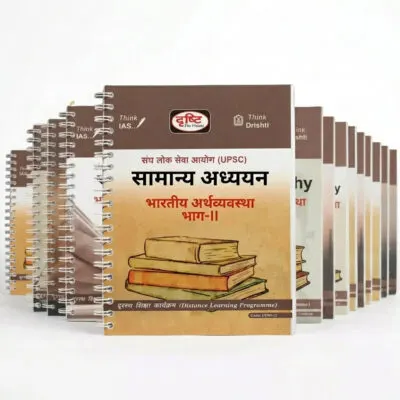
Drishti IAS Hindi Medium Complete GS Notes 2025-26 | 18 Booklets | Hindi Medium | UPSC Study Material
Drishti IAS Prelims Test Series 2026-27 | 10–35 Tests | English Medium | UPSC Study Material

Next IAS General Studies Prelims Test Series 2026-27 | 10–35 Tests | English Medium | UPSC Study Material

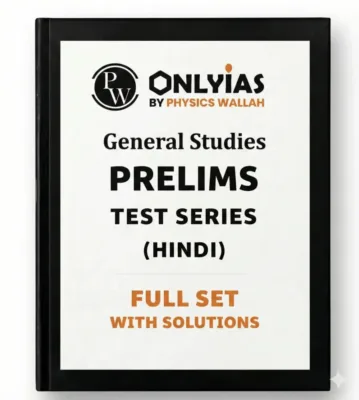
PW Only IAS Prelims 2026-27 Hindi Test Series | 10–35 Tests | Hindi Medium | UPSC Study Material

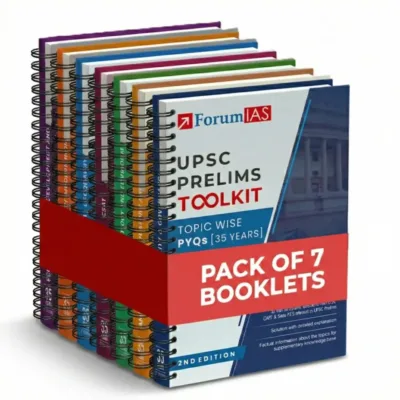
Forum IAS Prelims Topic-wise PYQs 1992-2025 | 7 Booklets | English Medium | UPSC Study Material

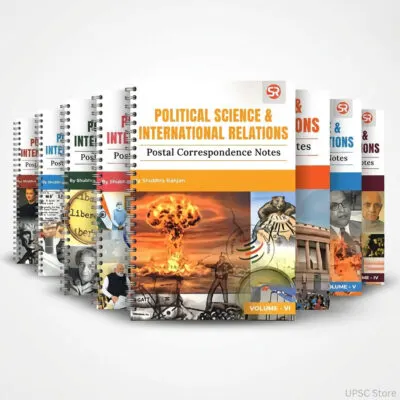
Shubhra Ranjan PSIR Optional Handwritten Notes 2026-27 | 11 Booklets | English Medium | UPSC Study Material
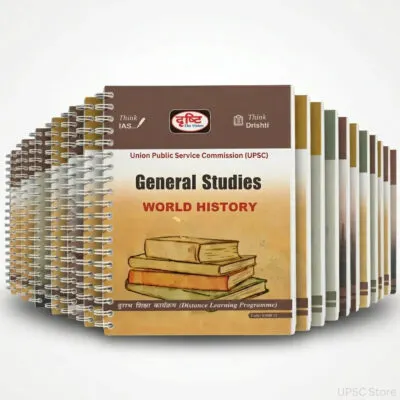
Drishti IAS GS Foundation Notes 2025-26 | 27 Booklets | English Medium | UPSC Study Material
PW Only IAS Prelims Test Series 2026 | 10–35 Tests | English Medium | UPSC Study Material
About Vajiram and Ravi World History GS Yellow Book
Vajiram and Ravi World History GS Yellow Book is an original printed study material set from Vajiram and Ravi, covering World History. Available in English medium, this set is counted booklet by booklet before dispatch — no photocopies, no missing booklets.
Product Details
- Institute: Vajiram and Ravi
- Subject: World History
- Medium: English
- Pages: 210
- Format: High-Quality Printed Booklets
- Delivery: Pan-India delivery in 4–7 working days, free over ₹1,999
- Condition: New, original print — counted before dispatch
Why Buy from UPSC Store?
- ✓ Original Printed Notes — no photocopies, every booklet counted before it ships
- ✓ Fast Dispatch — ships within 24 hours from Delhi, arrives in 4–7 days pan-India
- ✓ Secure Packaging — bubble-wrapped and boxed to prevent damage in transit
- ✓ 180+ Orders Shipped — to 25 states across India
- ✓ WhatsApp Support — ask which set fits your optional and medium before ordering
Frequently Asked Questions
Original print — the same printed booklets the institute issues. Every set is counted booklet by booklet before dispatch.
Orders are dispatched within 24 hours from Delhi and delivered across India in 4–7 working days. Delivery is free over ₹1,999.
Returns are accepted only if the problem is from our side: wrong item, damaged or defective copy, or missing booklets or pages. Report it within 7 days of delivery and we arrange a free pickup and send a free replacement or a full refund. We do not accept change-of-mind returns, so please check the medium, edition and binding before ordering. WhatsApp us to start a return.