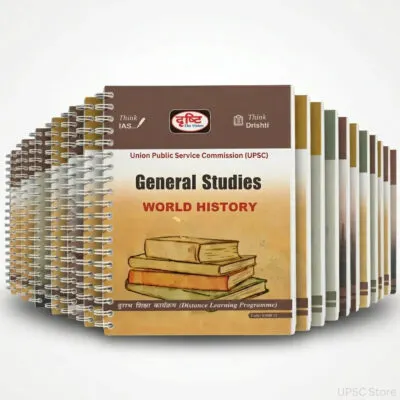



Drishti IAS BPSC Samanya Adhyayan Notes 2025-26
About Drishti IAS BPSC Samanya Adhyayan
The Drishti IAS BPSC Samanya Adhyayan is a printed UPSC study material set sold by UPSC Store — India’s trusted source for genuine, latest-batch civil services preparation books. This page covers full booklet details, syllabus coverage, pricing, shipping, and frequently asked questions. Useful for UPSC CSE, BPSC, UPPSC, MPPSC, RAS and other state PSC examinations.
Drishti IAS BPSC Samanya Adhyayan Notes 2025-26 — 18 Hindi Medium Printed Booklets for UPSC & State PSC Preparation
Related: Drishti IAS notes · BPSC notes
Product Overview
| Feature | Details |
|---|---|
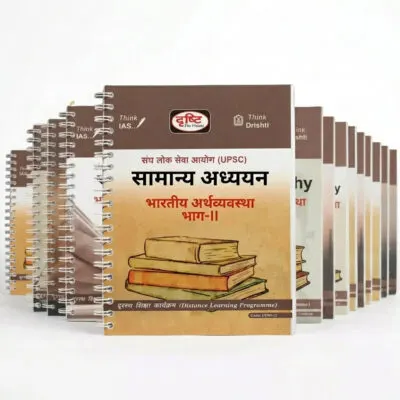
| Booklets Count | 18 Individual Printed Booklets — Full Samanya Adhyayan Syllabus Coverage |
| Language | Hindi Medium (हिंदी माध्यम) |
| Publisher | Drishti IAS (Samanya Adhyayan Series 2025-26) |
| Edition | 2025-26 — Latest Genuine Batch |
| Condition | Brand New, Unmarked, Fresh Stock |
| Format | High-Quality Printed Booklets — Spiral or Book Binding |
| Paper Quality | 75 GSM Ultra-White — Highlighter Safe, Zero Bleed-Through |
| Shipping | Pan India Delivery in 3-5 Business Days — Tracked |
| Also Useful For | BPSC, UPPSC, MPPSC, RAS and all State PSC Examinations |
Complete Booklet Catalog
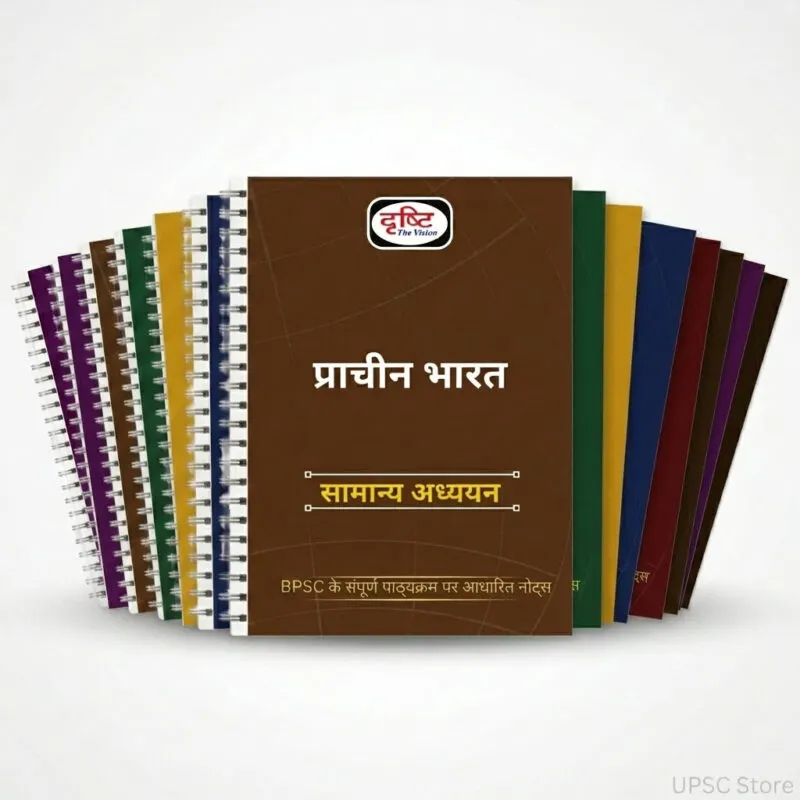
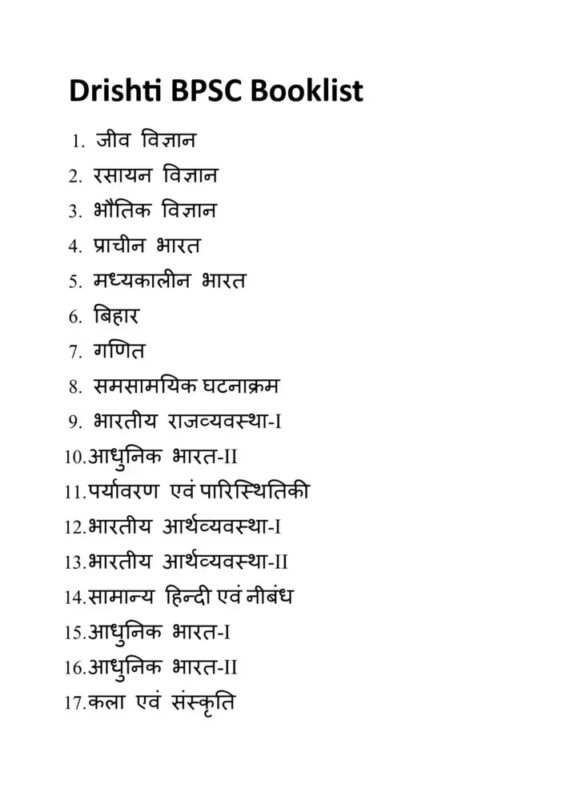
The Drishti IAS BPSC Samanya Adhyayan Notes 2025-26 set covers the entire General Studies syllabus across 18 individual printed booklets, written in naturally flowing Hindi — not translated from English. This set is designed for Hindi-medium aspirants preparing for BPSC, UPSC, UPPSC, MPPSC, RAS, and all major State PSC examinations who want structured, classroom-quality notes in their primary language.
- Booklet 1: भारत का इतिहास — प्राचीन काल — प्रागैतिहासिक काल, सिंधु घाटी सभ्यता, वैदिक युग, महाजनपद, मौर्य साम्राज्य, गुप्त काल, दक्षिण भारत के राजवंश, प्रमुख धर्म सुधार आंदोलन, बौद्ध एवं जैन धर्म का उदय और विस्तार।
- Booklet 2: भारत का इतिहास — मध्यकाल — दिल्ली सल्तनत, मुगल साम्राज्य, भक्ति और सूफी आंदोलन, विजयनगर साम्राज्य, मराठा साम्राज्य, क्षेत्रीय राज्यों का उदय, मध्यकालीन सामाजिक एवं आर्थिक व्यवस्था, प्रशासनिक संरचना।
- Booklet 3: भारत का इतिहास — आधुनिक काल — यूरोपीय कंपनियों का आगमन, ब्रिटिश शासन की स्थापना, 1857 का विद्रोह, राष्ट्रीय आंदोलन, महात्मा गांधी और कांग्रेस, असहयोग, सविनय अवज्ञा, भारत छोड़ो आंदोलन, स्वतंत्रता और विभाजन।
- Booklet 4: भारतीय राजव्यवस्था एवं संविधान — संविधान निर्माण, प्रस्तावना, मौलिक अधिकार, नीति निदेशक तत्व, मौलिक कर्तव्य, संघीय व्यवस्था, संशोधन प्रक्रिया, राष्ट्रपति, उपराष्ट्रपति, प्रधानमंत्री और मंत्रिपरिषद की शक्तियाँ।
- Booklet 5: भारतीय राजव्यवस्था — संस्थाएँ एवं शासन — संसद, राज्य विधानमंडल, न्यायपालिका, उच्च न्यायालय, सर्वोच्च न्यायालय, निर्वाचन आयोग, नियंत्रक एवं महालेखापरीक्षक, लोकपाल, केंद्र-राज्य संबंध, पंचायती राज एवं नगरपालिका।
- Booklet 6: भारतीय अर्थव्यवस्था — भाग 1 — राष्ट्रीय आय, GDP, GNP, आर्थिक नियोजन, पंचवर्षीय योजनाएँ, NITI आयोग, मुद्रास्फीति, गरीबी, बेरोजगारी, बजट, राजकोषीय नीति, मौद्रिक नीति, बैंकिंग प्रणाली, RBI की भूमिका।
- Booklet 7: भारतीय अर्थव्यवस्था — भाग 2 — कृषि अर्थव्यवस्था, हरित क्रांति, औद्योगिक नीति, विदेशी व्यापार, WTO, FDI, SEZ, प्रमुख आर्थिक सुधार 1991, अवसंरचना विकास, सार्वजनिक वितरण प्रणाली, खाद्य सुरक्षा, मनरेगा।
- Booklet 8: भूगोल — भारत एवं विश्व — पृथ्वी की संरचना, अक्षांश-देशांतर, महाद्वीप एवं महासागर, भारत का भौगोलिक स्वरूप, हिमालय, प्रायद्वीपीय पठार, नदी तंत्र, मानसून, जलवायु प्रदेश, मिट्टी के प्रकार, प्राकृतिक वनस्पति।
- Booklet 9: भूगोल — मानव एवं आर्थिक भूगोल — जनसंख्या वितरण, नगरीकरण, प्रवास, कृषि के प्रकार, खनिज संसाधन, ऊर्जा स्रोत, उद्योगों का वितरण, परिवहन एवं संचार, विश्व के प्रमुख क्षेत्र, भारत के आर्थिक भूगोल के प्रमुख तथ्य।
- Booklet 10: बिहार — विशेष अध्ययन भाग 1 — बिहार का इतिहास, प्रागैतिहासिक काल, मौर्य एवं गुप्त साम्राज्य की बिहार में भूमिका, मध्यकालीन बिहार, स्वतंत्रता संग्राम में बिहार का योगदान, चंपारण सत्याग्रह, 1857 में बिहार, प्रमुख विभूतियाँ।
- Booklet 11: बिहार — विशेष अध्ययन भाग 2 — बिहार की भौगोलिक संरचना, गंगा का मैदान, उत्तरी बिहार एवं दक्षिणी बिहार, जलवायु, प्रमुख नदियाँ, बिहार की कृषि, खनिज संसाधन, उद्योग, जनसंख्या, अनुसूचित जाति एवं जनजाति, प्रमुख पर्यटन स्थल।
- Booklet 12: बिहार — राजव्यवस्था एवं अर्थव्यवस्था — बिहार विधानमंडल, राज्यपाल, मुख्यमंत्री, पंचायती राज संस्थाएँ, बिहार की अर्थव्यवस्था, GSDP, कृषि नीति, औद्योगिक नीति, प्रमुख सरकारी योजनाएँ, बिहार बजट की विशेषताएँ, जीविका परियोजना।
- Booklet 13: विज्ञान एवं प्रौद्योगिकी — भौतिकी, रसायन विज्ञान एवं जीव विज्ञान के आधारभूत सिद्धांत, अंतरिक्ष प्रौद्योगिकी, ISRO के प्रमुख मिशन, परमाणु ऊर्जा, जैव प्रौद्योगिकी, नैनो प्रौद्योगिकी, सूचना एवं संचार प्रौद्योगिकी, साइबर सुरक्षा।
- Booklet 14: पर्यावरण एवं पारिस्थितिकी — पारिस्थितिकी तंत्र, जैव विविधता, वन्यजीव संरक्षण, जलवायु परिवर्तन, ग्लोबल वार्मिंग, प्रमुख पर्यावरणीय समझौते, राष्ट्रीय उद्यान एवं अभयारण्य, प्रदूषण के प्रकार, नवीकरणीय ऊर्जा, पर्यावरणीय कानून।
- Booklet 15: सामाजिक मुद्दे एवं विकास — शिक्षा व्यवस्था, स्वास्थ्य नीति, महिला सशक्तीकरण, बाल अधिकार, अनुसूचित जाति एवं जनजाति कल्याण, सामाजिक न्याय, आरक्षण नीति, निर्धनता उन्मूलन कार्यक्रम, प्रमुख सामाजिक सूचकांक।
- Booklet 16: राष्ट्रीय एवं अंतर्राष्ट्रीय करेंट अफेयर्स — भारत की विदेश नीति, पड़ोसी देशों से संबंध, प्रमुख अंतर्राष्ट्रीय संगठन, UN प्रणाली, G20, SCO, BRICS, प्रमुख वैश्विक घटनाक्रम 2024-25, द्विपक्षीय संबंध, रक्षा एवं सुरक्षा मुद्दे।
- Booklet 17: नैतिकता, सत्यनिष्ठा एवं अभिरुचि — नैतिकता की अवधारणाएँ, सिविल सेवा में नैतिकता, लोक प्रशासन में ईमानदारी, भ्रष्टाचार निवारण, भावनात्मक बुद्धिमत्ता, केस स्टडी आधारित प्रश्न, नैतिक दुविधाएँ एवं उनका समाधान।
- Booklet 18: सामान्य हिंदी एवं निबंध — हिंदी व्याकरण के प्रमुख बिंदु, संधि, समास, मुहावरे, लोकोक्तियाँ, पत्र लेखन, संक्षेपण, निबंध लेखन की संरचना, BPSC मुख्य परीक्षा के लिए प्रमुख निबंध विषय, हिंदी साहित्य की रूपरेखा।
In-Depth Content Breakdown: Booklet by Booklet
Booklet 1: भारत का इतिहास — प्राचीन काल
This booklet forms the bedrock of history preparation for BPSC and UPSC examinations. It begins with the prehistoric period and traces the development of human settlements through the Indus Valley Civilisation, Vedic Age, and the rise of Mahajanapadas. The Maurya and Gupta empires receive dedicated attention, covering administration, economy, art, and architecture. BPSC prelims consistently draw questions from ancient Indian history, making this booklet a high-return investment for aspirants preparing in Hindi medium during the 2025-26 exam cycle.
The booklet is structured chronologically, with each era presented through clear headings, timeline charts, and comparison tables. Significant facts about Buddhism and Jainism — frequently tested in BPSC and UPSC prelims — are presented in a quick-revision box format. Maps of ancient India showing major kingdoms and trade routes are printed at high resolution. The writing style is in natural Hindi, avoiding bureaucratic translation, which makes it significantly easier for Hindi-medium aspirants to absorb and retain information for both prelims and mains stages.
Booklet 2: भारत का इतिहास — मध्यकाल
Medieval Indian history is a substantial component of the BPSC and UPSC General Studies syllabus, and this booklet addresses it in full. Topics span the establishment of the Delhi Sultanate, the Mughal Empire’s administrative and cultural contributions, the Bhakti and Sufi movements, and the rise of the Maratha Empire. Regional kingdoms such as Vijayanagara and the Deccan Sultanates are also covered in relevant detail. For BPSC aspirants, the connection between medieval Bihar and the larger Mughal administration is specifically highlighted.
Each dynasty is covered through a standardised structure — founders and extent, administrative innovations, economic policies, art and architecture, and decline factors. This parallel structure makes cross-dynasty comparison questions in BPSC mains significantly easier to answer. Important battles, treaties, and court scholars are tabulated for quick reference. The language is kept accessible and flows naturally in Hindi, making it suitable for aspirants who have studied primarily in Hindi-medium schools and colleges and are encountering these topics in a competitive exam context for the first time.
Booklet 3: भारत का इतिहास — आधुनिक काल
Modern Indian history is arguably the most heavily tested period in both BPSC and UPSC prelims and mains. This booklet covers the arrival of European trading companies, the establishment of British colonial rule, the 1857 revolt, and the entire arc of the Indian National Movement from the formation of the Indian National Congress to Independence and Partition. Gandhian movements — Non-Cooperation, Civil Disobedience, and Quit India — are explained with their causes, events, and consequences, which are standard mains-answer topics.
Drishti IAS has structured this booklet with special attention to Bihar’s role in the freedom struggle — Champaran Satyagraha, the participation of Bihar leaders, and regional movements feature prominently, making this especially relevant for BPSC aspirants. Timelines of major events between 1857 and 1947 are printed as visual aids for quick revision. The booklet also includes sections on socio-religious reform movements such as those led by Raja Ram Mohan Roy and Dayanand Saraswati, which are tested in BPSC’s integrated competitive examinations.
Booklet 4: भारतीय राजव्यवस्था एवं संविधान
Indian Polity is a mandatory and high-scoring section in both BPSC and UPSC examinations. This booklet covers the making of the Indian Constitution, the Preamble, Fundamental Rights, Directive Principles of State Policy, and Fundamental Duties in structured detail. The powers and functions of the President, Vice-President, Prime Minister, and Council of Ministers are explained with constitutional articles clearly referenced. Federal structure, Centre-State relations, and the process of constitutional amendment are also addressed comprehensively for BPSC mains preparation.
The booklet is particularly strong in explaining complex constitutional provisions in clear Hindi that resonates naturally with readers. Constitutional articles are cited throughout so aspirants can cross-reference with the original text when required. Comparison tables between parliamentary and presidential systems, and between the Indian and US constitutions, provide analytical clarity. Important landmark Supreme Court judgments that have shaped constitutional interpretation are also summarised, which is valuable for BPSC mains descriptive answers and UPSC GS Paper II preparation.
Booklet 5: भारतीय राजव्यवस्था — संस्थाएँ एवं शासन
This booklet extends polity coverage to the institutional architecture of Indian governance. Parliament’s structure, functioning, and legislative procedures are explained in detail, followed by state legislatures. The judiciary section covers the Supreme Court and High Courts — their composition, jurisdiction, and landmark rulings. Constitutional bodies such as the Election Commission, Comptroller and Auditor General, and the newly established Lokpal institution are covered with their powers, functions, and relevance to current affairs in 2024-25.
Panchayati Raj institutions and urban local bodies receive dedicated coverage, which is particularly important for BPSC given Bihar’s emphasis on grassroots governance in its examination pattern. The 73rd and 74th Constitutional Amendments are explained with their significance for rural and urban self-governance. A special section on cooperative federalism and issues in Centre-State financial relations — GST, Finance Commission recommendations — connects polity with current governance debates. This booklet is directly useful for UPPSC, MPPSC, and RAS aspirants as well, given the overlap in state PSC polity syllabi.
Booklet 6: भारतीय अर्थव्यवस्था — भाग 1
Economics Part 1 builds the foundational concepts required for BPSC and UPSC General Studies. National income concepts — GDP, GNP, NNP, and the differences between them — are explained with examples relevant to the Indian context. Economic planning and the shift from Five Year Plans to NITI Aayog’s strategy documents are covered historically and analytically. Inflation types, measurement methods, poverty lines, unemployment categories, and government budget concepts are all addressed clearly in Hindi for aspirants who find English economics texts difficult to navigate.
The Reserve Bank of India’s monetary policy tools — CRR, SLR, Repo Rate, Reverse Repo Rate — are explained in a cause-and-effect format that helps aspirants answer both objective and descriptive questions. The banking system, types of banks, and recent banking sector reforms are covered with current data from the 2024-25 Union Budget where applicable. Fiscal responsibility legislation, FRBM Act provisions, and deficit financing are explained in simple Hindi. Diagrams showing the flow of money in the economy and the relationship between fiscal and monetary policy are included as visual learning aids.
Booklet 7: भारतीय अर्थव्यवस्था — भाग 2
Economics Part 2 shifts focus to sectoral and applied economics. Agricultural economy — Green Revolution, land reforms, agricultural credit, and the minimum support price system — forms the opening section, which is directly relevant to BPSC given Bihar’s agricultural character. Industrial policy evolution from the 1956 Industrial Policy Resolution to the current Make in India initiative is traced chronologically. Foreign trade policy, WTO agreements, FDI regulations, and Special Economic Zones are covered in the context of India’s integration with the global economy.
The 1991 economic reforms — liberalisation, privatisation, and globalisation — are given dedicated treatment as they remain a perpetually tested topic in BPSC and UPSC examinations. Public distribution system reforms, food security legislation, and flagship schemes like MGNREGA, PM-KISAN, and Pradhan Mantri Fasal Bima Yojana are covered with key data points. Infrastructure development — roads, railways, ports, and digital infrastructure — is treated in a manner that connects economic geography with economic policy. This booklet is highly relevant for BPSC 70th Integrated Combined Competitive Examination aspirants.
Booklet 8: भूगोल — भारत एवं विश्व
Physical Geography is a consistent source of questions in BPSC prelims and UPSC GS Paper I. This booklet starts with the structure of the Earth, major landforms, and plate tectonics before moving to India’s specific physical geography. The Himalayas, Indo-Gangetic Plain, Peninsular Plateau, and Coastal Plains are described with their formation, extent, and economic significance. Indian river systems — Himalayan and Peninsular — are mapped and explained in detail, as rivers are both a geography and a current affairs topic given interstate water disputes.
Monsoon formation and its influence on India’s climate zones are explained through cause-effect diagrams. Soil types — alluvial, black, red, laterite — and their distribution across India are tabulated with associated crops, which connects geography directly with agriculture economics covered in Booklet 7. Natural vegetation zones and forest types are also mapped. For BPSC aspirants, Bihar’s specific geography — the North Bihar Plain, Ganga’s role, Chhota Nagpur plateau proximity — receives special attention. All maps are printed at resolution suitable for study and note-taking alongside the text.
Booklet 9: भूगोल — मानव एवं आर्थिक भूगोल
Human and Economic Geography covers population distribution, density, and demographic characteristics of India, including analysis of Census data trends. Migration patterns, urbanisation trends, and smart city initiatives bridge geography with governance topics. Agricultural geography covers types of farming, major crop regions, and the relationship between climate, soil, and agricultural productivity. Mineral resources — coal, iron ore, petroleum, natural gas — and their regional distribution across India are mapped clearly, with economic significance noted for each mineral type.
Energy geography covers both conventional and renewable energy sources, with solar, wind, and hydroelectric projects mapped across India. Industrial locations and the factors determining them — raw materials, labour, market, and transport — are explained through specific examples. Major transportation networks including railways, national highways, and inland waterways are covered, with special reference to projects relevant to Bihar such as the Ganga waterway. World geography sections cover major biomes, ocean currents, and important international regions that appear in BPSC and UPSC current affairs questions.
Booklet 10: बिहार — विशेष अध्ययन भाग 1
Bihar Special Study is a unique and high-value component of the BPSC examination that distinguishes it from other state PSC exams and UPSC. This booklet covers the ancient history of Bihar — the Maurya and Gupta empires’ connections to Pataliputra, the significance of Nalanda and Vikramshila universities, and Bihar’s role as the centre of Buddhist civilisation. Medieval Bihar’s incorporation into Sultanate and Mughal administration is traced. The freedom struggle in Bihar — including Champaran Satyagraha, Quit India movement, and key personalities from Bihar — receives detailed coverage.
Key Bihar-specific personalities from different eras — Chandragupta Maurya, Ashoka, Aryabhatta, Vidyapati, Kunwar Singh, JP Narayan — are profiled with their contributions noted in relation to broader Indian history. This contextualisation helps aspirants write enriched answers in BPSC mains. The booklet also covers the formation of Bihar state, the separation of Jharkhand in 2000, and the political history of post-independence Bihar. Questions from Bihar’s history section in BPSC 69th and 70th exams have been referenced to guide the depth of coverage in this booklet.
Booklet 11: बिहार — विशेष अध्ययन भाग 2
Bihar Special Study Part 2 shifts to the physical and economic geography of Bihar. The physiographic divisions of Bihar — North Bihar Plain, South Bihar Plain, and the Chhota Nagpur Plateau’s border areas — are described with their economic characteristics. The Ganga and its tributaries, including the Sone, Gandak, Kosi, and Bagmati rivers, are covered with their significance for agriculture, flood patterns, and irrigation. Bihar’s monsoon patterns, average rainfall distribution, and climate variations across regions are charted with their implications for agriculture and disaster management.
Bihar’s agriculture — paddy, wheat, maize, sugarcane, vegetables, and litchi cultivation in Muzaffarpur — is covered with data on area under cultivation and production statistics. Mineral resources, though limited compared to Jharkhand, are covered along with industries established in Bihar. Population statistics from the latest Census and demographic trends are included. Important tourist destinations — Bodh Gaya, Nalanda, Rajgir, Vaishali, Patna Sahib — are listed with their historical and cultural significance. This booklet is essential for BPSC aspirants as Bihar-specific questions carry significant weight in the examination.
Booklet 12: बिहार — राजव्यवस्था एवं अर्थव्यवस्था
This booklet covers Bihar’s governance structure and economic profile, which are tested extensively in BPSC mains. Bihar’s legislative assembly, legislative council, Governor’s powers, Chief Minister’s functions, and the role of the Bihar Public Service Commission itself are explained. Panchayati Raj implementation in Bihar — the three-tier system, reservation provisions, and Jeevika (Bihar Rural Livelihoods Project) — is covered in detail. District administration in Bihar, the role of DMs and SDOs, and revenue administration are explained in the context of the Bihar Land Reforms Acts.
Bihar’s economy — GSDP growth rate, sectoral composition (agriculture, industry, services), and comparison with national averages — is covered with current data. Key state government schemes such as Mukhyamantri Gram Parivahan Yojana, Bihar Student Credit Card Scheme, Har Ghar Bijli Yojana, and Swachh Bihar Abhiyan are explained with their objectives and current status. The Special Category State demand and central fund allocation to Bihar are also discussed. This Bihar-specific economic content is not available in standard UPSC notes and makes these booklets uniquely valuable for BPSC aspirants.
Booklet 13: विज्ञान एवं प्रौद्योगिकी
Science and Technology is an increasingly important section of both BPSC and UPSC General Studies. This booklet covers fundamental concepts in Physics, Chemistry, and Biology at a level appropriate for competitive exam preparation — not as deep as a degree course, but sufficient to answer all MCQs and short-answer questions. ISRO’s space missions — Chandrayaan-3, Aditya-L1, Gaganyaan — are covered with their scientific objectives and India’s achievements in space exploration. Nuclear energy — types of reactors, India’s three-stage nuclear programme, and civilian nuclear agreements — is explained clearly.
Biotechnology applications in agriculture (GM crops), medicine (vaccines, gene therapy), and industry are covered with examples relevant to India’s biotechnology sector. Nanotechnology, artificial intelligence, and blockchain technology are introduced at a conceptual level sufficient for competitive examinations. Cybersecurity, data protection laws, and India’s digital infrastructure initiatives receive dedicated coverage in the context of current affairs. This section is written in easy Hindi with analogies that make abstract scientific concepts accessible to aspirants whose primary background is in arts or social sciences rather than science streams.
Booklet 14: पर्यावरण एवं पारिस्थितिकी
Environment and Ecology has become one of the most dynamic sections of UPSC and state PSC examinations due to the increasing relevance of climate change and biodiversity. This booklet covers ecosystem structure and function, food chains and food webs, energy flow, biogeochemical cycles, and biodiversity at genetic, species, and ecosystem levels. Threats to biodiversity — habitat destruction, invasive species, climate change, poaching — and conservation strategies including protected areas, biosphere reserves, and community conservation are explained in detail relevant to BPSC and UPSC syllabi.
Climate change science — greenhouse effect, global warming, sea level rise, extreme weather events — is covered alongside India’s climate commitments: Paris Agreement, Nationally Determined Contributions, and Net Zero targets. Major international environmental conventions — CBD, CITES, Ramsar, UNFCCC, Kyoto Protocol — are tabulated with India’s participation status. India’s National Parks and Tiger Reserves, including those in Bihar and neighbouring states, are listed. Pollution types — air, water, soil, noise, e-waste — and relevant legislation (Environment Protection Act, Water Act, Air Act) are also addressed, connecting environment with governance topics.
Booklet 15: सामाजिक मुद्दे एवं विकास
Social Issues and Development is a section that tests aspirants’ understanding of India’s social fabric and government responses to social challenges. This booklet covers education policy — Right to Education Act, National Education Policy 2020, and higher education reforms. Health policy — National Health Mission, Ayushman Bharat, and public health challenges — is explained with current data. Women’s empowerment legislation and schemes — Beti Bachao Beti Padhao, Mahila Shakti Kendras, maternity benefits — are covered alongside data on gender indices.
Child rights — Protection of Children from Sexual Offences Act, child labour laws, POCSO, and schemes for child welfare — are addressed in detail. Social justice and reservation policy — constitutional provisions, the Mandal Commission, EWS reservation, and current debates — are explained objectively. Scheduled Castes and Scheduled Tribes welfare legislation and schemes are covered, which is particularly relevant for BPSC given Bihar’s significant SC/ST population. Poverty measurement methodologies, SECC data, and poverty alleviation programmes are tabulated for quick reference. Human Development Index and India’s ranking are also included.
Booklet 16: राष्ट्रीय एवं अंतर्राष्ट्रीय करेंट अफेयर्स
Current Affairs is the differentiating factor in BPSC and UPSC examinations, and this booklet covers the most important developments of 2024-25 in national and international domains. India’s foreign policy — neighbourhood first policy, Act East policy, Vasudhaiva Kutumbakam philosophy at G20 — is explained with recent diplomatic developments. India’s bilateral relations with the United States, China, Russia, Japan, and Gulf countries are covered with key agreements and trade data. India’s role in multilateral forums — G20 presidency outcomes, SCO summits, BRICS expansion — is documented.
Key domestic developments — Constitutional amendments, important Supreme Court judgments of 2024-25, major economic policy changes, and significant state-level events with national implications — are covered. Defence and security topics including border issues, new defence acquisitions, and India’s defence export achievements are addressed. International organisations — UN agencies, IMF, World Bank, WTO, WHO — are covered with India’s engagement and current leadership positions. This booklet is updated to reflect the 2025-26 exam cycle, making it more relevant than older printed notes available in the market for BPSC and UPSC aspirants.
Booklet 17: नैतिकता, सत्यनिष्ठा एवं अभिरुचि
Ethics, Integrity and Aptitude is tested in UPSC GS Paper IV and in BPSC mains as part of general studies. This booklet covers fundamental ethical concepts — morality, virtue, duty, consequentialism — and their application in civil service contexts. Emotional intelligence, its components, and relevance to administrative decision-making are explained clearly. Civil service values — integrity, impartiality, non-partisanship, objectivity, dedication to public service — are defined and illustrated with examples. Ethical dilemmas in public administration are presented as case studies with model answers.
Corruption prevention — Anti-Corruption laws, Central Vigilance Commission, Lokpal and Lokayukta — is covered with institutional mechanisms. Codes of conduct for civil servants, conflict of interest situations, and whistleblower protection are addressed. Contributions of moral thinkers — Gandhi, Ambedkar, Kautilya — to administrative ethics are covered in a UPSC and BPSC mains answer-writing framework. The booklet includes 15 model case studies with suggested answer structures, which helps aspirants practice the application-based questions that appear in BPSC mains and UPSC GS IV papers. This makes it a practical study tool rather than just a theoretical reference.
Booklet 18: सामान्य हिंदी एवं निबंध
General Hindi and Essay is a compulsory component of BPSC mains examination, making this booklet uniquely valuable in the set. Hindi grammar — Sandhi, Samas, Karak, Vachya, Alankar, Ras — is covered with rules and examples at the level tested in BPSC mains. Muhavare (idioms) and Lokoktiyan (proverbs) frequently tested in BPSC are listed with their meanings and usage examples. Letter writing — official and informal — and Sankshepan (precis writing) are explained with model examples and the marking criteria used by BPSC examiners.
Essay writing guidance is structured around the BPSC mains format — introduction, body, and conclusion framework with tips on incorporating current affairs, quotations, and data. Forty important essay topics covering social, economic, environmental, technological, and governance themes are listed with suggested outline structures. Hindi literary history — important Khari Boli writers, Chhayavad poets, and modern Hindi literature — is covered to the extent tested in BPSC. This booklet transforms what many aspirants consider a difficult section into a structured preparation module, and the guidance is directly calibrated to BPSC mains marking patterns.
Physical Construction and Quality Standards
Every booklet in this Drishti IAS BPSC Samanya Adhyayan Notes 2025-26 set is manufactured to withstand daily intensive use across a full exam preparation cycle — from initial reading through multiple revision rounds up to the exam date.
Paper Quality: 75 GSM Anti-Glare White Paper
The 75 GSM ultra-white paper used across all 24 Booklets is selected specifically for the demands of UPSC and BPSC preparation. The high opacity rating ensures that text and diagrams on the reverse side of any page do not show through, keeping each page visually clean even in heavily printed sections. Multiple highlighter colours — yellow, green, pink, orange — can be applied without any bleed-through to the opposite side, supporting colour-coded revision strategies. The anti-glare surface significantly reduces eye strain during the 8-10 hour daily study sessions typical of serious BPSC and UPSC preparation, making it a meaningful quality upgrade over standard photostat notes.
Printing Technology: High-Resolution Laser Printing
All 24 Booklets are printed using high-resolution laser printing technology, which produces crisp, sharp text and diagrams at a level of clarity that photocopied notes cannot replicate. Hindi text printed via laser technology maintains readability even in smaller font sizes used for tables and footnotes. Maps — India’s physical geography maps, Bihar’s district map, world political map — are printed at sufficient resolution for all place names to be legible without a magnifying glass. Flowcharts, organisational structure diagrams, and comparison tables retain their line quality. The toner is permanently bonded to the paper and is completely smudge-proof, so pages do not degrade over months of handling.
Binding and Durability
Each booklet is available in either spiral binding or book binding, both engineered for the demands of active study. Spiral-bound booklets open completely flat on a desk, allowing aspirants to write notes alongside the printed text without the page springing back — particularly useful for the Bihar Special Study booklets where aspirants frequently annotate with local facts. Book-bound booklets have reinforced spines using high-quality PVA adhesive that prevents pages from separating even after months of use. All booklets carry a 300 GSM laminated cover with UV coating that protects against moisture, corner wear, and the general damage of being carried in a bag daily.
Key Features and Study Design
The Drishti IAS BPSC Samanya Adhyayan Notes 2025-26 set is specifically designed for Hindi-medium aspirants who need structured, accurate, and exam-relevant study material for BPSC, UPSC, and other State PSC examinations — all in naturally written Hindi.
- Natural Hindi Language — Not Translated: Drishti IAS is renowned among Hindi-medium aspirants for writing content in authentic Hindi that feels natural to read. Unlike notes translated mechanically from English sources, these booklets use vocabulary and sentence structures familiar to aspirants educated in Hindi-medium institutions, reducing cognitive load and improving retention during long study sessions before BPSC and UPSC exams.
- Bihar-Specific Content in 3 Dedicated Booklets: With three full booklets dedicated to Bihar’s history, geography, and polity-economy, this set offers depth on Bihar-specific topics that BPSC aspirants cannot find in standard UPSC notes. Questions on Bihar carry significant weight in BPSC prelims and mains, and this targeted coverage directly improves scoring in those sections.
- 2025-26 Updated Edition with Current Affairs: The Current Affairs booklet covers developments up to 2024-25, ensuring aspirants preparing for BPSC 70th integrated exam and upcoming BPSC cycles have access to the most recent data on government schemes, international events, science and technology milestones, and constitutional developments referenced in UPSC and BPSC question papers.
- Integrated Prelims and Mains Coverage: Each booklet is structured to serve both prelims (objective fact retention) and mains (analytical understanding) preparation needs. Key facts appear in highlighted boxes for prelims quick revision, while explanatory paragraphs and case studies provide the depth needed for BPSC mains descriptive answers and UPSC GS Paper writing.
- Mapped to BPSC Syllabus with UPSC Overlap: All 24 Booklets map directly to the official BPSC Integrated Combined Competitive Examination syllabus, with coverage that simultaneously addresses UPSC GS Papers I through IV. This dual-coverage design makes the set valuable for aspirants writing both BPSC and UPSC in the same exam cycle, maximising the return on study investment.
Shipping, Packaging and Delivery
All 24 Booklets are individually shrink-wrapped in clear polythene before being assembled as a set. The complete set is then placed in a corrugated cardboard shipping box with a minimum thickness of 5mm for structural strength. Foam corner protectors are inserted at all eight corners of the box to absorb impact from courier handling. The exterior of the box is sealed with heavy-duty packing tape and labelled with a waterproof printed shipping label. A moisture-resistant inner liner prevents water ingress during rain or humid transit conditions. This multi-layer packaging approach ensures your Drishti IAS BPSC Samanya Adhyayan Notes 2025-26 arrive in the same brand-new condition they were packed in, regardless of transit distance.
Orders are dispatched within 24 hours of payment confirmation on working days. Pan India delivery is completed in 3-5 business days via tracked courier services — you receive a tracking ID via WhatsApp and email immediately upon dispatch. For any shipping queries, booklet shortages, or damaged-in-transit concerns, contact our store on WhatsApp at +91 70045 49563. Any missing or damaged booklet reported within 48 hours of delivery is replaced and reshipped at no additional cost. We ship to all pin codes across India including Tier 2 and Tier 3 cities and rural areas frequently served by major courier networks.
Frequently Asked Questions (FAQ)
A: Yes. These notes are specifically mapped to the BPSC Integrated Combined Competitive Examination syllabus and are updated for the 2025-26 exam cycle. The three dedicated Bihar Special Study booklets cover history, geography, and polity-economy of Bihar at the depth required by BPSC 70th prelims and mains. The language is natural Hindi, which is a significant advantage for aspirants who think, study, and write answers in Hindi medium. Buy this set if you are targeting BPSC 70th or subsequent BPSC cycles.
A: This set contains 18 individual printed booklets covering the full Samanya Adhyayan syllabus: three booklets for Indian History (Ancient, Medieval, Modern), two for Indian Polity, two for Indian Economy, two for Geography, three for Bihar Special Study, plus booklets for Science and Technology, Environment, Social Issues, Current Affairs, Ethics, and General Hindi and Essay. Each booklet is separately bound for flexible study scheduling. You can buy the complete set as listed on this page.
A: The product listed on this page is exclusively the Hindi Medium edition of Drishti IAS BPSC Samanya Adhyayan Notes 2025-26 — all 24 Booklets are written in Hindi. Drishti IAS is particularly renowned for its Hindi-medium content quality, as the institute produces original Hindi notes rather than translating from English, which results in significantly more natural and readable Hindi text that suits aspirants preparing in Hindi medium for BPSC and UPSC examinations.
A: These booklets use 75 GSM ultra-white paper chosen for high opacity — multiple highlighter colors and gel pens work without bleed-through to the reverse side, ideal for color-coded revision. The anti-glare finish reduces eye strain during long study sessions. Text, maps, and diagrams on the back of any page remain fully legible even after heavy highlighter use on the front, making these notes suitable for the multi-round revision strategy recommended for BPSC and UPSC preparation.
A: Drishti IAS is generally preferred by Hindi-medium aspirants specifically because its content is originally written in Hindi, not translated from English. For BPSC aspirants, Drishti IAS has the added advantage of dedicated Bihar-specific content across three full booklets. Vision IAS is strong for UPSC, but Drishti IAS’s combination of natural Hindi writing and Bihar Special Study coverage makes the Drishti IAS BPSC Samanya Adhyayan Notes 2025-26 the preferred choice for BPSC-focused preparation. Both can be used for UPSC General Studies.
A: Yes, the 24-booklet set is mapped to the complete BPSC Integrated Combined Competitive Examination syllabus including General Studies sections for both prelims and mains. Bihar-specific history, geography, polity, and economy — which are unique to BPSC and not covered in standard UPSC notes — have three dedicated booklets in this set. General Hindi and Essay, which are compulsory in BPSC mains, also have a dedicated booklet. The Current Affairs booklet covers developments up to 2024-25, keeping the set current for upcoming BPSC examination cycles.
A: Yes. The 2025-26 edition reflects updates to the BPSC examination pattern, revised syllabus notifications, and current affairs through 2024-25. Key changes include updated data in Economics (Union Budget 2024-25), Science and Technology developments (ISRO missions, AI policy), and revised Bihar government scheme details. Aspirants who buy this 2025-26 edition will have more current content than previous year editions circulating in the market, which is important given that BPSC frequently tests recent government schemes and current national and state events.
A: Yes, each booklet in this set is structured to serve both purposes. Key facts, dates, important terms, and data points are presented in highlighted boxes and tables for prelims objective-question preparation. Analytical explanatory paragraphs, case studies in the Ethics booklet, and essay frameworks in the General Hindi and Essay booklet serve BPSC mains preparation. The Bihar Special Study booklets are particularly useful for BPSC mains descriptive answers that require specific knowledge of Bihar’s history, geography, economy, and governance not found in standard UPSC study materials.
A: Yes. Fourteen of the eighteen booklets — covering Indian History, Indian Polity, Indian Economy, Geography, Science and Technology, Environment, Social Issues, Current Affairs, and Ethics — are directly relevant for UPPSC, MPPSC, RAS, and other state PSC examinations that follow similar General Studies syllabi. The three Bihar Special Study booklets and the General Hindi booklet are BPSC-specific. Hindi-medium aspirants preparing for any state PSC examination will find the language quality and content accuracy in these notes significantly better than generic printed notes available in local markets.
A: You can buy this complete 24-booklet set directly from our UPSC store online on this product page. We are based in Mukherjee Nagar, Delhi — India’s most established UPSC preparation hub — and ship pan India with tracked delivery in 3-5 business days. This is the most convenient way to buy genuine Drishti IAS printed notes online without visiting Delhi in person. Place your order on this page and receive your notes at your doorstep anywhere in India within 3-5 business days.
A: Contact us immediately on WhatsApp at +91 70045 49563 with your order number and a photograph of the package condition. Any missing or damaged booklet reported within 48 hours of delivery will be reshipped to you at no additional charge. Our packaging — individual shrink-wrap, corrugated box with foam corner protectors, and waterproof outer seal — is designed to minimise transit damage. In the rare event of damage due to extreme courier handling, we replace affected booklets promptly without requiring the customer to return the original package.
A: These are genuine, brand-new, original Drishti IAS BPSC Samanya Adhyayan Notes 2025-26 — not photostat copies, scanned PDFs, or third-party reproductions. All 24 Booklets are fresh stock from the current 2025-26 batch, unmarked and unused. Original Drishti IAS notes are printed on 75 GSM paper with high-resolution laser printing, which is visibly superior in quality to photostat copies. Buying original printed notes ensures content accuracy and print quality that supports effective long-term study, unlike photocopied notes whose print can fade or blur with repeated use.
Summary
| Specification | Value |
|---|---|
| Booklets | 18 Printed Booklets |
| Language | Hindi Medium (हिंदी माध्यम) |
| Paper | 75 GSM Ultra-White |
| Binding | Spiral or Book Binding |
| Delivery | 3-5 Business Days Pan India |
| Also Useful For | BPSC, UPPSC, MPPSC, RAS and all State PSC Examinations |
Sold by our UPSC store in Mukherjee Nagar, Delhi — India’s top UPSC preparation destination. Buy Drishti IAS BPSC Samanya Adhyayan Notes 2025-26 online today and receive your complete 24-booklet printed set with pan India delivery in 3-5 days.
Reference: Civil Services Examination
Customer Reviews 126
Material standard quality ka hai. BPSC ke liye kaafi useful lekin expectations thoda zyada the.
Notes mein koi compromise nahi hai. Drishti standard maintain karta hai.
Ye notes mere padhai ka sab se bada hissa ban gaye. Highly valuable.
Notes se bohot kuch samajh mein aa gaya, bohot organized structure hai.
Quality aur information dono perfect hain. Definitely recommend karungi friends ko.
Hindi medium mein samajhne mein asaan. Drishti ke notes se better preparation possible hai.
Content achha hai par delivery time thoda zyada tha. Otherwise satisfied.
Notes bilkul crisp aur organized the.
Aspirants Also Bought
More from the same category
About Drishti IAS BPSC Samanya Adhyayan Notes 2025-26
Drishti IAS BPSC Samanya Adhyayan Notes 2025-26 is a highly recommended UPSC study material from Drishti IAS, specially designed for BPSC preparation. Available in Hindi medium, this material is crafted to match the exact requirements of the UPSC Civil Services Examination syllabus — covering both Prelims and Mains comprehensively.
Product Details
- Institute: Drishti IAS
- Subject: BPSC
- Medium: Hindi
- Format: Printed
- Delivery: Pan-India delivery in 3–5 working days
- Format: Original printed material, verified authentic
Why Buy from UPSC Store?
- ✅ 100% Genuine Printed Material — Original printed notes, no photocopies or fake copies
- ✅ Fast Delivery — Ships within 24 hours, arrives in 3–5 days pan-India
- ✅ Secure Packaging — Bubble-wrapped and boxed to prevent damage in transit
- ✅ Trusted by 10,000+ Aspirants — India's most reliable UPSC material marketplace
- ✅ WhatsApp Support — Get expert guidance on material selection before ordering
Frequently Asked Questions
Yes, all products at UPSC Store are 100% genuine printed materials. We do not sell photocopies or fake copies.
Orders are dispatched within 24 hours and delivered across India in 3–5 working days via reputed courier partners.
Yes, we accept returns within 7 days if the product is damaged or incorrect. Check our refund policy for details.
We recommend pairing this with current affairs notes and a UPSC test series for comprehensive preparation. Browse more in BPSC, Drishti IAS, General Studies, State PCS, UPSC.