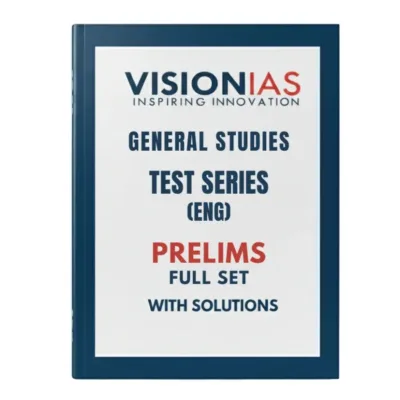
Vision IAS UPSC Essay & GS Mains Test Series 2026-27
Vision IAS Essay & GS β UPSC Study Material
Related: Vision IAS test series Β· UPSC Mains test series
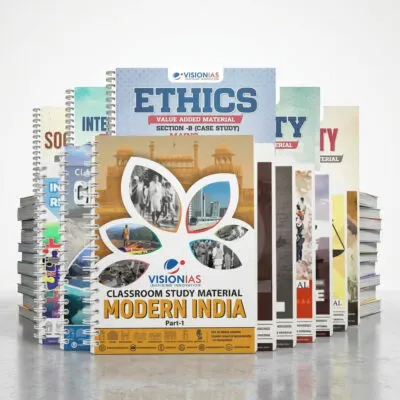
Buy Vision IAS Essay & GS printed booklets for UPSC Civil Services Examination preparation. This page lists complete details about Vision IAS Essay & GS including booklet count, language, syllabus coverage, pricing, and shipping.
Vision IAS UPSC Essay & GS Mains Test Series 2026-27 β Complete Printed Test Series for UPSC Mains Examination
Product Overview
Buy Vision IAS Essay & GS Mains Test Series 2026-27 printed online β the complete test package for UPSC Mains answer writing practice. This comprehensive test series combines Essay and General Studies papers in a structured format designed specifically for Mains examination success.
| Feature | Details |
|---|---|
| Product Type | Complete UPSC Mains Test Series β Essay + GS Papers Combined |
| Test Papers Included | Scheduled Progressive Release Format β Tests Released Monthly Until Exam |
| Language | English Medium |
| Publisher | Vision IAS (Premium Mains Test Series) |
| Edition | 2026-27 β Latest Exam Pattern & Syllabus |
| Condition | Brand New, Unmarked, Fresh Stock |
| Format | High-Quality Printed Booklets β Spiral or Book Binding |
| Paper Quality | 75 GSM Ultra-White β Highlighter Safe, Zero Bleed-Through |
| Special Features | Examiner Notes, Model Answers, Answer Structure Guidance, Time Management Tips |
| Shipping | Pan India Delivery in 3-5 Business Days β Tracked with WhatsApp Updates |
| Also Useful For | BPSC, UPPSC, MPPSC, RAS, JPSC, KPSC and all State PSC Mains Exams |
Progressive Release Policy & Flexible Purchase Options
The Vision IAS UPSC Essay & GS Mains Test Series 2026-27 operates on a scheduled monthly release format, ensuring you receive fresh, timely test papers that align with your exam preparation timeline. New tests are published progressively throughout the year until the UPSC examination, allowing you to practice continuously with the latest question patterns and difficulty levels.
Purchase Before Full Release: When you buy this test series early in the year, only the tests released up to your purchase date will be available initially. Remaining tests will be delivered automatically as they are released β at no additional cost. This flexibility ensures you’re never waiting for study material and can begin your answer writing practice immediately.
Refund & Delivery Guarantee: For prepaid orders, if you purchase before all tests are released, we refund the amount for unavailable tests. For COD orders placed early, we ship released tests immediately and dispatch balance tests as they become available. Our WhatsApp team (+91 70045 49563) provides complete tracking and delivery confirmation for every shipment.
Complete Test Series Catalog & Content Coverage
This Vision IAS test series provides comprehensive practice for both UPSC Essay Paper and General Studies Papers (GS I, II, III, IV) with fully solved model answers. Each test is structured to mirror actual UPSC Mains examination format, timing constraints, and evaluation standards β helping you master answer writing, presentation, and time management before the actual exam.
- UPSC Essay Test Papers β Essay writing practice covering diverse topics: social issues, environmental concerns, governance, technology, international relations, historical perspectives, ethical dilemmas, and India-centric themes. Each Essay paper is 3 hours duration with 7 essay options to choose from, exactly matching UPSC pattern. Model answers include detailed examiner feedback on what makes answer score 12-15/15 vs. common mistakes that reduce marks.
- General Studies Paper I (History, Culture, Geography) β Test papers covering Indian history, culture, architecture, art traditions, geography (physical and human), biodiversity, and disaster management. Includes case studies on heritage conservation, geographical disasters, cultural preservation, climate impact on regions, and resource management for UPSC Mains evaluation.
- General Studies Paper II (Polity, Constitution, Governance, IR) β Complete test coverage of Indian Constitution, amendments, legislative processes, judicial system, center-state relations, public administration, international relations, bilateral issues, and global governance institutions relevant to UPSC Mains examination.
- General Studies Paper III (Economy, Technology, Agriculture, Security) β Comprehensive practice tests on Indian economy, monetary policy, fiscal policy, agricultural systems, food security, technological advancement, cyber security, internal security, defense, and infrastructure development with focus on UPSC Mains answer format.
- General Studies Paper IV (Ethics, Integrity, Aptitude) β Ethics, integrity, probity, and aptitude test papers with real-world case studies, ethical dilemmas, administrative scenarios, and decision-making exercises. Special emphasis on what examiner looks for in answer writing and how to score maximum marks in this critical paper.
In-Depth Content Breakdown: Test Series Features & Learning Design
Essay Test Papers with Examiner Notes
The Essay section of this Vision IAS test series includes multiple full-length Essay papers designed to develop your writing skills for UPSC Mains Paper V. Each paper presents 7 diverse essay topics covering national interest, social issues, environmental challenges, governance reforms, technological impact, historical perspectives, and ethical questions β mirroring the exact breadth of UPSC Essay examination. The 3-hour time constraint per paper trains you to conceptualize, structure, and write 4-5 essays with proper introduction, body arguments, real-world examples, and conclusion within strict time limits. Model answers provide complete examiner notes explaining scoring criteria: what distinguishes a 12-15 mark answer from a 8-10 mark answer includes clear thesis statement, logical argument progression, relevant contemporary examples, critical analysis, and policy recommendations. Common mistakes identified in model answers help you avoid answers that ramble without structure, use generic examples, lack original thinking, or exceed word limits β all factors that reduce marks significantly in UPSC evaluation.
Each Essay model answer includes detailed breakdown of answer structure, recommended paragraph flow, word count guidance (typically 1000-1200 words per essay), specific examples with dates/names to cite, counter-arguments to address, and connecting statements that link ideas logically. Vision IAS experts highlight where aspirants typically lose marks β vague introductions, insufficient data/statistics, repetitive arguments across paragraphs, weak conclusion without policy angle, and poor handwriting/presentation. The answer writing practice in this series trains you to avoid these pitfalls, develop unique perspective on topics, and present arguments in a way examiners reward with higher marks. This is critical for UPSC Mains where answer writing quality directly determines your final score.
General Studies Paper I: History, Culture & Geography Test Papers
GS Paper I test papers in this Vision IAS series cover Indian history from ancient to modern periods, focusing on areas most frequently tested in UPSC Mains: cultural continuity, architectural evolution, dynasties, independence movement, and post-independence nation-building. Cultural topics include art forms, literature, religious philosophies, and heritage conservation with current affairs angle. Geography covers physical features impact on civilization, climate zones, biogeographic regions, demographic patterns, disaster management, and resource geography with case studies from recent events. Each test paper includes 10-12 questions in standard UPSC format (mix of 7-mark, 10-mark, 15-mark questions totaling 250 marks in 3 hours). Model answers explain how to approach factual history questions with specific dates and names, how to link cultural topics to contemporary conservation issues, and how to write geography answers with map references and data examples. Vision IAS model answers demonstrate the exact depth expected at UPSC Mains level β answers that go beyond textbook information to show integrated understanding of how history/culture/geography shape current Indian policies and global positioning.
Special feature: This test series includes case study format questions on heritage conservation (How to balance development with protection of cultural sites?), environmental history (How did British policies alter India’s forest management?), and geographical disasters (How do monsoon patterns impact agricultural policy?). These complex questions train you to write integrated answers connecting history-culture-geography with policy implications. The model answers show how examiners evaluate answers that simply list facts versus answers demonstrating analytical thinking. For UPSC Mains GS Paper I, this series trains you to transform historical knowledge into policy-relevant analysis, which is the key to scoring 200+ in this paper.
General Studies Paper II: Polity, Constitution & International Relations Test Papers
This section provides extensive practice on Indian Constitution including fundamental rights, directive principles, constitutional amendments (with special focus on recent changes like 103rd, 104th amendments), separation of powers, judicial review, and federalism β all areas heavily weighted in UPSC Mains. Governance topics include parliamentary procedure, executive accountability, administrative law, and center-state relations with case studies from Supreme Court judgments and recent governance reforms. International Relations test papers cover India’s bilateral relations (US, China, Pakistan, Russia, Japan), multilateral institutions (UN, WTO, SAARC, BRICS), and global issues (nuclear nonproliferation, terrorism, climate diplomacy) relevant to UPSC syllabus. Each test includes 12-15 questions mixing straightforward recall (What are DPSP articles?), constitutional analysis (Analyze separation of powers in parliamentary system), and application questions (How does 73rd Amendment apply to municipal governance?). Model answers show how to structure constitutional answers with relevant articles/sections, how to cite Supreme Court judgments appropriately, and how to connect governance concepts with current policy debates.
Vision IAS model answers for GS Paper II demonstrate the expected writing standards for UPSC Mains: concise identification of relevant constitutional provision, clear explanation of principle, specific case law/example showing application, and analysis of implications for Indian governance. For international relations questions, model answers show how to structure answers with India’s strategic interests, bilateral history, recent developments, and future outlook β the exact framework UPSC examiners reward. Common mistakes identified include citing Articles/Cases incorrectly, providing outdated information on bilateral relations, writing without awareness of recent policy changes (e.g., new trade agreements, diplomatic shifts), and failing to connect IR answers with India’s broader strategic positioning. This test series trains you to avoid these errors through repeated practice with feedback-driven learning model.
General Studies Paper III: Economy, Technology, Agriculture & Security Test Papers
GS Paper III test papers cover Indian economy (GDP calculation, sectoral contribution, inflation, unemployment), monetary policy (RBI operations, interest rates, forex management), fiscal policy (budget, taxation, subsidies, public debt), agricultural systems (crop patterns, food security, farm reforms, MSP), and technological advancement (India’s tech initiatives, cybersecurity, space program, biotechnology). Each test includes 12-15 questions on these diverse topics at UPSC Mains difficulty level. Questions mix direct knowledge (Explain difference between CRR and SLR), data interpretation (Analyze inflation trends and impact on different sectors), and policy analysis (Evaluate effectiveness of agricultural subsidy reform). Internal security and defense topics include terrorism, insurgency, border management, defense acquisition, and strategic doctrine with focus on India’s internal security challenges. Model answers for economy questions show how to incorporate numerical data (GDP growth %, inflation rates, unemployment figures) to strengthen arguments, how to analyze economic policy trade-offs, and how to connect micro-economic issues (farmer debt, unemployment) with macro-policy response (RBI action, government subsidy). Technology questions are answered with awareness of India’s strategic interests in AI, space technology, and digital infrastructure.
This Vision IAS test series provides practice with evolving economic data and policy updates through 2026 β ensuring your answers reflect current inflation rates, recent budget allocations, latest RBI monetary policy stance, and recent government initiatives. For agriculture, model answers demonstrate understanding of India’s agricultural transformation including precision farming, crop insurance schemes, and agricultural export policies relevant to UPSC evaluation. Security topics are answered with balanced analysis of India’s counter-terrorism strategy, border security operations, and intelligence systems showing policy awareness. Special emphasis on what makes a 12+ mark answer: specific data points (e.g., “Indian inflation peaked at 7.4% in April 2022”), recent policy references (e.g., “As per National Logistics Policy 2022…”), and critical analysis (e.g., “While subsidy improves farmer income, it creates fiscal burden β alternative approaches…”). This comprehensive approach to GS Paper III practice ensures you score maximum marks in this highest-weighted UPSC Mains paper.
General Studies Paper IV: Ethics, Integrity & Case Study Practice
GS Paper IV is the most subjective and challenging UPSC Mains paper, requiring demonstration of ethical reasoning, integrity, and decision-making ability. This Vision IAS test series includes extensive case study practice where you face real-world ethical dilemmas: A forest officer discovers illegal mining by a politician connected to government; an engineer must balance infrastructure deadline with environmental clearance; a civil servant receives pressure to approve a project with procedural flaws. These case studies train you to structure answers using ethical frameworks (consequentialism, deontology, virtue ethics), demonstrate probity in professional conduct, and show integrity under pressure. Each case study has 2-3 follow-up questions demanding multi-faceted ethical analysis. Model answers show how UPSC evaluates ethics answers: looking for recognition of conflicting values (development vs. environment), acknowledgment of stakeholder interests, consideration of consequences, and a reasoned position grounded in civil service values.
Vision IAS model answers for GS Paper IV include examiner notes on scoring criteria: What distinguishes a 10/15 mark ethics answer from a 13/15 answer? Top-scoring answers demonstrate sophisticated ethical thinking, acknowledge complexity (not black-and-white answers), show awareness of constitutional values and civil service conduct rules, provide creative solutions balancing competing interests, and maintain tone of mature professional judgment. Common mistakes include simplistic moral judgments without acknowledging conflicting values, providing answers that ignore practical constraints, excessive length in case study analysis, and failing to cite relevant conduct rules/constitutional principles. This test series trains you through repeated practice to develop the nuanced ethical reasoning UPSC Mains evaluates β transforming abstract ethics knowledge into demonstrated capability to navigate complex professional scenarios with integrity.
Physical Construction and Quality Standards
Vision IAS test series booklets are manufactured to premium quality standards ensuring durability through intensive UPSC preparation. Each booklet is produced using high-resolution printing technology on premium paper, designed specifically for aspirants who will spend months highlighting, annotating, and revising these materials. The binding is engineered to withstand repeated handling, note-writing, and reference lookups essential during Mains preparation phase.
Paper Quality: 75 GSM Anti-Glare Ultra-White Paper
This test series uses 75 GSM ultra-white paper chosen specifically for study material β providing optimal balance between opacity and weight. At 75 GSM, the paper is thick enough that highlighters and gel pens won’t bleed through to reverse side, allowing you to use multiple colors for marking important points without creating ghosting effects that make reading difficult. The ultra-white finish reduces eye strain during long study sessions (4-5 hours reading/writing practice per test), making it easier to focus on content rather than experiencing fatigue from poor paper quality. The anti-glare coating prevents light reflection that causes headaches during extended reading, critical when you’re practicing answer writing for full 3-hour test sessions. Zero bleed-through means your annotations remain visible and clean even after months of revision, ensuring your study notes stay legible until exam day.
Printing Technology: High-Resolution Laser Printing
All test papers and model answers are printed using industrial-grade laser printing ensuring crisp, permanent text and diagrams. The high-resolution output means tables, maps, and flowcharts in geography/economy sections are clear and readable β critical for learning from visual content. Toner-based printing creates permanent ink that won’t fade, smudge, or wash off even if booklet is exposed to moisture or sun. Unlike inkjet printing which can blur with highlighter markers, laser printing maintains sharp boundaries allowing you to highlight across printed text without smudging. Diagrams of constitutional structures, economic flowcharts, and geography maps remain clear for repeated reference during revision. This permanent, high-quality printing ensures your test series remains a valuable reference resource for the entire 12-month UPSC Mains preparation period.
Binding and Durability for Intensive Study Use
Each test booklet is available in spiral binding (opens completely flat for writing alongside printed content) or book binding (more compact for storage). Spiral binding is preferred by aspirants who write extensive notes while attempting tests β the flat lay allows you to place your answer sheet and refer to question simultaneously without holding the booklet open. Book binding with 300 GSM cardboard cover provides protection during transport and storage, ideal if you’re carrying materials to coaching centers or libraries. The binding is tested for durability β capable of withstanding 200+ opens/closes during an intensive 12-month preparation period without pages loosening or cover detaching. The spine is reinforced preventing pages from falling out even with heavy use. Both binding options include page margins optimized for annotation, allowing you to write explanatory notes alongside printed content without running out of space.
Key Features and Answer Writing Study Design
Vision IAS UPSC Essay & GS Mains Test Series 2026-27 is uniquely designed to transform your answer writing quality β the single most important factor determining UPSC Mains score. Unlike basic question banks that simply list questions, this series includes detailed model answers with examiner notes explaining what separates passing answers from top-scoring answers.
- Examiner Notes in Model Answers: Each model answer includes detailed feedback explaining scoring criteria: what makes answer score 12-15/15 marks, common mistakes that reduce scores, required answer structure, and how to develop original thinking while maintaining UPSC syllabus alignment. This insider perspective on examiner expectations is unavailable in most study materials, making this feature critical for competitive score improvement. Studying these notes for 2-3 months before exam ensures you internalize the exact writing standards UPSC evaluates.
- Progressive Test Release Aligned with Your Prep Timeline: Rather than overwhelming you with all tests at year start, Vision IAS releases tests monthly through the year, keeping your preparation fresh and motivated. Early-released tests focus on foundational topics (ancient history, basic economy), while later tests incorporate current affairs and integrated questions combining multiple topics β mirroring actual UPSC Mains question pattern evolution through the year. This progressive difficulty increase trains you to advance alongside exam difficulty rather than facing surprise complexity increase on actual exam day.
- Answer Structure and Time Management Training: Model answers demonstrate recommended structure for different question types: how to open with clear understanding of the question, organize body paragraphs logically, use data/examples to strengthen arguments, and conclude with policy implications or recommendations. Timing guidance for each model answer shows how to allocate 7-10 minutes for 7-mark questions and 20-25 minutes for 15-mark questions within 3-hour paper constraint. Practicing with this timing framework for 15-20 tests trains your writing speed to meet UPSC Mains time pressure naturally, eliminating the anxiety of having more questions than time.
- Subject Integration and Interdisciplinary Analysis: UPSC Mains increasingly asks interdisciplinary questions combining history with contemporary policy, or economy with environmental concerns. This test series includes questions requiring integration across traditional subject boundaries β training you to demonstrate connected understanding rather than siloed knowledge. Model answers show how to structure integrated answers, which topics from different papers to reference together, and how this approach earns higher marks from UPSC evaluators valuing holistic candidate understanding.
- Current Affairs Integration Through 2026: Tests released closer to exam date incorporate latest current affairs, policy changes, and recent developments ensuring your answers remain relevant to UPSC’s preference for current information. Earlier tests are evergreen on stable topics while later tests reflect evolved policy landscape, trade relations, recent governance reforms, and new initiatives β keeping your practice aligned with what UPSC emphasizes in that particular exam year. This ensures your answer writing practice develops with the exam rather than becoming outdated.
Optimal Usage Strategy for Maximum Score Improvement
To maximize your benefit from this Vision IAS test series, follow this proven strategy used by successful UPSC aspirants:
Months 1-3: Attempt Tests and Study Model Answers β As tests are released monthly, attempt each test within 3-hour time frame in exam-like environment (no resources, no breaks except legitimate bathroom time). Immediately after completing test, study model answers for every question you attempted, comparing your writing with the model. Pay special attention to examiner notes explaining how the model answer approaches the topic, structures arguments, and incorporates examples. This phase builds awareness of expected answer standards.
Months 3-6: Deep Analysis and Weakness Identification β Move beyond simply reading model answers to analyzing why certain approaches earn more marks. For 3-4 tests from this period, write your own improved version after studying models, incorporating the structural improvements and conceptual depth demonstrated. Identify topics where you consistently score lower marks (perhaps history questions or ethics dilemmas) and seek additional resources to strengthen understanding in those areas. Buy focused topic notes if needed, but use test series as your primary practice tool.
Months 6-10: Revision and Repeated Practice β Revisit tests from earlier months, reattempt questions you found difficult, and practice writing improved answers. The model answers that confused you in month 1 will suddenly make sense when revisited with deeper subject knowledge. This cycle of initial attempt β study models β revisit β improved attempt is how aspirants move from 40% marks to 60%+ marks by exam day. Track your score progression across tests β seeing improvement across 8-10 tests builds confidence and motivation for final exam push.
Final Month Before Exam: Timed Full-Length Papers and Revision β Treat final month tests as dress rehearsals for actual UPSC Mains. Attempt full 3-hour papers (Essay or complete GS paper) back-to-back mimicking exam timing exactly. Use these final tests to practice managing fatigue, maintain writing quality after 90 minutes of continuous writing, and execute the time management strategy you’ve developed. Review mistakes only briefly β focus now is on consolidating strengths and managing exam anxiety.
Shipping, Packaging and Delivery
Your Vision IAS test series is packaged with care ensuring booklets arrive in perfect condition. All booklets are shrink-wrapped individually protecting them from dust, moisture, and handling damage during transit. The wrapped package is placed in a corrugated cardboard box with protective edge padding and filler material preventing any movement during shipping. For multiple booklet orders, items are grouped logically within the box with clear labeling indicating content, making it easy for you to verify complete delivery. The packaging is designed to be completely opaque β you can confidently buy this test series as a gift without worry about package contents being visible to recipients.
Pan India delivery is completed within 3-5 business days from order confirmation through tracked courier service. You’ll receive a tracking ID and WhatsApp notification (+91 70045 49563) with real-time delivery updates. Our logistics partner is trained to handle study material shipments carefully β booklets are delivered in condition meeting our quality standards. In the rare event that any booklet arrives damaged or is missing from your shipment, we replace it within 48 hours at no additional cost. Our WhatsApp support team is available to address delivery concerns, answer questions about your order status, or resolve issues immediately β ensuring your preparation isn’t delayed by logistics problems. For bulk orders (10+ booklets), dedicated packaging and expedited delivery options are available β contact our team for custom arrangements.
Frequently Asked Questions (FAQ)
A: Yes, Vision IAS test series is highly regarded for Essay preparation. The test papers include 7 diverse essay topics per paper matching UPSC pattern exactly, and the model answers include examiner notes explaining scoring criteria and common mistakes. Unlike generic essay guides, these model answers show what distinguishes 12-15 mark answers from lower-scoring answers β critical insight for competitive preparation. Thousands of successful UPSC aspirants have used this series for Essay writing practice, and the focus on answer structure, example integration, and presentation quality directly addresses the areas UPSC evaluates in Essay papers.
A: The series uses progressive monthly release format β specific test count depends on your purchase timing. If you buy early in the calendar year, you receive released tests immediately and subsequent tests deliver automatically as they’re published through the exam season. A typical year includes 10-12 complete Essay test papers. We provide flexibility: you can buy at any point in the year and receive only tests available at purchase date initially, with future tests delivered free as released. This ensures you always have fresh content matching your preparation timeline.
A: The combined test series includes both Essay papers (3-hour papers with 7 essay choices) and all four General Studies papers (GS I, II, III, IV) in separate booklets. This comprehensive package trains you for all UPSC Mains papers. The Essay papers focus on structuring long-form arguments on diverse topics, while GS papers train you on syllabus coverage, conceptual clarity, and integrated analysis. Combined series is ideal if you want complete Mains practice in one purchase. The series can also be purchased as individual components if you prefer focused practice on specific papers.
A: This is a printed test series designed for offline study using physical booklets. Printed format offers specific advantages for UPSC preparation: it eliminates digital distractions, allows you to write notes alongside questions and model answers, provides realistic exam-like environment (UPSC Mains is pen-and-paper based), and develops handwriting endurance for 3-hour papers. Digital access or mobile version is not provided with this product. If you prefer digital format, you may contact our team for alternative options, but printed series is the primary offering optimized for maximum learning effectiveness.
A: Pricing varies based on test count and release timing. Since tests are released progressively through the year, early purchases (January-March) cost less than later purchases (July-September) because more tests are available. Our website displays current pricing reflecting tests available on purchase date. You can also contact our WhatsApp team (+91 70045 49563) for exact pricing and available test count. We offer flexible payment options including online prepaid and cash-on-delivery for customer convenience.
A: Yes, this is a key strength of Vision IAS test series. Model answers are not brief point-based answers but complete structured essays/essays demonstrating how to approach each question. Each answer includes examiner notes explaining: what makes this answer score highly, how to structure the response, which examples/data strengthen the argument, common mistakes to avoid, and where aspirants typically lose marks. This explanatory approach goes beyond simply providing answers β it educates you on UPSC evaluation standards and helps you internalize what high-scoring answers look like, enabling your own answers to improve significantly.
A: Vision IAS test series difficulty level closely matches actual UPSC Mains examination β tests released earlier in the year tend toward foundational difficulty (easier) while tests released closer to exam reflect actual UPSC difficulty (challenging). This progressive difficulty increase mirrors how aspirants develop through their preparation. Early tests help build confidence and structure understanding while later tests challenge you with complex, interdisciplinary questions matching UPSC’s actual difficulty. This calibrated approach ensures you’re neither under-challenged early on nor overwhelmed by sudden difficulty increase.
A: You have flexibility to buy individual paper types separately. If you want Essay-only practice, that’s available as a standalone product. If you want only specific GS papers (for example, GS Paper III if that’s your weakness), individual GS booklets can be purchased. The combined Essay + GS series offers best value if you want comprehensive Mains preparation covering all papers. Contact our team to clarify exact available combinations, and purchase whichever configuration matches your preparation needs.
A: These booklets use 75 GSM ultra-white paper specifically chosen for study materials. This thickness and quality prevents bleed-through when using highlighters, gel pens, and ballpoint pens β allowing you to mark important points with multiple colors without ink appearing on reverse side. The paper is also anti-glare reducing eye strain during long study sessions. You can confidently highlight and annotate throughout your preparation without worrying about paper quality degradation or readability reduction.
A: Both options are available depending on your study preference. Spiral binding opens completely flat, allowing you to place your answer sheet and refer to questions simultaneously while writing β ideal if you’re attempting tests and want maximum writing space. Book binding is more compact for storage and portability, better if you’re carrying booklets to coaching centers or libraries. Both bindings are durable surviving 200+ opens during your preparation. Choose based on whether you prioritize flat-lay writing convenience (spiral) or compact storage (book). You can even choose different bindings for different booklet types.
A: Tests are released according to a scheduled calendar throughout the year until the UPSC examination. When you purchase early, your initial shipment includes tests already released. Remaining tests are delivered to you automatically as they’re released β typically one new test paper or set arrives every 3-4 weeks. Our WhatsApp team sends notifications when new tests are being dispatched, giving you advance notice. This staggered release keeps your preparation fresh and prevents overwhelming yourself with too much material at once β you practice with each test, study models thoroughly, then receive new test to maintain momentum.
A: For prepaid orders, if you decide not to continue after receiving initial tests, we can discuss refund options for remaining unreleased tests. For COD orders, you can receive only the tests currently released and decline further shipments if you choose. We maintain complete flexibility allowing you to customize your purchase to match your actual needs. Our goal is ensuring you have study material when you need it without forcing unwanted purchases. Contact our team before ordering if you have specific test count requirements β we’ll help find the perfect fit for your preparation plan.
Summary Specifications
| Specification | Value |
|---|---|
| Product | Vision IAS Essay & GS Mains Test Series 2026-27 |
| Test Papers | Progressive Monthly Release Format β 10-12 Complete Papers in Typical Year |
| Language | English Medium |
| Publisher | Vision IAS |
| Paper Quality | 75 GSM Ultra-White Anti-Glare |
| Binding Options | Spiral or Book Binding β 300 GSM Cover |
| Special Features | Examiner Notes, Model Answers, Answer Structure Guidance |
| Shipping | Pan India 3-5 Business Days β Tracked Delivery |
| Delivery Updates | WhatsApp Notifications +91 70045 49563 |
| Useful For | UPSC Mains, BPSC, UPPSC, MPPSC, RAS, JPSC, KPSC and other State PSC Mains |
Complete Your UPSC Mains Preparation with Vision IAS
Vision IAS UPSC Essay & GS Mains Test Series 2026-27 is your comprehensive answer-writing practice resource combining Essay and General Studies papers. The examiner notes in model answers provide insider perspective on what UPSC evaluation standards are β knowledge unavailable in most study materials. Progressive monthly test releases keep your preparation aligned with exam timeline, and pan-India delivery within 3-5 business days ensures you’re never without practice material.
Buy this test series from UPSC Store β operating from Mukherjee Nagar, Delhi, the epicenter of UPSC preparation coaching and resources. Our WhatsApp support (+91 70045 49563) is available for order tracking, delivery updates, and any questions about using the series effectively. Whether you choose spiral binding for flat-lay writing convenience or book binding for compact storage, your tests will arrive in perfect condition ready for intensive Mains preparation. Experience the difference that detailed model answers with examiner notes make to your answer writing quality β delivered across India within 3-5 business days from Mukherjee Nagar, Delhi.
Reference: Civil Services Examination
Customer Reviews 57
Material accha hai par some test papers ke solutions incomplete the. Expected better for this price.
Paper quality premium hai aur solutions bhi detailed hain. Packaging could have been better but content is excellent.
Quality itni achchhi hai ki disappointed nahi hounga koi bhi. Bilkul sahi choose kiya maine.
Essay questions are challenging and solutions are comprehensive. Bahut helpful for final revision.
Vision IAS ne ekdum proper material tayyar ki hai. Essay papers bohot detailed hain aur solutions bhi bahut helpful.
The test series is comprehensive and the solutions are really helpful. Mains ke liye yahi zaroori tha.
Test series itni comprehensive nahin hai jitna advertise kiya tha. Content average quality ka hai.
Competitive level ke questions hain, apni weaknesses malum ho jaati hain.
Aspirants Also Bought
More from the same category
About Vision IAS UPSC Essay & GS Mains Test Series 2026-27
Vision IAS UPSC Essay & GS Mains Test Series 2026-27 is a highly recommended UPSC study material from Vision IAS, specially designed for GS preparation. Available in English medium, this material is crafted to match the exact requirements of the UPSC Civil Services Examination syllabus β covering both Prelims and Mains comprehensively.
Product Details
- Institute: Vision IAS
- Subject: GS
- Medium: English
- Format: Printed
- Delivery: Pan-India delivery in 3β5 working days
- Format: Original printed material, verified authentic
Why Buy from UPSC Store?
- β 100% Genuine Printed Material β Original printed notes, no photocopies or fake copies
- β Fast Delivery β Ships within 24 hours, arrives in 3β5 days pan-India
- β Secure Packaging β Bubble-wrapped and boxed to prevent damage in transit
- β Trusted by 10,000+ Aspirants β India's most reliable UPSC material marketplace
- β WhatsApp Support β Get expert guidance on material selection before ordering
Frequently Asked Questions
Yes, all products at UPSC Store are 100% genuine printed materials. We do not sell photocopies or fake copies.
Orders are dispatched within 24 hours and delivered across India in 3β5 working days via reputed courier partners.
Yes, we accept returns within 7 days if the product is damaged or incorrect. Check our refund policy for details.
We recommend pairing this with current affairs notes and a UPSC test series for comprehensive preparation. Browse more in Test Series, UPSC, Vision IAS.