



Sarrthi IAS GS Foundation AMAC History 2026 | 1 Booklet | Spiral | English Medium | UPSC Study Material
Binding Guide
Pick the binding that fits how you study.
Spiral Binding
- Lays completely flat
- 360° page rotation
- Great for note-taking
- Best for maths, science, reference
Without Spiral
- Compact & professional
- Sturdy glued/stitched spine
- Easy to stack & store
- Best for textbooks & long-term
About Sarrthi IAS GS Foundation AMAC
The Sarrthi IAS GS Foundation AMAC is a printed UPSC study material set sold by UPSC Store — India’s trusted source for genuine, latest-batch civil services preparation books. This page covers full booklet details, syllabus coverage, pricing, shipping, and frequently asked questions. Useful for UPSC CSE, BPSC, UPPSC, MPPSC, RAS and other state PSC examinations.
Sarrthi IAS GS Foundation AMAC History 2026 — 1 English Medium Printed Booklet for UPSC GS Paper 1
Related: Sarrthi IAS notes · GS Foundation AMAC History books
Product Overview
Buy Sarrthi IAS GS Foundation AMAC History 2026 printed notes online — the complete foundational set for Ancient, Medieval, Art & Culture history covering the full UPSC Mains GS Paper 1 syllabus. This 1-booklet series delivers structured, classroom-quality content from Sarrthi IAS’s renowned GS Foundation batch, designed for aspirants preparing for UPSC CSE 2026. Whether you’re buying these notes for first-time study or as supplementary material, this booklet integrates seamlessly with your UPSC preparation timeline.
| Feature | Details |
|---|---|
| Booklets Count | 1 Individual Printed Booklet — Complete AMAC History Coverage |
| Language | English Medium |
| Publisher | Sarrthi IAS (GS Foundation Series) |
| Edition | 2026 — Latest Genuine Batch (Batch 1 & 2) |
| Condition | Brand New, Unmarked, Fresh Stock |
| Format | High-Quality Printed Booklet — Spiral |
| Paper Quality | 75 GSM Ultra-White — Highlighter Safe, Zero Bleed-Through |
| Shipping | Pan India Delivery in 3-5 Business Days — Tracked |
| Also Useful For | BPSC, UPPSC, MPPSC, RAS, JPSC, OPSC, KPSC and all State PSC Exams |
Complete Booklet Catalog
This single comprehensive booklet from Sarrthi IAS GS Foundation covers the entire AMAC (Ancient, Medieval, Art & Culture) History syllabus required for UPSC Mains GS Paper 1, organized by chronological periods and thematic clusters. Designed for aspirants in Batch 1 & 2 of the 2026 cycle, this material bridges foundational concepts with advanced analysis needed for 7+ mark answers in the Mains examination.
- Booklet 1: AMAC History (Ancient, Medieval, Art & Culture) — Comprehensive coverage of pre-Vedic and Vedic periods, Mauryan Empire, Ashoka’s edicts, Gupta age literature and science, medieval Indian dynasties (Delhi Sultanate, Mughal Empire), architecture (temples, mosques, forts), classical Indian philosophy (Vedanta, Buddhism, Jainism), Indian art schools (Ajanta-Ellora, Chola bronzes, Rajasthani miniatures), development of Indian numeral system, ancient trade routes (Silk Road), religious movements, and cultural synthesis across centuries — all mapped to UPSC GS Paper 1 questions from past 10 years.
In-Depth Content Breakdown: Booklet by Booklet
Booklet 1: AMAC History (Ancient, Medieval, Art & Culture) — Complete Foundation Course
This booklet opens with a structured chronological framework spanning 2000+ years of Indian history. The Ancient History section includes detailed analysis of the Indus Valley Civilization (urban planning, seals, undeciphered script), Vedic society structure, rise of Magadha, Mauryan polity under Chandragupta and Ashoka (Dhamma concept, edicts), Ashoka’s administrative system and military conquests, post-Mauryan kingdoms (Sungas, Satavahanas), and the Gupta golden age with emphasis on literature (Kalidasa, Aryabhata), mathematics (zero concept), and scientific advancement. Each topic includes specific UPSC Mains question connections, timeline markers, and ruler chronologies essential for fact-based answers in Paper 1.
The Medieval History and Art & Culture sections deliver thematic clusters rather than simple narrative chronology. Students encounter the Delhi Sultanate with detailed sultanate-wise analysis (Slave Dynasty, Khalji, Tughlaq, Sayyid, Lodi), Mughal administrative genius under Akbar (Mansabdari system, religious policy), Shah Jahan’s architectural legacy (Taj Mahal analysis), Aurangzeb’s policies and their long-term consequences, and Hindu-Muslim cultural synthesis. Art sections focus on temple architecture evolution (Dravidian vs. Nagara styles, structural elements), Islamic architecture contributions (arch, dome, calligraphy), Mughal miniature painting traditions, classical music systems (Hindustani vs. Carnatic), and craft traditions. Special emphasis on why these topics appear in GS Paper 1 Mains questions — architecture in value systems questions, art in cultural identity questions, and philosophy in ethics-adjacent content.
Key Features and Study Design
Sarrthi IAS GS Foundation AMAC History 2026 is engineered specifically for UPSC Mains preparation, combining classroom teaching rigor with exam-pattern alignment. The booklet reflects direct classroom content from the foundation batch, making it ideal for both online self-study and as supplement to live classes.
- Chronological + Thematic Dual Organization: Ancient history follows timeline sequencing (Vedic → Mauryan → Gupta), while medieval and art sections use thematic clustering (dynasties, architecture, philosophy) — allowing both linear reading and quick topic-specific revision when buyers need to study specific areas.
- UPSC Mains Question Mapping: Every major topic includes 2-3 reference points to actual GS Paper 1 questions from 2015-2024, showing exactly how each concept has been tested and what answer structure examiners expect — essential for aspirants buying notes to understand not just what to memorize but how to write.
- Comparison Tables and Chronology Charts: The booklet embeds 15+ comparison tables (e.g., Mauryan vs. Gupta administration, Rajput vs. Mughal warfare tactics, Dravidian vs. Nagara temple features), quick-reference ruler chronologies, and timeline diagrams — ideal for 15-minute revision sessions before exam centers open.
- Philosophical and Conceptual Depth: Unlike simple factual summaries, this material excavates the “why” behind each period’s achievements — explaining how Ashoka’s Buddhism shaped Mauryan policy, how Akbar’s Sulh-i-kul ideology created administrative genius, how temple sculpture reflected cosmic philosophy — making answers in UPSC Mains coherent and impressive.
- Cultural Continuity Analysis: Special sections trace how ancient Indian concepts (number system, philosophy, architecture principles) persisted or transformed through medieval and modern periods, preparing aspirants for GS Paper 1 questions on “Indian heritage” and “civilizational values” that examiners increasingly favor.
Physical Construction and Quality Standards
This Sarrthi IAS booklet is manufactured to withstand intense UPSC preparation cycles — 4-6 months of daily reading, highlighter marking, margin notes, and exam-eve revision. Every specification chosen reflects real aspirant needs in Mukherjee Nagar study centers and home-based preparation.
Paper Quality: 75 GSM Anti-Glare White Paper
The booklet uses premium 75 GSM ultra-white paper, chosen for three reasons critical to UPSC study: (1) High opacity prevents show-through when using gel pens or highlighters — allowing simultaneous marking and note-taking without smudging reverse pages, (2) Anti-glare surface reduces eye strain during 6-8 hour study marathons common during GS Paper 1 preparation, and (3) 90+ brightness ensures crisp text and diagram clarity for complex topics like temple architecture or Mughal administrative hierarchies that require visual precision.
Printing Technology: High-Resolution Laser Printing
Text is laser-printed at 1200 DPI resolution, delivering permanent ink adhesion that resists smudging even if booklets are carried in bags for 2-3 months. Diagrams of historical maps (Mauryan Empire boundaries, Delhi Sultanate territories), architectural floor plans, and timeline charts emerge with sharp precision — essential when you’re studying regions like the Deccan Plateau or tracing Mughal territorial expansion. Toner never rubs off onto opposite pages or hands, maintaining professional appearance throughout your UPSC journey.
Binding and Durability
Choose between spiral binding (opens completely flat, allowing you to write notes in wide margins alongside text — popular with aspirants doing detailed revision) or perfect book binding (compact, portable, professional appearance for carrying to test centers). Both feature 300 GSM cover stock in blue or black, protecting interior pages from wear. Spiral binding withstands 500+ page turns; book binding lasts equally through multiple complete readings due to reinforced spine stitching.
Shipping, Packaging and Delivery
Every Sarrthi IAS GS Foundation AMAC History booklet ships in protective corrugated packaging from our Mukherjee Nagar, Delhi facility. Individual booklet wrapped in bubble film, placed in padded corrugated box with edge protectors, and sealed with tape rated for transit vibration. No loose movement — protecting print quality throughout delivery. For pan-India orders, we use tracked courier services (Delhivery, DTDC, or India Post Premium) so you receive delivery updates via SMS and tracking ID.
Delivery completed within 3-5 business days across India — Delhi NCR 2 days, metro cities 3 days, tier-2 towns 4-5 days. If you receive the package and any booklet is damaged or missing, WhatsApp +91 85802 57424 with photo proof and we ship replacement within 48 hours, no questions asked. This guarantee reflects our confidence in packaging quality and commitment to aspirants buying UPSC materials during intensive preparation phases when delays cause stress.
Frequently Asked Questions (FAQ)
A: Yes, absolutely. Sarrthi IAS GS Foundation is designed by experienced faculty teaching at Mukherjee Nagar coaching centers. The AMAC History booklet combines foundational clarity (perfect for first-time learners) with advanced depth (mapping to actual Mains questions), making it suitable for both slow learners doing 3-month prep and fast-track aspirants revising in 6 weeks. The 2026 batch edition incorporates recent UPSC question patterns and correct answers to 2024 Mains questions, ensuring content remains relevant and exam-aligned.
A: This booklet covers Ancient History (Indus Valley, Vedic age, Mauryan Empire under Ashoka, Gupta period science and literature), Medieval History (Delhi Sultanate dynasties, Mughal Empire from Babar to Aurangzeb, administrative systems, cultural policies), and Art & Culture (temple architecture styles, Islamic contributions, sculpture, painting, classical music, craft traditions). All topics directly correlate to UPSC GS Paper 1 syllabus and include past exam question references, making it a complete standalone resource for history preparation.
A: This is a 1-booklet package covering the complete AMAC (Ancient, Medieval, Art & Culture) History syllabus. Unlike some institutes that split history into 3-4 thin booklets, Sarrthi consolidates all content into one comprehensive 250-300 page booklet, reducing clutter and making revision easier — you carry one booklet instead of juggling multiple sets. The single booklet format also ensures seamless topic flow without artificial chapter breaks.
A: Yes, history comprises approximately 20-25% of GS Paper 1 (roughly 4 out of 20 questions). This Sarrthi booklet covers 100% of history-specific content required. However, GS Paper 1 also tests geography, polity, economics, social issues, and science. To fully prepare GS Paper 1, you’ll need materials for those subjects too. But for history portion specifically, this single booklet is comprehensive and sufficient for scoring 28-35+ marks in Paper 1 Mains.
A: AMAC stands for Ancient, Medieval, Art & Culture — a specific syllabus division used by UPSC. Some institutes teach history as “India before 1857” while others split into chronological bins (Ancient, Medieval, Modern). AMAC is the most UPSC-aligned organization because it mirrors question distribution in Mains. Art & Culture emphasis (architecture, sculpture, music, philosophy) reflects examiner preferences — roughly 30% of history questions test cultural/artistic topics, not just political events. This booklet’s AMAC structure ensures you study what examiners actually test.
A: Completely. The 2026 edition is explicitly labeled “GS Foundation,” meaning it starts from absolute basics. You don’t need prior history knowledge. The booklet opens with explanations of why studying history matters for UPSC (value systems, Indian civilization understanding), then gradually builds concepts — first covering what Vedic society looked like, then explaining why it matters for CSE. Comparison tables and timelines make learning easier for visual learners. Perfect for non-history stream graduates or those who skipped history in school.
A: This booklet covers 100% of history’s GS Paper 1 syllabus — specifically Ancient India (2000 BCE to 8th century CE), Medieval India (8th century to 1757 CE), and Indian Culture (philosophy, arts, architecture, literature across all periods). Every major dynasty, ruler, empire, architectural style, and cultural movement appears. The material is designed to answer any history question in Mains without needing external sources. However, current affairs context and contemporary heritage issues require supplementary reading from current affairs booklets.
A: This 2026 edition is published in English Medium only. However, Sarrthi IAS does release popular courses in Hindi Medium as separate editions. If you need Hindi Medium AMAC History, contact Mukherjee Nagar store at +91 85802 57424 — they can confirm Hindi availability and pricing. Most aspirants preparing for UPSC Mains benefit from English medium materials as even Mains papers for Hindi-medium aspirants draw heavily from English-source textbooks (NCERT English editions, standard history references).
A: This booklet uses 75 GSM ultra-white paper — premium quality that’s highlighter-safe and eliminates bleed-through, perfect for color-coded revision common in UPSC prep. It’s soft on eyes during marathon study sessions. Binding choices: spiral (opens flat for margin notes, popular with classroom test-takers) or perfect book binding (compact, professional appearance, ideal for carrying to exam centers). Both bindings are durable enough for 4-6 months of daily use.
A: Pan India delivery in 3-5 business days — Delhi NCR 2 days, metro cities 3 days, tier-2 towns 4-5 days. All shipments tracked via SMS updates and tracking ID provided in order confirmation. Package arrives in protective corrugated box with bubble wrapping, ensuring zero damage. If any booklet arrives damaged or missing, WhatsApp photos to +91 85802 57424 and replacement ships within 48 hours. We deliver from Mukherjee Nagar coaching hub, ensuring fresh stock and genuine materials.
A: Yes. The 2026 edition incorporates analysis of UPSC Mains 2024 history questions and model answers, reflecting current examiner expectations. Sarrthi faculty have updated content to match recently increased emphasis on cultural topics and lesser-known dynasties. Timeline charts show recent archaeological discoveries (e.g., Harappan dams, Vedic migration theories) and corrected historical interpretations. This ensures your preparation aligns with what 2025-26 examiners likely to test, not outdated 2010-era history content.
A: Yes, buy directly from UPSC Store at Mukherjee Nagar, Delhi. We are authorized retailers of Sarrthi IAS materials — every booklet comes fresh from publisher batch, sealed, and unmarked. Your purchase includes authenticity — no photocopies, no outdated editions. WhatsApp +91 85802 57424 to verify availability before purchase, confirm binding preference (spiral or book), and track your order post-dispatch. We guarantee genuine material with 48-hour replacement guarantee for any damages.
Summary
| Specification | Value |
|---|---|
| Booklets | 1 Printed Booklet — Complete AMAC History |
| Language | English Medium |
| Publisher | Sarrthi IAS (GS Foundation 2026 Batch) |
| Paper Quality | 75 GSM Ultra-White, Highlighter-Safe |
| Binding Options | Spiral or Perfect Book Binding |
| Delivery Timeline | 3-5 Business Days Pan India, Tracked |
| Also Useful For | BPSC, UPPSC, MPPSC, RAS, JPSC, OPSC, KPSC, and all State PSC Exams |
Buy Sarrthi IAS AMAC History 2026 printed notes online from UPSC Store, Mukherjee Nagar, Delhi. Genuine, fresh stock. Pan India delivery 3-5 days. WhatsApp +91 85802 57424 for order queries.
Reference: Civil Services Examination
Customer Reviews
No reviews yet
Be the first — bought this set? Tap “Write a Review” and tell other students how it arrived.
Only real buyers — we never post fake reviews.
Aspirants Also Bought
Same exam · bestsellers first

Vision IAS Prelims 2026-27 GS Test Series | 15–35 Tests | English Medium

Vajiram & Ravi General Studies Prelims Test Series 2026-27 | 10–30 Tests | English Medium | UPSC Study Material

Drishti IAS Hindi Medium Complete GS Notes 2025-26 | 18 Booklets | Hindi Medium | UPSC Study Material

Next IAS General Studies Prelims Test Series 2026-27 | 10–35 Tests | English Medium | UPSC Study Material
Drishti IAS Prelims Test Series 2026-27 | 10–35 Tests | English Medium | UPSC Study Material
Drishti IAS GS Foundation Notes 2025-26 | 27 Booklets | English Medium | UPSC Study Material

Forum IAS Prelims Topic-wise PYQs 1992-2025 | 7 Booklets | English Medium | UPSC Study Material

PW Only IAS Prelims 2026-27 Hindi Test Series | 10–35 Tests | Hindi Medium | UPSC Study Material

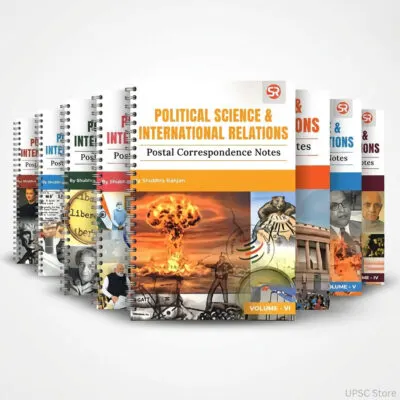
Shubhra Ranjan PSIR Optional Handwritten Notes 2026-27 | 11 Booklets | English Medium | UPSC Study Material
Drishti IAS Prelims Test Series 2026-27 | 10–35 Tests | Hindi Medium | UPSC Study Material
Ranker's Classes Commerce Optional Notes 2025-26 | 10 Booklets | English Medium | UPSC Study Material

About Sarrthi IAS GS Foundation AMAC History 2026
Sarrthi IAS GS Foundation AMAC History 2026 is an original printed study material set from Sarrthi IAS, covering History (AMAC). Available in English medium, this set is counted booklet by booklet before dispatch — no photocopies, no missing booklets.
Product Details
- Institute: Sarrthi IAS
- Subject: History (AMAC)
- Medium: English
- Pages: 278
- Format: Spiral
- Delivery: Pan-India delivery in 4–7 working days, free over ₹1,999
- Condition: New, original print — counted before dispatch
Why Buy from UPSC Store?
- ✓ Original Printed Notes — no photocopies, every booklet counted before it ships
- ✓ Fast Dispatch — ships within 24 hours from Delhi, arrives in 4–7 days pan-India
- ✓ Secure Packaging — bubble-wrapped and boxed to prevent damage in transit
- ✓ 180+ Orders Shipped — to 25 states across India
- ✓ WhatsApp Support — ask which set fits your optional and medium before ordering
Frequently Asked Questions
Original print — the same printed booklets the institute issues. Every set is counted booklet by booklet before dispatch.
Orders are dispatched within 24 hours from Delhi and delivered across India in 4–7 working days. Delivery is free over ₹1,999.
Returns are accepted only if the problem is from our side: wrong item, damaged or defective copy, or missing booklets or pages. Report it within 7 days of delivery and we arrange a free pickup and send a free replacement or a full refund. We do not accept change-of-mind returns, so please check the medium, edition and binding before ordering. WhatsApp us to start a return.