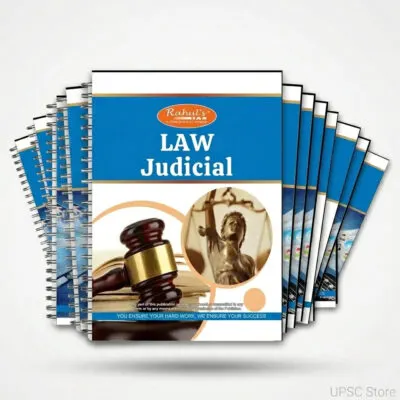


Rahul’s IAS Judiciary & Law Hindi Notes 2025-26
Rahul's IAS Judiciary Law Hindi β UPSC Study Material
Related: Rahul's IAS notes Β· Law optional Hindi
Buy Rahul's IAS Judiciary Law Hindi printed booklets for UPSC Civil Services Examination preparation. This page lists complete details about Rahul's IAS Judiciary Law Hindi including booklet count, language, syllabus coverage, pricing, and shipping.
Rahul’s IAS Judiciary & Law Hindi Notes 2025-26 | 19 Booklets | UPSC Study Material
Rahul’s IAS Judiciary & Law Hindi Notes 2025-26 is a comprehensive, meticulously crafted set of 19 Booklets designed specifically for UPSC Civil Services aspirants who prefer studying in Hindi. This exhaustive study material covers every dimension of Indian Judiciary, Constitutional Law, Legal Framework, and Allied Subjects that are essential for both the Preliminary and Main examinations. The notes are curated by seasoned UPSC mentors and legal experts who have decades of experience in guiding aspirants toward success in India’s most competitive examination.
With the UPSC landscape becoming increasingly competitive, aspirants need study material that is not only accurate and updated but also presented in a manner that facilitates quick comprehension and long-term retention. Rahul’s IAS Hindi Notes fulfill this requirement by presenting complex legal concepts, judicial precedents, constitutional provisions, and landmark judgments in simple, lucid Hindi that resonates with the target audience. The 2025-26 edition incorporates all recent amendments, Supreme Court verdicts, and policy changes relevant to the examination.
Complete Booklet-wise Content Breakdown
Booklet 1: Indian Constitution β Foundation and Historical Background
This foundational booklet traces the historical evolution of the Indian Constitution from the colonial era through the Constituent Assembly debates to its final adoption on 26th November 1949. It covers the philosophical underpinnings that guided the framers, including influences from global constitutions such as those of the United States, United Kingdom, Ireland, Canada, and Australia. The booklet discusses the objectives resolution moved by Jawaharlal Nehru and its reflection in the Preamble, which serves as the ideological soul of the Constitution.
Special attention is given to the role of key framers like Dr. B.R. Ambedkar, Sardar Vallabhbhai Patel, Jawaharlal Nehru, and Rajendra Prasad in shaping constitutional provisions. The booklet provides a detailed analysis of the Constituent Assembly’s working committees, sub-committees, and their specific contributions. UPSC aspirants will find this booklet invaluable for answering questions on constitutional history, the making of the Constitution, and its ideological foundations. Diagrams and flowcharts are incorporated to simplify complex timelines and committee structures for better retention.
Booklet 2: Preamble, Citizenship, and Fundamental Rights β Part I
The second booklet delves into the Preamble of the Indian Constitution, examining each word and phrase with the precision demanded by UPSC examiners. It explains how the Preamble has been interpreted by the Supreme Court in landmark cases such as Berubari Union Case and Kesavananda Bharati Case, establishing its role as a guiding interpretive tool. The booklet also extensively covers the constitutional provisions relating to citizenship, including the Citizenship Act 1955 and subsequent amendments, distinguishing between various modes of acquiring and losing Indian citizenship.
Fundamental Rights under Articles 12 to 35 are introduced with detailed explanations of each right, the reasonable restrictions applicable, and exceptions carved out for the State. The booklet presents judicial interpretations that have expanded the scope of Fundamental Rights over decades, including the recognition of the right to privacy as a fundamental right in the landmark Puttaswamy judgment of 2017. Each article is explained with practical examples and associated Supreme Court cases, making this booklet a one-stop reference for the most critical section of the Constitution tested in UPSC examinations.
Booklet 3: Fundamental Rights β Part II and Directive Principles
Continuing from the previous booklet, this volume provides an in-depth analysis of the remaining Fundamental Rights including the Right against Exploitation, Right to Freedom of Religion, Cultural and Educational Rights, and Right to Constitutional Remedies under Article 32. The booklet examines how courts have balanced individual freedoms with societal interests through various constitutional mechanisms. Special focus is given to the writ jurisdiction of the Supreme Court and High Courts, covering the five types of writs with their specific applicability, scope, and limitations in the Indian legal context.
The Directive Principles of State Policy covered in Part IV of the Constitution are examined in this booklet with a particular emphasis on their non-justiciable yet fundamental nature in governance. The relationship between Fundamental Rights and Directive Principles, which was a subject of intense judicial debate through cases like State of Madras v. Champakam Dorairajan, Golak Nath Case, and finally settled in Minerva Mills Case, is explained lucidly. The booklet also covers Fundamental Duties under Article 51A and their increasing relevance in judicial pronouncements, making it essential reading for both Prelims and Mains preparation.
Booklet 4: Union Executive β President, Vice President, and Prime Minister
This booklet provides a thorough examination of the Union Executive, starting with the constitutional position, election process, powers, and functions of the President of India. It covers the President’s executive, legislative, financial, judicial, emergency, diplomatic, and military powers in exhaustive detail. The booklet explains the concept of constitutional head versus real executive, drawing the distinction between the President’s nominal role and the Cabinet’s actual decision-making authority. The controversial question of the President’s discretionary powers is analyzed with reference to constitutional provisions and judicial interpretations.
The Vice President’s constitutional role, election process, and functions as the ex-officio Chairman of the Rajya Sabha are covered comprehensively. The Prime Minister’s position as the head of government, leader of the Cabinet, and the link between the President and the Council of Ministers is analyzed in detail. The booklet includes a comparative analysis of how the Prime Minister’s powers have evolved since independence, with historical examples from different political eras. Questions on the Council of Ministers, collective responsibility, individual responsibility, and parliamentary conventions are also addressed with clarity suitable for UPSC examination answers.
Booklet 5: Parliament β Structure, Functions, and Legislative Process
The fifth booklet is dedicated to India’s bicameral Parliament, covering the composition, powers, and functions of both the Lok Sabha and the Rajya Sabha. It explains the constitutional basis for the asymmetric bicameralism in India, where the lower house holds supremacy in financial matters while the upper house has special powers related to state list subjects and creation of new All India Services. The booklet provides a detailed legislative procedure for ordinary bills, money bills, financial bills, and constitutional amendment bills under Articles 368 and related provisions.
Parliamentary privileges, parliamentary committees, sessions of Parliament, and the role of the Speaker and Chairman are discussed in depth. The booklet covers anti-defection law under the Tenth Schedule, which is highly relevant for contemporary political discussions and UPSC questions. The relationship between Parliament and the Executive, including the various mechanisms of parliamentary control such as Question Hour, Zero Hour, Adjournment Motion, No-Confidence Motion, and Calling Attention Motion, is explained with practical examples from Indian parliamentary history. Recent reforms and debates around parliamentary functioning are also incorporated to keep the content examination-relevant.
Booklet 6: State Executive and State Legislature
This booklet mirrors the federal structure by comprehensively covering the State Executive, including the Governor’s constitutional position, appointment, powers, and the much-debated discretionary functions that have frequently made headlines and examination papers alike. The booklet explains the Chief Minister’s role, the Council of Ministers at the state level, and the constitutional conventions governing state executive functioning. It compares state executive powers with those at the Union level, highlighting similarities and crucial differences that UPSC aspirants must clearly understand.
State Legislatures, including both unicameral and bicameral arrangements across Indian states, are covered in detail. The legislative process at the state level, state list and concurrent list legislative competence, and the mechanism for resolving conflicts between state and union legislation are thoroughly explained. The booklet also covers provisions related to the President’s Rule under Article 356, which is one of the most controversial provisions in the Indian federal framework. The S.R. Bommai case and its landmark impact on imposing constitutional limits on the use of Article 356 is analyzed as a critical judicial precedent with contemporary relevance.
Booklet 7: Centre-State Relations β Federal Framework
Federal relations between the Centre and States form one of the most dynamic and frequently examined topics in UPSC, and this booklet addresses them comprehensively. The three lists β Union, State, and Concurrent β under the Seventh Schedule are explained with specific subjects listed therein and practical examples of legislative exercises. The booklet covers residuary powers vested in Parliament, parliamentary legislation on state subjects under special circumstances, and the Rajya Sabha’s special resolution for creating new All India Services. Interstate Council, Zonal Councils, and other federal coordination mechanisms are also detailed.
Administrative and financial relations between Centre and States are covered with reference to grants-in-aid, sharing of central taxes, borrowing powers, and the Finance Commission’s role in ensuring equitable resource distribution. The booklet discusses cooperative federalism as practiced in India through institutions like NITI Aayog, GST Council, and Inter-State Council. Recent tensions and debates in Centre-State relations, including issues of governors’ discretion, state autonomy, and the demand for greater fiscal federalism, are presented with balanced analysis. This booklet is indispensable for understanding the federal character of the Indian Constitution as tested in UPSC examinations.
Booklet 8: Judiciary β Supreme Court of India
The Supreme Court of India, as the apex judicial authority and guardian of the Constitution, is the centerpiece of this comprehensive booklet. The composition, appointment process, qualifications, removal procedure, jurisdiction, and powers of the Supreme Court are explained with reference to relevant constitutional articles. Original jurisdiction, appellate jurisdiction, advisory jurisdiction under Article 143, and the extraordinary writ jurisdiction under Article 32 are all covered in detail. The booklet also examines the Supreme Court’s role as the final interpreter of the Constitution and how this function has shaped Indian legal and political history.
The collegium system for appointment of judges, its evolution from the Three Judges Cases, and the ongoing debates around judicial appointments and accountability are discussed with critical analysis. The concept of judicial independence, separation of powers, and checks and balances in the Indian constitutional framework are explained in the context of landmark constitutional battles between judiciary and executive. The National Judicial Appointments Commission (NJAC) controversy and the Supreme Court’s judgment striking it down are covered as contemporary case studies. This booklet provides the depth of understanding required to tackle UPSC questions on judiciary with confidence and precision.
Booklet 9: High Courts and Subordinate Courts
This booklet covers the constitutional provisions and functioning of High Courts across Indian states, explaining their original and appellate jurisdiction, writ jurisdiction, and supervisory powers over subordinate courts. The appointment, transfer, and removal of High Court judges are discussed in the context of judicial independence and the evolving collegium system. The booklet explains how High Courts serve as constitutional courts at the state level and their crucial role in protecting fundamental rights through writ jurisdiction under Article 226, which is broader in scope than the Supreme Court’s writ jurisdiction under Article 32.
The structure of subordinate courts, including District Courts, Sessions Courts, Civil Courts, and specialized tribunals, is mapped out with their respective jurisdictions and hierarchical relationships. Fast Track Courts, Lok Adalats, and alternative dispute resolution mechanisms established to reduce pendency are explained in the context of judicial reform. The booklet covers the National Legal Services Authority (NALSA) and legal aid provisions that ensure access to justice for marginalized sections. Readers will gain a clear understanding of how the Indian judicial hierarchy functions from grassroots to the apex level, which is essential for comprehensive UPSC preparation.
Booklet 10: Judicial Review and Public Interest Litigation
Judicial review, described as the basic feature of the Indian Constitution in the Kesavananda Bharati judgment, is the subject of this dedicated booklet. The scope, grounds, and limitations of judicial review in India are examined with reference to the power to strike down legislation that violates fundamental rights or the basic structure of the Constitution. The booklet compares Indian judicial review with the American model, highlighting how India’s approach has evolved to balance parliamentary sovereignty with constitutional supremacy. Key cases where judicial review has been exercised to nullify constitutional amendments are studied in detail.
Public Interest Litigation (PIL) emerged as a revolutionary judicial innovation in India during the 1980s under the leadership of Justices P.N. Bhagwati and V.R. Krishna Iyer, and this booklet traces its evolution, scope, and current challenges comprehensively. The relaxation of locus standi rules, epistolary jurisdiction, and the role of PIL in social justice, environmental protection, and government accountability are explained with landmark cases. The booklet also discusses the growing criticism of PIL misuse and judicial overreach, presenting a balanced view that helps aspirants construct nuanced UPSC answers on this dynamic subject.
Booklet 11: Constitutional Amendments and Basic Structure Doctrine
The procedure for amending the Indian Constitution under Article 368, the various types of amendments requiring different majorities, and the limitations on the amending power constitute the core of this booklet. The evolution of constitutional amendment jurisprudence through the Shankari Prasad, Sajjan Singh, Golak Nath, and Kesavananda Bharati cases is traced with clear timelines and judicial reasoning. The booklet explains how the Basic Structure Doctrine, propounded in the Kesavananda Bharati case of 1973, permanently altered the constitutional landscape by setting limits on Parliament’s power to amend the Constitution.
Elements identified as part of the Basic Structure β including supremacy of the Constitution, republican and democratic form of government, secular character, separation of powers, federal character, judicial review, and free and fair elections β are explained with supporting case law. The application of the Basic Structure Doctrine in subsequent cases like Minerva Mills, Indira Gandhi v. Raj Narain, Waman Rao, and IR Coelho cases is analyzed in detail. This booklet is critically important because questions on constitutional amendments and basic structure are consistently featured in UPSC Mains examinations, and a thorough understanding distinguishes top-performing aspirants from the rest.
Booklet 12: Emergency Provisions
Emergency provisions in the Indian Constitution represent some of its most powerful and controversial articles, and this booklet provides an exhaustive analysis of all three types of emergencies. National Emergency under Article 352, which can be proclaimed on grounds of war, external aggression, or armed rebellion, is covered with its procedural requirements, effects on fundamental rights, Centre-State relations, and duration limitations introduced after the 44th Constitutional Amendment. The booklet draws extensively from the experience of the 1975 Emergency proclaimed by Indira Gandhi, its constitutional and political impact, and the subsequent reforms.
President’s Rule under Article 356 and its procedural safeguards established through the S.R. Bommai judgment are explained in detail, covering the circumstances under which it can be imposed, parliamentary approval requirements, and judicial review of its proclamation. Financial Emergency under Article 360, the least used emergency provision, is also covered with its implications for Centre-State financial relations. The booklet provides a comparative analysis of how democratic countries handle emergencies within constitutional frameworks, offering perspectives that help aspirants write analytically superior UPSC Mains answers on this sensitive and frequently examined topic.
Booklet 13: Constitutional Bodies β Election Commission, CAG, UPSC, Finance Commission
This booklet covers major constitutional bodies that are independent pillars of India’s democratic governance. The Election Commission of India, its composition after the Election Commission Amendment Act, functions, powers, and the Model Code of Conduct are explained comprehensively. The Comptroller and Auditor General’s constitutional position, appointment, functions, and the types of audits conducted β including compliance audit, performance audit, and financial audit β are detailed. The Finance Commission’s constitution, terms of reference, and recommendations mechanism for sharing of Union tax revenues with States are thoroughly explained.
The Union Public Service Commission’s constitutional mandate, structure, and functions in conducting civil services examinations and advising the government on service matters are covered. Special attention is given to the constitutional safeguards for the independence of these bodies, including security of tenure, fixed service conditions, and the process of removal that mirrors the Supreme Court judges’ removal process. The booklet also covers the National Commission for Scheduled Castes, National Commission for Scheduled Tribes, and the Special Officer for Linguistic Minorities as constitutional bodies with specific mandates, providing a comprehensive reference for UPSC examination preparation.
Booklet 14: Statutory Bodies and Quasi-Judicial Institutions
India’s governance architecture includes numerous statutory bodies created through legislation that perform quasi-judicial, regulatory, and advisory functions. This booklet covers major statutory bodies including the National Human Rights Commission, State Human Rights Commissions, Central Information Commission, State Information Commissions, Central Vigilance Commission, and the Lokpal and Lokayuktas. Each body’s establishment, composition, powers, jurisdiction, and limitations are explained with reference to the relevant enabling legislation. The booklet clarifies the distinction between constitutional bodies and statutory bodies, a conceptual clarity frequently required in UPSC examinations.
Regulatory bodies in the economic sector, including SEBI, RBI, IRDAI, TRAI, CCI, and PFRDA, are covered with their respective mandates, powers, and relationship with government oversight. Tribunals established under various statutes β including the National Green Tribunal, Armed Forces Tribunal, and Income Tax Appellate Tribunal β are examined in the context of judicial reform and specialized adjudication. The booklet discusses the constitutional validity of tribunals as alternative dispute resolution mechanisms and their relationship with regular courts, including the Supreme Court’s supervision. This comprehensive coverage makes the booklet essential for aspirants seeking to master the institutional framework of Indian governance.
Booklet 15: Criminal Law β Indian Penal Code and Bharatiya Nyaya Sanhita
This booklet provides a structured analysis of criminal law in India, covering both the historic Indian Penal Code 1860 and the newly enacted Bharatiya Nyaya Sanhita 2023 that replaced it. The general principles of criminal liability β including actus reus, mens rea, intention, knowledge, negligence, and strict liability β are explained with clarity suitable for UPSC aspirants who may not have a legal background. Offences against the state, offences affecting public order, offences against the human body, property offences, and offences relating to documents and elections are covered systematically with their essential elements and punishments.
The booklet gives special attention to the significant changes introduced by the Bharatiya Nyaya Sanhita, including the replacement of sedition law, new provisions for organized crime and terrorism, changes in punishment philosophy with emphasis on restorative justice, and the introduction of community service as a punishment. Offences that have significant constitutional and civil liberties implications β such as sedition, defamation, obscenity, and blasphemy β are analyzed with their judicial interpretation history. The booklet also covers general exceptions to criminal liability including private defense, necessity, insanity, intoxication, and consent, providing a comprehensive criminal law foundation for UPSC aspirants.
Booklet 16: Criminal Procedure β Bharatiya Nagarik Suraksha Sanhita
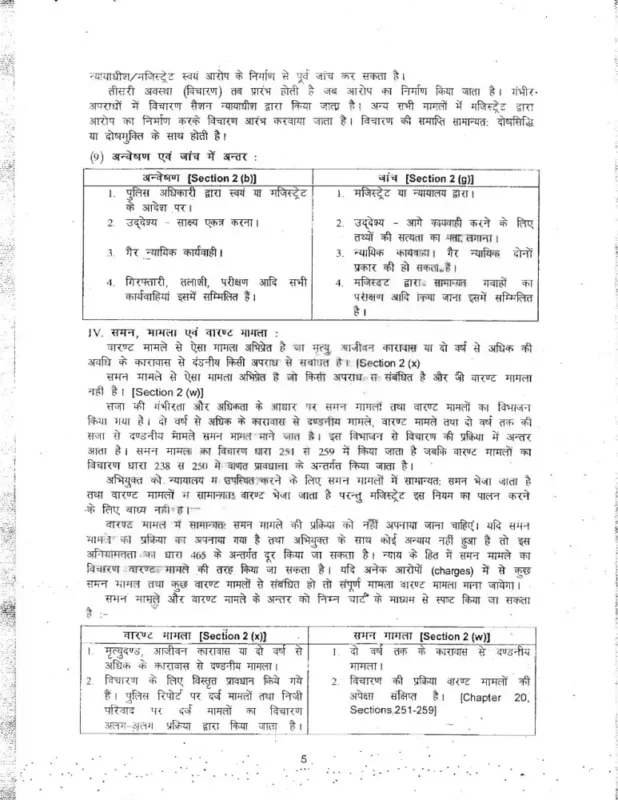
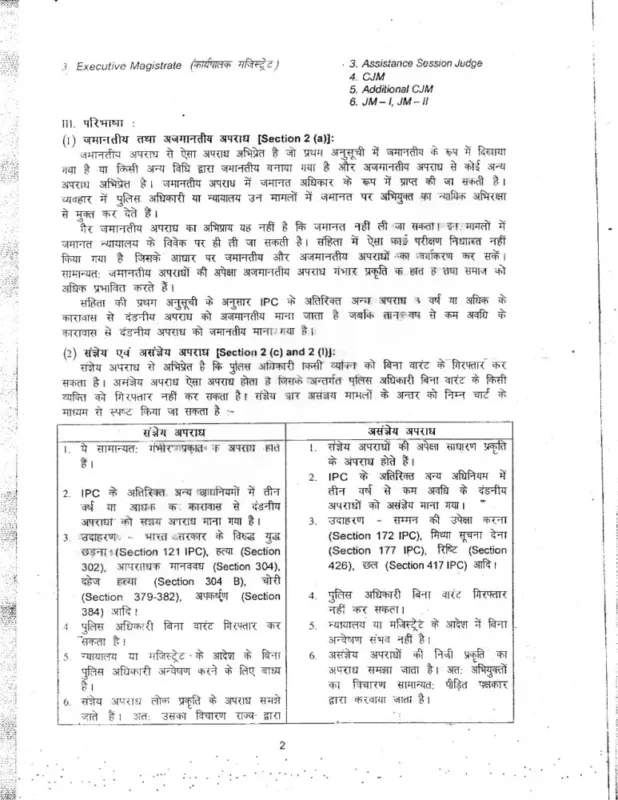
The criminal procedure framework, now governed by the Bharatiya Nagarik Suraksha Sanhita 2023 which replaced the Code of Criminal Procedure 1973, is comprehensively covered in this booklet. The constitutional and procedural rights of accused persons, including the right against self-incrimination, right to legal aid, right to speedy trial, and protection against double jeopardy under Articles 20 and 21, are explained in the context of procedural law. The classification of offences as cognizable and non-cognizable, bailable and non-bailable, compoundable and non-compoundable is explained with practical significance for understanding police and court powers.
The investigation process, including FIR registration, police powers of arrest and search, remand, bail, charge sheet, and committal proceedings, is mapped out in a step-by-step manner that helps aspirants understand criminal justice administration. Trial procedures in different courts β including summary trial, summons trial, warrant trial, and sessions trial β are explained with their procedural requirements and safeguards. The booklet covers significant changes in the BNSS compared to CrPC, including timelines for trials, mandatory audio-visual recording of confessions, and electronic evidence provisions. Appeals, revisions, and references to higher courts are also explained in this comprehensive procedural law booklet.
Booklet 17: Civil Law β Code of Civil Procedure and Limitation
Civil procedure law, governed by the Code of Civil Procedure 1908 and the Limitation Act 1963, forms the framework within which private disputes are adjudicated by courts. This booklet explains the structure of civil courts, their territorial and pecuniary jurisdiction, and the concept of res judicata that prevents relitigation of decided matters. The stages of a civil suit β from institution through written statement, issues, evidence, final hearing, and judgment β are explained in a systematic manner. Temporary injunctions, interlocutory applications, and interim relief mechanisms are covered with their legal requirements and judicial considerations.
The execution of decrees, including different modes of execution and the protection available to judgment debtors, is explained with practical examples. Provisions for appeals, revision, and review of civil court decisions are covered, along with the concept of inherent powers of courts under Section 151 of CPC. The Limitation Act’s prescription of limitation periods for different types of suits and the circumstances under which limitation can be extended or condoned are explained in detail. The booklet also covers alternative dispute resolution mechanisms including arbitration, conciliation, mediation, and Lok Adalats as alternatives to conventional civil litigation, which is increasingly examined in UPSC papers.
Booklet 18: Constitutional Law β Landmark Cases Part I
Understanding Indian constitutional law requires familiarity with landmark Supreme Court judgments that have defined constitutional interpretation. This booklet presents detailed analyses of pivotal cases from the first four decades of the Constitution, including A.K. Gopalan v. State of Madras, State of Madras v. Champakam Dorairajan, Romesh Thapar v. State of Madras, Shankari Prasad v. Union of India, and Berubari Union Case. Each case is analyzed in terms of its background, the constitutional questions raised, the Supreme Court’s reasoning, the judgment, and its subsequent impact on Indian law and governance.
The landmark Bank Nationalization Case (R.C. Cooper), Privy Purses abolition case, Golak Nath v. State of Punjab, and the Fundamental Rights Case (Kesavananda Bharati) are covered with special emphasis given their watershed importance in Indian constitutional history. The booklet presents these cases not merely as legal precedents but as reflections of the larger socio-political conflicts between the legislature seeking social transformation and the judiciary seeking constitutional fidelity. This historical-analytical approach helps aspirants craft sophisticated UPSC Mains answers that demonstrate genuine understanding rather than mere memorization of case names and holdings.
Booklet 19: Constitutional Law β Landmark Cases Part II
Continuing the journey through constitutional jurisprudence, this booklet covers landmark cases from the post-Emergency period to the contemporary era. The Minerva Mills Case, Maneka Gandhi v. Union of India, Indira Gandhi v. Raj Narain, and S.P. Gupta v. Union of India are analyzed in depth, showing how post-Emergency India witnessed a judicial expansion of fundamental rights and the development of due process of law. The booklet traces how Article 21’s interpretation transformed from the narrow Gopalan era reading to the expansive post-Maneka Gandhi position that incorporates substantive due process.
Contemporary landmark cases including Vishaka v. State of Rajasthan, M.C. Mehta environmental jurisprudence cases, S.R. Bommai v. Union of India, NALSA v. Union of India on transgender rights, Shreya Singhal v. Union of India on free speech online, Justice K.S. Puttaswamy v. Union of India on right to privacy, and Navtej Singh Johar v. Union of India on Section 377 are comprehensively analyzed. The booklet shows how constitutional interpretation evolves with changing social contexts and judicial philosophy, providing aspirants with the analytical framework needed to discuss constitutional evolution in UPSC Mains answers and interviews.
Booklet 20: Human Rights Law β International and Domestic Framework
Human rights law at both international and domestic levels forms an increasingly important component of UPSC examination questions. This booklet covers the United Nations Charter framework for human rights, the Universal Declaration of Human Rights 1948, the two International Covenants on Civil and Political Rights and Economic, Social and Cultural Rights, and India’s ratification and implementation obligations. International human rights mechanisms including the Human Rights Council, treaty bodies, Universal Periodic Review, and Special Rapporteurs are explained with India’s engagement and reports submitted to these bodies.
The domestic human rights framework, anchored by the Protection of Human Rights Act 1993 and its 2019 amendment, is covered with the National Human Rights Commission’s structure, powers, and limitations. The booklet explains how international human rights standards have been incorporated into Indian constitutional jurisprudence through judicial interpretation, particularly in expanding the scope of Article 21. Rights of women, children, persons with disabilities, minorities, and LGBTQ+ persons under international conventions and domestic law are covered in comparative perspective. This booklet is essential for aspirants preparing for ethics and rights-related questions that increasingly feature in both GS Paper 2 and optional subjects.
Booklet 21: Administrative Law and Governance
Administrative law governs the relationship between citizens and the State, and this booklet covers its principles comprehensively. The doctrine of ultra vires, natural justice principles of audi alteram partem and nemo judex in causa sua, legitimate expectation, proportionality, and reasonableness are explained with leading Indian cases. Judicial review of administrative action through writs, statutory appeals, and ordinary civil suits is covered with the distinction between illegality, irrationality, and procedural impropriety as grounds for review, following Lord Diplock’s classification from the GCHQ case that has been adopted in Indian jurisprudence.
Delegated legislation β its constitutional basis, types, necessity, limitations, and parliamentary and judicial control β is explained in the context of modern administrative state functioning. The booklet covers administrative tribunals under Article 323A and 323B, their constitutional validity after the L. Chandra Kumar judgment, and the current framework of service tribunals. The Right to Information Act 2005 as a tool for administrative accountability and transparency is analyzed with its provisions, exemptions, and implementation challenges. Good governance principles including accountability, transparency, rule of law, and participatory governance are connected to administrative law in a manner that enriches UPSC GS Paper 2 preparation significantly.
Booklet 22: Environmental Law
Environmental law has emerged as a major area of judicial activity and UPSC examination focus in recent years. This booklet covers the constitutional basis for environmental protection under Articles 21, 48A, and 51A(g), and the landmark evolution of environmental jurisprudence through M.C. Mehta v. Union of India cases on Ganga pollution, Oleum gas leak, Taj Trapezium, and Delhi vehicular pollution. The booklet explains key environmental principles including sustainable development, precautionary principle, polluter pays principle, public trust doctrine, and intergenerational equity as developed in Indian courts.
Major environmental legislation including the Environment Protection Act 1986, Water Act 1974, Air Act 1981, Forest Conservation Act 1980, Wildlife Protection Act 1972, and Biological Diversity Act 2002 are covered with their key provisions, regulatory authorities, and enforcement mechanisms. The National Green Tribunal Act 2010 and the NGT’s jurisdiction, powers, and significant orders are explained in detail. International environmental conventions including UNFCCC, Paris Agreement, Convention on Biological Diversity, Basel Convention, and India’s commitments under them are covered with domestic implementation. This booklet provides a comprehensive foundation for environmental questions across multiple GS papers.
Booklet 23: Labor Law and Social Security
Labor law in India has undergone a revolutionary transformation with the consolidation of approximately 29 central labor laws into four Labor Codes enacted between 2019 and 2020. This booklet covers the Code on Wages 2019, Industrial Relations Code 2020, Code on Social Security 2020, and Occupational Safety, Health and Working Conditions Code 2020 comprehensively. The booklet explains the key changes introduced by the codification, including the broadened definition of workers to include gig and platform workers, new thresholds for industrial relations provisions, and rationalized compliance requirements for businesses.
Constitutional provisions relating to labor β including Directive Principles on living wages, equal pay for equal work, just and humane working conditions, and maternity relief under Article 42 β are connected to the legislative framework. The booklet covers social security schemes including EPF, ESI, Atal Pension Yojana, PM Shram Yogi Maandhan, and the Unorganised Workers’ Social Security Act. Child labor prohibitions, bonded labor abolition, and migrant workers’ rights under the Inter-State Migrant Workmen Act and its replacement in the new codes are explained. This booklet is particularly relevant for aspirants with labor law as an optional subject and for GS Paper 2 governance questions.
Booklet 24: Property Law and Land Acquisition
Property law and land acquisition represent areas where constitutional, civil, and administrative law intersect, making them important for UPSC aspirants. This booklet covers the evolution of property rights in the Indian Constitution from the original Fundamental Right under Article 31 through its gradual erosion by constitutional amendments and finally to its conversion into a constitutional right under Article 300A by the 44th Amendment. The Transfer of Property Act 1882’s basic concepts including sale, mortgage, lease, exchange, gift, and actionable claims are explained in accessible language without assuming prior legal education.
The Right to Fair Compensation and Transparency in Land Acquisition, Rehabilitation and Resettlement Act 2013 is covered comprehensively, including its scope of application, the Social Impact Assessment requirement, compensation calculation methodology, rehabilitation and resettlement provisions, and the special provisions for food security. Retrospective and prospective application issues, the role of the Collector, and appeals to Land Acquisition Collector and courts are explained. State amendments to the central land acquisition law and the political controversy surrounding proposed amendments to make acquisition easier for industry are discussed with a balanced perspective relevant to UPSC essay and GS Paper 3 questions on land and development.
Booklet 25: Family Law β Hindu and Muslim Personal Law
Personal law governing family matters remains a constitutionally complex and socially sensitive area in India, and this booklet handles it with the care and comprehensiveness it demands. Hindu personal law β including the Hindu Marriage Act 1955, Hindu Succession Act 1956 (with the 2005 amendment on daughters’ coparcenary rights), Hindu Minority and Guardianship Act, and Hindu Adoptions and Maintenance Act β is covered with the key provisions relevant for UPSC purposes. The Shah Bano case, subsequent legislative override, and the ongoing Uniform Civil Code debate are analyzed in their constitutional, political, and social dimensions.
Muslim personal law under the Muslim Personal Law (Shariat) Application Act 1937 covering marriage, dower, divorce, maintenance, adoption (or its absence), and succession is explained. The booklet covers the Muslim Women (Protection of Rights on Divorce) Act 1986 and the more recent Muslim Women (Protection of Rights on Marriage) Act 2019 that criminalized instant triple talaq following the landmark Shayara Bano v. Union of India judgment. Christian, Parsi, and Special Marriage Act provisions are also covered. The Uniform Civil Code debate, its constitutional basis under Article 44, its political history, and contemporary relevance is analyzed comprehensively, making this booklet essential for GS Paper 1, 2, and essay examination preparation.
Booklet 26: Intellectual Property Rights Law
Intellectual Property Rights have gained enormous economic and geopolitical significance in the knowledge economy, and their legal framework is increasingly examined in UPSC. This booklet covers the five major categories of IPR β patents, trademarks, copyrights, geographical indications, and industrial designs β under their respective Indian statutes and their connection to the TRIPS Agreement of the WTO. The Patents Act 1970 with its 2005 amendment is given special attention, including the controversial Section 3(d) that prevents patent evergreening and has been at the center of global pharmaceutical patent battles like the Novartis v. Union of India case.
Copyright law under the Copyright Act 1957 and its protection of literary, artistic, musical, cinematographic, and software works in the digital age is covered with the challenges posed
Frequently Asked Questions
Are these Hindi medium Rahul’s IAS notes original?
Yes, they are the genuine 2025-26 Hindi batch from Rahul’s IAS Law programme.
How many booklets does the set include?
There are 19 Hindi printed booklets covering Law optional and judiciary subjects.
Is COD available?
Yes, Cash on Delivery is offered across most Indian PIN codes.
Can these notes help judiciary aspirants?
Yes, the notes are useful for Hindi medium judiciary aspirants alongside UPSC Law optional.
When will I get my order?
Orders are dispatched in 1-2 days and delivered in 3-7 working days with tracking.
What is the binding type?
Booklets come in spiral or book binding on 75 GSM paper.
Reference: Civil Services Examination
Customer Reviews 102
Content quality acha hai aur presentation bhi very professional.
Hindi mein padhne se concepts clear ho gaye, material quality achhi thi overall.
19 booklets mein sab kuch structured way mein hai. Padhne mein maza aa gaya.
Content detailed hai aur organized bhi, sirf printing quality thodi average thi.
Judiciary notes properly structured hain aur padhne mein bohot easy hai. Great stuff.
Judiciary preparation ke liye must have.
Judiciary ke liye perfect material hai. Concepts bilkul clear ho gaye.
Judiciary ke liye best material hai. Content bilkul clear aur organized hai.
Aspirants Also Bought
More from the same category
About Rahul’s IAS Judiciary & Law Hindi Notes 2025-26
Rahul’s IAS Judiciary & Law Hindi Notes 2025-26 is a highly recommended UPSC study material from Rahul's IAS, specially designed for Judiciary & Law preparation. Available in Hindi medium, this material is crafted to match the exact requirements of the UPSC Civil Services Examination syllabus β covering both Prelims and Mains comprehensively.
Product Details
- Institute: Rahul's IAS
- Subject: Judiciary & Law
- Medium: Hindi
- Format: Printed
- Delivery: Pan-India delivery in 3β5 working days
- Format: Original printed material, verified authentic
Why Buy from UPSC Store?
- β 100% Genuine Printed Material β Original printed notes, no photocopies or fake copies
- β Fast Delivery β Ships within 24 hours, arrives in 3β5 days pan-India
- β Secure Packaging β Bubble-wrapped and boxed to prevent damage in transit
- β Trusted by 10,000+ Aspirants β India's most reliable UPSC material marketplace
- β WhatsApp Support β Get expert guidance on material selection before ordering
Frequently Asked Questions
Yes, all products at UPSC Store are 100% genuine printed materials. We do not sell photocopies or fake copies.
Orders are dispatched within 24 hours and delivered across India in 3β5 working days via reputed courier partners.
Yes, we accept returns within 7 days if the product is damaged or incorrect. Check our refund policy for details.
We recommend pairing this with current affairs notes and a UPSC test series for comprehensive preparation. Browse more in Law, Optional, UPSC.