
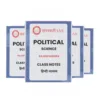
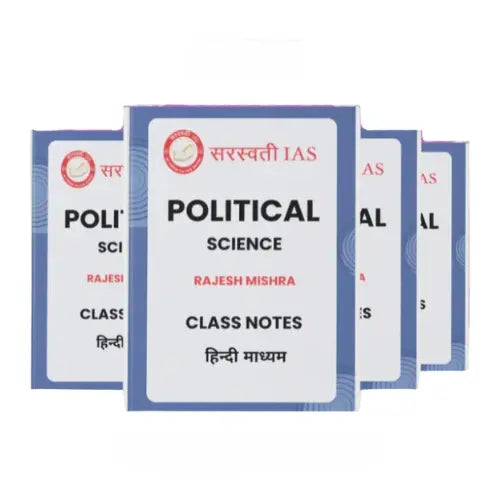
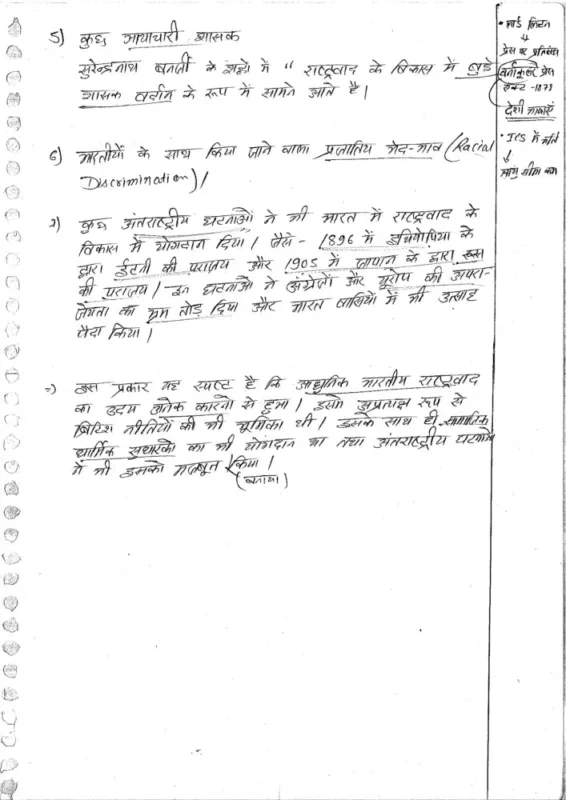
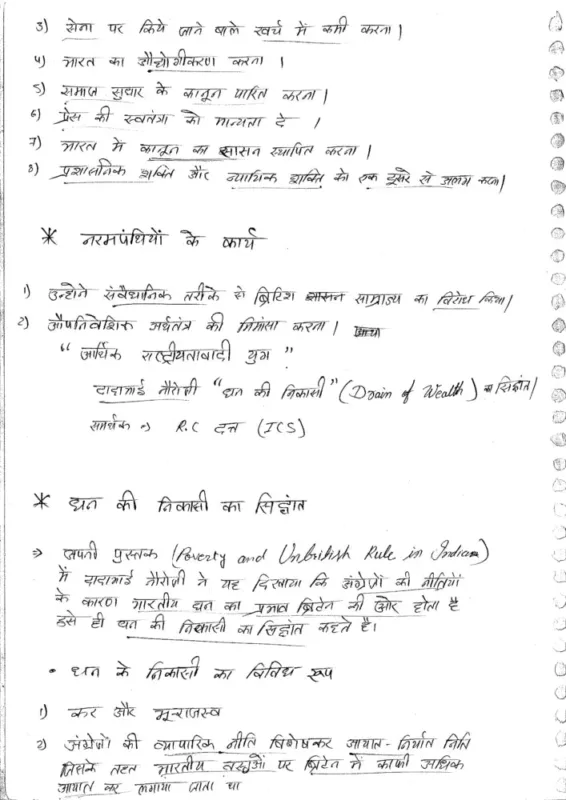
Rajesh Mishra Political Science PSIR Hindi Notes 2025-26 | 3 Booklets | Hindi Medium | UPSC Study Material
Binding Guide
Pick the binding that fits how you study.
Spiral Binding
- Lays completely flat
- 360° page rotation
- Great for note-taking
- Best for maths, science, reference
Without Spiral
- Compact & professional
- Sturdy glued/stitched spine
- Easy to stack & store
- Best for textbooks & long-term
About Rajesh Mishra PSIR Hindi Notes
The Rajesh Mishra PSIR Hindi Notes is a printed UPSC study material set sold by UPSC Store — India’s trusted source for genuine, latest-batch civil services preparation books. This page covers full booklet details, syllabus coverage, pricing, shipping, and frequently asked questions. Useful for UPSC CSE, BPSC, UPPSC, MPPSC, RAS and other state PSC examinations.
Rajesh Mishra Saraswati IAS PSIR Hindi Notes 2025-26 — 3 Booklets Hindi Medium Printed Optional Notes for UPSC Political Science and International Relations
Related: Rajesh Mishra notes · Political Science optional
Product Overview
| Feature | Details |
|---|---|
| Booklets Count | 8 Individual Printed Booklets — Full PSIR Optional Syllabus Paper I and Paper II |
| Language | Hindi Medium (हिंदी माध्यम) |
| Publisher | Saraswati IAS — Rajesh Mishra Political Science Class Notes Series |
| Edition | 2025-26 — Latest Genuine Batch |
| Condition | Brand New, Unmarked, Fresh Stock |
| Format | High-Quality Printed Booklets — Spiral or Book Binding |
| Paper Quality | 75 GSM Ultra-White — Highlighter Safe, Zero Bleed-Through |
| Shipping | Pan India Delivery in 3-5 Business Days — Tracked |
| Also Useful For | BPSC, UPPSC, MPPSC, RAS and all State PSC Examinations |
Complete Booklet Catalog
This 3-booklet set by Rajesh Mishra of Saraswati IAS covers the complete UPSC PSIR optional syllabus — from Western political thought and Indian political traditions to international relations theory and India’s foreign policy — written entirely in Hindi for aspirants preparing in हिंदी माध्यम. Whether you are just beginning your PSIR optional journey or revising before UPSC Mains, this printed set is structured to take you from foundational concepts to advanced analytical writing.
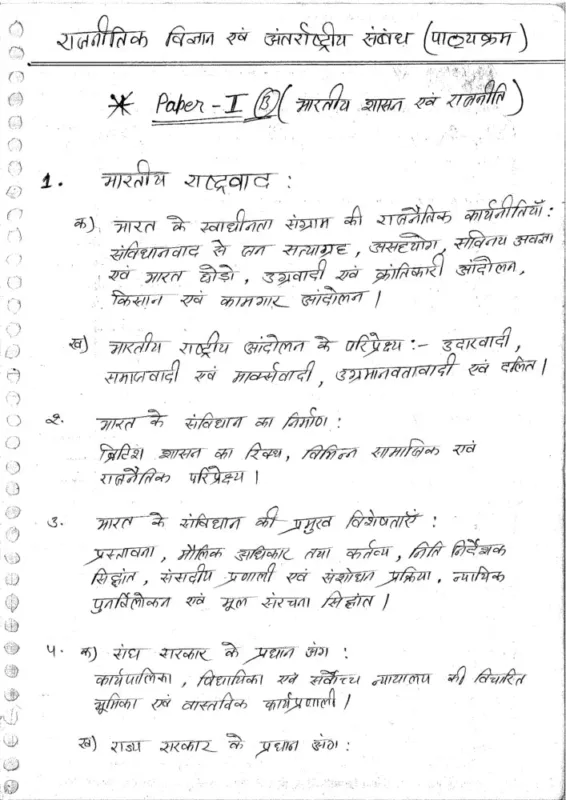
- Booklet 1: राजनीतिक सिद्धांत (Political Theory) — Covers political theory as a discipline, nature and scope, the concept of power, legitimacy, authority, sovereignty, democracy, liberty, equality, justice, and rights. Includes classical liberal thought, Marxist critique of liberalism, republican theory, communitarianism, multiculturalism, and the feminist challenge to mainstream political theory. Essential for UPSC PSIR Paper I Section A.
- Booklet 2: पश्चिमी राजनीतिक विचार (Western Political Thought) — Detailed study of thinkers from Plato and Aristotle through Machiavelli, Hobbes, Locke, Rousseau, Hegel, Marx, Mill, and Gramsci. Each thinker’s core ideas, historical context, and relevance to UPSC Mains answer writing are explained in clear, accessible Hindi with analytical frameworks for scoring answers.
- Booklet 3: तुलनात्मक राजनीति (Comparative Politics) — Approaches to comparative politics including the behavioural approach, systems analysis, structural-functionalism, and the political economy approach. Covers state formation, political development, modernisation, democratisation, political parties, pressure groups, social movements, and comparative study of political institutions across regions.
- Booklet 4: भारतीय राजनीति और राजनीतिक विचार (Indian Politics and Political Thought) — Indian political thought from Kautilya and Manu through modern thinkers including Gandhi, Ambedkar, Nehru, Lohia, Jayaprakash Narayan, and M.N. Roy. Covers colonial encounter, nationalism, constitutionalism, liberal democracy in India, caste, class, ethnicity, and gender in Indian politics.
- Booklet 5: भारतीय शासन और संविधान (Indian Government and Constitution) — The Indian Constitution — framing, salient features, fundamental rights, DPSP, fundamental duties, federalism, centre-state relations, emergency provisions, constitutional amendments, parliamentary system, the judiciary including judicial review and judicial activism, and the role of constitutional bodies such as the Election Commission, CAG, and UPSC.
- Booklet 6: अंतर्राष्ट्रीय संबंध — सिद्धांत और विकास (International Relations — Theory and Evolution) — Foundations of international relations as a discipline, evolution of the international system from Westphalia to the present, major theoretical paradigms — realism, liberalism, Marxism, constructivism, and post-colonialism. Covers Cold War, decolonisation, Non-Aligned Movement, détente, and the post-Cold War unipolar moment.
- Booklet 7: वैश्विक मुद्दे और संस्थाएँ (Global Issues and International Institutions) — United Nations system and reform debates, WTO, IMF, World Bank, and their critiques. Covers nuclear proliferation and disarmament, terrorism, climate change and environmental diplomacy, human rights regime, refugee and migration issues, globalisation and its discontents, and the rise of China and its implications for global order.
- Booklet 8: भारत की विदेश नीति (India’s Foreign Policy) — Evolution of India’s foreign policy from Nehru’s Panchsheel and Non-Alignment to the post-1991 strategic repositioning. Covers Look East / Act East policy, India-USA strategic partnership, India-China relations, India-Pakistan dynamics, India’s nuclear doctrine, SAARC, SCO, BRICS, India-Africa relations, and India’s approach to multilateral forums. Updated for 2025-26 UPSC Mains.
In-Depth Content Breakdown: Booklet by Booklet
Booklet 1: राजनीतिक सिद्धांत (Political Theory)
Political theory forms the conceptual spine of the entire PSIR optional for UPSC. This booklet by Rajesh Mishra opens with the nature, scope, and relevance of political theory as a discipline — a question that UPSC has repeatedly tested at the Mains stage. Key concepts of power, authority, legitimacy, and sovereignty are explained with precise Hindi terminology alongside standard English terms in brackets, making revision efficient for UPSC हिंदी माध्यम aspirants who need bilingual fluency for their answer sheets.
The second half of this booklet moves into normative political theory — liberty (negative and positive), equality (formal and substantive), justice (Rawlsian and communitarian critiques), and rights (natural, legal, human). Each concept is presented with a comparative table showing the liberal, Marxist, and feminist positions — a format that directly maps to UPSC Mains questions asking candidates to evaluate competing claims. Short model answer frameworks are woven throughout to show how to structure a 150-word or 250-word response.
Booklet 2: पश्चिमी राजनीतिक विचार (Western Political Thought)
Western Political Thought is one of the highest-scoring areas in UPSC PSIR Paper I when approached with the right analytical structure. This booklet covers all major thinkers from the UPSC syllabus — Plato’s philosopher-king, Aristotle’s concept of the polis, Machiavelli’s separation of ethics from politics, Hobbes’s social contract and Leviathan, Locke’s natural rights and limited government, Rousseau’s general will, and Hegel’s dialectical idealism — each explained in lucid Hindi with a dedicated section on UPSC-relevant criticism.
Marx’s historical materialism, alienation, surplus value, and the vision of a classless society are covered with special attention to Marxist critiques of liberalism and the state — areas that UPSC Mains questions frequently probe through comparison. The booklet also includes Gramsci’s concept of hegemony and civil society, Mill’s utilitarianism and representative government, and a closing section on twentieth-century political philosophy including Rawls’s theory of justice and Nozick’s libertarian response. Flowcharts connecting thinkers across traditions make cross-cutting comparisons easy for revision.
Booklet 3: तुलनात्मक राजनीति (Comparative Politics)
Comparative Politics in the UPSC PSIR syllabus demands both theoretical fluency and empirical knowledge of political systems across the world. This booklet opens with approaches to comparative politics — traditional constitutional-legal methods, the behavioural revolution, systems analysis (Easton), structural-functionalism (Almond and Powell), and the more recent political economy and historical-institutional approaches. Rajesh Mishra presents these in a tightly structured Hindi format that helps UPSC aspirants see how approach-based questions should be answered.
The booklet then moves to substantive comparative themes: state formation and political development in the Third World, theories of modernisation and dependency, transitions to democracy and democratic consolidation, political parties and party systems, interest groups, new social movements, and electoral systems compared. Specific case studies from Latin America, Africa, and East Asia are woven into the discussion to provide the empirical grounding UPSC Mains examiners expect — not just abstract theory but applied comparative analysis.
Booklet 4: भारतीय राजनीति और राजनीतिक विचार (Indian Politics and Political Thought)
Indian political thought is an area where UPSC PSIR optional candidates can score highly by connecting classical Indian traditions to contemporary political debates. This booklet begins with ancient Indian political thought — Kautilya’s Arthashastra, Manu’s Dharmashastra, the concept of Rajadharma — and moves through the colonial period with Rammohan Roy, Bal Gangadhar Tilak, and Aurobindo before arriving at the foundational twentieth-century thinkers. Gandhi’s Swaraj, non-violence, trusteeship, and critique of modern civilisation are presented with UPSC answer-writing notes.
Ambedkar’s critique of caste and his vision of social democracy, Nehru’s socialist secular nationalism, Lohia’s socialism and critique of Nehruism, and Jayaprakash Narayan’s Total Revolution are each given dedicated sections with comparative analysis. The booklet closes with a section on post-independence Indian politics — the crisis of governability, coalition era, rise of regional parties, caste-based mobilisation, communalism and secularism debates, and gender in Indian politics — providing UPSC aspirants with both ideational and empirical material for their optional answers.
Booklet 5: भारतीय शासन और संविधान (Indian Government and Constitution)
The Indian Constitution and government section of PSIR Paper I overlaps significantly with UPSC GS Paper II, making this booklet doubly valuable for UPSC Mains preparation. Rajesh Mishra’s treatment begins with the Constituent Assembly debates and the philosophical underpinnings of the Constitution — sovereignty, democracy, secularism, federalism, and social justice. The fundamental rights chapter is mapped directly against UPSC questions asking about the expanding scope of Article 21 and judicial interpretation of rights over decades.
Centre-state relations, cooperative federalism, the Finance Commission, and the working of federal institutions are analysed with recent examples relevant to the 2025-26 UPSC examination cycle. Parliamentary sovereignty versus judicial supremacy, the role of the President, the functioning of the Prime Minister’s office, the anti-defection law, and the debate over simultaneous elections are covered as analytical topics rather than mere factual descriptions. Constitutional bodies — Election Commission, CAG, UPSC, and NHRC — are covered with their roles, independence concerns, and reform proposals, giving candidates ready material for both descriptive and analytical UPSC Mains questions.
Booklet 6: अंतर्राष्ट्रीय संबंध — सिद्धांत और विकास (International Relations — Theory and Evolution)
International Relations theory is the gateway to UPSC PSIR Paper II and this booklet establishes the theoretical architecture that makes Paper II answers stand out. The booklet opens with the origins and evolution of IR as a discipline — from the idealist inter-war period through the realist consolidation, the behaviouralist challenge, and the post-positivist turn. Morgenthau’s classical realism, Waltz’s structural neorealism, Keohane and Nye’s neoliberal institutionalism, Wendt’s constructivism, and post-colonial IR theory are all covered with clear Hindi explanations.
The historical evolution section traces the international system from the Peace of Westphalia through the Concert of Europe, the League of Nations, the United Nations, the Cold War bipolar order, détente and arms control, the Non-Aligned Movement, and the post-1991 unipolar moment. Each historical phase is linked back to the theoretical paradigm that best explains it — a pedagogical approach unique to Rajesh Mishra’s teaching style at Saraswati IAS that UPSC aspirants find immensely useful for structuring long-form optional answers of 250 words or more.
Booklet 7: वैश्विक मुद्दे और संस्थाएँ (Global Issues and International Institutions)
Global issues and international institutions form the empirically dense core of UPSC PSIR Paper II and this booklet is the most updated in the 2025-26 set. The United Nations — its principal organs, the Security Council reform debate, UN peacekeeping, and the Secretary-General’s role — is covered with specific attention to India’s demand for a permanent Security Council seat and the positions of P5 members. The Bretton Woods institutions — IMF, World Bank, WTO — are analysed through both mainstream and dependency-theory critiques relevant to UPSC Mains answer writing.
Contemporary global challenges covered include nuclear non-proliferation (NPT, CTBT, and India’s position), international terrorism and counter-terrorism frameworks, climate change from the UNFCCC through the Paris Agreement to current COP negotiations, the international human rights regime, the refugee crisis and the 1951 Refugee Convention, and the political economy of globalisation. The rise of China as a peer competitor to the United States and the implications for global governance are treated in a dedicated section, along with emerging debates about multipolarity — all updated to reflect developments relevant to the 2025-26 UPSC Mains examination.
Booklet 8: भारत की विदेश नीति (India’s Foreign Policy)
India’s foreign policy is the section of UPSC PSIR Paper II where Hindi-medium aspirants can gain a decisive scoring advantage by connecting theoretical IR frameworks to India-specific empirical knowledge. This booklet traces the evolution from Nehruvian idealism — Panchsheel, Non-Alignment, and the Bandung spirit — through the pragmatic adjustments of the Indira Gandhi era, the post-Cold War strategic recalibration under Narasimha Rao and Vajpayee, and the contemporary multi-alignment framework under post-2014 foreign policy. Each phase is analysed using realist, liberal, and constructivist lenses.
Bilateral relationships covered in detail include India-USA (strategic partnership, defence deals, technology transfer, H1B issues), India-China (border disputes, economic interdependence, strategic competition, Quad context), India-Pakistan (partition legacy, nuclear deterrence, terrorism, dialogue processes), India-Russia (historical partnership, Ukraine war complications), and India-neighbours under the Neighbourhood First policy. Multilateral engagements — SAARC, BIMSTEC, SCO, BRICS, G20, and India-Africa Forum Summit — are covered with UPSC-relevant analysis. The booklet is updated for 2025-26 with recent diplomatic developments that UPSC Mains examiners are likely to test.
Physical Construction and Quality Standards
These Rajesh Mishra Saraswati IAS PSIR Hindi notes are produced to the physical standards that UPSC aspirants need for sustained study across months of optional preparation — paper that handles heavy annotation, printing that keeps diagrams sharp, and binding that survives daily desk use throughout the UPSC Mains cycle.
Paper Quality: 75 GSM Anti-Glare White Paper
Each page is printed on 75 GSM ultra-white anti-glare paper selected specifically for the reading and annotation demands of UPSC optional preparation. The high opacity of 75 GSM stock means text on one side does not shadow through to the reverse, allowing aspirants to use multiple highlighter colours — yellow for definitions, green for examples, pink for thinkers — alongside gel pens and ballpoint markers for margin notes without any bleed-through. The anti-glare finish significantly reduces eye strain during long study sessions of three to five hours, which is standard practice for PSIR optional revision.
Printing Technology: High-Resolution Laser Printing
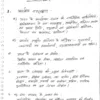
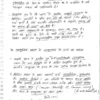
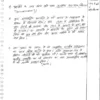
All eight booklets are produced using high-resolution laser printing technology that renders Hindi Devanagari script, English terminology, flowcharts, comparison tables, and structural diagrams with precise clarity. Laser toner is permanently fused to the paper surface — unlike inkjet printing, it does not smear when pages come into contact with perspiring hands during summer study sessions or when highlighters are applied over printed text. Flowcharts comparing political thinkers, tables mapping IR theories to historical events, and diagrammatic representations of constitutional structures all reproduce with the crispness required for effective visual learning.
Binding and Durability
Booklets are available in either spiral binding or book binding depending on stock at dispatch. Spiral-bound booklets lie completely flat on a study desk, making it possible to write notes alongside the printed text without the book springing shut — an important practical feature when working through Rajesh Mishra’s PSIR optional notes alongside answer-writing practice. Book-bound booklets feature a 300 GSM laminated cover that resists moisture and daily handling wear, keeping the set in shelf-worthy condition through multiple revision cycles across the UPSC Mains preparation period.
Key Features and Study Design
These Saraswati IAS PSIR Hindi notes by Rajesh Mishra are designed around the specific demands of UPSC Mains optional answer writing in Hindi medium — combining conceptual depth with structured presentation to help aspirants write high-scoring 150-word and 250-word answers consistently.
- पूर्ण पाठ्यक्रम कवरेज (Full Syllabus Coverage): All 3 Booklets together cover the complete UPSC PSIR optional syllabus — Paper I (political theory, Western thought, comparative politics, Indian politics) and Paper II (IR theory, global issues, Indian foreign policy) — leaving no topic from the official UPSC notification unaddressed.
- द्विभाषी शब्दावली (Bilingual Terminology): Key political science and IR terms are presented with both the standard Hindi translation and the English original in brackets throughout the notes. This bilingual approach helps Hindi-medium UPSC aspirants build the terminological fluency needed to write authoritative answers without ambiguity on technical concepts.
- तुलनात्मक तालिकाएँ (Comparative Tables): Rajesh Mishra’s teaching method at Saraswati IAS relies heavily on comparative tables — thinkers against their key concepts, IR theories against their core assumptions, constitutional provisions against their judicial interpretations. These tables are reproduced in the printed notes and serve as standalone revision tools in the final weeks before UPSC Mains.
- उत्तर-लेखन ढाँचे (Answer-Writing Frameworks): Each major topic includes a suggested answer structure — introduction approach, body paragraphs, and conclusion template — specifically calibrated for the UPSC PSIR optional paper. These frameworks are invaluable for aspirants who need to convert their conceptual knowledge into examiner-approved answer formats within the time constraints of the actual UPSC Mains examination.
- 2025-26 अद्यतन सामग्री (2025-26 Updated Content): The foreign policy booklet and the global issues booklet are updated to incorporate developments through the 2025-26 preparation cycle — including recent geopolitical shifts, India’s G20 presidency legacy, new multilateral engagements, and evolving India-China and India-USA dynamics that UPSC Mains examiners are likely to test in the upcoming examination.
Shipping, Packaging and Delivery
Every order of Rajesh Mishra Saraswati IAS PSIR Hindi Notes 2025-26 is packed using a multi-layer protection system designed to ensure all 3 Booklets arrive in perfect, study-ready condition. The set is first shrink-wrapped as a unit to keep all booklets together and protected from moisture. The shrink-wrapped bundle is then placed in a corrugated cardboard box with foam edge protectors at each corner to absorb impact during courier transit. An additional layer of bubble wrap surrounds the bundle inside the box, and the box is sealed with reinforced tape rated for long-distance logistics. Your notes leave our Mukherjee Nagar dispatch centre in the same condition they were printed.
Orders are dispatched within 24 hours of payment confirmation on business days and delivered pan India within 3-5 business days via tracked courier services. You receive a tracking ID by SMS and WhatsApp immediately upon dispatch so you can monitor your order’s journey to your doorstep. For any delivery queries, missing booklets, or damaged items, contact our support team on WhatsApp at +91 85802 57424 — missing or damaged booklets are replaced within 48 hours of the complaint being raised, with no questions asked. Buy with confidence knowing your UPSC optional preparation will not be delayed by a logistics issue.
Frequently Asked Questions (FAQ)
A: Yes — Rajesh Mishra’s PSIR notes from Saraswati IAS are among the most widely used Hindi-medium PSIR optional notes for UPSC. The content is structured around the official UPSC syllabus, uses bilingual terminology to bridge Hindi and English political science vocabulary, and includes comparative tables and answer-writing frameworks that directly support high-scoring responses in the UPSC Mains optional paper. Many successful Hindi-medium UPSC optionals aspirants rate this set highly for its clarity and syllabus alignment.
A: This product includes 8 individual printed booklets covering the complete UPSC PSIR optional syllabus. The set spans Political Theory, Western Political Thought, Comparative Politics, Indian Political Thought, Indian Government and Constitution for Paper I, and International Relations Theory, Global Issues and Institutions, and India’s Foreign Policy for Paper II. All 3 Booklets are dispatched together in a single tracked parcel delivered pan India within 3-5 business days.
A: Rajesh Mishra’s Saraswati IAS notes cover the full UPSC PSIR optional syllabus and are sufficient as your primary study material. However, for maximum marks, most UPSC toppers supplement printed class notes with selective reading of standard texts — particularly for Western political thought (thinkers’ original arguments) and for current affairs-heavy sections like India’s foreign policy. Using these notes as your core base and adding targeted supplementary reading for 2-3 areas is the strategy most UPSC PSIR toppers in Hindi medium follow.
A: The price of this 3-booklet set of Rajesh Mishra Saraswati IAS PSIR Hindi Notes 2025-26 is listed on the product page and includes free pan India tracked shipping. The price reflects the cost of genuine 2025-26 batch printed notes on 75 GSM paper with full-syllabus coverage. Given that PSIR optional coaching fees at Delhi institutes run into tens of thousands of rupees, buying the printed notes is the most cost-effective way to access Rajesh Mishra’s PSIR optional content for UPSC Mains preparation.
A: Yes — this is the genuine 2025-26 batch of Rajesh Mishra Saraswati IAS PSIR Hindi notes. The International Relations, Global Issues, and India’s Foreign Policy booklets have been updated to incorporate developments relevant to the 2025-26 UPSC Mains examination cycle — including recent geopolitical shifts, India’s multilateral engagements, and evolving bilateral relationships. The theoretical and Indian political thought sections are stable content that does not change significantly year to year but have been reviewed for accuracy in this batch.
A: For Hindi-medium UPSC aspirants, buying structured printed notes like Rajesh Mishra’s Saraswati IAS set is significantly more efficient than self-study from standard textbooks alone. The PSIR optional syllabus is vast — covering philosophy, comparative politics, IR theory, and foreign policy — and making self-study notes in Hindi that match UPSC answer-writing requirements takes enormous time. Printed notes give you a pre-structured, syllabus-mapped foundation so you can spend your limited preparation time on answer writing and current affairs rather than note-making from scratch.
A: Yes — all 3 Booklets together cover both UPSC PSIR Paper I and Paper II in their entirety. Booklets 1 through 5 address Paper I topics including political theory, Western political thought, comparative politics, Indian political thought, and Indian government and constitution. Booklets 6 through 8 address Paper II topics including international relations theory, global issues and international institutions, and India’s foreign policy. No section of the official UPSC PSIR optional syllabus is left out of this set.
A: These notes provide a strong, complete syllabus foundation and are sufficient as the primary study material for UPSC PSIR optional in Hindi medium. Aspirants who have cleared UPSC Mains with PSIR optional typically use a core set of notes like this one, supplemented by answer-writing practice, regular current affairs updates for the foreign policy section, and selective reading of 2-3 standard reference texts for depth on thinkers. The notes alone will give you syllabus coverage — consistent answer-writing practice is what converts that coverage into marks on the UPSC Mains answer sheet.
A: These booklets use 75 GSM ultra-white paper chosen for high opacity — multiple highlighter colors and gel pens work without bleed-through to the reverse side, ideal for color-coded revision. The anti-glare finish of the paper also reduces eye strain during extended study sessions, which matters significantly during the intensive revision months before UPSC Mains. Ballpoint pens, gel pens, and all standard highlighter brands have been tested on this paper stock without any feathering or reverse-side show-through.
A: All orders are dispatched from our Mukherjee Nagar, Delhi store within 24 hours of payment confirmation on business days. Delivery across India takes 3-5 business days via reputable courier partners. A tracking ID is sent to your registered WhatsApp number and SMS immediately upon dispatch. You can track your parcel at every stage of transit. For any delivery concerns or queries, contact us on WhatsApp at +91 85802 57424 and our team will respond promptly to resolve the issue.
A: Yes — beyond UPSC, Rajesh Mishra’s Saraswati IAS PSIR Hindi notes are highly relevant for State PSC examinations that include Political Science as an optional subject. Aspirants preparing for BPSC, UPPSC, MPPSC, RAS, and other State PSC examinations with a Political Science optional will find these notes cover the theoretical, constitutional, comparative, and international relations content that State PSC syllabi share with the UPSC PSIR optional. The Hindi-medium format makes these notes particularly accessible for State PSC aspirants who study and write in Hindi.
A: This product is listed and sold as a complete 3-booklet set covering the full UPSC PSIR optional syllabus for 2025-26. Selling the complete set ensures you have all the content you need for both Paper I and Paper II of the PSIR optional without gaps. If you have a specific requirement for individual booklets, please contact us on WhatsApp at +91 85802 57424 before placing your order and our team will check availability and advise you on the best option for your UPSC preparation needs.
Summary
| Specification | Value |
|---|---|
| Booklets | 8 Printed Booklets |
| Language | Hindi Medium (हिंदी माध्यम) |
| Paper | 75 GSM Ultra-White |
| Binding | Spiral or Book Binding |
| Delivery | 3-5 Business Days Pan India |
| Also Useful For | BPSC, UPPSC, MPPSC, RAS and all State PSC Examinations |
Sold by UPSC Store, Mukherjee Nagar, Delhi — your trusted source for genuine printed UPSC optional notes. Buy Rajesh Mishra Saraswati IAS PSIR Hindi Notes 2025-26 online today and receive your complete 3-booklet set at your doorstep with pan India delivery in 3-5 business days.
Reference: Civil Services Examination
Customer Reviews
No reviews yet
Be the first — bought this set? Tap “Write a Review” and tell other students how it arrived.
Only real buyers — we never post fake reviews.
Aspirants Also Bought
Same exam · bestsellers first

Vision IAS Prelims 2026-27 GS Test Series | 15–35 Tests | English Medium

Vajiram & Ravi General Studies Prelims Test Series 2026-27 | 10–30 Tests | English Medium | UPSC Study Material

Next IAS General Studies Prelims Test Series 2026-27 | 10–35 Tests | English Medium | UPSC Study Material
Drishti IAS Prelims Test Series 2026-27 | 10–35 Tests | English Medium | UPSC Study Material
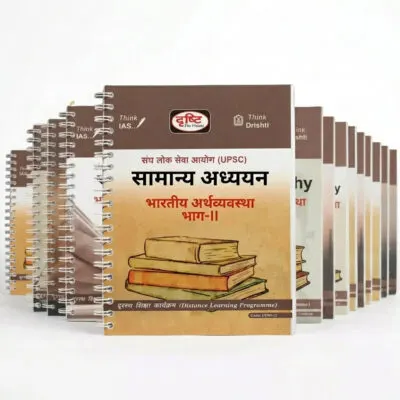
Drishti IAS Hindi Medium Complete GS Notes 2025-26 | 18 Booklets | Hindi Medium | UPSC Study Material

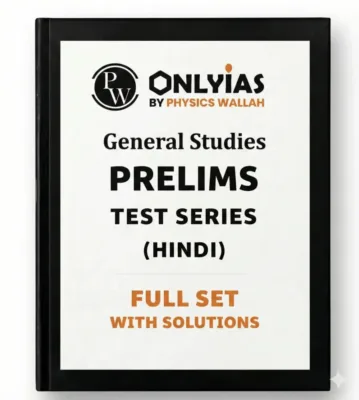
PW Only IAS Prelims 2026-27 Hindi Test Series | 10–35 Tests | Hindi Medium | UPSC Study Material

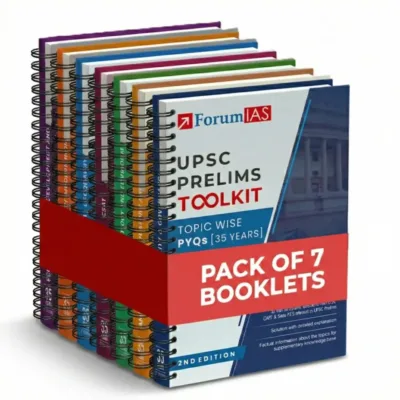
Forum IAS Prelims Topic-wise PYQs 1992-2025 | 7 Booklets | English Medium | UPSC Study Material

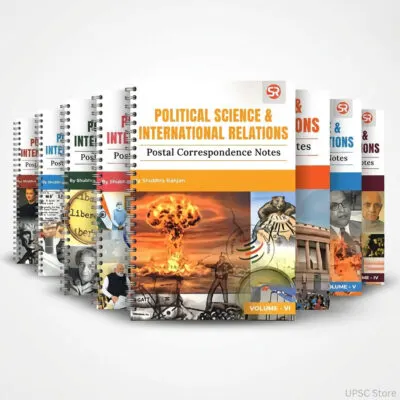
Shubhra Ranjan PSIR Optional Handwritten Notes 2026-27 | 11 Booklets | English Medium | UPSC Study Material
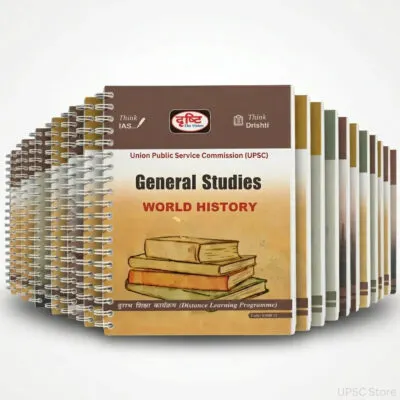
Drishti IAS GS Foundation Notes 2025-26 | 27 Booklets | English Medium | UPSC Study Material
Ranker's Classes Commerce Optional Notes 2025-26 | 10 Booklets | English Medium | UPSC Study Material
About Rajesh Mishra Political Science PSIR Hindi Notes 2025-26
Rajesh Mishra Political Science PSIR Hindi Notes 2025-26 is an original printed study material set from Saraswati IAS, covering Political Science and International Relations. Available in Hindi medium, this set is counted booklet by booklet before dispatch — no photocopies, no missing booklets.
Product Details
- Institute: Saraswati IAS
- Subject: Political Science and International Relations
- Medium: Hindi
- Format: Printed
- Delivery: Pan-India delivery in 4–7 working days, free over ₹1,999
- Condition: New, original print — counted before dispatch
Why Buy from UPSC Store?
- ✓ Original Printed Notes — no photocopies, every booklet counted before it ships
- ✓ Fast Dispatch — ships within 24 hours from Delhi, arrives in 4–7 days pan-India
- ✓ Secure Packaging — bubble-wrapped and boxed to prevent damage in transit
- ✓ 180+ Orders Shipped — to 25 states across India
- ✓ WhatsApp Support — ask which set fits your optional and medium before ordering
Frequently Asked Questions
Original print — the same printed booklets the institute issues. Every set is counted booklet by booklet before dispatch.
Orders are dispatched within 24 hours from Delhi and delivered across India in 4–7 working days. Delivery is free over ₹1,999.
Returns are accepted only if the problem is from our side: wrong item, damaged or defective copy, or missing booklets or pages. Report it within 7 days of delivery and we arrange a free pickup and send a free replacement or a full refund. We do not accept change-of-mind returns, so please check the medium, edition and binding before ordering. WhatsApp us to start a return.