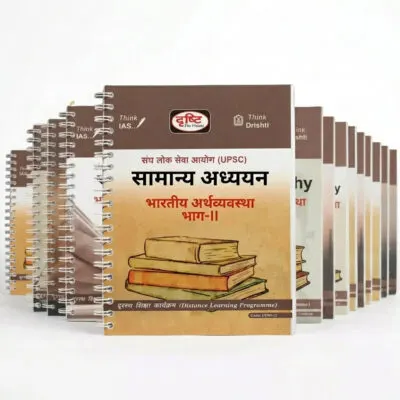
Drishti IAS Hindi Sahitya Notes 2025-26

13 Booklets | Hindi Medium | UPSC Study Material
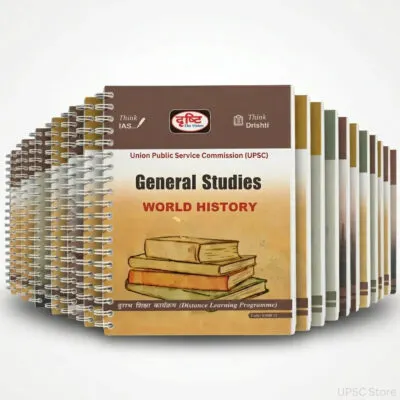
Key Highlights:
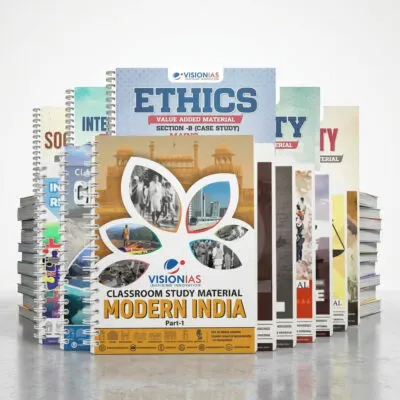
📘 13 Booklets
📚 Hindi Sahitya
🎓 Drishti IAS
🏷️ Printed
🇬🇧 Hindi Medium
₹2,465
🌀 spiral
📘 book-binding
Only 18 sets left
Selling fast (87 sold this week)
5% OFF Use UPSC5% (COD Available)
10% OFF Use UPI10 (UPI Only)
Secure Payment
Fast Delivery
Safe Packaging

About Drishti IAS Hindi Sahitya Notes

The Drishti IAS Hindi Sahitya Notes is a printed UPSC study material set sold by UPSC Store — India’s trusted source for genuine, latest-batch civil services preparation books. This page covers full booklet details, syllabus coverage, pricing, shipping, and frequently asked questions. Useful for UPSC CSE, BPSC, UPPSC, MPPSC, RAS and other state PSC examinations.

Drishti IAS Hindi Sahitya Notes 2025-26 | 13 Booklets | Hindi Medium | UPSC Study Material
Related: Drishti IAS notes · Hindi Sahitya optional

Drishti IAS Hindi Sahitya Notes 2025-26 is a meticulously crafted study material package designed exclusively for UPSC Civil Services Examination aspirants who have chosen Hindi Sahitya (Hindi Literature) as their optional subject. This comprehensive set of 13 booklets covers the entire UPSC syllabus for Hindi Literature in an organized, student-friendly format. Whether you are a beginner just starting your UPSC preparation or a seasoned aspirant looking to strengthen your optional subject, these notes offer structured content, analytical insights, and examination-focused explanations that make complex literary concepts accessible and memorable. The material is entirely in Hindi medium, ensuring comfort and clarity for students whose primary language of instruction is Hindi.

The 2025-26 edition reflects the latest trends in UPSC Mains examination, incorporating updated question patterns, recently asked topics, and comprehensive coverage of both Paper I and Paper II of the Hindi Literature optional syllabus. Each booklet is curated by expert faculty at Drishti IAS who have years of experience in guiding successful candidates through the UPSC examination process. With a focus on conceptual clarity, answer-writing skills, and exam-oriented preparation, this package stands as one of the most reliable and complete study resources available in the market today for Hindi Sahitya optional aspirants.

Product Overview

  • Product Name: Drishti IAS Hindi Sahitya Notes 2025-26
  • Number of Booklets: 13
  • Medium: Hindi
  • Target Examination: UPSC Civil Services Mains (Hindi Literature Optional)
  • Edition: 2025-26
  • Publisher: Drishti IAS
  • Subject Coverage: Complete Hindi Sahitya Syllabus (Paper I & Paper II)

Complete Booklet-wise Content Coverage

Booklet 1: Hindi Bhasha ka Udbhav aur Vikas (हिंदी भाषा का उद्भव और विकास)

This foundational booklet traces the historical origins and evolutionary journey of the Hindi language from its ancient Apabhramsha roots to its current standardized form. It covers the linguistic transitions across various periods, including Vedic Sanskrit, Pali, Prakrit, and Apabhramsha, providing students with a clear understanding of how Hindi emerged as a distinct literary language. The booklet also addresses the role of regional dialects such as Braj, Awadhi, Maithili, and Khari Boli in shaping the modern Hindi literary tradition, supported by relevant examples and examination-oriented analysis.

Special emphasis is placed on the socio-political and cultural factors that influenced the development of Hindi, including the impact of the Bhakti and Riti movements, Persian and Urdu influences, and the colonial era standardization efforts. Students will also find detailed discussions on the Devanagari script, its evolution, and its role in unifying the diverse linguistic landscape of northern India. This booklet prepares aspirants to answer questions related to linguistic history with precision, depth, and analytical clarity, making it an essential starting point for any serious Hindi Sahitya optional candidate.

Booklet 2: Adikal – Veeragatha Kaal (आदिकाल – वीरगाथा काल)

The second booklet provides an exhaustive analysis of the earliest period of Hindi literature, popularly known as Adikal or Veeragatha Kaal, spanning roughly from 1000 CE to 1375 CE. This booklet covers the major works, poets, and literary characteristics of this period, including Chand Bardai’s Prithviraj Raso, Sandesh Rasak, and Kirtilata. Students will gain a thorough understanding of the heroic, romantic, and devotional strands of early Hindi literature, along with the historical and cultural context in which these works were produced.

The booklet also critically examines the scholarly debates surrounding the naming and periodization of Adikal, including the arguments presented by eminent historians such as Ramchandra Shukla and Hazari Prasad Dwivedi. Questions of authenticity, historical reliability, and literary merit of Adikal texts are discussed in a balanced and academically rigorous manner. The content is structured to help aspirants write comprehensive, nuanced answers in the UPSC Mains examination, with model answer frameworks and key points highlighted throughout the booklet for quick revision purposes.

Booklet 3: Bhaktikal – Sant Kavya aur Sufi Kavya (भक्तिकाल – संत काव्य और सूफी काव्य)

This booklet delves deeply into the golden age of Hindi literature — the Bhakti period — with a focused exploration of Sant Kavya and Sufi Kavya traditions. It covers the Nirguna Bhakti movement represented by poets like Kabir, Ravidas, Namdev, and Dadu Dayal, providing detailed literary analyses of their major works, philosophical underpinnings, and social reform messages. The linguistic styles, use of dohas, padas, and sakhi forms, and the socio-religious significance of these compositions are all thoroughly discussed to help aspirants build a comprehensive understanding of this tradition.

The Sufi Kavya section covers the Prem-Margiya tradition with in-depth analyses of Jayasi’s Padmavat, Manjhan’s Madhumalati, and Usman’s Chitravali, among others. The booklet explores the unique blend of Islamic mysticism and Indian poetic conventions in Sufi literature, examining allegorical storytelling techniques, the masnavi form, and themes of divine love and human longing. Comparative analysis between Sant and Sufi traditions is provided to help aspirants craft well-rounded answers that demonstrate critical thinking and literary sensitivity in the examination hall.

Booklet 4: Bhaktikal – Saguna Bhakti (Ram aur Krishna Bhakti) (भक्तिकाल – सगुण भक्ति)

Booklet 4 focuses on the Saguna Bhakti tradition, covering both the Ram Bhakti and Krishna Bhakti streams in comprehensive detail. The Ram Bhakti section is centered on Tulsidas and his monumental work Ramcharitmanas, with extensive coverage of its literary structure, philosophical significance, poetic techniques, and lasting cultural impact on Indian society. The booklet also covers Tulsidas’s other important compositions including Vinay Patrika, Kavitavali, and Dohavali, providing students with a well-rounded understanding of one of Hindi literature’s greatest poets.

The Krishna Bhakti section covers Surdas and his magnum opus Sursagar, along with other poets of the Ashtachap group such as Kumbhandas, Nandadas, and Krishnadas. The booklet explores the Pushti Marg philosophical tradition founded by Vallabhacharya and its influence on Krishna Bhakti poetry, including the use of Braj Bhasha, the depiction of Bal Lila and Madhurya Bhava, and the distinctive poetic imagery employed by these poets. Examination-focused key points and analytical summaries are provided at the end of each section to aid efficient revision and answer writing.

Booklet 5: Ritikal – Ritibaddha, Ritisiddha aur Riti Mukta Kavya (रीतिकाल)

This booklet provides a comprehensive study of the Riti period of Hindi literature (approximately 1650–1850 CE), covering all three major strands: Ritibaddha, Ritisiddha, and Ritimukta poetry. The Ritibaddha tradition, represented by poets like Keshavdas, Matiram, Bhushan, and Bihari, is analyzed in terms of its adherence to Sanskrit rhetorical traditions (Riti Shastra), including the classification of Nayaka-Nayika, Rasa, Alankara, and various poetic forms. The booklet includes detailed literary analyses of key works such as Bihari Satsai and Keshavdas’s Kavipriya.

The Ritisiddha and Ritimukta sections cover poets like Ghananand and Alha, exploring how these poets either transcended or reformed the rigid Riti conventions to express genuine emotional and spiritual experience. Bhushan’s Veer Rasa poetry, which stands apart from the typical Shringar-dominated Riti tradition, receives special attention due to its significance in the UPSC syllabus. The booklet provides comparative analyses, critical perspectives from leading literary scholars, and model answer frameworks to help aspirants present sophisticated literary arguments in their examination responses.

Booklet 6: Adhunik Kaal – Bhartendu Yug aur Dwivedi Yug (आधुनिक काल – भारतेंदु युग और द्विवेदी युग)

Booklet 6 marks the beginning of Modern Hindi literature with a thorough exploration of the Bhartendu era (1850–1900) and the Dwivedi era (1900–1920). The Bhartendu section covers the literary, social, and nationalist contributions of Bhartendu Harishchandra, including his plays, essays, poetry, and journalism, while situating his work within the broader context of the 19th-century Bengal Renaissance and the nascent Indian nationalism movement. The role of Hindi journalism, literary societies, and cultural institutions in shaping the Bhartendu era literary landscape is also discussed in detail.

The Dwivedi era section focuses on Mahavir Prasad Dwivedi’s monumental contribution to the standardization of Khari Boli Hindi and the creation of a new literary aesthetic based on Shuddha Hindi prose and didactic poetry. Key poets and prose writers of this era, including Maithilisharan Gupt, Ayodhya Singh Upadhyay ‘Hariaudh’, and Ramchandra Shukla, are analyzed with reference to their major works and literary significance. The transition from feudal patronage to public literary culture and the democratization of Hindi literature are examined as major themes of this transformative period.

Booklet 7: Chhayavad aur Pragativad (छायावाद और प्रगतिवाद)

This booklet provides an in-depth study of two of the most significant movements in modern Hindi poetry: Chhayavad (Romanticism/Mysticism, 1920–1936) and Pragativad (Progressivism, 1936 onwards). The Chhayavad section covers the four major poets — Jaishankar Prasad, Suryakant Tripathi ‘Nirala’, Sumitranandan Pant, and Mahadevi Varma — with detailed literary analyses of their landmark works such as Kamayani, Sakuntala, Pallav, Yama, and Aansoo. The philosophical, aesthetic, and thematic characteristics of Chhayavada poetry, including its celebration of nature, individualism, and mystical love, are discussed comprehensively.

The Pragativad section examines the Marxist-influenced Progressive Writers’ Movement and its impact on Hindi literature, covering poets and fiction writers who used their art to critique social inequality, caste oppression, and economic exploitation. Key figures such as Nagarjuna, Kedarnath Agrawal, and Shamsher Bahadur Singh are analyzed with reference to their poetic style and ideological commitments. The booklet also explores the tensions and dialogues between Chhayavada individualism and Pragativadi collectivism, helping aspirants construct nuanced comparative answers that demonstrate sophisticated literary-critical thinking.

Booklet 8: Prayogvad aur Nayi Kavita (प्रयोगवाद और नई कविता)

Booklet 8 covers the experimental and modernist strands of post-independence Hindi poetry through a detailed study of Prayogvad (Experimentalism) and Nayi Kavita (New Poetry). The Prayogvad movement, launched through Ajneya’s Tar Saptak (1943), represented a radical departure from the romantic excess of Chhayavada, emphasizing personal experience, intellectual rigor, colloquial language, and formal experimentation. This booklet analyzes the seven poets of Tar Saptak and their individual contributions, along with the subsequent Doosra Saptak and Teesra Saptak anthologies that carried the experimental spirit forward.

The Nayi Kavita section examines the poetry of the 1950s and 1960s that emerged from the Prayogvad tradition but developed its own distinct identity, characterized by existential themes, urban sensibility, and a rejection of conventional poetic forms. Key poets including Sarveshwar Dayal Saxena, Kedarnath Singh, Kunwar Narayan, and Dhoomil are studied in detail, with particular attention to their unique voices and contributions to the Hindi poetic tradition. The booklet concludes with an analysis of the transition from Nayi Kavita to Samkaleen (contemporary) poetry, providing aspirants with a complete picture of modern Hindi poetry’s evolution.

Booklet 9: Hindi Upanyas (हिंदी उपन्यास)

This booklet offers a comprehensive survey of the Hindi novel from its inception in the late 19th century to contemporary times. Beginning with Devaki Nandan Khatri’s Chandrakanta (1888) and tracing the development through Premchand’s social realist novels, the booklet provides detailed literary analyses of landmark works such as Godan, Gaban, Rangbhoomi, and Nirmala. Premchand’s realist aesthetic, his portrayal of rural poverty, caste discrimination, and women’s oppression, and his contribution to establishing the Hindi novel as a serious literary form are examined with the depth and nuance that UPSC aspirants require.

Post-Premchand developments in the Hindi novel are covered extensively, including the modernist stream represented by Jainendra Kumar, Agyeya, and Ilachandra Joshi, and the new wave novels of the 1960s-70s associated with Nayi Kahani and Nayi Upanyas movements. Important contemporary novelists such as Nirmal Verma, Manohar Shyam Joshi, Shrilal Shukla (Raag Darbari), and Mannu Bhandari are analyzed with reference to their narrative techniques, thematic concerns, and literary significance. The booklet provides structured summaries and key analytical points for each major novel to facilitate efficient revision and answer writing.

Booklet 10: Hindi Kahani aur Nayi Kahani (हिंदी कहानी और नई कहानी)

Booklet 10 provides a thorough examination of the Hindi short story tradition, from its early development in the late 19th century to the revolutionary Nayi Kahani movement of the 1950s-60s. The booklet begins with a survey of pre-Premchand short fiction and then focuses extensively on Premchand’s contributions to the genre, including detailed analyses of landmark stories such as Kafan, Poos ki Raat, Idgah, Bade Ghar ki Beti, and Namak ka Daroga. Premchand’s narrative technique, his use of irony and social critique, and his compassionate portrayal of marginalized communities are examined in detail.

The Nayi Kahani section covers the significant shift in Hindi short fiction that occurred in the post-independence period, characterized by psychological realism, existential themes, urban alienation, and a focus on middle-class experience. Leading Nayi Kahani writers including Mohan Rakesh (Malbe ka Malik), Rajendra Yadav, Kamleshwar, Nirmal Verma, Bhisham Sahni (Tamas), and Mannu Bhandari (Yahi Sach Hai) receive detailed attention. The booklet also covers later developments in Hindi fiction, including feminist narratives, Dalit short stories, and contemporary urban fiction, providing aspirants with a panoramic view of Hindi short story’s rich and diverse tradition.

Booklet 11: Hindi Natak aur Rangmanch (हिंदी नाटक और रंगमंच)

This booklet covers the evolution of Hindi drama from the Bhartendu era to the present day, with particular attention to the relationship between literary drama and theatrical practice. The foundational contributions of Bhartendu Harishchandra (Andher Nagari, Bharat Durdasha) and his contemporaries in establishing a modern Hindi theatrical tradition are examined alongside the subsequent development of drama through the Prasad era. Jaishankar Prasad’s major plays — Chandragupta, Skanda Gupta, Dhruvaswamini, and Kamna — receive detailed treatment as landmarks of historical and philosophical drama in Hindi.

The post-independence era of Hindi drama, including the work of Mohan Rakesh (Ashadh ka Ek Din, Lehron ke Rajhans, Aadhe Adhure), Dharamvir Bharati (Andha Yug), and Sarveshwar Dayal Saxena, is analyzed in terms of its departure from the Prasad tradition toward a more realistic, contemporary dramatic sensibility. The booklet also covers the contributions of directors like Habib Tanvir and Nemichandra Jain to the development of Hindi theatre, along with discussions of folk theatre traditions and their integration into modern theatrical practice. Aspirants are provided with model analysis frameworks to help them write comprehensive answers on dramatic texts.

Booklet 12: Hindi Nibandh aur Aalochna (हिंदी निबंध और आलोचना)

Booklet 12 covers two essential prose forms in Hindi literature — the essay (Nibandh) and literary criticism (Aalochna) — providing aspirants with comprehensive knowledge of these often underemphasized but crucial components of the Hindi Sahitya syllabus. The Hindi essay tradition is traced from Bhartendu Harishchandra through the Dwivedi era formalists, Premchand’s committed essays, Hazari Prasad Dwivedi’s cultural essays, Ramchandra Shukla’s critical essays, and contemporary essayists. Key essays are analyzed for their argumentative structure, stylistic features, and intellectual content, with examination-relevant insights highlighted throughout.

The Hindi literary criticism section covers the major schools of critical thought that have shaped Hindi literary discourse, including Rasa-based classical criticism, historical-social criticism (represented by Ramchandra Shukla’s Itihas), progressive criticism, and contemporary theoretical approaches influenced by Western literary theory. Major critics including Ramchandra Shukla, Hazari Prasad Dwivedi, Namvar Singh, Rajendra Yadav, and Ashok Vajpeyi are studied with reference to their critical methodologies and significant contributions. The booklet helps aspirants develop their own critical vocabulary and analytical framework for writing sophisticated literary criticism in the examination.

Booklet 13: Revision Notes, Model Answers aur Prashan Pattern Vishleshan (रिवीजन नोट्स, मॉडल उत्तर और प्रश्न पैटर्न विश्लेषण)

The final booklet in this comprehensive set serves as an essential revision and examination strategy resource, designed to help aspirants consolidate their knowledge and optimize their performance in the UPSC Hindi Sahitya optional papers. This booklet contains condensed revision notes covering all major periods, movements, authors, and works in the Hindi literary tradition, organized in a format that facilitates quick but effective revision in the crucial weeks before the examination. Mind maps, timelines, comparative charts, and key quotations are provided to aid memory retention and conceptual clarity.

The model answer section includes sample answers to previous years’ UPSC questions across various difficulty levels and question types — from short analytical notes to long essay-type answers — demonstrating the ideal structure, content depth, and critical perspective required for high-scoring responses. The question pattern analysis section examines the last ten years of UPSC Hindi Sahitya questions to identify recurring themes, frequently tested authors and works, and emerging trends in the examination. This data-driven approach helps aspirants prioritize their preparation time and develop targeted strategies for maximizing their score in the optional papers.

Frequently Asked Questions (FAQ)

Q1. Is this study material sufficient for complete UPSC Hindi Sahitya optional preparation?

Yes, this 13-booklet set is designed to provide comprehensive coverage of the entire UPSC Hindi Sahitya optional syllabus for both Paper I and Paper II. The material covers all major literary periods, movements, authors, and works specified in the official UPSC syllabus. However, aspirants are also encouraged to supplement these notes with original literary texts and standard reference books for a more nuanced and deep understanding of the subject, particularly for high-scoring detailed answers.

Q2. Is this material suitable for first-time UPSC aspirants with no prior background in Hindi literature?

Absolutely. The notes are written in clear, accessible Hindi with detailed explanations of complex literary concepts, technical terminology, and historical contexts. Beginners will find the structured, chronological arrangement helpful for building their knowledge systematically from the ground up. The booklets include introductory sections, glossaries of literary terms, and contextual explanations that make the material approachable even for students who are encountering Hindi literature as an academic subject for the first time.

Q3. How is the 2025-26 edition different from previous editions of Drishti IAS Hindi Sahitya Notes?

The 2025-26 edition has been thoroughly updated to reflect the latest UPSC examination trends, including analysis of recent questions from 2022, 2023, and 2024 UPSC Mains examinations. New content has been added in areas that have received increased attention in recent papers, existing content has been refined for greater accuracy and depth, and the model answer section has been expanded with more contemporary examples and updated critical perspectives. The physical quality of the booklets has also been improved in this edition.

Q4. Does this package cover both Paper I and Paper II of the Hindi Sahitya optional?

Yes, this complete 13-booklet set covers both papers of the UPSC Hindi Sahitya optional examination comprehensively. Paper I topics, including Hindi language history, literary periods from Adikal to Ritikal, and prose forms like essays and criticism, are covered in dedicated booklets. Paper II topics, encompassing modern Hindi literature, the novel, short story, drama, and prominent individual authors, are covered in equal depth with examination-focused analysis and model answers throughout the set.

Q5. Are there model answers and previous year questions included in this material?

Yes, model answers and previous year question analysis are included, primarily in Booklet 13 but also integrated throughout the other booklets where relevant. Model answers cover various question types including short notes, analytical essays, comparative studies, and long-form critical answers. These models demonstrate the ideal answer structure, appropriate use of literary terminology, and the level of analytical depth that UPSC examiners expect from high-scoring candidates, serving as practical templates for aspirants to develop their own answer-writing style.

Q6. Can this material be used for self-study without joining Drishti IAS classroom coaching?

Yes, these notes are designed to be self-sufficient study resources suitable for independent self-study. The content is presented in a teacher-like narrative style that guides readers through complex topics step by step, making it possible to prepare effectively without access to classroom coaching. The structured organization, detailed explanations, integrated examples, and model answers make the material comprehensive enough for dedicated self-study aspirants to build a strong foundation and develop the analytical skills needed for the UPSC examination.

Q7. In which language are the notes written? Are English technical terms explained?

All 13 booklets are written entirely in Hindi, making them ideal for Hindi medium aspirants who are most comfortable studying in their mother tongue. Technical literary terms from Sanskrit rhetorical tradition (such as Rasa, Alankara, Chhanda, Nayika Bheda) as well as modern critical terminology are explained clearly in Hindi within the text. Where English literary terms are relevant or commonly used in examination contexts, these are also introduced and explained in Hindi to ensure complete comprehension and enable aspirants to use terminology confidently in their answers.

Q8. How should I plan my study schedule using these 13 booklets for effective UPSC preparation?

A recommended approach is to begin with Booklet 1 (language history) and proceed chronologically through the literary periods (Booklets 2–6) before moving to the genre-specific booklets (7–12). For a twelve-month preparation plan, allocating approximately three to four weeks per booklet for initial reading, followed by regular revision cycles, is advisable. Booklet 13 should be used intensively in the final two to three months before the examination for consolidation, model answer practice, and question pattern analysis to fine-tune your examination strategy.

Q9. Are the notes updated with contemporary Hindi literature and recent critical perspectives?

Yes, the 2025-26 edition includes coverage of contemporary Hindi literature spanning the late 20th and early 21st centuries, including Dalit literature, feminist writing, Hindi diaspora literature, and recent award-winning authors and works. Modern critical perspectives, including those influenced by postcolonial theory, feminism, Dalit aesthetics, and cultural studies, are also incorporated where relevant. This ensures that aspirants are equipped to engage with both classical and contemporary aspects of Hindi literary culture in their examination answers.

Q10. What makes Drishti IAS Hindi Sahitya Notes superior to other available study materials?

Drishti IAS notes stand out for their examination-centric approach, combining comprehensive content coverage with practical answer-writing guidance. Unlike textbooks that prioritize academic completeness over exam relevance, these notes are specifically designed around the UPSC syllabus and question patterns. The integration of literary analysis, critical perspectives, model answers, and revision aids within a single coherent package makes these notes particularly effective. The credibility and track record of Drishti IAS in producing successful UPSC candidates further validates the quality of this material.

Q11. Is this material appropriate for the Hindi Sahitya optional at both Preliminary and Mains stages?

This material is primarily designed for the UPSC Civil Services Mains examination, covering the Hindi Sahitya optional papers in depth. However, the conceptual foundation it builds — including knowledge of major literary periods, key authors and works, and critical frameworks — is also beneficial for the General Studies papers that include questions on Indian literature and culture. For UPSC Preliminary preparation, a more concise current affairs and general knowledge-focused approach is recommended, though this material provides valuable background knowledge.

Q12. How can I maximize my score in Hindi Sahitya optional using these notes effectively?

To maximize your score, focus on understanding the literary content deeply rather than rote memorization, as UPSC examiners reward critical analysis and original thinking. Use the model answers as structural templates but develop your own analytical voice. Practice writing full-length answers regularly, paying attention to time management. Read original texts of at least the most important works covered in the syllabus to enrich your answers with authentic textual references and quotations. Regularly revise using Booklet 13 and attempt previous year papers under examination conditions to build confidence and identify gaps in preparation.

Physical Quality and Product Specifications

Paper Quality

The Drishti IAS Hindi Sahitya Notes 2025-26 are printed on high-quality, cream-tinted offset paper that provides a comfortable reading experience and reduces eye strain during long study sessions. The paper has adequate opacity to prevent ink bleed-through even when using highlighters or markers on the pages, allowing students to annotate their notes freely without affecting readability. The paper weight ensures durability throughout months of intensive use, resisting tearing at the edges and maintaining its integrity even when pages are turned frequently during revision sessions. The cream tone is specifically chosen for extended reading comfort.

Print Quality

All 13 booklets feature sharp, clear printing with consistent ink density across all pages, ensuring that text remains legible even in smaller font sizes used for supplementary information, footnotes, and margin notes. The typography is carefully chosen for readability in Hindi script, with appropriate letter spacing and line height that prevents the dense Devanagari characters from appearing crowded or difficult to parse. Headings, subheadings, and key terms are printed in bold or a larger font size, creating a clear visual hierarchy that helps students navigate content efficiently. Diagrams, charts, and tables are printed with sufficient clarity for all details to be easily read.

Binding Quality

Each booklet in the set features robust perfect binding that ensures pages remain securely attached even after extended and repeated use. The binding is designed to withstand the rigors of daily study, including being opened flat on a desk, carried in bags, and stored and retrieved repeatedly over a preparation period of several months. The spine of each booklet is reinforced to prevent cracking or separation when the booklet is opened to the full extent, which is a common failure point in less well-manufactured study materials. Students can read each booklet comfortably without needing to hold it open manually.

Cover Design and Durability

The covers of all 13 booklets are made from thick, laminated cardstock that provides excellent protection against everyday wear and tear, including minor water splashes, surface abrasion, and corner bending. Each booklet cover features a clean, professionally designed layout with clear labeling of the booklet number, topic title, and edition year, making it easy to identify and retrieve the correct booklet quickly from a study stack or bookshelf. The lamination provides a matte finish that minimizes fingerprint marks and maintains the appearance of the booklets even after months of handling, keeping your study material looking organized and well-maintained throughout your preparation period.

Packaging and Delivery

The complete set of 13 booklets is packaged securely for delivery, with bubble wrap protection and a sturdy outer cardboard box to ensure that all booklets arrive in perfect condition without any damage to covers, spines, or pages during transit. Each booklet is individually wrapped within the outer packaging to prevent friction damage between volumes during shipping. The packaging is also designed to keep the booklets organized in sequential order, so aspirants can begin using the material immediately upon receipt without needing to sort through the contents. Orders are dispatched promptly and can be tracked through the provided order management system.

Summary Table

Booklet No.TitleTopic CoveragePaper RelevanceKey Authors/Works Covered
1Hindi Bhasha ka Udbhav aur VikasOrigin and development of Hindi language, dialects, scriptPaper IApabhramsha, Braj, Awadhi, Khari Boli, Devanagari
2Adikal – Veeragatha KaalEarliest Hindi literary period, heroic literature

Frequently Asked Questions

How is the 13-booklet set different from the 17-booklet version?

The 13-booklet edition is a more compact arrangement of the same Hindi Sahitya optional content.

Is the entire syllabus covered?

Yes, both Paper I and Paper II of the UPSC Hindi Literature optional are covered across the 13 booklets.

Are these original printed notes?

Yes, sourced as genuine Drishti IAS material from the 2025-26 batch print run.

What is the binding format?

Spiral or book binding is provided depending on the production batch in stock.

Is COD supported on this set?

Yes, Cash on Delivery is available on most serviceable pin codes across India.

When will I receive my order?

Tracked pan India shipping typically arrives within 3 to 5 business days from dispatch.

Reference: UPSC official syllabus

Customer Reviews 369

4.5
Based on 369 reviews
5★
220
4★
109
3★
40
2★
0
1★
0
A
Anjali Joshi
25 Apr 2026
✓ Verified

These booklets have everything needed for Hindi Sahitya section. Very well compiled and organized.

R
Rohit Yadav
25 Apr 2026
✓ Verified

Notes mein sab topics properly explained hain, bohot helpful.

M
Manish Yadav
24 Apr 2026
✓ Verified

Content mein depth hai, explanations clear hain. Bilkul satisfied hoon.

P
Priya Desai
23 Apr 2026
✓ Verified

Booklets bilkul well-organized hain. Padhai mein bahut madad mil rahi hai.

R
Ravi Nair
23 Apr 2026
✓ Verified

Booklets bilkul sturdy hain aur content bhi relevant. Good investment for UPSC.

M
Mohit Yadav
23 Apr 2026
✓ Verified

Hindi medium students ko yeh notes bilkul helpful milenge.

K
Karan Chopra
23 Apr 2026
✓ Verified

13 booklets mein organized content hai lekin presentation average tha. Paisa theek hai.

R
Ravi Desai
22 Apr 2026
✓ Verified

Study material ki quality bohot achi hai aur price bhi reasonable hai. Satisfied hokar likha.

🛍️

Aspirants Also Bought

More from the same category

View All

About Drishti IAS Hindi Sahitya Notes 2025-26

Drishti IAS Hindi Sahitya Notes 2025-26 is a highly recommended UPSC study material from Drishti IAS, specially designed for Hindi Sahitya preparation. Available in Hindi medium, this material is crafted to match the exact requirements of the UPSC Civil Services Examination syllabus — covering both Prelims and Mains comprehensively.

Product Details

  • Institute: Drishti IAS
  • Subject: Hindi Sahitya
  • Medium: Hindi
  • Format: Printed
  • Delivery: Pan-India delivery in 4–7 working days
  • Format: Original printed material, verified authentic

Why Buy from UPSC Store?

  • 100% Genuine Printed Material — Original printed notes, no photocopies or fake copies
  • Fast Delivery — Ships within 24 hours, arrives in 4–7 days pan-India
  • Secure Packaging — Bubble-wrapped and boxed to prevent damage in transit
  • Trusted by 10,000+ Aspirants — India's most reliable UPSC material marketplace
  • WhatsApp Support — Get expert guidance on material selection before ordering

Frequently Asked Questions

Is this product 100% original?

Yes, all products at UPSC Store are 100% genuine printed materials. We do not sell photocopies or fake copies.

How long does delivery take?

Orders are dispatched within 24 hours and delivered across India in 4–7 working days via reputed courier partners.

Can I return the product?

Yes, we accept returns within 7 days if the product is damaged or incorrect. Check our refund policy for details.

Which other study materials should I buy with this?

We recommend pairing this with current affairs notes and a UPSC test series for comprehensive preparation. Browse more in Drishti IAS, Hindi Sahitya, Optional, UPSC.