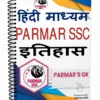


Parmar SSC GK History 4.0 Hindi Notes 2026-27
About Parmar SSC GK History 4.0
The Parmar SSC GK History 4.0 is a printed UPSC study material set sold by UPSC Store — India’s trusted source for genuine, latest-batch civil services preparation books. This page covers full booklet details, syllabus coverage, pricing, shipping, and frequently asked questions. Useful for UPSC CSE, BPSC, UPPSC, MPPSC, RAS and other state PSC examinations.
Parmar SSC GK History 4.0 Hindi Notes 2026-27 — 1 Booklet Hindi Medium Printed Notes for UPSC GS Paper I & Prelims
Related: Parmar SSC notes · History notes
Product Overview
| Feature | Details |
|---|---|
| Booklets Count | 1 Individual Printed Booklet — Ancient, Medieval, Modern & World History |
| Language | Hindi Medium (हिंदी माध्यम) |
| Publisher | Parmar SSC (Parmar’s GK 4.0 Series) |
| Edition | 2026-27 — Latest Genuine Batch |
| Condition | Brand New, Unmarked, Fresh Stock |
| Format | High-Quality Printed Booklets — Spiral or Book Binding |
| Paper Quality | 75 GSM Ultra-White — Highlighter Safe, Zero Bleed-Through |
| Shipping | Pan India Delivery in 4-7 business days — Tracked |
| Also Useful For | BPSC, UPPSC, MPPSC, RAS and all State PSC Examinations |
Complete Booklet Catalog
Parmar SSC GK History 4.0 Hindi Notes 2026-27 is a carefully structured 1-booklet printed set covering Indian and World History from Ancient civilisations through to post-Independence India — designed specifically for Hindi-medium aspirants targeting UPSC Prelims, GS Paper I Mains, SSC CGL, and all major State PSC examinations. Each booklet is self-contained, follows UPSC syllabus mapping, and is written in straightforward Hindi for quick absorption and revision.
- Booklet 1: प्राचीन भारत का इतिहास (Ancient Indian History) — Indus Valley Civilisation, Vedic Age, Mahajanapadas, Maurya Empire, Gupta Dynasty, post-Gupta period, religious movements including Buddhism and Jainism, art and architecture of ancient India, key administrative systems, and important ancient rulers with their contributions. Covers all frequently tested UPSC Prelims topics from ancient period including sources of history and numismatics.
- Booklet 2: मध्यकालीन भारत का इतिहास (Medieval Indian History) — Delhi Sultanate, Mughal Empire, Vijayanagara Kingdom, Bhakti and Sufi movements, regional kingdoms, administrative and revenue systems of medieval India, art and architecture of medieval period, key battles and treaties, and socio-cultural developments from 700 AD to the late 18th century covering all major UPSC Prelims and Mains themes.
- Booklet 3: आधुनिक भारत का इतिहास (Modern Indian History) — Arrival of European powers, British East India Company, major revolts and uprisings including 1857, socio-religious reform movements, Indian National Congress, revolutionary movements, Non-Cooperation, Civil Disobedience and Quit India movements, constitutional developments, role of key freedom fighters, and Partition and Independence in 1947 — all mapped to UPSC GS Paper I syllabus.
- Booklet 4: विश्व इतिहास एवं भारतीय कला-संस्कृति (World History & Indian Art-Culture) — French Revolution, American Independence, World Wars I and II, Russian Revolution, Colonialism and Decolonisation, Cold War, United Nations formation, Indian art forms, classical dance and music traditions, UNESCO heritage sites, architecture styles across dynasties, sculpture, painting schools, and cultural geography relevant to UPSC Prelims and GS Paper I Mains.
In-Depth Content Breakdown: Booklet by Booklet
Booklet 1: प्राचीन भारत का इतिहास (Ancient Indian History)
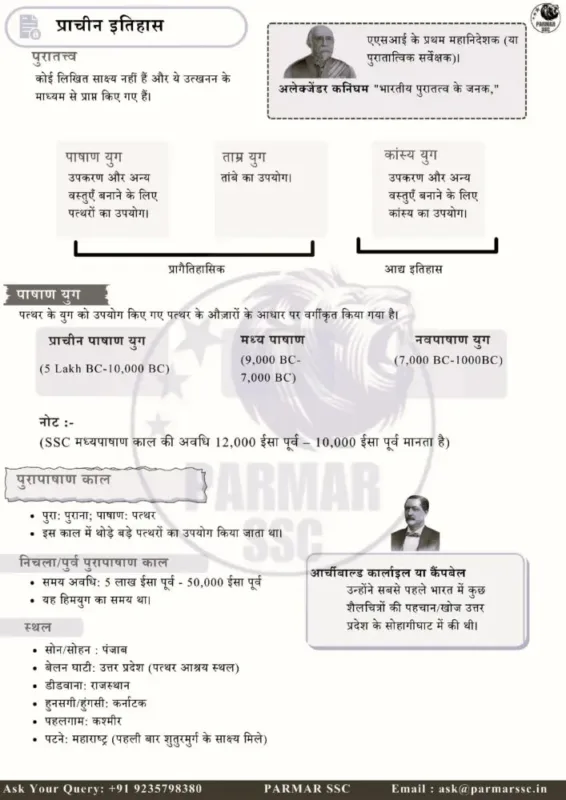
This booklet addresses one of the most heavily tested domains in UPSC Prelims — Ancient Indian History. It opens with the sources and periodisation of Indian history, then moves systematically through the Indus Valley Civilisation, covering town planning, trade routes, and the debate over Aryan migration. The Vedic period is treated in two parts — Rig Vedic and Later Vedic — with emphasis on society, polity, and economy. The rise of Mahajanapadas, the Magadha expansion, the Mauryan Empire under Chandragupta and Ashoka, and Ashokan edicts are all addressed with the level of factual detail that UPSC Prelims demands.
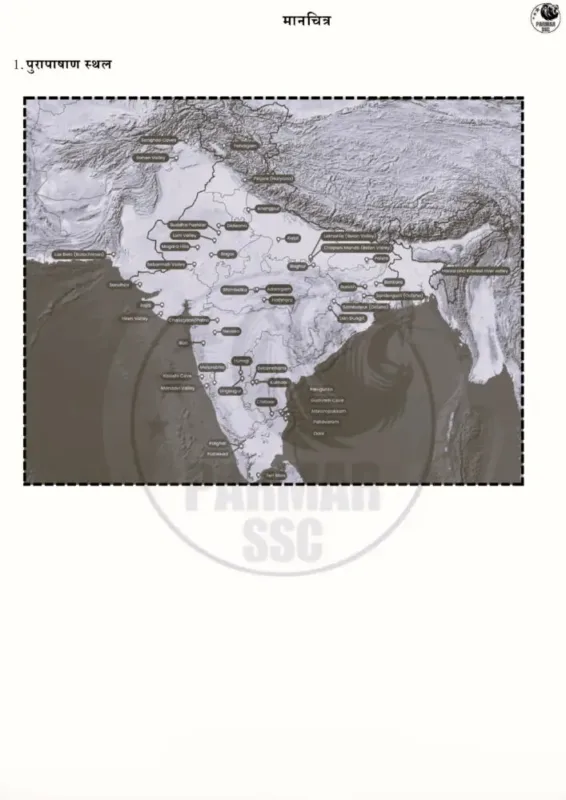
The second half of this booklet covers the Gupta Golden Age, post-Gupta dynasties including the Pallavas, Chalukyas, and Rashtrakutas, along with detailed notes on Buddhism, Jainism, and the Charvaka school. A dedicated segment on ancient Indian art and architecture — Stupas, rock-cut caves, temple styles — is presented with labelled diagrams in Hindi. Flowcharts showing dynastic timelines and comparison tables of religious philosophies make this booklet especially useful for quick pre-exam revision. Hindi-medium UPSC aspirants will find the vocabulary precise yet accessible throughout.
Booklet 2: मध्यकालीन भारत का इतिहास (Medieval Indian History)
Medieval Indian History carries significant weight in UPSC Prelims and GS Paper I Mains, and this booklet addresses it systematically. It begins with the Arab invasions and the early Turkish rulers, progressing through the Delhi Sultanate dynasties — Slave, Khilji, Tughlaq, Sayyid, and Lodi — with notes on their administrative innovations, revenue systems like the Iqta, and military campaigns. The Mughal section covers all major emperors from Babur to Aurangzeb, with detailed notes on the Mansabdari system, land revenue under Akbar, and Mughal architecture including the Taj Mahal and Red Fort, important for both Prelims MCQs and Mains descriptive answers.
The booklet also dedicates substantial space to the Bhakti and Sufi movements — a recurring UPSC theme — covering saints like Kabir, Mirabai, Ramananda, Chaitanya, and key Sufi silsilas such as Chishti and Suhrawardi. Regional kingdoms including Vijayanagara, Bahmani, and Maratha confederacy are covered with maps and key battles. The content is structured in bullet-point format with boxed summaries at the end of each chapter, making it easy to absorb before UPSC Prelims. Important UPSC-repeated questions from previous year papers are flagged within the text.
Booklet 3: आधुनिक भारत का इतिहास (Modern Indian History)
Modern Indian History is the most dynamic section of UPSC GS Paper I, and this booklet is structured to cover both the political narrative and the socio-economic dimensions of the colonial period. It begins with the entry of European trading companies, the Battle of Plassey, and the consolidation of British power across India. The economic impact of British rule — drain of wealth theory, deindustrialisation, land revenue settlements including Permanent Settlement and Ryotwari — is presented with data tables to support Mains answer writing. The 1857 Revolt is covered in detail including causes, centres, leaders, and aftermath, making it revision-ready for UPSC aspirants.
The second half of this booklet focuses on the freedom struggle — the formation of the Indian National Congress, the split between moderates and extremists, the Partition of Bengal and Swadeshi movement, Gandhi’s entry and mass movements including Non-Cooperation (1920), Civil Disobedience (1930), and Quit India (1942). Revolutionary movements, the role of Subhas Chandra Bose and the INA, and the constitutional evolution from the Morley-Minto reforms to the Government of India Act 1935 are all covered with timelines and comparative tables. The Partition and Transfer of Power in 1947 closes the booklet with a fact-dense yet readable summary.
Booklet 4: विश्व इतिहास एवं भारतीय कला-संस्कृति (World History & Indian Art-Culture)
World History is a distinct component of UPSC GS Paper I Mains and often underserved in standard coaching notes. This booklet covers the syllabus topics directly — French Revolution and its global impact, American War of Independence, Industrial Revolution and its social consequences, the two World Wars with causes and effects, the Russian Revolution of 1917, rise of Fascism and Nazism, and the decolonisation wave across Asia and Africa. The Cold War, the formation of the United Nations, and major international events up to the late 20th century are included. Each topic is written in concise Hindi with key facts boxed for quick recall during UPSC revision.
The Indian Art and Culture segment covers all UPSC-relevant sub-topics: classical dance forms (Bharatanatyam, Kathak, Kuchipudi, Odissi, Manipuri, Mohiniyattam, Sattriya), classical music traditions of Hindustani and Carnatic schools, major painting schools (Mughal, Rajput, Pahari, Madhubani, Warli), temple architecture across Nagara, Dravida, and Vesara styles, and UNESCO World Heritage sites in India. Puppetry, theatre traditions, martial arts forms, and tribal art are also listed. The booklet concludes with a cultural geography section linking art forms to their states — a format that directly supports UPSC Prelims MCQ-solving as well as GS Paper I Mains descriptive answers.
Physical Construction and Quality Standards
These printed booklets are manufactured to meet the specific demands of UPSC aspirants who spend 8-10 hours daily with their study material — the paper, print, and binding choices directly support long study sessions, active annotation, and repeated use across months of preparation.
Paper Quality: 75 GSM Anti-Glare White Paper
Each booklet in the Parmar SSC GK History 4.0 Hindi Notes 2026-27 set is printed on 75 GSM ultra-white paper selected for its high opacity and surface density. When you annotate with fluorescent highlighters — yellow, pink, green, or orange — the ink does not bleed through to the reverse side, keeping both faces of every page clean and legible. The anti-glare surface finish significantly reduces eye strain during extended revision sessions under tube lights or LED lamps, which is especially important for Hindi-medium UPSC aspirants who spend long hours studying. The paper weight also gives each booklet a satisfying rigidity that prevents pages from curling or tearing during daily use.
Printing Technology: High-Resolution Laser Printing
All text, diagrams, maps, flowcharts, and tables in these History 4.1 Booklet are produced using high-resolution laser printing technology. The toner is heat-fused permanently into the paper fibres, making every page smudge-proof, waterproof-resistant, and fade-free even after months of handling. Dynastic timelines, architectural diagrams, and cultural maps — which are critical visual aids for UPSC GS Paper I preparation — are reproduced with crisp edges and clear labelling. The consistent ink density across every booklet ensures that Hindi text is sharp and readable at all font sizes, including footnotes and table entries, with no grey patches or uneven printing common in lower-quality reproductions.
Binding and Durability
The Parmar SSC GK History 4.0 Hindi Notes 2026-1 Booklet are available in spiral binding or book binding depending on current stock configuration. Spiral-bound booklets open completely flat on a study desk, allowing you to write margin notes, underline key facts, or place a ruler without the spine pulling the pages back — a practical advantage during active UPSC revision. Book-bound copies are more compact for storage and carrying in a bag to coaching classes or libraries. Both binding formats use a 300 GSM laminated cover that resists moisture, bending, and edge wear across the full duration of your UPSC 2026-27 preparation cycle.
Key Features and Study Design
Parmar SSC GK History 4.0 Hindi Notes 2026-27 is structured around how Hindi-medium aspirants actually study for UPSC Prelims and GS Paper I — with a format that prioritises retention, speed, and syllabus accuracy over verbose explanations.
- UPSC Syllabus-Mapped Content: Every chapter in all 1 Booklet is directly aligned with the UPSC Civil Services Preliminary and GS Paper I Mains syllabus. Topics are sequenced in the exact order UPSC expects — from Ancient to World History — so aspirants spend zero time re-organising content and can move directly into high-quality revision from day one of their preparation.
- Hindi-First Presentation: All explanations, headings, timelines, and diagrams are written and labelled in standard Hindi, removing the comprehension barrier that English-medium materials create for Hindi-medium UPSC aspirants. Technical historical terms are introduced in Hindi with their English equivalents in brackets where needed for Mains answer writing clarity.
- Previous Year Question Integration: Frequently tested UPSC Prelims topics are flagged throughout the booklets with special markers, helping aspirants identify high-priority content. Questions from UPSC CSE previous year papers related to specific topics are referenced inline, enabling targeted preparation rather than unfocused reading through all content equally.
- Visual Learning Aids: Dynastic timelines, battle maps, architectural style diagrams, comparison tables of religious movements, and cultural distribution maps are integrated into each booklet. These visual tools are particularly effective for UPSC Prelims MCQ preparation, where spatial and visual memory of historical facts consistently improves answer accuracy.
- SSC and State PSC Dual Utility: While the 4.0 series is optimised for UPSC preparation, the GK History content is equally relevant for SSC CGL, SSC CHSL, BPSC, UPPSC, MPPSC, RAS, and other State PSC examinations. Hindi-medium aspirants preparing for multiple competitive exams simultaneously will find that a single purchase of these 1 Booklet serves preparation across all major government examinations.
Shipping, Packaging and Delivery
Every order of Parmar SSC GK History 4.0 Hindi Notes 2026-27 is packed with the protection that printed booklets require for safe transit across India. All 1 Booklet are individually shrink-wrapped in clear polythene to prevent moisture damage, then bundled together with a corrugated cardboard inner wrap that holds them flat and prevents pages from bending. The entire set is placed in a rigid corrugated shipping box with edge protectors at all four corners to absorb impact during courier handling. The outer box is sealed with tamper-evident tape and labelled with your address and a unique shipment tracking number before dispatch from our Mukherjee Nagar, Delhi fulfillment point.
Orders are dispatched within 24-48 hours of payment confirmation and delivered pan India within 4-7 business days via tracked courier services including BlueDart, Delhivery, DTDC, and India Post Speed Post for remote PIN codes. You will receive your tracking ID by WhatsApp or SMS immediately after dispatch. If you need to check order status, confirm delivery address, or report a missing or damaged booklet, contact our team directly on WhatsApp at +91 70045 49563. Any missing booklet is replaced and reshipped within 48 hours of your report — no lengthy return process required.
Frequently Asked Questions (FAQ)
A: Yes — Parmar SSC GK History 4.0 Hindi Notes 2026-27 is one of the most used printed resources for Hindi-medium UPSC Prelims preparation. The content is structured around UPSC Prelims question patterns, with high-frequency topics flagged and previous year question themes integrated into the text. The Hindi-first presentation makes it immediately accessible for aspirants who study and think in Hindi, removing the comprehension overhead that English-medium notes create. Most Hindi-medium UPSC aspirants use it as their primary History revision material alongside standard reference books.
A: This set includes exactly 1 Printed Booklet — Booklet 1 covers Ancient Indian History (प्राचीन भारत), Booklet 2 covers Medieval Indian History (मध्यकालीन भारत), Booklet 3 covers Modern Indian History (आधुनिक भारत), and Booklet 4 covers World History and Indian Art and Culture (विश्व इतिहास एवं भारतीय कला-संस्कृति). All 1 Booklet are dispatched together as a single order and delivered in one package, so you receive the complete set at once without needing to place separate orders for individual modules.
A: Yes — the 2026-27 edition of Parmar SSC GK History 4.0 Hindi Notes has been updated to reflect the current UPSC Civil Services Examination syllabus for both Prelims and GS Paper I Mains. The 4.0 version represents an evolved iteration of the Parmar’s GK series incorporating content revisions, updated cultural heritage topics, and alignment with recent UPSC question paper trends. When you buy the 2026-27 batch from our store, you receive the current genuine edition, not older stock from previous years.
A: The 1 Booklet together cover the complete History and Art-Culture portion of UPSC GS Paper I — Ancient Indian History (Indus Valley, Vedic Age, Mauryas, Guptas, religious movements, ancient art), Medieval Indian History (Delhi Sultanate, Mughals, Bhakti-Sufi movements, regional kingdoms), Modern Indian History (colonial rule, freedom struggle, Gandhi’s movements, constitutional developments, Independence), and World History plus Indian Art and Culture (revolutions, World Wars, dance, music, architecture, UNESCO heritage sites). This covers the full syllabus without leaving any UPSC-relevant topic unaddressed.
A: For UPSC Prelims, these 1 Booklet combined with consistent revision are sufficient for the History and Art-Culture portion. For GS Paper I Mains, these notes serve excellently as your primary framework and revision material, but serious Mains aspirants often supplement with NCERT books (6th to 12th standard) for foundational depth and a standard reference like Spectrum for Modern History for additional factual coverage. The booklets are structured to guide your preparation efficiently — using them as your core anchor while supplementing selectively is the most effective approach for UPSC GS Paper I.
A: The current price for the complete Single booklet Parmar SSC GK History 4.0 Hindi Notes 2026-1 Booklet is displayed on the product page and is competitive with similar printed note sets available in the Mukherjee Nagar, Delhi market. The price includes all 1 Booklet, packaging, and pan India tracked delivery within 4-7 business days. There are no hidden charges — what you see at checkout is the final delivered price. For bulk orders or institutional pricing, contact us on WhatsApp at +91 70045 49563.
A: The product listed here — Parmar SSC GK History 4.0 Hindi Notes 2026-27 — is exclusively in Hindi medium (हिंदी माध्यम). The entire content, including headings, explanations, tables, and diagrams, is in Hindi. If you are an English-medium UPSC aspirant looking for History notes, you would need to search for the English-medium version of the Parmar GK series or consider alternative institutes’ English-medium offerings. This particular 1-booklet set is specifically designed for Hindi-medium aspirants and is not a bilingual product.
A: Parmar SSC GK History 4.0 Hindi Notes have a distinct advantage for UPSC Prelims preparation because they were originally developed for SSC GK, which means the factual density and MCQ-oriented content structure is exceptionally high — ideal for the multiple-choice format of UPSC Civil Services Preliminary Examination. Vision IAS and Drishti IAS history notes lean more toward Mains answer writing depth. Many Hindi-medium UPSC toppers use Parmar’s GK notes for Prelims revision and Vision IAS or Drishti notes for Mains answer structuring — combining both approaches gives the strongest overall preparation.
A: These booklets use 75 GSM ultra-white paper chosen for high opacity — multiple highlighter colors and gel pens work without bleed-through to the reverse side, ideal for color-coded revision. You can use yellow, pink, green, and orange highlighters simultaneously across different categories of historical facts — rulers, dates, battles, movements — without any ink showing through to the other face of the page. The paper surface also accepts ballpoint and gel pen annotations cleanly without smearing, making it suitable for active margin note-taking throughout your UPSC preparation period.
A: Yes — the Parmar SSC GK History 4.0 Hindi Notes 2026-27 are highly useful for BPSC, UPPSC, MPPSC, RAS, and all major State PSC examinations conducted in Hindi medium. The History and Art-Culture content aligns closely with State PSC syllabuses, which largely mirror the UPSC GS Paper I structure. Hindi-medium aspirants preparing simultaneously for UPSC and their State PSC examination will find that a single buy of these 1 Booklet covers the History component for both target examinations without requiring separate purchases of state-specific history materials.
A: Orders placed before 2 PM on business days are typically dispatched the same day from our Mukherjee Nagar, Delhi location. Orders placed after 2 PM or on weekends are dispatched the next business day. After dispatch, pan India delivery takes 4-7 business days depending on your location — metro cities generally receive within 3 days while remote PIN codes may take up to 5 days. You will receive a tracking ID on WhatsApp at +91 70045 49563 immediately after dispatch so you can monitor your shipment in real time through the courier’s tracking portal.
A: You can buy Parmar SSC GK History 4.0 Hindi Notes 2026-27 online directly from this product page — add to cart and complete checkout for immediate processing and pan India delivery. Physical copies are available at our Mukherjee Nagar, Delhi store for walk-in customers who prefer to collect in person. For Hindi-medium UPSC aspirants outside Delhi, buying online through this store is the most reliable way to receive fresh, genuine 2026-27 batch booklets delivered to your doorstep within 4-7 business days with full shipment tracking.
Summary
| Specification | Value |
|---|---|
| Booklets | 1 Printed Booklet |
| Language | Hindi Medium (हिंदी माध्यम) |
| Paper | 75 GSM Ultra-White |
| Binding | Spiral or Book Binding |
| Delivery | 4-7 business days Pan India |
| Also Useful For | BPSC, UPPSC, MPPSC, RAS and all State PSC Examinations |
Shipped and fulfilled from Mukherjee Nagar, Delhi — India’s largest UPSC coaching hub. Order Parmar SSC GK History 4.0 Hindi Notes 2026-27 today and receive all 1 Booklet at your doorstep anywhere in India within 4-7 business days.
Reference: Civil Services Examination
Customer Reviews 188
Parmar ka yeh notes bilkul mast hai, sabkuch clear samajh aa gaya. SSC ke liye best choice hai!
History ka har topic mein depth hai aur easy language mein samajhaya gaya hai.
Content bilkul chhota-mota hai lekin basics samjhne ke liye theek hai.
SSC ke liye perfect study material. History concepts bilkul clear ho gaye isse.
Superb notes yaar. Sab topics covered properly.
Parmar ke notes se history samajh aa gaya. Highly recommended for SSC prep!
Booklets ke quality aur content dono ek dum premium hain.
Quality bahut acha hai, booklets bilkul naye jaisa pack kiye the.
Aspirants Also Bought
More from the same category
About Parmar SSC GK History 4.0 Hindi Notes 2026-27
Parmar SSC GK History 4.0 Hindi Notes 2026-27 is a highly recommended UPSC study material, specially designed for History preparation. Available in Hindi medium, this material is crafted to match the exact requirements of the UPSC Civil Services Examination syllabus — covering both Prelims and Mains comprehensively.
Product Details
- Subject: History
- Medium: Hindi
- Format: Printed
- Delivery: Pan-India delivery in 4–7 working days
- Format: Original printed material, verified authentic
Why Buy from UPSC Store?
- ✅ 100% Genuine Printed Material — Original printed notes, no photocopies or fake copies
- ✅ Fast Delivery — Ships within 24 hours, arrives in 4–7 days pan-India
- ✅ Secure Packaging — Bubble-wrapped and boxed to prevent damage in transit
- ✅ Trusted by 10,000+ Aspirants — India's most reliable UPSC material marketplace
- ✅ WhatsApp Support — Get expert guidance on material selection before ordering
Frequently Asked Questions
Yes, all products at UPSC Store are 100% genuine printed materials. We do not sell photocopies or fake copies.
Orders are dispatched within 24 hours and delivered across India in 4–7 working days via reputed courier partners.
Yes, we accept returns within 7 days if the product is damaged or incorrect. Check our refund policy for details.
We recommend pairing this with current affairs notes and a UPSC test series for comprehensive preparation. Browse more in History, Parmar, SSC, UPSC.