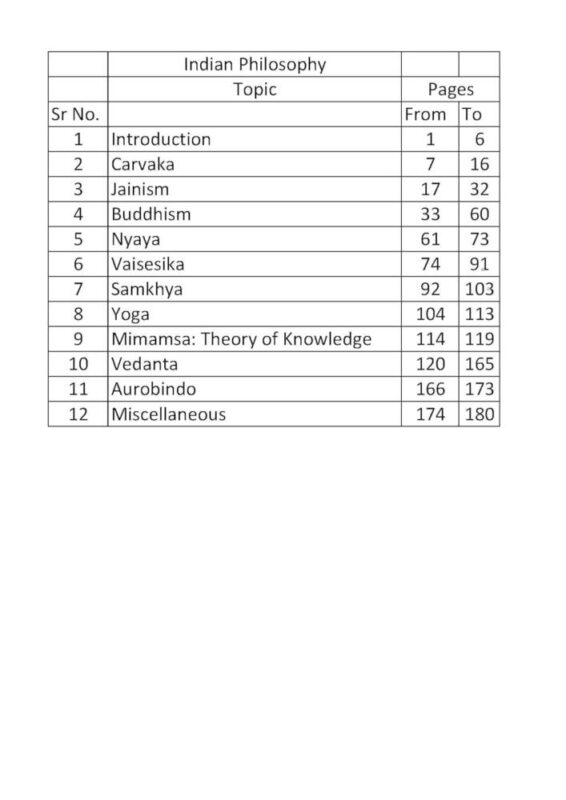


Mitra IAS Philosophy Optional Notes 2025-26
About Mitra IAS Philosophy Optional Notes
The Mitra IAS Philosophy Optional Notes is a printed UPSC study material set sold by UPSC Store β India’s trusted source for genuine, latest-batch civil services preparation books. This page covers full booklet details, syllabus coverage, pricing, shipping, and frequently asked questions. Useful for UPSC CSE, BPSC, UPPSC, MPPSC, RAS and other state PSC examinations.
Mitra IAS Philosophy Optional Notes 2025-26 β 12 English Medium Printed Booklets for UPSC Mains Optional Paper
Related: Mitra IAS notes Β· Philosophy optional
Product Overview
| Feature | Details |
|---|---|
| Booklets Count | 12 Individual Printed Booklets β Full Philosophy Optional Syllabus Coverage for UPSC Mains Paper I and Paper II |
| Language | English Medium |
| Publisher | Mitra’s IAS (Philosophy Optional Series) |
| Edition | 2025-26 β Latest Genuine Batch |
| Condition | Brand New, Unmarked, Fresh Stock |
| Format | High-Quality Printed Booklets β Spiral or Book Binding |
| Paper Quality | 75 GSM Ultra-White β Highlighter Safe, Zero Bleed-Through |
| Shipping | Pan India Delivery in 3-5 Business Days β Tracked |
| Also Useful For | BPSC, UPPSC, MPPSC, RAS and all State PSC Philosophy Optional candidates |
Complete Booklet Catalog
This 4-booklet set from Mitra’s IAS covers the entire UPSC Philosophy Optional syllabus across both Paper I and Paper II, structured to support aspirants from first reading through revision and answer writing. Whether you are beginning your philosophy optional journey or looking to reinforce concepts for UPSC Mains 2025-26, this printed set delivers organised, exam-focused content in clear English medium throughout.
- Booklet 1: History and Problems of Philosophy β Ancient Indian Philosophy β Covers the major schools of Indian philosophy including Nyaya, Vaisheshika, Samkhya, Yoga, Mimamsa, and Vedanta. Explores core metaphysical doctrines, epistemological theories of pramana, padarthas, and the six orthodox systems with their interrelations and UPSC-relevant distinctions.
- Booklet 2: Indian Philosophy β Heterodox Schools and Buddhist Philosophy β Focuses on Charvaka, Jainism, and the major schools of Buddhist philosophy including Theravada, Madhyamaka, Yogacara, and Sautrantika. Covers concepts of anatta, anicca, pratityasamutpada, sunyata, and nirvana with exam-oriented analysis.
- Booklet 3: Western Philosophy β Ancient and Medieval Traditions β Covers Plato, Aristotle, Descartes, Spinoza, Leibniz, and the major strands of rationalism. Discusses forms, substance, God, soul, and cosmological arguments. Also addresses Scholastic philosophy and Aquinas in context of medieval Western thought relevant to UPSC Philosophy Optional Paper I.
- Booklet 4: Western Philosophy β British Empiricism and Kant β Covers Locke, Berkeley, Hume, and the empiricist tradition in detail. Includes Kant’s Critique of Pure Reason, transcendental idealism, synthetic a priori knowledge, categories of understanding, and the Copernican revolution in philosophy with answer-writing cues for UPSC.
- Booklet 5: Western Philosophy β Post-Kantian and Contemporary Movements β Explores Hegel’s dialectic, Marx’s dialectical materialism, Kierkegaard, Nietzsche, and existentialism. Covers phenomenology through Husserl and Heidegger, Sartre’s existentialism, structuralism, and post-structuralism in the context of the UPSC Philosophy Optional syllabus.
- Booklet 6: Epistemology, Logic and Philosophy of Language β Covers theories of truth β correspondence, coherence, pragmatic; sources of knowledge; perception, inference, comparison; logic and forms of inference in Indian and Western traditions; Russell and Frege on language; Wittgenstein’s picture theory and language games; speech act theory relevant to UPSC Mains.
- Booklet 7: Metaphysics and Ontology β Addresses substance, attribute, and relation; God’s existence β ontological, cosmological, teleological arguments; theories of causation; identity and individuation; personal identity; free will and determinism; time and space. Structured for high-scoring answer writing in UPSC Philosophy Optional Paper I.
- Booklet 8: Philosophy of Religion β Examines arguments for and against the existence of God, the problem of evil, religious language, mysticism and religious experience, faith versus reason, liberation, and the concept of the divine across Indian and Western philosophical traditions as tested in UPSC Mains philosophy optional.
- Booklet 9: Socio-Political Philosophy β Covers political ideologies including liberalism, socialism, Marxism, fascism, and anarchism; social justice theories β Rawls, Nozick, Amartya Sen; concepts of rights, sovereignty, democracy, secularism, nationalism, multiculturalism, and gender justice, all aligned to UPSC Philosophy Optional Paper II requirements.
- Booklet 10: Philosophy of Religion and Applied Ethics β Focuses on normative ethical theories β consequentialism, deontology, virtue ethics; applied ethics including environmental ethics, business ethics, bioethics, and medical ethics; moral relativism versus universalism, and their relevance to contemporary governance debates in UPSC Mains answers.
- Booklet 11: Philosophy of Mind, Science and Education β Explores philosophy of mind β dualism, physicalism, functionalism; consciousness and qualia; philosophy of science β Popper, Kuhn, Lakatos; scientific explanation and realism; philosophy of education β aims, methods, Dewey, Tagore, Rousseau, and Gandhi in context of UPSC Philosophy Optional Paper II.
- Booklet 12: Previous Year Questions, Model Answers and Revision Framework β Contains topic-wise previous year UPSC questions from the last ten years, model answer structures, common examiner expectations, high-value keywords for philosophy optional answers, a rapid-revision concept summary, and a strategic preparation guide for UPSC Mains Philosophy Optional.
In-Depth Content Breakdown: Booklet by Booklet
Booklet 1: History and Problems of Philosophy β Ancient Indian Philosophy
This booklet forms the foundation of your UPSC Philosophy Optional Paper I preparation by covering all six orthodox systems of Indian philosophy in structured depth. Nyaya’s pramana theory, Vaisheshika’s padarthas, Samkhya’s dualism of purusha and prakriti, Yoga’s ashtanga path, Mimamsa’s theory of shabda and dharma, and Vedanta’s three schools β Advaita, Vishishtadvaita, and Dvaita β are all treated with the precision that UPSC Mains answer writing demands. Exam-critical distinctions between schools are highlighted throughout.
What distinguishes this Mitra’s IAS booklet is the use of comparative tables that place key doctrines side by side β ideal for quick revision before the UPSC exam. Flowcharts map the epistemological and ontological positions of each school. Special boxes highlight recurring UPSC question themes from the Indian philosophy section. The language is clear English medium, avoiding unnecessary jargon while preserving philosophical precision. Marginal annotations guide aspirants to the most frequently tested concepts in UPSC Philosophy Optional Paper I.
Booklet 2: Indian Philosophy β Heterodox Schools and Buddhist Philosophy
The heterodox schools represent a critical and frequently tested portion of the UPSC Philosophy Optional syllabus. This booklet from Mitra’s IAS provides a careful treatment of Charvaka materialism and its critique of pramana, Jain philosophy’s anekantavada, syadvada, and nayavada, and the four major Buddhist schools β Sautrantika, Vaibhashika, Madhyamaka, and Yogacara. The concept of dependent origination, the doctrine of momentariness, the nature of nirvana, and the Madhyamika critique of svabhava are presented with clarity essential for high-scoring UPSC answers.
Mitra’s IAS has structured this booklet to support both first-time readers and revision-stage aspirants. Diagrams illustrate the Buddhist wheel of dependent origination. A dedicated section on the Buddhist theory of knowledge and its contrast with Nyaya and Mimamsa is especially useful for Paper I analytical questions. The Jain theory of reality and its implications for ethics are also connected to Paper II topics, making this booklet a cross-cutting resource in the Mitra IAS Philosophy Optional Notes 2025-26 set.
Booklet 3: Western Philosophy β Ancient and Medieval Traditions
This booklet covers the foundational texts of Western philosophy with a focus on what UPSC Philosophy Optional examiners actually test. Plato’s theory of Forms, allegory of the cave, and ideal state; Aristotle’s hylomorphism, four causes, and virtue ethics; Descartes’ method of doubt and cogito; Spinoza’s substance monism; and Leibniz’s monadology are all covered in logical sequence. The medieval segment covers Aquinas’s five ways and the relationship between faith and reason β a perennial UPSC question area in philosophy optional.
Mitra’s IAS presents Western classical philosophy through a comparative lens, consistently drawing parallels with Indian philosophical schools β a feature that earns marks in interdisciplinary UPSC questions. Key arguments are laid out in structured premise-conclusion format to aid answer writing. Glossaries at the end of each major section define technical terms in plain English medium language. The booklet also includes previous year UPSC question references after each major thinker, allowing aspirants to immediately see the exam relevance of each concept.
Booklet 4: Western Philosophy β British Empiricism and Kant
Locke’s tabula rasa and primary-secondary quality distinction, Berkeley’s subjective idealism and esse est percipi, and Hume’s bundle theory of self, problem of induction, and critique of causation are treated with the rigour required for UPSC Mains Philosophy Optional. The booklet then transitions to Kant, covering the Critique of Pure Reason in accessible yet accurate English medium language β explaining synthetic a priori knowledge, the twelve categories, transcendental aesthetic, analytic, and dialectic β concepts that consistently appear in UPSC philosophy optional questions.
The Mitra’s IAS treatment of Kant is particularly strong in this booklet. Diagrams map the architecture of Kantian epistemology β from sensibility and understanding to the ideas of pure reason. Tables compare Hume’s scepticism with Kant’s response at each level of philosophy. Model answer outlines for commonly asked UPSC questions on the analytic-synthetic distinction and the Copernican revolution in philosophy are included as boxed features. This makes Booklet 4 one of the most practically useful sections of the Mitra IAS Philosophy Optional Notes 2025-26 set.
Booklet 5: Western Philosophy β Post-Kantian and Contemporary Movements
Hegel’s dialectical method β thesis, antithesis, synthesis β and his philosophy of history and Geist are given careful treatment aligned with UPSC examiner expectations. Marx’s historical materialism, alienation, and class struggle are connected to both philosophical theory and Socio-Political Philosophy for Paper II. Kierkegaard’s subjective truth and stages of existence, Nietzsche’s will to power and transvaluation of values, and the existentialist movement through Husserl, Heidegger’s Dasein and Being-in-the-world, and Sartre’s radical freedom are all covered clearly in this booklet.
Structuralism and post-structuralism β Saussure, Foucault, Derrida β are presented concisely with their philosophical significance explained for UPSC aspirants who may not have prior background in these movements. The booklet includes a special feature on phenomenology’s influence on Indian philosophical studies β useful for connecting Paper I and Paper II themes in answers. Contemporary analytic philosophy β logical positivism, Wittgenstein, and ordinary language philosophy β is previewed here before fuller treatment in Booklet 6, maintaining narrative continuity across the 4-booklet set.
Booklet 6: Epistemology, Logic and Philosophy of Language
This booklet addresses the epistemology section of UPSC Philosophy Optional with both Indian and Western frameworks treated side by side. Western theories of truth β correspondence, coherence, pragmatic, and redundancy β are explained with examples. Indian pramana theory is revisited with emphasis on pratyaksha, anumana, and shabda from a comparative epistemology angle. The nature of knowledge, justified true belief, and Gettier problems are addressed. Induction, deduction, and abduction are presented with logical structure relevant to UPSC answer writing.
Philosophy of language is treated with particular care in this Mitra’s IAS booklet because it is a high-yield area in UPSC Philosophy Optional Paper I. Frege’s sense and reference, Russell’s theory of descriptions, early Wittgenstein’s picture theory of meaning, and later Wittgenstein’s language games and forms of life are all covered with model answer cues. Speech act theory β Austin and Searle β is included as a contemporary addition. Logical positivism’s verificationism and its critiques round out this booklet, giving aspirants a solid base for analytical answer writing in UPSC Mains.
Booklet 7: Metaphysics and Ontology
Metaphysics is central to UPSC Philosophy Optional Paper I and this Mitra’s IAS booklet addresses the full range of UPSC syllabus topics β the concept of substance in Aristotle, Descartes, Locke, and Spinoza; the problem of universals β realism, nominalism, conceptualism; theories of personal identity β Locke, Hume, Parfit; the mind-body problem; and theories of causation including Hume’s regularity theory and Kant’s categorical causality. Each topic is connected to specific UPSC previous year questions.
The treatment of God’s existence β ontological argument (Anselm, Descartes), cosmological argument (Aquinas, Leibniz), teleological argument (Paley), and their critiques (Hume, Kant) β is particularly detailed and includes structured debate outlines ideal for 20-mark UPSC Mains answers. Free will and determinism β hard determinism, compatibilism, and libertarianism β are addressed through both Western and Indian frameworks. Time, space, and the philosophy of mathematics are covered at the depth required for the UPSC Philosophy Optional syllabus without unnecessary digression.
Booklet 8: Philosophy of Religion
Philosophy of religion is a distinct component of UPSC Philosophy Optional Paper I that many aspirants under-prepare. This Mitra’s IAS booklet addresses it fully β covering the nature of religious experience, mysticism and its epistemological status, the relationship between faith and reason, religious language (cognitive versus non-cognitive), and the concept of God across Indian and Western traditions. The problem of evil β logical and evidential β is treated with both theist responses (Swinburne, Plantinga) and atheist critiques clearly laid out for UPSC answer writing.
Concepts of liberation β moksha, nirvana, mukti β are compared across Hindu, Buddhist, and Jain frameworks with their philosophical underpinnings explained. The distinction between mystical and rational approaches to religious knowledge is a recurring UPSC theme addressed here with specific model answer guidance. Secularism as a philosophical concept and its Indian application are introduced here, bridging to the socio-political content of Paper II. The booklet uses clear English medium language throughout, making difficult theological-philosophical concepts accessible to all UPSC aspirants.
Booklet 9: Socio-Political Philosophy
This booklet covers the full socio-political philosophy segment of UPSC Philosophy Optional Paper II β one of the highest-scoring areas for well-prepared candidates. Political ideologies β liberalism (Mill, Rawls), socialism (Marx, Engels), conservatism, fascism, and anarchism β are treated with philosophical depth beyond GS Paper II summaries. Social contract theory from Hobbes, Locke, and Rousseau through Rawls’s veil of ignorance is structured for UPSC answer writing. Justice β distributive, retributive, restorative β is covered with competing theoretical frameworks.
Contemporary themes in socio-political philosophy are given dedicated treatment here β multiculturalism (Kymlicka), feminism and gender justice, environmental justice, nationalism and cosmopolitanism, democracy and its philosophical foundations. Amartya Sen’s capability approach is explained with its relevance to both philosophical theory and applied policy questions in UPSC Mains. Rights theory β natural rights, human rights, constitutional rights β is addressed through both Western liberal and Indian constitutional perspectives. This booklet alone can significantly improve answer quality in UPSC Philosophy Optional Paper II.
Booklet 10: Philosophy of Religion and Applied Ethics
Normative ethical theory forms the backbone of this Mitra’s IAS booklet β covering consequentialism (Bentham, Mill), deontological ethics (Kant’s categorical imperative), and virtue ethics (Aristotle, MacIntyre) with their philosophical arguments, objections, and contemporary applications laid out clearly for UPSC Mains. Moral relativism versus moral universalism is treated as a distinct exam topic. Meta-ethics β moral realism, anti-realism, emotivism, prescriptivism β is covered at the depth required for UPSC Philosophy Optional Paper II.
Applied ethics receives dedicated treatment in this booklet because it bridges philosophical theory and contemporary UPSC governance themes. Bioethics β abortion, euthanasia, genetic engineering β is addressed with philosophical frameworks rather than just policy positions. Environmental ethics β intrinsic versus instrumental value of nature, deep ecology, animal rights β is covered with thinkers including Singer, Regan, and Naess. Business ethics and professional responsibility are included with their philosophical basis. This applied dimension makes the Mitra IAS Philosophy Optional Notes 2025-26 particularly valuable for integrated UPSC Mains answers.
Booklet 11: Philosophy of Mind, Science and Education
Philosophy of mind is a growing area in UPSC Philosophy Optional Paper II. This booklet addresses dualism β substance and property dualism β functionalism, physicalism, eliminative materialism, and the problem of consciousness and qualia. The hard problem of consciousness (Chalmers) is explained clearly in English medium language. Philosophy of science covers Popper’s falsificationism, Kuhn’s paradigm shifts, Lakatos’s research programmes, Feyerabend’s anarchism, scientific explanation models, and the debate between scientific realism and anti-realism at the depth the UPSC syllabus demands.
Philosophy of education is treated as a coherent philosophical subject β not merely a summary of educationists’ views. The aims of education β individual development, social utility, liberation β are traced through Plato, Rousseau, Dewey, and Tagore. Gandhi’s Nai Talim, Tagore’s Shantiniketan philosophy, and Freire’s critical pedagogy are addressed with their philosophical underpinnings. This booklet rounds out the UPSC Philosophy Optional Paper II preparation within the Mitra IAS 4-booklet set and connects educational philosophy to ethics and political philosophy themes covered in earlier booklets.
Booklet 12: Previous Year Questions, Model Answers and Revision Framework
The final booklet in the Mitra IAS Philosophy Optional Notes 2025-26 set functions as a complete exam preparation tool. Topic-wise UPSC previous year questions from the last ten years are organised by syllabus unit, allowing aspirants to identify high-frequency areas in both Paper I and Paper II. Model answer structures β introduction, body, conclusion formats β are demonstrated for representative questions across all major topics. Examiner expectation notes explain what keywords, frameworks, and argument styles consistently earn marks in UPSC Philosophy Optional.
A rapid-revision concept summary for all 11 preceding booklets is included β covering definitions, key thinkers, and core arguments in condensed format for final-month revision before UPSC Mains. A strategic preparation guide outlines a 6-month, 4-month, and 2-month study plan for philosophy optional aspirants at different stages. Common mistakes in UPSC philosophy optional answers β vagueness, missing philosophical content, poor structuring β are identified with correction strategies. This booklet transforms the Mitra’s IAS 4-booklet set from a content resource into a complete UPSC Philosophy Optional preparation system.
Physical Construction and Quality Standards
Every booklet in the Mitra IAS Philosophy Optional Notes 2025-26 set is produced to a physical standard that supports daily, intensive UPSC study over months β not a single reading. The materials, printing, and binding are chosen specifically for aspirants who annotate, highlight, and revise repeatedly.
Paper Quality: 75 GSM Anti-Glare White Paper
The 75 GSM ultra-white paper used across all 12 Mitra’s IAS booklets delivers a high opacity rating that prevents text and diagrams from the reverse side showing through during study. Aspirants who use multiple highlighter colours for colour-coded revision β a common and effective UPSC preparation technique β will find zero bleed-through with standard highlighters and gel pens. The anti-glare white tone reduces eye strain significantly during extended study sessions of four to six hours, which is typical for UPSC Philosophy Optional preparation requiring deep reading and note-making alongside the text.
Printing Technology: High-Resolution Laser Printing
All 4 Booklets are printed using high-resolution laser printing technology, which delivers consistently crisp text at small font sizes β essential for the dense philosophical content and comparative tables in subjects like UPSC Philosophy Optional. Diagrams, flowcharts mapping philosophical relationships, and structured argument layouts retain their precision across every copy. Laser toner is permanent and smudge-proof β the text remains perfectly legible even after extended handling, margin annotation with ballpoint pens, and repeated page-turning during UPSC revision cycles. Print quality does not degrade with humidity or prolonged storage.
Binding and Durability
Mitra’s IAS philosophy optional booklets are available in spiral or book binding depending on stock. Spiral-bound booklets open completely flat β a practical advantage when writing margin notes, making annotations alongside philosophical arguments, or keeping the booklet open beside answer-writing practice sheets during UPSC preparation. Book-bound copies provide compact storage in study bags and shelves. Both formats use a 300 GSM cover that protects interior pages from corner damage and wear during daily commute to coaching classes or study centres in Mukherjee Nagar or elsewhere.
Key Features and Study Design
The Mitra IAS Philosophy Optional Notes 2025-26 set is designed around the specific demands of UPSC Mains optional paper performance β where 500 marks depend entirely on depth of understanding, argument quality, and structured answer writing in philosophy.
- Full Syllabus Coverage in One Set: All 4 Booklets together cover the complete UPSC Philosophy Optional syllabus for Paper I and Paper II without gaps β Indian philosophy, Western philosophy, epistemology, metaphysics, ethics, socio-political philosophy, philosophy of mind, science, religion, and education are all addressed.
- Comparative Indian-Western Framework: Throughout the set, Mitra’s IAS consistently draws parallels between Indian and Western philosophical positions β a technique that earns significant marks in UPSC answers by demonstrating cross-tradition philosophical understanding that examiners specifically reward.
- UPSC Previous Year Question Integration: Key topics in each booklet are marked with references to actual previous year UPSC Philosophy Optional questions, allowing aspirants to immediately gauge the exam relevance and required depth of every concept while studying the first time through.
- Model Answer Structures and Keyword Lists: Booklet 12 and in-text boxes throughout the set provide model answer outlines, high-value philosophical keywords, and introduction-body-conclusion frameworks tailored to UPSC Mains philosophy optional marking patterns.
- Revision-Optimised Design: Summary boxes, key thinker profiles, concept maps, and the dedicated rapid-revision section in Booklet 12 make this set usable not just for first reading but for repeated revision cycles leading up to UPSC Mains β the most critical phase of optional subject preparation.
Shipping, Packaging and Delivery
All 4 Booklets of the Mitra IAS Philosophy Optional Notes 2025-26 set are individually shrink-wrapped before being packed together in a double-layered corrugated cardboard box. Edge protectors are placed at all four corners of the box to absorb impact during transit. The outer box is sealed with reinforced tape and labelled with a tracked consignment number. This packaging method has been developed specifically for sending multi-booklet UPSC study material sets across India, ensuring that all booklets arrive flat, undamaged, and with covers unmarked regardless of transit conditions or handling at sorting facilities.
Orders are dispatched within one business day of payment confirmation and delivered across India within 3 to 5 business days through tracked courier partners. You will receive a tracking ID via WhatsApp at +91 70045 49563 as soon as your order is dispatched. If any booklet in the set arrives damaged or is missing from the package, we replace it within 48 hours at no additional cost. Our UPSC store is based in Mukherjee Nagar, Delhi β India’s leading UPSC preparation hub β and we ship this Mitra’s IAS philosophy optional set to every pin code across India.
Frequently Asked Questions (FAQ)
A: Yes. Mitra’s IAS has built a strong reputation specifically for optional subject materials among UPSC aspirants. The 2025-26 philosophy optional set covers the complete syllabus across 4 Booklets in English medium, integrates previous year UPSC questions, and provides model answer structures. For aspirants who want printed notes with depth, philosophical precision, and exam-oriented content, this set is among the most structured philosophy optional resources available for UPSC Mains 2025-26.
A: The complete set includes 12 individual printed booklets in English medium. These 4 Booklets together cover the full UPSC Philosophy Optional syllabus β Paper I topics including Indian philosophy, Western philosophy, epistemology, metaphysics, and philosophy of religion, and Paper II topics including ethics, socio-political philosophy, philosophy of mind, science, and education. Booklet 12 is dedicated to previous year questions, model answers, and a revision framework for UPSC Mains.
A: The set listed here β Mitra IAS Philosophy Optional Notes 2025-26 β is the English medium edition consisting of 4 Booklets. English medium is the standard offering for this philosophy optional series from Mitra’s IAS. Aspirants preparing to write their UPSC Mains answers in English medium will find the language, terminology, and philosophical vocabulary in these booklets directly aligned with what is expected in UPSC answer scripts.
A: The 4-booklet set covers the complete UPSC Philosophy Optional syllabus β ancient Indian philosophy (six orthodox schools), heterodox schools (Charvaka, Jain, Buddhist), Western philosophy from Plato through post-structuralism, epistemology and philosophy of language, metaphysics and ontology, philosophy of religion, socio-political philosophy, normative and applied ethics, philosophy of mind, philosophy of science, philosophy of education, and a full previous year question and model answer section.
A: Mitra’s IAS is one of the few institutes that dedicates focused resources to philosophy optional in English medium with this level of booklet count and syllabus depth. At 4 Booklets, the set is among the more detailed printed philosophy optional materials available. The integration of previous year UPSC questions within the content, comparative Indian-Western frameworks, and the dedicated model answer booklet are features that distinguish it from generic coaching notes that lack exam-oriented structuring for philosophy optional.
A: Philosophy optional is considered a high-scoring optional by many toppers when prepared with depth and precision. The syllabus is static, the booklets available are fewer than for popular optionals like history or geography, and aspirants with a genuine interest in the subject often score 280-320 out of 500. It is also useful for GS Paper IV (Ethics) and essay preparation. Philosophy optional requires quality printed study material like the Mitra IAS 2025-26 set rather than quantity of resources.
A: The Mitra IAS Philosophy Optional Notes 2025-26 set of 4 Booklets is designed to be a standalone study resource β covering the full syllabus, providing answer writing guidance, and including previous year questions and model answers. Most serious philosophy optional aspirants supplement printed notes with standard reference texts for select thinkers. However, for the core preparation framework, answer writing practice, and revision, this 4-booklet set is structured to be sufficient as your primary printed resource for UPSC Mains philosophy optional.
A: These booklets use 75 GSM ultra-white paper chosen for high opacity β multiple highlighter colours and gel pens work without bleed-through to the reverse side, ideal for colour-coded revision. The anti-glare white paper surface also reduces eye strain during the long study sessions that philosophy optional preparation demands. The paper holds ballpoint pen annotations cleanly in margins, making it suitable for active reading and note-making alongside the printed content.
A: Orders placed on our UPSC store are dispatched within one business day of payment confirmation. Delivery across India takes 3 to 5 business days through tracked courier. You receive a tracking ID via WhatsApp at +91 70045 49563 immediately after dispatch. We ship all 4 Booklets together in a single reinforced corrugated box to every pin code in India. If any booklet is missing or arrives damaged, we replace it within 48 hours at no cost to you.
A: These are genuine 2025-26 edition booklets from Mitra’s IAS β the latest batch, freshly stocked. All booklets are brand new, unmarked, and sourced directly to ensure authenticity of the 2025-26 edition. UPSC aspirants should always buy the latest edition of philosophy optional notes to ensure content alignment with any syllabus refinements and inclusion of recent previous year UPSC questions. We do not sell old-edition stock as current editions.
A: Yes. Philosophy optional in UPSC covers essentially the same core syllabus as philosophy optional in BPSC, UPPSC, MPPSC, RAS, and other State PSC examinations. Aspirants preparing for philosophy optional in any state PSC will find the Mitra IAS 2025-26 set directly relevant β particularly the Indian philosophy, Western philosophy, ethics, and socio-political philosophy booklets, which map closely to state PSC philosophy optional syllabi. The English medium printed format makes it accessible to state PSC candidates across India.
A: You can buy Mitra IAS Philosophy Optional Notes 2025-26 directly from this listing on our UPSC store. Add to cart and complete your order online β we accept all standard payment methods. You can also reach us on WhatsApp at +91 70045 49563 to confirm availability or ask questions before you buy. We offer the fastest delivery of Mitra’s IAS printed notes online with pan India coverage and a 3 to 5 business day tracked delivery guarantee from our Mukherjee Nagar store.
Summary
| Specification | Value |
|---|---|
| Booklets | 12 Printed Booklets |
| Language | English Medium |
| Paper | 75 GSM Ultra-White |
| Binding | Spiral or Book Binding |
| Delivery | 3-5 Business Days Pan India |
| Also Useful For | BPSC, UPPSC, MPPSC, RAS and all State PSC Philosophy Optional |
Sold by UPSC Store, Mukherjee Nagar, Delhi β India’s UPSC preparation hub. Buy Mitra IAS Philosophy Optional Notes 2025-26 online today and receive your complete 4-booklet set with pan India tracked delivery in 3-5 days.
Reference: Civil Services Examination
Customer Reviews 260
Mitra IAS notes are comprehensive and well-organized. Perfect for UPSC preparation.
Content quality amazing hai. Definitely helping in my UPSC preparation.
Really helpful for optional subject preparation, no regrets buying this.
Content relevant aur updated hai 2025-26 ke liye. Dhanyavaad Mitra IAS!
Exactly what I needed for my UPSC prep.
Content relevant hai, notes easy to understand hain.
Mitra IAS ki reliability proven ho gayi mujhe ab.
Mast hai bilkul. Recommended for all Philosophy optional students.
Aspirants Also Bought
More from the same category
About Mitra IAS Philosophy Optional Notes 2025-26
Mitra IAS Philosophy Optional Notes 2025-26 is a highly recommended UPSC study material from Mitra IAS, specially designed for Philosophy Optional preparation. Available in English medium, this material is crafted to match the exact requirements of the UPSC Civil Services Examination syllabus β covering both Prelims and Mains comprehensively.
Product Details
- Institute: Mitra IAS
- Subject: Philosophy Optional
- Medium: English
- Format: Printed
- Delivery: Pan-India delivery in 3β5 working days
- Format: Original printed material, verified authentic
Why Buy from UPSC Store?
- β 100% Genuine Printed Material β Original printed notes, no photocopies or fake copies
- β Fast Delivery β Ships within 24 hours, arrives in 3β5 days pan-India
- β Secure Packaging β Bubble-wrapped and boxed to prevent damage in transit
- β Trusted by 10,000+ Aspirants β India's most reliable UPSC material marketplace
- β WhatsApp Support β Get expert guidance on material selection before ordering
Frequently Asked Questions
Yes, all products at UPSC Store are 100% genuine printed materials. We do not sell photocopies or fake copies.
Orders are dispatched within 24 hours and delivered across India in 3β5 working days via reputed courier partners.
Yes, we accept returns within 7 days if the product is damaged or incorrect. Check our refund policy for details.
We recommend pairing this with current affairs notes and a UPSC test series for comprehensive preparation. Browse more in NOTES, Optional, Philosophy, UPSC.