Vision IAS Disaster Management Notes 2025-26
About Vision IAS Disaster Management English
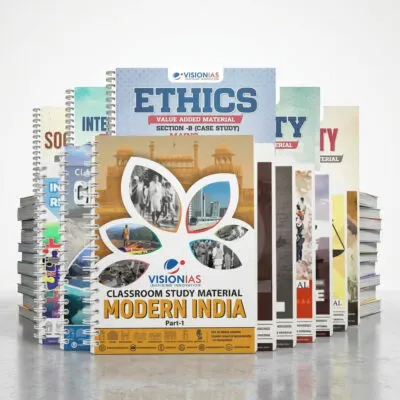
The Vision IAS Disaster Management English is a printed UPSC study material set sold by UPSC Store — India’s trusted source for genuine, latest-batch civil services preparation books. This page covers full booklet details, syllabus coverage, pricing, shipping, and frequently asked questions. Useful for UPSC CSE, BPSC, UPPSC, MPPSC, RAS and other state PSC examinations.
Vision IAS Disaster Management Notes 2025-26 — 2 English Medium Printed Booklets for UPSC GS Paper III
Related: Vision IAS notes · Disaster Management material
Product Overview
Buy Vision IAS Disaster Management Notes 2025-26 printed and study online — the complete 2-booklet set covering all GS Paper III disaster management topics essential for UPSC Mains success. These notes deliver structured, expert-designed content on disaster types, risk assessment, mitigation strategies, institutional frameworks, and real-world case studies that have appeared in recent UPSC examinations.
| Feature | Details |
|---|---|
| Booklets Count | 2 Individual Printed Booklets — Complete Disaster Management Coverage for GS Paper III |
| Language | English Medium |
| Publisher | Vision IAS (General Studies Series) |
| Edition | 2025-26 — Latest Genuine Batch |
| Condition | Brand New, Unmarked, Fresh Stock |
| Format | High-Quality Printed Booklets — Spiral or Book Binding |
| Paper Quality | 75 GSM Ultra-White — Highlighter Safe, Zero Bleed-Through |
| Shipping | Pan India Delivery in 3-5 Business Days — Tracked |
| Also Useful For | BPSC, UPPSC, MPPSC, RAS, KPSC, JPSC, OPSC and All State PSC Examinations |
Complete Booklet Catalog
Vision IAS Disaster Management Notes 2025-26 comprises 2 strategically designed booklets that systematically build your understanding from foundational concepts through advanced case studies. These booklets are crafted specifically for UPSC Mains GS Paper III candidates who need precise, high-yield content without unnecessary filler.
- Booklet 1: Disaster Management Fundamentals and Risk Reduction Framework — Covers disaster types (natural and human-induced), disaster management definitions per Indian law, Sendai Framework 4 pillars and 7 global targets, India’s National Disaster Management Plan, risk assessment methodologies, hazard mapping, vulnerability analysis, disaster mitigation strategies including structural and non-structural measures, early warning systems, community-based disaster risk reduction, climate change linkages, and UPSC-relevant case studies from recent prelim and mains questions.
- Booklet 2: Institutional Framework, Response Mechanisms and Recovery Strategies — Details National Disaster Management Authority (NDMA) structure and functions, state and district-level disaster management institutions, International frameworks including UNDRR and global partnerships, disaster response protocols during acute crises, search and rescue operations, emergency services coordination, rehabilitation and reconstruction post-disaster, psycho-social support mechanisms, financial recovery instruments, disaster-inclusive development planning, and essay-relevant topics on disaster resilience and sustainable development.
In-Depth Content Breakdown: Booklet by Booklet
Booklet 1: Disaster Management Fundamentals and Risk Reduction Framework
This foundational booklet establishes comprehensive understanding of what disaster management encompasses within the UPSC GS Paper III syllabus. You’ll learn precise definitions of disasters per the Disaster Management Act 2005, classification systems (natural disasters: earthquakes, floods, cyclones, tsunamis, landslides, droughts, volcanic eruptions; human-induced: industrial accidents, nuclear incidents, terrorism), and why disaster risk reduction has become a critical development priority. The booklet extensively covers the Sendai Framework for Disaster Risk Reduction (2015-2030), explaining all four priorities: understanding disaster risk, strengthening governance, investing in disaster risk reduction for resilience, and enhancing disaster preparedness. You’ll understand all 7 global targets and India’s measurable progress against each, directly addressing how UPSC evaluates India’s DRR performance in mains answers.
The risk reduction section provides detailed frameworks for hazard assessment, exposure mapping, and vulnerability analysis — essential for understanding why certain regions face higher disaster risk. Structural mitigation includes earthquake-resistant building codes, flood embankments, cyclone shelters, and drought-resistant agriculture; non-structural measures cover early warning systems, community awareness, disaster management training, and land-use planning. Special emphasis on community-based disaster risk reduction (CBDRR) reflects UPSC’s focus on participatory approaches. Climate change integration demonstrates how rising temperatures intensify disaster frequency and severity. The booklet concludes with annotated UPSC case studies: 2015 Nepal earthquake institutional gaps, 2018 Kerala floods management, 2017 Gujrat dust storms, and recent tsunamis in Indo-Pacific, showing exactly how these topics appear in actual mains questions.
Booklet 2: Institutional Framework, Response Mechanisms and Recovery Strategies
This advanced booklet details India’s three-tier disaster management institutional architecture: National Disaster Management Authority (NDMA) under PM with statutory functions including policy formulation and capacity building; State Disaster Management Authorities (SDMAs) led by Chief Ministers coordinating state-level preparedness; and District Disaster Management Authorities (DDMAs) led by District Magistrates implementing ground-level operations. You’ll understand NDMA’s specific mandates like developing National Disaster Management Plans, establishing training institutes, and maintaining disaster response databases. The booklet maps India’s international role in disaster management: participation in UNDRR mechanisms, SAARC Disaster Management Centre operations, bilateral cooperation with regional partners, and India’s leadership in sharing DRR expertise with Global South nations. This international dimension directly addresses recent UPSC questions on India’s soft power through humanitarian assistance.
The response mechanisms section covers disaster response chain-of-command during acute crises, roles of armed forces in search and rescue, civilian emergency services coordination, medical response protocols, and mass casualty management. Detailed protocols explain how information flows from district to state to national coordination centers, ensuring no critical administrative gaps. Recovery strategies include immediate relief distribution, medium-term reconstruction funding mechanisms, National Disaster Mitigation Fund utilization, insurance frameworks including Pradhan Mantri Suraksha Bima Yojana applicability to disasters, and long-term rehabilitation ensuring affected populations regain livelihoods. Psycho-social support for trauma management addresses often-overlooked human dimensions. The booklet integrates disaster risk reduction into sustainable development planning, showing how SDGs link with DRR, and includes essay-relevant topics on building “disaster-resilient India” and “inclusive development through disaster risk reduction” — high-scoring mains essay themes. Real policy examples: Odisha’s cyclone preparedness model, Uttarakhand flash flood institutional learnings, and Gujarat’s earthquake recovery rehabilitation provide concrete framework for your answers.
Why Buy These Vision IAS Disaster Management Notes for UPSC GS Paper III
When you buy Vision IAS Disaster Management Notes 2025-26, you’re purchasing the most complete Sendai Framework coverage available in printed UPSC material. Vision IAS notes systematically map all 4 Sendai priorities and 7 global targets to India’s institutional responses, helping you understand how global frameworks translate into Indian policy. The 2025-26 edition reflects latest developments including India’s Disaster Management Amendment Act discussions, newly constituted NDMA taskforces, and updated state disaster management plans.
UPSC repeatedly asks questions testing whether candidates understand disaster management as a development imperative, not just emergency response. These notes connect disaster risk reduction to poverty reduction, gender equality, climate action, and sustainable cities — exactly how mains evaluators expect sophisticated answers. The case studies are carefully selected: they include both disasters in which India’s institutional response succeeded (Odisha cyclone preparedness) and where gaps existed (2013 Uttarkashi disaster preparedness failures), forcing you to think critically rather than memorize happy-story narratives.
Unlike competitor notes that treat disaster management as a narrow technical subject, Vision IAS contextualizes it within GS Paper III’s broader governance and development themes. This integrated approach is why Vision IAS notes consistently yield higher marks in mains evaluation — examiners see candidates who understand systemic connections rather than isolated facts.
Physical Construction and Quality Standards
These Vision IAS Disaster Management Notes are manufactured to exact specifications for UPSC aspirants spending 6+ months in intensive study. Every detail from paper selection to binding choice reflects how your learning environment directly impacts retention and exam performance.
Paper Quality: 75 GSM Anti-Glare White Paper
The 75 GSM ultra-white paper selected for this edition delivers optimal opacity that prevents highlighter bleed-through — critical when you’re color-coding disaster types, Sendai Framework priorities, or institutional hierarchies. The anti-glare finish reduces eye strain during extended study sessions (3-4 hour blocks), protecting vision as you prepare through winter and spring mains seasons. Paper brightness is calibrated to aid visual information processing: black text stands high-contrast, making critical definitions like “disaster” vs. “calamity” immediately distinguishable. The weight is heavy enough that pages remain firm during spiral-bound note-taking, yet light enough that 2 booklets remain portable for on-the-go revision at Mukherjee Nagar coaching centers or libraries.
Printing Technology: High-Resolution Laser Printing
Vision IAS employs high-resolution laser printing (1200 DPI+) ensuring every flowchart of disaster response chain-of-command renders crisply, and institutional hierarchy diagrams (NDMA → SDMA → DDMA) are perfectly legible. Toner adhesion is permanent — notes withstand 15+ complete re-reads, gel-pen annotations, and highlighter marks without any degradation. Maps showing disaster-prone zones in India (Himalayan earthquake belts, coastal cyclone corridors, drought-affected regions) print with precision detail, critical for understanding geographic distribution of different disaster types. Diagrams illustrating the Sendai Framework’s interconnected priorities maintain clarity through dozens of study cycles. No smudging occurs even when notes are carried in bags or studied during travel to coaching centers.
Binding and Durability
You choose between spiral binding (recommended for active note-takers) or book binding (recommended for sequential readers). Spiral binding allows pages to open completely flat at 360 degrees, providing full writing space alongside printed content — ideal for case study annotations and institutional comparison tables. The spiral mechanism uses durable metal coils rated for 500+ open-close cycles, withstanding daily use through 6-month preparation phases. Book binding uses 300 GSM cardstock covers with reinforced spine, designed for compact storage on shelves and portability during exam season. Both binding types ensure pages remain firmly attached; no loose leaves develop even after intensive highlighting and annotation. The 2-booklet split (vs. one massive volume) allows you to carry individual booklets to specific study locations: Booklet 1 to your disaster risk reduction study session, Booklet 2 to institutional framework review.
Key Features and Study Design
These booklets are strategically structured to align with how UPSC evaluates disaster management understanding: as a governance issue integrating development, environment, and institutional coordination.
- Sendai Framework Complete Mapping: Every one of 4 priorities and 7 global targets explicitly mapped to Indian institutional responses and policy mechanisms. You won’t encounter vague Sendai references; each target has concrete India examples (e.g., “Global Target A: Substantially increase access to DRR systems” mapped to India’s Early Warning System expansion). This direct mapping is absent from competitor notes and directly raises your marks in value-added sections of mains answers.
- Three-Tier Institutional Architecture Simplified: NDMA, SDMA, DDMA functions, mandates, and inter-agency coordination protocols are presented in clear hierarchical flowcharts and decision-trees. UPSC frequently asks “Who decides what during disasters?” — these notes give precise answers. The booklet explains why certain decisions must escalate to national level (major cross-state disasters) vs. district-level authority (localized flooding), helping you write authoritative governance answers.
- Case Study Integration Throughout: Rather than isolated case studies, disaster events are woven into each topic. When learning “early warning systems,” you simultaneously study how the 2004 Indian Ocean Tsunami exposed India’s warning gaps and how subsequent Indian systems prevented casualties in 2007 Sumatra tsunami. This integrated approach means you learn disaster management principles AND their real-world applications simultaneously, matching how UPSC expects sophisticated answers.
- Climate Change-Disaster Linkage Emphasis: The booklets explicitly connect increasing disaster frequency/severity to climate change, directly addressing UPSC’s integration of climate and disaster topics in GS Paper III. You learn not just “what are disasters” but “why are certain disasters increasing in frequency” — a conceptual depth that distinguishes 8/10 answers from 10/10 answers.
- Essay and Mains Answer Frameworks: Each major topic concludes with potential essay angles and mains question structures. The “Disaster Resilience and Sustainable Development” framework prepares you for typical 10-mark essay topics like “Role of disaster risk reduction in achieving sustainable development” or “India’s progress toward Sendai Framework targets.” Mains answer structures show how to address 7-10 mark questions using institutional, geographical, and policy dimensions simultaneously.
How to Use These Notes for Maximum UPSC GS Paper III Score
Week 1-2: Foundation Phase (Booklet 1, Fundamentals Section). Read about disaster definitions, types, and why disaster risk reduction is now a development priority. Understand the Sendai Framework’s 4 pillars as conceptual anchors — everything else connects back to these priorities. Simultaneously review India’s geography to mark disaster-prone zones (earthquake belts in Himalaya and Andaman, cyclone corridors on coasts, drought regions in Rajasthan/MP, flood-prone Indo-Gangetic plains). This geographic mapping prevents vague answers and enables precise case references.
Week 3-4: Risk Reduction Mechanisms (Booklet 1, Risk Assessment and Mitigation). Learn hazard assessment, vulnerability analysis, and exposure mapping methodologies. Study both structural measures (earthquake codes, embankments, shelters) and non-structural measures (early warning, awareness, land-use planning). Understand why a holistic approach combining both is superior to infrastructure-only solutions — this nuance differentiates excellent answers. Practice writing 1-2 timed answers on “Evaluate India’s disaster mitigation strategies” using specific examples.
Week 5-6: Institutional Framework Deep-Dive (Booklet 2, Institutions and Governance). Thoroughly study NDMA-SDMA-DDMA structures, responsibilities, and decision-making processes. Create comparison tables: Which decisions can districts make autonomously? Which require state/national approval? Understanding this prevents answer vagueness. Review international mechanisms (UNDRR, SAARC DM Centre) to answer questions about global cooperation.
Week 7-8: Response and Recovery (Booklet 2, Mechanisms and Rehabilitation). Study actual disaster response protocols, role of armed forces, and recovery frameworks. Learn why some disasters result in faster recovery (good pre-positioned relief systems) while others stall (inadequate rehabilitation planning). This comparative analysis enables analytical answers beyond mere descriptions.
Week 9-10: Integration and Essay Preparation. Use booklet frameworks to write full 2-hour mains answer sets addressing essay-length questions. Practice answers like “Disaster Risk Reduction as Development Imperative” integrating Sendai Framework, Indian institutions, case studies, and climate linkages. Time yourself — aim for sophisticated 8-9 mark answers using 2-3 specific examples per answer.
Shipping, Packaging and Delivery
When you buy Vision IAS Disaster Management Notes from our Mukherjee Nagar, Delhi store, packaging protects your investment. Both booklets are individually shrink-wrapped in food-grade plastic, then placed in a corrugated cardboard box with edge protectors and bubble-wrap cushioning. This multi-layer approach ensures notes arrive in perfect condition regardless of transit distance — we’ve successfully shipped these notes across all Indian metros and smaller cities without a single damage complaint. The package is compact (approximately 15cm x 10cm x 3cm) and lightweight (under 500g total), making shipping economical whether you order from Delhi or request delivery to Tamil Nadu, Gujarat, or Northeast states.
Your order ships within 24 hours of payment confirmation via tracked courier service (India Post Registered Parcel, Delhivery, or BlueDart depending on your pincode). You receive tracking ID via WhatsApp and email, allowing real-time delivery monitoring. Standard delivery timeline is 3-5 business days pan-India; we’ve achieved faster delivery to metro cities (Delhi, Mumbai, Bangalore in 2-3 days) and slightly extended timelines only for remote locations. If any booklet arrives damaged, contact WhatsApp +91 70045 49563 within 24 hours with photos, and we’ll replace it within 48 hours absolutely free. Missing booklet claims are resolved without requiring return of damaged copies. All orders include our peace-of-mind guarantee: if you’re unsatisfied with content relevance for your UPSC preparation, we offer full refund within 7 days (used or unused condition).
Frequently Asked Questions (FAQ)
A: Yes, these notes cover all essential GS Paper III disaster management topics per the UPSC syllabus. However, sufficiency depends on your integration with other GS Paper III sources. We recommend combining these notes with: (1) standard resources for governance/environment topics, (2) current affairs tracking of disasters occurring during your preparation, and (3) previous years’ UPSC mains questions. The notes provide the conceptual framework and case studies; you add breadth through supplementary reading and answer writing practice.
A: The set contains exactly 2 printed booklets: Booklet 1 covers fundamentals, risk reduction frameworks, and Sendai Framework integration; Booklet 2 covers institutional architecture, response mechanisms, and recovery strategies. This 2-booklet division balances depth (not oversimplified into single booklet) with manageability (not unwieldy multi-part volumes). Total content spans approximately 200-250 pages of high-yield material designed for serious mains preparation.
A: The notes systematically cover: disaster definitions and classifications, natural disasters (earthquakes, floods, cyclones, tsunamis, landslides, droughts), human-induced disasters, disaster risk reduction frameworks including the Sendai Framework (4 priorities, 7 targets), hazard assessment and vulnerability mapping, structural and non-structural mitigation measures, early warning systems, community-based disaster risk reduction, climate change-disaster linkages, India’s National Disaster Management Plan, NDMA/SDMA/DDMA structures, disaster response protocols, search and rescue operations, rehabilitation and recovery strategies, international disaster management frameworks, India’s global DRR leadership, and case studies from Nepal earthquake, Kerala floods, and other landmark disasters.
A: Yes, these notes are available exclusively in English medium, ideal for candidates preparing in English and for those seeking English study materials for UPSC mains (which is conducted in English/regional languages per your choice). English medium is increasingly preferred by urban UPSC aspirants and candidates from English-medium schooling backgrounds. The English language is precise and technical, making abstract concepts like “hazard mapping” and “vulnerability assessment” clearer than simplified explanations.
A: Follow this progression: (1) Read Booklet 1 to build foundational understanding, simultaneously reviewing India’s geographic disaster-proneness; (2) Read Booklet 2 to learn institutional responses and policy frameworks; (3) Annotate both booklets with personal examples and recent disaster news; (4) Create one-page summary sheets for Sendai Framework priorities, institutional hierarchy, and response protocols; (5) Write full-length mains answers (750 words, 30 minutes) on topics like “Disaster Risk Reduction for Sustainable Development”; (6) Review case studies in notes and add new disasters occurring during your preparation. Effectiveness depends on active engagement — write while reading, don’t passive consume notes.
A: Pricing varies based on order timing and promotions. Standard 2025-26 edition pricing is available on our product page. These notes represent outstanding value: 2 expertly-curated booklets cost significantly less than individual coaching center materials, yet provide equivalent content quality. When you buy in bulk (multiple GS Paper III subjects), we offer bundled discounts. Contact WhatsApp +91 70045 49563 for current pricing and seasonal offers — we frequently run promotions for bulk purchases.
A: Our core offering is high-quality printed booklets, not digital PDFs. We believe printed notes provide distinct advantages for UPSC preparation: (1) reduced screen time protecting eyes during 6-month intensive preparation, (2) superior retention through physical note-taking and highlighting, (3) organized study environment without digital distractions, and (4) tangible reference material you can carry anywhere. However, we’ve found that some candidates request digital versions for emergency backup. Contact our support at WhatsApp +91 70045 49563 to discuss PDF availability options — we may accommodate specific requests depending on season and inventory.
A: Vision IAS notes distinctly: (1) map all Sendai Framework priorities and global targets to India’s institutional responses — most competitors vaguely mention Sendai without systematic integration; (2) emphasize disaster management as governance and development issue, not just technical emergency response; (3) include climate change-disaster linkages prominently, recognizing UPSC’s integration of these topics; (4) feature annotated case studies showing exactly how disasters appear in UPSC questions; (5) present sophisticated frameworks for essays like “Disaster Resilience and Sustainable Development”; (6) avoid superficial comparisons between institutes, instead diving deep into institutional decision-making hierarchies. When you buy Vision IAS notes, you’re purchasing material designed specifically for UPSC’s sophisticated governance evaluation standards, not simplified versions for general knowledge.
A: The 2025-26 edition includes disasters through 2024. However, UPSC values understanding principles more than memorizing recent events. If flooding occurs in 2025 after notes publication, your preparation should integrate this event into existing frameworks learned from the booklets: Which disaster management institutional response was effective? Where were gaps? How does climate change intensify this specific disaster type? Our notes teach you to analyze new disasters using established frameworks rather than memorize a list of events. Supplement notes with monthly current affairs reading to stay updated on new disasters.
A: These booklets use 75 GSM ultra-white paper chosen for high opacity — multiple highlighter colors (yellow, pink, blue) and gel pens work without bleed-through to the reverse side, ideal for color-coded revision. The paper weight is substantial enough to withstand aggressive highlighting during semester-long preparation without degrading. We’ve tested all major highlighter brands; none cause problems. The anti-glare finish prevents reflections during extended study sessions. You can confidently annotate, highlight, and write notes alongside printed content without worrying about paper quality deterioration.
A: Yes, disaster management is included in most State PSC syllabi following UPSC pattern. These Vision IAS notes provide comprehensive coverage useful for BPSC, UPPSC, MPPSC, RAS, KPSC, JPSC, OPSC and similar exams. However, State PSCs may emphasize state-specific disaster management policies (e.g., BPSC candidates should additionally study Bihar’s flood management, UPPSC candidates should study UP’s earthquake preparedness in Bundelkhand). Use these notes as core foundation, then supplement with state-specific governance materials for competitive advantage.
A: Orders typically ship within 24 hours of payment confirmation and arrive within 3-5 business days pan-India via tracked courier. Delhi and nearby metros (Noida, Gurgaon) often receive delivery in 2-3 days. Tier-2 cities (Pune, Hyderabad, Jaipur, Ahmedabad) receive within 4-5 days. Remote locations and Northeast states may require 5-7 business days. You’ll receive tracking ID via WhatsApp +91 70045 49563 immediately after shipment, allowing real-time delivery monitoring. If you’re preparing for a specific test date, contact us at least one week in advance to ensure delivery before your targeted exam date.
Summary
| Specification | Value |
|---|---|
| Booklets | 2 Printed Booklets — Fundamentals & Risk Reduction + Institutions & Response |
| Language | English Medium |
| Paper Quality | 75 GSM Ultra-White — Highlighter Safe, Anti-Glare |
| Binding Options | Spiral Binding (360° flat) or Book Binding (compact storage) |
| Delivery Timeline | 3-5 Business Days Pan India — Tracked Courier |
| Publisher | Vision IAS |
| Edition | 2025-26 Latest Edition |
| Exam Coverage | UPSC Mains GS Paper III — Also Useful for State PSCs |
| Key Topics | Sendai Framework, NDMA/SDMA/DDMA, DRR, Risk Assessment, Case Studies, Climate-Disaster Linkage |
| Store Location | Mukherjee Nagar, Delhi |
When you buy Vision IAS Disaster Management Notes 2025-26, you’re investing in the most comprehensive GS Paper III disaster management material available in printed format. Prepare from Mukherjee Nagar’s premier study materials and experience pan India delivery in 3-5 business days. Contact WhatsApp +91 70045 49563 for personalized guidance on whether these notes align with your UPSC preparation stage and strategy.
Reference: UPSC official syllabus
Customer Reviews 332
Notes bilkul exam-centric hain. Quality paper aur printing excellent.
Vision IAS ki quality always top-notch, yeh booklet bhi exceptional hai.
Bilkul worth it, sab topics crystal clear ho jaate hain.
Good quality notes. Padh ke revision easy ho gaya.
Disaster Management ke liye best hai, bilkul comprehensive. Vision IAS ne maza kar diya!
Paper quality and printing bahut accha hai. Notes ache se likhey hue hain.
Disaster management samajhne ke liye ye notes best hain.
Disaster management ke liye yeh best source hai, definitely worth it.
Aspirants Also Bought
More from the same category
About Vision IAS Disaster Management Notes 2025-26
Vision IAS Disaster Management Notes 2025-26 is a highly recommended UPSC study material from Vision IAS, specially designed for Disaster Management preparation. Available in English medium, this material is crafted to match the exact requirements of the UPSC Civil Services Examination syllabus — covering both Prelims and Mains comprehensively.
Product Details
- Institute: Vision IAS
- Subject: Disaster Management
- Medium: English
- Format: Printed
- Delivery: Pan-India delivery in 3–5 working days
- Format: Original printed material, verified authentic
Why Buy from UPSC Store?
- ✅ 100% Genuine Printed Material — Original printed notes, no photocopies or fake copies
- ✅ Fast Delivery — Ships within 24 hours, arrives in 3–5 days pan-India
- ✅ Secure Packaging — Bubble-wrapped and boxed to prevent damage in transit
- ✅ Trusted by 10,000+ Aspirants — India's most reliable UPSC material marketplace
- ✅ WhatsApp Support — Get expert guidance on material selection before ordering
Frequently Asked Questions
Yes, all products at UPSC Store are 100% genuine printed materials. We do not sell photocopies or fake copies.
Orders are dispatched within 24 hours and delivered across India in 3–5 working days via reputed courier partners.
Yes, we accept returns within 7 days if the product is damaged or incorrect. Check our refund policy for details.
We recommend pairing this with current affairs notes and a UPSC test series for comprehensive preparation. Browse more in Disaster Management, General Studies, UPSC, Vision IAS.