Manikant Sir History Optional Notes 2025-26

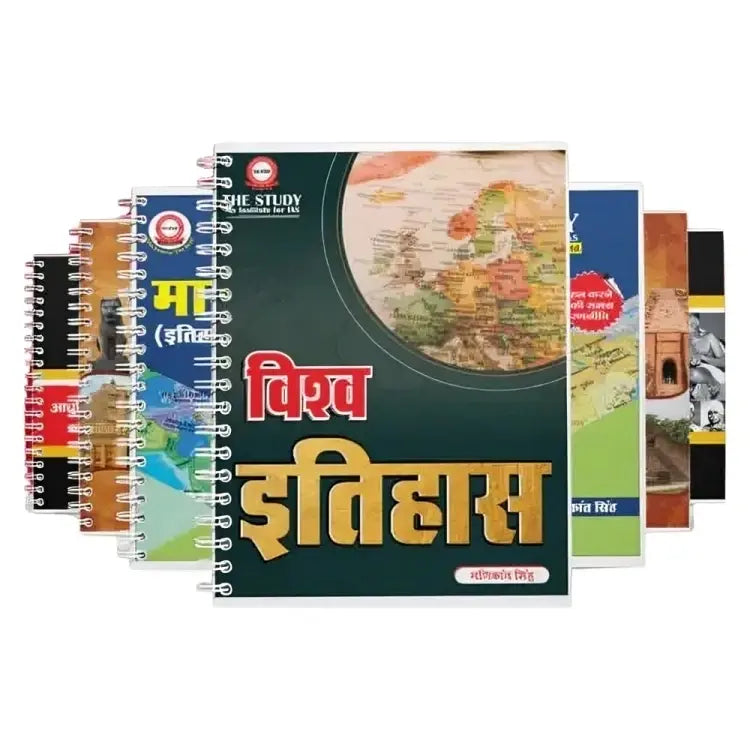
4 Booklets | Hindi Medium | UPSC Study Material

Key Highlights:
📘 7 Booklets
📚 History Optional
🎓 The Study
🏷️ Printed
🇬🇧 Hindi Medium
₹1,745
🌀 spiral
📘 book-binding
Only 19 sets left
Selling fast (85 sold this week)
5% OFF Use UPSC5% (COD Available)
10% OFF Use UPI10 (UPI Only)
Secure Payment
Fast Delivery
Safe Packaging

About Manikant Sir History Notes 2025-26

The Manikant Sir History Notes 2025-26 is a printed UPSC study material set sold by UPSC Store — India’s trusted source for genuine, latest-batch civil services preparation books. This page covers full booklet details, syllabus coverage, pricing, shipping, and frequently asked questions. Useful for UPSC CSE, BPSC, UPPSC, MPPSC, RAS and other state PSC examinations.

Manikant Sir History Optional Notes 2025-26 — 14 Hindi Medium Printed Booklets for UPSC History Optional (The Study Institute for IAS)

Related: History optional notes · Manikant Sir notes

Product Overview

FeatureDetails
Booklets Count14 Individual Printed Booklets — Full UPSC History Optional Syllabus (Paper I + Paper II)
LanguageHindi Medium (हिंदी माध्यम)
PublisherThe Study Institute for IAS (Manikant Singh — Manikant Sir Series)
Edition2025-26 — Latest Genuine Batch
ConditionBrand New, Unmarked, Fresh Stock
FormatHigh-Quality Printed Booklets — Spiral or Book Binding
Paper Quality75 GSM Ultra-White — Highlighter Safe, Zero Bleed-Through
ShippingPan India Delivery in 3-5 Business Days — Tracked
Also Useful ForBPSC, UPPSC, MPPSC, RAS and all State PSC History Optional candidates

Complete Booklet Catalog

This 4-booklet set by Manikant Sir of The Study Institute for IAS covers the entire UPSC History Optional syllabus across both Paper I (Ancient, Medieval and Modern Indian History) and Paper II (World History / Vishwa Itihas), written entirely in Hindi medium for aspirants preparing in their mother tongue. Whether you are a first-time optional selector or a repeat candidate, this set is structured to take you from foundational understanding to answer-writing readiness for UPSC Mains.

  • Booklet 1: प्राचीन भारत — स्रोत एवं प्रागैतिहास (Ancient India — Sources and Prehistory) — Covers historiography of ancient India, archaeological and literary sources, Paleolithic, Mesolithic and Neolithic cultures, Chalcolithic cultures, Harappan Civilization geography, town planning, economy, religion, decline theories, and the transition to the Vedic Age. Highly relevant for UPSC Paper I Section A.
  • Booklet 2: वैदिक काल एवं महाजनपद (Vedic Age and Mahajanapadas) — Discusses Early and Later Vedic society, economy and religion, the rise of heterodox sects including Buddhism and Jainism, their philosophical doctrines and social impact, the formation of Mahajanapadas, and the political consolidation leading to the Nanda dynasty.
  • Booklet 3: मौर्य साम्राज्य एवं उत्तर-मौर्य काल (Mauryan Empire and Post-Mauryan Period) — In-depth analysis of Mauryan polity, Arthashastra-based administration, Ashoka’s Dhamma, edicts as historical sources, economic and social structures, followed by the Shungas, Satavahanas, Indo-Greeks, Kushanas, and the cultural synthesis of the post-Mauryan era.
  • Booklet 4: गुप्त साम्राज्य एवं क्षेत्रीय शक्तियाँ (Gupta Empire and Regional Powers) — Examines Gupta polity and administration, Samudragupta’s conquests, economic prosperity, land grants and feudalism, Sanskrit literature, art and temple architecture, the post-Gupta regional powers of Pallavas, Chalukyas, Rashtrakutas, and Tripartite Struggle.
  • Booklet 5: दक्षिण भारत एवं भक्ति आंदोलन (South India and Bhakti Movement) — Covers the Sangam Age, Chola state and administration, Vijayanagara Empire economy and culture, Bahmani Kingdom, the origin and spread of the Bhakti Movement, key saint-poets, their social reform philosophy, and the regional variations of the Bhakti tradition across India.
  • Booklet 6: दिल्ली सल्तनत एवं मुगल साम्राज्य-I (Delhi Sultanate and Mughal Empire — Part I) — Detailed treatment of the establishment and consolidation of the Delhi Sultanate, Iltutmish, Balban, Alauddin Khilji’s market reforms and military campaigns, Muhammad bin Tughlaq’s experiments, Firuz Tughlaq’s administrative innovations, and the decline of the Sultanate.
  • Booklet 7: मुगल साम्राज्य-II एवं मराठा शक्ति (Mughal Empire — Part II and Maratha Power) — Focuses on Akbar’s administrative genius, Mansabdari system, Din-i-Ilahi, Jahangir and Shah Jahan’s cultural achievements, Aurangzeb’s religious policies and Deccan campaigns, the rise of the Maratha Confederacy under Shivaji, Peshwa dominance, and the Maratha decline after Panipat III.
  • Booklet 8: आधुनिक भारत — ब्रिटिश विस्तार एवं प्रारंभिक विद्रोह (Modern India — British Expansion and Early Resistance) — Examines the arrival of Europeans, the establishment and expansion of British power, revenue settlements (Permanent, Ryotwari, Mahalwari), economic drain theory, early tribal and peasant uprisings, the Revolt of 1857 — causes, nature, regional spread, suppression, and consequences.
  • Booklet 9: भारतीय राष्ट्रीय आंदोलन-I (Indian National Movement — Part I) — Traces the rise of nationalism, formation of the Indian National Congress, moderates versus extremists debate, Swadeshi Movement, Morley-Minto reforms, Home Rule League, Lucknow Pact, Montagu-Chelmsford reforms, Gandhi’s entry into national politics, Non-Cooperation Movement, Khilafat Movement, and their outcomes.
  • Booklet 10: भारतीय राष्ट्रीय आंदोलन-II (Indian National Movement — Part II) — Covers Civil Disobedience Movement, Round Table Conferences, Government of India Act 1935, Quit India Movement, INA and Subhash Chandra Bose, Cabinet Mission Plan, Partition of India, communal politics, transfer of power, and the integration of princely states into independent India.
  • Booklet 11: विश्व इतिहास — यूरोपीय पुनर्जागरण से औद्योगिक क्रांति (World History — Renaissance to Industrial Revolution) — Vishwa Itihas section opens with Renaissance humanism and its cultural impact, the Protestant Reformation, Age of Exploration, Mercantilism, Glorious Revolution in England, American War of Independence, French Revolution and Napoleonic era, Congress of Vienna, and the First and Second Industrial Revolutions.
  • Booklet 12: विश्व इतिहास — उपनिवेशवाद एवं राष्ट्रवाद (World History — Colonialism and Nationalism) — Analyses European imperialism in Africa and Asia, the Scramble for Africa, causes and consequences of World War I, Treaty of Versailles, rise of Fascism and Nazism in Europe, Russian Revolution of 1917, formation of the USSR, Great Depression and its global economic impact, and the road to World War II.
  • Booklet 13: विश्व इतिहास — द्वितीय विश्व युद्ध एवं शीत युद्ध (World History — World War II and Cold War) — Covers the causes, course and consequences of World War II, the Holocaust, formation of the United Nations, emergence of the USA and USSR as superpowers, Cold War — Truman Doctrine, Marshall Plan, NATO, Berlin Crisis, Korean War, Cuban Missile Crisis, détente, Non-Aligned Movement, and decolonization in Asia and Africa.
  • Booklet 14: विश्व इतिहास — समकालीन विश्व एवं उत्तर-शीत युद्ध काल (World History — Contemporary World and Post-Cold War) — Examines the disintegration of the USSR, end of Cold War, rise of unipolar world order, globalisation and its socio-economic impact, ethnic conflicts and genocide, rise of political Islam, 9/11 and the War on Terror, China’s rise as a global power, and the evolving world order relevant to UPSC History Optional Paper II.

In-Depth Content Breakdown: Booklet by Booklet

Booklet 1: प्राचीन भारत — स्रोत एवं प्रागैतिहास (Ancient India — Sources and Prehistory)

This opening booklet establishes the historiographical foundation for UPSC History Optional Paper I. Manikant Sir begins with the classification of historical sources — archaeological, literary, and epigraphic — before moving into pre-Harappan cultures. The Stone Age sequence (Paleolithic, Mesolithic, Neolithic) is mapped region-wise with key sites. The Harappan Civilization receives detailed treatment covering urban planning, drainage systems, trade networks, script debates, religious practices, and the multiple theories regarding its decline. This booklet is critical for Section A of UPSC History Optional Paper I.

The booklet features neatly drawn site-distribution maps of Harappan settlements, comparative tables of Harappan and Mesopotamian civilizations, and timeline charts connecting pre-history to the early Vedic period. Manikant Sir’s Hindi explanations are structured in a point-and-elaborate format that directly mirrors the answer-writing style expected in UPSC Mains. Margin keywords and sub-headings guide revision. The content density is calibrated for 15-20 mark UPSC History Optional answers.

Booklet 2: वैदिक काल एवं महाजनपद (Vedic Age and Mahajanapadas)

This booklet covers one of the most philosophically rich sections of the UPSC History Optional syllabus. The Early Vedic period’s tribal polity, hymns of the Rigveda, pastoral economy, and nature worship are contrasted with the Later Vedic period’s settled agriculture, varna consolidation, and ritualistic religion. The rise of Buddhism and Jainism is treated thematically — original doctrines, monastic organizations, patronage networks, and their challenge to Brahmanical orthodoxy. Manikant Sir provides clear Hindi explanations that demystify complex philosophical concepts for UPSC aspirants.

The 16 Mahajanapadas are presented with a map-based approach, and the political consolidation from Mahajanapada competition to the Nanda empire is traced with cause-and-effect clarity ideal for UPSC Mains answers. Tables comparing Early and Later Vedic societies on parameters like economy, polity, religion, and social structure are ready-to-reproduce in the examination hall. The booklet also contains a focused section on Upanishadic thought and its modern interpretations, a topic frequently tested in the UPSC History Optional paper.

Booklet 3: मौर्य साम्राज्य एवं उत्तर-मौर्य काल (Mauryan Empire and Post-Mauryan Period)

The Mauryan Empire section is one of the most UPSC-score-critical units in History Optional. Manikant Sir’s booklet covers Chandragupta Maurya’s rise, Kautilya’s Arthashastra as an administrative manual, Bindusara’s expansion, and Ashoka’s transformation post-Kalinga. The Ashokan edicts are analyzed as both historical sources and expressions of Dhamma policy. The booklet addresses the long-debated question of whether Ashoka’s Dhamma weakened the Mauryan empire — a direct UPSC History Optional question format that candidates can practice using the structured content here.

The post-Mauryan section covers the Shunga, Kanva, and Satavahana dynasties, the Indo-Greek and Kushana contributions to art (Gandhara, Mathura schools), the Silk Route trade, and the emergence of devotional religion. Manikant Sir integrates archaeological evidence with textual sources throughout this booklet, modelling the evidence-based answer style that UPSC examiners reward. Flowcharts on Mauryan administrative hierarchy and comparison tables of Mauryan versus Arthashastra ideal governance are specially noted.

Booklet 4: गुप्त साम्राज्य एवं क्षेत्रीय शक्तियाँ (Gupta Empire and Regional Powers)

The Gupta period — widely called the classical age of India — is treated with academic depth in this booklet. Samudragupta’s Allahabad Pillar inscription, Chandragupta II’s western campaigns, Fa-Hien’s account, the Gupta land-grant system, and the feudalism debate occupy the first half. The decline of the Guptas through internal fragmentation and Huna invasions is analyzed with historiographical perspectives from R.S. Sharma and other historians whose arguments appear regularly in UPSC History Optional papers.

The regional powers section covers the Pallavas (Mamallapuram art, Bhakti literature), Chalukyas of Badami and Kalyani, Rashtrakutas (Ellora patronage, Arab relations), and the Tripartite Struggle for Kanauj. Manikant Sir uses a tabular comparison of these dynasties across polity, economy, and cultural contributions that is extremely useful for UPSC Mains answers requiring multi-state historical analysis. Temple architecture evolution — from rock-cut to structural — is illustrated with labeled diagrams in Hindi.

Booklet 5: दक्षिण भारत एवं भक्ति आंदोलन (South India and Bhakti Movement)

This booklet opens with the Sangam Age — its literature as historical evidence, the three Tamil kingdoms (Chera, Chola, Pandya), trade with Rome, and social structure. The medieval Chola state under Rajendra Chola receives detailed treatment — naval expeditions, village self-governance through Sabhas and Urs, bronze sculpture (Nataraja), and the temple as an economic institution. The Vijayanagara Empire’s administrative innovations, overseas trade, and pluralistic culture under Krishnadevaraya are explained with the analytical depth required for 20-mark UPSC answers.

The Bhakti Movement section is organised region-by-region and saint-by-saint — Alvars and Nayanars of Tamil Nadu, Kabir, Tukaram, Mirabai, Chaitanya, Ramananda, and Shankaracharya. Manikant Sir distinguishes between the Saguna and Nirguna traditions clearly, and connects the social reform dimensions of the Bhakti movement to caste, gender, and religious identity debates that appear regularly in UPSC History Optional. The booklet provides ready answer-points for questions on “Bhakti as social reform movement.”

Booklet 6: दिल्ली सल्तनत एवं मुगल साम्राज्य-I (Delhi Sultanate and Mughal Empire — Part I)

The Delhi Sultanate booklet opens with the debate on the nature of the Sultanate state — theocratic versus secular, which is a recurring UPSC History Optional question. Qutb-ud-din Aibak, Iltutmish, Razia Sultana, Balban’s theory of kingship, Alauddin Khilji’s price control and market regulation system, and Muhammad bin Tughlaq’s ambitious but problematic reforms are analyzed in full. Firuz Tughlaq’s public works and the eventual fragmentation of the Sultanate under the Sayyids and Lodis complete the section.

Manikant Sir provides structured answer-point paragraphs for each major ruler, allowing UPSC aspirants to directly adapt the content for 15-20 mark Mains answers in Hindi. The Iqta system, Khalisa land, and the administrative transformation under each dynasty are mapped in flowchart form. The booklet also covers the Sultanate’s cultural contributions — Indo-Islamic architecture (Qutb Minar, Alai Darwaza), Sufi orders (Chishti, Suhrawardi), and the development of Hindustani music and Urdu language.

Booklet 7: मुगल साम्राज्य-II एवं मराठा शक्ति (Mughal Empire — Part II and Maratha Power)

This booklet begins where Babur and Humayun’s foundational period ends. Akbar’s reign is covered across administration (Mansabdari, Zabt revenue system), religious policy (Din-i-Ilahi, Ibadat Khana discussions), Rajput alliance strategy, and architectural patronage (Fatehpur Sikri). Jahangir’s Tuzuk-i-Jahangiri as a historical source, Shah Jahan’s architectural legacy (Taj Mahal, Red Fort), and Aurangzeb’s Deccan campaigns and their role in Mughal decline are treated with analytical balance valued in UPSC marking.

The Maratha section traces Shivaji’s military innovations (guerrilla warfare, navy, fort system), Ashtapradhan administration, and the idea of Hindavi Swarajya. The Peshwa period — Baji Rao I’s northern expansion, Maratha Confederacy structure, and the catastrophic defeat at Panipat III in 1761 — is covered with a clear cause-and-consequence framework. Manikant Sir’s treatment of the Maratha-Mughal conflict from both perspectives is particularly strong for UPSC History Optional answers requiring historiographical balance.

Booklet 8: आधुनिक भारत — ब्रिटिश विस्तार एवं प्रारंभिक विद्रोह (Modern India — British Expansion and Early Resistance)

The modern Indian history section begins with the entry of European trading companies, the Battle of Plassey and Buxar as turning points, and the gradual political consolidation of British power through the Subsidiary Alliance and Doctrine of Lapse. Revenue systems — Permanent Settlement, Ryotwari, and Mahalwari — are compared in a dedicated table with their regional impact, beneficiaries, and long-term agrarian consequences. The economic drain theory from Dadabhai Naoroji and R.C. Dutt is treated as a major analytical framework for UPSC answer writing.

Early resistance movements — Sanyasi rebellion, Wahabi movement, Indigo revolt, Deccan riots, and various tribal uprisings — are covered before the Revolt of 1857 receives its own detailed treatment. Manikant Sir analyses the Revolt’s causes (economic, political, military, social), its regional characters and leaders, British suppression tactics, and the post-1857 constitutional changes. The debate on the Revolt’s nature — sepoy mutiny versus national uprising — is presented with the historiographical arguments required for high-scoring UPSC Mains answers.

Booklet 9: भारतीय राष्ट्रीय आंदोलन-I (Indian National Movement — Part I)

Manikant Sir’s treatment of the Indian National Movement in this booklet is structured to directly answer UPSC History Optional Paper I Section B questions. The formation of the Indian National Congress in 1885, Hume’s role, moderate demands and their economic critique, the Extremist challenge from Bal Gangadhar Tilak, Lala Lajpat Rai and Bipin Chandra Pal, the Swadeshi Movement following the Partition of Bengal 1905, Morley-Minto reforms, revolutionary terrorism, and the Lucknow Pact between Congress and the Muslim League are all covered with UPSC-specific analytical depth.

Gandhi’s arrival in India and his transformation of the national movement through mass mobilization receives significant coverage. The Champaran, Ahmedabad, and Kheda satyagrahas as experiments in non-cooperation precede the national Non-Cooperation Movement (1920-22) and the Khilafat Movement. The Chauri Chaura incident, the withdrawal of Non-Cooperation, and its political consequences are analyzed. Manikant Sir provides structured timelines and cause-effect paragraphs in Hindi that aspirants can directly use for their UPSC History Optional answer sheets.

Booklet 10: भारतीय राष्ट्रीय आंदोलन-II (Indian National Movement — Part II)

This booklet covers the second phase of the freedom struggle from Dandi March (1930) to Independence (1947). The Civil Disobedience Movement, its social dimensions (women’s participation, lower caste inclusion), the three Round Table Conferences, Government of India Act 1935, Congress ministries (1937-39), and the political debates around Dominion Status versus Complete Independence are analyzed. Subhash Chandra Bose’s INA, its military campaign and symbolic significance, and its contribution to the weakening of British resolve form a key component of this booklet.

The Quit India Movement (1942), its spontaneous nature, regional variations, and British repression are covered alongside the parallel track of Jinnah’s two-nation theory and the Pakistan demand. The Cabinet Mission Plan, Direct Action Day, the Mountbatten Plan, Partition violence, and the integration of princely states under Sardar Patel provide the closing narrative. Manikant Sir structures this content so that UPSC aspirants can answer both factual and analytical questions about the freedom struggle in Hindi medium with confidence and accuracy.

Booklet 11: विश्व इतिहास — यूरोपीय पुनर्जागरण से औद्योगिक क्रांति (World History — Renaissance to Industrial Revolution)

The Vishwa Itihas (World History) section of UPSC History Optional Paper II begins here. Manikant Sir opens with the Renaissance as an intellectual revolution — humanism, scientific method, Copernican revolution, and the print revolution’s role in spreading ideas. The Protestant Reformation under Luther and Calvin, the Counter-Reformation, and the Wars of Religion in Europe establish the context for the Age of Exploration. Columbus, Vasco da Gama, and the Columbian Exchange’s demographic and economic consequences are analyzed with examples relevant to UPSC answer writing.

The French Revolution receives deep analytical treatment — Ancien Régime contradictions, Enlightenment ideology, phases of the Revolution, Napoleon’s legal and administrative legacy, and the Congress of Vienna’s conservative reaction. The Industrial Revolution — its British origins, technological innovations, social consequences (urbanization, working-class formation, women’s labor), and the spread to Europe and America — is covered with the cause-analysis-consequence structure that scores highly in UPSC History Optional Paper II. Manikant Sir’s Hindi terminology for Western historical concepts is particularly clear and examination-ready.

Booklet 12: विश्व इतिहास — उपनिवेशवाद एवं राष्ट्रवाद (World History — Colonialism and Nationalism)

European imperialism and its global consequences form the core of this booklet. The Scramble for Africa, Berlin Conference (1884-85), economic motivations of colonialism, racial ideologies, resistance movements in Africa and Asia, and the impact on colonized societies are covered thoroughly. The rise of nationalism in Europe — German and Italian unification, Austro-Hungarian contradictions, Balkan nationalism, and the alliance systems that created the conditions for World War I — is analyzed with the interconnected approach expected in UPSC History Optional answers.

World War I — its immediate causes (assassination of Archduke Franz Ferdinand), underlying causes (militarism, alliances, imperialism, nationalism), major battles, technological warfare (trench warfare, chemical weapons), and the Treaty of Versailles — is treated in full. The Russian Revolution of 1917 — February and October phases, Lenin’s ideology, formation of the USSR, and Stalin’s totalitarian state — is a major UPSC topic covered with analytical detail. Manikant Sir connects the inter-war economic depression to the rise of Fascism in Italy and Nazism in Germany, a frequent UPSC question linkage.

Booklet 13: विश्व इतिहास — द्वितीय विश्व युद्ध एवं शीत युद्ध (World History — World War II and Cold War)

World War II is covered from Hitler’s expansion through the Blitzkrieg, Battle of Britain, Operation Barbarossa, Pearl Harbor, the Holocaust, and the Allied counter-offensive to the atomic bombing of Hiroshima and Nagasaki. Manikant Sir analyzes the war’s consequences — human cost, territorial redrawing, decolonization acceleration, and the birth of the United Nations — with the analytical framework required for 20-mark UPSC History Optional Paper II questions. The Nuremberg Trials and their significance for international law are also discussed.

The Cold War section begins with the ideological divide between the USA and USSR, moves through the Truman Doctrine, Marshall Plan, NATO, Warsaw Pact, Berlin Blockade, Korean War, Suez Crisis, Cuban Missile Crisis, Vietnam War, and the détente period. The Non-Aligned Movement — India’s role, Bandung Conference, key principles — is covered in detail relevant to both History Optional and General Studies. Manikant Sir’s structured Hindi summaries for each Cold War crisis allow aspirants to write crisp, high-scoring answers in the UPSC examination.

Booklet 14: विश्व इतिहास — समकालीन विश्व एवं उत्तर-शीत युद्ध काल (World History — Contemporary World and Post-Cold War)

The final booklet brings the Vishwa Itihas section up to the contemporary period that features in recent UPSC History Optional Paper II questions. The disintegration of the Soviet Union, Gorbachev’s reforms (Glasnost and Perestroika), German reunification, and the emergence of a unipolar world under American hegemony are analyzed. Ethnic conflicts and genocides (Yugoslavia, Rwanda) and the failure of international intervention mechanisms are treated as analytical case studies for UPSC answer writing on post-Cold War disorder.

The rise of political Islam, the Iranian Revolution, Afghan conflicts, the September 11 attacks and the resultant War on Terror, the Iraq War, and the Arab Spring are covered as interconnected phenomena. China’s rise as an economic and military power — the significance of Deng Xiaoping’s reforms, Tiananmen Square, and China’s WTO entry — is analyzed in the context of a changing global order. Manikant Sir closes with globalisation’s socio-economic dimensions and its uneven impact on developing nations, rounding off the complete UPSC History Optional Vishwa Itihas syllabus for 2025-26.

Physical Construction and Quality Standards

These 4 Booklets are produced to the physical quality standards expected by serious UPSC aspirants who invest hundreds of hours studying from printed notes. Every component — paper, ink, binding, and cover — is selected for durability across a full year of UPSC preparation for History Optional.

Paper Quality: 75 GSM Anti-Glare White Paper

Each of the 4 Booklets uses 75 GSM ultra-white paper with high opacity, ensuring zero bleed-through even when multiple highlighter colors are layered over text. Hindi script printed on this paper stock remains crisp at every font size, including the smaller print used in comparison tables and margin keywords. The anti-glare surface reduces eye strain during long daily study sessions — a practical advantage for UPSC History Optional aspirants who regularly spend 3-4 hours per day on optional subject reading. Gel pens, ballpoint pens, and all standard highlighter brands work cleanly on this paper.

Printing Technology: High-Resolution Laser Printing

Laser printing technology ensures that every line of Hindi text, every flowchart, every map, and every comparison table in these booklets is reproduced with sharp, permanent ink that does not smudge with handling. The toner bonds permanently to the 75 GSM paper, meaning diagrams retain their clarity even after the booklet has been opened and closed hundreds of times through UPSC revision cycles. Historical site maps, architectural diagrams, and timeline infographics print at resolutions that allow fine detail to be read without magnification, which is important for Harappan site maps and World History political maps.

Binding and Durability

These booklets are available in spiral binding (allowing pages to lie completely flat while you write notes alongside the text) or book binding (offering a compact form that is easy to carry and store). The cover stock is 300 GSM laminated card, protecting the booklet from moisture, dust, and the daily wear of being carried in a bag to coaching centers or libraries. Spiral-bound variants are particularly popular among UPSC History Optional aspirants who annotate margins with their own examples and answer points during self-study. Both binding formats hold up through the full 2025-26 UPSC preparation cycle without page detachment.

Key Features and Study Design

Manikant Sir’s 4-booklet History Optional set from The Study Institute for IAS is designed around the specific demands of UPSC History Optional — where 500 marks depend on analytical answer writing, precise factual recall, and the ability to construct historiographical arguments in Hindi medium within strict time limits.

  • Complete Syllabus Coverage in Hindi: All 4 Booklets together cover 100% of the UPSC History Optional syllabus — Paper I (Ancient, Medieval, Modern Indian History) and Paper II (World History / Vishwa Itihas) — written entirely in Hindi medium with precise Hindi terminology for Western and Indian historical concepts.
  • UPSC Answer-Writing Format: Content is structured in the point-elaborate-example format that UPSC examiners reward. Each topic is broken into sub-headings, analytical points, and evidence citations so aspirants can directly adapt the material for 10, 15, and 20 mark UPSC History Optional answers without restructuring from scratch.
  • Manikant Sir’s Historiographical Analysis: Each major topic includes the historiographical debate dimension — perspectives from historians like Romila Thapar, R.S. Sharma, Bipan Chandra, and A.L. Basham — which elevates answers from mere factual recall to the analytical level that scores 130+ in History Optional.
  • Maps, Timelines, and Comparison Tables: Every booklet integrates visual aids — historical maps (Harappan sites, Mughal provinces, World War battle maps), chronological timelines, and side-by-side comparison tables — that accelerate learning and provide ready reference during last-month UPSC revision.
  • 2025-26 Syllabus Alignment: The content is updated for the 2025-26 UPSC examination cycle, reflecting any syllabus emphasis shifts and incorporating examples and references that align with the current UPSC History Optional question paper trends from recent years.

Shipping, Packaging and Delivery

Every order of these 14 Manikant Sir History Optional booklets is packed with multiple layers of protection. Each booklet is individually shrink-wrapped before the full set is stacked and placed inside a rigid corrugated cardboard box with foam edge protectors on all corners. A waterproof poly-bag layer is added before sealing to protect against moisture during transit. The outer box is labeled “FRAGILE — DO NOT BEND” with additional reinforcement tape to prevent compression damage. The packaging is designed to survive the full transit journey to any pin code across India without any booklet arriving bent, damp, or with damaged covers.

Orders are dispatched within 1-2 business days of payment confirmation and reach customers across pan India within 3-5 business days via tracked courier. A tracking ID is shared via WhatsApp and email immediately upon dispatch. If any booklet from the 4-booklet set arrives damaged, misprinted, or missing, the replacement booklet is dispatched within 48 hours at no additional cost. For any pre-purchase queries about content, syllabus coverage, or order status, WhatsApp our team at +91 70045 49563. We ship to every city, town, and district across India — from metros to Tier-3 locations.

Frequently Asked Questions (FAQ)

Q1: Are Manikant Sir History Optional notes good for UPSC preparation in Hindi medium?

A: Manikant Sir’s History Optional notes from The Study Institute for IAS are among the most widely used Hindi medium optional notes for UPSC Mains. They are structured specifically for Hindi medium aspirants, using accurate Hindi terminology for both Indian and World History concepts. The content is organized for UPSC answer writing — not just reading — making it practical for the actual examination format. Many UPSC History Optional qualifiers in Hindi medium have used this set as their primary study resource across multiple exam cycles.

Q2: How many booklets are included in Manikant Sir History Optional notes 2025-26?

A: The 2025-26 edition of Manikant Sir’s History Optional notes from The Study Institute for IAS includes 14 individual printed booklets. These 4 Booklets together cover the complete UPSC History Optional syllabus — 4 Booklets covering Paper I (Ancient India, Medieval India, and Modern Indian History including the National Movement) and 4 booklets covering Paper II (Vishwa Itihas / World History from Renaissance to the contemporary post-Cold War period). All 4 Booklets are included in this set and shipped together.

Q3: Does the 4-booklet set cover both Indian History and World History for UPSC optional?

A: Yes, all 4 Booklets collectively cover both Paper I and Paper II of the UPSC History Optional syllabus. Paper I (Indian History) is covered across Booklets 1 through 10, addressing Ancient India, Vedic Age, Mauryan and Gupta empires, Medieval India (Delhi Sultanate, Mughal Empire, Maratha power), Modern India, and the Indian National Movement. Paper II (Vishwa Itihas / World History) is covered in Booklets 11 through 14, from the Renaissance and Industrial Revolution through colonialism, World Wars, Cold War, and the contemporary global order.

Q4: Where can I buy Manikant Sir History Optional printed notes online?

A: You can buy Manikant Sir History Optional printed notes online directly from this store. We are a UPSC study material store based in Mukherjee Nagar, Delhi — the hub of IAS coaching — and ship these genuine 2025-26 edition booklets to all locations across India with tracked delivery in 3-5 business days. This is one of the few platforms where you can buy the complete authentic 4-booklet set online without visiting Mukherjee Nagar in person. WhatsApp +91 70045 49563 for order assistance.

Q5: Are these notes updated for UPSC 2025-26 syllabus and exam pattern?

A: Yes, these are the genuine 2025-26 edition booklets printed for the current UPSC examination cycle. The content reflects the UPSC History Optional syllabus as it stands for 2025-26, with updated examples, recent historiographical perspectives, and content calibrated to the question paper trends observed in recent UPSC Mains History Optional papers. Manikant Sir and The Study Institute for IAS revise the notes each year to align with UPSC’s evolving emphasis areas, ensuring relevance for aspirants appearing in UPSC Mains 2025 and 2026.

Q6: What is the paper quality? Can I use a highlighter?

A: These booklets use 75 GSM ultra-white paper chosen for high opacity — multiple highlighter colors and gel pens work without bleed-through to the reverse side, ideal for color-coded revision. The anti-glare surface also reduces eye fatigue during long UPSC study sessions. You can freely annotate, underline, and highlight all 4 Booklets without any ink bleeding, smearing, or showing through to the other side of the page.

Q7: Is The Study Institute for IAS History Optional notes reliable for Hindi medium aspirants?

A: The Study Institute for IAS, led by Manikant Singh, has established a strong track record among Hindi medium UPSC History Optional aspirants. The institute’s notes are known for combining factual accuracy with the analytical depth required for UPSC Mains scoring. The Hindi used in these notes is examination-appropriate — neither overly colloquial nor excessively Sanskritized — making them accessible for aspirants from diverse Hindi-speaking backgrounds including UP, Bihar, MP, Rajasthan, Jharkhand, and other Hindi belt states.

Q8: Can Manikant Sir notes alone be sufficient to clear History Optional in UPSC Mains?

A: These 4 Booklets provide a strong and well-structured foundation for UPSC History Optional preparation. For most aspirants, particularly those in Hindi medium, the Manikant Sir notes combined with consistent answer-writing practice and previous year question paper analysis can be sufficient to score competitive marks in History Optional. However, supplementing with NCERT textbooks (Class 6-12), Bipin Chandra’s modern history, and one source for World History is recommended for aspirants aiming for 280-300 marks in History Optional.

Q9: Are these notes available in English medium as well?

A: This specific 4-booklet set by Manikant Sir from The Study Institute for IAS is published exclusively in Hindi medium (हिंदी माध्यम). The notes are written throughout in Hindi, with key historical terms transliterated or explained in Hindi. If you are an English medium UPSC History Optional aspirant, please check our store for English medium History Optional notes from other institutes. These Hindi medium booklets are specifically designed and most effective for aspirants writing their UPSC Mains answers in Hindi.

Q10: Can these booklets be used for State PSC History Optional preparation?

A: Yes, the 4-booklet set is highly useful for State PSC History Optional preparation as well. The UPSC History Optional syllabus substantially overlaps with the History Optional syllabus of BPSC, UPPSC, MPPSC, RAS, and other state-level civil services examinations. Hindi medium aspirants preparing for BPSC or UPPSC History Optional will find the Indian History booklets (Booklets 1-10) directly relevant, while the World History booklets (11-14) are useful for PSCs that include World History in their optional or general studies papers.

Q11: What is the delivery timeline and how will I track my order?

A: Orders are dispatched from our Mukherjee Nagar, Delhi store within 1-2 business days of payment confirmation. Pan India delivery takes 3-5 business days via tracked courier. Your tracking ID will be sent to your registered WhatsApp number and email address immediately upon dispatch. The 4 Booklets are packed securely in a corrugated box with shrink-wrap and edge protection, so they arrive in perfect condition. For any queries, WhatsApp us at +91 70045 49563 and our team will respond within a few hours.

Q12: Are these the same notes sold at coaching centers in Mukherjee Nagar?

A: Yes, these are the identical printed booklets distributed by The Study Institute for IAS at their Mukherjee Nagar, Delhi coaching center. We source genuine stock directly, ensuring the same content, print quality, and paper standard as the booklets UPSC aspirants receive at the institute in person. Buying from our online store saves you the time and travel cost of visiting Mukherjee Nagar physically, and you receive the same 2025-26 edition notes delivered directly to your home anywhere in India within 3-5 business days.

Summary

SpecificationValue
Booklets14 Printed Booklets
LanguageHindi Medium (हिंदी माध्यम)
Paper75 GSM Ultra-White
BindingSpiral or Book Binding
Delivery3-5 Business Days Pan India
Also Useful ForBPSC, UPPSC, MPPSC, RAS and all State PSC History Optional aspirants

Sourced directly from The Study Institute for IAS, Mukherjee Nagar, Delhi — India’s foremost UPSC coaching hub. Buy Manikant Sir History Optional printed notes online today and receive your complete 4-booklet 2025-26 set with pan India delivery in 3-5 days.

Reference: UPSC official syllabus

Customer Reviews 129

4.5
Based on 129 reviews
5★
77
4★
38
3★
14
2★
0
1★
0
P
Priya Kapoor
19 Apr 2026
✓ Verified

Notes padh ke history samajh aa jaata hai, booklet binding quality bhi good.

D
Divya Nair
17 Apr 2026
✓ Verified

Material sufficient hai basic concepts ke liye. Revision karte samay helpful raha.

R
Rajesh Kumar
13 Apr 2026
✓ Verified

Manikant Sir ke notes bilkul perfect hain. History optional ke liye best material hai.

A
Aditya Singh
13 Apr 2026
✓ Verified

Meri history optional preparation bilkul badal gayi inse.

A
Aakash Nair
02 Apr 2026
✓ Verified

Bahut mast content aur Hindi medium mein bhi easily samajh aa raha hai.

S
Swati Joshi
01 Apr 2026
✓ Verified

4 booklets mein sab kuch organized hai, padh padhkr exam dene ka confidence aa gaya.

S
Shreya Nair
31 Mar 2026
✓ Verified

Hindi medium mein itne acche notes mil gaye finally.

V
Vikram Patel
29 Mar 2026
✓ Verified

Worth every penny

About Manikant Sir History Optional Notes 2025-26

Manikant Sir History Optional Notes 2025-26 is a highly recommended UPSC study material from The Study, specially designed for History Optional preparation. Available in Hindi medium, this material is crafted to match the exact requirements of the UPSC Civil Services Examination syllabus — covering both Prelims and Mains comprehensively.

Product Details

  • Institute: The Study
  • Subject: History Optional
  • Medium: Hindi
  • Format: Printed
  • Delivery: Pan-India delivery in 3–5 working days
  • Format: Original printed material, verified authentic

Why Buy from UPSC Store?

  • 100% Genuine Printed Material — Original printed notes, no photocopies or fake copies
  • Fast Delivery — Ships within 24 hours, arrives in 3–5 days pan-India
  • Secure Packaging — Bubble-wrapped and boxed to prevent damage in transit
  • Trusted by 10,000+ Aspirants — India's most reliable UPSC material marketplace
  • WhatsApp Support — Get expert guidance on material selection before ordering

Frequently Asked Questions

Is this product 100% original?

Yes, all products at UPSC Store are 100% genuine printed materials. We do not sell photocopies or fake copies.

How long does delivery take?

Orders are dispatched within 24 hours and delivered across India in 3–5 working days via reputed courier partners.

Can I return the product?

Yes, we accept returns within 7 days if the product is damaged or incorrect. Check our refund policy for details.

Which other study materials should I buy with this?

We recommend pairing this with current affairs notes and a UPSC test series for comprehensive preparation. Browse more in History, Optional, UPSC.