
GS Score History Optional Notes 2025-26

4 Booklets | English Medium | UPSC Study Material

Key Highlights:
πŸ“˜ 4 Booklets
πŸ“š History Optional
πŸŽ“ GS Score
🏷️ Printed
πŸ‡¬πŸ‡§ English Medium
β‚Ή2,645
πŸŒ€ spiral βœ“
πŸ“˜ book-binding βœ“
Only 17 sets left
Selling fast (84 sold this week)
5% OFF Use UPSC5% (COD Available)
10% OFF Use UPI10 (UPI Only)
Secure Payment
Fast Delivery
Safe Packaging

About GS Score History Optional Notes

The GS Score History Optional Notes is a printed UPSC study material set sold by UPSC Store β€” India’s trusted source for genuine, latest-batch civil services preparation books. This page covers full booklet details, syllabus coverage, pricing, shipping, and frequently asked questions. Useful for UPSC CSE, BPSC, UPPSC, MPPSC, RAS and other state PSC examinations.

GS Score History Optional Notes 2025-26 β€” 12 English Medium Printed Booklets for UPSC Mains Optional Subject (Ancient History with Map Pointing by Rashid Yasin)

Related: GS Score notes Β· History optional

Product Overview

FeatureDetails
Booklets Count12 Individual Printed Booklets β€” Full Ancient History Optional Coverage with Map Pointing
LanguageEnglish Medium
PublisherGS Score β€” An Institute for Civil Services (History Optional Class Notes Series)
FacultyRashid Yasin β€” History Optional Faculty, GS Score
Edition2025-26 β€” Latest Genuine Batch
ConditionBrand New, Unmarked, Fresh Stock
FormatHigh-Quality Printed Booklets β€” Spiral or Book Binding
Paper Quality75 GSM Ultra-White β€” Highlighter Safe, Zero Bleed-Through
ShippingPan India Delivery in 4-7 business days β€” Tracked
Also Useful ForBPSC, UPPSC, MPPSC, RAS, and all State PSC History Optional examinations

Complete Booklet Catalog

This 4-booklet set from GS Score covers the Ancient History optional syllabus for UPSC Mains in a structured, classroom-derived format by Rashid Yasin β€” one of the most sought-after history optional faculty members for UPSC preparation in India. Each booklet targets a distinct chronological or thematic segment of the UPSC History Optional Paper I syllabus, making it easy to study, revise, and track progress booklet by booklet.

  • Booklet 1: Sources of Ancient Indian History β€” Archaeological sources including inscriptions, coins, monuments, and literary sources such as Vedic texts, Buddhist and Jain literature, foreign accounts by Megasthenes, Fa-Hien, and Hiuen Tsang; source criticism methodology; limitations of ancient historical sources and historiography of ancient India.
  • Booklet 2: Pre-History and Proto-History β€” Palaeolithic, Mesolithic, and Neolithic cultures in India; Chalcolithic settlements; regional distribution of prehistoric sites; tool typology; rock art; transition from food-gathering to food-production societies; key excavation sites and their significance for UPSC optional answers.
  • Booklet 3: Indus Valley Civilisation β€” Origin, extent, and major cities including Harappa, Mohenjo-daro, Dholavira, Lothal, and Kalibangan; town planning and drainage systems; trade networks; script and seals; religion and social structure; decline theories; relationship with Vedic culture; map pointing of all key IVC sites.
  • Booklet 4: Vedic Age β€” Rigvedic and Later Vedic Period β€” Indo-Aryan origin debate; Rigvedic society, economy, polity, and religion; transition to Later Vedic period; changes in social stratification and the varna system; expansion into Gangetic plains; Sabha and Samiti institutions; nature of the early Vedic state.
  • Booklet 5: Mahajanapadas and the Rise of Magadha β€” Sixteen Mahajanapadas: location and significance; rise of urban centres and second urbanisation; factors behind Magadha’s rise to power; Haryanka, Shishunaga, and Nanda dynasties; republican traditions in Vajji and Malla; Persian and Greek invasions and their impact on northwestern India.
  • Booklet 6: Mauryan Empire β€” Foundation by Chandragupta Maurya; Kautilya’s Arthashastra as a source; Bindusara’s reign; Ashoka’s dhamma policy, edicts, and their geographical spread; Mauryan administration, economy, art, and architecture; decline of the Mauryan Empire; map pointing of Ashokan pillar and rock edict sites across the subcontinent.
  • Booklet 7: Post-Mauryan Period β€” Sungas, Kanvas, and Satavahanas β€” Shunga dynasty and Brahmanical revival; Indo-Greek, Saka, Parthian, and Kushana incursions; Kushana contributions to art, trade, and Buddhism; Satavahana administration and cultural contributions; Gandhara and Mathura art schools; emergence of Mahayana Buddhism and its impact.
  • Booklet 8: Sangam Age and South Indian Kingdoms β€” Sangam literature as a historical source; the three early Sangam kingdoms β€” Cheras, Cholas, and Pandyas; economy, society, and polity in early South India; trade with Rome and Southeast Asia; the four Sangam assemblies; transition from Sangam to post-Sangam period; Kalabhra interregnum.
  • Booklet 9: Guptas and Post-Gupta Period β€” Foundation and expansion of the Gupta Empire; Samudragupta’s Allahabad Prasasti; Chandragupta II and the golden age narrative; Gupta administration, land grants, and agrarian structure; Gupta art, literature, science, and mathematics; Huna invasions and Gupta decline; successor states including Vakatakas and Maukharis.
  • Booklet 10: Regional Kingdoms β€” Pallavas, Chalukyas, Rashtrakutas β€” Rise of regional powers in peninsular India; Pallava contributions to temple architecture and the Bhakti movement; Chalukyas of Badami and Vengi; Rashtrakuta expansion and cultural patronage; tripartite struggle for Kanauj; inter-dynastic relations and their political significance for UPSC answers.
  • Booklet 11: Ancient Indian Economy, Society, and Religion β€” Land systems and agrarian relations; guild economy and trade routes; caste system and its evolution; position of women across periods; heterodox movements β€” Buddhism and Jainism in depth; Bhakti and Shaiva-Vaishnava traditions; philosophical schools of Nyaya, Vaisheshika, Samkhya, Yoga, Mimamsa, and Vedanta.
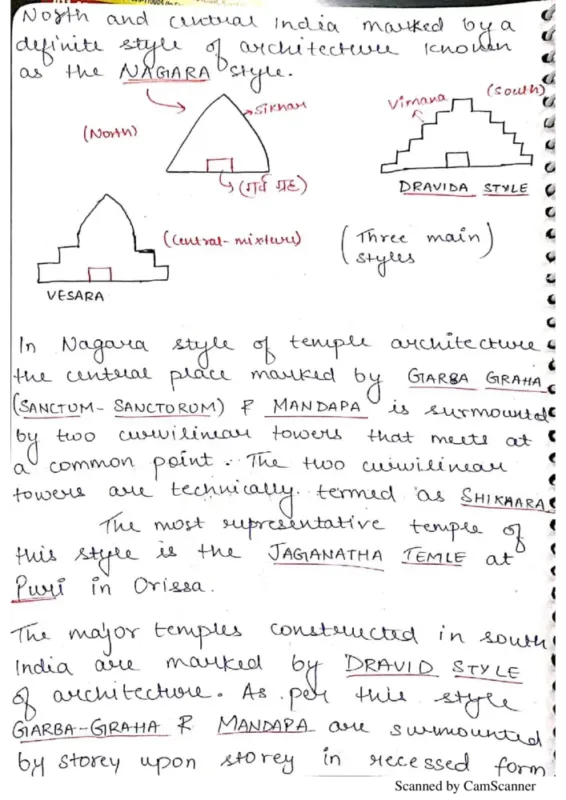
  • Booklet 12: Ancient Indian Art, Architecture, Science, and Map Pointing Module β€” Rock-cut, structural, and Nagara vs. Dravida temple styles; sculpture traditions; painting at Ajanta and Ellora; advances in astronomy, mathematics, medicine (Charaka and Sushruta); literature in Sanskrit and Prakrit; the dedicated map pointing module by Rashid Yasin covering all major ancient sites, battle locations, and trade routes tested in UPSC Mains.

In-Depth Content Breakdown: Booklet by Booklet

Booklet 1: Sources of Ancient Indian History

Understanding sources is the foundation of the UPSC History Optional Paper I. This booklet opens the set by systematically categorising archaeological sources β€” inscriptions, coins, seals, and monuments β€” alongside literary sources including the Vedas, Puranas, Buddhist Tripitaka, and Jain Agamas. Foreign accounts by Megasthenes, Fa-Hien, and Hiuen Tsang are discussed with critical analysis. For UPSC Mains, questions on sources often appear as standalone 10-mark or 15-mark questions, and this booklet equips aspirants to answer them with precision and depth.

What distinguishes this booklet in the GS Score classroom note format is the inclusion of a source-by-source summary table β€” a quick-reference grid mapping each source to its period, language, author, and historical significance. Rashid Yasin’s marginal annotations indicate which sources are high-frequency in UPSC question papers. The booklet also covers historiographical debates, including nationalist, Marxist, and subaltern interpretations of ancient Indian history β€” a dimension often missing from standard textbook treatments but frequently tested in UPSC Mains Paper I.

Booklet 2: Pre-History and Proto-History

Pre-history is a short but scoring segment of the UPSC History Optional syllabus. This booklet covers the three-age system of Palaeolithic, Mesolithic, and Neolithic cultures with site-wise distribution across India β€” Bhimbetka, Burzahom, Chirand, Inamgaon, and others. The Chalcolithic cultures of central and peninsular India β€” Jorwe, Ahar-Banas, and Kayatha β€” are treated with appropriate depth for UPSC optional answers. Tool typology and stratigraphic evidence are explained in accessible language suited to aspirants without a formal archaeology background.

Rashid Yasin’s class notes in this booklet are notable for their use of comparison tables β€” placing different pre-historic cultures side by side with columns for region, tools, subsistence pattern, and important excavation finds. This tabular approach makes memorisation faster and answer-writing more structured. The booklet also addresses the transition from hunting-gathering to settled agriculture, which links pre-history to the Harappan chapter and provides a narrative thread that examiners reward with higher marks in long-answer UPSC questions.

Booklet 3: Indus Valley Civilisation

The Indus Valley Civilisation is consistently one of the highest-weight topics in UPSC History Optional Paper I, and this booklet reflects that importance with its depth of coverage. Major cities β€” Harappa, Mohenjo-daro, Dholavira, Lothal, Rakhigarhi, and Kalibangan β€” are covered individually with their distinctive features. Town planning elements such as the grid system, the great bath, granaries, and the drainage network are explained with annotated diagrams. Trade relations with Mesopotamia and the Persian Gulf are covered using both textual and archaeological evidence, a combination UPSC examiners appreciate.

A dedicated map pointing section inside this booklet marks all major Harappan sites across the Indian subcontinent, categorised by river system β€” Indus, Ghaggar-Hakra, and Gujarat coast. This geographic orientation is critical for UPSC Mains, where maps and locational questions are frequently part of the Paper I rubric. The booklet also presents the major decline theories β€” Aryan invasion, ecological collapse, trade disruption, and tectonic activity β€” with a balanced analytical note by Rashid Yasin guiding aspirants on how to frame nuanced UPSC answers on the Harappan decline.

Booklet 4: Vedic Age β€” Rigvedic and Later Vedic Period

The Vedic Age chapter is crucial for understanding the social and religious foundations of ancient India, and this booklet handles both the early Rigvedic and the Later Vedic transitions with academic rigour appropriate for UPSC optional answers. The Indo-Aryan origin debate β€” including the Out of India theory, Central Asian migration theory, and genetic evidence β€” is presented fairly. Rigvedic polity (Jana, Vis, Grama), economy (pastoral and early agricultural), and the early varna system are contrasted with the more rigid social stratification and expanded agriculture of the Later Vedic period.

Rashid Yasin’s notes include a structured comparison table contrasting Rigvedic and Later Vedic society across parameters β€” social structure, economic activities, political institutions, religious practices, and the status of women. This is exactly the kind of comparative framework that earns marks in 15-mark and 20-mark UPSC questions. The booklet also integrates relevant Vedic text references β€” specific Rigvedic hymns, Atharva Veda passages, and Upanishadic ideas β€” giving aspirants the quotable content that differentiates high-scoring UPSC History Optional answers from average ones.

Booklet 5: Mahajanapadas and the Rise of Magadha

Second urbanisation and the Mahajanapada period represent one of the most dynamic eras in ancient Indian political history, making this a high-scoring booklet for UPSC optional preparation. All sixteen Mahajanapadas are listed with their capitals and geographic locations, supported by map pointing. The conditions enabling second urbanisation β€” iron technology, agricultural surplus, trade expansion, and urban growth β€” are covered analytically. The rise of heterodox movements in this context is briefly addressed here, with full treatment reserved for the religion and society booklet.

The Magadha section traces the rise through the Haryanka, Shishunaga, and Nanda dynasties with attention to administrative and military innovations. The republican traditions of Vajji (Licchavi) and Malla confederacies are given due space, relevant to UPSC questions on early democratic traditions. Persian (Achaemenid) and Macedonian (Alexander) incursions into northwestern India are covered with their long-term cultural and commercial consequences β€” a topic that links neatly to the subsequent Mauryan chapter and is frequently tested in UPSC optional Paper I.

Booklet 6: Mauryan Empire

The Mauryan Empire is arguably the single most important chapter in ancient Indian history for the UPSC History Optional, and this booklet justifies that status with its depth and structure. Chandragupta’s rise, aided by Kautilya’s strategic guidance and the Arthashastra’s administrative framework, is covered in detail. Bindusara’s reign and Ashoka’s transformation after the Kalinga War form the narrative spine. Ashokan Dhamma β€” its content, motivation debate (political vs. genuine conversion), and spread across the empire through major and minor rock edicts β€” is treated at the analytical depth UPSC demands.

A dedicated map pointing section lists all major Ashokan rock edicts and pillar inscriptions with their locations, which is invaluable for UPSC map-based questions. Mauryan art β€” Pataliputra capital, Sanchi stupa, lion capital, and polished stone pillars β€” is covered with enough art historical detail for both optional Paper I and GS Paper I questions. The booklet closes with a multi-factor analysis of Mauryan decline, drawing on Ashokan pacifism, brahmanical reaction, economic strain, and succession weakness β€” a balanced model answer framework Rashid Yasin builds directly into the class notes.

Booklet 7: Post-Mauryan Period β€” Sungas, Kanvas, and Satavahanas

The post-Mauryan period is a complex but scoring segment of UPSC History Optional Paper I, and this booklet navigates it clearly. The Shunga dynasty’s brahmanical revival, its artistic patronage at Sanchi and Bharhut, and its political limitations are covered first. The successive waves of Indo-Greeks, Shakas, Parthians, and Kushanas are treated both politically and culturally β€” the Kushana period in particular receives extended treatment for its role in promoting Mahayana Buddhism, the Gandhara and Mathura art schools, and Central Asian trade through the Silk Route.

Satavahana contributions to peninsular India β€” their administration, the role of amatyas, land grants, and the promotion of Prakrit literature β€” are given balanced coverage to round out the post-Mauryan picture. The Gandhara art versus Mathura art comparison is presented in a table format, covering origin, material, style, iconography, and foreign influence β€” a comparison that appears frequently in UPSC Mains optional questions. Rashid Yasin’s marginal notes in this booklet highlight which topics have appeared in previous UPSC question papers, enabling targeted preparation.

Booklet 8: Sangam Age and South Indian Kingdoms

South Indian history before the Guptas is often under-prepared by UPSC History Optional aspirants, and this booklet corrects that by giving the Sangam Age its full due. The three Sangam assemblies at Madurai and their literary output β€” Tolkappiyam, the Ten Idylls, the Eight Anthologies β€” are covered as primary historical sources. The Chera, Chola, and Pandya kingdoms are treated separately with their respective political histories, economies, and cultural contributions. The five tinais (landscape zones) of Sangam poetry and their socio-economic correlates are explained as a framework unique to South Indian historical analysis.

Roman trade and its material evidence β€” Roman coins at Arikamedu, the port of Puhar, pepper trade β€” are covered to illustrate external linkages of Sangam-era South India, a topic that frequently appears in UPSC optional questions. The post-Sangam transition, the Kalabhra interregnum, and the later emergence of the Pallavas are bridged here to the next booklet. The map pointing in this section marks all major Sangam-era sites, ports, and trade routes along the Coromandel and Malabar coasts β€” critical spatial knowledge for UPSC Mains answers that demonstrate geographic command of South Indian history.

Booklet 9: Guptas and Post-Gupta Period

The Gupta period is the centrepiece of the second half of the ancient history syllabus for UPSC optional preparation, and this booklet reflects its importance with its most detailed treatment in the set. Chandragupta I’s foundation, Samudragupta’s conquests as documented in the Allahabad Prasasti, and Chandragupta II’s diplomatic and military achievements β€” including the elimination of the Western Sakas β€” are covered in political-military depth. The Gupta administrative system β€” decentralised land grants, feudal tendencies, and the role of uparika β€” is analysed as a transition from the Mauryan centralised model.

The cultural efflorescence of the Gupta period β€” Kalidasa’s literature, Aryabhata’s astronomy, Varahamihira’s contributions, Nalanda’s early development, Ajanta’s cave paintings β€” is covered in sufficient detail for UPSC optional answers. Post-Gupta successor states β€” Vakatakas, Maukharis, Pushyabhutis of Thanesar β€” are briefly but accurately covered. Huna invasions and their role in Gupta decline are treated analytically rather than narratively. The booklet closes with the reign of Harsha Vardhana as a bridge figure between the Gupta age and the early medieval period, covering Bana’s Harshacharita and Hiuen Tsang’s account.

Booklet 10: Regional Kingdoms β€” Pallavas, Chalukyas, Rashtrakutas

The emergence of regional kingdoms in peninsular India from the 6th to 10th centuries CE is a topic that rewards aspirants who invest in structured notes, and this booklet provides exactly that structure. The Pallavas of Kanchipuram are covered for their temple architecture β€” rathas at Mahabalipuram, the Shore Temple, and the development of the Dravidian style β€” as well as their role in spreading Indian culture to Southeast Asia. The Chalukyas of Badami are treated for their rock-cut temples at Aihole and Pattadakal and their successful resistance to Harshavardhana’s southward expansion.

The Rashtrakutas receive extended coverage for their military reach β€” engaging the Gurjara-Pratiharas and Palas in the tripartite struggle for Kanauj β€” and for their cultural patronage, including the Kailasa Temple at Ellora, which is among the most frequently cited monuments in UPSC History Optional questions. The booklet uses a dynasty timeline chart to show overlapping reigns and inter-dynastic conflicts, helping aspirants build a chronological map of peninsular India. Rashid Yasin’s notes flag which UPSC questions in recent years have drawn on this period for both 10-mark and 20-mark questions.

Booklet 11: Ancient Indian Economy, Society, and Religion

Thematic chapters are often the hardest to master in UPSC History Optional because they cut across chronological periods and demand synthesis. This booklet handles the economy β€” land systems, guilds, trade routes, coinage, and the shift from urban to agrarian economy post-Guptas β€” in a period-wise tabular framework that makes comparison across ages straightforward. Social structure and the evolution of the caste system, the position of women from Vedic to early medieval times, and the practice of Sati and child marriage are covered with the analytical depth expected in UPSC Mains 20-mark questions.

Buddhism and Jainism receive the most detailed treatment in this booklet β€” their origins, councils, sects, spread, philosophical doctrines, and decline in India. Bhakti and Shaiva-Vaishnava traditions are covered as a bridge to the medieval period. The six schools of Indian philosophy β€” Nyaya, Vaisheshika, Samkhya, Yoga, Mimamsa, and Vedanta β€” are each summarised with their key proponents, core tenets, and epistemological stances. Rashid Yasin structures the religion section with a comparative doctrine table that UPSC aspirants can directly convert into answer frameworks for philosophy-heavy questions in History Optional Paper I.

Booklet 12: Ancient Indian Art, Architecture, Science, and Map Pointing Module

The final booklet in this GS Score set performs double duty β€” it covers art, architecture, and science as standalone UPSC-testable themes, and it consolidates all map pointing content from the entire 4-booklet series into a single dedicated module by Rashid Yasin. The art and architecture section moves chronologically from pre-Mauryan wooden and brick structures through Ashokan pillars, Buddhist stupas, rock-cut caves, and finally to the fully developed Nagara and Dravida temple styles of the Gupta and post-Gupta periods. Each architectural form is described with key examples and their locational significance for map-based UPSC questions.

The science section covers ancient Indian achievements in astronomy (Aryabhata, Brahmagupta), mathematics (decimal system, zero, algebra), medicine (Charaka Samhita, Sushruta Samhita), and metallurgy (Iron Pillar of Delhi). Sanskrit and Prakrit literature β€” from Vedic hymns to classical Sanskrit drama β€” is surveyed for cultural context. The map pointing module is the most distinctive feature of this booklet: Rashid Yasin has compiled a complete atlas of ancient India that marks pre-historic sites, IVC cities, Mahajanapadas, Mauryan edicts, Gupta sites, trade routes, and major temples β€” making this booklet an essential reference tool throughout UPSC History Optional preparation.

Physical Construction and Quality Standards

These GS Score History Optional printed booklets are produced to withstand the rigorous daily use that UPSC optional preparation demands β€” repeated readings, heavy annotation, and months of active revision across a preparation cycle of 12 to 18 months.

Paper Quality: 75 GSM Anti-Glare White Paper

Each of the 4 Booklets in this set is printed on 75 GSM ultra-white paper selected for its high opacity and anti-glare surface. When you study history optional material for 6 to 8 hours a day, eye strain from reflective paper becomes a genuine problem. The anti-glare finish on this paper reduces eye fatigue during long sessions. More practically for active learners: all standard highlighter colours β€” yellow, green, pink, and orange β€” work cleanly on this paper without bleed-through to the reverse side. Gel pens and ballpoint pens used for marginalia and annotations also write without ghost-through, preserving the legibility of both sides of every sheet across all 4 Booklets.

Printing Technology: High-Resolution Laser Printing

All text, diagrams, maps, and tables in these GS Score History Optional booklets are produced using high-resolution laser printing technology. Laser toner fuses permanently into the paper fibre rather than sitting on the surface, which means the print is smudge-proof from day one and will not degrade over months of handling. For a subject like history optional, where maps, site diagrams, architectural illustrations, and comparison tables are integral to the content, printing clarity is not cosmetic β€” it is functional. The map pointing sections and architectural diagrams in this set are rendered with line precision that allows aspirants to read fine detail without a magnifying aid.

Binding and Durability

Each booklet arrives either spiral-bound or book-bound, depending on the production batch. Spiral binding is the preferred format for active study because it allows the booklet to open completely flat on a desk β€” a practical advantage when writing notes alongside the printed content or when referencing a map section while writing UPSC answers in a separate answer booklet. The 300 GSM laminated cover protects the inner pages from moisture and handling wear. For aspirants who prefer compact storage, the book-bound format stacks neatly in a study shelf. Both formats use reinforced spine adhesive that holds through repeated open-and-close cycles over a preparation cycle lasting more than a year.

Key Features and Study Design

These GS Score History Optional 2025-26 notes are built around the specific demands of UPSC Mains optional preparation β€” where depth, analytical framing, and source-awareness distinguish average answers from top-scoring ones.

  • Faculty-Authored Class Notes by Rashid Yasin: These are not generic textbook summaries. They reflect Rashid Yasin’s classroom teaching at GS Score, incorporating the analytical frameworks, answer-writing cues, and examination insights that have made his history optional batches popular among UPSC aspirants preparing in English medium.
  • Dedicated Map Pointing Module: Map pointing is an often-neglected component of history optional preparation that can cost crucial marks in UPSC Mains. Booklet 12 consolidates a full ancient India atlas β€” covering pre-historic sites, IVC cities, Mahajanapadas, Mauryan edicts, Gupta sites, and Sangam ports β€” making targeted map revision possible without piecing together maps from multiple sources.
  • Comparison Tables for High-Frequency Topics: Topics like Rigvedic vs. Later Vedic society, Gandhara vs. Mathura art, Mauryan vs. Gupta administration, and the six schools of Indian philosophy are presented in structured comparison tables. These tables are directly usable as answer-writing frameworks in UPSC Mains, where comparative analysis earns more marks than descriptive narration.
  • Previous Year Question Alignment: Rashid Yasin’s marginal annotations across the booklets identify topics and sub-topics that have appeared in UPSC History Optional question papers in recent years. This PYQP-aligned flagging helps aspirants prioritise during time-constrained revision phases in the weeks before UPSC Mains.
  • Complete 500-Mark Optional Subject Coverage: History Optional carries 500 marks in UPSC Mains β€” the single largest scoring component of the entire examination. Investing in the right study material for this paper is the highest-return decision an aspirant can make. This 4-booklet set for ancient history forms the first pillar of a complete history optional preparation strategy, covering Paper I in full depth alongside GS Paper I themes.

Shipping, Packaging and Delivery

Every order of GS Score History Optional Notes 2025-26 from our UPSC Store is packaged with the same care we would want for our own study material. Each set of 4 Booklets is first individually shrink-wrapped in clear plastic film to protect against moisture and surface abrasion during transit. The shrink-wrapped booklets are then packed together in a double-walled corrugated cardboard box with foam edge protectors at all four corners. A rigid cardboard internal insert prevents the booklets from shifting inside the box during handling by courier staff. The external box is sealed with reinforced packaging tape and labelled clearly with your delivery address and a fragile-content marker for courier awareness.

Once your order is dispatched from our Mukherjee Nagar, Delhi warehouse, delivery is completed in 3 to 5 business days to all pin codes across India β€” including Tier 2 and Tier 3 cities and remote areas served by our logistics partners. You receive a tracking ID via WhatsApp and SMS as soon as the parcel is picked up. Our customer support team is available on WhatsApp at +91 70045 49563 for any shipping queries. In the rare event that any booklet arrives damaged or a booklet is missing from your 4-booklet set, we replace the affected booklet free of charge within 48 hours of your complaint being raised β€” no returns, no delays, no back-and-forth.

Frequently Asked Questions (FAQ)

Q1: Is GS Score History Optional Notes good for UPSC preparation?

A: GS Score History Optional Notes by Rashid Yasin are considered among the better classroom-derived study materials for English-medium UPSC History Optional aspirants. The notes are structured around the actual UPSC syllabus, include map pointing, carry previous year question alignment, and present complex ancient history topics in a framework that is directly usable in Mains answer writing. They work best when used alongside standard reference texts like R.S. Sharma and Romila Thapar for deeper academic grounding.

Q2: How many booklets are included in GS Score History Optional Notes 2025-26?

A: This product includes 12 individual printed booklets covering the Ancient History segment of UPSC History Optional Paper I. Each booklet addresses a distinct chronological or thematic segment of the syllabus β€” from pre-history and the Indus Valley Civilisation through the Vedic Age, Mauryan and Gupta empires, regional kingdoms of peninsular India, and thematic chapters on economy, society, religion, art, architecture, and science, concluding with a dedicated map pointing module by Rashid Yasin.

Q3: What topics are covered in GS Score Ancient History Optional Notes?

A: The 4 Booklets cover the full Ancient History component of UPSC History Optional Paper I β€” sources of ancient Indian history, pre-history and proto-history, the Indus Valley Civilisation, the Vedic Age, Mahajanapadas and the rise of Magadha, the Mauryan Empire, post-Mauryan kingdoms, the Sangam Age, the Gupta and post-Gupta period, regional kingdoms including Pallavas and Rashtrakutas, thematic chapters on economy and religion, and a dedicated art, architecture, science, and map pointing module.

Q4: Are GS Score History Optional Notes available in Hindi medium?

A: The product listed here is the English medium edition of GS Score History Optional Notes 2025-26 by Rashid Yasin. This set is intended for aspirants preparing their History Optional in English. If you are preparing in Hindi medium and require the Hindi language edition of GS Score History Optional class notes, please contact us on WhatsApp at +91 70045 49563 and our team will confirm availability and dispatch timelines for the Hindi medium version.

Q5: What is the paper quality? Can I use a highlighter?

A: These booklets use 75 GSM ultra-white paper chosen for high opacity β€” multiple highlighter colors and gel pens work without bleed-through to the reverse side, ideal for color-coded revision. The anti-glare surface also reduces eye strain during the long daily study sessions that history optional preparation requires. Permanent markers and ballpoint pens are also fully compatible with this paper grade without ghosting or show-through on the back of any sheet.

Q6: How do GS Score History Optional Notes compare to Vision IAS or Vajirao notes?

A: Each institute’s optional notes reflect the teaching style and emphasis of their respective faculty. GS Score notes by Rashid Yasin are distinct for their dedicated map pointing module, structured comparison tables, and PYQP-flagged content. Vision IAS and Vajirao notes have their own strengths in terms of breadth and answer-writing templates. Aspirants who have used GS Score classroom notes prefer this set for its map-integrated approach and direct answer-writing cues β€” a combination that supports both preparation and last-mile revision before UPSC Mains.

Q7: Is History Optional easy to score in UPSC using GS Score Notes?

A: History Optional carries 500 marks and is one of the higher-scoring optional subjects in UPSC Mains when prepared well. GS Score notes are a strong starting point because they cover the UPSC syllabus in structured booklets, flag high-frequency topics, and provide answer frameworks through comparison tables and thematic summaries. That said, high scores in History Optional require consistent answer-writing practice alongside quality notes. Buy these printed notes as the foundation of your preparation, then supplement with test series and previous year question practice for best results.

Q8: Do GS Score History Optional Notes cover the complete UPSC syllabus?

A: This 4-booklet set covers the Ancient History portion of UPSC History Optional Paper I in full. UPSC History Optional Paper I also includes Medieval History and some sections on Modern History transitions β€” those may be covered in separate booklet sets from GS Score. Paper II covers Modern India and World History. If you need the complete two-paper optional syllabus set, contact us on WhatsApp at +91 70045 49563 to check availability of the full history optional series from GS Score for the 2025-26 batch.

Q9: Are these genuine 2025-26 edition booklets or older stock?

A: Every booklet we ship is sourced directly for the 2025-26 batch and is brand new, unmarked, and from fresh stock. We do not sell previous-year editions as current-year stock. The edition year is printed on the cover of each booklet, and you can verify this upon receipt. If you receive any booklet that does not match the 2025-26 edition label, contact us immediately on WhatsApp at +91 70045 49563 and we will replace it at no cost within 48 hours of your complaint.

Q10: Who is Rashid Yasin and why does his name matter for History Optional preparation?

A: Rashid Yasin is the History Optional faculty at GS Score β€” An Institute for Civil Services β€” and is known for teaching Ancient and Medieval Indian history with strong emphasis on map pointing, source criticism, and answer-writing frameworks. UPSC aspirants searching for faculty-specific notes often look specifically for Rashid Yasin’s class notes because his teaching methodology aligns closely with what UPSC examiners reward in History Optional Paper I. The map pointing module in Booklet 12 is particularly associated with his classroom approach and is one of the most cited features of this note series.

Q11: Can these notes be used for State PSC History Optional examinations?

A: Yes. These GS Score History Optional Notes 2025-26 are also useful for state-level civil services examinations that include History as an optional subject β€” including BPSC, UPPSC, MPPSC, RAS, and other State PSC examinations. The Ancient History content covered across 4 Booklets aligns with the syllabus structure followed by most state PSC boards for history optional. The map pointing module and thematic chapters on economy, society, and religion are particularly relevant for state PSC candidates who need structured notes that go beyond NCERT level treatment.

Q12: How do I place an order and what is the delivery timeline?

A: You can buy GS Score History Optional Notes 2025-26 directly from this product page by clicking the Add to Cart button. We process and dispatch orders from our Mukherjee Nagar, Delhi location within 1 business day of payment confirmation. Delivery across India takes 3 to 5 business days via tracked courier. You receive a WhatsApp notification with your tracking ID once the parcel is picked up. For bulk orders, institute purchases, or any pre-order queries, reach us on WhatsApp at +91 70045 49563 and our team responds within a few hours on all working days.

Summary

SpecificationValue
Booklets12 Printed Booklets
LanguageEnglish Medium
FacultyRashid Yasin
InstituteGS Score β€” An Institute for Civil Services
Edition2025-26 Latest Batch
Paper75 GSM Ultra-White
BindingSpiral or Book Binding
Delivery4-7 business days Pan India
Also Useful ForBPSC, UPPSC, MPPSC, RAS, and all State PSC History Optional

Shipped from our UPSC Store in Mukherjee Nagar, Delhi β€” India’s hub for UPSC optional study material. Buy GS Score History Optional Notes 2025-26 today and receive your complete 4-booklet set, printed and packed fresh, at your doorstep anywhere in India in 4-7 days.

Reference: Civil Services Examination

Customer Reviews 301

4.5
Based on 301 reviews
5β˜…
179
4β˜…
88
3β˜…
34
2β˜…
0
1β˜…
0
H
Harshit Agarwal
25 Apr 2026
βœ“ Verified

Best notes available. Itna organized aur comprehensive kahi nahi dekha.

R
Riya Banerjee
25 Apr 2026
βœ“ Verified

Quality bohot acha hai, notes comprehensive hain aur UPSC ke pattern ke according banaye gaye hain.

M
Manish Verma
25 Apr 2026
βœ“ Verified

Notes are standard UPSC level. Better options available at similar price points.

P
Priya Sharma
25 Apr 2026
βœ“ Verified

Material is okay but overlaps a lot with other coaching institutes. Not worth the price honestly.

P
Priya Sharma
25 Apr 2026
βœ“ Verified

Best material for history optional. Notes are comprehensive and well-organized.

A
Amit Singh
25 Apr 2026
βœ“ Verified

Notes are well-structured and easy to understand. Great for quick revision before exams.

R
Rajesh Patel
22 Apr 2026
βœ“ Verified

Superb content, packing bhi acha tha. Definitely recommend karta hoon.

A
Anjali Singh
20 Apr 2026
βœ“ Verified

Notes bilkul point-to-point hain, exam ke liye perfect.

πŸ›οΈ

Aspirants Also Bought

More from the same category

View All β†’

About GS Score History Optional Notes 2025-26

GS Score History Optional Notes 2025-26 is a highly recommended UPSC study material from GS Score, specially designed for History Optional preparation. Available in English medium, this material is crafted to match the exact requirements of the UPSC Civil Services Examination syllabus β€” covering both Prelims and Mains comprehensively.

Product Details

  • Institute: GS Score
  • Subject: History Optional
  • Medium: English
  • Format: Printed
  • Delivery: Pan-India delivery in 4–7 working days
  • Format: Original printed material, verified authentic

Why Buy from UPSC Store?

  • βœ… 100% Genuine Printed Material β€” Original printed notes, no photocopies or fake copies
  • βœ… Fast Delivery β€” Ships within 24 hours, arrives in 4–7 days pan-India
  • βœ… Secure Packaging β€” Bubble-wrapped and boxed to prevent damage in transit
  • βœ… Trusted by 10,000+ Aspirants β€” India's most reliable UPSC material marketplace
  • βœ… WhatsApp Support β€” Get expert guidance on material selection before ordering

Frequently Asked Questions

Is this product 100% original?

Yes, all products at UPSC Store are 100% genuine printed materials. We do not sell photocopies or fake copies.

How long does delivery take?

Orders are dispatched within 24 hours and delivered across India in 4–7 working days via reputed courier partners.

Can I return the product?

Yes, we accept returns within 7 days if the product is damaged or incorrect. Check our refund policy for details.

Which other study materials should I buy with this?

We recommend pairing this with current affairs notes and a UPSC test series for comprehensive preparation. Browse more in History, Optional, UPSC.