


Raj Rai Sociology Notes
About Raj Rai Sociology Notes Next
The Raj Rai Sociology Notes Next is a printed UPSC study material set sold by UPSC Store β India’s trusted source for genuine, latest-batch civil services preparation books. This page covers full booklet details, syllabus coverage, pricing, shipping, and frequently asked questions. Useful for UPSC CSE, BPSC, UPPSC, MPPSC, RAS and other state PSC examinations.
Raj Rai Next IAS Sociology Notes 2025-26 β 12 English Medium Printed Booklets for UPSC Sociology Optional Paper I & II
Related: Next IAS notes Β· Sociology optional
Product Overview
| Feature | Details |
|---|---|
| Booklets Count | 12 Individual Printed Booklets β Full Coverage of UPSC Sociology Paper I & Paper II |
| Language | English Medium |
| Publisher | Next IAS β Raj Rai Sociology Optional Series |
| Edition | 2025-26 β Latest Genuine Batch |
| Condition | Brand New, Unmarked, Fresh Stock |
| Format | High-Quality Printed Booklets β Spiral or Book Binding |
| Paper Quality | 75 GSM Ultra-White β Highlighter Safe, Zero Bleed-Through |
| Shipping | Pan India Delivery in 4-7 business days β Tracked |
| Also Useful For | BPSC, UPPSC, MPPSC, RAS and all State PSC Sociology Optional candidates |
Complete Booklet Catalog
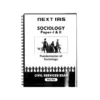
This 2-booklet set by Raj Rai at Next IAS covers every unit of the UPSC Sociology optional syllabus β Paper I (Fundamentals of Sociology) and Paper II (Indian Society: Structure and Change) β in structured, exam-oriented English medium printed notes. Designed for UPSC Civil Services Mains aspirants who want organised, faculty-curated content that can be revised repeatedly without relying on bulky textbooks.
- Booklet 1: Sociology β The Discipline β Emergence of sociology as a science, modernity and the social sciences, sociology and common sense, relationship of sociology with history, economics, political science and psychology; sociological perspectives and the nature of sociological inquiry as tested in UPSC Sociology Paper I Unit 1.
- Booklet 2: Sociological Thinkers β Part A β Karl Marx: historical materialism, mode of production, alienation, class struggle. Emile Durkheim: division of labour, social fact, religion and society, suicide theory. Max Weber: social action, ideal types, authority, bureaucracy, Protestant ethic and the spirit of capitalism β all mapped to UPSC Paper I Unit 2.
- Booklet 3: Sociological Thinkers β Part B β Talcott Parsons: social system, pattern variables. Robert K. Merton: latent and manifest functions, reference groups, anomie. Mead: self and identity. Parsons and structural functionalism elaborated with UPSC-relevant analysis, answer angles, and contemporary relevance notes for Paper I.
- Booklet 4: Research Methods and Analysis β Science, scientific method and critique; major theoretical strands of research methodology; positivism and its critique; non-positivist methodologies; research methods: survey, participant observation, interviews, schedules and questionnaires; quantitative and qualitative methods; techniques of data collection, processing and analysis for UPSC Sociology Paper I.
- Booklet 5: Stratification and Mobility β Concepts: equality, inequality, hierarchy, exclusion, poverty, deprivation. Theories of stratification: structural functionalist theory, Marxist theory, Weberian theory. Dimensions of stratification: class, status, gender, ethnicity, race. Social mobility: open and closed systems, types, channels of social mobility β critical content for UPSC Paper I.
- Booklet 6: Works and Economic Life + Politics and Society β Sociological theories of work; formal and informal sectors; labour and society; power, authority and legitimacy; political parties and pressure groups; democracy; civil society; ideology; welfare state; bureaucracy and political order; citizenship; nationalism; social movements β UPSC Paper I Units 5 & 6 combined.
- Booklet 7: Religion and Society + Kinship and Family β Sociological theories of religion; types of religious practices; religion in modern society; religious revivalism; fundamentalism; religion and secularism. Family, household and marriage; lineage and descent; patriarchy; feminist perspectives on family; changing structure of family in India β Paper I Units 7 & 8.
- Booklet 8: Social Change and Modernisation β Theories of change: evolutionary, cyclical, conflict; theories of development; resistance to change; factors of social change; education and social change; science and technology; agrarian and industrial transformation; colonialism; development and dependency; post-modernism β UPSC Paper I Unit 9.
- Booklet 9: Indian Society β Structure and Demographics β Perspectives on the study of Indian society: indology, structural-functional, Marxist. Impact of colonial rule on Indian society; social background of Indian nationalism. Demographic structure; rural-urban linkages; population policy and family planning in India β foundation unit for UPSC Sociology Paper II.
- Booklet 10: Caste, Class, Tribe and Gender in India β Caste system: features, untouchability, changing patterns; class structure; agrarian class structure; industrialisation and class formation; tribal communities: their developmental challenges, integration vs assimilation debate; gender β biases, patriarchy, gender and development, feminism in India β core UPSC Paper II topics.
- Booklet 11: Social Institutions and Social Change in India β Marriage, family and kinship in India; religious communities and minority status; social reform movements; secularisation; sanskritisation; westernisation; tribal religion; communalism; religious minorities β with UPSC answer frameworks, thinker linkages, and contemporary examples for Paper II.
- Booklet 12: Social Movements and Development in India β Peasant and farmers’ movements; women’s movement; backward classes and Dalit movements; environmental movements; ethnicity and identity movements; development planning and rural development; poverty alleviation programmes; education and social change; literacy and empowerment; globalisation and social transformation β final Paper II unit for UPSC Mains.
In-Depth Content Breakdown: Booklet by Booklet
Booklet 1: Sociology β The Discipline
This opening booklet establishes the conceptual foundation required for UPSC Sociology Paper I. It covers the historical emergence of sociology as a discipline in the context of European modernity, the industrial revolution, and Enlightenment thinking. Raj Rai structures the content to help students understand what makes sociology distinct from allied social sciences β a frequently examined area in UPSC Mains where short and medium-length analytical answers are expected. The booklet maps each topic directly to Paper I Unit 1 of the UPSC syllabus.
The booklet features side-by-side comparison tables showing how sociology overlaps with and diverges from history, economics, political science, and psychology β a visual learning tool that saves revision time. Handwritten-style annotations from Raj Rai’s classroom are reproduced in print, giving students the feel of attending live sessions. Special boxes highlight recurring UPSC question patterns from previous years, enabling students to identify which concepts demand deeper elaboration in the actual exam.
Booklet 2: Sociological Thinkers β Part A
Thinkers constitute the backbone of UPSC Sociology Paper I and consistently appear in both 10-mark and 20-mark questions. This booklet covers Marx, Durkheim, and Weber in sharp analytical depth β each thinker treated across their major works, core concepts, and contemporary relevance. Raj Rai’s notes present Marx’s historical materialism not in isolation but in dialogue with Durkheim’s structural concerns, building the comparative thinker-answer skills that UPSC examiners reward. The content is aligned to the exact terminology used in UPSC mark schemes.
Each thinker section opens with a one-page conceptual map showing how ideas interconnect β alienation to class struggle, anomie to social integration, rationality to bureaucracy. Weber’s ideal types are explained through real-world UPSC-relevant examples, including Indian bureaucracy and religious authority. Previous year UPSC questions on each thinker are reproduced at the end of each section with Raj Rai’s model answer outlines, making this booklet a complete preparation unit in itself for Paper I thinker questions.
Booklet 3: Sociological Thinkers β Part B
Building on Part A, this booklet covers Talcott Parsons, Robert K. Merton, and George Herbert Mead β thinkers that UPSC regularly tests for their functional, structural, and interactionist perspectives. Parsons’ AGIL framework and pattern variables are presented in tabular format for quick recall in exam conditions. Merton’s distinction between manifest and latent functions, along with his concept of anomie (contrasted with Durkheim’s version), is broken down with Indian case studies that candidates can directly use in UPSC answers.
Raj Rai’s treatment of Mead’s self and identity theory is particularly useful for questions on socialisation, personality development, and the micro-sociological tradition β topics that have seen increased frequency in recent UPSC Mains papers. The booklet closes with a comparative thinker grid spanning all six major thinkers from Parts A and B, summarising each on dimensions like unit of analysis, method, theory type, and policy implication β a revision tool students can return to on the eve of the exam.
Booklet 4: Research Methods and Analysis
UPSC Sociology Paper I Unit 3 on research methods is often underestimated by candidates, yet it appears reliably in every exam cycle. This booklet covers positivism vs. non-positivism in sociology, the logic of scientific enquiry, and the full range of research designs including survey research, case studies, ethnography, and experimental methods. Raj Rai explains not just the mechanics of each method but its epistemological underpinnings β which is what UPSC answers at the 20-mark level require to score above average.
The booklet includes structured notes on data collection techniques β questionnaires, interview schedules, participant observation, and focus groups β with comparative tables showing strengths and limitations relevant to sociological research in Indian contexts. Quantitative vs. qualitative debate is treated through real examples including NSS surveys, census data, and ethnographic studies in India. A dedicated section on validity, reliability, and objectivity in sociological research rounds off the content with precise definitions and examples drawn from UPSC-tested themes.
Booklet 5: Stratification and Mobility
Social stratification and mobility is one of the highest-scoring units in UPSC Sociology Paper I because it directly links theoretical frameworks to Indian social realities β enabling candidates to write richly contextualised answers. This booklet covers all three major theories of stratification (functionalist, Marxist, Weberian) in comparative format and maps them to dimensions including class, caste, gender, race, and ethnicity. Raj Rai’s notes draw explicit connections between theoretical arguments and Indian data points that are regularly cited in UPSC answers.
The section on social mobility distinguishes between structural mobility, exchange mobility, and intra-generational versus inter-generational mobility with clarity that standard textbooks often lack. Open and closed systems of stratification are explained through a caste-class comparison relevant to both Paper I theory and Paper II Indian society questions. The booklet includes a curated set of UPSC previous year questions on stratification with brief answer pointers annotated by Raj Rai, enabling targeted preparation rather than passive reading.
Booklet 6: Works and Economic Life + Politics and Society
This combined booklet covers two syllabus units in a single volume, optimising study time for UPSC aspirants. The economic life section addresses sociological theories of work, the distinction between formal and informal economies, labour market segmentation, and the sociology of organisations β all mapped to UPSC Paper I Unit 5. Special attention is given to post-industrial society, digital labour, and the gig economy as contemporary dimensions that UPSC has begun incorporating into questions.
The politics and society section covers Weber’s typology of authority, Gramsci’s concept of hegemony, Marxist state theory, pluralist theory, and the structural-functionalist view of political institutions β core material for UPSC Paper I Unit 6. Raj Rai includes notes on civil society, social movements, political parties, and the welfare state with Indian illustrations. This dual-unit booklet uses a colour-coded margin system to distinguish analytical definitions, thinker positions, and exam strategy notes β a feature that significantly speeds up revision cycles.
Booklet 7: Religion and Society + Kinship and Family
Religion in society is a perennial UPSC Sociology topic with both theoretical and applied dimensions. This booklet covers Durkheim’s sacred-profane distinction, Weber’s sociology of religion, Marx’s critique of religion, and Malinowski’s functional view β all four positions with comparative tables. The notes extend to contemporary themes including religious revivalism, fundamentalism, new religious movements, and the secularisation thesis, ensuring students are prepared for both classical theory questions and current affairs-linked sociological analysis in UPSC Mains.
The family and kinship section covers structural-functional, conflict, and feminist perspectives on family with definitions, thinker attributions, and UPSC-style answer frameworks. Marriage forms, types of family, lineage and descent systems, and the changing structure of the nuclear family in India are covered in a way that bridges Paper I theory with Paper II Indian society content. Raj Rai includes a feminist critique section drawing from Betty Friedan, Ann Oakley, and Sylvia Walby that directly feeds into gender-related UPSC questions across both papers.
Booklet 8: Social Change and Modernisation
Social change is the concluding unit of UPSC Sociology Paper I and functions as a conceptual bridge to Paper II. This booklet covers evolutionary theories (Spencer, Comte), cyclical theories (Sorokin, Spengler), and conflict theories (Marx) of change, with clear differentiation between their assumptions and mechanisms. Development theories including modernisation theory, dependency theory, and world systems theory are covered with contemporary Indian policy relevance β a combination that enables candidates to write balanced, multi-perspective UPSC answers.
The booklet dedicates separate sections to colonialism and its sociological impact, post-colonial theory, and the sociology of post-modernism β themes that have gained traction in recent UPSC cycles. Resistance to change, the role of education in social transformation, and the impact of science and technology on society are addressed with reference to Indian examples including IT-sector growth, agrarian change, and digital governance. Raj Rai’s notes include model paragraph starters for 20-mark UPSC answers on social change themes β a unique pedagogical feature that distinguishes these notes from standard printed materials.
Booklet 9: Indian Society β Structure and Demographics
UPSC Sociology Paper II opens with perspectives on studying Indian society β a conceptual unit that many candidates treat superficially at the cost of marks. This booklet covers Indological, structural-functional, and Marxist approaches to Indian society through the contributions of scholars like Louis Dumont, M.N. Srinivas, A.R. Desai, and D.P. Mukerji. Raj Rai maps each perspective to its methodological assumptions and policy implications, giving students a strong analytical foundation for all subsequent Paper II units.
The demographic structure of India β age composition, sex ratio, literacy, occupational structure, rural-urban distribution β is covered with current data points relevant to UPSC 2025-26 preparation. Population policy from the Nehru era to the present, family planning programmes, and the demographic dividend are presented with sociological analysis rather than mere factual enumeration. The section on rural-urban linkages addresses migration, urbanisation, and the agrarian-industrial interface in ways that directly support UPSC answers on development and social change in India.
Booklet 10: Caste, Class, Tribe and Gender in India
This booklet addresses the most heavily examined cluster of topics in UPSC Sociology Paper II. Caste β its origins, features, changing character, untouchability, and the Mandal debate β is covered through competing theoretical lenses including Dumont’s Homo Hierarchicus, Ambedkar’s critique, and Srinivas’s empirical sociology. Class analysis covers the agrarian class structure in post-independence India, the emergence of a middle class, and industrialisation’s impact on class formation β all themes UPSC has regularly tested in 10 and 20-mark formats.
Tribal communities are addressed with attention to their geographical distribution, socio-economic conditions, the integration vs. isolation vs. assimilation policy debate, and constitutional protections under the Fifth and Sixth Schedules. The gender section covers patriarchy as a sociological concept, gender socialisation, women’s empowerment, feminist movements in India, and the intersection of caste and gender β enabling candidates to write intersectional answers that UPSC examiners increasingly reward. Previous year questions on each topic are listed with Raj Rai’s brief answer strategy notes at the end of each section.
Booklet 11: Social Institutions and Social Change in India
This booklet covers marriage and family systems in India β forms, functions, and changes β alongside the sociology of Indian religious communities. The treatment of Hindu, Muslim, Christian, and tribal religious practices is sociological rather than theological, keeping the content squarely within the UPSC Sociology Paper II framework. Secularisation, communalism, and religious pluralism in India are addressed as social processes with thinker support from T.N. Madan, Ashis Nandy, and Partha Chatterjee β references that add analytical depth to UPSC answers.
Social reform movements β from Raja Ram Mohan Roy to Ambedkar and Phule β are covered as agents of change in Indian society, with particular attention to their sociological underpinnings and long-term structural impacts. Sanskritisation, westernisation, and modernisation as processes of cultural change in India are explained through Srinivas’s framework with contemporary empirical examples. Raj Rai’s notes include a dedicated section linking these processes to current UPSC-relevant topics including OBC politics, Dalit assertion, and urban social transformation β ensuring the content stays examination-relevant.
Booklet 12: Social Movements and Development in India
The final booklet in this set covers the dynamic landscape of social movements in India β peasant movements, women’s movements, Dalit movements, environmental movements, and ethnic identity movements β all within a sociological framework rooted in resource mobilisation theory, new social movements theory, and political process theory. UPSC regularly asks candidates to analyse these movements both theoretically and empirically, making this booklet essential for high-scoring Paper II answers in the Civil Services Mains examination.
Development planning, poverty alleviation, rural development programmes, and the sociological dimensions of education policy are covered in the final sections of this booklet, creating a complete end-to-end preparation resource for UPSC Sociology Paper II. Globalisation’s impact on Indian society β including consumerism, identity fragmentation, and new inequalities β is addressed as a concluding analytical theme. The booklet closes with a master revision grid covering all 2 Booklets across key concepts, thinkers, and UPSC question angles, making it the ideal starting point for the final revision phase before the UPSC Mains examination.
Physical Construction and Quality Standards
Every booklet in the Raj Rai Next IAS Sociology 2025-26 set is produced to a physical standard designed for the intensive, long-duration study sessions that UPSC preparation demands β handling daily use across a 12 to 18-month preparation cycle without deterioration in print clarity or binding integrity.
Paper Quality: 75 GSM Anti-Glare White Paper
The 75 GSM ultra-white paper used across all 2 Booklets is selected for its high opacity, ensuring that text and diagrams printed on one side do not bleed or shadow through to the reverse side. This makes the paper fully compatible with multiple passes of fluorescent highlighters β yellow, green, orange, and pink β as well as gel pens and ballpoint ink. The anti-glare finish significantly reduces eye strain during long continuous study sessions of 4 to 6 hours, a critical quality for UPSC aspirants who spend months with these printed notes as their primary study material.
Printing Technology: High-Resolution Laser Printing
All text, tables, diagrams, flowcharts, and conceptual maps across the 2 Booklets are produced using high-resolution laser printing technology, delivering sharp, consistent print quality throughout each booklet without the uneven ink density that degrades with inkjet production. Toner-based laser printing is permanent β pages remain smudge-proof and water-resistant under normal handling conditions. Flowcharts linking thinkers, concept maps for stratification and social change, and comparison tables for research methods all reproduce with the crisp edge definition needed for accurate visual learning in UPSC sociology preparation.
Binding and Durability
The 2 Booklets are available in spiral or book binding formats, both engineered for the practical demands of UPSC study. Spiral-bound booklets open fully flat on a study desk, allowing students to write margin notes alongside printed text without the book snapping shut β a significant advantage during active note-taking. Book-bound formats offer a compact, stackable form factor suited to transport and shelf storage. All booklets feature a 300 GSM laminated cover that resists moisture, corner damage, and daily wear, ensuring the set remains in clean, usable condition through multiple revision passes over the preparation cycle.
Key Features and Study Design
These 12 printed booklets are structured around the specific demands of the UPSC Sociology optional examination β combining conceptual depth, thinker coverage, answer strategy, and Indian society analysis in a single, coherently organised set that replaces the need for multiple separate textbooks.
- Complete Paper I and Paper II Coverage: All UPSC Sociology optional units β from Sociology as a discipline and sociological thinkers through to social movements and development in India β are covered across the 2 Booklets without any syllabus gaps, eliminating the need to supplement with additional printed material.
- Thinker-Linked Answer Frameworks: Every major theoretical concept in the notes is anchored to the appropriate thinker with the exact terminology recognised in UPSC mark schemes β enabling students to produce academically credible answers rather than generic descriptive responses in the Civil Services Mains examination.
- Previous Year UPSC Question Integration: Relevant UPSC Mains previous year questions are reproduced at the end of each topic section with Raj Rai’s model answer pointers, allowing students to immediately gauge the exam application of every concept they study and calibrate the depth of coverage required.
- Visual Learning Aids β Tables, Maps, Grids: Comparison tables, conceptual maps, and revision grids are embedded throughout all 2 Booklets to support visual learners and to make high-density theory content β such as thinker comparisons and stratification theories β accessible in quick-review format during UPSC revision sprints.
- Contemporary Indian Society Examples: Paper II content is grounded in current Indian social realities β caste mobilisation, gender policy, tribal rights, environmental movements, and development programme data β ensuring that students can write answers with both sociological rigour and real-world relevance that UPSC examiners increasingly prioritise.
Shipping, Packaging and Delivery
Each order for the Raj Rai Next IAS Sociology Notes 2025-26 set is packed with the protection that 12 printed booklets require for safe transit across India. All 2 Booklets are first individually shrink-wrapped to prevent moisture contact, then stacked in sequence and secured with foam edge protectors on all four corners before being placed inside a double-walled corrugated cardboard box. The outer box is sealed with reinforced packaging tape and clearly labelled with fragile stickers to ensure careful handling at courier sorting facilities. This packaging protocol ensures that every booklet arrives in the same brand-new condition in which it left the dispatch centre β whether the delivery address is Delhi, Chennai, Guwahati, or a Tier-3 city.
Pan India delivery is completed within 3 to 5 business days from the date of dispatch, with a tracked shipment ID shared via email and SMS immediately after dispatch. For delivery updates, order queries, or any concerns, buyers can reach the store team directly on WhatsApp at +91 70045 49563 β support is available seven days a week. In the rare event that a booklet arrives with a printing defect or physical damage, a replacement booklet is dispatched within 48 hours of the issue being reported with a photograph. Customers in Mukherjee Nagar, Delhi can also collect their order in person from the store for same-day access.
Frequently Asked Questions (FAQ)
A: Raj Rai’s Next IAS Sociology notes are designed to be the primary printed resource for UPSC Sociology optional preparation. They cover the full Paper I and Paper II syllabus with thinker analysis, Indian society content, and previous year question integration. Most serious aspirants use these notes as their core material and supplement with selective NCERT reading and current affairs β making them a strong backbone for UPSC Sociology optional without requiring multiple additional textbooks.
A: The 2025-26 edition of Raj Rai’s Next IAS Sociology Notes set contains 12 individual printed booklets. These 2 Booklets collectively cover all units of UPSC Sociology Paper I β including thinkers, research methods, stratification, religion, and social change β as well as all units of UPSC Sociology Paper II covering Indian society, caste, class, tribe, gender, social movements, and development. The full 2-booklet set is dispatched together as a single order.
A: Yes, this product is the English medium edition of the Raj Rai Next IAS Sociology Notes 2025-26. All 2 Booklets are entirely in English β including all thinker explanations, theoretical frameworks, Indian society analysis, and model answer pointers. This English medium set is the standard edition used by the majority of UPSC Sociology optional aspirants preparing with Next IAS classroom or correspondence materials.
A: Yes, the 2025-26 edition is the current batch prepared for UPSC Civil Services Mains candidates targeting the 2025 and 2026 examination cycles. The content reflects the latest UPSC Sociology optional syllabus with updated examples in the Indian society units, current data in the demographics and development sections, and revised answer frameworks based on recent UPSC question trends. Always verify the year printed on the booklet cover at the time of delivery to confirm edition.
A: Yes, the complete 2-booklet set covers both UPSC Sociology optional papers in full. Booklets 1 through 8 address all units of Paper I β the discipline, sociological thinkers, research methods, stratification, economic life, politics, religion, family, and social change. Booklets 9 through 12 cover all units of Paper II β perspectives on Indian society, demographics, caste, class, tribe, gender, social institutions, social movements, and development planning in India.
A: You can buy the Raj Rai Next IAS Sociology Notes 2025-26 printed set directly from this product page. This is a genuine, brand-new stock of the official Next IAS printed notes dispatched with pan India tracked delivery within 3 to 5 business days. For bulk orders, institute purchases, or queries before you buy, contact the store on WhatsApp at +91 70045 49563. Buying directly from this store ensures you receive the correct 2025-26 edition in unmarked, fresh condition.
A: These booklets use 75 GSM ultra-white paper chosen for high opacity β multiple highlighter colours and gel pens work without bleed-through to the reverse side, ideal for colour-coded revision. The anti-glare surface also reduces eye strain during the extended daily study sessions typical of UPSC Sociology optional preparation, where candidates spend 4 to 6 hours reading and annotating the same printed material across multiple revision rounds.
A: Printed notes offer significant practical advantages for UPSC Sociology optional preparation compared to PDFs. Physical booklets allow unrestricted margin annotation, underlining, and sticky notes across months of study without screen fatigue. Research consistently shows better retention from printed text during long study sessions. Printed booklets can also be used in reading rooms, during commutes, and without power dependency β making the Raj Rai Next IAS printed set a strongly preferred format among serious UPSC aspirants.
A: Yes, because the UPSC Sociology optional syllabus substantially overlaps with the Sociology optional syllabi of major state public service commissions. Candidates preparing for BPSC, UPPSC, MPPSC, RAS, and other State PSC sociology optional papers will find the thinker coverage, Indian society units, and social movements content in these 2 Booklets directly applicable. The English medium format and structured booklet design make them useful for any candidate studying Sociology as an optional subject at the postgraduate competitive examination level.
A: After you buy the set and the order is dispatched from our store, a tracking number is sent via email and SMS within 24 hours. You can use this tracking ID on the respective courier partner’s website to monitor delivery status in real time. For any updates, delays, or delivery queries, WhatsApp the store team at +91 70045 49563 with your order number and the team will respond within the same business day. Delivery is completed within 3 to 5 business days across India.
A: If any booklet in the 2-booklet Raj Rai Next IAS Sociology set arrives with a printing defect, physical damage, or is missing from the package, take a photograph of the received parcel and the affected booklet immediately. Send the photograph to the store team on WhatsApp at +91 70045 49563 along with your order number. A replacement booklet will be dispatched within 48 hours at no additional cost. The store team resolves all delivery issues promptly to ensure you receive the complete, undamaged set you paid for.
A: This listing exclusively offers the 2025-26 batch of Raj Rai Next IAS Sociology Notes β the current edition produced for UPSC aspirants targeting the 2025 and 2026 Civil Services examination cycles. The store does not stock or ship older editions. Every booklet is fresh, unmarked, brand-new stock from the current print run. The 2025-26 edition year is printed on each booklet cover and can be verified upon delivery. If you need to confirm stock availability before you buy, contact the team on WhatsApp at +91 70045 49563.
Summary
| Specification | Value |
|---|---|
| Booklets | 12 Printed Booklets β Sociology Paper I & Paper II |
| Faculty | Raj Rai β Next IAS |
| Language | English Medium |
| Edition | 2025-26 β Current Batch |
| Paper | 75 GSM Ultra-White |
| Binding | Spiral or Book Binding |
| Delivery | 4-7 business days Pan India β Tracked |
| Also Useful For | BPSC, UPPSC, MPPSC, RAS and all State PSC Sociology Optional |
Dispatched from our store in Mukherjee Nagar, Delhi β the heart of UPSC preparation in India. Buy the Raj Rai Next IAS Sociology Notes 2025-26 today and receive your complete 2-booklet set at your doorstep with pan India delivery in 4-7 days.
Reference: Civil Services Examination
Customer Reviews 236
12 booklets mein sab kuch cover ho gaya, notes ki clarity bahut badhiya hai.
Notes structured bahut acche se hain, revision mein madad kar rahe hain.
Helpful notes overall but some sections need more explanation. Good for quick reference though.
UPSC candidates ko definitely ye notes lene chahiye.
Excellent quality and very useful for exam preparation.
These notes ne mere sociology preparation ko strong banaya. Bilkul worth it!
Raj Rai's approach to sociology is really helpful.
Notes mein detail aur clarity dono hai. Best for sociology section.
Aspirants Also Bought
More from the same category
About Raj Rai Sociology Notes
Raj Rai Sociology Notes is a highly recommended UPSC study material from Next IAS, specially designed for Sociology preparation. Available in English medium, this material is crafted to match the exact requirements of the UPSC Civil Services Examination syllabus β covering both Prelims and Mains comprehensively.
Product Details
- Institute: Next IAS
- Subject: Sociology
- Medium: English
- Format: Printed
- Delivery: Pan-India delivery in 4β7 working days
- Format: Original printed material, verified authentic
Why Buy from UPSC Store?
- β 100% Genuine Printed Material β Original printed notes, no photocopies or fake copies
- β Fast Delivery β Ships within 24 hours, arrives in 4β7 days pan-India
- β Secure Packaging β Bubble-wrapped and boxed to prevent damage in transit
- β Trusted by 10,000+ Aspirants β India's most reliable UPSC material marketplace
- β WhatsApp Support β Get expert guidance on material selection before ordering
Frequently Asked Questions
Yes, all products at UPSC Store are 100% genuine printed materials. We do not sell photocopies or fake copies.
Orders are dispatched within 24 hours and delivered across India in 4β7 working days via reputed courier partners.
Yes, we accept returns within 7 days if the product is damaged or incorrect. Check our refund policy for details.
We recommend pairing this with current affairs notes and a UPSC test series for comprehensive preparation. Browse more in Next IAS, Optional, Sociology, UPSC.